Agile Software RFP Template + Winning Response Guide 2026

If you're searching for an agile software RFP template, chances are you're trying to balance flexibility with procurement structure, and it rarely fits neatly.
Agile projects demand flexibility, shifting scope, and clear governance, yet most RFP formats still expect fixed answers, pricing certainty, and rigid documentation. That gap creates confusion, rework, and internal back-and-forth between sales, delivery, and security teams.
In this guide, we'll explore a structured Agile Software RFP template, a vendor-ready response template, common mistakes teams make when replying to agile RFPs, and how AI can help speed up drafting while keeping answers consistent.
Strategic Agile Software RFP Template (Outcome-Driven, For Buyers)
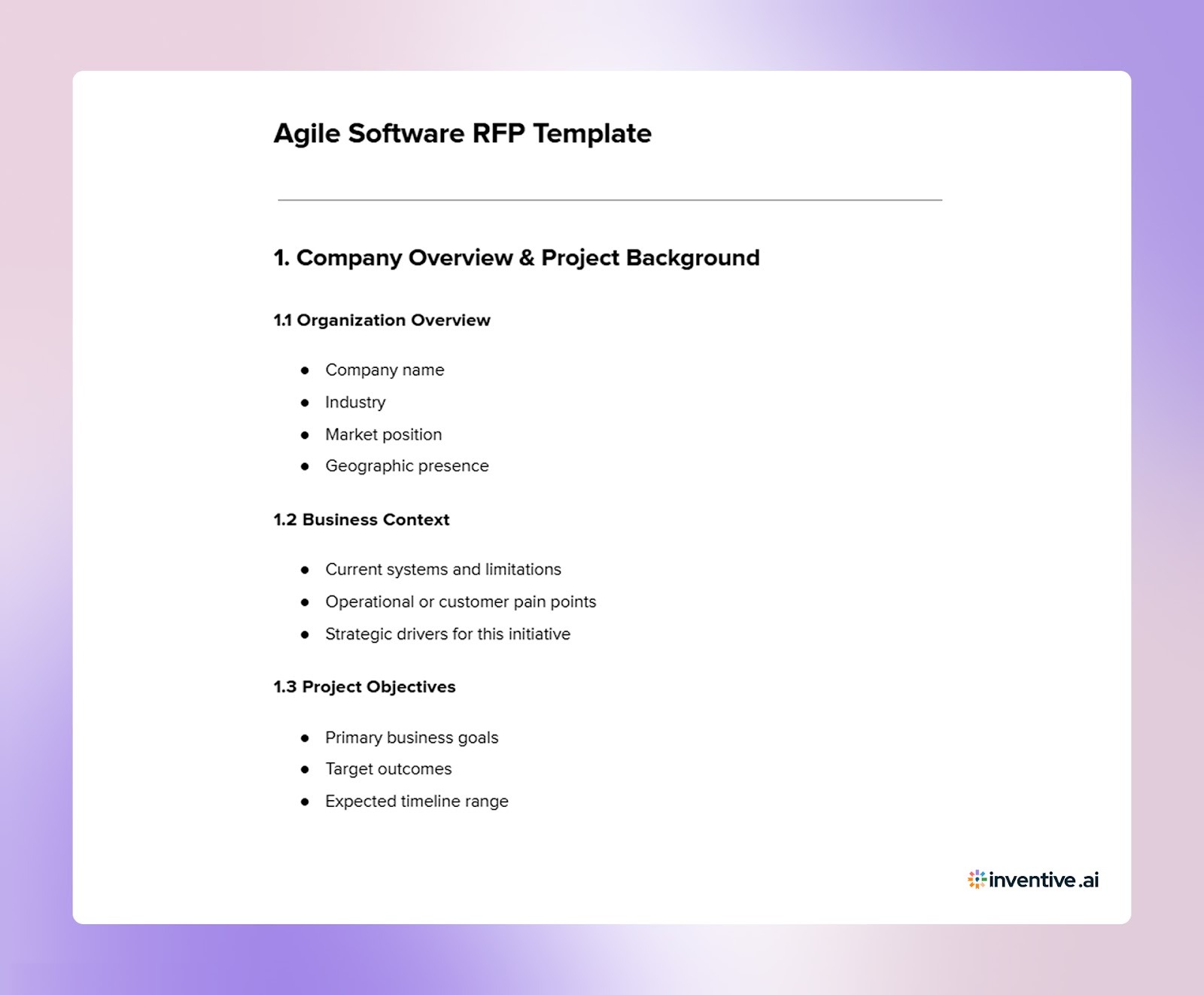
An Agile Software RFP template should define outcomes, governance expectations, delivery cadence, and commercial structure without locking vendors into a rigid feature list. The goal is to evaluate delivery capability, team maturity, and risk controls rather than forcing fixed-scope commitments that conflict with iterative development.
Below is a structured Agile Software RFP template you can adapt for enterprise, regulated, or product-led environments.

Once you define what a strong Agile RFP looks like, you need an equally structured response that demonstrates governance maturity and commercial clarity.
Agile Software RFP Response Template That Wins Deals (For Vendors)
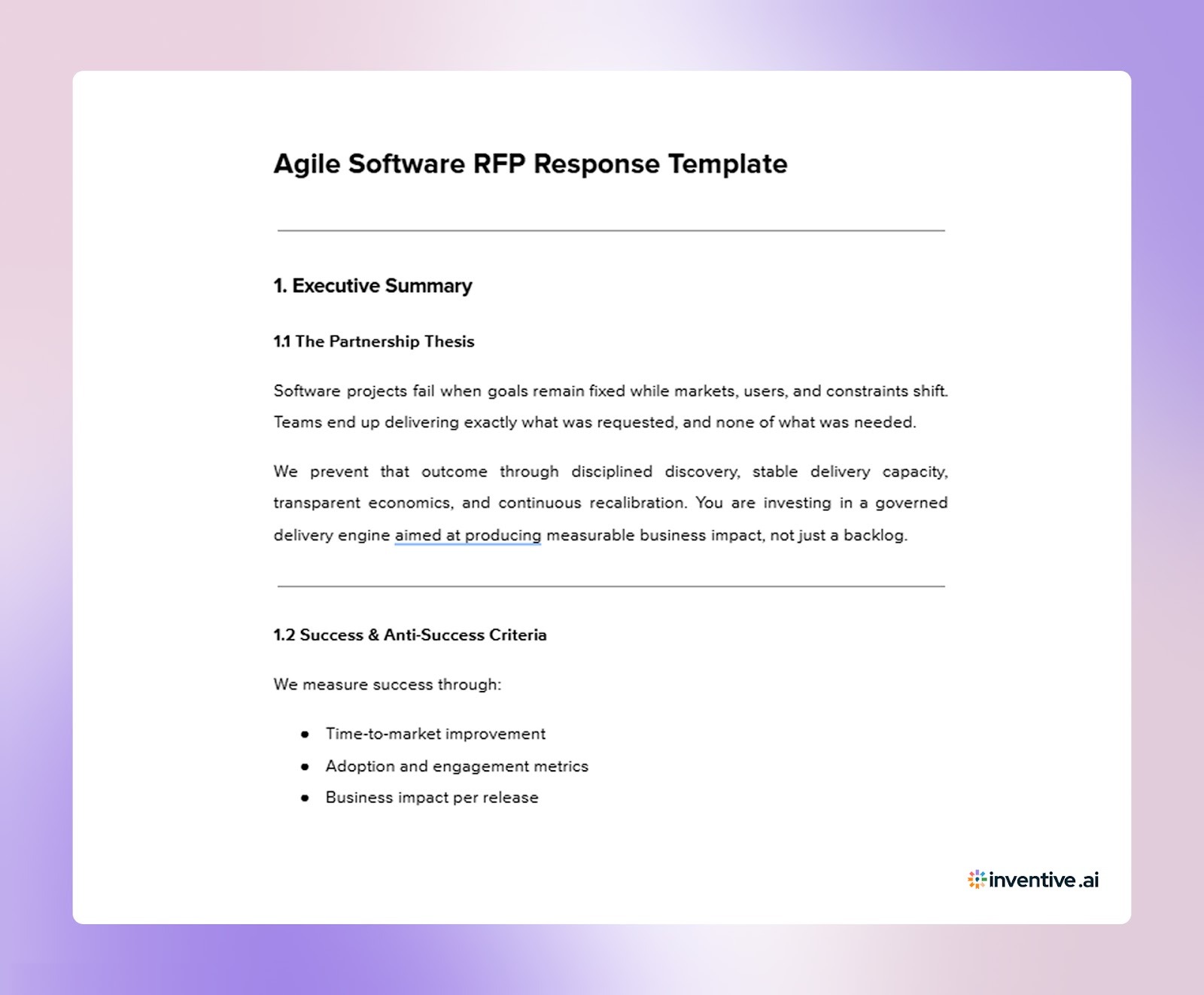
A strong Agile RFP response does more than describe ceremonies and tooling. It demonstrates governance maturity, commercial clarity, disciplined backlog management, and measurable business accountability.
The goal is not to promise delivery of every line item, but to prove you can manage change without losing control of budget, quality, or momentum.

1. Executive Summary
1.1 The Partnership Thesis
Software projects fail when goals remain fixed while markets, users, and constraints shift. Teams end up delivering exactly what was requested, and none of what was needed.
We prevent that outcome through disciplined discovery, stable delivery capacity, transparent economics, and continuous recalibration. You are investing in a governed delivery engine aimed at producing measurable business impact, not just a backlog.
1.2 Success & Anti-Success Criteria
We measure success through:
- Time-to-market improvement
- Adoption and engagement metrics
- Business impact per release
- Quality stability
We also define failure clearly:
- Shipping 100% of backlog items with minimal user adoption
- Feature velocity increases while defect rate rises
- Budget consumed without measurable business movement
Both sides should know what "not working" looks like.
2. Early Proof of Execution
Before discussing the process, here is evidence of delivery maturity:
- Eliminated a planned $120k feature after user validation showed 8% projected adoption
- Reduced the release cycle from 8 weeks to 2 weeks within 3 months
- Recovered from mid-program scope shock by reprioritizing backlog without increasing budget
We will provide detailed case narratives upon request.
3. Discovery & Product Validation
3.1 Structured Discovery
- Defined duration
- Cross-functional workshops
- Risk mapping
- Assumption validation
3.2 Simultaneous Early Activation
While discovery runs:
- Infrastructure setup begins
- Security baselines established
- Toolchain activated
- Architecture runway prepared
Delivery momentum does not wait for perfect clarity.
3.3 Product Thinking Discipline
We actively:
- Challenge low-value backlog items
- Identify opportunities to reduce scope
- Quantify ROI hypotheses
- Recommend killing features when data warrants
4. Agile Delivery Framework
4.1 Framework & Governance Fit
- Selected framework
- Governance integration
- Adaptation for enterprise controls
4.2 Sprint Structure & Definition of Done
- Sprint cadence
- Ceremony model
- Definition of Done aligned to:
- Code quality standards
- Test coverage thresholds
- Documentation requirements
- Security validation
- Compliance checkpoints
4.3 Collaborative Definition of Ready
We work with your stakeholders to make sure:
- Clear business intent
- Acceptance criteria defined
- Dependencies identified
- Shared understanding before commitment
Readiness protects both delivery speed and budget.
5. Governance, Risk & Continuous Calibration
5.1 Capacity-Based Backlog Governance
- Stable cross-functional team
- Backlog reprioritization within fixed capacity
- Transparent scaling triggers
5.2 Continuous Pivot & Calibration
When priorities shift:
- Early detection
- Transparent communication
- Rapid reallocation within sprint capacity
- Evidence-driven adjustments
5.3 Budget Guardrails
- Monthly burn transparency
- Rolling forecast visibility
- Optional capacity caps
- Capped T&M structure
- Pre-scale value checkpoints
Capacity remains stable. Scope flexes. Budget visibility stays constant.
5.4 Risk Mitigation Framework
This framework is reviewed in sprint retrospectives.
6. Talent & Squad Continuity
6.1 Cohesive Squad Model
This is not a pool of interchangeable resources. It is a cross-functional squad:
- Delivery Lead
- Scrum Master
- Lead Architect
- Backend/Frontend Engineers
- UX Designer
- QA Engineer
When possible, we deploy squads with shared delivery history.
If newly formed:
- Structured onboarding sprint
- Pair programming integration
- Shared coding standards
- Early cohesion workshop
6.2 Cultural Compatibility & Conflict Handling
We address friction through:
- Defined decision rights
- Structured retrospective feedback
- Escalation clarity
- Psychological safety standards
Distributed teams operate with:
- Time-zone overlap policy
- Async documentation discipline
- Clear communication protocols
7. Tooling & Operational Stack
We operate with a production-ready stack:
- Backlog: Jira / Linear
- Documentation: Confluence / Notion
- Collaboration: Slack / Teams
- Whiteboarding: Miro / FigJam
- Version Control: GitHub / GitLab
- CI/CD: GitHub Actions / Azure DevOps
Client tooling preference supported.
8. Engineering Discipline & AI Governance
8.1 DevOps Standards
- CI/CD pipelines
- Automated regression testing
- Monitoring & observability
8.2 Technical Debt & Long-Term Velocity
We allocate 15–20% of sprint capacity to managing technical debt.
This prevents:
- Compounding complexity
- Delivery slowdown
- Increased defect escape rate
Ignoring this allocation today reduces delivery speed dramatically within months.
8.3 AI-Augmented Development Policy
- Approved internal AI tools only
- No proprietary client data in public models
- Mandatory human review
- Audit traceability
AI increases throughput without compromising security.
9. Commercial Model
9.1 Capacity-Based Structure
You invest in a stable squad over time. Backlog adjusts based on value evidence.
9.2 Performance Tiers (Optional)
We are open to performance-linked incentives tied to:
- Deployment frequency
- Mean Time to Recovery (MTTR)
- Adoption milestones
- Delivery predictability
9.3 Financial Transparency
- Monthly cost reporting
- Rolling forecast
- Cost-per-sprint breakdown
10. Agile Fluency Case Evidence
We provide:
- Example of a roadmap pivot based on user data
- Example of sprint variance recovery
- Example of eliminating scope to protect ROI
- Example of compliance-driven adjustment
Each includes context, constraints, decisions, and outcomes.
11. Mandatory Collaborative Working Session
We require a collaborative working session before contract execution to:
- Validate backlog clarity
- Assess communication dynamics
- Test governance fit
We do not finalize engagements without this step. It protects both parties.
12. Knowledge Transfer & Offboarding
- Continuous documentation
- Repository access from Day 1
- Structured handover plan
- Defined transition timeline
No vendor dependency. Ever.
13. Why Us
We combine:
- Product-led discipline
- Capacity-based economic clarity
- Strong governance controls
- Technical debt accountability
- Responsible AI usage
- Transparent risk management
We are accountable for measurable business movement, not just story completion.
Even with a strong structure in place, many vendors undermine their credibility through subtle positioning errors in Agile RFP responses.
10 Mistakes Vendors Make While Filling in Agile Software RFP Template
Even strong delivery teams lose Agile RFPs not because of capability gaps, but because their response signals the wrong mindset. Procurement and CTO stakeholders aren't just evaluating frameworks; they're evaluating risk, clarity, and commercial discipline.
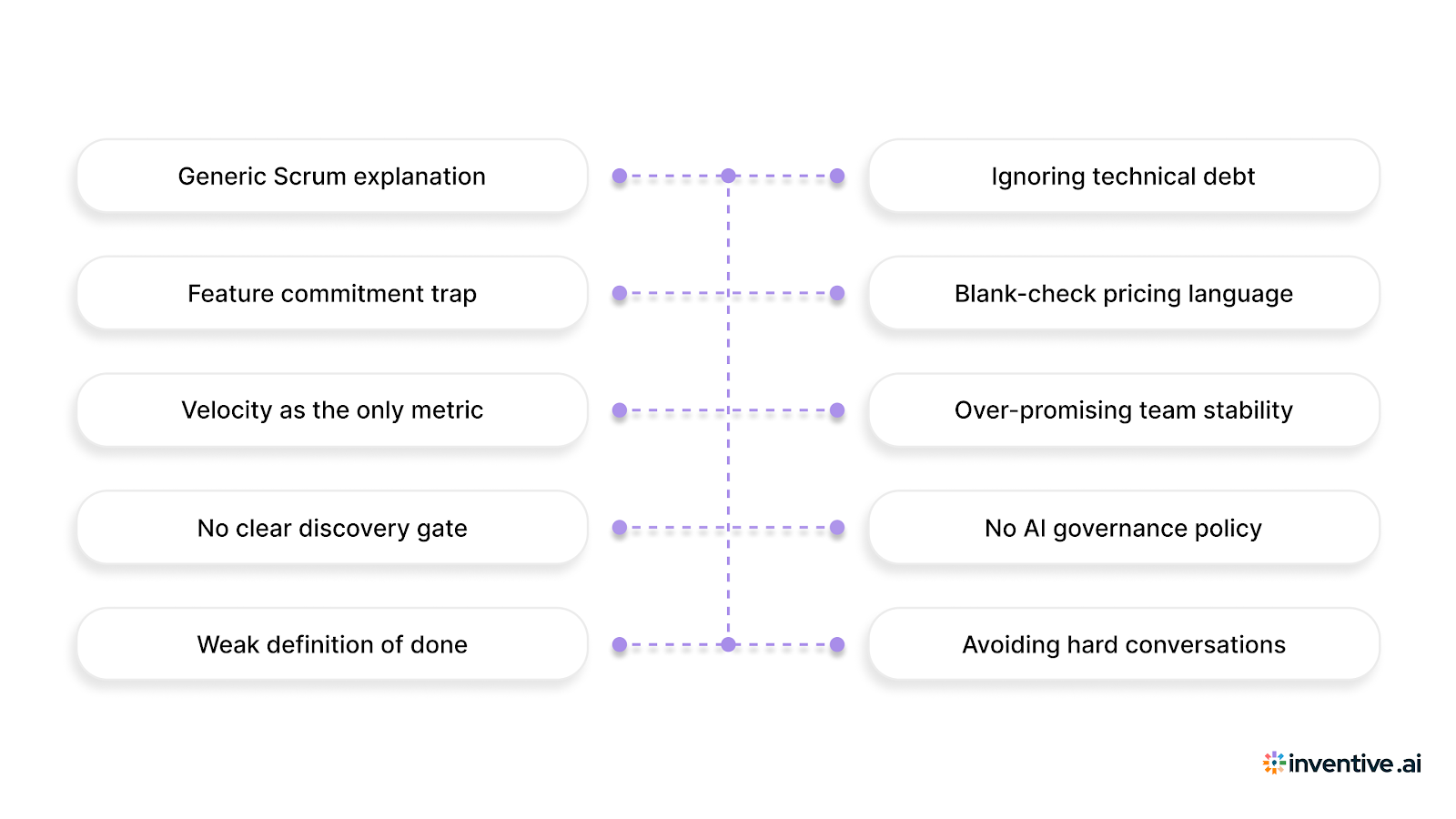
Below are the most common mistakes vendors make when responding to Agile RFPs.
1. Generic Scrum Explanation: Copy-pasting textbook descriptions of Scrum or SAFe without connecting them to the client's business outcomes makes the response feel templated and shallow.
2. Feature Commitment Trap: Promising to deliver every listed item instead of reframing the engagement around capacity and value signals a waterfall mindset disguised as Agile.
3. Velocity as the Only Metric: Highlighting story points completed while ignoring adoption, impact, or time-to-market shows internal focus rather than business accountability.
4. No Clear Discovery Gate: Skipping structured discovery or failing to define transition criteria to Sprint 1 increases ambiguity and future conflict.
5. Weak Definition of Done: Vague quality standards lead to rework, audit friction, and disputes about what "complete" actually means.
6. Ignoring Technical Debt: Avoiding discussion of refactoring allocation may increase short-term output, but it slows delivery within months.
7. Blank-Check Pricing Language: Talking about flexibility without explaining budget guardrails creates CFO anxiety and reduces trust.
8. Over-Promising Team Stability: Presenting senior profiles without explaining succession planning or continuity protections raises staffing risk concerns.
9. No AI Governance Policy: Failing to clarify how AI tools are controlled can trigger legal and security objections.
10. Avoiding Hard Conversations: Skipping the discussion of sprint variance, scope reprioritization, or stakeholder accountability suggests immaturity rather than confidence.
Avoiding these recurring mistakes requires more than discipline; you need automation and AI that protect context, consistency, and compliance at scale.
How Inventive AI Helps You Improve Agile RFP Response Quality?
Responding to an Agile RFP requires more than speed. It demands contextual accuracy, internal consistency, current content, and answers that reflect true delivery maturity. Most AI tools generate text. Very few understand the full commercial and governance implications of what you are submitting.
Here's how Inventive AI strengthens Agile RFP responses.
Context Engine
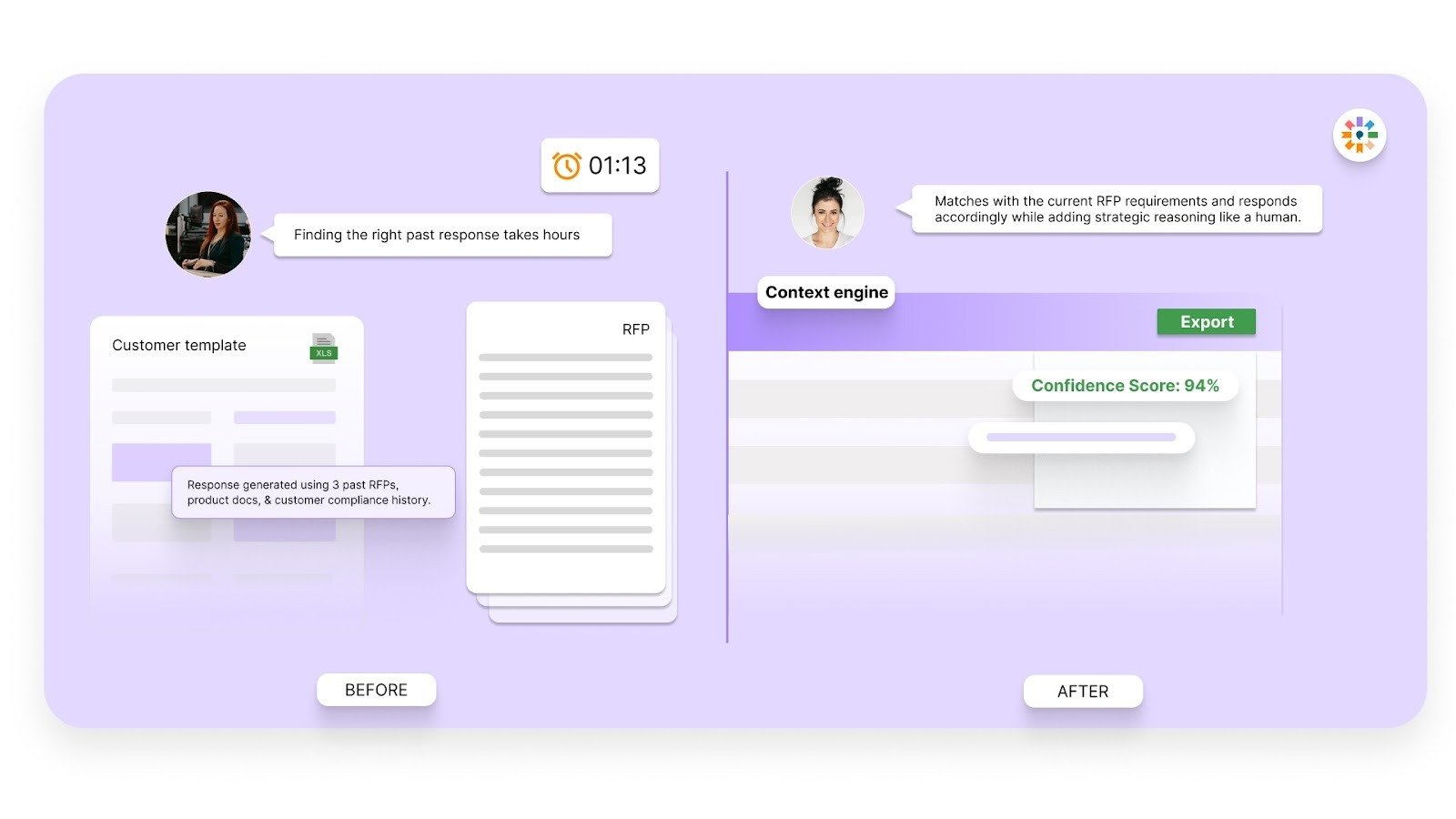
Instead of relying on shallow lookup, Inventive uses multi-layer reasoning to understand the full RFP context, including delivery model, pricing structure, compliance needs, and evaluation criteria. This produces customized answers that read like they were written by a subject matter expert, not assembled from fragments.
Conflict Detection
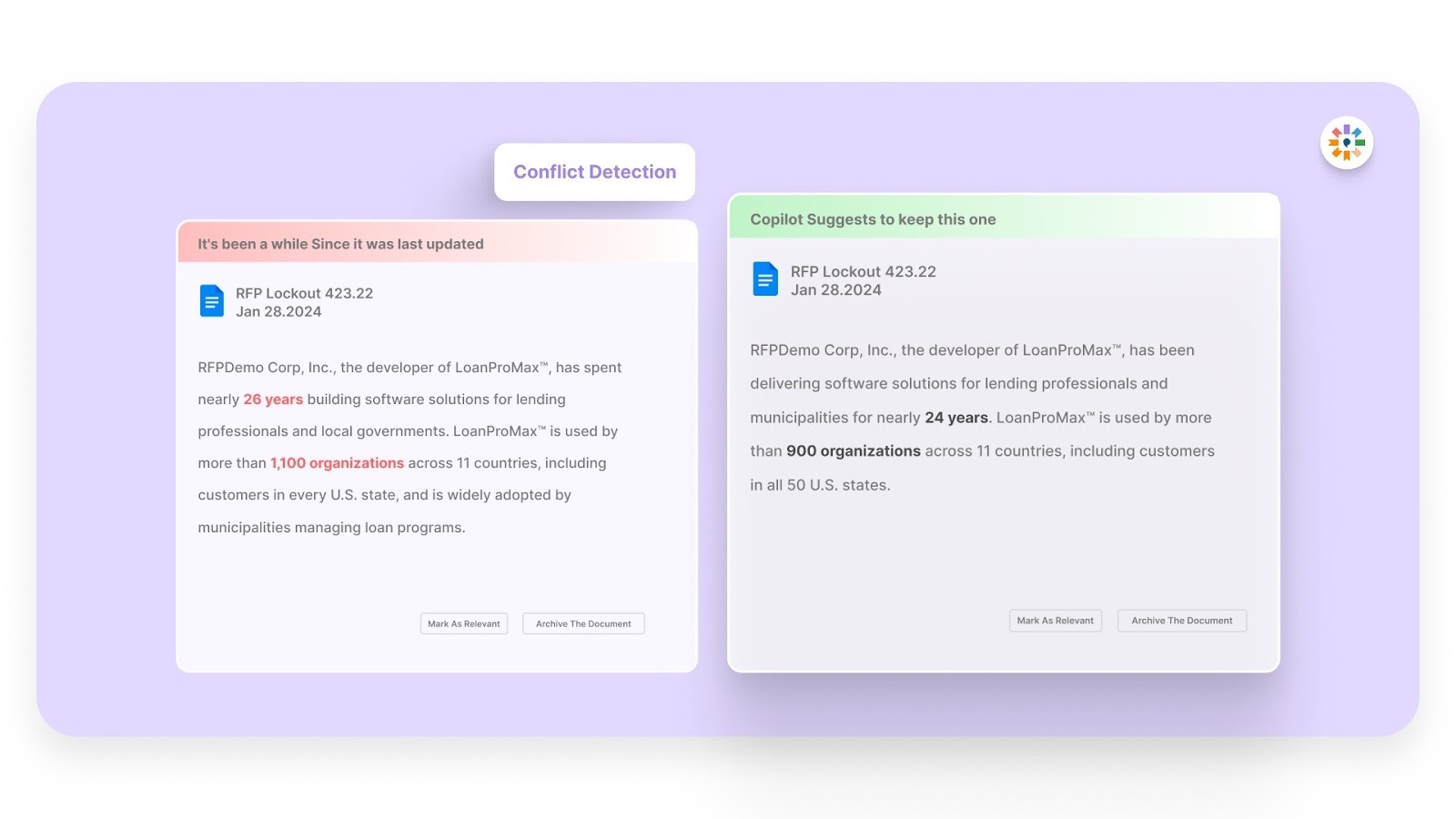
Agile responses often span governance, pricing, security, and technical sections. Inventive automatically flags contradictory statements across your response, preventing inconsistencies such as claiming capacity-based pricing in one section and fixed-scope commitments in another.
Outdated Content Detection
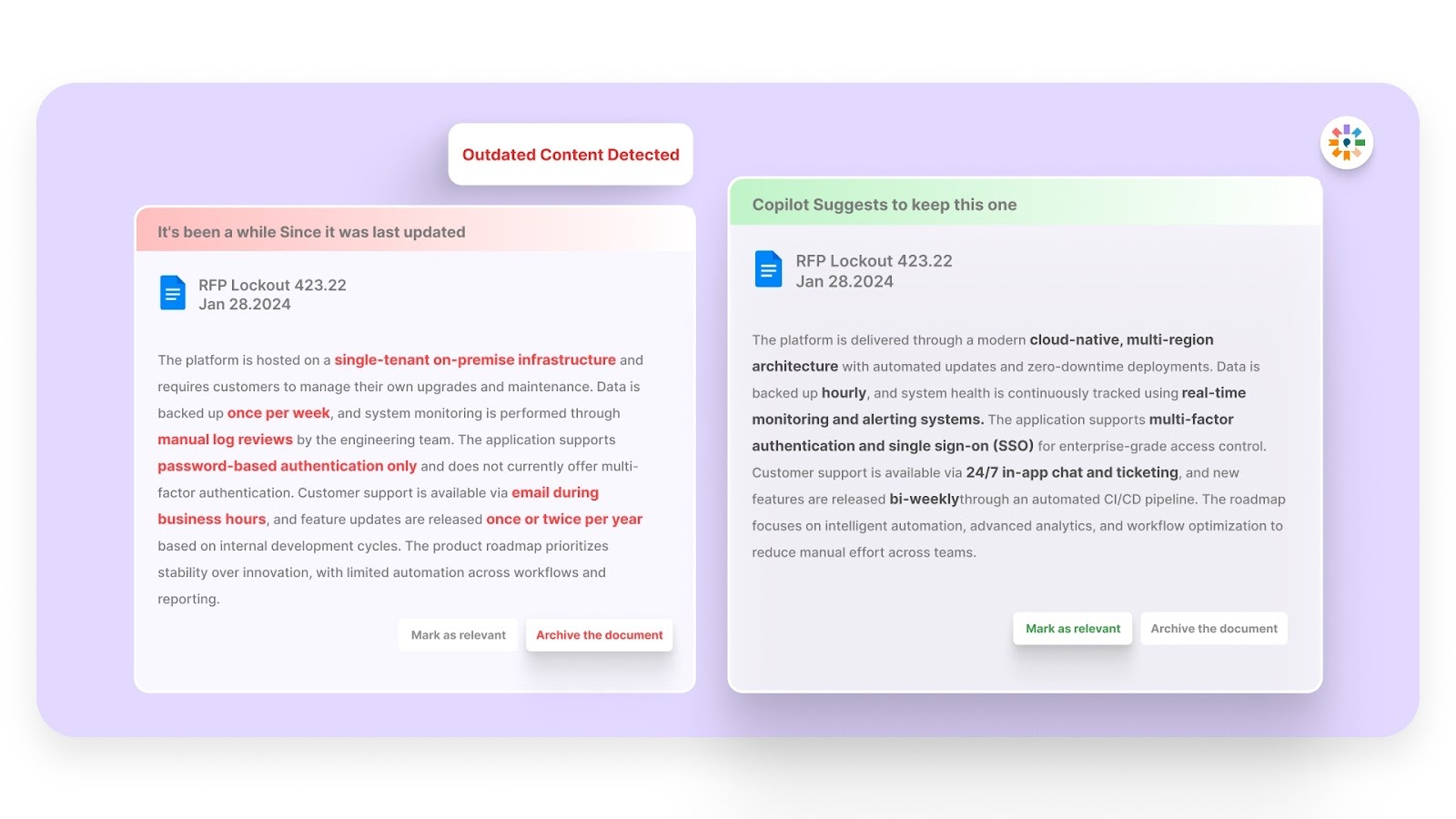
Large answer libraries often contain stale or non-compliant language. Inventive identifies outdated responses before submission, reducing manual review cycles and lowering the risk of sending deprecated security or methodology claims.
2X Quality Response Through Multi-Agent AI
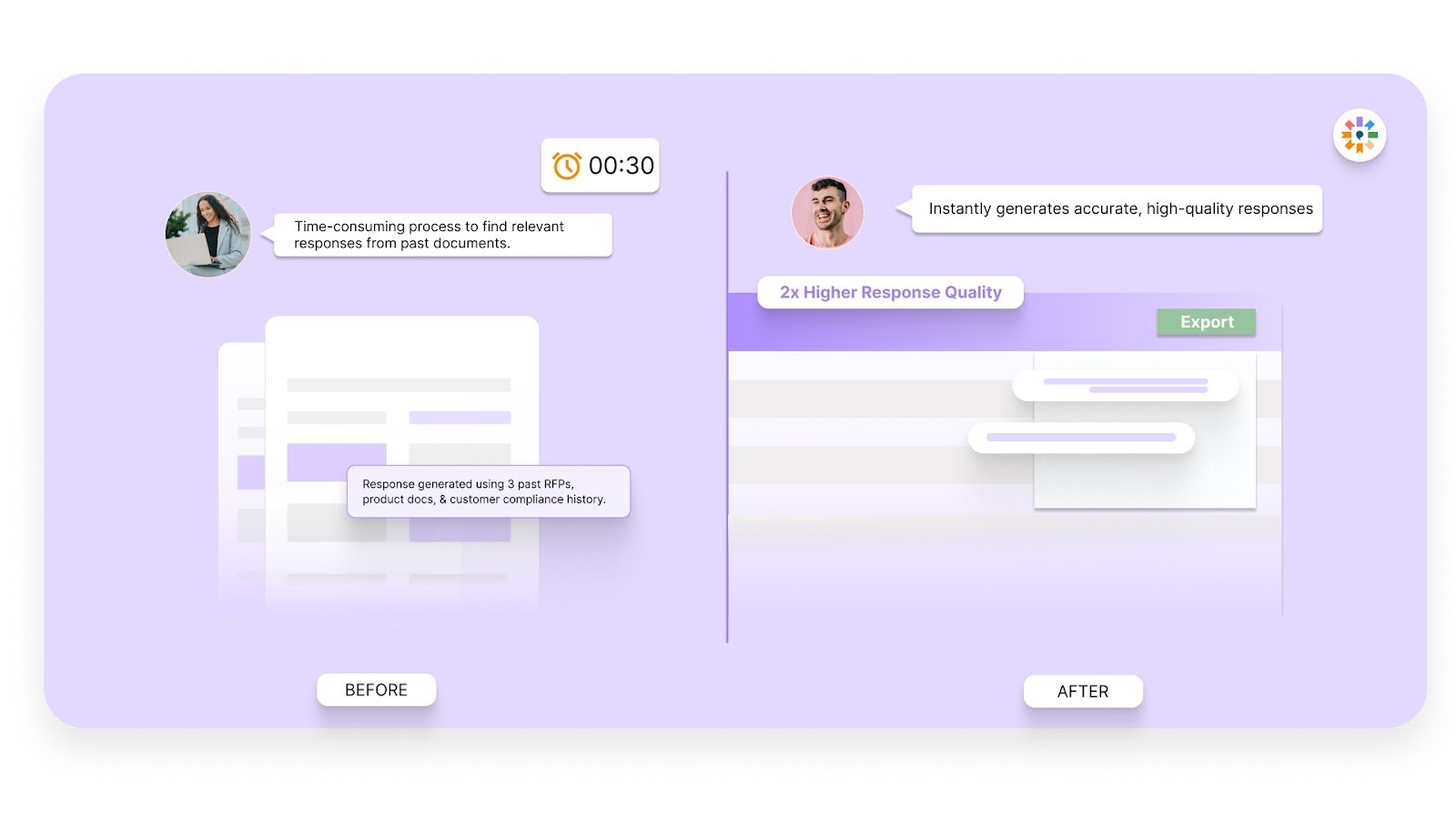
Inventive's multi-agent system evaluates intent, completeness, and clarity before generating a draft. It does not just answer the question. It assesses what the evaluator is truly measuring and structures the response for accuracy and strategic depth.
Simple and Easy-to-Use Interface
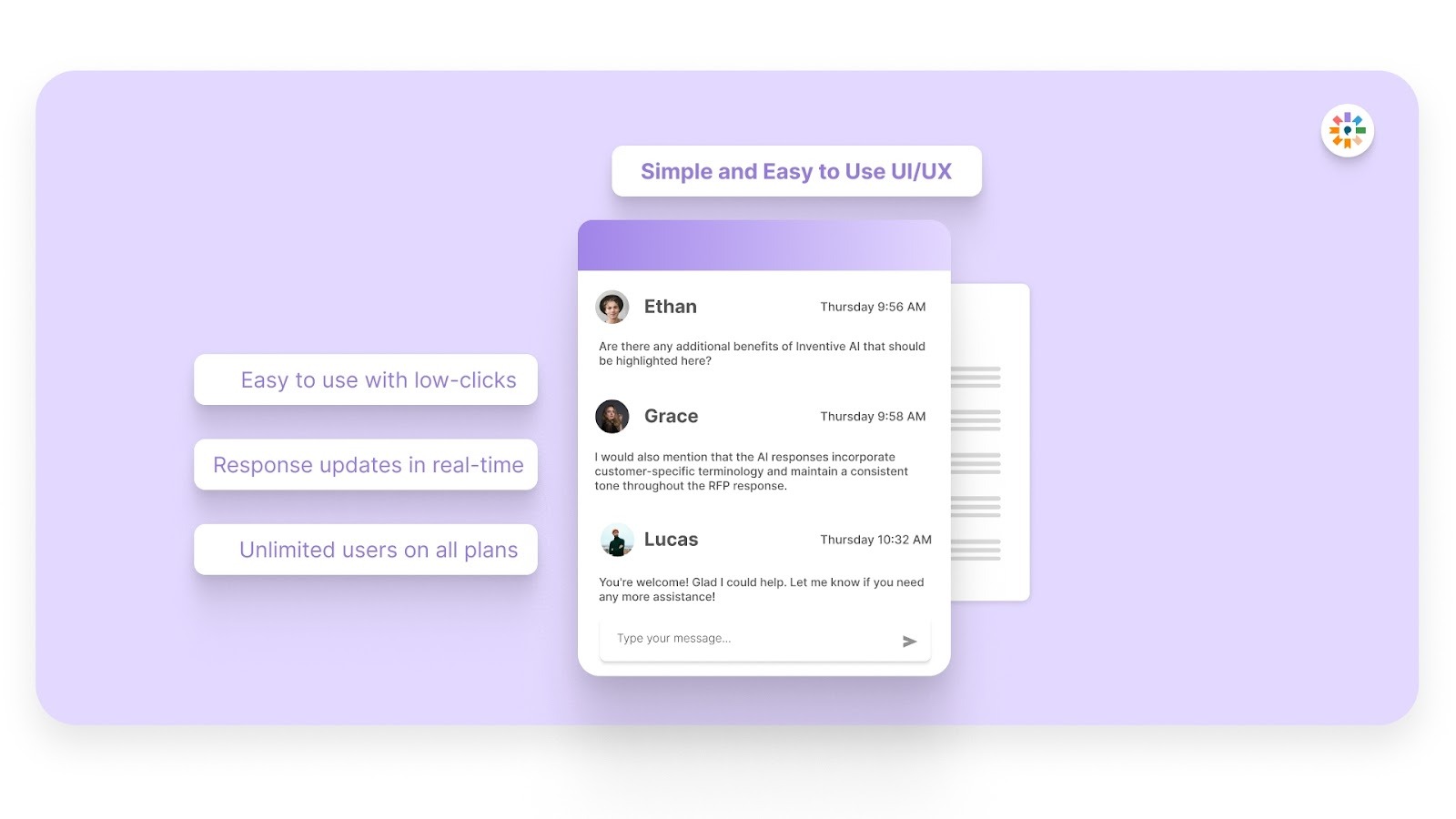
With a 100% adoption rate among current customers and recognition as the easiest-to-use RFP software on G2, teams can begin using Inventive without long onboarding cycles. Proposal managers, sales leaders, and SMEs can collaborate within a clean, intuitive interface designed for daily use.
Narrative-Style Proposals
Inventive AI moves beyond simple Q&A by turning technical data into complete, long-form documents like executive summaries and one-pagers. This allows your team to skip the manual drafting and deliver a cohesive, persuasive story that clearly highlights your value to the buyer.
FAQs
1. Should procurement teams require fixed pricing in an Agile RFP?
Fixed pricing can be included, but it should be tied to milestones or capped engagement models rather than a fully defined backlog. Forcing a fixed scope in an iterative delivery model often leads to defensive estimation and downstream contract friction.
2. What evaluation criteria work best for Agile RFPs?
Agile RFPs benefit from criteria that assess delivery governance, team continuity, backlog management discipline, and financial transparency. Reviewing past pivot decisions and risk handling examples often reveals more than framework descriptions.
3. How long should an Agile software RFP document be?
An Agile software RFP should be concise but structured, typically between 10 and 25 pages, depending on project complexity. The focus should remain on outcomes, governance expectations, and evaluation clarity rather than exhaustive feature specifications.
4. How can sales and delivery teams collaborate better during an Agile RFP response?
Clear internal ownership reduces friction. Sales teams should focus on commercial clarity and stakeholder positioning, while delivery leaders validate feasibility, risk exposure, and governance commitments before submission.
5. When should security and compliance teams be involved in the RFP response?
Security and compliance stakeholders should review response drafts before final submission, especially when the RFP includes audit language, data protection requirements, or regulatory references. Early involvement reduces last-minute revisions and approval delays.
.avif)



.avif)