AI for Presales Teams: Best Use Cases, Tools, and Strategies in 2026
Discover how AI empowers presales teams with smarter demos, faster RFP responses, and stronger buyer engagement. Explore top use cases, tools, and ROI strategies.

Presales teams make or break complex B2B deals. They translate requirements into workable solutions, tailor demos, and carry the technical weight in RFPs and PoCs, often under tight deadlines. Independent research underscores why better leverage matters: Mckinsey reports sellers spend only ~25% of their time actually selling, and well-designed AI can both double selling time and drive >30% lifts in win rates by improving conversion across the funnel.
The upside is practical, not theoretical. AI prioritizes opportunities, automates seller tasks, and can auto-generate or enhance RFP responses.
In this blog, we explore the key use cases, tangible benefits, and top tools for presales teams.
TL;DR (Key takeaways)
- Presales teams spend too much time on repetitive tasks such as drafting, demo preparation, and content retrieval. AI automates these tasks, allowing experts to focus on strategy.
- Core use cases include automated RFP responses, identifying the winning theme, personalizing demos, managing knowledge, and facilitating real-time collaboration.
- Top tools like Gong, Clari, Demostack, Vivun, Consensus, and Inventive AI each address different presales challenges.
Why AI Matters For Presales Teams
Presales work is uniquely multithreaded: discovery, scoping, solution design, demo orchestration, and technical responses often happen in parallel across several opportunities. When content lives in scattered drives and experts are stretched thin, two risks emerge: slow turnarounds and inconsistent answers. AI addresses both by
- Retrieving and grounding the best prior answers from your corpus
- Drafting technical sections and solution summaries
- Reducing workload so engineers spend time where judgment matters most
These align with what McKinsey describes as “digitally enabled seller task automation” and AI-assisted RFP response generation.
The impact compounds: faster, more precise technical support raises buyer confidence early, while consistent, evaluator-aligned proposals reduce downstream friction. These improvements are the levers behind meaningful win-rate lifts when AI is applied end-to-end, not as a bolt-on but woven into core workflows.
How AI Can Help Presales Teams in Their Workflow
Presales professionals manage one of the most complex workflows in enterprise sales, connecting technical expertise, customer insight, and solution design under constant time pressure. AI lightens that load by automating repetitive work, surfacing the right information instantly, and improving decision-making at every stage of the buyer journey.
Here’s how AI practically supports presales teams in their daily workflows:
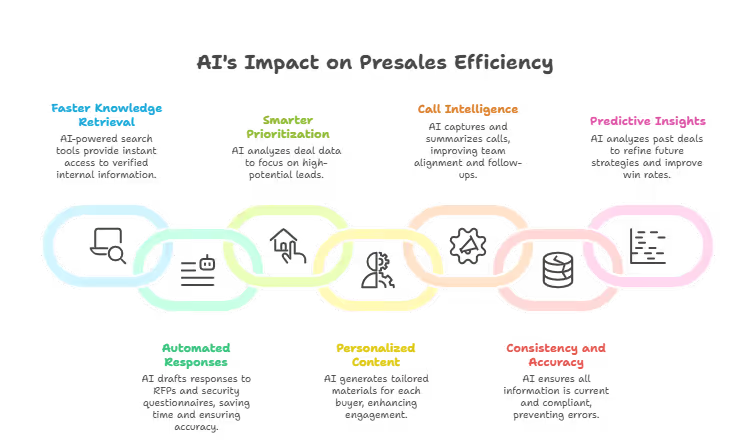
1. Faster Knowledge Retrieval
Presales teams often lose valuable time chasing SMEs or senior colleagues to get technical answers or content.
AI-powered Agentic Search and Slack bots eliminate this friction by retrieving context-aware, accurate information from verified internal sources, such as product documentation, past proposals, and chat threads, within seconds.
Instead of waiting hours for replies, presales engineers can find the exact spec, compliance clause, or customer story they need instantly.
Why it matters: Knowledge retrieval happens in seconds, not hours, so teams can focus on designing solutions and responding to buyers faster.
2. Automated RFP, RFI, and Security Questionnaire Responses
One of the biggest time drains in presales is handling repetitive questionnaires. AI tools like Inventive AI can read and interpret complex RFPs, RFIs, and security forms, then draft responses automatically by pulling from verified internal databases such as SharePoint, Confluence, or Drive.
This means teams spend their time reviewing, not retyping, maintaining compliance and brand consistency across every submission.
Why it matters: Cuts drafting time by up to 90%, ensures accuracy, and reduces dependency on manual content retrieval.
3. Smarter Lead and Deal Prioritization
AI can analyze deal data, from call transcripts, CRM records, and email interactions, to understand buyer intent and engagement levels.
By detecting which leads are warming up or stalling, presales can focus attention where it’s most likely to convert.
Example: AI surfaces that a prospect has repeatedly discussed “integration capabilities” in recent calls. This signals a strong buying intent for a technical proof-of-concept, prompting presales to prioritize that deal.
Why it matters: Improves resource allocation and boosts conversion rates by ensuring presales focus on deals with the highest win probability.
4. Personalized Content Creation
Creating tailored materials, one-pagers, battle cards, and comparison sheets can be time-consuming. AI can instantly generate these assets using deal context, industry, and buyer persona.
For example, Inventive AI can auto-generate a customized solution overview for a healthcare prospect, including compliance notes, integrations, and case studies.
This makes every proposal and presentation feel purpose-built without extra manual effort.
Why it matters: Enables personalization at scale, helping teams deliver precise, buyer-relevant materials faster.
5. Call and Demo Intelligence
AI captures, transcribes, and summarizes calls and product demos, highlighting objections, next steps, and follow-up tasks automatically.
Presales engineers can review insights in minutes, improving alignment with sales and product teams.
Why it matters: Ensures no detail is missed and handoffs between teams are seamless, improving the quality and speed of post-demo follow-ups.
6. Consistency and Accuracy in Information
AI continuously monitors data used in decks, responses, and technical documents to ensure it’s accurate and compliant with the latest product, pricing, or security updates.
For instance, if the encryption standard or SLA terms change, AI flags outdated references in old proposal templates before they reach the client.
Why it matters: Prevents credibility loss from outdated information and ensures all deliverables remain compliant and current.
7. Predictive Insights and Win–Loss Analysis
AI doesn’t just automate, it learns. By analyzing past deal data, proposal scores, and buyer feedback, AI uncovers patterns behind wins and losses.
Presales teams can see which features, narratives, or pricing models drive success, helping them refine responses for future opportunities.
Why it matters: Turns every closed deal, win or loss, into actionable intelligence for improving future proposals and positioning.
The Bottom Line
AI doesn’t replace presales expertise; it amplifies it. From faster knowledge access and automated drafting to predictive win analysis, AI lets presales engineers spend less time formatting and more time strategizing.
For RFP and proposal workflows, purpose-built platforms like Inventive AI take it a step further, automating first drafts, aligning responses to evaluator rubrics, and maintaining 95% accuracy with 0% hallucination. The result: faster submissions, higher win rates, and presales teams that can finally operate at the speed of enterprise buying.
Related: RFP Automation Checklist for Sales Success
Tangible Benefits of Using AI in Presales
The value of AI for presales is far from theoretical. With proper adoption, data discipline, and workflow alignment, AI delivers real, measurable gains across multiple stages of the presales lifecycle.
1. Faster Turnaround Times
Technical responses, proposals, demo prep, and content pulls often drag deal momentum. AI empowers presales teams to move from blank page to first draft in a fraction of the time, giving engineers hours or even days back to engage buyers earlier.
2. Improved Accuracy, Consistency & Compliance
Inaccurate or outdated content undermines trust and introduces risk. AI helps ensure presales teams pull from verified internal knowledge, automate checks for outdated material, and maintain regulatory or security alignment, reducing errors and improving credibility.
3. Higher Win Rates Through Strategic Enablement
Speed and accuracy alone don’t win deals; relevance and alignment do. By using AI to identify buyer needs, tailor content, and deliver solutions that reflect buyer priorities, presales teams raise the quality of what they deliver. Case studies show that personalization and AI-driven alignment can significantly lift conversion rates.
4. Scalable Presales Support Without Additional Headcount
Presales teams often hit capacity limits, too many deals, too few engineering hours. AI helps scale by automating repetitive tasks (content retrieval, drafting, versioning), enabling teams to support more opportunities without proportional increases in headcount.
5. Deeper Engagement and Demo Differentiation
When demos are generic, buyers disengage. AI-powered demo personalization boosts engagement (for example, 3× higher interaction rates for tailored demos) and helps presales teams deliver a higher-impact experience.
6. Better Insight into What Works (and What Doesn’t)
AI lets presales teams track more than just outputs; it enables insight into which content wins, which features resonate, which objections recur, and where deals stall. That means smarter iteration, stronger proposals, and fewer repeated mistakes.
Related: Building a Competitive RFP Response Library
Top AI Tools for Presales Teams in 2026
AI tools for presales are evolving fast, from automating RFP responses to enhancing demo delivery and pipeline visibility. The right platform can save hundreds of hours per quarter, boost accuracy, and help teams scale without additional headcount. Below, we’ve compared the leading AI tools that enable presales excellence across content automation, collaboration, and buyer engagement.
1. Inventive AI
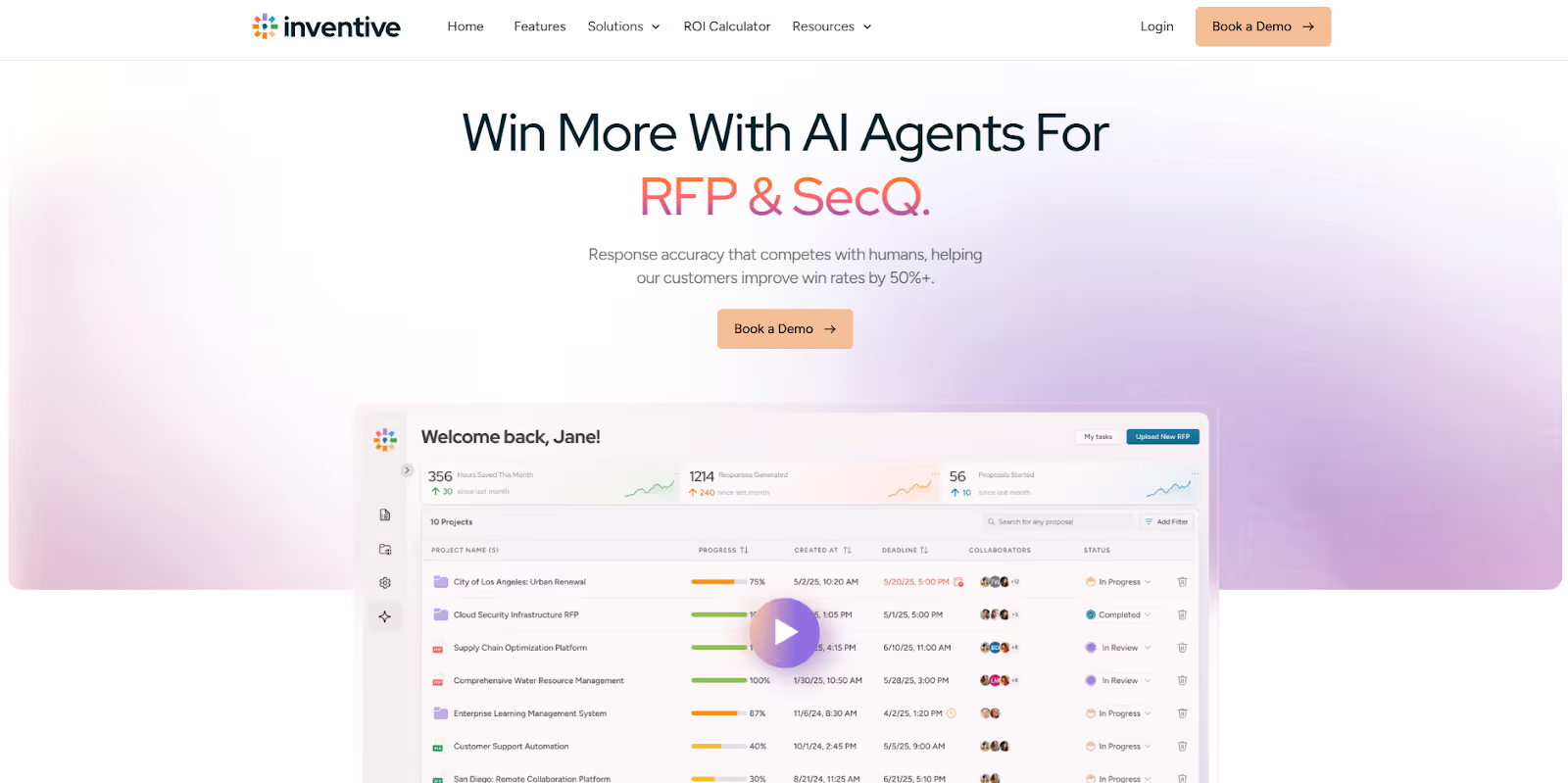
Gartner Rating: 5/5
Presales teams run discovery, demos, and technical validation. Meanwhile, RFPs, security questionnaires, and DDQs pile up and pull sales engineers off live deals — most of it repetitive: the same answers, the same security controls, and a hunt through scattered docs to confirm a stored answer still holds.
Inventive AI is AI-native RFP response software for enterprise presales teams. It reads each RFP, DDQ, or security questionnaire and drafts answers from the systems your team already uses, tied to the deal. When it can't cite a source, it flags the question for an SME instead of guessing, so experts step in only where needed and reviewers approve before anything ships.
Key features
- Drafts each answer from connected knowledge, with citations and a confidence score.
- Ties each answer to deal details and discovery notes, not boilerplate.
- Flags conflicting, outdated, and duplicate content automatically.
- Connects SharePoint, Google Drive, Salesforce, Confluence, Notion, and Zendesk, and syncs changes.
- Answers questionnaires and RFPs inside customer portals.
- Check the full document for gaps, compare against competitors, and score deal fit early.
- Sales Collateral (Beta), builds deal-specific materials from the same connected knowledge.
Pros (from G2 reviews)
- Answers complex security, technical, and compliance items accurately, where generic AI tools fall short.
- Scales across many concurrent RFPs and questionnaires without added headcount.
- Ranked #1 for ease of use on G2; teams get productive within minutes.
Cons (from G2 reviews)
- Analytics and reporting run shallow, with limited custom dashboards.
- No PowerPoint export or native mobile app yet.
What customers say about Inventive AI
"Drafts come back grounded in our content with citations on every answer. For a 100-question questionnaire it spits out a v1 draft in under 5 minutes."
— Carlos B., Mid-Market (51–1,000 employees)
Also read: RFP Content Management Best Practices and Tips
2. Gong
Gartner Rating: 4.7/5
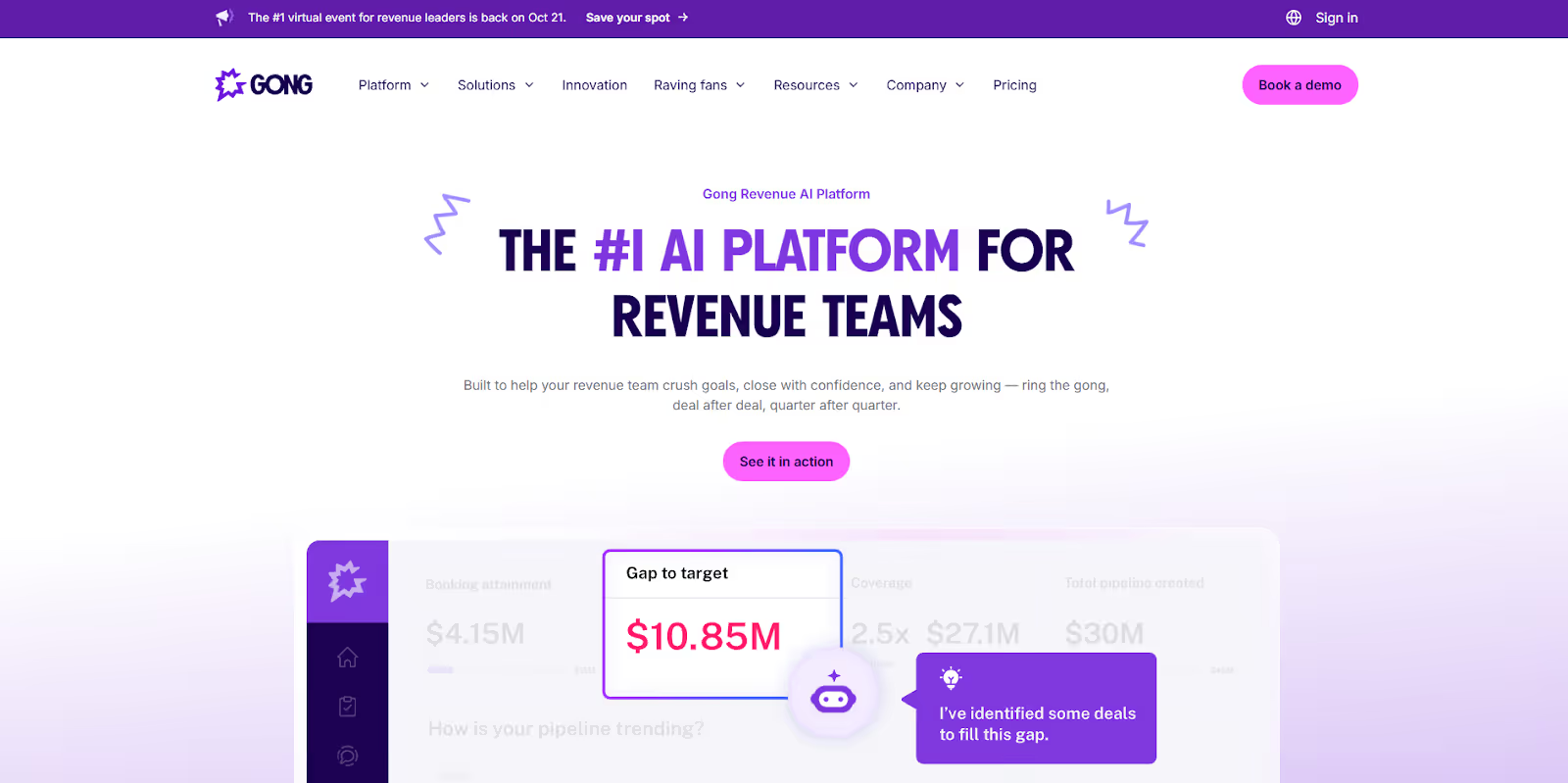
Gong is a conversation intelligence system that records, transcribes, and categorizes customer-facing meetings, calls, and emails. It is used to store and analyze communication data across presales and sales processes.
Key Features
- Automated call and meeting transcription.
- Categorization for topics such as pricing, competitors, or objections.
- Account activity tracking across stakeholders.
- Integration with CRM and conferencing platforms.
Pros
- Provides searchable call transcripts and categorized discussion logs.
- Maintains data inside existing CRM systems.
Cons
- Insightful call analytics, but doesn’t turn insights into evaluator-aligned, submission-ready drafts.
- Data volume can overwhelm teams without clear action workflows.
- Limited impact on RFP/PoC document accuracy or turnaround.
Suggested Alternative:
Inventive AI - Pair conversation insights with execution. Inventive converts call takeaways into citation-backed, evaluator-aligned drafts so presales ships faster with 0% hallucination.
Pricing
Custom pricing based on number of users and recording volume.
Best For
Teams that maintain archives of buyer interactions for internal analysis.
3. Clari
Gartner Rating: 4.7/5
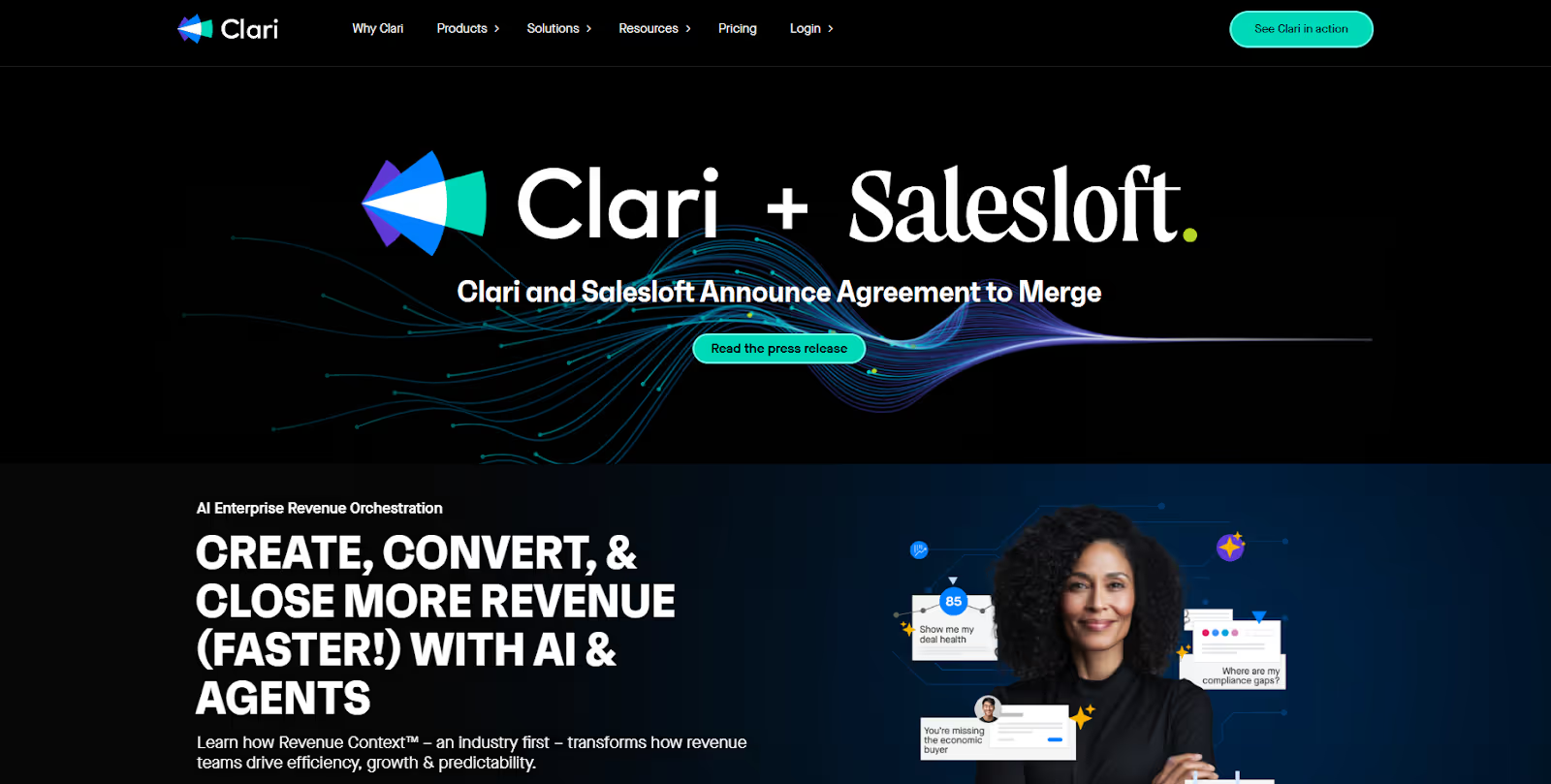
Clari is a data aggregation and forecasting application that compiles information from CRM and activity sources into pipeline reports. It provides structured visibility into deal stages and probability scoring.
Key Features
- CRM and activity data aggregation.
- Forecasting and deal probability calculations.
- Pipeline trend reports.
- Integrations with Salesforce, HubSpot, and communication tools.
Pros
- Offers centralized dashboards for tracking opportunity data.
- Works within standard CRM environments.
Cons
- Excellent forecasting view, but no proposal drafting or rubric alignment.
- Forecast quality hinges on CRM hygiene and rep discipline.
- Advanced setup/config can slow time-to-value for lean RevOps teams.
Suggested Alternative:
Inventive AI - If forecasting exposes risk but late-stage documents still stall, Inventive’s grounded drafting + Win Themes closes the gap between “we know” and “we win.”
Pricing
Enterprise pricing, customized by data volume and team size.
Best For
Organizations that monitor sales pipelines and forecast revenue activity.
4. Demostack
Gartner Rating: 4.6/5
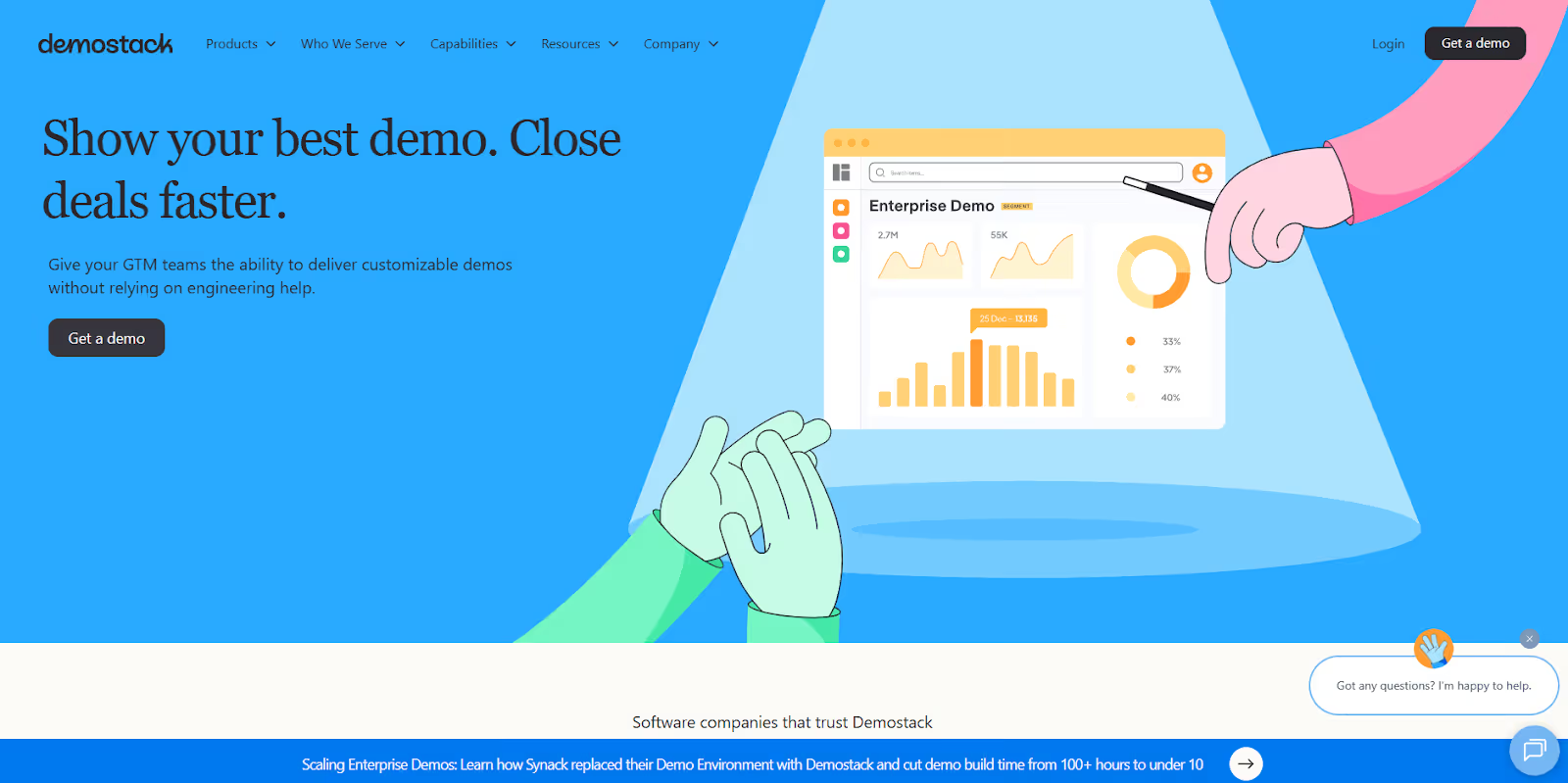
Demostack is a demo experience platform that allows presales teams to build interactive product environments. It is used for creating and managing customized demos across different accounts or industries.
Key Features
- No-code demo creation for software products.
- Browser-based environment cloning.
- Analytics on demo usage and engagement.
- CRM and collaboration tool integrations.
Pros
- Supports creation of demo instances without engineering resources.
- Enables multiple product configurations for demonstrations.
Cons
- Strong no-code demos, but not built for RFP/security questionnaire automation.
- Demo maintenance still needs ongoing product/content updates.
- Integrations for large environments can take time to wire cleanly.
Suggested Alternative:
Inventive AI - Demos spark interest; Inventive secures the score. Auto-generate accurate, rubric-mapped proposals to keep momentum through security and procurement.
Pricing
Custom pricing, typically based on demo volume and active users.
Best For
Organizations that conduct recurring product demonstrations in presales or solution consulting.
5. Vivun
Gartner Rating: n/a
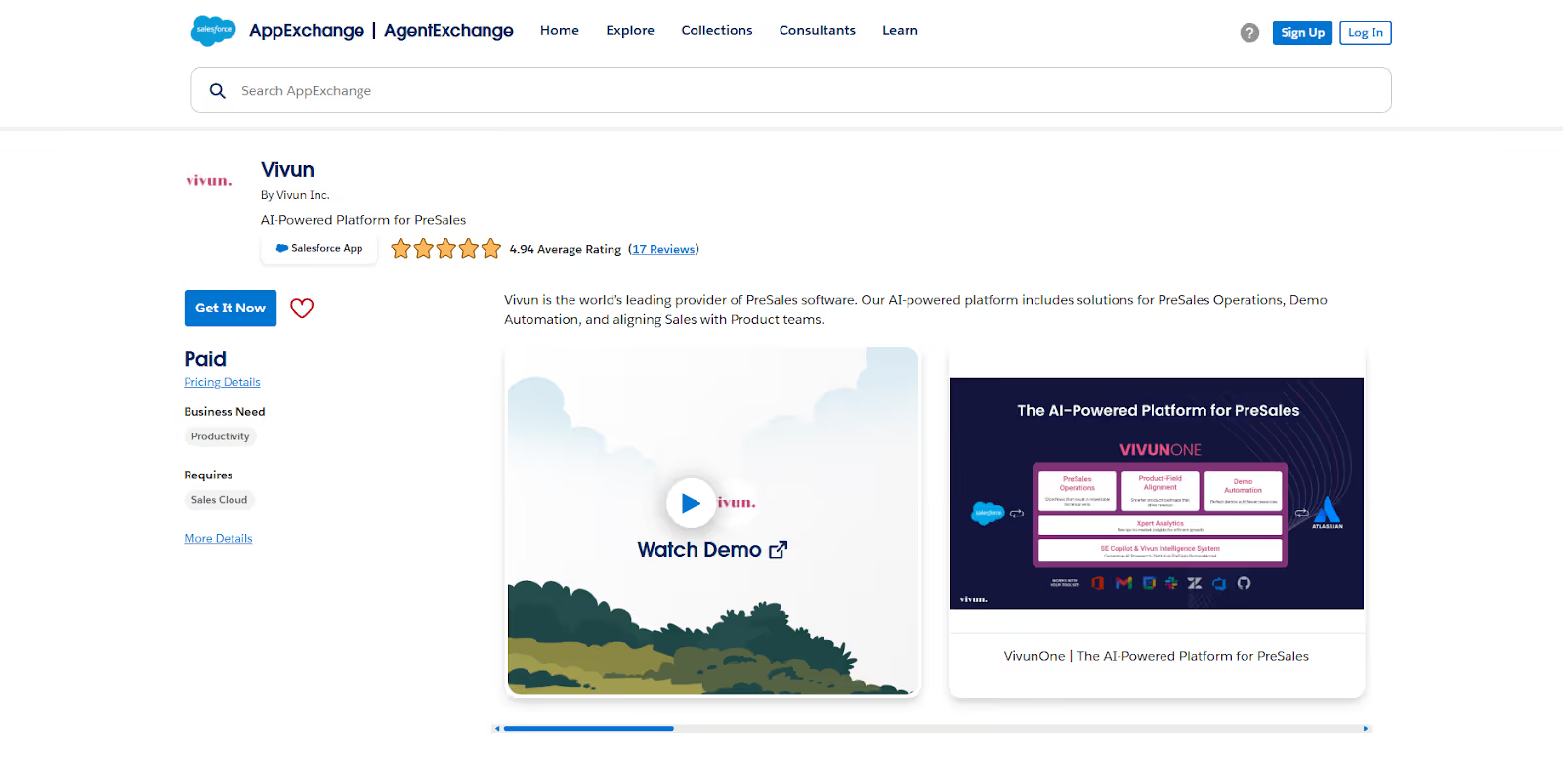
Vivun is a presales operations platform used to log presales activity and associate it with pipeline data. It tracks workload, resource allocation, and contribution to opportunity progress.
Key Features
- Dashboards for presales engagement and deal attribution.
- Activity tracking for engineers and solution consultants.
- Reporting on presales capacity and performance metrics.
- Integrations with CRM and collaboration tools.
Pros
- Records presales work and related opportunity data.
- Enables reporting on resource utilization.
Cons
- Great presales ops visibility, but doesn’t generate or validate proposal content.
- Accuracy depends on consistent activity logging by engineers.
- Limited direct influence on evaluator scoring without a drafting layer.
Pricing
Custom pricing based on team size and reporting complexity.
Best For
Enterprises monitoring presales utilization and contribution to revenue operations.
6. Consensus
Gartner Rating: 4.7/5
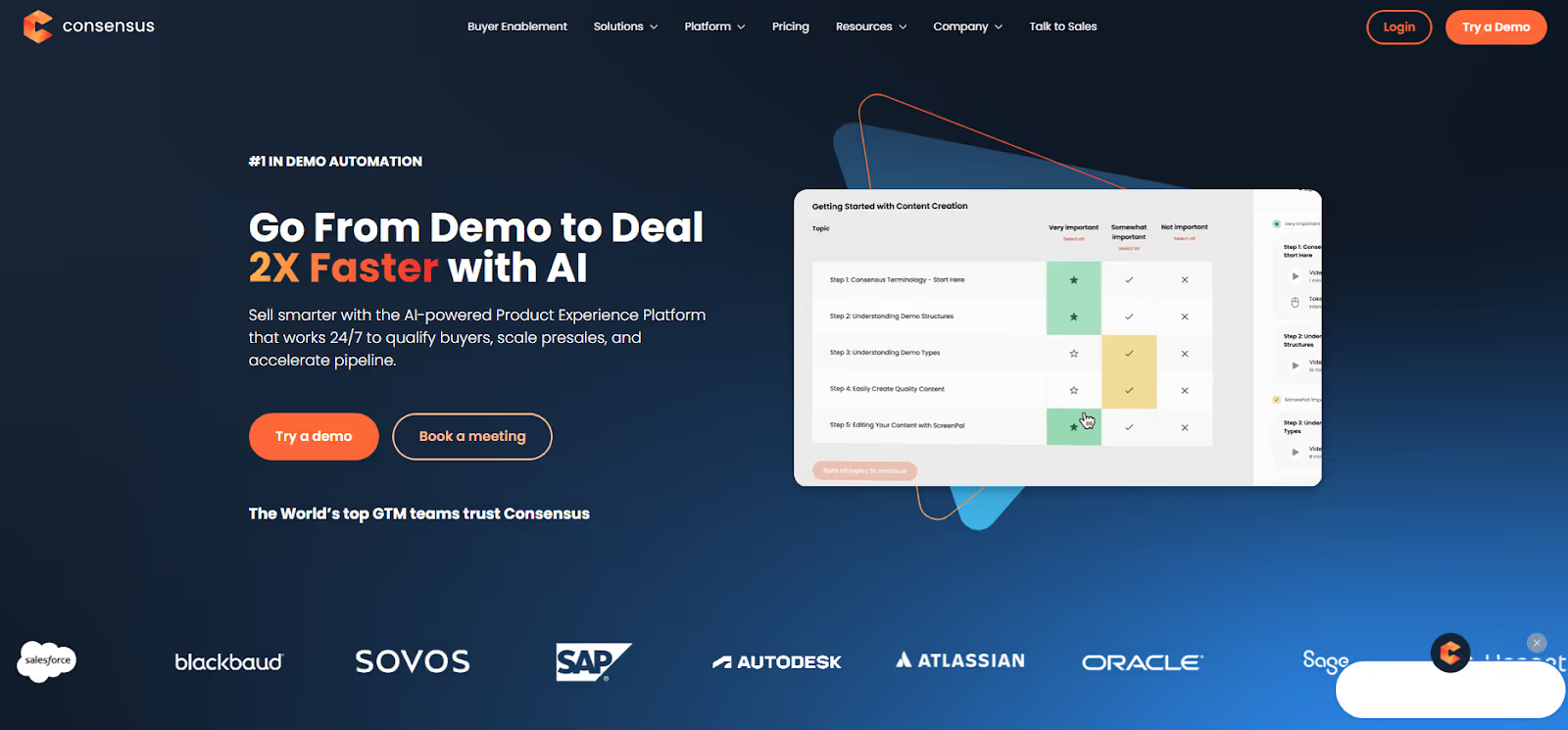
Consensus is a demo automation system that delivers on-demand product walkthroughs and records viewer engagement. It is used for distributing interactive demos without requiring live sessions.
Key Features
- Automated generation of interactive product demos.
- Engagement metrics for tracking viewer activity.
- Integration with CRM and marketing systems.
- User access controls for sharing demos across teams.
Pros
- Stores and distributes demos for asynchronous viewing.
- Tracks interaction data for internal reference.
Cons
- Scales async demos, but doesn’t address proposal accuracy/compliance.
- Customization beyond standard templates can be constrained.
- Engagement data needs a connected content engine to drive next steps.
Pricing
Custom pricing based on demo usage volume.
Best For
Teams that distribute pre-recorded demos or product walkthroughs to prospects.
How to Choose the Right Presales AI Tool
Each of the tools reviewed here supports a distinct stage of the presales lifecycle, and together, they cover the full spectrum of presales enablement:
- Gong and Clari enhance visibility into conversations and pipeline risk, helping teams focus resources on high-potential deals.
- Demostack and Consensus modernize demo delivery, making product showcases faster, scalable, and more personalized.
- Vivun provides leaders with clear visibility into presales workload, performance, and impact on pipeline health.
When it comes to RFP and proposal workflows, however, presales teams need a platform built specifically for accuracy, governance, and evaluator alignment. Inventive AI fills that role.
It brings together knowledge management, context-driven drafting, and AI-powered collaboration, enabling presales engineers to generate compliant, evaluator-ready proposals in minutes. For teams managing frequent RFPs, DDQs, or security questionnaires, Inventive AI is the most effective solution to streamline content-heavy, deadline-driven workflows, improving speed, consistency, and confidence without adding headcount.
Also read: Top 10 Proposal Automation Tools for Sales Enablement
Conclusion
Presales teams sit at the intersection of technical expertise and sales execution. But when time is consumed by repetitive drafting, scattered content, and manual formatting, the real value, solution storytelling and evaluator alignment, gets lost.
We at Inventive AI built our platform specifically to remove those bottlenecks. With 10 times faster first drafts, 95% accuracy with zero hallucinations, and Win Themes that tie responses directly to buyer priorities, we empower presales teams to deliver timely, accurate, and compelling proposals without burning out.
The results are measurable: presales teams using Inventive AI improve win rates by up to 50%, scale output without expanding headcount, and close deals faster.
If your presales function is stretched thin but expected to win more, it’s time to see what purpose-built AI can do.
Here’s what our customers say:
"Inventive AI has completely changed how we handle RFPs. Our presales team now saves hours on every response, and accuracy has gone way up. We’ve seen a noticeable lift in win rates within months."
- Verified G2 reviewer, Solutions Engineering team
Frequently Asked Questions (FAQs)
1. How can AI help presales teams save time?
AI reduces the hours spent on manual drafting, demo prep, and information retrieval. Instead of starting every RFP response or technical document from scratch, presales teams can rely on AI-generated drafts grounded in verified company data. This frees engineers and solution consultants to focus on tailoring content and strategy rather than repetitive formatting or searching through old files.
2. Does AI improve the quality of presales proposals?
Yes. AI not only speeds up response generation but also improves accuracy and consistency. By surfacing fresh, approved content and aligning answers to buyer evaluation criteria, proposals are more precise and competitive. In practice, this means fewer errors, stronger alignment with client priorities, and higher confidence from evaluators reviewing submissions.
3. What kind of AI tools are best suited for presales work?
Presales teams benefit most from AI tools built for proposal management and technical collaboration. Generic writing assistants can accelerate drafting, but purpose-built platforms like Inventive AI add capabilities such as knowledge hubs, win theme identification, and zero-hallucination drafting. These features are designed specifically for the demands of RFPs, security questionnaires, and technical solution documents.
4. Is it safe to use AI for handling sensitive proposal data?
Security is a major concern in presales because proposals often contain confidential technical, legal, or financial details. Enterprise-ready AI tools address this by using role-based access controls, audit logs, and private data storage. Inventive AI, for example, never pulls content from the open web and ensures that every response is grounded in internal, verified sources.
5. Can AI completely replace presales engineers?
No. Presales work requires judgment, creativity, and the ability to connect solutions with client needs, which AI cannot fully replicate. What AI does well is handling repetitive and time-intensive tasks like drafting, organizing, and retrieving content. This partnership allows presales engineers to focus their expertise where it matters most: influencing deals and building trust with buyers.