AIMA DDQ Template: Structure, Questions, and Response Guide

What slows down investment deals more than long meetings or market research? For many asset managers, it’s the due diligence questionnaire. Preparing responses takes hours of gathering information across teams. An AIMA DDQ template can help organize these responses and reduce repeated work.
Many proposal and operations teams face the same issues: tracking the latest firm data, maintaining consistent answers, and replying to investor questions under tight timelines. When every allocator asks similar questions, starting from scratch each time wastes effort and increases the risk of inconsistent responses.
This guide provides an AIMA DDQ response framework, shares industry-standard formatting, and outlines customization strategies for investor requests.
Free AIMA DDQ Template for Institutional Due Diligence
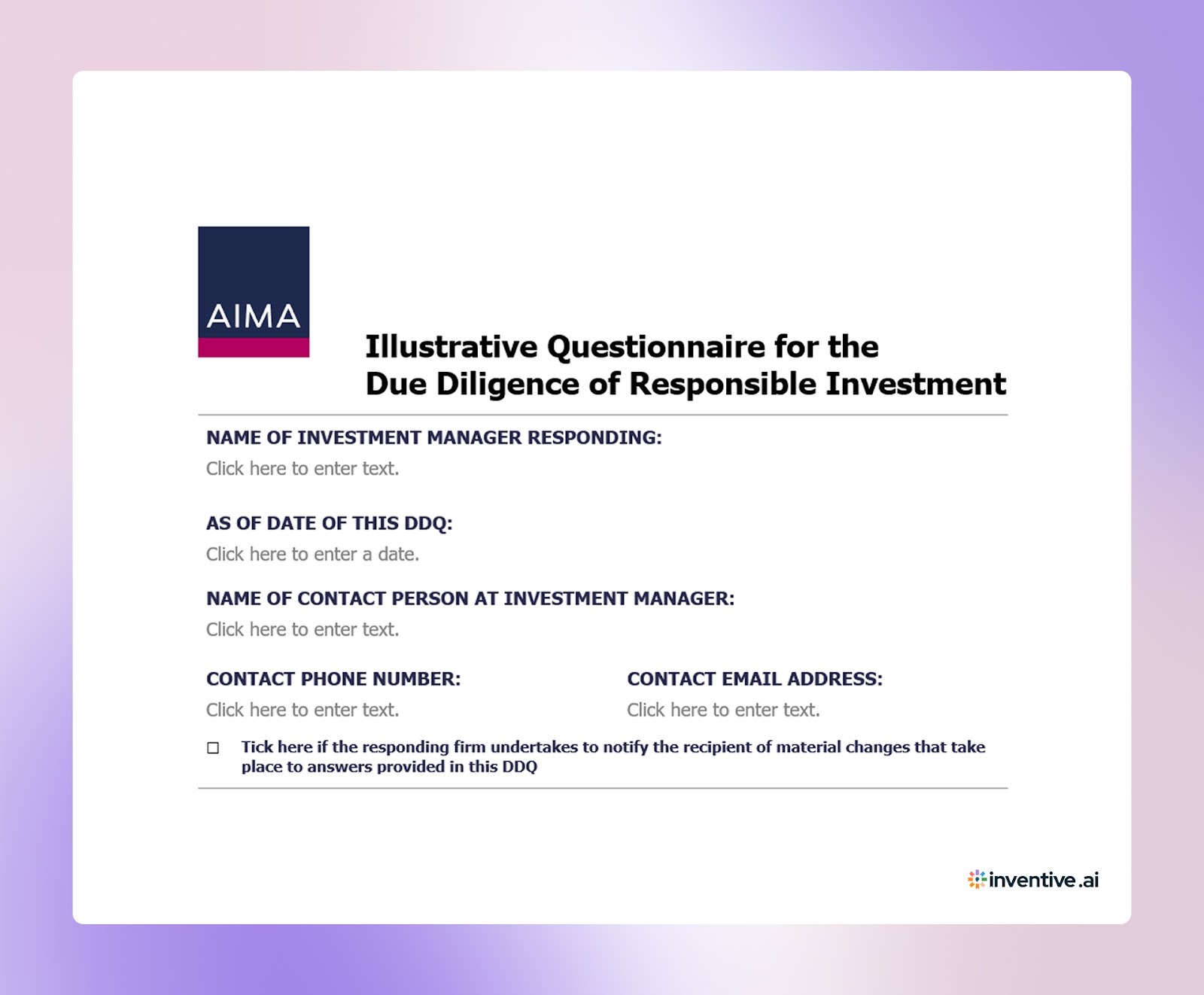
Institutional allocators often request the AIMA Illustrative Questionnaire for the Due Diligence of Investment Managers, which has become the industry standard for hedge fund operational due diligence.
The questionnaire includes detailed sections covering firm governance, investment strategy, risk management, operational infrastructure, service providers, and regulatory compliance.
The official AIMA DDQ template can be accessed from the official website:
This template typically contains modules such as:
- Firm ownership and governance
- Investment strategy and portfolio construction
- Risk management framework
- Operational processes and service providers
- Compliance and regulatory disclosures
- Technology and cybersecurity controls
- Business continuity planning
Because the AIMA DDQ is modular, allocators may select different sections depending on the strategy, fund structure, or operational complexity being reviewed.
Example Questions from the AIMA DDQ Template
These detailed questions help investors evaluate governance, investment processes, and operational controls. Examples include:
- Policy and Governance
- What is the investment manager’s overall approach to responsible investment?
- Does the firm maintain a formal responsible investment policy?
- Investment Process
- How are ESG factors analyzed during security selection?
- How are sustainability risks incorporated into portfolio construction?
- Reporting and Verification
- What ESG information is disclosed in regular client reporting?
- How does the firm verify the quality of responsible investment data?
These structured questions allow institutional investors to compare managers consistently during operational due diligence reviews.
While a questionnaire template provides structure, you still need a clear method for answering each question in a way that satisfies institutional reviewers.
AIMA DDQ Response Framework for Investor Due Diligence
A DDQ response should show more than facts about the firm. Allocators want to see clear governance, disciplined risk oversight, and transparency in operations. Structuring answers consistently helps ODD reviewers assess the firm quickly and reduces follow-up questions.
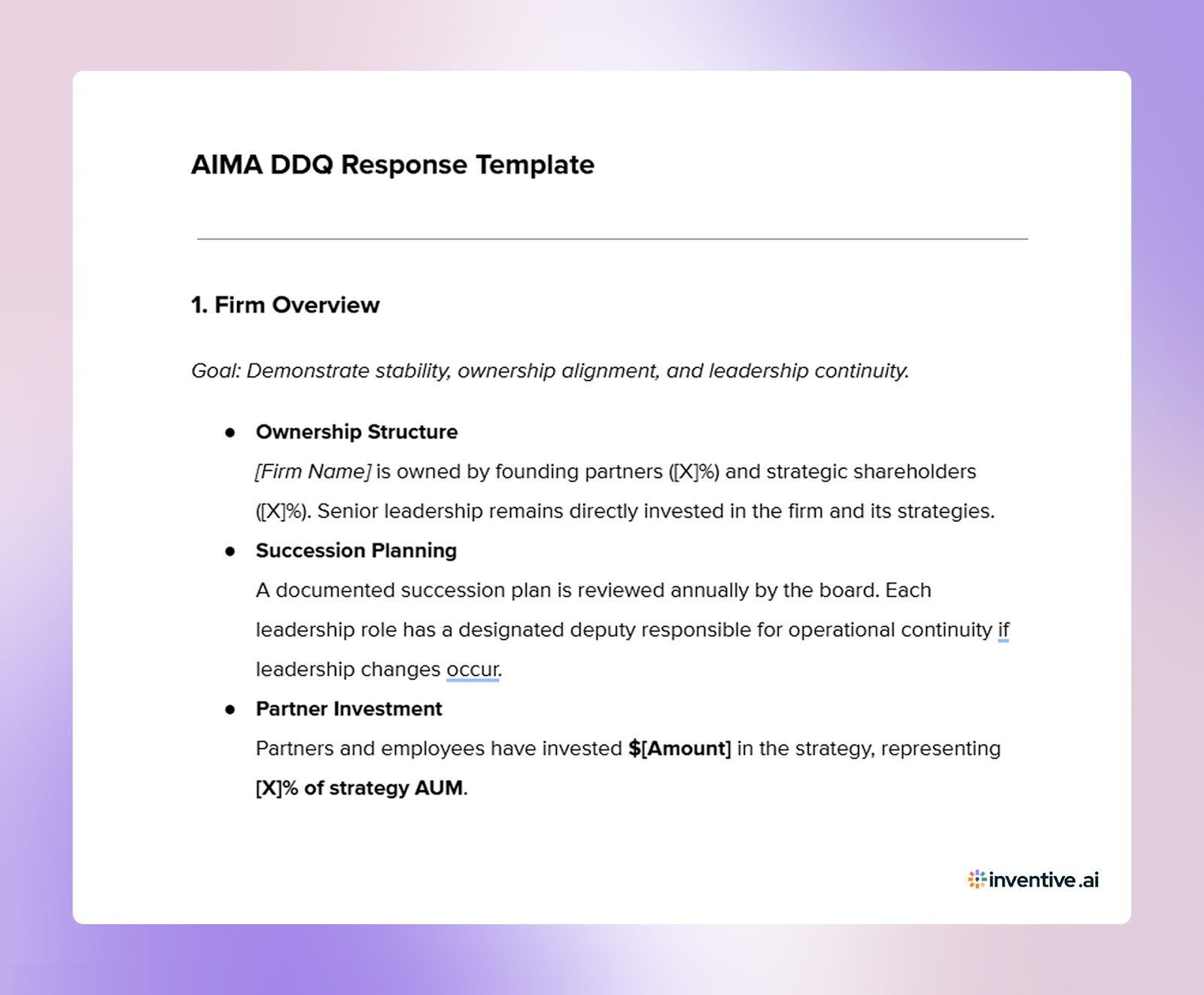
Below is a refined response template with sample language and practical prompts that investment managers can adapt when completing DDQs.
1. Firm Overview
Goal: Demonstrate stability, ownership alignment, and leadership continuity.
- Ownership Structure
[Firm Name] is owned by founding partners ([X]%) and strategic shareholders ([X]%). Senior leadership remains directly invested in the firm and its strategies. - Succession Planning
A documented succession plan is reviewed annually by the board. Each leadership role has a designated deputy responsible for operational continuity if leadership changes occur. - Partner Investment
Partners and employees have invested $[Amount] in the strategy, representing [X]% of strategy AUM.
Team Stability Snapshot
2. Investment Strategy and Performance
Goal: Explain the investment edge and show how it performs across market conditions.
- Investment Philosophy
The strategy relies on [fundamental/quantitative/macro] analysis, focusing on inefficiencies within [market segment]. - Capacity Management
Strategy capacity is estimated at $[Amount]. Liquidity analysis and market impact monitoring are used to assess portfolio scalability.
A soft-close review is triggered once AUM reaches approximately 80% of estimated capacity. - Performance Attribution
Pro tip: Include context for weaker periods. Investors often value honest discussion of strategy limitations.
3. Risk Management Framework
Goal: Demonstrate disciplined oversight of portfolio exposures.
- Risk Oversight
Risk management is led by the Chief Risk Officer, who reports to the management committee independently of portfolio managers. - Risk Limits
- Position concentration: Maximum [X]% per position
- Leverage: Maximum [X]x gross exposure and [X]x net exposure
- Liquidity: At least 90% of positions are liquid within [X] days
- Stress Testing
Portfolios are stress tested against historical events such as the 2008 financial crisis, 2020 market volatility, and other major market disruptions.
4. Technology, AI Governance, and Cybersecurity
Goal: Demonstrate control over proprietary data, research tools, and system security.
- AI Governance
The firm maintains an internal policy governing AI and language model usage. Sensitive research data and investor information are restricted from entry into public AI tools. - Output Verification
AI-generated research or code is reviewed by analysts and technology teams before it is incorporated into investment processes. - Cybersecurity Controls
- Annual third-party penetration testing
- Phishing simulation exercises
- Incident response drills are performed periodically
- Cybersecurity insurance coverage with an aggregate limit of $[Amount]
5. Operations, Service Providers, and Cash Controls
Goal: Demonstrate operational safeguards and fraud prevention.
Service Providers
Operational Controls
- Valuation Oversight
Daily valuation is performed by the independent administrator. Complex assets are reviewed through a valuation committee process.
6. Fee Structure and Investor Alignment
Goal: Provide clear disclosure of economic terms.
- Management Fee: [X]%
- Performance Fee: [X]% above [hurdle rate]
- High-Water Mark: Performance fees apply only after previous performance peaks are exceeded.
- Additional Disclosures
- Pass-through expenses relative to fund assets
- Existence of investor side letters granting special terms
7. Compliance and Conflicts
Goal: Demonstrate regulatory transparency.
- Personal Trading Oversight
Employees must pre-clear personal trades through the firm’s compliance system. Holding periods apply to prevent conflicts. - Soft Dollar Arrangements
The firm discloses whether trading commissions are used for research or data services. - Regulatory History
Any regulatory inquiries or disciplinary matters within the past ten years are disclosed.
8. Business Continuity
Goal: Demonstrate operational resilience.
- Infrastructure Redundancy
Core systems operate across multiple cloud regions. - Recovery Time Objective (RTO)
Critical trading systems can resume within [X] hours following a disruption. - Remote Operations
Staff maintains secure remote access supported by multi-factor authentication.
9. ESG and Regulatory Framework
Goal: Provide measurable ESG and regulatory disclosures.
- ESG Integration
Environmental and governance considerations are incorporated into research and risk review processes. - Regional Frameworks
Where applicable, the fund identifies its classification under frameworks such as EU SFDR (Article 6, 8, or 9).
Final AIMA DDQ Submission Checklist
Before submitting a DDQ response:
- Verify consistency: Confirm that AUM and firm details match the latest investor materials.
- Check formatting: Tables should be used for fees, service providers, and attribution data.
- Perform a document audit: Confirm that no references from earlier documents remain.
- Cross-check numbers: Confirm that all figures match the pitch deck and the audited statements exactly.
- Confirm governance disclosures: Verify whether the fund includes a formal key-person clause.
Before sending your questionnaire, adjusting the template for your strategy and operational structure helps prevent incomplete or generic answers.
Why Investment Managers Use AIMA DDQ Templates?
Investment managers often receive similar due diligence requests from multiple allocators. Using a structured questionnaire format helps teams keep responses consistent while reducing repeated manual work across proposals.
Here are some reasons many firms rely on standardized AIMA DDQ templates:
- Consistency in responses: A defined structure helps teams maintain the same answers across multiple investor questionnaires, reducing conflicting information.
- Faster preparation: Teams can reuse previously approved responses instead of gathering details from scratch for every request.
- Clear documentation: A structured questionnaire organizes firm details, strategy information, and operational practices in one place.
- Better investor communication: Standardized answers make it easier for allocators and consultants to review and compare managers.
- Internal coordination: Teams across compliance, operations, and investment functions can contribute information in a structured format.
Now that you understand the value of standardized questionnaires, reviewing a practical AIMA DDQ template can help you structure your own responses.
9 Best Practices for Customizing AIMA DDQ Template
Customizing the template makes the answers match how the firm actually works instead of using generic responses.
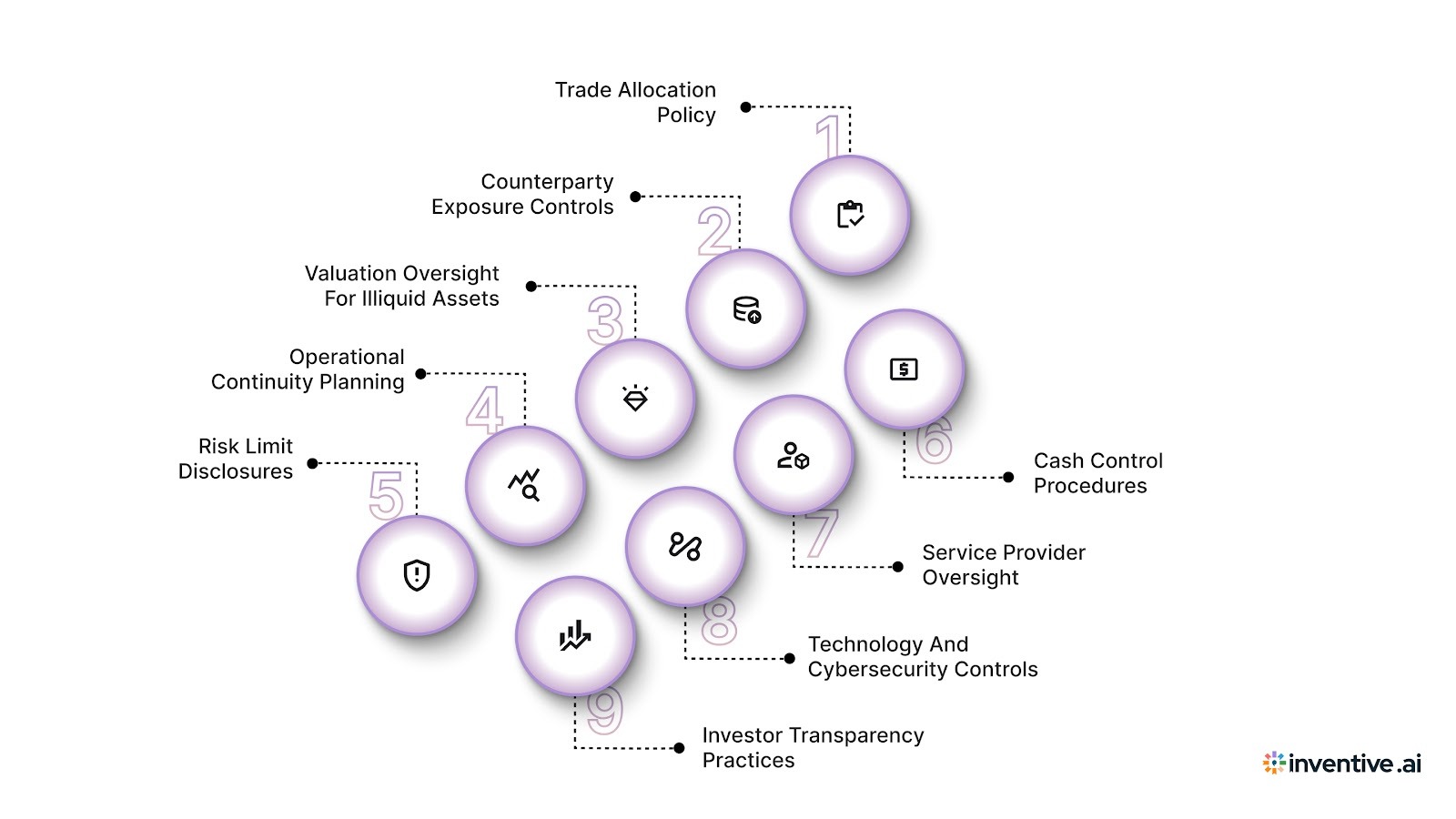
When adapting the template, focus on the areas that institutional investors usually review most closely:
- Trade allocation policy: Explain how trades are distributed across multiple funds or accounts. Many firms follow pro-rata allocation or rotation methods so that no portfolio consistently receives better execution or preferred trades.
- Counterparty exposure controls: If the fund works with several prime brokers or banks, specify exposure limits for each counterparty and describe how those exposures are monitored during daily operations.
- Valuation oversight for illiquid assets: When portfolios include hard-to-price securities, describe the valuation review process, including whether an independent valuation firm or valuation committee reviews pricing inputs.
- Operational continuity planning: Expand succession planning with examples of cross-training across operational roles, such as backup trade execution authority or alternative signatories for financial approvals.
- Risk limit disclosures: Clarify internal limits such as maximum position size, leverage levels, and sector exposure thresholds, and describe the escalation process if limits are breached.
- Cash control procedures: Include details on wire authorization policies, dual approval requirements, and verification procedures used before cash transfers are executed.
- Service provider oversight: Indicate how often the firm reviews administrators, auditors, brokers, and legal partners, including periodic operational reviews or due diligence checks.
- Technology and cybersecurity controls: If the firm uses cloud systems, portfolio management software, or research tools, describe access controls, monitoring practices, and security reviews.
- Investor transparency practices: Explain how frequently investors receive updates, such as quarterly reports, strategy commentary, or risk exposure summaries.
If your team often encounters these issues while preparing questionnaires, adopting AI-based tools can help you produce consistent and accurate DDQ responses.
How Inventive AI Helps Teams Complete DDQs Faster?
Preparing DDQ responses often requires gathering answers from previous questionnaires, internal documents, compliance policies, and subject matter experts. Teams must confirm that responses are accurate, consistent, and updated before sending them to investors or allocators.
Inventive AI helps proposal and revenue teams manage this process by organizing knowledge sources and generating structured answers grounded in company data. Key capabilities include:
Context Engine:
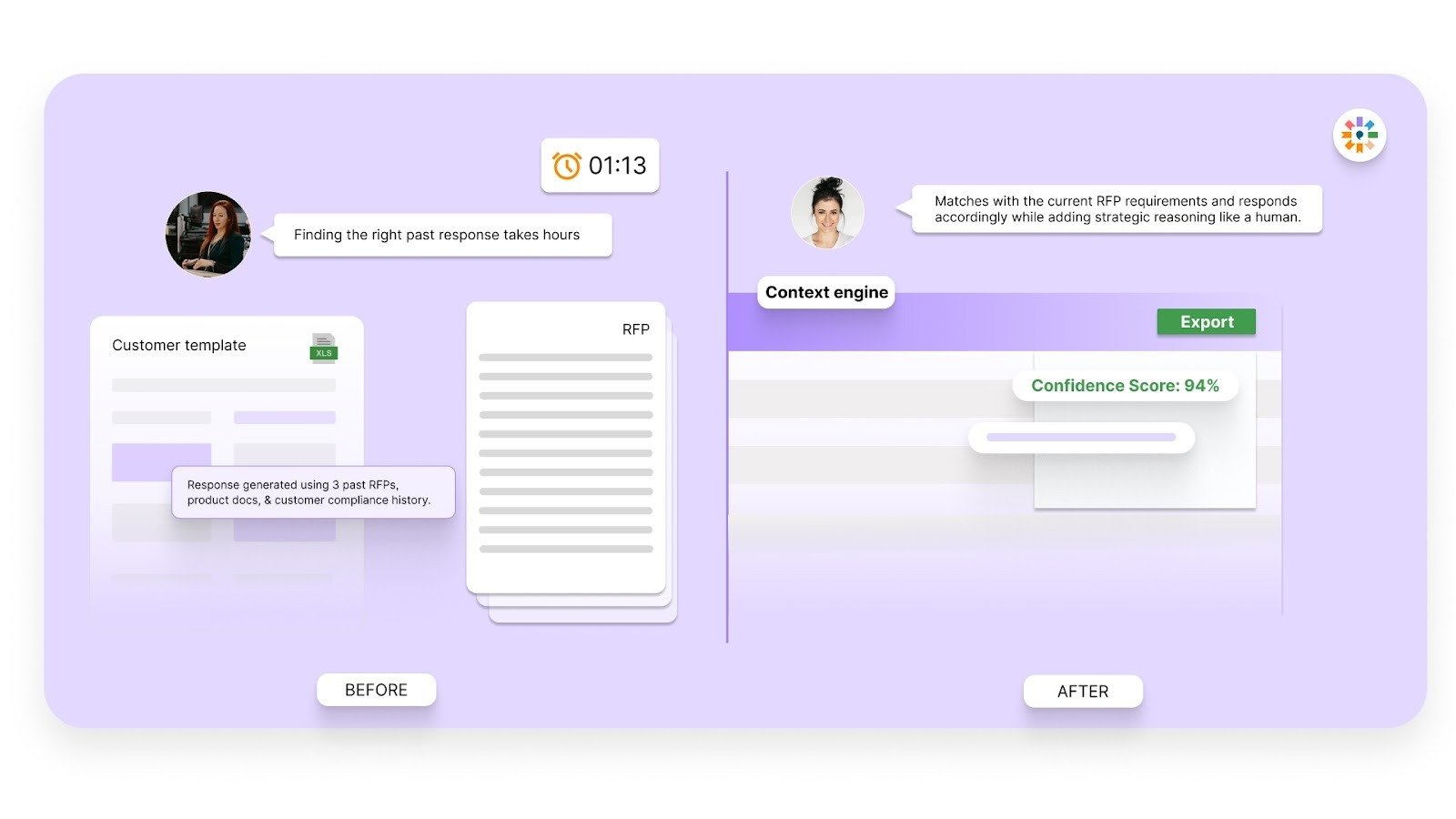
Inventive AI analyzes the full context of each DDQ question before generating a response. Instead of pulling isolated sentences from a knowledge base, the system reviews related information across documents, previous questionnaires, and company resources. This helps produce answers that reflect the firm’s policies, strategy details, and operational practices in a consistent format.
Conflict Detection:
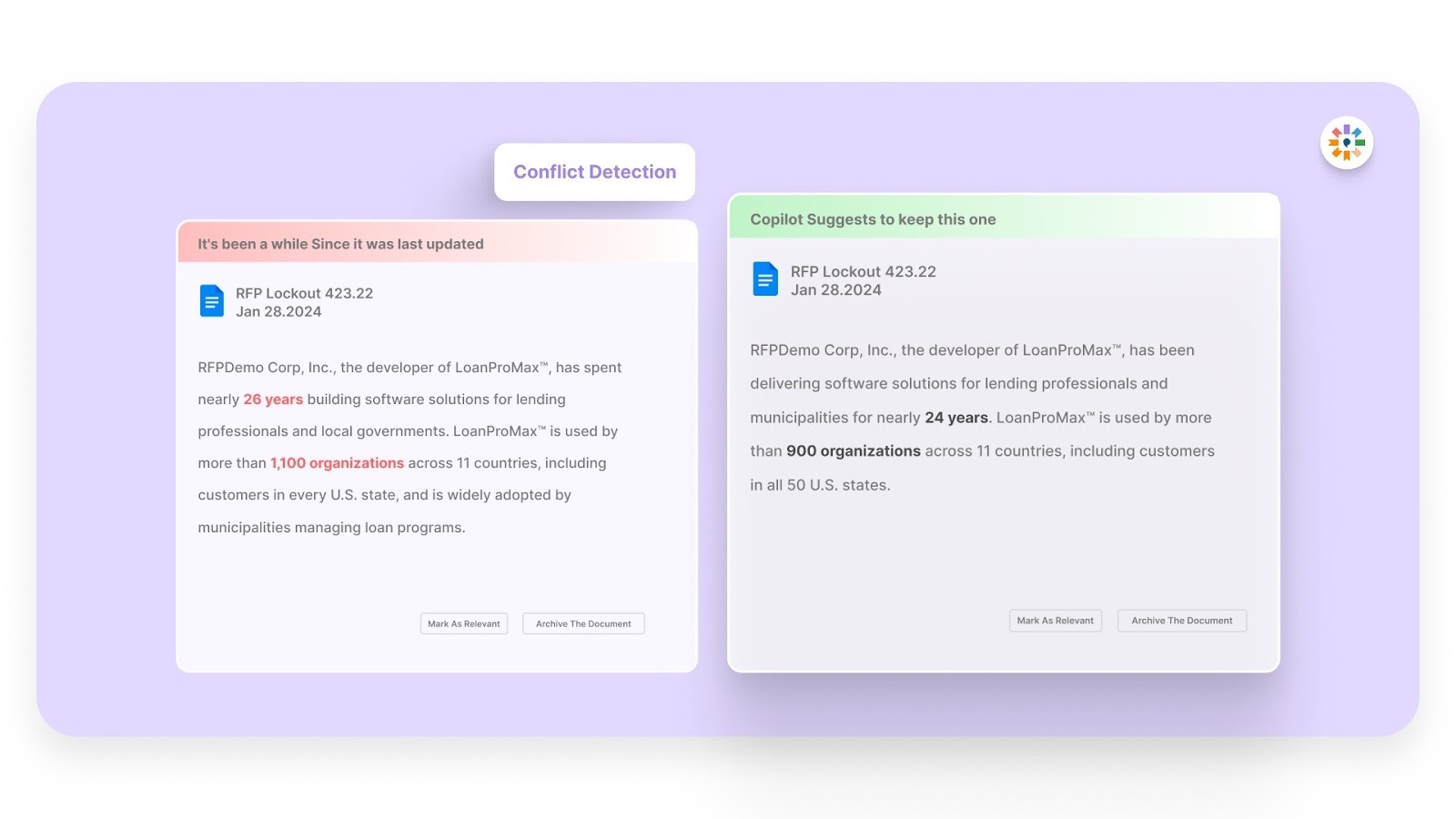
DDQ responses often contain statements pulled from different documents created at different times. Inventive AI scans responses and supporting material to identify contradictions, such as mismatched AUM figures or inconsistent policy descriptions. Teams receive alerts so they can resolve the issue before sending the questionnaire to investors.
Outdated Content Detection:
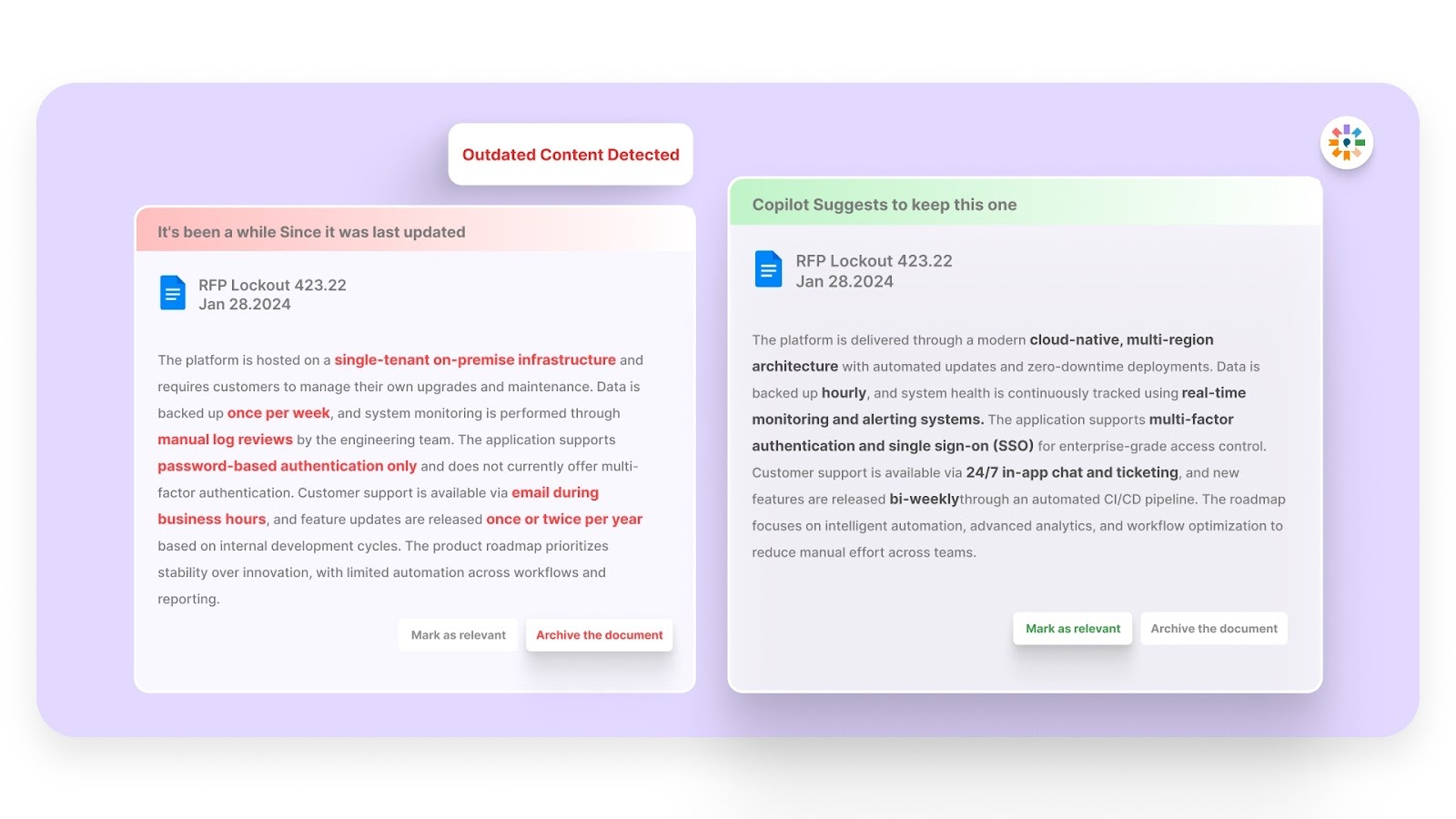
Many organizations maintain large libraries of historical answers. Over time, some of these responses become outdated as policies, systems, or providers change. Inventive AI reviews stored content and flags information that may no longer reflect current operations, helping teams replace older responses with updated ones.
2x Higher Quality Responses:
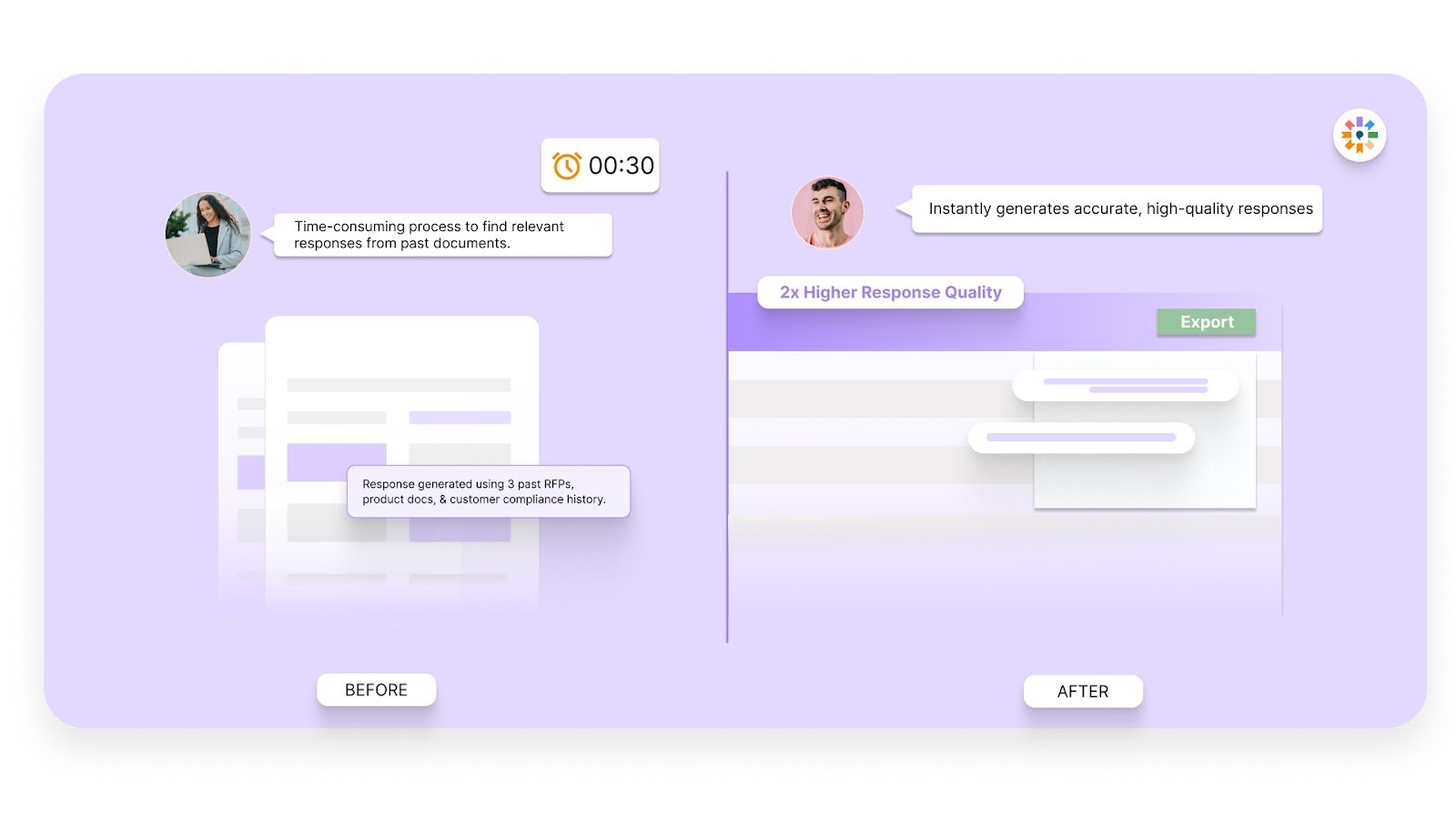
Inventive AI uses multiple AI agents to interpret the intent behind each DDQ question. This helps generate answers that provide clarity, structure, and completeness rather than short or incomplete responses. Teams can review these drafts, refine them, and maintain consistent messaging across investor questionnaires.
Simple User Experience:
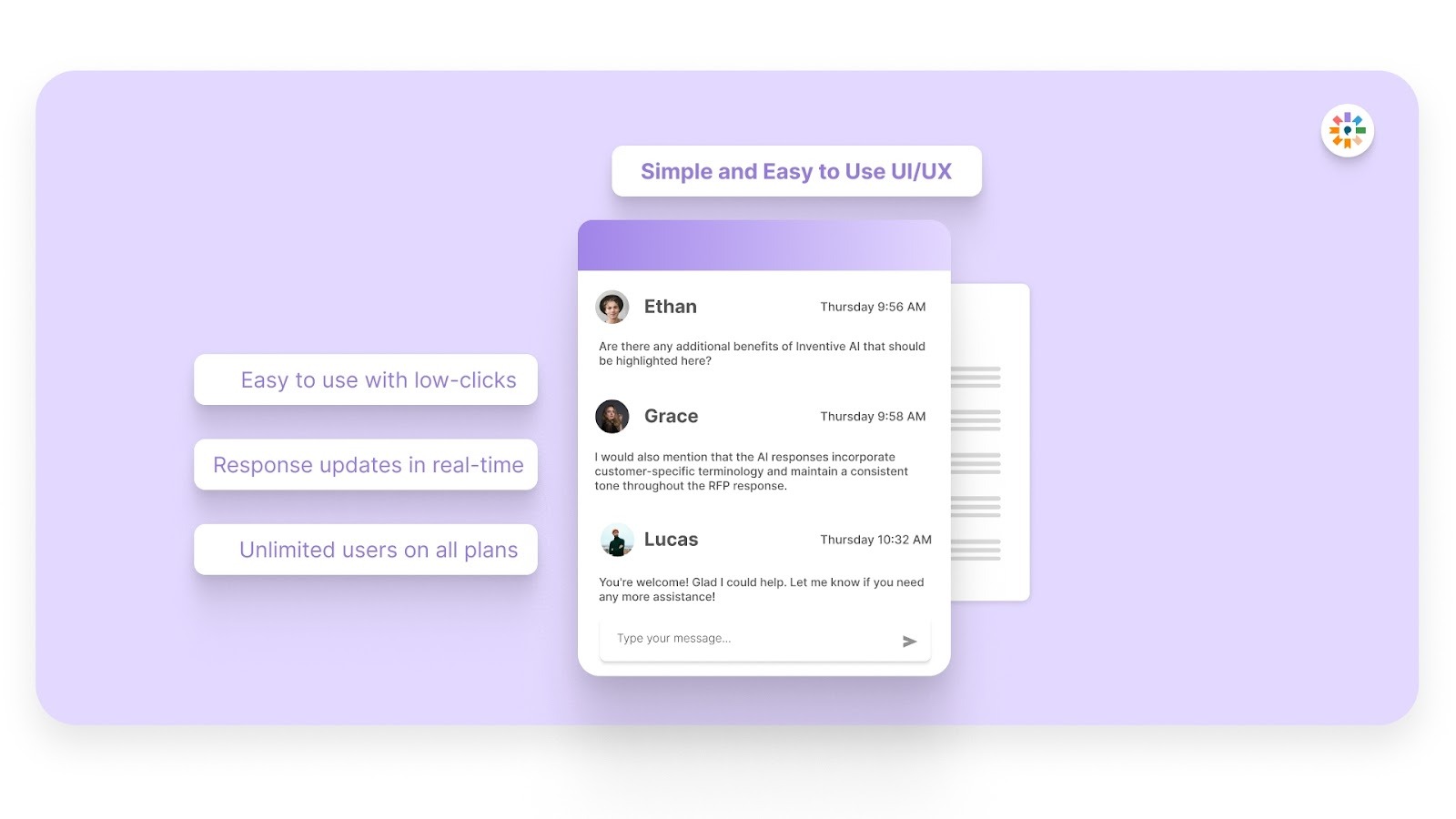
The platform offers a clear interface that allows teams to upload documents, search existing answers, and collaborate on responses. Proposal managers, sales teams, and subject matter experts can review drafts in one place, which helps maintain consistent answers across different questionnaires.
If your team spends significant time gathering information and reviewing DDQ responses before submission, Inventive AI can help reduce that manual workload.
FAQs
1. Who typically requests an AIMA DDQ from investment managers?
Institutional allocators such as pension funds, endowments, consultants, and family offices often request AIMA DDQs during the manager evaluation process. These groups review the questionnaire to understand a firm’s governance structure, operational controls, and investment approach before committing capital.
2. How often should an investment manager update its DDQ responses?
Many firms review and update DDQ responses at least once each year. Updates also occur when key details change, such as assets under management, service providers, leadership roles, compliance policies, or operational procedures described in earlier questionnaires.
3. Are AIMA DDQs used only by hedge funds?
Hedge funds frequently receive AIMA DDQs, though other alternative asset managers may also complete similar questionnaires. Private credit funds, private equity managers, and multi-asset firms often respond to comparable due diligence requests from institutional investors.
4. What formats do allocators usually prefer for DDQ submissions?
Allocators often request DDQs in structured formats such as Word documents or spreadsheets. These formats allow review teams to comment on responses, highlight questions that require clarification, and compare answers across multiple managers during evaluation.
5. Can a DDQ be reused across different investor requests?
Many sections of a DDQ remain similar across different investors. Firms often maintain a central library of approved responses that can be reused and updated when new questionnaires arrive, which helps maintain consistency across submissions.

.avif)