Architectural Design Proposal Template With Example + Formats

Architectural design proposals often focus heavily on visual impact and presentation. Renderings, mood boards, and design narratives are used to impress clients and communicate vision.
However, once the project moves forward, clarity around scope, deliverables, revisions, and fees becomes more important than aesthetics.
If a proposal emphasizes creativity but leaves phase boundaries undefined or pricing loosely structured, misunderstandings surface during design development and construction documentation.
A strong architectural proposal balances design intent with contractual precision. It defines exactly what will be delivered, when it will be delivered, and how it will be billed.
Below is a detailed architectural design proposal template example you can adapt for residential, commercial, or institutional projects, along with a downloadable version for practical use.
Architectural Proposal Template To Win More Bids (Free Download)
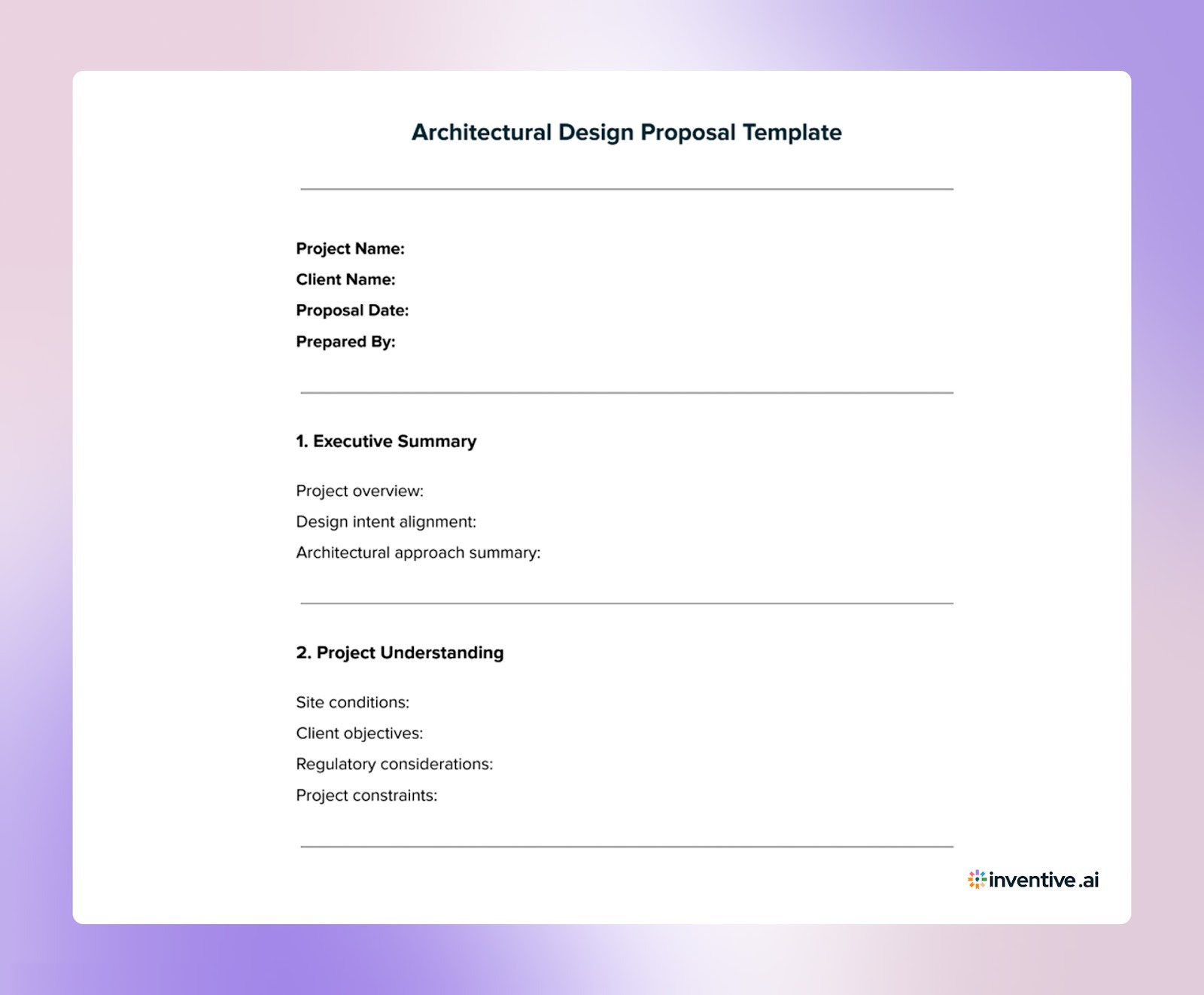
An architectural design proposal must balance design vision with contractual precision. Each section below serves a defined purpose in setting expectations around scope, deliverables, timeline, and fees before a services agreement is signed.
1. Executive Summary
The executive summary frames the project intent and confirms alignment with the client’s goals. It should reflect the project vision while clearly positioning the architect’s role and approach.
Example: The proposed mixed-use development at 120 Main Street aims to integrate retail frontage with upper-level residential units while responding to zoning height constraints and pedestrian circulation requirements. Our approach focuses on maximizing natural light, optimizing floor efficiency, and aligning with the client’s target construction budget.
2. Project Understanding
This section documents the architect’s interpretation of site conditions, regulatory constraints, client priorities, and performance goals. It demonstrates that the proposal reflects project-specific realities rather than a generic service offer.
Example: The site is located within a commercial zoning district with a 45-foot height restriction and mandatory street-level setback. The client’s objective is to achieve 12 residential units above-ground-floor retail while maintaining compliance with parking and accessibility requirements.
3. Scope Of Architectural Services
This section defines the phases of work and prevents scope expansion. Each phase should describe specific services rather than general descriptions.
- Concept Design: Development of initial design direction, site analysis, and high-level massing studies.
- Schematic Design: Preliminary floor plans, building elevations, and coordination with structural and MEP consultants.
- Design Development: Refined drawings, material selections, and coordination details for client approval.
- Construction Documentation: Preparation of permit-ready drawing sets and technical specifications.
- Construction Administration: Site visits, review of shop drawings, and response to contractor RFIs.
- Example: During Construction Administration, services include biweekly site visits, review of contractor submittals, and written clarification responses limited to design intent.
4. Deliverables
This section lists tangible outputs tied to each phase. Clear documentation reduces ambiguity about what the client will receive.
Example Deliverables:
- Site plan
- Floor plans and elevations
- 3D renderings (if included)
- Permit submission drawings
- Material schedules
- Coordination drawings
5. Project Timeline
The timeline outlines the duration of each phase and sequencing. It sets realistic expectations and ties progress to milestones.
Example:
- Concept Design: 3 weeks
- Schematic Design: 4 weeks
- Design Development: 5 weeks
- Construction Documentation: 6 weeks
- Construction Administration: Duration of the construction phase
6. Fee Proposal
This section defines how services are priced and billed. Fee structure clarity prevents disputes.
Example:
- Lump sum fee: $185,000.
- Payment schedule tied to phase completion.
- Reimbursable expenses billed separately.
- Additional service is billed hourly at agreed rates.
7. Assumptions And Exclusions
This section protects both parties by clearly defining what is not included.
Example:
- Structural and MEP engineering is not included unless otherwise agreed.
- Renderings beyond two revisions are billed separately.
- Permit fees are paid directly by the client.
8. Terms And Conditions
This section outlines legal and operational boundaries.
Example:
- Intellectual property remains with the architect until full payment.
- Two design revision cycles are included per phase.
- Termination terms are defined per the professional services agreement.
9. Acceptance And Next Steps
The final section formalizes approval and transitions the proposal into agreement.
Example:
Approved by: ___________________
Date: ___________________
Upon acceptance, a formal professional services agreement will be issued for execution prior to commencement of work.
3 Types of Architectural Proposal Templates
Different architectural projects require different proposal emphasis. While the core structure remains consistent, scope definition, deliverables, and fee framing vary depending on project scale and client expectations.
Below are additional templates tailored to common architectural scenarios. Each template is available in a downloadable format.
1. Residential Architectural Proposal Template
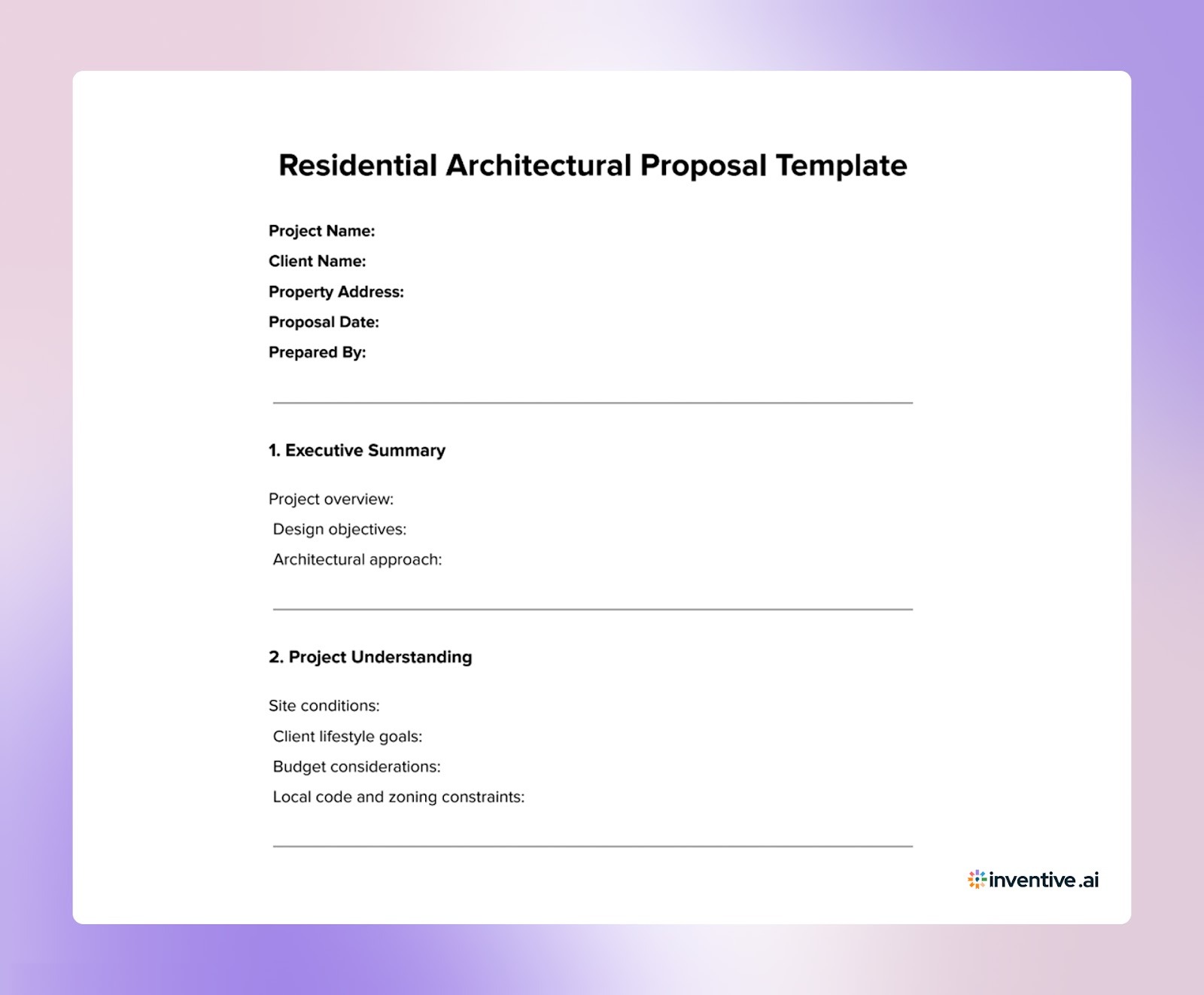
This template is structured for custom homes, renovations, and small-scale residential developments. Clients in residential projects typically focus on design vision, budget alignment, revision flexibility, and phased billing clarity.
The structure reflects:
- Design concept presentation and lifestyle alignment.
- Clear phase breakdown for schematic and detailed design.
- Defined revision limits.
- Transparent fee schedule tied to milestones.
- Coordination with structural and consultant services.
This format works best for architects working on private residential commissions and renovation projects.
2. Commercial Architectural Proposal Template
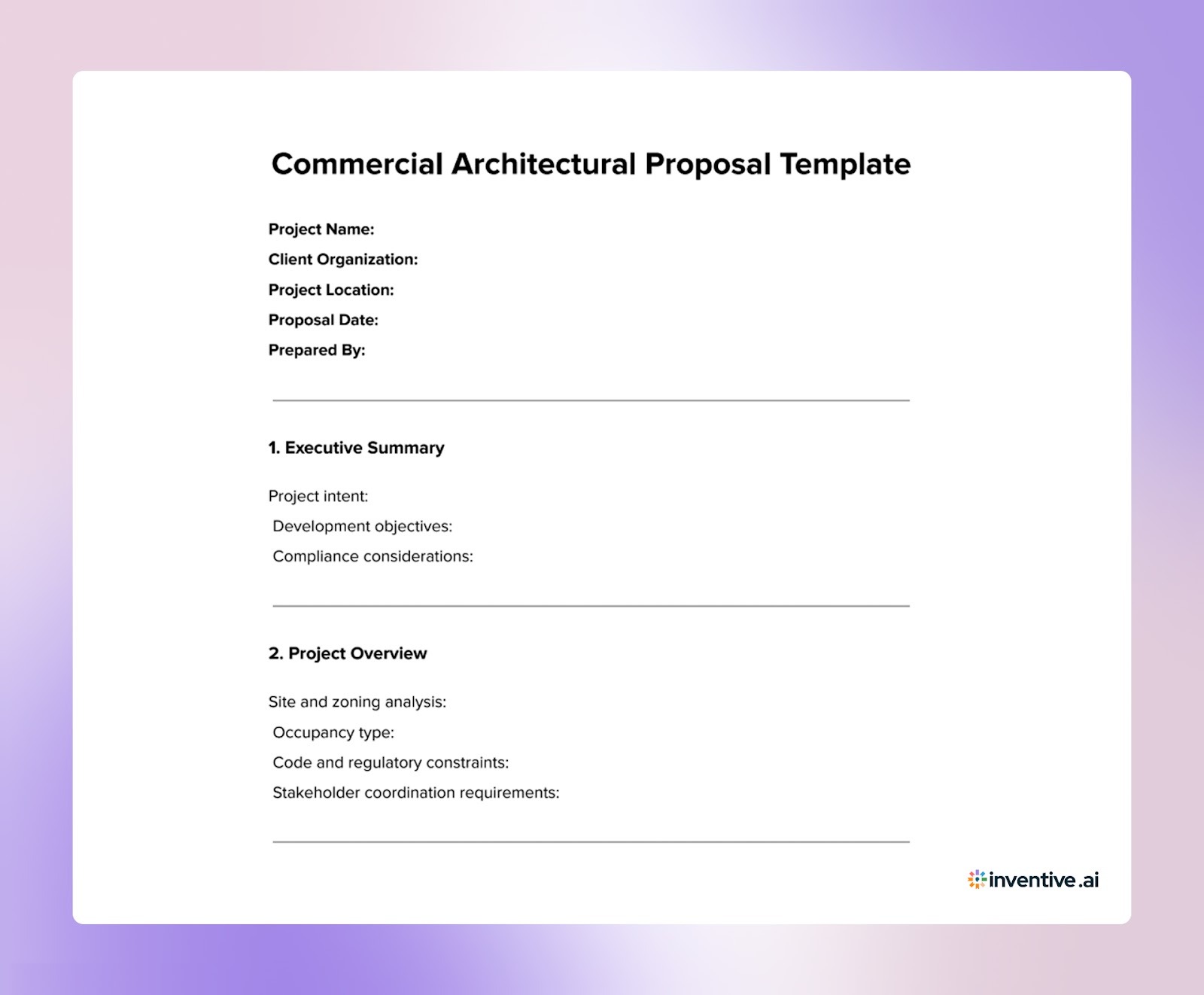
This template is designed for retail, office, mixed-use, and institutional developments. Commercial clients prioritize compliance, coordination, timeline control, and cost management.
The structure emphasizes:
- Regulatory and zoning compliance considerations.
- Detailed scope definition across design phases.
- Consultant coordination responsibilities.
- Structured project timeline with milestones.
- Fee model aligned to project scale and duration.
This format supports firms managing multi-stakeholder commercial projects with formal approval processes.
3. Concept-Only Architectural Design Proposal Template
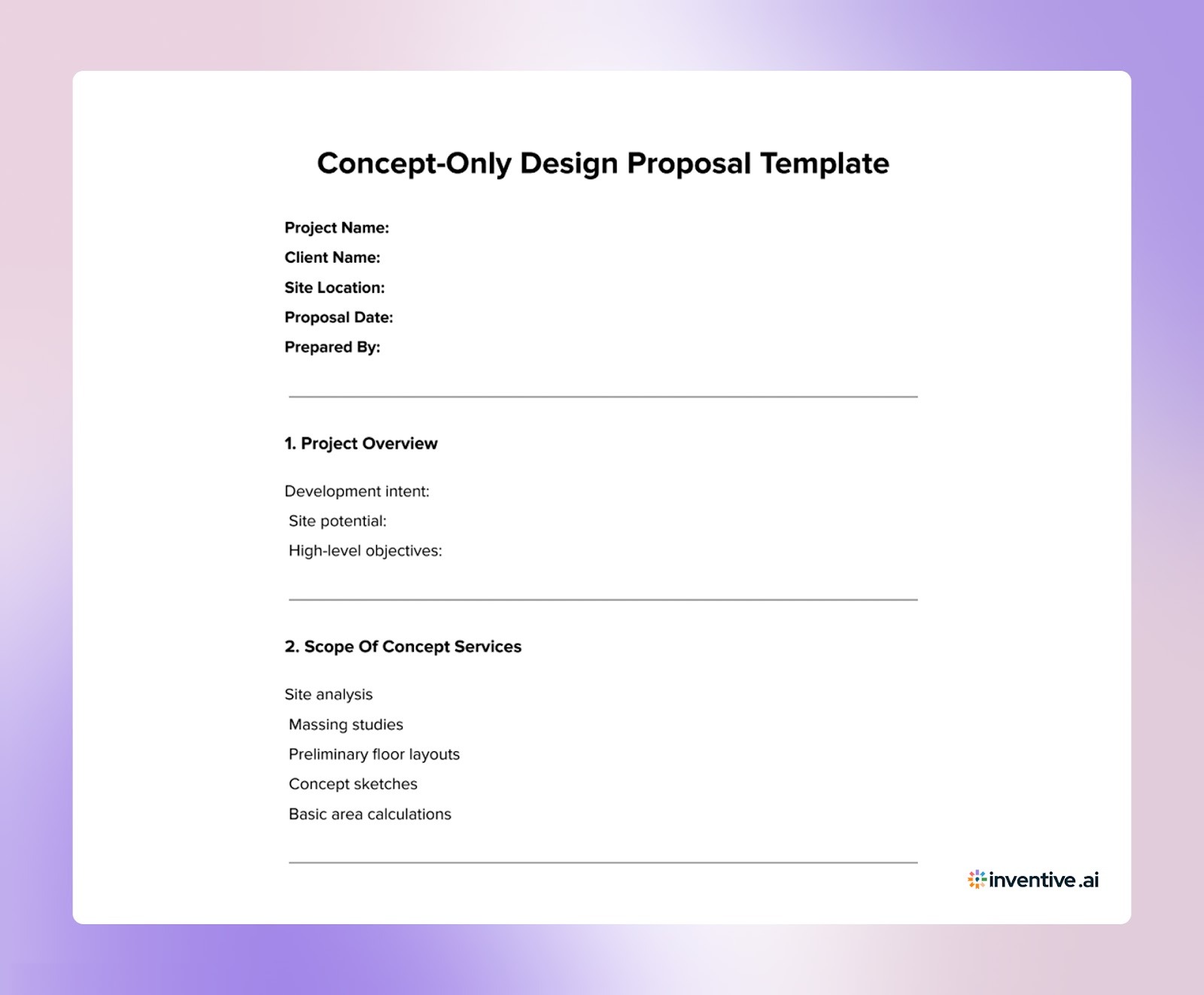
This template is intended for early-stage feasibility studies, site evaluations, or conceptual design engagements. Clients at this stage focus on design direction, massing studies, and development potential before committing to full architectural services.
The structure includes:
- Site and zoning analysis
- Preliminary concept sketches and massing options
- High-level area calculations
- Budget sensitivity considerations
- Defined scope limits for concept-only services
This format is suitable for developers and property owners evaluating project viability prior to detailed design.
Provide Stronger, Win-Ready Proposals for Architecture Firms With Inventive AI
Architecture firms frequently reuse scope language, phase descriptions, fee structures, and contract clauses across projects. Over time, this creates inconsistencies between proposals, outdated terms being copied forward, and misalignment between defined services and fee schedules.
Inventive AI evaluates the full proposal context before generating or refining content. Instead of drafting sections in isolation, it analyzes scope definitions, phase breakdowns, fee models, and exclusions together to maintain internal consistency.
Capabilities of Inventive AI for Architecture Proposals:
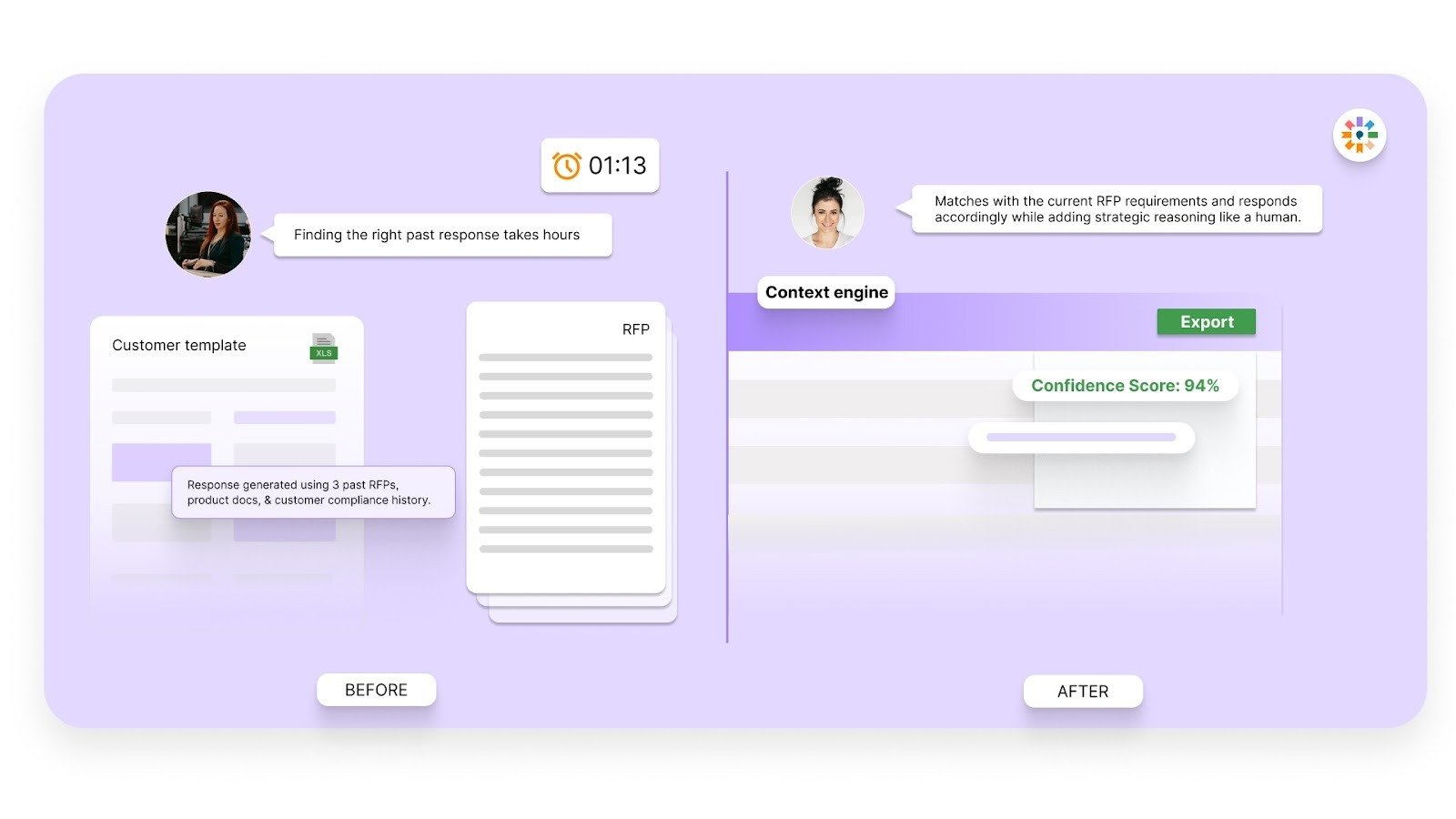
Context Engine
Most AI tools generate answers in isolation. Inventive AI applies multi-layer reasoning across the entire proposal, understanding how design phases, deliverables, exclusions, and fee structures connect. The result is content that reads like it was written by a senior architect rather than auto-generated boilerplate.
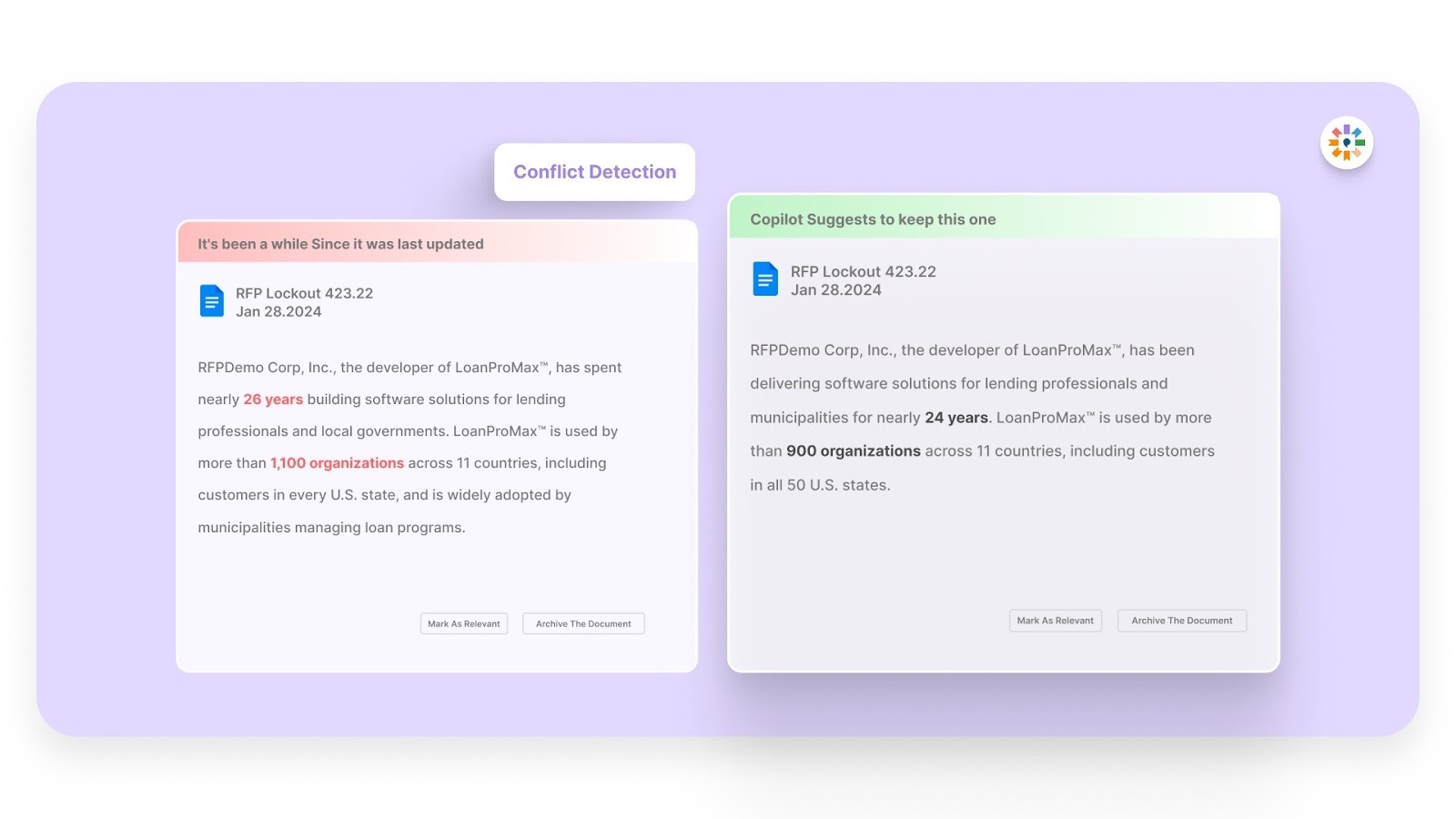
Conflict Detection
Traditional drafting workflows cannot identify contradictions between scope definitions, revision limits, and billing terms. Inventive AI flags conflicting statements instantly, reducing contractual exposure before proposals are sent to clients.
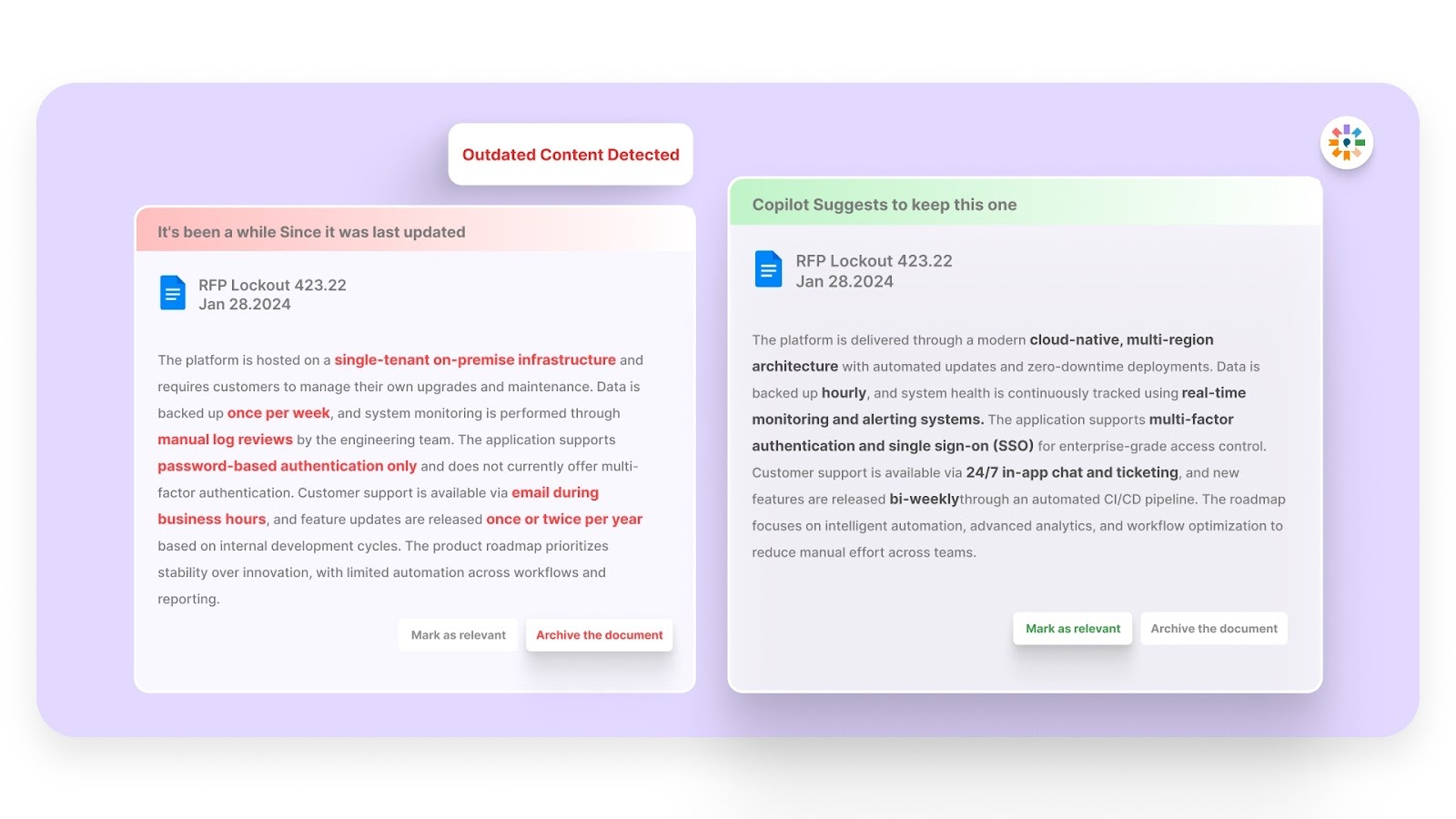
Outdated Content Detection
Architecture firms often reuse legacy clauses or outdated fee models. Inventive AI automatically detects superseded language and non-compliant terms, reducing manual review and rewriting.
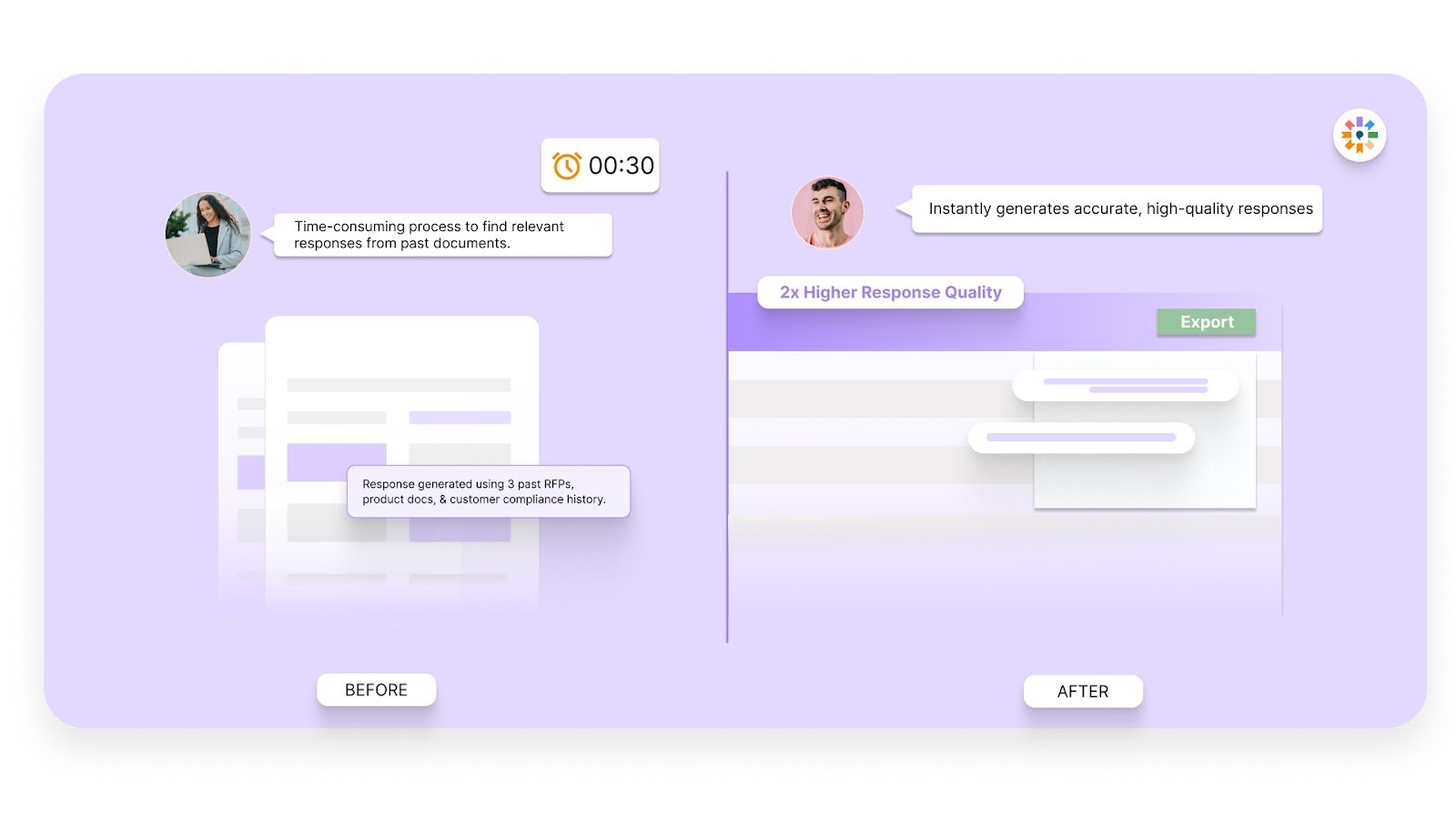
2x Quality Responses
Through multi-agent AI reasoning, Inventive AI produces strategic, accurate, and complete proposal sections that align with project intent and client requirements.
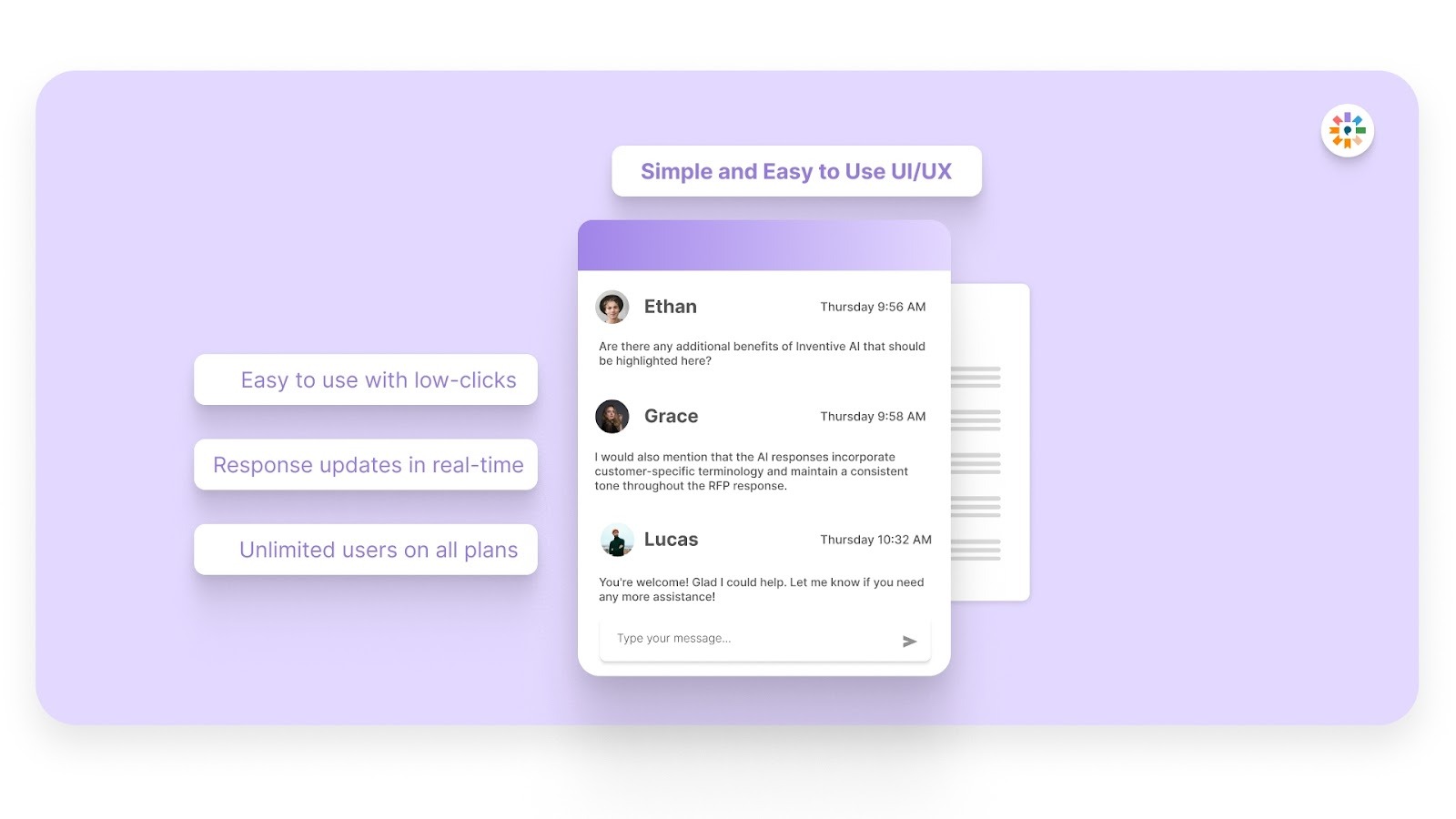
Simple And Easy-To-Use Interface
With a 100% adoption rate among current customers and recognition as the easiest-to-use RFP software on G2, teams can implement AI-assisted proposal drafting without disrupting workflows.
Narrative-Style Proposal Generation
Most proposal tools focus only on structured Q&A responses. Inventive AI also generates long-form architectural proposal content, including executive summaries, design narratives, methodology sections, and full proposal books.
Inventive AI strengthens proposal clarity, consistency, and structural accuracy across architectural submissions.
FAQs About Architectural Design Proposal
1. How Detailed Should An Architectural Scope Of Services Be?
Each design phase should clearly define included services and revision limits. Vague phase descriptions increase the risk of additional unpaid work during later stages of the project.
2. Should Architectural Fees Be Fixed Or Percentage-Based?
Fee structure depends on project type and predictability. Residential projects often use lump sum pricing, while commercial developments frequently use a percentage of the estimated construction cost.
3. How Many Design Revisions Should Be Included In A Proposal?
Most firms define a fixed number of revision cycles per phase to maintain schedule control. Additional revisions are typically treated as additional services.
4. When Should Consultant Coordination Be Defined In The Proposal?
Consultant roles, whether included or client-appointed, should be clarified in the scope section. Ambiguity in coordination responsibilities can delay approvals and documentation.
5. Does An Architectural Proposal Replace A Professional Services Agreement?
No. The proposal outlines scope, fees, and approach. A formal services agreement governs legal terms, liability, and contractual obligations once the proposal is accepted.

.avif)






.png)