Automating Sales Proposals: A Practical Guide for RFP-Driven Sales Teams

If you respond to sales proposals regularly, you know how quickly they take over your week. One urgent RFP turns into document rewrites, review cycles, and follow-ups with multiple teams, often at the cost of time you should be spending closing deals.
Sales proposal automation helps cut through this workload. Instead of rebuilding proposals from scratch, automation lets you reuse approved content, generate faster drafts, and keep responses consistent across every opportunity.
According to Gartner, B2B sales teams spend more than 73% of their time on non-selling tasks, with proposal creation and internal reviews ranking among the biggest time drains. That delay slows pipeline movement and impacts win rates.
In this guide, you’ll learn what automating sales proposals actually involves, why manual processes fail at scale, and how AI-powered RFP response software helps vendors respond faster and more accurately, without sacrificing quality.
Key Takeaways
- Manual sales proposals take up selling time, slow pipeline movement, and create inconsistencies across RFPs and security questionnaires.
- Sales proposal automation helps teams reuse approved content, generate faster drafts, and manage reviews in a structured way.
- Automation improves response speed, accuracy, and consistency without reducing quality or control.
- The right automation tool should offer approved-source AI, collaboration visibility, quality checks, and measurable business impact.
- Inventive AI’s RFP Agent helps vendors respond 10x faster, with 95% accuracy, 0% hallucination, and up to 50% higher win rates.
4 Common Challenges in the Manual Sales Proposal Process
Manual sales proposal processes struggle because they don’t scale. As proposal volume grows, delays and errors increase, even when teams are doing their best.
If you’ve worked on RFPs long enough, these challenges will feel familiar.
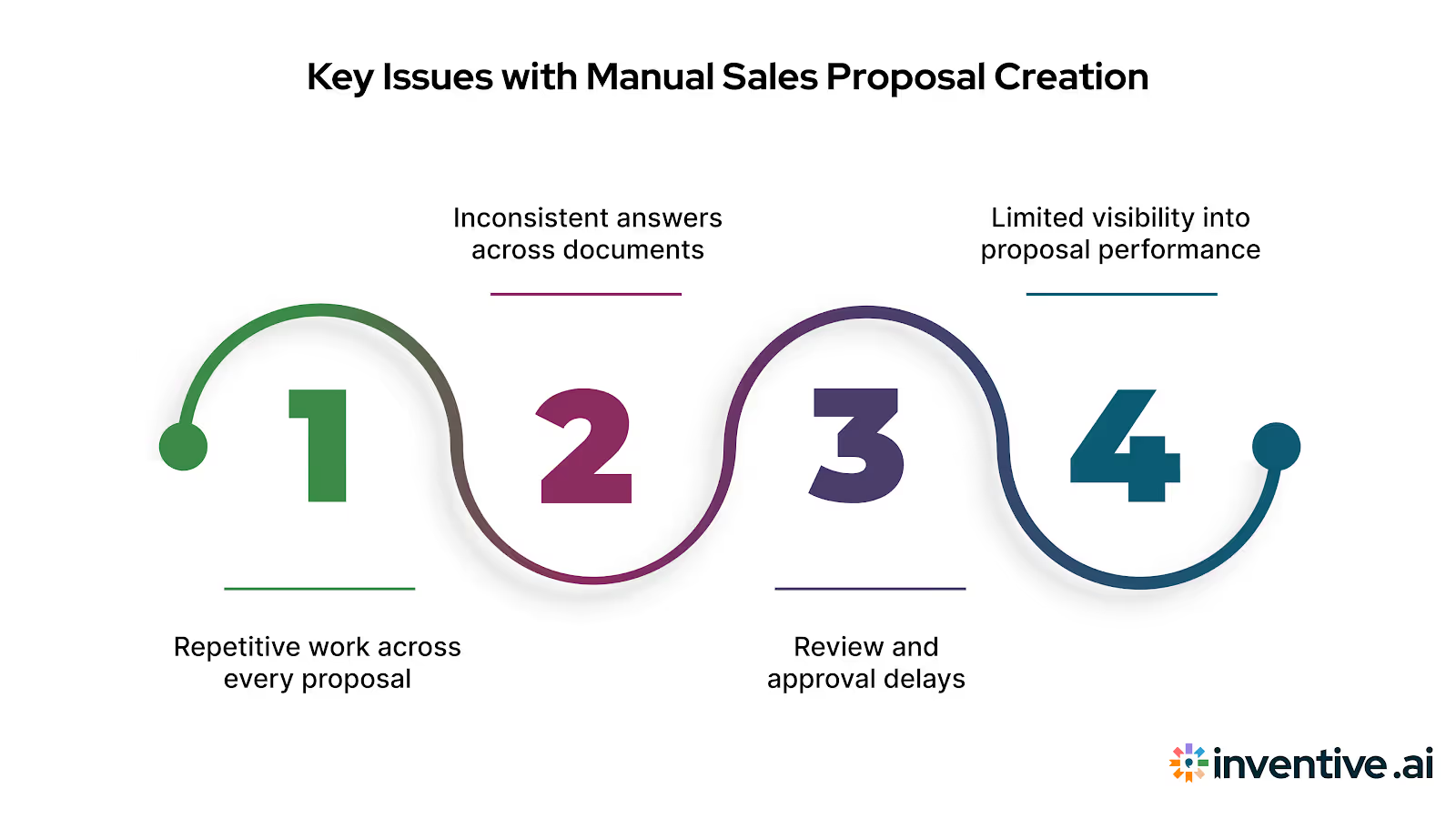
1. Repetitive work across every proposal
Most RFPs ask the same core questions. Yet teams still search old files, copy content from past responses, or wait for subject matter experts to resend approved answers. This slows response time and creates unnecessary rework.
2. Inconsistent answers across documents
When multiple people contribute from different versions, answers drift. The same security or product question can be answered differently across proposals, raising credibility and compliance concerns with enterprise buyers.
3. Review and approval delays
Manual reviews rely on emails and document comments. Proposal managers spend time chasing feedback instead of improving responses. Delays increase as deadlines approach, raising the risk of missed requirements.
4. Limited visibility into proposal performance
Manual workflows make it hard to track how long proposals take, where reviews stall, or which responses help win deals. Without visibility, teams can’t improve or predict timelines.
Together, these challenges affect more than just proposal teams. They slow pipeline movement, distract sales from selling, and directly impact win rates. This is exactly where sales proposal automation starts to make a measurable difference. So let's understand what sales proposal automation is and how it can help.
Understanding Automation of Sales Proposals
Sales proposal automation does not replace human judgment. It removes the repetitive work that slows proposal teams down and creates inconsistency across responses.
At a practical level, automating sales proposals means using software to support how proposals are created, reviewed, and delivered. Instead of starting from a blank document each time, automation tools use approved past responses, structured content, and AI assistance to help teams draft and manage proposals faster and more reliably.
For vendors responding to RFPs, RFIs, and enterprise sales proposals, automation usually covers a few core areas:
- AI-generated first drafts that pull from previously approved answers, giving teams a strong starting point instead of a blank page
- Centralized proposal content and knowledge libraries that store validated responses, security answers, and messaging in one place
- Automated review and approval workflows that assign ownership, track changes, and reduce back-and-forth over email
- Accuracy and consistency checks that help ensure answers stay aligned across proposals and do not contradict earlier responses
When implemented correctly, sales proposal automation gives you more control over quality while saving time and effort. You move faster without cutting corners and can scale without increasing risk or headcount. To fully benefit, it’s important to understand the value of automating the sales process.
Also Read: How to Develop Effective RFP Win Themes for Proposal Success
Importance of Automating Sales Proposals - 7 Ways Automation Benefits the Sales Process
Proposal automation gives you back selling time while keeping responses consistent and review-ready.
If proposals keep pulling you away from active deals, the cost shows up fast in your pipeline. Deadlines get tighter, reviewers get harder to pin down, and your team starts making trade-offs between speed and quality. Automation helps you stop making that trade.
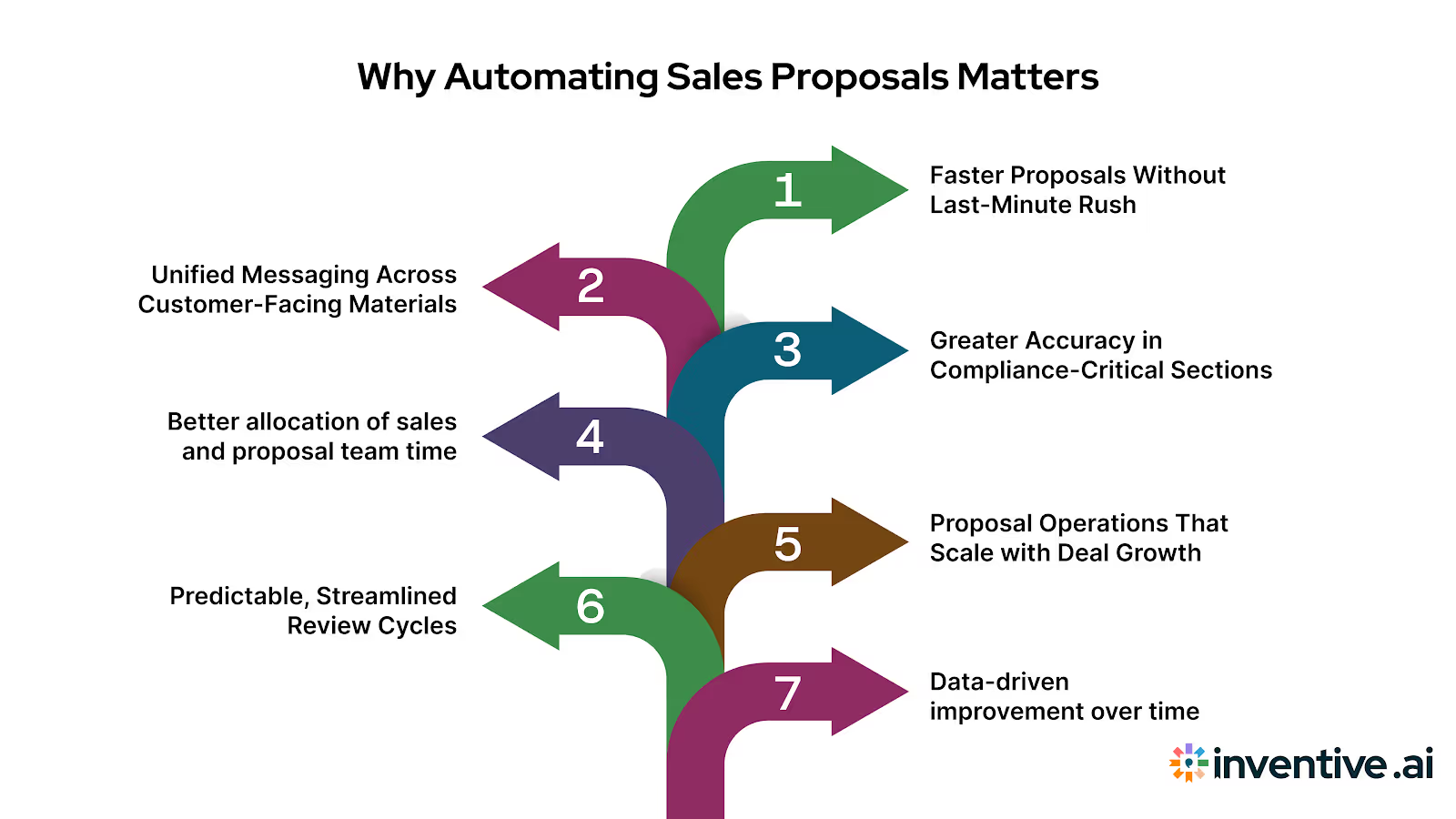
Here’s why it matters, in practical, measurable ways.
1. Faster proposal turnaround without last-minute pressure
Automation shortens the time it takes to move from intake to submission by generating structured first drafts from approved content. This allows teams to work steadily throughout the response window instead of rushing changes close to deadlines, which often leads to mistakes.
2. Consistent messaging across all customer-facing documents
When proposals are built from a centralized knowledge base, product descriptions, security responses, and implementation details remain consistent across RFPs, RFIs, and custom sales proposals. This consistency strengthens credibility with procurement, legal, and security reviewers.
3. Improved accuracy in compliance-heavy sections
Automated proposal systems rely on validated, pre-approved answers rather than free-form writing. This reduces the risk of outdated, contradictory, or unsupported claims, especially in security questionnaires and regulatory sections where accuracy is closely scrutinized.
4. Better allocation of sales and proposal team time
Automation removes repetitive tasks such as rewriting standard answers, formatting documents, and coordinating basic reviews. As a result, sales and proposal teams can spend more time on deal-specific positioning, differentiation, and responding to buyer priorities.
5. Scalable proposal operations as deal volume grows
As organizations pursue more enterprise deals, proposal volume increases. Automation enables teams to handle higher workloads or overlapping deadlines without increasing headcount or sacrificing response quality.
6. More predictable and manageable review cycles
Structured workflows make it clear who owns each section, when reviews are due, and what changes are pending. This reduces back-and-forth, shortens approval timelines, and helps proposal managers maintain control over submissions.
7. Data-driven improvement over time
Automated systems make it possible to track response timelines, reviewer bottlenecks, and content usage. These insights help revenue leaders refine proposal processes, improve efficiency, and align proposal efforts with win-rate outcomes.
Automating sales proposals is one of the most direct ways to speed up responses, improve consistency, reduce review risk, and protect selling time, without lowering quality. Now, let’s understand the step-by-step process to effectively automate your sales proposals.
How to Automate Sales Proposals? A Step-by-Step Process
Sales proposal automation works when it is implemented as a structured workflow, not as a one-time tool setup. The goal is to create a repeatable system that supports accuracy, speed, and collaboration across every proposal type.
Step 1: Shred the RFP for Key Requirements
Use AI to quickly extract key questions, dependencies, and mandatory elements from the RFP. This eliminates the need for manual parsing, allowing your team to focus on what matters most from the start.
Everyone gets immediate access to the same overview, reducing ambiguity and aligning the team faster.
Step 2: Make a Confident Bid/No-Bid Decision
AI helps you identify disqualifiers like pricing caps and scope misalignments early. This way, you can focus on the right opportunities and avoid wasting time on proposals that don’t align with your business goals.
Step 3: Generate a Solid First Draft
Instead of starting from scratch, AI generates a draft using your approved content library. It ensures consistency in tone and messaging while speeding up the process. This reduces the need for constant rewrites and keeps your team on track.
Step 4: Automate Security and Compliance Sections
Automating compliance-heavy sections ensures accurate, consistent responses every time. The AI pulls approved answers for security and compliance sections, reducing errors and ensuring your proposals meet all necessary standards.
Step 5: Customize Responses with AI Prompts
AI allows quick customization of responses for different buyers or industries. With simple prompts, you can adjust the tone or emphasize specific benefits, saving time and ensuring your responses resonate with the right audience.
Step 6: Refine and Polish Responses
AI helps refine language, clarify points, and flag gaps in your responses. This allows SMEs to focus on providing expertise, not worrying about structure or tone, speeding up the review process.
Step 7: Optimize Proposals with AI Insights
AI tracks content usage and proposal performance. It helps you identify areas for improvement and optimize your content library, ensuring that every proposal is stronger than the last.
By following these steps, sales proposal automation reduces response times, improves consistency, and allows your team to focus on winning more deals. It’s a scalable solution for vendors looking to streamline the RFP process without sacrificing quality.
To ensure you get the most out of automation, let’s explore the 5 best practices for automating proposal generation.
Also Read: How AI in Presales is Redefining Speed, Accuracy, and Win Rates
5 Best Practices for Automating Proposal Generation
When implementing proposal automation, it’s important to balance efficiency with the need for personalized, high-quality responses. Here are some key best practices to ensure you get the most from your automation tools:
1. Keep Personalization in Mind: Automation helps speed up the process, but personalization is still key. While AI can generate content, make sure your team adds a personal touch to ensure each proposal speaks directly to the client’s needs.
2. Don’t Skip Human Oversight: AI can draft proposals, but human input is essential. Have your team review and approve content to ensure it meets your quality standards and aligns with your messaging.
3. Protect Your Data: Ensure the automation platform you use keeps your data secure. This is especially important when dealing with sensitive information in compliance-heavy proposals.
4. Pick AI Tools Made for Proposals: Not all AI tools are the same. Choose one built specifically for proposal generation. This ensures the tool is aligned with your needs and makes the process smoother.
5. Use AI to Improve Over Time: AI gets better with feedback. Make sure your platform tracks what works and what doesn’t, so you can keep improving your proposal responses and content.
Automating proposal generation can drastically improve speed, consistency, and quality, but it’s important to follow best practices to maintain control and relevance. To help you choose the right tool, its important to understand what features to look for in a sales proposal automation tool.
Also Read: Top Software for Automating Security Questionnaires in 2026
5 Most Important Features to Look for in a Sales Proposal Automation Tool
When evaluating sales proposal automation software, it’s important to look beyond surface-level automation. The right tool should support accuracy, collaboration, and measurable revenue outcomes for vendors responding to RFPs.
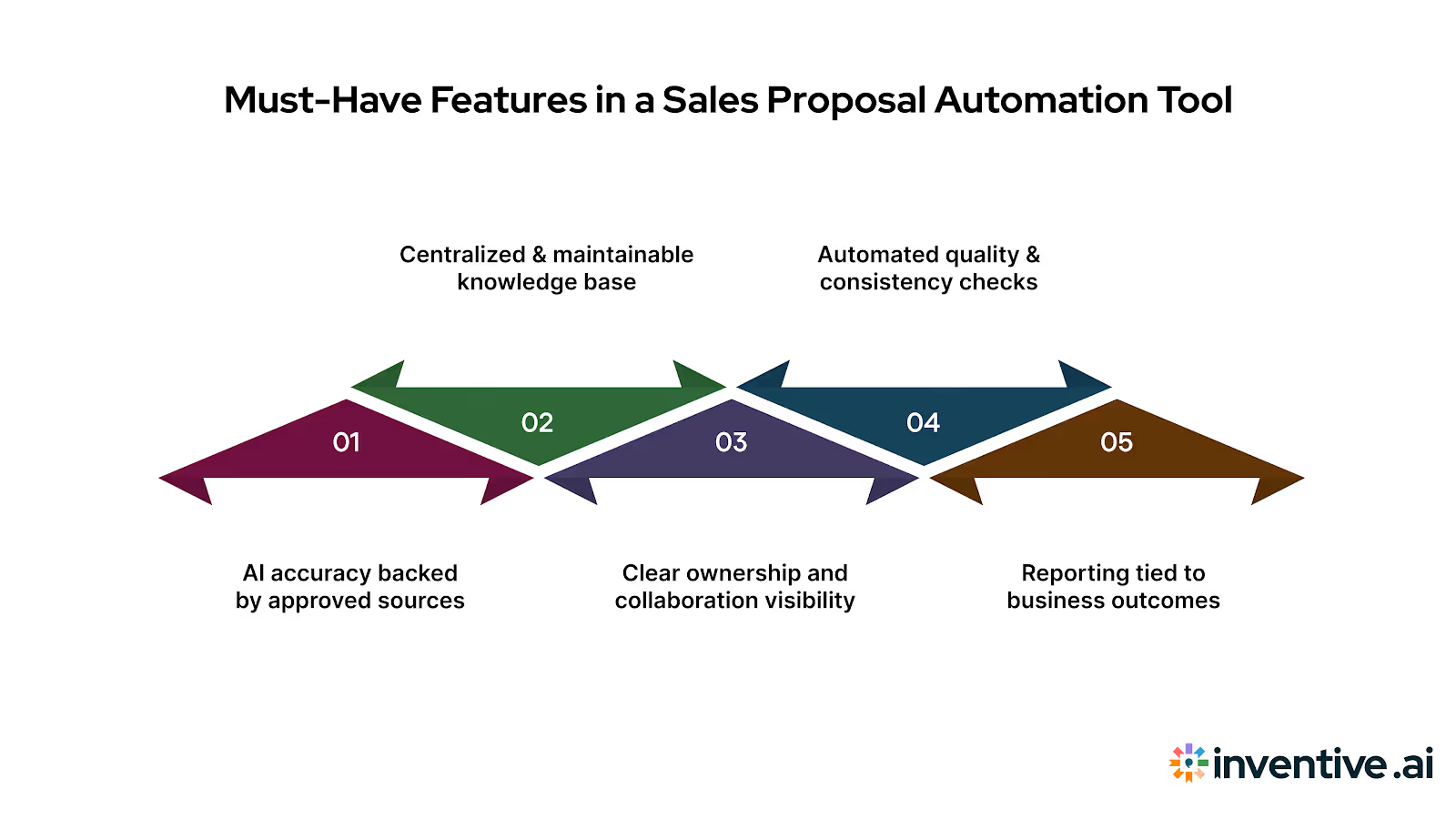
1. AI accuracy backed by approved sources
The tool should generate responses only from content your team has reviewed and approved. This ensures 0% hallucinations and removes the risk of unsupported claims appearing in proposals, which is critical for enterprise and security-focused evaluations.
2. Centralized and maintainable knowledge base
A strong automation platform includes a centralized content repository that serves as the single source of truth for proposal answers. Native connections with systems like Google Drive or SharePoint help keep content current and accessible without duplicating effort.
3. Clear ownership and collaboration visibility
Proposal managers need to see who owns each section, what is under review, and where approvals are pending. Built-in collaboration features reduce follow-ups and prevent delays caused by unclear responsibility.
4. Automated quality and consistency checks
The platform should identify contradictory answers, outdated responses, and inconsistencies before submission. These checks protect response quality and reduce the chance of follow-up questions or rejections from buyers.
5. Reporting tied to business outcomes
Beyond operational metrics, the tool should provide insight into proposal turnaround time, response accuracy, and win-rate impact. These metrics help revenue leaders justify investment and improve proposal performance over time.
Choosing a tool with these capabilities ensures proposal automation improves both efficiency and response quality, not just speed. Inventive AI offers all of these capabilities and goes a step further, combining accuracy controls, structured collaboration, and measurable revenue impact in one platform. This makes it a strong choice for vendors managing high-stakes sales proposals and RFPs at scale.
Why Inventive AI Is the Best Choice for Automating Sales Proposals?
Manual sales proposal processes hold revenue teams back. They consume selling time, introduce unnecessary risk, and slow deal momentum, especially when RFP volume increases and deadlines overlap.
With AI-powered RFP response software, Inventive AI automates the sales proposal workflow while keeping accuracy, consistency, and review control intact. It is built specifically for vendors responding to RFPs, RFIs, and security questionnaires where response quality directly impacts win rates.
At the center of the platform is Inventive AI’s AI RFP Agent, designed to support how revenue and proposal teams actually work.
1. Higher response quality, not just faster drafts
Inventive AI focuses on response quality as the primary outcome. The AI RFP Agent delivers 2x higher response quality by grounding every answer in approved content and context, rather than assembling generic responses. This matters in enterprise evaluations where clarity and consistency influence buyer confidence.
2. Context-aware understanding of RFP questions
Instead of matching keywords, Inventive AI’s Context Engine analyzes the intent behind each question. It understands what the buyer is asking and selects the most relevant approved responses, helping your team deliver answers that are aligned, complete, and buyer-specific.
3. Instant conflict detection before submission
Conflicting answers across proposals can create serious credibility and compliance issues. Inventive AI automatically flags contradictions within a proposal and across past responses, giving teams a chance to resolve issues before proposals reach buyers.
4. Outdated content detection to keep answers current
Sales proposals often fail because old language continues to circulate. Inventive AI identifies outdated responses and highlights content that needs review, ensuring proposals reflect the latest product, security, and compliance information.
5. Quality benchmarking across responses
The AI RFP Agent benchmarks responses against your best-performing answers. This helps maintain consistency across submissions and ensures proposal quality improves over time instead of varying by contributor or deadline pressure.
6. Narrative-style proposals, not fragmented answers
Enterprise buyers evaluate proposals as complete narratives, not isolated responses. Inventive AI generates cohesive, narrative-style proposals that read clearly and logically, improving reviewer experience and overall proposal strength.
Measurable outcomes for revenue leaders
Teams using Inventive AI see tangible results:
- Proposal drafts generated 10x faster
- 95% accuracy with 0% hallucinations
- Faster turnaround without adding headcount
- Up to 50% higher win rates driven by better response quality and consistency
Inventive AI’s AI RFP Agent gives you speed without compromise. You respond faster, maintain accuracy, and build trust with enterprise buyers across every proposal.
FAQs
1. What’s the difference between proposal automation and RFP automation?
Proposal automation is focused on creating and managing sales proposals (pricing, narrative, and customization), while RFP automation handles responses to procurement requests like RFPs, RFIs, and DDQs. Both involve streamlining the process, but proposal automation is more aligned with the sales cycle and closing deals.
2. Does AI proposal automation replace human review?
AI proposal automation helps by generating drafts quickly and providing context-aware content, but human review is still necessary. Teams need to ensure the proposal matches buyer expectations, tone, and specific requirements.
3. How do I know if my team is ready for proposal automation?
If your team spends significant time on repetitive tasks like drafting similar content, chasing SMEs, or dealing with inconsistent proposals, it’s time to consider automation. If your win rates are suffering due to time spent on manual work, automation can help.
4. What proposal content benefits most from AI automation?
Standard product descriptions, compliance answers, pricing tables, and historical proof points are ideal for automation. AI can efficiently reuse and tailor these sections based on your approved content library, improving both speed and accuracy.
5. Can proposal automation integrate with my CRM or tech stack?
Yes, most proposal automation tools can integrate with your CRM, document management systems (like Google Drive and SharePoint), and collaboration platforms (such as Slack or Teams), allowing for smoother workflows and better proposal personalization.