AutoRFP AI Price, Features, Reviews & Ratings for 2026
In this blog, you’ll get a detailed review of the tool: its features, pricing, and where it falls short, so you can decide if it meets your needs or if you need a solution like Inventive AI that was built for scaling RFP response.
AutoRFP AI is one of a growing group of AI tools built to speed up how teams respond to RFPs, RFIs, and security questionnaires. This review looks at what AutoRFP AI does, how its pricing works, what real users say in their reviews, where the platform has limits, and which alternatives are worth shortlisting alongside it in 2026 — so you can decide whether it fits your workflow.
According to Gartner, sales teams using generative AI to draft proposals and bid responses can cut the time spent per RFP from roughly 27 hours to about 16 hours — a 40% drop — without sacrificing win rate. Tools like AutoRFP AI exist to capture that kind of efficiency, and the category now spans everything from lightweight drafting assistants to full RFP automation software. The right choice depends on your volume, team size, and how much governance your responses require.
Key Takeaways
- AutoRFP AI is an AI-powered response platform that drafts RFP answers from your past content, centralizes projects, and supports real-time collaboration — aimed primarily at small and growing bid teams.
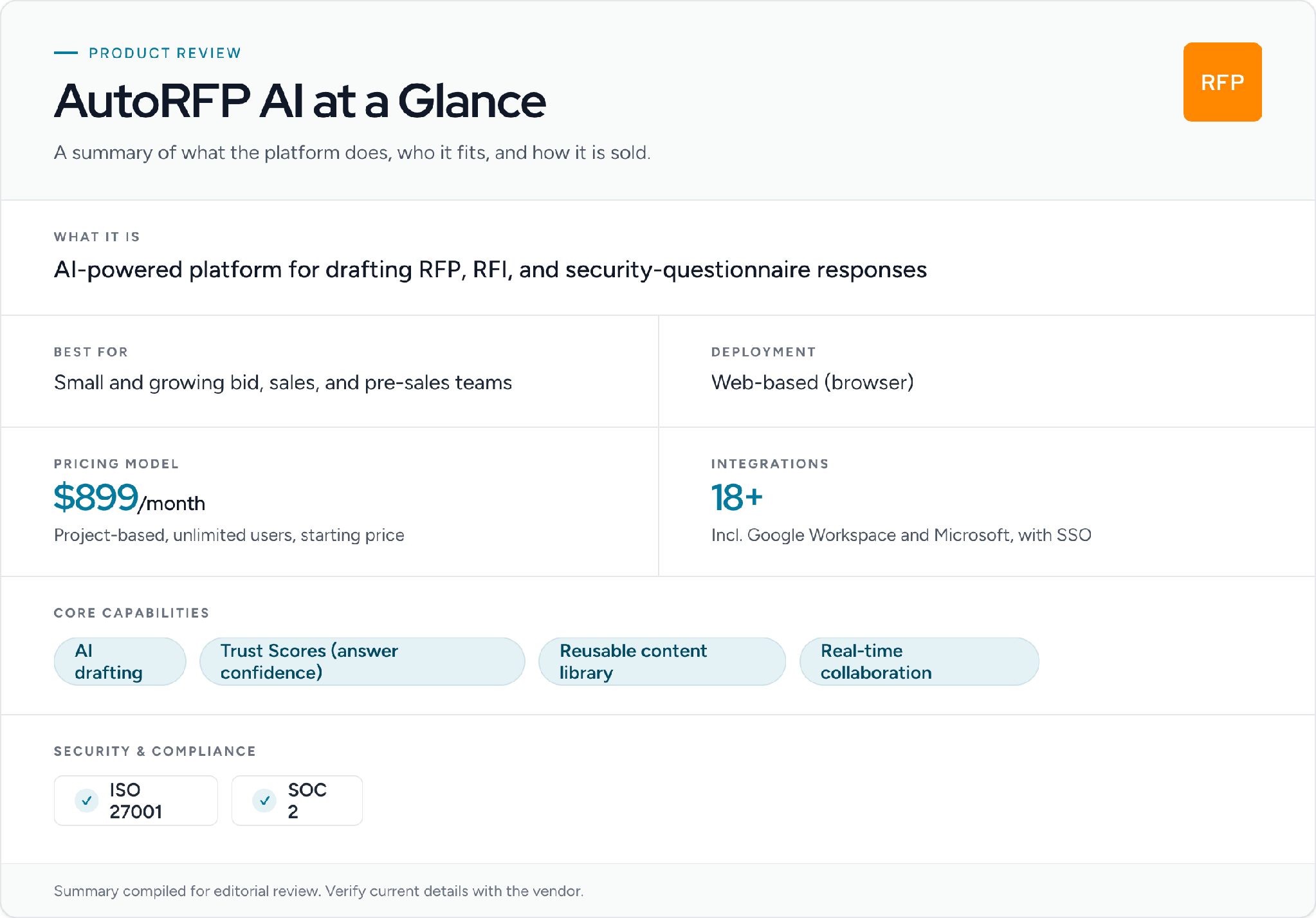
- Pricing is project-based: a Scale plan reported at $899/month (24 projects) and an Accelerate plan at $1,299/month (50 projects), with a custom Enterprise tier. AutoRFP.ai does not publish a public pricing page, so confirm current figures directly with the vendor.
- Strengths noted by reviewers include fast drafting, transparent confidence (“Trust Score”) indicators, a single collaborative workspace, and responsive support.
- Limitations noted by reviewers include a learning curve without training, web-only access, limited template flexibility, and constraints around large or complex documents.
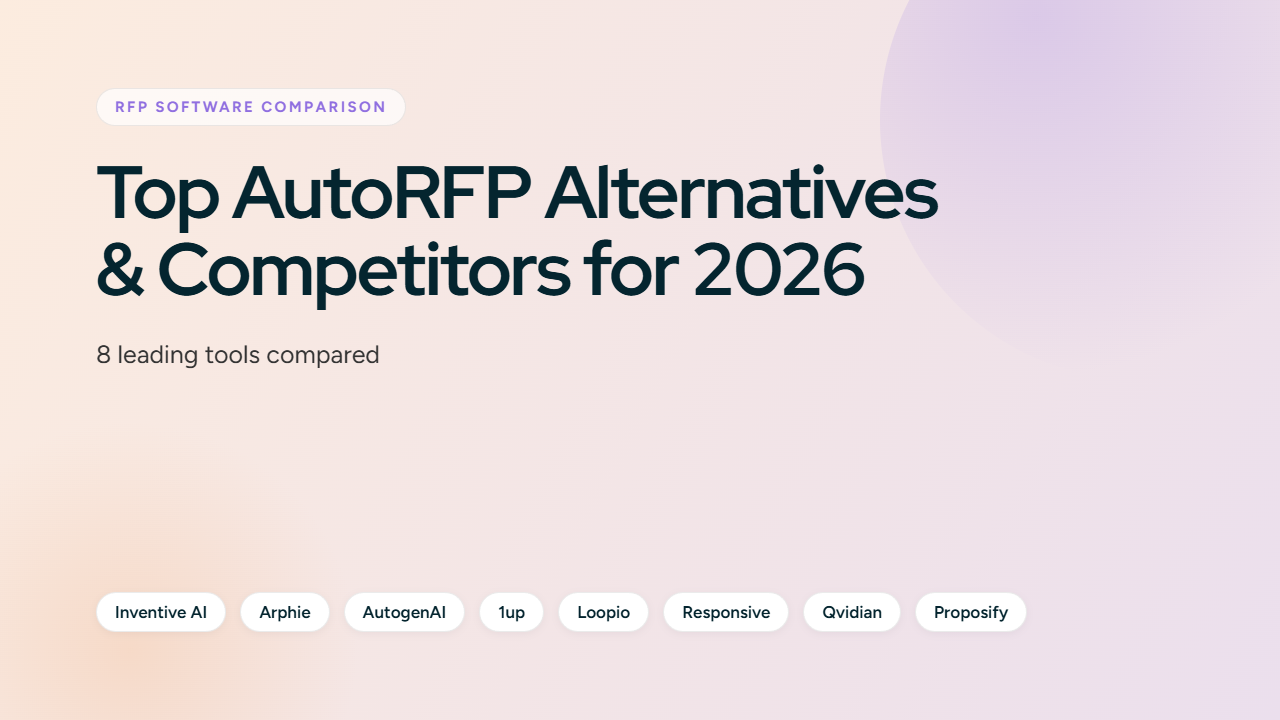
- Alternatives worth comparing include Inventive AI, Responsive, Loopio, SiftHub, and Arphie — each suited to different team sizes and governance needs.
AutoRFP AI Overview: What It Is and Who It’s For
AutoRFP AI (branded as AutoRFP.ai) is a response-management platform that automates key parts of the RFP response process — reading incoming questions, searching your existing content, and drafting answers in your company’s terminology and tone. It is generally positioned for small and mid-sized bid, sales, and pre-sales teams that want to move off spreadsheets and manual copy-paste without a heavy implementation.
Like most tools in the category, AutoRFP AI works best when it is fed a well-maintained library of approved answers, and its value grows as teams standardize how they write effective RFP responses.
AutoRFP AI Key Features
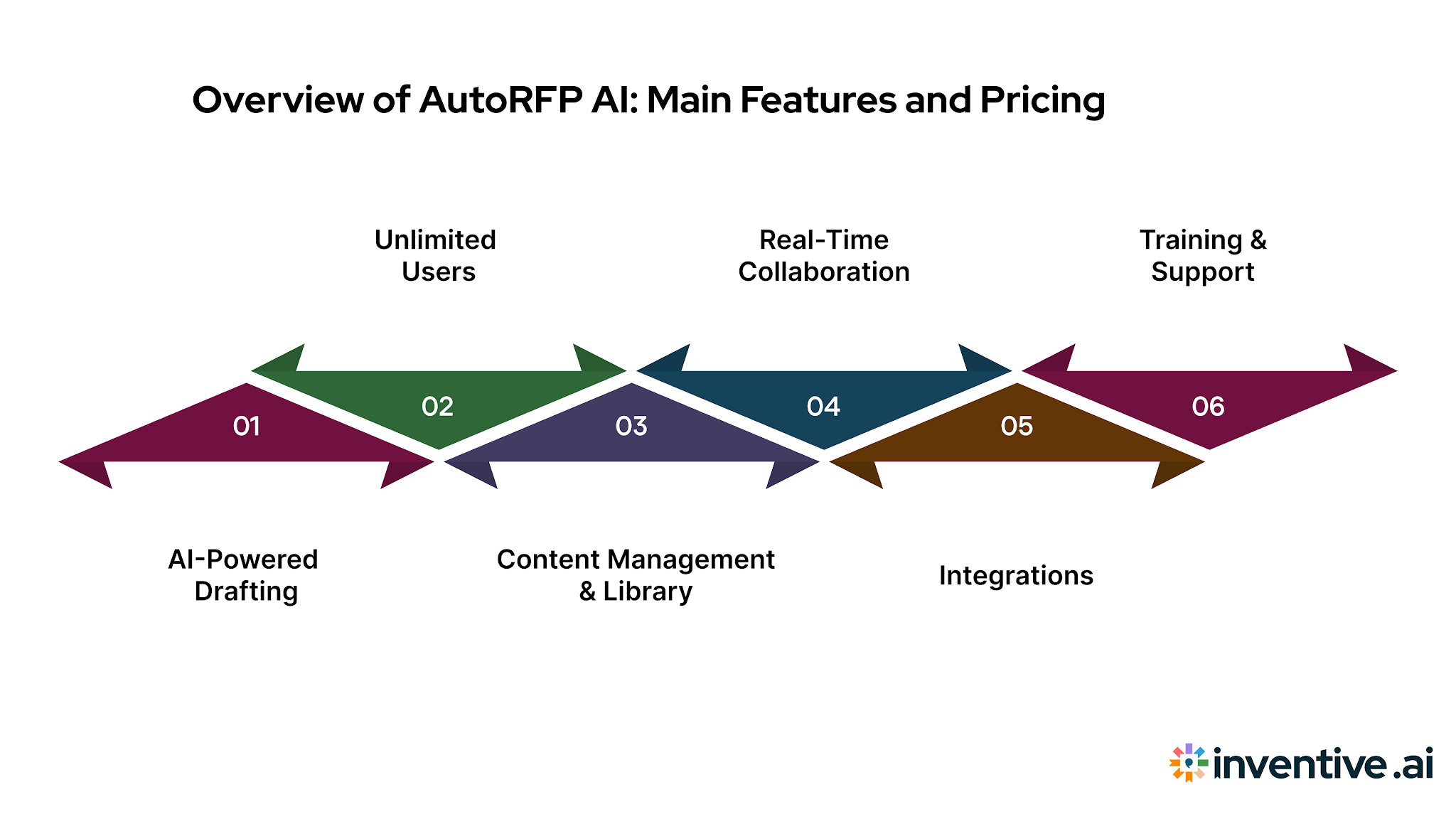
Below are the core AutoRFP AI features teams evaluate most often.
1. AI-powered drafting
AutoRFP AI generates proposal drafts from your historical content and the incoming RFP, automating much of the first-draft writing and reducing the time needed to produce responses.
2. Trust Scores
Each AI-generated answer carries a transparent confidence indicator (“Trust Score”) tied to the source content it drew from, so reviewers can see which responses need closer human review.
3. Content management and library
The platform stores and organizes responses so teams can reuse approved content across multiple RFPs, which helps maintain consistency between submissions.
4. Real-time collaboration
Multiple contributors and reviewers can work in the same project at once, with task assignment, commenting, and review workflows to coordinate a bid.
5. Integrations
AutoRFP AI supports 18+ third-party integrations, including Google Workspace and Microsoft, along with SSO, so documents and data sync with tools teams already use.
6. Training and support
Online training and support are included across plans, which reviewers cite as helpful for getting a team onboarded.
As RFP volume, stakeholder count, and compliance requirements grow, teams commonly weigh additional factors — workflow control, integration depth, and content governance — when judging long-term fit.
AutoRFP AI Pricing
AutoRFP AI uses a project-based pricing model with unlimited users included on every plan. AutoRFP.ai does not publish public pricing, so the figures below are as reported and should be verified with the vendor for your region and contract.
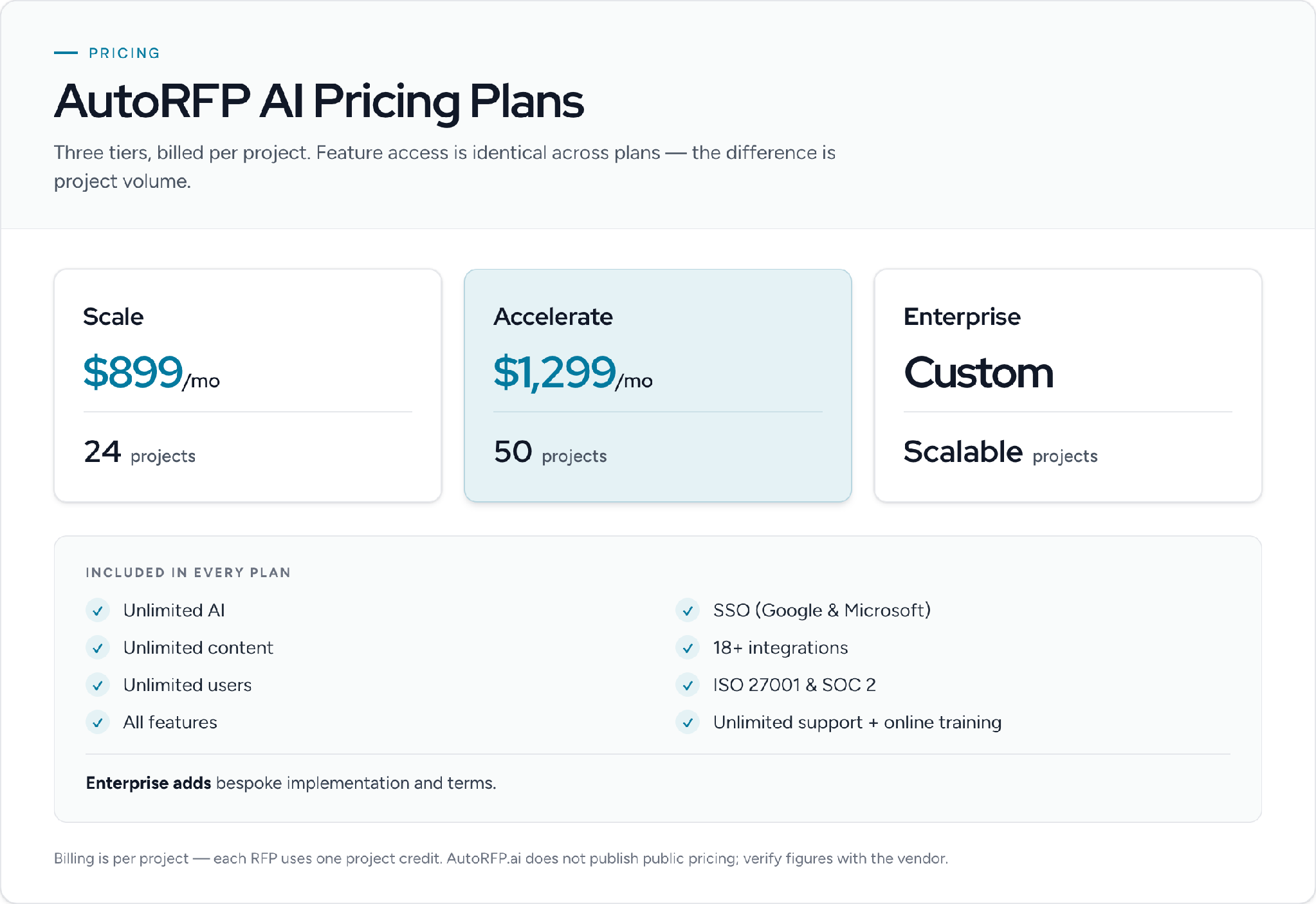
Because billing is per project, each RFP consumes one project credit regardless of size — a short questionnaire counts the same as a large, complex response. Teams that handle a high volume of small or ad-hoc requests may find this less flexible than usage- or seat-based models, while teams with a steadier cadence of larger bids may find it predictable. It’s worth mapping your expected annual RFP count against the plan tiers before committing. For a broader view of how vendors price in this space, see our roundup of the best RFP software and options for RFP software for small teams.
AutoRFP AI Strengths and Limitations
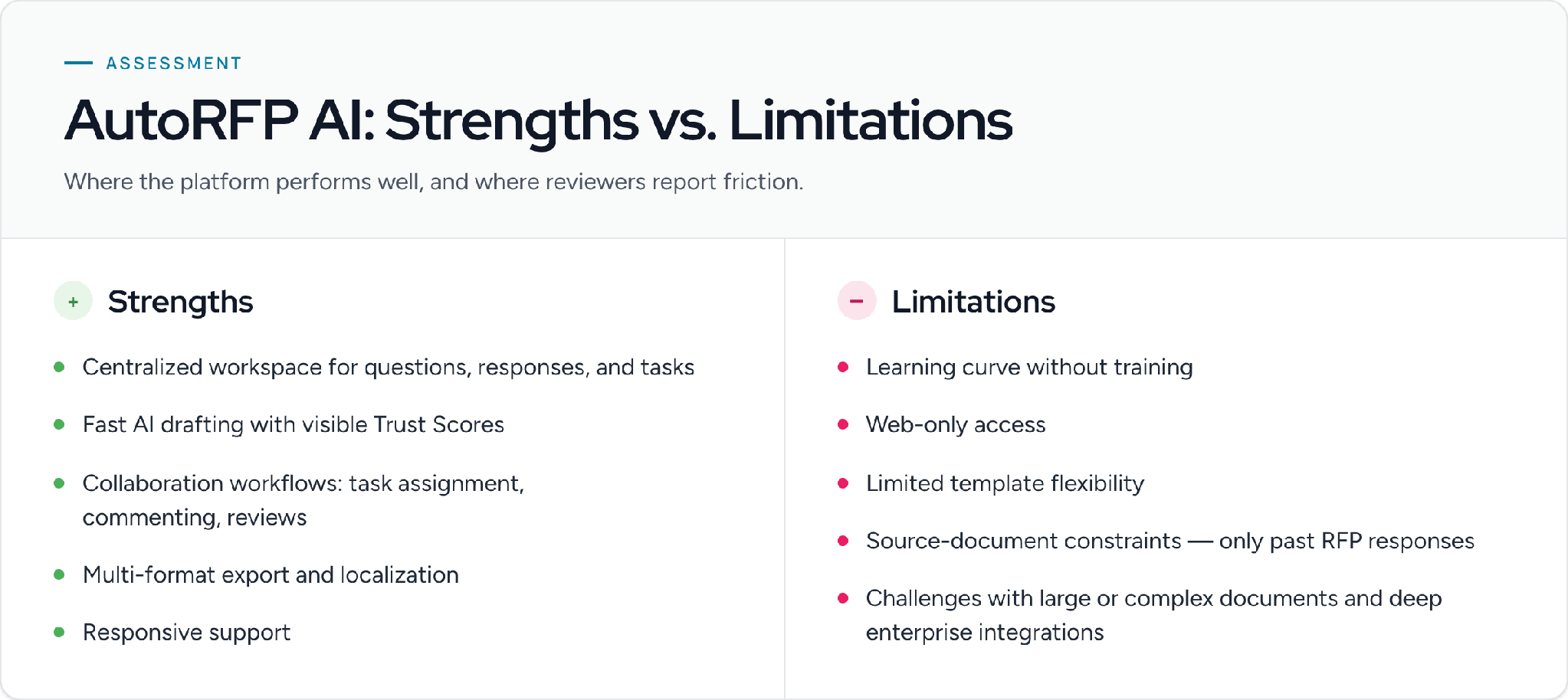
User reviews on public platforms point to a consistent picture: AutoRFP AI is effective for centralizing RFP work and speeding up first drafts, with some friction around onboarding and customization.
Strengths
- Centralized workspace: Reviewers note that AutoRFP AI brings questions, responses, and project tasks into one place, replacing spreadsheet-based or manual processes.
- Fast drafting with visible confidence: Users highlight quick first drafts paired with Trust Scores that flag how well-supported each answer is.
- Collaboration workflows: Task assignment, commenting, and reviewer workflows let several contributors work within the same project.
- Export and localization: Reviewers mention exporting completed responses in multiple formats and translating content for different regions.
- Responsive support: Support quality and onboarding help are frequently praised in reviews.
Limitations
- Learning curve: Some users report the interface is not immediately intuitive and that structured training helps before teams see full value.
- Web-only access: Access is browser-based, which a few reviewers find limiting.
- Template flexibility: Customization can feel restrictive when internal processes change frequently.
- Source-document constraints: Some users note they cannot upload source documents beyond past RFP responses.
- Complex documents and integrations: Handling large, complex documents or deep enterprise system integrations can require more manual configuration.
AutoRFP AI Ratings and User Feedback
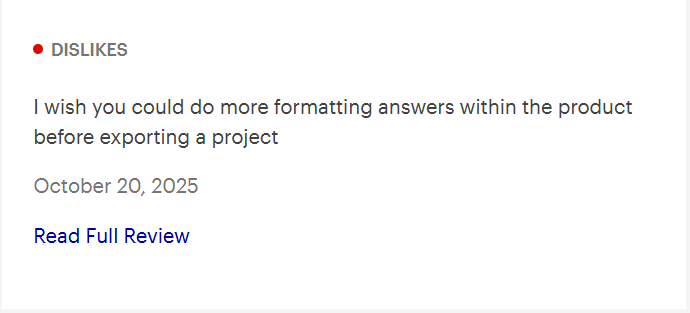
AutoRFP AI is reviewed across the major independent software directories. Ratings shift over time, so treat these as a snapshot and read recent reviews for your use case.
- G2: Reviews and current scores are on the AutoRFP.ai G2 profile.
- Gartner Peer Insights: Verified reviews are on Gartner Peer Insights.
- Capterra: Pricing notes and reviews are on the Capterra AutoRFP.ai profile.
- Software Advice: A feature and pricing overview is on the Software Advice profile.
Across these sources, the recurring themes match the strengths and limitations above: strong time savings and support, balanced against onboarding effort and customization limits.
How to Evaluate AutoRFP AI Against Your Needs
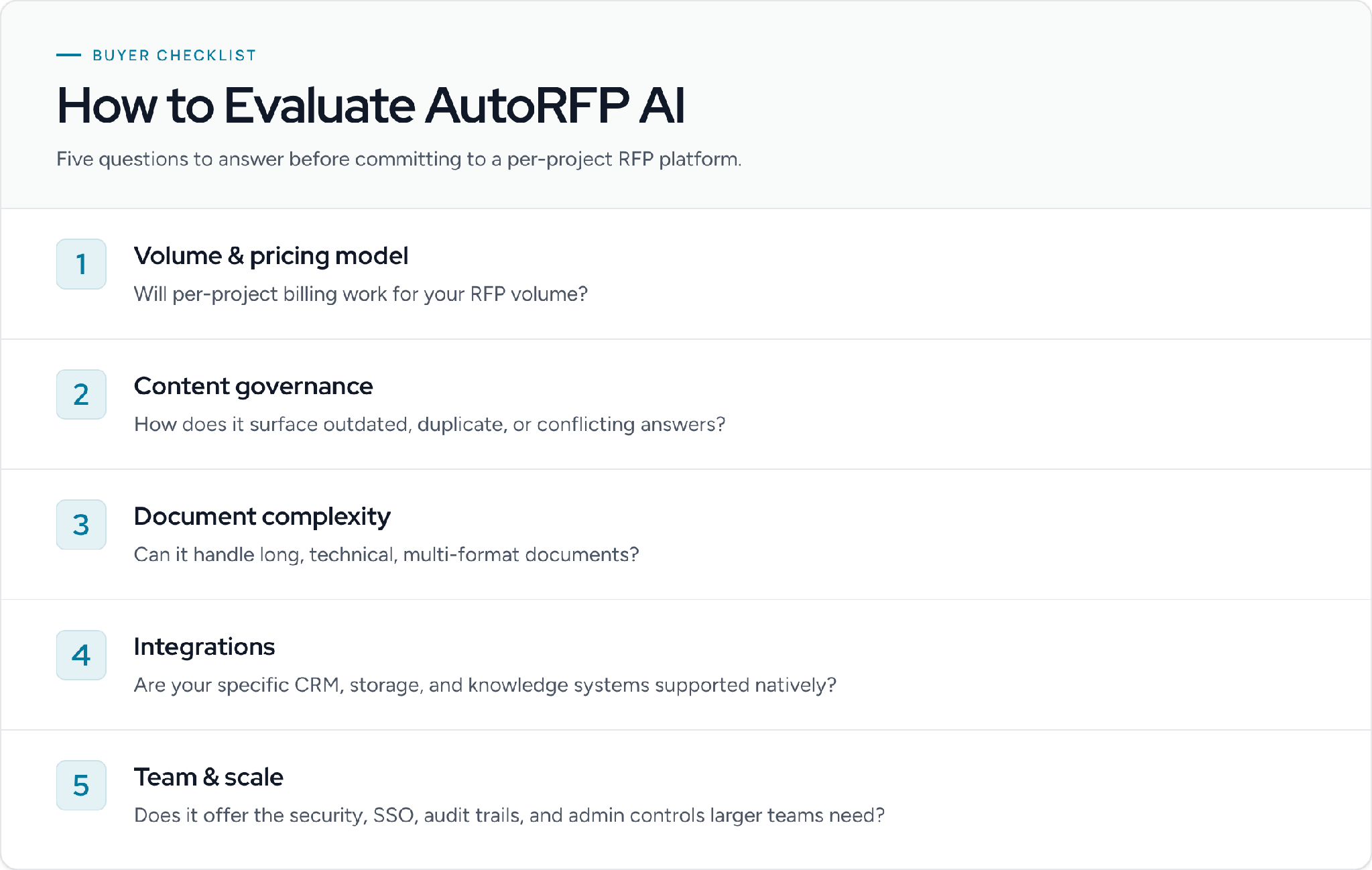
Whether AutoRFP AI is the right fit depends less on any single feature and more on how your response operation is shaped. A few criteria to weigh:
- Volume and pricing model: If you run many small RFPs, test whether per-project billing works in your favor or against it.
- Content governance: As libraries grow, ask how the platform surfaces outdated, duplicate, or conflicting answers — a common pain point across the category.
- Document complexity: If you regularly handle long, technical, or multi-format documents, validate that during a trial.
- Integrations: Confirm the specific systems you rely on are supported natively.
- Team and scale: Larger or enterprise RFP software buyers should pressure-test security, SSO, audit trails, and admin controls.
If AutoRFP AI covers your core needs, it can be a practical choice. If you hit limits on customization, complex documents, or governance, it’s worth comparing alternatives before you commit.
AutoRFP AI Alternatives to Consider
Several established and AI-native tools compete in the same space. Each takes a slightly different approach, so shortlist based on your team size and governance needs. For a fuller list, see our guide to AutoRFP AI alternatives and competitors.
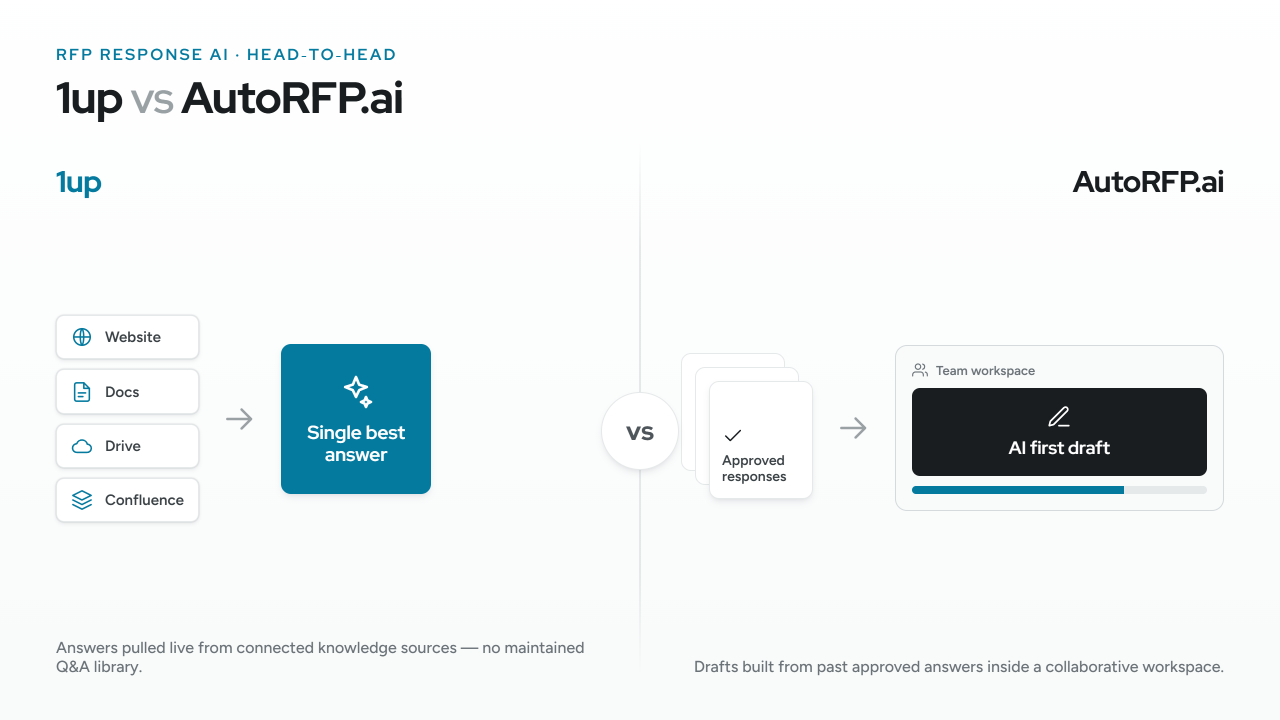
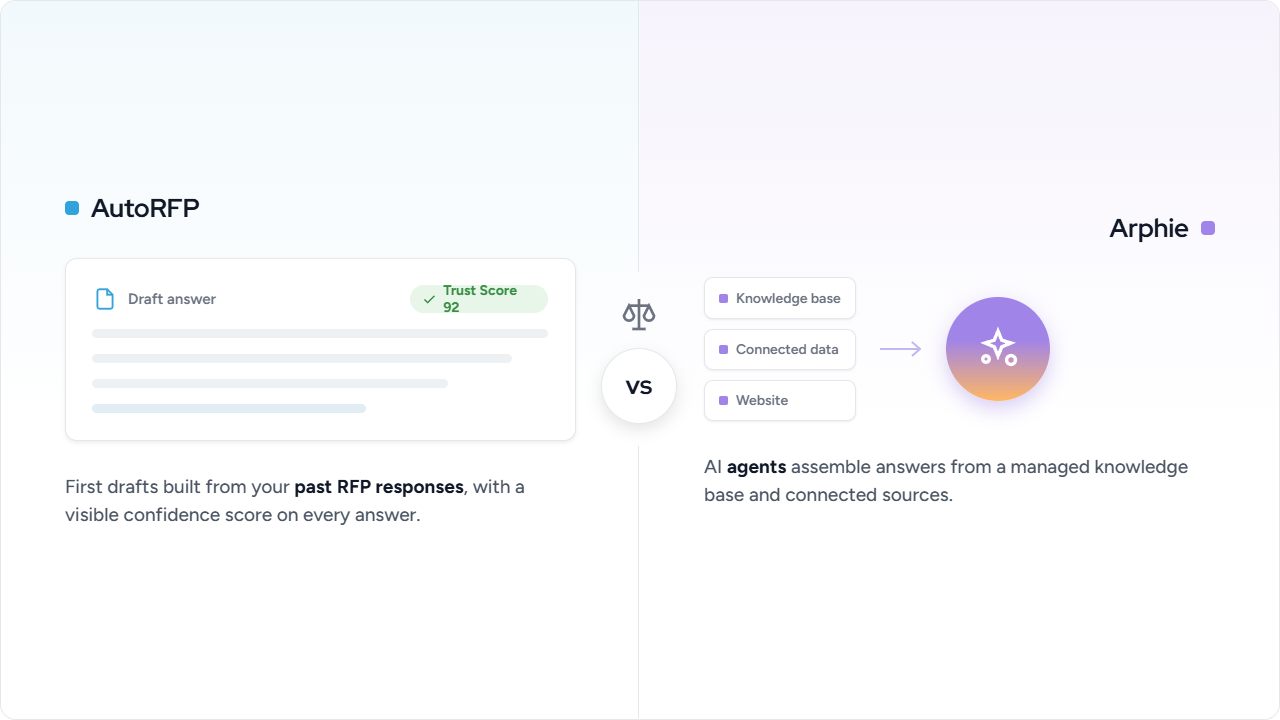
- Inventive AI: An AI-native, agent-driven RFP and security questionnaire platform that works from your existing knowledge sources rather than a separate library, with documented customer case studies on turnaround and win-rate improvements. See Inventive AI pricing.
- Responsive: An established, enterprise-focused response management platform with a large feature set and content library.
- Loopio: A widely adopted RFP tool known for its library-driven workflow and collaboration features.
- SiftHub: An AI-first assistant aimed at sales and pre-sales teams answering RFPs and security questionnaires.
- Arphie: A newer AI-native entrant focused on automating drafting and content upkeep.
Final Thoughts
AutoRFP AI is a capable option for teams looking to streamline standard RFP workflows and cut first-draft time, with reviewers praising its speed, confidence scoring, and support. Its project-based pricing and onboarding curve are the main trade-offs to weigh, and larger teams should test how it handles complex documents and governance at scale.
The best way to choose is to trial your shortlist against real RFPs and compare results side by side.
If you’re evaluating AI-native options alongside AutoRFP AI, you can see how Inventive AI approaches RFP responses.
Frequently asked questions
What is AutoRFP AI?
AutoRFP AI (AutoRFP.ai) is an AI-powered response-management platform that drafts RFP, RFI, and security-questionnaire answers from a team’s existing content, centralizes projects in one workspace, and supports real-time collaboration and review.
How much does AutoRFP AI cost?
AutoRFP AI uses project-based pricing with unlimited users on every plan. Reported tiers include a Scale plan at $899/month (24 projects) and an Accelerate plan at $1,299/month (50 projects), plus a custom Enterprise plan. AutoRFP.ai does not publish public pricing, so confirm current figures with the vendor.
Is AutoRFP AI secure and compliant?
AutoRFP AI lists ISO 27001 and SOC 2, along with SSO for Google and Microsoft, across its plans. Buyers with strict requirements should request current certifications and security documentation during evaluation.
What integrations does AutoRFP AI offer?
AutoRFP AI supports 18+ integrations, including Google Workspace and Microsoft, plus single sign-on. Confirm that the specific CRM, storage, and knowledge systems your team depends on are supported natively.
Who is AutoRFP AI best suited for?
AutoRFP AI is generally a good fit for small and growing bid, sales, and pre-sales teams that want to replace manual, spreadsheet-based processes with AI-assisted drafting and a shared workspace, without a heavy implementation.
What are the top AutoRFP AI alternatives?
Commonly compared alternatives include Inventive AI, Responsive, Loopio, SiftHub, and Arphie. Each fits different team sizes and governance needs — see our full breakdown of AutoRFP AI alternatives and competitors to compare them.

.avif)