Top QorusDocs Competitors & Alternatives for Modern RFP Teams
This guide reviews the leading QorusDocs alternatives and competitors for 2026, focusing on how each platform handles scale, accuracy, and coordination.
.avif)
QorusDocs is an RFP and proposal management platform that uses AI to support proposal creation, content reuse, and collaboration across sales teams. It is commonly used to reduce manual effort in handling RFPs, RFIs, and security questionnaires, especially during early drafting and document assembly.
The growing reliance on tools like QorusDocs reflects a broader shift in how organizations manage proposals. The proposal management software market is projected to grow from $2.59 billion in 2023 to $5.81 billion by 2030, as teams look for faster turnaround times, better consistency, and fewer manual bottlenecks in competitive sales cycles.
As proposal volumes rise, however, speed alone stops being the main constraint. Modern RFPs introduce layered reviews, shared content ownership, compliance checks, and constant revisions across teams.
In these environments, AI-assisted drafting tools often push work downstream, forcing teams to validate answers, reconcile versions, and rework content to meet accuracy standards. As response quality drives RFP outcomes, not features or speed, it impacts win rates. That said, most tools (including QorusDocs) optimize document assembly rather than evaluator-ready answers.
That shift is driving many teams to reassess QorusDocs and evaluate alternatives built for more structured, repeatable RFP workflows.
This guide reviews the leading QorusDocs alternatives and competitors for 2026, focusing on how each platform handles scale, accuracy, and coordination.
Key Takeaways
- QorusDocs works well for document-centric RFP workflows, but its AI depth and usability may limit scalability as proposal volume and complexity grow.
- Alternatives to QorusDocs include Inventive AI, Responsive, Loopio, AutoRFP AI, Qvidian, Proposify, PandaDoc, RocketDocks, and SiftHub. These tools vary in AI depth, scalability, and response quality.
- AI-first platforms outperform traditional tools by analyzing the entire RFP, providing more contextually relevant and accurate responses, rather than generating isolated answers.
- Inventive AI excels by delivering faster, more accurate, and evaluator-ready RFP responses, reducing manual effort and improving efficiency.
- Smart teams choose AI-driven RFP tools that help improve win rates, shifting focus from just tool selection to achieving measurable outcomes like higher proposal success.
Why Teams Look for QorusDocs Alternatives?
QorusDocs works well for organizations already embedded in Microsoft 365. Teams operate directly inside Word, Excel, PowerPoint, Outlook, and Teams, using add-ins to pull approved content from shared libraries. QorusDocs is document-native, not RFP-native, which becomes a limitation as teams move from document assembly to evaluator-aligned response execution.
That said, feedback from user reviews shows clear friction once teams try to scale proposal work or rely more heavily on AI.
Common limitations reported by users include:
- Steep learning curve: Teams often report that QorusDocs takes significant time to understand and configure properly. Advanced workflows, templates, and content rules require training and ongoing setup before teams see real efficiency gains.
- Lack of full-RFP context: QorusDocs often struggles with understanding the full context of an RFP, leading to incomplete or disconnected responses that fail to address the entire scope of the request.
- No contradiction detection: Users note that the platform doesn’t detect contradictions in responses, leading to inconsistencies and inaccuracies in the final RFP submission.
- Stale content reuse: While QorusDocs surfaces past answers, the content can become stale over time, affecting the relevance and quality of reused responses.
- No quality benchmarking: QorusDocs lacks mechanisms to benchmark response quality, making it difficult to assess how well responses will perform with evaluators or meet the expected standards.
- In comparison, agentic AI platforms like Inventive AI reason across the full RFP, cross-reference multiple sources, automatically flag internal contradictions, and reduce the need for manual validation that is common with shallow ChatGPT or RAG-based outputs.
With these limitations in mind, many teams start evaluating tools that go beyond basic content retrieval and document assembly.
The next section breaks down the top QorusDocs alternatives and competitors, comparing how each platform handles scale, AI depth, collaboration, and enterprise-grade RFP workflows.
Also read: QorusDocs Price, Features, Reviews & Ratings 2026
Top QorusDocs Alternatives: Features, Pricing, and Ratings
1. Inventive AI
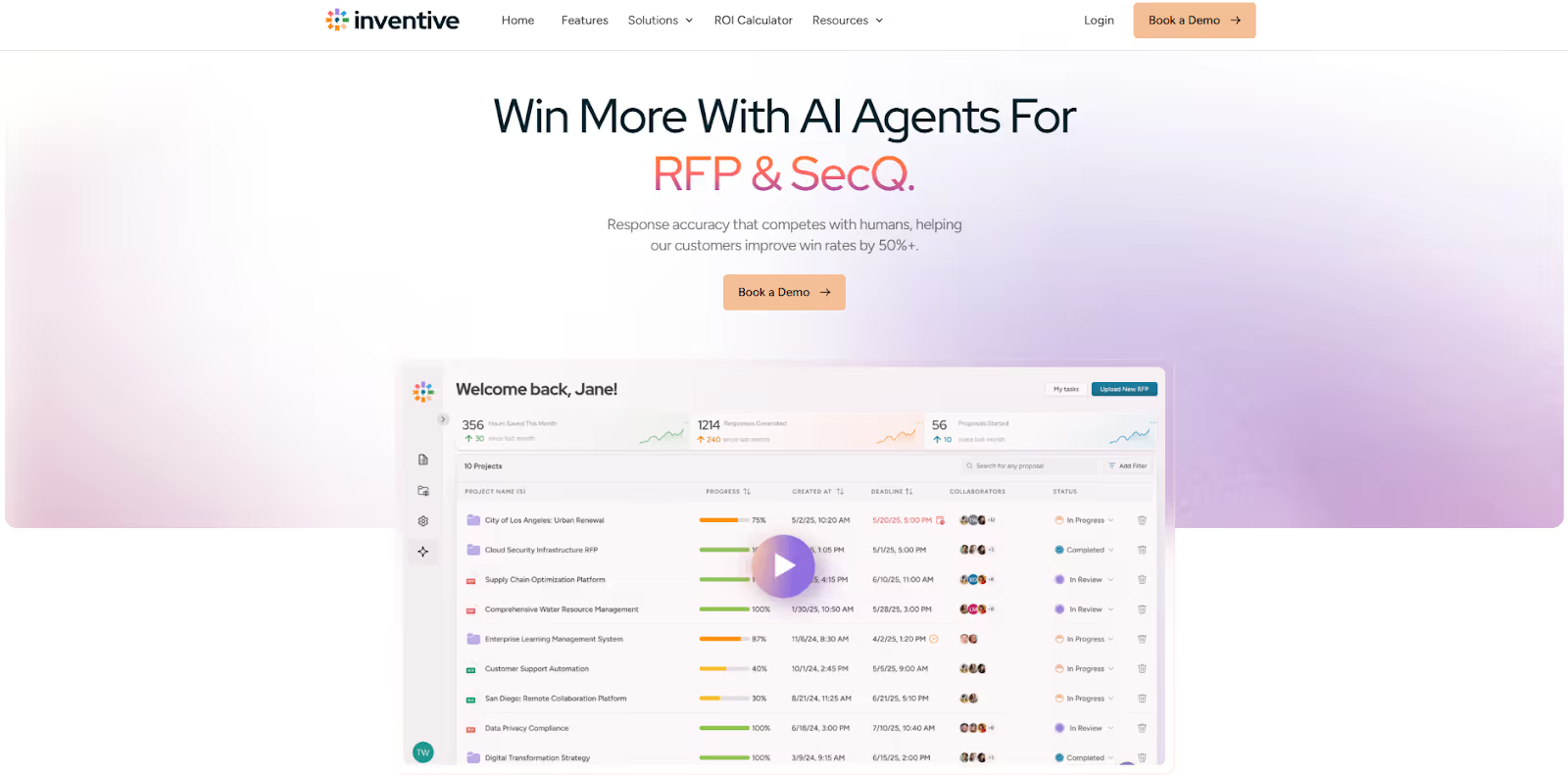
Inventive AI is the industry leader for modern teams evaluating RFP platforms based on a single outcome: higher win rate.
Instead of optimizing for task completion or content retrieval, Inventive AI is built to maximize response quality, because stronger answers are what decide deals in competitive, high-stakes RFPs.
For RFP teams dealing with complex requirements, strict compliance, and multiple reviewers, Inventive AI delivers hyper-contextual, real-time answers that require minimal human intervention.
Key Features
- 2× higher response quality that drives win rates: Inventive AI produces responses that are measurably stronger in accuracy, clarity, and relevance, translating directly into higher RFP success rates rather than just faster submissions.
- Multi-agent reasoning across the full RFP lifecycle: Instead of a single AI agent handling isolated tasks, Inventive AI uses multiple specialized agents for context understanding, compliance validation, quality checks, and narrative alignment, resulting in strategically consistent responses.
- Context-aware engine with 95%+ accuracy: Inventive AI understands full RFP context and dependencies, generating answers that read like they were written by subject matter experts rather than stitched together from retrieved snippets.
- Conflict and consistency management across systems: The AI Content Manager detects contradictory statements across documents, knowledge bases, and prior responses, reducing risk in high-value, compliance-heavy RFPs.
- Near-zero editing through built-in quality benchmarking: Every response is benchmarked against gold-standard content, with 66% of answers requiring little to no editing, significantly reducing review cycles.
- Trustworthy outputs with zero hallucinations: All responses are grounded in verified internal knowledge, ensuring safe, customer-facing usage without guesswork or fabricated claims.
- Narrative-style proposal generation: Inventive AI generates long-form narratives such as executive summaries, security overviews, and proposal sections, enabling workflows far beyond basic Q&A.
Pros
- Improves RFP win rates by up to 50% through higher-quality answers.
- Reduces RFP turnaround time by up to 90% for all teams.
- Delivers consistent, SME-level responses at scale with minimal rewriting.
- Eliminates risk from contradictory or hallucinated content.
Cons
- Limited analytics.
Best For
- Small to large enterprise teams managing high-volume, complex RFP pipelines.
- Organizations with strict accuracy, compliance, and approval requirements.
- Revenue teams focused on win-rate improvement, not just speed.
- Teams producing narrative proposals, executive briefs, and security documentation.
- Companies that are replacing manual review-heavy workflows with repeatable AI execution.
Pricing
- Usage-based pricing.
Client Testimonial
Inventive helped us achieve 50%+ higher win rates and 90% faster RFPs. Overall, my RFP workflow is SO much faster now with Inventive. My day was a lot less stressful using get Inventive. Anthony Pukal, Solutions Consultant.
2. Responsive (Formerly RFPIO)
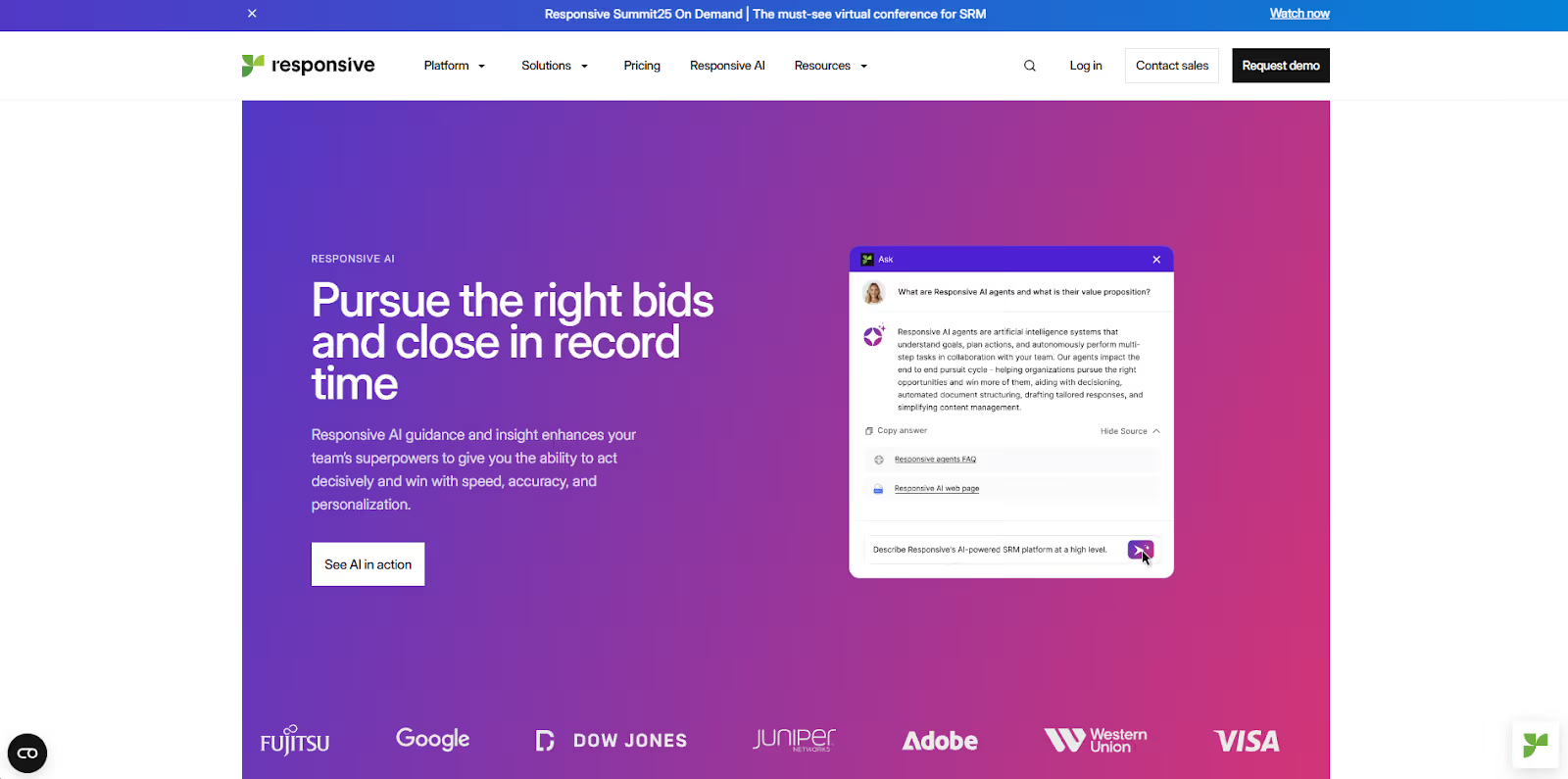
Responsive is an RFP response management platform used by proposal teams to organize content libraries, manage workflows, and coordinate responses across stakeholders. Responsive’s strength lies in process management rather than deep AI reasoning.
Features
- Centralized content library for RFP and questionnaire responses.
- Workflow and task management for proposal teams.
- Auto-response suggestions based on existing content.
- Collaboration tools for reviewers and contributors.
Pros
- Good process and task management for structured proposal teams
- Suitable for organizing large content repositories
- Familiar workflow for teams transitioning from manual RFP management
Cons
- Weak AI response quality: Auto-generated responses often require significant manual editing to meet enterprise standards, limiting productivity gains.
- Search and retrieval limitations: Users report that search accuracy is weaker than expected, making it harder to surface the best or most relevant answers quickly.
- Complex and time-consuming setup: Initial configuration and cleanup of large content libraries can be manual and slow, especially when dealing with duplicates.
- Cost adds up quickly: Many advanced capabilities are sold as add-ons, creating pricing friction for teams trying to unlock full value.
3. Loopio
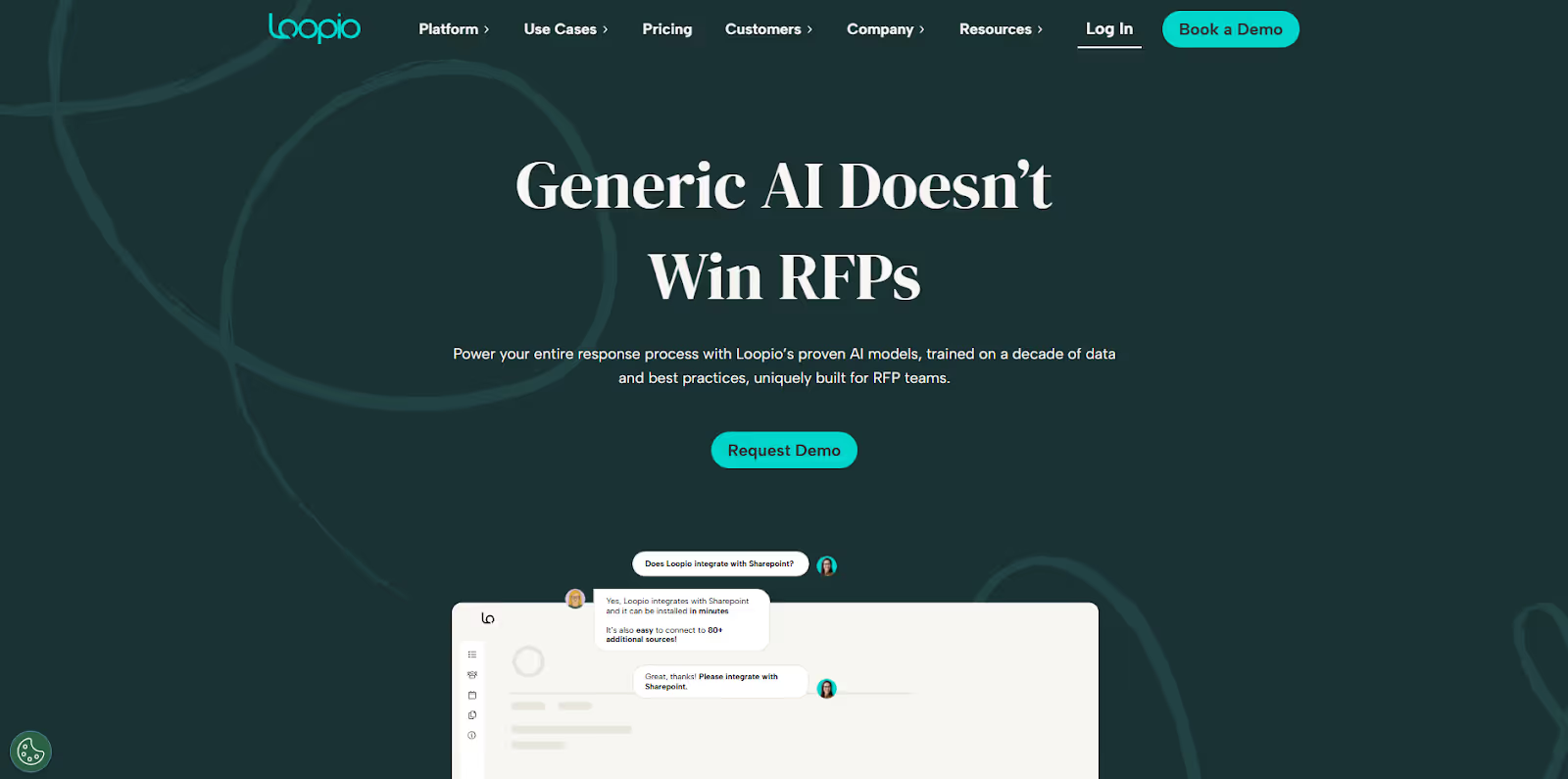
Loopio is a proposal and RFP response management platform used by sales and bid teams to centralize content and streamline questionnaire responses.
However, while Loopio supports content organization and collaboration, its AI capabilities and flexibility fall short for teams seeking high-quality, highly customized responses at scale.
Features
- Centralized content library for RFPs and questionnaires.
- Basic AI-assisted response suggestions.
- Content tagging and search.
- Workflow support for reviews and approvals.
Pros
- Helps organize proposal content in one place.
- Useful for managing repeat questions across RFPs.
Cons
- Limited customization: AI-generated responses are not deeply tailored, often requiring manual rewriting to meet buyer-specific requirements.
- Learning curve for advanced features: Content tagging, advanced search, and workflow automation take time to understand and configure.
- Clunky user experience: Users report a cumbersome interface with limited export and viewing options.
- Pricing friction: Cost can be challenging for smaller teams, especially as usage grows.
- Integration complexity: Database integrations can be slow to implement, resulting in longer-than-expected service turnaround times.
Suggested Alternative: Inventive AI is designed to address common RFP workflow gaps by generating responses with full RFP-level context, validating answers against approved source content, and automatically flagging conflicts or outdated information.
This reduces review effort, limits manual rewriting, and helps teams maintain consistent, accurate responses as RFP volume and complexity increase.
4. AutoRFP AI
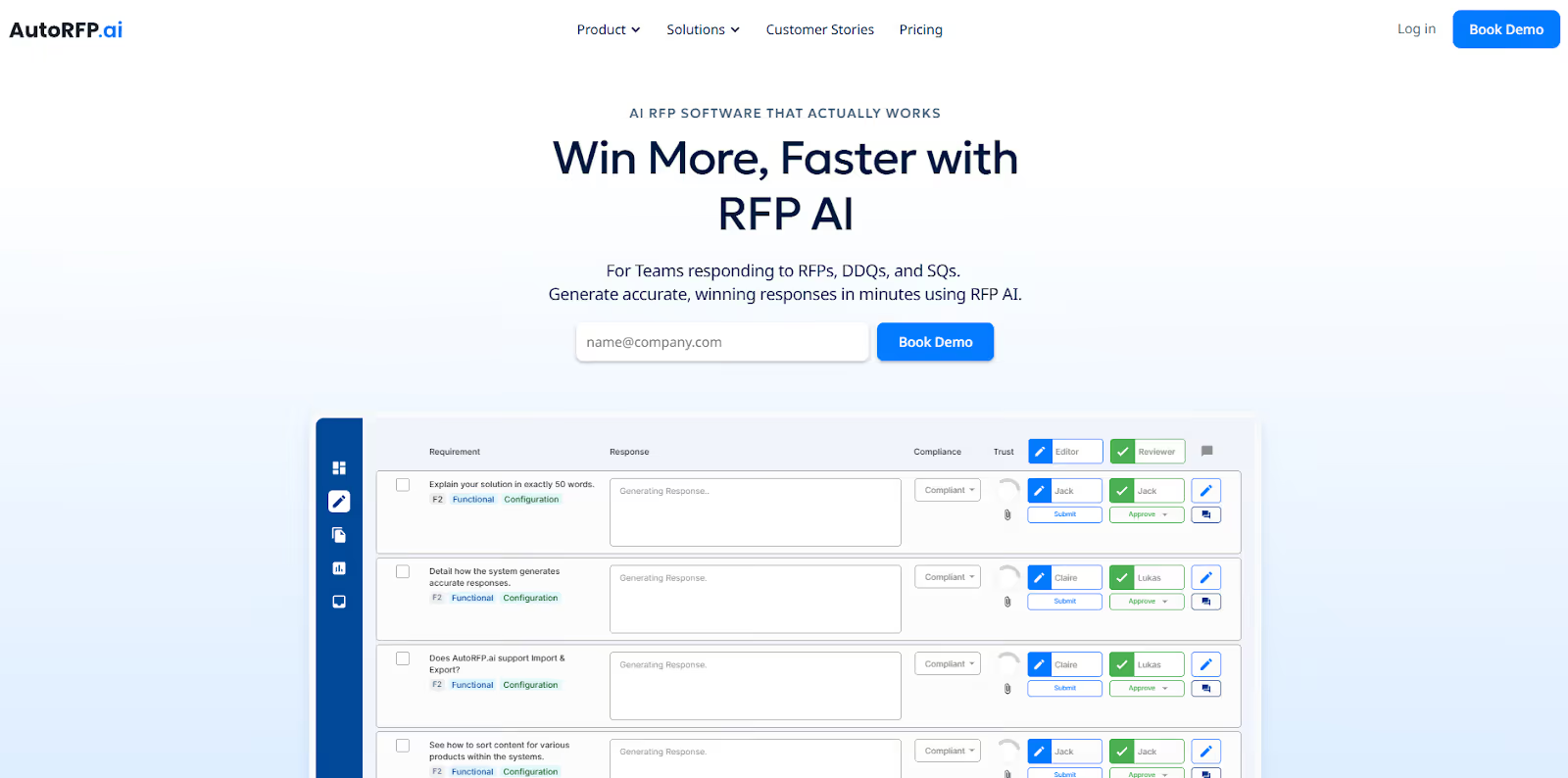
AutoRFP AI is an AI-assisted RFP response tool designed to help teams draft answers faster by pulling from existing knowledge bases and past responses. It is typically evaluated by teams looking for basic AI support to reduce manual drafting effort.
Features
- AI-assisted drafting for RFP and questionnaire responses.
- Centralized repository for prior answers.
- Knowledge base integrations.
Pros
- Helps reduce initial drafting time for repetitive questions.
- Suitable for teams beginning to experiment with AI-assisted RFP workflows.
Cons
- Clunky user experience: Users report that the interface can feel awkward and unintuitive, slowing down everyday tasks.
- Steep learning curve: Navigation and feature discovery are not immediately clear, requiring time and effort for teams to become productive.
- Inefficient knowledge base integration: Connecting and maintaining organizational knowledge sources can be cumbersome.
- Heavy onboarding required: Teams often need structured training to unlock full value, delaying time-to-impact for enterprise use cases.
5. Qvidian (Upland)
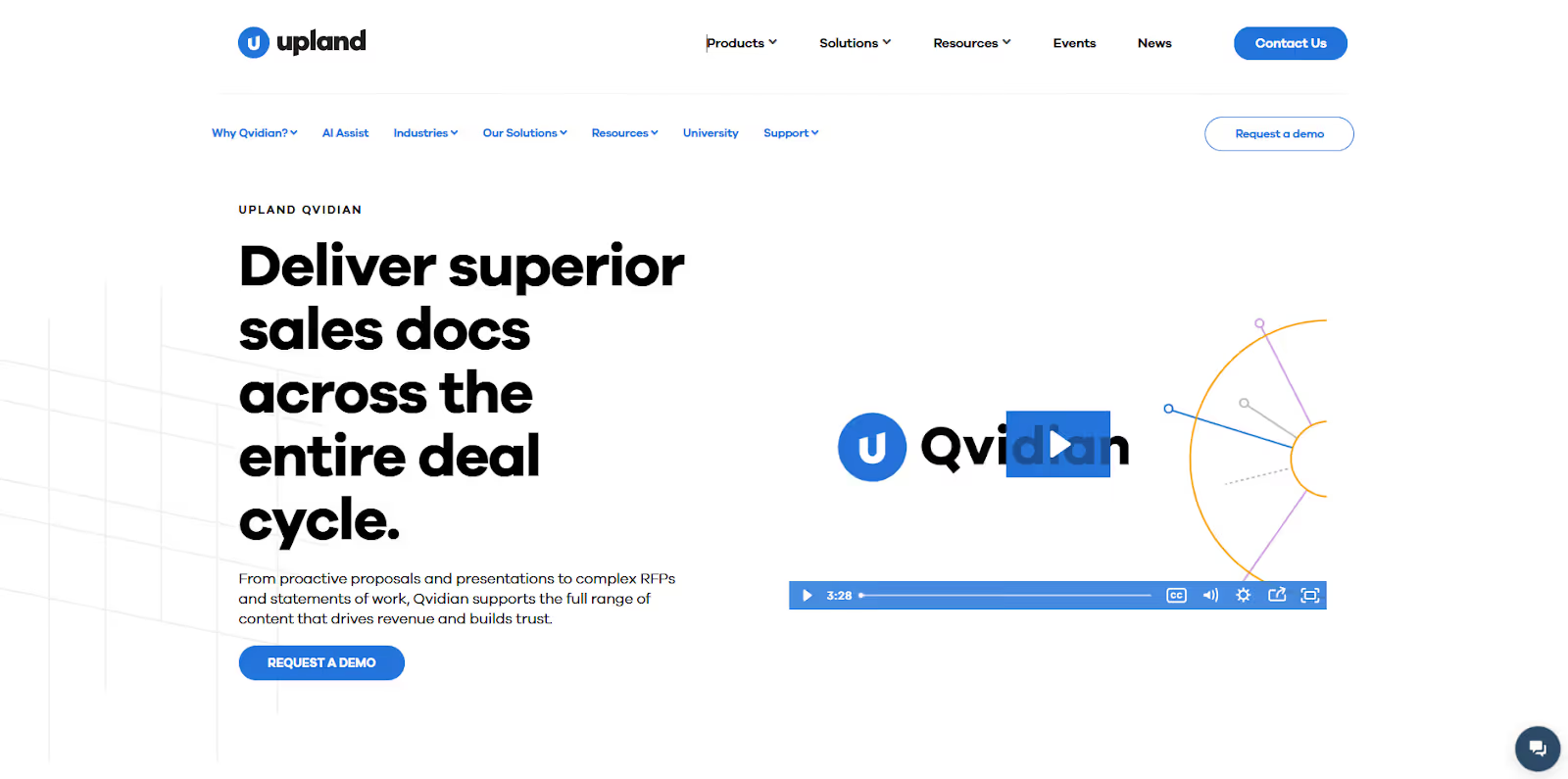
Qvidian is a proposal and RFP management platform used by enterprise teams to manage content libraries, projects, and document-driven responses. It is often considered by organizations with legacy proposal processes looking to introduce more structure and governance.
Features
- Centralized proposal and content management.
- Project-based RFP workflows.
- Basic AI-assisted functionality for content support.
- Collaboration and review workflows.
Pros
- Established platform with broad enterprise adoption.
- Useful for teams transitioning from manual proposal processes.
Cons
- Outdated and unintuitive interface: Users frequently describe the UI as legacy-like, making navigation harder compared to modern SaaS platforms.
- Steep learning curve: Teams often require additional training to use projects and AI features efficiently, slowing adoption.
- Limited AI maturity: AI capabilities are still developing and can feel time-consuming or incomplete during real-world usage.
- Restricted collaboration: Collaboration features are more limited compared to newer platforms built for cross-functional RFP teams.
- Feature constraints from legacy architecture: Some capabilities feel narrow in scope, requiring enhancement requests to extend usability.
6. Autogen AI
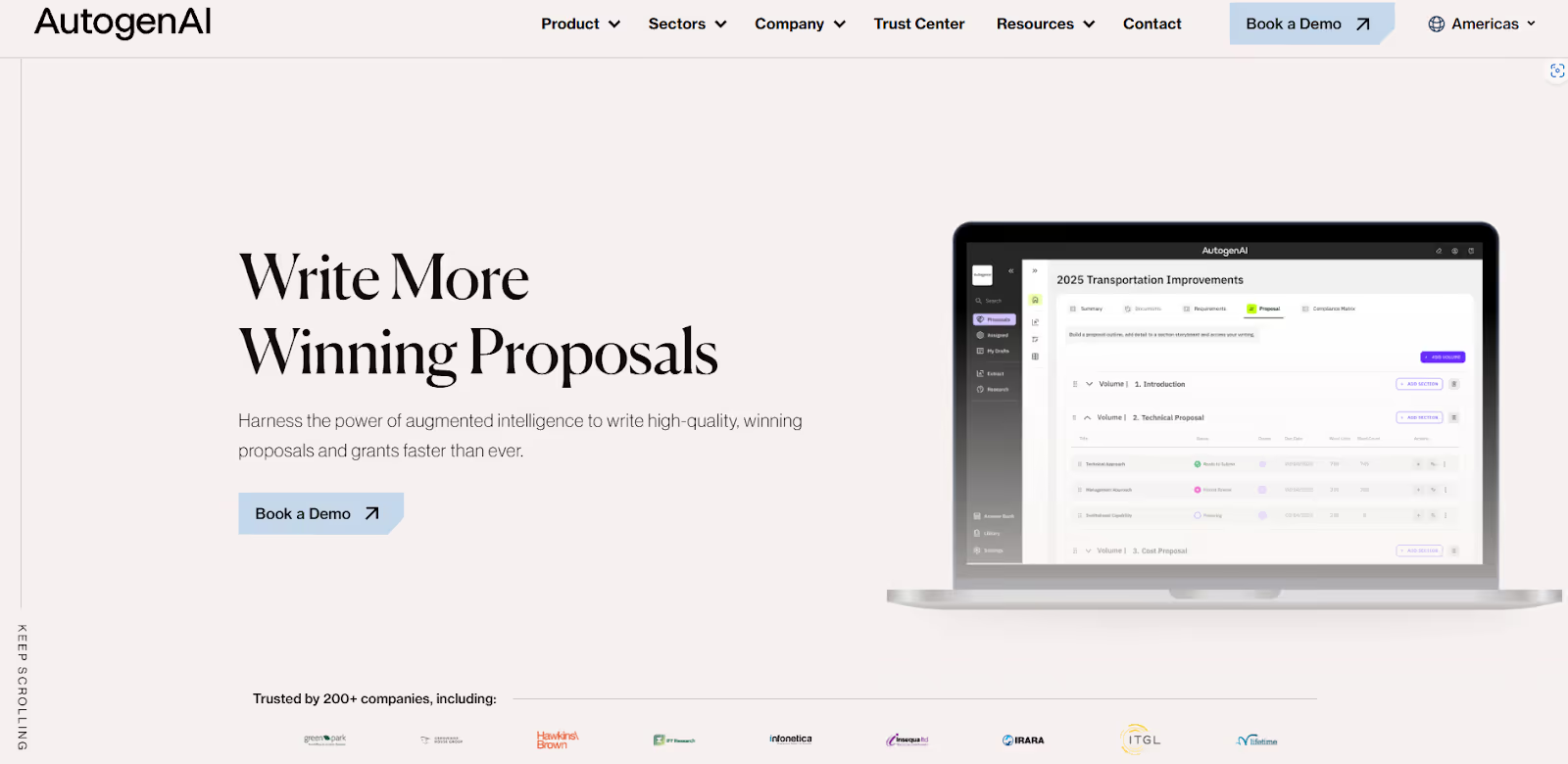
AutogenAI is an AI-assisted proposal and RFP support platform designed to help teams move faster through qualification, drafting, research, and review stages.
Its toolset focuses on accelerating early proposal development using AI-driven extraction, research, and content generation rather than full end-to-end bid management.
Features
- AI-driven requirement extraction to support qualification decisions.
- Centralized proposal projects with shared outlines and progress monitoring.
- Integrated review workflows to move proposals toward submission readiness.
Pros
- Useful for creating early drafts more quickly.
Cons
- Overly complex user experience: Users describe the platform as feature-heavy, with workflows that can feel cumbersome and unnecessarily verbose.
- Slower adoption without training: Advanced features take time to learn, and performance can feel slow for users without structured onboarding.
- Unreliable data references: Reviewers report that AI-cited sources are not always accurate, increasing review overhead.
- Limited bid management coverage: There is no consolidated view to track all active bids, making it less suitable for teams seeking end-to-end bid oversight.
- Disconnected interface design: The transition between tools and training modules feels disjointed, with layout and visual structure cited as areas for improvement.
7. Porposify
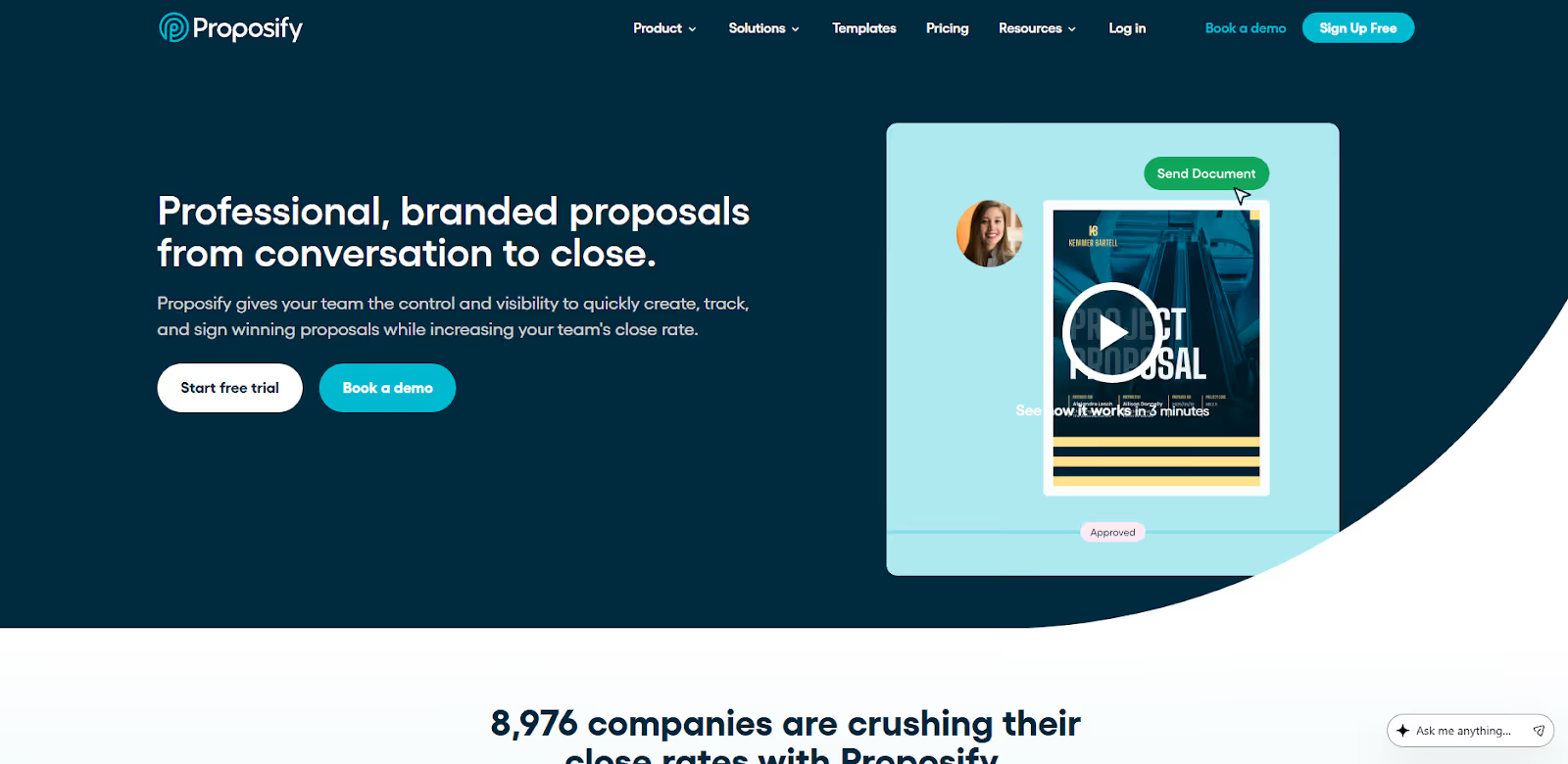
Proposify is a proposal management platform focused on helping sales teams create, send, and track sales proposals using templates, content libraries, and engagement analytics.
It is commonly used for sales-led proposals rather than complex, multi-stakeholder RFP responses.
Features
- Permission management for editing and reuse of proposal assets.
- Shared repository for reusable proposal content.
- Basic proposal engagement tracking and document analytics.
Pros
- Role-based access controls for proposal content and templates.
Cons
- Clunky template editor: Users report formatting inconsistencies, template misalignment, and unclear image handling, particularly across different browsers.
- Pricing friction at higher tiers: Access to advanced features and Microsoft Office file integrations is often limited to higher-cost plans.
- Limited mobile support: Proposal workflows work reliably on desktop or laptop devices, with weak usability on mobile platforms.
8. PandaDoc
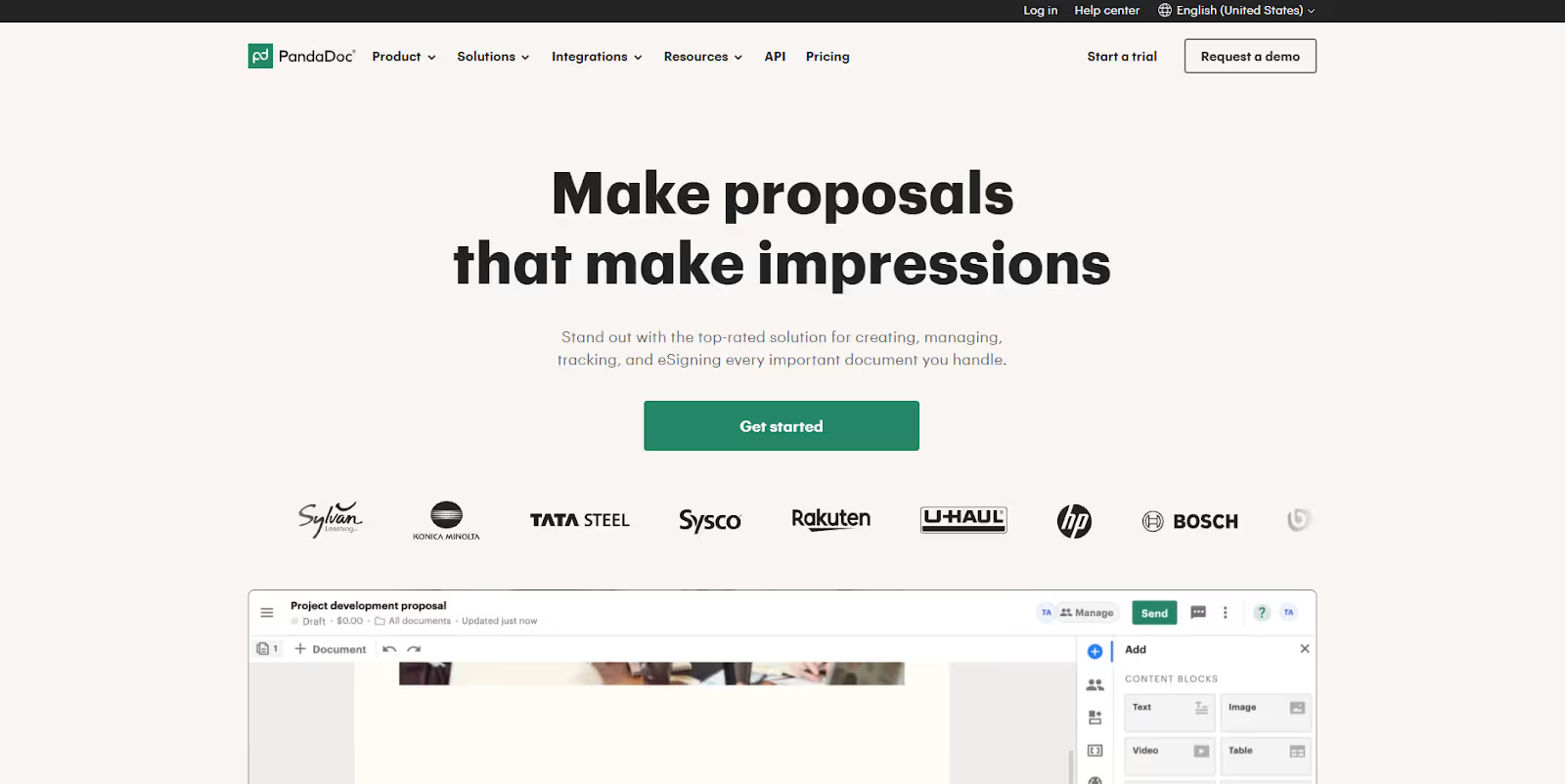
PandaDoc provides an intuitive editor with drag-and-drop content blocks and built-in e-signatures, allowing teams to create polished sales documents efficiently.
Features
- Drag-and-drop editor for proposals, quotes, and sales documents.
- Built-in e-signatures and approval workflows.
- Content library with reusable document blocks.
Pros
- User-friendly interface with fast setup for professional document creation.
Cons
- Steeper learning curve: The breadth of features increases onboarding time and user ramp-up.
- Stability issues: Occasional glitches affect template setup and role assignments.
- High cost for bulk sending: Pricing for large-scale document distribution is difficult to justify.
- Workflow rigidity: Limited support for enterprise selling workflows, deal rooms, and deeply integrated documents.
9. RocketDocs

RocketDocs is an AI-powered response management platform designed to support RFPs, RFIs, DDQs, and sales proposals by centralizing content and enabling collaboration across response workflows.
Features
- AI-assisted drafting and autofill using a centralized knowledge base.
- Centralized content library with templates, version control, search, and expiration management.
- Collaboration workflows with co-editing, reviews, approvals, and task assignment.
- Proposal tracking with basic analytics and reporting.
Pros
- Centralizes content and supports basic workflows across RFPs and proposals.
Cons
- Learning curve for AI features: Users require time to adapt to AI capabilities and ongoing system updates.
- Limited task automation: Repetitive response tasks are not fully automated.
- Slow AI adoption: Teams often need extended usage before AI features become effective.
10. SiftHub
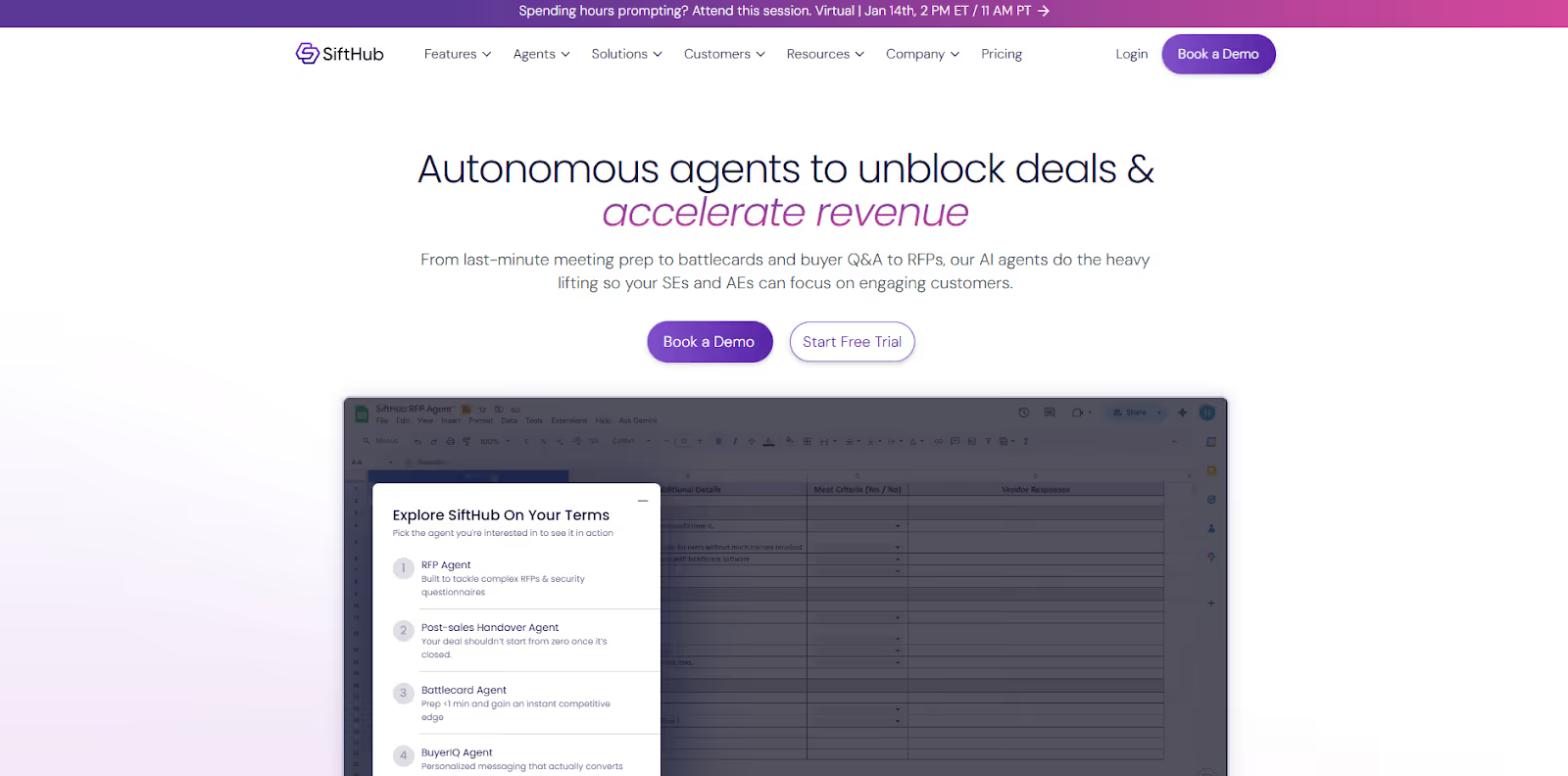
SiftHub is an AI-driven RFP response and sales enablement platform designed to automate responses to RFPs, RFIs, security questionnaires, and other buyer requests.
The platform emphasizes broad sales enablement workflows alongside centralized content discovery rather than highly specialized RFP reasoning.
As a result, teams that require deeply contextual, evaluator-aligned responses may need to refine automated output more frequently than with RFP-focused AI platforms.
Features
- AI-assisted response generation for RFPs, RFIs, and security questionnaires across formats and portals.
- Unified content hub with integrations across Slack, Salesforce, HubSpot, Google Drive, SharePoint, Zendesk, Notion, and others.
- Collaboration and project tracking with task assignment and progress visibility.
Pros
- Automation and integrations reduce repetitive work and centralize knowledge.
Cons
- Response accuracy gaps: AI-generated outputs can include inaccuracies that require manual review.
- Limited support for complex workflows: The platform struggles with complex documents and deeper AI-driven processes.
- Integration limitations: Gaps in integrations, including limited Salesforce support, reduce overall efficiency.
How To Choose The Best QorusDocs Alternative? 7 Aspects to Keep in Mind
Choosing the right alternative to QorusDocs depends on how your team actually handles RFPs today and where friction appears as volume and complexity grow.
Use the following criteria to evaluate QorusDocs' alternative objectively. Note that these criteria reflect how evaluators score RFPs, not just how teams produce them.
1. Evaluate Response Quality
Many platforms generate answers quickly, but speed alone does not translate to wins. Assess whether the tool produces accurate, context-aware responses that align with evaluator expectations and reduce downstream rewriting. Because, higher-quality answers consistently outperform faster submissions in competitive enterprise deals.
2. Check How AI Handles Context Across The Entire RFP
Look beyond question-level AI. Strong alternatives reason across the full RFP, detect contradictions, reuse answers consistently, and adapt tone and detail based on section intent, not just keywords.
3. Assess Content Governance And Staleness Control
Content libraries lose value if answers become outdated or inconsistent. Prioritize tools that flag stale content, manage source-of-truth validation, and prevent conflicting answers from appearing in the same response.
4. Measure Review And Validation Effort
If reviewers still spend hours fixing drafts, the tool shifts work instead of removing it. Compare how much manual validation, SME involvement, and cleanup are required before submission.
5. Test Scalability Across Teams And RFP Types
Ensure the platform supports complex, multi-team RFPs, RFIs, and security questionnaires without breaking workflows. Tools built only for repeatable questionnaires often struggle at scale.
6. Look For End-To-End Workflow Coverage
Strong alternatives support intake, drafting, validation, collaboration, and final review in one flow. Avoid tools that require stitching together multiple systems to complete a single RFP.
7. Align Pricing With Usage Growth
Understand how pricing scales with users, responses, and AI usage. Hidden add-ons or feature gating can create cost friction as adoption increases.
Selecting a QorusDocs alternative should be based on how well the tool reduces review workload, maintains answer quality, and stays consistent as RFP volume increases, rather than how quickly it produces initial drafts.
Why Choose Inventive AI Over Other Tools?
Most RFP platforms have added AI on top of existing workflows. Inventive AI was built AI-first to meet modern small to large enterprise RFP demands, where response quality, consistency, and scale decide outcomes.
Why Inventive AI leads the category?
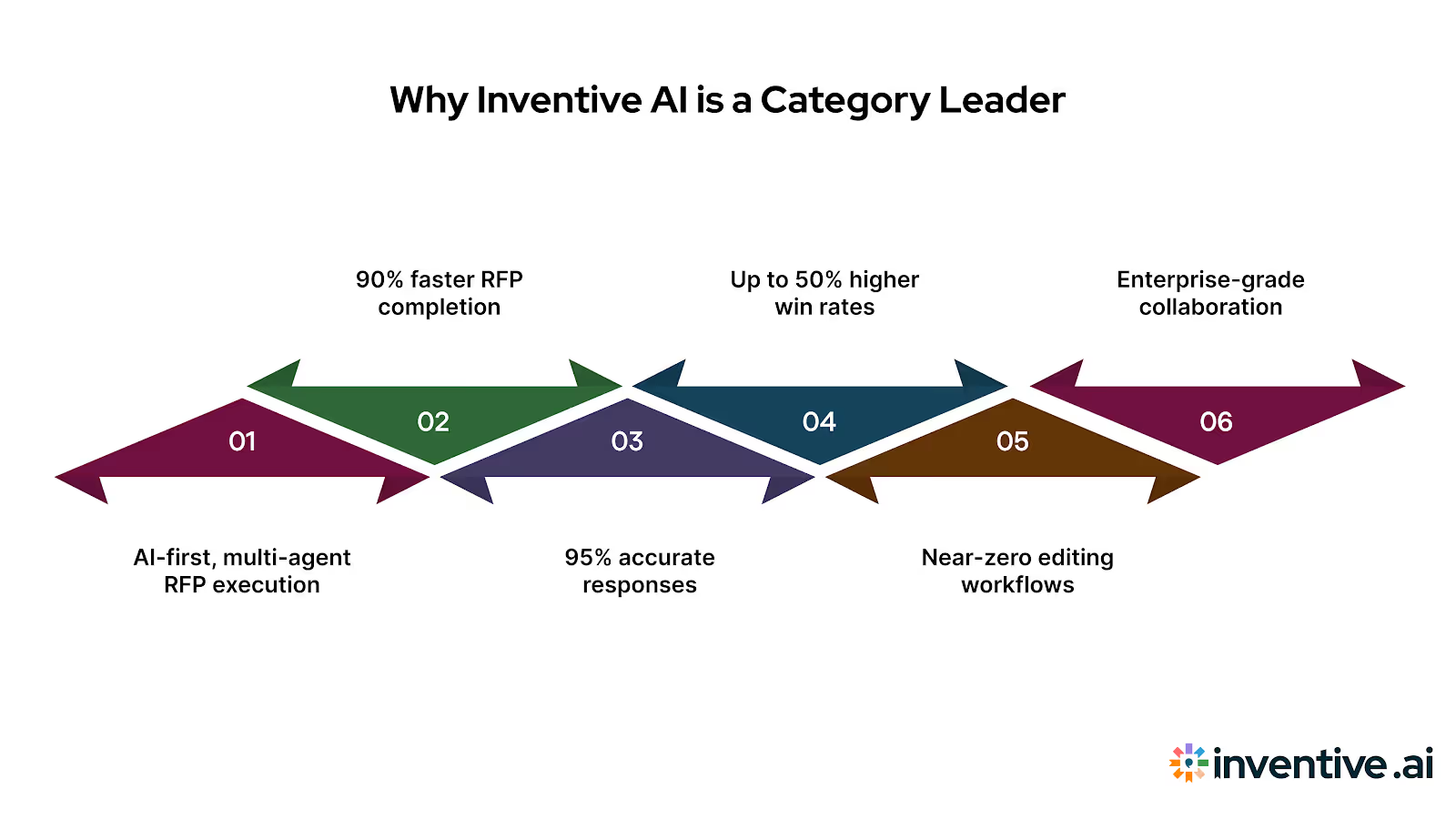
- AI-first, multi-agent RFP execution: Specialized agents handle context understanding, compliance validation, quality checks, and narrative alignment across the full RFP lifecycle.
- 90% faster RFP completion without shifting rewriting or validation back to proposal teams.
- 95% accurate responses, grounded in verified internal knowledge and safe for customer-facing use.
- Up to 50% higher win rates, driven by persuasive value statements and consistent, evaluator-ready narratives.
- Near-zero editing workflows, with 66% of answers requiring little to no manual revision.
- Small to extensive enterprise-grade collaboration and integrations, keeping sales, legal, and security aligned in real time.
While other tools assist with drafting, Inventive AI executes RFPs with outcome-driven intelligence built for scale, trust, and repeatability.
FAQs
1. Is QorusDocs suitable for large enterprise RFP teams?
QorusDocs works for document-centric teams using Microsoft 365, but enterprise RFP teams often face limitations as volume, reviewers, and compliance complexity increase. Manual validation and AI rework can slow execution at scale.
2. How are modern RFP tools different from traditional proposal software?
Modern tools are built AI-first and execute multi-step RFP workflows automatically. Traditional tools focus on content storage and process management, which still leaves teams responsible for accuracy, consistency, and final quality.
3. Why does response quality matter more than speed in RFPs?
Faster submissions do not improve outcomes if answers are generic or inconsistent. Higher-quality responses directly influence evaluator confidence and win rates, especially in competitive enterprise deals.
4. Can AI-generated RFP responses be trusted for customer-facing use?
Yes. When the AI is grounded in verified internal knowledge, it detects conflicts and outdated content. AI systems without deep reasoning often require heavy human review before responses are safe to submit.
5. How does Inventive AI improve RFP win rates compared to other tools?
Inventive AI uses a multi-agent RFP system that understands full context, prevents contradictions, and produces persuasive, accurate answers. Teams report up to 90% faster responses and as much as 50% higher win rates as a result.

.avif)