
Responsive AI Price, Features, Reviews & Ratings 2026
In this blog, you’ll find a breakdown of its pricing, core features, and limitations so you can decide whether it truly fits your needs, or if you should consider a more advanced alternative like Inventive AI.

Handling RFP responses is a complex and time‑consuming process, and it gets tougher as your business grows. As your pipeline of RFPs, RFIs, and security questionnaires expands, you’re likely dealing with more proposals, more contributors, and more manual steps, leading to inconsistencies, delays, and missed wins. We understand how frustrating this can be, especially when your team is already stretched thin. Over 60% of marketers now rely on automation to manage tasks more efficiently, highlighting how important automation has become in simplifying workflows.
Once a leading name in the response market, Responsive remains popular, but today’s growing organizations need more than the basics. In this blog, you’ll find a breakdown of its pricing, core features, and limitations so you can decide whether it truly fits your needs, or if you should consider a more advanced alternative like Inventive AI.
Key Takeaways
- Responsive automates basic RFP drafting, saving time but struggles with complex proposals and content management.
- Pricing is not publicly available, but the platform offers four pricing tiers: Lite, Emerging, Growth, and Enterprise editions.
- Inventive AI offers 10X faster drafts, 95% accuracy, and a centralized knowledge hub, making it the better choice for scalable RFP automation.
- Responsive’s limited features, lack of customization, and inconsistent drafts may become roadblocks for larger organizations.
- For businesses looking to scale and improve RFP quality, Inventive AI is a more comprehensive, efficient solution.
Responsive Overview: Key Features and Pricing
It is an AI-powered platform designed to automate RFP response processes. It helps organizations improve efficiency, save time, and maintain consistent proposal quality. It aims to simplify the way businesses manage RFPs by centralizing content, automating responses, and enabling collaboration among team members.
However, despite its utility, it has certain functional limitations that may hinder its scalability for larger organizations.
Key Features:
1. Automated Drafting
It automates the initial drafting of responses, saving time and reducing manual effort. But, its AI may struggle with more complex RFPs, often requiring substantial manual refinement to ensure accuracy and context.
2. Content Management
The platform allows businesses to store and organize content for reuse in future proposals. But, it lacks advanced features like AI-driven content optimization or automatic updates, which are critical when managing large datasets.
3. Collaboration Tools
It includes tools that allow teams to collaborate on proposal responses, enabling real-time updates and feedback. But, the collaboration features may not be enough for larger teams with more complex workflows or cross-departmental involvement.
Pricing Breakdown:
While it offers valuable features for smaller teams, its lack of advanced content management and complex functionality may limit its effectiveness as your business scales. For organizations seeking a more comprehensive solution, Inventive AI provides better scalability and advanced features.
Also Read: Guide to Writing Marketing Automation RFPs
How Inventive AI Outperforms Responsive
Inventive AI is a market leader in RFP automation, offering advanced AI-powered software that optimizes every aspect of the RFP response process. Compared to Responsive, Inventive AI delivers faster, more accurate drafts and better content management, making it the superior choice for businesses looking to improve their RFP processes.
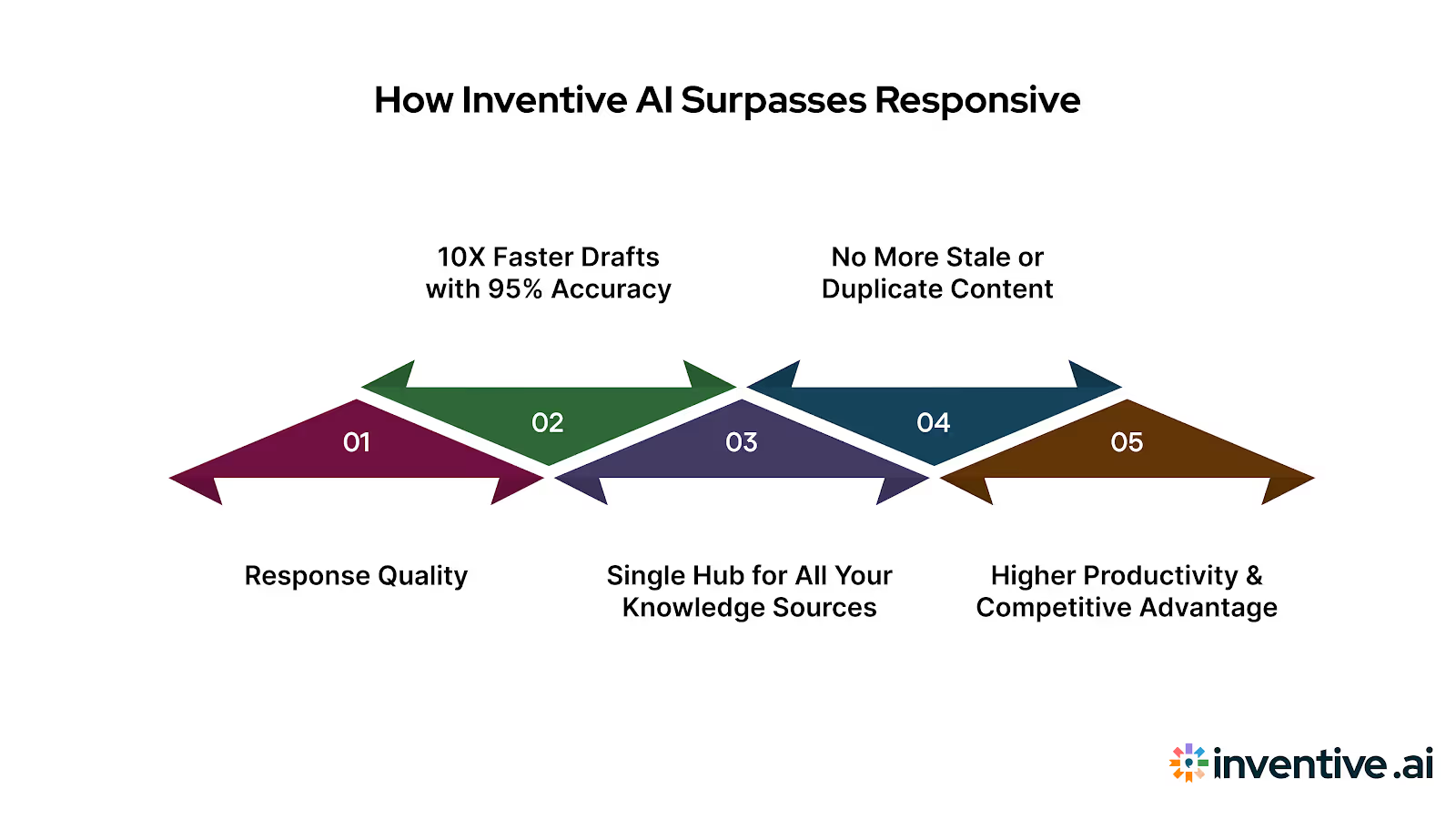
Here’s how Inventive AI outperforms Responsive:
1. Response Quality
Inventive AI ensures that every draft is contextually accurate, clear, and complete. Unlike Responsive, which may require substantial manual intervention, Inventive AI consistently delivers high-quality drafts with minimal revisions.
2. 10X Faster Drafts with 95% Context-Aware Accuracy
Inventive AI uses multi-layer reasoning to understand the full context of each RFP and instantly flags any conflicts or outdated content. Responsive, while efficient, doesn’t provide the same level of context-awareness or accuracy, which can lead to more manual refinement.
3. Single Hub for All Your Knowledge Sources
Inventive AI centralizes all your content in one place, making it easy to pull relevant information and ensure consistent messaging across proposals. Responsive lacks the same level of content optimization and management, making it harder to maintain consistency in complex proposals.
4. No More Stale or Duplicate Content
Inventive AI proactively flags outdated or conflicting content, ensuring that only the most relevant and up-to-date material is used in responses. Responsive doesn’t offer the same level of automated content management, leading to the potential use of stale or duplicate information.
5. Higher Productivity & Competitive Advantage
By automating key aspects of the RFP response process, Inventive AI significantly increases productivity, allowing your team to focus on more strategic tasks. This leads to faster responses and a competitive edge over teams using Responsive.
Gartner Rating: 5/5
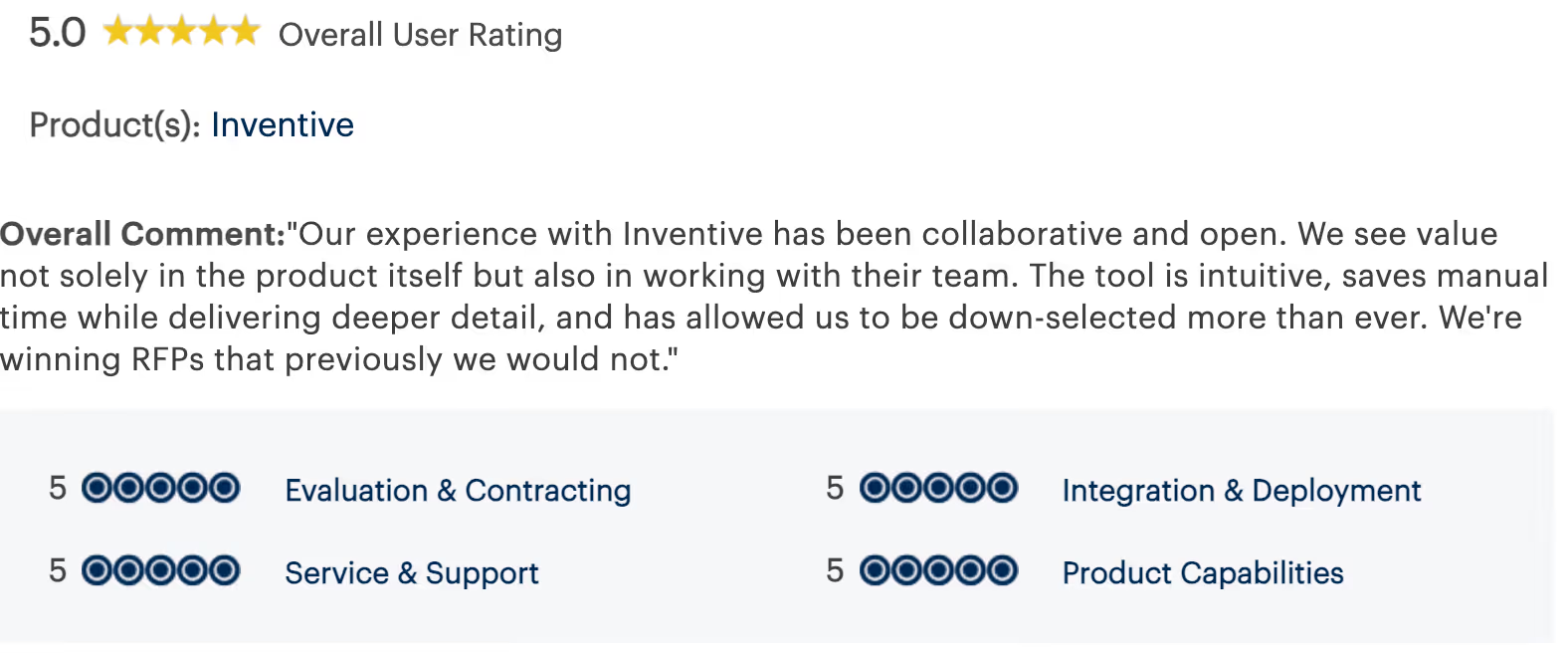
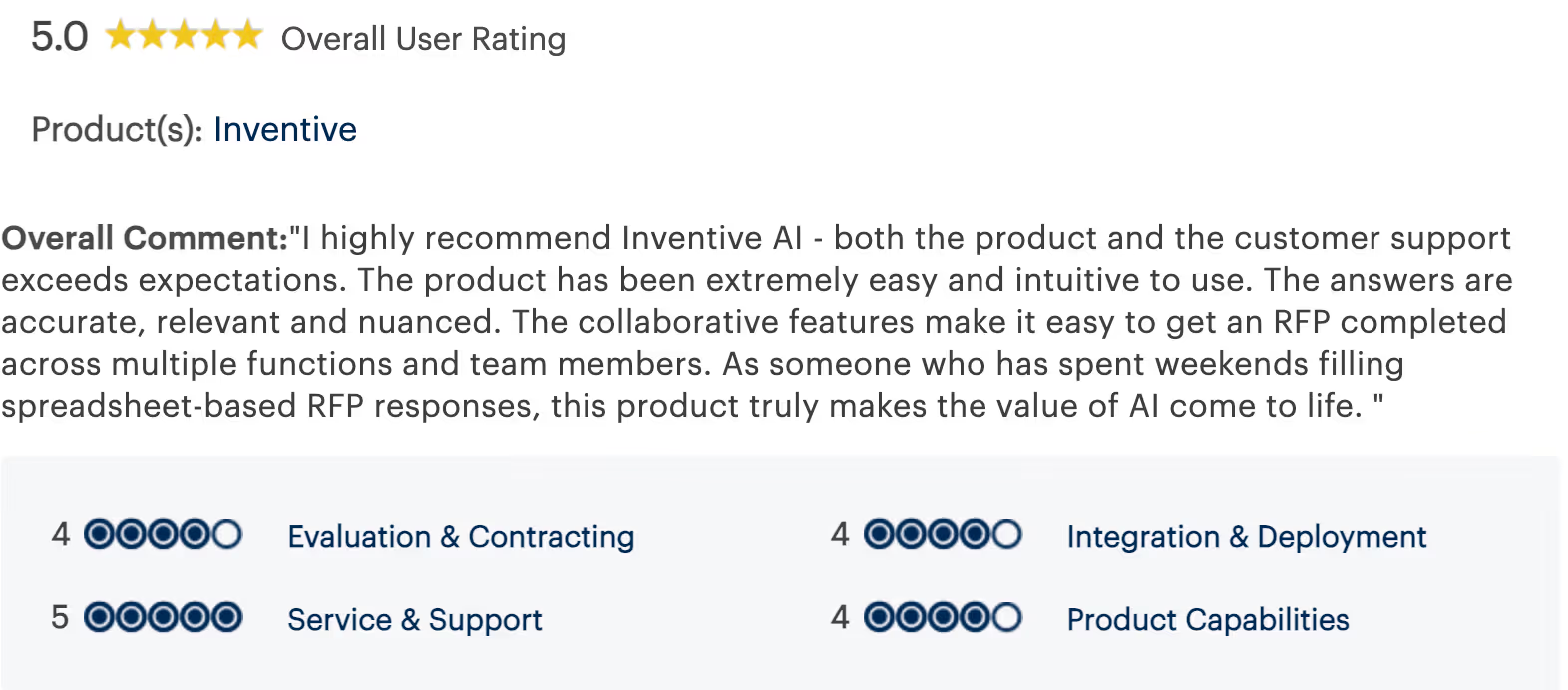
Inventive AI has received high praise for its intuitive design and powerful customer support. Users appreciate how the platform saves time, delivers accurate and relevant responses, and streamlines RFP processes, even for complex and multi-departmental proposals.
For businesses looking to improve RFP response quality, speed, and scalability, Inventive AI offers a more comprehensive, efficient solution than Responsive.
Responsive’s Strengths and Weaknesses
When considering an RFP automation tool, it’s important to weigh both the strengths and limitations of the platform. Let’s take a closer look at what it does well, and where it falls short.
Strengths:
1. Time-Saving
It automates the basic RFP drafting process, which helps save time and reduce manual effort. This feature is useful for businesses that are still handling a manageable number of proposals. By automating repetitive tasks, it allows teams to focus on more strategic work, such as refining responses and aligning them with buyer needs.
2. Simple and Intuitive Interface
The platform is designed to be user-friendly, making it easy to navigate without requiring extensive training. This is mostly helpful for smaller teams or businesses that may not have dedicated technical staff to handle complex software solutions. The simplicity of this tool enables quicker implementation and a smoother user experience for all team members.
3. Easy Collaboration
It allows teams to collaborate in real-time, making it easier to work together across different departments or locations. This feature can significantly speed up decision-making and ensure that all team members are aligned throughout the proposal process. The ability to collaborate smoothly helps to maintain consistent messaging and improves the overall quality of submissions.
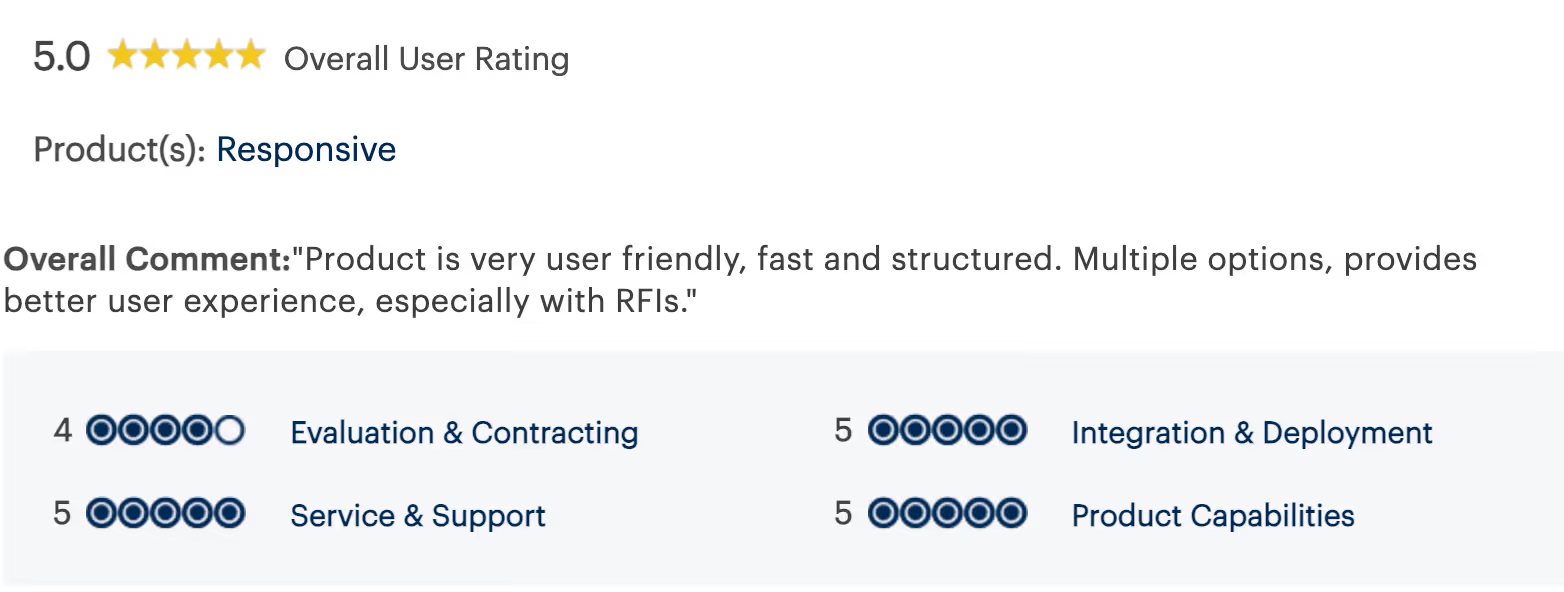
Gartner Rating: 4.2
Weaknesses:
1. Weaker Response Quality
It struggles with producing high-quality, accurate responses, especially for complex or technical RFPs. The system often requires substantial manual adjustments to ensure the responses meet the necessary standards and are contextually correct.
2. Lack of Content Optimization
While Responsive AI allows content reuse, it lacks advanced features like automatic content freshness checks. As a result, outdated or irrelevant content may be used, which can negatively impact the proposal quality and consistency.
3. Inconsistent Drafting for Complex Proposals
For RFPs with multiple requirements and detailed questions, its drafting can be inconsistent, often needing significant manual refinement. This makes the process slower and prone to errors, particularly for highly detailed or technical proposals. They have added AI bot on which means it just added AI in the current workflow due to which team might take time to take it's fuller utilization.
4. Limited Scalability
Responsive AI works well for smaller teams, but as RFP volumes increase or become more complex, it struggles to scale effectively. Large organizations or teams working on multi-departmental proposals often face bottlenecks due to the platform’s limitations in handling larger, more intricate workflows.
5. Basic Collaboration Features
Responsive AI provides basic collaboration tools, but they may not be sufficient for larger teams or teams that need to work across multiple departments. Lack of real-time updates and automated syncing can lead to miscommunication and inconsistencies, delaying the proposal process.
Users note that the AI features are weak and the user interface needs improvement. The product’s capabilities have been rated lower, highlighting areas for enhancement.
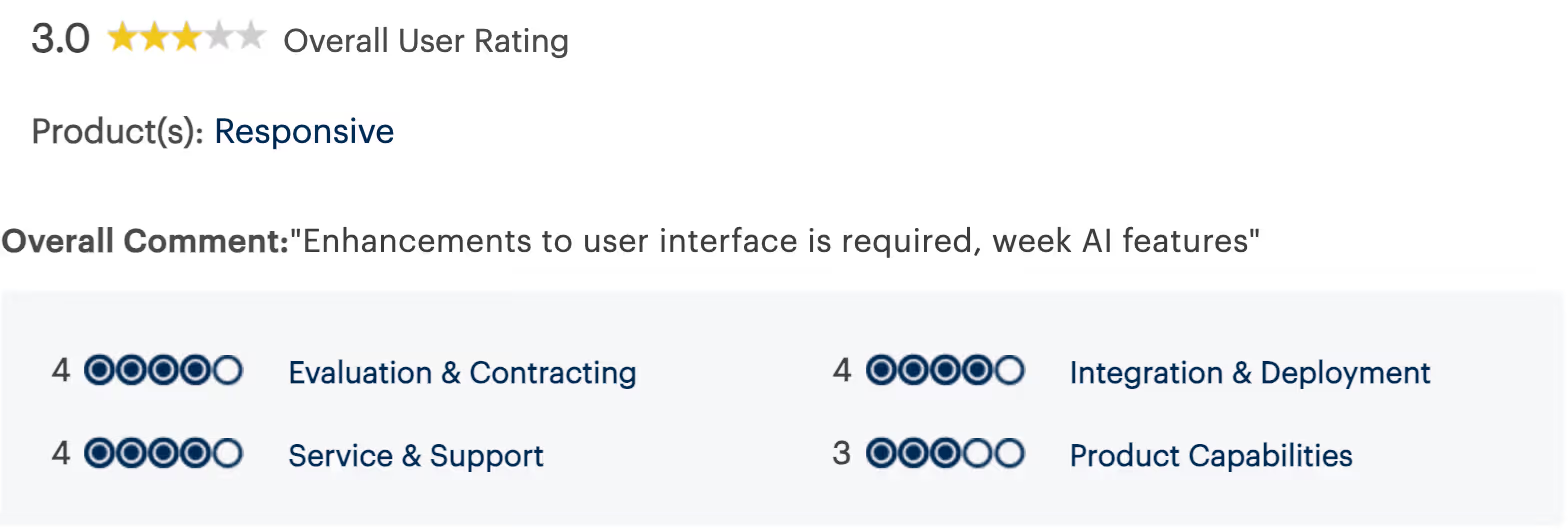
While the tool offers valuable time-saving features, its limitations in accuracy, scalability, and customization may become significant hurdles as your business grows. Inventive AI offers a more comprehensive solution designed to handle complex RFP processes and improve response quality at scale.
Also Read: The Ultimate Guide to Construction RFPs: How to Create RFPs That Attract the Best Bids
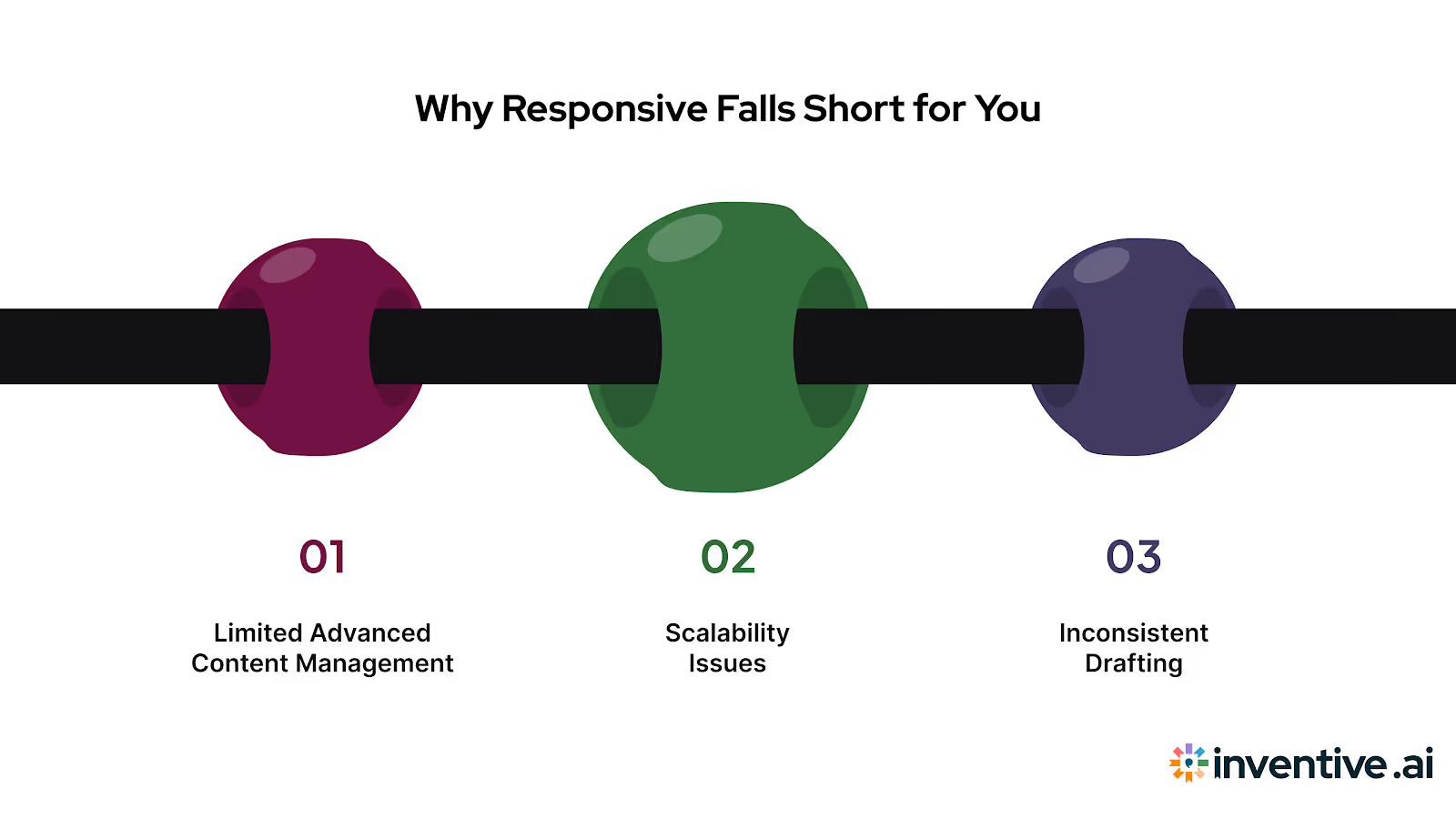
Why Responsive Isn’t Enough for You
It may seem like a good choice for smaller teams, but for businesses seeking a more scalable and advanced solution, it falls short in several key areas. Here’s where it may not meet your needs:
1. Limited Advanced Content Management
As your business grows, its basic content management system can’t keep up with complex content requirements, making it difficult to ensure consistency across proposals.
2. Scalability Issues
It works for small to mid-sized teams, but larger organizations may struggle with its lack of customization and the need for more advanced integrations.
3. Inconsistent Drafting
It can produce inconsistent drafts, especially with complex proposals, and may require extensive manual refinement, slowing down the response process.
If you’re looking for a solution that can scale with your business and deliver consistent, high-quality RFP responses, Inventive AI is the better choice. It may work for smaller teams, but it lacks the depth and flexibility needed for larger organizations or more complex needs.
Final Thoughts
When choosing an RFP automation tool, it's important to evaluate all the features and limitations to find the best fit for your business. While it may work for smaller teams with basic needs, it falls short when it comes to scalability and advanced functionality. Inventive AI, on the other hand, offers 10X faster drafts, 95% accuracy, and a centralized knowledge hub, making it the ideal solution for businesses aiming to improve RFP response quality, speed, and collaboration across larger teams.
Responsive can be a good option for some, but for those looking to scale and enhance efficiency, Inventive AI is the clear choice.
Frequently Asked Questions (FAQs)
1. What is Responsive’s pricing model?
It offers different pricing tiers, including Lite, Emerging, Growth, and Enterprise editions. Pricing information is not listed publicly, and you need to contact the company for specific details.
2. How does Responsive compare to Inventive AI?
While both platforms offer AI-powered RFP automation, Inventive AI provides better content management, faster drafting, and higher accuracy, making it a superior choice for businesses looking to scale.
3. Is Responsive suitable for large enterprises?
It is better suited for smaller teams. Its limited customization and integration capabilities can make it challenging for larger organizations with more complex needs.
4. Does Inventive AI offer better content management than Responsive?
Yes, Inventive AI offers a centralized knowledge hub and advanced content management tools, ensuring that only fresh, relevant content is used in proposals, whereas its content management is more basic.
5. Can Responsive automate the entire RFP process?
It automates some parts of the RFP process but lacks end-to-end automation and context-aware drafting, making Inventive AI a more comprehensive solution.

90% Faster RFPs. 50% More Wins. Watch a 2-Minute Demo.

Hardi Hindocha
Knowing that complex B2B software often gets lost in jargon, Hardi focuses on translating the technical power of Inventive AI into clear, human stories. As a Sr. Content Writer, she turns intricate RFP workflows into practical guides, believing that the best content educates first and earns trust by helping real buyers solve real problems.

Vishakh Hegde
Recognizing that complex RFPs demand deep technical context rather than just simple keyword matching, Vishakh co-founded Inventive AI to build a smarter, safer "RFP brain." A published author and researcher in deep learning from Stanford, he applies rigorous engineering standards to ensure that every automated response is not only instant but factually accurate and secure.