Comparison of Hospital RFP Management Strategies
Explore the challenges of healthcare RFPs and how AI-powered tools like Inventive AI can automate the process, ensure compliance, and improve response quality.

=
Hospital RFP management is traditionally handled through manual workflows, shared documents, and legacy proposal tools. These approaches create friction as healthcare RFPs grow more complex, requiring coordination across compliance, clinical, IT security, legal, and commercial teams.
The result is slower responses, inconsistent answers, outdated content, and higher regulatory risk.
AI-driven and agentic RFP approaches are emerging to address these limitations. Instead of supporting isolated steps, AI agents work across the full RFP, generating grounded responses, detecting conflicts, and refining content with less human intervention.
According to Salesforce, AI agents can reduce healthcare paperwork by 30%, helping teams improve speed and accuracy at scale.
This blog examines how hospital RFP management strategies are evolving, the challenges with traditional approaches, how AI changes outcomes for healthcare RFP teams, and the tools and best practices hospitals use to respond more effectively.
Key Takeaways
- Traditional and legacy RFP tools reduce administrative effort but still depend heavily on manual reviews, rewriting, and human validation, especially in healthcare environments.
- AI-driven and agentic RFP strategies improve outcomes by reasoning across entire RFPs, detecting conflicts, and refining responses, with Salesforce reporting a 30% reduction in healthcare paperwork through AI agents.
- This guide compares leading healthcare RFP tools, including Inventive AI, Loopio, Responsive, AutoRFP AI, and Tribble, highlighting how AI-first platforms differ from traditional RFP management systems.
- Best practices for hospital RFP success include early stakeholder involvement, customization over generic templates, strict compliance checks, real-time collaboration, and using AI to improve response quality and speed rather than just drafting faster.
What are Healthcare RFPs?
Healthcare RFPs are formal documents issued by hospitals and healthcare organizations to solicit bids from vendors for products, services, or solutions they need. These RFPs are not just about price; they also need to meet specific regulatory standards, support patient care, and ensure that the products or services fit smoothly within a complex healthcare environment.
What Does an RFP in Healthcare Include?
Healthcare RFPs typically contain detailed requirements such as:
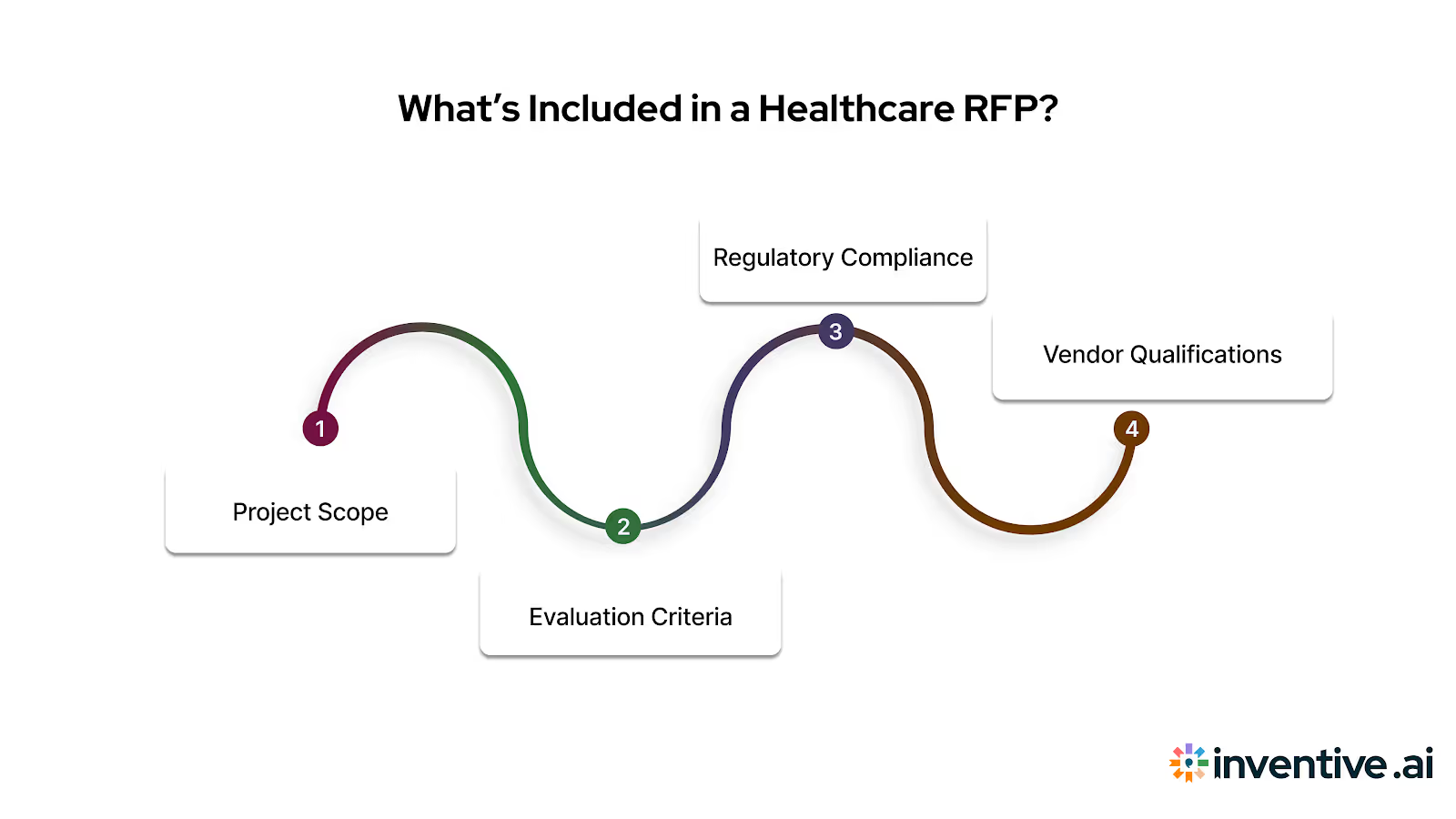
- Project Scope: Whether it’s procuring new medical devices, software solutions, or outsourced services.
- Evaluation Criteria: Clear guidelines on how responses will be evaluated, which often include cost, compliance, and vendor experience in the healthcare industry.
- Regulatory Compliance: Detailed sections about adhering to standards like HIPAA, FDA regulations, and any other relevant certifications.
- Vendor Qualifications: Experience in the healthcare sector, quality assurance protocols, and how well they can meet the hospital's needs.
Why Healthcare RFPs Are Different?
Unlike traditional RFPs in other industries, healthcare RFPs require a deep understanding of clinical workflows, compliance laws, and patient safety.
An RFP for a new EHR (electronic health record) system, for example, isn’t just about the software’s functionality; it must also consider how it integrates with existing hospital systems, how secure patient data will be, and how it impacts workflow across various departments.
Additionally, healthcare RFPs often involve multiple stakeholders, IT teams, clinical staff, procurement, and legal departments, all of whom must contribute to or approve the final response. This collaborative nature of RFPs makes them particularly complex and time-consuming.
Also Read: CRM RFI Success Guide: Templates and Best Practices for Buyers and Vendors
5 Challenges in Healthcare RFP Management
Responding to healthcare RFPs can be complex and time-consuming, with several unique challenges that require careful attention. Let’s explore the key obstacles and the ways to address them efficiently.
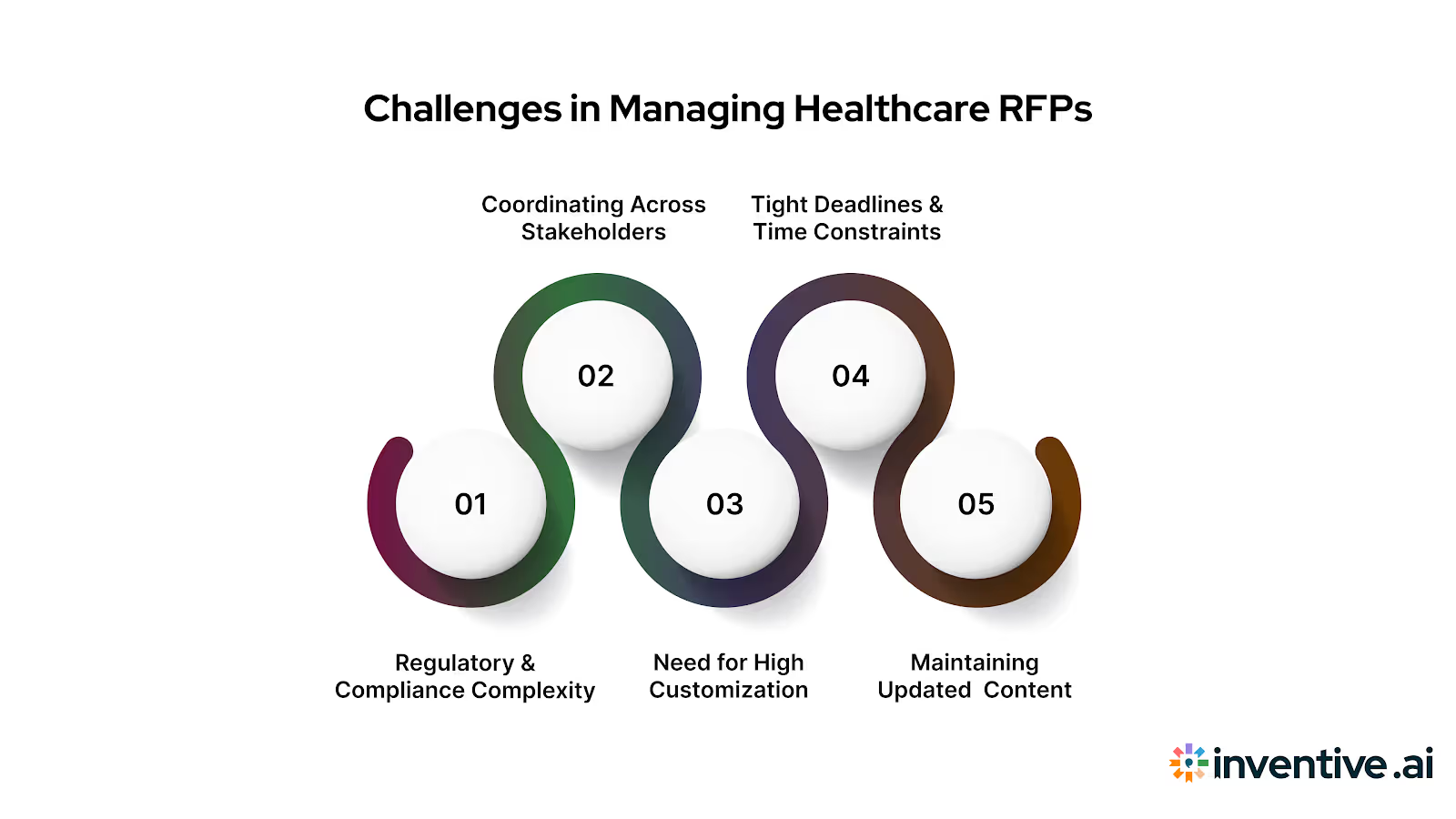
1. Regulatory and Compliance Complexity
Healthcare RFPs often demand a high level of regulatory compliance, particularly with standards like HIPAA and other legal frameworks. Ensuring that every proposal complies with these regulations while also providing clear, detailed information can lead to lengthy review cycles and an increased risk of missing necessary requirements.
Meeting these compliance standards consistently is important to avoid setbacks or disqualification.
2. Coordinating Across Multiple Stakeholders
RFPs in healthcare typically involve input from a wide range of departments, from clinical teams and IT specialists to legal and procurement staff. Managing and aligning the contributions of these diverse teams can be challenging, leading to delays or conflicting responses.
Simplifying collaboration and ensuring easy communication between departments is required for a smooth process and timely submission.
3. Need for High Customization and Detail
Each healthcare RFP is unique, requiring responses that are tailored to the specific needs of the organization issuing the request. Generic or one-size-fits-all answers simply won’t meet the expectations of healthcare institutions, which demand precise, context-specific information.
The pressure to customize proposals while ensuring they align with the detailed needs of the RFP adds complexity to the process.
4. Tight Deadlines and Time Constraints
Healthcare RFPs often come with short timelines for submission. As the volume of proposals increases, meeting deadlines becomes more difficult, particularly when the process relies heavily on manual drafting, reviewing, and finalizing.
Managing these tight schedules while ensuring that responses meet all requirements can strain resources and increase the risk of errors.
5. Maintaining Updated and Consistent Content
As the healthcare industry evolves, so too does the information required in RFP responses. Outdated or irrelevant content can compromise the quality of proposals and may lead to missed opportunities.
Maintaining content that is both fresh and consistent across multiple responses requires constant attention, especially when dealing with various stakeholders who may each have their own version of key details.
These challenges highlight the need for a smarter, more efficient approach to managing healthcare RFPs.
AI-Powered RFP Management for Healthcare
AI-powered RFP management uses artificial intelligence to automate the drafting, content management, compliance checks, and collaboration required to respond to RFPs. For healthcare vendors, this means generating proposals quickly and accurately without sacrificing quality or compliance.
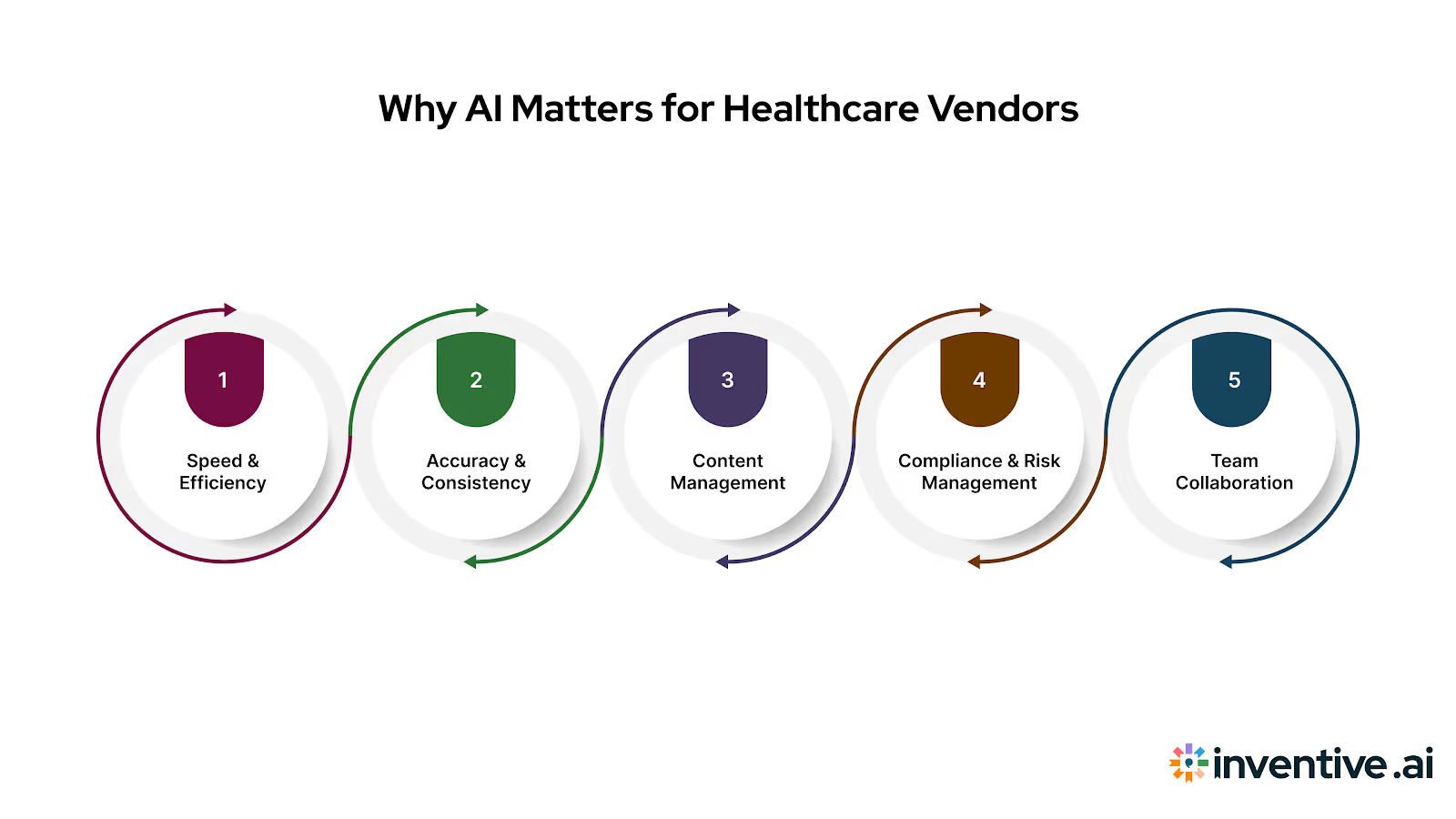
1. Speed & Efficiency
AI drafts RFP responses in a fraction of the time, allowing vendors to focus on refining content instead of starting from scratch.
2. Accuracy & Consistency
AI ensures responses are accurate and compliant, reducing errors that could lead to disqualification. AI guarantees that all responses maintain the same high quality and tone, no matter who drafts them.
3. Content Management & Reuse
Store and reuse content from past RFPs, saving time and ensuring consistency. AI flags outdated or non-compliant content, keeping your responses current.
4. Compliance & Risk Management
Ensure all regulatory requirements (like HIPAA) are met, with AI flagging missing or incorrect information. AI minimizes human errors, reducing the risk of disqualification.
5. Team Collaboration
AI platforms enable smooth collaboration among different departments (clinical, IT, legal), speeding up the review and approval process. Integrates with tools like Slack and Microsoft Teams for simplified communication and collaboration.
As healthcare procurement processes become increasingly complex, using AI for RFP responses offers a significant advantage, helping vendors submit high-quality, timely proposals that align with hospital requirements and improve their winning chances.
Best Tools for Healthcare RFP Response Automation
Several RFP automation tools are available for healthcare organizations, each offering its own set of features. Let’s take a look at the top solutions, comparing them and how they apply to healthcare RFPs.
1. Inventive AI
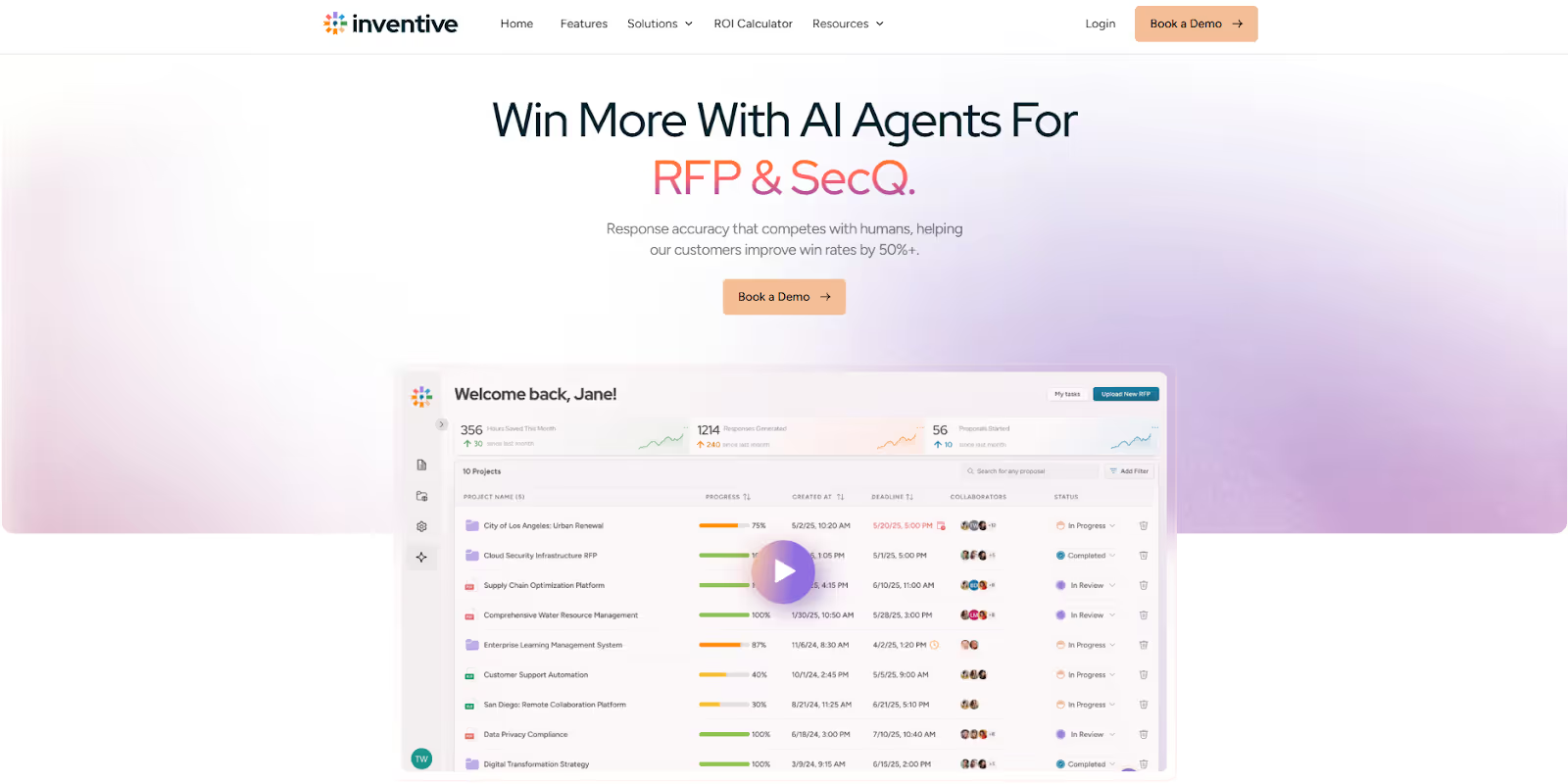
Inventive AI is built to win healthcare RFPs where response quality, compliance accuracy, and speed determine outcomes. Inventive AI operates as an outcome-driven RFP engine focused on producing stronger answers that directly improve win rates.
How Inventive AI Improves Healthcare RFP Outcomes
- 2× higher response quality: Multi-layer contextual reasoning understands the full healthcare RFP, not isolated questions. Responses reflect clinical, regulatory, and operational context and read like SME-authored content, not generic AI output.
- 50% higher win rate: Higher-quality, narrative-driven answers improve evaluator confidence across clinical, IT, legal, and procurement reviewers, directly impacting award decisions.
- 95% answer accuracy with near-zero edits: Built-in quality benchmarking compares every response against gold-standard content, reducing post-draft rewriting and review cycles for healthcare compliance teams.
- Zero-risk submissions through conflict detection: Inventive automatically flags contradictory statements across clinical claims, security language, and compliance sections, preventing risky inconsistencies in final submissions.
- Outdated and non-compliant content elimination: The system detects stale or invalid healthcare content tied to changing regulations, reducing manual compliance checks and late-stage rewrites.
- 90% faster RFP turnaround: End-to-end automation across drafting, validation, and refinement enables healthcare organizations to respond at speed without sacrificing accuracy.
- Narrative proposal generation beyond Q&A: Inventive produces long-form healthcare narratives, including executive summaries, security overviews, compliance statements, and proposal books, supporting enterprise healthcare buying workflows that extend beyond question-level responses.
Inventive AI stands out for its higher win rate, its ability to automate every part of the RFP process, and its focus on regulatory compliance, making it the best choice for healthcare RFP management.
2. Loopio
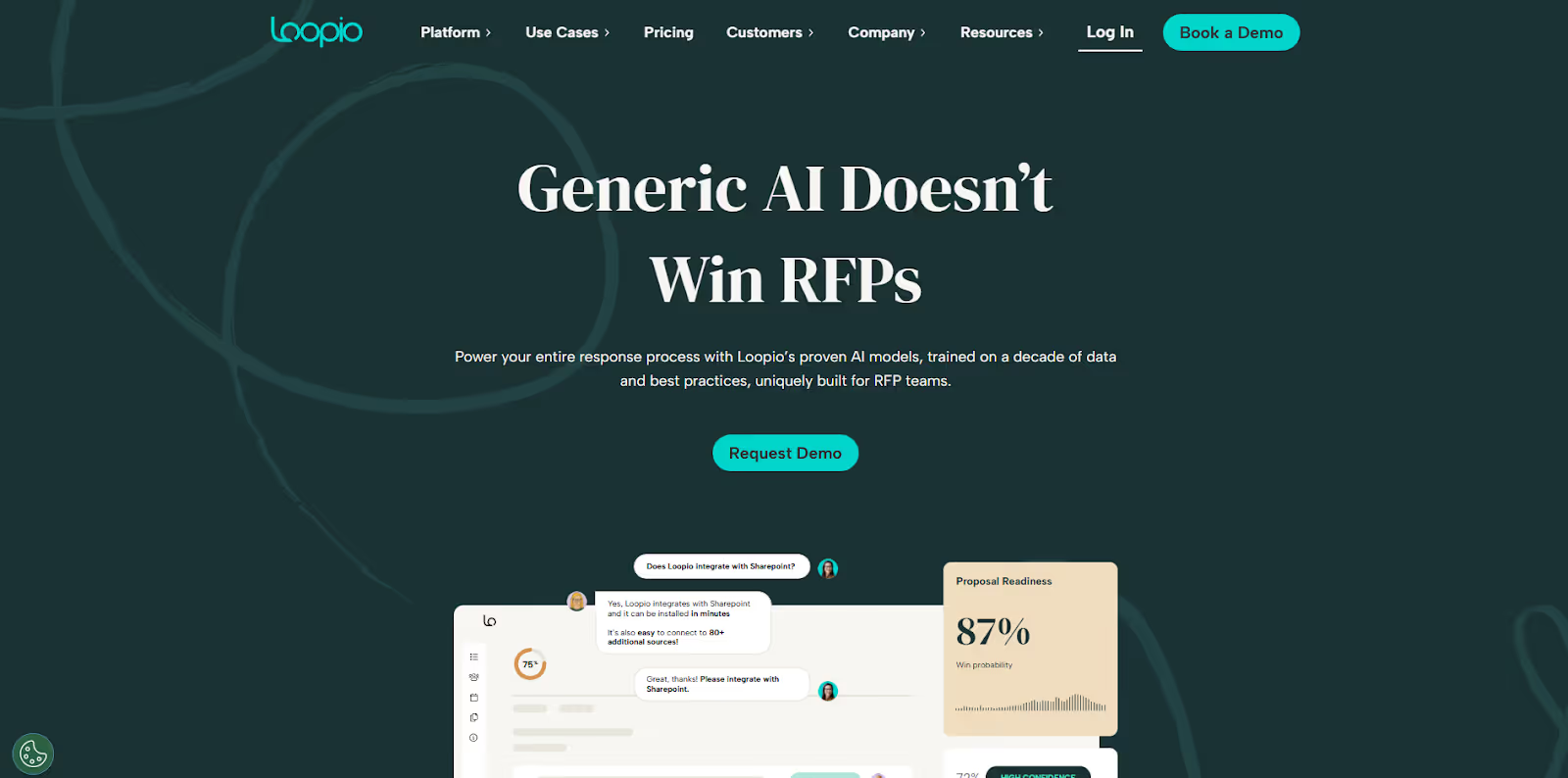
Loopio is an RFP automation tool that helps teams respond to RFPs by providing a centralized library of past responses and automating content population. It is known for its user-friendly interface and collaborative features.
Key Features:
- Centralized Content Library: Loopio offers a powerful library that stores responses from previous RFPs, making it easier to reuse content.
- Collaboration Features: Facilitates team collaboration, allowing multiple team members to work on RFPs simultaneously.
Users note that Loopio’s maturity as a platform also adds complexity and maintenance effort. Keeping content accurate and up to date requires ongoing manual audits, version control management, and cleanup of older materials, which can slow teams operating at scale.
Several core workflows still depend on hands-on processes, and while automation features provide support, they require consistent training and upkeep to deliver full value, adding operational overhead for busy RFP teams.
3. Responsive
Responsive is another RFP management platform used by healthcare organizations to organize proposal content and coordinate response workflows.
Key Features:
- Content Automation: Responsive can auto-populate content from a centralized library, which speeds up the drafting process.
- Collaboration Tools: Provides tools for teams to collaborate and manage RFP responses effectively.
Users report a steep learning curve, particularly for new users unfamiliar with the platform’s structure. Some feedback points to an unintuitive interface that makes it harder to locate content or navigate uploaded files efficiently.
Users also mention limitations in search accuracy and note that AI-generated responses can lack depth or precision, requiring manual corrections.
4. AutoRFP AI
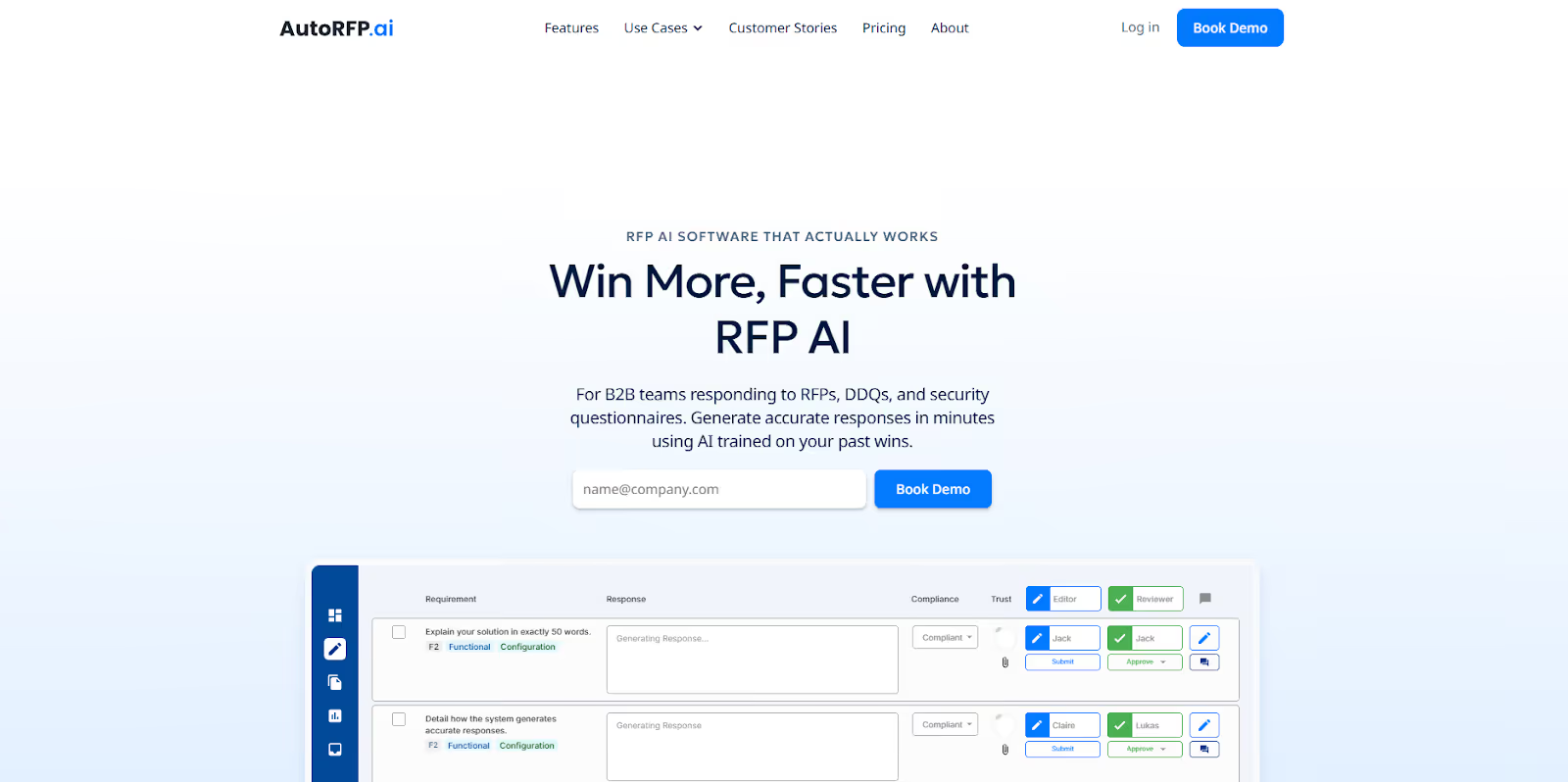
AutoRFP AI is another AI-driven tool that automates the response drafting process by using machine learning to generate responses based on historical data.
Key Features:
- AI-Driven Drafting: AutoRFP AI uses machine learning to generate initial drafts based on previous RFP responses, speeding up the drafting process.
- Content Libraries: Offers a centralized repository for storing previous responses and documents.
Users mention that, as a relatively new platform, AutoRFP still lacks several capabilities that more established RFP tools offer. Key features such as bid/no-bid analysis were only introduced recently, and reporting depth remains limited.
For healthcare RFP teams that rely on mature analytics, historical insights, and detailed reporting to manage complex, compliance-heavy bids, these gaps can feel restrictive.
5. Tribble
Tribble is an RFP response automation tool that provides teams with a structured, collaborative platform to manage and respond to RFPs efficiently.
Key Features:
- Centralized Document Management: Tribble stores all content in a single place, making it easy for teams to find and reuse relevant material.
- Customizable Templates: Offers templates that can be tailored to meet the specific requirements of each RFP.
Users mention that Tribble AI can sometimes misinterpret requirements or return responses that are not fully accurate. As a result, healthcare RFP teams still need to rely on human verification to validate critical clinical, regulatory, and compliance-related information before submission.
When comparing RFP automation tools for healthcare organizations, Inventive AI stands out for its comprehensive AI-powered features, ensuring faster responses, better accuracy, and higher win rates.
Want to Improve Your Healthcare RFP Response Process?
Optimize your RFP management and boost your win rates with Inventive AI
8 Strategies for Simplifying Hospital RFP Management
Managing hospital RFPs is complex, but by following a few key strategies, you can simplify the process, improve proposal quality, and meet deadlines without the usual challenges.
Here are the best strategies to enhance your hospital RFP management process:
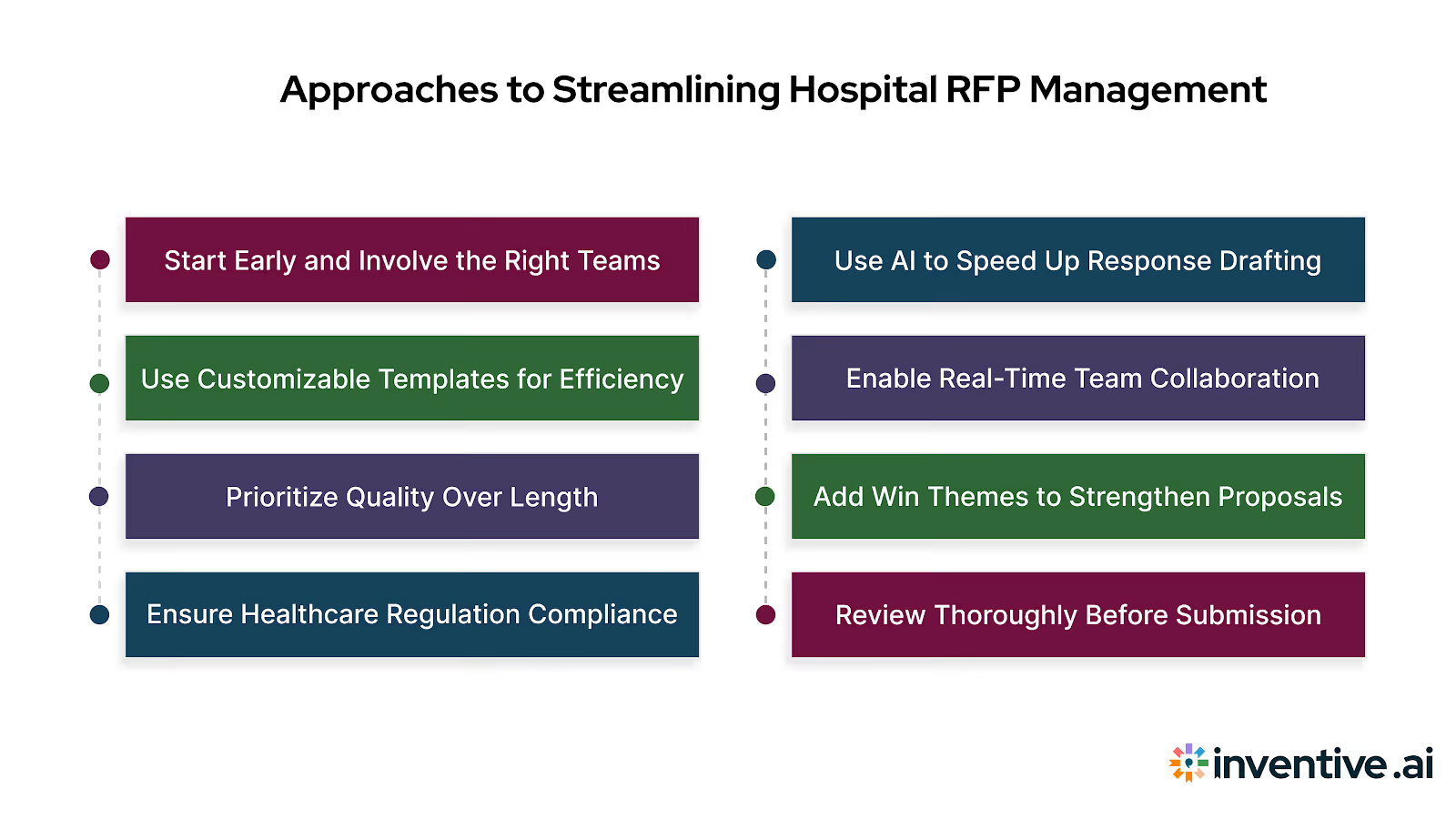
1. Start Early and Involve the Right Teams
Hospital RFPs often require input from clinical, IT, procurement, legal, and finance teams. Starting early and involving these key stakeholders ensures that everyone has enough time to contribute, reducing last-minute rushes and ensuring alignment. Early involvement helps identify potential roadblocks and sets clear expectations for all teams.
2. Use Customizable Templates for Efficiency
Templates are a great starting point, but each hospital RFP is unique. Customize your templates to fit the specific needs of each RFP. For instance, when responding to a request for an EHR system, make sure to include integration details, data security measures, and compliance with healthcare standards. Customizing templates saves time and shows that you understand the specific needs of the hospital.
3. Prioritize Quality Over Length
Hospital RFPs can be long, but filling the response with unnecessary details isn’t helpful. Focus on providing clear, concise answers that directly address the hospital’s needs. Avoid jargon and stick to the key requirements of the RFP, ensuring your response is easy to read and relevant.
4. Ensure Compliance with Healthcare Regulations
Compliance with healthcare regulations like HIPAA is non-negotiable. Use compliance checklists to ensure every section of your response meets the necessary legal and regulatory standards. Automated compliance checks can help verify that your response adheres to all relevant requirements, reducing the risk of disqualification.
5. Use AI to Speed Up Response Drafting
AI-powered tools like Inventive AI can generate accurate, compliant drafts in minutes, allowing you to focus on refining and customizing responses instead of drafting from scratch. AI tools help simplify the process by pulling from a centralized knowledge hub and offering suggestions for improving response quality.
6. Foster Real-Time Collaboration Across Teams
Hospital RFPs typically require input from multiple departments. Using collaboration tools that allow teams to work together in real-time ensures that feedback is quickly incorporated and responses are aligned. Real-time collaboration speeds up the approval process and ensures a more coordinated effort across departments.
7. Include Win Themes to Strengthen Your Proposal
A win theme is a focused statement that aligns your solution with the hospital’s needs. Highlight your strengths, whether it’s cost-effectiveness, improved patient care, or ease of implementation. Customizing your response to emphasize how your solution specifically addresses the hospital's goals gives you an edge over competitors.
8. Conduct a Thorough Review Before Submission
A final review is important to ensure accuracy and compliance. Double-check that all questions have been answered thoroughly, all compliance requirements are met, and the proposal aligns with the RFP instructions. AI tools can assist by flagging outdated content or potential compliance gaps, but a human review is still necessary to catch any final issues.
By following these strategies, you can significantly improve the hospital RFP management process. Starting early, customizing responses, focusing on quality, and using AI-driven tools like Inventive AI will help you simplify workflows, reduce errors, and submit high-quality proposals on time.
Also Read: AI for Enterprise Deals: Top 8 AI Tools, Use Cases, and Proven ROI
Transform Healthcare Complexity into Your Competitive Edge with Inventive AI
Healthcare RFP management is inherently complex, with strict compliance requirements, tight deadlines, and a need for cross-departmental collaboration.
However, by adopting the right strategies and using AI-powered tools, you can simplify the process, improve response quality, and significantly reduce manual effort.
Inventive AI stands out as the best solution for healthcare organizations, offering faster response times, enhanced accuracy, and compliance features that ensure your proposals are always on point.
By automating key tasks, fostering collaboration, and ensuring high-quality, compliant responses, Inventive AI helps you stay ahead of the competition and increase your win rate.
Frequently Asked Questions (FAQs)
1. What makes healthcare RFPs different from standard RFPs?
Healthcare RFPs require a high level of regulatory compliance, integration with existing systems, and a focus on patient safety and data security, making them more complex and time-sensitive.
2. How can AI help in healthcare RFP management?
AI can automate content drafting, ensure compliance with regulations, improve collaboration between departments, and speed up the overall response process, reducing errors and manual work.
3. Is Inventive AI suitable for large healthcare organizations?
Yes, Inventive AI is designed to scale, making it ideal for large healthcare organizations that handle multiple, complex RFPs simultaneously and require a high level of collaboration across teams.
4. How does Inventive AI ensure compliance with healthcare regulations?
Inventive AI automatically checks for compliance with key healthcare regulations like HIPAA and FDA standards, ensuring that responses meet all necessary legal and security requirements.
5. How quickly can I see results with Inventive AI?
Many users report significant improvements, with 90% faster responses, 50% higher win rates, and a 95% accuracy rate in their proposals. The time saved in the RFP process allows your team to focus on refining strategy and improving proposal quality.
.avif)