
Best 8 RFP Software for Government Contractors (2026)
Compare the 8 best RFP software for government contractors. Explore AI capabilities, compliance features, pricing, integrations, and ideal use cases.
Last reviewed: July 2026. This comparison is based on vendor-published materials, verified G2 and Capterra reviews, and independent third-party analyses. Pricing and feature details change over time, so confirm current specifics directly with each vendor before purchasing.
Government proposal teams manage far more than writing responses. They need to qualify opportunities, coordinate SMEs, maintain approved content, meet strict compliance requirements, and deliver accurate proposals under tight deadlines.
The right RFP software can streamline these workflows by combining content management, collaboration, automation, AI-assisted drafting, and proposal governance in a single platform. Some tools also extend beyond proposal writing with capabilities like capture management, opportunity intelligence, compliance analysis, and security questionnaire automation.
This guide compares the best RFP software for government contractors in 2026, including Inventive AI, Loopio, Responsive, GovDash, Procurement Sciences, Deltek GovWin IQ, Upland Qvidian, and RocketDocs. We evaluate each platform's features, pricing, limitations, customer reviews, and ideal use cases to help you choose the best fit for your proposal team.
TL;DR
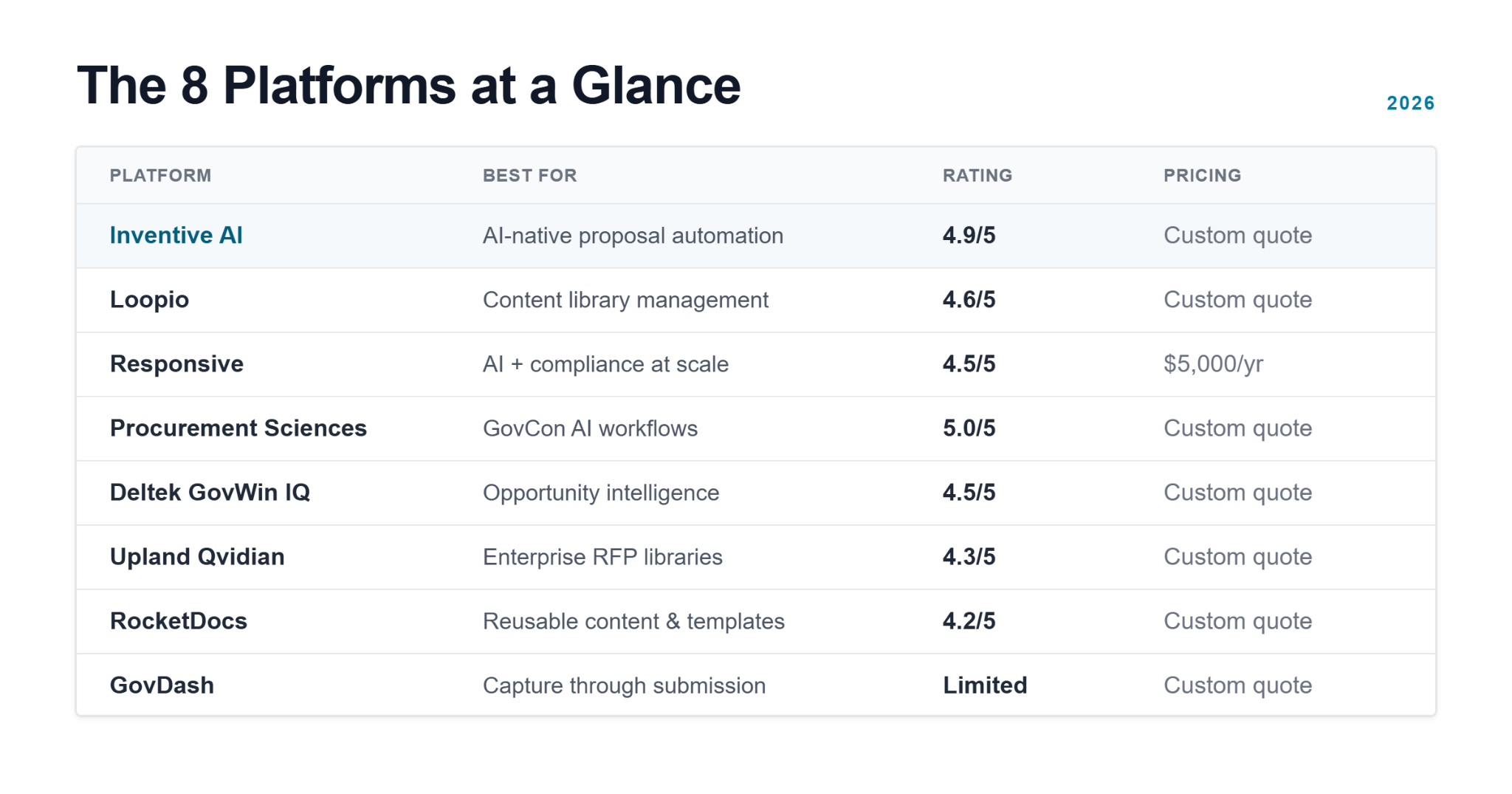
The best RFP software for government contractors depends on where your biggest bottleneck is. Some platforms help you identify opportunities before an RFP is released, while others focus on proposal automation, content management, compliance, or AI-assisted response generation. Here's a quick overview of the top RFP software for GovCons in 2026:
- Inventive AI: Ideal for AI-native proposal and RFP automation
- Loopio: Ideal for established proposal content libraries
- Responsive: Ideal for enterprise proposal and response management
- Procurement Sciences: Ideal for AI-powered proposal development
- Deltek GovWin IQ: Ideal for government opportunity intelligence
- Upland Qvidian: Ideal for enterprise proposal content management
- RocketDocs: Ideal for regulated industries managing RFPs and security questionnaires
- GovDash: Ideal for capture management and proposal workflows
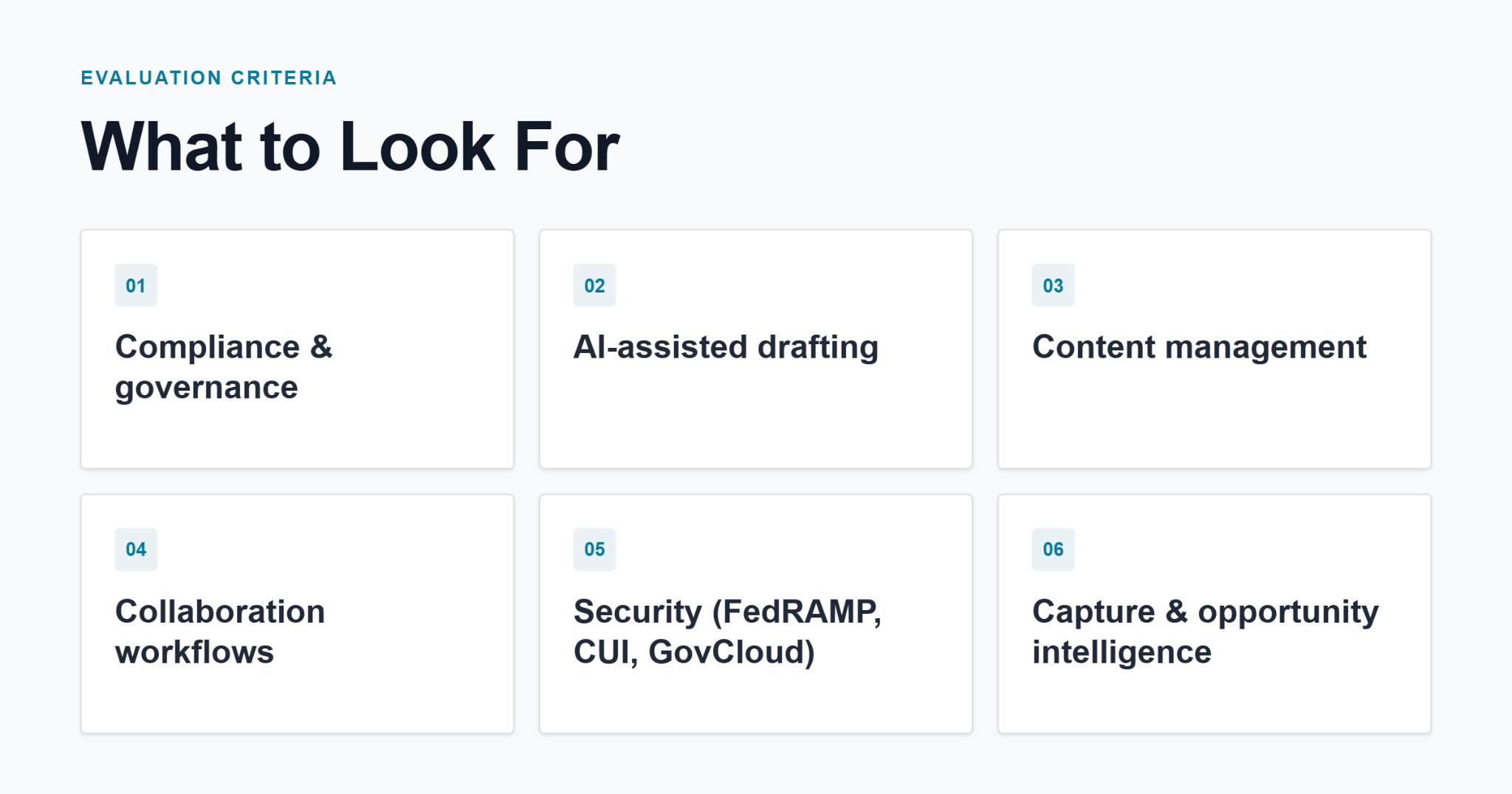
What to Look for in Government RFP Software
Best RFP Software for Government Contractors at a Glance
Inventive AI
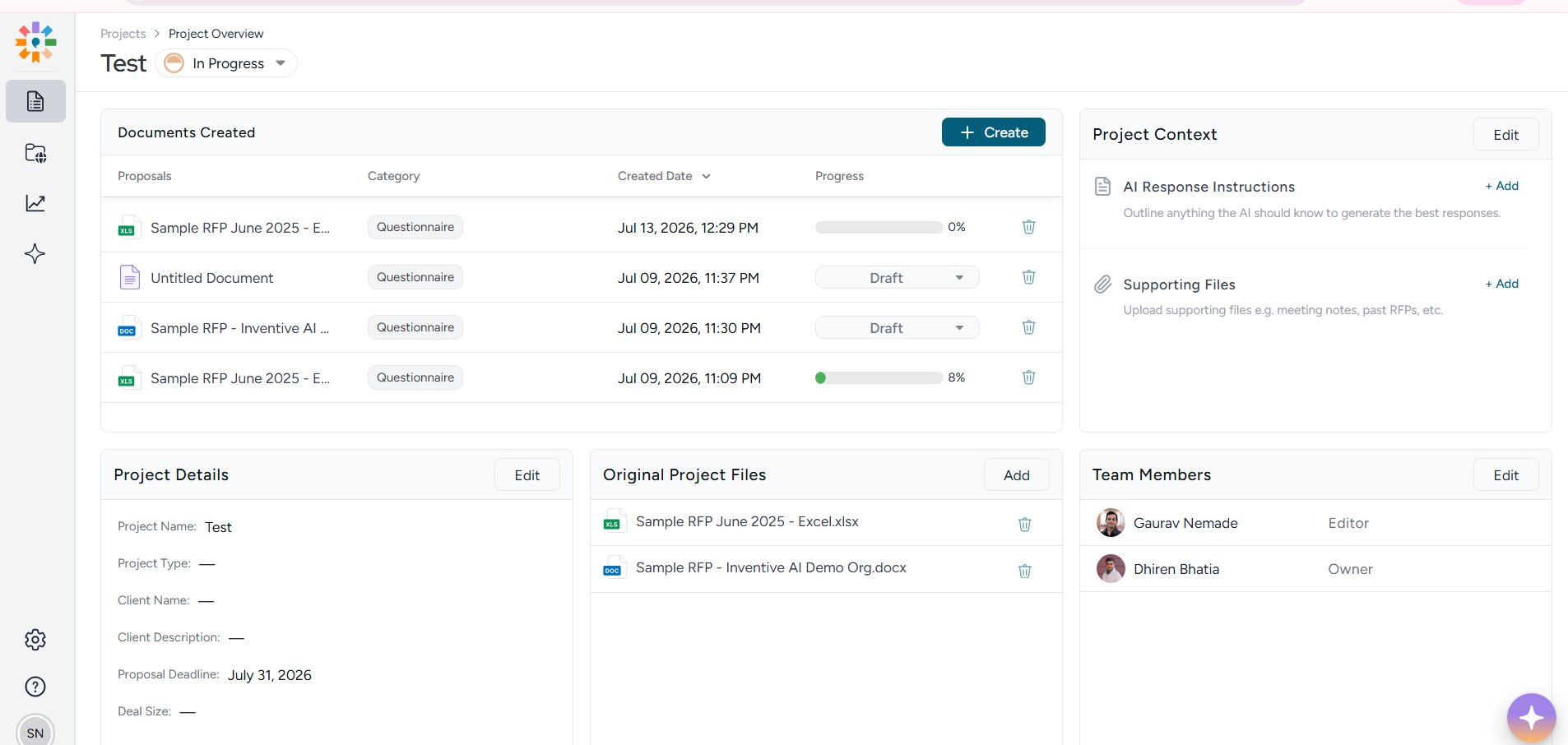
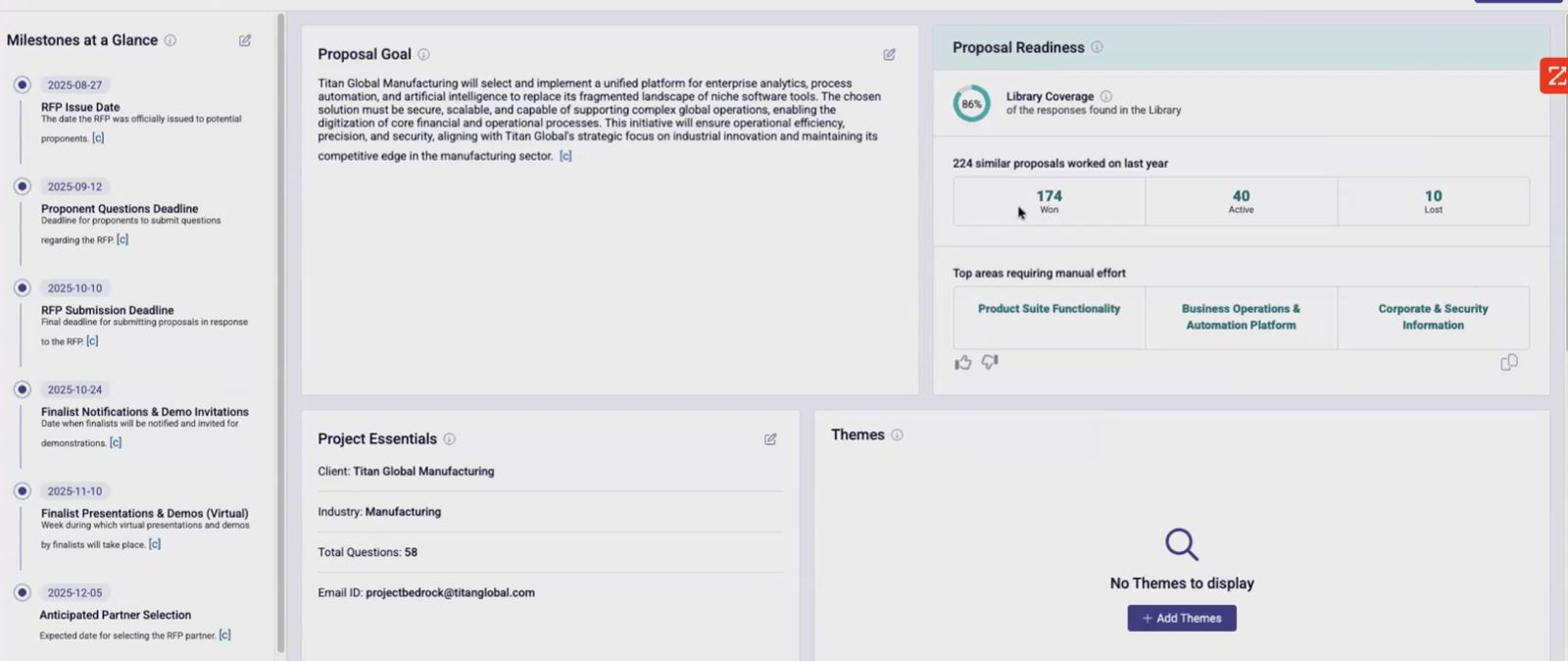
Inventive AI is an agentic AI platform that helps government contractors automate RFPs, RFIs, security questionnaires, and due diligence responses. Unlike traditional proposal software that relies on static content libraries, Inventive AI generates responses from connected knowledge sources, helping teams produce context-aware drafts while keeping SMEs in the review process.
Inventive AI's best features
- Generate proposal responses, RFIs, and security questionnaires using AI grounded in connected knowledge sources instead of a standalone content library.
- Connects Google Drive, SharePoint, Confluence, Notion, Salesforce, and past proposals into a single searchable knowledge base.
- Automatically detect outdated, duplicate, or conflicting content before it appears in proposals.
- Generate customer-specific proposal drafts instead of reusing generic boilerplate responses.
- Use AI agents to assist with proposal drafting, competitive research, win themes, and content management.
- Support Word documents, Excel questionnaires, PDFs, Google Sheets, and long-form proposal responses.
- Collaborate with SMEs through built-in review workflows, comments, approval assignments, and role-based permissions.
- Provide source citations and confidence scores for generated responses, while flagging missing information instead of generating unsupported answers.
Inventive AI limitations
- Public reporting and analytics are less comprehensive than some established enterprise proposal platforms.
- No native Jira integration is currently available.
- Organizations with strict government security requirements should verify whether the platform's security and deployment options meet their FedRAMP, GovCloud, or CUI handling requirements.
Inventive AI ratings and reviews
Inventive ratings and reviews
What are real users saying about Inventive?
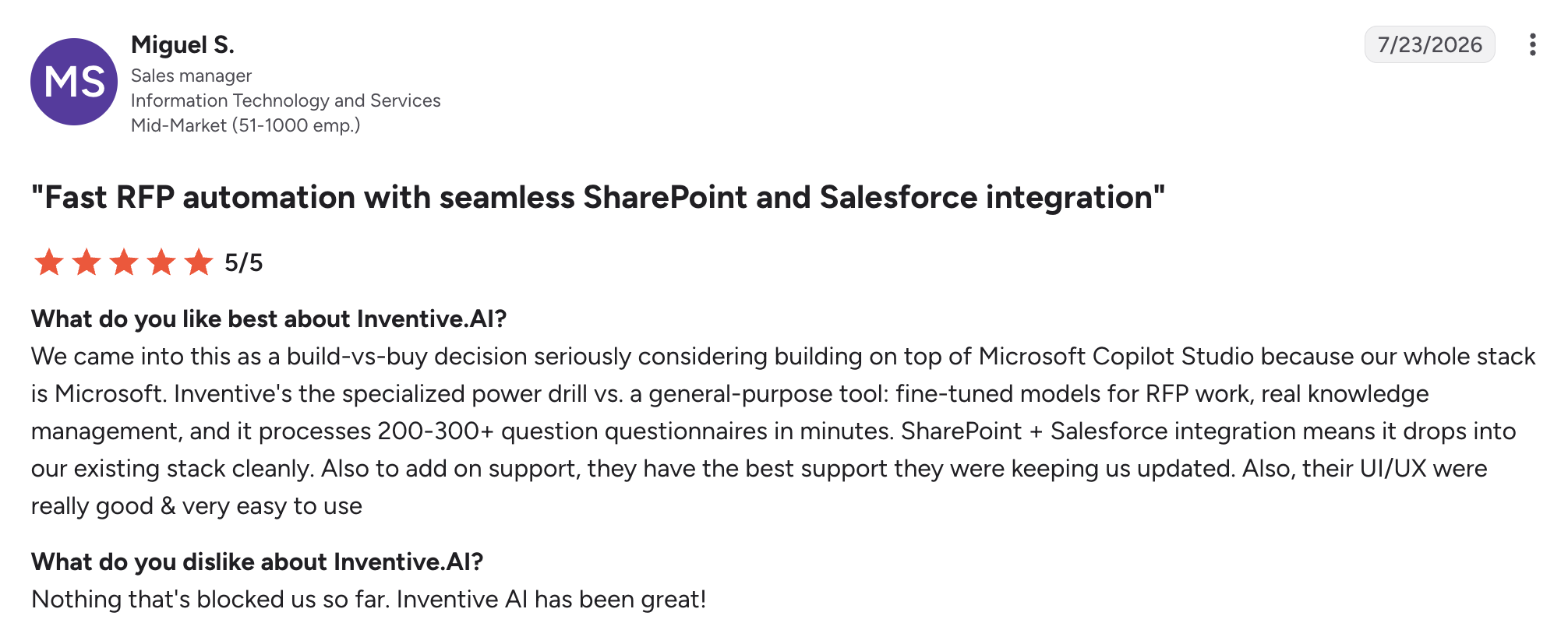
A G2 user review says:
Loopio
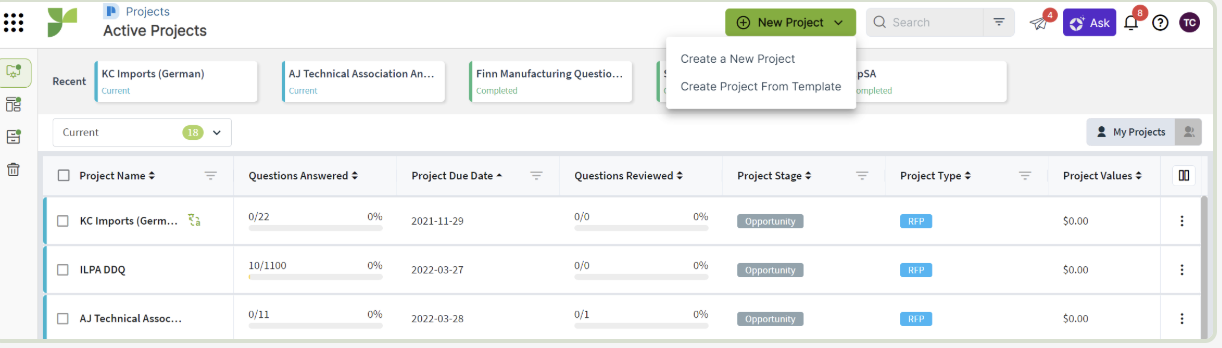
Loopio is proposal management software that helps government contractors respond to RFPs, security questionnaires, and due diligence requests using a centralized content library. Its strengths lie in content reuse, collaboration, and approval workflows for recurring government proposals.
Loopio best features
- Centralizes approved proposal content with tags, categories, and duplicate detection, making it easier to reuse compliant responses across government RFPs.
- Uses Magic AI to recommend the most relevant approved content from your knowledge library for federal, state, and local government proposals.
- Assigns proposal sections to subject matter experts and tracks milestones to keep government submissions on schedule.
- Provides content and project analytics to help proposal managers monitor knowledge library health and response efficiency.
- Supports responding directly within customer procurement portals, reducing manual copy-paste during government bid submissions.
- Includes a Chrome extension that helps teams complete web-based government questionnaires and procurement forms more efficiently.
Loopio limitations
- AI relies on existing content in the knowledge library rather than generating context-aware responses tailored to each government solicitation.
- Outdated or conflicting proposal content isn't identified automatically and requires manual review to maintain compliance.
- Doesn't offer built-in government opportunity intelligence, competitor analysis, or win-theme recommendations for GovCon teams.
- Personalizing responses for specific agencies or government buyers often requires additional manual editing.
Loopio Pricing
- Loopio uses a tier-based subscription model with pricing based on users, features, and deployment scope and does not publish public list pricing
- According to Vendr’s transaction data, typical annual contracts range from $15,000 to $150,000+
- Mid-market deployments (10–25 users) typically fall in the $30,000–$60,000 annual range
Loopio Ratings and reviews
What are real users saying about Loopio?
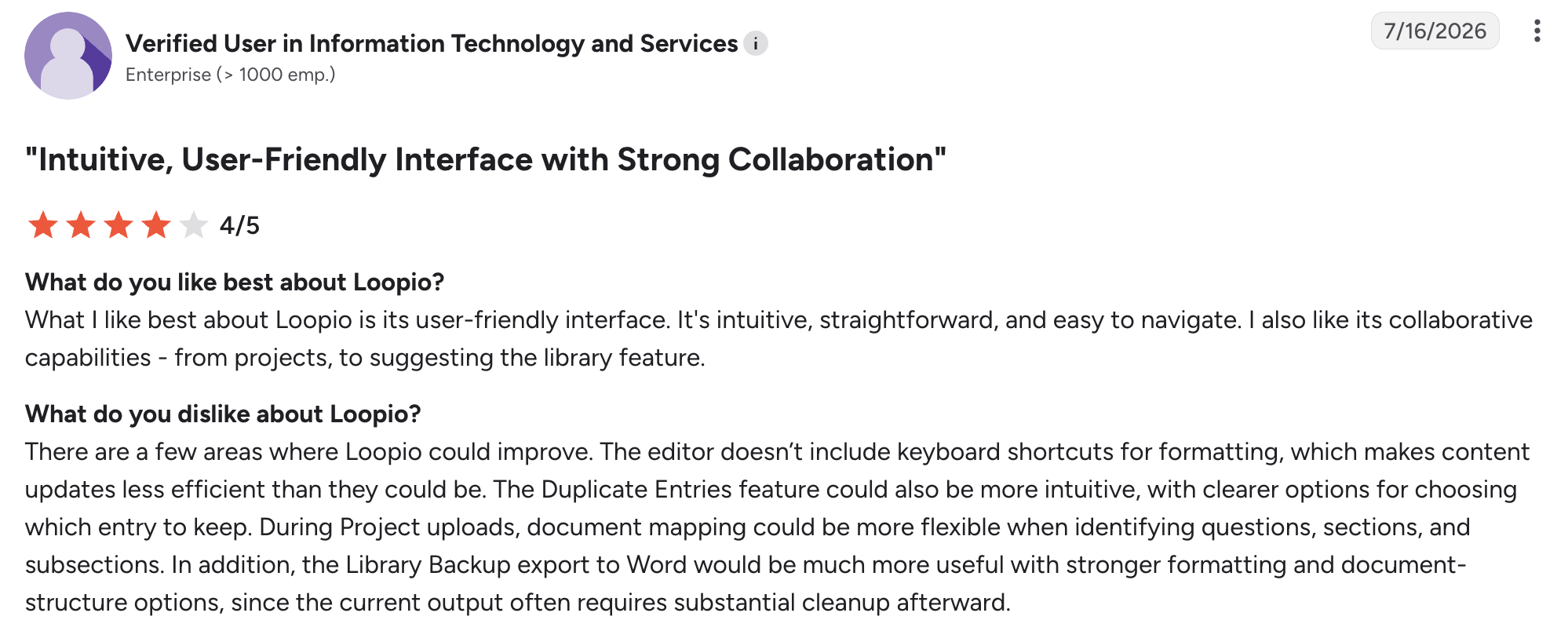
A G2 user review says:
Responsive
Responsive (formerly RFPIO) is AI-powered response management software that helps government contractors manage RFPs, security questionnaires, DDQs, government bids, and sales proposals from a single platform. It combines AI-assisted drafting, content management, and collaboration tools to help large proposal teams respond to complex government opportunities more efficiently.
Responsive best features
- Uses AI Assistant and AI agents to generate first drafts for government proposals with source citations for easier verification.
- Automates responses to security questionnaires, vendor risk assessments, and other compliance-heavy documents.
- Offers around 30 native integrations and more than 75 APIs to connect CRM, content management, and business systems.
- Supports 23+ languages with linked content versions, helping global teams maintain consistent proposal responses.
- Allows proposal managers to collaborate with subject matter experts through project-based access without purchasing licenses for occasional contributors.
- Centralizes approved proposal content to improve consistency across recurring federal, state, and local government bids.
Responsive limitations
- AI relies on a traditional Q&A content library instead of retrieving information from live enterprise knowledge sources.
- Doesn't automatically identify conflicting or outdated content within the proposal library.
- Lacks built-in government opportunity intelligence, competitor analysis, or win-theme recommendations.
- Responses are primarily based on reusable library content, requiring manual edits to tailor proposals for individual agencies or solicitations.
- Users report that AI can occasionally generate content beyond approved source material, making additional review important for compliance-sensitive government proposals.
Responsive pricing
- Pricing starts at $5,000/year for 5 users with the Lite plan.
- Growth and Enterprise plans are available with custom pricing based on team size, features, and deployment requirements.
- Uses a per-user licensing model, with additional costs depending on selected add-ons and enterprise capabilities.
- A custom quote is required for larger government proposal teams or organizations with more advanced workflow needs.
Responsive ratings and reviews
What are real users saying about Responsive?
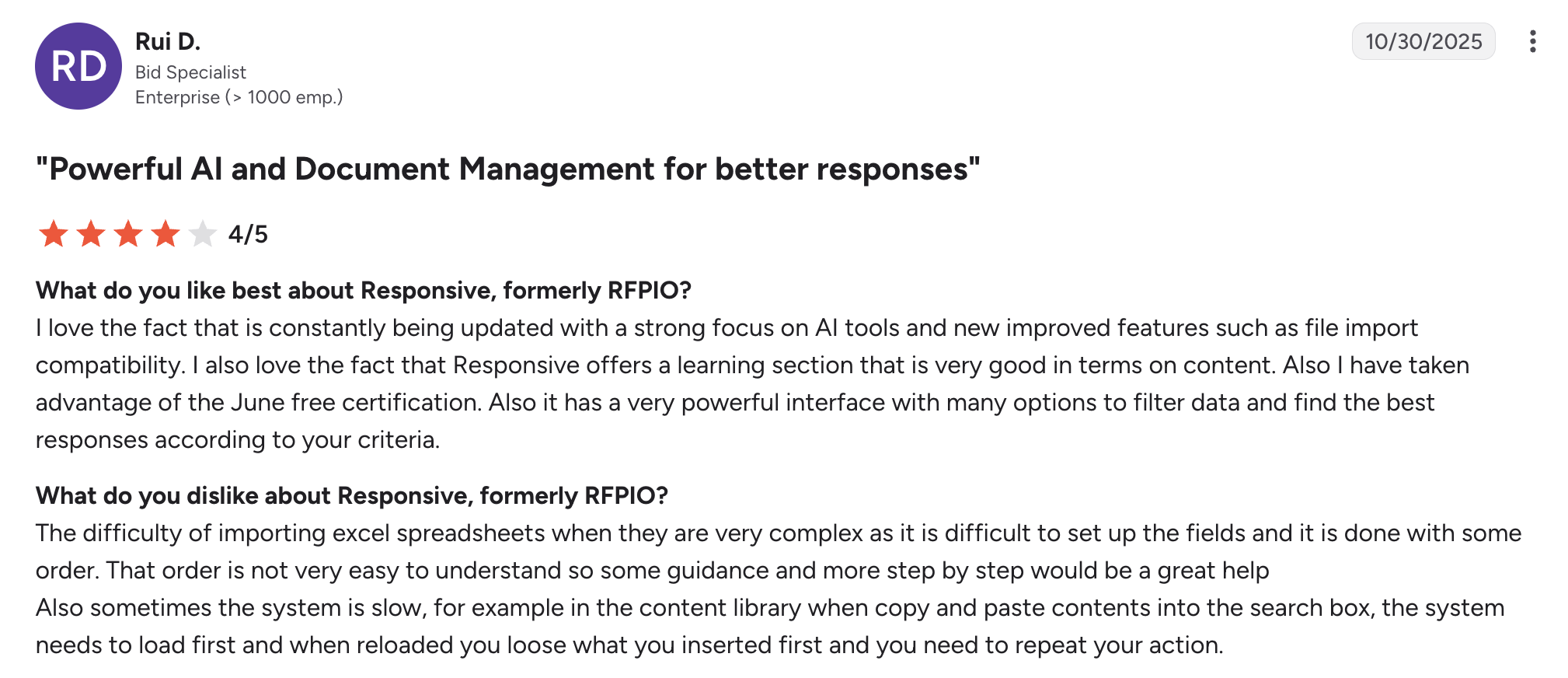
A G2 user review says:
Compare more options: Responsive Alternatives
Procurement Sciences
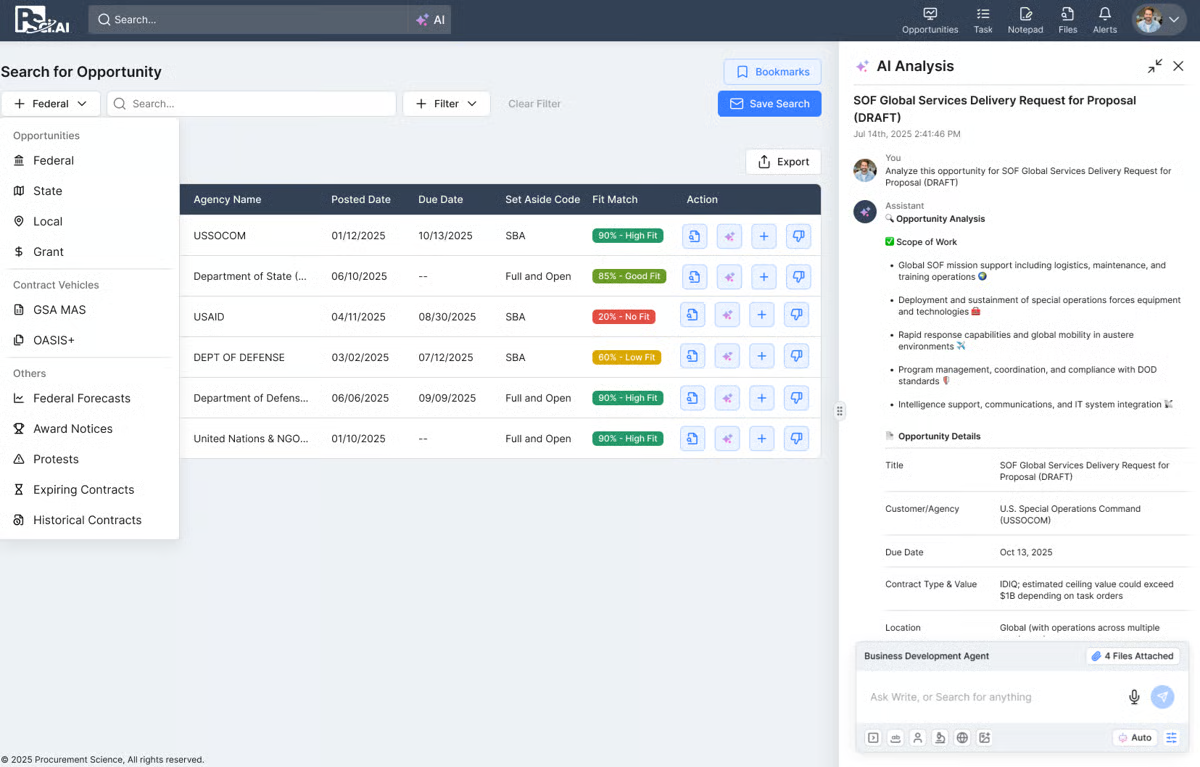
Procurement Sciences is an AI-powered proposal platform that helps government contractors respond to federal, state, and local solicitations. It combines AI-assisted proposal drafting, compliance analysis, opportunity management, and knowledge management to help teams accelerate proposal development while grounding responses in their own past performance and internal content.
Procurement Sciences best features
- Generates compliance matrices by analyzing solicitation requirements, to speed up proposal kickoff.
- Uses AI to draft proposal content from past proposals, resumes, project summaries, and other internal knowledge sources.
- Supports opportunity search, bid qualification, and pipeline management alongside proposal development workflows.
- Enables multiple proposal contributors to collaborate in a shared workspace, reducing version control issues.
- Integrates with Microsoft 365, SharePoint, and Google Workspace to leverage existing organizational knowledge.
- Includes AI-powered research capabilities for competitor analysis, compliance reviews, and proposal quality checks.
Procurement Sciences limitations
- Pricing isn't publicly available, making it difficult to estimate costs before engaging with the sales team.
- The platform's broad feature set can be overwhelming for new users and may require onboarding to use effectively.
- Financial proposal and pricing volume automation is less developed than its technical proposal capabilities, according to some users.
- Collaboration and content-sharing features are still evolving, based on user feedback.
Procurement Sciences pricing
- Procurement Sciences doesn't publicly disclose its pricing.
- Capterra lists a starting price of $1 per user/month, but prospective buyers should confirm current pricing directly with the vendor, as enterprise deployments are typically quote-based.
Procurement Sciences ratings and reviews
What are real users saying about Procurement Sciences?
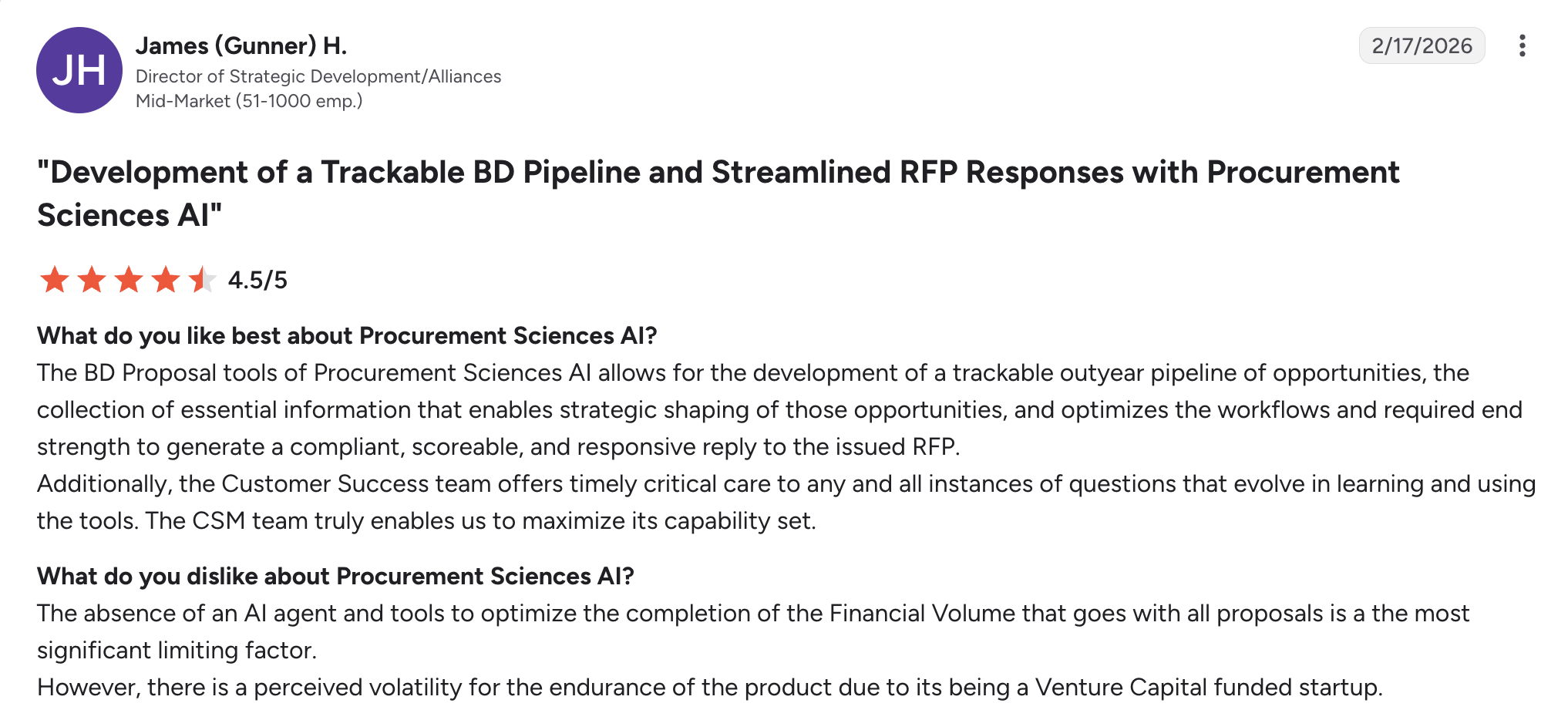
A G2 user says:
Deltek GovWin IQ
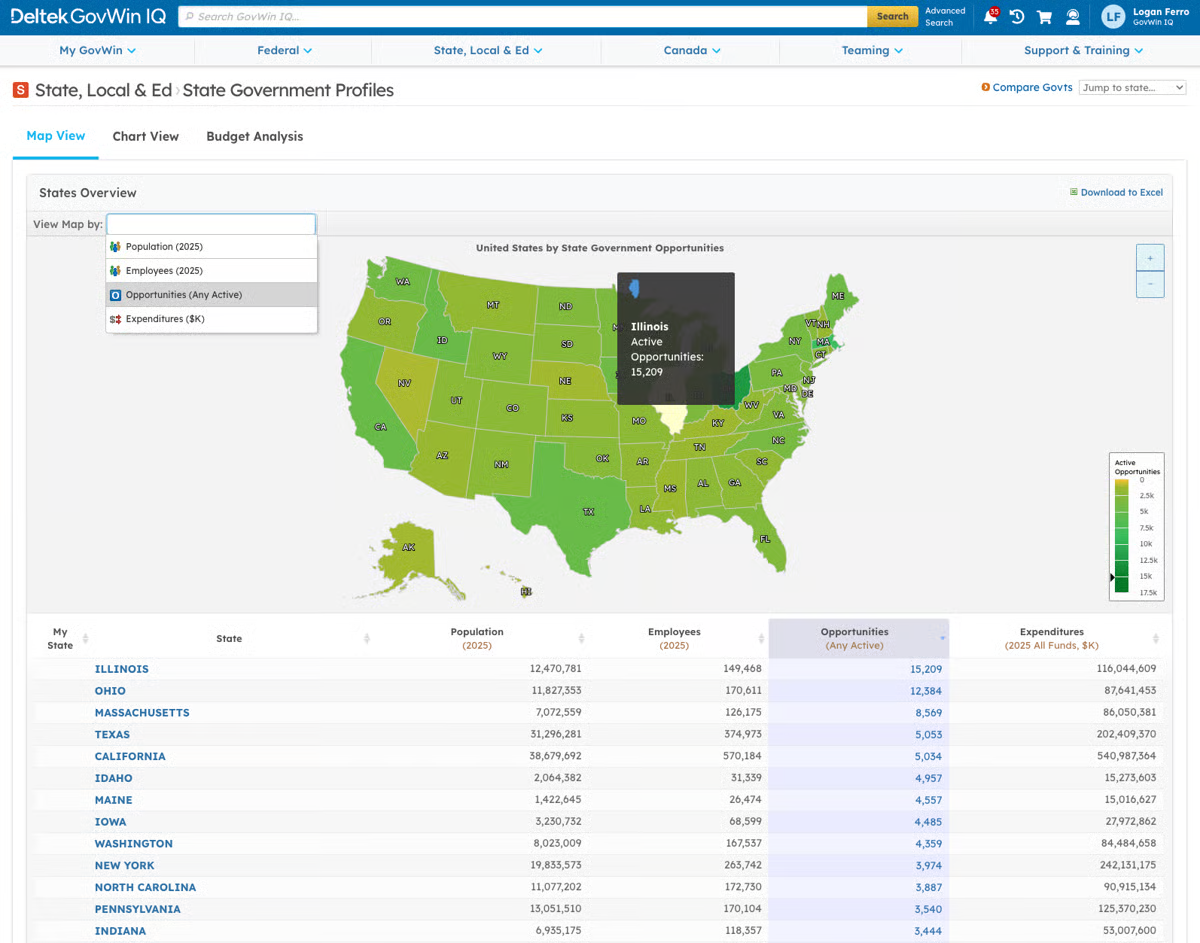
Deltek GovWin IQ is government market intelligence software that helps contractors identify, qualify, and track public sector opportunities before solicitations are released. Rather than focusing on proposal writing, it supports business development and capture teams with analyst-backed market research, opportunity tracking, and competitive intelligence.
Deltek GovWin IQ best features
- Tracks federal, state, local, education, and Canadian government opportunities from early market signals through contract award.
- Combines analyst-validated market intelligence with AI-powered search, summaries, and lead qualification.
- Provides insights into government agencies, incumbents, competitors, teaming partners, and procurement trends to strengthen capture strategies.
- Helps teams identify opportunities months or years before an RFP is released.
- Includes spending analytics, labor rate benchmarking, and market research to support go/no-go decisions.
- Offers CRM integrations, real-time opportunity alerts, and AI-generated proposal outlines and compliance matrices.
Deltek GovWin IQ limitations
- Primarily focuses on opportunity intelligence and capture rather than end-to-end proposal authoring or response management.
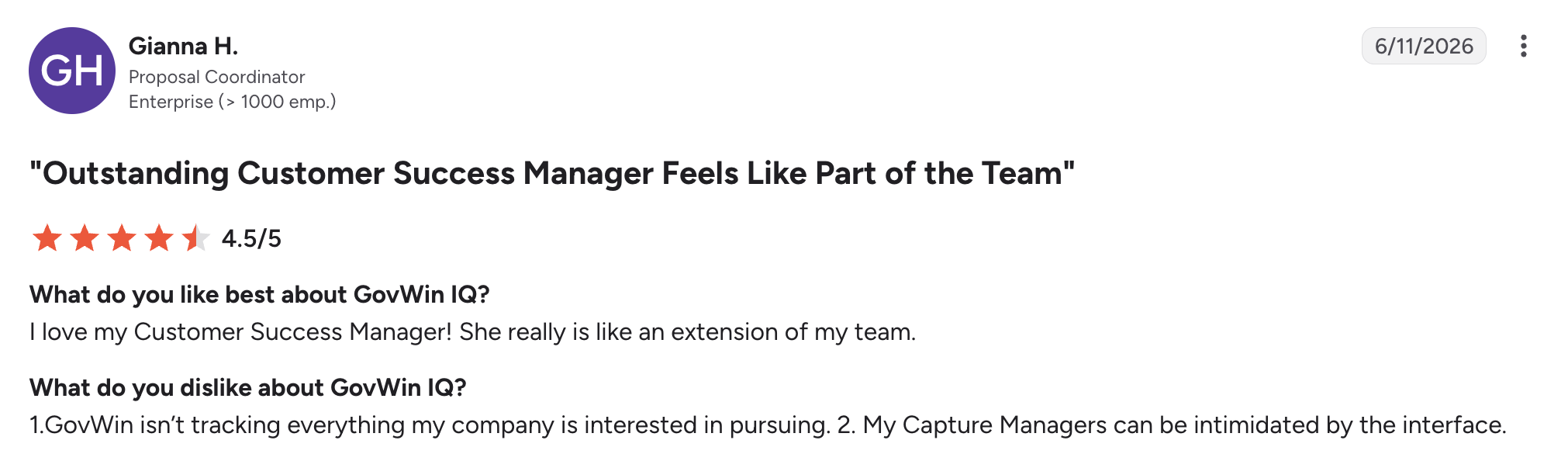
- The interface and search experience can feel complex, especially for new users.
- Some users report that the large volume of available data can be overwhelming to navigate efficiently.
- Several reviewers mention that certain market segments, such as SLED opportunities, could offer broader coverage.
Deltek GovWin IQ pricing
- Deltek doesn't publish GovWin IQ pricing.
- Pricing is available through a custom quote based on the selected market intelligence package and organizational requirements.
- G2 indicates GovWin IQ is typically purchased as an annual subscription, though pricing varies by deployment and modules.
Deltek GovWin IQ ratings and reviews
What are real users saying about Deltek GovWin IQ?
A G2 user says:
Qvidian by Upland
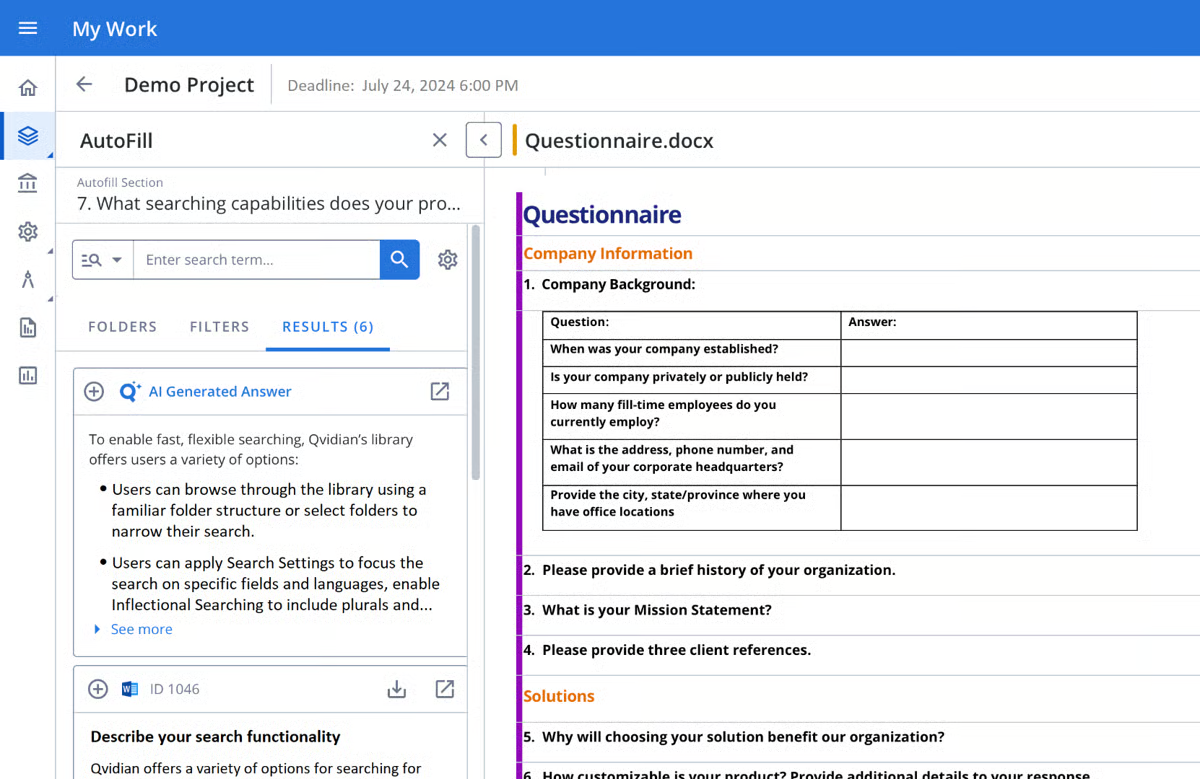
Upland Qvidian is enterprise proposal management software that helps government contractors manage RFP responses, proposals, security questionnaires, and other sales documents from a centralized content library. It combines content management, workflow automation, collaboration, and AI-assisted drafting to support teams handling large volumes of proposal work.
Qvidian best features
- Centralizes approved proposal content in a searchable knowledge library to improve content reuse and consistency.
- Uses AI Assist to generate, revise, and refine proposal responses while keeping writers within existing workflows.
- Automates questionnaires by identifying questions, suggesting answers, and prepopulating response documents.
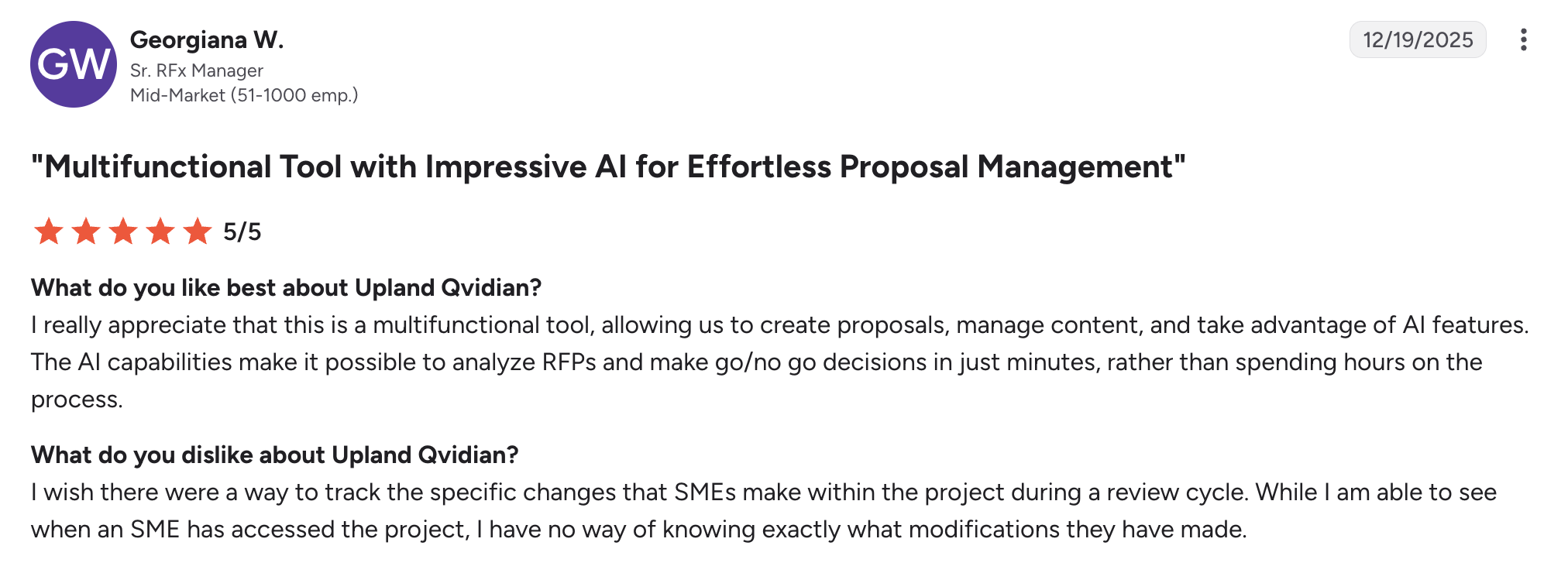
- Supports structured review and approval workflows with task assignments, audit trails, and version control.
- Integrates with Microsoft Word, Excel, PowerPoint, Microsoft 365, and Salesforce to streamline proposal development.
- Provides reporting and analytics to help proposal managers monitor content usage, workflows, and proposal performance.
Qvidian limitations
- The interface feels dated compared to newer AI-native proposal platforms, according to several users.
- Maintaining a large content library requires ongoing governance and dedicated content owners.
- The platform has a learning curve, particularly for occasional contributors or new users.
- AI capabilities primarily build on the existing content library rather than retrieving information from live enterprise knowledge sources.
Qvidian pricing
- Upland doesn't publicly disclose Qvidian pricing.
- Pricing is available through a custom quote based on organization size, deployment, and required capabilities.
- Organizations need to contact the vendor for pricing details and implementation estimates.
Qvidian ratings and reviews
What are real users saying about Qvidian?
A G2 user review says:
Compare more options: Top 8 Qvidian Alternatives and Competitors in 2026
RocketDocs

RocketDocs is response management software that helps government contractors complete RFPs, security questionnaires, and due diligence requests using AI-assisted drafting, content management, workflow automation, and Microsoft Office integrations to help teams respond faster while maintaining governance and compliance.
RocketDocs best features
- Stores approved responses in a centralized content library with version history, audit trails, and review workflows.
- Uses AI-assisted drafting, autofill, and semantic search to accelerate responses while reusing approved content.
- Supports RFPs, DDQs, security questionnaires, RFIs, and sales proposals from a single platform.
- Integrates directly with Microsoft Word and Excel, allowing teams to work in familiar applications instead of switching between platforms.
- Includes configurable approval workflows, role-based permissions, and audit trails to support regulated industries.
- Connects with Microsoft 365, Salesforce, SharePoint, Teams, and other enterprise systems.
RocketDocs limitations
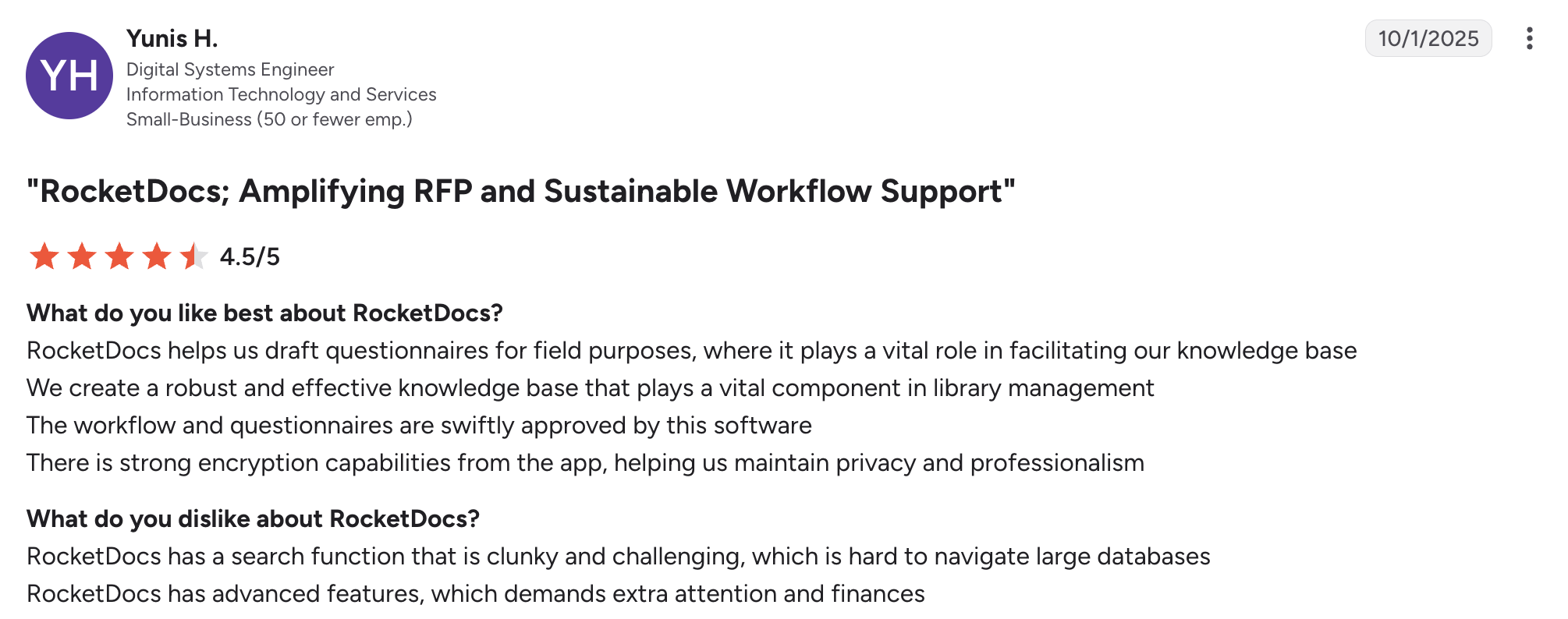
- Search functionality can require precise keywords to surface the most relevant content, according to several users.
- Maintaining an accurate knowledge base requires ongoing content governance and regular updates.
- Some advanced workflows and customization options have a learning curve for new users.
- Formatting and content management tasks may require additional manual adjustments in certain scenarios.
RocketDocs pricing
- RocketDocs offers quote-based pricing based on your team's size and requirements and does not list its pricing publicly.
RocketDocs ratings and reviews
What are real users saying about RocketDocs?
A G2 user review says:
Compare more options: Top 10 RocketDocs Alternatives and Competitors 2026
GovDash
GovDash is a GovCon platform that combines opportunity tracking, capture management, proposal automation, pricing, and post-award contract management in a single system. Its focus extends beyond proposal writing, making it a good option for contractors that want to manage the entire government business development lifecycle from one platform.
GovDash best features
- Combines opportunity tracking, capture management, proposal development, pricing, and contract management in a unified platform.
- Uses AI to generate proposal outlines by parsing solicitation requirements and mapping Section L instructions.
- Automatically updates compliance matrices when solicitation amendments are released.
- Extracts CLINs, labor categories (LCATs), and pricing information directly from solicitation documents to reduce manual data entry.
- Links AI-generated responses back to supporting documents stored in its centralized Data Library.
- Provides capture management tools for tracking opportunities and managing pursuit strategies before proposal development begins.
- Supports Azure GovCloud deployments and aligns with security standards such as NIST SP 800-171 and CMMC. The vendor states the platform is FedRAMP Ready, though organizations with FedRAMP authorization requirements should verify its current status.
GovDash limitations
- Proposal automation is one part of a broader GovCon platform, which may be more than smaller proposal teams need.
- Compliance capabilities focus on proposal planning and requirement mapping rather than advanced compliance gap detection.
- Teams looking only for proposal automation may find standalone response management platforms simpler to implement.
GovDash pricing
- GovDash doesn't publish its pricing.
- Pricing is available through a custom quote based on factors such as team size, required modules, and deployment needs.
- Organizations interested in capture management, proposal automation, pricing, and contract management should contact the vendor for a tailored estimate.
GovDash ratings and reviews
- G2: Limited reviews
- Capterra: Limited reviews
- TrustRadius: Limited reviews
What are real users saying about GovDash?
Because GovDash has relatively few reviews across major software review platforms, there's limited independent user feedback available compared to more established proposal management tools. Most publicly available information comes from the vendor's website, making it harder to assess long-term user satisfaction, implementation experience, and customer support through third-party sources.
Which RFP Software is best for Government teams?
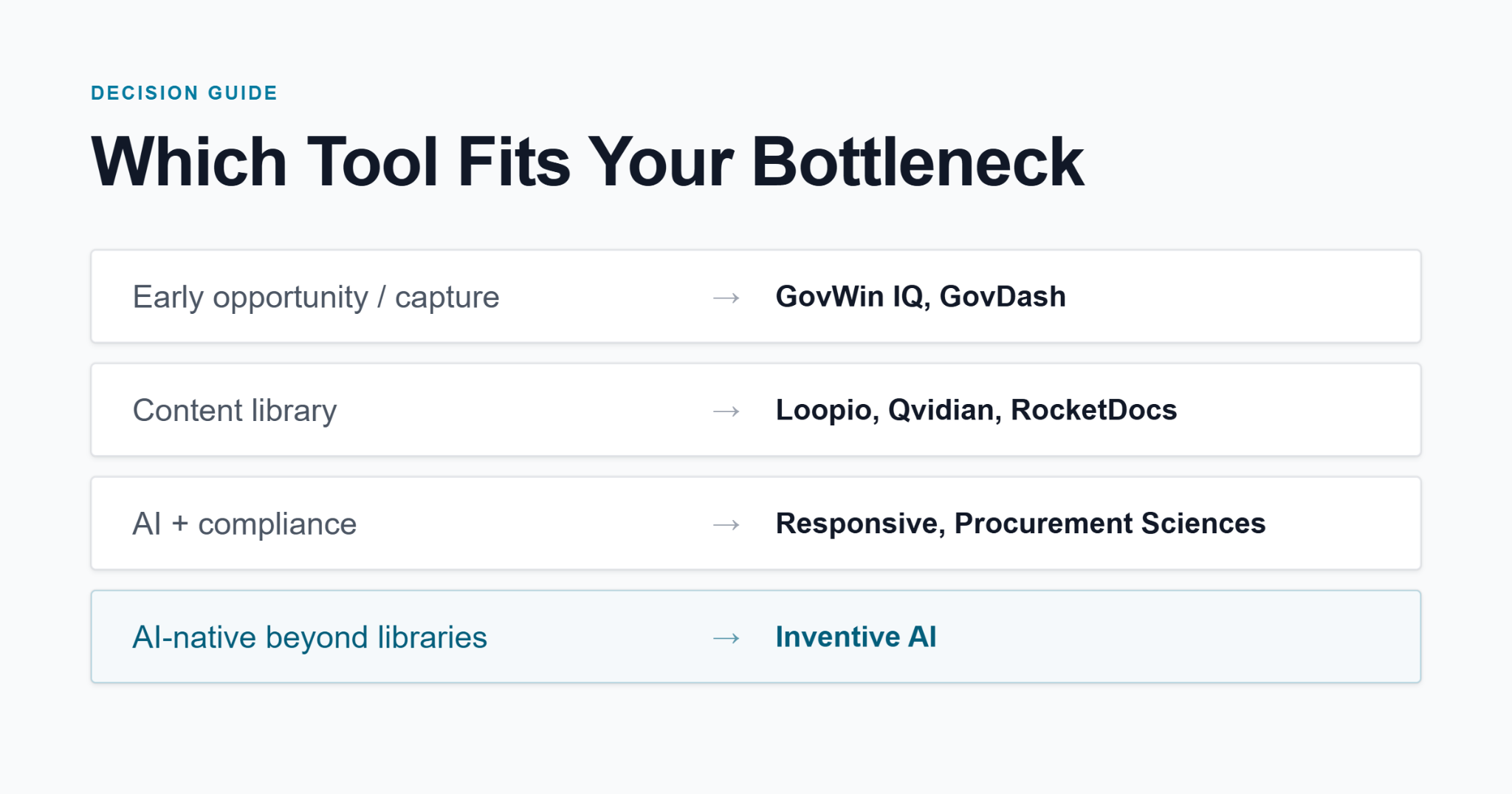
The right RFP software depends on where your biggest bottleneck is.
If your team needs early opportunity intelligence and capture planning, platforms like Deltek GovWin IQ and GovDash provide visibility into government opportunities before proposal writing begins.
If your proposal process revolves around maintaining a large, centralized content library, Loopio, Qvidian, and RocketDocs remain strong choices for content management and response reuse.
If your priority is AI-assisted proposal development with compliance automation, Responsive and Procurement Sciences offer broader AI capabilities while supporting collaboration across proposal teams.
If you're looking for an AI-native platform that goes beyond content libraries, Inventive AI stands out by grounding responses in enterprise knowledge, generating citation-backed answers, identifying conflicting information, and helping proposal teams produce tailored responses without relying solely on prewritten Q&A repositories.
Why Choose Inventive AI for Government Proposal Automation?
Government proposal teams need more than a content library. They need software that can help them respond to complex solicitations faster while maintaining accuracy, collaboration, and compliance throughout the proposal process.
Inventive AI combines AI-powered proposal generation with connected enterprise knowledge, helping teams draft responses from approved sources instead of relying on static content libraries or unsupported AI outputs. Proposal managers can keep SMEs in the review process while reducing repetitive work and improving response consistency.
With Inventive AI, government contractors can:
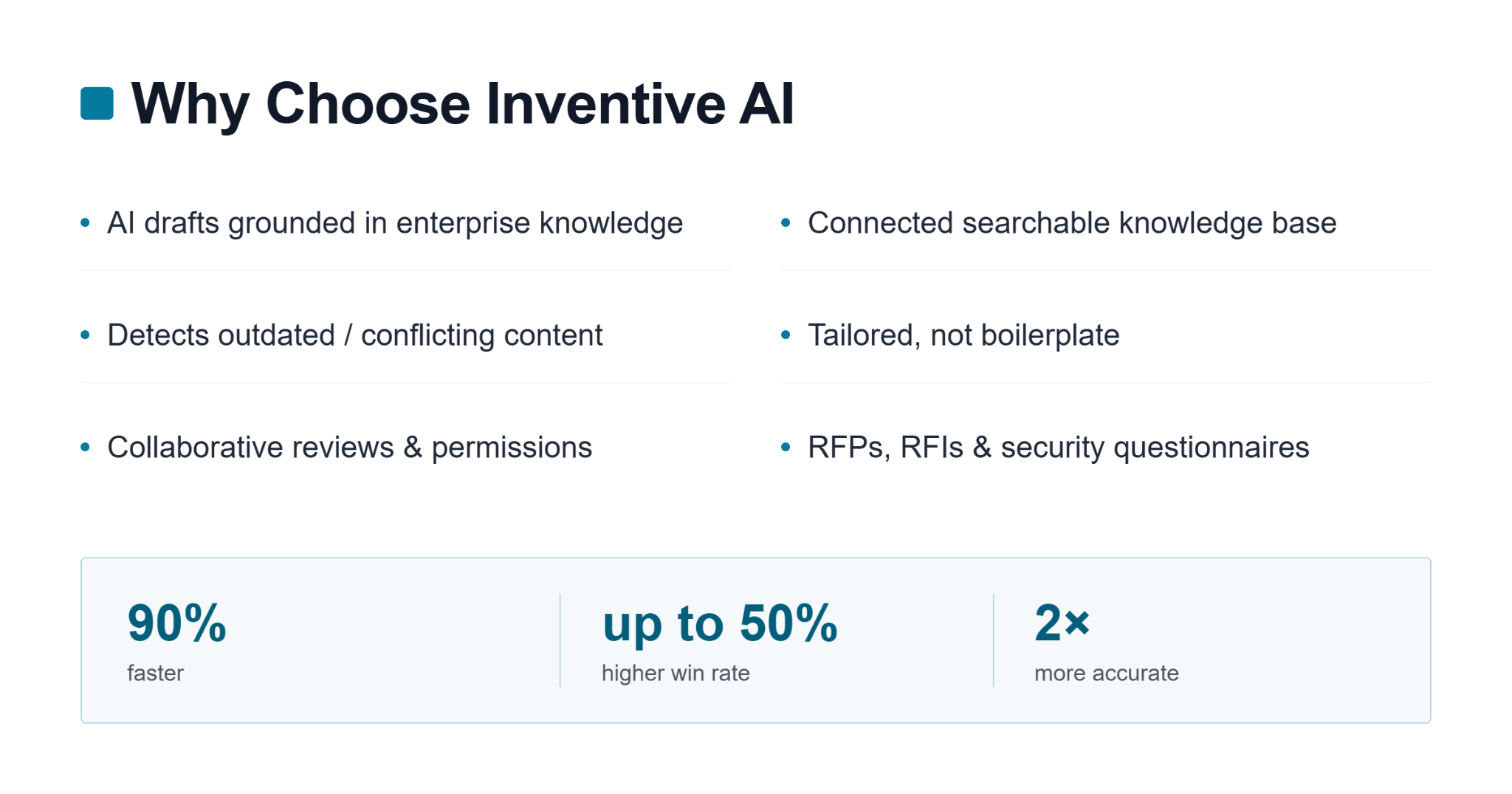
- Generate AI-powered proposal drafts grounded in connected enterprise knowledge.
- Connect Google Drive, SharePoint, Confluence, Notion, Salesforce, and past proposals into a single searchable knowledge base,
- Detect outdated, duplicate, or conflicting content before it reaches a proposal.
- Produce tailored responses for each opportunity instead of reusing generic boilerplate.
- Support collaborative proposal reviews with comments, approvals, and role-based permissions.
- Respond to RFPs, RFIs, and security questionnaires from a single platform.
- Reduce proposal turnaround time with AI-assisted drafting and workflow automation.
Organizations featured in Inventive AI's customer case studies have reported outcomes such as 90% faster proposal responses, up to 50% higher win rates, and 2× more accurate responses.
Whether you're responding to a handful of government solicitations each month or managing a high-volume proposal operation, Inventive AI provides an AI-native approach that helps proposal teams spend less time searching for information and more time building competitive responses.
Frequently Asked Questions
What is the difference between government RFP software and proposal software?
Government RFP software is designed to help teams respond to federal, state, and local solicitations by managing compliance requirements, content, collaboration, and response workflows. Proposal software is a broader category that may also support sales proposals, RFIs, security questionnaires, and other business documents. Many modern platforms combine both capabilities.
Can AI write government RFP responses?
AI can generate first drafts, summarize solicitations, retrieve approved content, and suggest tailored responses. However, government proposals should always be reviewed by proposal managers and subject matter experts to verify accuracy, compliance, and customer-specific requirements before submission.
What security features should government contractors look for in RFP software?
If you work with sensitive government information, look for features such as role-based access controls, audit logs, encryption, SOC 2 compliance, and deployment options like AWS GovCloud or Azure Government, where required. Depending on your contracts, you may also need to evaluate FedRAMP authorization or support for handling Controlled Unclassified Information (CUI).
Can government RFP software integrate with SharePoint and Microsoft 365?
Yes. Most enterprise RFP platforms integrate with Microsoft 365, SharePoint, Salesforce, Google Drive, and other knowledge repositories so teams can access approved content without maintaining duplicate copies.
Is government RFP software suitable for small businesses?
Yes. Many platforms support organizations of all sizes. Small businesses often prioritize ease of use, AI-powered drafting, and faster implementation, while larger contractors may require advanced governance, capture management, and enterprise security capabilities.
How do I choose the best government RFP software?
Start by identifying your biggest bottleneck. If your team spends most of its time drafting responses, AI-powered automation may have the greatest impact. If compliance tracking, content governance, or capture planning is the bigger challenge, prioritize platforms that are strongest in those areas. Also compare security, integrations, pricing, and scalability before making a decision.

90% Faster RFPs. 50% More Wins. Watch a 2-Minute Demo.

Dhiren Bhatia
Dhiren Bhatia has spent over 20 years in enterprise tech solving one problem: RFPs take too long and cost too much. As CEO of Viewics, a healthcare analytics company he founded and sold to Roche, he led teams through countless RFP cycles and saw firsthand how much time manual work wasted. That experience led him to start Inventive AI, where he's now Co-founder and CEO, building AI that helps RFP teams cut response time by up to 90% and win more deals.
.avif)
Mukund Kumar
Mukund Kumar is Growth Marketing Manager at Inventive AI. An IIT Jodhpur graduate with 3+ years in growth and performance marketing, he specializes in data-driven strategies that connect sales and RFP teams with the automation they actually need, helping revenue teams cut through generic AI hype and win more deals.