Construction RFP Guide: How Winning Teams Respond
This article explains how construction RFPs are structured, outlines the key steps from issuance to award, and describes how contractors can improve response quality and win rates without increasing bid effort.

Construction RFPs are issued by project owners to request detailed proposals from contractors for specific projects. They specify the scope of work, technical requirements, safety standards, compliance obligations, commercial terms, and the evaluation criteria used to score responses.
The process creates challenges on both sides. Owners must compare proposals that often meet the same requirements but differ in execution approach and risk profile. Contractors face long, structured RFPs with short response windows, heavy SME input, and repeated reuse of technical and compliance content across bids.
This article explains how construction RFPs are structured, outlines the key steps from issuance to award, and describes how contractors can improve response quality and win rates without increasing bid effort.
Key Takeaways
- Construction RFPs are used to evaluate execution control, risk awareness, and delivery capability, not just pricing, which makes generic or boilerplate responses ineffective.
- Public and private construction RFPs are evaluated very differently, and responders must adjust strategy based on whether compliance or differentiation drives scoring.
- Winning responses align tightly with evaluation criteria, address project-specific risks early, and use highly relevant experience rather than broad credentials.
- Manual RFP response processes break down as bid volume increases due to fragmented inputs, inconsistent reuse, late compliance checks, and limited time for execution detail.
- AI-driven RFP workflows, such as those enabled by Inventive AI, make disciplined response practices repeatable at scale by improving speed, accuracy, consistency, and review readiness without increasing headcount.
What Are Construction RFPs?
A Construction Request for Proposal (RFP) is a formal document issued by a project owner, developer, or general contractor to invite detailed proposals for a construction project.
A construction RFP typically asks for information on execution approach, relevant experience, project schedules, safety programs, risk management plans, and pricing structure.
Construction RFPs are used when projects involve complexity, coordination risk, or long-term operational impact. They are common in large commercial builds, infrastructure projects, healthcare facilities, mixed-use developments, and design-build engagements.
What Types of Construction RFPs Exist?
Construction RFPs generally fall into two categories: public and private. Each type changes how proposals are written and evaluated.
Public Construction RFP
Government agencies or public authorities issue public construction RFPs. These RFPs emphasize compliance, transparency, and defensibility. Evaluation criteria are fixed, documented, and often governed by statute. Mandatory requirements such as bonding capacity, safety certifications, workforce compliance, and submission formats are strictly enforced.
For responders, public RFPs demand precision. Any deviation from instructions, missing documentation, or formatting errors can result in disqualification, regardless of technical strength.
Private Construction RFP
Private construction RFPs are issued by developers, corporations, or private institutions. While still structured, they allow greater flexibility in evaluation. Owners may weigh the execution approach, collaboration style, value-engineering ideas, relevant experience, and commercial terms alongside cost.
For responders, private RFPs reward differentiation. Clear narratives, tailored project examples, and well-articulated execution plans often influence outcomes more than strict price competition.
RFI vs RFQ vs RFP vs ITB in Construction
The construction industry publishes different procurement formats based on project maturity and decision requirements.
Early stages focus on gathering information, while later stages emphasize pricing or execution certainty.
The table below offers a quick overview of how each format is used and what it signals to responders.
| Format | When Used | Buyer Goal | Responder Action |
|---|---|---|---|
| RFI | Early planning | Market understanding | Share capabilities |
| RFQ | Scope finalized | Price comparison | Submit precise pricing |
| RFP | Complex projects | Evaluate execution | Present delivery plan |
| ITB | Design complete | Lowest compliant bid | Follow instructions exactly |
What Do Buyers Include in Construction RFPs? 7 Components That Matter
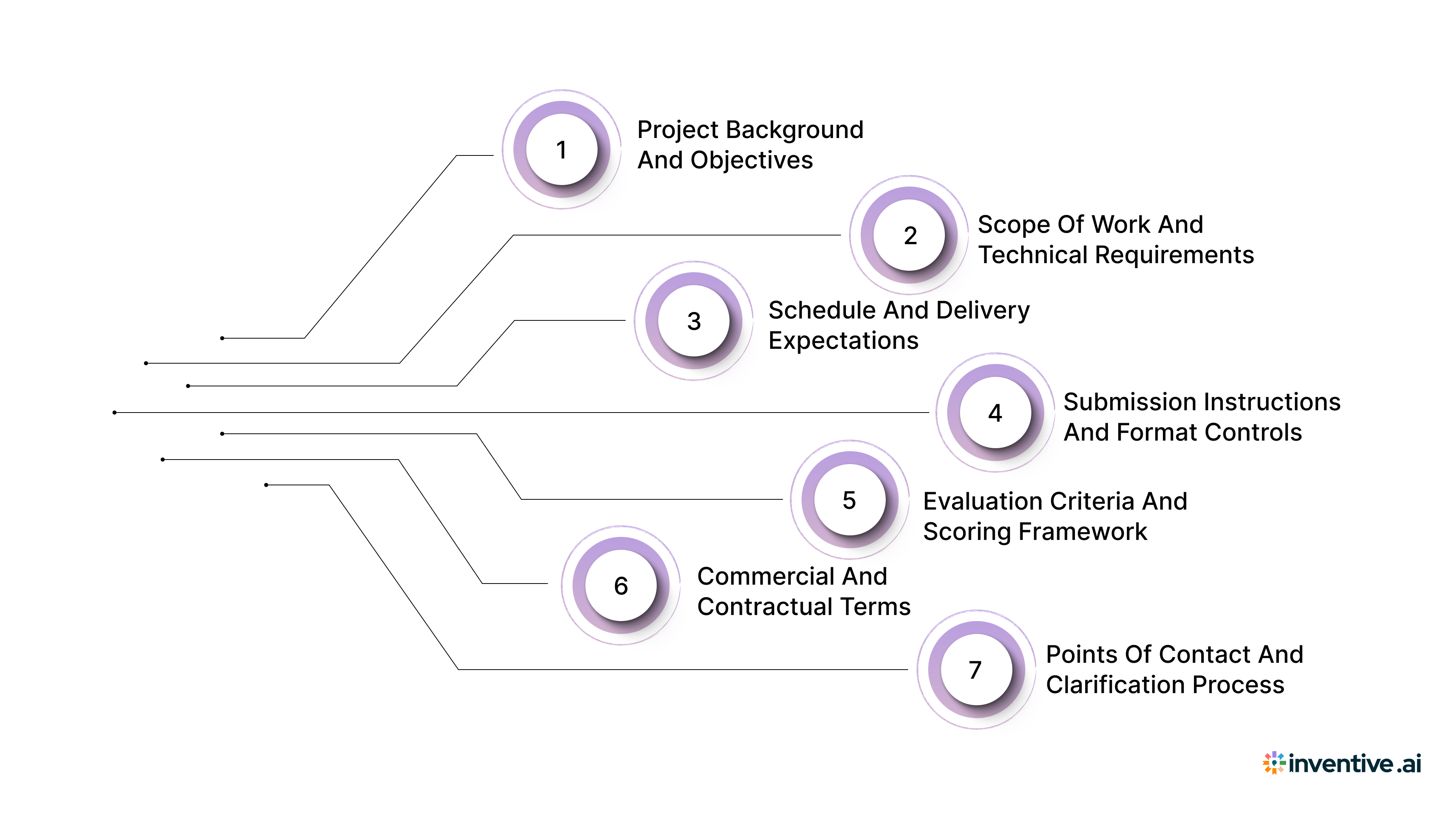
Construction RFPs are structured to help buyers reduce execution risk before contracts are signed. While formats vary by project type and owner maturity, most construction RFPs include a consistent set of components that shape how proposals are written and evaluated.
1. Project Background And Objectives
This section explains who is issuing the RFP, the purpose of the project, and the outcomes the owner cares about most. It often signals priorities such as speed, cost certainty, safety performance, or long-term asset quality. Responders should treat this as a decision lens, not background reading.
2. Scope Of Work And Technical Requirements
The scope defines what must be delivered and under what constraints. Buyers include drawings, specifications, site conditions, performance standards, coordination requirements, and known exclusions. Ambiguity here usually transfers risk to the contractor, making careful interpretation critical for responders.
3. Schedule And Delivery Expectations
Buyers outline target start dates, milestone requirements, phasing constraints, and completion deadlines. In many construction RFPs, schedule credibility carries as much weight as price. Unrealistic timelines are often scored lower than conservative but defensible plans.
4. Submission Instructions And Format Controls
This section specifies proposal structure, page limits, file formats, and submission deadlines. These controls exist to standardize evaluation and manage volume. In public and enterprise projects, non-compliance often results in disqualification before technical review.
5. Evaluation Criteria And Scoring Framework
Buyers disclose how proposals will be assessed, including weightings for experience, technical approach, cost, schedule, safety, and compliance. This section tells responders exactly where differentiation matters and where it does not.
6. Commercial And Contractual Terms
RFPs include draft contract terms covering payment structure, bonding, insurance, warranties, change management, and dispute resolution. Buyers expect contractors to surface material risks or exceptions during the RFP stage, not after award.
7. Points Of Contact And Clarification Process
Buyers define how questions should be submitted, who can be contacted, and how clarifications or addenda will be issued. This protects fairness while giving responders a formal channel to resolve scope or contract uncertainty.
For responders, understanding why each section exists is as important as answering it. Buyers use the RFP structure to compare judgment, surface risk, and narrow the field long before pricing becomes decisive.
What Are The Steps Of A Construction RFP?
Here are the standard stages a construction RFP moves through from initiation to contract award:
- Project Definition and Scope Finalization: The project owner defines scope of work, timelines, budget constraints, compliance requirements, and evaluation criteria.
- RFP Drafting and Question Design: The RFP is created with detailed technical, operational, safety, insurance, materials handling, certifications, and staffing questions.
- Vendor Shortlisting and Distribution: The RFP is shared with a selected list of contractors, which may include incumbents and new vendors to meet regulatory or governance requirements.
- Proposal Development and Submission: Contractors prepare and submit responses covering technical approach, qualifications, pricing, risk management, and supporting documentation.
- Evaluation and Shortlisting: Submitted proposals are reviewed against scoring criteria. This may include technical evaluation, commercial review, and compliance checks.
- Multi-Stage Review (If Applicable): Shortlisted bidders may be asked for clarifications, presentations, audits, site visits, or revised submissions.
- Contract Award and Negotiation: A preferred bidder is selected, terms are finalized, and the contract is executed before project kickoff.
See how our clients achieved 50%+ higher win rates and 90% faster RFP responses using Inventive AI.
How To Respond And Win Construction RFPs?

Construction RFPs differ from standard RFPs because they are designed to evaluate execution risk, not just qualifications. Owners are judging whether a contractor can manage site conditions, sequencing constraints, safety exposure, and schedule pressure in live environments.
Boilerplate responses that work elsewhere rarely perform well in construction procurement, which is why effective responses require a clear strategy, tight alignment with evaluation criteria, and project-specific detail rather than generic narratives.
1. Decide Whether To Pursue The RFP (Go / No-Go)
Before you commit to estimating hours, proposal resources, and leadership time, you need a formal go/no-go decision. Construction RFPs carry real pursuit costs, and chasing low-probability bids drains margin long before award.
You should assess:
- Project fit: Does the scope, delivery method, and project size align with the work you have delivered recently?
- Owner intent: Is the RFP exploratory, budget-constrained, or already leaning toward an incumbent?
- Competitive position: Are there prequalified firms with stronger proximity, relationships, or niche experience?
- Internal capacity: Do you have estimating, project leadership, and subcontractor support available within the timeline?
If the scope is vague, pricing assumptions are unrealistic, or evaluation criteria heavily favor price alone, the RFP may not justify pursuit.
2. Structure Your Response Around Evaluation Criteria
Owners score construction RFPs against predefined criteria, often using weighted matrices. If your proposal does not follow that structure, reviewers are forced to hunt for answers, which hurts scoring.
You should:
- Match proposal sections to the exact order and language used in the RFP.
- Allocate effort based on weighting, not page balance.
- Address every criterion explicitly, even if the answer is brief.
3. Address Project Risk Directly And Early
Construction RFPs are designed to surface risk before contract award. Owners expect you to demonstrate awareness of what could go wrong and how you plan to control it.
Strong responses:
- Identify site constraints, access limitations, or sequencing challenges.
- Acknowledge schedule pressure points and external dependencies.
- Call out permitting, utility coordination, or supply chain exposure.
- Pair each risk with a clear mitigation approach.
For example:
The project site is constrained by limited access and minimal laydown space, creating a risk of trade congestion and material-delivery delays during the structural and enclosure phases.
To address this, we will use a just-in-time delivery approach supported by off-site staging, schedule major deliveries during off-peak hours, and manage sequencing through a rolling three-week lookahead.
4. Use Experience That Closely Matches The Project
Construction RFP evaluators prioritize experience that aligns with the project’s scope, delivery method, and complexity. A small number of closely related projects allows reviewers to assess relevance quickly, while broad or unrelated portfolios add review friction and reduce clarity around fit.
You should:
- Select case examples that match scope, delivery method, and complexity.
- Explain your role, not just project outcomes.
- Highlight lessons learned that apply to the current RFP.
5. Make The Proposal Easy To Review Under Time Pressure
Construction RFP evaluation teams often review many submissions within limited time windows. Proposals that follow the RFP structure, use clear section headers, and present information concisely are easier to assess and compare.
Clear organization reduces review effort and helps evaluators locate required information without interpretation.
Improve reviewability by:
- Using clear section headers that mirror the RFP.
- Keeping answers direct and scoped to the question.
- Using tables or visuals where appropriate to summarize plans or schedules.
6. Reuse Content Without Sounding Recycled
Most construction RFP responses rely on reused material, especially for company background, safety programs, and standard processes. Issues arise when reused content is not adjusted to reflect the project’s scope, site conditions, or owner priorities.
Proposals that tailor reused sections to the specific RFP signal preparation and intent, while unmodified content often reads as generic and weakens differentiation.
Effective reuse means:
- Adjusting language to reflect project-specific constraints.
- Updating safety, scheduling, and execution sections to match site conditions.
- Aligning narratives with the owner’s stated priorities.
7. Meet Submission And Compliance Requirements Exactly
Construction RFPs apply strict rules around formatting, mandatory documents, and submission deadlines, particularly in public and regulated projects.
Proposals that miss required forms, exceed page limits, or deviate from submission instructions are often rejected before technical evaluation, regardless of experience or pricing. Ensuring that every requirement is met precisely protects the proposal from early elimination.
You must:
- Follow formatting, file naming, and page limits precisely.
- Include all mandatory forms, certifications, and attachments.
- Submit on time, with confirmation.
Construction RFP evaluators prioritize experience that aligns with the project’s scope, delivery method, and complexity. A small number of closely related projects allows reviewers to quickly assess relevance, while broad or unrelated portfolios add friction to the review process and reduce clarity around fit.
4 Biggest Challenges Of Manually Responding To Construction RFPs
Manual construction RFP responses break down because construction proposal work is rarely linear. Each RFP pulls input from estimating, project management, safety, legal, and finance, often on overlapping timelines.
As bid volume increases, coordination overhead grows faster than response quality, making consistency difficult even for experienced teams.
1. Fragmented Inputs Across Teams
Construction proposals depend on information spread across systems and people. Estimating data lives in one place, safety documentation in another, and past project experience in individual inboxes.
Manually stitching this information together under deadline pressure leads to omissions, version conflicts, and last-minute rewrites.
2. Inconsistent Reuse Of Proven Content
Most firms rely on past proposals as a reference, but without a structured way to retrieve and adapt prior answers, teams often reuse outdated language or miss stronger examples. This results in responses that vary in quality from bid to bid, even when pursuing similar projects.
3. Limited Time For Risk And Execution Detail
Manual workflows prioritize completion over refinement. Teams spend most of their time assembling required sections, leaving less time to analyze site conditions, sequencing risks, or owner-specific concerns. The result is technically complete proposals that lack execution depth.
4. Compliance Review Becomes A Bottleneck
Submission requirements, mandatory forms, and formatting rules require careful review. When handled manually, compliance checks are often deferred until late in the process, increasing the risk of errors that can disqualify otherwise strong proposals.
These challenges do not stem from a lack of expertise. They emerge because manual RFP response processes are not designed for the pace, volume, and complexity of modern construction procurement.
Respond to Construction RFPs Without Slowing Your Team Down
Teams using Inventive AI respond to RFPs up to 90% faster while keeping answers accurate and review-ready.
5 Ways to Automate Construction RFP Responses With AI
Manual construction RFP workflows struggle under bid volume, compressed timelines, and multi-team coordination. AI-based proposal systems reduce time spent assembling responses while preserving consistency and execution quality.
According to Gartner, by 2026, teams using generative AI for proposals will spend an average of 16 hours per RFP, down from 27 hours, while maintaining win rates. The time savings come from automating preparation and coordination work, not from reducing review rigor.
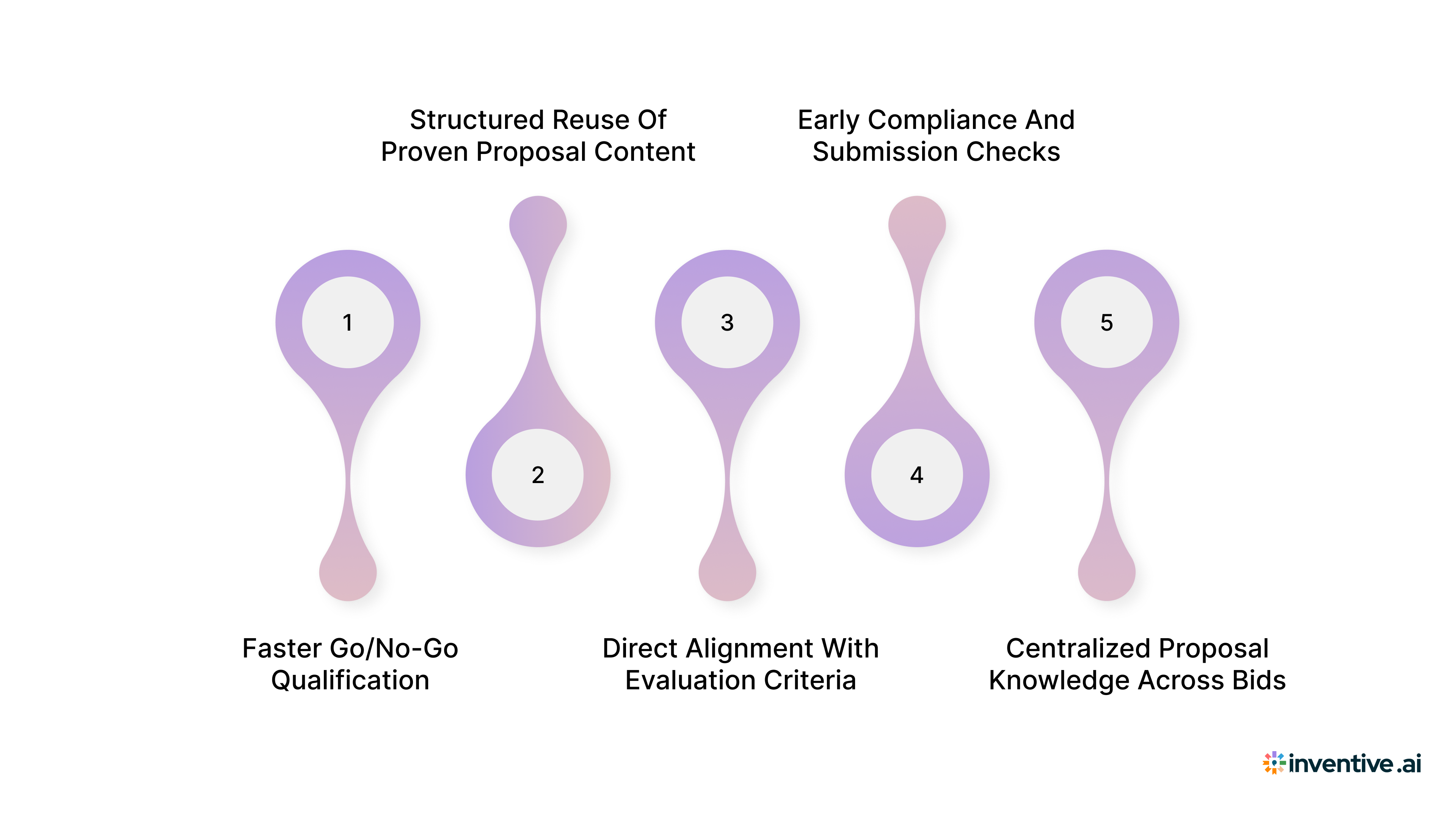
1. Faster Go/No-Go Qualification
AI consolidates historical pursuits, owner patterns, delivery methods, and prior outcomes into a single view. This allows you to qualify opportunities early based on fit, competitiveness, and capacity rather than informal judgment.
The result is fewer low-probability pursuits consuming estimating and proposal resources, and more focus on bids with realistic win potential.
2. Structured Reuse Of Proven Proposal Content
AI centralizes past proposals, project descriptions, safety programs, and execution narratives, making them searchable by scope, trade, delivery method, and owner type.
Instead of copying content manually, you can surface relevant, approved material and adapt it to the current RFP language and constraints.
This improves consistency across bids and reduces the risk of outdated or mismatched content.
3. Direct Alignment With Evaluation Criteria
AI maps proposal sections to the evaluation criteria defined in the RFP and flags gaps early. Higher-weighted sections receive appropriate depth, and scoring requirements are addressed explicitly.
This keeps responses aligned with how proposals are reviewed and reduces variability in scoring across evaluators.
4. Early Compliance And Submission Checks
AI validates submission requirements throughout the response process, including mandatory documents, formatting rules, and section completeness.
Issues are identified before final assembly rather than during last-minute reviews. This lowers the risk of disqualification and shortens final approval cycles under tight deadlines.
5. Centralized Proposal Knowledge Across Bids
AI retains approved responses, successful positioning, and lessons learned from past pursuits in a structured repository. Proposal teams can build on content that has already been reviewed and accepted, rather than restarting from scratch for each RFP. Over time, this improves response quality and execution speed without increasing bid effort.
For construction responders, AI turns disciplined RFP practices into repeatable workflows. It reduces manual assembly work and allows teams to focus on execution detail and risk awareness, which are the factors owners actually evaluate.
How Inventive AI Solves Construction RFP Response Challenges?
Construction RFP response teams operate under tight deadlines, heavy SME dependency, and strict evaluation criteria. Manual workflows struggle to keep responses consistent, compliant, and competitive at scale.
Inventive AI is designed to remove these constraints by directly addressing the operational pain points responders face.
Key Features
- 90% Faster Draft Creation With 2X more Accuracy: Generate first drafts up to 90% faster RFPs using responses grounded in your approved internal knowledge. Teams move quickly from blank pages to review-ready drafts without sacrificing accuracy or control.

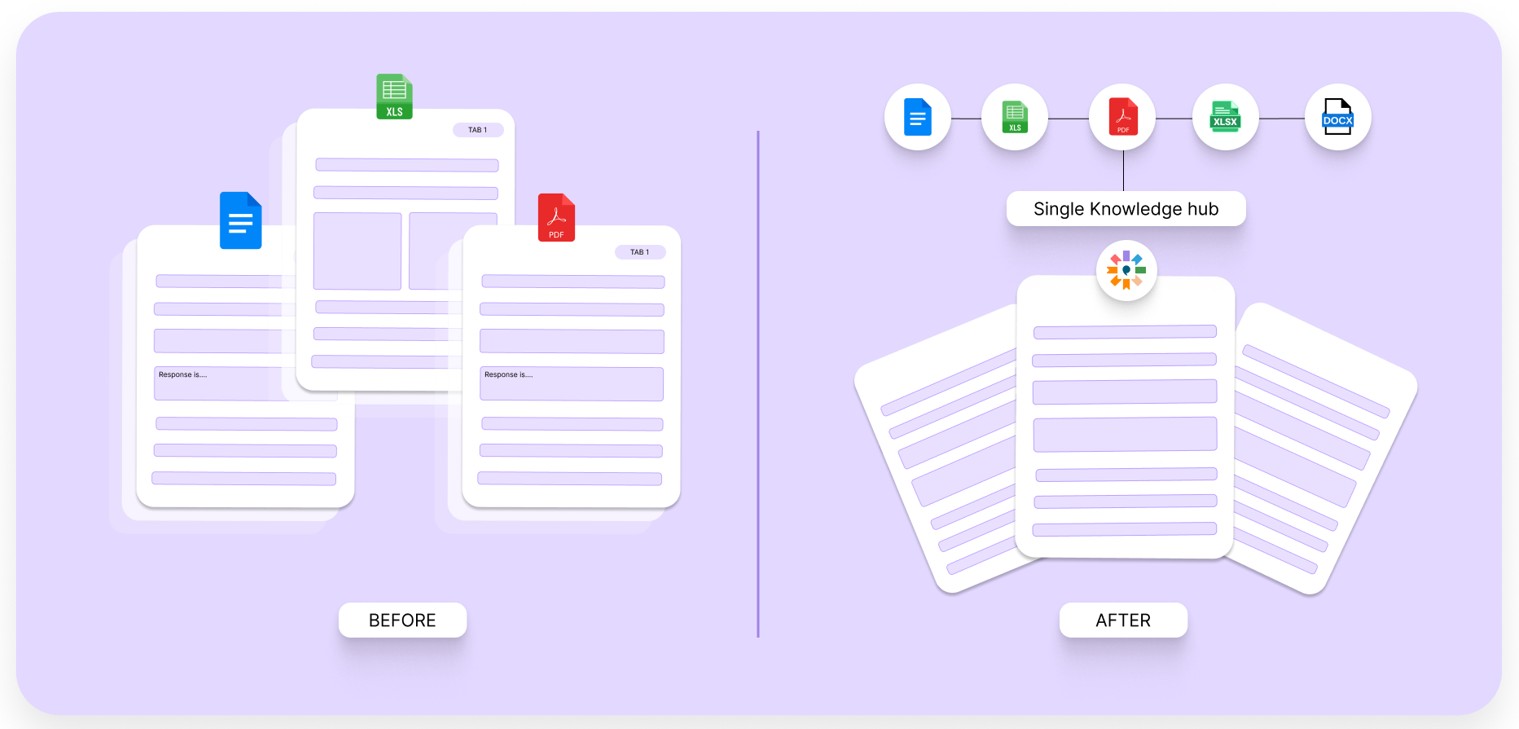
- Single Knowledge Hub Across All Systems: Centralize past RFPs, project documentation, safety content, and Q&A by connecting tools like Google Drive, SharePoint, Notion, and Confluence. This removes search overhead and ensures that every response is sourced from the same source of truth.
- AI Content Manager To Prevent Stale Or Conflicting Answers: Automatically detect outdated or contradictory content across your knowledge base. This reduces review cycles, lowers risk, and prevents inconsistencies across bids.

- Win Themes For Stronger Deal Positioning: Identify gaps in responses and enrich them using context from emails, Slack, and meeting notes. Win Themes strengthen proposal narratives and ensure responses reflect current client priorities, not generic boilerplate.
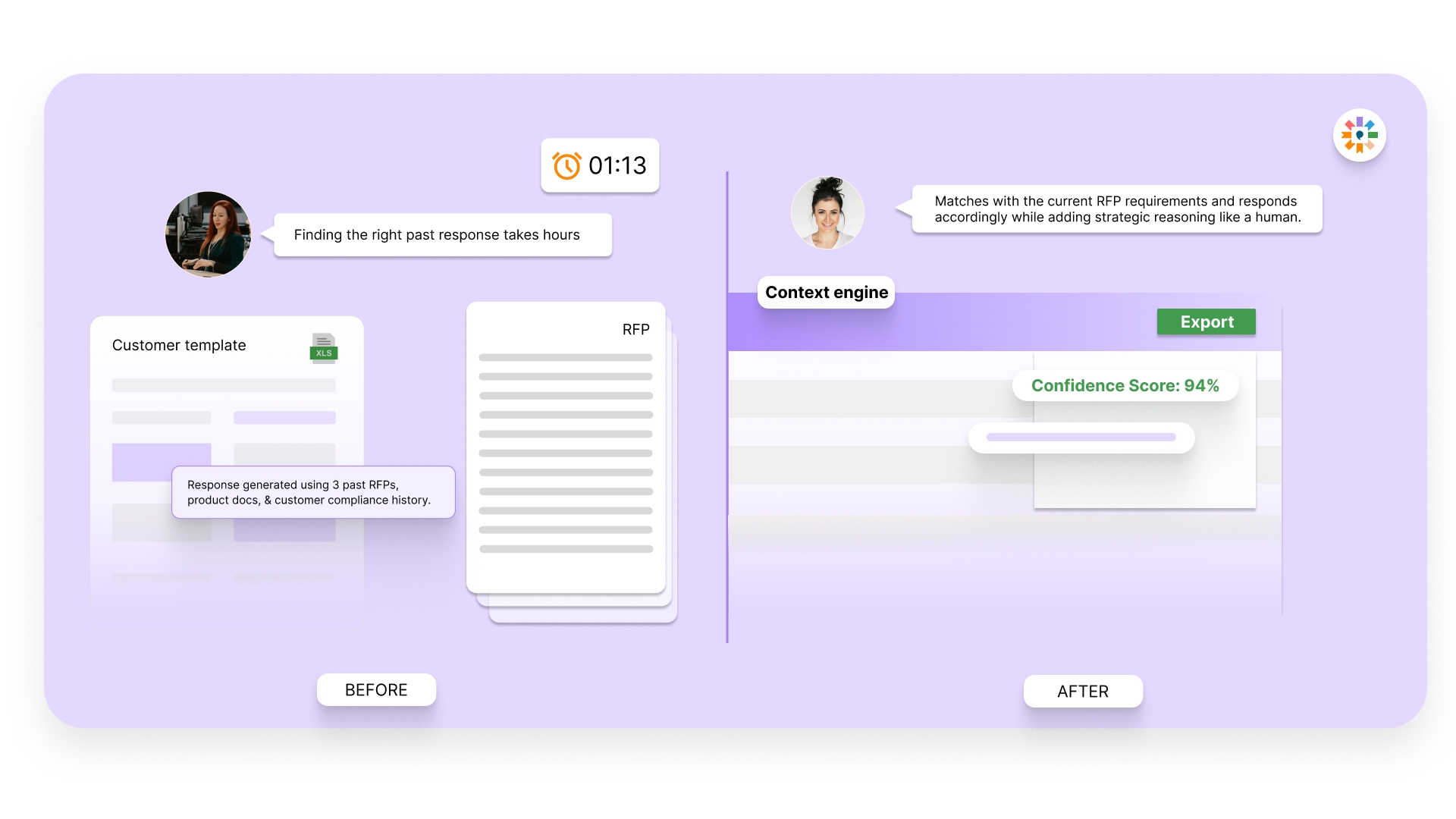
- AI-Powered Responses With Citations And Confidence Scores: Inventive AI generates responses using your approved internal knowledge base, then cites each answer back to its source and assigns a confidence score. Reviewers can verify accuracy quickly, build trust in the output, and eliminate hallucinated content.

- Context-Aware Responses With Full Tone And Style Control: Responses adapt to the specific RFP, customer, and deal context. You can adjust tone, depth, and style instantly to match public, private, or enterprise construction requirements.
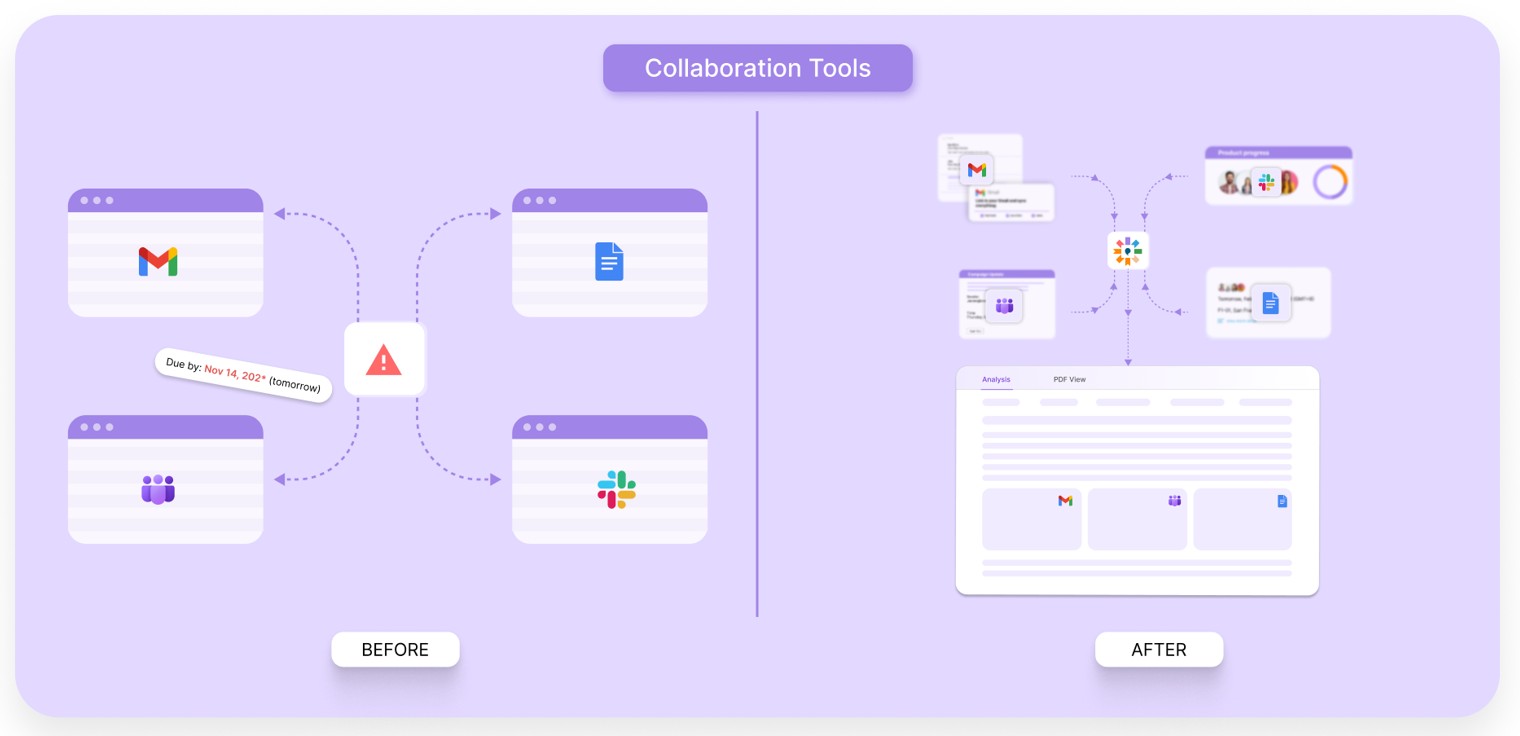
- Collaboration Built For Cross-Functional Proposal Teams: Assign tasks, manage roles, track progress, and collaborate in one workspace. Slack integration, role-based access, and real-time updates keep SMEs, legal, and sales aligned without version sprawl.
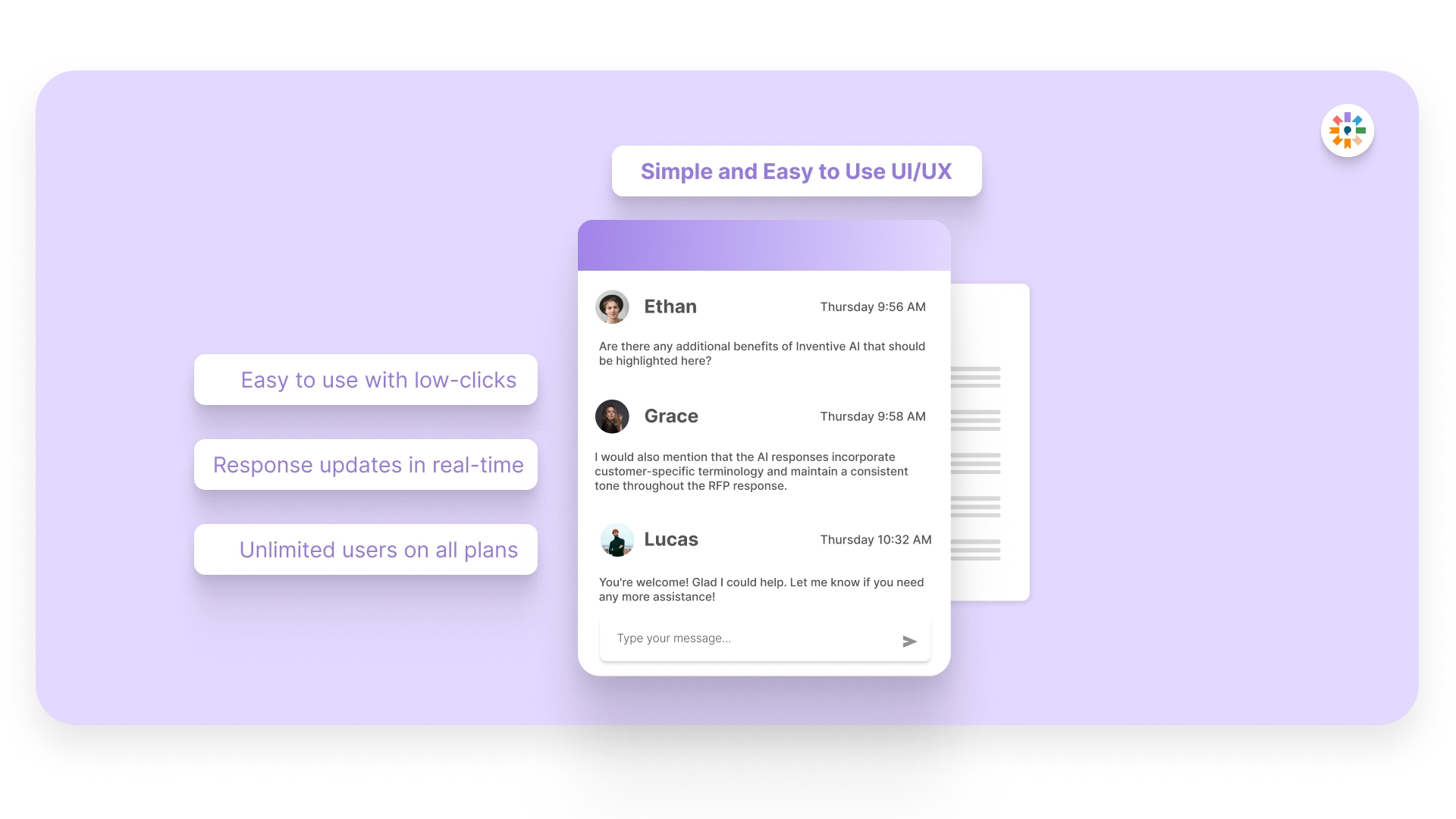
- Simple And Easy-To-Use UI/UX: Minimal onboarding with an interface that proposal teams can use immediately, including users new to AI-based RFP tools.
Inventive AI helps construction teams respond faster, maintain consistency across bids, and submit review-ready proposals even as RFP volume increases, without adding headcount or compromising accuracy.
FAQs About Construction RFPs
1. How Long Does A Typical Construction RFP Process Take?
Timelines vary by project size and sector, but most construction RFP processes run from four to twelve weeks. This includes issuance, bidder questions, proposal preparation, evaluation, interviews, and final award. Public projects often take longer due to mandatory review and approval steps.
2. Who Usually Writes Construction RFPs On The Owner Side?
Construction RFPs are often drafted by a combination of owners, consultants, architects, engineers, and procurement teams. In complex projects, third-party consultants or construction advisors play a major role in defining scope, evaluation criteria, and contract terms.
3. Can Contractors Ask Questions During A Construction RFP?
Yes. Most RFPs include a formal clarification period where contractors can submit questions. Responses are typically shared with all bidders through addenda. The quality of questions asked can also signal preparation and understanding to the owner.
4. How Much Detail Is Too Much In A Construction RFP Response?
Overly long responses can hurt review-ability. Owners generally prefer clear, scoped answers that address the question directly rather than exhaustive descriptions. Details should be increased only where the evaluation criteria assign greater weight.
5. Do Owners Reuse Construction RFPs Across Projects?
Many owners reuse RFP templates, especially for similar project types. However, project-specific constraints, schedules, and risk factors usually change. Contractors should not assume reused RFP language reflects identical evaluation priorities from one project to the next.



.avif)