
DAS RFP Template: Proven Guide to Plan Antenna System Deployments

Getting the details right in a Distributed Antenna System (DAS) RFP is not straightforward. Coverage targets, building layouts, carrier participation, and infrastructure constraints must all be documented so vendors can design the RF architecture accurately.
In practice, many organizations rely on generic procurement templates or recycled RFP language. These boilerplate documents rarely capture the technical inputs required for DAS planning, such as coverage zones, fiber infrastructure availability, or equipment room capacity.
When those details are missing, vendors must fill the gaps with assumptions. This guide provides a structured DAS RFP template for buyers, a vendor proposal response template, and deployment-specific proposal templates for common DAS installation scenarios.
DAS RFP Template to Organize Project Requirements (for Buyers)
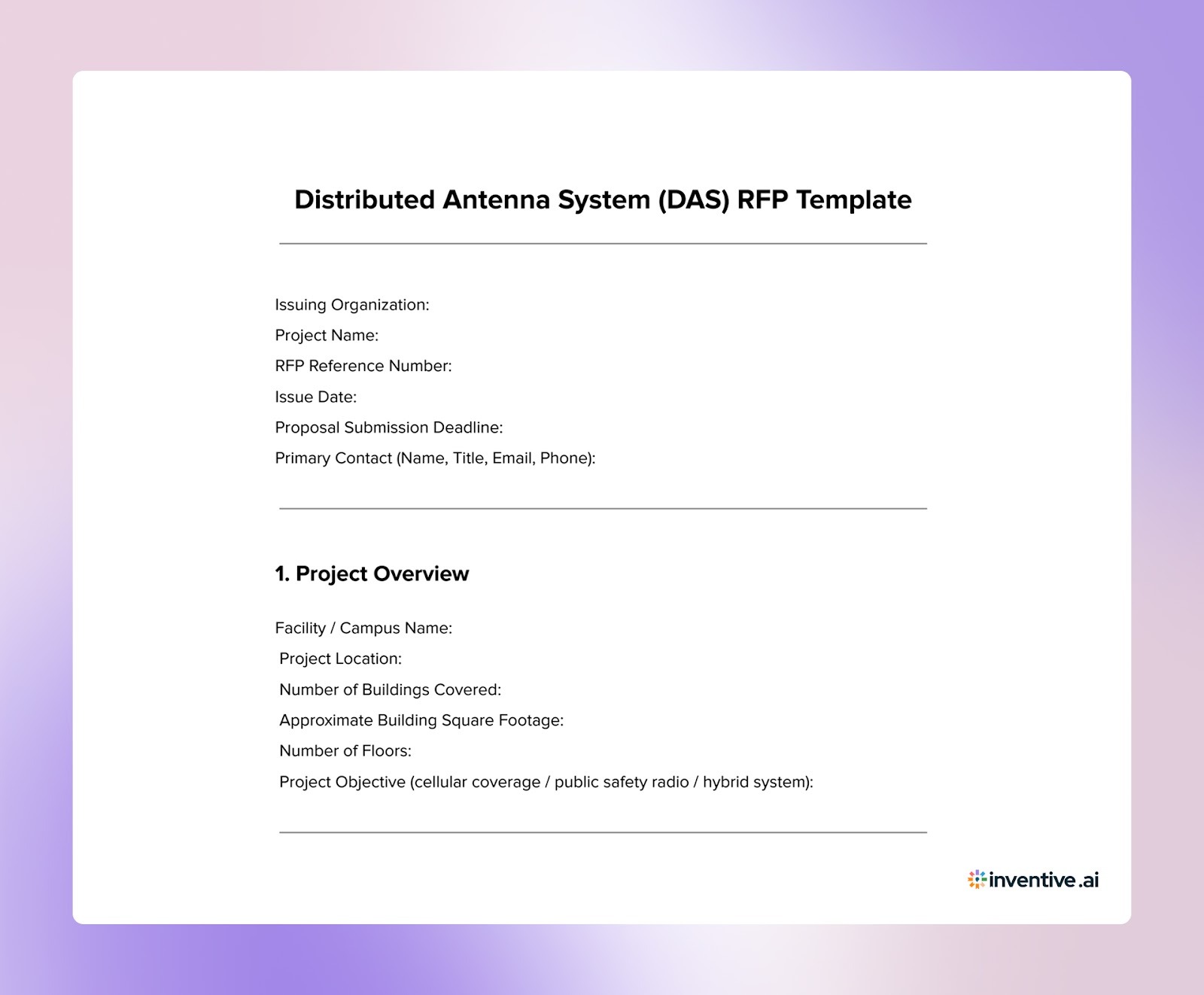

Issuing a DAS RFP typically requires coordination across multiple stakeholders. Facilities teams provide building documentation, IT teams define connectivity needs, and compliance teams confirm regulatory or public safety requirements.
Once this information is consolidated, it can be translated into structured RFP sections. Some elements remain standard across DAS projects, while others must be customized based on building type, industry regulations, and deployment scale.
Below are the major components typically included in a Distributed Antenna System RFP.
- Project Overview: Facility description, coverage objectives, and the buildings included in the DAS deployment.
- Facility and Infrastructure Details: Building size, number of floors, construction materials, and available telecom infrastructure.
- RF Coverage Requirements: Target coverage levels, reliability thresholds, and critical areas requiring guaranteed signal strength.
- Carrier and Frequency Requirements: Supported cellular carriers, radio frequency bands, and compatibility with public safety radio systems.
- System Architecture Requirements: Headend equipment, donor antennas, amplifiers, and antenna distribution layout expectations.
- Cabling and Infrastructure Requirements: Fiber optic backbone, structured cabling standards, and antenna placement constraints.
- Installation Scope: Site surveys, RF design, equipment installation, configuration, and commissioning responsibilities.
- Compliance and Certification Requirements: FCC regulations, fire code compliance, public safety radio standards, and industry certifications.
- Testing and Commissioning Requirements: Functional testing, coverage validation, and acceptance testing procedures.
- Project Timeline and Milestones: Proposal deadlines, design approval stages, installation schedule, and project completion targets.
- Pricing Structure: Equipment costs, engineering services, installation costs, and maintenance options.
- Proposal Submission Instructions: Required documentation, proposal format, and submission process.
If you are responding to a DAS RFP, structure your proposal using the sections below so buyers can evaluate responses consistently.
DAS Proposal Template: Structure Proposals That Match the DAS RFP (for Vendors)
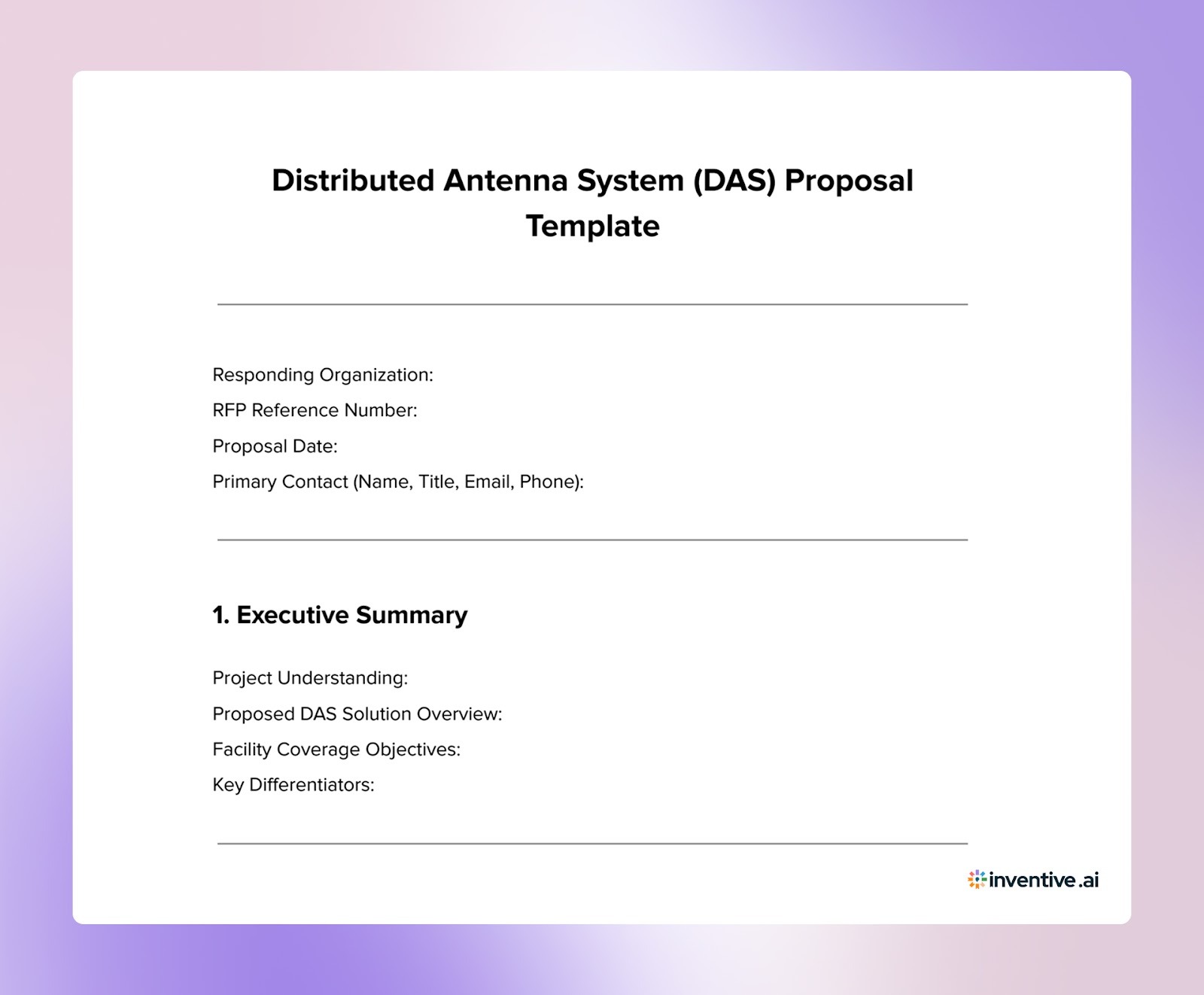

Generic proposal formats rarely succeed in this stage. The proposal structure below helps vendors present their engineering approach, deployment plan, and project management framework, enabling evaluators to assess system design readiness and execution capability.
1. Executive Summary
The executive summary introduces the proposed DAS solution and confirms the vendor’s understanding of the facility and coverage objectives. Procurement teams often review this section first to determine whether the proposal aligns with the project goals.
Example: “Our team will design and deploy a Distributed Antenna System across the medical campus to improve indoor cellular coverage for major carriers while supporting public safety radio communication requirements.”
2. Company Background and Relevant Experience
Buyers evaluate vendor experience to determine whether the contractor has completed similar DAS deployments. Projects involving large facilities or public safety systems require demonstrated RF engineering and telecom integration expertise.
Include:
- Company background and specialization in telecom infrastructure
- RF engineering or wireless system experience
- Previous DAS deployments for similar facilities
- Relevant certifications or industry partnerships
Example: “Our firm has completed DAS deployments across hospitals, airports, and university campuses exceeding 500,000 square feet of coverage.”
3. RF Design and Coverage Planning
Buyers use this section to evaluate how the vendor plans to design the system architecture and ensure signal coverage throughout the facility. RF modeling and coverage planning are critical to determining antenna placement and equipment requirements.
Include:
- Site survey methodology
- RF coverage modeling approach
- Antenna placement strategy
- Supported frequency bands and carriers
Example: “The design process begins with a site survey and RF signal analysis. Coverage modeling software will be used to determine antenna placement across all building floors.”
4. System Architecture and Equipment Plan
This section describes the technical architecture of the Distributed Antenna System, including the equipment used to distribute cellular signals across the building.
Include:
- Headend equipment configuration
- Amplifiers or base station interfaces
- Antenna distribution system design
- Fiber and coaxial infrastructure
Example: “The proposed DAS architecture includes a centralized headend connected to distributed remote units and indoor antennas through a fiber backbone.”
5. Installation and Deployment Methodology
Buyers evaluate how the vendor plans to install equipment and integrate the DAS infrastructure with the building’s existing systems. Installation planning must account for building access, construction constraints, and coordination with facility operations.
Include:
- Cabling and antenna installation approach
- Coordination with facility management
- Equipment room preparation
- System integration procedures
Example: “Installation will begin with cabling infrastructure, followed by antenna mounting across each coverage zone. Equipment integration will be coordinated with facility IT teams.”
6. Testing and Commissioning Plan
System testing confirms that the DAS deployment meets the coverage requirements specified in the RFP. Buyers evaluate this section to understand how vendors validate system performance before project completion.
Include:
- Signal coverage testing procedures
- Acceptance testing process
- System commissioning steps
- Documentation of test results
Example “Post-installation coverage testing will be conducted across all floors to verify signal strength and carrier connectivity.”
7. Project Timeline
The timeline outlines how the vendor plans to complete the DAS deployment from design through commissioning. Buyers evaluate this section to confirm whether the vendor can meet the project schedule.
Include:
- Design and engineering phase
- Installation timeline
- Testing and commissioning schedule
- Total project duration
Example: “The project will begin with a four-week design phase followed by installation and system commissioning.”
8. Pricing Breakdown
Buyers rely on structured pricing to compare vendor proposals consistently. Vendors should present a clear cost breakdown covering engineering services, equipment, installation, and testing.
Include:
- RF engineering and design costs
- Equipment and materials
- Installation labor
- Testing and commissioning
- Total project cost
Example:
- Engineering and Design: $45,000
- Equipment and Materials: $220,000
- Installation Labor: $95,000
- Testing and Commissioning: $15,000
- Total Project Cost: $375,000
Inventive AI Lets You Replace Manual DAS Proposal Assembly with Structured AI Drafts
Many teams still build DAS responses manually using past proposals, shared documents, and fragmented content libraries. This approach slows response cycles and increases the risk of inconsistencies across sections.
Inventive AI helps vendors generate structured DAS RFP responses by analyzing the full RFP and producing context-aware answers aligned with the project requirements. Teams create accurate drafts faster while keeping technical, operational, and pricing sections consistent.
Context Engine
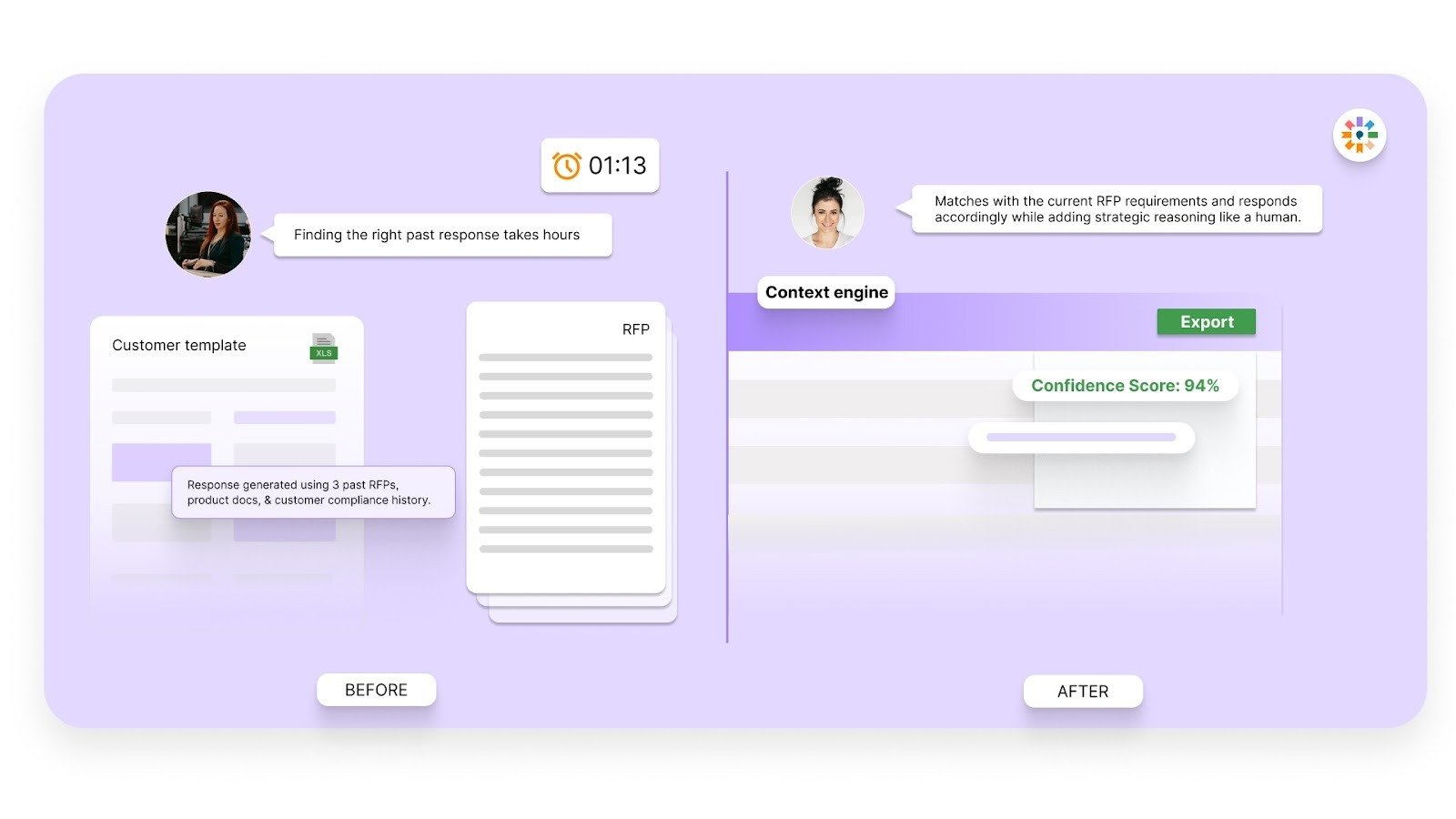
Most proposal tools rely on keyword retrieval that produces generic answers. Inventive AI’s Context Engine analyzes the entire RFP, including system architecture requirements, infrastructure constraints, and deployment scope.
This allows the platform to generate responses that align with the buyer’s DAS requirements rather than inserting generic telecom descriptions.
Conflict Detection
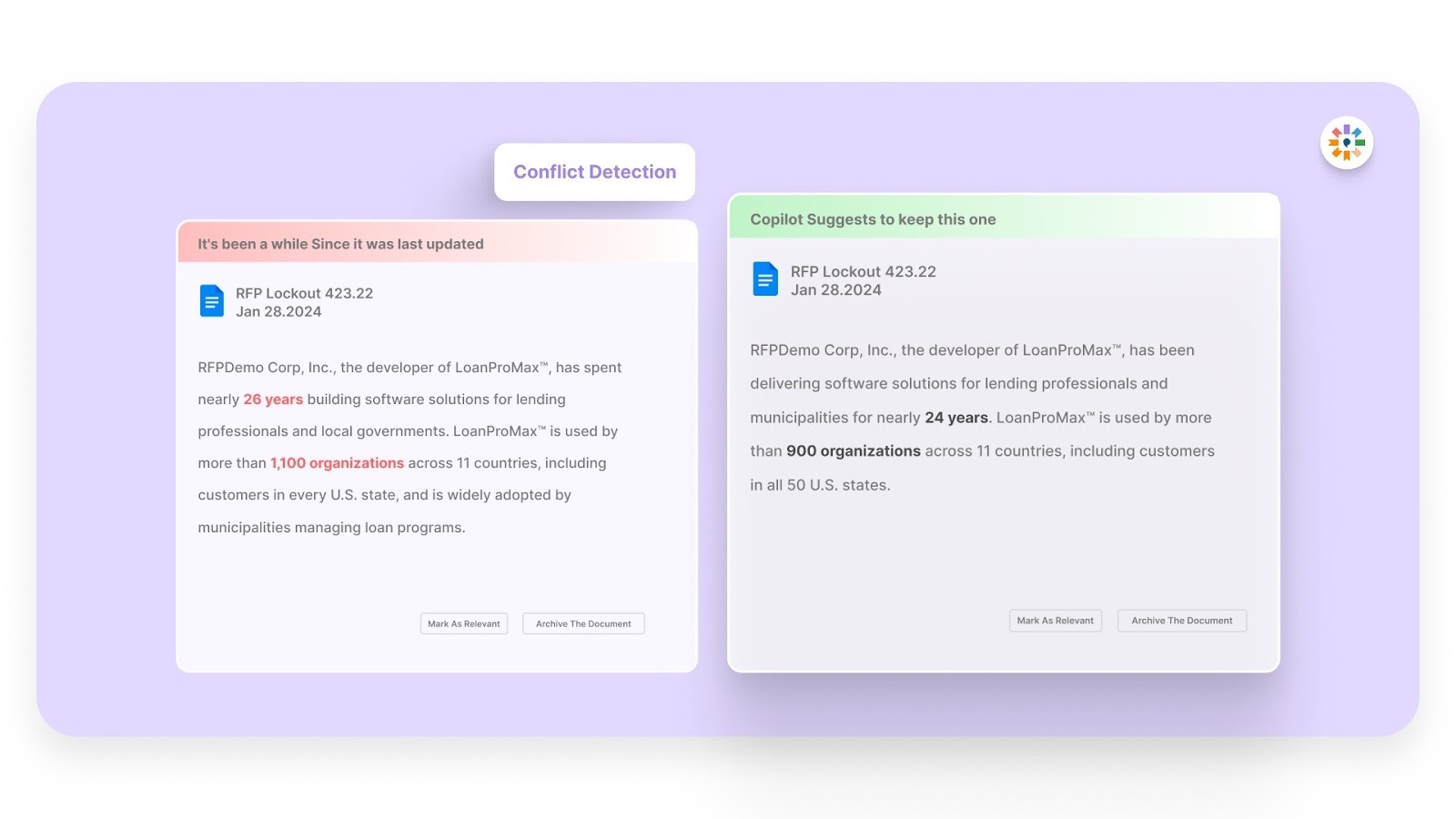
DAS proposals often contain overlapping sections such as RF design explanations, equipment architecture, deployment timelines, and pricing details. Manual responses can introduce contradictions across these sections.
Inventive AI automatically identifies conflicting statements before submission, helping vendors maintain consistency throughout the proposal.
Outdated Content Detection
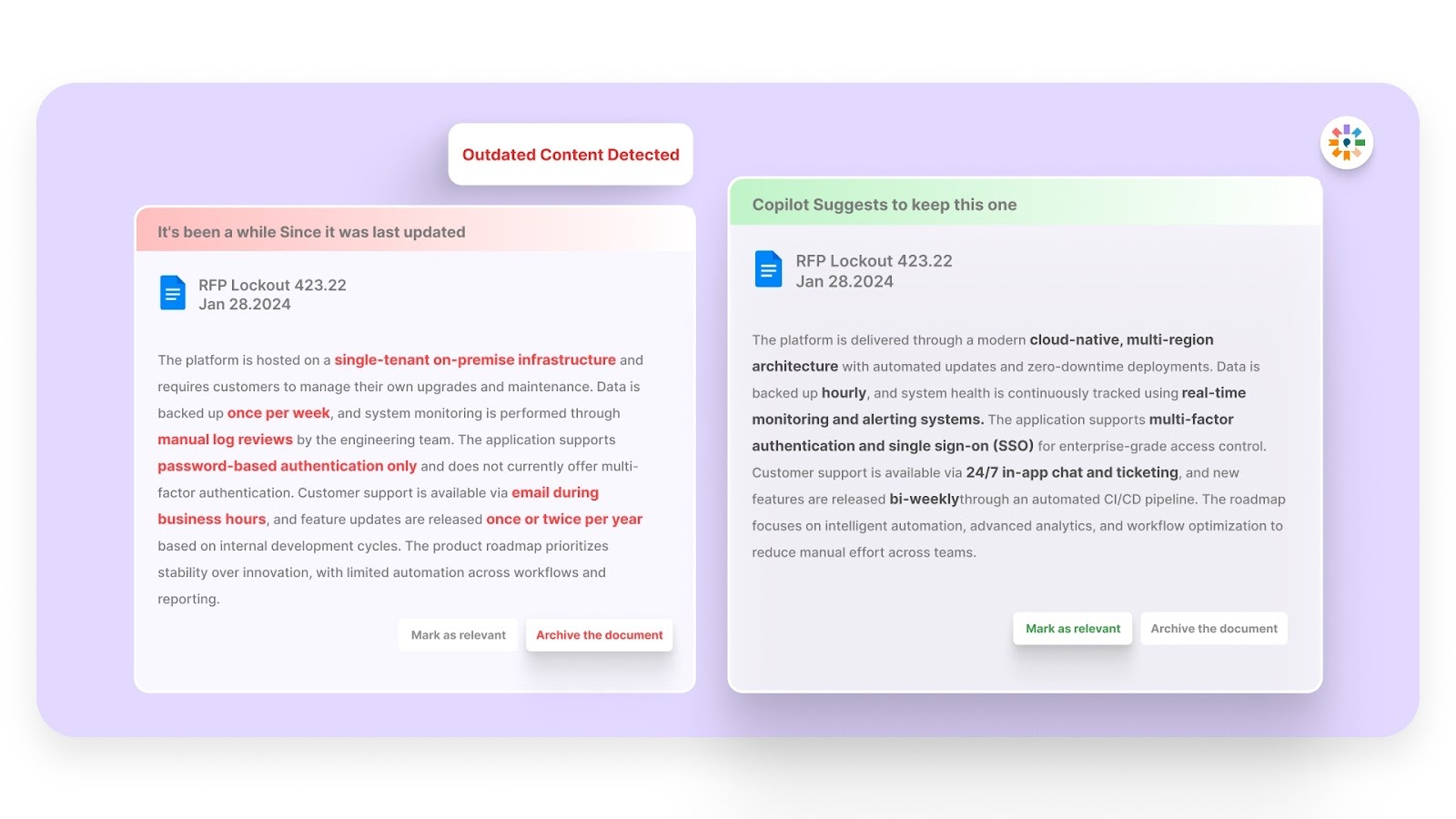
Proposal libraries frequently contain outdated equipment specifications, legacy network architectures, or previous project documentation.
Inventive AI detects stale content before it appears in the response, ensuring vendors submit proposals that reflect current capabilities and infrastructure standards.
2X Higher Quality Responses
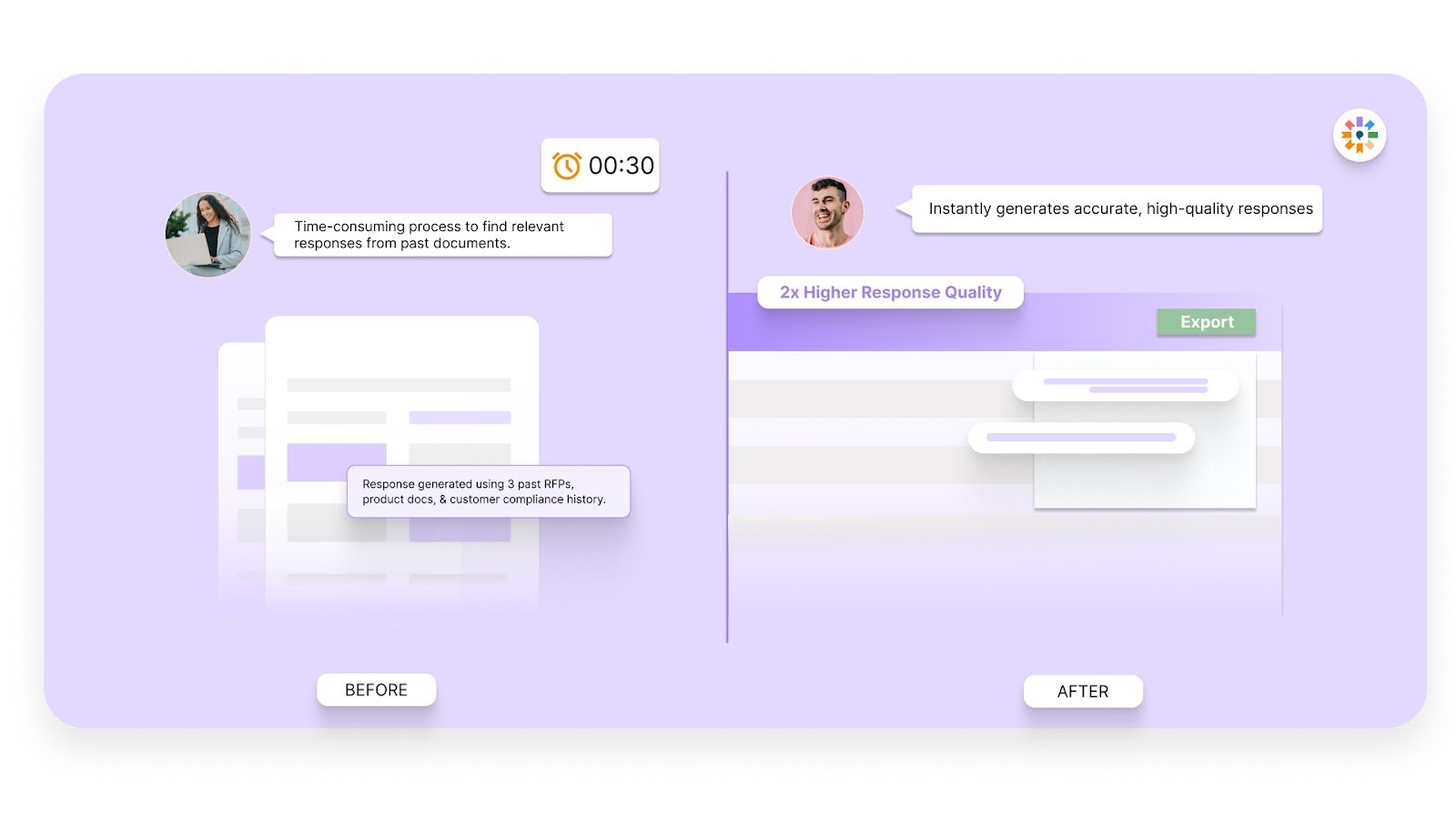
Inventive AI’s multi-agent system analyzes the RFP requirements and generates responses with greater clarity and completeness. Answers address system design, deployment planning, and infrastructure requirements directly.
This improves proposal quality and strengthens vendor positioning during technical evaluation.
Simple and Easy-to-Use Interface
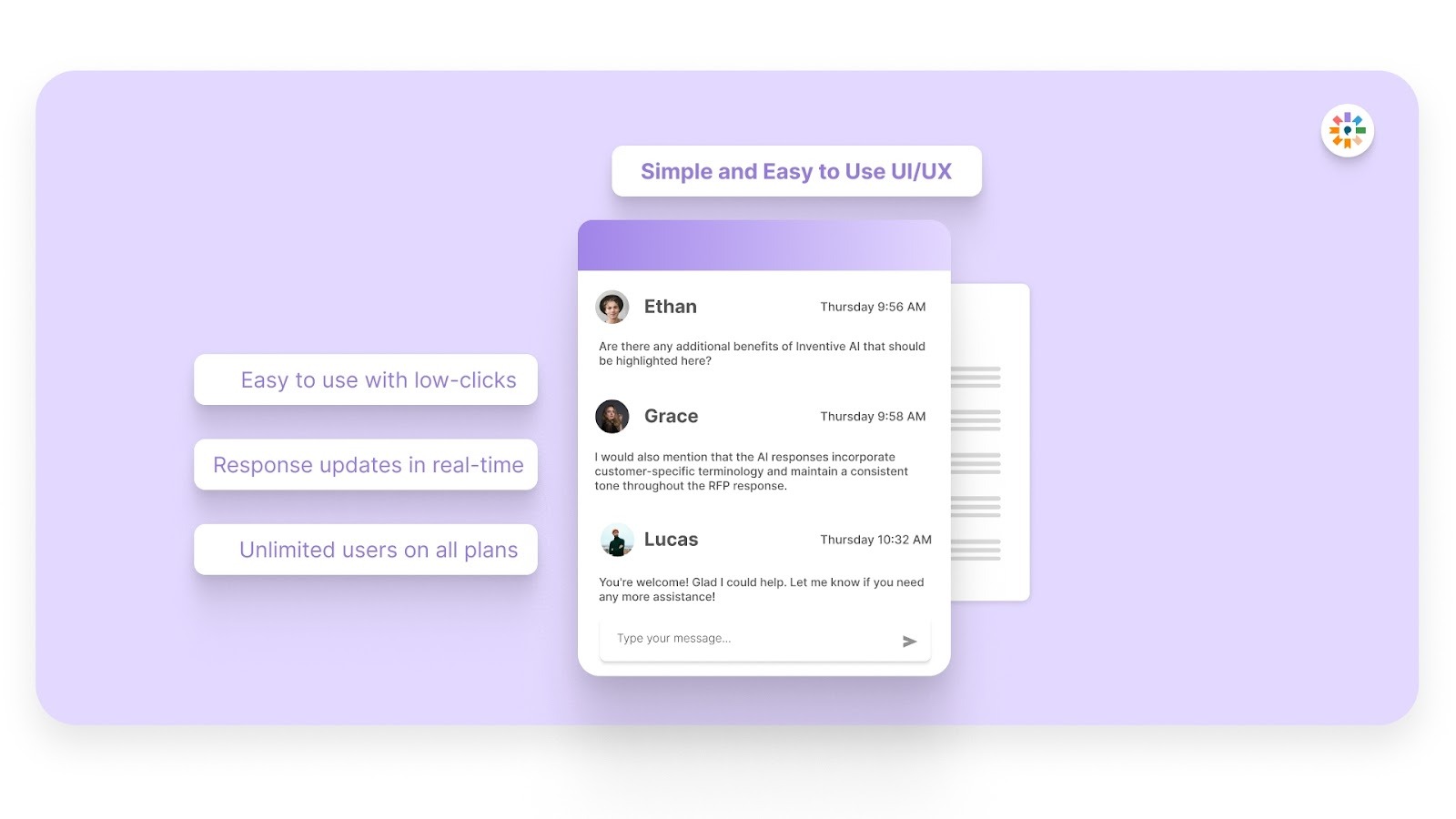
Proposal teams often work under tight deadlines while coordinating across engineering, sales, and project management teams.
Inventive AI provides an intuitive interface that allows teams to generate structured responses quickly without complex setup or workflow friction.
Narrative-Style Proposal Generation
Many DAS RFPs require more than structured responses. Buyers often request executive summaries, system architecture explanations, and deployment methodologies.
Inventive AI generates narrative-style proposals that explain the vendor’s technical approach clearly while aligning with the RFP requirements.
FAQs About DAS RFP Template
1. What factors influence the cost of a DAS deployment?
DAS project costs vary based on building size, construction materials, number of floors, supported carriers, and required signal coverage levels. Infrastructure availability, such as existing fiber pathways, equipment rooms, and power supply, can also significantly affect installation complexity and overall cost.
2. How long does a typical DAS implementation project take?
Project timelines depend on design complexity and facility size. Smaller deployments may take several weeks from design through commissioning, while large campuses, hospitals, or stadiums may require several months to complete RF design, installation, testing, and carrier integration.
3. What role do mobile carriers play in DAS deployments?
In many DAS projects, mobile carriers must approve system integration before service can be activated. Vendors coordinate with carriers during design. This ensures the system supports all required frequency bands and network configurations.
4. What testing methods are used to validate DAS performance?
DAS systems are typically validated through signal strength measurements and coverage testing conducted throughout the facility. These tests confirm that the system meets the target coverage levels defined for both cellular and public safety communications.

90% Faster RFPs. 50% More Wins. Watch a 2-Minute Demo.
.avif)
Mukund Kumar
Understanding that sales leaders struggle to cut through the hype of generic AI, Mukund focuses on connecting enterprises with the specialized RFP automation they actually need at Inventive AI. An IIT Jodhpur graduate with 3+ years in growth marketing, he uses data-driven strategies to help teams discover the solution to their proposal headaches and scale their revenue operations.

Hardi Hindocha
Knowing that complex B2B software often gets lost in jargon, Hardi focuses on translating the technical power of Inventive AI into clear, human stories. As a Sr. Content Writer, she turns intricate RFP workflows into practical guides, believing that the best content educates first and earns trust by helping real buyers solve real problems.