Due Diligence Questionnaire Template for Finance and Banking

In finance and banking, due diligence is your opportunity to prove that your firm is trustworthy, secure, and ready to meet the demands of investors. But let’s face it, completing Due diligence questionnaires (DDQs) can be a difficult and time-consuming task. The questions are often complex, the details overwhelming, and the pressure to get it right is high.
What if you could simplify the process? Imagine cutting down hours of manual work while ensuring your responses are accurate, consistent, and aligned with industry standards. That’s where an effective DDQ template comes in.
Discover, how a well-structured DDQ template can make your life easier, simplify your responses, and help you tackle even the most detailed questions with confidence.
The Complete DDQ Template for Finance & Banking Firms (for Buyers)
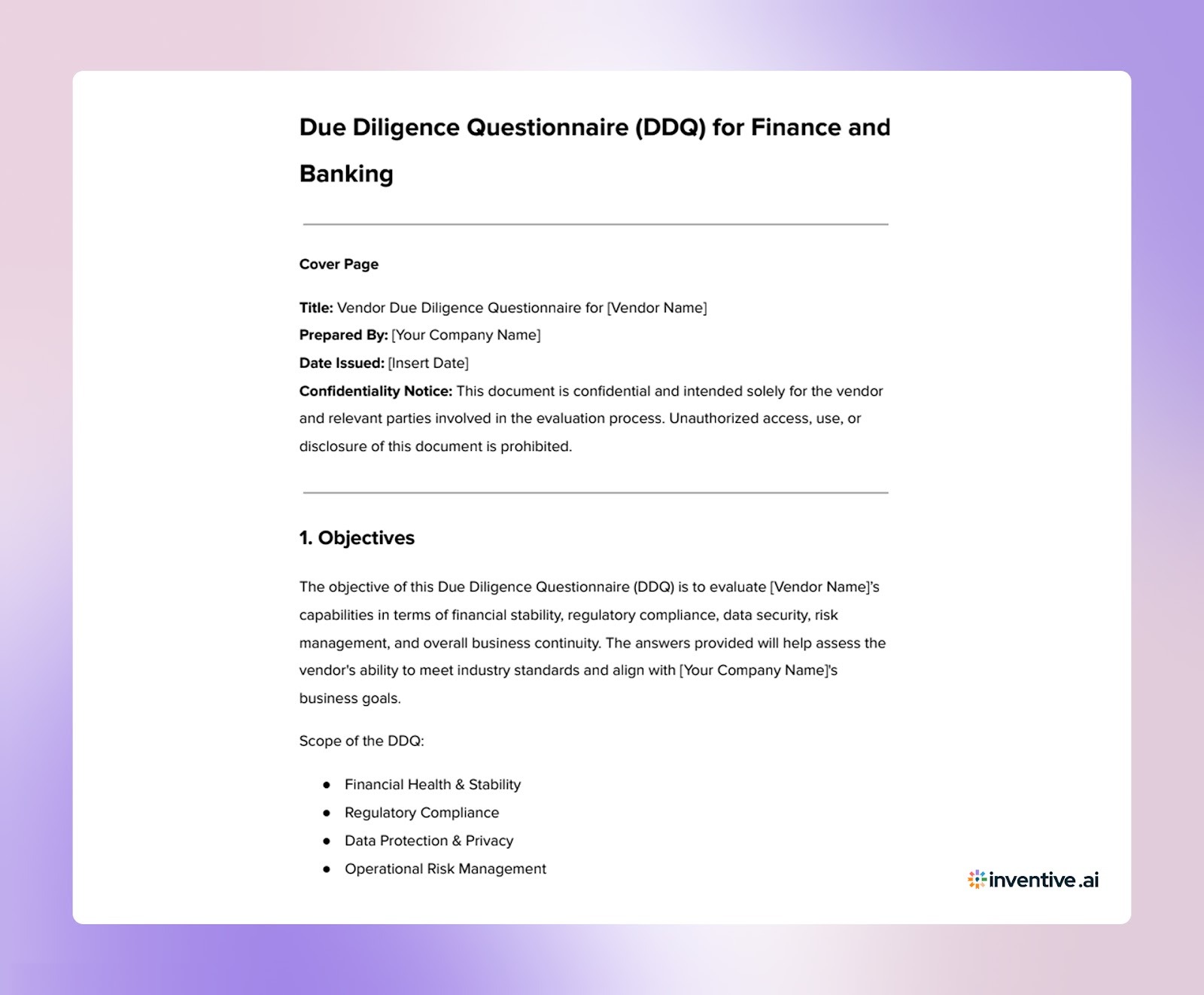

Also Read: How to Develop Effective RFP Win Themes for Proposal Success
A Practical DDQ Response Template for Finance & Banking Firms (for Vendors)
With this template, you won’t have to start from scratch every time a DDQ lands on your desk. Simply edit and customize it to your specific needs, ensuring consistent, accurate, and comprehensive responses each time.
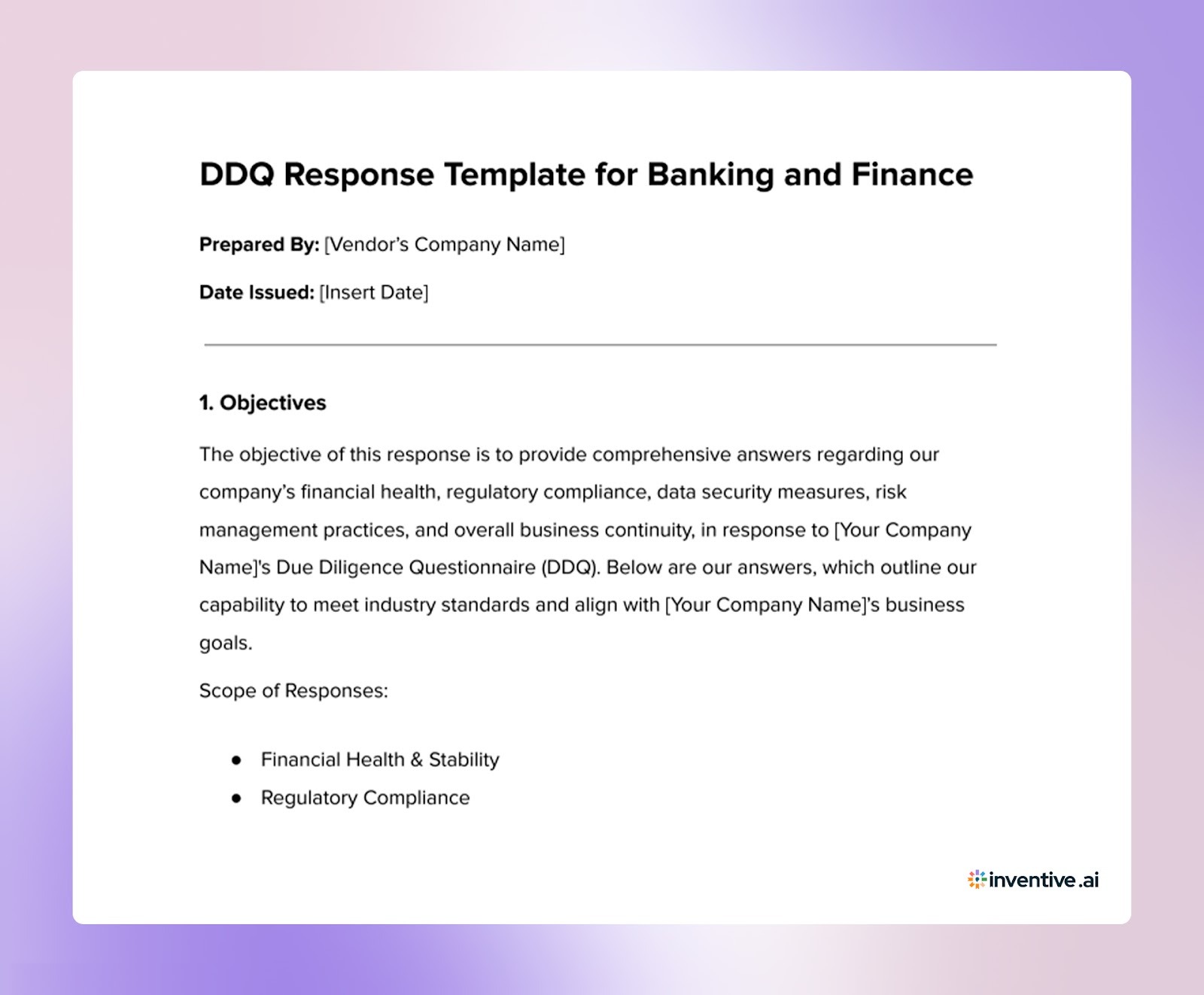

About the DDQ Template for Finance & Banking
It is a comprehensive, easy-to-use framework designed to help you craft clear, structured, and complete responses for investor due diligence. It covers all essential sections required in a DDQ, ensuring your answers are organized, accurate, and meet investor expectations.
What This DDQ Finance Banking Template Includes:
- Structured sections for firm overview, financial health, risk management, compliance, and cybersecurity.
- Pre-built prompts to help you provide detailed, relevant information for each section.
- Clear guidelines for responding to complex questions about operational maturity, regulatory compliance, and financial stability.
Why Use This Template:
- Save time by using a proven structure, allowing you to focus on tailoring your responses to the investor’s needs.
- Ensure consistency across all DDQ submissions, making it easier to manage multiple investor requests.
- Respond with confidence, knowing the template covers all necessary areas of due diligence to meet investor expectations.
By using this DDQ template, you can streamline your due diligence process, reduce errors, and ensure your responses are comprehensive and investor-ready.
DDQ Examples for Finance and Banking
Below are actual due diligence questionnaire examples and templates that illustrate how different organizations structure questions and responses. These examples show common categories used in investor, regulatory, and financial institution due diligence.
1. Financial Institution DDQ (Government Template)
A state treasury DDQ collects structured information on an institution’s history, governance, fiscal status, and internal controls. This type of document includes questions like:
- Describe your organizational structure and fiscal history.
- Provide copies of recent audited financial statements.
- Explain key internal control policies for risk and compliance.
This example helps firms understand the government’s expectations for financial transparency and regulatory compliance.
2. Investment Funds Distributor DDQ
Institutional bodies (such as mutual fund trade associations) provide real DDQ forms for distribution diligence. These ask detailed questions like:
- What investor types do you serve (institutional vs retail)?
- Explain your compliance process for fund policies.
- Provide audit and reconciliation procedures.
This type of DDQ helps assess distribution practices and operational oversight.
3. Broker‑Dealer Due Diligence Questionnaire
County treasurer or broker‑dealer DDQs include sections on compliance, governance, and risk controls. Common requests include:
- Provide documentation on broker‑dealer registration and licensing.
- Describe anti‑fraud and AML controls.
- Share financial reliability records and recent audits.
These examples reflect industry regulatory due diligence requirements for brokers and trading partners.
4. Sample Fixed Income Questionnaire
Government investment programs sometimes issue Excel or Word DDQs asking:
- Provide your succession plan and executive biographies.
- Share the most recent audited financial reports.
- List risk management and liquidity policies.
These illustrate how credit and fixed income risk due diligence questions are framed.
5. ILPA and Institutional Limited Partner DDQs
Leading institutional associations publish open DDQ templates with key sections such as:
- Fund strategy and process overview
- Governance, risk, and compliance standards
- Investment valuation and performance reporting
These templates serve as references for standardized investor DDQs across funds and asset managers.
These DDQ examples highlight the range of questions and areas that investors, regulators, and financial institutions focus on to assess a firm's operations, financial health, and compliance. By understanding and utilizing these examples, you can better prepare your responses to meet industry standards and investor expectations, ensuring a smoother due diligence process.
Effective Tips for Customizing Your DDQ Template for Finance & Banking
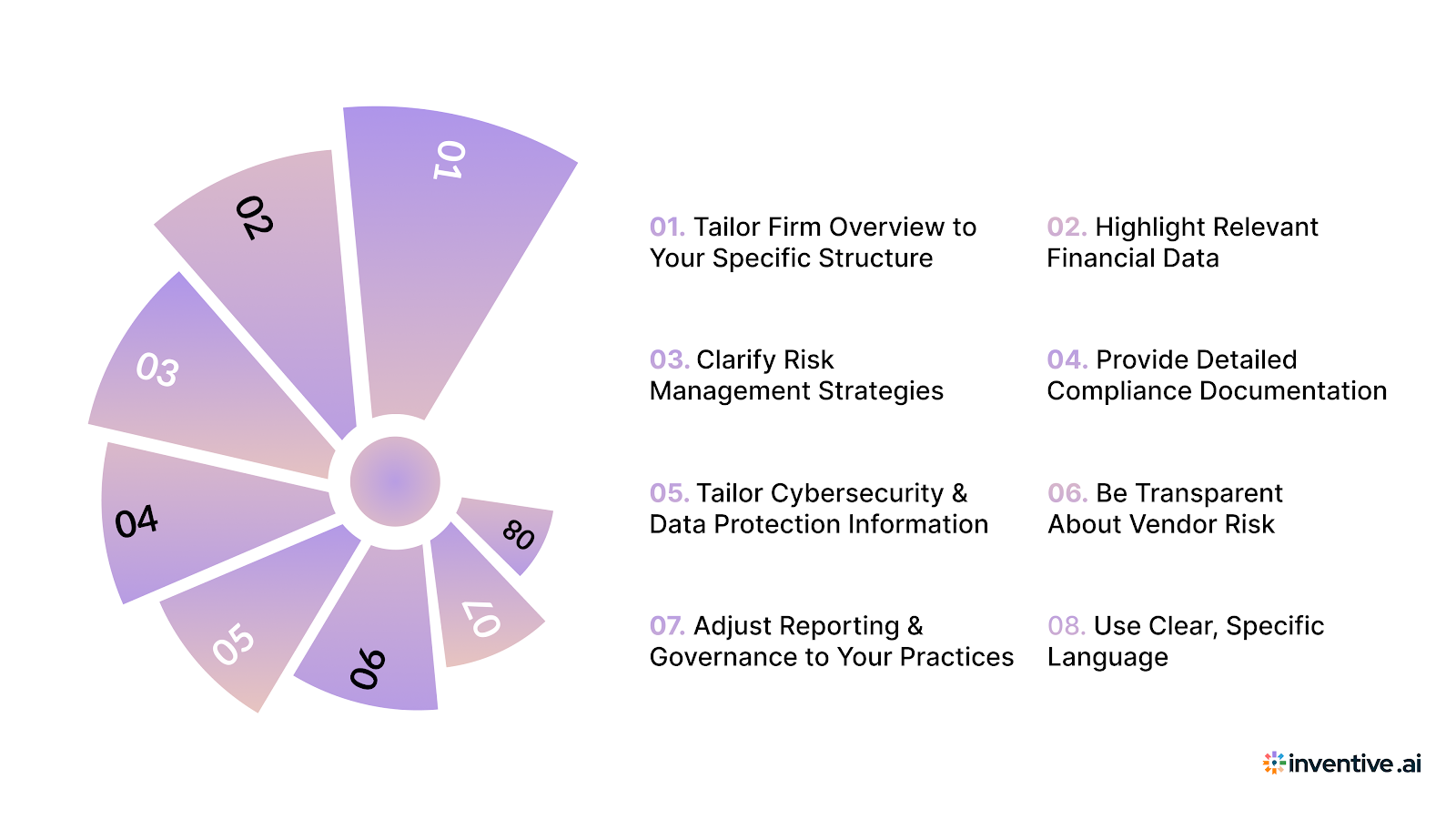
When responding to DDQs, it's important to tailor your answers to reflect your firm’s unique processes, strengths, and practices. Below are simple and practical tips to help you customize the DDQ template effectively for your firm’s needs.
1. Tailor Firm Overview to Your Specific Structure
Adjust the firm overview section to reflect your unique organizational structure. Make sure you provide an accurate description of leadership roles, decision-making processes, and any governance committees relevant to your firm. This helps investors understand your internal operations better.
2. Highlight Relevant Financial Data
When filling in financial health information, always use the most recent financial statements. Provide specific data like cash flow, profit margins, and audited statements that are relevant to the investor's inquiry. Make sure the numbers reflect your firm's financial stability and growth trajectory.
3. Clarify Risk Management Strategies
Customize the risk management section by explaining the exact processes you have in place to handle operational, financial, and market risks. This includes cybersecurity measures, compliance strategies, and contingency plans. Specific examples will make your risk mitigation efforts stand out.
4. Provide Detailed Compliance Documentation
When addressing compliance requirements, ensure that you detail the certifications, regulatory frameworks, and audits your firm adheres to. If applicable, link to the latest compliance reports or audit results, especially regarding industry regulations like GDPR or FISMA.
5. Tailor Cybersecurity & Data Protection Information
Adjust the cybersecurity and data protection sections to reflect the unique security measures your firm uses. Detail encryption methods, data access controls, and how you ensure the safety of sensitive client and financial data. This assures investors that your firm meets top industry security standards.
6. Be Transparent About Vendor Risk
In the third-party risk section, customize the details based on the vendors and partners you work with. Describe your vendor selection process, how you monitor their compliance, and ensure their security measures align with your firm’s standards. Be transparent about any third-party risks to build trust.
7. Adjust Reporting & Governance to Your Practices
Make sure the governance and reporting sections reflect your firm’s actual practices. Whether it’s internal audits, board oversight, or shareholder communication, ensure the response clearly demonstrates your firm’s commitment to governance best practices.
8. Use Clear, Specific Language
Avoid vague language when customizing the template. Provide clear, specific examples where possible, such as outlining your risk management frameworks, cybersecurity certifications, or operational processes. Specifics build investor confidence and highlight your transparency.
By following these customization tips, you can ensure that your DDQ response is tailored to your firm's unique strengths, making it easier for investors to evaluate your transparency, compliance, and operational maturity.
What Does the Due Diligence Process Look Like?
The due diligence process in finance and banking is a critical evaluation that occurs before forming business relationships or finalizing transactions. It allows companies to assess the financial, operational, regulatory, and security risks associated with potential vendors or investments. The process typically involves multiple stages to ensure that all necessary factors are reviewed thoroughly.
Here’s what the due diligence process generally looks like:
The due diligence process is extensive but necessary for making informed decisions in finance and banking. Each stage is designed to identify potential risks, ensure compliance, and assess the financial stability of the target company.
For vendors responding to due diligence questionnaires, it’s crucial to be thorough in your responses to demonstrate your business’s security, compliance, and overall readiness.
Do’s and Don’ts of Responding to Due Diligence Questionnaires
To make sure your responses are thorough, accurate, and well-received, it’s important to follow a structured approach. Below, we outline the dos and don’ts of responding to a due diligence questionnaire to help you navigate this process effectively.
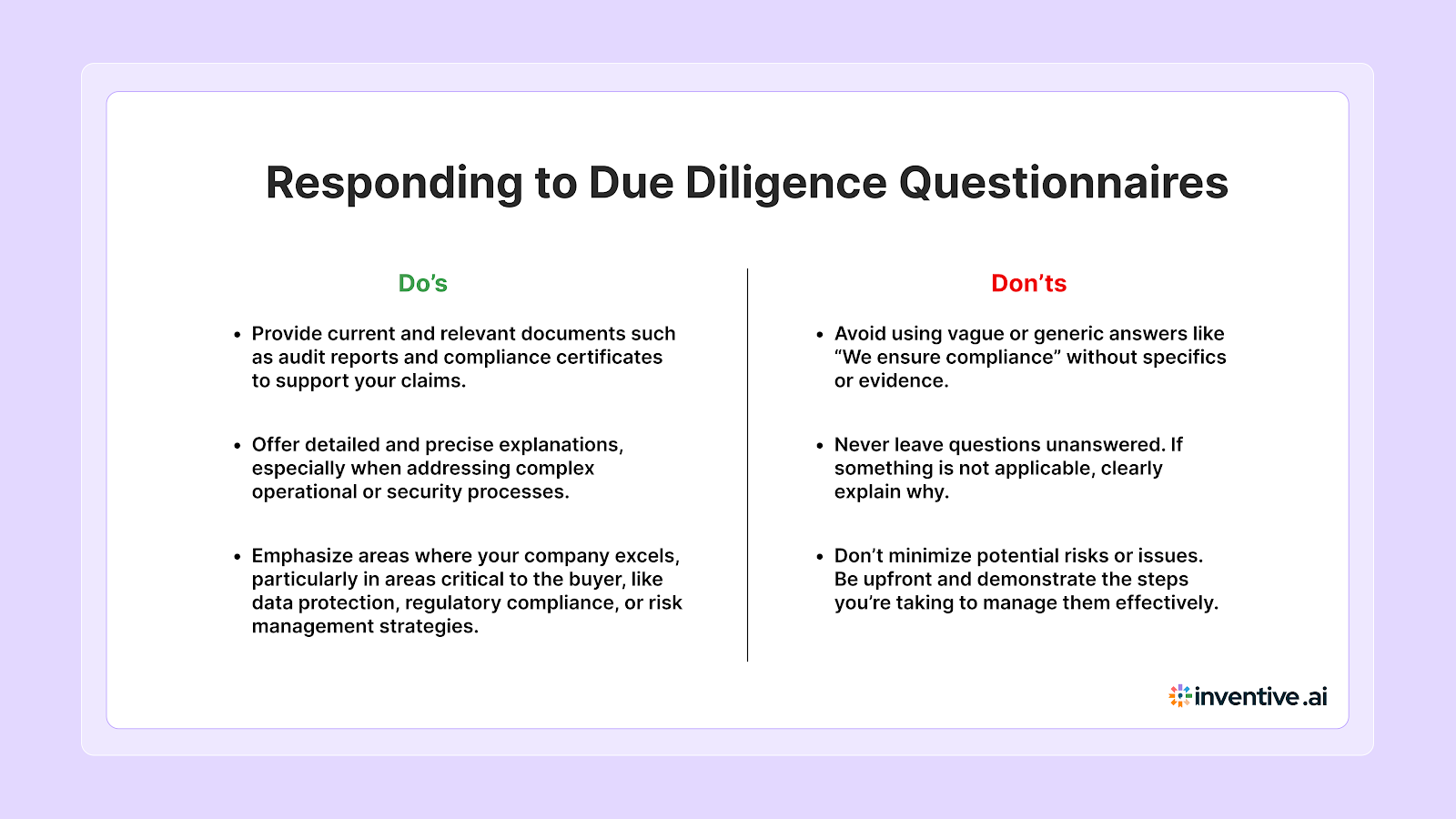
This approach helps present your company as trustworthy and diligent, which can enhance your credibility and improve your chances of forming successful partnerships.
Also Read: AI for Enterprise Deals: Top 8 AI Tools, Use Cases, and Proven ROI
Why Inventive AI is the Ultimate Tool for Responding to Due Diligence Questionnaires
Responding to Due Diligence Questionnaires (DDQs) can be time-consuming and complex. As a vendor, you need a tool that speeds up the process while ensuring accuracy. Here’s why Inventive AI is the best solution for your DDQ responses:
1. 2x Higher Quality Responses
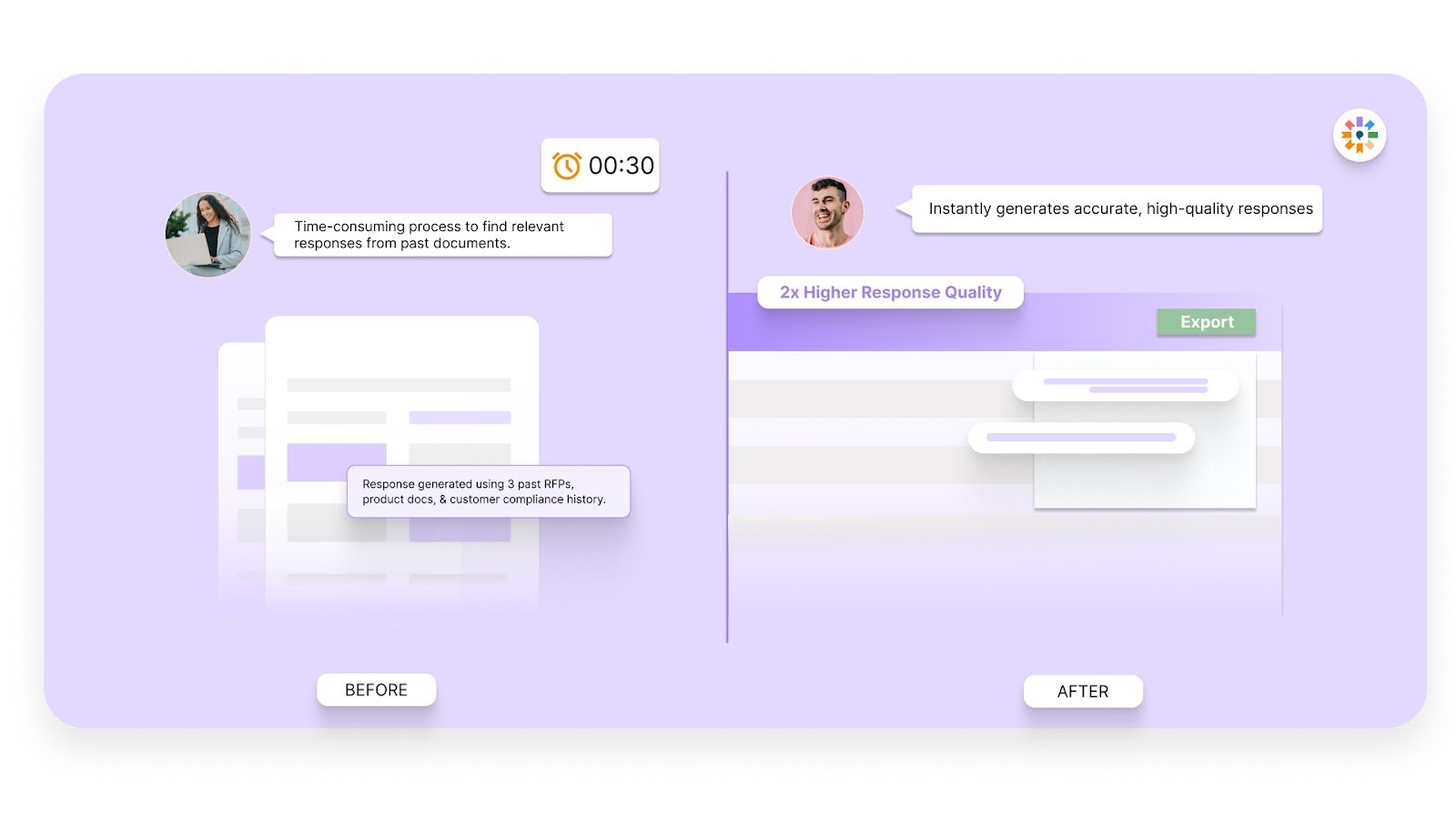
Inventive AI ensures your responses are not only faster but also 2x more accurate. By using advanced AI trained on industry standards and past responses, it guarantees your answers are reliable and consistent, giving you confidence in every submission.
2. Context Engine
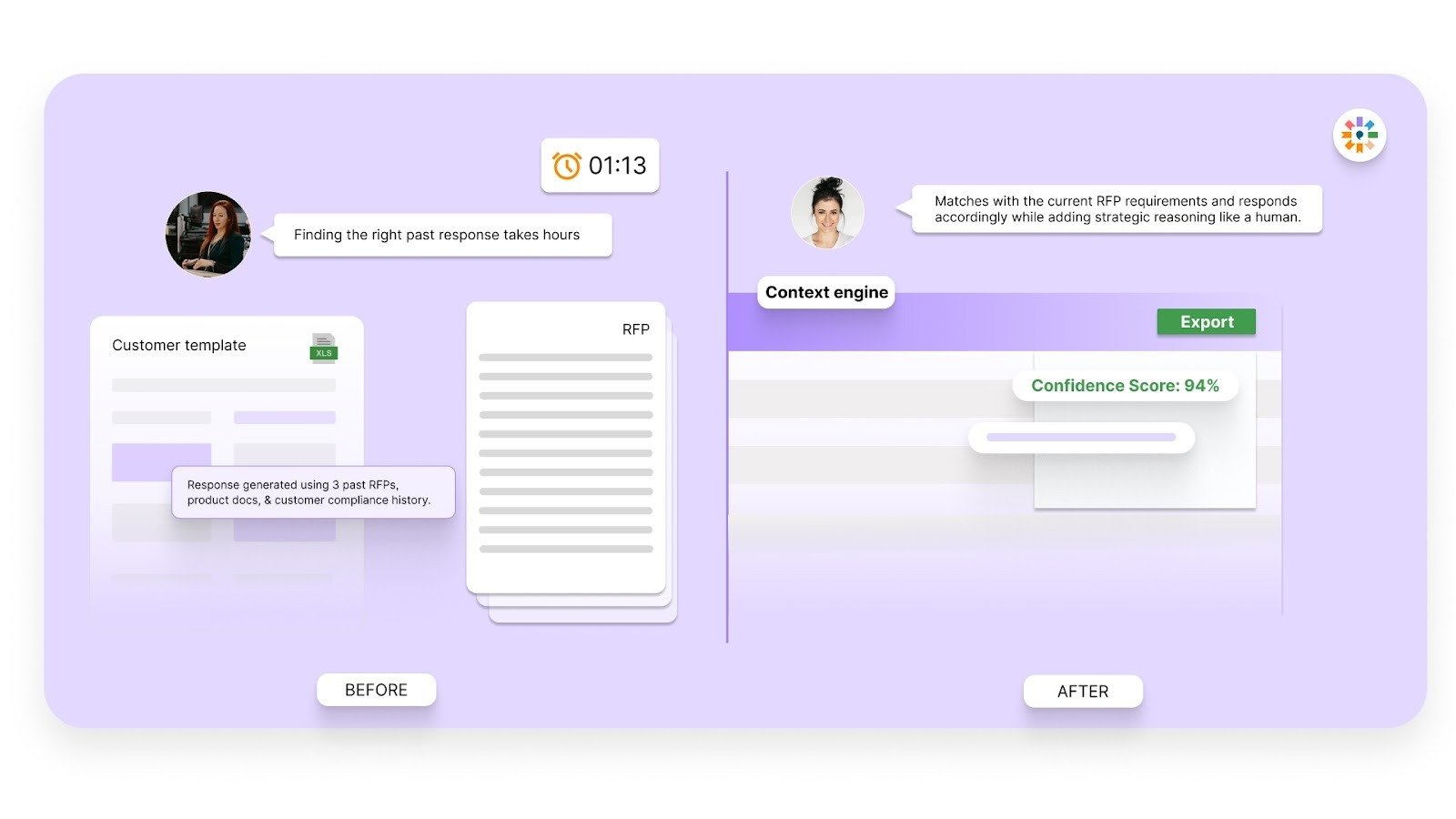
With Inventive AI's Context Engine, you get tailored responses specific to your firm. It customizes answers for each section of the DDQ, ensuring relevance and alignment with your business. No more generic answers — just the right information, every time.
3. Conflict Detection
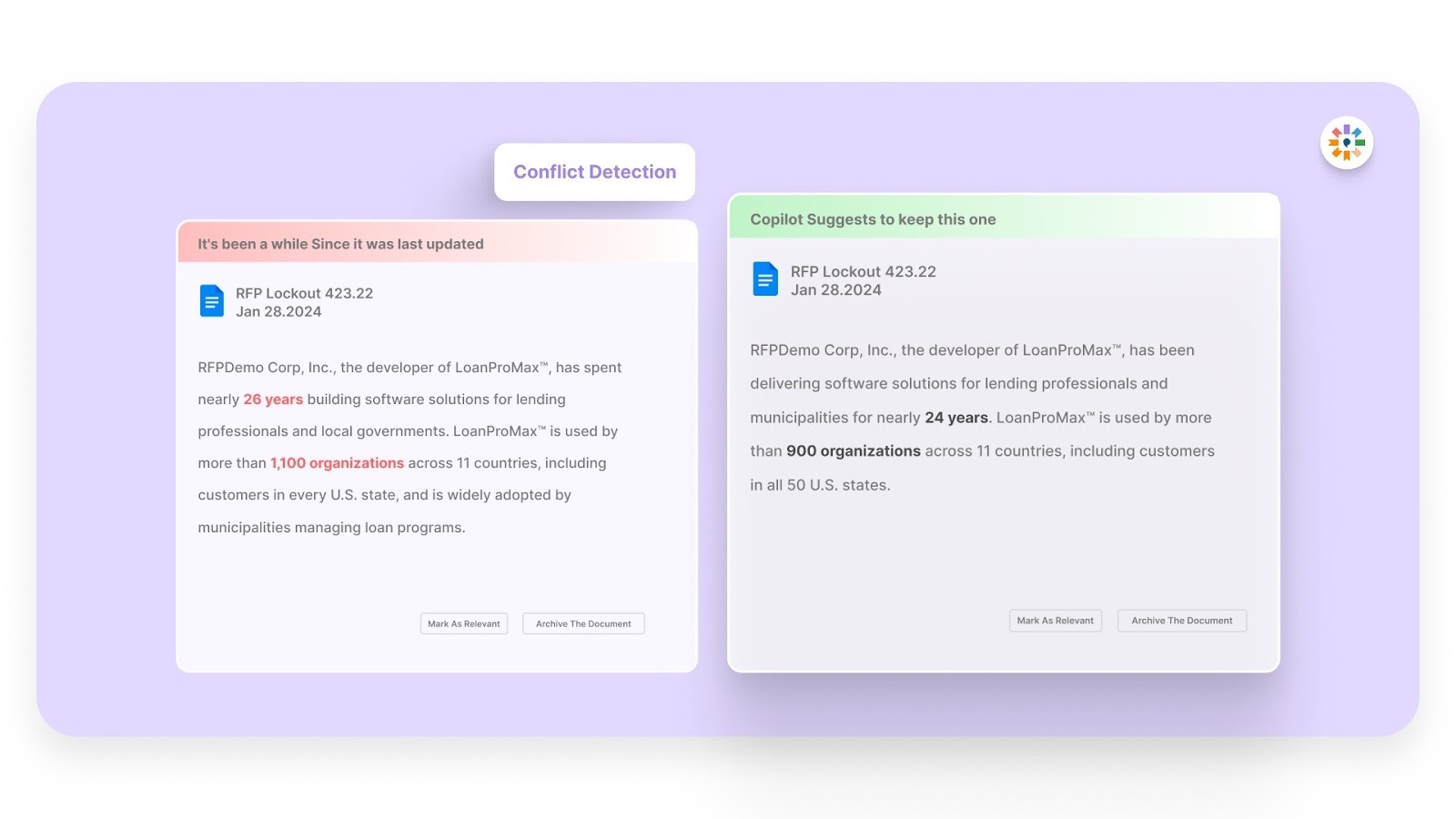
Inconsistencies in your DDQ responses can hurt your credibility. Inventive AI automatically detects conflicts between different sections, helping you fix any issues before submission. This ensures your responses are cohesive and error-free.
4. Outdated Content Detection
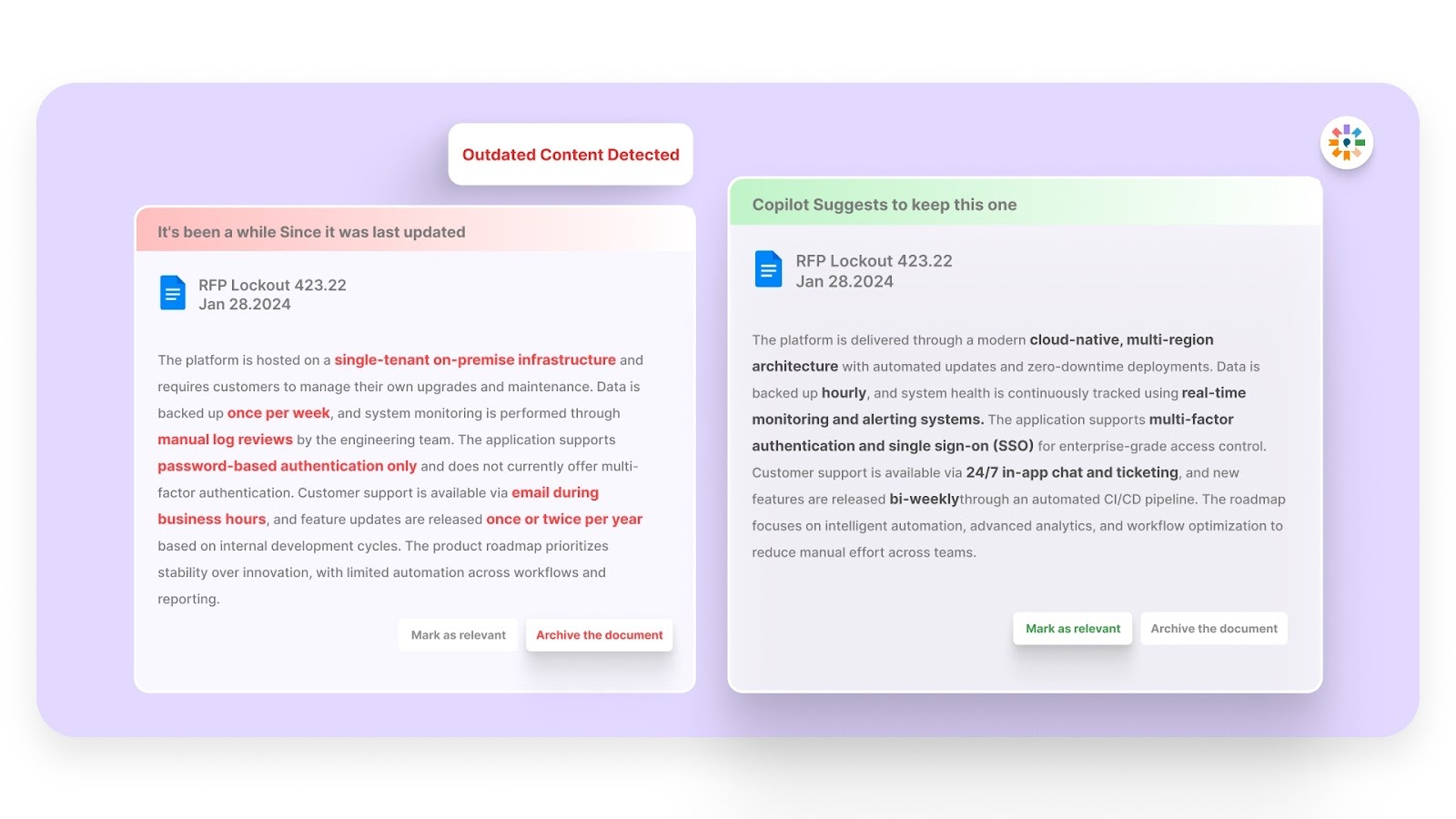
Keep your DDQ responses current and accurate with Inventive AI’s Outdated Content Detection. The AI checks your answers for outdated information and ensures everything aligns with the latest regulations and standards, saving you from submitting incorrect or irrelevant data.
5. Simple, Easy-to-Use Interface
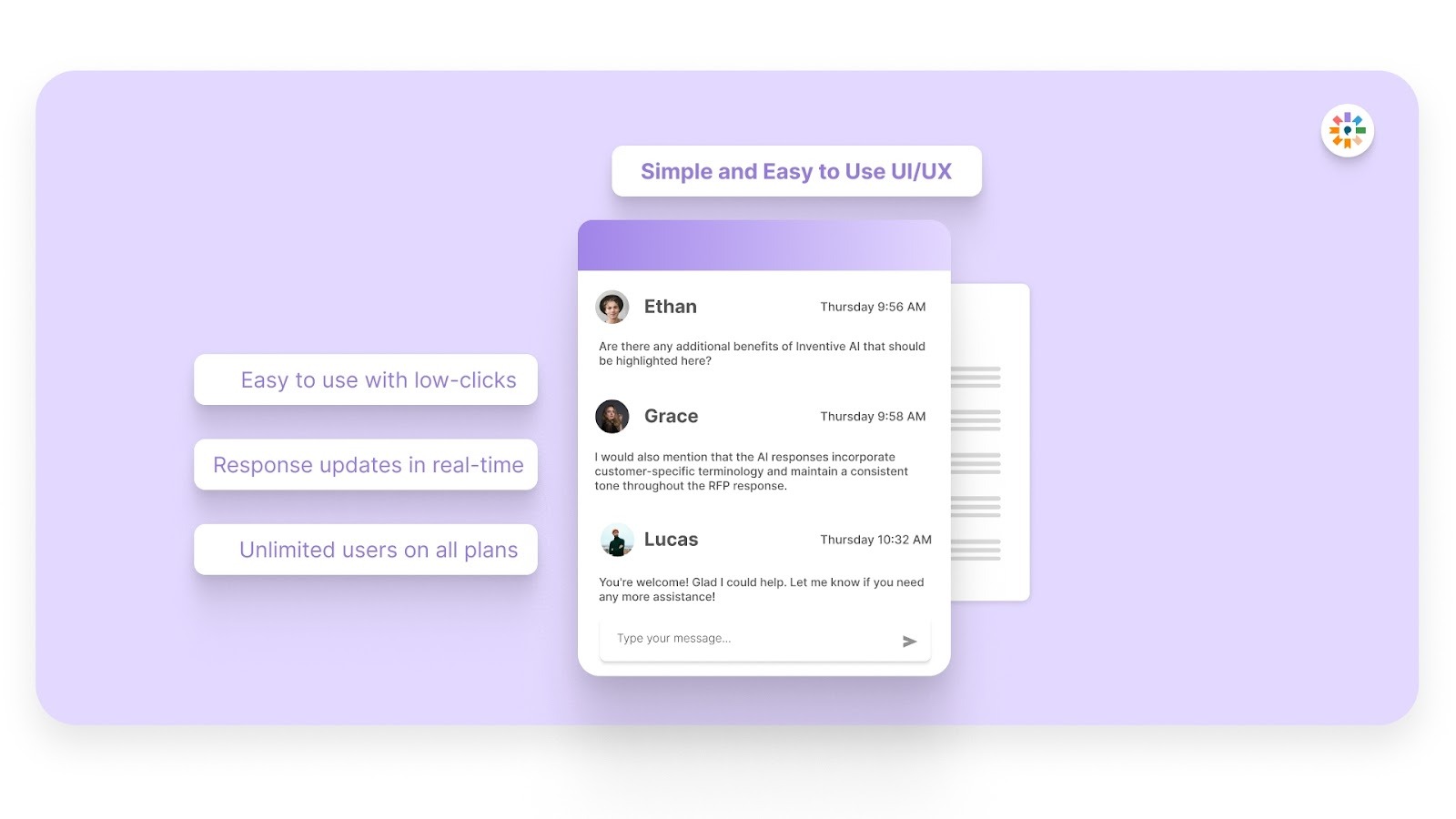
Inventive AI is designed for ease of use. Its simple interface makes responding to DDQs straightforward. You can easily manage, track, and collaborate on DDQs, ensuring you stay on top of your responses without the need for complex training.
6. Narrative-Style Proposals
Most tools just fill in spreadsheets; Inventive AI tells your story. It generates complete, long-form documents, like executive summaries and value narratives, that turn dry technical data into a persuasive case for why you should win the deal.
With Inventive AI, responding to DDQs becomes faster, more accurate, and less stressful. You’ll save time, reduce errors, and ensure your responses meet the highest standards.
Frequently Asked Questions (FAQs)
1. How can I simplify the DDQ process without compromising on accuracy?
Simplifying the DDQ process involves leveraging structured templates, automating repetitive tasks, and using tools that ensure accuracy across sections. By focusing on pre-filled templates and clear response guidelines, you can reduce time spent on drafting and ensure your responses are always aligned with industry standards.
2. What are the common mistakes firms make when responding to DDQs?
Common mistakes include providing vague answers, missing key documents, and failing to tailor responses to each investor’s specific needs. It's also easy to overlook outdated information, which could harm your credibility. Ensuring consistency across submissions and addressing each question specifically will help mitigate these risks.
3. How often should DDQ responses be updated, and who in my organization is responsible for it?
It’s important to update DDQ responses annually or whenever major changes occur in your company, such as leadership shifts, regulatory changes, or new compliance certifications. Typically, compliance and legal teams should handle updates, in collaboration with finance and IT departments to ensure technical accuracy.
4. What key metrics should be highlighted when answering a DDQ for investors?
When responding to DDQs, focus on liquidity ratios, profit margins, and audited financial data. Investors often look for financial stability and risk management capabilities, so emphasizing your firm’s ability to manage cash flow, reduce risks, and comply with industry regulations will set you apart.
5. How can I ensure my DDQ responses align with both regulatory and investor expectations?
The best way to ensure alignment is to integrate compliance frameworks such as GDPR, SOC 2, and ISO 27001 with your DDQ responses. By referencing these standards directly and linking to updated audit reports, you’ll show that your responses meet both regulatory and investor requirements. Regular audits and internal reviews will further ensure accuracy.
6. How can Inventive AI help with customizing DDQ responses efficiently?
Inventive AI helps vendors by automating the customization process for DDQs. It tailors responses to your company’s unique operational structure and financial health while ensuring compliance with industry standards. The AI-powered platform automatically flags outdated content, ensuring that your answers are accurate, up-to-date, and consistent across multiple submissions.
.avif)