DDQ Template for Private Equity: Key Considerations and Examples

When investors ask tough questions about your firm’s operations, risk management, and security practices, a DDQ template is your opportunity to respond efficiently and accurately. With a structured template, you can craft clear, comprehensive responses that demonstrate your firm’s commitment to transparency and operational maturity.
A well-designed Due Diligence Questionnaire (DDQ) template allows you to provide consistent, organized answers. This builds investor trust and showcases your strengths across key areas like governance, cybersecurity, and ESG.
Discover how to use our DDQ template for private equity to simplify your response process, ensure consistency, and respond faster. By using the right template, you can make your DDQ responses more accurate, professional, and LP-ready, helping you maintain a competitive edge.
Key Insights
- DDQs are essential for securing institutional capital, with over 80% of investors requiring standardized questionnaires.
- A strong DDQ demonstrates operational maturity across governance, compliance, cybersecurity, ESG, and investment processes.
- Manual DDQ workflows lead to errors, inconsistencies, and slow fundraising due to fragmented content and poor version control.
- Automation centralizes information, accelerates drafting, detects outdated or conflicting content, and improves accuracy.
- Inventive AI enables private equity teams to respond 10X faster, delivering high-fidelity, LP-ready answers grounded in verified data.
- DDQs support PE fundraising, onboarding, annual monitoring, regulatory exams, co-investments, and exits.
- Modern DDQs require deeper disclosures in cybersecurity, data governance, operational risk, and ESG.
- Structured DDQ templates reduce LP follow-up questions and improve clarity, consistency, and investor trust.
Private Equity DDQ Template: Your Guide to Investor-Ready Responses
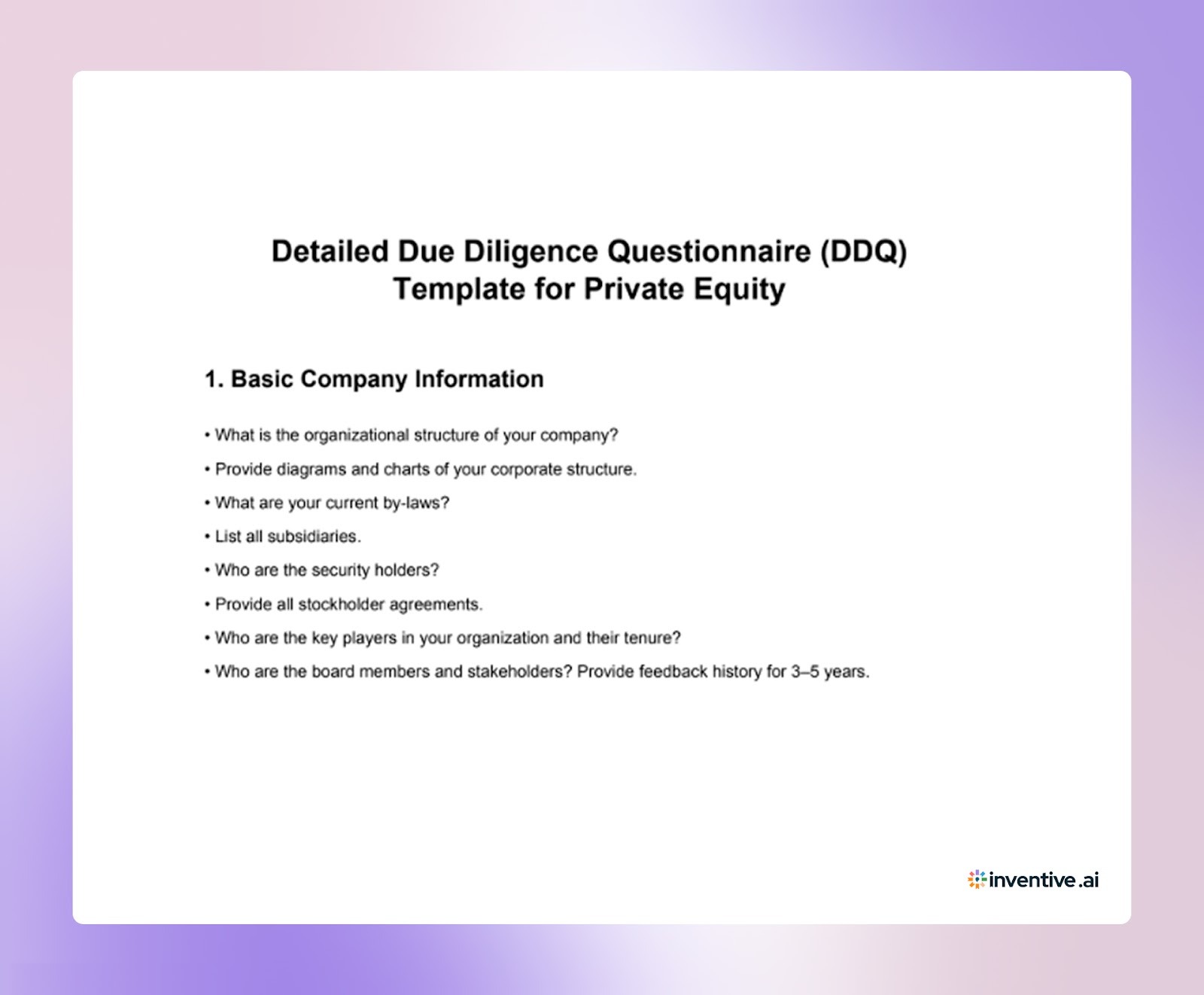

About This DDQ Template for Private Equity
This DDQ Template for Private Equity is a comprehensive, easy-to-use framework designed to help you respond to investor inquiries with accuracy and confidence. It covers all the critical areas investors typically assess, from governance and compliance to cybersecurity and ESG practices.
The template is structured to streamline the process, ensuring you address each essential component with clarity and detail. By using this template, you can ensure your responses are well-organized, consistent, and tailored to meet the expectations of Limited Partners (LPs).
What This DDQ Template for Private Equity Includes:
- Firm Overview: A section to describe your organization’s structure, leadership, and governance.
- Investment Strategy: A place to outline your firm’s investment approach, deal sourcing, and value-creation methods.
- Cybersecurity and Data Protection: A framework for detailing your firm’s security practices, including data governance, encryption, and compliance with standards like SOC 2 and GDPR.
- ESG and Risk Management: Sections to demonstrate your firm’s commitment to responsible investing and risk mitigation.
- Compliance and Regulatory Standards: A space to outline your adherence to relevant regulations, including AML/KYC, FISMA, and industry-specific rules.
Why Use This Template DDQ Template for Private Equity?
- Saves Time: Streamline your DDQ responses by starting with a pre-designed template that covers all necessary sections.
- Improves Consistency: Ensures your answers are consistent across all responses, reducing the risk of contradictions and improving investor confidence.
- Tailored for Private Equity: This template is specifically designed to meet the unique needs of private equity firms, ensuring that your responses align with investor expectations.
By using this DDQ Template for Private Equity, you can simplify your due diligence process, create high-quality responses faster, and demonstrate your firm’s readiness for long-term success in the eyes of investors.
Effective Customization Tips for Tailoring Your Private Equity DDQ Template
Here are a few tips to help you customize the DDQ template to meet your firm’s unique needs and ensure your responses are clear, accurate, and aligned with investor expectations:
1. Tailor the Firm Overview: Adjust the section to include specific details about your leadership team, organizational structure, and any recent changes to governance. Customize team bios to highlight expertise relevant to the investor's focus areas.
2. Highlight Your Investment Strategy: Make sure the investment process section reflects your firm’s unique approach, such as the sectors you specialize in, your due diligence practices, and any proprietary methodologies that differentiate you from others.
3. Provide Clear Performance Data: Update the performance history with your most recent and relevant results. Use benchmarks, comparisons, and case studies to give context to your returns and emphasize the consistency of your strategy.
4. Ensure Compliance Details are Up-to-Date: Regularly update your compliance section to reflect changes in regulatory frameworks and industry standards. Include any recent certifications or audits that enhance your credibility with investors.
5. Showcase Cybersecurity & Data Protection Practices: Tailor the cybersecurity section to include your current security measures, encryption protocols, and any recent risk assessments or certifications, such as SOC 2 or ISO 27001.
6. Update ESG Practices: If your firm has strengthened its ESG practices, make sure to update the relevant section with specific policies, reporting standards (e.g., UNPRI, SASB), and any initiatives you’ve undertaken to improve sustainability.
7. Customize Pricing and Fee Details: Adjust the financial reporting section to align with your firm’s fee structure, including any recent changes to carried interest terms, performance fees, or reporting timelines.
8. Review Crisis Management Plans: Update the crisis management section to reflect your firm’s most current disaster recovery strategies, business continuity plans, and the technological tools in place to ensure operations during unforeseen disruptions.
Customizing these sections will help ensure that the DDQ response is not only comprehensive but also tailored to your firm’s unique operations and strategies..
Also Read: Writing an RFP for Software Development: Step-by-Step Guide
How a Private Equity DDQ Template Helps You Respond Effectively?
Responding to a DDQ can be a complex task, as it requires accurate and detailed responses across multiple areas: operations, governance, and compliance. Fortunately, the right DDQ template helps make this process easier for you to craft responses that are comprehensive, consistent, and investor-ready.
Here’s how the DDQ template helps you respond effectively:
1. Structured Framework for Consistency
The DDQ template provides a clear, structured layout, ensuring that every section is addressed in a consistent manner. By following the template, you avoid missed sections or disorganized content, ensuring your responses are easy for investors to read, compare, and evaluate.
2. Predefined Sections for Key Information
The template breaks down the DDQ into predefined sections like governance, compliance, cybersecurity, ESG, financial reporting, and more. This organization helps you gather and present the most relevant information quickly and efficiently, reducing the time spent on brainstorming and organizing responses.
3. Customization to Fit Your Firm’s Needs
While the template provides a general structure, it’s customizable to fit your firm’s specific operations and investor requirements. You can tailor the content in each section to reflect your firm’s unique processes, policies, and strengths, ensuring that the responses are both accurate and relevant.
4. Focus on What Matters Most
The DDQ template ensures that you focus on the areas that matter most to investors, such as your firm’s investment strategy, track record, cybersecurity measures, and compliance policies. By addressing these key areas in detail, you demonstrate transparency and operational maturity, which builds trust with potential investors.
5. Helps You Stay on Track and Meet Deadlines
With a ready-made structure, you save time on formatting and structuring your responses, allowing you to focus on the quality of the content. The template guides you through each section, helping you stay on track and meet submission deadlines without unnecessary delays.
6. Reduces Errors and Inconsistencies
The template eliminates the risk of missing important details or providing inconsistent information. By providing a clear structure and format, it ensures that your responses are aligned and accurate, reducing the risk of errors that could lead to follow-up inquiries from investors.
7. Ensures Comprehensive Coverage
With all critical aspects of your firm’s operations covered, the template ensures you don’t miss any important information. Whether it’s governance, compliance, data security, or ESG practices, you can be sure that all relevant details are included in your response, presenting a full picture of your firm’s capabilities.
8. Helps Maintain Version Control
As you update the DDQ with new data or responses, the template helps maintain version control, ensuring that every team member is working on the latest version. This centralized approach helps avoid discrepancies and keeps the entire team aligned.
9. Simplifies Collaboration Across Teams
The DDQ template encourages cross-team collaboration, whether it’s finance, legal, compliance, or operations. It centralizes information and provides a common framework, ensuring that each department’s input is included and aligned with the firm’s overall response.
10. Boosts Investor Confidence
By using a professional, well-structured DDQ template, your firm presents itself as organized, transparent, and investor-ready. A clear and comprehensive response reduces follow-up questions and demonstrates your ability to meet investors’ requirements, building confidence and trust in your firm’s operations.
By using a well-organized DDQ template, private equity firms can respond faster, more accurately, and more consistently. Ultimately, using a DDQ template not only saves time but also helps build trust with investors, positioning your firm for long-term success.
Real-World Scenarios of How Private Equity Firms Use DDQs
Due Diligence Questionnaires play a central role throughout the private equity lifecycle, supporting both fundraising and ongoing investor oversight.
Below are real-world scenarios that illustrate how PE firms rely on DDQs to demonstrate transparency, strengthen LP confidence, and reduce risk.
1. Fundraising and LP Onboarding
During a new fundraise, prospective Limited Partners request the firm’s DDQ before committing capital. This helps them evaluate governance standards, risk controls, valuation processes, and past performance. A well-prepared DDQ accelerates LP onboarding by reducing follow-up questions, demonstrating operational maturity, and building immediate trust with institutional investors.
2. Annual Reporting and Ongoing Monitoring
Even after capital is committed, LPs periodically request updated DDQs to track changes in investment processes, cybersecurity readiness, regulatory compliance, and operational risks. These updates allow investors to assess whether the firm has improved controls or if new risks have emerged. For PE firms, maintaining a consistent DDQ format ensures smoother annual reviews and fewer information gaps.
3. Regulatory Examinations and Compliance Reviews
Regulators increasingly expect PE firms to demonstrate strong governance, data protection, and conflict-of-interest management. In many cases, a DDQ serves as the foundation for compliance documentation. Preparing a robust DDQ ensures the firm can address examination requests from bodies such as the SEC or FCA quickly and confidently.
4. Portfolio Company Oversight and Value Creation Planning
PE firms may assess portfolio companies' operational readiness using DDQ-style frameworks during acquisition or exit. This helps identify gaps in financial controls, technology infrastructure, cybersecurity maturity, ESG reporting, or management capabilities. Insights from these assessments guide value-creation initiatives and risk mitigation strategies.
5. Co-Investor Due Diligence and Syndication
When multiple investors participate in a deal, each party conducts their own diligence. A comprehensive DDQ allows the GP to provide consistent information to all co-investors, reducing duplication and ensuring alignment across stakeholders. This is especially important in time-sensitive transactions.
6. Vendor and Service Provider Evaluation
Private equity firms also rely on DDQ formats when evaluating fund administrators, IT vendors, cybersecurity partners, and other service providers. These assessments ensure external partners meet operational, security, and compliance standards, protecting the GP and LPs.
7. Preparing for an Exit or Secondary Transaction
During secondary sales or fund restructuring, buyers request detailed operational and financial disclosures. Having an updated DDQ ensures the firm can quickly supply complete information, reducing delays and improving transaction certainty.
While DDQs are essential across these scenarios, preparing them manually often presents significant challenges for PE teams.
Also Read: RFP Answer Library: How to Build and Automate Efficiently
How Inventive AI Helps PE Teams Respond to DDQs 10X Faster?
Private equity firms face increasing pressure to provide accurate, detailed, and timely DDQ responses. Traditional processes are slow and prone to errors, leaving teams with little time to focus on high-value tasks. Inventive AI’s AI-powered response engine eliminates these bottlenecks, delivering investor-ready DDQ responses in minutes, not days.
Why Inventive AI is the Best for PE Firms?
2x Higher Response Quality
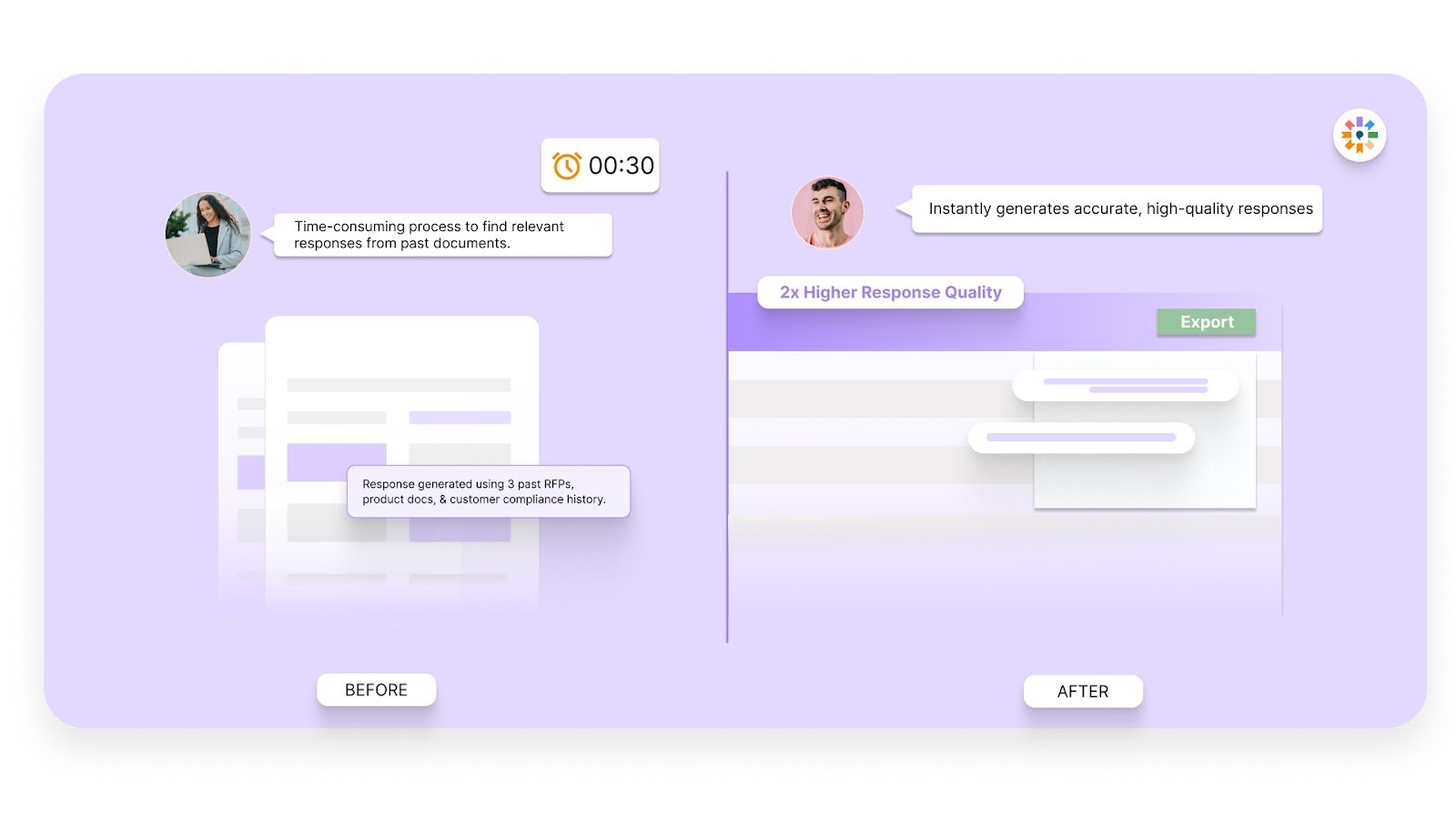
Inventive AI uses advanced algorithms to generate responses with greater precision, ensuring that your answers are comprehensive, accurate, and relevant to investor needs.
Context-Awareness
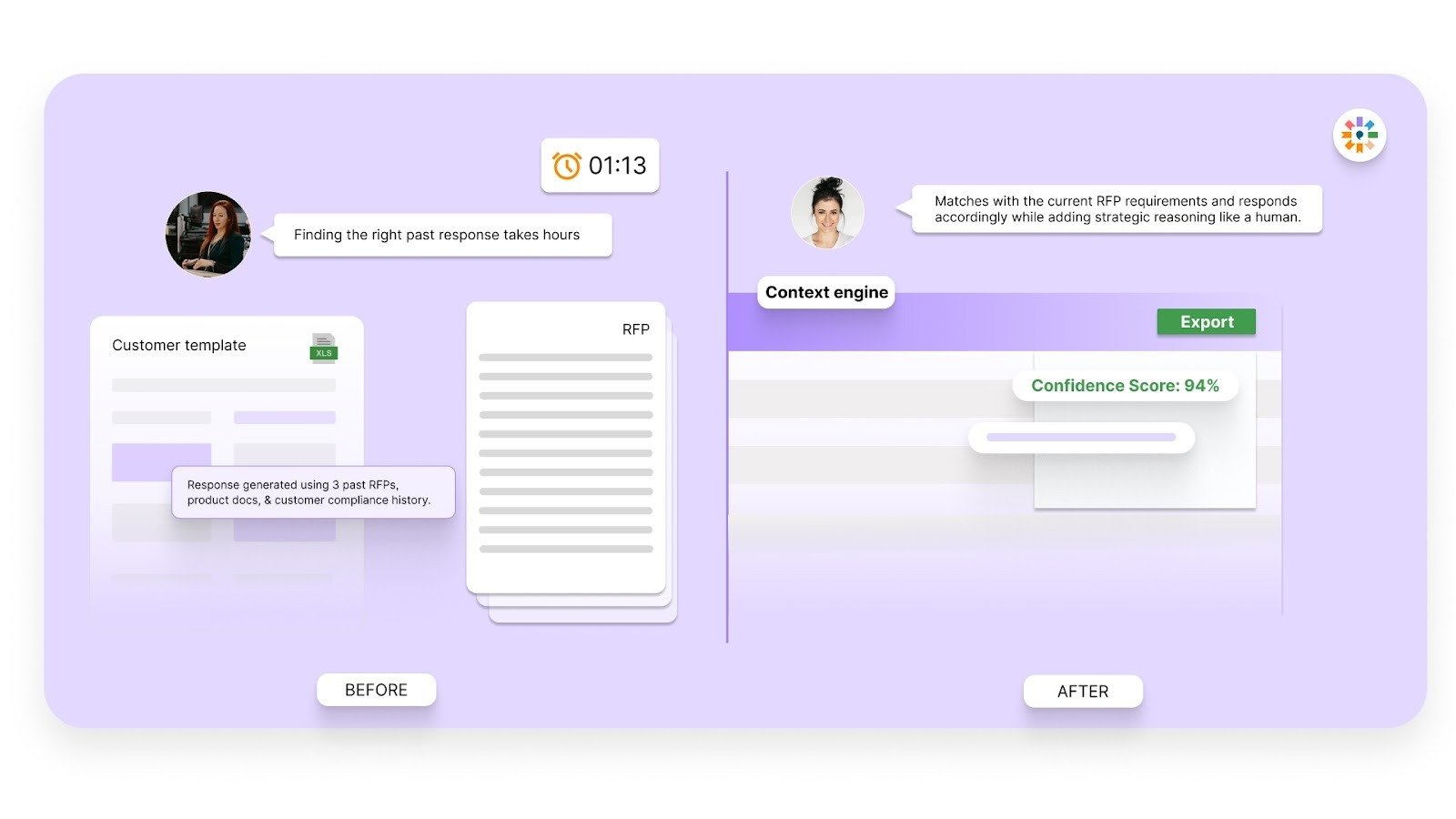
The AI adapts responses based on the specific needs of the investor and industry, ensuring each answer is tailored, precise, and aligned with the buyer's requirements.
Instant Conflict Detection
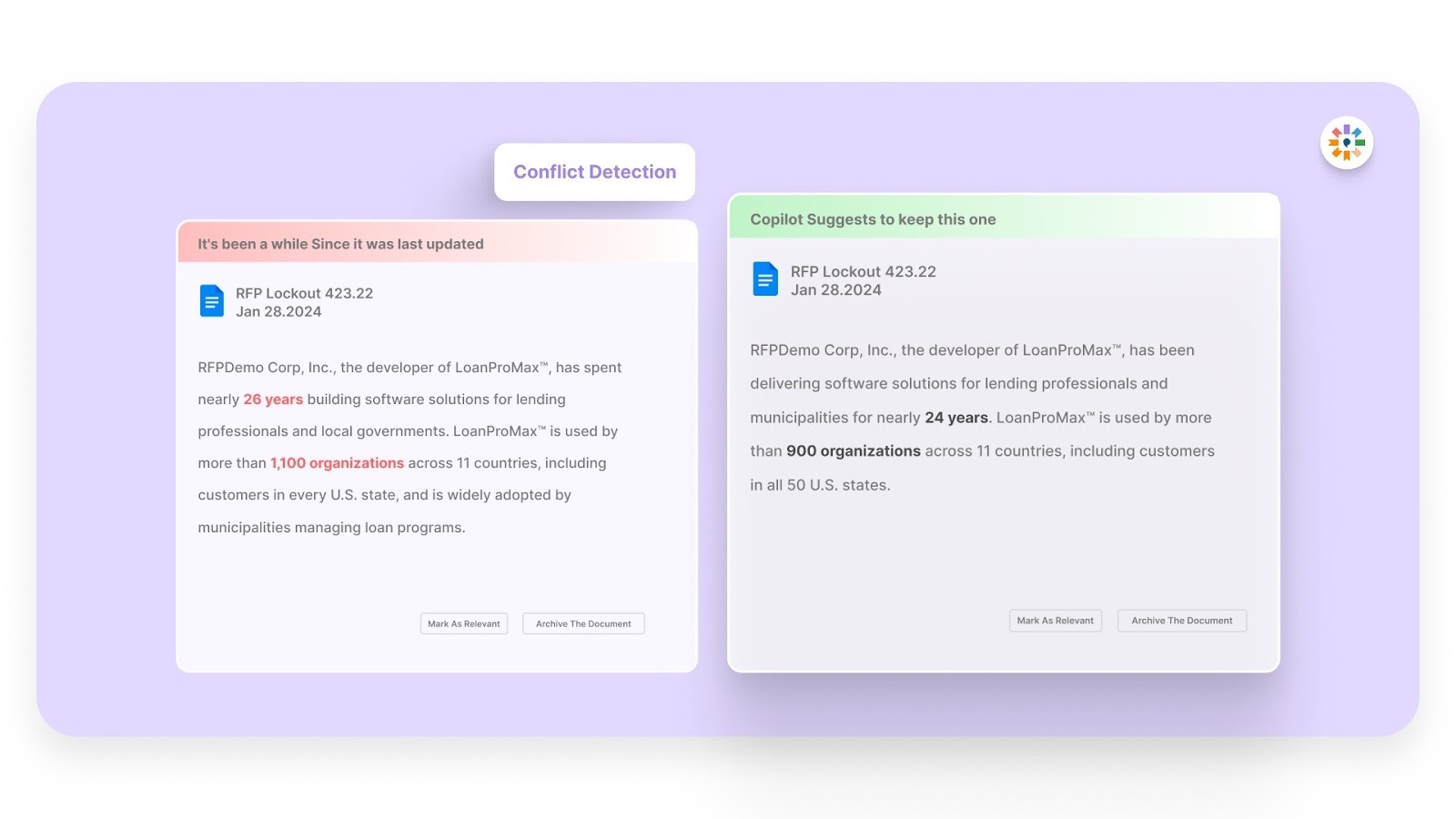
Identify and resolve any discrepancies or conflicting information before submitting your responses, reducing the risk of errors and follow-up inquiries from investors.
Outdated Content Detection
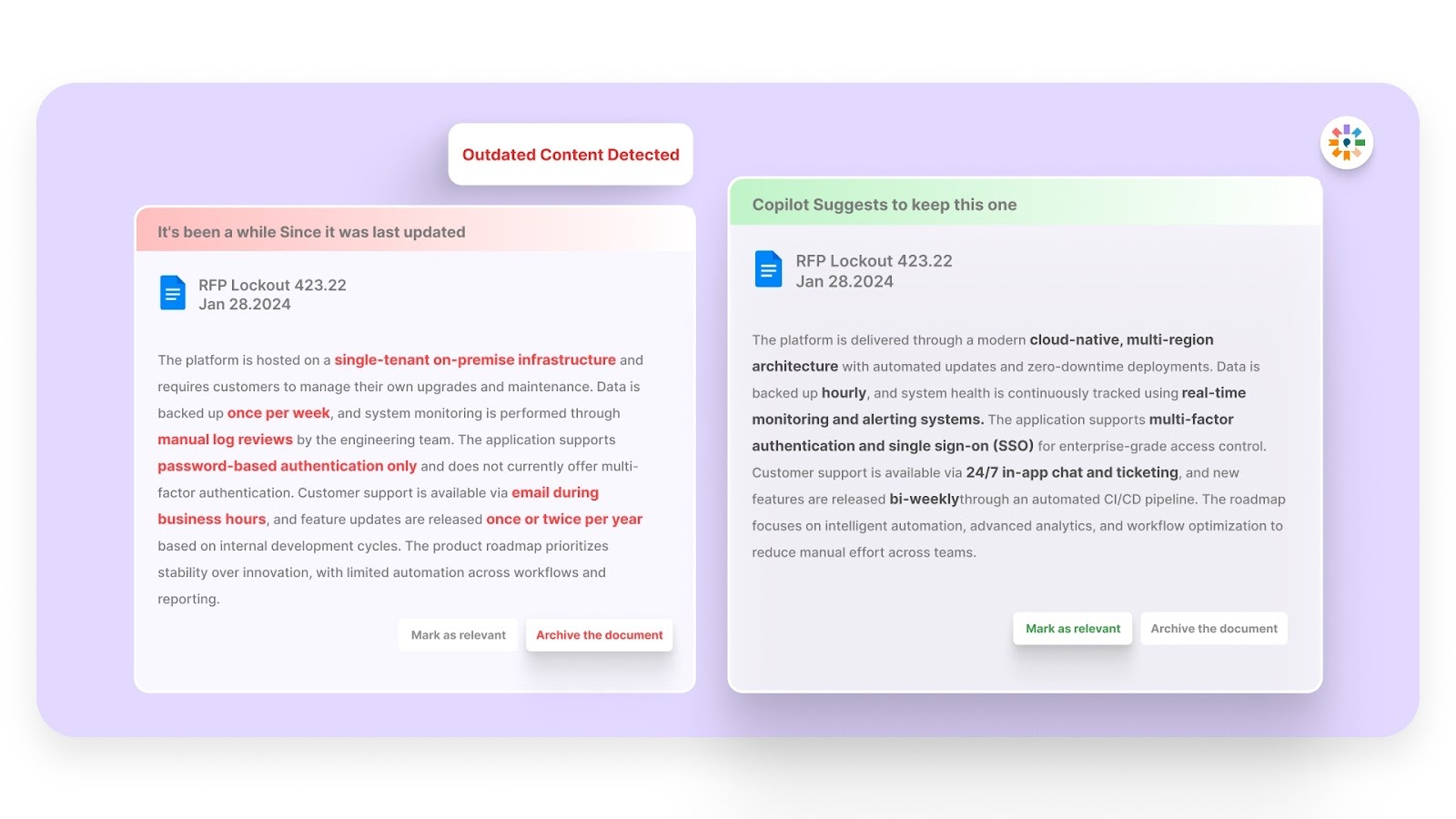
Regularly updated content is crucial for investor trust. Inventive AI flags outdated information, ensuring your DDQ responses are aligned with the latest policies, regulations, and best practices.
Quality Benchmarking
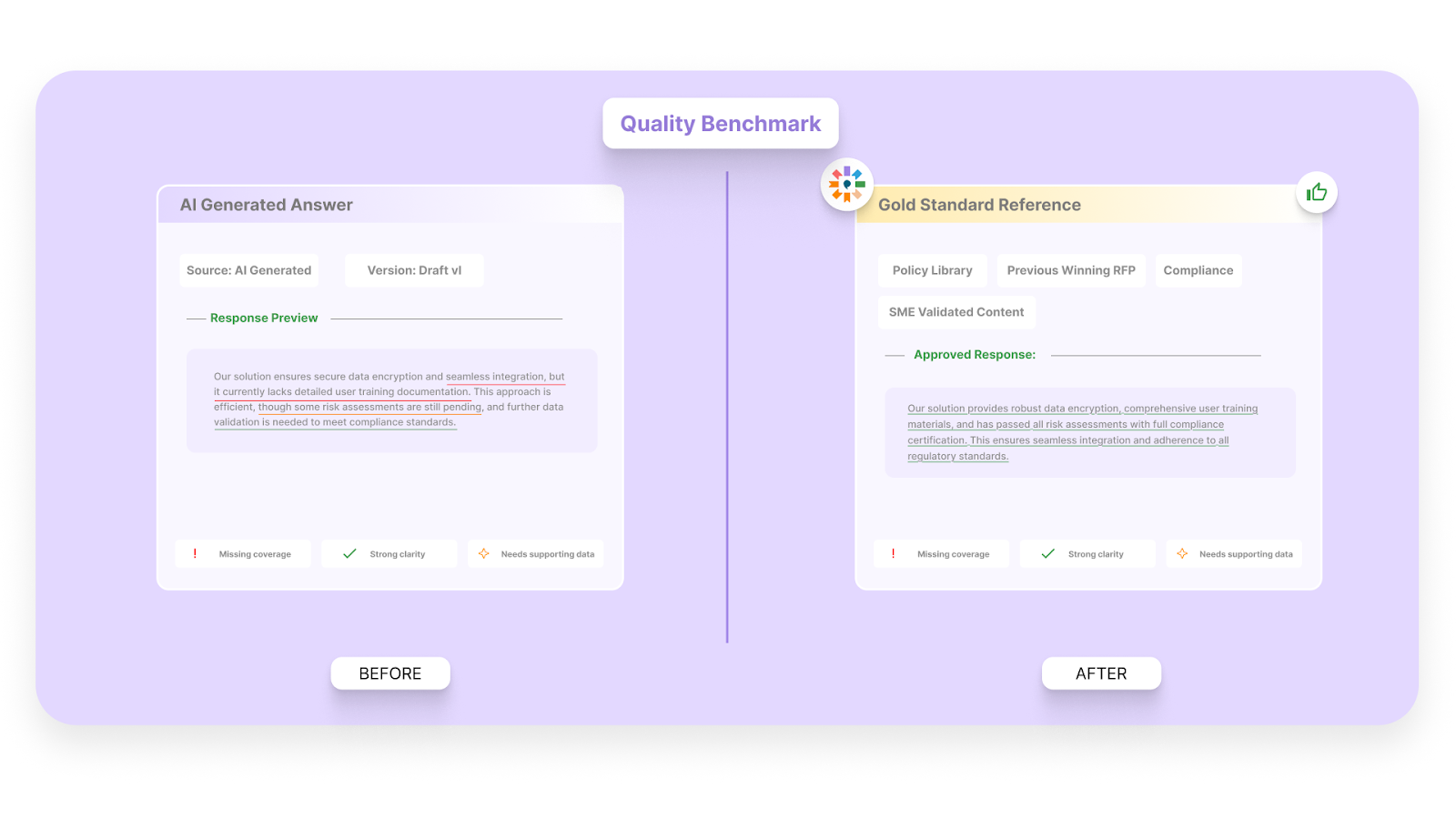
Maintain consistency and quality across your DDQ responses, ensuring they meet high standards and are ready for LP review without requiring multiple revisions.
Narrative-Style Proposals
Transform fragmented answers into cohesive, clear narratives that provide a complete picture of your firm’s operations, reducing confusion and increasing investor confidence.
Proven Outcomes for High-Accuracy Teams
PE firms using Inventive AI see measurable improvements, including:
- 90% faster DDQ response cycles through AI-generated first drafts and centralized knowledge access.
- 95% accuracy across DDQ responses, ensuring LP-ready disclosures with minimal manual rewriting.
- Zero hallucinations, thanks to Inventive AI’s Context Engine, which grounds every answer in verified internal content.
- 50% fewer LP clarification rounds, as responses are complete, consistent, and aligned with institutional expectations.
These outcomes directly translate to faster fund closes, smoother LP onboarding, and stronger investor relationships.
Frequently Asked Questions (FAQs)
1. Why do LPs request DDQs?
LPs request DDQs to assess risk, validate investment discipline, verify regulatory compliance, and ensure the fund operates with strong controls before committing capital.
2. How often should a PE firm update its DDQ?
Most firms update their DDQs annually, but many institutional investors also request updated information during fundraising, operational reviews, or regulatory examinations.
3. What makes a DDQ different from a pitch deck or PPM?
A pitch deck and PPM are marketing and legal documents, while a DDQ provides detailed operational, financial, and risk-related disclosures that help LPs evaluate a fund’s internal processes.
4. What should a DDQ template include?
A PE DDQ should cover firm overview, investment strategy, track record, compliance, risk management, cybersecurity, ESG, financial reporting, and operational controls.
5. Why are cybersecurity and ESG included in modern DDQs?
LPs now expect transparency in long-term risk areas like data protection, cyber readiness, sustainability, and responsible investing.

.avif)



.jpg)