Economic Development RFP Response Template To Win More Bids

How many hours does your team spend responding to a single economic development RFP, only to face tight deadlines, complex requirements, and unclear evaluation criteria? These bids often demand detailed strategies, stakeholder plans, budgets, and compliance documentation all at once.
If you’re a consulting firm or advisory team responding to public-sector opportunities, you know the pressure. Miss one requirement, misinterpret one objective, or submit generic content, and your proposal can quickly fall behind.
In this blog, we’ll explore what an economic development RFP includes, provide a ready-to-use template for issuers, and share a structured response template to help vendors submit stronger, more strategic proposals.
Sample Economic Development RFP Template (Issuer Format)
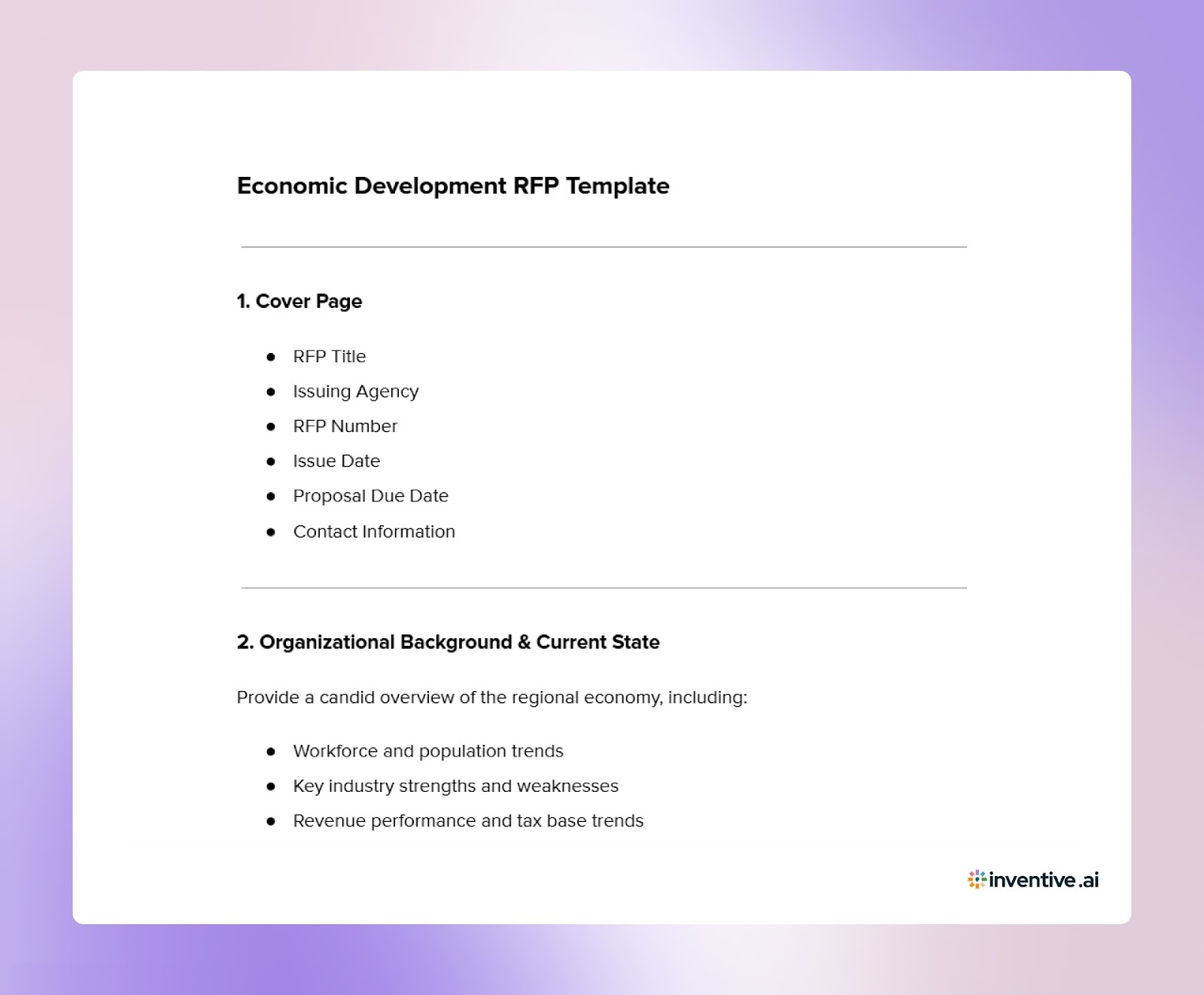

A well-structured economic development RFP does more than request services; it sets the tone for the type of strategy an agency expects to receive. This template is designed to help agencies draft precise, outcome-focused RFPs while also giving vendors insight into how these opportunities are typically organized and evaluated.
Winning Template for an Economic Development RFP Response
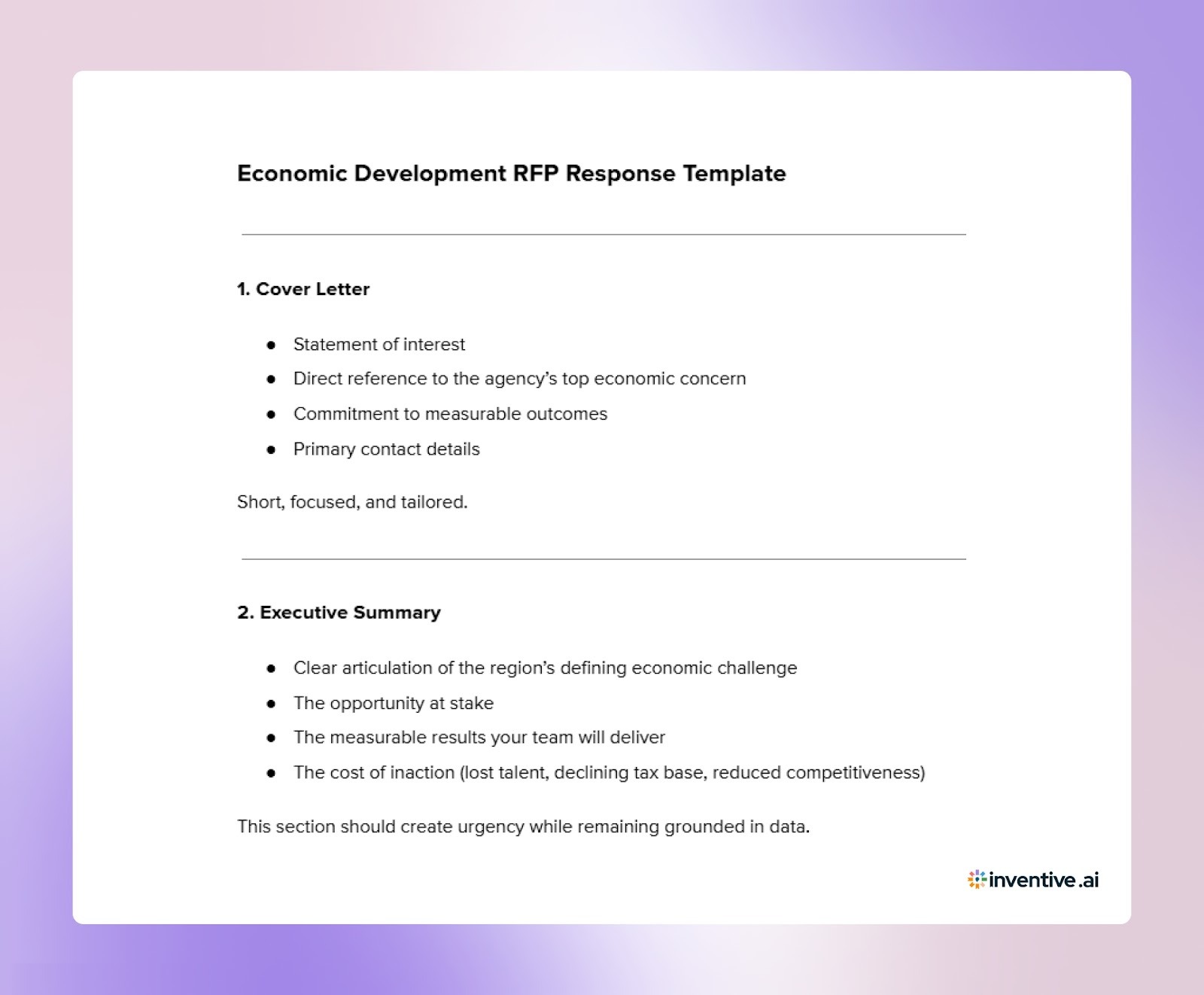

If you’re responding to an economic development opportunity, your proposal must do more than restate the scope. It needs to show a clear understanding of the region’s challenges and present a structured path to measurable outcomes.
Use the template below to structure your response.
1. Cover Letter
- Statement of interest
- Direct reference to the agency’s top economic concern
- Commitment to measurable outcomes
- Primary contact details
Short, focused, and customized.
2. Executive Summary
- Clear articulation of the region’s defining economic challenge
- The opportunity at stake
- The measurable results your team will deliver
- The cost of inaction (lost talent, declining tax base, reduced competitiveness)
This section should create urgency while remaining grounded in data.
3. Understanding of Regional Context, Competition & Resilience
Demonstrate insight by addressing:
- Core industry strengths and vulnerabilities
- Workforce and demographic shifts
- Competing regions attracting similar industries or talent
- Infrastructure readiness (including broadband and site capacity)
- Economic resilience risks (automation exposure, climate risk, supply chain concentration)
Show awareness of both internal barriers and external competitive pressure.
4. Proposed Methodology & Co-Creation Approach
Structure your methodology into phases:
- Discovery and data assessment
- Stakeholder engagement strategy
- Strategy formulation
- Validation and refinement
Include:
- Equity and inclusion metrics tied to measurable outcomes
- Outreach strategy for small businesses and underserved communities
- Staff capacity building plan (training sessions, toolkits, knowledge transfer)
Demonstrate that your team works alongside agency staff, not in isolation.
5. The “Big Idea” – Strategic Positioning Narrative
Present a concise narrative or visual summary including:
- A unifying economic theme
- 3–5 strategic pillars
- Target industries or growth clusters
- A headline outcome that the agency can communicate publicly
This becomes the anchor message for leadership and stakeholders.
6. Implementation Plan, Risk Mitigation & First 100 Days
Outline:
- Immediate priority actions
- Governance and accountability structure
- Funding sequencing strategy
- KPI framework
Add a Risk Mitigation subsection, addressing:
- Low stakeholder participation
- Delayed data access
- Political transitions
- Budget constraints
This reassures evaluators that your team anticipates execution challenges.
7. Communication & Public Engagement Strategy
Detail how you will:
- Translate analysis into executive-ready visuals
- Prepare presentation decks for elected officials
- Provide summaries suitable for public distribution
- Support message clarity for media or investor briefings
Agencies need materials they can confidently share.
8. Project Team & Relevant Experience
Include:
- Key personnel and defined roles
- Comparable municipal or regional projects
- Quantifiable results
- References
Tie the experience directly to the agency’s stated objectives.
9. Data Tools, Technology & Visual Outputs
Clarify:
- Analytical tools and GIS platforms used
- Data sources
- Dashboard format
- Ownership and license transfer terms
- Executive-ready visuals and presentation graphics
State clearly whether the agency retains ownership of data and tools.
10. Compliance Matrix
Provide a structured table mapping every RFP requirement to your response sections and page numbers.
This reduces evaluator workload and strengthens scoring accuracy.
11. Pricing Proposal
- Total project cost
- Phase-by-phase breakdown
- Assumptions
- Payment schedule
Match formatting exactly to RFP instructions.
Costly Mistakes in Economic Development RFP Responses To Avoid
Even experienced consulting firms lose points on proposals for avoidable reasons. Economic development RFPs are scored closely, and small missteps can push a strong firm out of the shortlist.
Here are the most common errors evaluators see:
- Generic Executive Summary: Submitting a recycled introduction that could apply to any city signals low effort. Agencies want proof that you understand their specific economic challenges and goals.
- Restating the RFP Instead of Interpreting It: Simply repeating the scope of work does not show expertise. Reviewers look for insight, analysis, and a clear point of view.
- Weak Equity Strategy: Mentioning “stakeholder engagement” without measurable inclusion goals feels incomplete. Agencies expect defined metrics tied to underserved communities or priority corridors.
- Ignoring Regional Competition: Failing to reference competing metros or peer regions suggests limited market awareness. Decision-makers want to know how you position them against rivals.
- No Clear First 100 Days Plan: Delivering a strategy without immediate action steps raises concerns about momentum after approval.
- Overcomplicated Methodology: Excessive jargon and abstract frameworks create confusion. Clarity builds confidence.
- Unclear Data Ownership: Not specifying whether dashboards, data, or licenses transfer to the agency creates hesitation during evaluation.
- Missing Compliance Mapping: Without a compliance matrix, reviewers must hunt for answers, increasing the risk of point deductions.
Avoiding these pitfalls strengthens your credibility and improves scoring consistency across technical and interview stages.
Improve Economic Development RFP Win Rates with Inventive AI
Economic development proposals demand coordination across subject matter experts, data sources, past case studies, and requirements. When deadlines are tight, drafting from scratch and chasing internal inputs can slow momentum and affect quality.
Here’s how Inventive AI supports consulting and proposal teams:
Context Engine For RFP-Wide Understanding
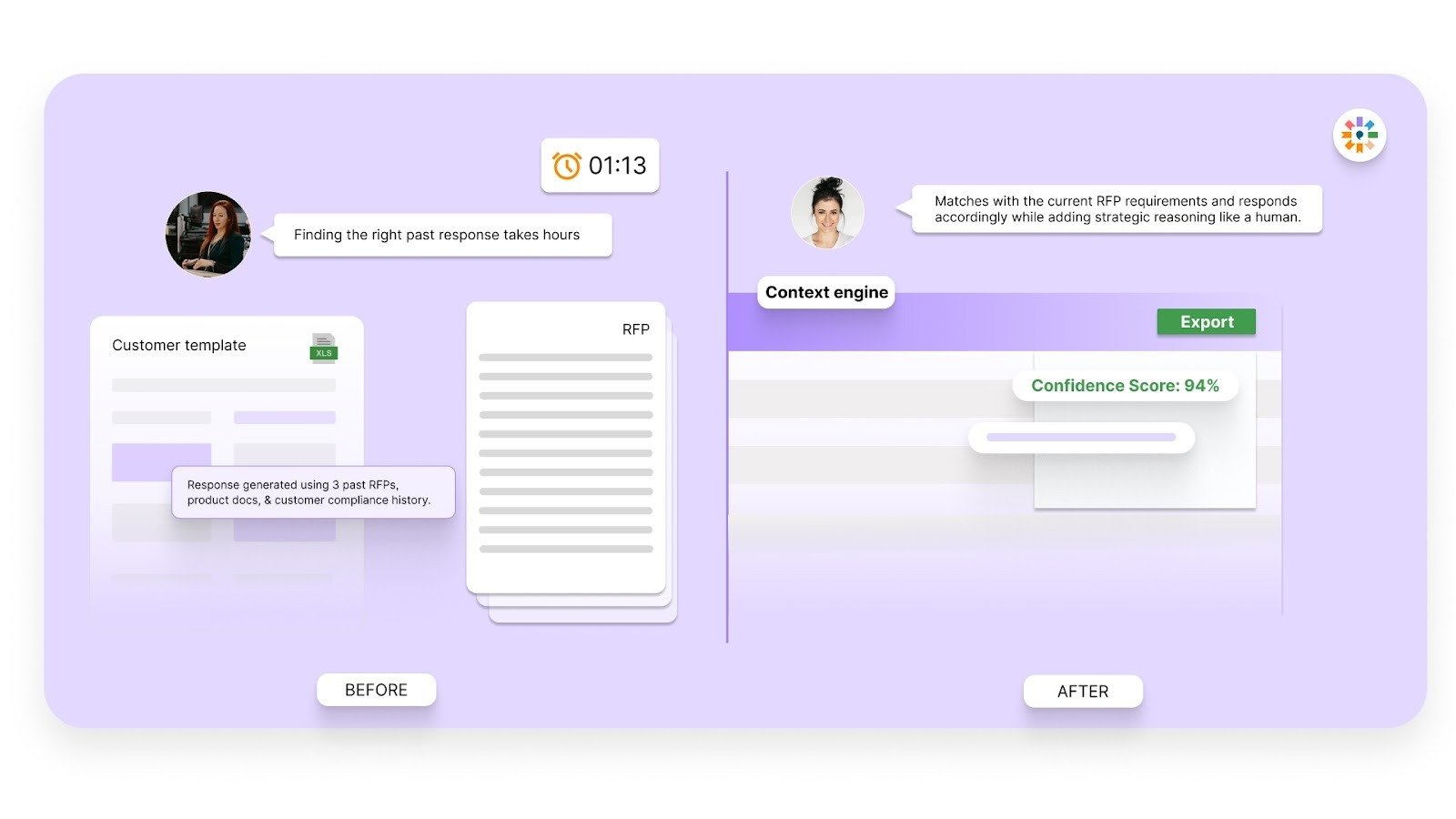
Many competitors rely on shallow ChatGPT or basic RAG lookup, which produces generic responses that fail to reflect regional nuance. Inventive uses multi-layer reasoning that understands the full RFP context, including agency priorities, evaluation criteria, stakeholder expectations, and required deliverables. This produces accurate, customized answers that read as if a subject matter expert wrote them.
Conflict Detection
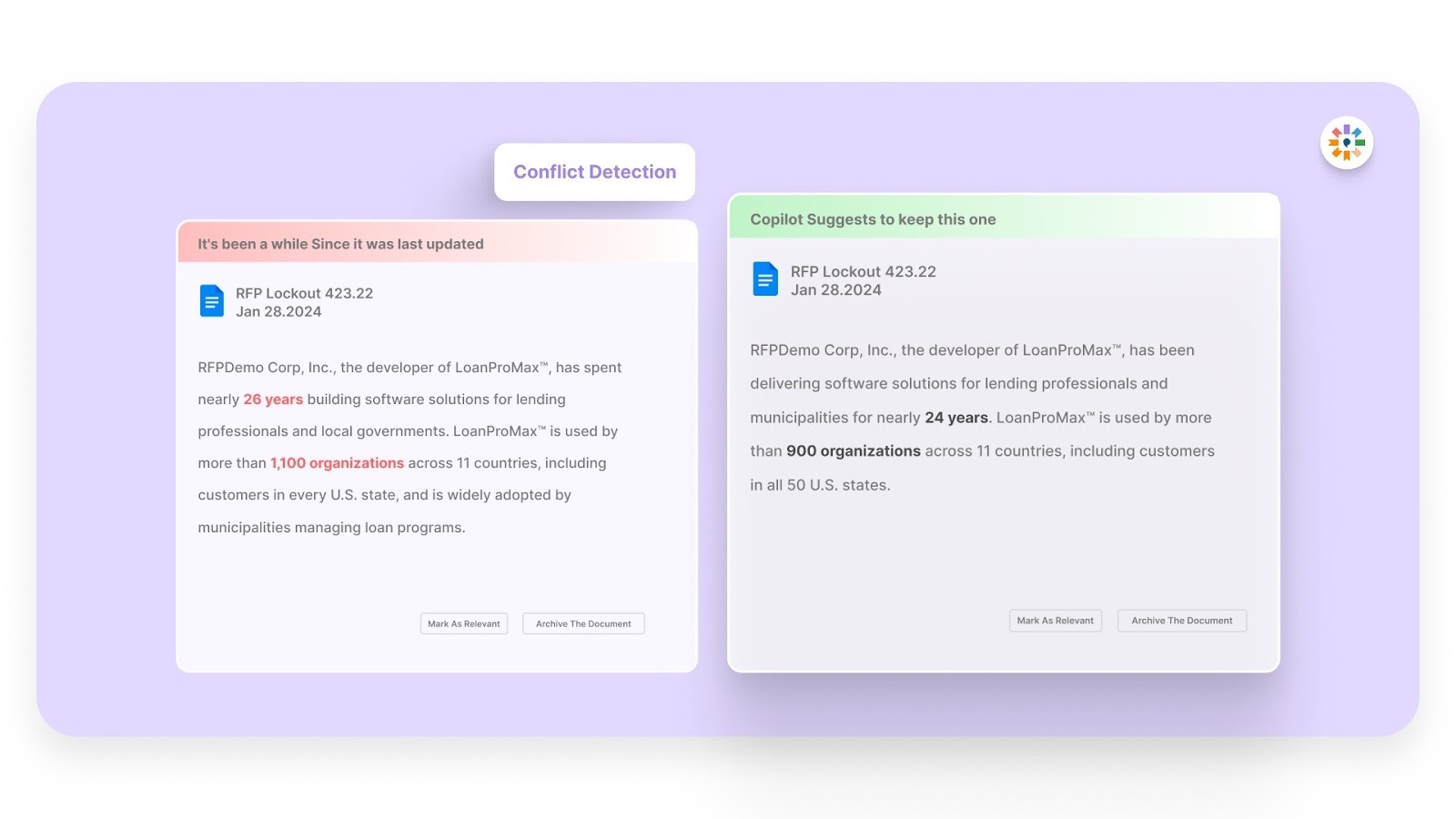
Other tools cannot detect internal contradictions across sections, such as staffing plans, project timelines, pricing tables, or past project metrics. Inventive flags conflicting statements instantly. This prevents proposal teams from submitting inconsistent or risky responses that can reduce evaluator confidence.
Outdated Content Detection
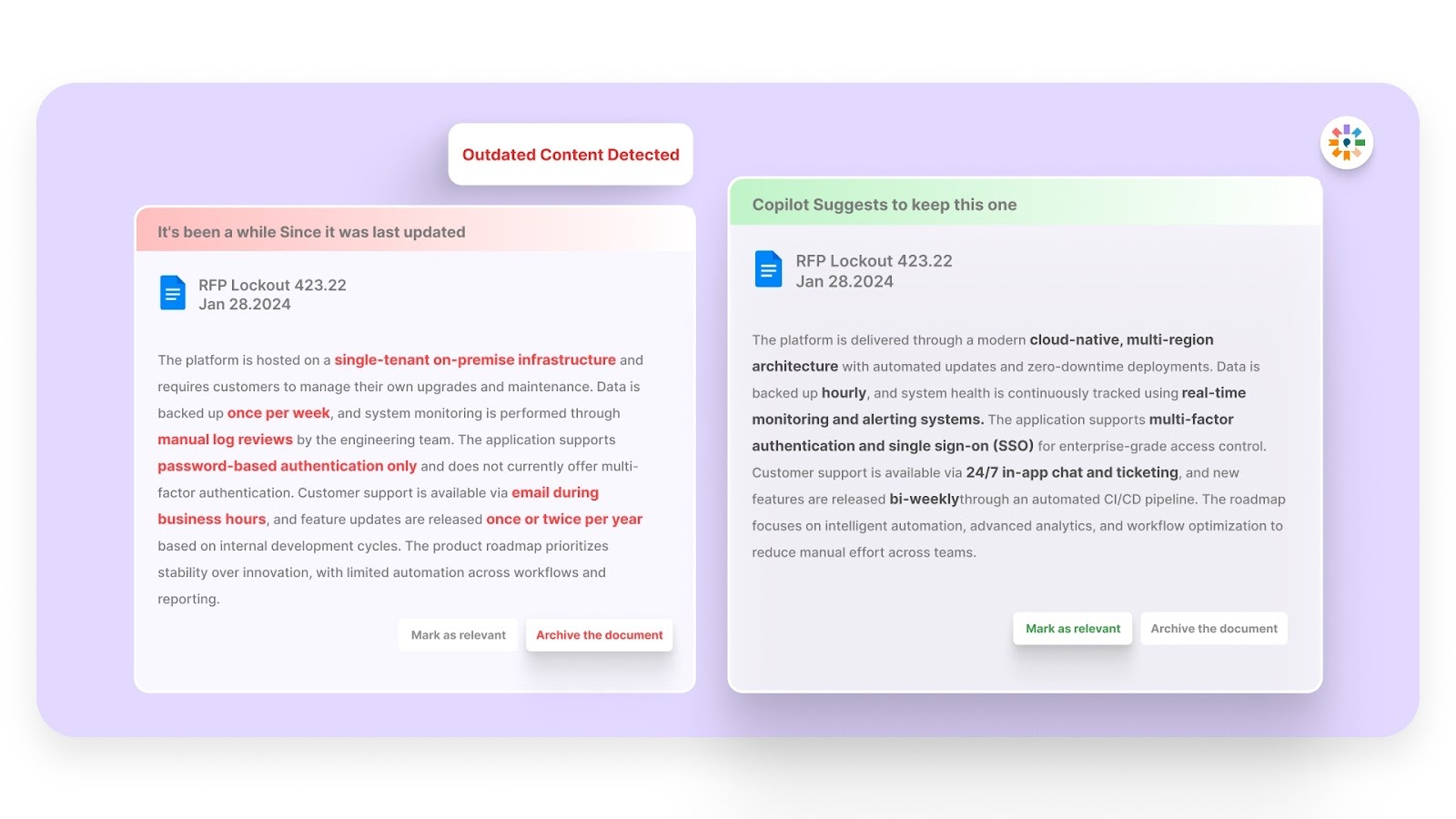
Consulting firms often maintain extensive libraries of prior case studies, resumes, and economic data that become outdated over time. Inventive automatically identifies stale or non-compliant content inside drafts before submission. This reduces manual review cycles and limits the risk of presenting outdated statistics or credentials.
2X Quality Response
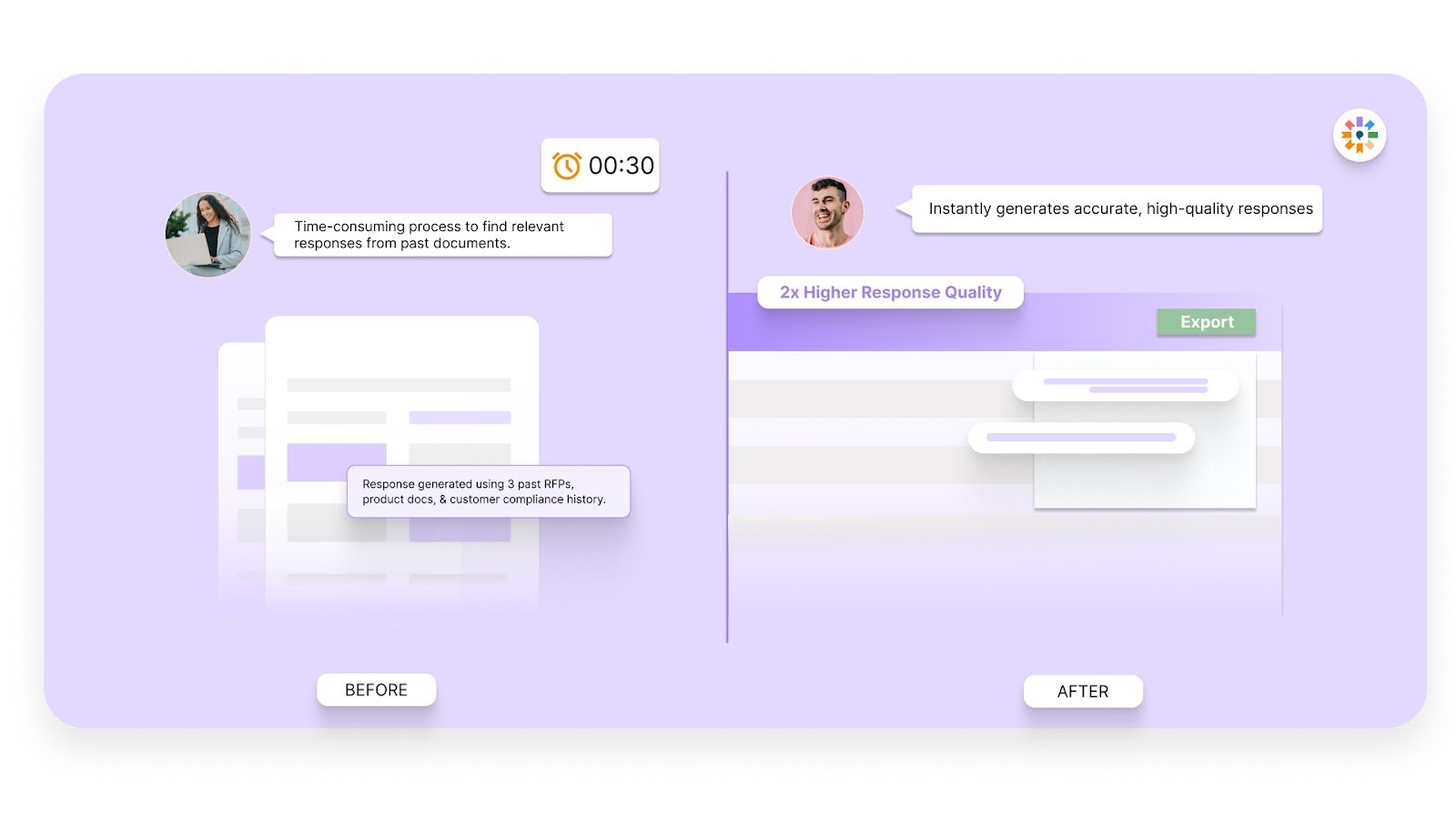
With its multi-agent AI system, Inventive produces strategic responses that interpret the true intent behind economic development questions. Answers are clear, complete, and structured for scoring matrices, resulting in consistently stronger and higher-quality submissions.
Simple and Easy-to-Use UI and UX
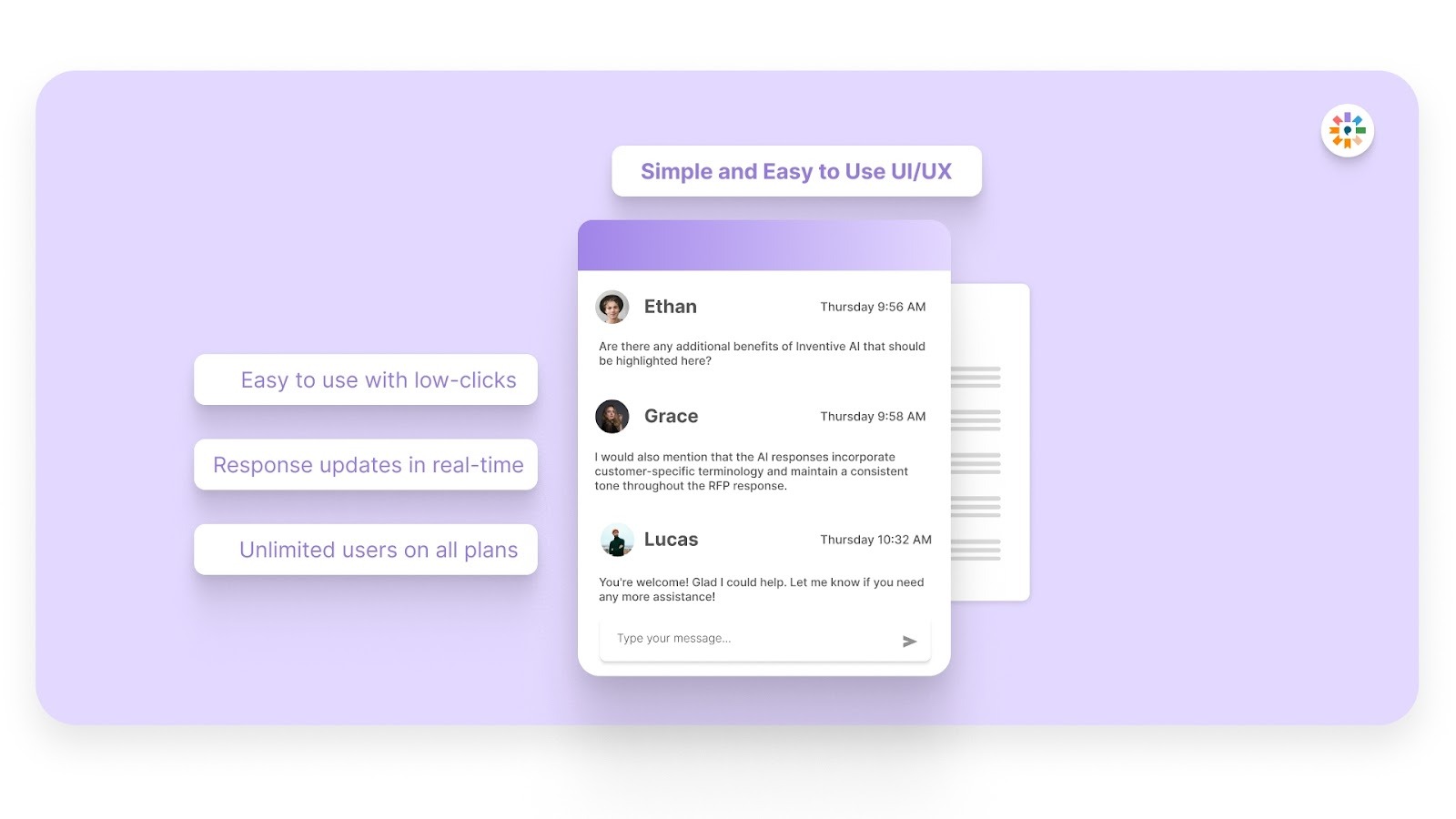
Inventive maintains a 100 percent adoption rate across its customer base and is ranked the easiest-to-use RFP software on G2. Consulting and advisory teams can adopt the platform quickly, even if they are new to AI-based proposal tools.
If your team is responding to multiple public-sector RFPs and wants to reduce drafting time while improving proposal quality, consider scheduling a personalized walkthrough. Book a demo to see how Inventive AI can support your next economic development proposal.
FAQs
1. How long does an economic development RFP process typically take?
Timelines vary by agency size and approval structure. From RFP release to contract award, the process can range from 60 to 120 days. Larger cities or state agencies may require additional board approvals, which can extend the schedule.
2. Are pre-bid meetings mandatory for vendors?
Some agencies require attendance at a pre-bid conference to remain eligible, while others make it optional. Even when optional, attending can provide insight into evaluator priorities and clarification on scope expectations.
3. Can vendors ask questions after the RFP is issued?
Yes. Most RFPs include a formal Q&A period with a submission deadline. Agencies typically publish responses publicly to ensure fairness and transparency across all bidders.
4. What role do subcontractors play in economic development proposals?
Subcontractors may provide specialized expertise such as labor market analysis, GIS mapping, or community outreach. Agencies often require disclosure of subcontractor roles, qualifications, and percentage of project work.
5. How are tie scores handled during proposal evaluation?
If proposals receive similar scores, agencies may conduct interviews, request best-and-final offers, or review specific scoring categories more closely. The final decision may also consider budget fit or demonstrated understanding of local priorities.




.avif)