Education RFPs: A Practical Guide for Institutions and Vendors

Education RFPs shape long-term decisions for schools, districts, and universities. These projects often involve public funding, cross-functional input, and formal oversight. By the time an RFP is issued, the institution has defined its objectives, evaluation framework, and procurement controls with precision.
For vendors, the opportunity carries both scale and responsibility. Each submission must align with structured scoring criteria, compliance requirements, and clearly defined formats. Evaluation committees review proposals methodically, scoring against predefined standards that guide every award decision.
Success in education RFPs comes from understanding how this system works. When vendors align their responses to institutional priorities, scoring rubrics, and compliance expectations, the process becomes structured and repeatable. This guide explains how education RFPs are designed and how to respond with clarity, discipline, and strategic alignment.
Key Takeaways
- Education RFPs are designed for transparency and risk control, but for vendors, strict rubrics, compliance gates, and formatting rules can eliminate strong proposals early.
- RFP requirements vary widely across K–12, higher education, and adult education, directly shaping how proposals are written, evaluated, and scored.
- Consistent wins come from disciplined execution: qualifying the right RFPs, aligning responses to scoring rubrics, reusing proven content, and coordinating teams efficiently.
- AI improves education RFP outcomes by systematizing qualification, drafting, compliance, and performance learning, allowing teams to scale without sacrificing accuracy or control.
What Is an Education RFP?
An education RFP (Request for Proposal) is a formal procurement document issued by an education institution to solicit detailed proposals from qualified vendors or service providers. It outlines a specific need, such as technology platforms, curriculum services, facilities work, or consulting support, and defines how submissions will be evaluated before a contract or award is made.
Unlike informal bids or quotes, an education RFP is a structured, competitive process. It specifies project scope, functional and technical requirements, compliance obligations, evaluation criteria, timelines, and submission rules. The goal is to ensure transparency, fairness, and defensible decision-making, especially when public funds or grant money are involved.
How Education RFPs Differ by Institution Type?
Education RFPs follow different structures, timelines, and evaluation rules depending on the institution issuing them.
- RFPs issued by public school districts are typically highly standardized. They often include rigid submission formats, mandatory compliance language, predefined scoring rubrics, and extensive reporting requirements tied to public funding and audit obligations.
- RFPs from private and charter schools tend to be more flexible. These documents may allow alternative solution approaches, shorter timelines, and less prescriptive evaluation criteria, while still maintaining competitive review processes.
- RFPs in higher education and adult education usually combine formal procurement controls with broader evaluation criteria. These RFPs often emphasize scalability, integration with existing systems, innovation, and long-term partnership viability alongside cost and compliance.
These variations directly affect how RFPs are written, evaluated, and responded to. In most cases, the issuing body represents multiple stakeholders, such as administrators, educators, IT teams, procurement officers, and compliance reviewers, which adds to the rigor and complexity of the RFP process.
Why Education Institutions Use RFPs?
Educational institutions use RFPs to bring structure and defensibility to high-impact purchasing decisions. When projects involve public funds, long-term commitments, or multiple stakeholders, informal procurement methods fall short.
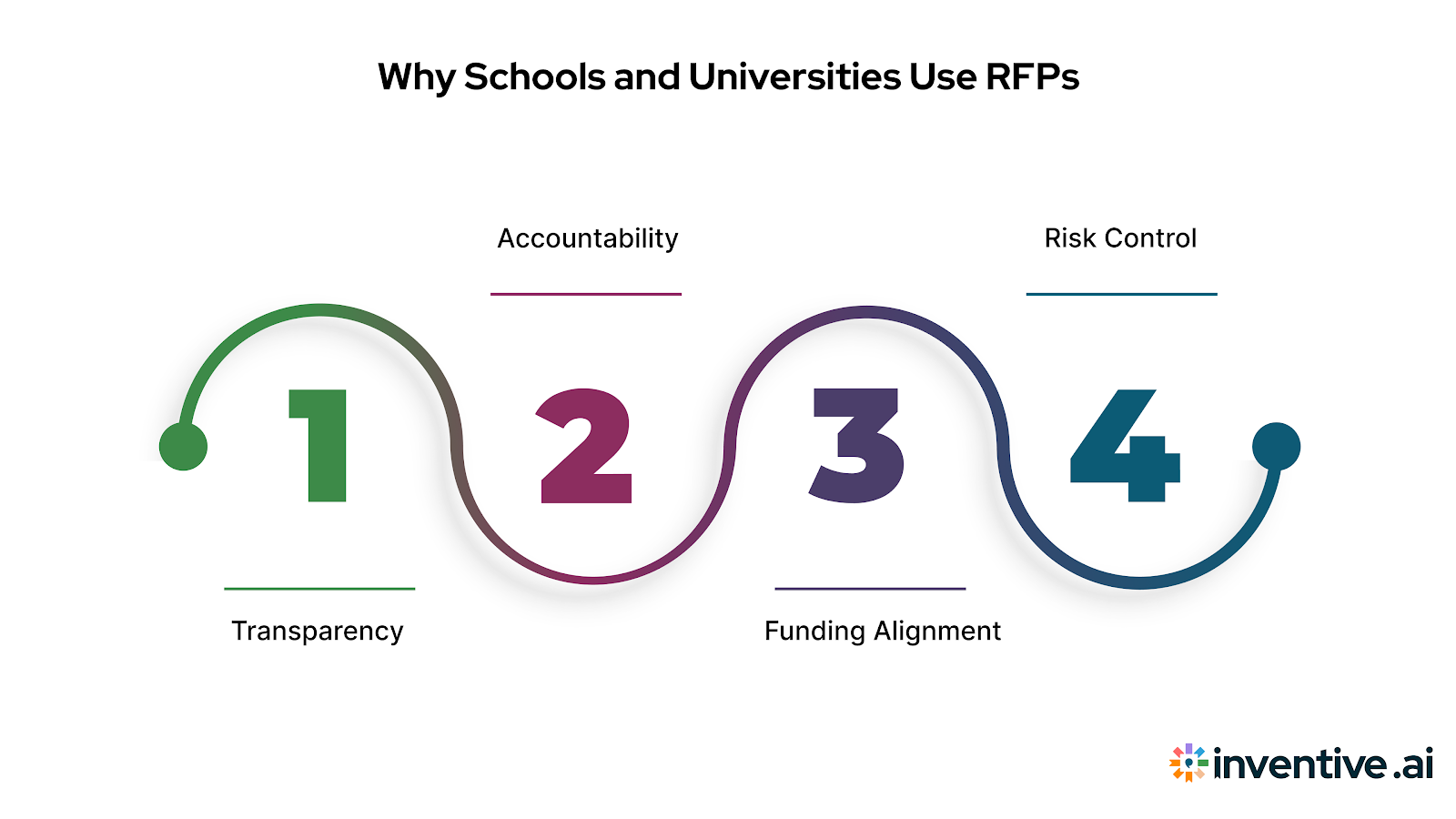
1. Transparency
RFPs create a documented and open process where requirements, timelines, and evaluation criteria are clearly defined in advance. This reduces ambiguity, limits disputes, and ensures that vendor selection can withstand internal review, public scrutiny, or external audits.
2. Accountability
By requiring written proposals and standardized scoring, RFPs establish a clear decision trail. Institutions can demonstrate how and why a vendor was selected, which is critical when decisions involve governing boards, funding agencies, or oversight bodies.
3. Funding Alignment
Many education initiatives are tied to grants or regulated budgets. RFPs help ensure that procurement decisions align with funding conditions, reporting obligations, and allowable spend categories, reducing the risk of funding clawbacks or compliance failures.
4. Risk Control
RFPs allow institutions to surface and evaluate risks before contracts are awarded. Requirements around data privacy, security, implementation capacity, and vendor experience help institutions assess potential exposure and avoid downstream operational or legal issues.
Together, these factors make RFPs the preferred mechanism for educational institutions seeking consistency, control, and outcomes in complex procurement decisions.
3 Resources That Improve Education RFP Quality
Well-structured education RFPs consistently attract better proposals. The difference often comes down to how clearly requirements, evaluation criteria, and constraints are documented before the RFP is released.
The following resources help institutions reduce ambiguity and improve proposal quality:
1. Proven RFP templates and past examples
Standard templates and prior RFPs help clarify scope, timelines, submission rules, and required documentation. Reviewing similar RFPs reduces confusion and limits clarification cycles.
2. Structured evaluation and scoring frameworks
Clear rubrics, scoring matrices, and evaluator checklists align internal reviewers before proposals arrive and support consistent, defensible scoring.
3. Compliance and funding guidance
Procurement policies, grant conditions, accessibility standards, and data privacy requirements should be reflected early to prevent downstream compliance gaps.
Using these resources upfront improves clarity, reduces rework during evaluation, and increases the likelihood of receiving complete, comparable proposals.
7 Core Components of an Education RFP
Education RFPs follow a structured format designed to support fair evaluation, compliance, and clear decision-making. While institutions use these components to communicate expectations, vendors rely on the same sections to shape competitive, compliant responses.
1. Project Overview and Objectives
This section defines the problem the RFP is intended to solve and the outcomes expected. It sets the evaluative lens reviewers use throughout the process, making it the primary reference point against which proposal relevance and alignment are judged.
2. Scope of Work and Requirements
The scope details deliverables, timelines, technical expectations, and operational constraints. Proposals are assessed against this section for completeness and feasibility, and deviations often require explicit justification to avoid scoring penalties.
3. Evaluation Criteria and Scoring Rubrics
Evaluation criteria explain how proposals will be scored and weighted. These rubrics directly influence how narrative structure, emphasis, and evidence are evaluated, shaping what receives attention during review.
4. Compliance and Legal Requirements
Compliance sections outline mandatory procurement rules, funding conditions, data privacy obligations, and certifications. These requirements are typically reviewed before qualitative scoring, where omissions or inconsistencies can disqualify proposals regardless of merit.
5. Pricing and Budget Structure
Pricing formats are designed to enable direct comparison across proposals. Costs are evaluated in relation to scope, risk, and sustainability, making clarity and structural alignment critical to avoid misinterpretation.
6. Submission Instructions and Timelines
Submission rules govern formats, file naming, deadlines, and delivery methods. These requirements are enforced strictly to preserve process integrity, making execution accuracy a decisive factor in whether proposals advance to evaluation.
7. Terms, Conditions, and Required Attachments
Contractual terms and supporting documentation are used to assess implementation risk and readiness. Misalignment in these areas can affect award decisions or trigger extended review cycles.
7 Smarter Strategies and Metrics to Win More Education RFPs
Winning education RFPs depends less on volume and more on disciplined execution. In a compliance-heavy and highly competitive environment, vendors that perform consistently well rely on repeatable strategies backed by clear performance signals.
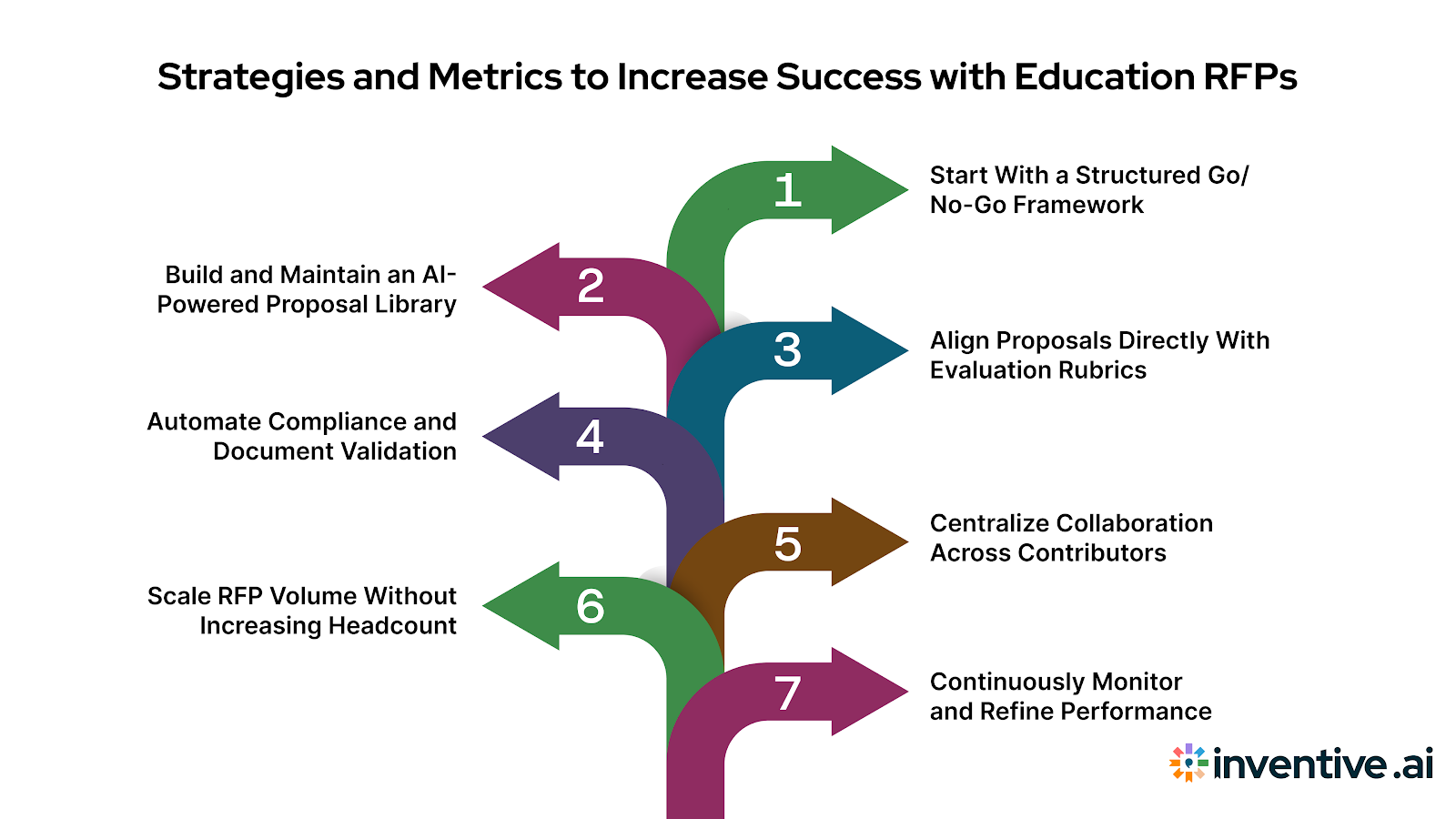
The following approaches focus on what actually improves outcomes and what to watch closely as you scale.
1. Start With a Structured Go/No-Go Framework
Not every education RFP deserves a response. Without qualification discipline, teams burn time on opportunities that were never realistic. A structured go/no-go framework helps teams decide early which RFPs are worth pursuing and which should be declined.
Before committing effort, check whether the RFP aligns with:
- Product or service fit.
- Budget visibility and funding source.
- Submission timelines and internal capacity.
- Past success with similar institutions.
One metric that reveals focus quality is the win rate by institution type. Breaking results down across K–12 districts, charter schools, universities, or state programs quickly shows where effort converts and where it doesn’t.
2. Build and Maintain an AI-Powered Proposal Library
Education RFPs repeatedly ask about implementation, training, accessibility, data protection, and support models. Rewriting these sections every time introduces inconsistency and slows response cycles.
A centralized, AI-assisted content library helps teams:
- Reuse proven responses and case studies.
- Maintain consistent language across submissions.
- Reduce drafting time without sacrificing accuracy.
A useful signal here is the content reuse ratio. A growing reuse rate indicates that institutional knowledge is being retained and applied, not recreated from scratch.
3. Align Proposals Directly With Evaluation Rubrics
Most education RFPs include explicit scoring criteria. These rubrics shape how proposals are read, discussed, and scored.
Instead of generic narratives, responses should reflect:
- The same terminology is used in the evaluation criteria.
- Clear evidence where higher weighting applies.
- Structured answers that map cleanly to scoring sections.
Reviewer feedback is an important input. Patterns like unclear rollout plans or partial compliance often repeat across losses and provide direct guidance on where future responses need tightening.
4. Automate Compliance and Document Validation
Education RFPs apply compliance rules strictly. Missing forms, incorrect formats, or outdated certifications can remove a proposal before it is even scored.
Automated compliance checks help ensure:
- All mandatory documents are included
- Formatting and file naming rules are followed
- Deadlines and submission steps are not missed
Tracking internal rework rates highlights where breakdowns occur, whether in document handling, approvals, or last-minute changes.
5. Centralize Collaboration Across Contributors
Education RFPs rarely involve one team. Legal, finance, implementation, security, and sales often contribute under tight deadlines.
A centralized workspace reduces:
- Version conflicts.
- Email-driven delays.
- Unclear ownership of sections or reviews.
One indicator to watch is average response time, measured from qualification to submission. Extended timelines usually point to review bottlenecks or fragmented collaboration.
6. Scale RFP Volume Without Increasing Headcount
Vendors responding to multiple districts or recurring grant programs often see the same RFP patterns repeat. Handling each response manually limits throughput.
Automation supports scale by:
- Generating structured first drafts.
- Pre-filling standard sections.
- Suggesting education-specific language.
Comparing proposal volume to team capacity over time shows whether systems are enabling scale or simply masking overload.
7. Continuously Monitor and Refine Performance
Even well-run RFP programs benefit from regular review. Consistent tracking of outcomes reveals where strategies hold and where adjustments are needed.
Core indicators to monitor include:
- Win rate trends.
- Time to completion.
- Content effectiveness across sections.
Together, these metrics surface both strengths and gaps, helping teams refine strategy rather than relying on assumptions.
How AI Helps with Education RFP Management?
AI helps education teams reduce execution risk, improve response consistency, and scale proposal volume without increasing manual effort. Instead of relying on fragmented documents and last-minute checks, AI introduces structure across qualification, drafting, compliance, and review.
Below are the specific ways AI strengthens education RFP execution.
1. Structured RFP Analysis and Requirement Extraction
Education RFPs are often lengthy and segmented across core documents, appendices, and attachments. Critical requirements may appear in technical specifications, compliance clauses, or scoring rubrics rather than in a single summary section. Reviewing these manually takes time and can fragment understanding across teams.
AI converts RFP documents into structured requirements. It extracts submission rules, evaluation criteria, weighting details, compliance obligations, and scope expectations into an organized framework that guides the response process.
This structured view provides:
- Clear visibility into scored and mandatory sections
- Consolidated compliance checklists
- Aligned drafting priorities based on evaluation weight
- A defined roadmap before writing begins
With requirements mapped clearly from the start, teams move into drafting with precision and alignment.
2. Auto-Generation of Tailored First Drafts
Drafting education RFP responses from scratch is inefficient and inconsistent, especially when requirements overlap across districts, states, or grant programs. AI accelerates this stage by generating structured first drafts grounded in approved content, prior submissions, and RFP-specific context.
Effective AI systems adapt responses based on:
- Institution type and governance model.
- Scope depth and technical expectations.
- Regional or regulatory language patterns.
This shifts teams from writing to reviewing, allowing subject-matter experts to focus on accuracy and differentiation rather than repetitive drafting.
3. Rubric Mapping and Scoring Alignment
Education RFPs are scored methodically. Reviewers rely on rubrics to compare proposals across predefined criteria, often under time pressure. AI helps bridge the gap between how RFPs are written and how they are evaluated.
By analyzing scoring rubrics, AI can:
- Identify high-weight criteria and surface them early.
- Recommend a response structure that mirrors the evaluation sections.
- Flag areas where evidence or clarity is likely required.
This reduces interpretive risk and makes proposals easier for reviewers to score consistently.
4. Compliance Enforcement and Risk Reduction
Compliance failure remains one of the most common causes of disqualification in education RFPs. Requirements may include data privacy obligations, accessibility standards, certifications, disclosures, and district-specific procurement clauses.
AI strengthens compliance by:
- Tracking mandatory requirements across sections and attachments.
- Validating document completeness and formatting rules.
- Highlighting inconsistencies between narrative claims and certifications.
This shifts compliance from a last-minute checklist to an embedded control throughout the response process.
5. Coordinated Collaboration Across Distributed Teams
Education RFPs draw input from curriculum specialists, implementation teams, IT, legal, finance, and sales. Without structure, collaboration becomes fragmented and error-prone.
AI-enabled platforms centralize:
- Section ownership and review workflows.
- Commenting and clarification within context.
- Version control tied to submission deadlines.
This reduces rework, shortens review cycles, and ensures contributors operate from a single source of truth.
6. Performance Intelligence and Continuous Improvement
Beyond individual submissions, AI creates visibility across the entire RFP operation. By aggregating response data and outcomes, teams gain insight into what actually influences results.
Performance intelligence highlights:
- Which sections correlate most with wins or losses
- Where review delays consistently occur
- How response time and quality change at scale
Over time, these insights inform content refinement, process changes, and opportunity selection, improving outcomes without increasing effort.
Even with AI, it's essential to know what pitfalls to avoid. Let’s walk through common mistakes that derail education RFPs, and how you can sidestep them.
4 Common Mistakes in Education RFP Responses (And How to Avoid Them)
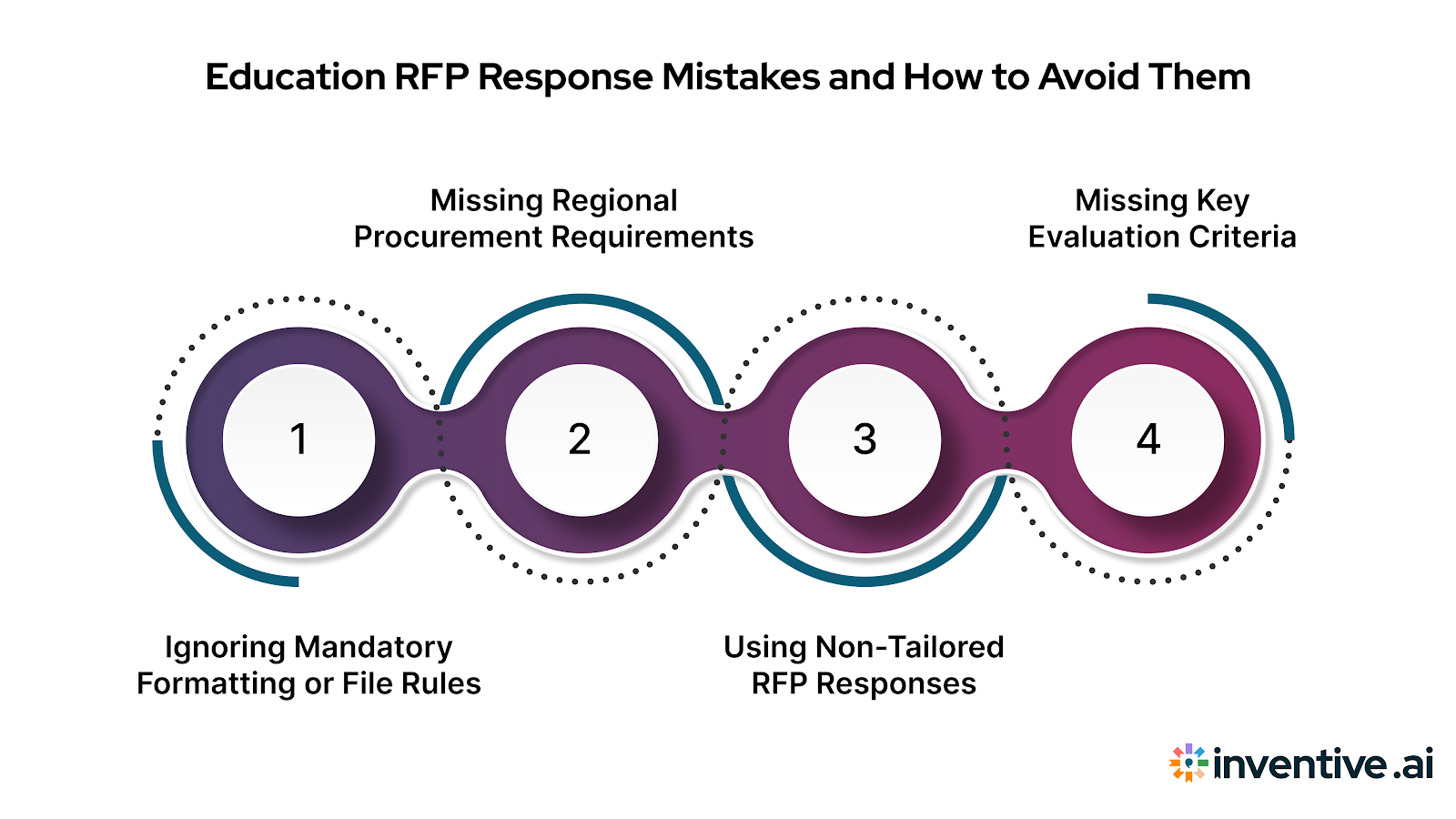
Education RFPs leave little room for error. Many proposals fail not because the solution is weak, but because execution breaks down at predictable points.
Below are the mistakes that most often derail education RFP responses, along with practical ways to prevent them.
1. Ignoring Mandatory Formatting or File Rules
Education RFPs often enforce strict requirements around file formats, naming conventions, page limits, and attachment order. Even minor deviations can result in rejection before evaluation begins.
How to avoid it:
Use automated validation to check formats, page limits, and file naming before submission so errors are caught early.
2. Missing Local or State-Specific Procurement Clauses
Public education RFPs frequently include regional disclosure forms, certifications, and procurement language tied to state or district rules. Overlooking these indicates a non-compliance.
How to avoid it:
Maintain region-specific templates and checklists so that required clauses and attachments are surfaced automatically for each jurisdiction.
3. Submitting Generic, Non-Tailored Responses
Evaluation committees quickly identify boilerplate content that does not reflect their institution, student population, or priorities.
How to avoid it:
Reuse proven content selectively, while tailoring language, examples, and metrics to the specific RFP context and evaluation focus.
4. Failing to Address Every Evaluation Criterion
Most education RFPs use point-based rubrics. If a criterion is not explicitly addressed, points are lost regardless of overall proposal quality.
How to avoid it:
Structure responses to mirror the evaluation rubric and confirm that every scored item is answered clearly and completely.
Avoiding these mistakes improves baseline eligibility. Using a structured, AI-supported workflow further reduces risk and increases consistency across education RFP submissions.
Also read: AI in Educational RFP Workflow Optimization.
Why Inventive AI Is Built for Education RFP Management?
Education RFPs combine strict procurement rules with detailed technical, instructional, and compliance requirements. Vendors are expected to respond quickly, remain fully compliant, and coordinate input from multiple teams, often under tight deadlines and public scrutiny.
Inventive AI is built to handle this exact complexity. It supports education-focused vendors with structured automation, governed knowledge, and response controls designed for regulated RFP environments.
10× Faster Drafts With Highly Accurate Responses:
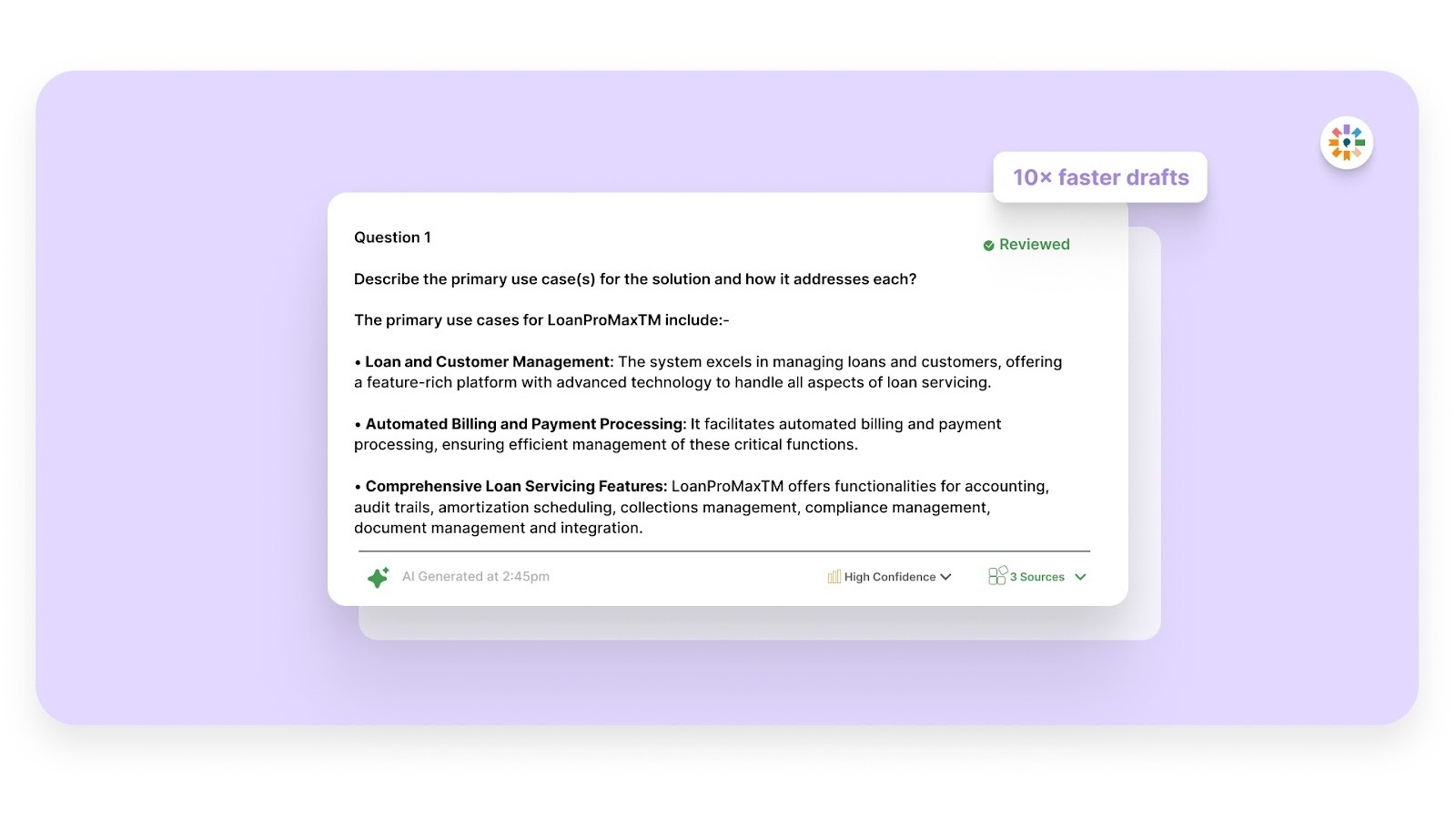
First drafts are generated using your approved knowledge sources, allowing teams to move directly into review and refinement without starting from scratch.
Single Hub for All Education RFP Knowledge:
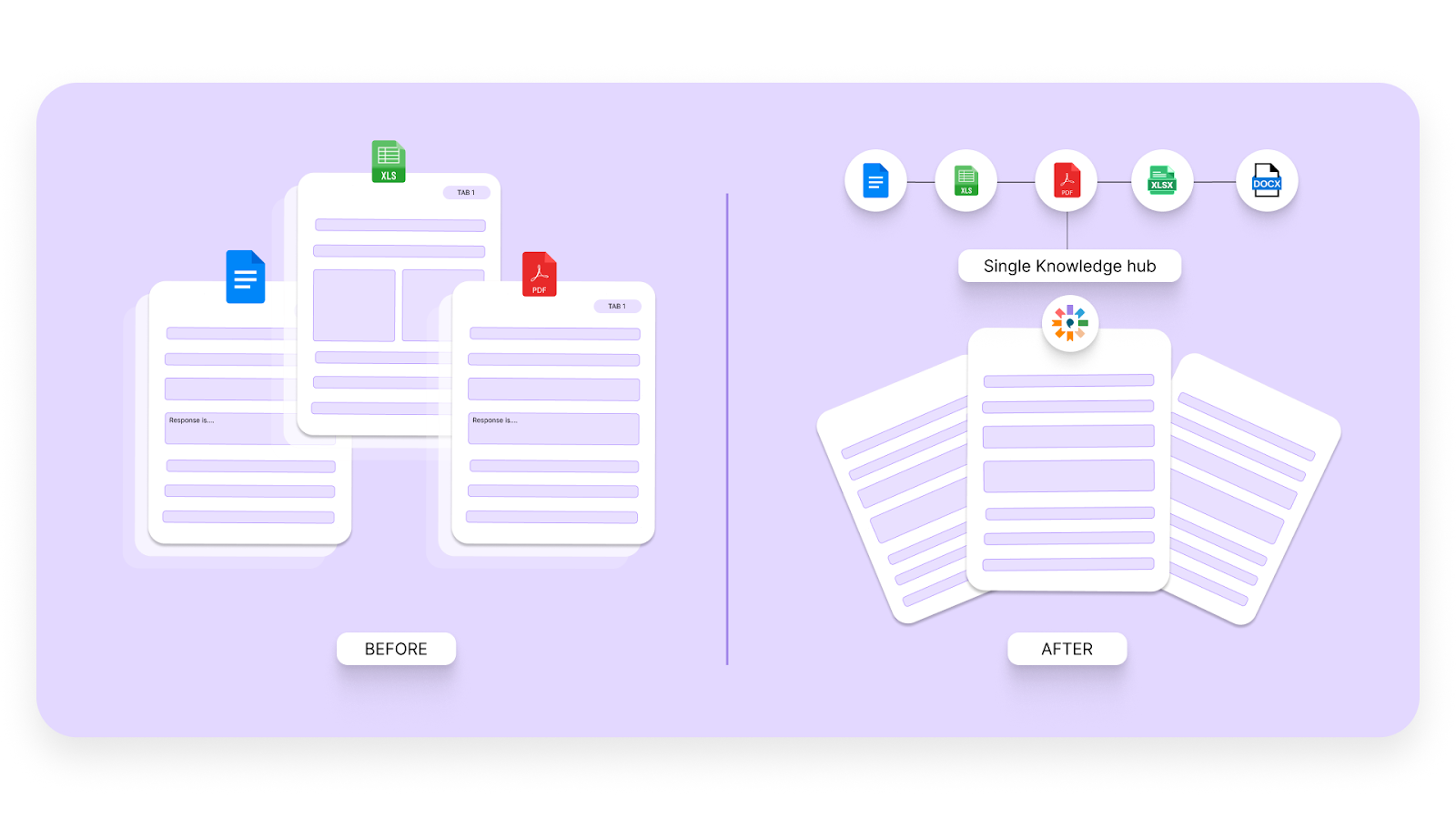
Past RFPs, approved answers, policies, and reference documents are centralized and connected across systems like Google Drive, SharePoint, Notion, and Confluence, ensuring consistent reuse.
AI Content Manager to Prevent Stale or Conflicting Answers:
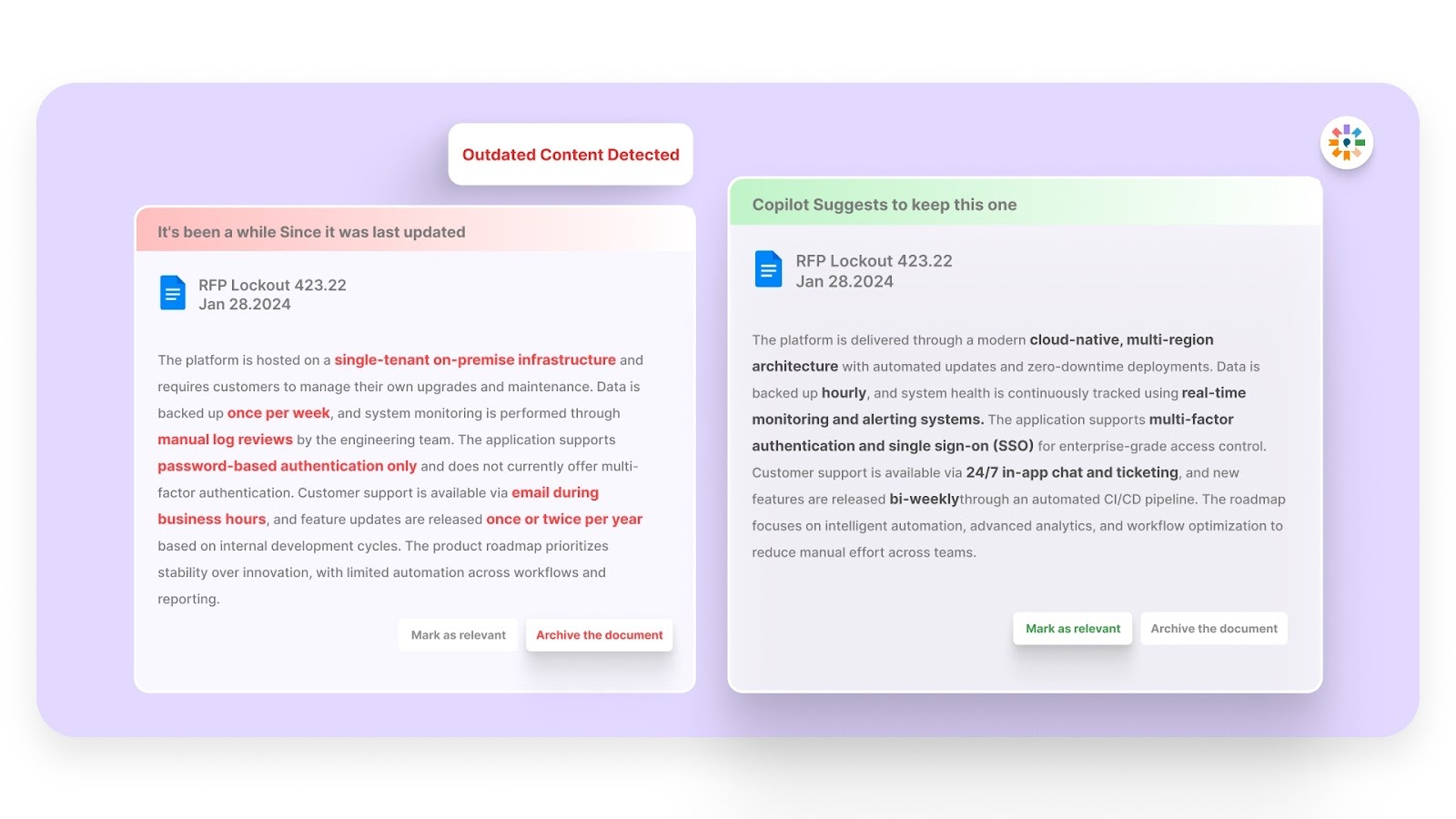
Content is continuously monitored to flag outdated or conflicting information before it appears in a proposal, reducing last-minute corrections and credibility risk.
- Win Themes for Rubric and Gap Alignment: Evaluation criteria are analyzed to surface missing or weak areas, while relevant internal context is pulled in to strengthen alignment with how proposals are scored.
- Compliance Matrix and Readiness Checklists: Compliance requirements are flagged early and converted into checklists so teams can validate completeness before submission rather than reacting late.
AI-Powered Responses With Citations and Confidence Scores:
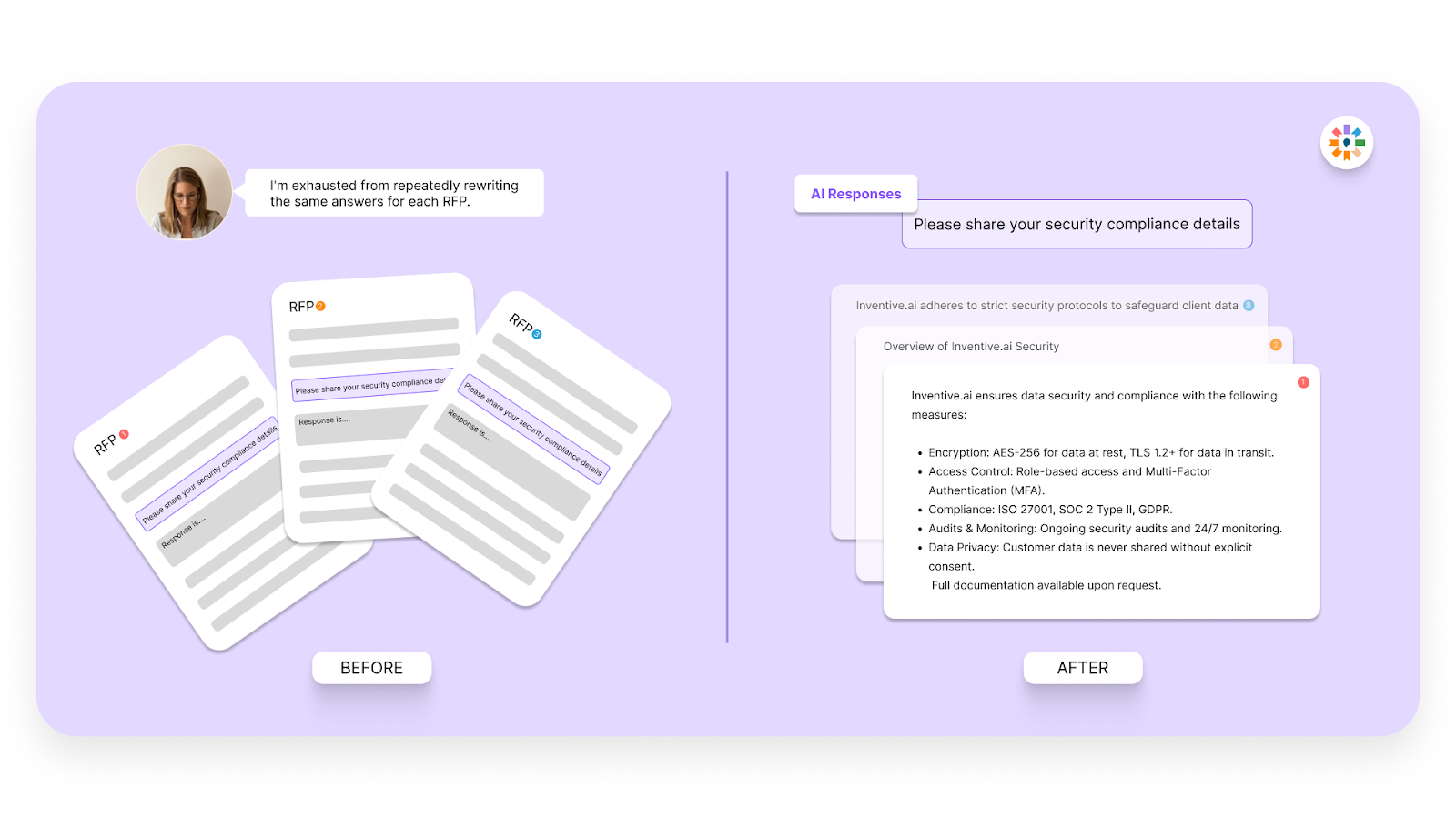
Every answer is cited back to internal sources and confidence-scored, allowing reviewers to verify accuracy quickly and eliminating hallucinated content.
Highly Contextual Responses With Full Tone and Style Control:
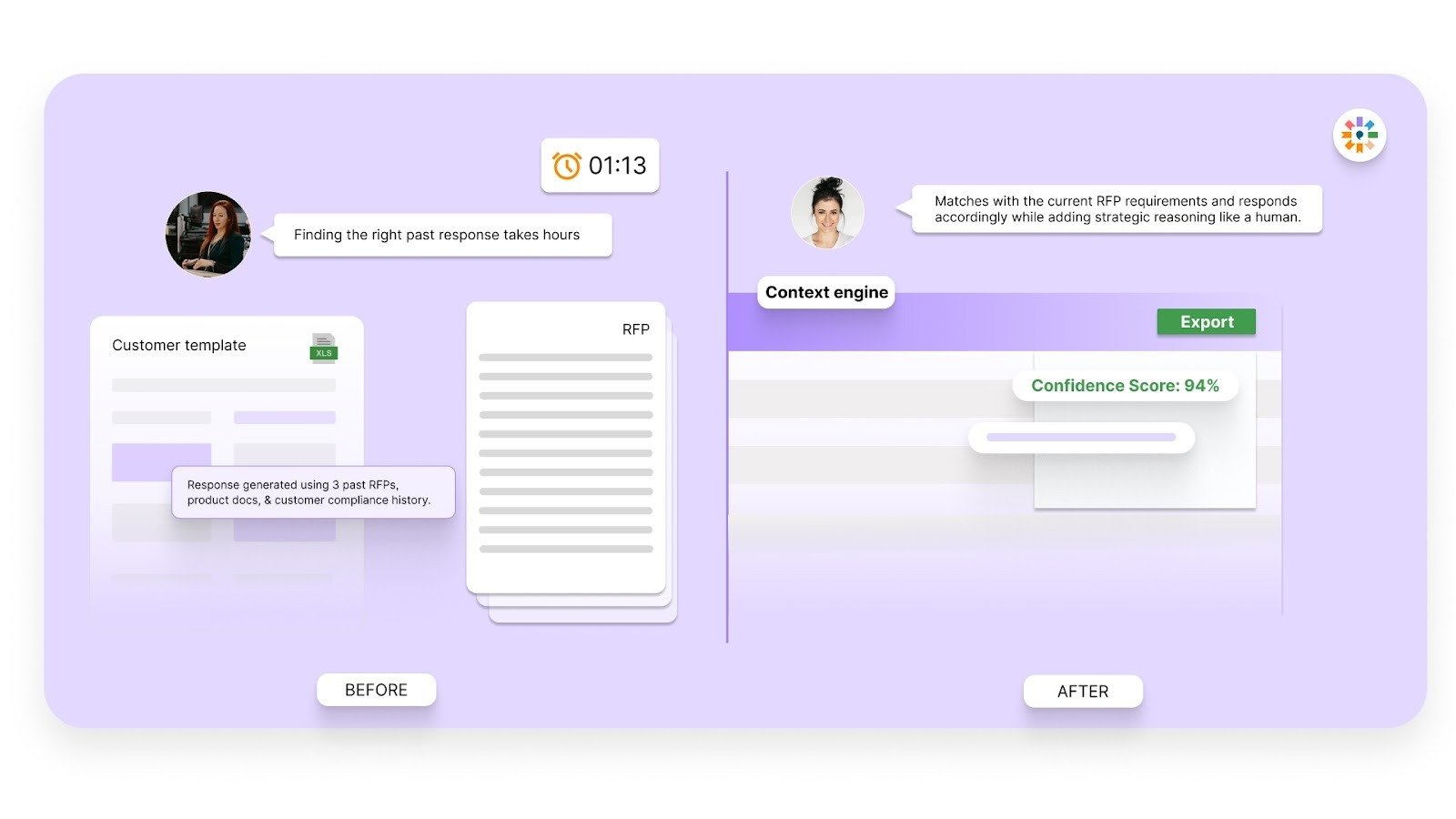
Responses adapt to institution type, deal context, and RFP language, with instant control over tone, length, and level of detail.
AI Agents for Competitive and Strategic Advantage:
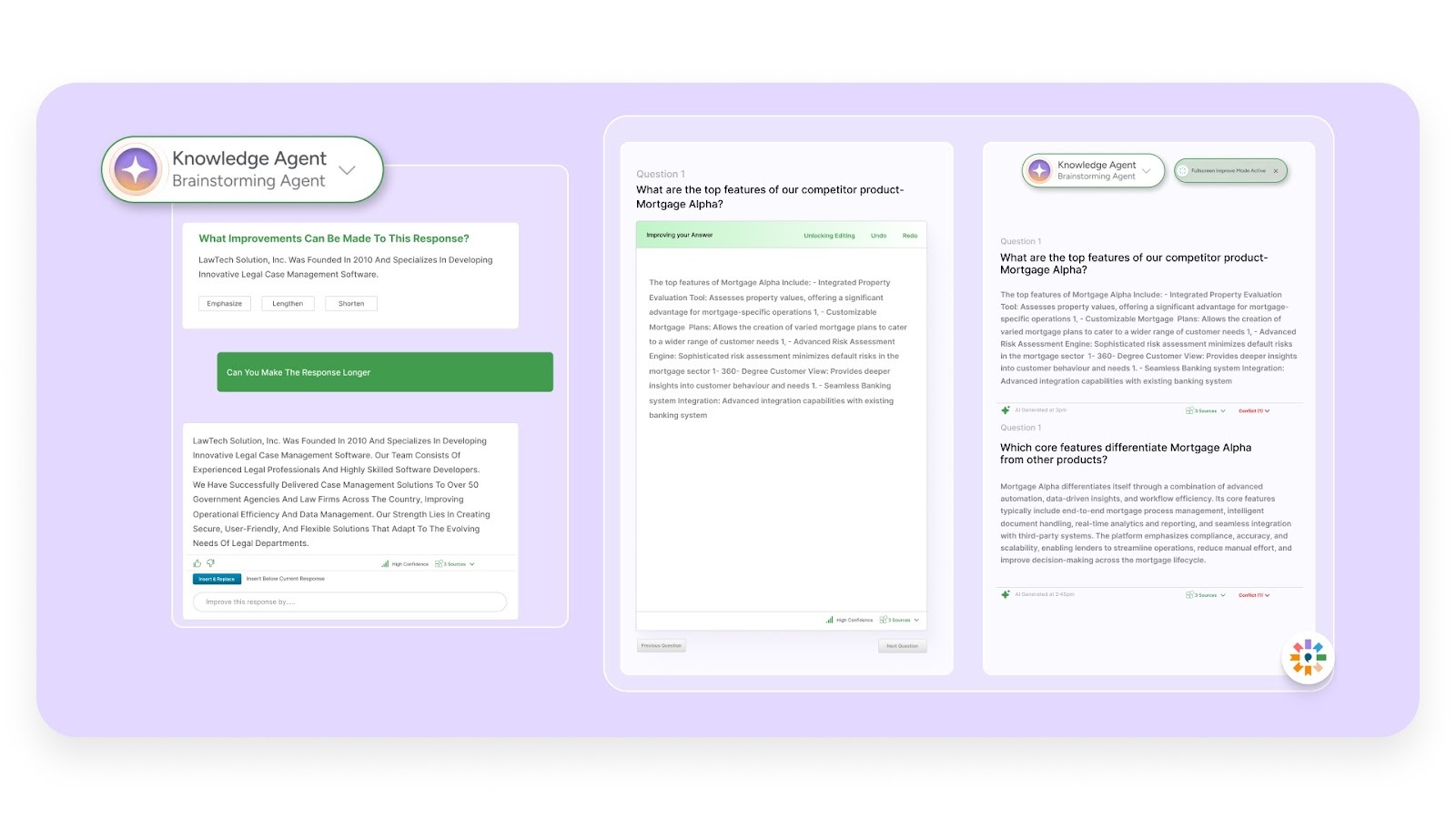
Dedicated agents support competitor research and structured brainstorming, helping teams sharpen differentiation and positioning.
Collaboration Built for Cross-Functional RFP Teams:
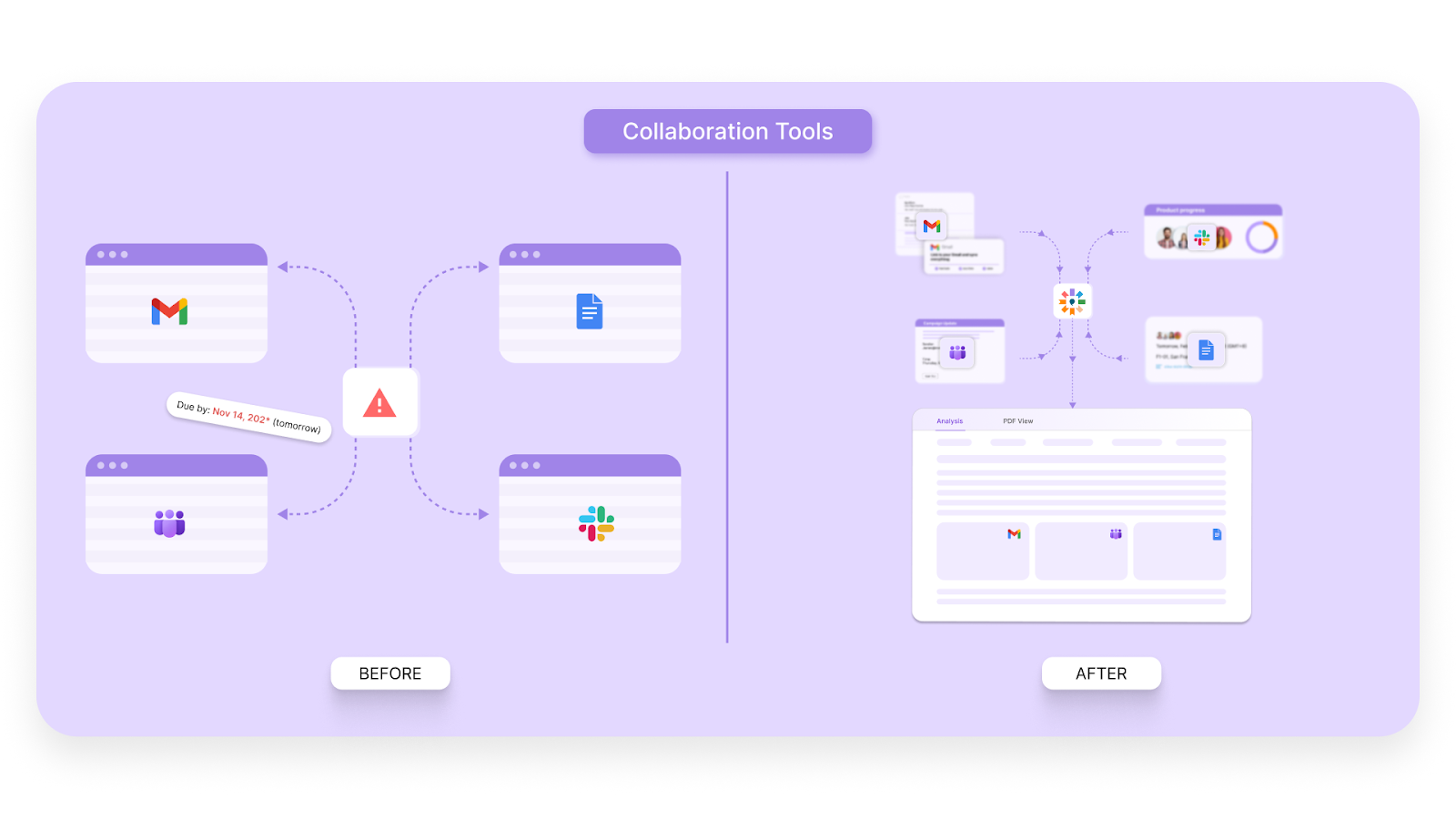
Role-based access, task assignment, comments, activity logs, and Slack integration keep all contributors aligned in a single workspace.
Inventive AI helps education vendors respond quickly, with confidence and control, whether managing a handful of RFPs or dozens across districts, states, and grant programs.
FAQs About Education RFPs
1. How long does an education RFP process typically take?
Education RFP timelines vary by institution type and funding structure. K–12 district RFPs often run 6 to 12 weeks from release to award, while higher education procurements may extend several months due to committee reviews, demonstrations, and board approvals. Grant-funded RFPs can follow fixed submission windows tied to funding cycles.
Vendors should account for internal review periods, clarification rounds, presentation stages, and contract negotiations when planning capacity and forecasting revenue timelines.
2. What compliance requirements are unique to education RFPs?
Education RFPs frequently include requirements tied to student data privacy, accessibility standards, and public funding regulations. Vendors may need to address FERPA alignment, ADA accessibility, state-specific procurement disclosures, cybersecurity safeguards, and reporting obligations linked to grants.
Because these requirements vary by state and district, maintaining region-specific compliance documentation improves readiness and reduces last-minute revisions.
3. What makes education RFPs more complex than corporate RFPs?
Education RFPs typically involve stricter compliance rules, public accountability, funding constraints, and multiple reviewers from different departments. Requirements around accessibility, data privacy, reporting, and audit readiness add additional layers of complexity.
4. Can AI be used safely in education RFP responses?
Yes, when AI is grounded in a vendor’s internal knowledge and governed by compliance controls. AI can support drafting, rubric alignment, compliance checks, and collaboration without introducing unverifiable or hallucinated content.

.avif)




.avif)