
Restaurant RFP Template + Industry-Specific Proposal Samples

Restaurant and food service RFPs often produce proposals that look similar but reflect very different assumptions about menus, staffing, service style, and operational scope. These gaps usually originate in the RFP itself.
When requirements such as menu expectations, staffing levels, food safety compliance, and pricing structure are not clearly defined, vendors interpret the service differently, making proposals difficult to compare.
A structured restaurant RFP sets clear service scope and operational expectations so vendors can prepare accurate proposals and procurement teams can evaluate bids consistently.
This blog provides a structured restaurant RFP template for restaurant owners and corporate clients issuing food service requests, along with proposal templates food service providers can use when responding to restaurant RFPs.
Download Restaurant RFP Template in Word: Strengthen Vendor Selection (for Buyers)
A restaurant or corporate dining RFP must supply vendors with precise operational data to calculate food costs, labor requirements, equipment needs, and pricing models. Each section below corresponds to specific information vendors use to build culinary programs and cost projections.
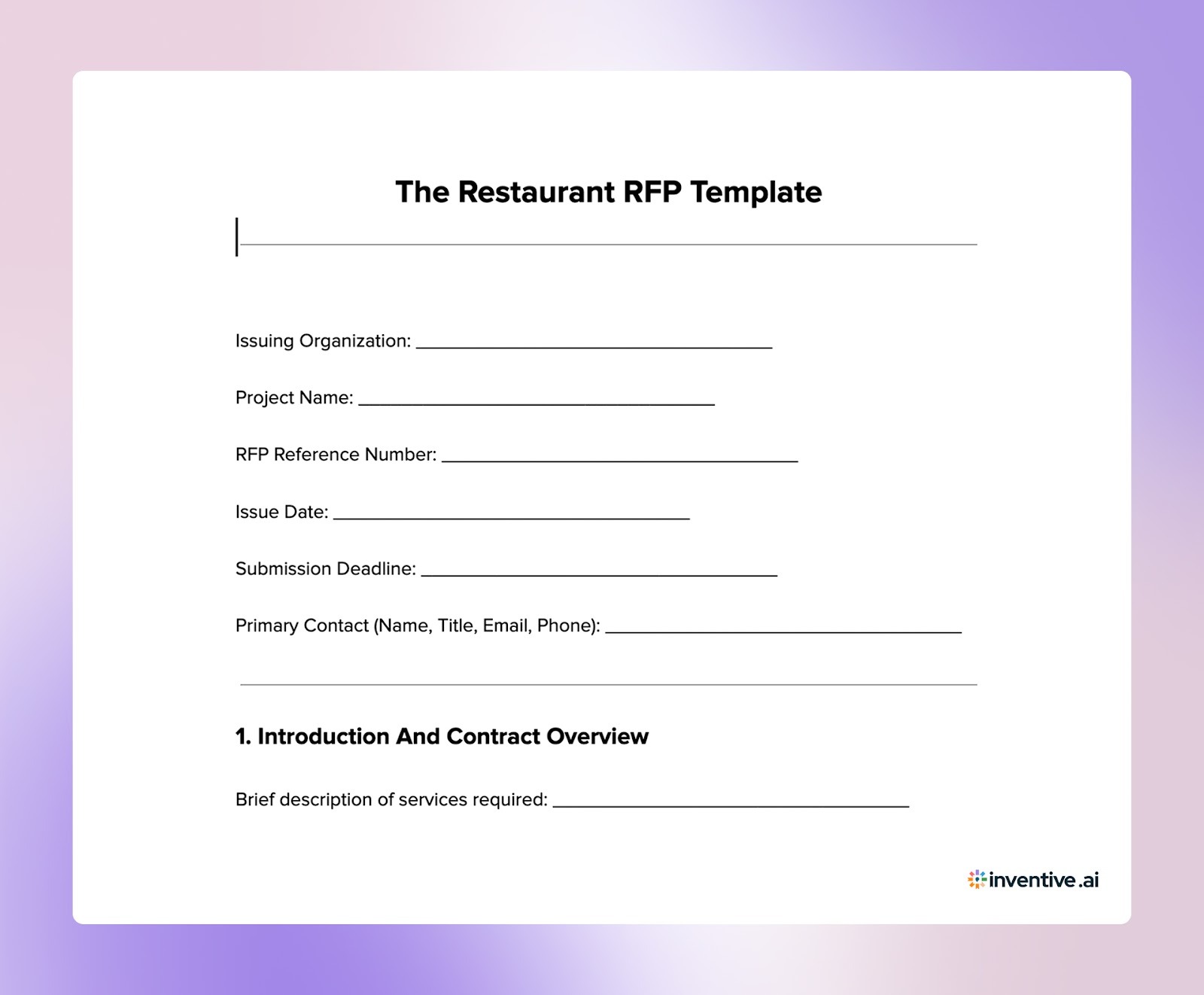

1. Introduction and Contract Overview
This section establishes the contract term, number of service locations, and renewal structure. Vendors use this to determine whether to amortize startup costs over a short contract or price for long-term stability.
Include:
- Contract duration and start date
- Number of facilities covered
- Renewal options and termination clauses
Example: The contract term is 36 months with two 12-month renewal options, covering full-service cafeterias at headquarters and offices, with 90-day termination for convenience.
2. Company and Workforce Background
Vendors design menus and staffing plans around workforce size, demographics, and dietary diversity. Office populations with high international representation require different culinary approaches than homogeneous workforces.
Document:
- Total employee count and shift distribution
- Cultural diversity metrics affecting cuisine preferences
- Dietary restriction prevalence (allergies, religious requirements, medical diets)
Example: Workforce of 2,400 across three shifts, with 35% identifying as Asian or South Asian, 12% requiring halal options, and 8% with diagnosed food allergies requiring allergen-free preparation zones.
3. Scope of Services
This section defines exact service expectations. Vendors structure kitchen staffing, inventory systems, and vendor relationships around these specifications. Ambiguity here creates pricing inconsistencies and service gaps.
Specify:
- Daily meal service (breakfast, lunch, dinner) with participation estimates.
- Vending machine management and product selection authority.
- Corporate catering frequency, typical headcounts, and service styles.
- Special programs: executive dining, grab-and-go retail, coffee bars.
Example: Daily breakfast (150 covers) and lunch (800 covers) service, 35 vending machines across two buildings, catering for 25 monthly events averaging 75 guests, plus quarterly board dinners for 20 requiring white-tablecloth service.
4. Operating Hours and Service Schedule
Meal timing determines kitchen labor shifts, equipment capacity requirements, and food holding protocols. Vendors calculate labor costs differently for continuous service versus compressed meal windows.
Detail:
- Café operating hours by day of the week
- Meal period durations and peak traffic times
- Catering setup and service time requirements
- Holiday and weekend coverage expectations
Example: Breakfast service 6:30-9:30 AM (peak 8:00-9:00 AM), lunch 11:00 AM-2:00 PM (peak 12:00-1:00 PM), catering requires setup 2 hours prior to event start, 24/7 vending restocking Monday through Saturday.
5. Menu and Culinary Standards
This section translates corporate wellness and sustainability goals into enforceable culinary requirements. Vendors use these specifications to design menu cycles, calculate food costs, and qualify suppliers.
Define:
- Nutritional standards (calorie limits, sodium caps, macronutrient targets)
- Menu diversity requirements (international cuisines, vegetarian/vegan ratios)
- Local and sustainable sourcing mandates with mileage definitions
- Nutritional labeling requirements (full disclosure, simplified icons, allergen callouts)
Example: Menus must offer 40% plant-based entrees, source 30% of produce from farms within 100 miles, provide complete nutritional panels for all items, and maintain dedicated allergen-free preparation equipment for gluten, dairy, and nut-free meals.
6. Staffing and Management Structure
Vendors price labor based on supervision requirements and credential mandates. Specifying management presence affects whether vendors assign dedicated account executives or rotate regional managers across multiple clients.
Require:
- Minimum on-site management presence (hours per day, days per week)
- Required certifications for food service director (RD, CDM, CFBE)
- Chef credentials and specialized training (allergen management, international cuisines)
- Background check and drug screening requirements
Example: Vendor must provide full-time on-site Food Service Director with Registered Dietitian or Certified Dietary Manager credential, Executive Chef with 7+ years corporate dining experience, and completion of FBI background checks for all personnel with unsupervised access.
7. Facilities and Equipment
Clarifying equipment responsibility prevents disputes over capital expenditures, maintenance costs, and replacement timelines. Vendors calculate depreciation differently based on ownership structures.
Distinguish:
- Client-provided assets (building infrastructure, HVAC, grease traps)
- Vendor-provided equipment (smallwares, cooking equipment, POS systems)
- Maintenance and replacement responsibility boundaries
- Dining area furnishings and décor accountability
Example: Client provides commercial kitchen infrastructure, walk-in refrigeration, and fixed seating; vendor supplies all cooking equipment, smallwares, POS terminals, and tableware with full lifecycle replacement responsibility.
8. Food Safety and Compliance
Food service liability exposure exceeds most contracted services. Insurance minimums and safety protocols must match the scale of the meal service and the population's vulnerability.
Mandate:
- Food safety certification requirements (ServSafe, HACCP, ISO 22000)
- Health department inspection frequency and score minimums
- General liability, product liability, and workers' compensation limits
- Foodborne illness response protocols and documentation
Example: Vendor must maintain $2,000,000 general liability, $5,000,000 product liability, active HACCP certification, zero critical violations on health inspections, and a 4-hour response protocol for suspected foodborne illness reports.
9. Financial Structure and Pricing
Requiring consistent pricing formats enables direct comparison across vendors and prevents hidden cost escalation. Different models suit different risk allocations between the client and the vendor.
Request:
- Management fee structure (fixed fee, cost-plus, per-meal pricing)
- Food cost targets or guarantees
- Vending revenue sharing terms (if applicable)
- Pass-through cost definitions and markup limits
- Catering pricing tiers by service level
Example: Provide fixed monthly management fee, guaranteed food cost not to exceed 32% of retail pricing, vending revenue share of 15% to client, and tiered catering rates: buffet $28/person, plated $45/person, premium $75/person.
10. Proposal Submission Requirements
Explicit documentation requirements prevent vendors from omitting critical information that complicates evaluation. Standardized submissions enable scoring consistency.
Require submission of:
- 4-week sample menu cycles with recipes and nutritional analysis
- Detailed staffing plan with resumes for proposed management
- Sustainability and local sourcing implementation plan
- Technology capabilities (POS, mobile ordering, inventory management)
- Financial projections with pricing breakdowns
- Three comparable corporate dining references with contact information
Example: Proposals must include signed certifications, sample menus with costing, organizational chart, insurance certificates, and references from accounts serving 500+ daily meals.
11. Evaluation Criteria and Weighting
Pre-defining scoring categories allows vendors to emphasize relevant strengths and ensures objective evaluation. Weighting reflects organizational priorities beyond the lowest price.
Assign weights to:
- Culinary approach and menu innovation
- Relevant experience and reference quality
- Pricing competitiveness and cost controls
- Sustainability and wellness alignment
- Technology and operational efficiency
Example: Culinary Quality (30%), Corporate Dining Experience (25%), Pricing Structure (25%), Sustainability Programs (15%), Technology Platform (5%).
Clear requirements help buyers evaluate options. Vendors must mirror those details precisely to win. If you are responding to a restaurant or corporate dining RFP, use the following structure.
Restaurant RFP Template: 11 Sections of Restaurant RFP Templates (for Vendors)
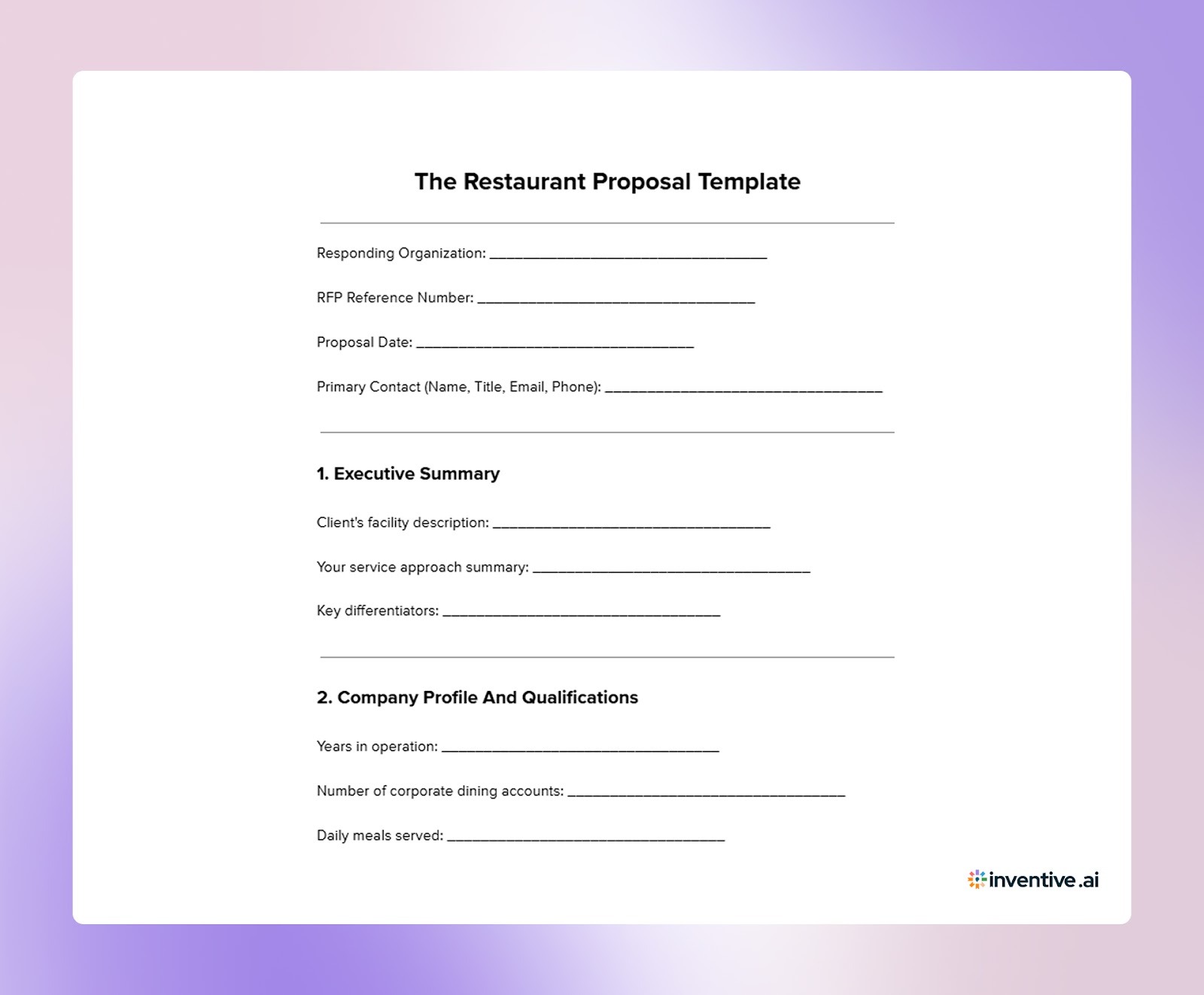
A restaurant or food service proposal must document the operational details that restaurant owners and corporate clients rely on to evaluate service capability, menu execution, staffing reliability, and pricing structure.
Each section below corresponds to information food service providers use to demonstrate their service model, culinary program, and cost approach in response to the RFP.

Match Your Food Service RFP With The Right Restaurant Proposal Template: 3 Types of Restaurant RFP by Use Case
Restaurant and food service proposals vary depending on the dining environment, service model, and contract structure. While the core proposal sections remain consistent, menu scope, staffing levels, service schedules, and operational requirements differ across dining programs. Below are three common types of restaurant proposals used in practice.
1. Corporate Campus Dining Proposal
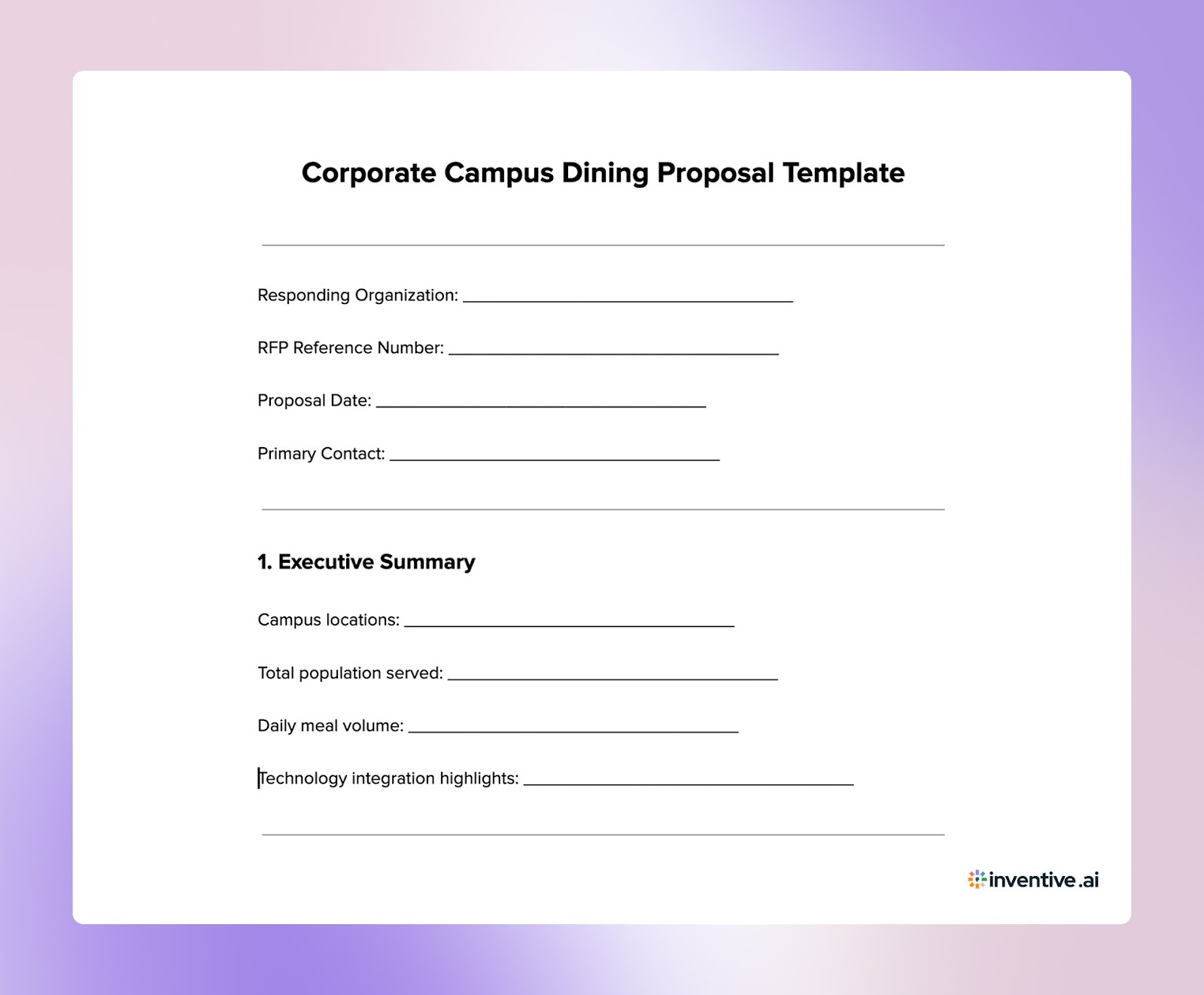
Multi-location technology and professional service campuses require high-volume efficiency, diverse international cuisines, and technology integration. These proposals emphasize throughput optimization, mobile ordering platforms, and data-driven menu optimization.
Key differentiators: Peak hour capacity management, multiple payment methods, wellness program integration, and sustainability metrics.

2. Healthcare Food Service Proposal
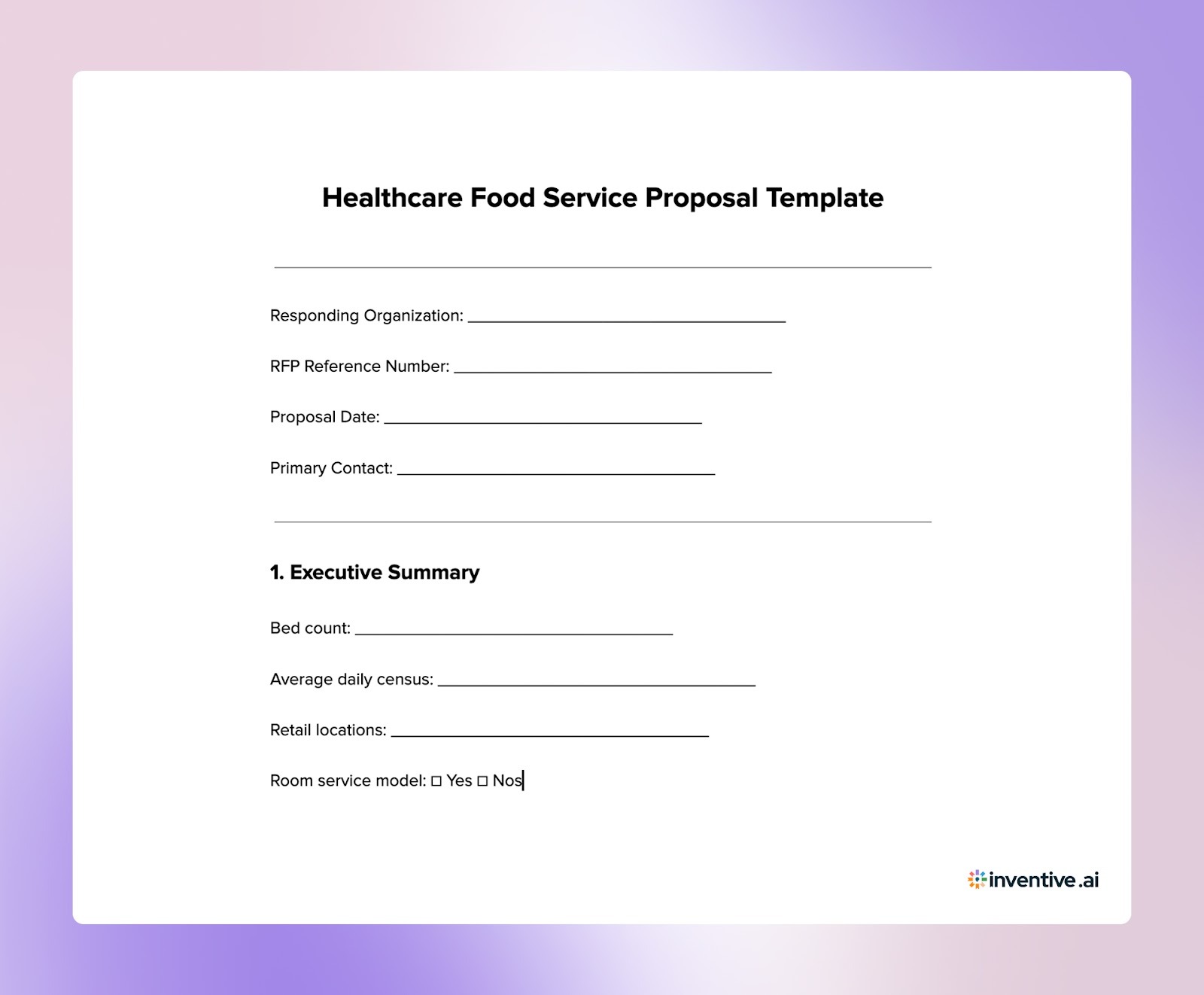
Hospital and clinic dining must balance retail food service with patient meal requirements, clinical dietary compliance, and 24/7 operational demands. These proposals emphasize therapeutic diet expertise, room service models, and infection control.
Key differentiators: Clinical dietetic oversight, room service delivery systems, immunocompromised patient protocols, Joint Commission compliance.

3. Education Dining Proposal
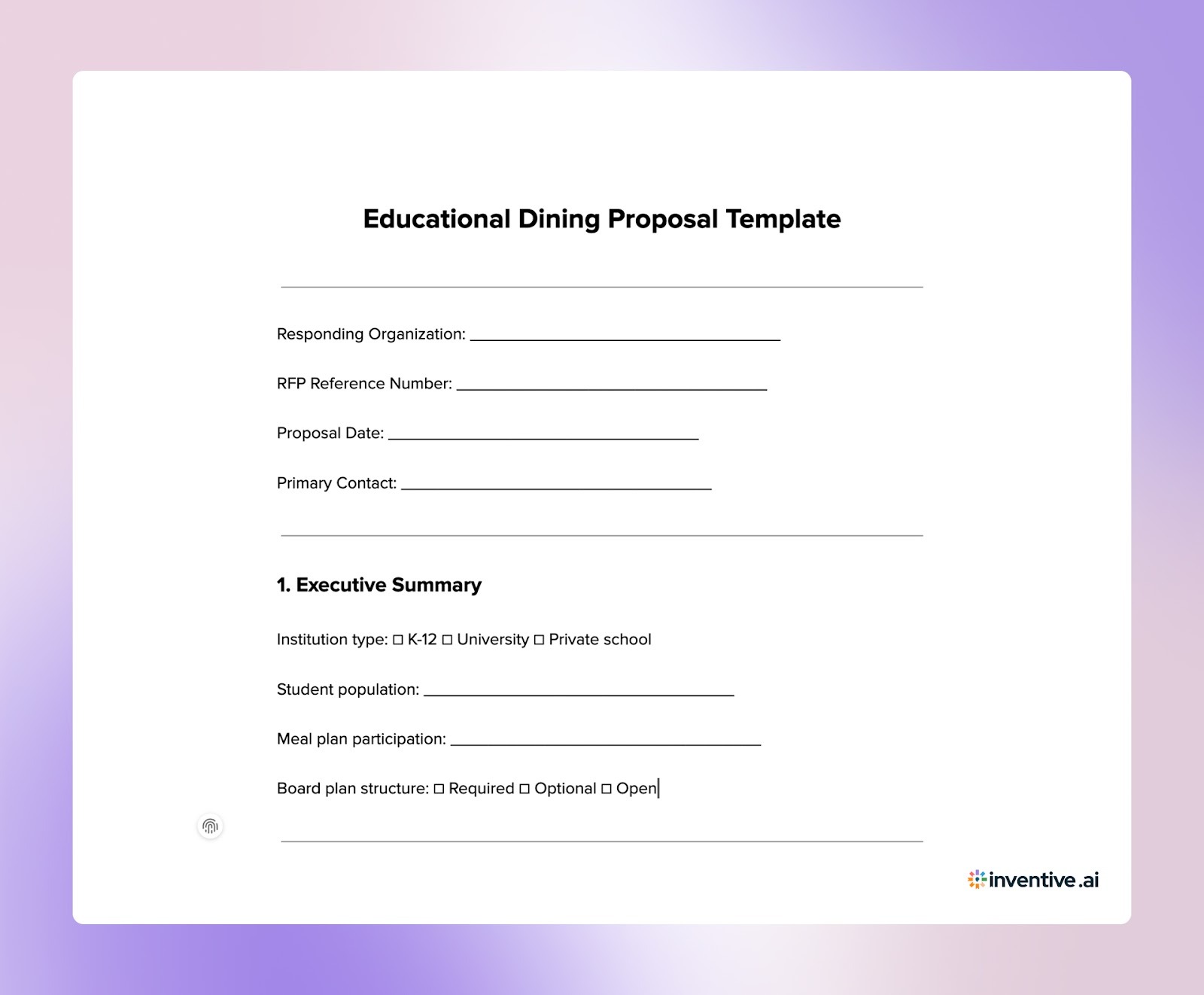
K-12 and university dining operate under strict nutritional guidelines (USDA, HAACP), limited budgets, and high allergen awareness. These proposals emphasize regulatory compliance, student engagement, and cost controls.
Key differentiators: USDA meal pattern compliance, allergen management for minors, student employment programs, and board plan administration.

Submit Evaluator-Ready Restaurant RFP Responses With Inventive AI
Inventive AI helps automate restaurant and food service RFP responses using AI agents trained on culinary operations, food safety standards, and corporate dining procurement. The result is structured submissions that reduce proposal time and improve win rates.
Key Inventive AI capabilities:
Context Engine
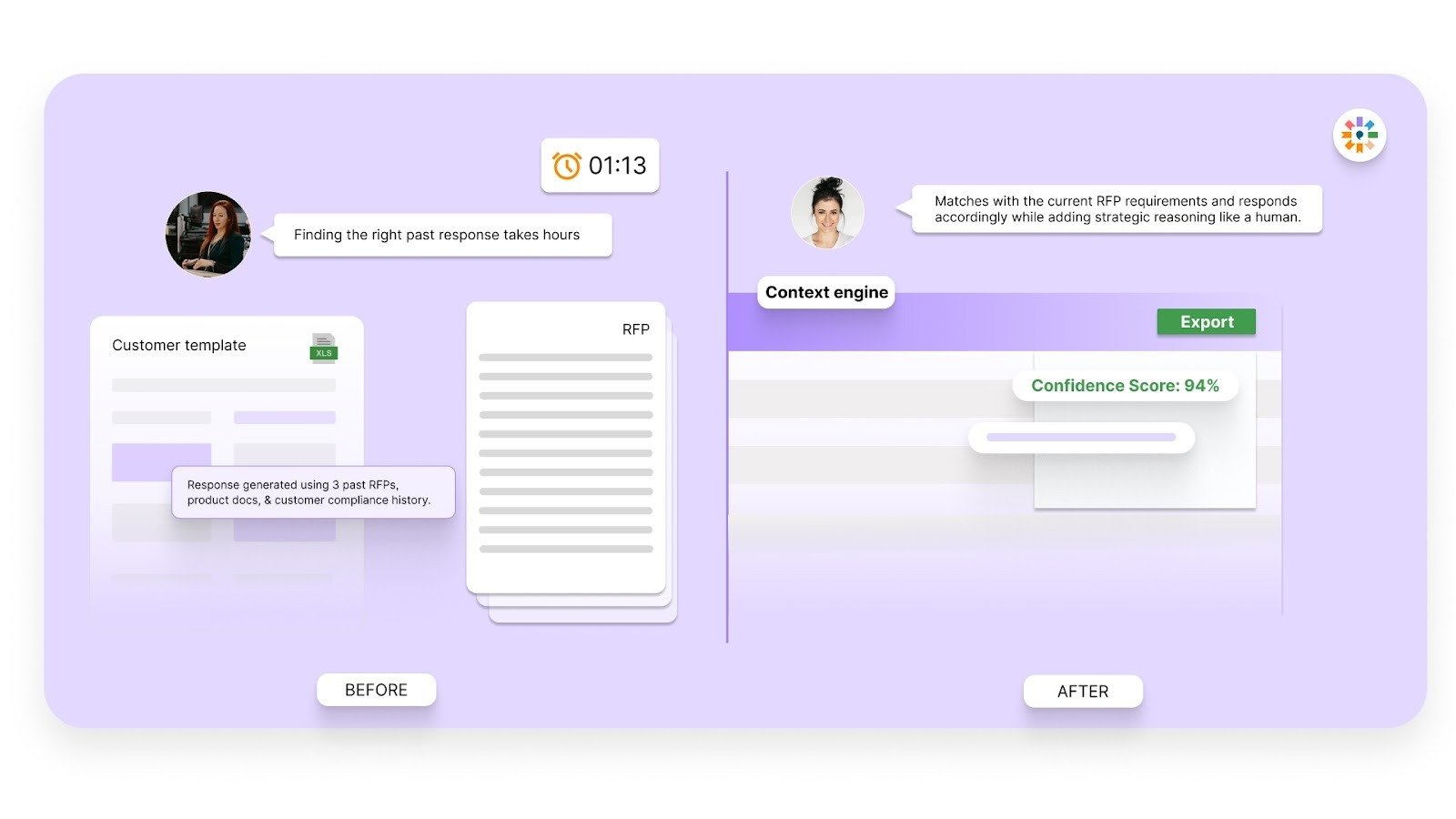
Restaurant RFPs connect workforce size, participation rates, menu diversity, and pricing structures. Inventive AI evaluates the full requirement set before generating responses. Proposed staffing matches peak service demand, menu cycles reflect cultural preferences, and pricing accounts for sourcing constraints. This prevents underpricing, unrealistic sustainability commitments, and staffing plans that fail during peak service.
Conflict Detection
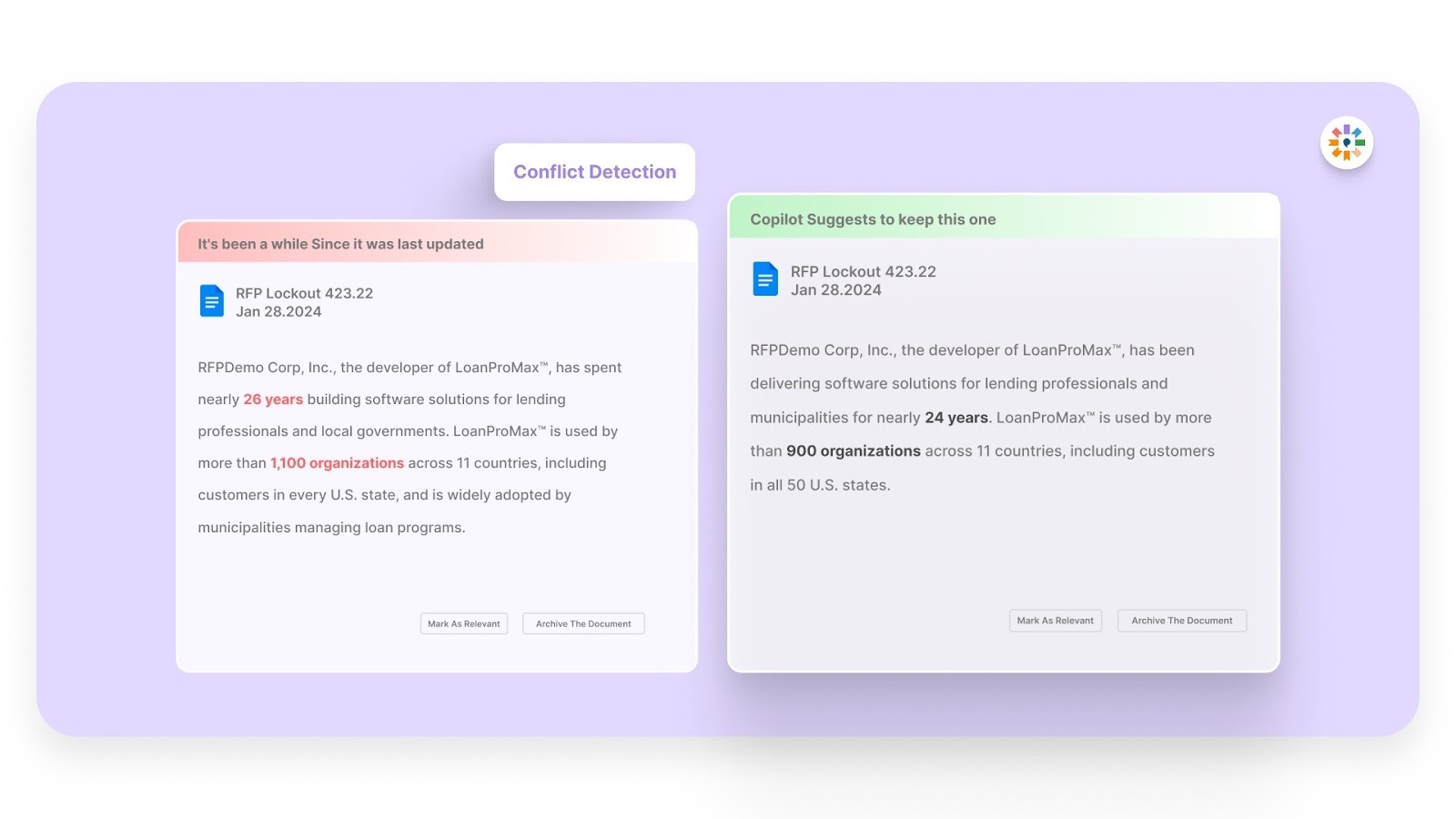
Food service proposals often contain contradictions between menu plans, kitchen capacity, and staffing coverage. Inventive AI flags conflicts automatically. Examples include proposing extended service hours without staffing coverage or claiming local sourcing without verified supplier proximity. These checks remove credibility risks before submission.
Outdated Content Detection
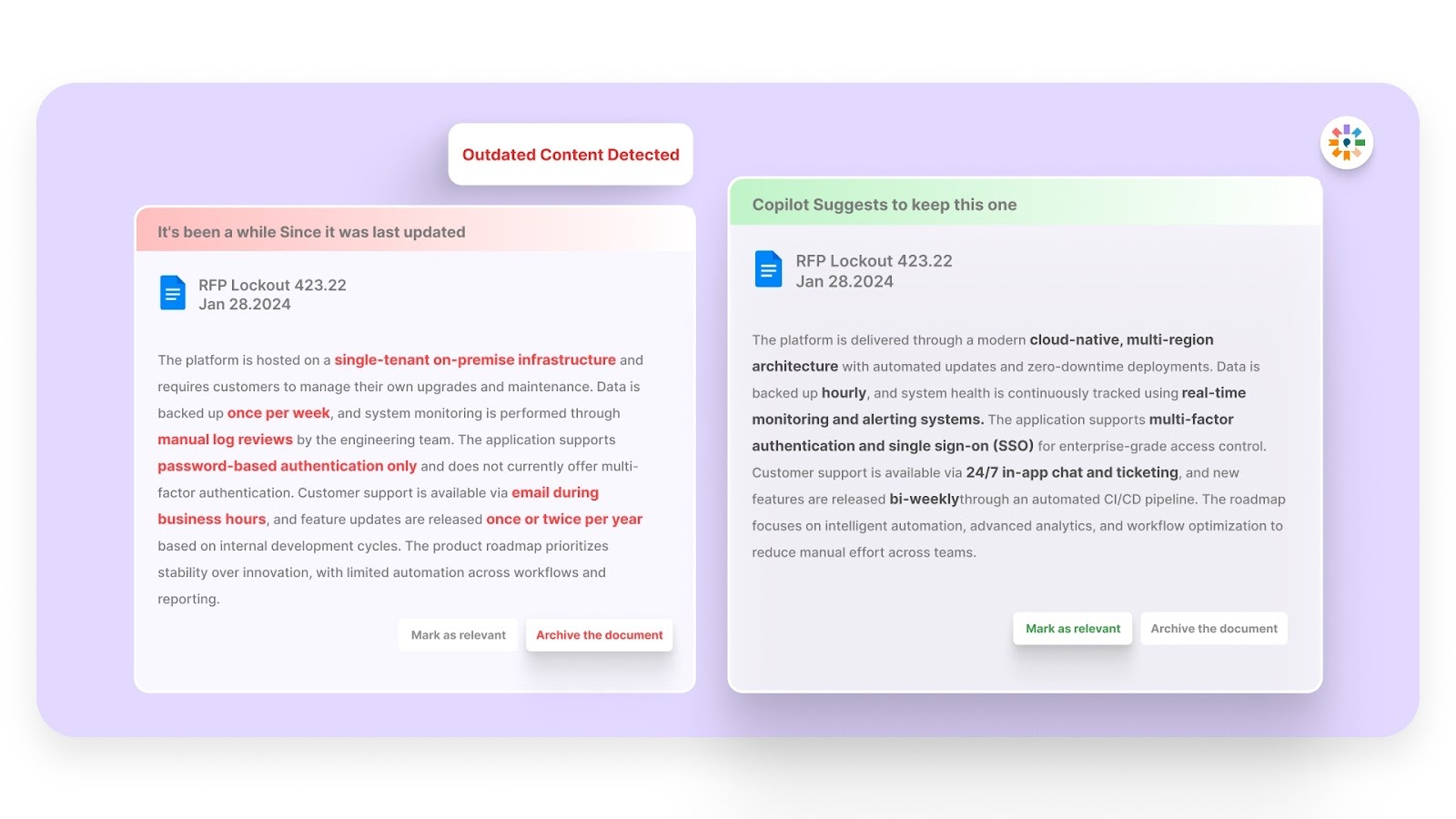
Food service vendors frequently reuse boilerplate language for certifications, insurance coverage, and supplier partnerships. Inventive AI identifies expired ServSafe certifications, outdated liability limits, and discontinued supplier relationships. This reduces compliance risk and prevents proposal rejection based on invalid claims.
2X Higher-Quality Responses
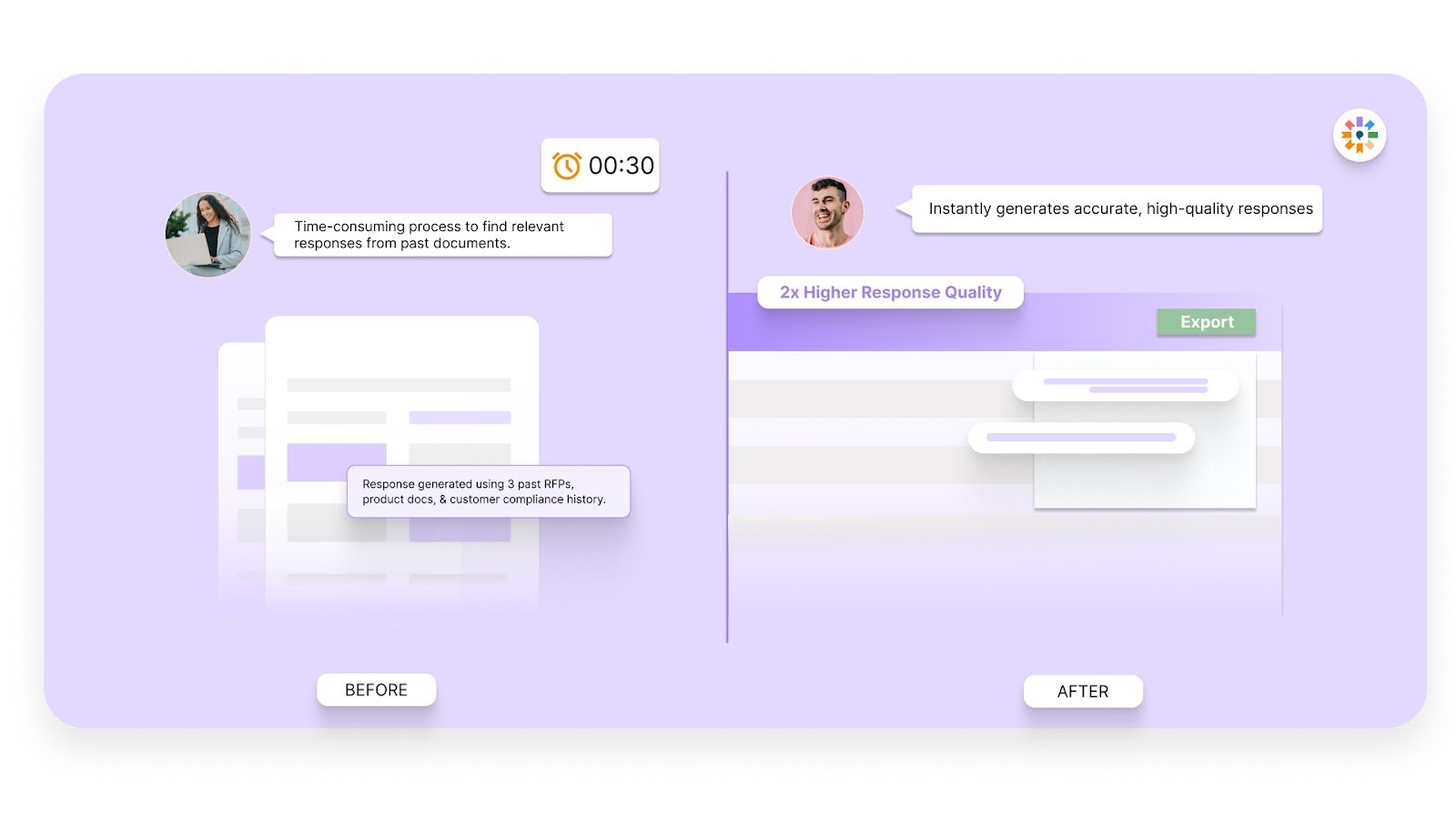
Inventive AI produces structured responses aligned with evaluation criteria. Culinary plans, staffing models, and pricing explanations address buyer scoring categories directly. This improves scoring consistency and reduces revision cycles between culinary, operations, and proposal teams.
Narrative Proposal Generation
Inventive AI generates full proposal narratives in addition to answering RFP questions. The platform produces executive summaries, culinary program descriptions, sustainability statements, and food safety documentation. Vendors submit complete proposal documents alongside structured RFP responses.
Simple And Easy-To-Use UI/UX
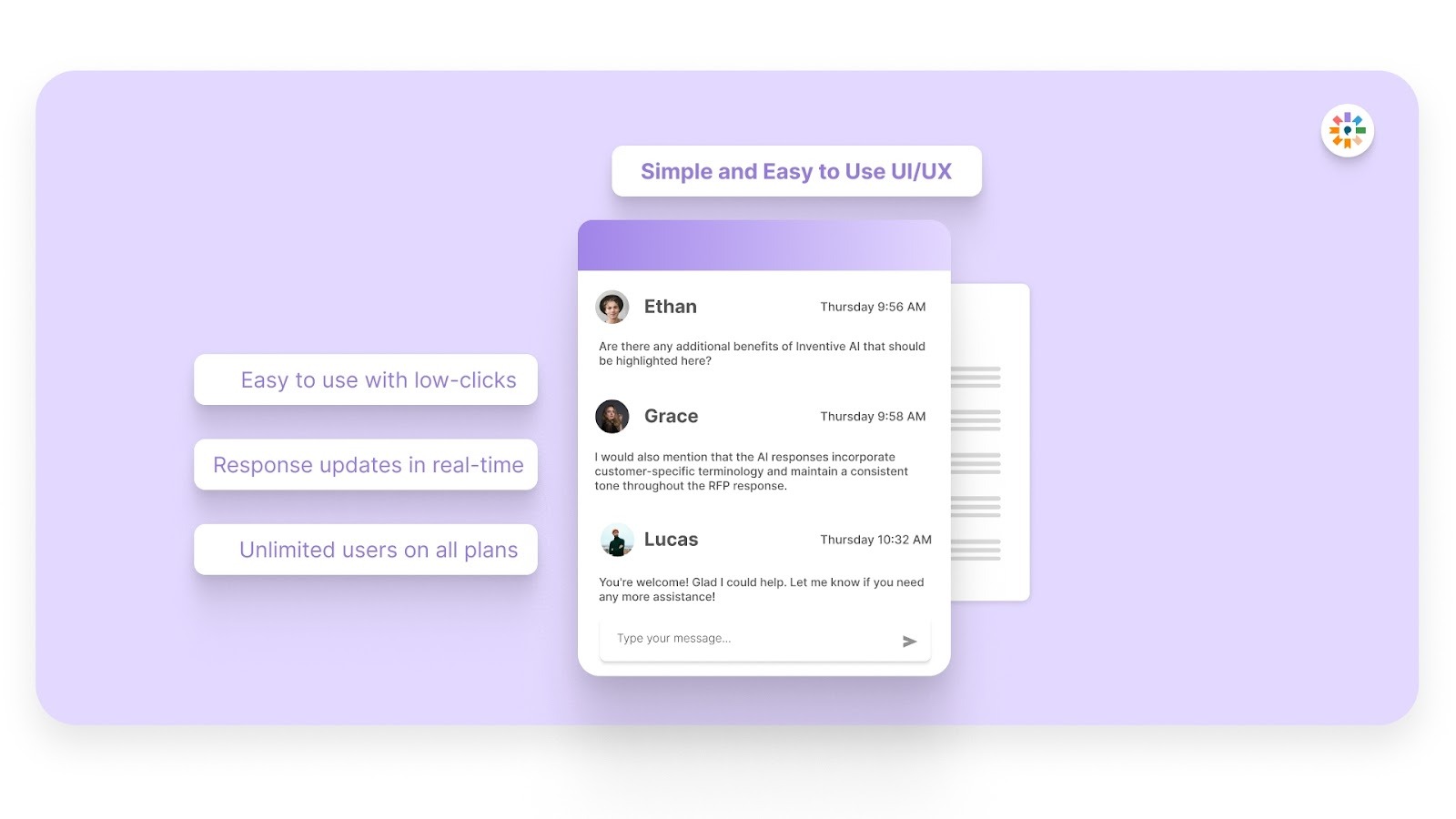
With a 100% customer adoption rate and a #1 ranking for ease of use on G2, Inventive AI is built for everyone. Your team can skip the steep learning curve and start winning deals immediately through an interface that makes professional proposal management feel natural.
FAQs About Restaurant RFPs
1. How Do You Price Corporate Dining Contracts Accurately?
Start with projected meal volumes, labor hours for service periods, and target food cost ratios. Then add management overhead, equipment costs, and a standard management margin to produce a realistic contract price.
2. What Causes Food Service Vendors to Underbid Corporate Dining RFPs?
Underbidding often occurs when vendors estimate labor, dietary preparation time, and sourcing costs using industry averages. However, missing details about peak traffic, special diets, or local sourcing requirements can significantly increase actual operating costs.
3. What Contract Length Works Best for Corporate Dining Programs?
Most organizations choose contracts lasting three to five years with renewal options. This duration allows vendors to invest in operations while still giving buyers flexibility to reassess performance.
4. How Can Food Service Companies Improve Their RFP Success Rate?
Strong proposals align directly with the buyer’s evaluation criteria and include clear operational details. Vendors also improve their chances by submitting complete documentation and providing evidence from comparable client accounts.
5. How Can Vendors Demonstrate Local Sourcing Credibility Without Revealing Suppliers?
Vendors can provide third-party certifications, sourcing policies, and seasonal procurement data. Supporting documentation, such as audit reports or distribution center verification, also strengthens credibility without exposing supplier identities.

90% Faster RFPs. 50% More Wins. Watch a 2-Minute Demo.

Gaurav Nemade
After witnessing the gap between generic AI models and the high precision required for business proposals, Gaurav co-founded Inventive AI to bring true intelligence to the RFP process. An IIT Roorkee graduate with deep expertise in building Large Language Models (LLMs), he focuses on ensuring product teams spend less time on repetitive technical questionnaires and more time on innovation.

Hardi Hindocha
Knowing that complex B2B software often gets lost in jargon, Hardi focuses on translating the technical power of Inventive AI into clear, human stories. As a Sr. Content Writer, she turns intricate RFP workflows into practical guides, believing that the best content educates first and earns trust by helping real buyers solve real problems.