10 Powerful Tips To Improve Supplier Relationships In 2026

It is a high-pressure moment when a key customer drops a surprise risk assessment or a massive RFP on your desk with a tight deadline. You know your solution is the best fit, but proving that becomes difficult when your team is stuck digging through old Slack threads and scattered spreadsheets for answers. In 2026, being a strong partner goes beyond pricing. Buyers expect you to be organized, responsive, and easy to work with from the first interaction.
When information is scattered, responses slow down, and confidence drops. Even small delays or inconsistencies can push you down the priority list. Supplier relationships are shaped in these moments, through how clearly and reliably you show up.
The shift is simple but not easy. When you close internal gaps and make your response process smoother, every interaction becomes easier for both your team and your buyer. Over time, that is what moves you from being just another vendor to a partner buyers rely on. This guide shows you how to turn everyday workflows into a foundation for long-term loyalty.
Key Takeaways
- Supplier relationships in 2026 are built on consistent communication, reliability, and collaboration, not just pricing or contracts. Every interaction, including RFQs and RFPs, shapes long-term trust.
- Improving SRM starts with simple but consistent actions like regular communication, clear expectations, defined KPIs, timely payments, and transparency between both sides.
- Organizations should focus on prioritizing key suppliers, aligning internal teams, and treating suppliers as partners rather than just vendors to build trust over time.
- Common challenges include misaligned teams, scattered data, inconsistent communication, over-focus on pricing, and difficulty managing many suppliers at scale. These gaps weaken trust and slow down processes.
- Inventive AI helps improve relationship quality by making responses faster, more accurate, and consistent, which leads to clearer communication, fewer errors, and stronger trust across every interaction.
What is Supplier Relationship Management?
Supplier Relationship Management (SRM) refers to how organizations manage interactions with their suppliers to improve performance, reduce risk, and build long-term value.
It goes beyond procurement and includes:
- Communication quality
- Performance tracking
- Collaboration across teams
- Consistency in processes
SRM is not a one-time activity. It is an ongoing effort that shapes how smoothly organizations and suppliers work together.
Strong supplier relationships are built on clarity, reliability, and mutual trust.
10 Proven Ways to Build Stronger Supplier Relationships
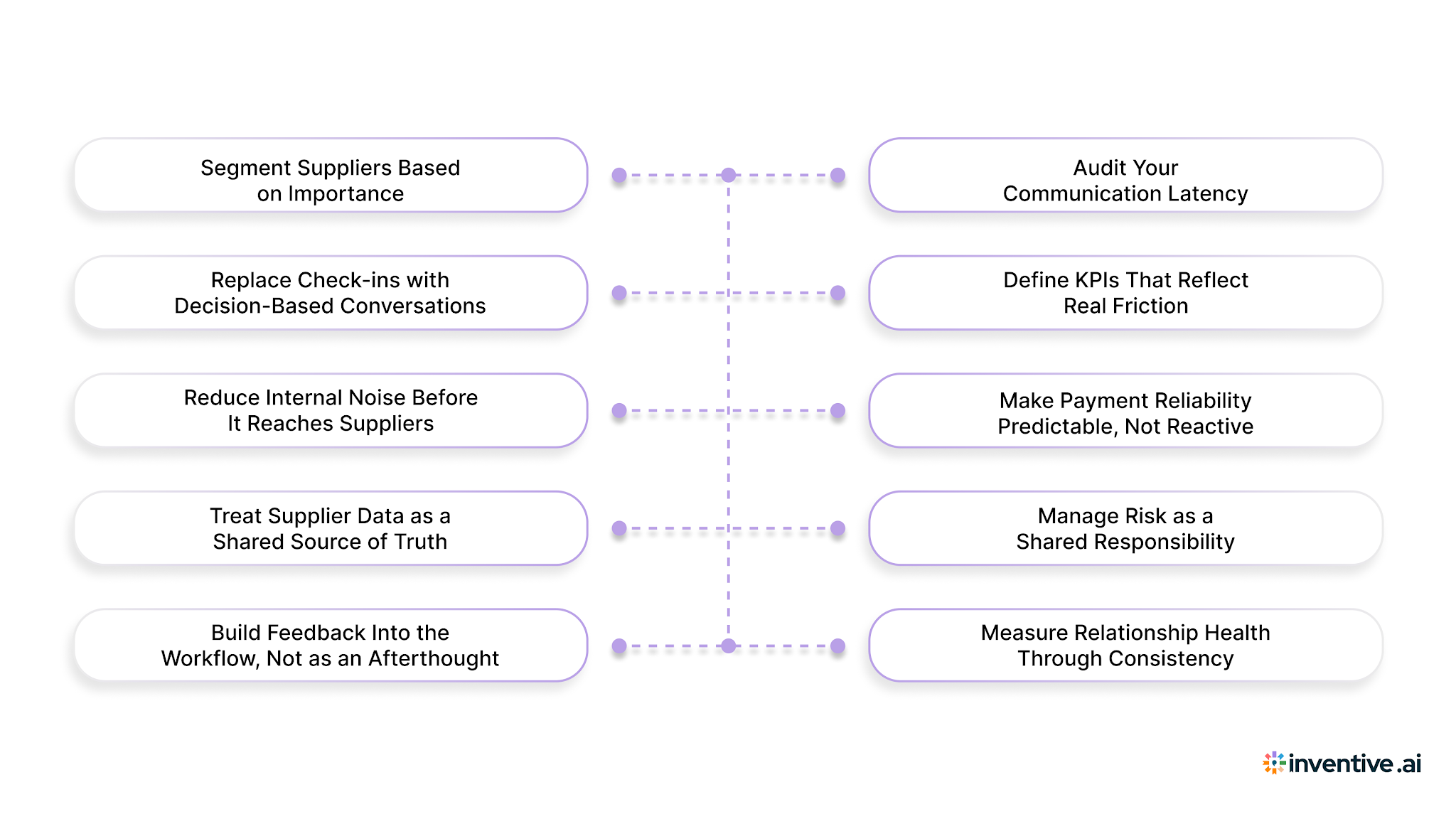
Strong supplier relationships don’t break during contract discussions. They break in day-to-day interactions, when responses are slow, information is unclear, or teams are not aligned.
In 2026, relationship strength is shaped by how fast, consistent, and reliable your interactions are under pressure.
Here are ten ways to improve that in practice.
1. Segment Suppliers Based on Importance
Not every supplier plays the same role, and treating them equally can stretch teams thin.
Organizations often use frameworks like the Kraljic Matrix to classify suppliers based on importance and risk.
Start by looking at two things: how important the supplier is to your business, and how easy it is to replace them.
Suppliers that are critical and hard to replace need close collaboration and regular communication. Important but replaceable suppliers can be managed with periodic reviews and performance tracking. Low-impact suppliers should be handled through simple, efficient processes.
Knowing where to invest time makes relationship management more effective.
2. Audit Your Communication Latency
Most teams measure how often they communicate. Very few measure how fast they respond when it matters.
In reality, relationship quality is shaped by response speed during unexpected requests, risk assessments, compliance queries and urgent clarifications.
If your team takes days to respond because information is scattered, it creates friction. Faster, clearer responses build confidence.
3. Replace Check-ins with Decision-Based Conversations
Regular calls don’t improve relationships unless they lead to decisions.
Instead of status updates, focus conversations on specific outcomes, performance gaps, upcoming risks, or changes in demand.
When every interaction moves something forward, suppliers see you as structured and reliable.
4. Define KPIs That Reflect Real Friction
Most KPIs look good on paper but miss what actually slows things down.
Go beyond delivery timelines and quality metrics. Track response time, revision cycles, and how often suppliers need clarification.
These are the signals that reveal where communication is breaking down.
5. Reduce Internal Noise Before It Reaches Suppliers
Many supplier issues start inside your organization.
Different teams ask the same supplier for different data, formats, or timelines. This creates confusion and delays.
Before reaching out, align internally. A single, clear request builds more trust than multiple fragmented ones.
6. Make Payment Reliability Predictable, Not Reactive
Timely payments are expected. What matters more is predictability.
Suppliers plan their operations around your payment cycles. If timelines keep shifting, even slightly, it creates uncertainty.
Consistency builds reliability. Uncertainty weakens it.
7. Treat Supplier Data as a Shared Source of Truth
When supplier information is spread across emails, spreadsheets, and teams, decisions slow down.
Suppliers end up repeating the same information multiple times, which creates frustration.
Centralising data ensures that every interaction builds on the last one instead of starting over.
8. Manage Risk as a Shared Responsibility
Risk conversations often happen too late, when issues have already escalated.
Stronger relationships come from early visibility. Share potential risks, ask suppliers to flag theirs, and plan responses together.
This reduces surprises and builds a more resilient partnership.
9. Build Feedback Into the Workflow, Not as an Afterthought
Feedback is often saved for quarterly reviews, which makes it less useful.
Instead, build feedback into everyday interactions. Quick corrections and small improvements over time create better alignment than delayed, formal reviews.
10. Measure Relationship Health Through Consistency
Most teams assess relationships based on outcomes like cost or delivery.
A better signal is consistency. How often do interactions require follow-ups? How frequently do responses need rework?
Consistency shows how reliable the relationship really is.
Strong supplier relationships are not built through policies or periodic reviews. They are built through how your team shows up in every interaction, especially when speed, clarity, and consistency are tested.
What Makes Supplier Relationship Management Hard?
Supplier ecosystems are becoming more complex, and expectations on both sides are increasing. Most challenges do not come from a lack of effort. They come from gaps in processes, communication, and coordination across teams.
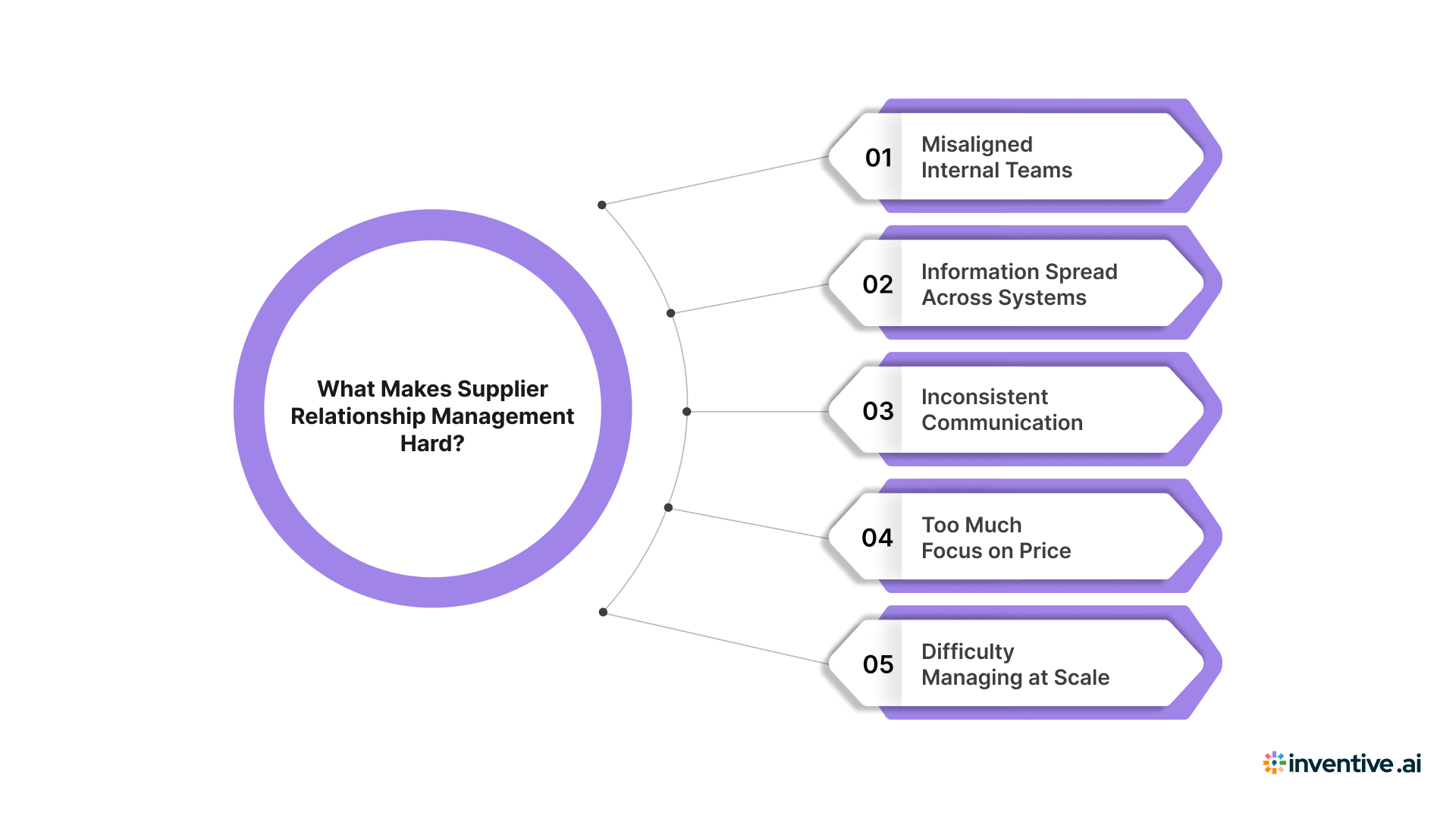
Here are the most common issues organizations face.
1. Misaligned Internal Teams
Many problems start inside the organization, not with the supplier. When procurement, finance, and operations are not aligned, suppliers get mixed messages. One team focuses on cost, while another focuses on delivery or quality.
This creates confusion and weakens trust. Clear ownership and shared goals across teams are essential.
2. Information Spread Across Systems
Supplier information is often scattered across emails, spreadsheets, and different tools. This makes it hard to get a clear picture of performance or past interactions. Teams end up working with incomplete or outdated data.
Keeping everything in one place makes it easier to stay accurate and aligned.
3. Inconsistent Communication
Communication with suppliers often happens only when there is an issue. This creates a reactive relationship instead of a collaborative one. Over time, it reduces trust.
Regular check-ins and updates help keep both sides aligned and avoid surprises.
4. Too Much Focus on Price
Cost is important, but focusing only on price can damage relationships. When suppliers feel constant pressure on pricing, they may reduce flexibility or responsiveness. This affects overall performance.
Looking at quality, reliability, and long-term value leads to better outcomes.
5. Difficulty Managing at Scale
Managing a few suppliers is manageable. Managing many suppliers becomes complex. As the number grows, manual processes slow things down. Tracking performance and maintaining consistency becomes harder.
Structured systems and tools help manage this complexity without losing control.
Supplier relationship management becomes difficult when processes are unclear and information is scattered. When these gaps are addressed, relationships become more consistent, reliable, and easier to manage.
Also Read: Knowledge Management RFPs: Best Practices for 2026
How Inventive AI Helps You Build Better Supplier Relationships?
While supplier relationship management is broader than any single tool, response quality and consistency play an important role in shaping these relationships.
This is where Inventive AI contributes. With AI-powered RFP response software, Inventive AI improves how teams handle RFQs, RFPs, and other structured communications, which directly impacts relationship quality.
1. 2× Higher Quality Responses
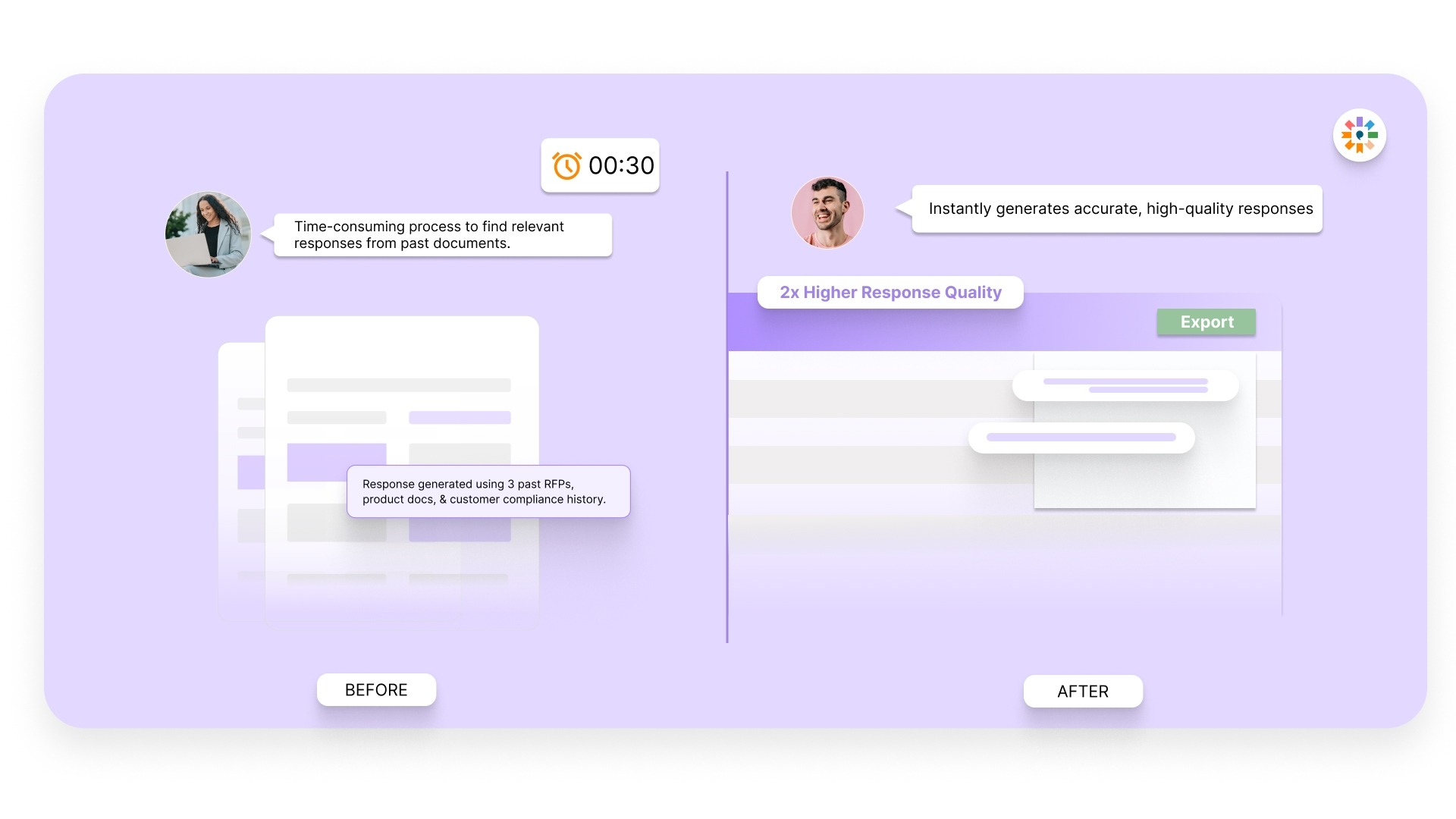
Many relationship issues start with poor communication. When responses are incomplete or unclear, it creates confusion early.
Inventive AI improves response quality by building on existing knowledge and past responses. This leads to more complete, accurate, and well-aligned communication, which strengthens trust over time.
2. Context Engine
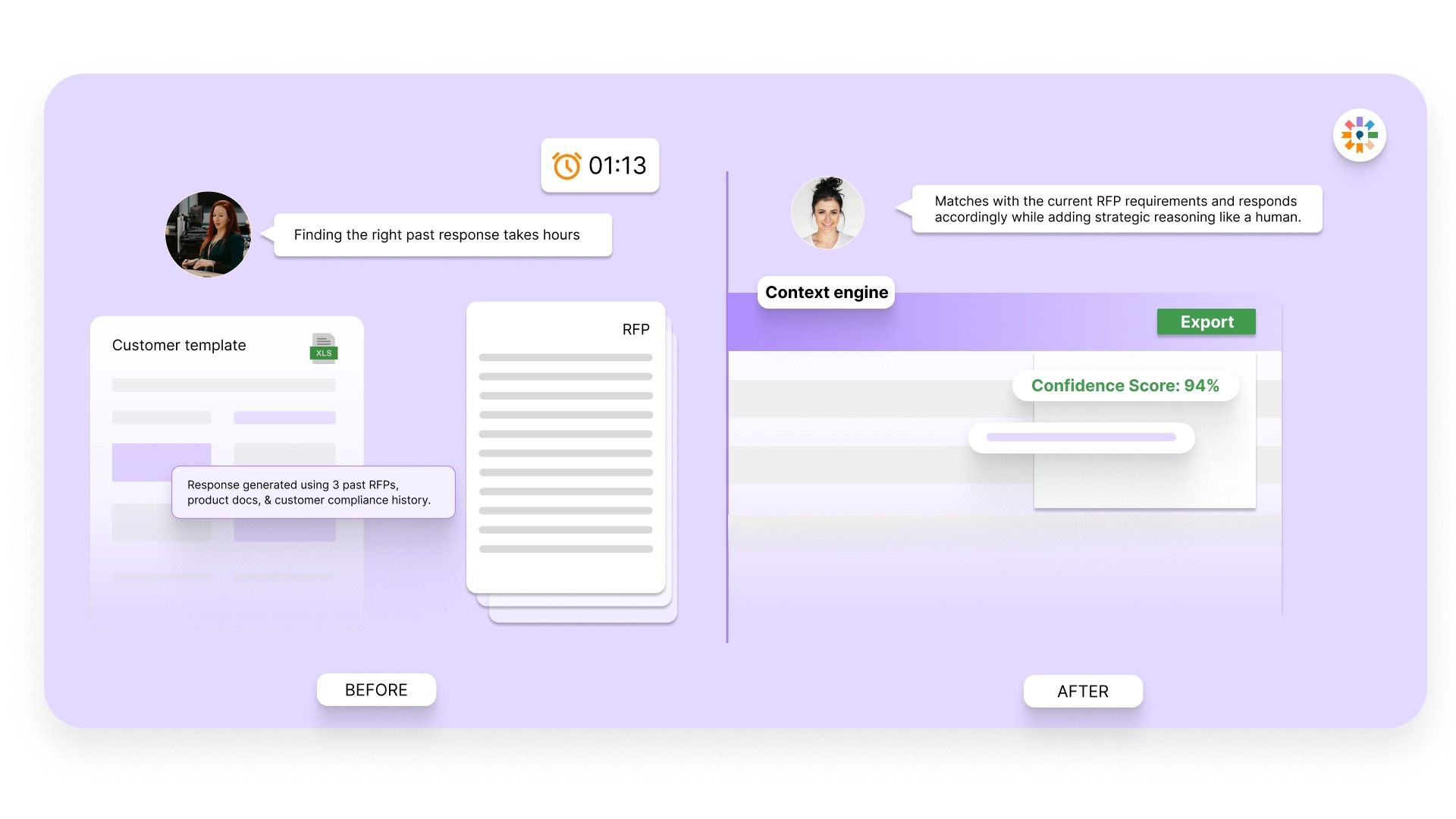
Supplier interactions often require inputs from multiple teams and systems.
Inventive AI’s Context Engine brings together relevant information from across sources, ensuring that every response reflects the full context. This reduces gaps and helps teams communicate with greater clarity.
3. Conflict Detection
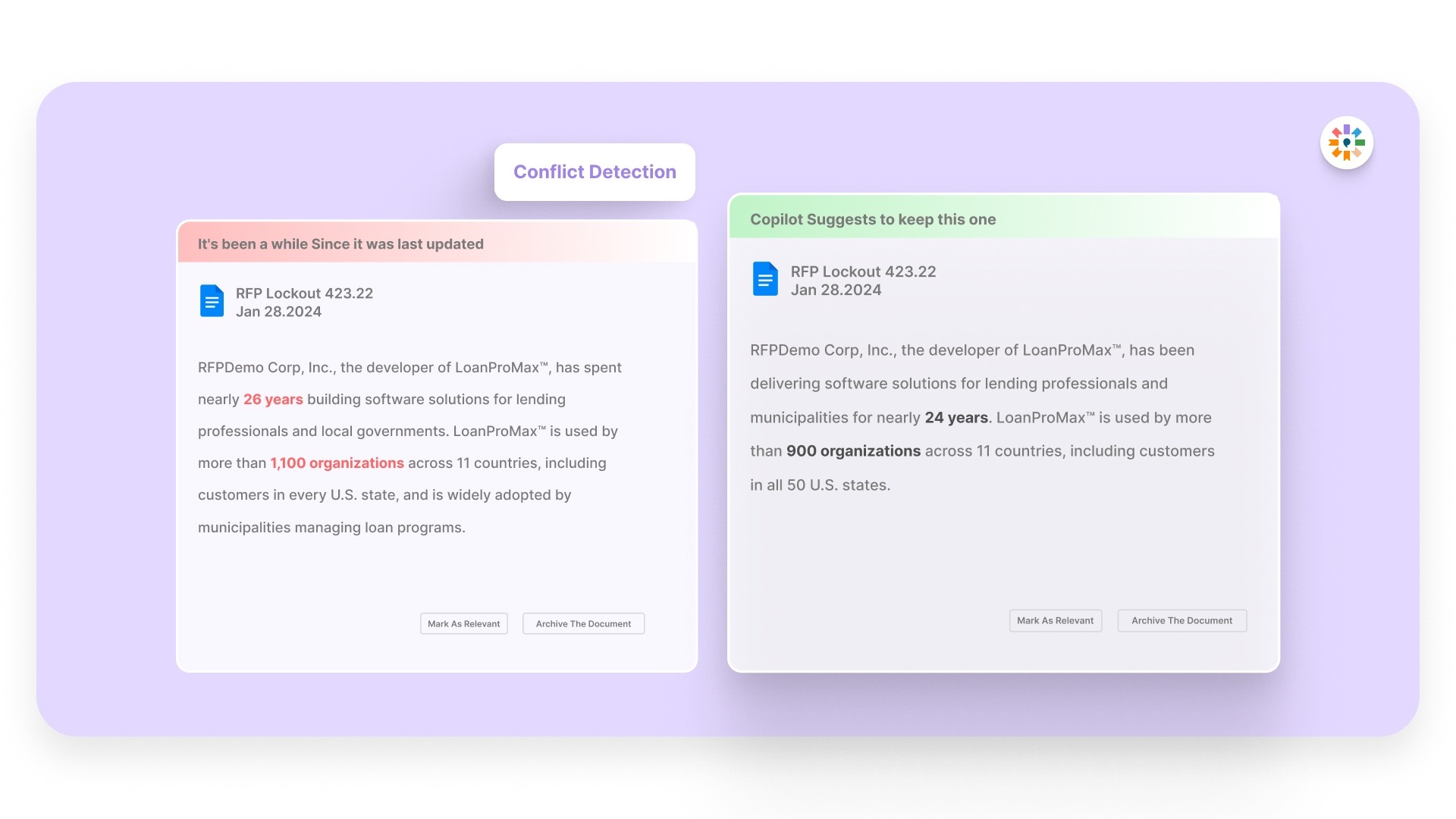
Inconsistencies across responses can weaken credibility.
Inventive AI identifies conflicting information before it is sent. This helps maintain alignment across teams and ensures that communication remains consistent and reliable.
4. Outdated Content Detection
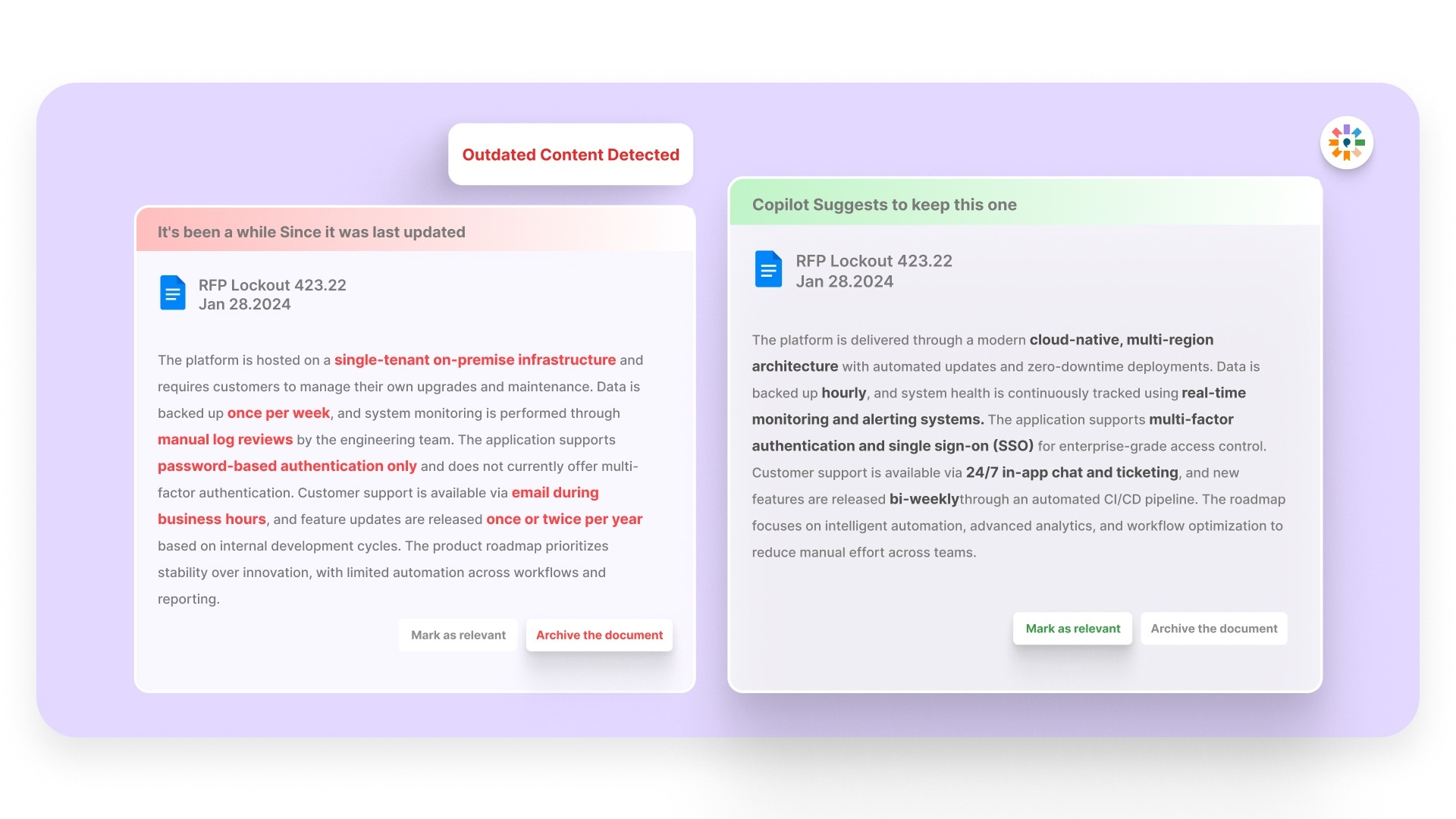
Outdated information can damage relationships quickly.
Inventive AI detects outdated or irrelevant content and ensures that only current information is used. This keeps communication accurate and aligned with current capabilities.
5. Narrative Style Proposals
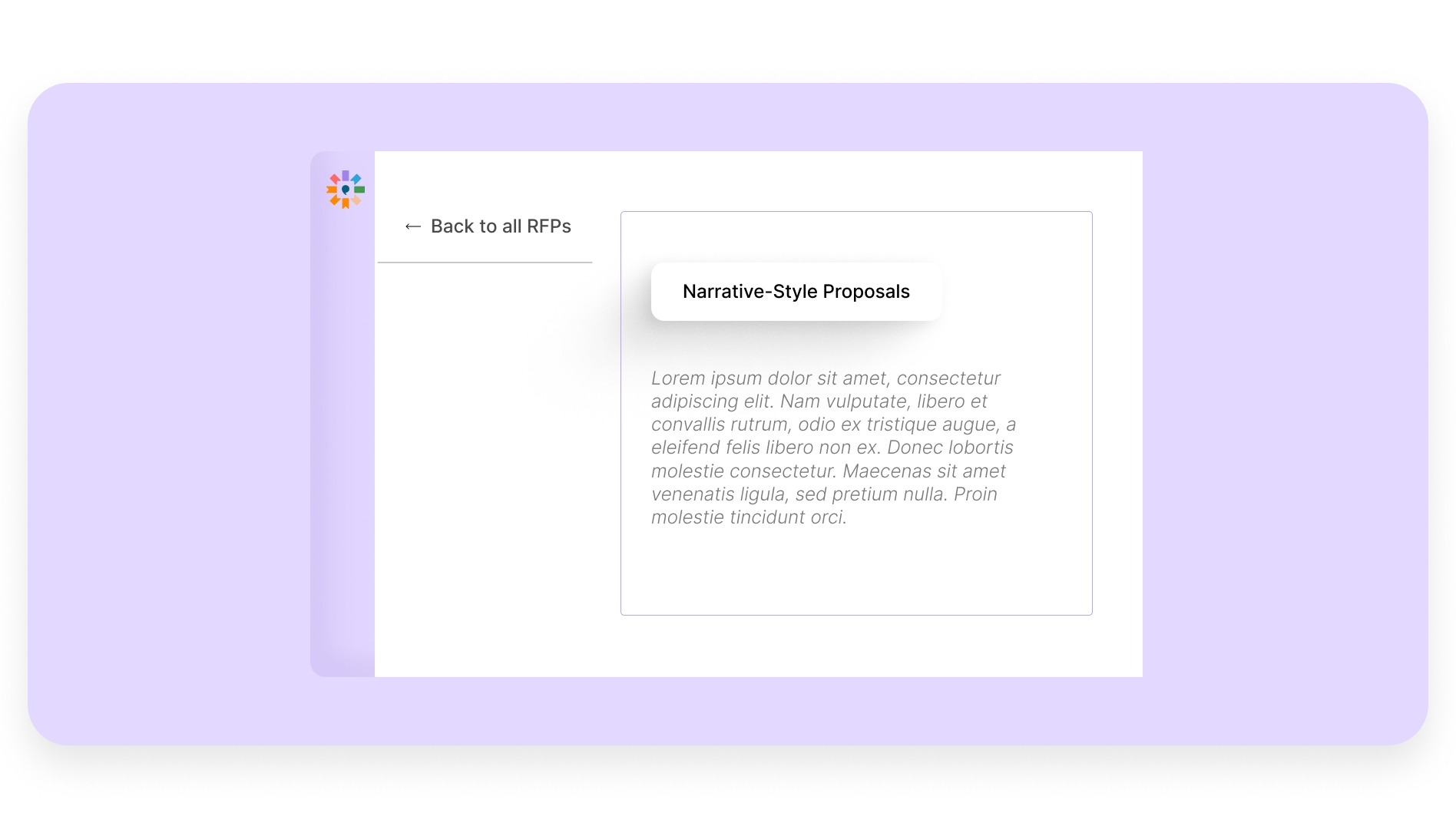
How information is presented matters as much as what is presented.
Inventive AI helps structure responses in a clear and logical way, making them easier to understand and evaluate. This improves the overall communication experience.
6. Simple, Easy-to-Use Interface
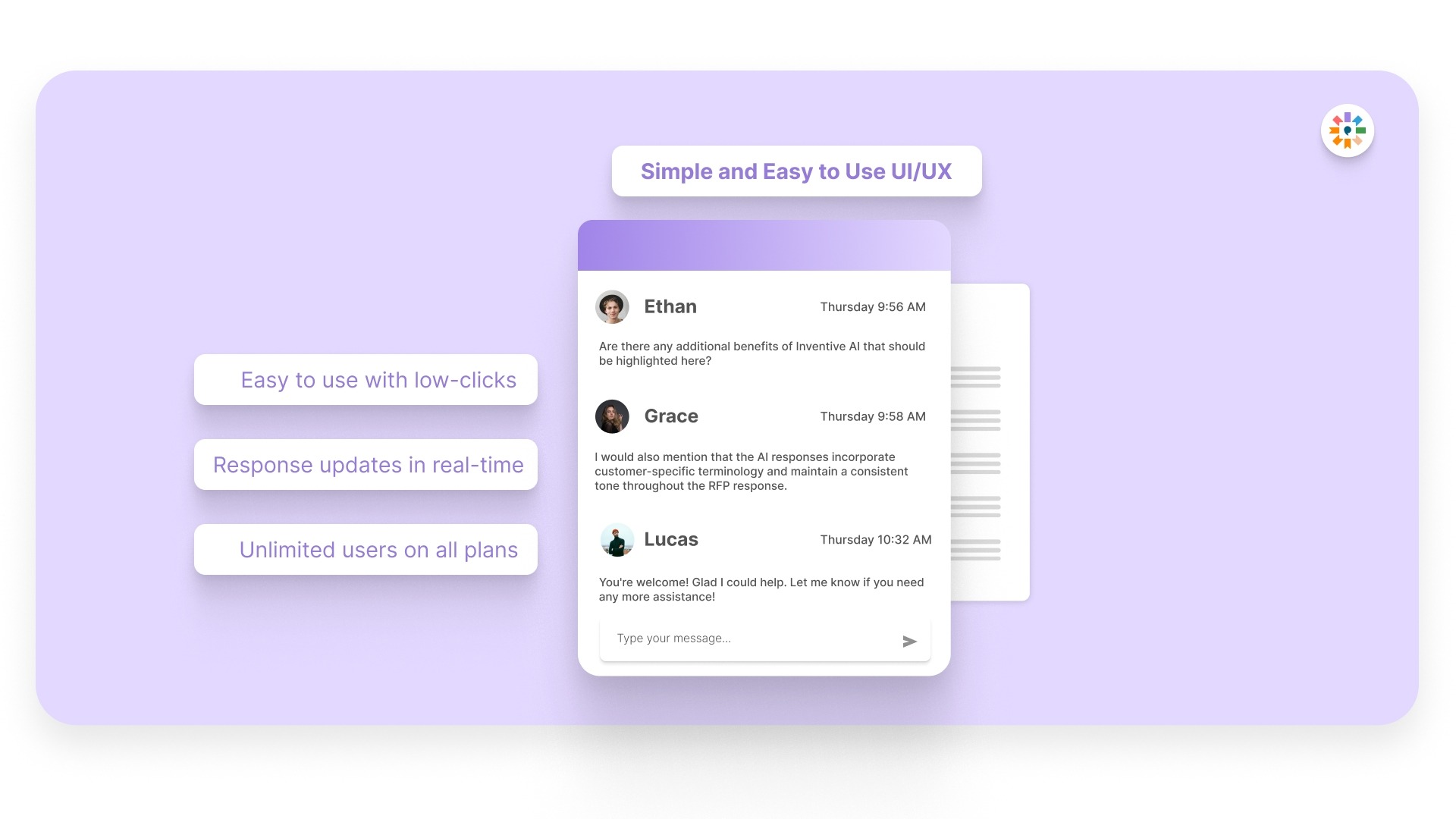
Complex tools often slow teams down instead of helping them.
Inventive AI provides a simple interface that allows teams to collaborate, access information, and respond quickly without friction. This supports smoother interactions across all stages.
By improving response quality, consistency, and clarity, Inventive AI helps organizations create more reliable and transparent interactions. Over time, these improvements contribute to stronger, more trusted supplier relationships.
Frequently Asked Questions (FAQs)
1. How do organizations typically segment their suppliers?
Organizations group suppliers based on how important they are and how easy they are to replace. Important suppliers need more attention and regular communication. Less critical suppliers can be managed with simple processes. This helps teams focus on the relationships that matter most.
2. What KPIs are commonly used in supplier relationship management?
Organizations track basic performance metrics like on-time delivery, order accuracy, lead time, and defect rate. They also look at responsiveness and reliability. These metrics help both sides stay aligned and improve over time.
3. How does technology support supplier relationship management?
Technology helps keep everything in one place and reduces manual work. It makes it easier to track performance, share information, and stay consistent. For vendors, tools like Inventive AI help create faster and more accurate responses, which improves how buyers see them.
4. What’s the biggest mistake organizations make in managing supplier relationships?
The biggest mistake is treating suppliers only as vendors, not partners. If communication only happens when there is a problem, trust does not build. Regular communication and clear expectations help create stronger relationships.


.jpg)