Janitorial RFP Template + Industry-Specific Proposal Samples

Drafting a janitorial or cleaning services RFP takes time. Defining service scope, frequency, staffing expectations, compliance requirements, and pricing structure requires coordination across operations and procurement teams.
Responding to one is equally demanding. Vendors must document service plans, staffing models, equipment usage, insurance coverage, and commercial terms within defined submission deadlines.
Standardized formats reduce preparation time and improve consistency on both sides. Below, you’ll find structured templates for buyers issuing a janitorial RFP and vendors submitting cleaning service proposals, including editable examples for practical use.
Download Janitorial RFP Template: Strengthen Janitorial Vendor Selection (Examples Included)
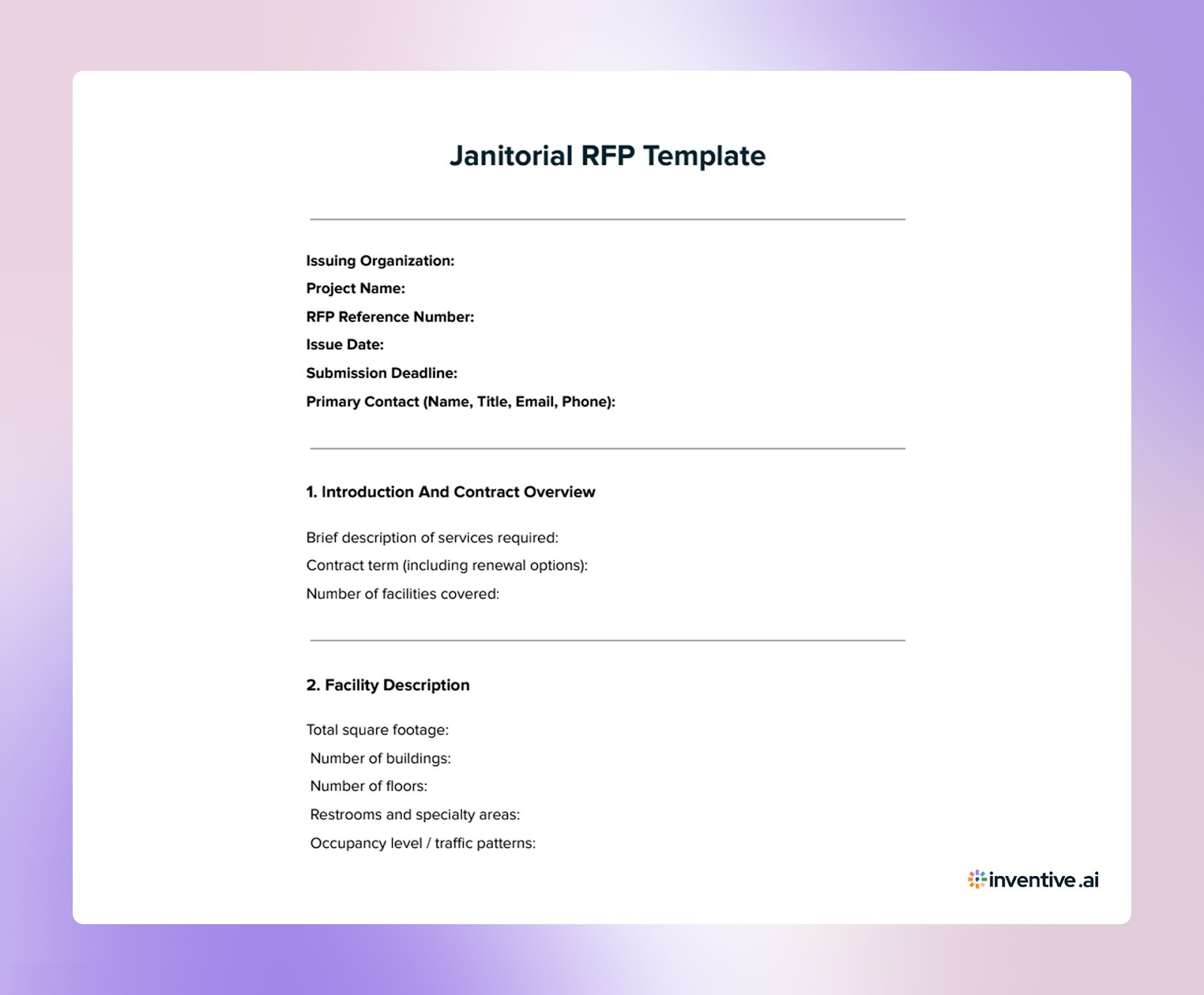
A janitorial or cleaning services RFP must document the operational details vendors rely on to calculate labor, materials, supervision, and pricing. Each section below corresponds to information vendors use to build staffing plans and cost models.

1. Introduction And Contract Overview
This section states the contract term, number of facilities, and whether the agreement includes renewal options. Vendors use this to determine whether to price short-term mobilization costs differently from long-term service contracts.
Include:
- Contract duration
- Renewal options
- Number of facilities covered
Example: The contract term is three years with two one-year renewal options and covers four municipal office buildings.
2. Facility Description
Vendors calculate labor hours based on square footage, building layout, and traffic levels. Office buildings, medical clinics, and public-facing facilities require different cleaning intensities.
Include measurable details:
- Total square footage
- Number of floors
- Restroom count
- Specialty areas such as cafeterias or gyms
Example: The facility includes 110,000 square feet across five floors, 24 restrooms, two breakrooms, and one public lobby with high daily foot traffic.
3. Scope Of Services
This section defines exactly what tasks must be performed. Vendors structure their staffing plan around these tasks. Group services by frequency so vendors can allocate labor properly.
Separate:
- Daily services
- Weekly services
- Monthly or periodic services
Example:
Daily: Trash removal, restroom cleaning, dusting, vacuuming.
Weekly: Interior glass cleaning.
Quarterly: Carpet extraction and floor waxing.
4. Service Schedule And Access Hours
Cleaning outside business hours requires different staffing patterns than daytime service. Some buildings require badge access or security clearance.
Include:
- Service hours
- Weekend requirements
- Holiday coverage
- Emergency response expectations
Example: Services must be performed Monday through Friday between 6 PM and 10 PM. Emergency cleaning requests require a response within four hours.
5. Staffing And Supervision Requirements
Vendors need to know whether an on-site supervisor is required and whether background checks are mandatory. These factors directly affect labor cost.
Include:
- Minimum staffing expectations
- Supervisor presence
- Screening requirements
Example: Vendor must provide one designated supervisor and conduct background screening for all assigned personnel.
6. Equipment And Supplies
Specify whether the vendor must supply consumables such as paper towels and soap or only cleaning chemicals. Consumable supply responsibilities significantly affect pricing.
Include:
- Responsibility for chemicals
- Responsibility for consumables
- Equipment requirements
Example: Vendor shall provide all cleaning chemicals and equipment. The organization will supply restroom consumables.
7. Insurance And Licensing
Cleaning services involve physical risk. Insurance minimums should match the facility’s liability exposure.
Include:
- General liability minimum
- Workers’ compensation requirement
- Business licensing
Example: Vendor must maintain $1,000,000 general liability coverage and valid workers’ compensation insurance.
8. Pricing Structure
Require vendors to submit pricing in a consistent format. This prevents lump-sum bids that hide cost differences.
Include:
- Monthly base service fee
- Pricing for additional services
- Optional rate schedule
Example: Provide a fixed monthly fee and an hourly rate for special event cleaning.
9. Proposal Submission Requirements
State exactly what must be submitted so vendors include all required documentation.
Include:
- Staffing plan
- Pricing breakdown
- Insurance certificates
- References
Example: The proposal must include the company's qualifications, staffing plan, pricing schedule, and three references.
10. Evaluation Criteria
Define scoring categories before issuing the RFP. Vendors tailor their responses to these categories.
Include:
- Price weighting
- Experience weighting
- Service plan evaluation
- Compliance review
Example: Price (40%), Service Plan (30%), Experience (20%), Compliance (10%).
Clear requirements help buyers, but vendors must mirror those details to win. If you are responding to an RFP, use the following structure.
Use This Cleaning Proposal Template to Avoid Proposal Errors
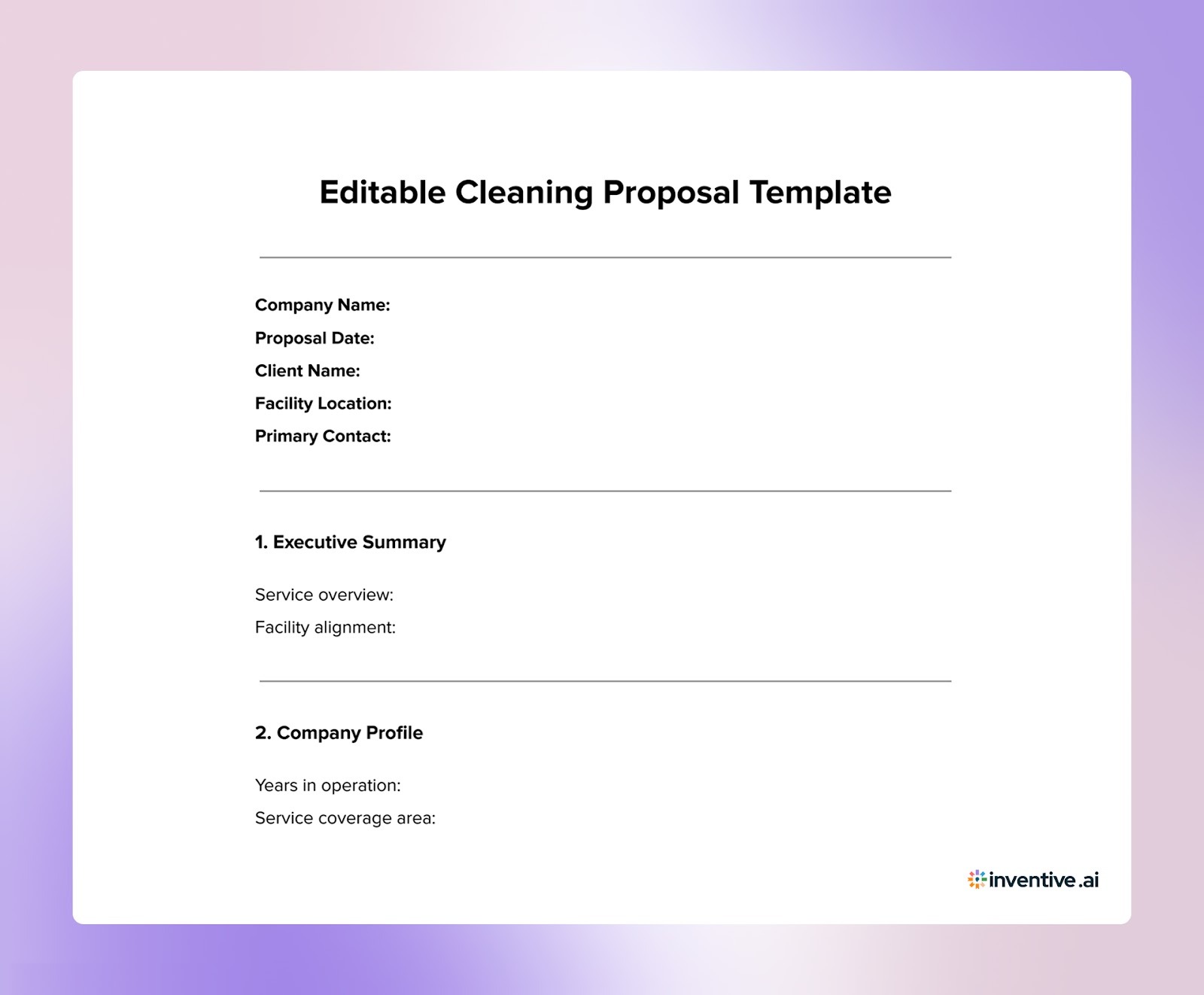
When responding to a janitorial or cleaning services RFP, your proposal must show operational capability, staffing structure, compliance readiness, and pricing clarity. Buyers evaluate cleaning vendors based on execution reliability, supervision standards, safety controls, and transparency in cost.

Key sections to include in a cleaning services proposal:
1. Executive Summary
This section confirms alignment with the client’s facility requirements and summarizes your service approach. It should reflect their scope, square footage, and service frequency.
Example: We propose providing daily janitorial services for your 95,000 sq. ft. office facility, including evening cleaning, restroom sanitation, and quarterly deep-cleaning services, supported by a dedicated on-site supervisor.
2. Company Profile
Buyers review this section to assess experience, financial stability, and industry specialization. Include years in operation, service footprint, and certifications.
Example: Founded in 2010, we provide commercial cleaning services across 40 corporate facilities and maintain ISO-certified safety standards.
3. Understanding Of Requirements
Restate the buyer’s scope in structured language to show comprehension of building size, traffic flow, and service frequency.
Example: Your RFP requires weekday evening cleaning between 6 PM and 10 PM, servicing five floors with 22 restrooms and two cafeteria areas.
4. Proposed Cleaning Solution
Detail how services will be delivered. Describe task allocation, supervision, and specialized services.
Example: Daily cleaning teams will cover each floor, with restroom sanitization performed twice per shift. High-traffic lobby areas will receive mid-week detailing.
5. Staffing Plan
Explain staffing levels, supervisor presence, and training protocols. Buyers evaluate service reliability based on workforce structure.
Example: A team of six cleaners will be assigned nightly, supervised by one site manager. All staff complete safety and chemical handling training.
6. Quality Assurance Plan
Document inspection routines and performance monitoring systems. Include escalation procedures.
Example: Supervisors conduct weekly walkthroughs and submit inspection reports. Client feedback is logged and addressed within 24 hours.
7. Health, Safety, And Environmental Practices
Cleaning services involve liability and compliance risk. Describe chemical handling standards, PPE requirements, and sustainability measures.
Example: We use EPA-approved disinfectants and provide mandatory PPE training for all staff. Green-certified cleaning products are available upon request.
8. Pricing Proposal
Provide a structured breakdown of monthly service fees and additional service rates.
Example:
Monthly service fee: $18,500
Quarterly carpet cleaning: $2,200
Event cleaning support: $65 per hour
9. References And Case Studies
Include comparable projects to demonstrate reliability and service consistency.
Example: Currently servicing a 120,000 sq. ft. corporate office with a five-year contract term.
10. Required Attachments
Attach proof of insurance, certifications, and licensing.
Example: General liability certificate, workers’ compensation documentation, and safety compliance certificates.
Janitorial Proposal Templates for Different Facility Needs
Janitorial and cleaning proposals vary depending on the facility type, contract structure, and compliance standards. While the core sections remain consistent, scope definition, staffing requirements, and regulatory expectations differ across sectors. Below are three common types of janitorial proposals used in practice.
1. Government Janitorial Proposal
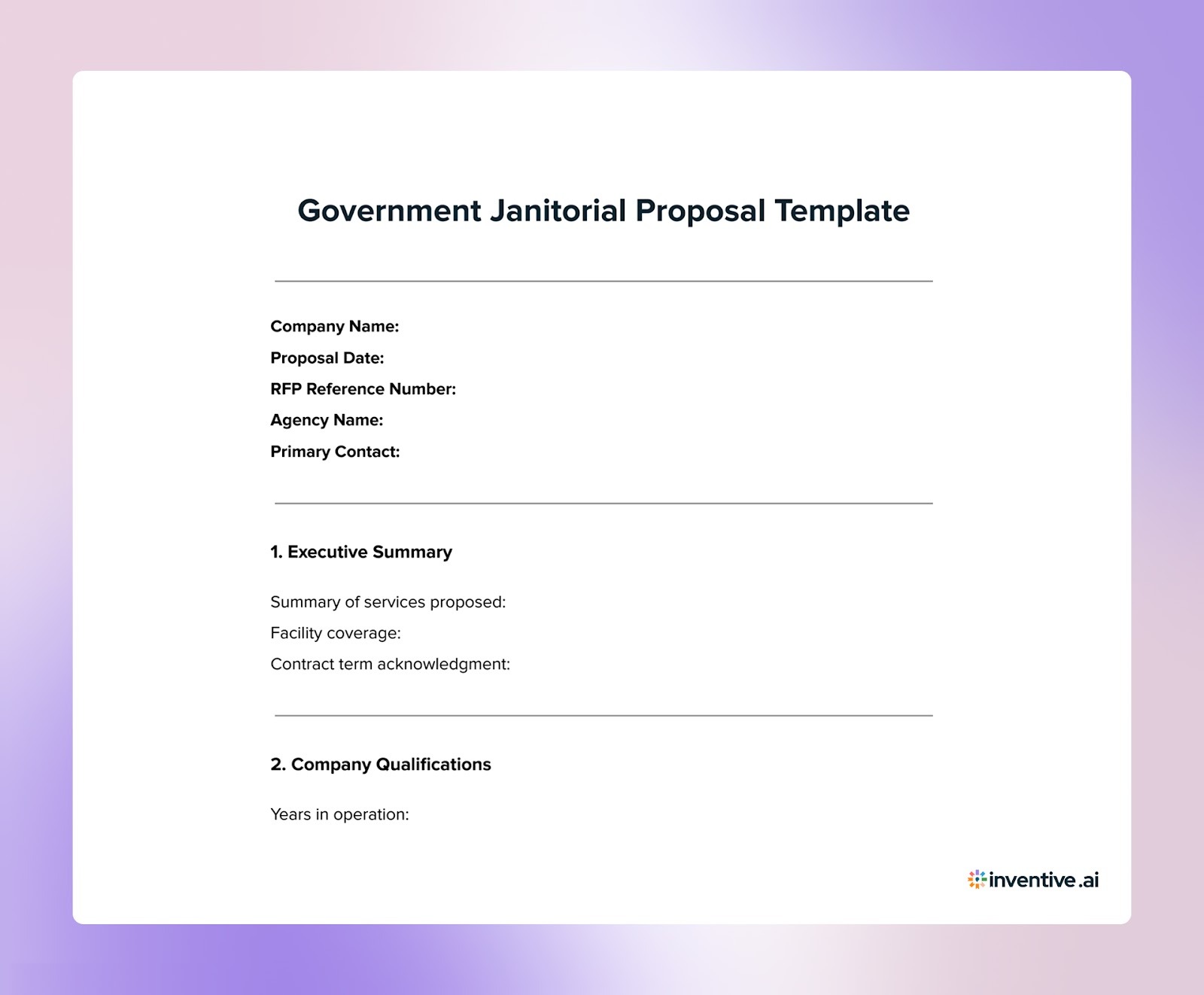
Government cleaning contracts typically require formal compliance documentation, background screening standards, insurance minimums, and structured pricing formats. These proposals often follow strict submission guidelines and include detailed staffing disclosures, safety certifications, and performance reporting requirements.
Government buyers evaluate vendors on compliance accuracy, contract experience, and documented service methodology.

2. Commercial Office Janitorial Proposal
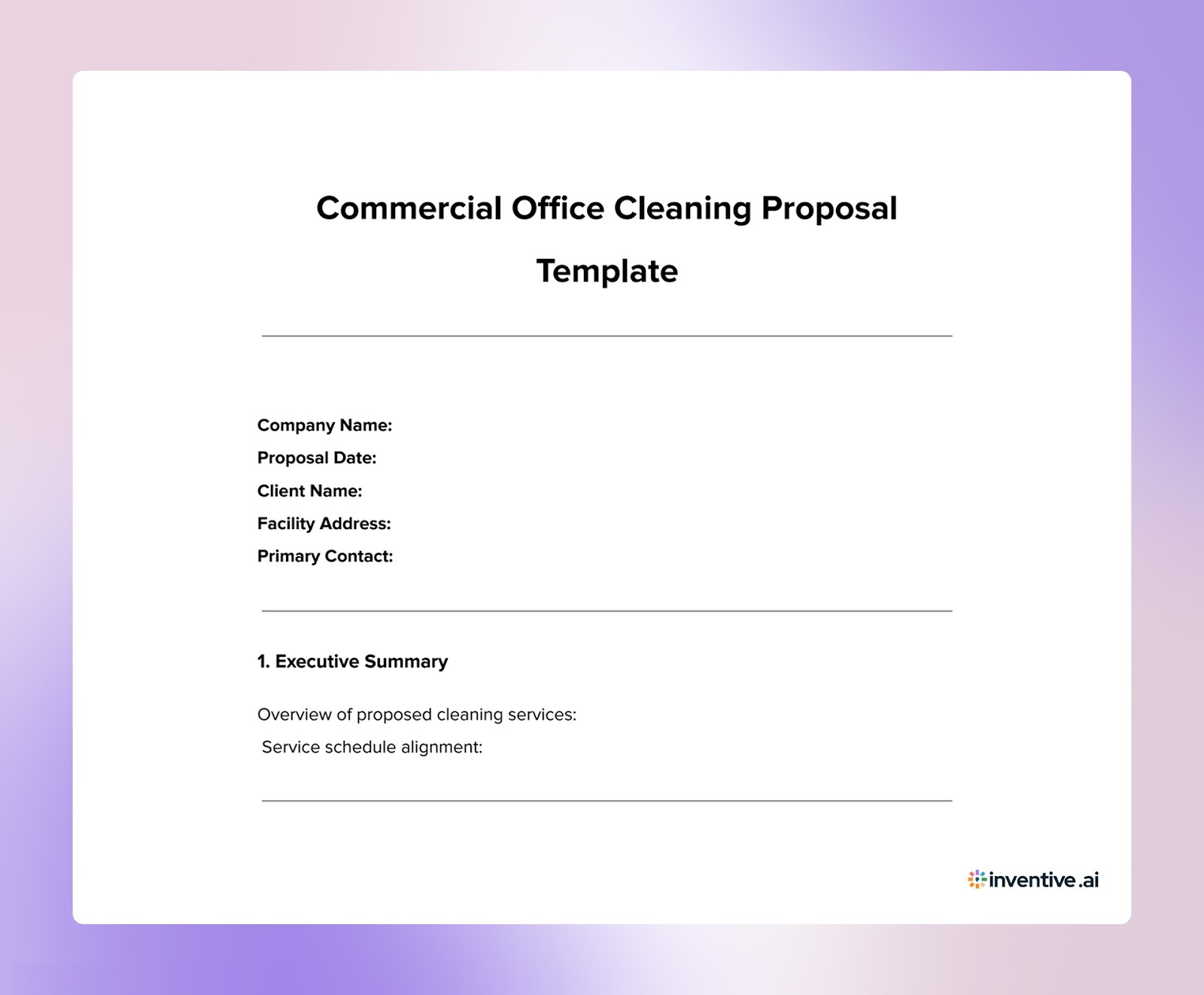
Commercial office cleaning proposals focus on consistent after-hours service, maintenance of high-traffic areas, restroom sanitation, and client communication processes. Buyers prioritize reliability, supervision structure, and service continuity across large square footage.
These proposals emphasize staffing plans, quality assurance procedures, and transparent monthly pricing models.

3. Industrial Janitorial Proposal
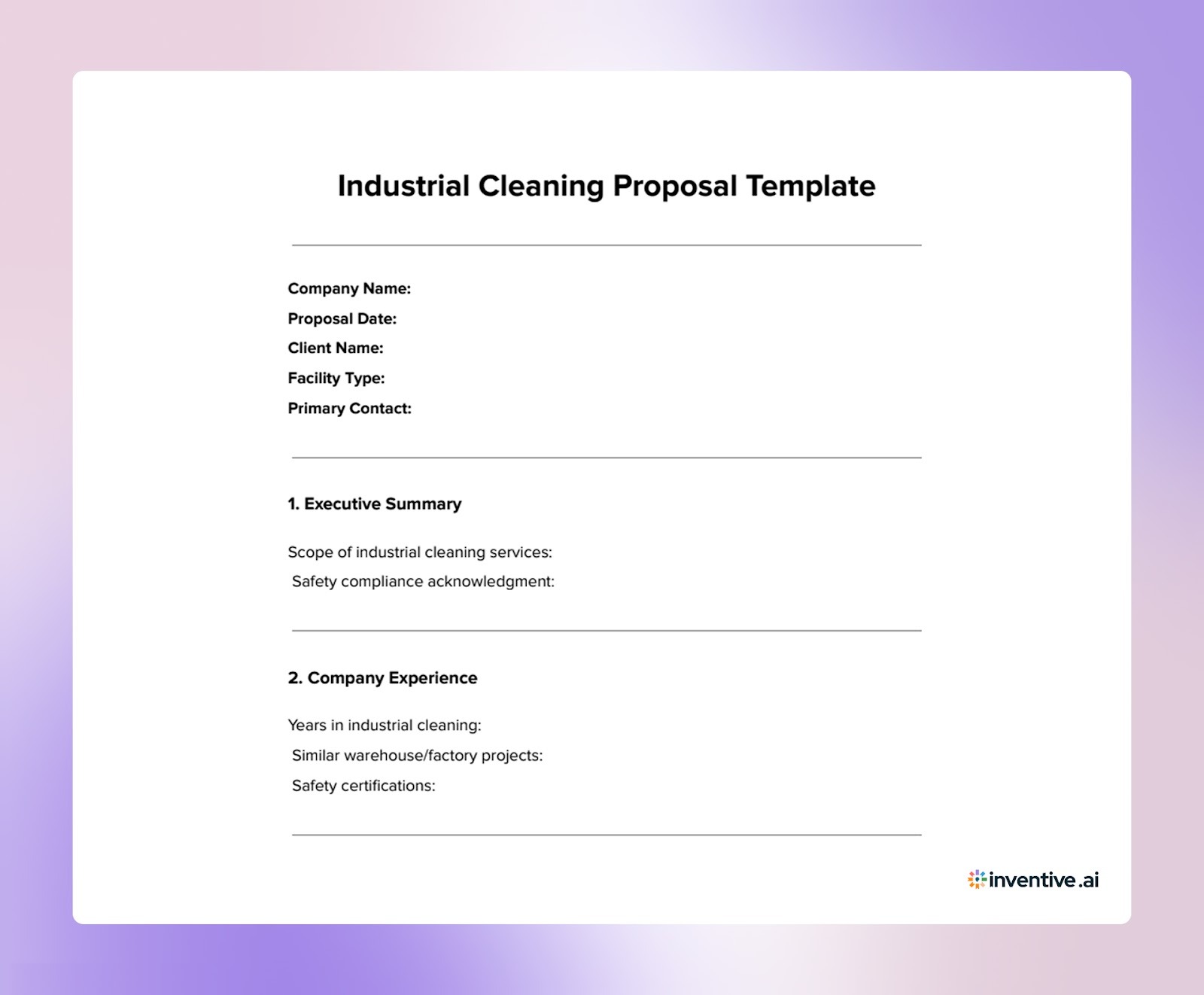
Industrial and warehouse facilities require cleaning proposals that address large floor areas, equipment-heavy environments, and safety compliance. These contracts often involve dust control, machinery area cleaning, and adherence to workplace safety standards.
Industrial proposals should clearly document safety training, chemical handling procedures, and scalable staffing models.

Submit Evaluator-Ready Janitorial RFPs With Inventive AI
Janitorial RFP responses often reuse standard scope language, insurance statements, and staffing descriptions across multiple bids. Over time, this leads to mismatched staffing numbers, outdated compliance language, inconsistent pricing explanations, and incomplete requirement mapping. These gaps reduce evaluation scores and create avoidable risk during procurement review.
Inventive AI automates the janitorial RFP response process end-to-end using multiple specialized AI agents. It analyzes the full RFP scope, aligns staffing plans with square footage and service frequency, validates pricing consistency, and ensures compliance language reflects current certifications. The result is structured, complete submissions that improve response quality and increase win rates.
Key Inventive AI capabilities:
Context Engine
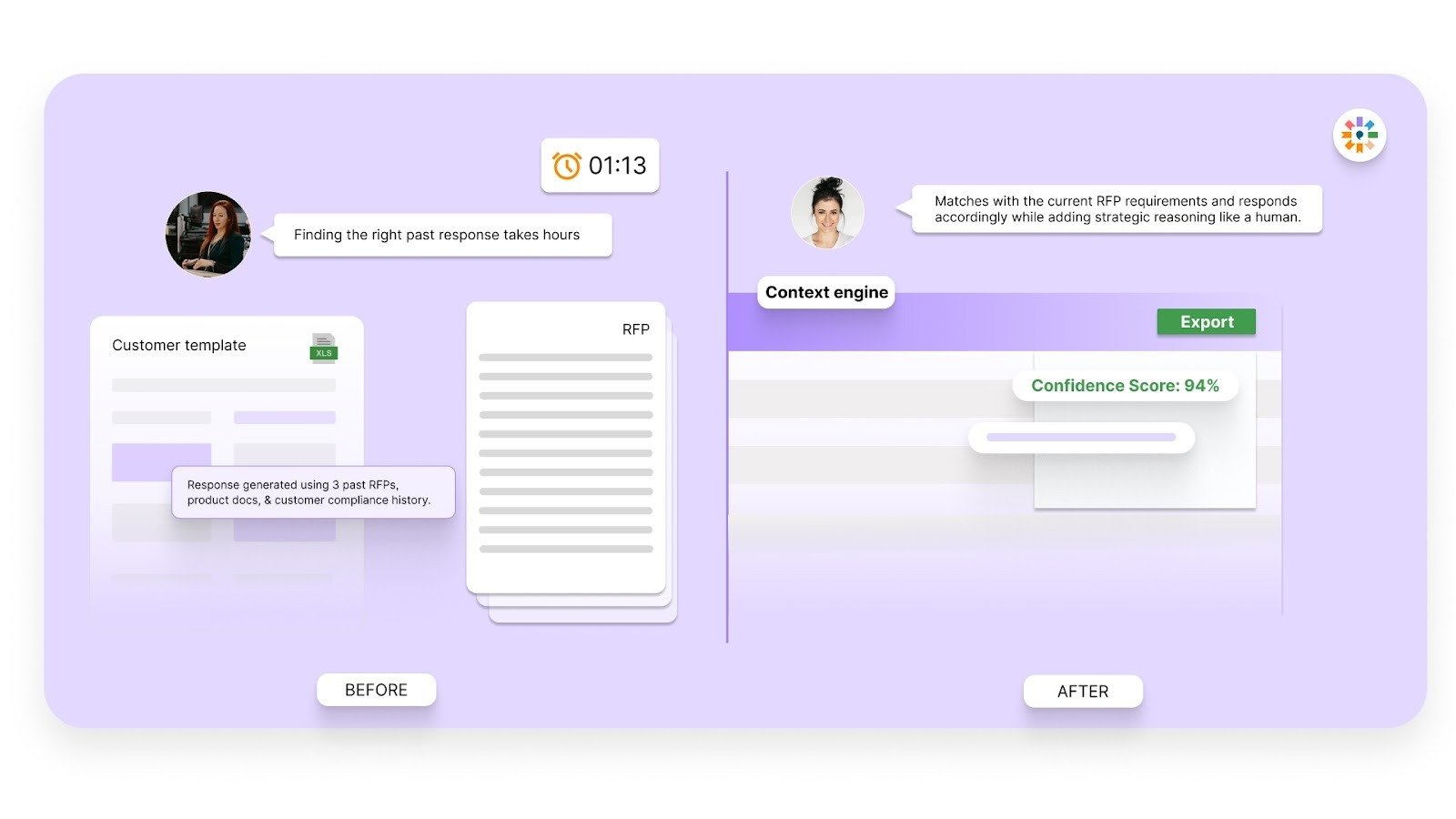
Janitorial RFPs connect square footage, cleaning frequency, staffing models, and pricing structure. Inventive AI evaluates the entire RFP before generating responses, ensuring that staffing numbers match service schedules and pricing reflects the defined scope. This prevents underpricing, overcommitment, and scope inconsistencies that can disqualify bids.
Conflict Detection
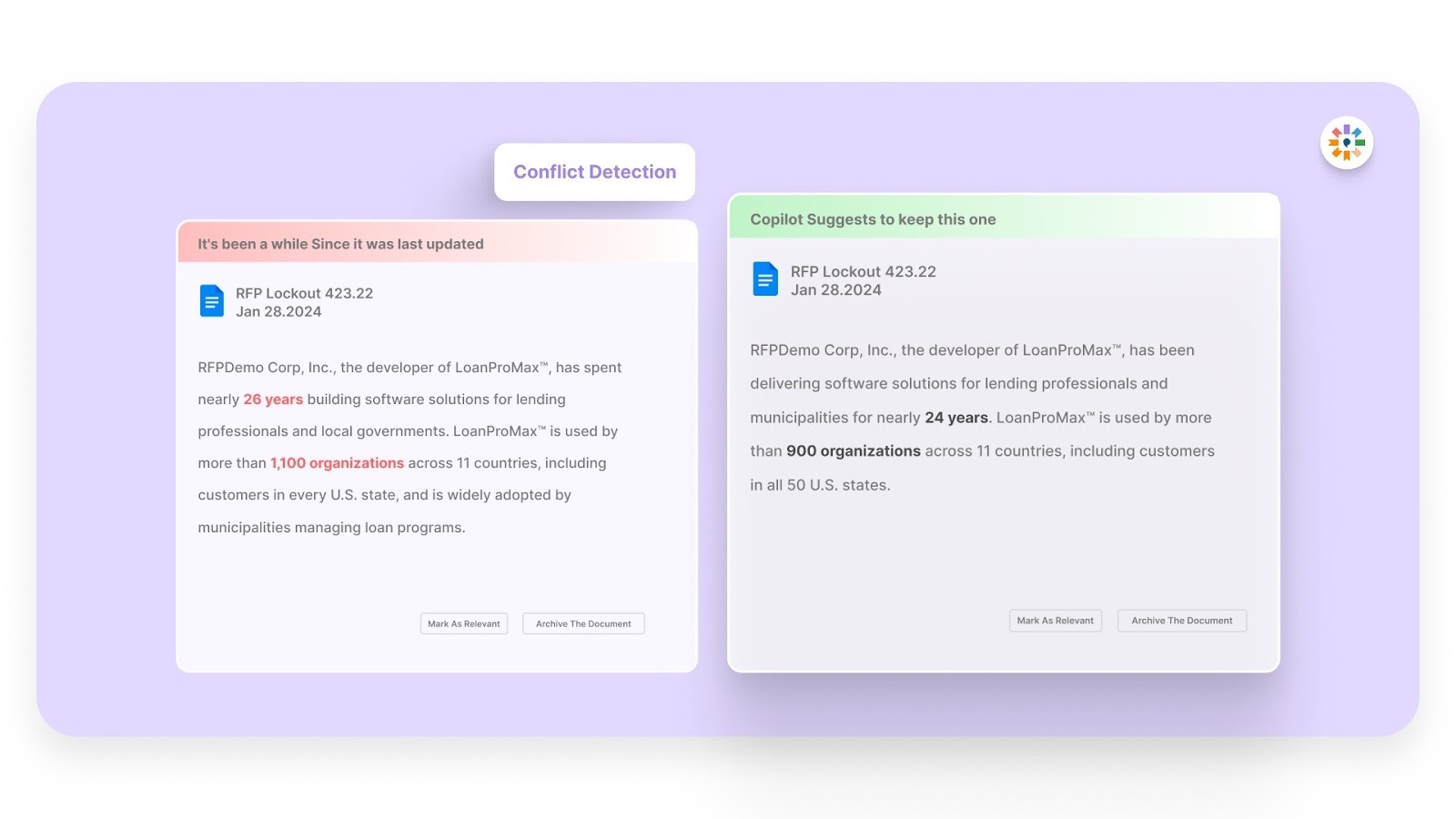
Cleaning proposals often contain contradictions between scope descriptions, staffing counts, and pricing breakdowns. Inventive AI automatically flags conflicting statements before submission, reducing credibility risk and preventing evaluation penalties caused by internal inconsistencies.
Outdated Content Detection
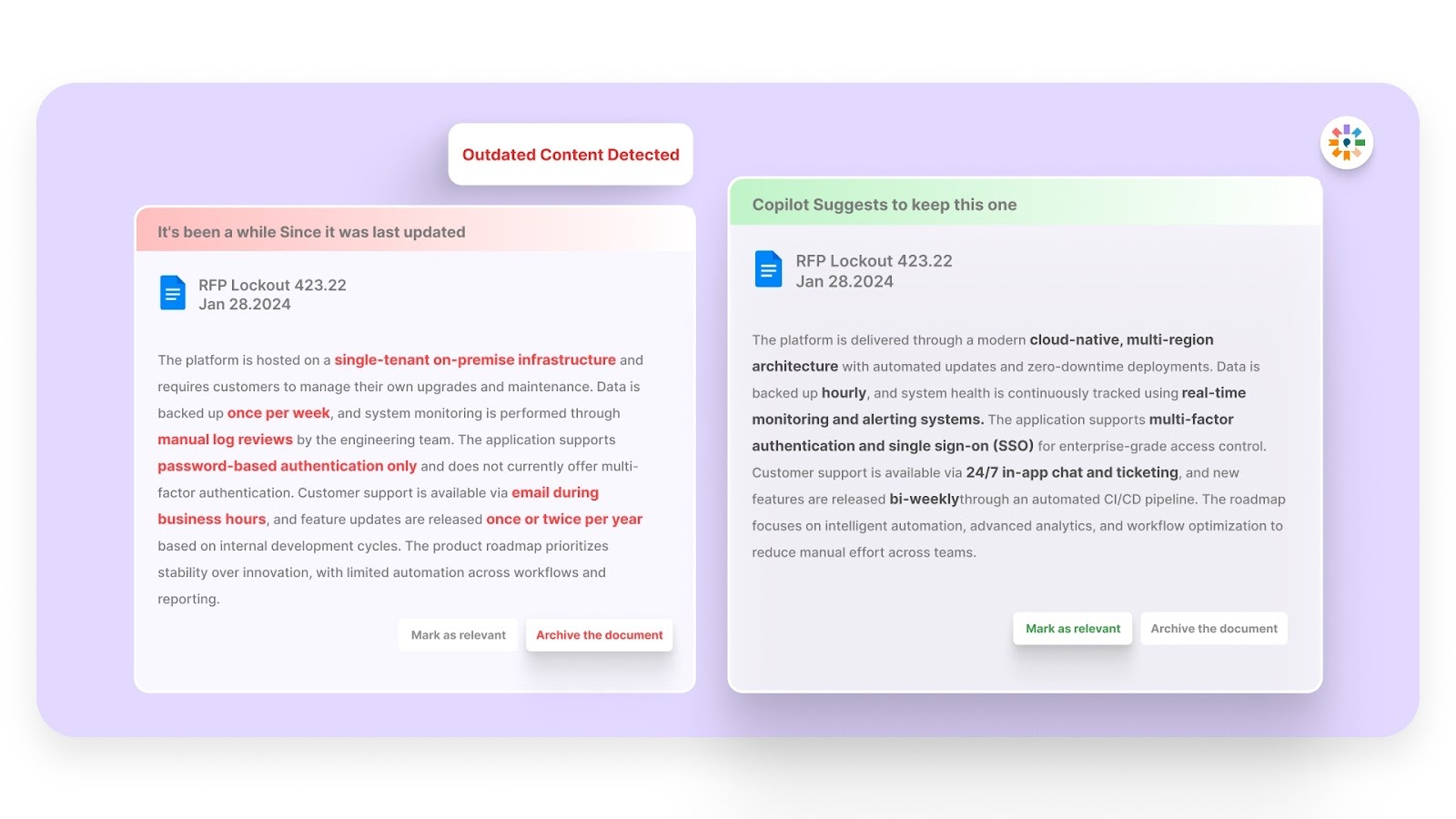
Janitorial vendors frequently reuse boilerplate language for insurance coverage, safety protocols, and certifications. Inventive AI detects expired coverage limits and outdated compliance statements, reducing compliance risk and eliminating last-minute manual audits.
2X Higher-Quality Responses
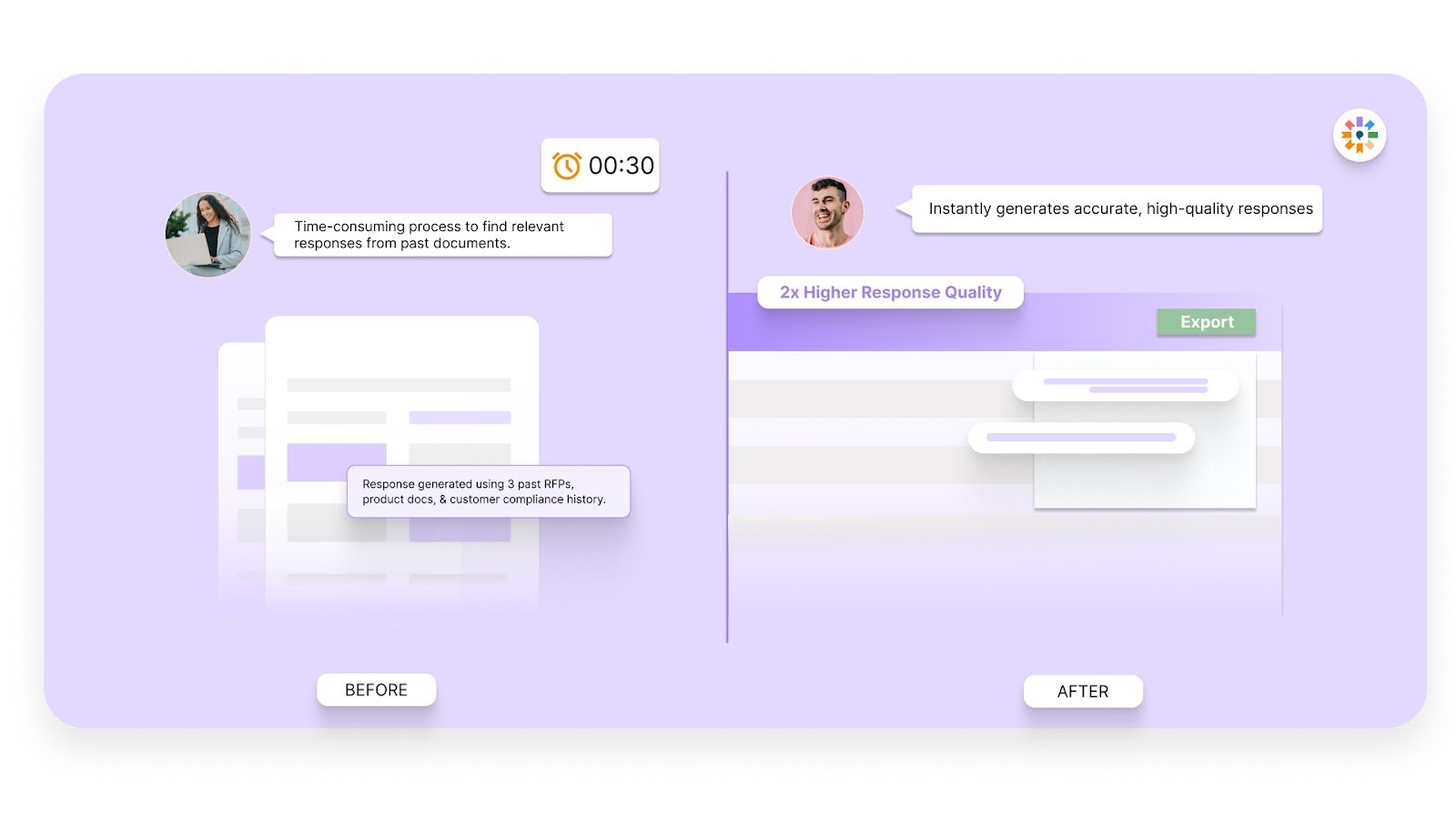
Inventive AI’s multi-agent reasoning produces structured, requirement-aligned responses that directly address evaluation criteria. This improves scoring consistency and reduces revision cycles across internal review teams.
Narrative Proposal Generation
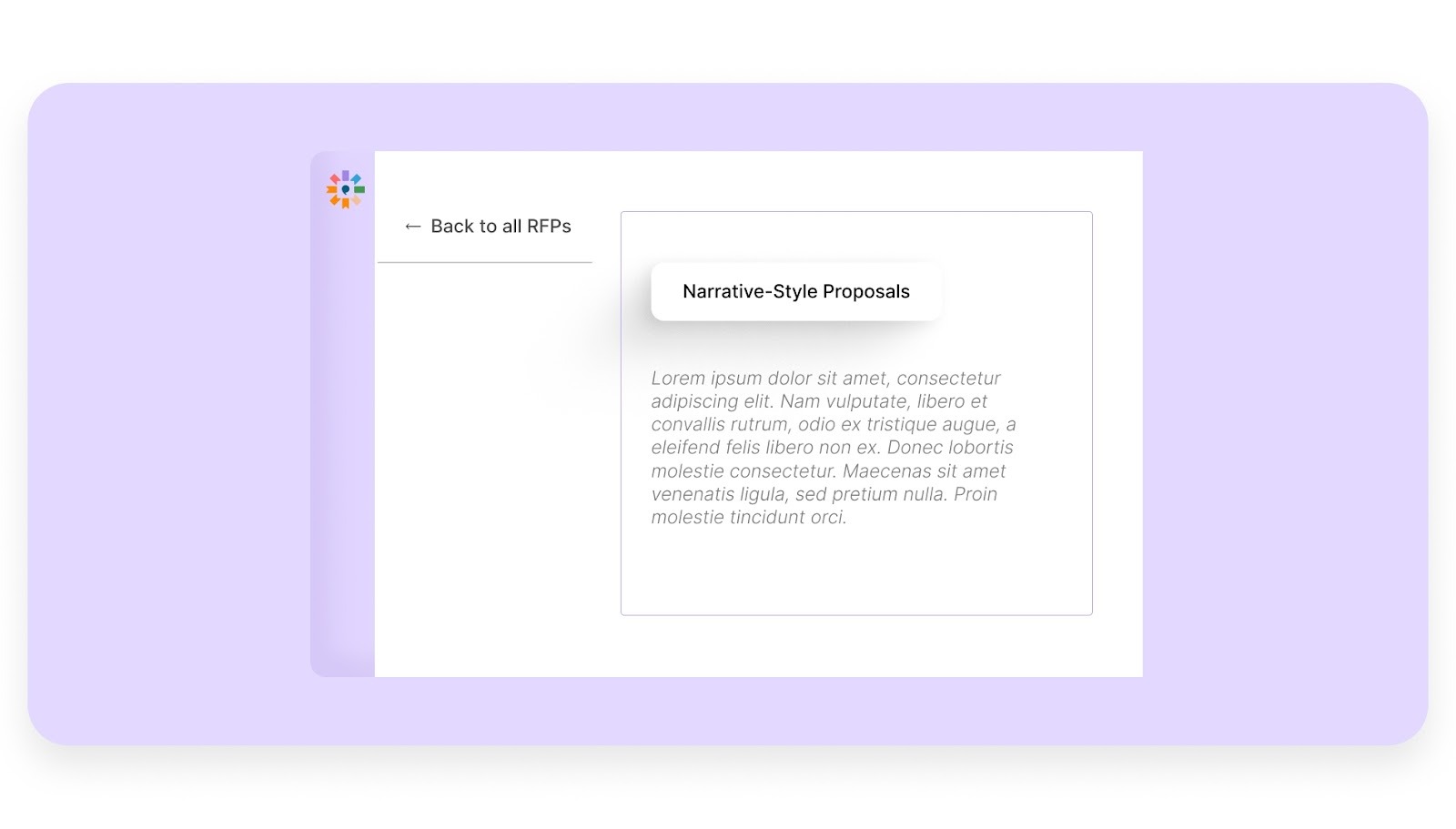
Beyond requirement mapping, Inventive AI generates complete executive summaries, service methodologies, quality assurance narratives, and compliance documentation. This allows vendors to submit presentation-ready proposal documents alongside structured RFP responses, strengthening overall submission quality.
Simple and Easy-to-Use UI/UX
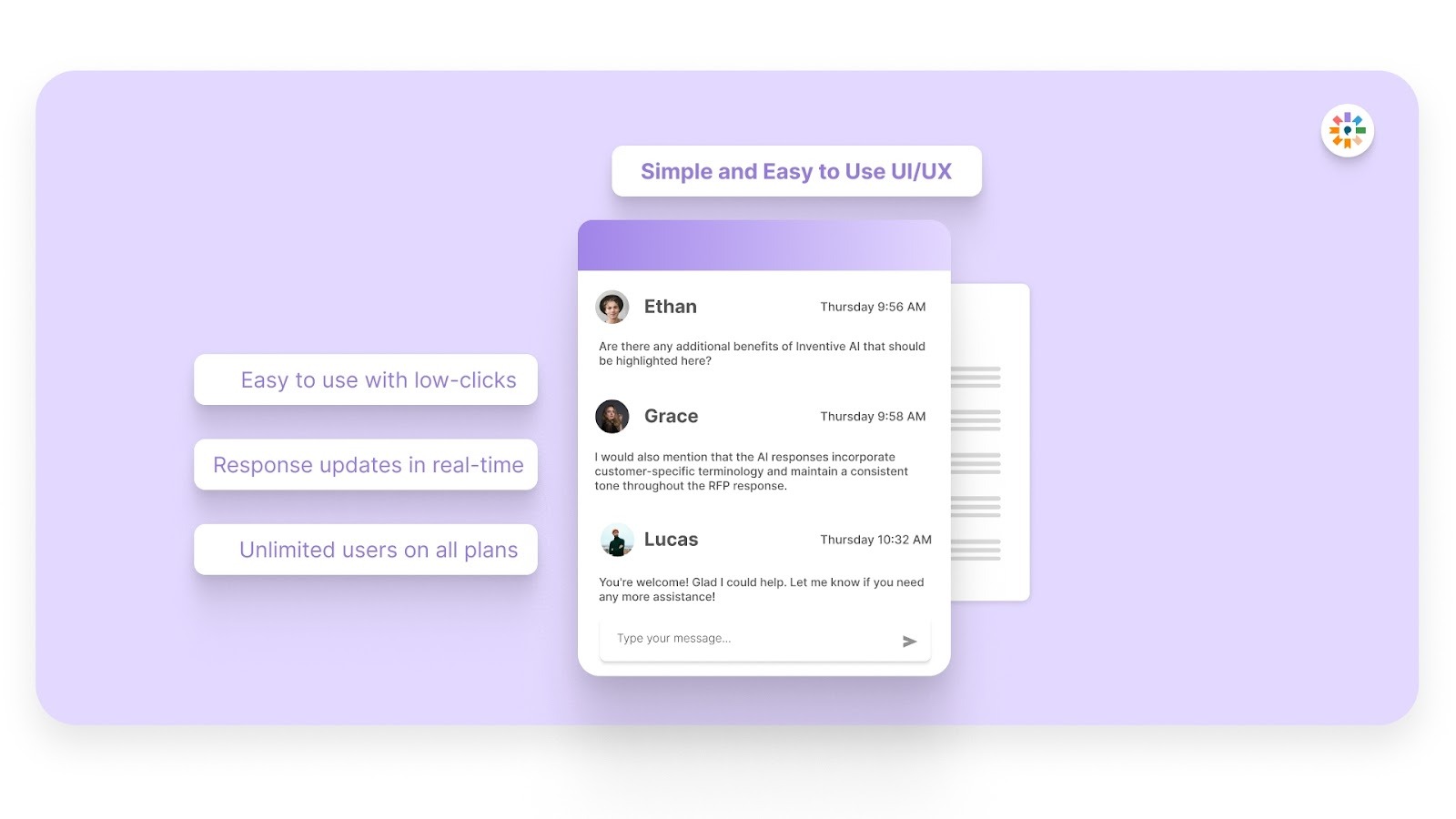
Janitorial proposal teams operate under tight deadlines and cannot afford complex tools that require long onboarding cycles. Inventive AI provides a clean, centralized workspace where teams can draft, review, and collaborate without switching systems. The intuitive interface supports full-team adoption, shortens learning curves, and accelerates response execution while maintaining consistency and control across every submission.
FAQs About Janitorial RFP
1. How Do You Price A Janitorial Contract Accurately?
Pricing is typically based on square footage, service frequency, labor hours required, supervision level, and supply responsibility. Vendors calculate estimated labor hours per task and apply wage rates, overhead, and margin to determine a monthly service fee.
2. What Information Should Be Included In A Cleaning RFP To Avoid Underbidding?
A cleaning RFP should include total square footage, number of restrooms, floor types, traffic levels, service hours, consumable responsibilities, and any special compliance requirements. Missing these details often results in inconsistent pricing across vendors.
3. How Are Janitorial Proposals Evaluated By Buyers?
Buyers typically evaluate proposals based on pricing, staffing structure, supervision plan, compliance documentation, experience with similar facilities, and quality control processes. Transparent pricing and clearly defined staffing models often influence scoring.
4. What Is The Typical Contract Length For Janitorial Services?
Commercial and government janitorial contracts commonly range from one to three years, often with renewal options. Longer contracts allow vendors to stabilize staffing and pricing, while shorter contracts provide flexibility for performance evaluation.
5. How Can Cleaning Companies Improve Their RFP Response Success Rate?
Cleaning companies improve success rates by aligning proposals directly with stated RFP requirements, matching staffing levels to facility size, providing clear pricing breakdowns, and documenting compliance and insurance coverage accurately.

.avif)