Marketing RFPs: A Practical Guide to Successful Responses
This guide explains how marketing RFPs work, what buyers look for, how to respond effectively, where traditional response processes break at scale, and how modern automation fits into today’s marketing RFP workflows.

Marketing RFPs sit at the center of a massive and highly competitive market. Global marketing spending reached $897.7 billion, according to Statista, which explains why buyers apply formal, multi-stakeholder evaluation processes when selecting agencies, platforms, and marketing partners.
As budgets grow, expectations around strategy, accountability, and measurable outcomes increase with them.
For vendors, this makes marketing RFPs structurally different from casual sales conversations. Responses are evaluated not only on capability, but on how clearly they address business goals, risk, execution readiness, and proof of impact.
This guide explains how marketing RFPs work, what buyers look for, how to respond effectively, where traditional response processes break at scale, and how modern automation fits into today’s marketing RFP workflows.
Key Takeaways
- Marketing RFPs are strategy-heavy evaluations where generic responses fail, and buyer-specific positioning determines shortlists.
- Buyers assess marketing RFPs across strategy, proof, delivery clarity, measurement, and pricing alignment, not just capabilities.
- Effective responses require decoding buyer intent, tailoring strategy, controlling risk, and maintaining consistency across sections.
- Traditional manual response processes break at scale due to rewrites, inconsistencies, slow reviews, and accuracy risks.
- AI-driven workflows improve response quality, speed, and consistency, making it possible to scale marketing RFP responses without increasing headcount.
What Is a Marketing RFP?
What Is a Marketing RFP? A marketing RFP is a formal document used by organizations to evaluate, compare, and select marketing agencies, consultants, or technology vendors for a defined scope of work.
It outlines business goals, requirements, constraints, timelines, and evaluation criteria, enabling vendors to submit structured proposals for consideration.
Companies usually issue marketing RFPs during major campaigns, agency changes, market expansion, or large, multi-year investments, especially when procurement or compliance oversight is required.
Unlike generic RFPs, marketing RFPs require vendors to go beyond meeting formal requirements and focus equally on strategy, storytelling, measurement, and brand fit across multiple stakeholder expectations.
5 Types of Marketing RFPs You Need to Know
Marketing RFPs vary based on business goals, channels, and how mature the organization’s marketing function is. Each type signals different expectations for scope, outcomes, and evaluation.
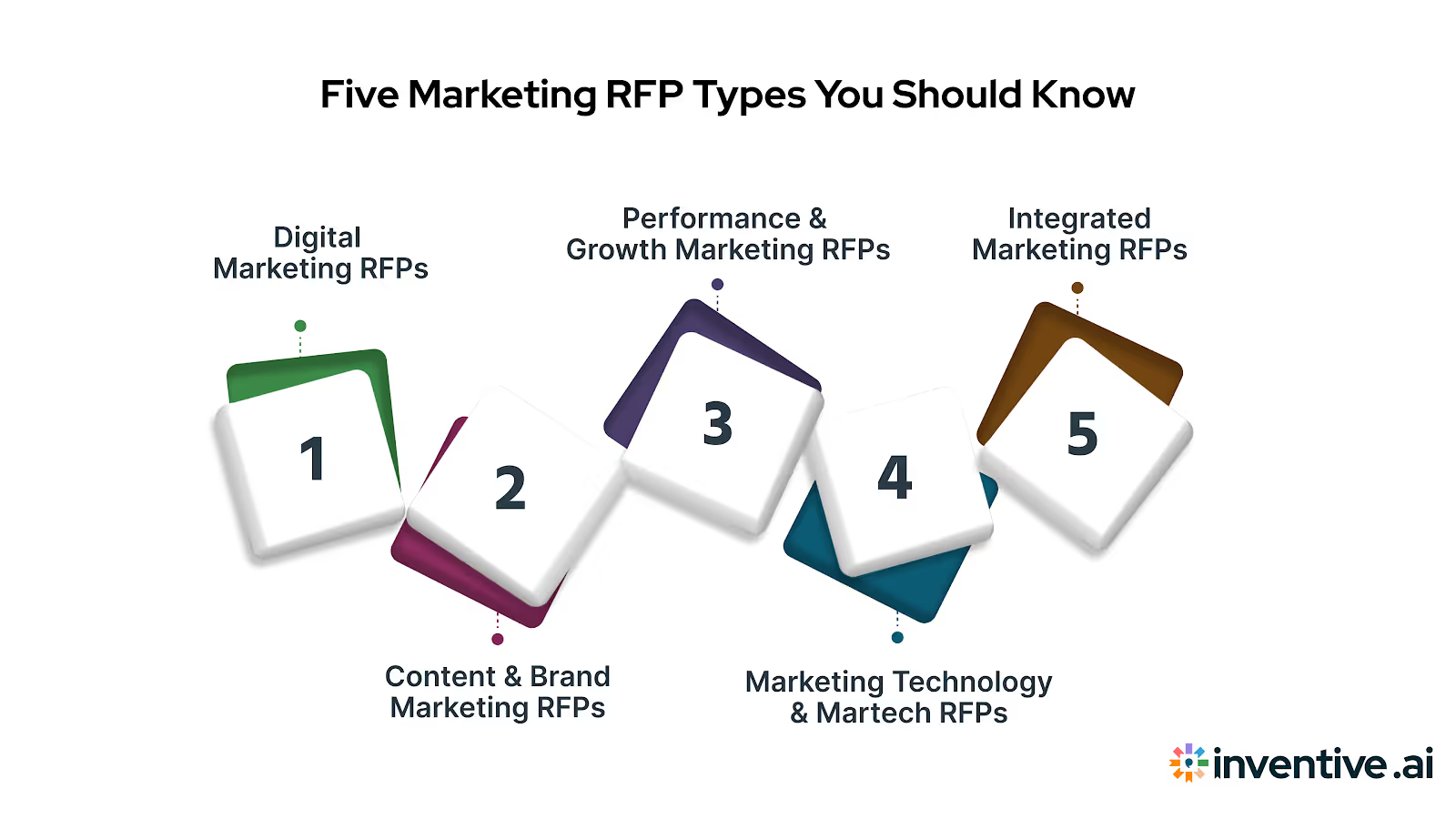
Digital Marketing RFPs
- Focus on improving online visibility, traffic, and conversion performance across digital channels.
- Evaluation centers on performance metrics, attribution models, and ongoing optimization capability.
Content and Brand Marketing RFPs
- Emphasize brand narrative, messaging consistency, and long-term audience engagement.
- Buyers assess strategic thinking, creative quality, and the ability to maintain brand coherence at scale.
Performance and Growth Marketing RFPs
- Designed to drive pipeline growth, revenue impact, and measurable outcomes.
- Responses are judged on clarity of results, experimentation approach, and scalability across funnels.
Marketing Technology and Martech RFPs
- Used to evaluate platforms rather than agencies, with a strong focus on capability fit and integration.
- Buyers look for clear business use cases, technical alignment, and adoption readiness.
Full-Service or Integrated Marketing RFPs
- Combine multiple marketing disciplines under a single engagement or long-term partnership.
- These RFPs prioritize coordination, governance, and the ability to deliver across channels consistently.
What Buyers Typically Look for in Marketing RFPs
RFP evaluators tend to score proposals against a consistent set of criteria, regardless of format or industry. These factors shape shortlists and final decisions far more than surface-level presentation.
1. Proven outcomes and case studies
Buyers quickly scan for results that look familiar to their situation. They want to see specific problems, measurable outcomes, and enough detail to understand what the vendor actually owned versus what the client contributed.
2. Strategic thinking, not just execution
Strong responses show that the vendor understands the business context behind the RFP, not just the task list. Buyers look for clear reasoning, prioritization, and evidence that the strategy can adapt when assumptions change.
3. Team experience and stability
Evaluators pay close attention to who will do the work day to day. Named team members, defined responsibilities, and signs of continuity matter more than agency size or brand reputation.
4. Measurement and reporting clarity
Buyers expect to know how success will be tracked before work starts. Clear metrics, reporting cadence, and a practical approach to turning data into decisions reduce uncertainty and build confidence.
5. Pricing transparency
Pricing rarely wins the deal on its own, but unclear pricing often loses it. Buyers look for straightforward cost structures, clear assumptions, and alignment between scope, effort, and fees so approvals do not stall later.
How to Effectively Respond to Marketing RFPs?
Generic responses do not perform well in marketing RFPs. To be competitive, your response needs to be specific to the buyer’s marketing problem, clearly structured for evaluation, and consistent across strategy, execution, and proof. The steps below outline how experienced teams approach this in practice.
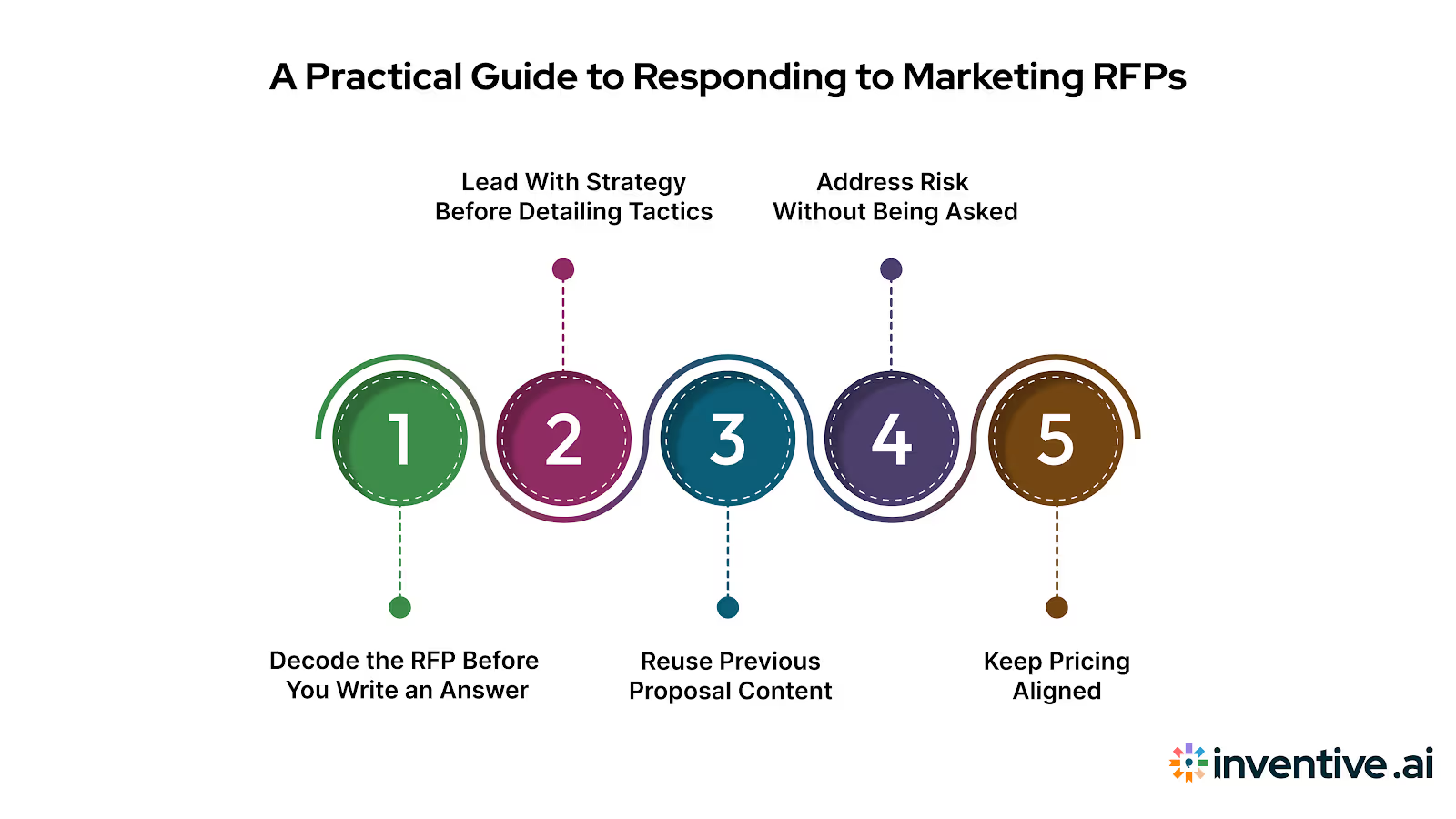
1. Decode the RFP Before You Write an Answer
Start by reading the marketing RFP as a signal of business pressure, not a checklist. Identify the RFP type, the marketing channels involved, the buyer’s growth stage, and the problems they are trying to solve. Look for repeated language around goals, risks, or constraints and translate those into clear win themes.
Example:
If the RFP is for social media marketing, the real issue may be declining engagement or poor paid performance. Address how social activity supports audience growth, pipeline contribution, or attribution rather than listing posting schedules.
2. Lead With Strategy Before Detailing Tactics
When you respond to a marketing RFP with generic strategies, you blend in immediately. Buyers expect you to tailor your approach to the exact marketing problem they are trying to solve, not restate common frameworks. Your strategy should clearly reflect the concerns raised in the RFP and explain how your approach addresses them.
Example:
If the RFP highlights declining organic performance, explain how your SEO strategy targets the buyer’s specific market gaps, search behavior, and competition before listing activities or deliverables.
3. Reuse Previous Proposal Content Without Sounding Reused
When you work through multiple marketing RFPs, you will notice that a large portion of the questions repeat with only minor variations. Reusing prior answers is often necessary to move fast, but the risk lies in carrying over context that no longer fits the new buyer.
The practical approach is to maintain a centralized library of past questions, approved responses, and supporting material that you can quickly adapt.
This reduces the time spent pulling in subject matter experts for the same explanations and helps keep messaging consistent across proposals.
The key is treating reused content as a starting point, not a finished answer, and reshaping it to reflect the current buyer’s goals, channels, and constraints before submission.
What You Can Reuse Safely Across Marketing RFPs?
- Foundational content: Company overview, core capabilities, delivery model, team bios, and compliance or legal responses can be reused with minimal adjustment.
- Operational frameworks: Methodologies, reporting structures, standard KPIs, and pricing models can carry over, as long as they are aligned to the current scope.
- Proof assets: Case studies and past examples can be reused selectively, but must be reframed to match the buyer’s industry, goals, and constraints.
4. Address Risk Without Being Asked
Most marketing RFPs do not ask vendors to talk about risk, but evaluators look for it anyway. When you proactively surface where execution can break and how you control it, you stand out as a low-risk partner.
Go beyond generic statements and identify real delivery risks tied to the RFP scope, including onboarding delays, data access issues, unclear ownership across teams, shifting priorities, approval bottlenecks, or attribution gaps.
Then explain, in practical terms, how you prevent or contain them. This shows that you have run similar engagements and understand where friction actually occurs.
Example:
If timelines are aggressive, explain how you handle onboarding in the first two weeks, what inputs you require upfront, how dependencies are tracked, and how scope changes are managed without derailing delivery.
5. Keep Pricing Aligned With Scope Language
Procurement and finance read pricing line by line against the scope defined in the RFP. If the structure does not map cleanly to how the work is described, approvals slow down, and follow-up questions multiply.
Use the buyer’s scope language directly in your pricing breakdown. Align costs to phases, workstreams, channels, or deliverables exactly as the RFP defines them. Clearly state what is included, what is assumed, and where pricing changes apply so reviewers do not have to interpret intent.
Example:
If the RFP allows scope changes, explain how pricing adjusts when new channels, regions, or volumes are added, who approves those changes, and how they are documented. This removes ambiguity during internal reviews and prevents pricing from becoming a blocker late in the process.
Also read: How to Craft an Effective Marketing RFP Response
How to Find Marketing RFPs?
Marketing RFPs are not published in a single global marketplace. Most opportunities are distributed across public procurement portals, curated industry listings, and procurement aggregators. Teams that respond consistently usually monitor multiple neutral sources in parallel rather than relying on one channel.
Common sources where marketing, digital, brand, and agency RFPs are regularly listed include:
- SAM.gov for U.S. federal marketing, communications, and digital services RFPs
- FindRFP for aggregated marketing RFPs across U.S. and Canadian public agencies
- RFP Database for public and private marketing RFPs across regions
- GlobalTenders for international marketing and digital tenders
- O'Dwyer's RFP Listings for PR, communications, and agency-focused RFPs
- University and enterprise procurement portals, where marketing and agency RFPs are often published directly
- Industry newsletters, LinkedIn groups, and professional communities where private or limited RFPs are shared
- BidNet Direct and similar paid platforms that consolidate public-sector RFPs and provide alerts
Related: How to Respond to a Digital Marketing RFP
Why Responding to Marketing RFP Responses Manually Breaks at Scale?
As marketing teams respond to more RFPs, processes that work for occasional submissions start to fail. Volume introduces coordination, consistency, and accuracy problems that compound with each new response cycle.
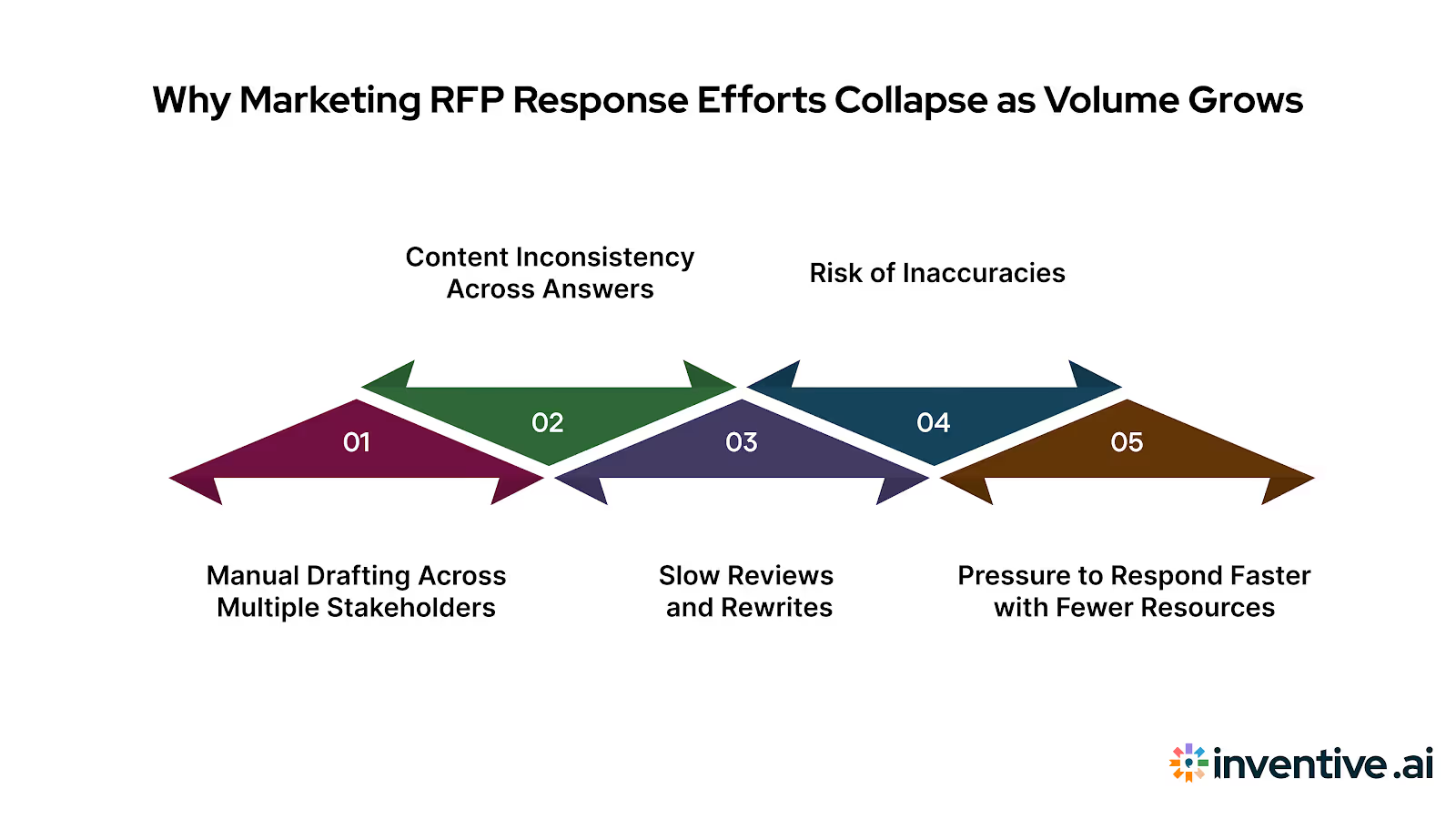
Common challenges that emerge at scale include:
- Manual drafting across multiple stakeholders: Marketing, sales, legal, and SMEs contribute in parallel, often using different assumptions, language, and source material.
- Content inconsistency across answers: Reused content, last-minute edits, and parallel inputs lead to contradictions within the same proposal.
- Slow reviews and rewrites: Review cycles stretch as teams reconcile feedback, rework sections, and align tone and positioning.
- Risk of inaccuracies or outdated claims: Capabilities, metrics, and compliance language drift over time, increasing exposure during buyer review.
- Pressure to respond faster with fewer resources: Response volumes rise while headcount and timelines shrink, forcing tradeoffs between speed and quality.
At scale, these issues are not isolated mistakes. They reflect a response process that cannot support volume, complexity, and speed at the same time.
How AI Is Automating Marketing RFP Responses at Scale?
As response volumes increase, teams are no longer trying to optimize manual workflows. They are replacing them. According to McKinsey’s State of AI Global Survey 2025, 88% of enterprises report regular AI use across their organizations, reflecting a clear shift toward AI-driven execution in high-effort, repeatable work like RFP responses.
For marketing RFPs, AI is not used to “assist writing.” It is used to remove structural bottlenecks that appear when responses need to be fast, consistent, accurate, and tailored at the same time.
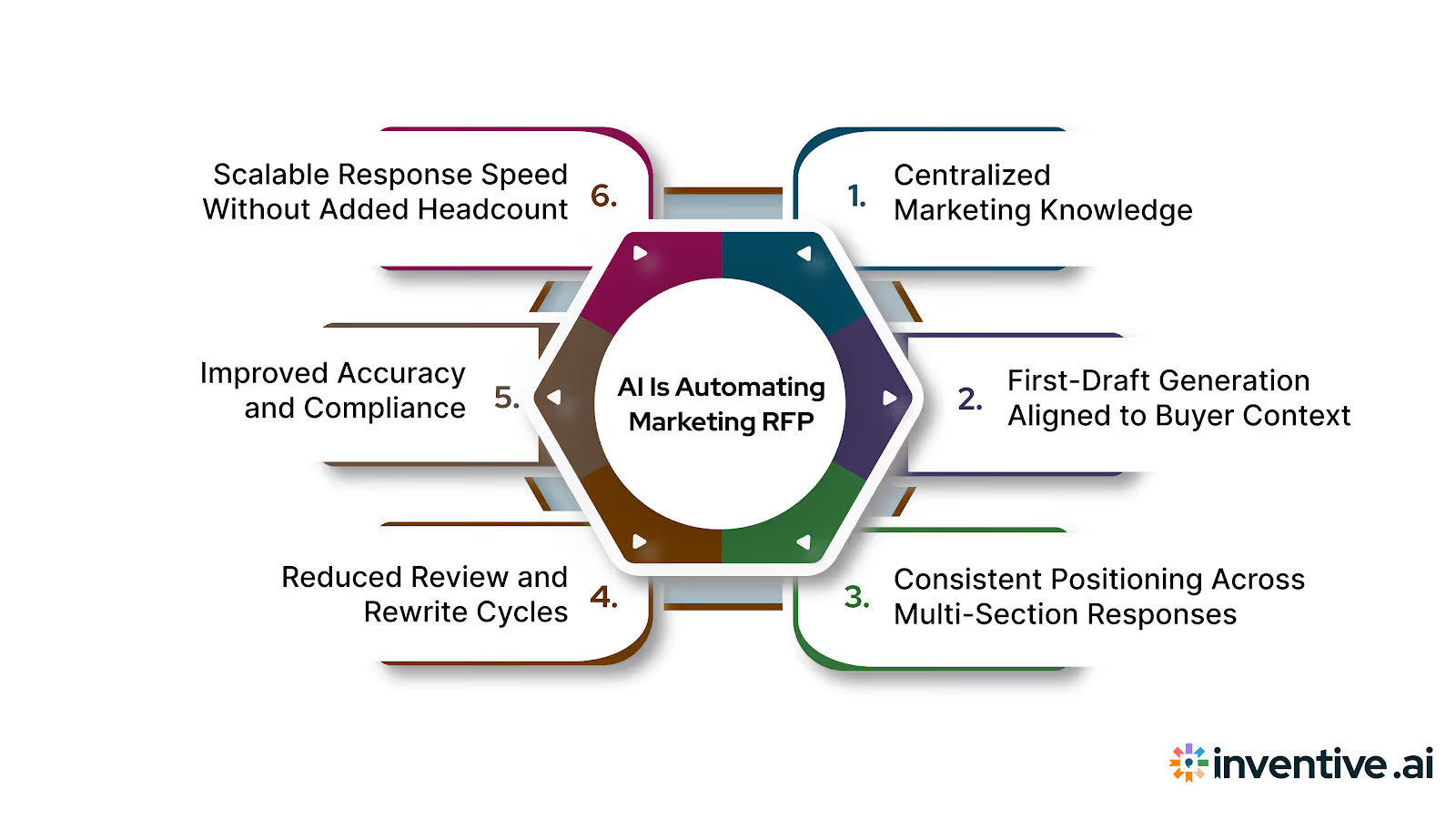
1. Centralized Marketing Knowledge and Past Responses
AI systems consolidate approved marketing content, past RFP answers, case studies, and compliance language into a single source of truth. This prevents version drift and ensures teams always respond with current, vetted information.
2. First-Draft Generation Aligned to Buyer Context
Instead of starting from blank documents, AI generates initial drafts based on RFP type, marketing channel, and buyer priorities. Teams move faster by reviewing and refining rather than writing from scratch.
3. Consistent Positioning Across Multi-Section Responses
Marketing RFPs span strategy, execution, measurement, pricing, and governance. AI helps maintain consistent tone, positioning, and claims across all sections, even with multiple contributors.
4. Reduced Review and Rewrite Cycles
By grounding drafts in approved content and structured logic, AI cuts down on internal rewrites. Marketing, legal, and leadership teams spend less time correcting inconsistencies.
5. Improved Accuracy and Compliance
AI-driven checks flag outdated claims, conflicting metrics, or misaligned statements before submission, lowering risk during buyer evaluation.
6. Scalable Response Speed Without Added Headcount
AI enables teams to handle higher RFP volumes without increasing manual workload, improving speed while preserving personalization and quality.
This shift reflects how marketing RFP responses are evolving from document-heavy tasks into structured, repeatable workflows that can scale with demand.
How InventiveAI Enhances Marketing RFP Responses?
As marketing RFP volume grows, teams run into the same set of problems: responses sound generic, answers contradict each other, reviews drag on, and accuracy slips under time pressure. The issue is not effort or expertise. It is that manual, document-based workflows cannot maintain quality, consistency, and speed at the same time.
Inventive AI is built to solve that exact breakdown. It replaces fragmented drafting and review cycles with a system that produces stronger answers upfront, keeps content consistent across the proposal, and scales without adding headcount. The outcome is faster responses that win more often, with less rewriting and lower risk.
- Higher response quality that improves win rates: Inventive AI consistently produces 2× better-quality responses, which directly correlates to up to 50 percent higher win rates because answers are clearer, more complete, and more relevant to buyer intent.
- Highly contextual answers grounded in the full RFP: The Context Engine reasons across the entire RFP, deal inputs, and buyer context to generate responses that feel deal-specific rather than templated.
- Built-in conflict detection across sections: Inventive AI automatically flags contradictory statements within a proposal, preventing risky inconsistencies that typically surface during late-stage reviews.
- Quality benchmarking against gold-standard content: Every answer is evaluated for accuracy, completeness, and clarity, delivering 95 percent accuracy, with 66 percent of responses requiring near-zero edits.
- Narrative-style proposal generation: Inventive AI supports long-form marketing narratives such as executive summaries, strategy sections, and proposal books, not just isolated Q&A.
- Centralized knowledge hub with live integrations: Approved content is pulled directly from internal systems like Drive, SharePoint, Notion, and CRMs, maintaining a single source of truth at scale.
Inventive AI shifts marketing RFP responses from a manual coordination problem into a repeatable, high-quality workflow, where speed increases without compromising accuracy, consistency, or credibility.
Where Marketing RFP Responses Are Headed?
Marketing RFPs continue to increase in volume and complexity. Buyers expect tailored strategies, consistent narratives, accurate claims, and faster turnaround, even as more internal stakeholders are involved in evaluation. For response teams, this exposes the limits of manual drafting, shared folders, and document-based coordination.
At this stage, improving outcomes is less about working harder and more about changing how responses are produced. Teams that move to systems designed for accuracy, consistency, and scale are able to respond faster, reduce rewrites, and submit stronger proposals without increasing headcount.
This is the gap Inventive AI is built to address, by turning marketing RFP responses into a structured, high-quality workflow rather than a repeated coordination exercise.
FAQs About Marketing RFPs
1. What is the difference between a marketing RFP and a general RFP?
Marketing RFPs place heavier emphasis on strategy, positioning, case studies, and narrative responses, while general RFPs focus more on features, pricing, and compliance.
2. When should a company issue a marketing RFP instead of informal vendor outreach?
A marketing RFP is appropriate when spend is significant, multiple stakeholders are involved, or the engagement affects brand, growth, or long-term marketing performance.
3. Why do marketing RFP responses take so long to produce?
They require input from multiple teams, a custom strategy, proof points, and careful alignment across sections, which creates review cycles and rewrites when handled manually.
4. What makes a marketing RFP response stand out to buyers?
Clear alignment to stated goals, tailored strategy, relevant proof, consistent messaging, and transparent measurement and pricing are the strongest differentiators.
5. Can AI really be trusted for marketing RFP responses?
AI works best when grounded in a company’s approved internal knowledge and used to generate accurate first drafts, enforce consistency, and reduce manual effort rather than replace human judgment.