
Ombud Pricing and Features Overview 2026
This blog reviews Ombud’s pricing, features, strengths, and weaknesses. It also explains how Inventive AI helps enterprise teams move beyond basic automation and scale RFP operations with less manual effort.
.avif)
Ombud is a platform many enterprise teams use to manage RFPs and proposal work. It offers solid content management and structured collaboration. This makes it a dependable choice for mid-sized teams handling repeatable responses.
At the same time, AI tools are changing how proposal teams work. Today, AI-driven platforms help improve win rates by up to 30%. This has raised expectations around speed, accuracy, and content freshness.
As RFP volumes grow, teams still rely heavily on manual reviews and content upkeep. Limited AI depth and unclear pricing can slow down fast-growing enterprises that need to scale efficiently.
This blog reviews Ombud’s pricing, features, strengths, and weaknesses. It also explains how Inventive AI helps enterprise teams move beyond basic automation and scale RFP operations with less manual effort.
Key Takeaways
- Ombud offers content management and structured collaboration for proposal and response workflows.
- It markets AI capabilities such as OmMatch and Ombuddies as context-aware assistants. This supports autofill and rule-based recommendations using existing content libraries.
- High response accuracy still requires manual review and SME oversight. The automation relies mainly on traditional machine learning and keyword-based matching.
- Pricing is quote-based and not publicly transparent. The total cost often increases with additional users, integrations, onboarding, and configuration.
- Mid-sized teams with stable documentation needs may find Ombud sufficient. But large enterprises may face scalability, governance, and cost challenges as RFP volume and complexity grow.
- Inventive AI is built to address these gaps using multi-agent intelligence for drafting, conflict detection, and outdated content identification.
Ombud Overview: Features and Pricing
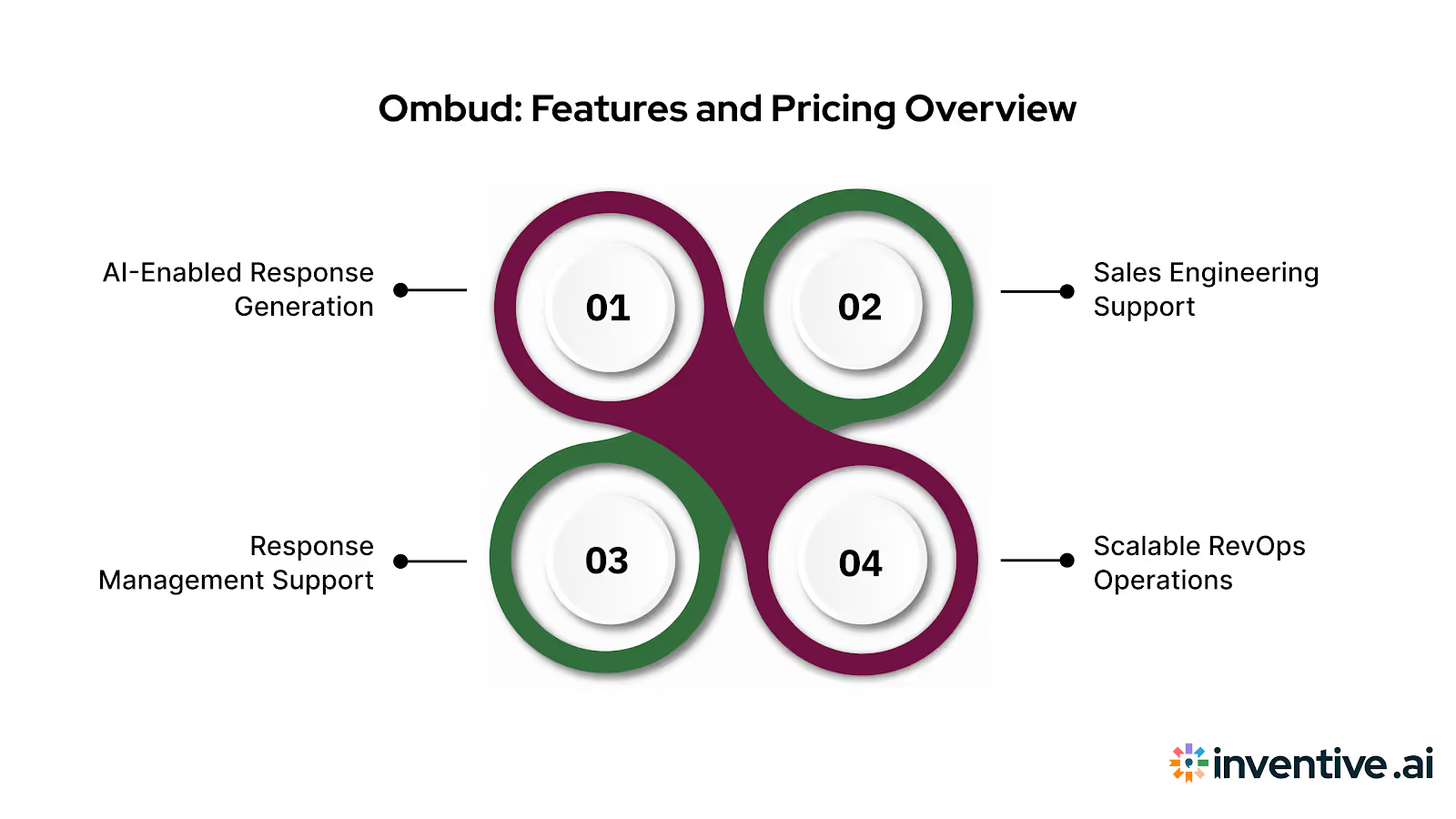
Ombud is a reliable RFP response and content automation tool for revenue and proposal teams. It helps organizations manage RFPs, RFIs, and sales documents in one centralized system while improving collaboration and content reuse. It combines machine learning with workflow automation to simplify proposal creation for sales and RevOps teams.
Let’s look at its key features, pricing structure, and where it fits for growing organizations.
1. AI-Enabled Response Generation
AI-assisted tools like Ombuddies are built to support different RevOps roles. They help automate routine tasks and guide users with relevant suggestions based on the task at hand, improving team productivity and reducing manual effort.
2. Sales Engineering Support
The Sales Engineering Ombuddy supports pre-sales teams. It assists with solution mapping and technical assessments. It helps create demo scripts and supports value-based selling. This feature allows sales engineers to focus more on customer conversations and strategy.
3. Response Management Support
The Response Management Ombuddy assists teams with creating, reviewing, and managing RFP responses and proposals. It supports workflow coordination, InfoSec questionnaires, and client-ready presentations to improve accuracy and efficiency.
4. Scalable RevOps Operations
Ombud enables RevOps teams to scale their operations without a proportional increase in headcount or operational overhead, helping organizations adapt quickly to changing business demands.
Pricing Breakdown
Ombud does not publish fixed pricing or predefined subscription tiers. Its pricing is fully custom and typically structured around team size, response volume, required integrations, and service scope. Organizations must contact the vendor directly for a tailored quote.
How Inventive AI Outperforms Ombud?
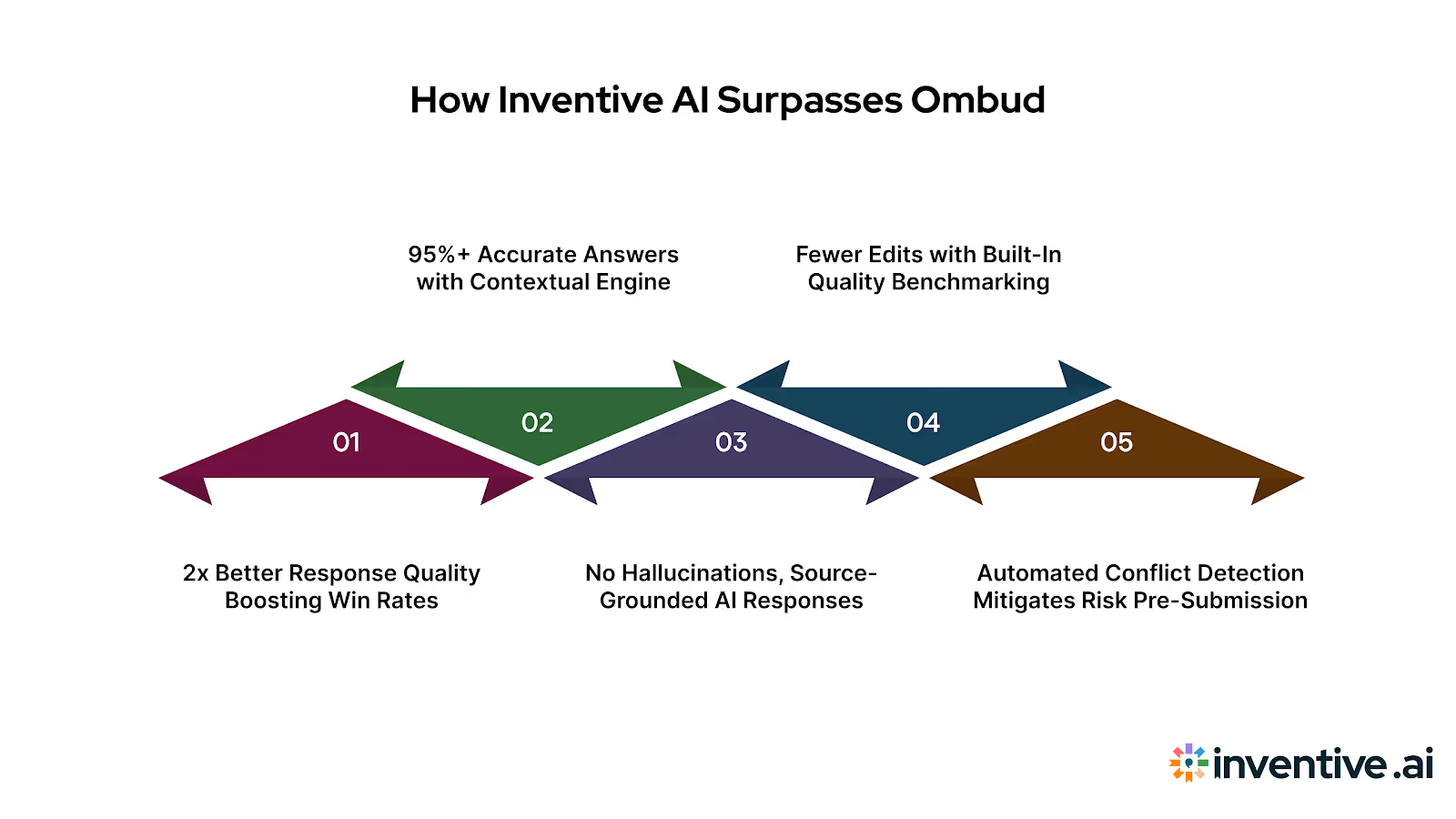
Inventive AI uses advanced, proprietary AI agents to support strategic RFP work. It automates content creation and competitor research. It also provides deeper AI-driven insights to help teams produce stronger, more competitive responses.
Ombud, on the other hand, is an enterprise Revenue Operations platform designed for sales engineering and proposal teams. It focuses on knowledge management and centralized content for RFP and proposal workflows. The platform acts as a single source of truth for response teams.
Here is how Inventive AI stands apart:
2× Better Response Quality That Directly Improves Win Rates
Inventive AI is built with response quality as the primary objective. Internal benchmarks show 2× higher-quality responses compared to productivity-first RFP tools. Higher-quality answers increase evaluator confidence, improve differentiation, and consistently lead to higher win rates.
95%+ Accurate Answers Powered by a True Context Engine
Inventive AI uses a multi-layer Context Engine that understands question intent, surrounding sections, evaluation criteria, and cross-response dependencies. This enables the platform to generate 95%+ accurate, SME-level answers that feel written by a subject matter expert, not a generic AI model.
Zero Hallucinations With Source-Grounded AI Responses
Inventive AI generates responses only from approved and connected knowledge sources. Every answer is grounded in verifiable content such as prior RFPs, product documentation, or policy files. This ensures 0% hallucinations and makes the platform safe for security questionnaires and regulated submissions.
66% Near-Zero Edits Through Built-In Quality Benchmarking
Inventive AI benchmarks every response against internal quality standards for accuracy, clarity, and completeness before human review. More than 66% of generated answers require little to no editing, allowing proposal teams to focus on strategy instead of cleanup.
Automated Conflict Detection Prevents Risk Before Submission
Inventive AI continuously scans all connected content to detect conflicting or inconsistent statements across the full RFP. Issues are flagged early during drafting, reducing rework, avoiding last-minute corrections, and preventing high-risk errors that can weaken proposal credibility.
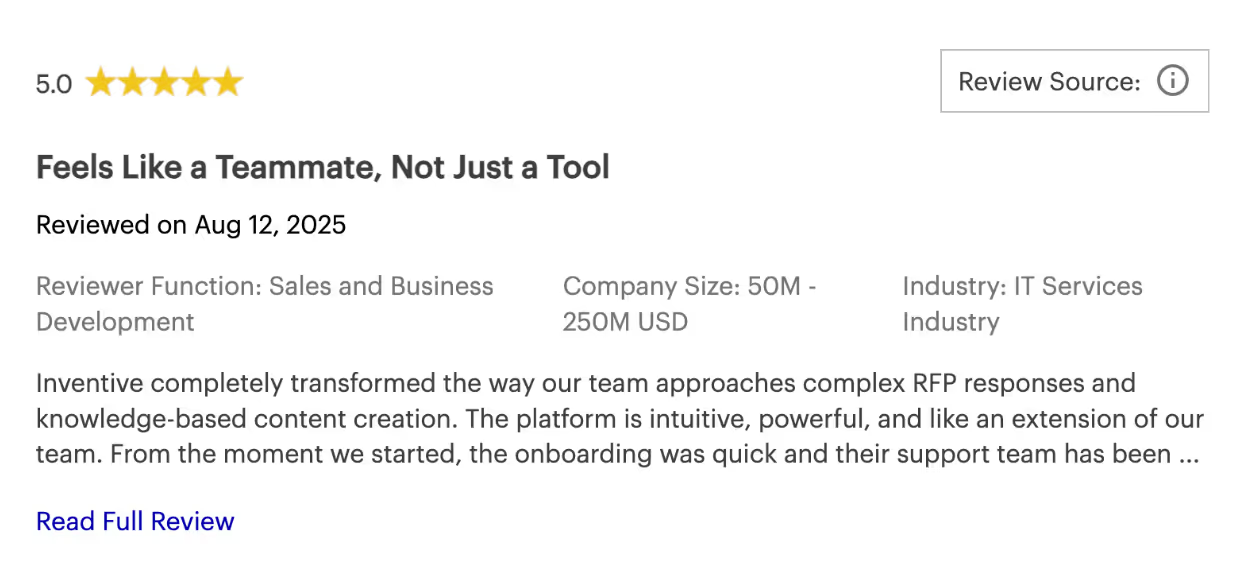
Here's what customers say about Inventive AI:
Ombud Strengths and Weaknesses
This platform offers a set of features for managing RFPs, RFIs, DDQs, and related sales-engineering workflows. It is suited for teams prioritizing centralized content, collaboration, and structured automation.
This is what users review about Ombud:
G2 Rating: 4.7/5
Strengths
- While Ombud positions itself as AI-enabled, its intelligence is primarily limited to generic AI and rules-based matching for content reuse, rather than a fully AI-first response quality or context-driven system.
- The platform includes AI-enabled assistants that help with autofill suggestions and content surfacing, supporting efficiency without removing human control.
- It supports structured workflows with approvals, content flagging, and expiration controls, which align with legal, security, and compliance processes.
- It performs best in industries where documentation changes slowly and responses remain consistent across buyers and RFPs.
Weaknesses
- Response quality often remains inconsistent. While Ombud attempts automation, answers still require heavy manual review and rewriting to ensure accuracy, relevance, and buyer alignment.
- Although Ombud markets its AI as “context-aware,” its intelligence is largely limited to keyword matching, historical reuse, and rule-based recommendations.
- Content flagging and expiration features exist, but they rely on administrator setup and manual intervention rather than continuous, system-wide intelligence.
- Lacks automated detection of outdated content across interconnected systems, making governance dependent on regular audits rather than proactive intelligence.
- Cannot automate the full response lifecycle end-to-end. Intake, drafting, validation, conflict resolution, and final assembly remain fragmented and people-driven.
- Accuracy heavily depends on SMEs reviewing and rewriting responses; there is no automation for validation or conflict detection.
- Scaling integrations or custom workflows requires ongoing IT involvement, increasing setup and maintenance costs.
- Analytics focus mainly on operational tracking and lack deeper insights such as response quality scoring, win-theme analysis, or content gap identification.
Ombud has some limitations, which real users have highlighted:
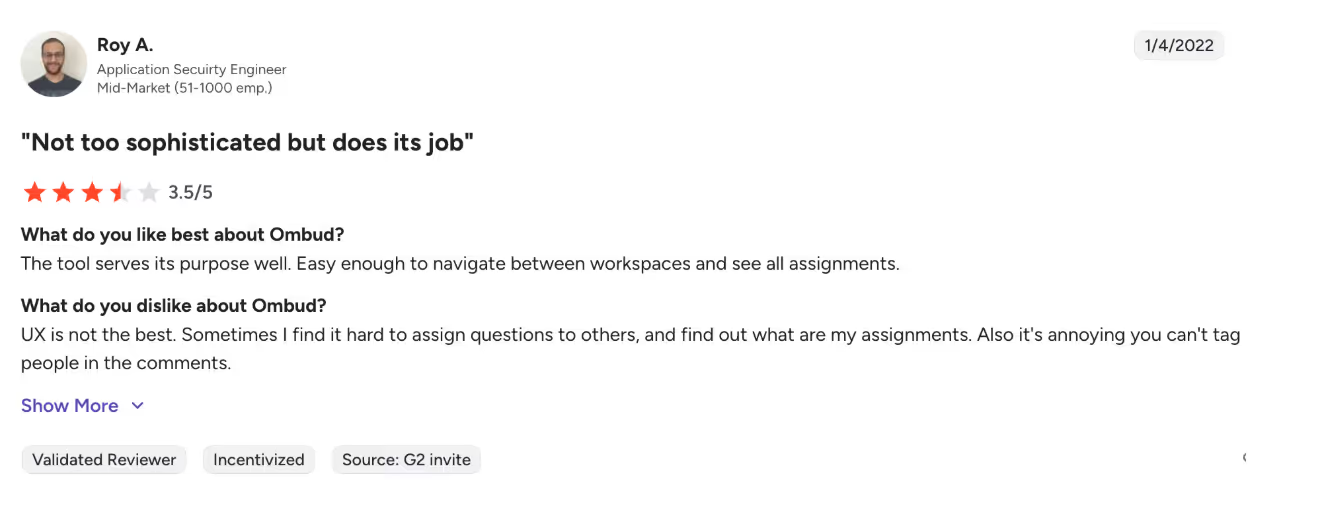
Pricing becomes unpredictable at enterprise scale due to add-ons, onboarding fees, AI modules, and user-based expansion.
The platform is a good choice for mid-sized teams that want structured collaboration and content reuse. But as organizations grow, their limited scalability, hidden costs, and dependence on manual review can slow down operations.
Must Read: Top AI Knowledge Management Tools for 2025
Why is Ombud not enough for enterprise needs?
Ombud works well for organizing responses and centralizing content for small to mid-sized teams. However, as organizations scale across regions, departments, and high RFP volumes, several enterprise-level limitations become more visible.
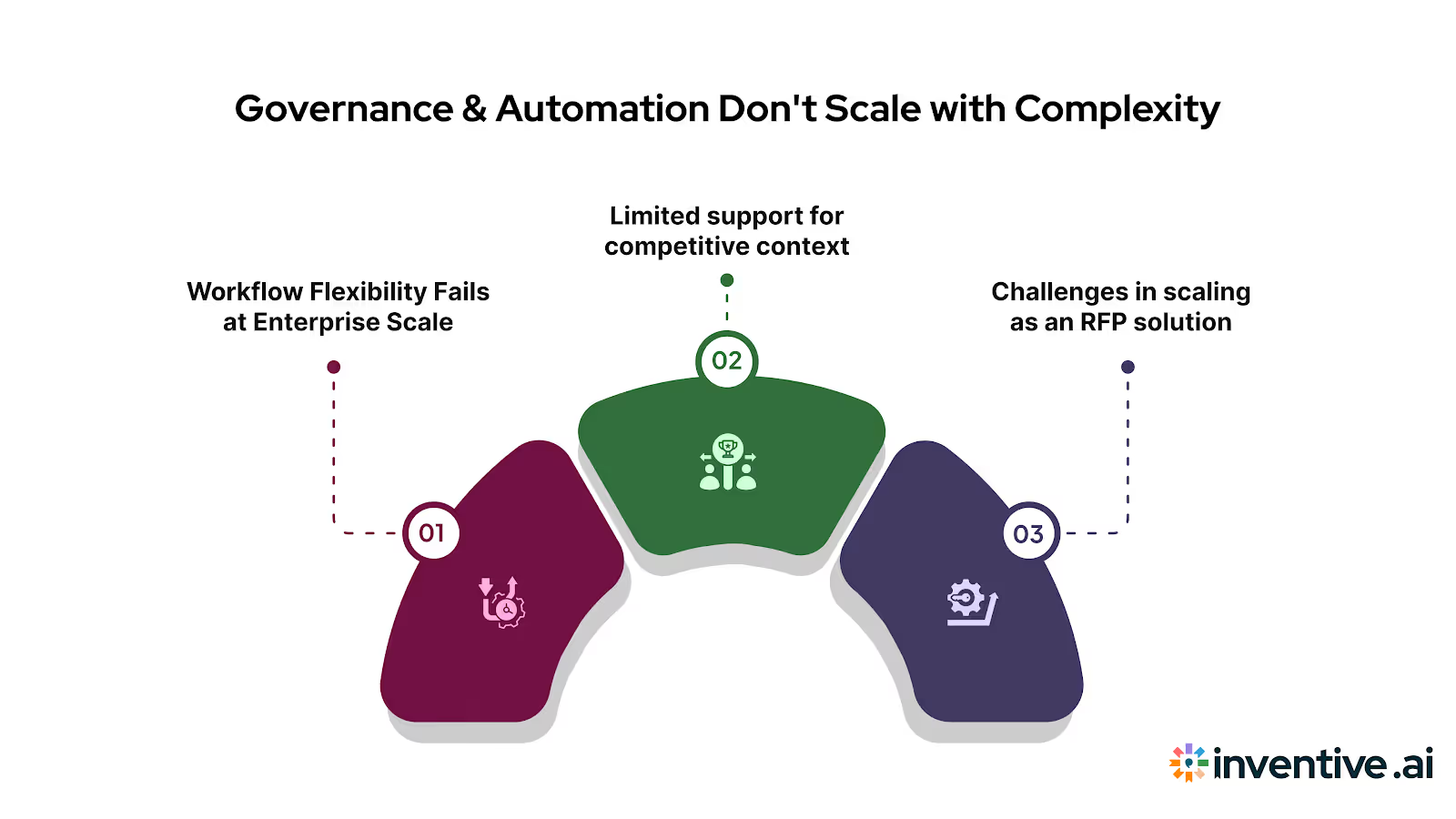
Here are some of the key challenges that growing enterprises face with Ombud:
1. Workflow Flexibility Breaks Down at Enterprise Scale
Ombud is effective for structured, form-based RFP workflows, but enterprise environments often require complex, conditional approvals, multi-department reviews, and narrative-heavy proposals. As these requirements grow, configuring and maintaining workflows becomes more manual and harder to adapt quickly, reducing agility in large proposal operations.
2. Governance and Automation Do Not Scale with Complexity
While Ombud offers basic version control and content management, enterprise teams need deeper, automated governance. There is limited system-wide conflict detection and continuous content freshness checks. Inline source traceability is also minimal. As a result, large teams rely on manual audits and administrative oversight to maintain accuracy and compliance.
3. Cost and Operational Overhead Increase as Usage Grows
Ombud’s quote-based pricing and reliance on configuration, onboarding, and add-on features can lead to rising costs as enterprises scale users, content, and integrations. As RFP volume grows, the total cost of ownership and ongoing maintenance effort becomes harder to predict and control.
Inventive AI: Built for Scale, Speed, and Winning More RFPs
Ombud remains a dependable RFP and content management solution. It works for teams that need structure, collaboration, and centralized knowledge sharing. The platform helps organize proposal content and support basic workflows. This makes it a strong option for small and mid-sized businesses starting their automation journey.
The platform’s limitations become apparent as enterprises scale and handle complex, cross-departmental workflows. Low AI automation, analytics depth, and unpredictable pricing reduce efficiency and increase ownership costs. Inventive AI was made to help businesses run more efficiently. Its multi-agent intelligence, real-time governance, and transparent pricing surpass traditional RFP tools.
For companies ready to go beyond basic automation and take full control of their RFP operations, Inventive AI is the future of enterprise RFP management, not just an alternative.
FAQs
1. Does Ombud offer transparent or fixed pricing for its plans?
It uses a quote-based pricing model, and costs vary based on user count, features, and implementation scope. It does not provide fixed or transparent pricing tiers publicly. So organizations often need custom quotes to understand the full cost.
2. What types of teams benefit most from Ombud?
The platform works for mid-sized proposal, sales, and RevOps teams that need structured content storage and basic automation. Organizations with heavy requirements or high RFP volumes may need more advanced AI-driven capabilities.
3. Are there any limitations in Ombud’s AI features?
Ombud’s AI features help suggest content and auto-fill answers from existing libraries. These capabilities are marketed as context-aware. In practice, responses often need manual review and editing. This is especially true for technical or narrative-heavy content.
4. How long does it take to implement Ombud?
Implementation varies widely depending on content migration needs, integrations, and the size of your team. Some organizations complete the setup in a few weeks, while others require longer.
5. Does Ombud support complex, multi-department RFP workflows?
The platform supports standard multi-user workflows. But more complex needs, such as multi-region reviews, conditional approvals, or specialized security questionnaires, often require additional configuration or customization. This can increase implementation time and cost.

90% Faster RFPs. 50% More Wins. Watch a 2-Minute Demo.

Vishakh Hegde
Recognizing that complex RFPs demand deep technical context rather than just simple keyword matching, Vishakh co-founded Inventive AI to build a smarter, safer "RFP brain." A published author and researcher in deep learning from Stanford, he applies rigorous engineering standards to ensure that every automated response is not only instant but factually accurate and secure.

Gaurav Nemade
After witnessing the gap between generic AI models and the high precision required for business proposals, Gaurav co-founded Inventive AI to bring true intelligence to the RFP process. An IIT Roorkee graduate with deep expertise in building Large Language Models (LLMs), he focuses on ensuring product teams spend less time on repetitive technical questionnaires and more time on innovation.