The Ultimate Payroll Software RFP Template (Free Download)
.png)
Selecting the right payroll system is one of the most critical decisions HR and finance leaders make. Payroll errors cost U.S. companies millions in penalties every year, and according to the IRS, nearly one-third of employers make payroll mistakes that lead to compliance risk and financial loss.
As organizations scale, expand into new states, or manage more complex tax requirements, legacy payroll tools and disconnected workflows quickly become liabilities. A structured payroll software RFP helps eliminate those risks.
This guide breaks down how to build an effective payroll software RFP that reduces selection complexity, aligns stakeholders, and accelerates the decision-making process.
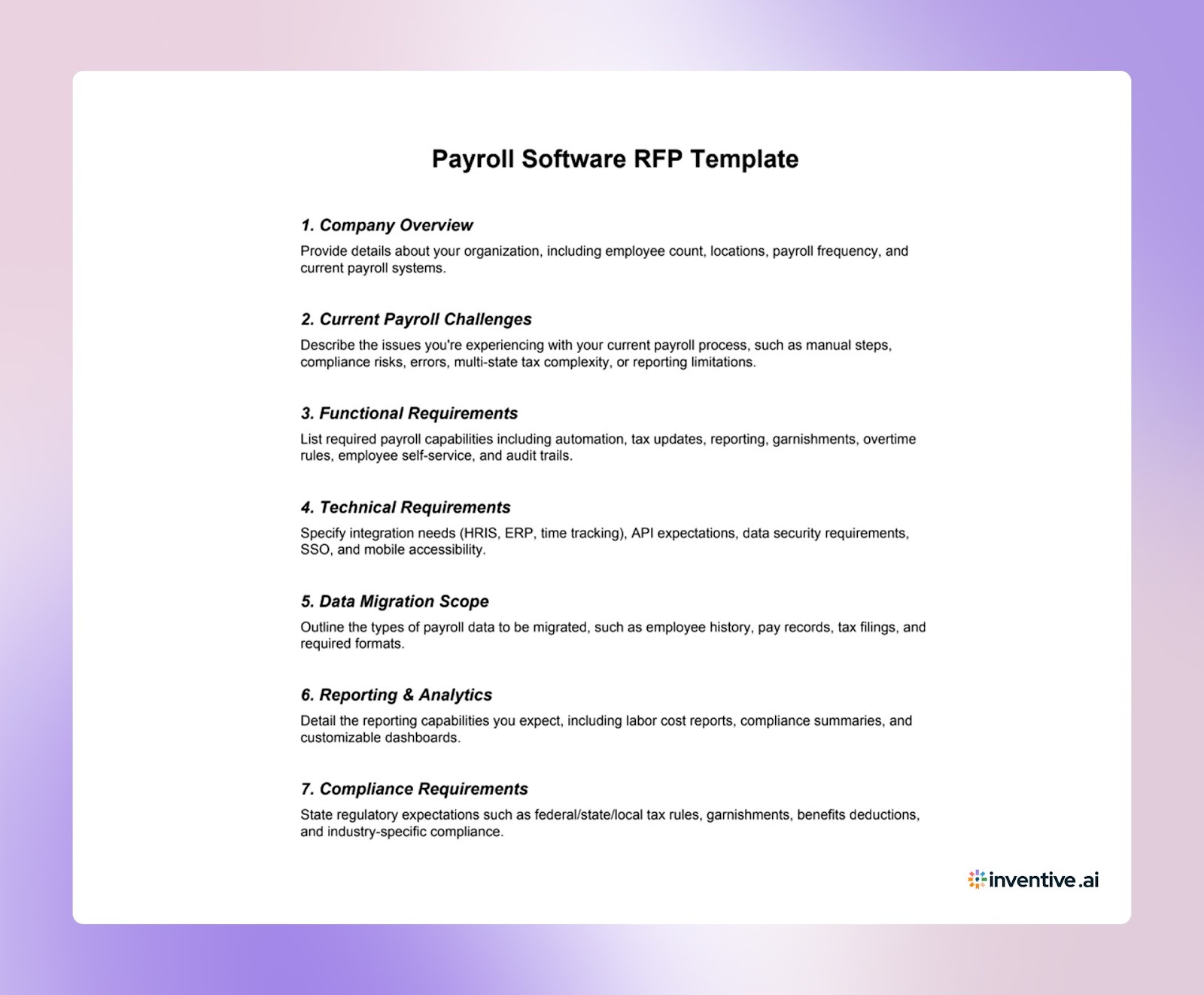
Payroll Software RFP Template (Free Download)
Creating a payroll software RFP from scratch can take time, especially when HR, Finance, IT, and Payroll must agree on requirements. Our comprehensive Payroll Software RFP Template can be downloaded and used immediately to streamline your process.
The template includes every essential section you need to evaluate vendors objectively, from company background and current payroll challenges to detailed functional requirements, technical expectations, data migration needs, implementation timelines, SLAs, and pricing structures.

Why a Payroll Software RFP Matters for HR & Finance Leaders?
A request for proposals (RFP) for payroll software is more than just a purchase order. It's also a plan to help your company choose a system that supports accuracy, compliance, scalability, and operational efficiency.
Here’s why it matters:
1. Aligns HR, Finance, and IT on Clear Requirements
A structured RFP forces cross-functional teams to define what they truly need, including:
- Payroll automation and processing workflows
- Multi-state tax calculations and updates
- Integrations with HRIS, ERP, and time-tracking systems
- Reporting, analytics, and audit needs
- Data security and role-based access
This alignment reduces the risk of choosing a system that can’t scale or meet long-term requirements.
2. Reduces Payroll Errors and Compliance Risk
Payroll mistakes are expensive. An RFP helps leaders evaluate how each vendor handles:
- Automated tax updates
- Compliance rules
- Error detection
- Audit trails and reporting
This gives HR and Finance confidence that the chosen system minimizes penalties, rework, and financial exposure.
3. Creates Objective, Transparent Vendor Comparisons
Instead of relying on demos or sales pitches, an RFP standardizes the evaluation process. Vendors must respond to the same set of criteria, enabling teams to compare:
- Functionality
- Implementation timelines
- Support and SLAs
- Pricing and total cost of ownership
- Scalability over time
This ensures decision-making is grounded in facts, not assumptions.
4. Accelerates the Vendor Selection Process
A clear payroll software RFP:
- Eliminates back-and-forth clarification
- Reduces internal delays
- Provides a predefined scoring model
- Speeds up shortlisting and final approval
This helps organizations move faster from evaluation to deployment.
5. Supports Better Employee and Financial Outcomes
By choosing the right payroll system, leaders see improvements across:
- Pay cycle accuracy and on-time delivery
- Employee experience and trust
- Forecasting and cost control
- Audit readiness and transparency
The RFP becomes the foundation for long-term operational success.
With the strategic value of an RFP established, the natural question becomes, what should a strong, comprehensive payroll software RFP actually include?
Key Components of a Payroll Software RFP Template (With Examples)
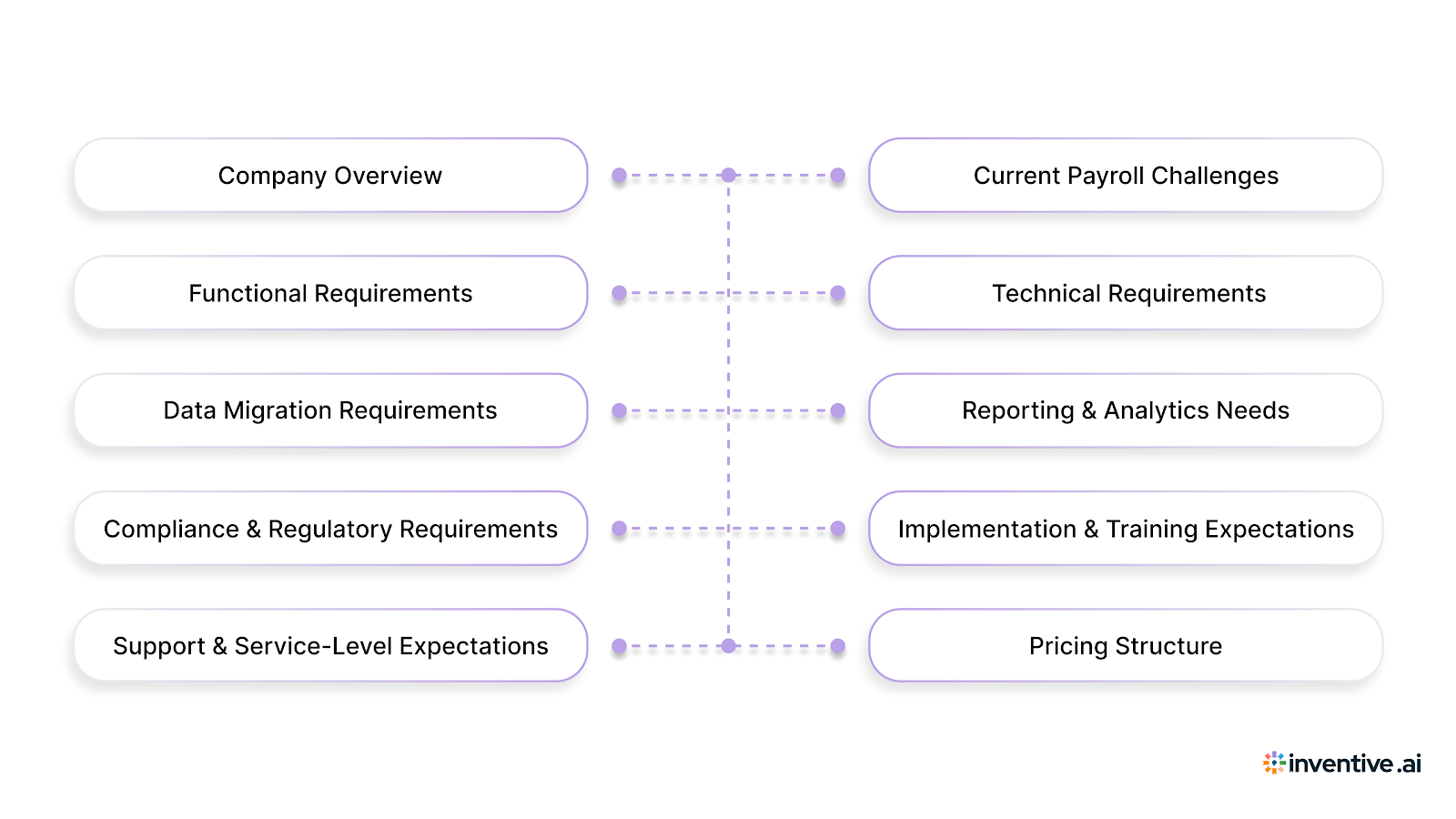
A strong payroll software RFP ensures vendors understand your requirements clearly and respond with accurate, comparable information.
Here are the most important parts of an organization, along with some examples to help you build your own.
1. Company Overview
Start by giving vendors a clear understanding of who you are and the environment their solution must support. Include information such as your workforce size, locations, operating states, industry, and current payroll setup. This context helps vendors determine whether their system can accommodate your organizational structure.
Example: “We operate across six U.S. states with 1,200 employees and require a payroll solution that supports multi-state tax calculations and automated compliance updates.”
2. Current Payroll Challenges
Explain the problems your team is trying to solve so vendors can tailor their proposals accordingly. These challenges may include manual payroll processes, recurring errors, multi-state tax complexities, slow reporting, or outdated systems. Being transparent about these issues ensures vendors address them directly in their responses.
Example: “Our current payroll system requires manual tax updates, leading to frequent payroll delays and recurring compliance risks.”
3. Functional Requirements
This section outlines the core capabilities the software must provide. Define requirements such as automated payroll processing, multi-state tax calculations, overtime rules, benefits and deductions management, employee self-service, and compliance-related error checks. Clear functional specifications lead to more accurate and relevant vendor proposals.
Example: “The solution must support real-time tax updates for all U.S. states and automatically apply them during each payroll cycle.”
4. Technical Requirements
Describe the technical expectations for system compatibility and integration. Mention API requirements, SSO capabilities, integration needs with HRIS or ERP systems, data security standards, and mobile accessibility. This ensures the new payroll system fits seamlessly into your existing technology ecosystem.
Example: “Vendor must provide REST APIs to integrate with Workday and our attendance tracking system.”
5. Data Migration Requirements
Payroll transitions often require significant data migration, so clarify what historical data must be transferred and the timeline for doing so. Include details about employee records, pay history, tax forms, and any special data formatting needs. Setting expectations early helps vendors propose realistic migration plans.
Example: “We require migration of three years of payroll and tax filing data, completed before go-live.”
6. Reporting & Analytics Needs
Explain what visibility and insights your HR and Finance teams need from the payroll system. This may include standard payroll reports, custom reporting capabilities, compliance summaries, dashboard analytics, and audit trails. Strong reporting capabilities support better planning, forecasting, and compliance management.
Example: “The system must generate real-time labor cost reports segmented by department and location.”
7. Compliance & Regulatory Requirements
Payroll accuracy relies on strong compliance support, so outline the regulatory rules the system must manage. This includes federal, state, and local tax laws, industry-specific requirements, wage garnishments, and benefits deductions. Clear compliance expectations help vendors demonstrate how their platform mitigates risk.
Example: “The software should automatically calculate wage garnishments based on state laws.”
8. Implementation & Training Expectations
Define how you expect the implementation process to unfold. Detail your preferred timeline, key milestones, required training sessions for HR and Finance teams, and expectations for a dedicated implementation manager. This ensures both sides align on workload and deployment readiness.
Example: “Full implementation should be completed within 120 days, with on-site training for HR staff.”
9. Support & Service-Level Expectations
After implementation, ongoing support determines how smoothly the system will run. Clarify your expectations regarding support availability, response times, issue resolution windows, account management, and system maintenance schedules. Strong SLAs give you confidence in long-term vendor reliability.
Example: “Critical issues must receive a response within one hour and resolution within four hours.”
10. Pricing Structure
Ask vendors to provide transparent pricing that covers all aspects of the solution, including subscription fees, implementation costs, data migration charges, optional modules, and long-term rate guarantees. This helps you calculate the total cost of ownership and compare proposals fairly.
Example: “Please provide a three-year cost breakdown, including all optional modules and per-employee fees.”
Knowing the essential components is just the foundation; how you bring these elements together in a well-structured, actionable document determines the quality of vendor responses you receive.
How to Write an Effective Payroll Software RFP?
Writing an effective payroll software RFP requires clarity, collaboration, and a structured approach that helps vendors understand your needs without ambiguity. The goal is to provide enough detail for accurate, comparable proposals while ensuring internal teams are aligned on requirements, priorities, and selection criteria.
Below are the essential steps to create a high-quality payroll software RFP that supports confident decision-making.
1. Start by Defining Your Payroll Goals and Challenges
Begin by outlining why your organization is exploring new payroll software. This may include reducing manual work, improving tax compliance, eliminating payroll errors, or supporting multi-state operations. Clear goals help vendors understand what matters most to your HR and finance teams. When you tell vendors what problems you're having, like old systems, limited reporting, or issues with the accuracy of your data, they can make their proposals fit these needs.
2. Gather Requirements from HR, Finance, IT, and Payroll Teams
Effective RFPs reflect the needs of all stakeholders involved in payroll operations. Meet with HR teams to understand workflow pain points, finance teams to define reporting and audit expectations, and IT departments to clarify integration or security requirements. This collaborative approach ensures your RFP covers functionality, automation, compliance, and technical considerations, which affect long-term success.
3. Build a Structured RFP with Clear Sections and Definitions
Once requirements are defined, organize your RFP into clear sections such as company overview, payroll challenges, functional and technical requirements, implementation expectations, data migration needs, SLAs, and pricing structure. Using a consistent format makes it easier for vendors to follow and respond accurately. Well-structured RFPs also reduce interpretation errors and streamline internal review.
4. Define Vendor Expectations and Submission Guidelines Early
Set expectations around timelines, required documentation, and submission formats. Explain whether vendors must provide implementation plans, detailed pricing tables, compliance documentation, or case studies. When guidelines are clear, you eliminate unnecessary back-and-forth queries, which shortens the evaluation process and improves proposal quality.
5. Create a Transparent Evaluation and Scoring Framework
To ensure objective selection, include a scoring model that outlines how proposals will be evaluated. Weight factors such as functionality, ease of use, automation capabilities, implementation experience, customer support, and total cost of ownership. A transparent scoring framework helps internal stakeholders reach alignment quickly and avoids bias during vendor evaluation.
6. Request Real-World Examples, Demos, and References
Ask vendors to demonstrate how their payroll system performs in situations similar to yours. Request case studies, live demos, or references from organizations with comparable workforce sizes or compliance needs. Real-world validation gives HR and finance leaders confidence that the vendor can deliver on the requirements stated in your RFP.
7. Review Internally Before Sending the RFP to Vendors
Before distributing the RFP, conduct an internal review with HR, finance, payroll, and IT leadership. Confirm that the requirements are accurate, the expectations are realistic, and the scoring model reflects what matters most. This internal alignment helps avoid confusion later in the process and ensures all teams support the final selection criteria.
8. Provide Time for Vendor Questions and Clarifications
Encourage vendors to submit clarifying questions before final responses are due. This step helps refine expectations on both sides and reduces misinterpretation. The more clarity you provide during this stage, the better the final proposals will match your needs.
9. Document Comparison Insights as Proposals Come In
As responses arrive, summarize key insights in a comparison matrix. Capture factors such as automation features, tax compliance capabilities, support models, and long-term scalability. Documenting these insights makes it easier for leadership teams to discuss differences and identify the strongest fits.
Even with a solid framework, organizations often face avoidable pitfalls during the RFP process, making it crucial to understand the common roadblocks and how to address them.
Common Challenges in Payroll Software RFPs (and How to Fix Them)
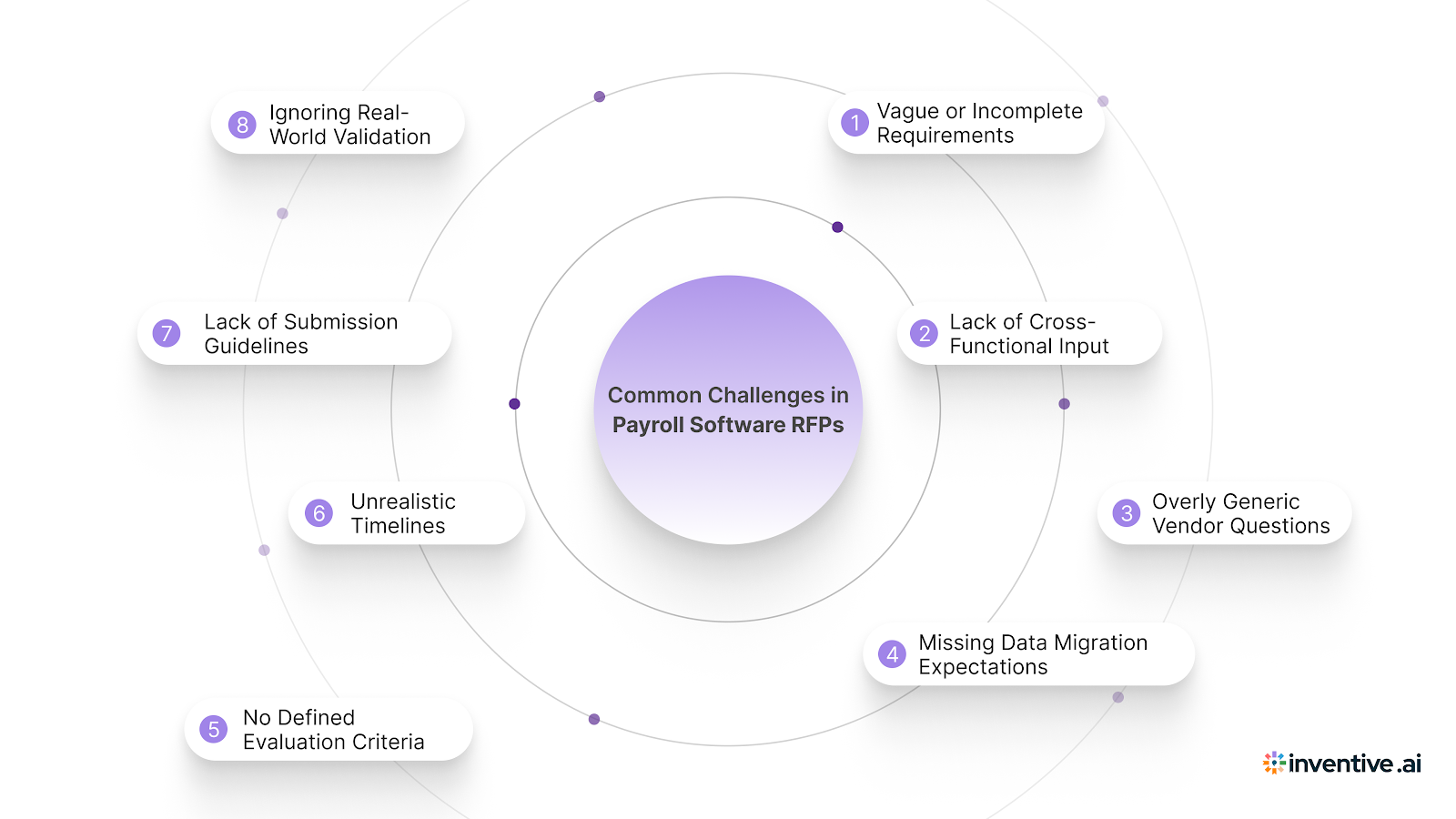
Even well-intentioned payroll software RFPs often fall short because critical details are unclear, incomplete, or misaligned across teams. These gaps can slow down vendor evaluations, lead to inaccurate proposals, or result in selecting a system that doesn’t meet long-term needs.
Understanding common challenges and how to address them helps HR and finance leaders write better RFPs that yield more useful responses.
1. Vague or Incomplete Requirements
One of the most frequent issues is providing high-level requirements without enough detail for vendors to interpret correctly. Statements like “support multi-state payroll” or “provide compliance features” are too broad and leave room for misalignment.
How to Fix It: Clearly define functional, technical, compliance, and reporting requirements. Mention specifics such as tax jurisdictions, workforce types, integration needs, and automation expectations.
2. Lack of Cross-Functional Input
Payroll affects HR, finance, accounting, IT, and operations. When only one department writes the RFP, API integrations, audit capabilities, and data security are often overlooked.
How to Fix It: Involve all relevant stakeholders early. Hold requirement-gathering sessions to ensure the RFP reflects the full spectrum of operational needs and future scalability expectations.
3. Overly Generic Vendor Questions
Some RFPs rely on vague checklist-style questions that don’t reveal how well a vendor can solve real challenges. Generic questions produce generic responses, making proposals harder to compare.
How to Fix It: Ask scenario-based questions that require vendors to show how their solution handles issues like multi-state tax updates, garnishments, retroactive adjustments, or audit reporting.
4. Missing Data Migration Expectations
Many organizations underestimate the complexity of migrating payroll history, tax forms, and employee records. Without specifics, vendors may omit migration timelines or costs, leading to surprises later.
How to Fix It: Clearly outline what data needs to be migrated, the expected timeframe, formats required, and any compliance-driven retention requirements.
5. No Defined Evaluation Criteria
When teams do not establish how proposals will be scored, decisions quickly become subjective and difficult to justify. This often leads to conflicting opinions among stakeholders.
How to Fix It: Include a transparent scoring model that weighs functionality, automation capabilities, cost, support, ease of use, and implementation experience. This builds alignment and speeds up final selection.
6. Unrealistic Implementation Timelines
Sometimes organizations expect implementation to meet internal deadlines without considering vendor capacity, data readiness, or change management. This delays or rushes deployments.
How to Fix It: Request a detailed implementation timeline from each vendor, including milestones, dependencies, training hours, and required internal resources.
7. Lack of Submission Guidelines and Document Structure
Without clear guidelines on formatting, documentation, and deadlines, vendors often deliver inconsistent proposals, making comparison difficult and time-consuming.
How to Fix It: Standardize submission requirements, specify response formats, outline mandatory documentation, and define deadlines and communication channels.
8. Ignoring Real-World Validation
Some RFPs rely heavily on written vendor responses without requiring demos, case studies, or references. This creates risk, as what looks good on paper may not perform well in real scenarios.
How to Fix It: Require demonstrations, customer references, and industry-specific case studies to validate the software’s actual performance.
Modern AI capabilities in RFP creation and response workflows make these challenges easier and more efficient to address.
How Does AI Improve Payroll Software RFP Creation & Response Management?
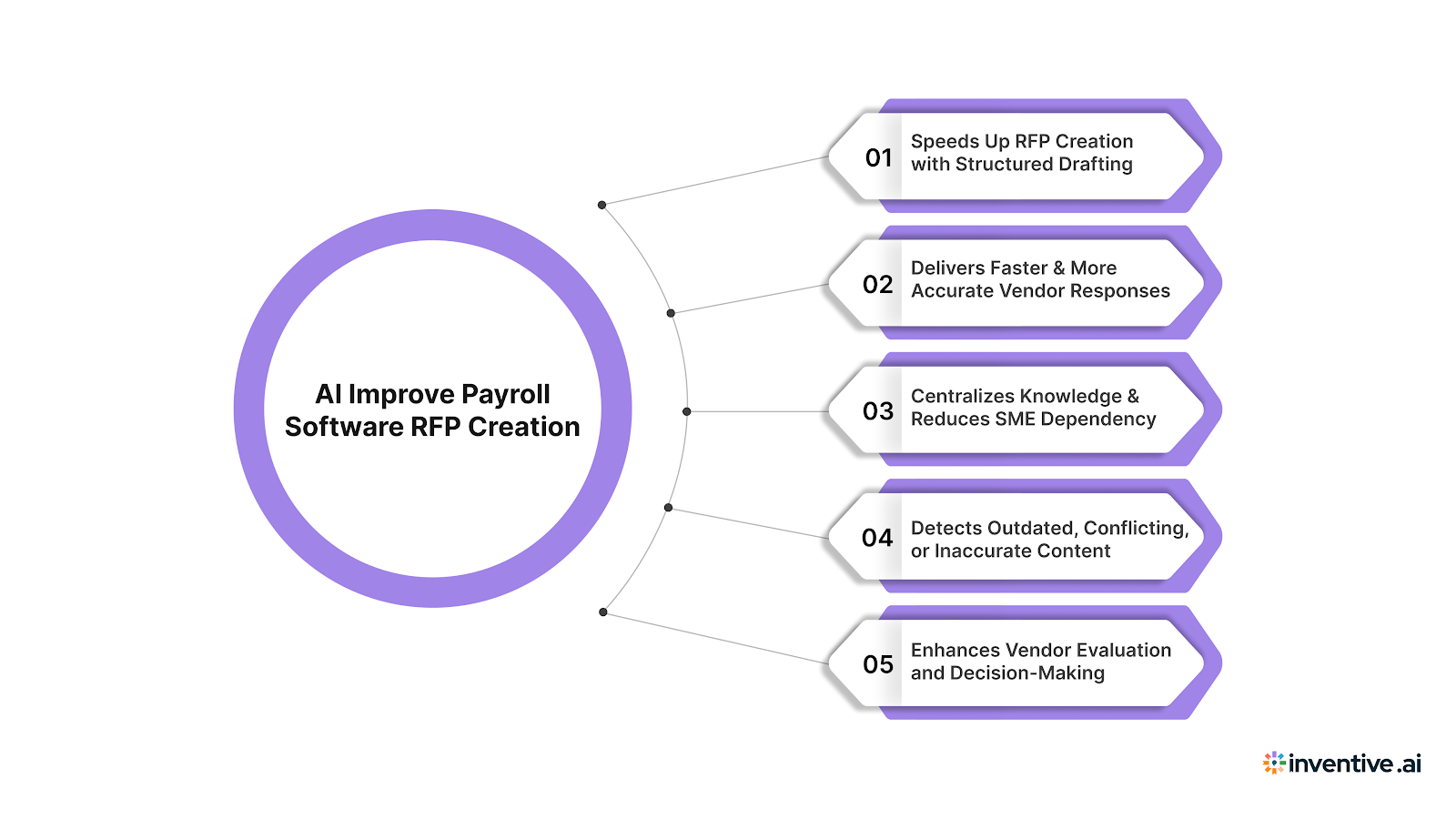
AI is reshaping how organizations manage payroll software RFPs by eliminating manual effort, improving accuracy, and accelerating both creation and response workflows.
Instead of relying on scattered documents, repetitive content searches, or time-consuming SME input, AI brings structure, intelligence, and automation to the entire process.
Below are the key ways AI enhances efficiency and decision-making for HR, finance, and proposal teams.
1. Speeds Up RFP Creation with Structured Drafting
AI helps teams create payroll software RFPs faster by automatically generating structured sections, suggesting missing requirements, and providing industry-aligned templates. Instead of drafting every line manually, HR and finance teams can build a complete, well-organized RFP in a fraction of the time. This level of structure ensures vendors understand expectations clearly, which ultimately leads to stronger, more accurate proposals.
2. Delivers Faster and More Accurate Vendor Responses
When responding to payroll RFPs, vendors often spend hours crafting detailed answers about tax updates, integrations, reporting, compliance workflows, and automation features. AI accelerates this process by generating accurate first drafts using verified internal content. Since AI uses approved knowledge sources, responses are consistent, aligned with company messaging, and free of outdated or incorrect information, helping teams deliver higher-quality proposals with less effort.
3. Centralizes Knowledge and Reduces SME Dependency
AI eliminates the inefficiencies caused by relying on busy payroll, HR, finance, or IT experts for repeated explanations. By centralizing all relevant content into an intelligent knowledge hub, AI can automatically recommend the right answers to specific RFP questions. This reduces back-and-forth communication, minimizes delays, and frees SMEs to focus on strategic review rather than drafting repetitive content.
4. Detects Outdated, Conflicting, or Inaccurate Content
Manual payroll updates are risky because tax rules and compliance details change frequently. AI continuously analyzes your content repository to identify outdated statements, conflicting information, or missing updates. By ensuring only accurate and relevant information is used in RFP responses, AI reduces compliance risk and enhances the credibility of your proposals.
5. Enhances Vendor Evaluation and Decision-Making
Reviewing and comparing payroll software proposals is often tedious and subjective. AI simplifies this stage by summarizing key differences between vendor responses, highlighting compliance or functional gaps, and supporting scoring based on predefined evaluation criteria. This allows HR and finance leaders to make quicker, more confident decisions while maintaining transparency in the selection process.
While AI offers broad advantages, Inventive AI takes this further with specialized capabilities designed to deliver unmatched response quality in payroll-focused RFPs.
How Inventive AI Helps Vendors Respond to Payroll Software RFPs Faster?
Payroll software RFPs demand precision. Vendors must address highly specific questions related to tax automation, multi-state compliance, payroll calculations, reporting accuracy, implementation workflows, and integrations.
Traditional tools struggle with this complexity because they rely on templates or generic AI generation, which often leads to irrelevant, incomplete, or fabricated answers. Inventive AI solves this problem with a completely different approach: response quality as the core differentiator, powered by its multi-agent AI system and proprietary Context Engine.
Context Engine: Deep Understanding
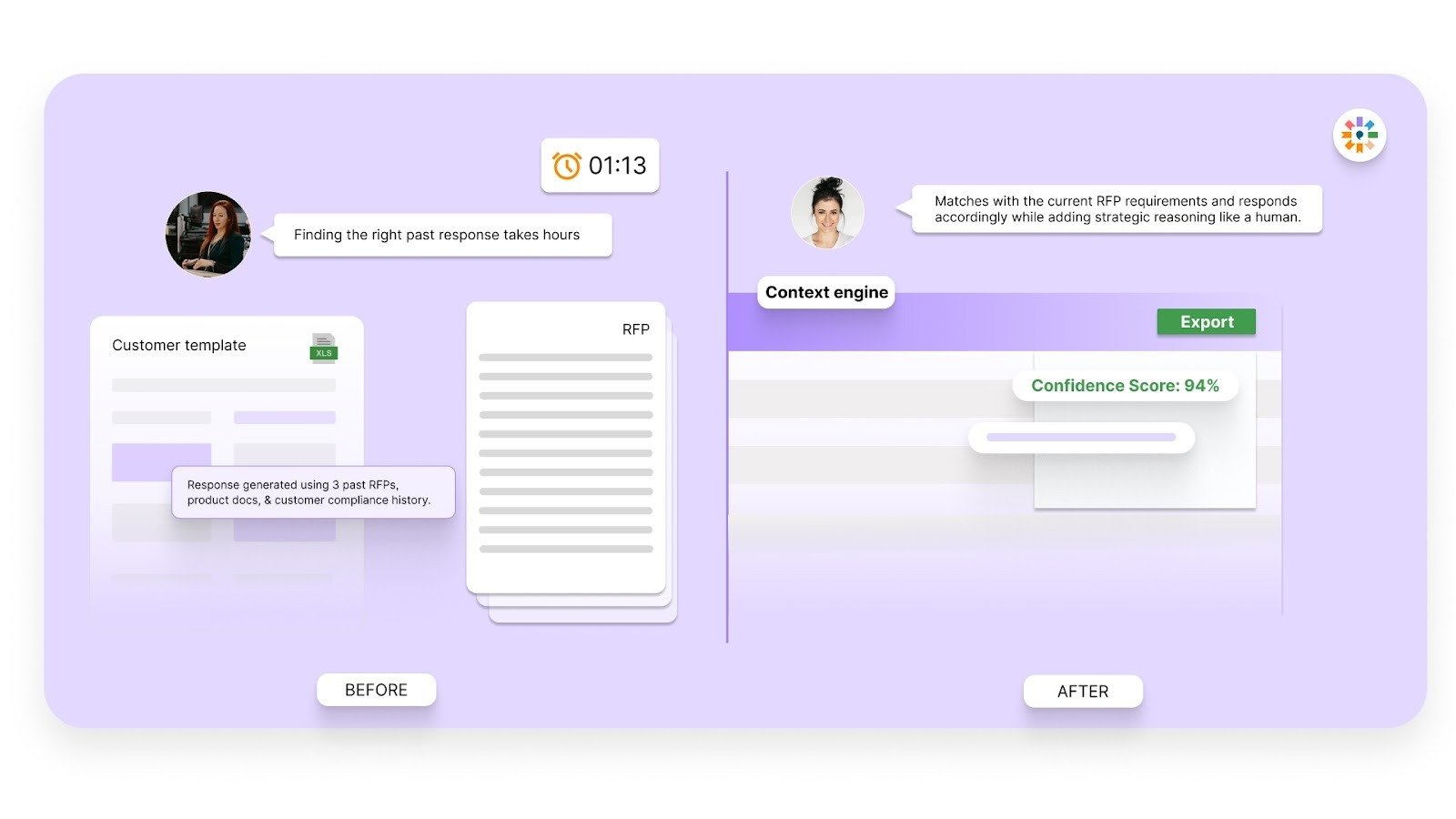
Standard tools rely on shallow lookups that produce generic answers, but our engine uses multi-layer reasoning. We understand the full RFP context to deliver tailored, human-quality responses that win high-value deals.
Conflict Detection: Precision Alignment
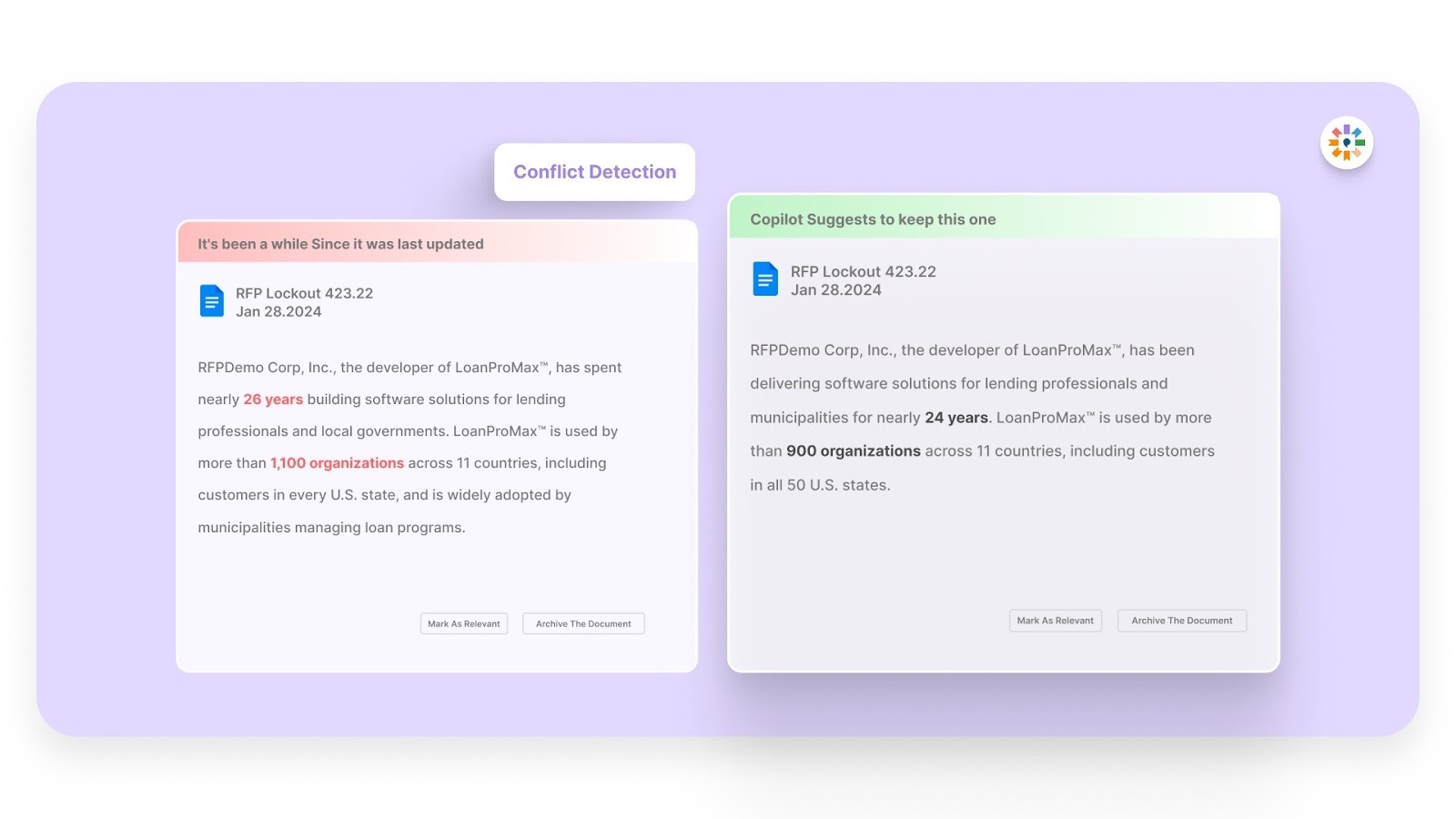
Most vendors struggle with internal contradictions that undermine their credibility, but our system flags these risks instantly. By surfacing inconsistencies across your product sheets or old proposals, we ensure you never send misaligned information.
Outdated Content Detection: Perpetual Accuracy
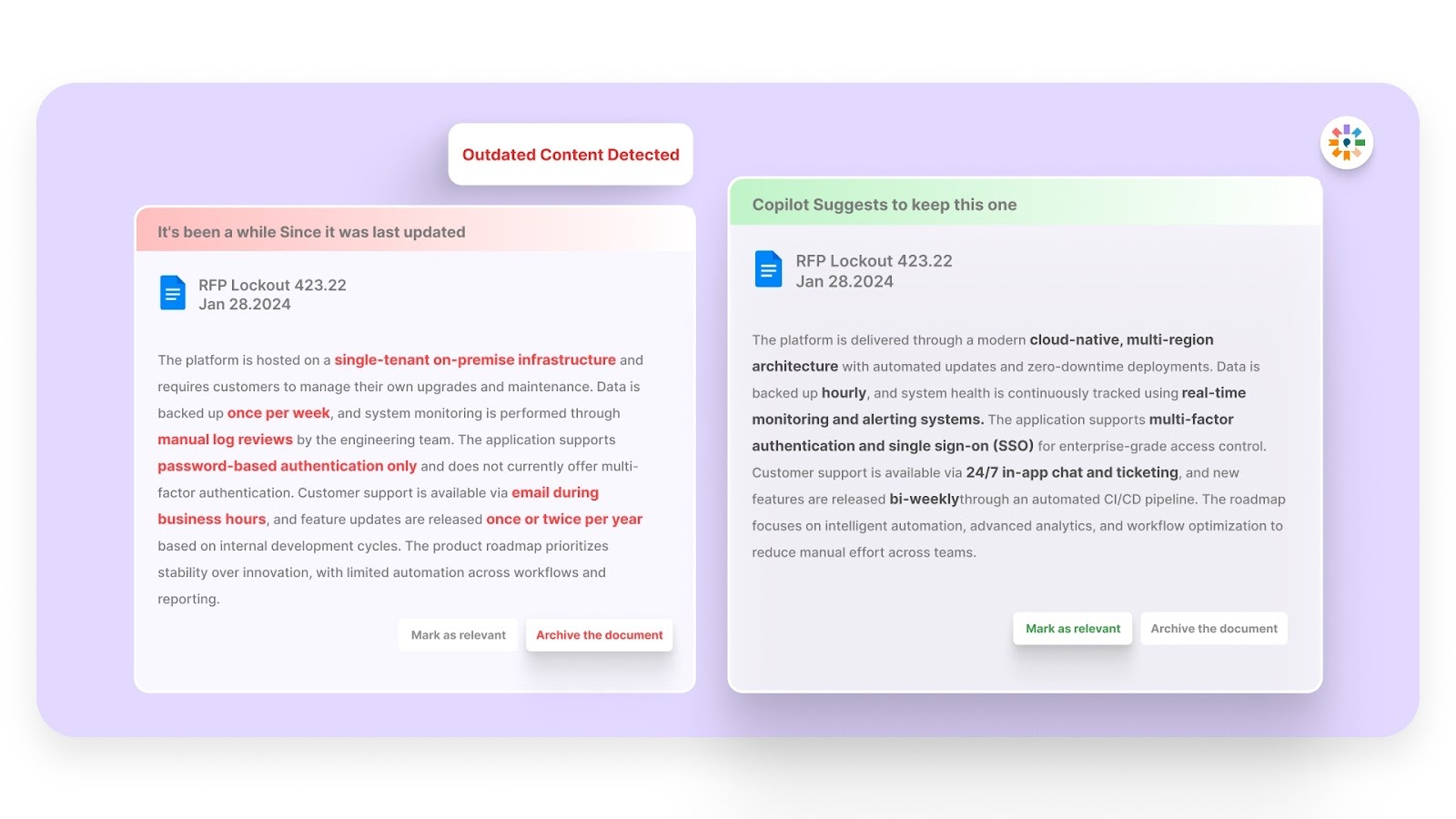
Stale content libraries are a massive liability, yet our system continuously monitors your knowledge base for obsolescence. This feature prevents you from recycling legacy data, ensuring every response reflects your current product updates.
2X Quality Response: Strategic Depth
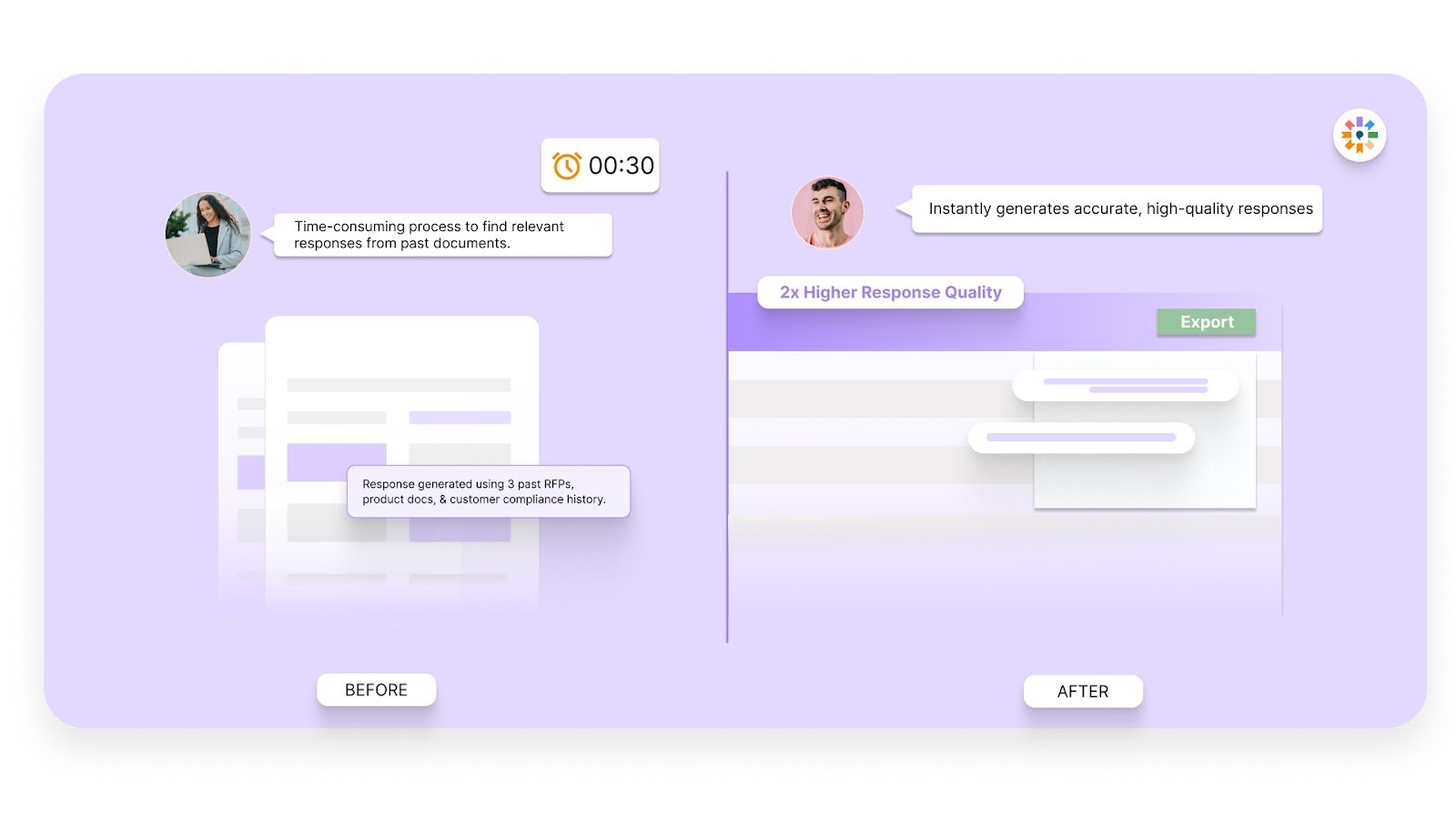
Our multi-agent AI offers strategic answers that understand the true intent and purpose behind complex questions. This enables your team to produce answers with superior clarity and completeness, ensuring you outperform generic proposals.
Simple UI/UX: Unmatched Adoption
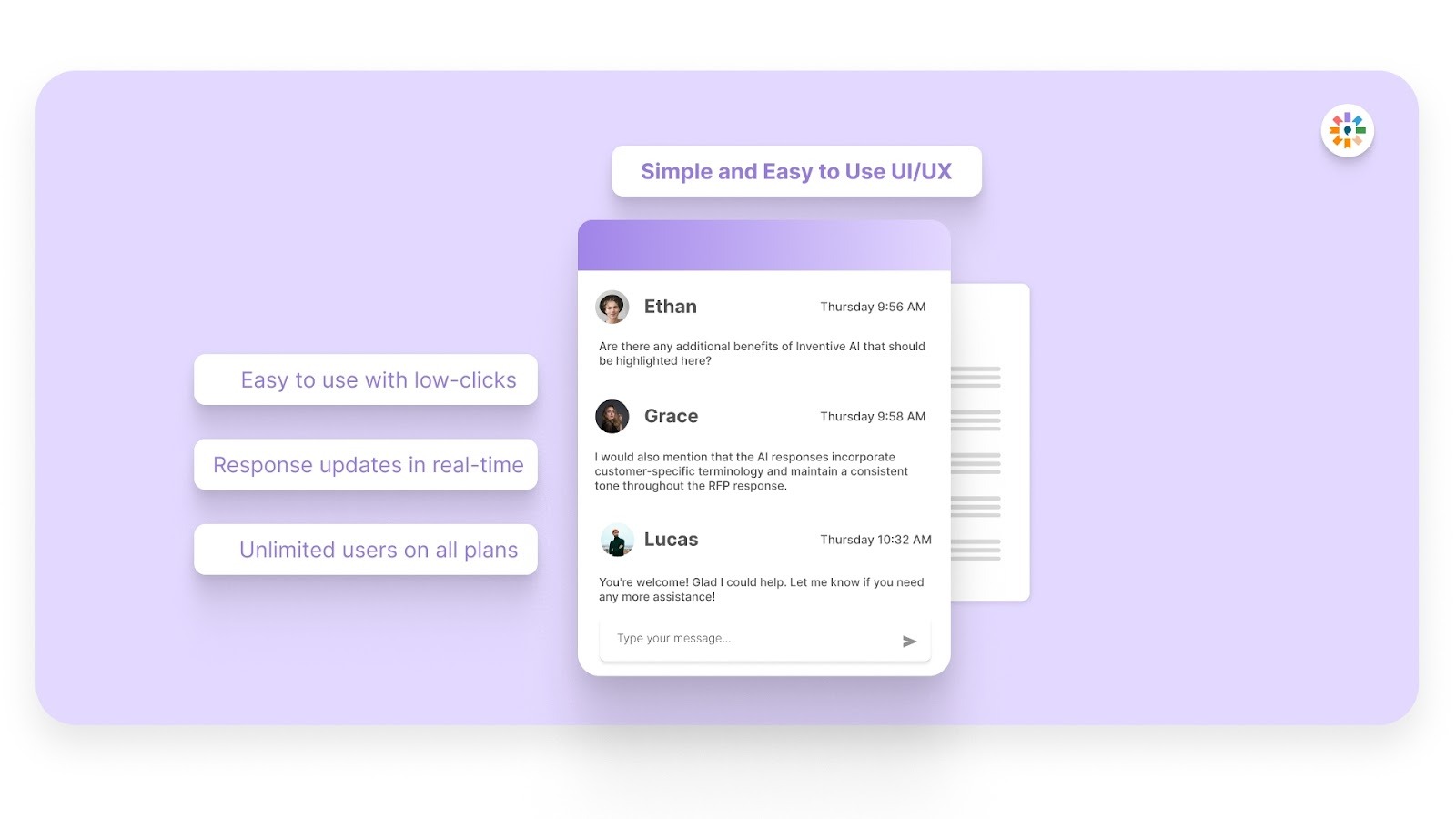
We maintain a 100% adoption rate because our interface is consistently ranked as the easiest-to-use software. Your team can master our platform in minutes, ensuring rapid onboarding even for those new to AI.
Narrative-Style Proposals: Our Rare Advantage
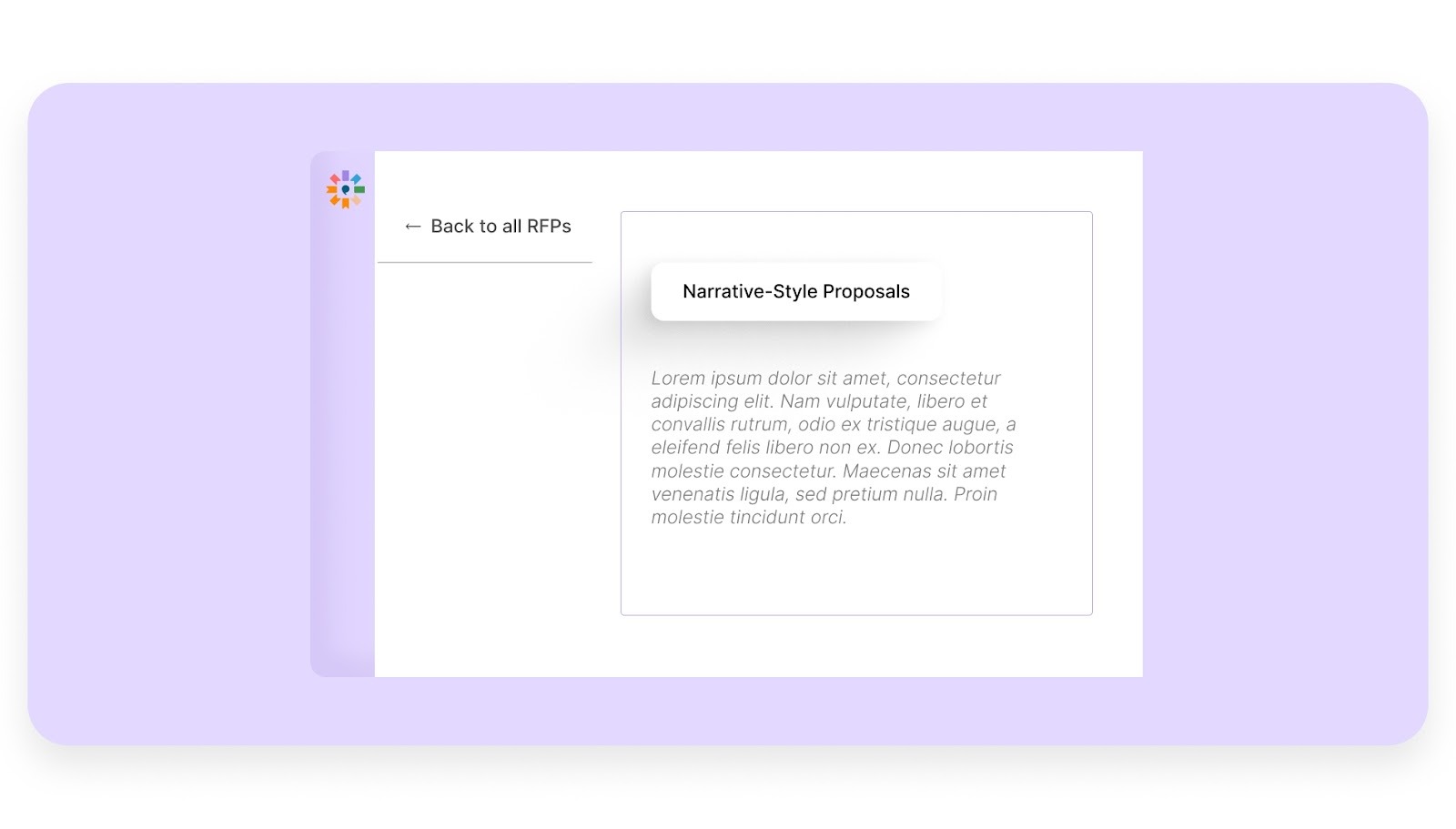
Most RFP tools are limited to simple, transactional Q&A and cannot handle complex, multi-page document creation. Inventive AI uniquely generates long-form narrative proposals, including security summaries, executive briefs, and comprehensive business pitch decks.
Frequently Asked Questions (FAQs)
1. How do we differentiate our payroll engine from competitors during the RFP stage?
Don't just list features. Use our narrative-style generation to explain how your engine automates specific compliance updates, such as mid-cycle tax changes or garnishment adjustments, to show buyers how your system actually handles operational complexity.
2. Can Inventive AI handle the strict data security requirements for payroll RFPs?
Yes. Our system is built to maintain compliance with SOC2 and GDPR requirements while drafting your responses. It ensures that sensitive payroll logic or tax documentation is handled securely without ever exposing proprietary data.
3. How does Inventive AI help us win RFPs that require global payroll support?
Global RFPs often require detailed explanations of cross-border tax logic and EOR integrations. Our Context Engine pulls your specific global payroll policies and international tax capabilities to draft accurate, localized responses.
4. Will using AI content for payroll RFPs compromise our technical accuracy?
No, it improves it. Our system uses Conflict and Outdated Content Detection to ensure every technical fact regarding tax engines, APIs, and payroll processing remains accurate, preventing risky errors common in manual drafts.

.avif)


.avif)
.avif)

.jpg)