Pre-Sales Deal Support Template to Manage RFP Responses

Enterprise deals rarely move forward on conversations alone. As opportunities progress, buyers often issue a Request for Proposal (RFP) to evaluate vendors across technical capability, security requirements, pricing structure, and implementation plans.
To manage complex deals, many sales teams rely on pre-sales deal support templates. These templates help coordinate discovery calls, product demonstrations, proposal preparation, and internal collaboration between sales, presales engineers, and product teams.
However, many deal support templates focus only on internal sales tasks while overlooking how RFP responses should be prepared. When RFP preparation lacks structure, presales teams rush to gather answers from multiple teams, which can delay submissions and weaken the final proposal.
Use a Pre-Sales Deal Support Template to Structure RFP Responses (For Vendors)
In many enterprise deals, the RFP response becomes the most detailed document a vendor submits during the presales stage. Buyers use it to evaluate product capabilities, technical architecture, security controls, pricing models, and implementation approaches.
A structured RFP template helps presales teams organize these inputs into a consistent response. Instead of collecting answers across emails and documents, teams can prepare responses using predefined sections that match common RFP requirements.
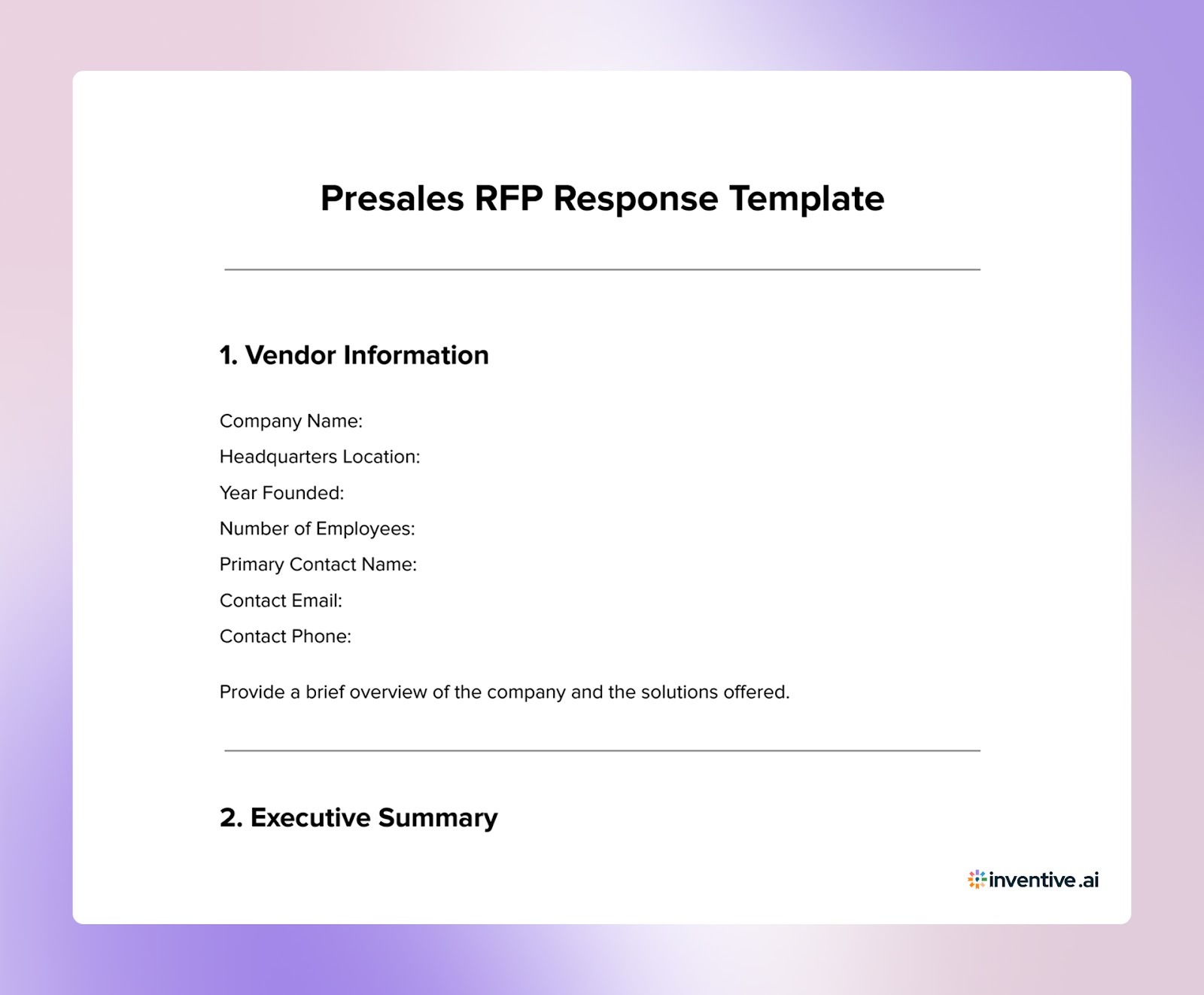

What to Include in a Pre-Sales Deal Support Template Response
When preparing an RFP response, presales teams typically organize information into standard sections so buyers can compare vendors easily.
Key sections usually include:
- Vendor Information: Company background, headquarters location, and years in operation.
- Product Overview: Description of the product and its primary capabilities.
- Technical Architecture: Deployment model, infrastructure requirements, and supported integrations.
- Security and Compliance: Certifications, security controls, and data protection practices.
- Implementation Plan: Onboarding approach, deployment phases, and estimated timelines.
- Pricing Structure: Licensing model, pricing tiers, and implementation costs.
- Customer References: Examples of organizations currently using the solution.
Structure Presales Deal Support Workflows Using an RFP Template
An RFP template works best when the RFP process is integrated directly into your existing presales workflow. Instead of treating the RFP as a separate task, presales teams add it into their standard deal support process so contributors, timelines, and proposal sections are managed alongside the opportunity.
Success often depends on how early this integration happens. Here’s how presales teams typically structure the RFP workflow.
1. Review the RFP Requirements
The first step is understanding how the buyer plans to evaluate vendors. RFPs often contain multiple sections covering product capabilities, technical architecture, integrations, security requirements, and pricing structures.
Presales teams usually review the RFP with sales leadership to identify critical evaluation areas. For example, an enterprise software RFP might include sections such as:
- Product feature requirements
- Integration with CRM and ERP systems
- Data security and compliance controls
- Implementation timeline and onboarding approach
- Pricing and licensing structure
Once these sections are identified, presales teams determine which internal teams must contribute responses.
2. Assign Sections to Subject Matter Experts
Large RFPs often contain dozens or hundreds of questions, making it difficult for one team to handle everything. Presales teams distribute sections to internal experts who can provide accurate responses.
For example, a typical workflow might look like this:
- Presales engineers answer technical architecture and integration questions
- Product managers explain product capabilities and roadmap details
- Security teams complete compliance and data protection questionnaires
- Finance teams prepare pricing structures and licensing models
- Sales teams provide customer references and case studies
Assigning sections early ensures contributors have enough time to prepare responses before submission deadlines.
3. Collect and Consolidate Responses
Once contributors complete their sections, presales teams gather responses and consolidate them into the RFP template. This stage typically involves reviewing answers to ensure they directly address the buyer’s questions.
For example, presales teams may verify that:
- Integration responses match current product capabilities
- Security answers align with company compliance policies
- Pricing information reflects approved commercial terms
Using a structured template helps organize these responses into a single document that buyers can review easily.
4. Review the Proposal Before Submission
Before sending the final response, presales teams usually conduct an internal review. This step helps confirm that the proposal is complete and consistent across all sections.
Typical review steps include:
- Verifying technical accuracy in architecture explanations
- Confirming pricing details with finance teams
- Checking that security responses include current certifications
- Ensuring terminology remains consistent across the document
This final review ensures the RFP submission presents a clear explanation of the proposed solution before it is delivered to the buyer.
Pre-sales Deal Support RFP Challenges to Manage During Early Phase
Even experienced presales teams face operational challenges when responding to enterprise RFPs. These documents often contain hundreds of questions, strict procurement deadlines, and sections that require input from multiple internal teams.
Without a structured response process, preparing the submission can quickly become a bottleneck in the deal cycle.
1. Searching Past Proposals for Reusable Answers
Many RFP questions repeat across deals, especially around integrations, deployment models, and security controls. However, these answers often exist across previous proposals, shared drives, or internal documentation tools. Presales teams may spend hours searching past submissions to locate relevant responses.
2. Large Security and Compliance Questionnaires
Security sections are often the most detailed part of enterprise RFPs. Buyers request explanations of encryption practices, data storage policies, certifications such as SOC 2 or ISO 27001, and incident response procedures. These questionnaires frequently require coordination between presales and internal security teams.
3. Managing Large RFP Documents With Hundreds of Questions
Enterprise RFPs commonly arrive as spreadsheets containing dozens or even hundreds of questions. Presales teams must distribute these questions across internal experts, track progress, and consolidate responses into a single proposal document.
4. Limited Time Between RFP Release and Submission
Procurement teams usually provide a fixed submission window once the RFP is issued. Presales teams must collect technical responses, validate answers, review pricing information, and finalize the proposal before this deadline.
5. Maintaining Consistency Across the Final Proposal
Because different teams contribute responses, the final submission can contain inconsistent terminology, conflicting technical explanations, or incomplete answers. Presales teams often conduct a final review to ensure the proposal presents a clear and consistent solution.
Submit Accurate Pre-Sales Deal Support RFP Responses Faster with Inventive AI
Inventive AI helps presales teams generate structured RFP responses aligned with buyer requirements. Instead of assembling answers manually, teams can produce context-aware responses that reflect their product capabilities and proposal documentation. The result is 95% accurate drafts, proposal preparation that is up to 10× faster, and organizations reporting up to 50% higher win rates.
Here are the key capabilities that improve RFP response preparation.
1. Context Engine
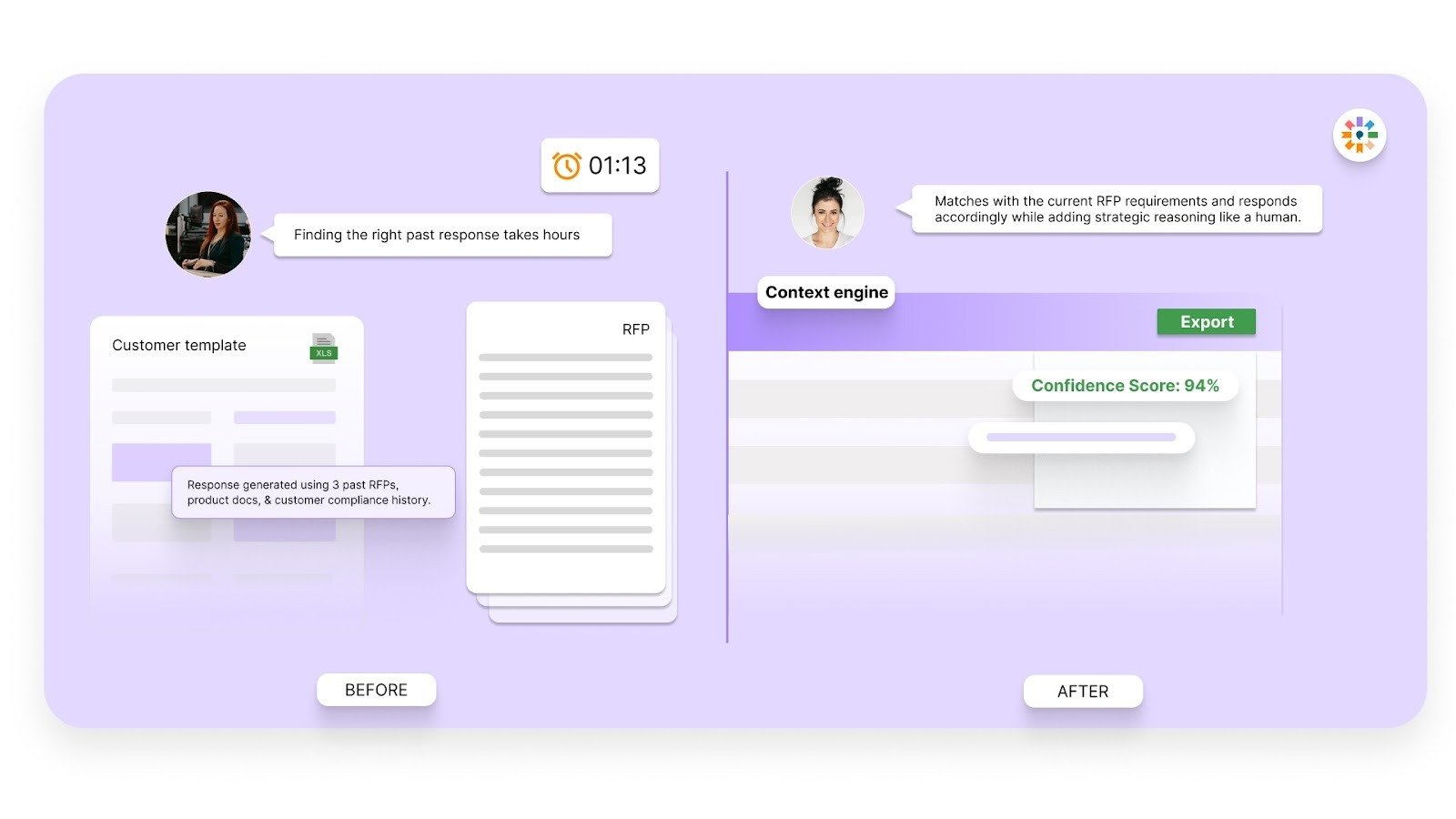
Most proposal tools rely on keyword search to retrieve past answers. Inventive AI uses a context engine that analyzes the entire RFP, including technical requirements, security questions, and implementation expectations. This allows the platform to generate responses that align with the buyer’s documented requirements instead of generic answers.
2. Conflict Detection
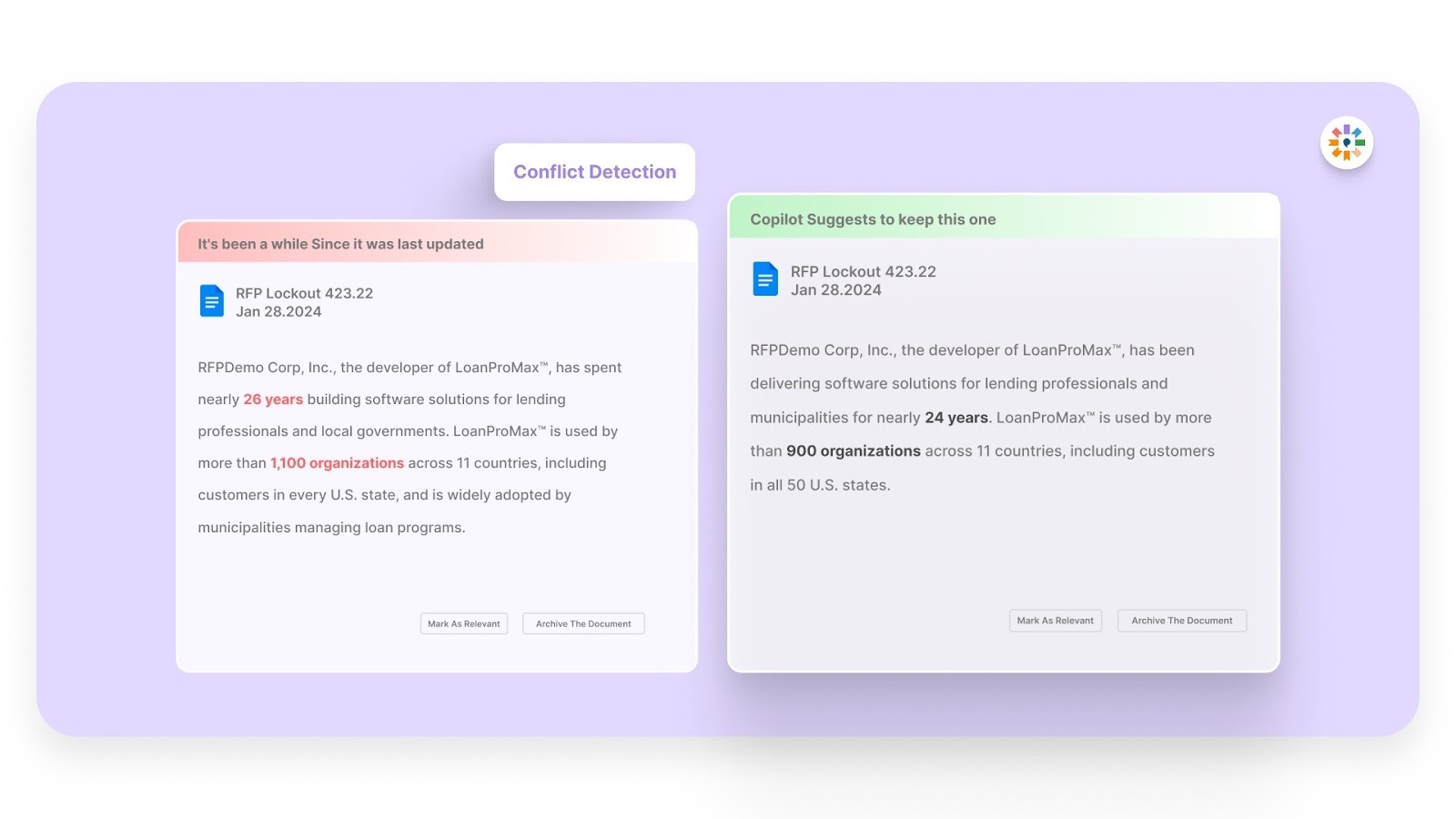
Enterprise RFP responses often include multiple sections written by different teams. These sections can sometimes contain conflicting details about architecture, integrations, or implementation timelines. Inventive AI automatically identifies contradictions across proposal sections before submission, helping teams maintain consistency throughout the response.
3. Outdated Content Detection
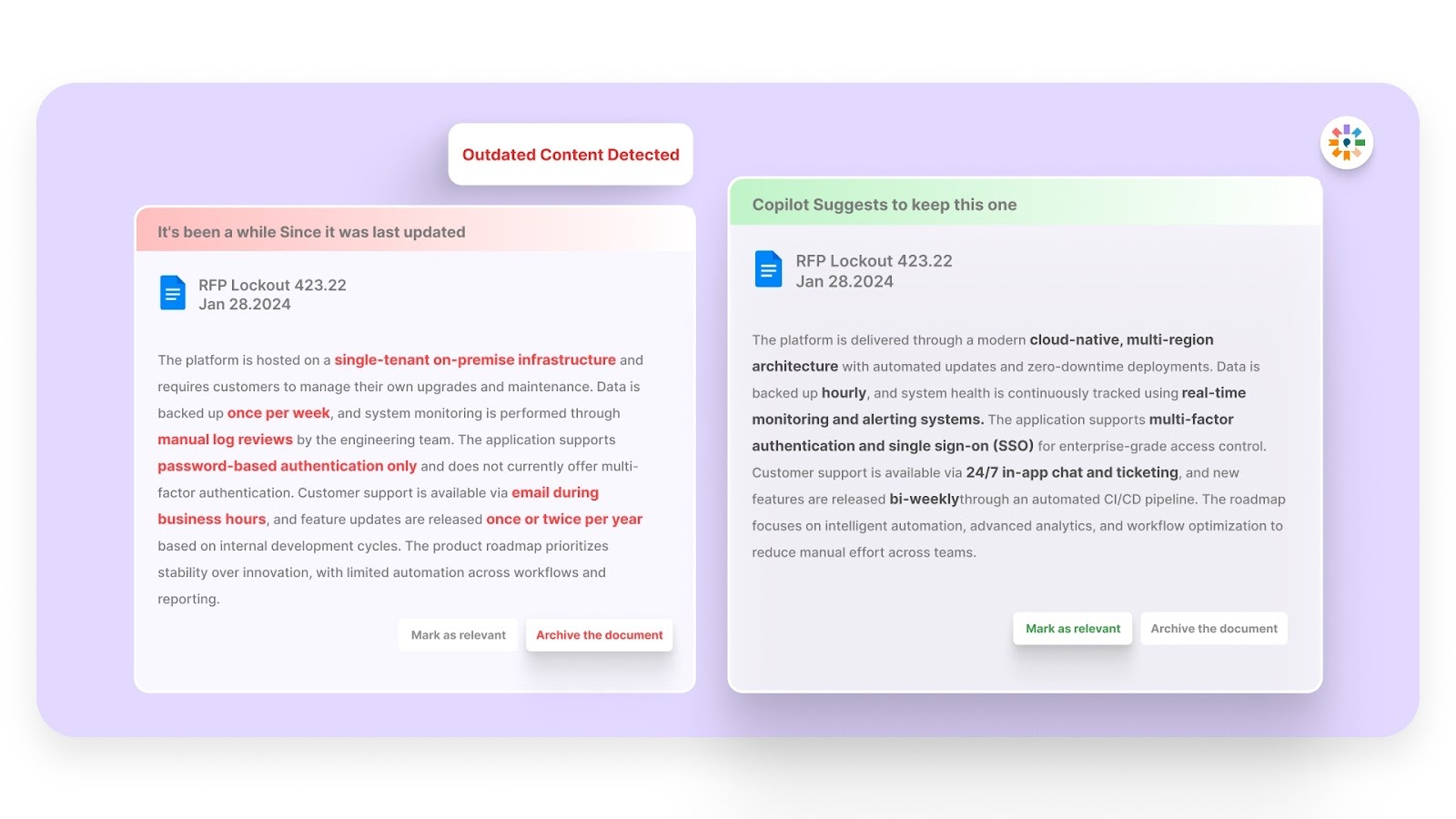
Proposal libraries often contain responses referencing outdated certifications, previous product versions, or old documentation. Inventive AI detects outdated information and flags it before it appears in the final proposal, ensuring submissions reflect the vendor’s current capabilities.
4. Narrative Proposal Generation
Many RFPs require more than structured question-and-answer responses. Buyers frequently request executive summaries, solution narratives, or implementation approaches. Inventive AI generates narrative-style proposal sections that clearly explain the vendor’s approach while aligning with the buyer’s evaluation criteria.
5. Simple and Easy-to-Use Interface
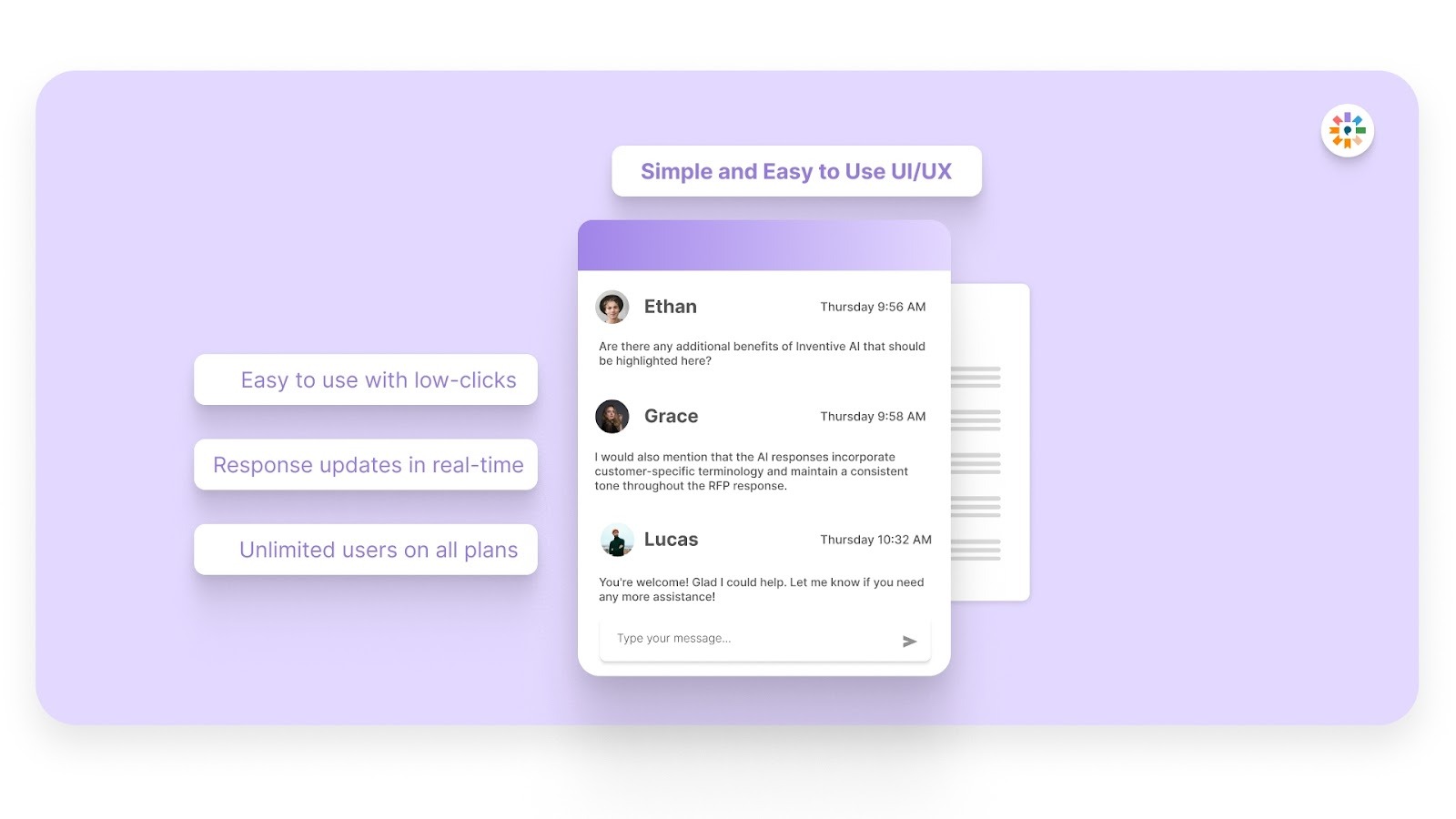
Presales teams often prepare proposals under strict deadlines while coordinating with multiple contributors. Inventive AI provides a simple interface that allows teams to generate responses, review drafts, and collaborate without complex workflows or setup.
Frequently Asked Questions
1. How long do enterprise RFP responses usually take to prepare?
The preparation time varies depending on the size and complexity of the RFP. Smaller responses may take a few days, while large enterprise RFPs containing hundreds of questions can require several weeks of coordination between presales, product, security, and finance teams.
2. How can presales teams track progress across multiple RFP contributors?
Presales teams typically manage progress using a centralized response template or collaboration workspace where each section is assigned to a specific contributor. This allows the team coordinating the proposal to monitor which sections are complete, which require review, and which still need responses before the submission deadline.
3. What information should presales teams gather before starting an RFP response?
Before drafting responses, presales teams usually collect key deal context such as the buyer’s evaluation criteria, required integrations, deployment environment, security expectations, and commercial constraints. Gathering this information early helps ensure responses address the buyer’s priorities instead of providing generic product descriptions.
4. What formats do enterprise buyers typically use for RFP documents?
Buyers commonly distribute RFPs as structured spreadsheets, document files, or procurement portal forms. These formats often contain sections for technical questions, compliance requirements, pricing templates, and vendor background information.
5. How do companies evaluate vendor RFP responses?
Procurement teams usually score responses using predefined evaluation criteria. These criteria may include technical capabilities, security compliance, implementation approach, vendor experience, and commercial terms. Vendors that clearly address each requirement typically progress to the next evaluation stage.
.avif)




.jpg)