Best Procurement Technology Solutions for Faster RFP Wins [2026]
Strong evaluation criteria make vendor decisions faster and fairer. Get the best practices for building your RFP scoring model plus a free template.

If you’ve ever been part of a proposal or RFP response cycle, you know how frustrating it can be when procurement systems slow you down instead of helping you win business.
For vendors, the right technology helps manage purchasing flows, and it directly impacts how fast you can deliver compliant and compelling responses.
98% of executive leaders are exploring generative AI, with procurement leaders expecting improvements in productivity, cost savings, and revenue in the next 12–18 months.
That shift is pushing teams to reassess which procurement technologies actually support response quality and speed.
This blog brings you the top 10 procurement technology tools in 2026, evaluated from your perspective as a vendor.
You’ll learn what each tool actually does, where it shines, and where it may not fully address the unique challenges proposal, sales, and revenue teams face.
Also Read: Top Software for Automating Security Questionnaires in 2026
Key Takeaways
- Most procurement tools are built for buyers, so vendor teams still end up doing heavy manual work to answer RFPs, RFIs, DDQs, and security questionnaires.
- In 2026, the best “procurement tech” for vendors is the tool that protects response quality and speed, not the tool that manages spend and sourcing.
- Many suites on this list help with procurement operations, but they do not solve vendor pain points like narrative consistency, value statements, and grounded answer accuracy.
- Inventive AI stands out because it is built for vendor responses, delivering 90% faster replies, 95%+ accuracy, 0% hallucinations, and 50% higher win rates with 66% of answers needing near-zero edits.
- If your priority is winning procurement decisions, you need a response-first system, and Inventive AI’s AI RFP Agent is designed for that exact moment.
Understanding Procurement Technology Solutions Beyond Spend and Sourcing
Procurement technology solutions refer to software platforms designed to help organizations manage how goods and services are sourced, purchased, and governed.
When most people talk about procurement tools, they think about sourcing, spend analytics, supplier onboarding, and compliance workflows. While those capabilities matter for buyer-side procurement teams, they often miss the mark for vendors and sellers dealing with RFPs and questionnaire workflows.
Here’s the core challenge vendors face:
- Procurement platforms focus on buyers’ requirements, not on vendor deliverables.
- Procurement tools often lack true AI intelligence for generating context-aware, on-brand responses.
- Vendors end up managing multiple systems or manual processes to manage RFPs, security questionnaires, and DDQs.
That’s why you need a clear view of which tools in 2026 can serve vendor needs, how they differ, and how tools such as Inventive AI bring measurable impact to your bottom line.
Top 10 Procurement Technology Tools for Teams Responding to Buyer Requests in 2026
For teams responding to RFPs, security questionnaires, and DDQs, what matters is different: how quickly you can respond, how accurate your answers are, and how consistent your messaging stays across every submission.
Here are the top 10 procurement technology tools for vendors in 2026:
Now let’s look at each tool a little more closely, so you can see what it’s actually good at, where it tends to fall short, and where Inventive AI clearly pulls ahead.
1. Inventive AI
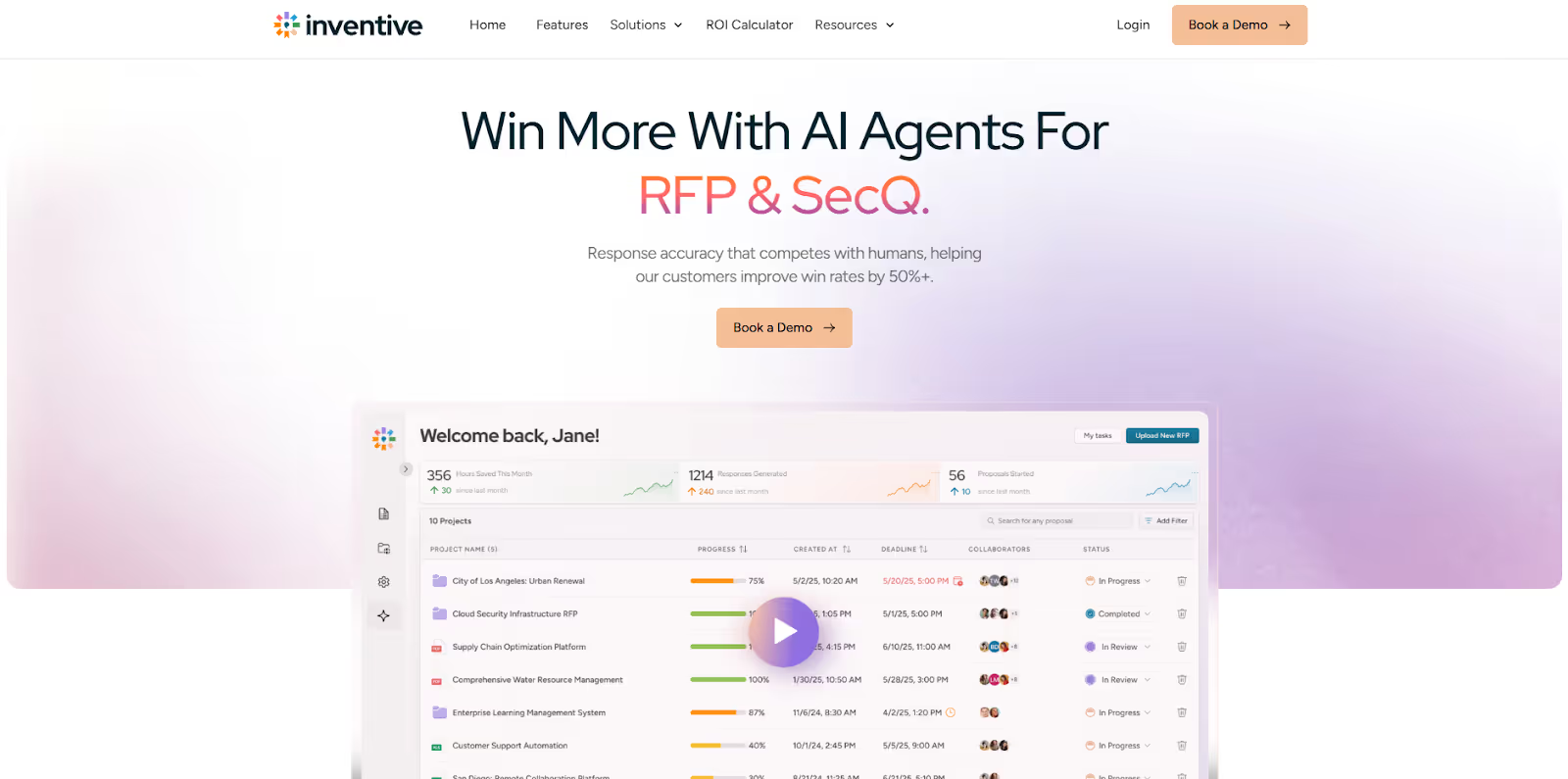
When procurement requests arrive (RFPs, RFIs, security questionnaires, DDQs), your outcome depends on response quality, speed, and consistency.
Inventive AI is built for that exact moment, using Inventive AI’s Advanced AI RFP Agent to produce evaluator-aligned drafts you can trust.
Key Features
- Offers 2x response quality without adding review cycles, so teams move faster without extra back-and-forth.
- Uses conflict and stale-content detection to automatically flag outdated, contradictory, or misaligned responses before submission.
- Preserves context across long, complex RFPs, ensuring responses stay consistent from the first section to the last.
- Benchmark response quality using structured intelligence, ensuring proposals read as one coherent, evaluator-ready submission.
- Supports RFPs, RFIs, and security questionnaires in a single system through a centralized knowledge hub with integrations like SharePoint and Google Drive.
Pros
- 90% faster RFP responses in documented customer outcomes.
- 50%+ higher win rates reported in a published case study.
- Strong output reliability with 95%+ accuracy and 0% hallucinations in positioning.
Cons
- Limited analytics capabilities.
Best for
- Proposal teams answering complex RFPs with scoring rubrics
- Sales + Solutions teams that need fast, consistent narratives
- Security and compliance teams managing SecQs/DDQs alongside RFPs
- Startups, mid-market, and enterprise teams that need one response system (not five)
Pricing
Ratings and Reviews
Rating: 5/5
2. Responsive
Responsive focuses on proposal/RFP process management and maintaining a content library. It’s commonly used to organise and reuse answers, but teams still report friction when they need faster, more complete “first-pass” narrative outputs as the platform relies on library reuse and shallow AI reasoning.
Key Features
- Content/answer library
- Collaboration workflows and assignments
- Search and reuse for repeated questions
Pros
- Users frequently call out ease of use and collaboration as positives.
- Helpful for keeping responses consistent via a central library.
Cons
- Users flag UX areas and “inefficient search functionality” among the recurring negatives.
- Review sentiment suggests ongoing manual effort remains for polishing outputs.
- It can feel more like strong content management than a system that reliably produces evaluator-ready drafts.
Pricing
Ratings and Reviews
Rating: 4.2/5
Suggested Alternative: Inventive AI
Inventive AI is purpose-built for AI RFP Automation with accuracy controls (conflict detection + grounded knowledge) and published outcomes on time saved and win-rate lift.
3. JAGGAER Autonomous Commerce
JAGGAER is mainly positioned around enterprise procurement workflows (sourcing, purchasing, supplier management). It’s strong for buyer-side procurement operations, but it’s not designed as a specialized RFP response engine for proposal-quality drafting.
Key Features
- Procurement and sourcing modules
- Purchasing and supplier-related workflows
Pros
- Review feedback highlights centralizing processes and reducing manual effort in procurement operations.
Cons
- Third-party review summaries and user feedback often point to workflow gaps and integration challenges.
- May require additional tools when you need response drafting and narrative control.
- Not focused on generating high-quality RFP/SecQ answers.
Pricing
Ratings and Reviews
Rating: 4/5
4. Coupa
Coupa is widely known for spend management and procurement controls. It’s valuable for purchasing governance, but it isn’t positioned as an RFP answer-generation system for proposal teams.
Key Features
- Spend management and procurement controls
- ERP integrations and purchasing workflows
Pros
- Users often cite spend visibility and centralized purchasing as core strengths.
Cons
- UI complexity / poor interface design.
- Users mention support turnaround time and reporting/UI friction.
- Review commentary also notes limitations on automation in certain contexts.
Pricing
Ratings and Reviews
Rating: 4.8/5
5. SAP Ariba
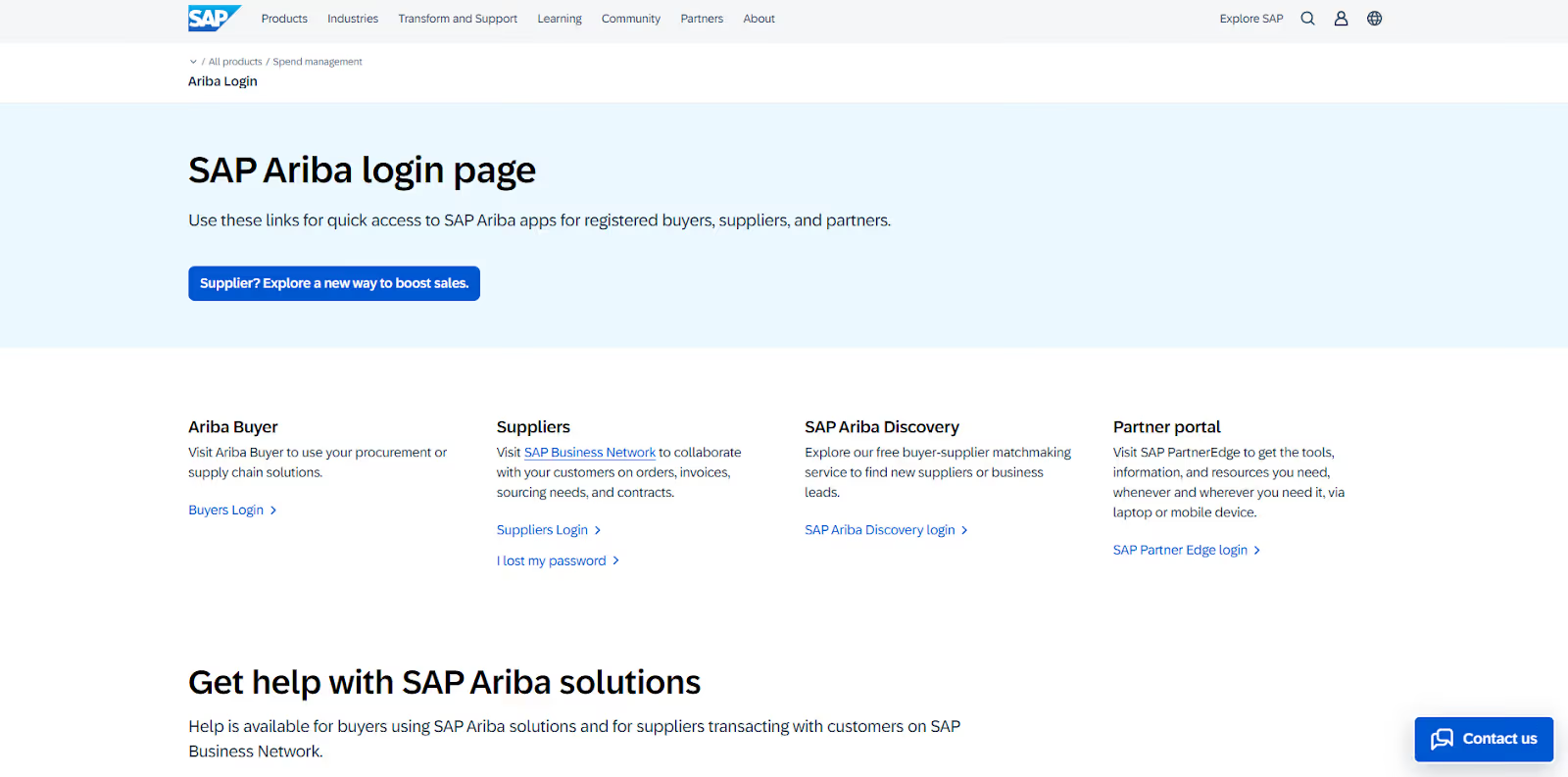
SAP Ariba is a broad procurement suite (supplier network, sourcing, contracts). It’s built for procurement orchestration, not for producing RFP narratives with response-quality controls.
Key Features
- Supplier and procurement workflows
- Contract and sourcing capabilities
Pros
- Strong for procurement standardization and large-scale workflows.
Cons
- Complex setup and a long learning curve.
- Users mention support and integration friction in reviews.
- It can feel heavy when your priority is fast, high-quality responses to procurement requests.
Pricing
Ratings and Reviews
Rating: 4/5
6. Ivalua
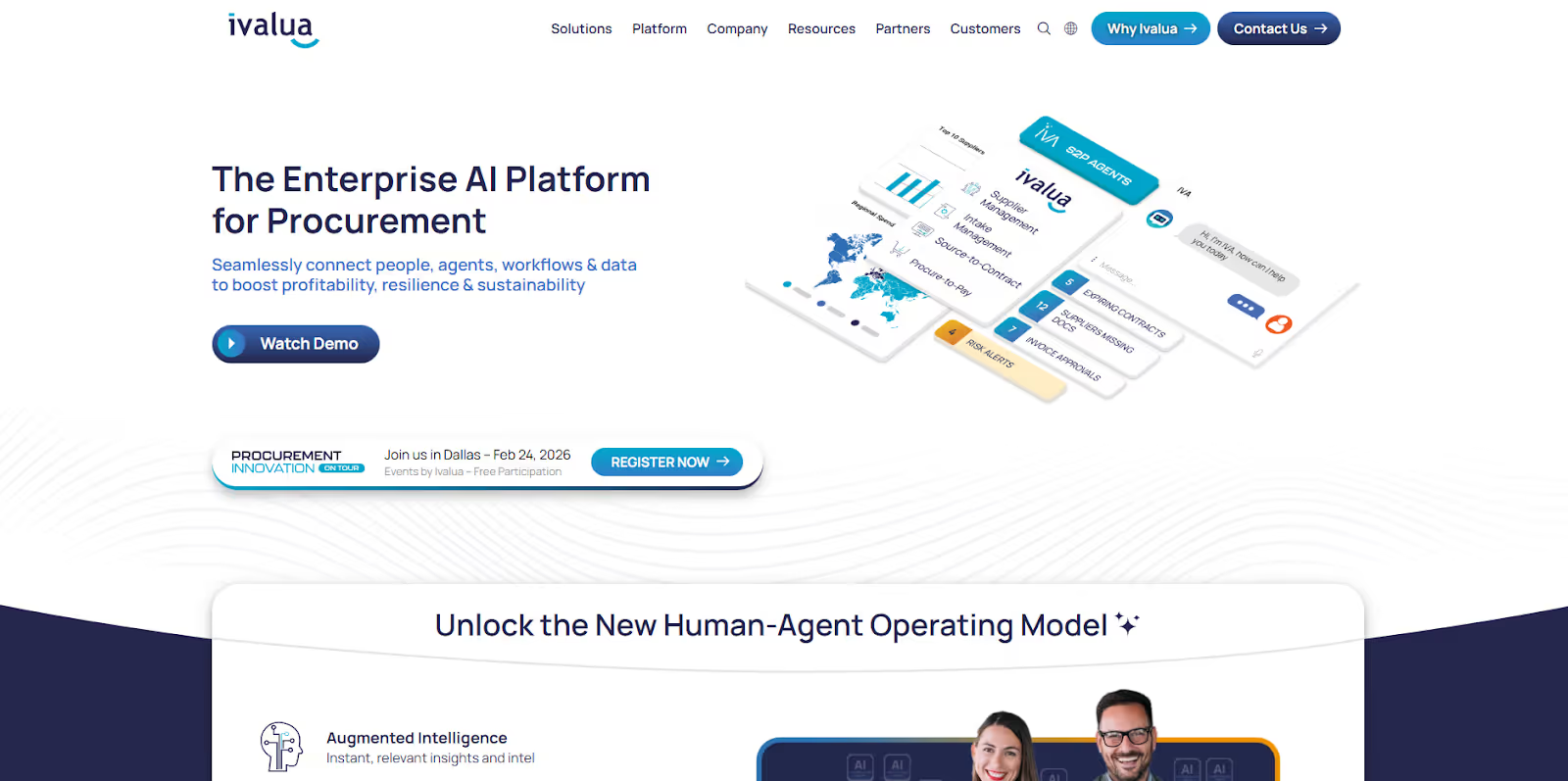
Ivalua is a configurable source-to-pay platform aimed at procurement teams. It supports broad procurement needs, but proposal response outcomes aren’t its primary strength.
Key Features
- Source-to-pay modules
- Configurable procurement workflows
Pros
- Users highlight flexibility and customization potential.
Cons
- Complexity and a steep learning curve.
- Implementation and integration can take time.
- Not a dedicated system for response drafting quality in RFP/SecQ workflows.
Pricing
Ratings and Reviews
Rating: 3/5
7. GEP SMART
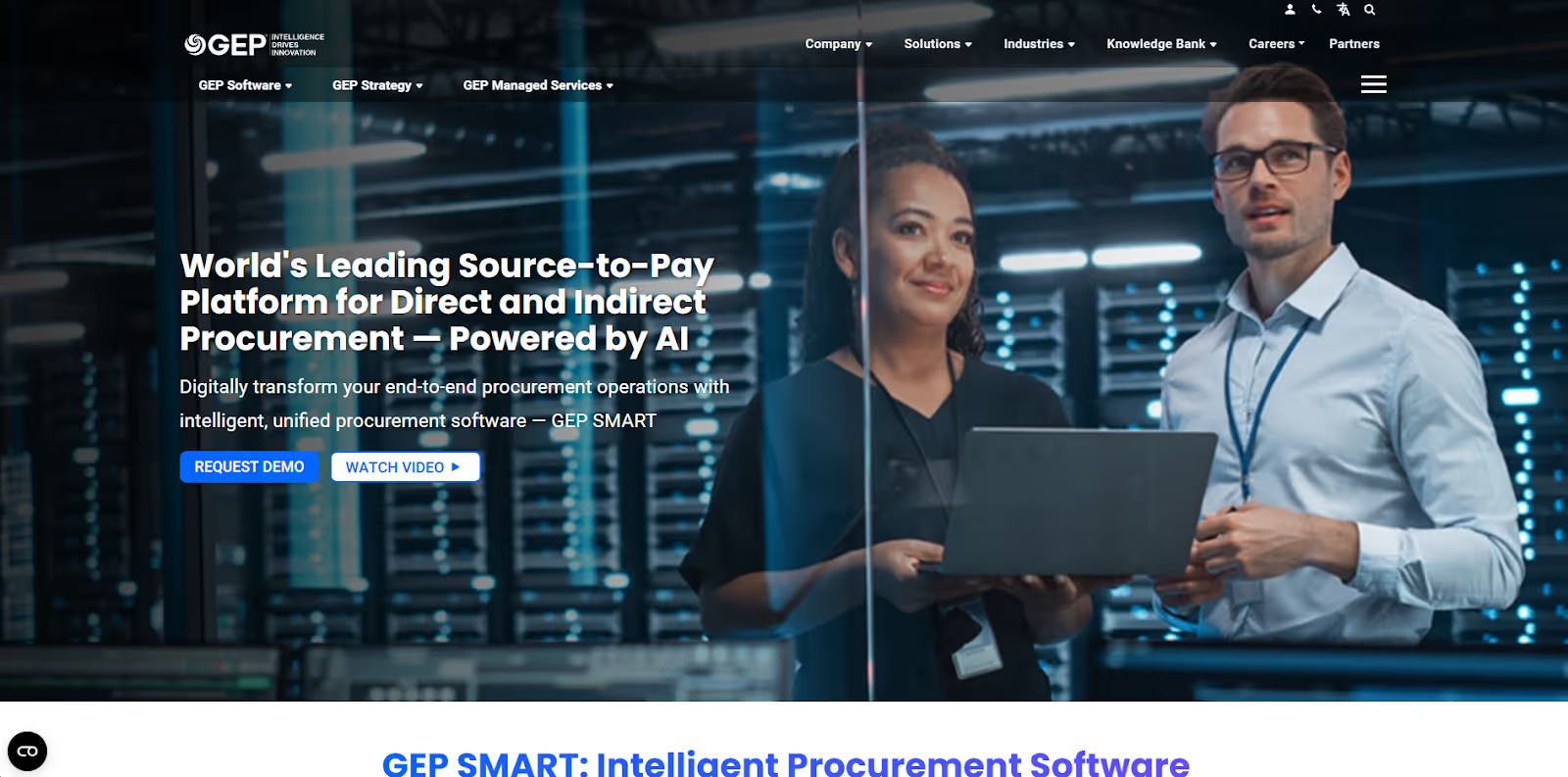
GEP SMART is an AI-positioned procurement platform built for procurement execution and management. It’s useful for procurement operations, but it’s not a specialized RFP response-writing tool.
Key Features
- Procurement management platform
- Contract and sourcing-related workflows
Pros
- Review comparisons highlight strong contract-related capabilities in certain areas.
Cons
- Difficult navigation and reports/dashboards feel less intuitive.
- It can require added effort to get reporting the way you want.
- Not aimed at producing evaluator-ready RFP narratives with response-quality controls.
Pricing
Ratings and Reviews
Rating: 3.8/5
8. Zycus
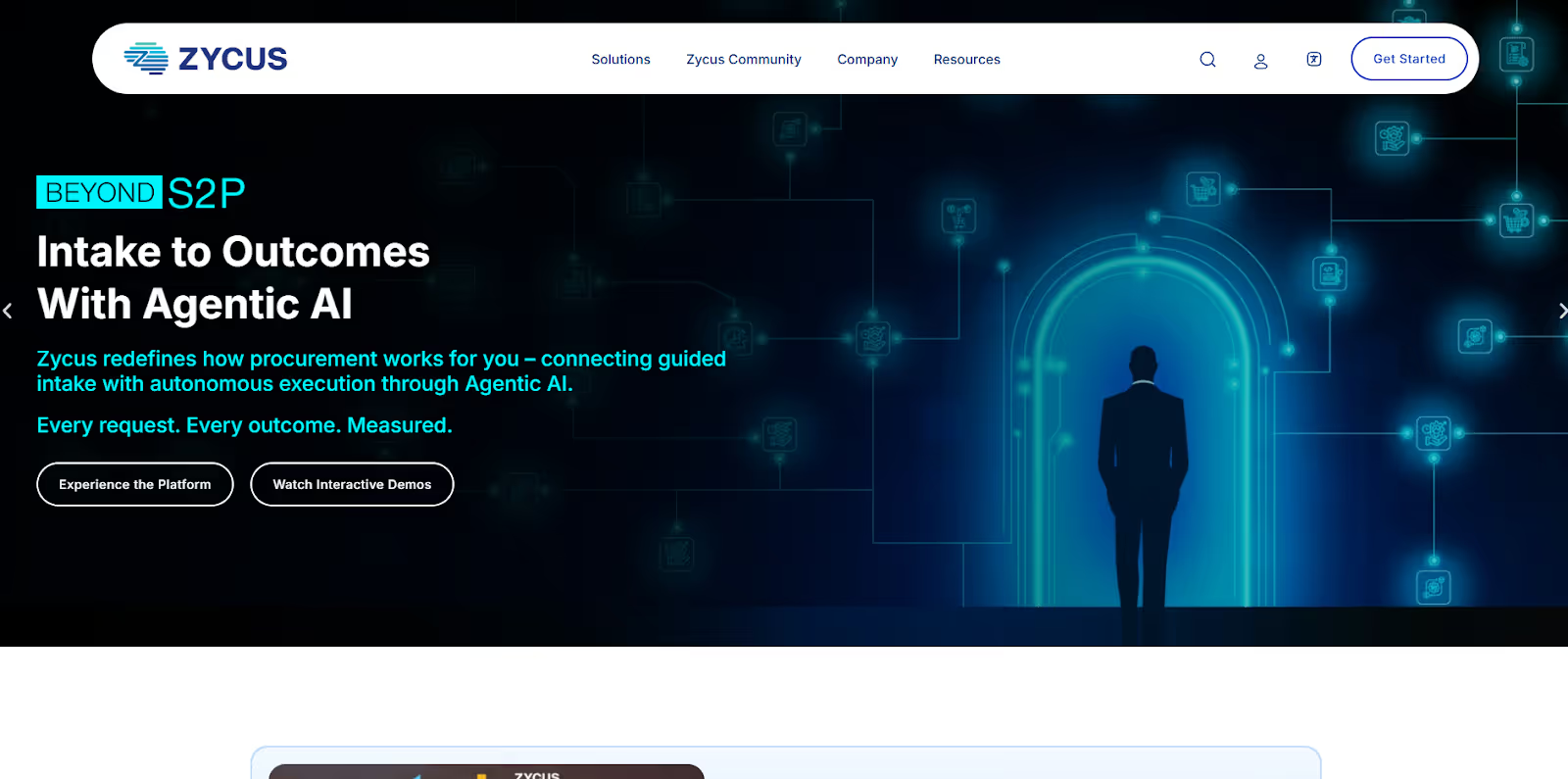
Zycus is positioned around source-to-pay automation. It supports procurement workflows, but response-writing for RFPs isn’t the main value proposition.
Key Features
- Source-to-pay suite
- Procurement automation and spend-related workflows
Pros
- Users and review coverage describe configurability and suite breadth as positives.
Cons
- Comparative review data suggests ease of use can be a challenge compared to other tools.
- It can require more training for everyday users.
- Not built around RFP response-quality outcomes (accuracy controls, conflict detection, narrative scoring alignment).
Pricing
Ratings and Reviews
Rating: 4/5
9. LevaData
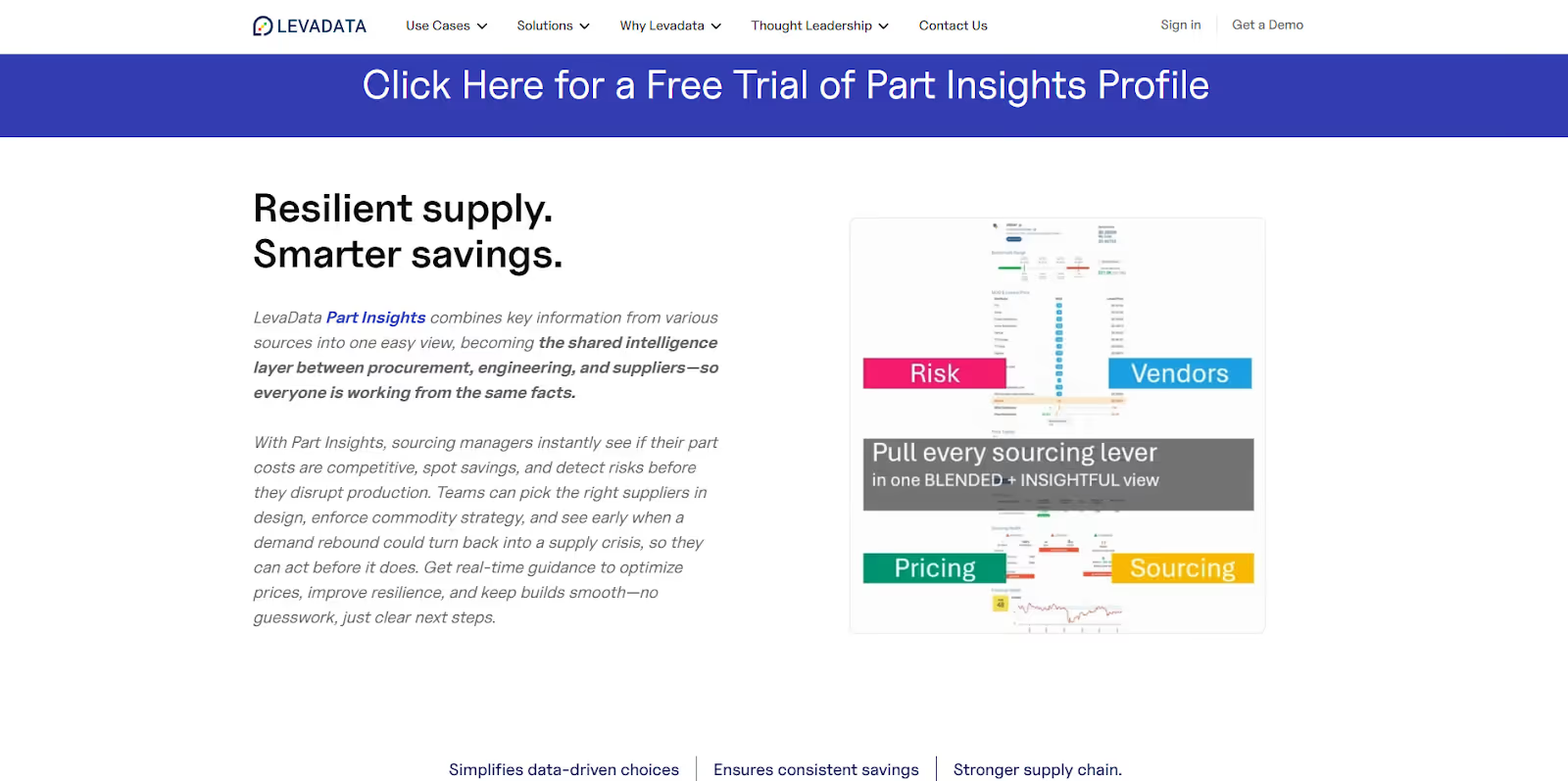
LevaData is focused on direct material sourcing intelligence and spend/supply insights at the part level. It can help procurement teams with sourcing decisions, but it is not positioned as an RFP response automation platform.
Key Features
- Direct materials sourcing intelligence
- Spend and supply chain insights
Pros
- Strong fit when your main need is direct materials intelligence and sourcing signals.
Cons
- Category focus means it won’t replace tools built for RFP/SecQ answer generation.
- You’ll still need a dedicated system for managing response quality across RFPs and questionnaires.
- Not aimed at narrative drafting workflows (value statements, evaluator-ready answers).
Pricing
Ratings and Reviews
Rating: N/A
10. Procurify
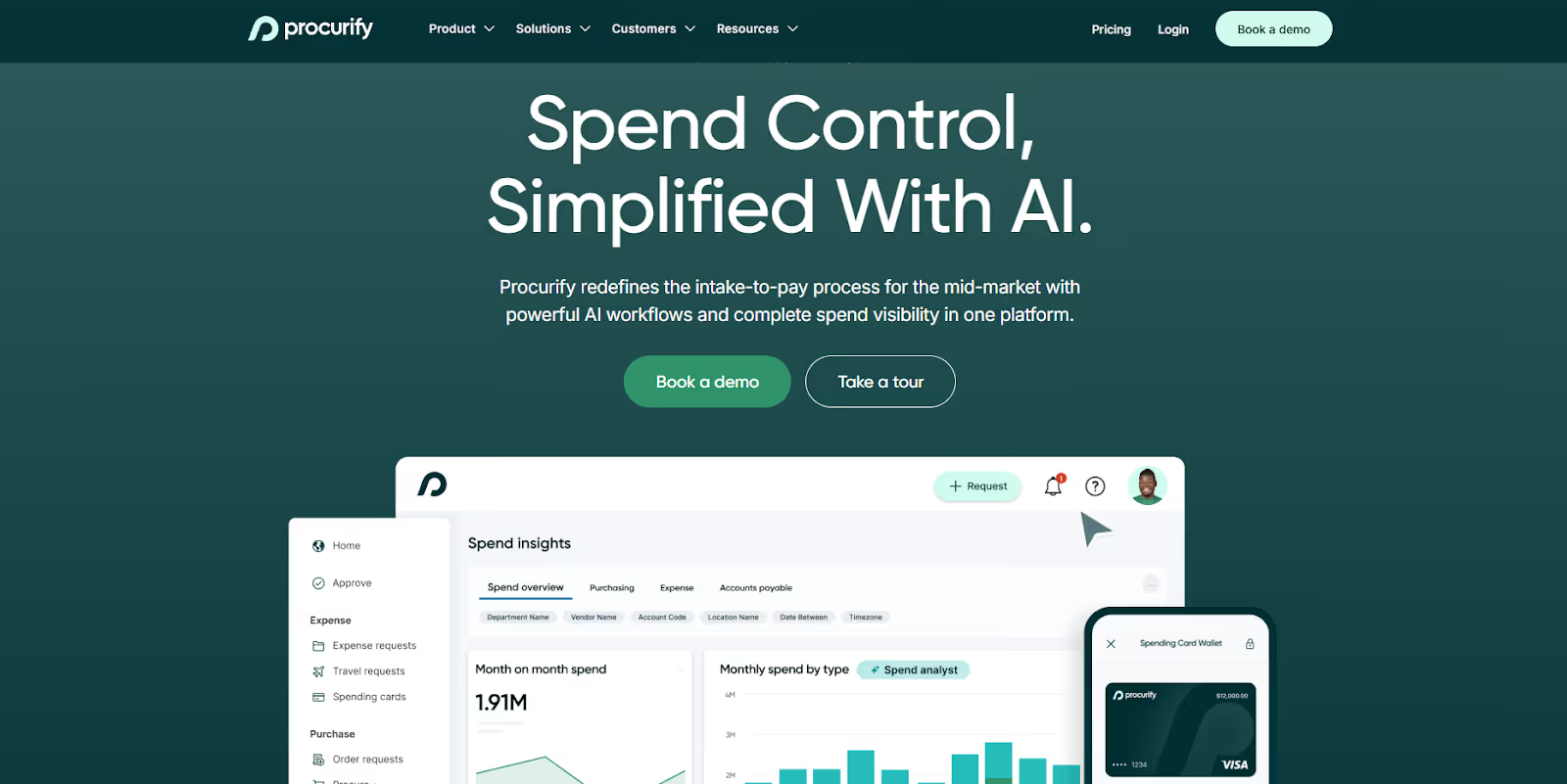
Procurify is positioned around purchase requests, approvals, and procurement workflow basics. It’s a practical operations tool, but not a system for RFP drafting or questionnaire automation.
Key Features
- Purchase requisitions and approvals
- Purchasing controls and supplier records
Pros
- Users often highlight ease of adoption and simpler purchasing workflows.
- Recognized in mid-market purchasing categories on review platforms.
Cons
- Missing features, integration issues, and PO management issues.
- Can feel limited once requirements get more complex.
- Not designed for RFP/SecQ response drafting or answer-quality control.
Pricing
Ratings and Reviews
Rating: 4.2/5
Every tool above solves a real problem, and each comes with trade-offs. The difference is what the tool is built to optimize.
If your biggest risk is losing time and consistency when responding to procurement requests, Inventive AI stands out as the best option on this list because it’s purpose-built for that response moment, with documented outcomes like 90% faster responses and 50%+ higher win rates.
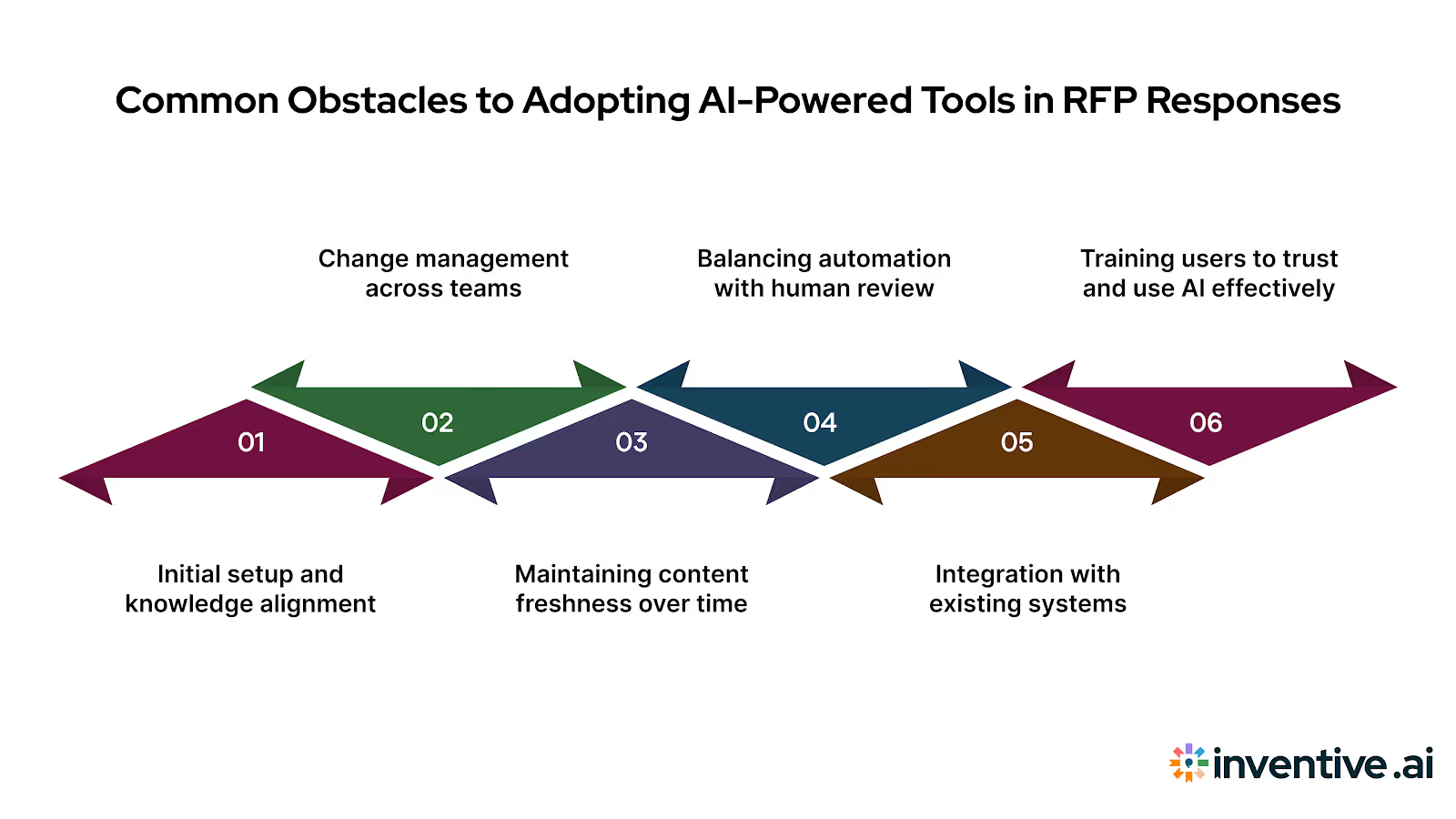
6 Common Challenges When Integrating AI-Powered Procurement Tools into Your RFP Response Process
AI-powered procurement tools can bring meaningful improvements to speed and consistency when responding to RFPs and questionnaires.
However, during implementation and day-to-day use, teams may encounter a few operational challenges that require planning and adjustment.
Some common challenges teams experience include:
1. Initial setup and knowledge alignment
AI systems rely on accurate, up-to-date source content. During onboarding, teams often need time to consolidate existing documents, validate answers, and align internal knowledge before seeing consistent results.
2. Change management across teams
Proposal, sales, and subject-matter experts may follow different response habits. Aligning everyone around a shared AI-driven workflow can take time, especially in larger organizations.
3. Maintaining content freshness over time
Products, policies, and positioning evolve. Without clear ownership and update processes, teams may need to regularly review and refresh source content to keep responses current.
4. Balancing automation with human review
Even with AI assistance, teams still need defined review steps to ensure responses match deal context, tone, and buyer expectations.
5. Integration with existing systems
Connecting AI procurement tools with document repositories, CRM systems, or collaboration platforms can require coordination across IT, sales, and proposal teams.
6. Training users to trust and use AI effectively
Teams often need time to build confidence in AI-generated drafts and understand where automation adds the most value in their response workflow.
These challenges are a natural part of adopting any AI-driven workflow. With the right setup, governance, and cross-team alignment, AI-powered procurement tools can become a reliable part of the RFP response process. It supports faster turnaround times while maintaining accuracy and consistency.
This is where a platform built around RFP responses rather than general procurement execution makes a meaningful difference.
Also Read: How to Develop Effective RFP Win Themes for Proposal Success
From Procurement Software to RFP Wins: Why Inventive AI Stands Apart?
Most procurement platforms are designed to manage transactions. Inventive AI is designed to win responses.
Where traditional tools focus on sourcing workflows and purchasing controls, Inventive AI operates at the point where revenue is actually decided, RFPs, RFIs, DDQs, and security questionnaires. That difference in focus changes everything.
Instead of helping you organize documents, Inventive AI helps you deliver accurate, evaluator-aligned responses at speed, without increasing review cycles or risk.
What sets Inventive AI apart is how it approaches response quality as a system, not a side effect. The AI RFP Agent works from your approved knowledge, preserves context across long and complex requests, and actively prevents conflicts or outdated language from slipping into submissions. This allows teams to move faster without trading off accuracy or consistency.
Inventive AI also fits naturally into existing workflows. Its usage-based pricing supports startups, mid-market teams, and enterprises alike, while integrations with common document systems make adoption practical rather than disruptive.
In short, procurement software helps manage buying processes. Inventive AI helps you win procurement decisions. When response quality, speed, and consistency directly affect revenue, Inventive AI stands apart as the platform built for that exact moment.
Frequently Asked Questions (FAQs)
1. How does procurement technology impact RFP responses?
Procurement technology helps with managing sourcing and procurement, but it doesn't focus on RFP response quality. AI-powered tools like Inventive AI are designed specifically to improve response speed, accuracy, and consistency.
2. What should I look for in an RFP response tool?
Look for tools that offer automation, conflict detection, content management, and collaboration features. These will help you create better proposals faster and keep them aligned with client needs.
3. Can procurement tools handle RFP responses?
Procurement tools aren’t built for RFP responses. While they help manage sourcing and suppliers, they lack the features needed to create high-quality proposals. For that, you need a specialized RFP tool like Inventive AI.
4. Why should vendors use an RFP response platform instead of just procurement tools?
RFP response platforms are designed to handle proposal creation, ensuring your responses are accurate, consistent, and timely. General procurement tools don't offer these features, so vendors need something specialized to manage responses effectively.
5. How does Inventive AI improve win rates?
Inventive AI helps teams respond 10x faster and ensures 95% accuracy. By automating the process, it allows vendors to focus on refining high-quality proposals, leading to a 50% higher win rate.