
How to Create an Effective RFI Template for IT Teams

The whole process of RFI creation and response can be a time-consuming and challenging task. For IT teams, the process often involves collecting detailed information from various departments, organizing it in a clear and consistent way, and making sure that the details align with what the buyer needs. Without a well-organized approach, the task can quickly become overwhelming and prone to mistakes.
A well-structured RFI template for IT teams can simplify this process. It helps you gather the necessary information efficiently, making sure the responses are clear and focused on what matters most to the buyer. This approach saves time, reduces errors, and increases your chances of meeting the buyer’s expectations.
Also Read: The Ultimate Guide to Streamlining Your DDQ Process
RFI Template for IT Teams: The Smart Approach to Simplified Vendor Evaluation (for Buyers)
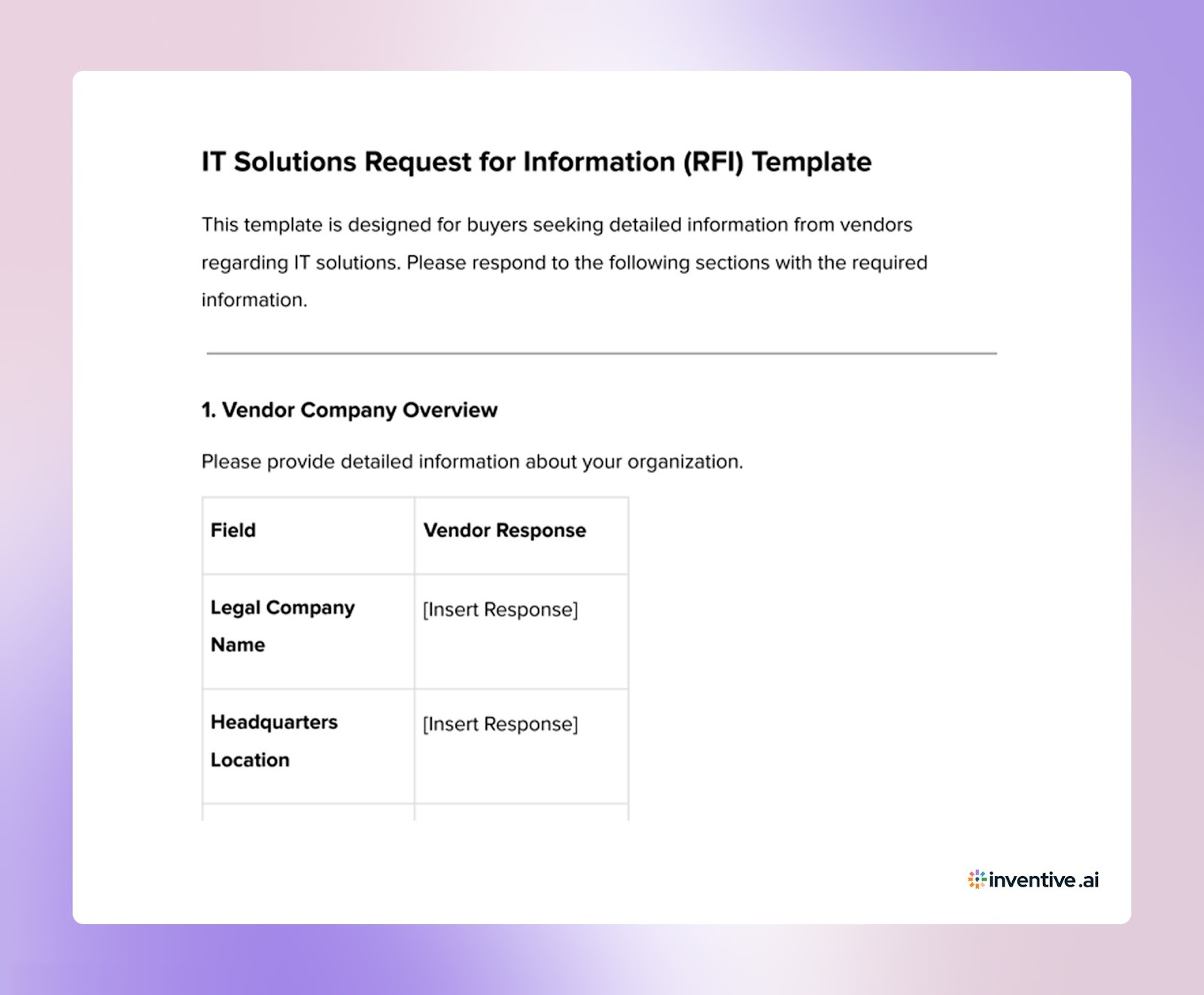

About RFI Example Template for IT Teams
An RFI (Request for Information) template is a standardized tool for gathering detailed information from vendors. It helps IT teams collect consistent and relevant data, making the evaluation and comparison process more efficient.
The Importance of a Well-Structured RFI Template for IT Teams
1. Consistency: Ensures all vendors provide the same type of information for easy comparison.
2. Time-Saving: Reduces the need for follow-up questions by addressing all critical points upfront.
3. Error Reduction: Minimizes the chances of missing important details or misinterpreting responses.
4. Simplifies Evaluation: Focuses on key decision-making criteria, streamlining the vendor assessment process.
The Must-Have Sections for an Effective IT RFI Template
1. Vendor Overview: Company background, key personnel, and relevant experience.
2. Technical Specifications: System compatibility, scalability, and integration requirements.
3. Compliance & Security: Security protocols, certifications, and data management practices.
4. Pricing & Support: Pricing details, payment terms, and post-implementation support options.
By using an effective RFI template, IT teams can streamline the vendor selection process, gather the necessary information more efficiently, and make informed decisions based on clear, structured responses.
The Ultimate RFI Response Template for IT Teams (for Vendors)
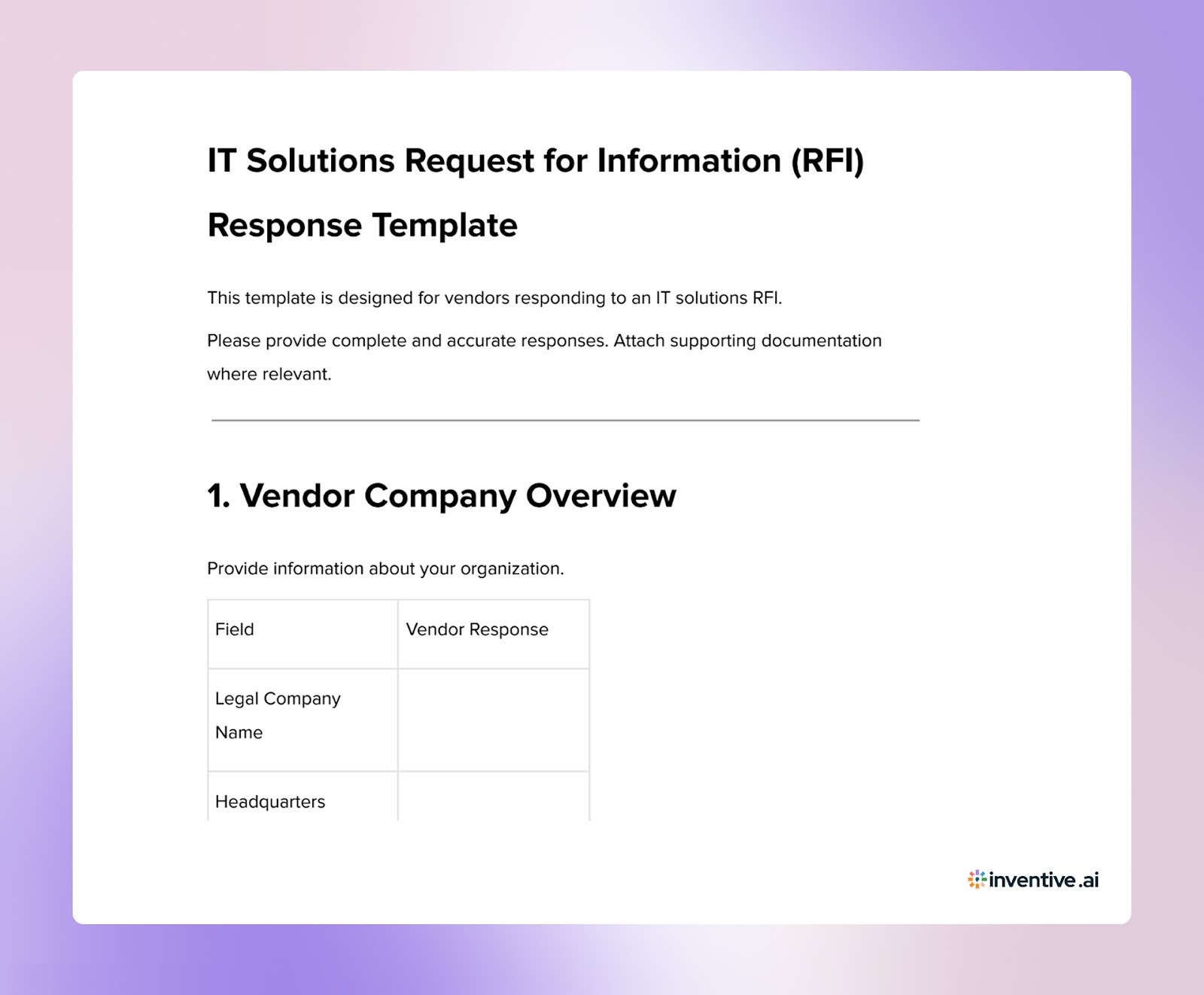

Customizing Your RFI Template: 7 Tips to Make Your Response Stand Out
Customizing your RFI template is essential to ensuring that your responses resonate with the buyer and meet their specific needs. A tailored RFI can significantly improve your chances of progressing through the selection process by highlighting the most relevant aspects of your solution.
1. Adjust the Introduction to Address the Buyer’s Needs
Begin with a clear and targeted introduction that directly addresses the buyer's key concerns. Make sure the language reflects their specific requirements and challenges to grab their attention.
2. Focus on the Most Relevant Solutions
Avoid a one-size-fits-all approach. Tailor your responses to emphasize the features and benefits that align with the buyer’s priorities and goals, ensuring you address their most pressing needs.
3. Align Your Case Studies and References
Use case studies and references that are most relevant to the buyer’s industry or use case. Highlight similar challenges you’ve solved to build credibility and show your expertise in their field.
4. Modify Your Approach Based on the Buyer’s Timeline
If the buyer is on a tight deadline, emphasize how quickly you can deliver results. Tailor your response to show you understand their urgency and can meet their timeline.
5. Highlight Key Differentiators Based on Their Needs
Showcase what sets you apart from competitors, focusing on the features that are most important to the buyer. Be clear about how your solution addresses gaps that others may not.
6. Tailor Your Pricing to the Buyer’s Requirements
Customize your pricing model to reflect the buyer’s needs. Provide flexible pricing options if possible and ensure the buyer understands the value they will receive at each price point.
7. Ensure Your Response is Clear and Concise
Keep your responses to the point, ensuring that every section is easy to understand. Avoid unnecessary jargon or over-explanation, and make sure your solution is presented in a straightforward, compelling way.
Customizing your RFI template to address the buyer's specific needs and timeline helps create a strong, relevant response that stands out, increasing your chances of progressing in the selection process.
5 Real-World RFI Examples from Various Teams
Below are real RFI templates and examples to help you understand how different organizations structure information requests. These examples show common elements and formats used across industries, giving you ideas on questions, sections, and layouts that vendors may encounter:
1. Standard Procurement RFI Template
Many procurement teams use basic RFI templates that include fields for project details, timeline, and vendor qualifications. Typical elements include an overview of the information requested, guidelines on how to respond, and space for vendors to provide contact and company background. These templates help buyers collect comparable responses from multiple vendors.
2. Business Requirements RFI (University / Enterprise Template)
Some organizations maintain detailed RFI templates that separate questions into business requirements, supplier qualifications, and response instructions. These may include checkboxes or structured tables that make it easy for vendors to input answers directly and for the buyer to compare them later.
3. Project and Supplier Tracking RFI Format
Templates used in larger enterprises often include additional tabs or sections such as supplier contact lists, tracking sheets for responses, and score sheets for reviewing vendor answers. This structured approach helps organize responses and track which vendors have replied by setting deadlines.
4. General RFI Format with Question Sections
Many RFIs start with a statement of need, followed by company background questions, project specifics, scope details, and a dedicated response section for vendors to answer directly. These examples show a mix of narrative responses and structured fields, often with space left for vendors to add additional insights.
5. Government or Public Sector RFI Templates
Some public procurement RFI documents include formal tracking fields (RFI number, dates, project ID) and clear sections for responding parties to provide answers. Government templates usually follow a consistent format that vendors can reuse when responding to multiple requests.
These examples highlight how RFIs are structured in practice, from simple procurement requests to more detailed enterprise versions. Reviewing different templates helps you prepare responses that match what issuers expect, reducing back‑and‑forth and improving clarity.
7 Common RFI Response Mistakes IT Teams Should Avoid
When responding to RFIs, even small mistakes can have a huge impact. As a vendor, it’s important to avoid these common pitfalls to ensure your responses are clear, compelling, and meet the IT team’s expectations.
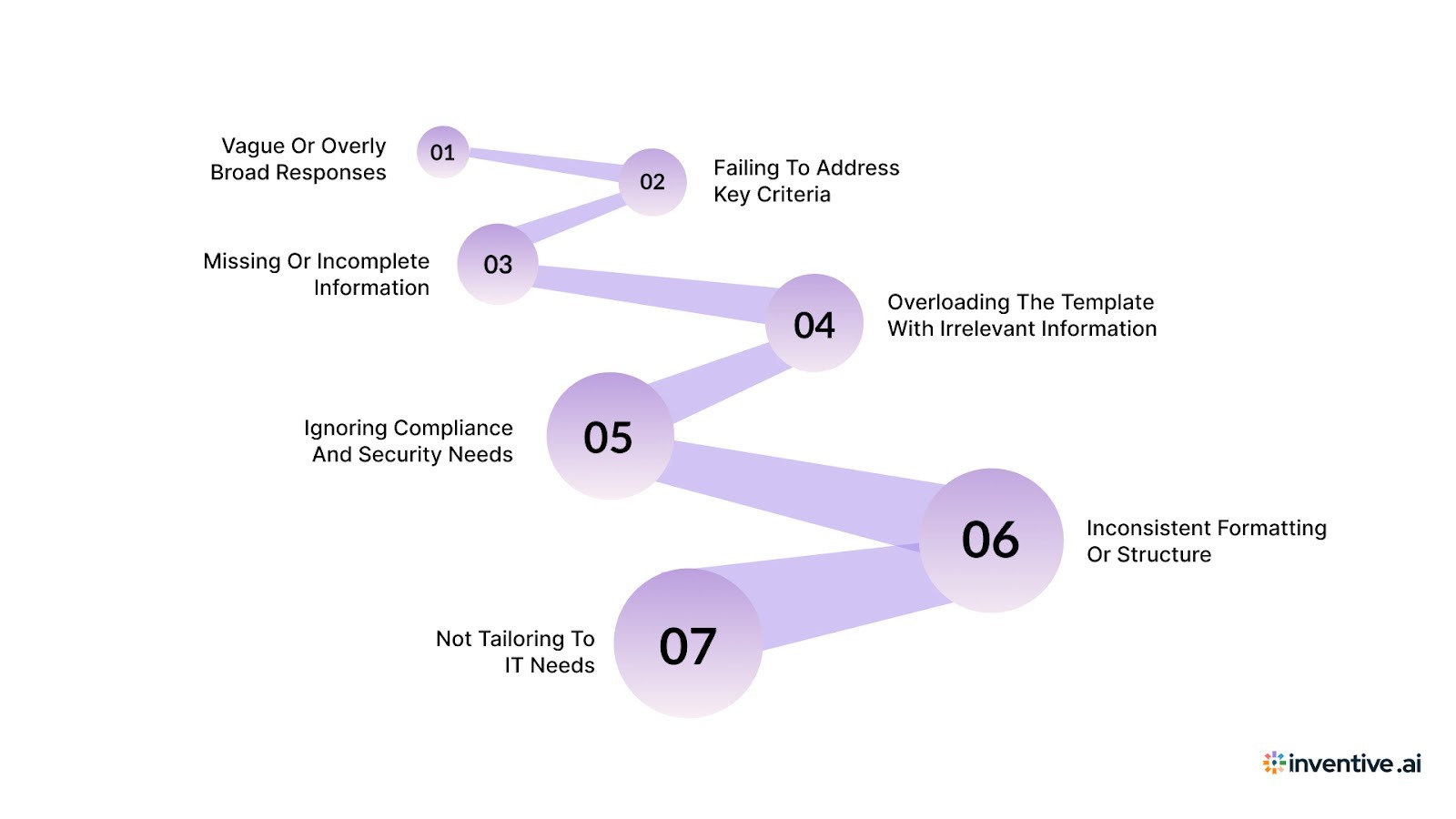
Here are some mistakes that could undermine your chances:
1. Vague or Overly Broad Responses
Avoid vague questions like "Tell us about your solution." Instead, provide clear and specific answers that directly address the IT team's needs. IT teams are looking for actionable details, not generalities.
2. Failing to Address Key Criteria
It’s essential to align your answers with the IT team’s decision-making criteria, such as scalability, security, and compliance. If your response doesn’t directly address these aspects, you risk being overlooked in the evaluation process.
3. Missing or Incomplete Information
Rushing through an RFI response or neglecting to answer critical questions can hurt your chances. IT teams need all the necessary information to make an informed decision, so ensure that your responses are comprehensive and complete.
4. Overloading the Template with Irrelevant Information
While it’s important to provide enough detail, avoid overwhelming the IT team with unnecessary information. Stick to the essentials that are relevant to the questions and decision-making criteria.
5. Ignoring Compliance and Security Needs
For IT teams, compliance and security are top priorities. Failing to properly address these aspects, such as certifications or data protection measures, can immediately disqualify you as a vendor.
6. Inconsistent Formatting or Structure
A disorganized or poorly formatted response can confuse reviewers and make it difficult for them to find the information they need. Use a clean, structured format with clear headings and sections to make your response easy to navigate.
7. Not Tailoring Your Response to the IT Team’s Needs
A one-size-fits-all approach doesn’t work when it comes to RFIs. Each IT team has specific requirements, so it’s important to tailor your response to their needs and provide relevant solutions that align with their goals.
Avoid these common mistakes to ensure that your RFI response is clear, relevant, and stands out in the vendor selection process. With Inventive AI, you can simplify your RFI response workflow, reduce errors, and ensure that your submissions are always high-quality and aligned with the IT team’s expectations.
Also Read: Common AI and Compliance Questionnaire Questions
How Inventive AI Makes Your RFI Response Faster and Smarter?
Responding to IT RFIs often requires input from multiple teams. Gathering this information, organizing it, and ensuring accuracy can take significant time. Inventive AI helps IT teams simplify this process by generating structured responses, identifying relevant information, and maintaining consistency across submissions.
1. 2× Higher Quality Responses
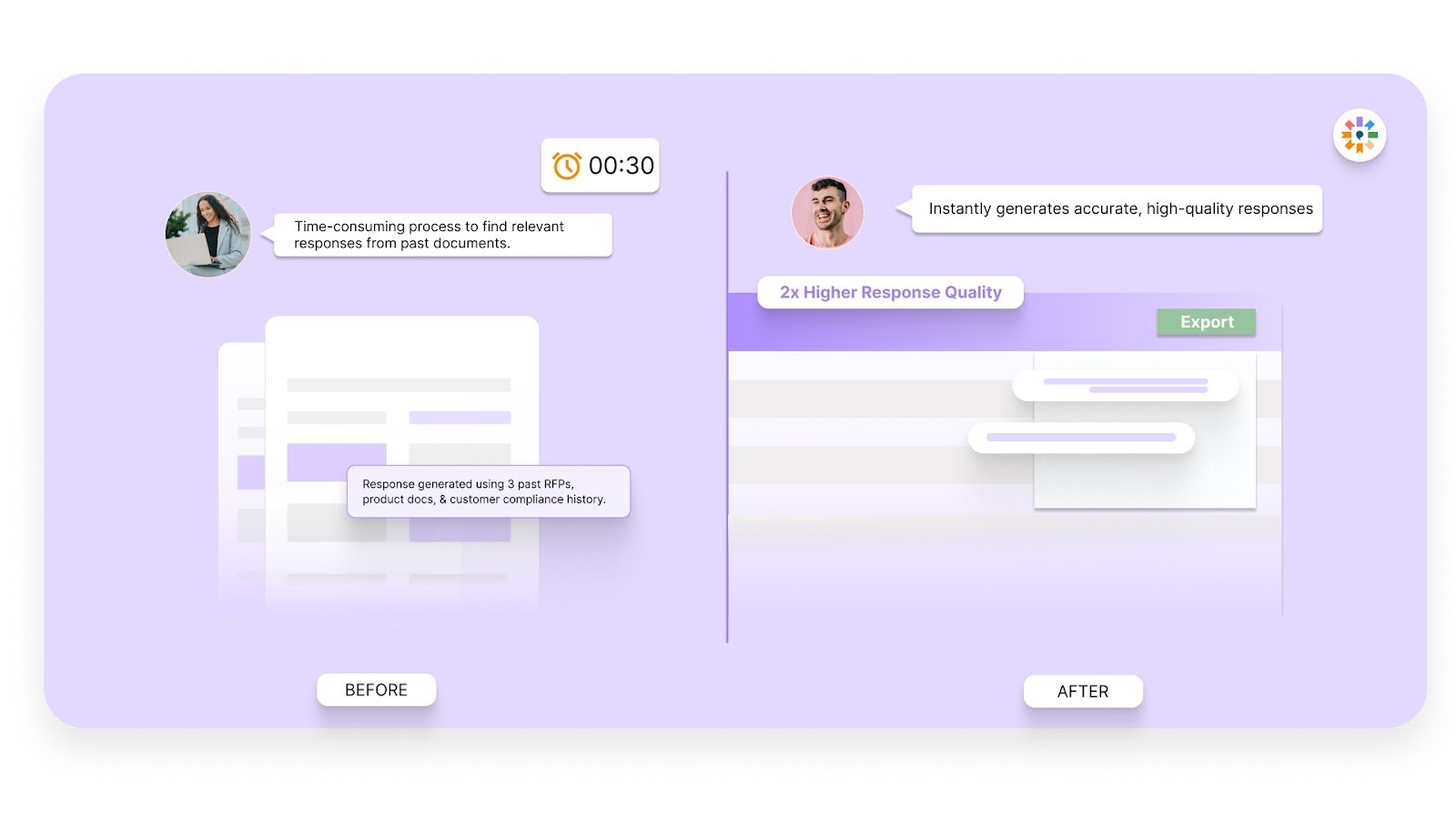
Instead of compiling answers from scattered documents, Inventive AI helps create structured responses that clearly address technical requirements, integration capabilities, and security practices. This improves clarity and helps buyers evaluate your solution more easily.
2. Context Engine
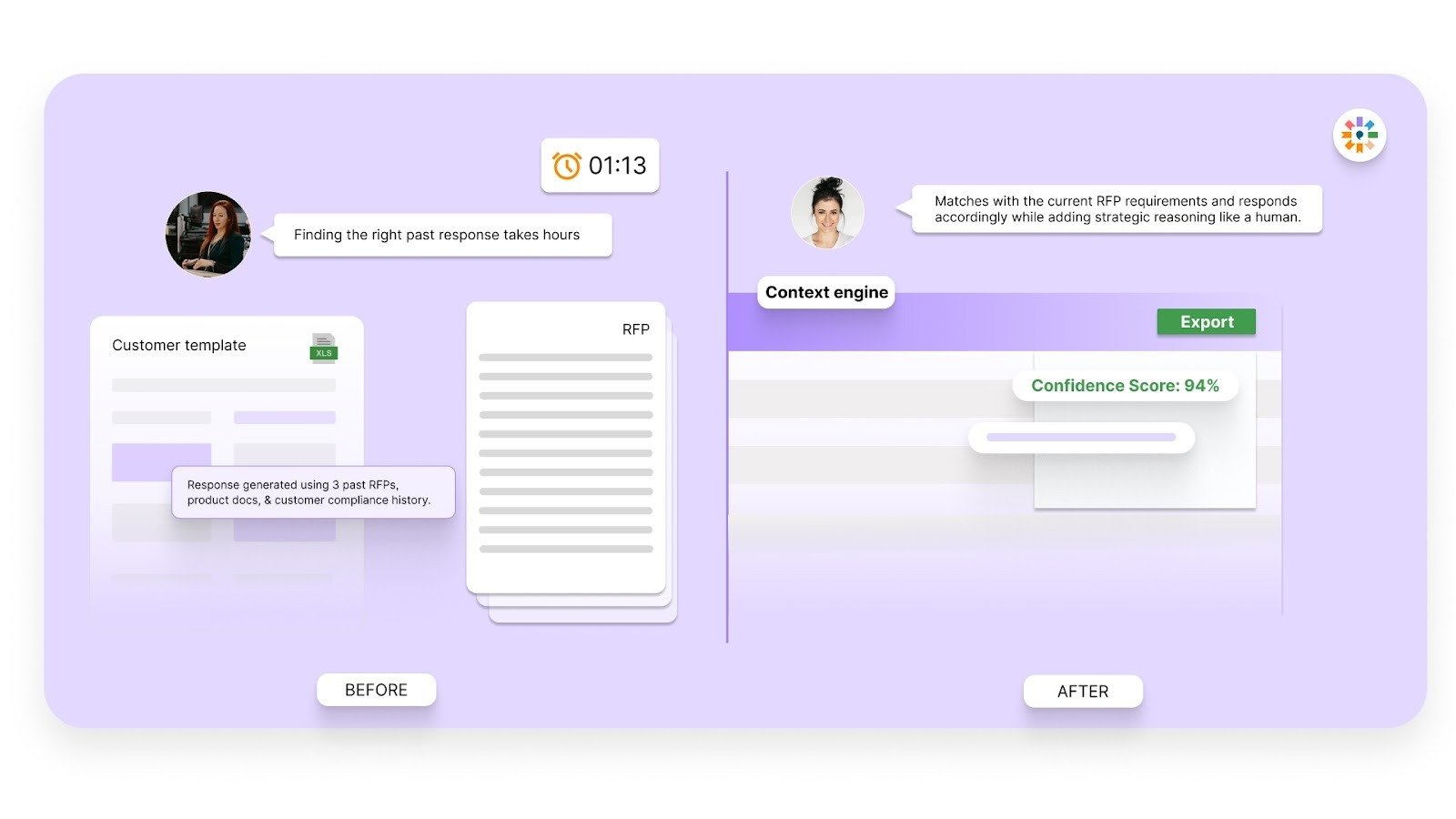
Inventive AI understands the intent behind RFI questions. When a buyer asks about system architecture, integrations, or security controls, the platform retrieves the most relevant information from your internal knowledge sources.
3. Conflict Detection
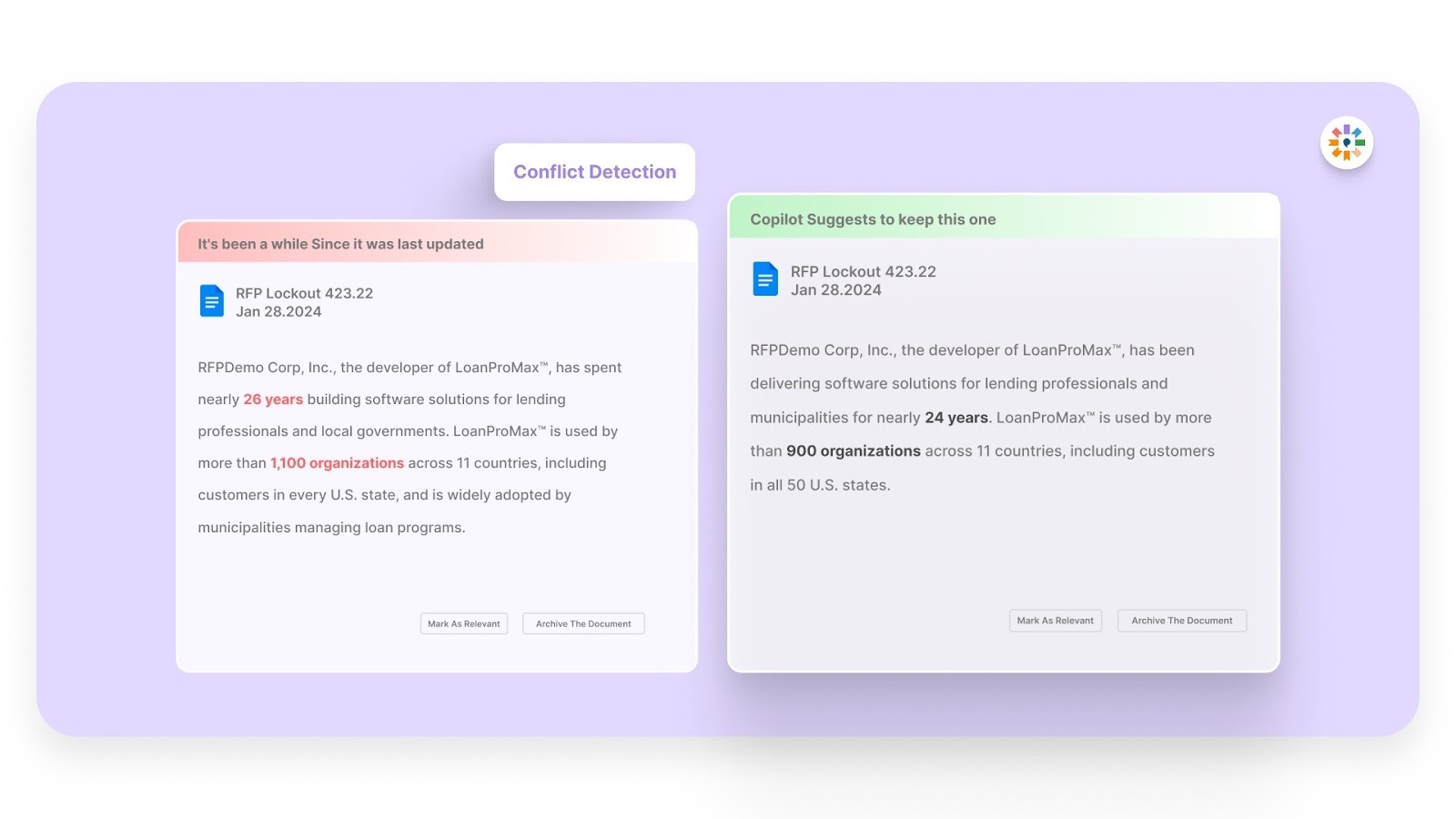
Technical responses often involve multiple teams and documents. Inventive AI detects conflicting information across sources, helping you avoid inconsistent answers that could reduce buyer confidence.
4. Outdated Content Detection
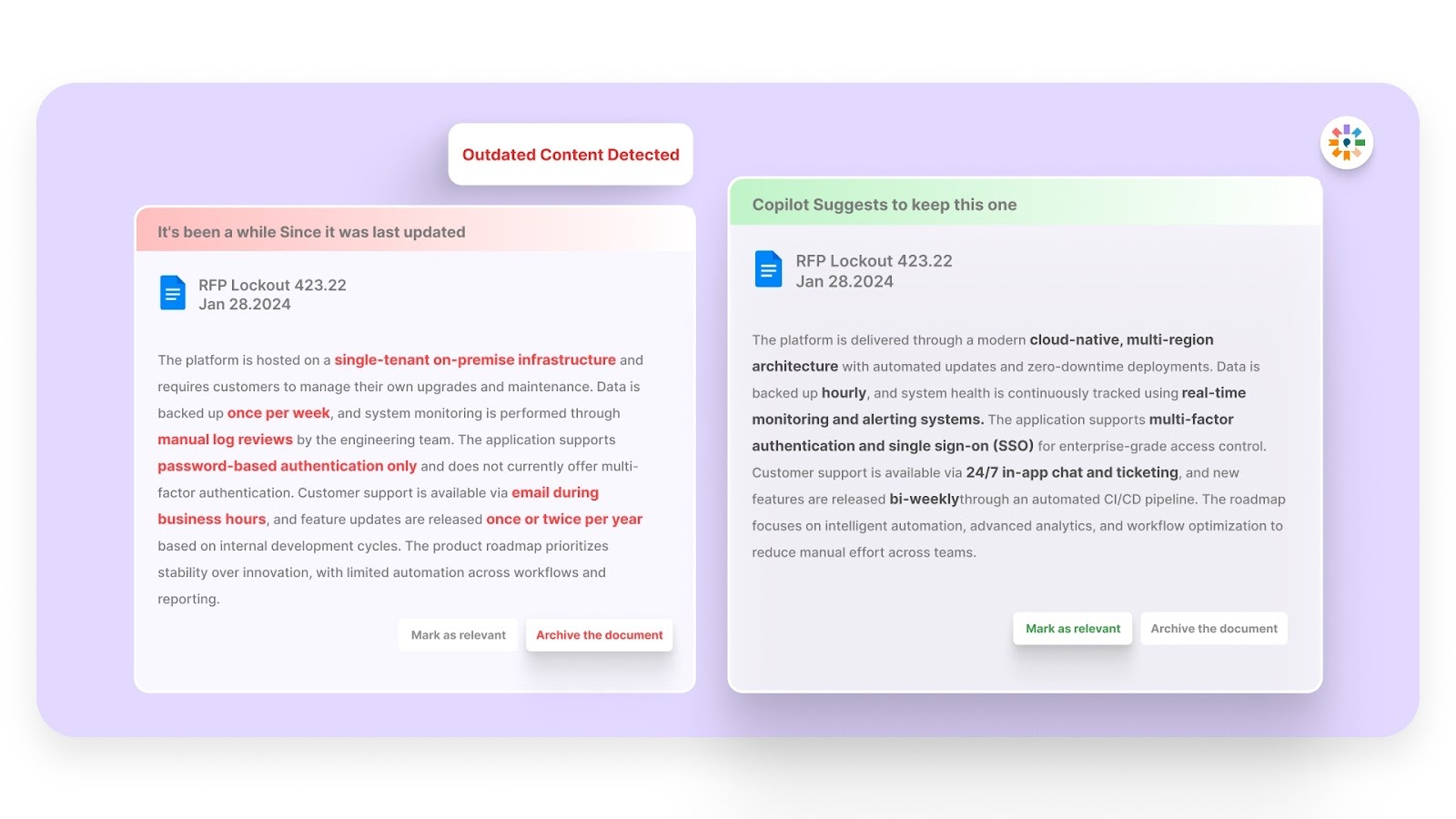
IT environments change frequently. Inventive AI flags outdated architecture descriptions, integration details, or compliance statements so your responses reflect the latest product capabilities.
5. Simple, Easy-to-Use Interface
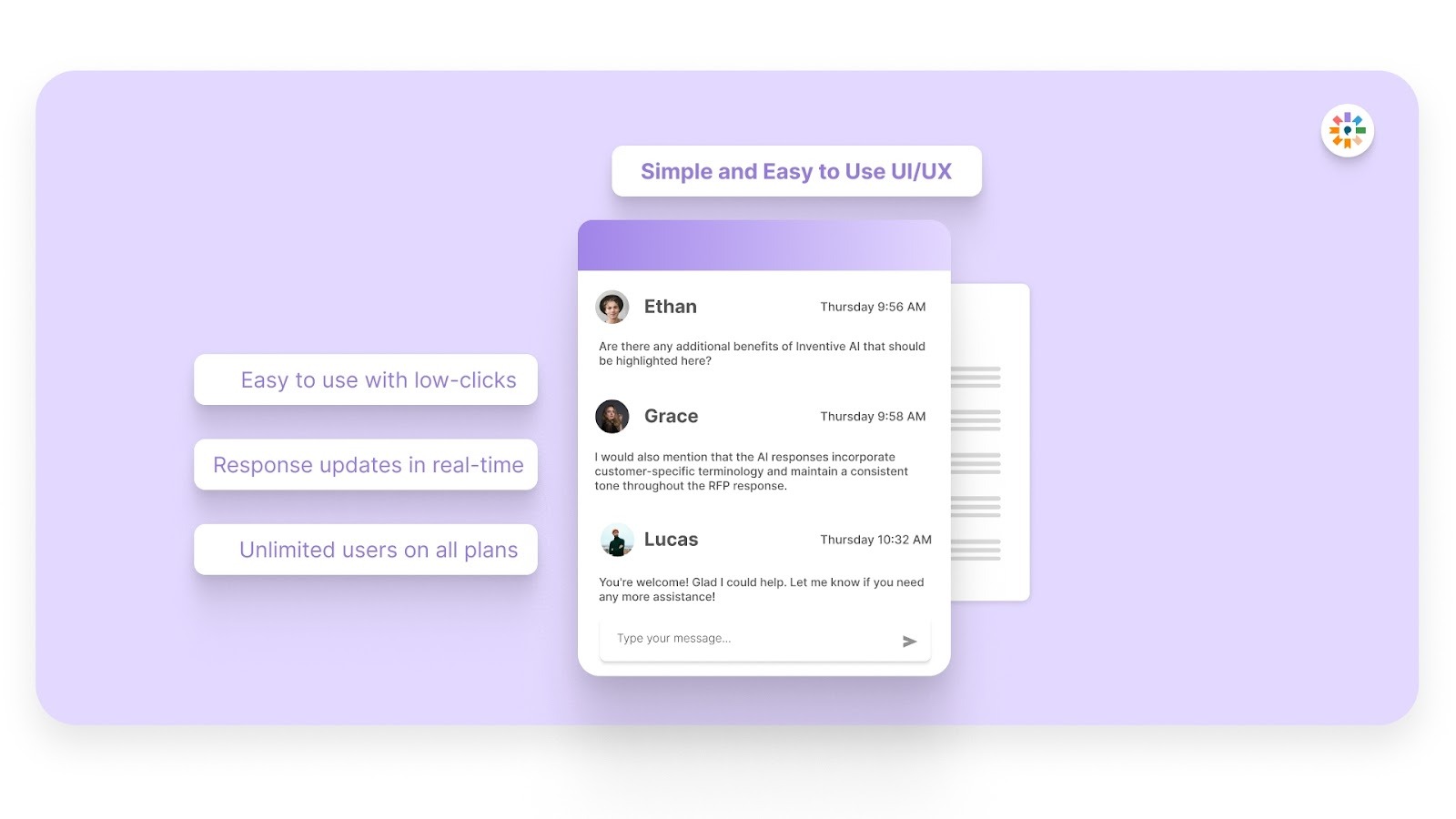
Engineering, security, and sales teams can collaborate in a single workspace without a complicated setup. This makes it easier to manage RFIs even when timelines are tight.
6. Narrative-Style Proposals
Stop wasting hours drafting one-pagers and security briefs from scratch. Inventive AI moves beyond simple Q&A to build full narrative proposals instantly, allowing your team to skip the manual writing and jump straight to the final review.
Inventive AI helps IT teams create clear, accurate, and consistent RFI responses while reducing the manual effort required to assemble them.
Frequently Asked Questions (FAQs)
1. What should we do if the RFI asks for a feature we don't have yet?
Be upfront about your current capabilities, but highlight your product roadmap. Sharing a specific release date shows you are growing, while a vague or dishonest "yes" can ruin your credibility during the later technical deep-dive.
2. Is it okay to use our own branded template instead of the buyer's format?
Always follow the buyer’s layout first to make their job easier. If you have extra details that don't fit their boxes, add them as a separate attachment so you don't mess up their comparison process.
3. How much technical detail is too much for an initial RFI?
Focus on proving your system is secure and compatible. You want to provide enough data to pass their basic requirements without overwhelming them with a massive document that they won't have time to read.
4. What is the best way to handle an impossible deadline?
Ask for an extension as soon as you see the request. Most IT teams would rather get a solid, accurate response a few days late than a rushed submission full of mistakes that they have to keep asking questions about.
5. How can a smaller vendor stand out against massive competitors?
Use your response to show you actually understand the buyer’s specific problems. While big companies give generic answers, you can win by showing faster setup times and more personal support for their specific setup.

90% Faster RFPs. 50% More Wins. Watch a 2-Minute Demo.

Gaurav Nemade
After witnessing the gap between generic AI models and the high precision required for business proposals, Gaurav co-founded Inventive AI to bring true intelligence to the RFP process. An IIT Roorkee graduate with deep expertise in building Large Language Models (LLMs), he focuses on ensuring product teams spend less time on repetitive technical questionnaires and more time on innovation.

Hardi Hindocha
Knowing that complex B2B software often gets lost in jargon, Hardi focuses on translating the technical power of Inventive AI into clear, human stories. As a Sr. Content Writer, she turns intricate RFP workflows into practical guides, believing that the best content educates first and earns trust by helping real buyers solve real problems.