RFI vs RFP vs RFQ Responses: What to Know Before You Respond
Clarify RFI, RFP, RFQ differences and uses. Understand RFI for market insights, RFP for detailed proposals, RFQ for pricing. Maximize your procurement strategy today!
If you work in response management, you've likely encountered acronyms like RFI, RFP, and RFQ. While they all fall under the umbrella of procurement processes, each serves a different purpose and requires a different approach when responding.
Understanding their differences is essential if you want to compete and win. It directly impacts how well your team tailors responses, meets buyer expectations, and qualifies for the next stage.
In this blog, we break down the core differences between RFI, RFP, and RFQ, what each is for, when they’re used, and how response strategies should shift accordingly. We’ll also cover how AI tools can help automate and streamline these response workflows without compromising quality.
Key Takeaways
- RFI responses should focus on clarity and capability. These are early-stage inquiries where fast, informative answers build credibility.
- RFP responses require detailed, tailored proposals. Success depends on aligning with buyer goals and demonstrating unique value.
- RFQ responses are pricing-driven. Accuracy, speed, and transparency are essential to stay competitive.
- AI automation accelerates every stage of the response process, reduces manual effort, and ensures consistency across formats.
What are RFI, RFP, and RFQ
RFI, RFP, and RFQ are standard procurement documents used to engage potential vendors at different stages of the buying process.
Each one serves a distinct purpose:
- RFI (Request for Information) helps buyers explore what solutions exist.
- RFP (Request for Proposal) is used to evaluate how vendors would solve a defined problem.
- RFQ (Request for Quotation) is focused purely on pricing for known specifications.
While they may seem similar, each requires a different response strategy. Because these documents play distinct roles in the vendor qualification process, from early discovery to final selection, each has its own expectations, evaluation criteria, and risks.
Buyers use RFIs, RFPs, and RFQs at different stages of the purchasing cycle. Here’s how each one works depending on how clear your requirements are and what kind of response you’re seeking:
Responding to each with the right tone, detail, and intent can significantly affect whether you're shortlisted, selected, or skipped. Let's explore each of them more in detail.
RFI: What It Means and How to Respond
An RFI, or Request for Information, is the first step buyers take when they’re exploring potential solutions. At this stage, they’re not looking for detailed proposals or pricing. They’re gathering inputs to understand what’s possible, what types of vendors are out there, and how different approaches frame the problem.
From the vendor’s perspective, this is a discovery-driven request. The buyer is still shaping internal requirements, evaluating categories, or validating assumptions. There’s usually no budget confirmed and no defined project plan, just a recognition that a business challenge exists.
A standard RFI outline may include:
- A description of the business challenge or operational need
- Broad expectations or functionality areas
- Questions about vendor qualifications or industry experience
- Inquiries about product models, licensing structures, or typical implementation timelines
How to Respond to an RFI
RFIs are designed to gather contextual understanding. The buyer is still defining their problem and seeking external perspectives on the available solutions, their functionality, and the models that are applicable.
From the vendor side, this is an opportunity to position your offering in relation to the buyer’s stated business challenges.
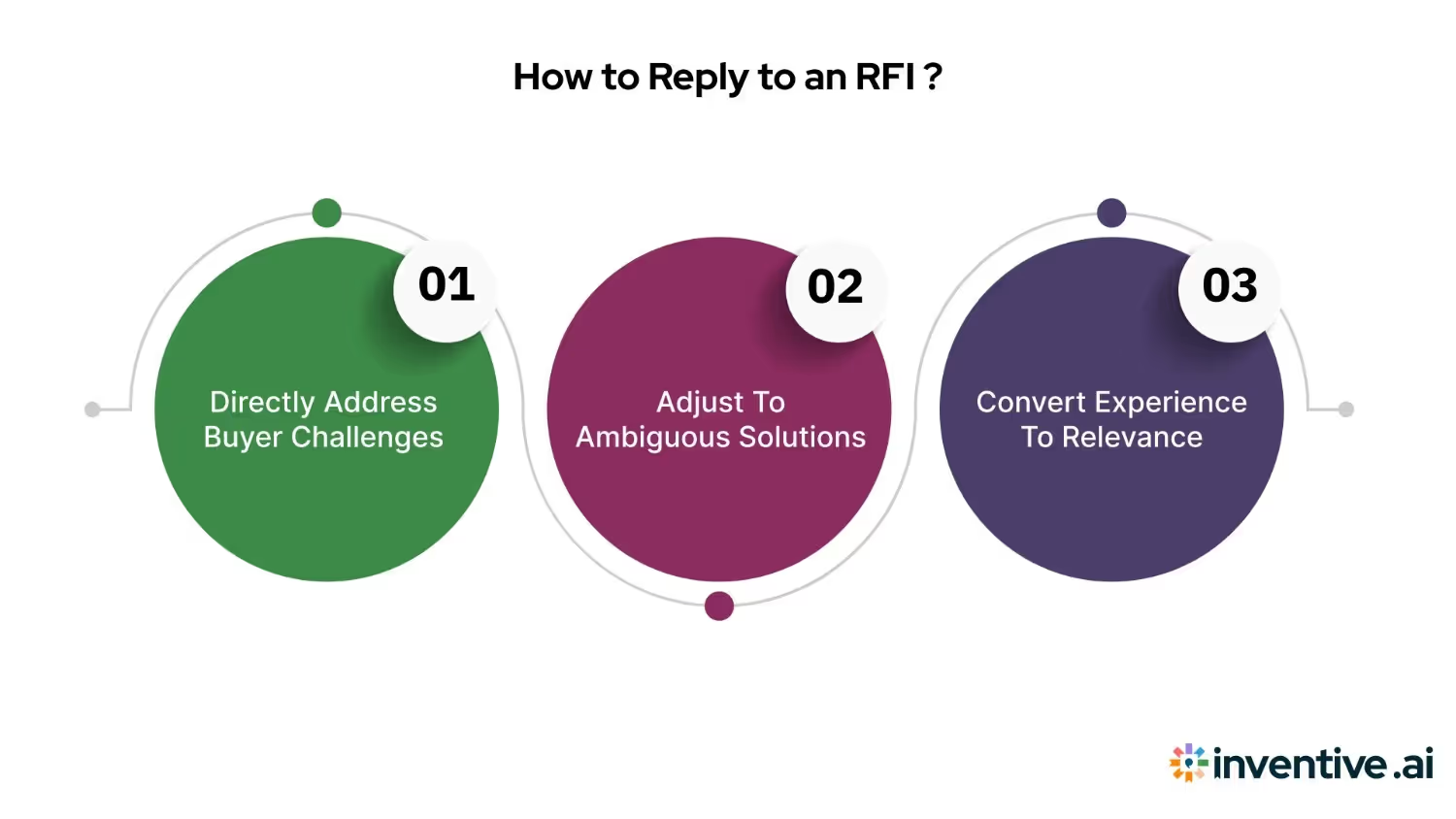
- Address the Buyer’s Challenges Directly: If the RFI mentions gaps in scalability, execution, or integration, explain how your approach addresses those specific concerns.
- Adapt to Unclear Solution Paths: Buyers often use RFIs to explore challenges they haven’t yet defined as solution categories.
- For example, a business may cite poor lead quality without knowing whether the issue is rooted in SEO, branding, or funnel strategy. Your response should show how your approach can support multiple scenarios and guide the buyer toward a clearer path.
- Translate Experience into Relevance: Instead of listing services, describe the kinds of clients you work with, common project scopes, and how you typically engage. This helps the buyer map your capabilities to their likely needs.
An RFI doesn’t guarantee a project will move forward, but it does signal interest. Getting this stage right increases the chances that your company’s name shows up in the next round, when the scope becomes real and budgeted.
RFP: What It Means and How to Respond
An RFP, or Request for Proposal, is issued when the buyer has a clear project scope and is actively seeking qualified vendors to deliver it. This is not an exploratory document; it’s a structured request that outlines requirements, constraints, and expected outcomes. The goal is to evaluate proposals on a level playing field, often using scoring rubrics or weighted criteria.
From the vendor’s perspective, this is a competitive process with defined expectations. Budgets are usually set, and the project is likely to be awarded once evaluation is complete.
A standard RFP outline may include:
- A detailed scope of work or functional specification
- Mandatory qualifications or certifications
- Pricing templates or cost breakdowns
- Delivery schedules, milestones, and SLAs
- Evaluation criteria and submission requirements
How to Respond to an RFP
Unlike RFIs, where buyers are often exploring the landscape, RFPs tend to reflect a narrower, execution-focused mindset. By this stage, the buying team has defined the problem and outlined its expectations. Your job is to help them see why your approach offers the most strategic fit.
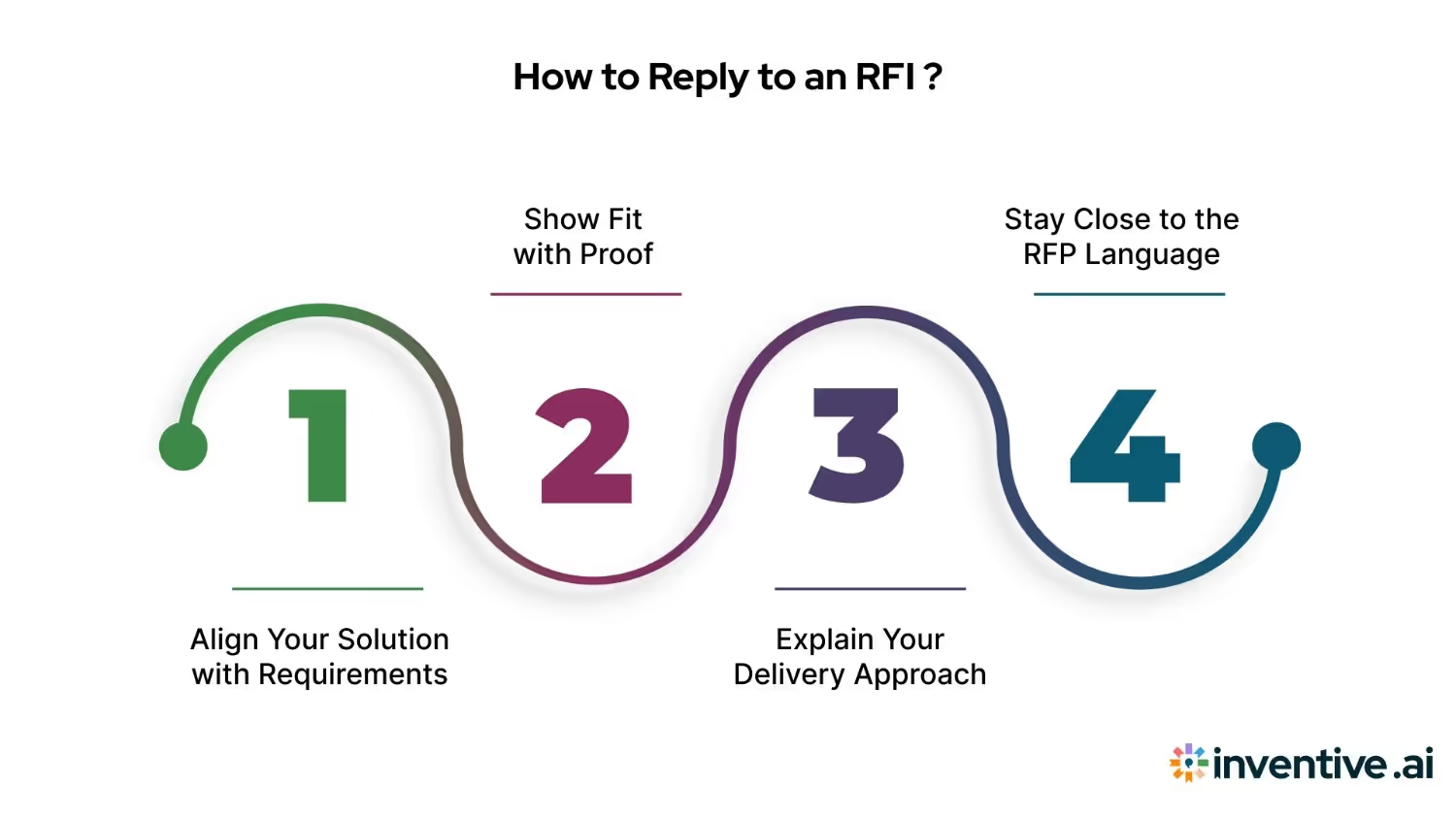
Key ways to strengthen your RFP response:
- Map Your Solution to Stated Requirements: Buyers are looking for alignment, not just capability. Before drafting, assess whether your offering maps closely to the priorities expressed in the RFP. If there are gaps, address them transparently or reposition strengths that offset them.
- Demonstrate Fit with Evidence: This is the time for specific project examples, metrics, and case studies. Show how you’ve solved similar problems for similar clients, especially within their industry or use case.
- Explain Your Delivery Approach: Go beyond saying you can deliver on time. Outline your project plan, the roles involved, and how you will mitigate risk across each phase. Buyers want to know how you’ll actually get the work done, not just that you’ve done it before.
- Stay Close to the RFP Language: Using the buyer’s terminology signals attentiveness and contextual understanding. It’s also a subtle way to show alignment without overstating it.
Many RFPs apply scoring models before qualitative review begins. Responses that are vague, incomplete, or misaligned may be filtered out before stakeholders see them.
At this stage, the strongest responses are those that feel tailored without being performative, clear, measured, and built around what the buyer already believes success should look like.
RFQ: What It Means and How to Respond
An RFQ, or Request for Quotation, is issued when the buyer knows exactly what they need and is looking primarily for pricing, availability, and commercial terms. Specifications are typically fixed, and the buyer’s primary focus is on cost, delivery, and compliance with the stated requirements.
From the vendor’s perspective, this is typically a bidding scenario. There’s limited room for narrative or differentiation, decisions are often based on numbers, not nuance.
A standard RFQ document may include:
- Itemized product or service list with technical specifications
- Quantity breakdowns and volume tiers
- Required delivery timelines or lead times
- Payment terms and invoicing requirements
- Format for submitting unit costs or total pricing
How to Respond to an RFQ
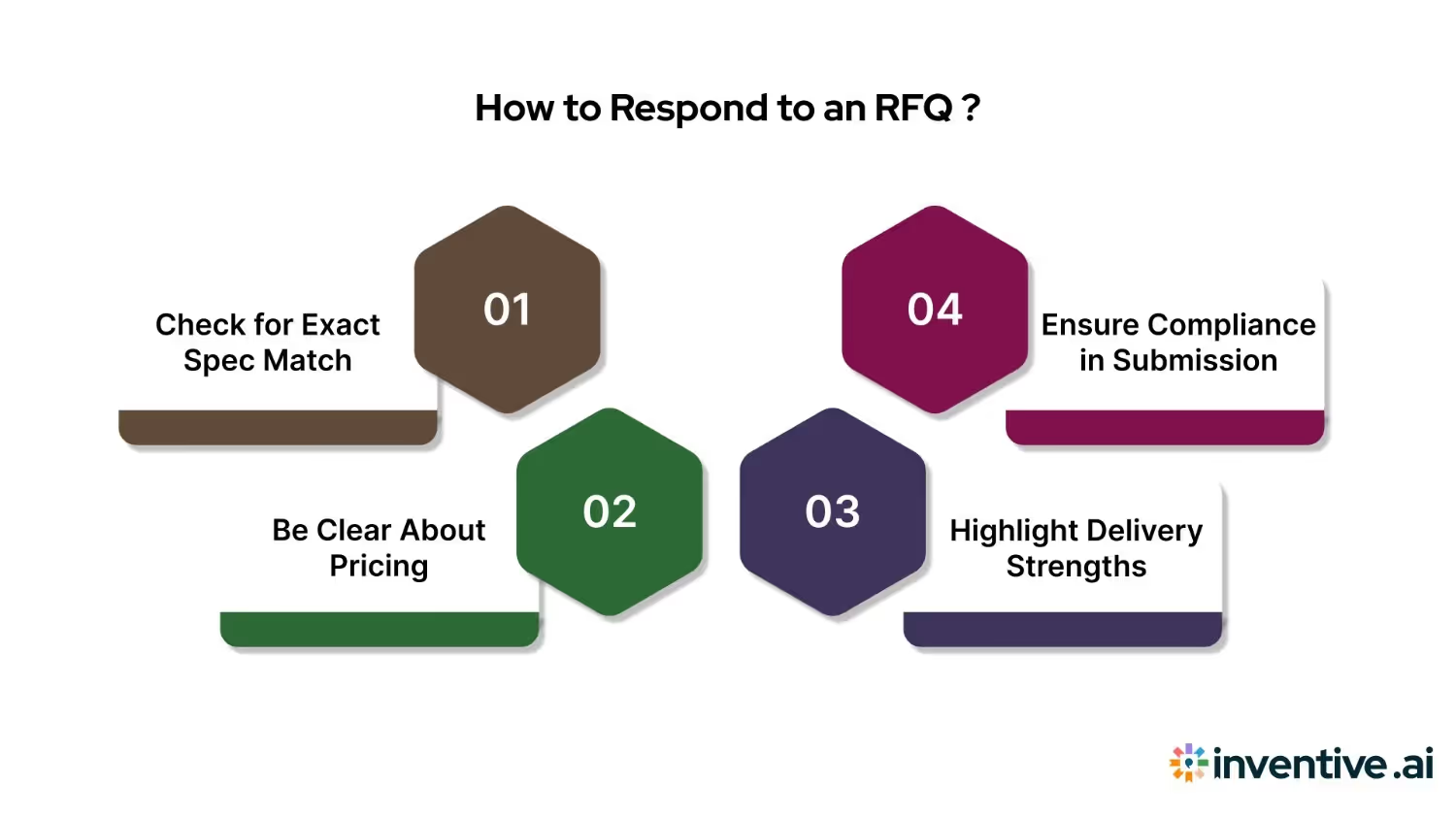
Buyers issuing RFQs have already defined what they want to buy. Your role is to demonstrate that you can supply it efficiently, compliantly, and at competitive terms.
Key ways to ensure a strong RFQ response:
- Check for Exact Spec Match: Before responding, confirm that your offering meets the specs without major deviation. If substitutions are unavoidable, label them clearly and explain equivalency or compliance.
- Be Transparent with Pricing: Break down your costs exactly as requested. Avoid bundling, rounding, or withholding line-item detail unless the RFQ allows for it.
- Highlight Delivery Capabilities: Timelines often make or break RFQ decisions. Be explicit about lead times, fulfillment rates, and any contingencies you’ve built in.
- Ensure Submission Compliance: RFQs often have strict formats. Double-check that you’ve followed all template and format instructions. Non-compliant bids may be disqualified automatically.
While RFQs don’t offer much room to shape the conversation, they are still moments of trust. A clean, accurate, and responsive quote builds credibility for future strategic opportunities, even if this one is purely transactional.
Read More: Understanding RFI and RFP in Healthcare Procurement
Key Differences in RFI, RFP, and RFQ Responses
The labels RFI, RFP, and RFQ signal how far along the buyer is in their decision process, how much flexibility vendors have, and what type of value is being assessed. Treating them as interchangeable leads to misfires, especially when the buyer expects alignment on format and tone.
Below is a functional comparison to guide your approach:
Also Read: Understanding Requests for Information (RFI) in the IT Industry
Common Challenges in Responding to RFIs, RFPs, and RFQs
No matter the request type, response teams deal with a mix of moving targets, fragmented inputs, and competing deadlines. But each format comes with distinct friction points and failing to anticipate them creates costly misalignments.
1. RFI Challenges: Vague Scope, No Clear ROI
RFI requests often lack concrete evaluation criteria. That leaves teams unsure whether to invest serious time or offer a lightweight response. The bigger risk? Missing a chance to shape early-stage buyer thinking because the request "felt too generic."
Solution: Treat RFIs as strategic footholds. Instead of defaulting to surface-level answers, use this opportunity to insert frameworks, challenge assumptions, or reframe the problem using your domain expertise. Early influence compounds downstream.
In fact, McKinsey reports that one advanced-industries company reduced its proposal timeline from three weeks to just two hours by automating key steps. That’s the scale of transformation response teams can aim for.
2. RFP Challenges: Time Pressure, Info Silos, Compliance Risk
RFPs come with heavy documentation, short response windows, and strict formatting. But the real threat is internal: teams scramble to locate the right references, align on pricing assumptions, and avoid non-compliance that gets you disqualified on page one.
Solution: Build a repeatable process for extracting requirements, assigning tasks, and tracking compliance at a granular level. Centralizing past answers isn’t enough; you need version-aware assets that reflect your current offer, pricing, and policies.
Read More: RFP Response Best Practices: Proven Steps and Tips to Win More
3. RFQ Challenges: Compressed Timelines, Pure Price Focus
RFQs leave zero room for positioning. Buyers expect apples-to-apples cost breakdowns, and any added context is often ignored or stripped during scoring. The pressure to submit fast and flawlessly can expose errors in unit pricing or fulfillment terms.
Solution: Treat RFQs as execution plays. Pre-build pricing libraries, flag non-standard terms early, and automate generation of quote-compliant formats. Precision matters more than persuasion.
4. Cross-Cutting Issues: Collaboration Gaps, Version Control, Missed Reviews
Even mature teams stumble on the basics like answering the wrong version of a question set or missing internal deadlines because of tool fragmentation. When inputs live across email threads, Slack channels, and local files, response quality suffers.
Solution: Build a single source of truth. Whether it’s for pre-approved answers, SME inputs, or updated boilerplate, every team member needs a shared system that enforces consistency without slowing them down.
How AI Can Automate the RFI, RFP, and RFQ Response Process
Manual response processes strain teams in different ways depending on the request type. Missed deadlines, duplicated work, inconsistent messaging, and rushed pricing are common failure points.
AI tools streamline this by auto-drafting responses, retrieving context from internal systems, and adapting answers to request type and intent.
According to McKinsey, 92% of companies plan to increase their AI investments over the next three years, a clear sign that teams are looking to scale without burning out.
How AI Automates RFI Responses?
- When teams manually respond to vague RFIs, they often include too much or too little detail. AI tools analyze historical responses to generate focused, scope-aligned drafts.
- Without context, teams recycle outdated templates. AI engines tailor responses using metadata like industry, buyer profile, and deal history.
- High-volume RFIs rarely justify the manual effort. AI helps triage low-priority RFIs by generating quick, reviewable answers with minimal SME input.
How AI Automates RFP Responses?
- Collecting inputs from multiple departments creates delays and inconsistencies. AI tools extract relevant content from shared knowledge bases and auto-fill sections with the latest approved language.
- Compliance-heavy requirements are often missed under deadline pressure. AI applies rules-based logic to identify gaps and align responses with regulatory or legal standards.
- As deadlines approach, teams struggle with formatting and document control. AI-powered platforms maintain version history, manage roles, and standardize output automatically.
How AI Automates RFQ Responses?
- Quoting manually introduces errors in pricing and delivery assumptions. AI systems integrate pricing engines and fulfillment data to generate accurate, validated numbers.
- Frequent spec changes require full template rewrites. AI tools update dependencies dynamically, so the final quote reflects all linked conditions.
- Teams often submit without confidence in fit. AI highlights mismatches between buyer needs and internal capabilities using trained heuristics or deal history.
Power Your RFP and RFI Process With Inventive AI
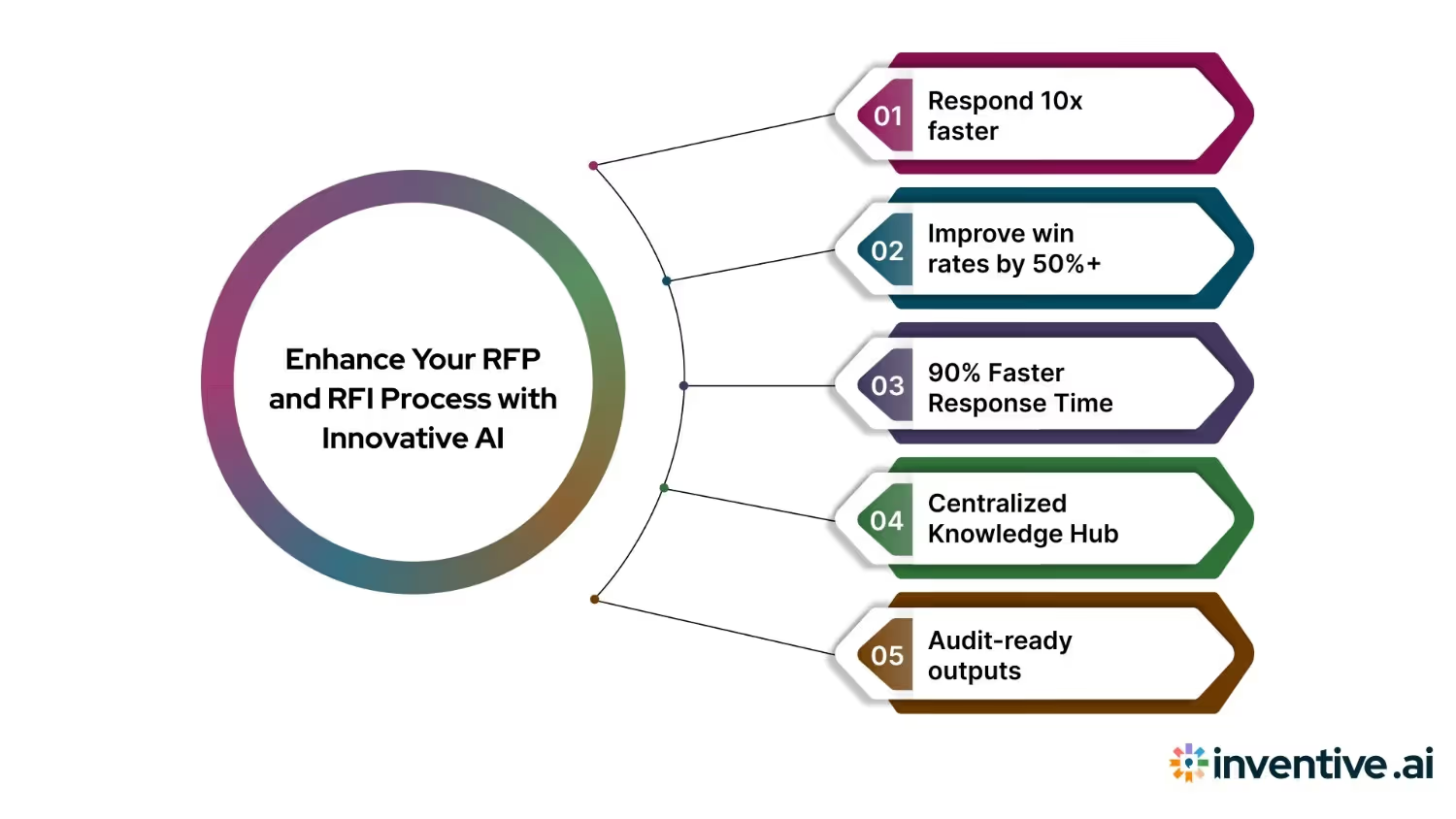
Inventive AI’s AI RFP Agent is built to handle both RFPs and RFIs with precision, speed, and full context. Whether you’re managing exploratory RFIs or in-depth technical RFPs, Inventive AI ensures your responses are fast, on-brand, and deeply informed by your internal knowledge base.
- Respond 10x faster: Generate first drafts in minutes, not days, with highly accurate, editable responses grounded in your past proposals, documents, and internal systems.
- Improve win rates by 50%+: Win Themes automatically surface the most persuasive messaging by detecting content gaps and enriching responses with relevant insights from Slack, calls, and emails.
- 90% reduction in response time: AI agents handle repetitive tasks, extract customer context, and streamline collaboration, freeing up teams to focus on strategy.
- Single hub for all knowledge sources: Inventive AI connects to SharePoint, Google Drive, legacy Q&A spreadsheets, and more to ensure complete, up-to-date knowledge access.
- Audit-ready outputs: All AI responses are cited, scored, and traceable, reducing risk and improving internal trust in AI-generated content.
With Inventive AI’s AI-Powered RFP Response Software, your team is equipped to manage every stage of the proposal lifecycle, from RFIs to full RFPs, with speed, clarity, and confidence.
Final Thoughts
Whether you're fielding a broad RFI, a detailed RFP, or a fast-moving RFQ, one thing is clear: manual processes can't keep up. Fragmented tools, disconnected teams, and version chaos slow responses and drain win rates.
Inventive AI’s AI RFP Agent brings structure, speed, and intelligence to your entire response process by automating first drafts, citing your internal knowledge, and keeping everyone aligned in one coordinated flow. The result? Higher-quality proposals, lower effort, and more wins.
See how Inventive AI can power your next RFI or RFP response. Book a Demo Today
What Our Clients Say
“Future of RFP/RFI/security questionnaire responses! Saves our team a ton of time. Lot of great features. User experience is extremely intuitive and the team is very responsive.”
Ben Hou, Head of Solutions at Outreach
"Overall, my RFP workflow is SO much faster now with Inventive. My day was a lot less stressful using Inventive."
Anthony Pukal, Solutions Consultant, Insider
FAQs About RFI, RFP, and RFQ
1. What's the main difference between an RFI, RFP, and RFQ?
An RFI (Request for Information) gathers general background about vendors, an RFP (Request for Proposal) seeks detailed solutions and approaches, and an RFQ (Request for Quotation) focuses on pricing for specific products or services.
2. Can a buyer issue all three, RFI, RFP, and RFQ, for the same project?
Yes. Many procurement processes start with an RFI to shortlist vendors, followed by an RFP for proposals, and end with an RFQ to finalize pricing from the top contenders.
3. How long should we take to respond to each type?
RFIs typically have the shortest response requirements (1–5 days), RFPs need the most effort (1–3 weeks), and RFQs are often very short (1–3 days), depending on the buyer’s urgency.
4. Can the same team handle RFI, RFP, and RFQ responses?
While there’s often overlap, RFPs may need strategic input from sales and legal, RFIs can be handled by marketing or product, and RFQs typically require finance or procurement input.
5. How can AI tools improve response quality across all three?
AI tools can auto-fill past answers, surface relevant content from internal knowledge, adapt tone based on audience, and reduce manual handoffs, ensuring consistency and faster turnaround.
.avif)



%20in%20the%20IT%20Industry.avif)
.avif)