RFI Template for Marketing Agencies: The Perfect Guide
.jpg)
For marketing agencies, an RFI is often the first real checkpoint in a potential client relationship. Before strategy decks, pricing models, or creative ideas come into play, clients want to understand one thing: Are you a capable, reliable partner?
That evaluation happens through an RFI, and many agencies underestimate how much this stage influences whether they even reach the RFP or pitch phase. When responses are rushed, inconsistent, or pulled from outdated slides, agencies risk being filtered out before getting a fair chance.
An effective RFI response is not about selling. It’s about demonstrating structure, credibility, and relevance. A well-organized template helps clients assess your services, industry experience, team composition, and operational readiness.
In this guide, you'll learn how using an RFI template specifically designed for marketing agencies can simplify your responses, reduce workload, and improve consistency.
RFI Template for Marketing Agencies


About RFI Template for Marketing Agencies
A professional RFI template saves your team hours of manual work and ensures every client request is answered with clarity and consistency. To help you get started, we’ve created a ready-to-use RFI template for marketing agencies, designed for quick customization and high-impact responses.
The RFI template covers the following sections:
- Agency Overview: Basic information about your agency, structure, and leadership.
- Core Services & Expertise: A clear summary of the services you offer.
- Industry Experience: Relevant verticals you’ve served and examples of past work.
- Case Studies & Results: Real-world outcomes and measurable impact.
- Tools & Technology Stack: Platforms and systems your team uses.
- Team Structure & Capabilities: Your team’s roles and areas of expertise.
Why Use an RFI Template?
- Saves Time: A template helps you respond quickly by reusing approved content, so you don’t start from scratch each time.
- Consistency: It ensures your responses are structured the same way every time, making it easy for clients to compare your agency with others.
- Accuracy: A template helps you include all important information and keep content up-to-date, reducing mistakes.
- Professionalism: Using a template shows clients that your agency is organized, reliable, and ready to meet their needs.
Use this template to standardize your process, respond faster, and make a strong first impression with every potential client. It’s your starting point for building clear, confident, and conversion-ready RFI responses.
7 Ways to Customize Your RFI Template for Marketing Agency (for Maximum Impact)
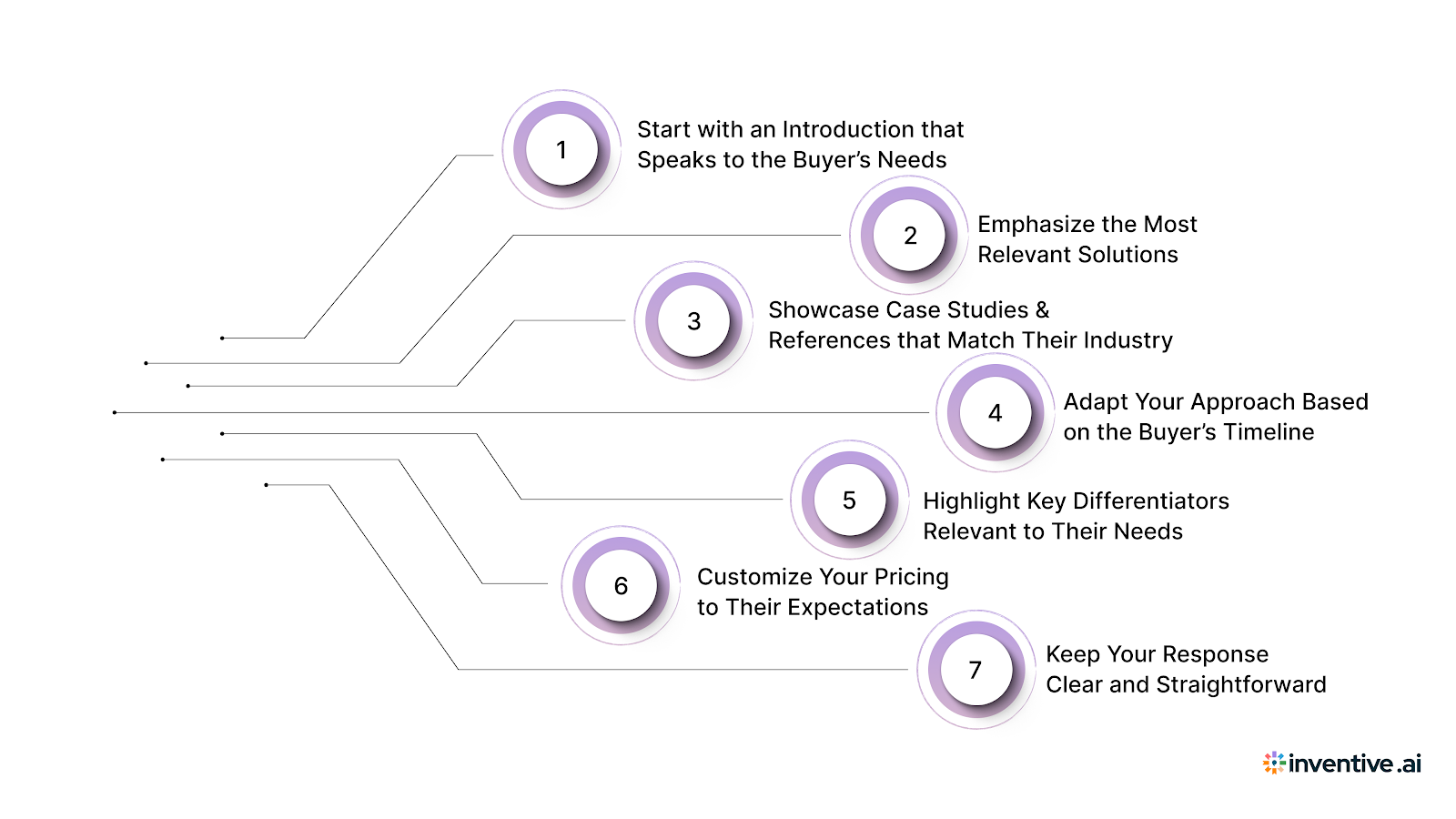
Customizing your RFI template helps you stand out in the selection process. By tailoring your responses to the buyer's specific needs, you can demonstrate your relevance and increase your chances of moving forward.
Here are 7 tips to help you make the most out of your RFI responses.
1. Start with an Introduction that Speaks to the Buyer’s Needs
Customize the introduction to show that you understand the buyer’s challenges and objectives. Address their key concerns directly to capture their attention and make your response more relevant.
2. Emphasize the Most Relevant Solutions
Focus on the solutions that best match the buyer’s requirements. Tailor your response to highlight the areas where your expertise aligns with their needs and goals.
3. Showcase Case Studies and References that Match Their Industry
Choose case studies and references that directly relate to the buyer’s industry or specific challenges. This helps demonstrate that you understand their market and have successfully handled similar projects.
4. Adapt Your Approach Based on the Buyer’s Timeline
Adjust your response to reflect the buyer’s urgency. If they have tight deadlines, emphasize how quickly your solution can be implemented or how you’ve met similar timelines in the past.
5. Highlight Key Differentiators Relevant to Their Needs
Identify what sets you apart from the competition and emphasize those strengths. Tailor this section to address the buyer’s specific pain points and show how your unique approach can solve their problems.
6. Customize Your Pricing to Their Expectations
If possible, adjust your pricing model to align with the buyer’s budget or expectations. Provide flexibility or highlight the value that justifies your pricing structure.
7. Keep Your Response Clear and Straightforward
Avoid overcomplicating your answers. Be direct, clear, and to the point to ensure that the buyer can easily understand your strengths and how you meet their requirements.
By tailoring your RFI responses to the buyer’s specific needs and context, you increase your chances of advancing to the next stage in the selection process. Customize your template to stand out and make a lasting impression.
How to Respond to a Marketing Agency RFI Using This Template?
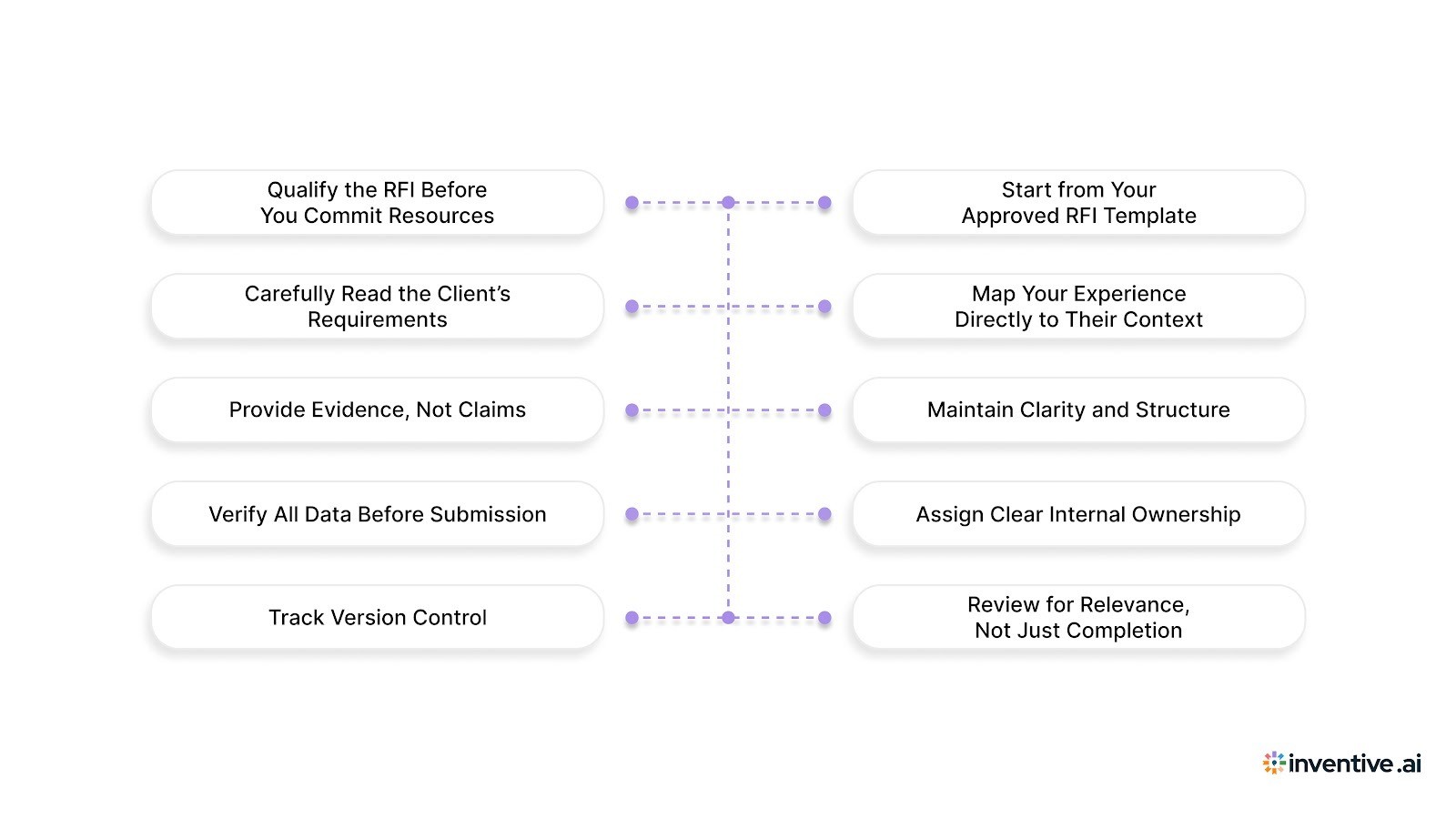
An RFI response is your agency’s qualification document, not a pitch deck. At this stage, clients are asking:
“Is this agency capable, credible, and relevant enough to move forward?”
Your response should reduce their uncertainty. That means being structured, evidence-based, and aligned to their context, not creative or promotional.
Here’s a step-by-step guide for responding to an RFI using a template:
1. Qualify the RFI Before You Commit Resources
Not every RFI is worth pursuing.
Before starting, assess:
- Does the scope align with your core services?
- Do you have relevant industry experience?
- Can your team support the expected scale and timeline?
RFIs often go to long vendor lists. Prioritizing qualified opportunities improves your response quality and protects team bandwidth.
2. Start from Your Approved RFI Template
Never draft from scratch.
A strong RFI template for marketing agencies should already contain:
- Agency overview
- Service descriptions
- Case study formats
- Tool stack
- Team structure
Using a standard base ensures:
- Message consistency
- Faster turnaround
- Lower risk of missing required sections
Your work should focus on tailoring, not rebuilding.
3. Carefully Read the Client’s Requirements
RFIs may look general, but clients often embed signals about priorities.
Look for:
- Industry context
- Scale indicators
- Type of work expected
- Evaluation focus areas
This helps you select the most relevant examples and services to emphasize.
4. Map Your Experience Directly to Their Context
Generic RFIs get overlooked.
Instead:
- Choose case studies closest to the client’s industry or challenge
- Emphasize outcomes tied to their likely KPIs (ROI, lead growth, conversion lift, CPL)
- Highlight work with a similar client size or complexity
Clients want to see proof that you’ve solved similar problems before.
5. Provide Evidence, Not Claims
Evaluators compare agencies objectively.
Strong responses include:
- Measurable outcomes
- Specific processes
- Tools used
- Clear methodologies
Avoid marketing language. Replace “we deliver strong results” with numbers and proof.
6. Maintain Clarity and Structure
Procurement and marketing teams review multiple RFIs in a limited time.
Make your response easy to evaluate:
- Use clear section headers
- Keep paragraphs short
- Use bullets where helpful
- Follow the requested format
Clarity improves scoring.
7. Verify All Data Before Submission
RFIs often reuse content from multiple sources. Errors damage credibility.
Before submitting:
- Confirm case study metrics are accurate
- Ensure client references are approved for use
- Validate team size and structure
- Check tool lists and certifications
Accuracy builds trust.
8. Assign Clear Internal Ownership
An RFI response touches several roles.
Best structure:
- Proposal/BD team manages coordination
- Strategy team validates positioning
- Delivery/operations confirm processes
- Leadership reviews the final version
Defined ownership prevents delays and inconsistent answers.
9. Track Version Control
When multiple contributors edit responses, older language can resurface.
Maintain:
- A final approved version
- Change tracking
- Centralized storage
This keeps answers aligned across future RFIs.
10. Review for Relevance, Not Just Completion
Before submitting, ask:
- Does this clearly show why we’re a fit?
- Are examples aligned with the client’s context?
- Does the response feel tailored?
Clients shortlist agencies that feel relevant, not generic.
Pro Tip: Maintain a central library of validated answers and case studies. It reduces preparation time and improves consistency across all RFIs.
Even with a strong process, handling multiple RFIs manually can slow teams down, which is where automation helps agencies maintain speed, consistency, and quality at scale.
Must Read: Understanding RFP Finance: Key Steps and Requirements
What Role Automation Plays in Marketing Agency RFIs?
As your agency handles more opportunities, RFIs stop being occasional documents and become an ongoing operational workload. The issue is rarely a lack of expertise. The challenge is the time spent searching for past answers, rewriting similar sections, coordinating across teams, and formatting documents.
This is where automation changes the way agencies respond.
1. From Repetition to Draft Acceleration
A large portion of RFI content doesn’t change drastically between opportunities. Agency background, services, tools, team structure, and even many case study formats are reused. Instead of rebuilding these each time, AI systems generate structured first drafts using approved, previously validated content. Your team then edits and tailors rather than creates from scratch.
2. From Scattered Files to Centralized Knowledge
Without automation, critical information lives across drives, proposal folders, and individual team documents. That fragmentation slows responses and increases the risk of outdated content. AI-powered knowledge hubs bring agency data, case studies, service descriptions, and team details into one searchable location.
3. From Generic Responses to Context-Aware Content
When a new RFI arrives, AI systems analyze the request and surface the most relevant case studies, service descriptions, and examples. Instead of defaulting to generic content, agencies can quickly align responses to the client’s industry and needs.
4. From Inconsistencies to Controlled Accuracy
One of the biggest issues in RFI responses is contradiction. Different versions of service descriptions, team sizes, or capabilities can create confusion. Automation tools compare answers across your content base and flag outdated or conflicting information.
5. From Email Chains to Structured Collaboration
RFIs require input from multiple teams. Without a centralized system, version control becomes messy. Automation platforms provide shared workspaces where sections can be assigned, edits tracked, and approvals managed. Everyone works in the same document environment, reducing delays and confusion.
6. From Limited Bandwidth to Scalable Capacity
Manual processes limit how many RFIs your team can handle at once. By reducing drafting, searching, and formatting time, automation allows agencies to manage more opportunities without increasing headcount. The team shifts focus from document assembly to strategic positioning.
Automation does not remove human oversight. It removes repetitive work so experts can concentrate on relevance, validation, and clarity, the areas that truly influence shortlisting decisions.
How Inventive AI Simplifies RFI Workflows for Marketing Agencies?
Responding to RFIs requires pulling accurate information, keeping answers consistent, and coordinating across teams, all under tight timelines. When this work is manual, agencies lose time on document assembly instead of focusing on positioning and relevance.
With AI-powered RFP response software, Inventive AI automates the complex RFP management workflow, saving time and improving proposal accuracy. Here’s how it directly improves your RFI process.
1. 2× Higher Quality Responses
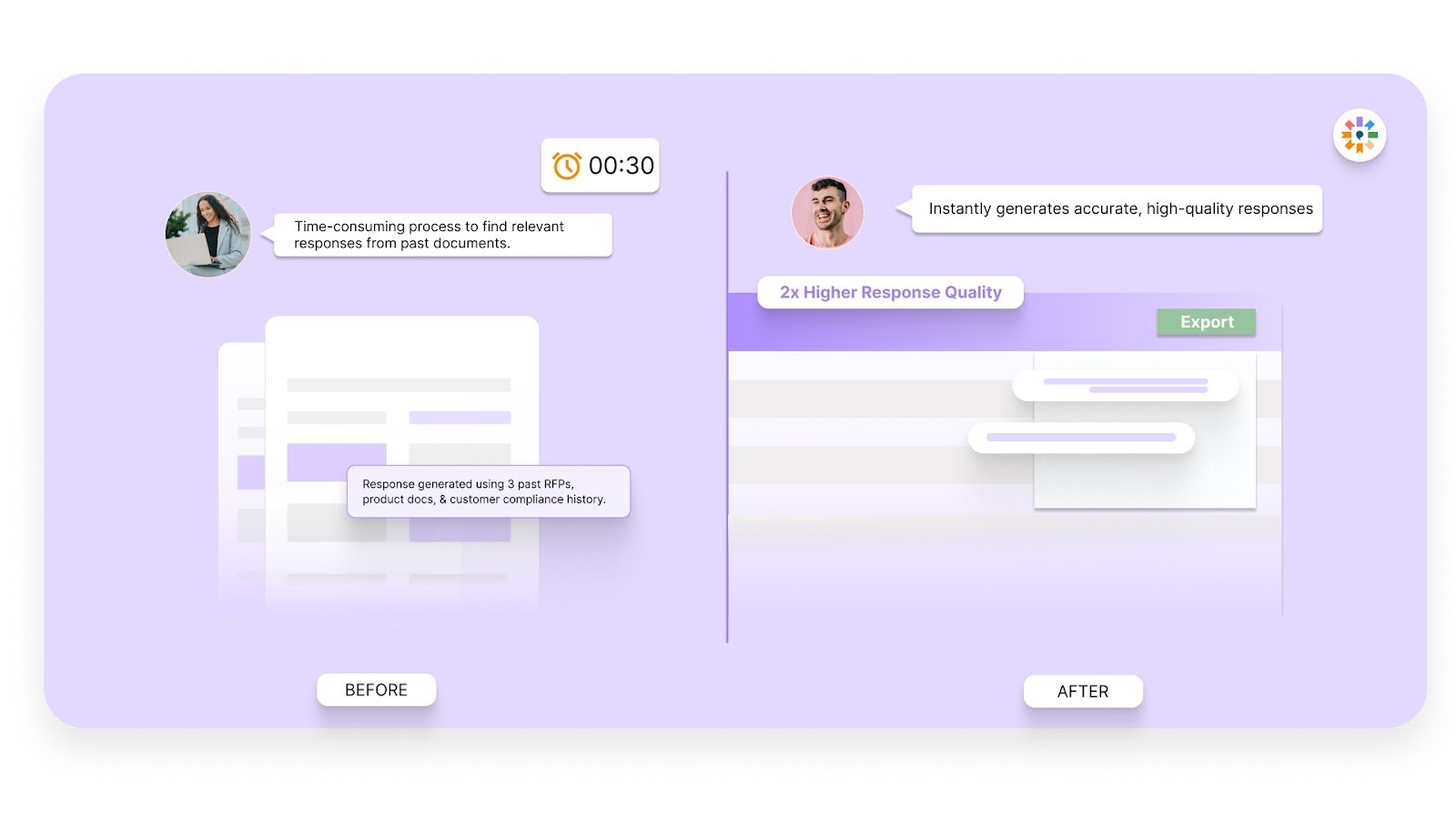
Inventive AI generates drafts grounded in your approved knowledge sources, ensuring structured and consistent answers. This reduces vague wording, improves clarity, and leads to responses that require far fewer revisions before submission.
2. Context Engine
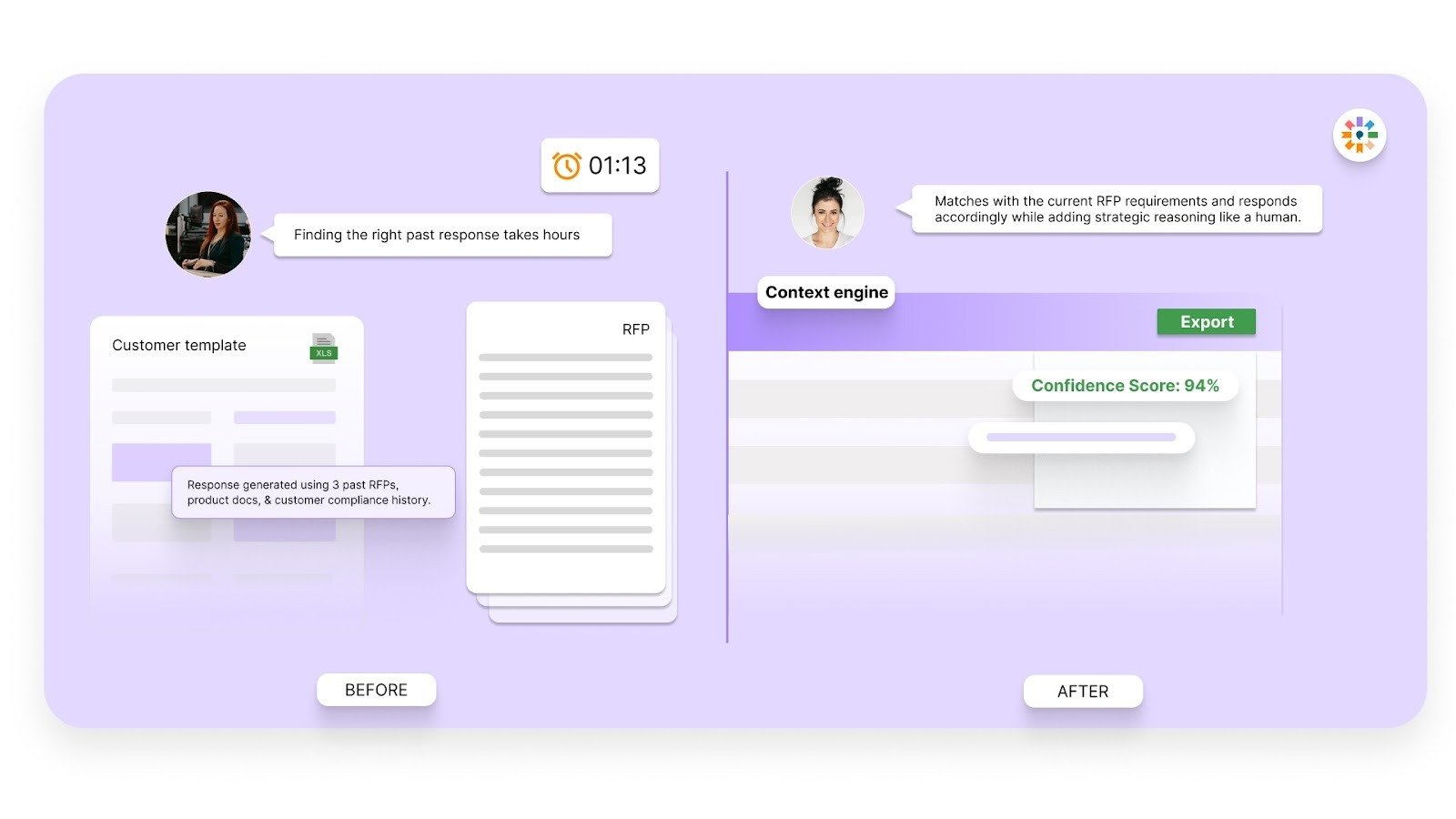
The platform understands the intent behind RFI questions and pulls the most relevant information from your knowledge hub. This helps your team avoid generic answers and align responses with the client’s industry and requirements.
3. Conflict Detection
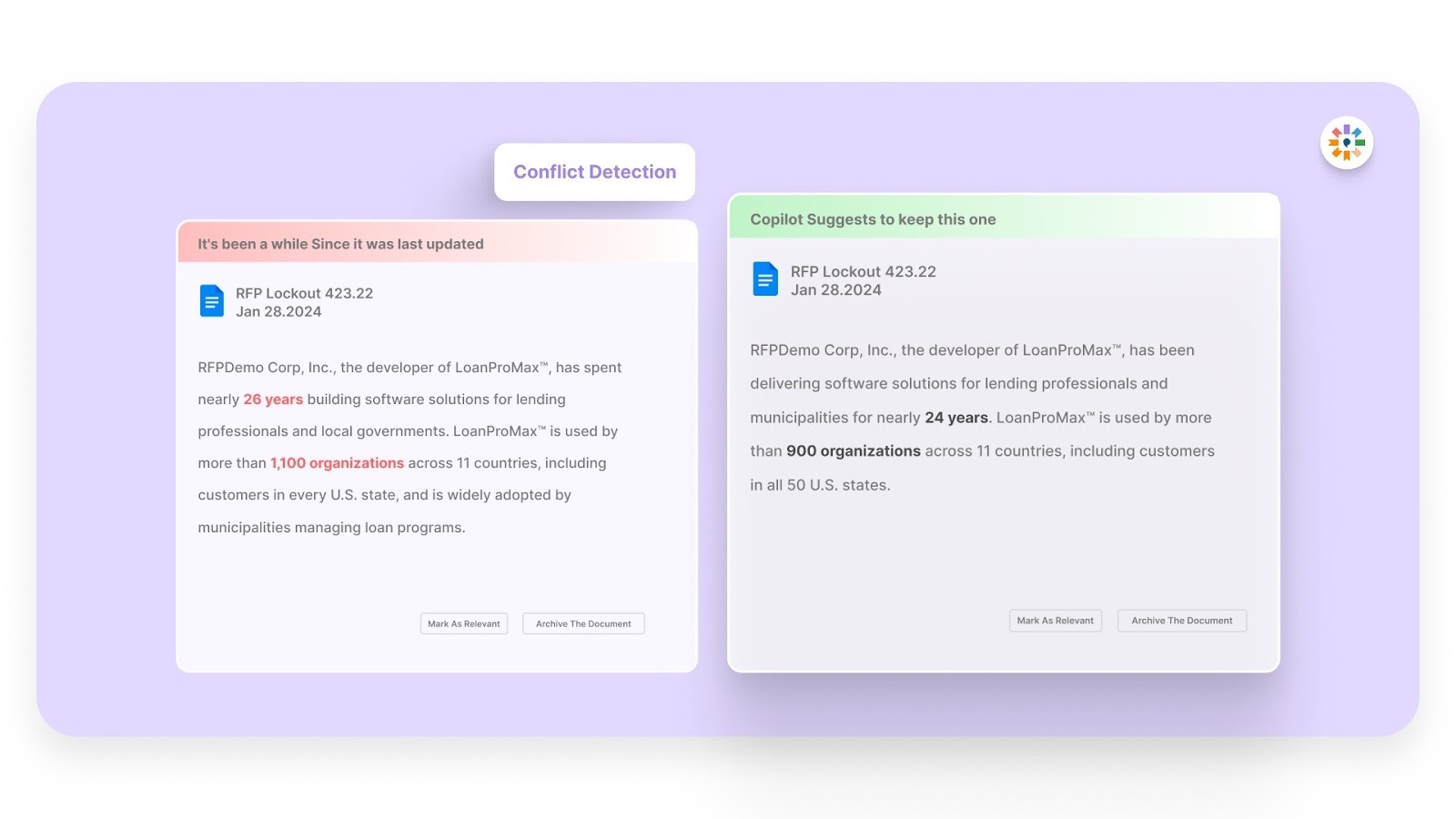
If two answers contradict each other across sections or past submissions, Inventive AI flags the issue before the document is finalized. This helps prevent inconsistencies that can raise red flags during evaluation.
4. Outdated Content Detection
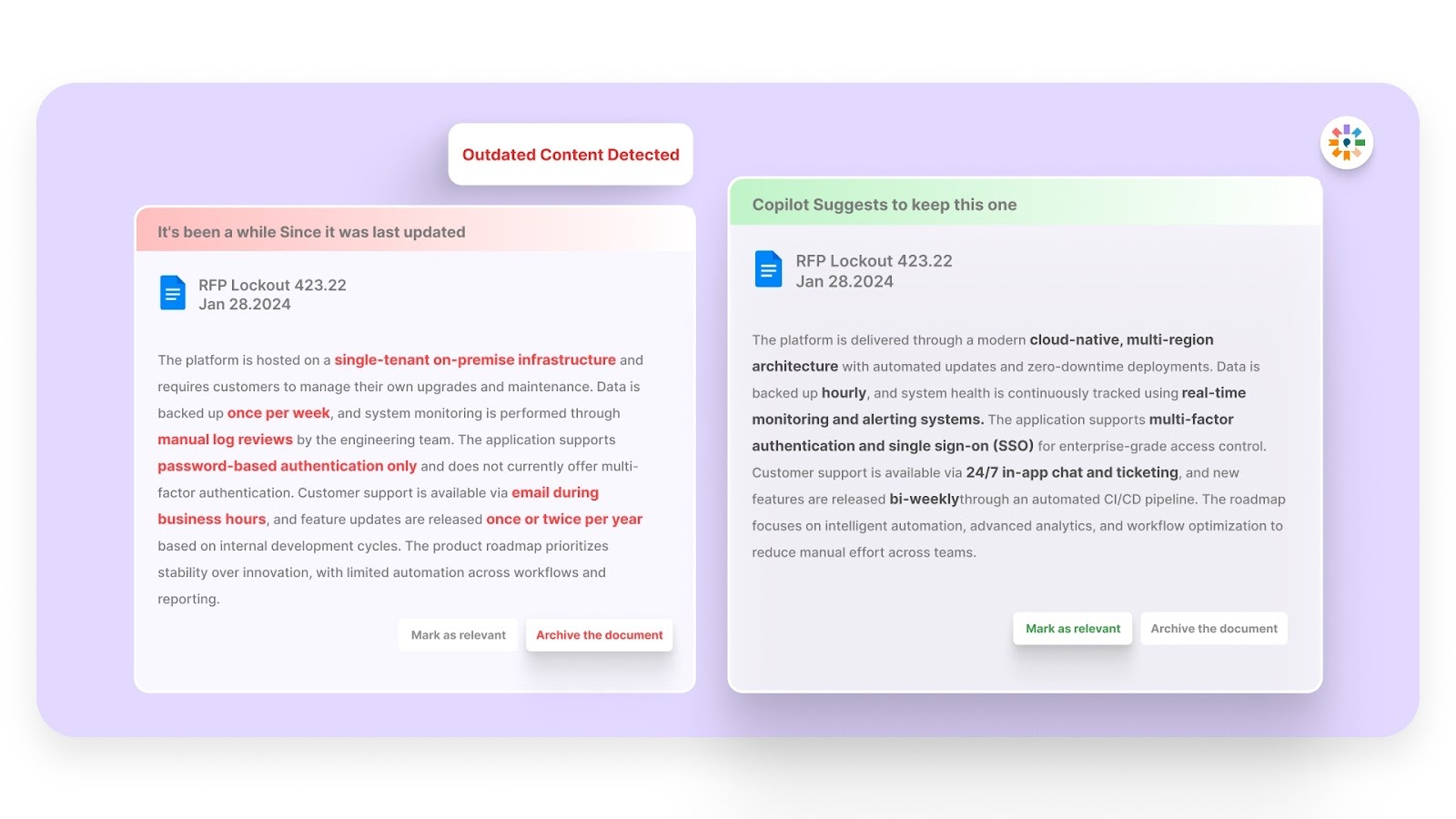
As services, tools, and team structures evolve, older language can slip into responses. Inventive AI identifies content that may no longer reflect current information, so your team can update it before submission.
5. Simple, Easy-to-Use Interface
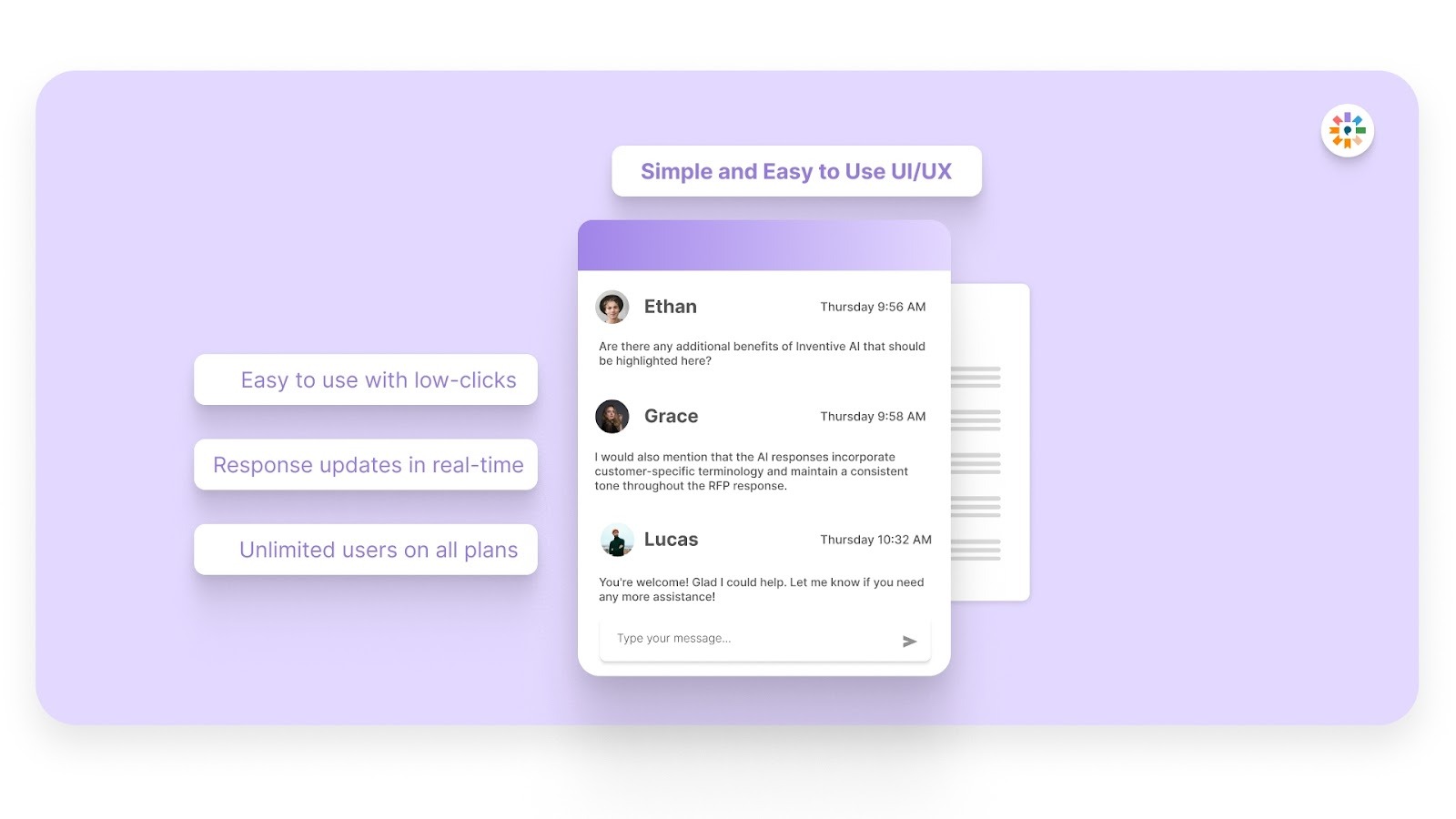
Strategy, proposal, and operations teams work in one structured environment instead of juggling multiple tools. This improves collaboration, reduces version confusion, and keeps the workflow organized.
6. Narrative-Style Proposals
Inventive AI goes beyond basic question and answer tasks by converting technical inputs into structured, long-form outputs such as executive summaries and one-page briefs. This removes the need for manual drafting, helping your team present a clear, cohesive narrative that communicates value effectively to the buyer.
By moving from scattered documents to structured automation, RFIs become a repeatable process instead of a time-consuming scramble.
Frequently Asked Questions (FAQs)
1. How long should an RFI response be for a marketing agency?
Most RFI responses range between 5 and 15 pages, depending on the client’s request. The goal is clarity and relevance, not length. Overloading the document with unnecessary information can make evaluation harder.
2. Who inside a marketing agency should manage RFI responses?
Business development or proposal teams usually coordinate the response, but input often comes from strategy, operations, and leadership. Having a single owner ensures deadlines and consistency are maintained.
3. Can smaller agencies compete effectively in RFIs against large agencies?
Yes. Clients often value specialization, agility, and niche expertise as much as size. Smaller agencies that clearly show relevant experience and measurable results can stand out.
4. How quickly should agencies respond to an RFI?
Timelines vary, but most RFIs expect responses within 5–10 business days. Submitting early, while maintaining accuracy, signals strong organization and professionalism.
5. Should agencies include pricing details in an RFI response?
Usually no. RFIs focus on capabilities and fit. Pricing discussions typically come later during the RFP or negotiation stage unless the client specifically requests high-level budget ranges.
6. What does a good RFI look like?
A strong RFI response is structured, concise, and easy to compare. It clearly presents your services, relevant experience, case studies with measurable outcomes, and team capabilities without unnecessary filler or promotional language.
.avif)





%2010%20Free%20Response%20Templates%20By%20Industry%20%26%20Service.jpg)