CMS RFP Template With Example + Response Format

If you are looking for a CMS RFP template, you are structuring a content management system procurement or preparing a formal response as a CMS vendor.
Buyers define functional requirements, integration architecture, security controls, migration scope, and pricing expectations. Vendors must interpret those requirements accurately and present structured, complete submissions that align with evaluation criteria.
This guide includes a ready-to-use CMS RFP template for organizations issuing a request and a structured response template designed for CMS vendors. Both formats support clear requirements, disciplined responses, and consistent evaluation.
CMS RFP Template (Free Download) to Win Deals
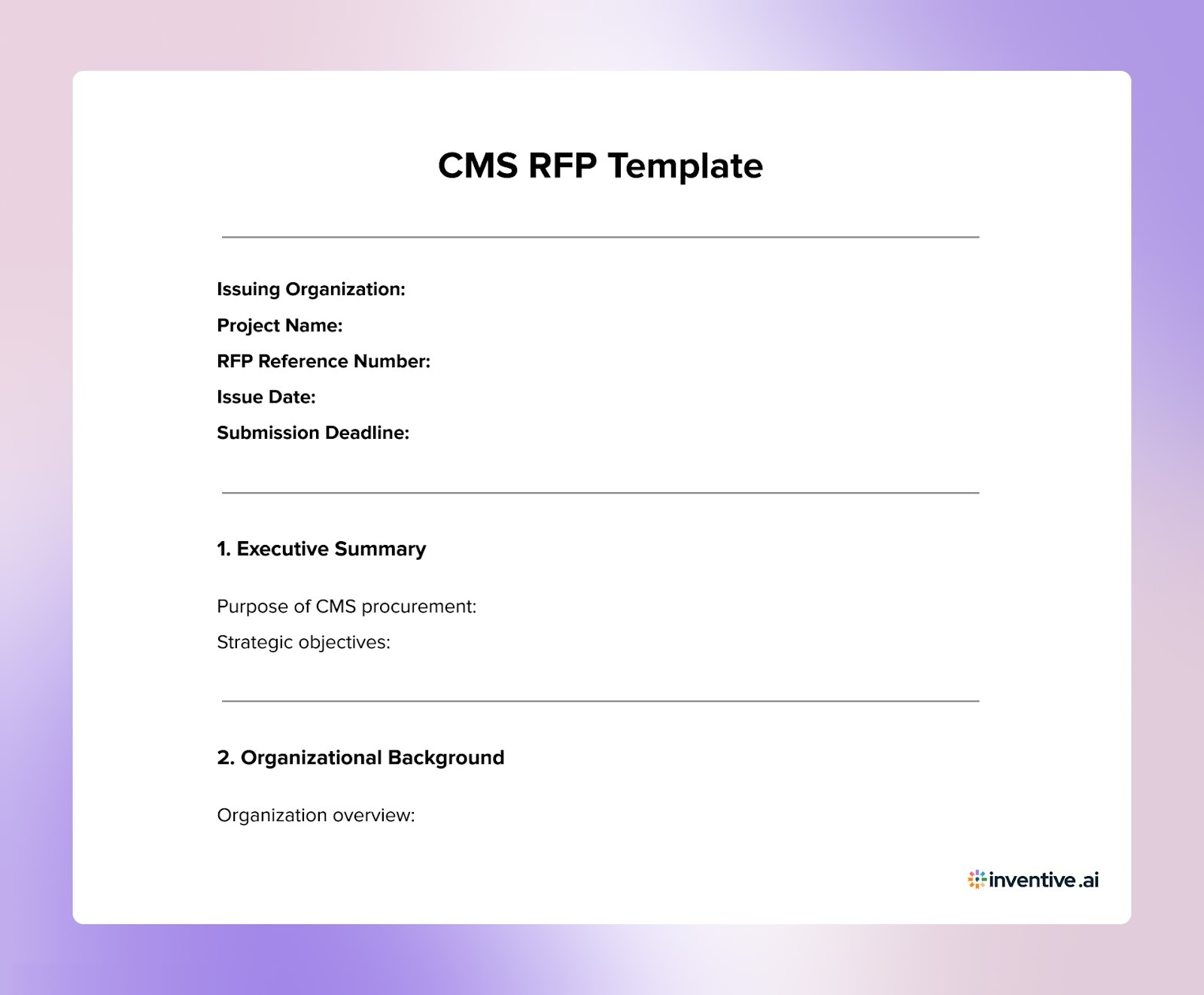
If you are in the market for a CMS, use the format below to structure your request for proposal. This is a standard CMS RFP format that includes functional requirements, technical specifications, security criteria, implementation expectations, pricing structure, and vendor evaluation criteria.
You can edit this template to match your organization’s size, industry, and integration needs.

CMS RFP Template Responses with Examples (In Regards to Template Above)
Issuing Organization: Horizon Financial Services
Project Name: Enterprise CMS Modernization
RFP Reference Number: HFS-CMS-2025-01
Issue Date: March 1, 2025
Submission Deadline: April 15, 2025
1. Executive Summary
Horizon Financial Services seeks to replace its legacy CMS with a scalable, cloud-based platform that supports multi-site publishing, centralized governance, and integration with CRM and analytics systems. The selected vendor will provide licensing, implementation, migration support, and post-launch services.
2. Organizational Background
Horizon Financial Services operates across three regions and manages five public-facing websites. The organization maintains approximately 8,500 pages of content and supports 40 internal content editors.
3. Current CMS Environment
- Current Platform: Custom on-premise CMS
- Pain Points: Limited workflow controls, no multi-language support, and a manual publishing process.
- Migration Requirements: Full content migration with URL preservation and SEO continuity.
4. Functional Requirements
- Content Editing: WYSIWYG editor with version control and scheduled publishing.
- Workflow Approvals: Multi-step editorial approval process with audit logging.
- Multi-Site Support: Centralized governance with localized site variations.
- User Permissions: Role-based access control with granular permissions.
5. Technical Requirements
- Hosting Model: Cloud-based SaaS deployment.
- APIs: REST API support for external integrations.
- Integrations: Salesforce CRM, Google Analytics, SSO via SAML.
- Scalability: Support for traffic growth of up to 200% over five years.
6. Security And Compliance
- Data Protection: Encryption in transit and at rest.
- Certifications: SOC 2 Type II required.
- Access Control: Role-based authentication with activity logging.
7. Implementation Plan Expectations
Target go-live within six months of contract signing. Vendor must provide migration support, administrator training, and post-launch technical assistance.
8. Pricing And Commercial Structure
Vendors must provide:
- Annual license cost.
- Implementation services breakdown.
- Ongoing support and maintenance fees.
9. Vendor Qualifications
- Years in operation.
- Relevant CMS implementation experience.
- Three client references.
- Financial stability documentation.
10. Evaluation Criteria
Proposals will be evaluated based on:
- Functional alignment.
- Technical compatibility.
- Security compliance.
- Implementation methodology.
- Total cost of ownership.
If you are responding to a CMS-focused RFP as a vendor, use the template below to strengthen positioning and accelerate deal progression.
Close CMS Deals Faster With Advanced RFP Responses (+ Template)
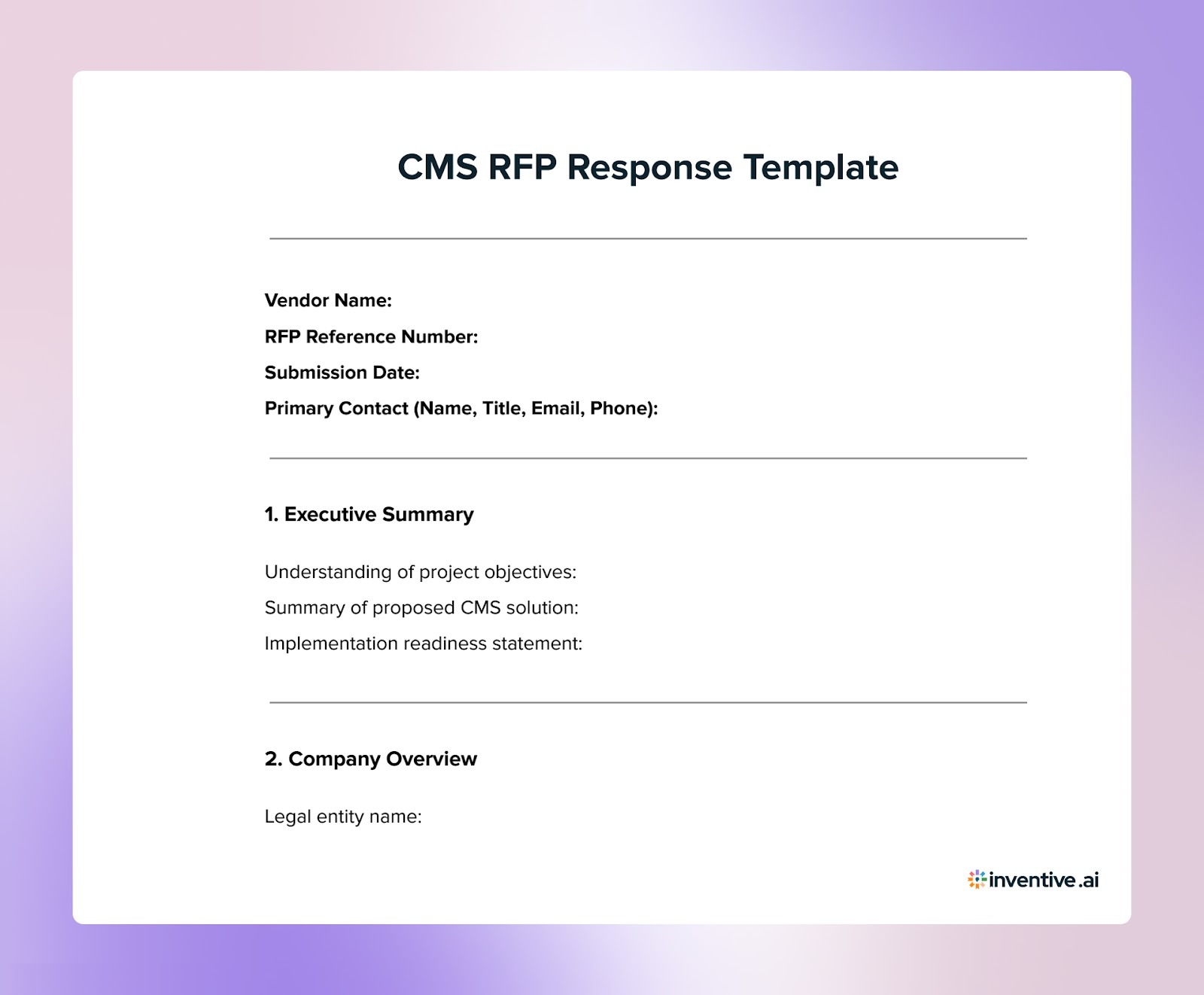
If you are responding to a CMS RFP, your response must follow the buyer’s structure exactly and address every requirement directly. Evaluation teams score responses against stated criteria, so clarity, traceability, and completeness matter more than marketing language.
Each section of your submission should map clearly to functional, technical, security, and commercial expectations defined in the RFP.
Below is what vendors should include in each section and how to approach it.

1. Executive Overview
This section establishes alignment between the buyer’s stated objectives and your proposed solution. Reviewers use it to confirm that you understand the scope, priorities, and constraints before evaluating detailed sections.
State the buyer’s objectives in your own words and confirm how your CMS aligns with them.
Example: The RFP outlines requirements for a cloud-based CMS supporting multi-site governance and CRM integration. Our SaaS platform meets these requirements through configurable workflows and open API architecture.
2. Functional Requirement Mapping
This section is often scored line by line. Procurement teams compare vendor responses directly against listed requirements to measure completeness and feature alignment.
Respond to each requirement individually and mirror the numbering structure used in the RFP.
Example:
- Requirement 3.2: Multi-level approval workflow
- Response: Supported via configurable workflow engine with unlimited approval stages.
3. Technical Architecture
Technical reviewers assess infrastructure compatibility, scalability, and integration feasibility in this section. It influences implementation risk and long-term viability. Clearly document deployment model, integration methods, and scalability parameters.
Example: The platform operates on a multi-tenant SaaS architecture hosted on AWS with REST API support and SAML-based SSO integration.
4. Security And Compliance
Security and compliance are often gating criteria. Missing certifications or unclear controls can disqualify a proposal.
List certifications, encryption standards, and access control practices explicitly.
Example: SOC 2 Type II certified with AES-256 encryption at rest and TLS 1.2 in transit.
5. Implementation Plan
The implementation section signals delivery maturity and operational readiness. Reviewers assess whether timelines and responsibilities are realistic.
Present a phased rollout plan with defined milestones and timelines.
Example:
Discovery (2 weeks), Migration (8 weeks), Training (4 weeks), Go-live transition.
6. Pricing And Commercial Structure
This section determines budget fit and total cost of ownership. Separate your licensing, implementation, and support costs in a clear format.
Example: Annual SaaS license fee with fixed implementation services and defined renewal terms.
7. Vendor Qualifications
Qualifications reinforce credibility and reduce perceived execution risk. Provide years in operation, comparable CMS deployments, and client references.
Example: 150+ enterprise CMS implementations with references available upon request.
Also read: RFP Content Management Tips for Better Responses
Provide Higher-Quality CMS RFP Responses With Inventive AI
With an AI-first platform powered by multiple specialized AI agents, Inventive AI automates the CMS RFP response process end to end. From requirement analysis and answer drafting to conflict checks and quality review, the system evaluates the full RFP context before generating responses.
This structured automation results in up to 50% higher win rates and 2x better responses compared to manual drafting workflows.
Key Inventive AI Capabilities:
Response Quality
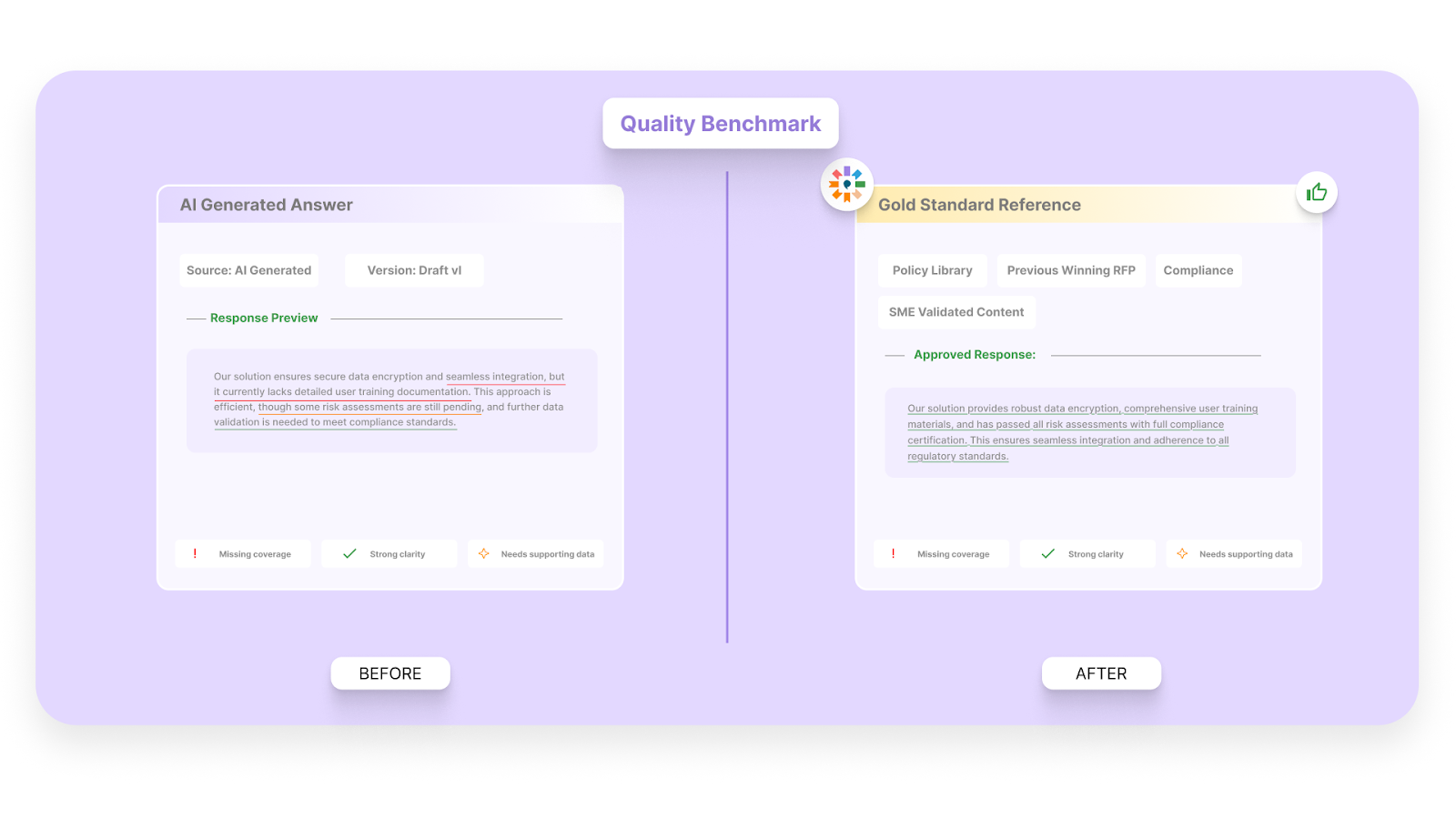
Your win rate depends on how strong, specific, and credible your answers are. Pricing and feature checklists mean little if responses sound generic, inconsistent, or disconnected from the buyer’s requirements.
Inventive AI generates context-aware, structured, and strategically aligned responses that read like they were written by a subject matter expert, reducing rewrite cycles and strengthening every submission.
Context Engine
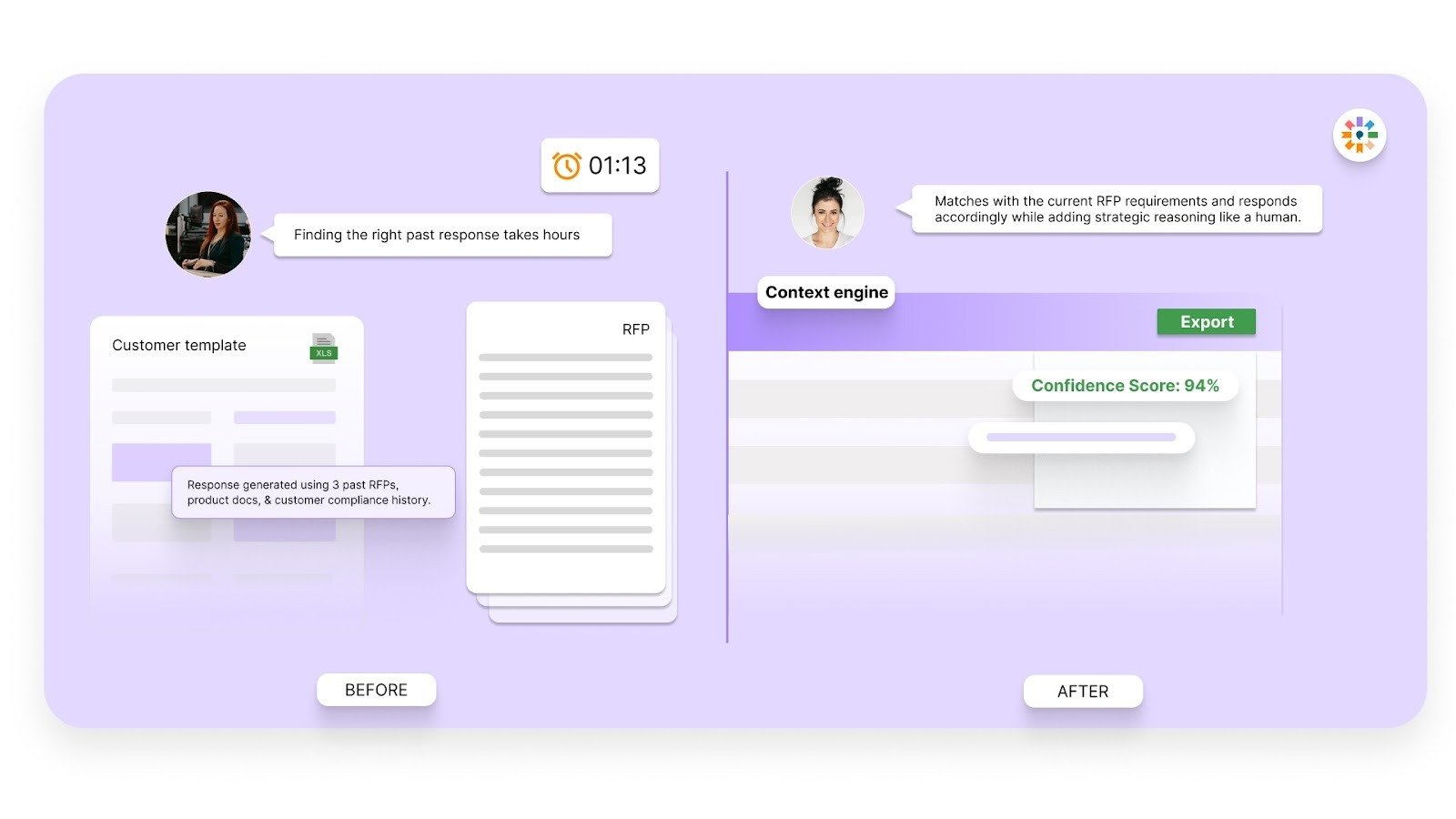
Most tools generate answers based on isolated prompts. Inventive AI’s context engine evaluates the entire CMS RFP, including scope, security requirements, implementation expectations, and pricing structure. Responses align with the buyer’s stated priorities and reflect full-document awareness.
Conflict Detection
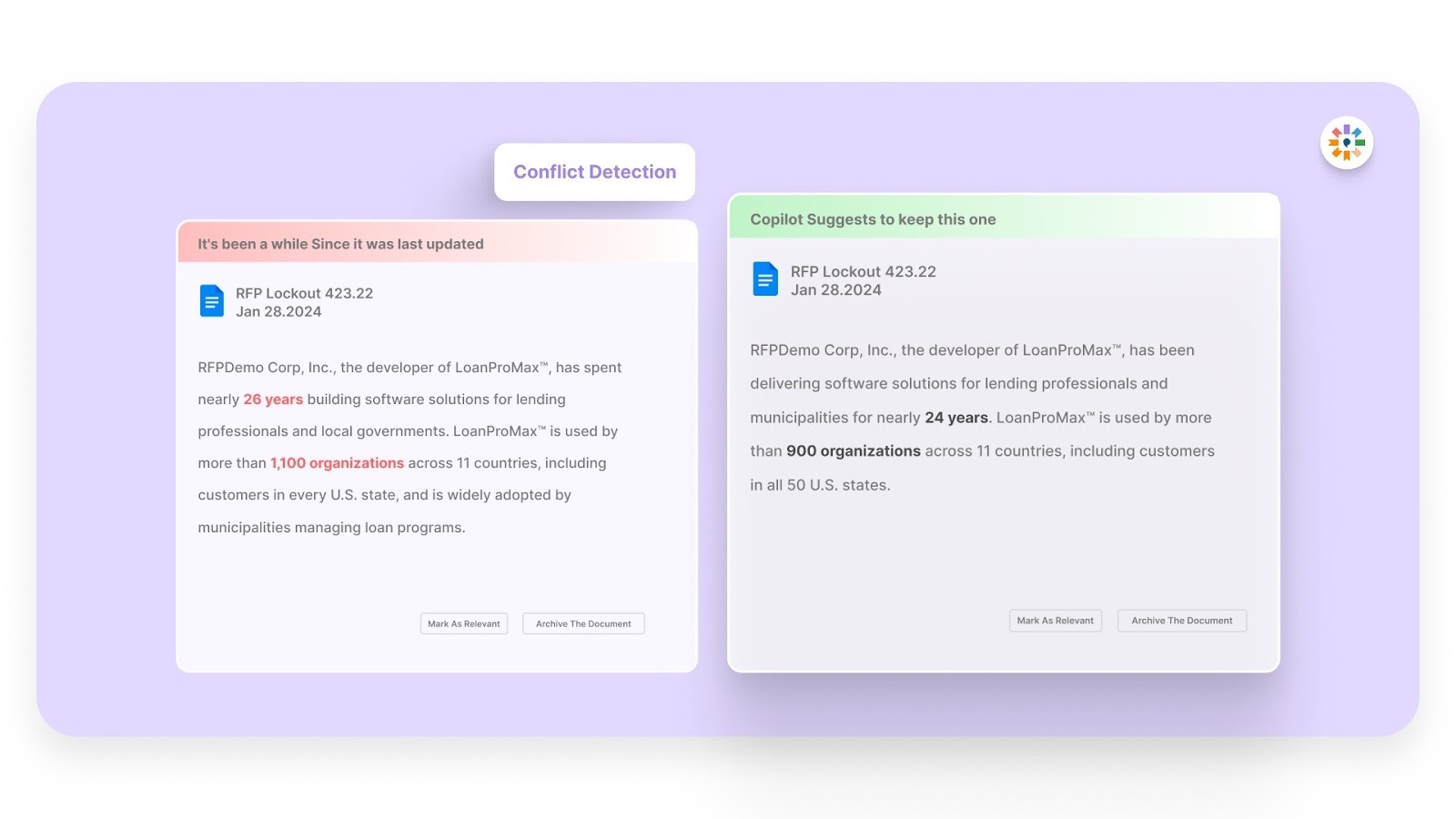
CMS RFP responses often contain overlapping statements across architecture, security, and pricing sections. Inventive AI automatically flags contradictions between responses before submission, reducing risk and strengthening credibility.
Outdated Content Detection
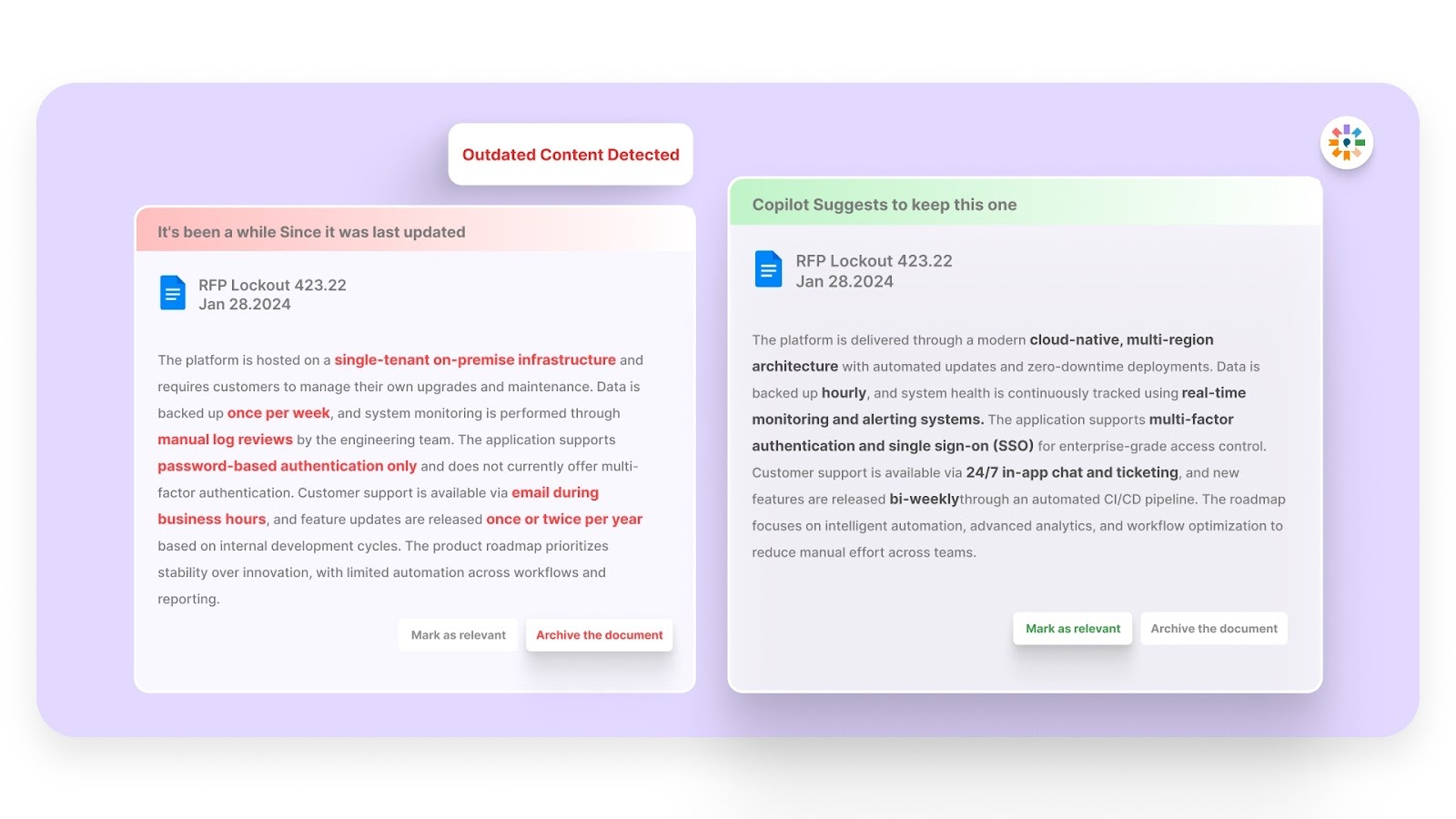
Large answer libraries frequently contain superseded certifications, deprecated feature descriptions, or outdated contractual language. Inventive AI identifies non-compliant or stale content during drafting, preventing inaccurate reuse.
2x Quality Responses
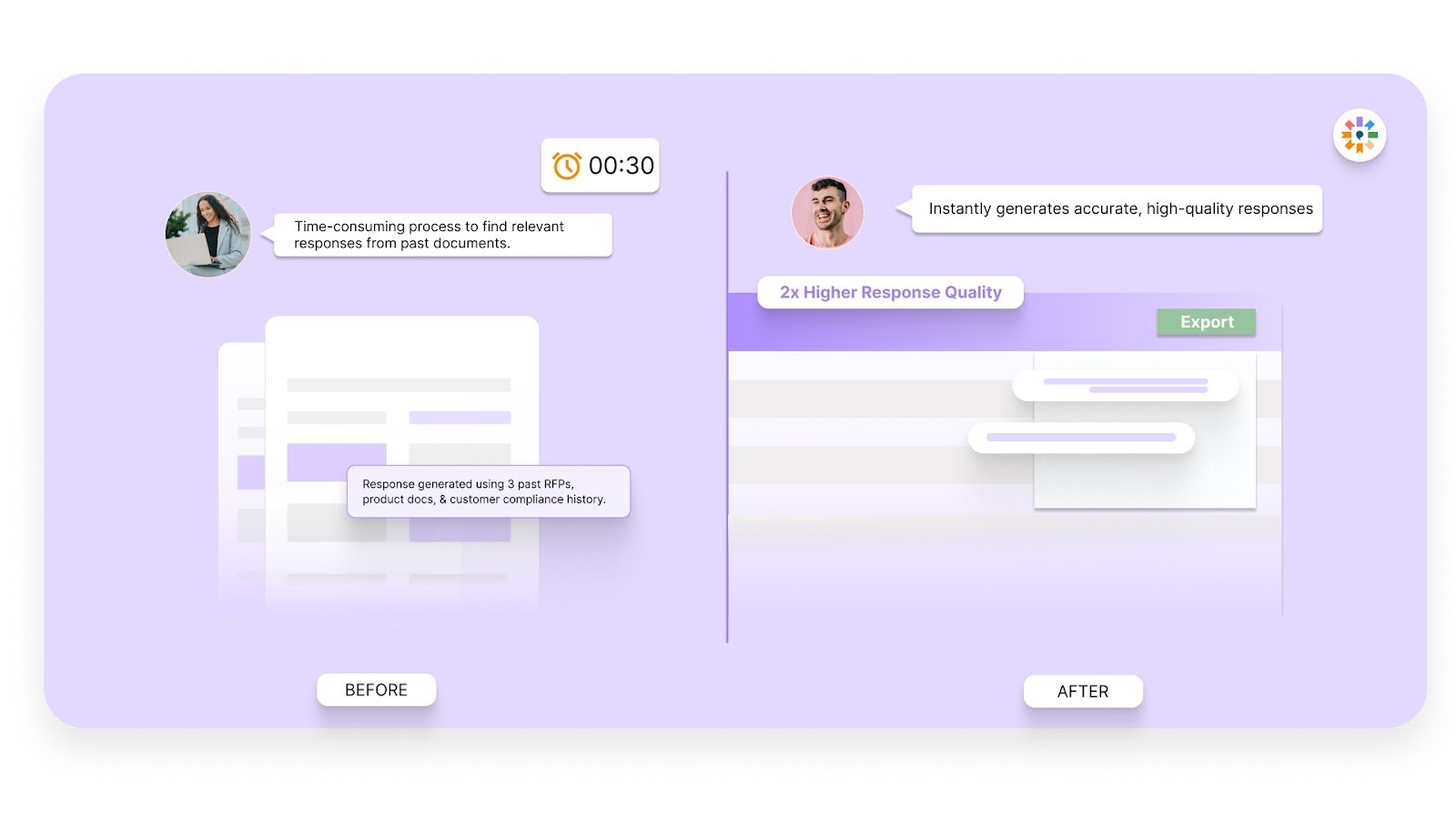
Through coordinated multi-agent reasoning, Inventive AI generates structured, accurate, and complete responses that address requirement intent rather than surface-level keywords.
Narrative-Style Proposal Generation
Beyond structured requirement mapping, Inventive AI produces long-form executive summaries, implementation methodologies, security overviews, and strategic positioning narratives. This supports full proposal books and executive-ready submissions alongside compliance-driven RFP responses.
Simple and Easy-to-Use UI/UX
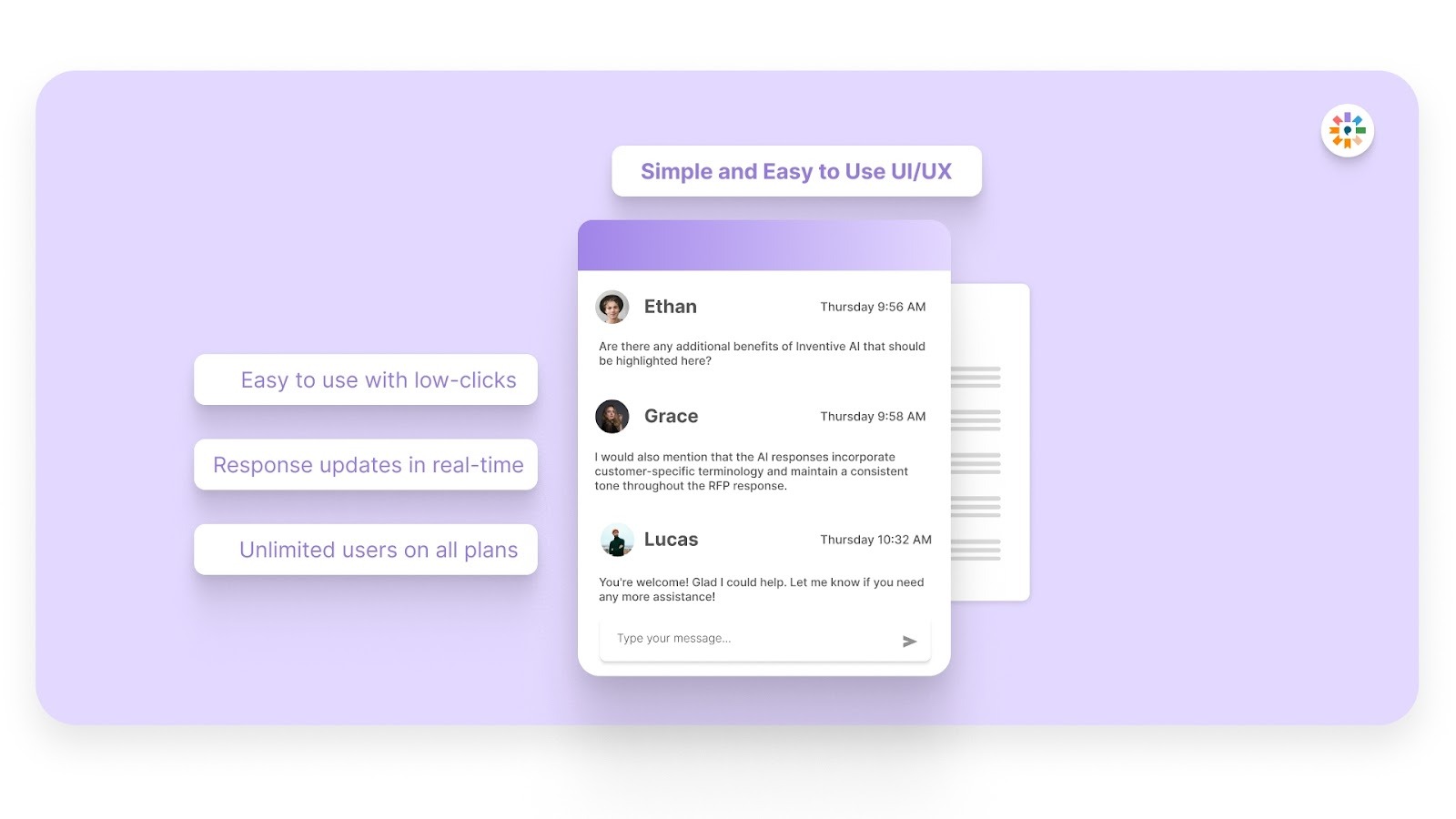
Most RFP tools require heavy onboarding, complex configuration, and extensive training before teams see value. Inventive AI removes that friction with an intuitive interface that drives a 100% adoption rate across current customers and is ranked the #1 easiest-to-use RFP software on G2, enabling teams to start generating high-quality responses immediately without long implementation cycles or operational overhead.
FAQs About RFP CMS
1. What Is The Difference Between A CMS RFP And A General Software RFP?
A CMS RFP focuses specifically on content governance, publishing workflows, multi-site management, integrations with marketing tools, and digital scalability. General software RFPs may cover broader enterprise systems, while CMS RFPs require deeper evaluation of editorial control, content migration, and web infrastructure compatibility.
2. How Detailed Should CMS Functional Requirements Be In An RFP?
Functional requirements should be specific enough for vendors to confirm capability without ambiguity. Instead of listing “workflow support,” the RFP should define approval stages, role hierarchies, content versioning needs, and scheduling requirements. Clear definitions improve response quality and evaluation consistency.
3. How Long Does A Typical CMS RFP Process Take?
Enterprise CMS procurement cycles typically range from 8 to 16 weeks, depending on evaluation stages, vendor demonstrations, security reviews, and commercial negotiations. Structured RFP documentation reduces delays caused by clarification rounds.
4. Should A CMS RFP Include Migration Scope Details?
Yes. Migration scope significantly impacts cost and implementation timelines. The RFP should define approximate content volume, media assets, URL preservation requirements, and SEO continuity expectations to ensure accurate vendor pricing and feasibility assessment.
5. What Evaluation Criteria Should Be Weighted Most In A CMS RFP?
Most organizations prioritize functional alignment, integration compatibility, security compliance, scalability, and total cost of ownership. Weighting criteria in advance creates a defensible selection process and improves vendor response alignment.