A Practical Guide to Legal Services RFPs for Modern Proposal Teams
This guide explains what legal services RFPs usually include, what evaluators look for, how to respond without creating risk using AI-powered RFP response tools.

Legal services RFPs tend to arrive when you least expect them. Your sales pipeline looks promising, conversations are moving forward, and then a legal services RFP lands on your desk.
What starts as a sales task quickly becomes a team effort. Legal reviews contract terms, security validates controls, finance checks pricing exposure, and proposal teams manage deadlines while SMEs are pulled into unplanned reviews. Each response matters because one unclear answer can slow things down or create concerns that weren’t there before.
This is where many teams turn to AI-powered RFP response software. It helps you draft responses faster, reuse approved answers, and keep everything consistent across legal, security, and pricing sections, while your team still reviews and approves the final submission.
This guide explains what legal services RFPs usually include, what evaluators look for, how to respond without creating risk using AI-powered RFP response tools.
Also Read: How to Develop Effective RFP Win Themes for Proposal Success
Key Takeaways
- Legal services RFPs are high-stakes because they combine legal risk, security, pricing, and delivery, and every written answer becomes a commitment.
- Strong responses focus on structure and consistency, matching evaluation criteria, using clear language, and avoiding contradictions across sections.
- Buyers expect proof, not long narratives, especially around risk controls, pricing governance, staffing, and security practices.
- Common delays come from rework and misalignment, when multiple teams answer similar questions differently, or reviews uncover gaps late.
- AI-powered RFP response software like Inventive AI helps teams respond faster and more accurately, keeping answers consistent, review-ready, and grounded in approved content.
A Practical Overview of Legal Services RFPs
Legal services RFPs are formal requests issued by organizations to evaluate outside legal support, including law firms, alternative legal service providers (ALSPs), legal consultants, and legal technology partners.
While buyers use legal services RFPs to reduce uncertainty, vendors experience them as a detailed test of how accurately they can describe and defend the way their legal services are delivered.'
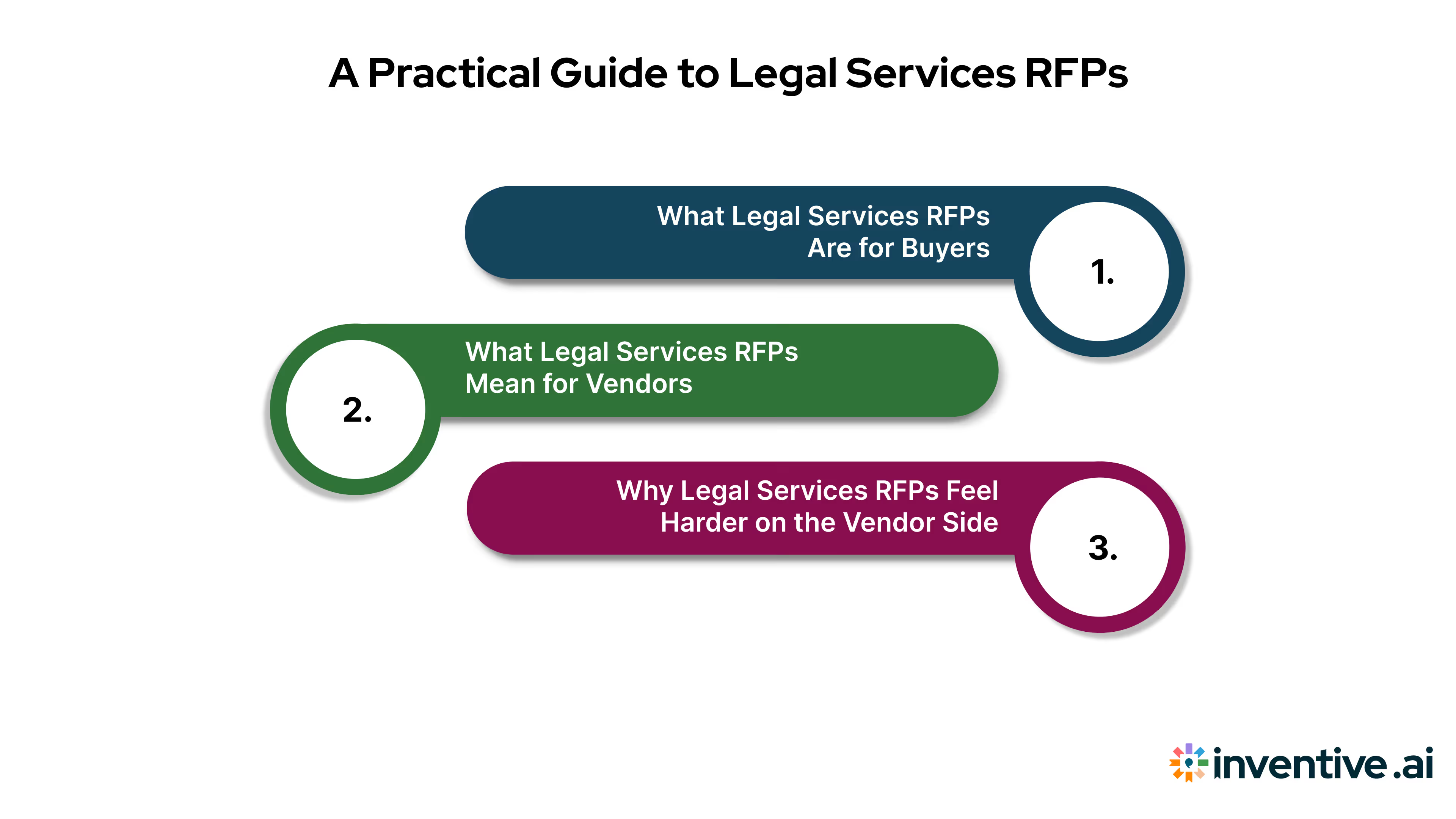
What Legal Services RFPs Are for Buyers?
From the buyer’s side, legal services RFPs help organizations bring structure to how they select external legal providers. These RFPs allow legal teams and legal operations groups to compare vendors using consistent criteria instead of informal conversations.
Buyers typically use legal services RFPs to:
- Assess the legal expertise and service coverage of law firms or ALSPs
- Evaluate risk exposure before entering into long-term legal engagements
- Review security, privacy, and data handling practices
- Confirm pricing models, service-level commitments, and escalation terms
In many cases, RFP responses become reference documents during contract negotiations and future audits.
What Legal Services RFPs Mean for Vendors?
For vendors, legal services RFPs are more than a sales exercise. They require clear alignment between your proposal, your internal policies, and how your legal services actually operate in practice.
Legal services RFPs commonly ask vendors to respond to:
- Legal service offerings, such as outside counsel support, ALSP engagements, managed legal services, legal technology implementation, compliance advisory, investigations, litigation support, and privacy-related work
- Contract terms and risk allocation, including indemnity, limitation of liability, insurance coverage, confidentiality, intellectual property ownership, data handling, and subcontractor use.
- Proof of controls, such as security questionnaires, privacy addenda, due diligence questionnaires (DDQs), and audit expectations
- Pricing structures with guardrails, including fee models, rate cards, caps, service-level agreements (SLAs), and escalation processes
Once submitted, these responses form a written record of what you are willing and able to stand behind.
Why Legal Services RFPs Feel Harder on the Vendor Side?
Legal services RFPs leave little room for interpretation after submission.
- You can’t rely on future conversations to clarify unclear terms. If a clause is accepted in writing, buyers often treat it as agreed.
- Small inconsistencies, such as differences in how SOC 2 controls, encryption practices, or subcontractor usage are described, can trigger additional reviews or delay decisions.
- Legal and legal operations teams increasingly expect structured responses and measurable detail when evaluating legal service providers, especially in regulated industries.
Every response is reviewed not only for completeness, but also for risk.
Legal services RFPs aren’t just about answering questions. They test whether your written commitments align with how your legal services actually operate behind the scenes.
What’s Included in a Legal Services RFP? The Key Components of Legal Services RFP
Knowing what’s typically included in legal services RFPs helps you prepare early, involve the right teams, and avoid surprises during the review cycle. Below are the core sections you’ll usually find in a legal services RFP and what each one is meant to assess.
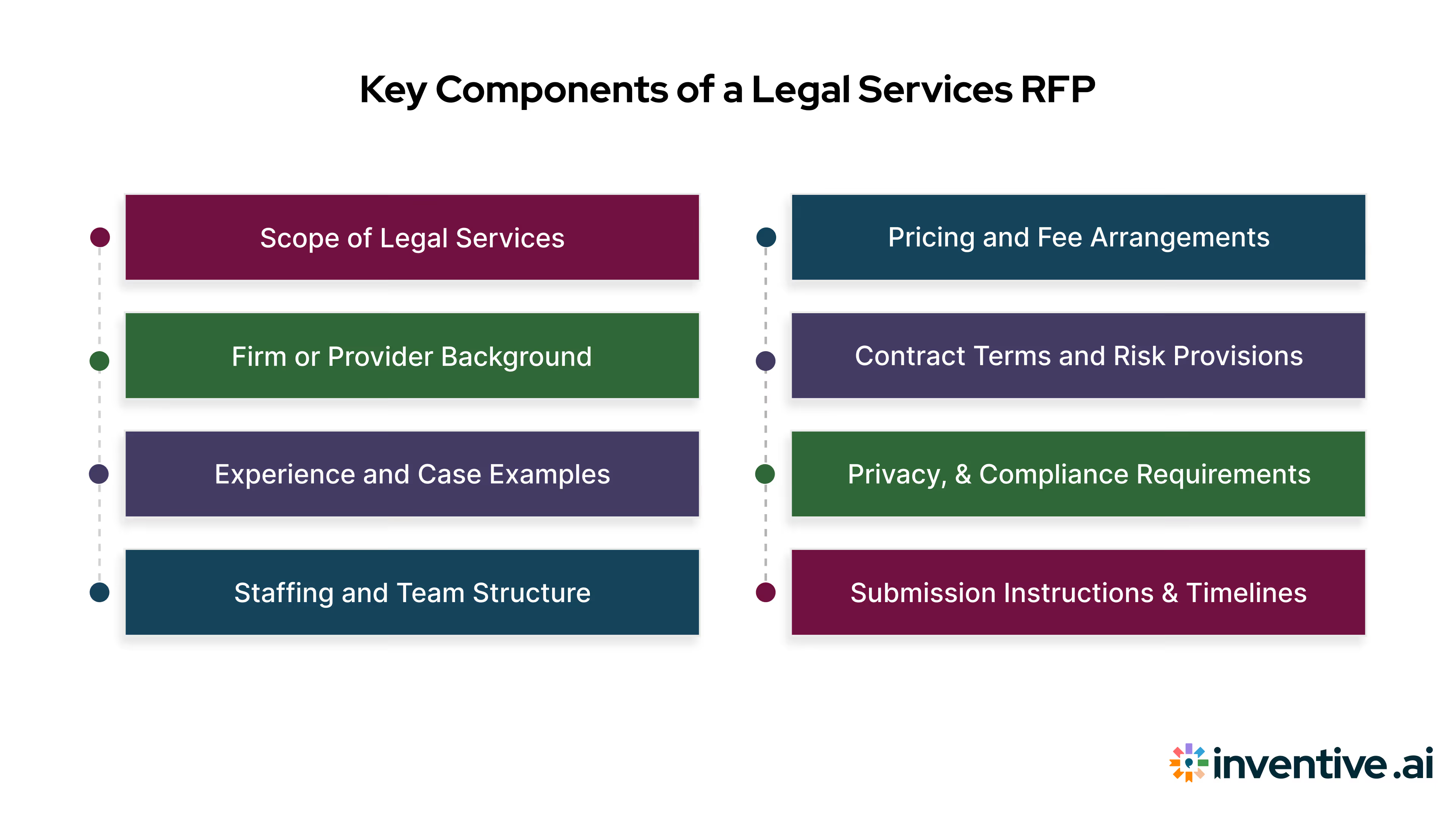
1. Scope of Legal Services
This section defines the type of legal work the organization is looking to outsource or formalize.
You’ll usually see details such as:
- Practice areas or matter types (litigation, employment, regulatory, privacy, investigations, contracts, etc.)
- Jurisdictions or regions covered
- Expected volume or complexity of matters
- Ongoing advisory work versus project-based engagements
Buyers use this section to confirm that your legal services match their actual needs, not just your general capabilities.
2. Firm or Provider Background
Here, the buyer wants to understand who they may be working with and how your organization is structured.
This section often includes requests for:
- Company or firm overview
- Years in operation
- Relevant industry or client experience
- Office locations and coverage
- Ownership or partnership structure
The goal is context and credibility, not marketing language.
3. Experience and Case Examples
Legal services RFPs usually ask for proof that you’ve handled similar work before.
This may involve:
- Representative matters or case studies
- Experience with similar industries or regulatory environments
- Description of outcomes or responsibilities (without breaching confidentiality)
- References or client examples
Specific, relevant examples tend to carry more weight than broad summaries.
4. Staffing and Team Structure
This section focuses on who will actually deliver the legal services.
Buyers often ask for:
- Proposed team members and roles
- Seniority mix and supervision model
- Availability and workload assumptions
- Continuity plans if team members change
This helps buyers understand how work will be managed day to day, not just who leads the relationship.
5. Pricing and Fee Arrangements
Pricing is a critical part of legal services RFPs and is usually reviewed closely.
Common requests include:
- Hourly rate cards by role or geography
- Alternative fee arrangements
- Fee caps or blended rates
- Billing guidelines and approval thresholds
Clarity matters here. Buyers want pricing that is easy to compare and predictable over time.
6. Contract Terms and Risk Provisions
Most legal services RFPs include draft agreements or key contractual requirements.
These often cover:
- Indemnification and limitation of liability
- Confidentiality and privilege protections
- Insurance requirements
- Subcontracting or referral restrictions
- Governing law and dispute resolution terms
These sections are frequently reviewed side by side across providers.
7. Security, Privacy, and Compliance Requirements
If legal services involve access to sensitive data, buyers may include additional risk-related sections.
This can include:
- Security questionnaires
- Privacy or data processing addenda
- Due diligence questionnaires (DDQs)
- Audit or compliance disclosures
Even traditional legal service providers are seeing these requirements more often.
8. Submission Instructions and Timelines
Finally, legal services RFPs usually specify how and when responses must be submitted.
This section may outline:
- Required formats and templates
- Deadlines and milestones
- Clarification question processes
- Evaluation timelines and next steps
Missing these details can delay or disqualify an otherwise strong response.
Legal services RFPs are designed to give buyers a full picture of how legal work will be delivered, priced, and governed. Understanding what’s included helps you prepare structured responses, involve the right teams early, and reduce friction during evaluation and contracting.
Also Read: Top 25 RFP Software in 2025: Which to Use?
Key Elements That Make Legal Services RFP Responses Work
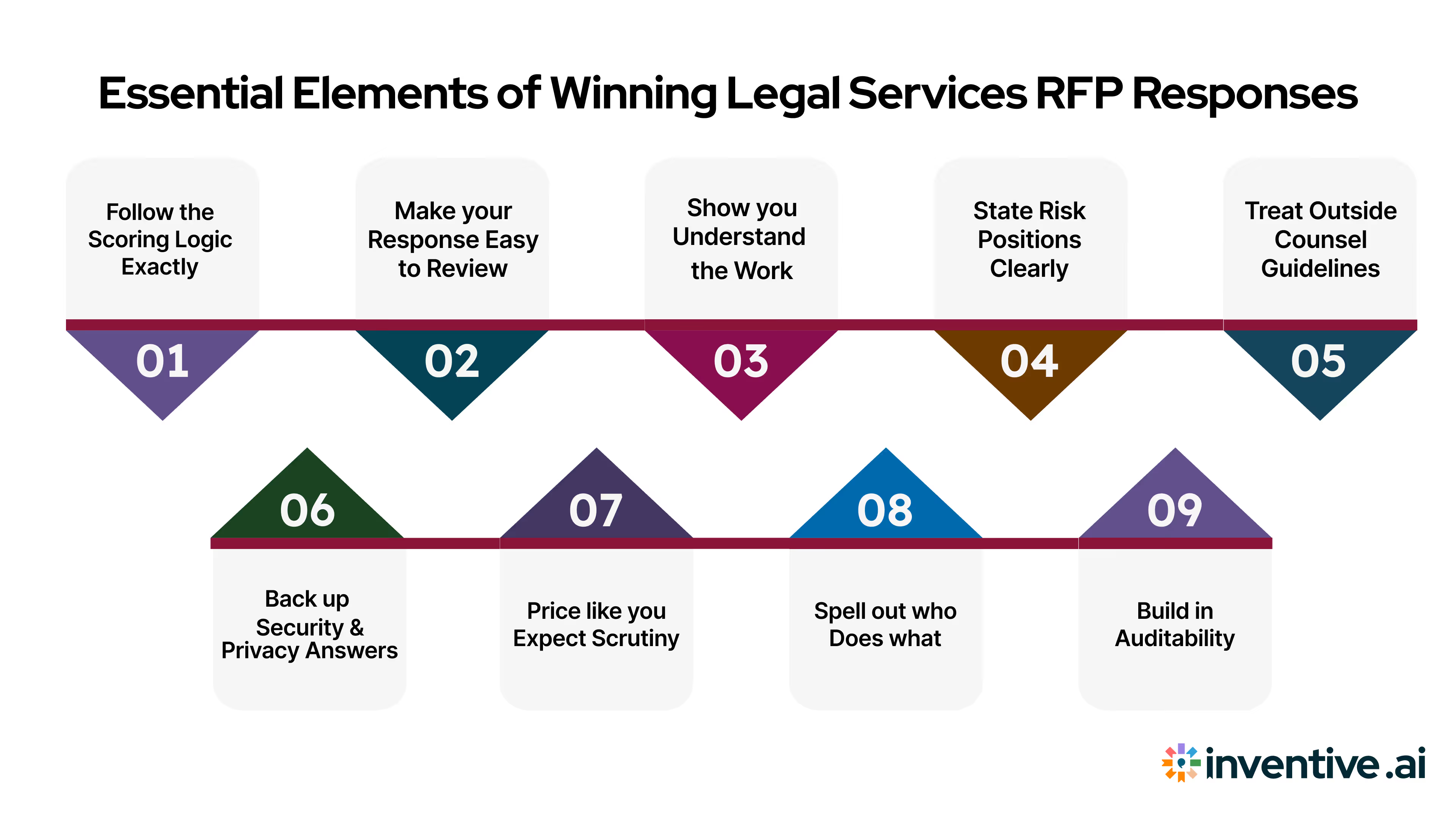
Legal services RFPs don’t get decided on “good vibes.” Buyers score you against stated requirements, compare you to other firms/providers, and look for proof that your answer matches how you actually work.
If you want a response that holds up in review (and doesn’t come back with ten rounds of follow-ups), these are the elements that matter most.
1. Follow the scoring logic exactly
Start by finding the RFP’s evaluation criteria and mirror that structure in your response (same headings, same order, clear cross-references).
Answer every “must” requirement directly. If you miss one, evaluators may score you down even if the rest is strong.
In formal procurements, evaluators are expected to assess proposals solely on the factors and subfactors specified in the solicitation, which is why alignment matters.
2. Mke your response easy to review
Lead with the direct answer first, then add detail (so reviewers don’t hunt).
Use short paragraphs and bulleted commitments (timeline, staffing, reporting cadence, escalation path).
Where you can, give a “yes/no/with comments” style response for compliance-style questions.
3. Show you understand the work, not just the topic
Translate your experience into the buyer’s reality: similar matter types, similar regulatory pressure, similar stakeholders.
Be specific about how you handle intake, conflict checks (if relevant), matter staffing, communications, and turnaround times.
If you’re an ALSP or managed services provider, explain the operating model (roles, handoffs, QA checks, oversight).
4. State risk positions clearly (and consistently)
Keep your contract positions consistent across the entire response (liability caps, indemnity, confidentiality, IP, audit rights, insurance).
If you can’t accept a clause, propose an alternative instead of writing “subject to negotiation.”
Avoid internal contradictions (for example, one section saying you allow subcontractors freely, another saying you never use them).
5. Treat outside counsel guidelines as requirements, not “nice-to-have”
Many legal services RFPs include (or reference) outside counsel guidelines, billing rules, rate expectations, and reporting.
Show exactly how you will comply: billing review steps, staffing expectations, approval thresholds, matter budgets, and status updates.
Corporate legal departments increasingly use structured approaches (panels, preferred lists, and defined selection criteria) when choosing outside providers.
6. Back up security and privacy answers with proof-ready detail
Expect security questionnaires, privacy addenda, and due diligence questions, especially if you handle sensitive data.
Keep answers concrete: encryption in transit/at rest, access controls, logging, incident response steps, retention, and deletion practices.
Don’t overclaim. If a control varies by system or practice group, say so and explain how you manage it.
7. Price like you expect scrutiny
Make pricing easy to compare: rate cards, fee models, caps, staffing assumptions, what’s included vs. out-of-scope.
If you offer alternative fee arrangements, define triggers and boundaries (what changes price, what doesn’t).
Tie pricing to governance: budget updates, variance reporting, and approvals.
8. Spell out who does what (and how you manage quality)
Name roles and responsibilities: relationship partner, matter manager, review attorney, project manager, reporting owner.
Explain how you maintain consistency across matters (templates, playbooks, review checklists, escalation).
Buyers often rate provider selection heavily on specific criteria like demonstrated expertise and familiarity with the organization, so your staffing story needs to feel real, not generic.
9. Build in auditability and a clean paper trail
Keep a clear record of exceptions, assumptions, and approvals inside the response.
If your answer references a policy, name the policy and indicate what evidence is available during diligence.
This reduces rework later when the buyer moves from RFP scoring into contract and onboarding.
A strong legal services RFP response does three things at once: it matches the buyer’s scoring model, it stays consistent across legal/commercial/security sections, and it proves you can deliver what you’re promising, without creating new risk in the fine print.
Top 5 Legal Services RFP Trends Vendors Should Watch
Legal services RFPs in the U.S. are getting more structured and more evidence-driven. If you plan for the patterns below, you’ll spend less time reacting mid-cycle and more time submitting responses that hold up in review.
1. Legal services RFPs are becoming more frequent
Organizations are issuing legal services RFPs more often than in the past, including for panel refreshes, specialized matters, and alternative legal service providers. What used to be handled through relationships or informal renewals is increasingly being formalized through RFPs, especially as legal departments look for consistency and defensibility in provider selection.
2. GCs are working more closely with procurement
General Counsel offices are partnering more closely with procurement and legal operations to improve sourcing and oversight of outside providers. This collaboration is driving more standardized requirements, clearer evaluation criteria, and documented scoring processes. As a result, responses are reviewed not just for legal fit, but also for commercial structure, risk, and compliance.
3. Proof and structure matter more than long narratives
Legal departments are placing greater emphasis on measurable detail and structured responses. The Thomson Reuters Institute’s 2025 Legal Department Operations Index highlights increased use of formal requirements and data collection when selecting outside counsel and legal service providers. In practice, this means more focused questions and higher expectations for clear, evidence-backed answers.
4. Security and privacy reviews are now routine
Even when the RFP is for legal services, responses are often reviewed by privacy, security, or risk teams, particularly when sensitive data is involved. Expect deeper questions around access controls, auditability, third-party oversight, incident response, and data retention. These reviews are increasingly treated as baseline diligence, not exceptions.
5. AI support is becoming more common in response workflows
Teams are increasingly using AI-powered tools like Inventive AI to help with drafting and organizing responses, especially when RFP volume is high and deadlines are tight. More broadly, G2’s research shows strong momentum in AI software adoption across buyers.
(Important nuance: AI is being used to assist workflows, not to replace review and approvals in high-risk sections.)
Expect tighter structure, heavier diligence, and faster timelines. The responses that perform best are the ones that stay consistent, back claims with evidence-ready detail, and make review easy for multiple stakeholders.
7 Tips to Improve Legal Services RFP Responses Exceptionally
Better legal services RFP responses come from reducing friction in the process, not from working longer hours. These tips below focus on lowering risk, improving clarity, and making responses easier to review and score.
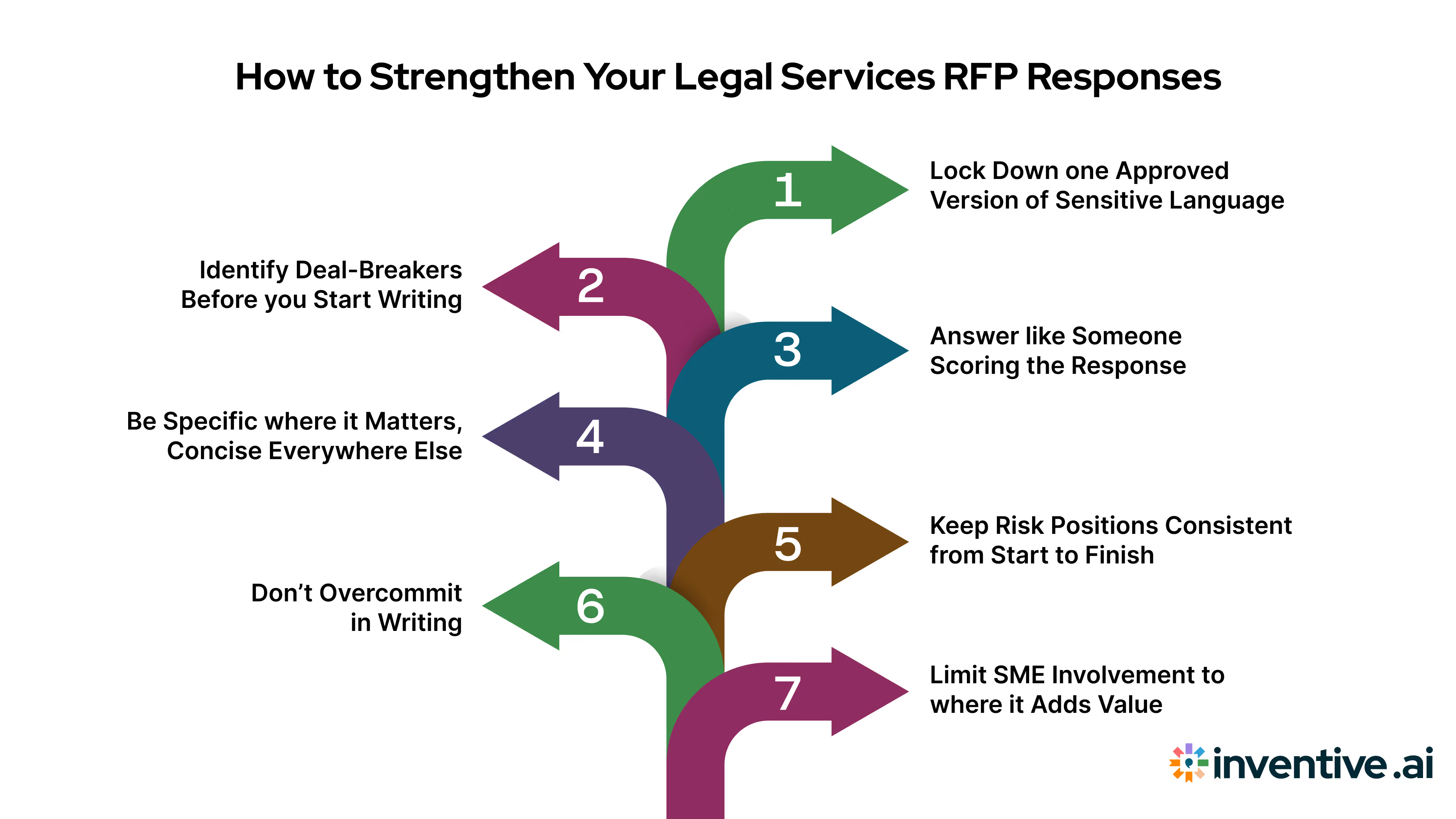
1. Lock down one approved version of sensitive language
Legal services RFPs often ask the same questions in slightly different ways, especially around liability, confidentiality, security, and data handling. The problem starts when different people answer those questions differently.
Create a single, approved version of your legal and security language and treat it as the reference point for every response. If the wording changes, update it once and reuse it consistently.
This avoids contradictions that trigger follow-up reviews or slow down evaluation.
2. Identify deal-breakers before you start writing
Not every requirement deserves equal effort. Some clauses, like liability caps, audit rights, breach notification timelines, or insurance thresholds, can stop a deal regardless of how strong the rest of the response is.
Before drafting:
- Scan the RFP for non-negotiable terms
- Flag them early
- Decide what you can accept, what needs alternatives, and what requires escalation
This saves time and prevents late-stage surprises.
3. Answer like someone scoring the response
Evaluators usually work through a checklist or scoring sheet. If they have to search for your answer, you’re already at a disadvantage.
A simple rule works well:
- Answer the question directly first
- Then add explanation or context
This makes it easier to score your response and reduces the chance of misinterpretation.
4. Be specific where it matters, concise everywhere else
Legal services RFPs don’t reward long narratives. They reward clarity.
Use detail where it reduces risk:
- How work is staffed
- How matters are managed
- How issues are escalated
- How pricing is governed
Avoid extra language that doesn’t help the evaluator make a decision. Clear answers build confidence faster than long ones.
5. Keep risk positions consistent from start to finish
One of the most common issues in legal services RFP responses is internal inconsistency. A contract section may say one thing, while a security or delivery section quietly contradicts it.
Before submission:
- Review all responses touching liability, subcontracting, confidentiality, and data access
- Make sure they align across sections
Consistency signals maturity and reduces the need for clarification rounds.
6. Don’t overcommit in writing
It’s tempting to sound accommodating, especially when competition is strong. But legal services RFPs turn written commitments into expectations.
If something depends on scope, jurisdiction, or volume, say so clearly. Overpromising in an RFP response often creates problems during contracting or onboarding.
7. Limit SME involvement to where it adds value
Subject matter experts are essential, but pulling them into every question slows everyone down.
Route only the questions that truly need expert input. Keep everything else grounded in approved language and prior responses. This reduces fatigue and improves response speed without sacrificing accuracy.
Pro Tip: Follow a “no proof, no promise” rule.
If you can’t support a claim with policy language, documented process, or evidence during diligence, don’t include it. Legal services RFPs penalize bold statements that fall apart under review.
Strong legal services RFP responses come from discipline, not heroics. When you reduce ambiguity, stay consistent, and write with the evaluator in mind, you spend less time fixing issues and more time advancing deals.
Also Read: How AI in Presales is Redefining Speed, Accuracy, and Win Rates
How Inventive AI Solves Legal Services RFP Challenges?
Legal RFPs aren’t difficult because the questions are long. They’re difficult because they pull in risk, compliance, security, pricing, and delivery, and your response has to stay consistent across all of it.
When you build a repeatable response system, you stop losing days to rework. You reduce red flags. You submit cleaner proposals. And you give your sales team more shots at the right deals.
With AI-powered RFP response software, Inventive AI automates the complex RFP management workflow, saving time and improving proposal accuracy.
Here’s how it supports legal services RFP responses.
1. Faster, Higher-Quality Responses
Inventive AI generates draft responses using your existing approved content. This gives proposal teams a strong starting point that reflects how your legal services actually operate, not generic language that needs heavy rewriting.
The result is 2x response quality and 90% faster responses, leading to fewer back-and-forth review cycles and quicker proposal submissions.
2. Context-Aware Answers That Stay Consistent
Legal services RFPs often ask similar questions in different ways across sections. Inventive AI’s context engine recognizes those patterns and helps keep answers aligned across legal, security, and commercial sections.
This reduces contradictions that often trigger follow-up questions or extra reviews.
3. Instant Detection of Conflicts and Gaps
When responses conflict with each other, or with previously approved positions, Inventive AI flags them early. The same applies to outdated language that no longer reflects current policies or practices.
Catching these issues during drafting prevents problems later during evaluation or contracting.
4. Quality Benchmarking Across Responses
Inventive AI helps teams compare responses across sections and past proposals to maintain a consistent level of detail and clarity. This is especially useful in legal services RFPs, where uneven answers can raise concerns even if the substance is correct.
Consistency builds trust with evaluators, with 60% of responses requiring no edits, increasing efficiency and minimizing the risk of overlooked mistakes.
5. Narrative-Style Proposals That Are Easier to Review
Instead of stitched-together answers, Inventive AI supports narrative-style proposals that read clearly from start to finish. This makes it easier for legal, legal operations, and procurement teams to understand your approach without hunting for information.
Inventive AI helps proposal teams respond faster without guessing, stay consistent without micromanaging, and submit legal services RFP responses that reflect real policies, real positions, and real proof, exactly what evaluators expect in high-stakes legal RFPs.
Frequently Asked Questions (FAQs)
1. What are legal services RFPs?
Legal services RFPs are formal requests issued by organizations to evaluate and select external legal service providers, such as law firms, alternative legal service providers (ALSPs), or legal consultants. They outline the scope of legal work, pricing expectations, contract terms, and compliance requirements so buyers can compare providers in a structured way.
2. How are legal services RFPs different from standard RFPs?
Legal services RFPs typically involve higher risk and closer scrutiny. In addition to service capability and pricing, they focus heavily on contract terms, confidentiality, privilege, data handling, security controls, and compliance. Responses are often reviewed by legal, legal operations, risk, and procurement teams, not just one stakeholder.
3. What do buyers usually evaluate in legal services RFP responses?
Buyers evaluate responses based on how closely they meet stated requirements. This often includes:
- Relevant legal experience and matter handling approach
- Clarity and consistency of contract positions
- Pricing structure and cost predictability
- Security, privacy, and risk controls
- Team structure and service delivery model
Clear, direct answers aligned with evaluation criteria tend to perform better than lengthy narratives.
4. Why do legal services RFP responses often take longer to complete?
Legal services RFPs usually involve multiple internal reviewers and approvals. Legal, security, finance, and delivery teams may all need to review different sections. Delays often happen when answers are inconsistent, unclear, or require repeated clarification.
5. How can teams reduce risk when responding to legal services RFPs?
Teams can reduce risk by using AI-powered RFP response tools like Inventive AI to bring consistency and control into the response process. When grounded in approved content, these tools help ensure that legal, security, and commercial answers stay aligned across the entire response.