
Ultimate RFP Response Toolkit for US Vendors (2026)
.jpg)
How many RFPs has your team poured hours into, only to lose on a technicality or pricing detail? If you have searched for an RFP toolkit, chances are you are trying to bring order to a process that feels rushed, reactive, and resource-heavy.
You are juggling tight deadlines, chasing SMEs for answers, double-checking compliance tables at midnight, and hoping nothing was missed. One skipped requirement or unclear pricing page can cost months of pipeline work.
To bring discipline and consistency to every stage of the response cycle, here is a complete vendor-focused RFP toolkit designed to help your team qualify smarter, draft stronger, and submit with confidence.
Complete RFP Response Toolkit: Templates & Tools
A strong RFP response is not built in a single document. It is built from a set of structured tools that guide your team from bid decision to final submission. Below are the core files included in this RFP toolkit and why each one matters.
1. Go or No Go Scorecard
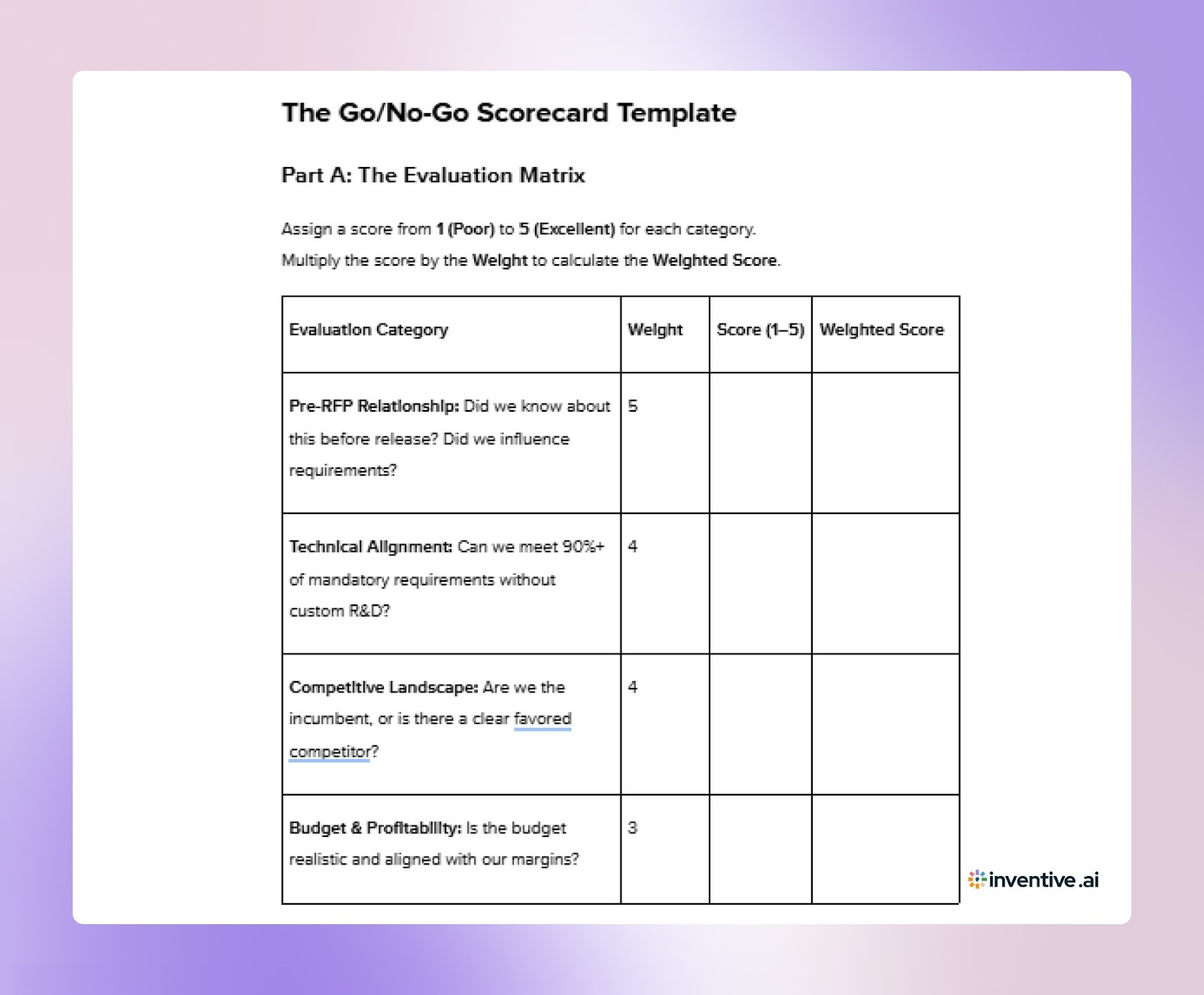

This template helps you decide whether an opportunity is worth bidding on before your team commits time and resources. It scores relationship strength, technical fit, budget clarity, competition, and strategic value, so decisions are based on data, not optimism.
2. RFP Response Master Template
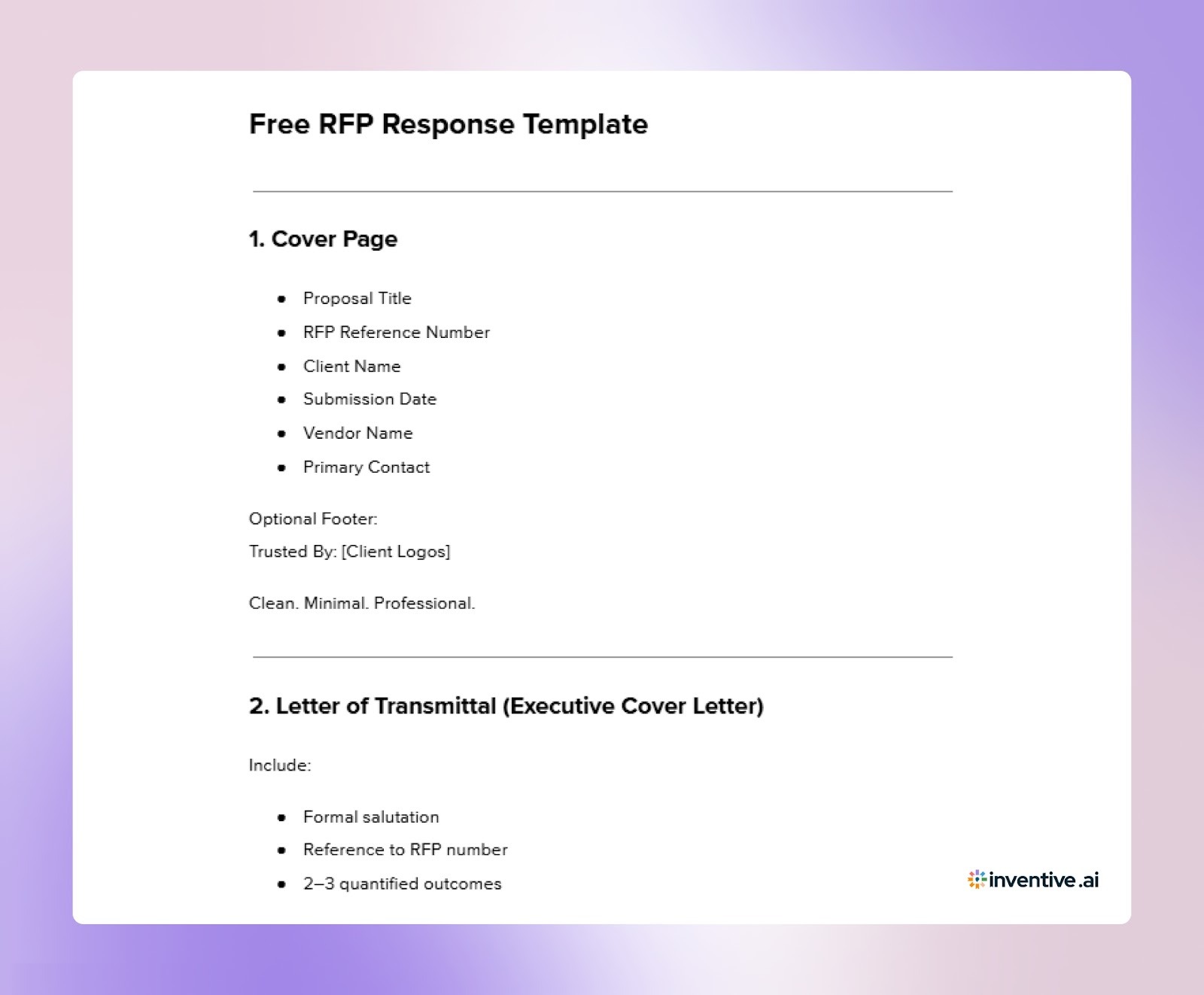

This is the structured Word document hierarchy for your full proposal. It includes the cover page, executive summary, technical response, pricing, compliance section, and appendices.
It is part of the toolkit because consistency across bids improves clarity and scoring.
3. Pricing Sheet Template
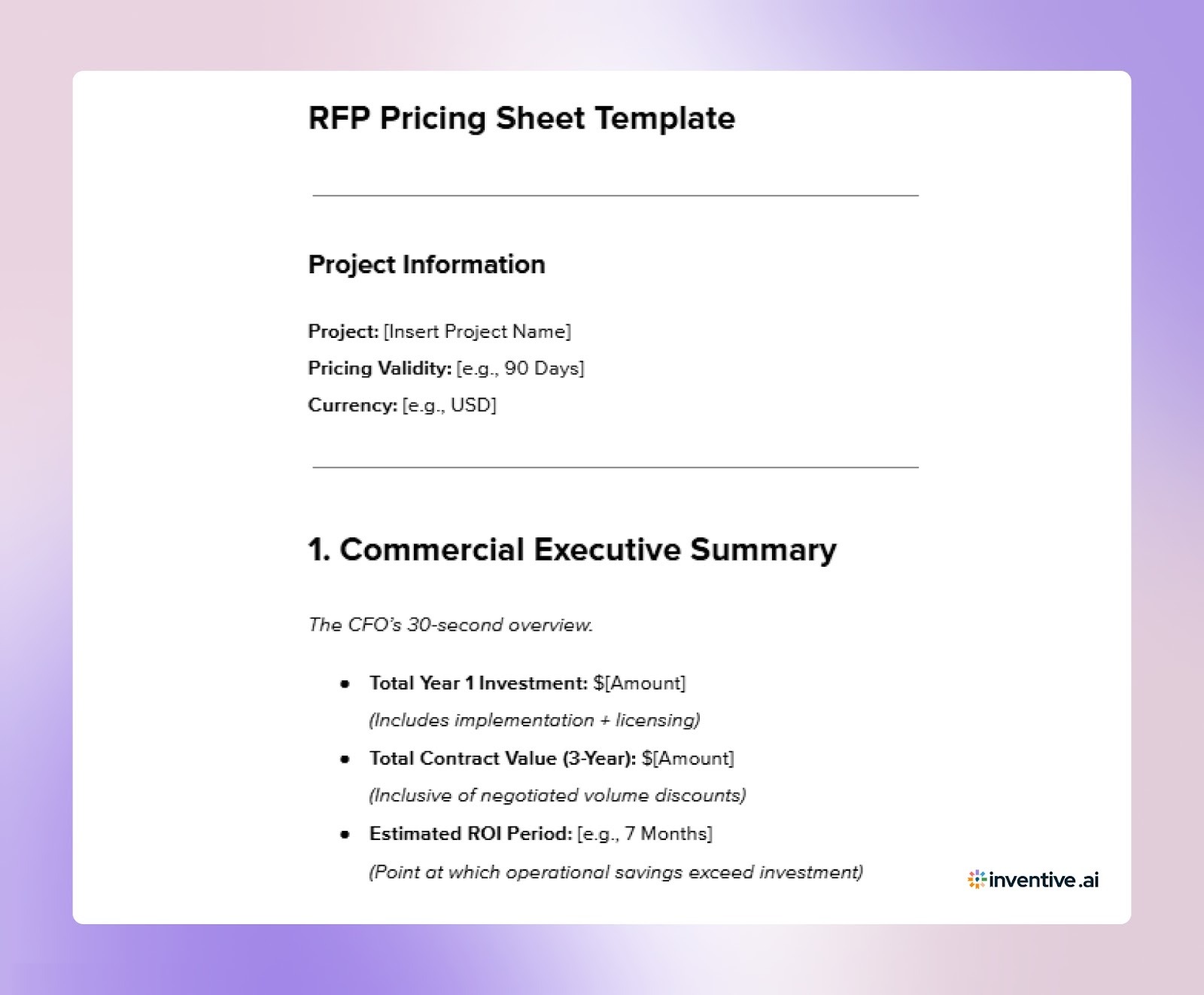

This structured pricing format separates one-time and recurring costs, states assumptions clearly, and frames value alongside investment.
It is part of the toolkit because pricing is often the most scrutinized section of the proposal.
4. Security & Compliance Template
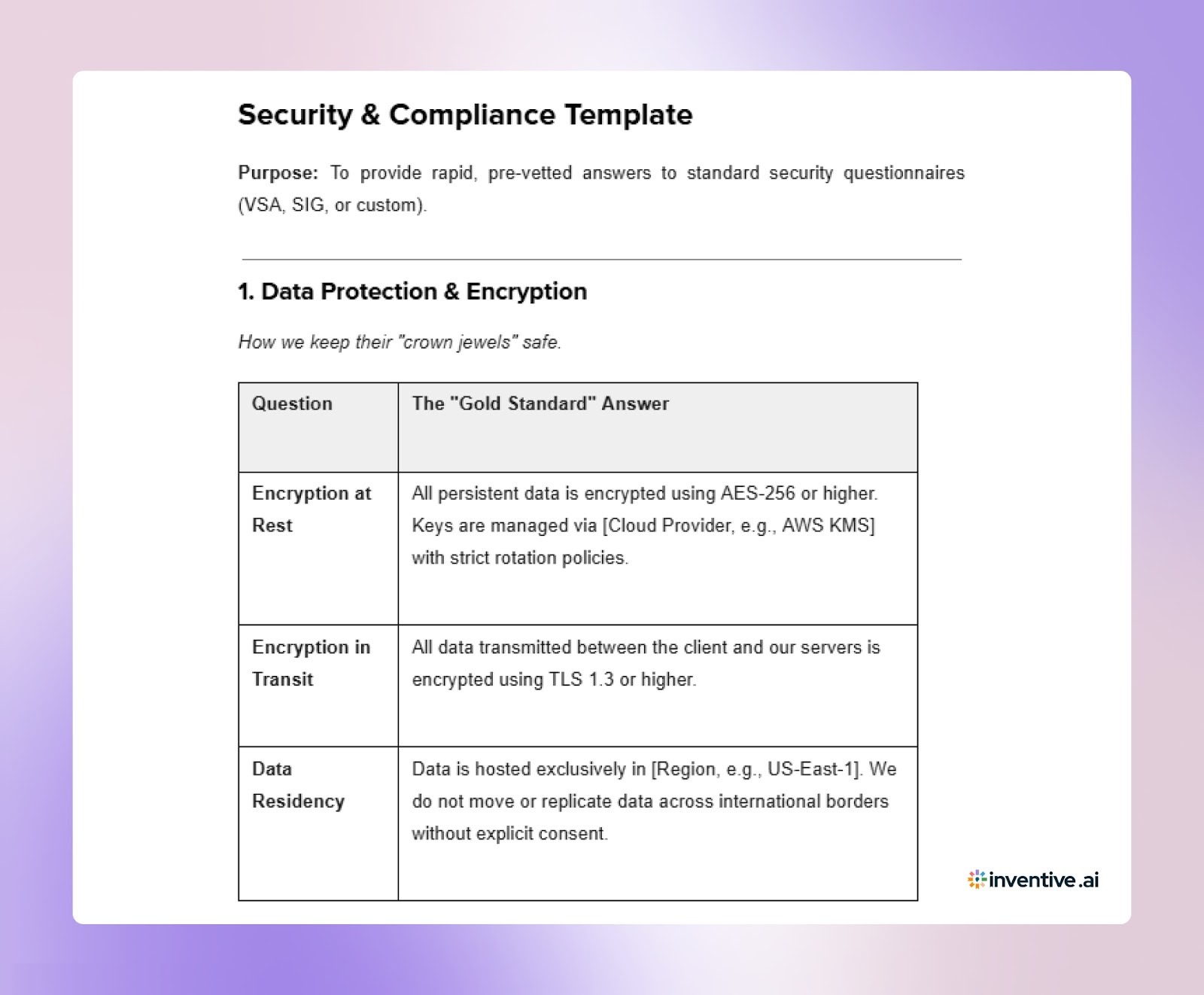

This template provides rapid, pre-vetted answers to standard security questionnaires such as VSA, SIG, and custom enterprise assessments. It organizes encryption standards, AI governance policies, operational security controls, and compliance certifications into a structured response format so your team can answer quickly and consistently. It is included because security reviews often run parallel to RFP evaluations, and delays or incomplete answers can stall deals.
5. Win Themes Worksheet
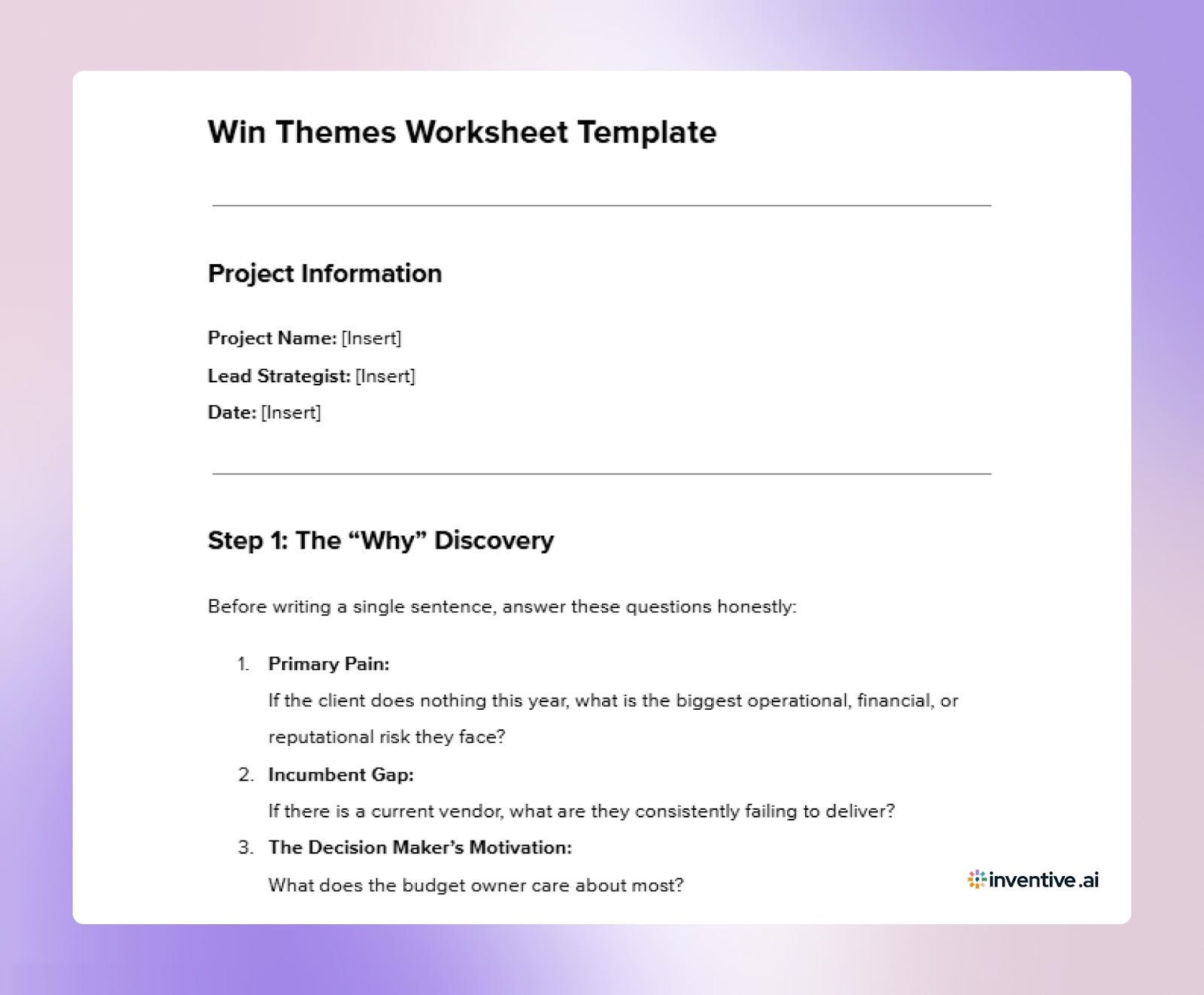

This internal worksheet defines the three to four core messages that will appear throughout your proposal. It connects features to buyer benefits and proof points so your response feels intentional rather than generic.
6. RFP Timeline Planner
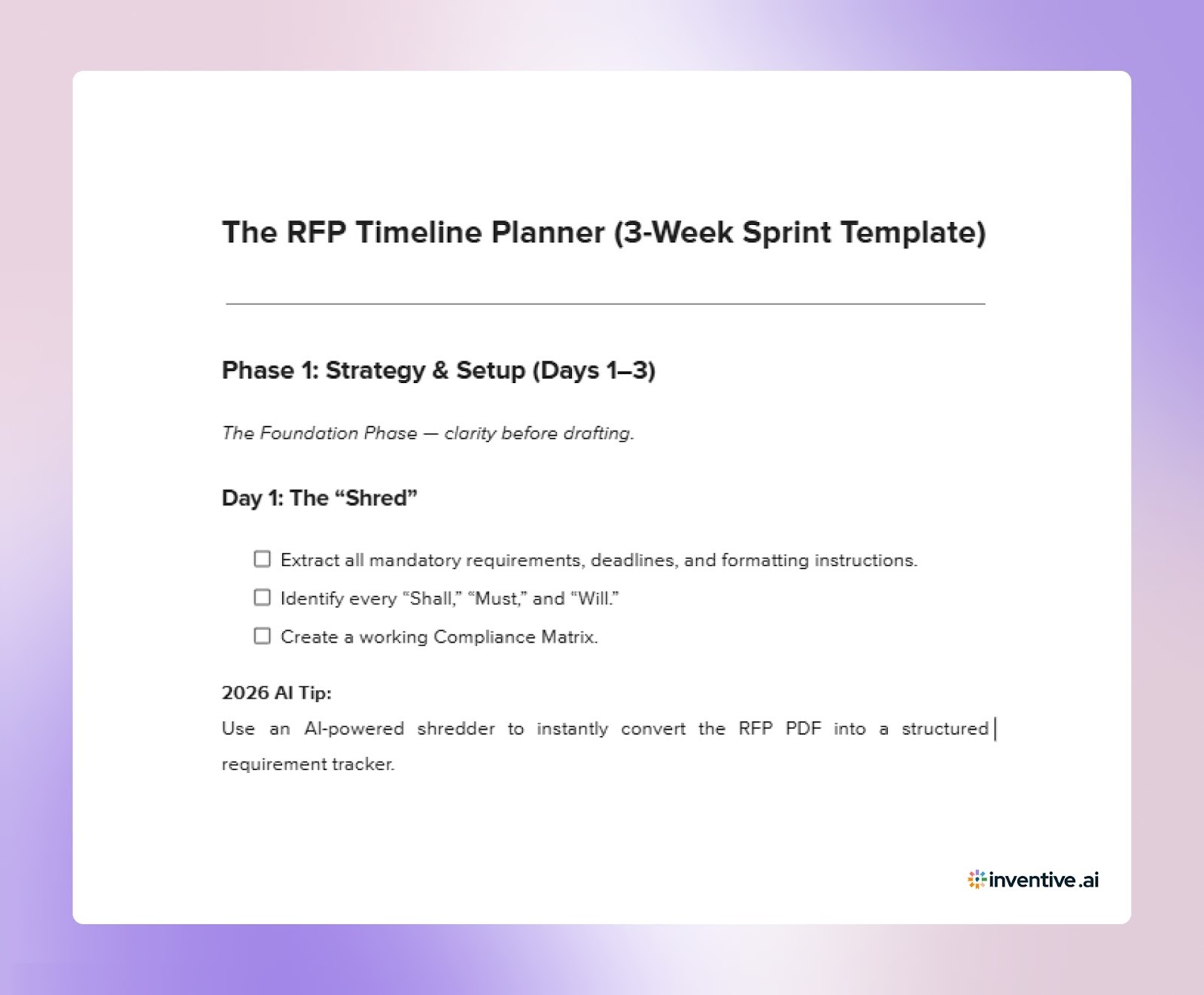

This 21-day sprint plan outlines what happens from RFP receipt to submission, including shredding, drafting, review cycles, and final sign-off. It is included to prevent last-minute chaos and rushed sections.
7. Red Team Review Checklist
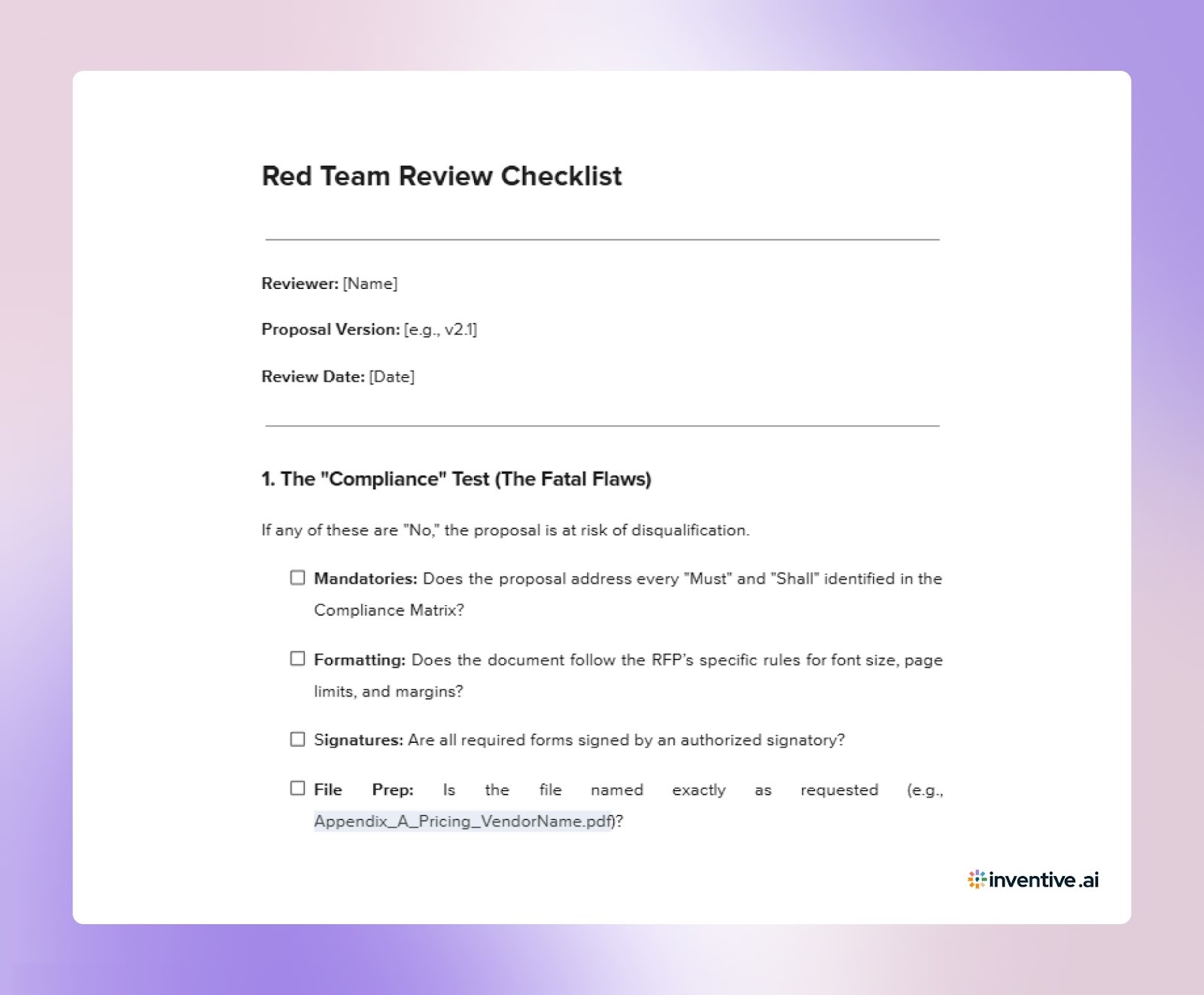

This checklist guides your final internal review before submission. It covers scoring alignment, executive summary clarity, compliance completeness, pricing accuracy, formatting consistency, and messaging strength.
Now that you know what each tool does, the next step is making sure your team uses them consistently for every qualified opportunity.
RFP Toolkit Best Practices to Improve Win Rates
A toolkit only improves win rates if your team actually uses it the same way every time. Without discipline, templates become cluttered files, and outdated content gets reused.
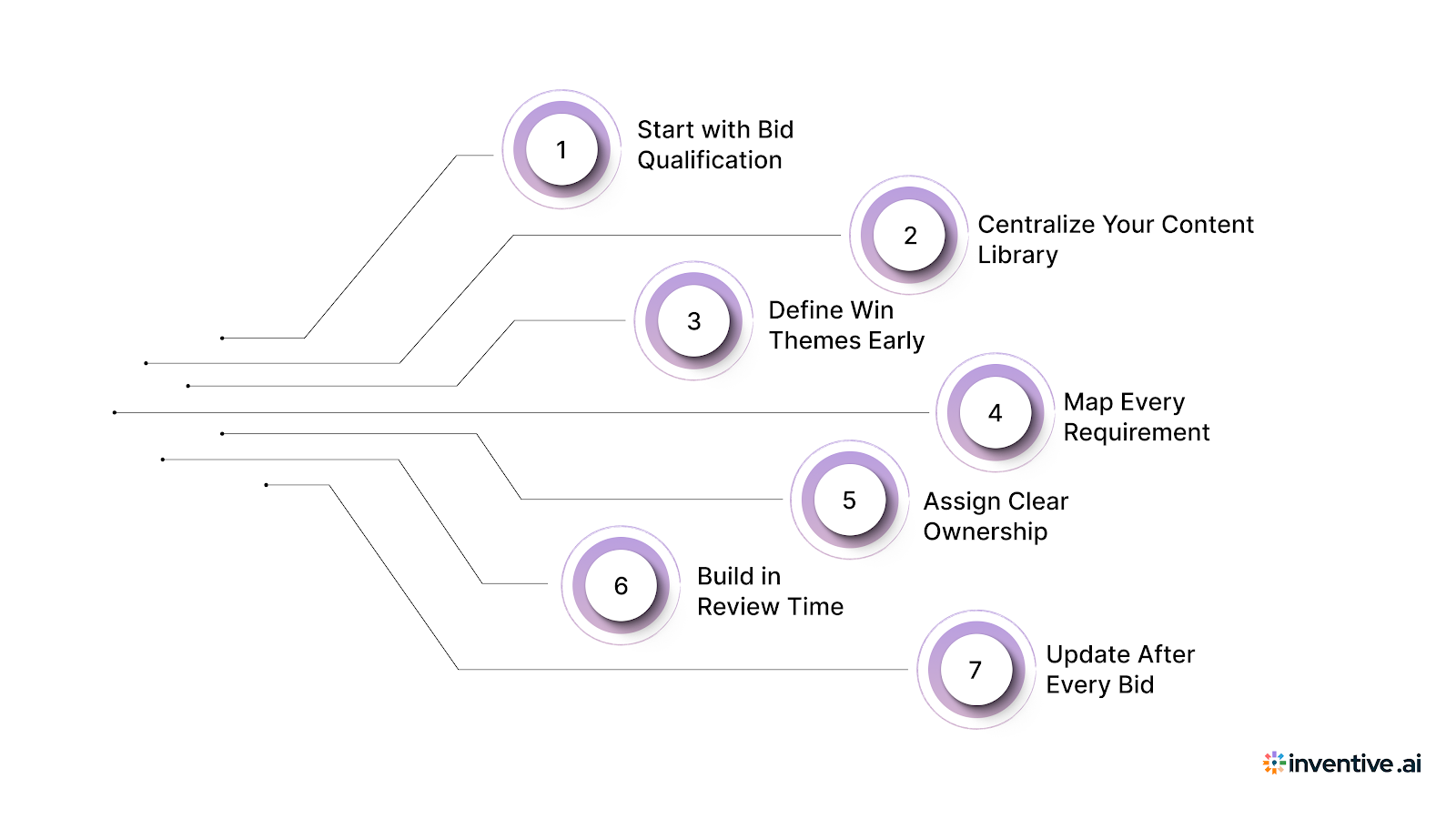
Follow these best practices to keep your RFP toolkit consistent, accurate, and ready for every bid.
- Start with Bid Qualification: Always run the Go or No Go Scorecard before drafting begins. Writing first and evaluating later leads to wasted effort and low-probability submissions.
- Centralize Your Content Library: Keep approved answers, case studies, certifications, and pricing assumptions in one shared location. When content lives across inboxes and folders, version control breaks down quickly.
- Define Win Themes Early: Agree on three to four core messages during the kickoff phase. When strategy is unclear, proposals become a collection of answers instead of a cohesive story.
- Map Every Requirement: Extract every Shall, Must, and Required item into your Compliance Matrix. Never assume a requirement is implied or optional.
- Assign Clear Ownership: Use a RACI chart so each section has one accountable owner. Shared responsibility without ownership leads to missed deadlines.
- Build in Review Time: Schedule Yellow Team and Red Team reviews in advance. Last-minute reviews rarely improve clarity or scoring.
- Update After Every Bid: After submission, revise templates, add new answers to your content library, and document lessons learned. A toolkit should improve with every cycle.
Move Beyond Static Templates With Inventive AI-Powered RFP Responses
Templates give your team structure. AI gives your team speed, accuracy, and consistency at scale. If your current process still depends on copy-paste answers and manual review cycles, gaps and contradictions are inevitable.
Here’s how Inventive AI strengthens every file in your RFP toolkit.
Context Engine That Understands the Full RFP
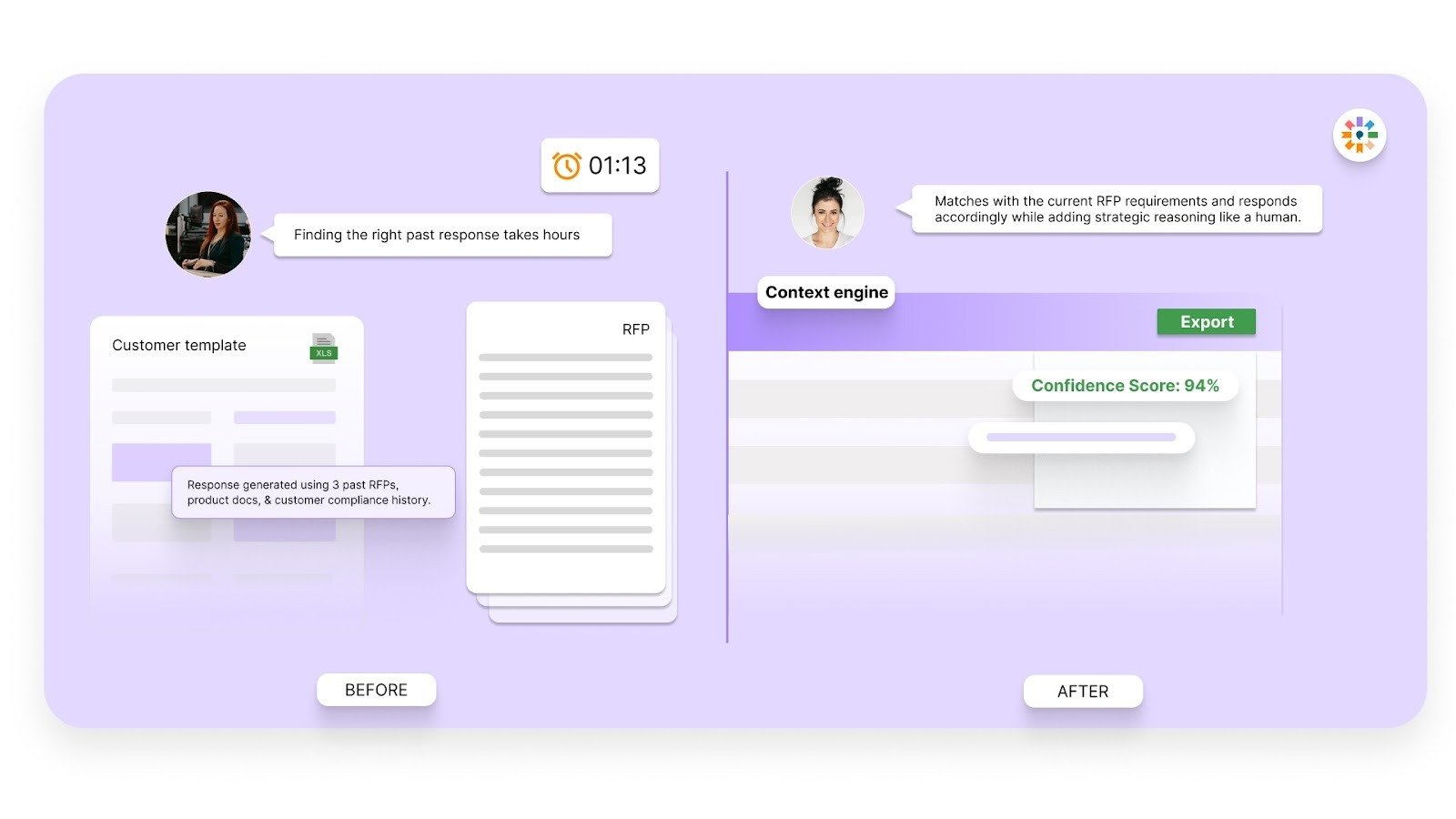
Many tools rely on shallow ChatGPT or basic RAG lookups, which often generate generic answers. Inventive AI uses multi-layer reasoning to understand the full RFP context before drafting a response. This produces customized answers grounded in your approved knowledge sources, written with the depth of a subject matter expert rather than a generic assistant.
Conflict Detection Across Responses
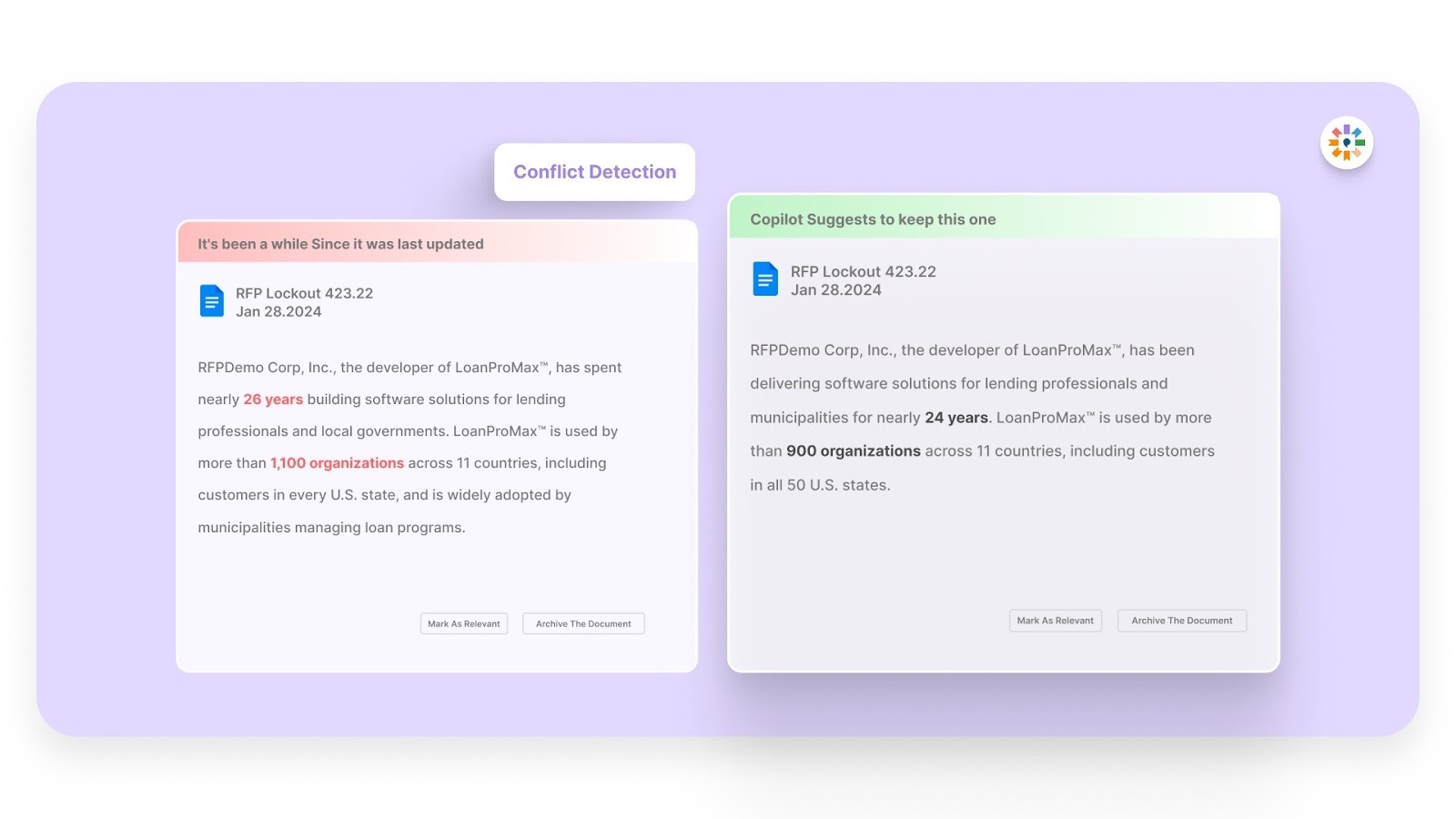
Large proposals often contain hidden contradictions. One section says you support 500 users, another says 1,000. These inconsistencies create risk during evaluation. Inventive AI automatically flags conflicting statements across answers so your team can correct them before submission.
Outdated Content Detection
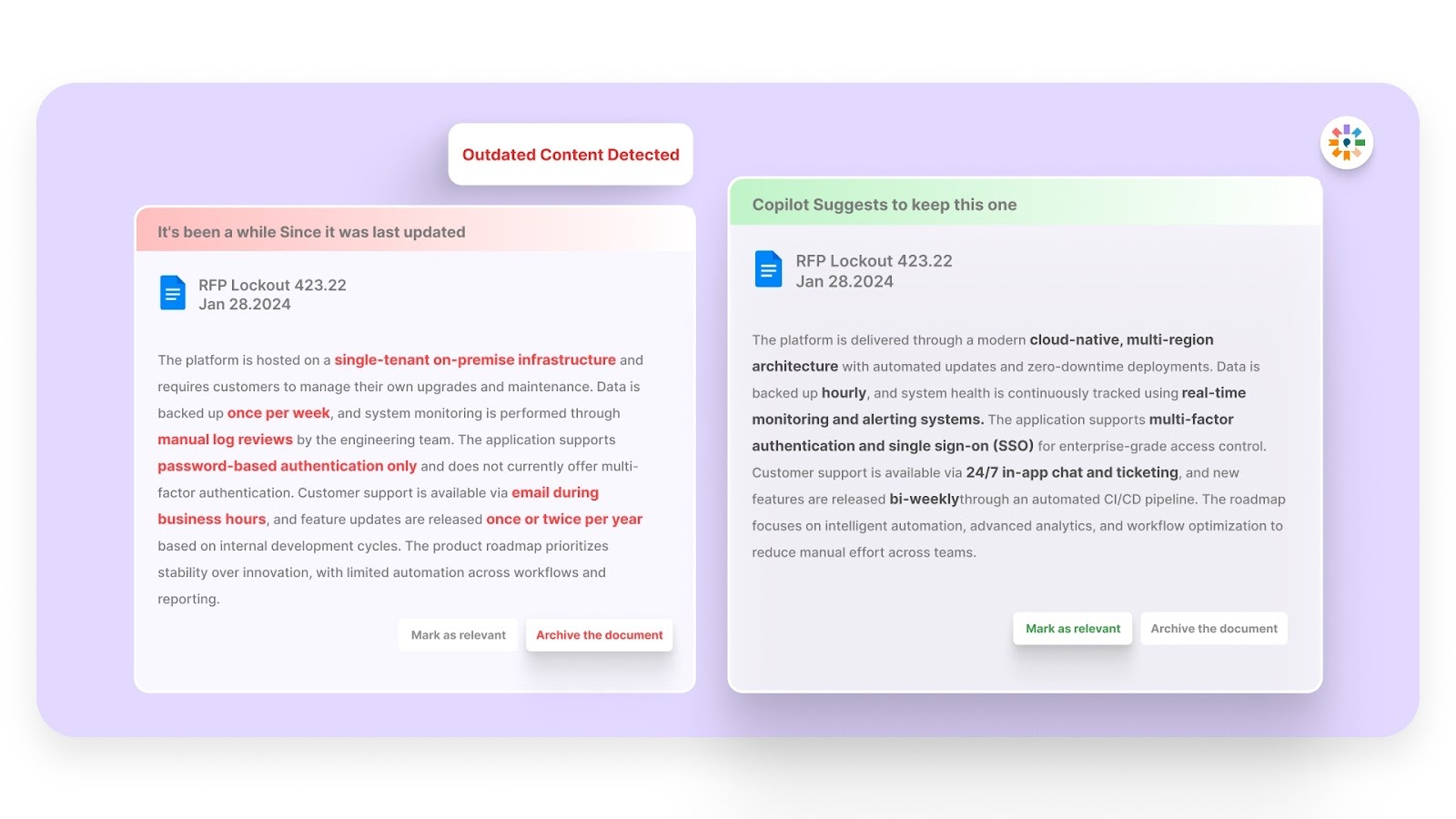
Most vendors maintain massive libraries of past answers. Over time, certifications expire, policies change, and product features update. Inventive AI identifies outdated or non-compliant content inside your knowledge sources, reducing manual review and preventing risky responses.
2X Higher Quality Responses With Multi-Agent AI
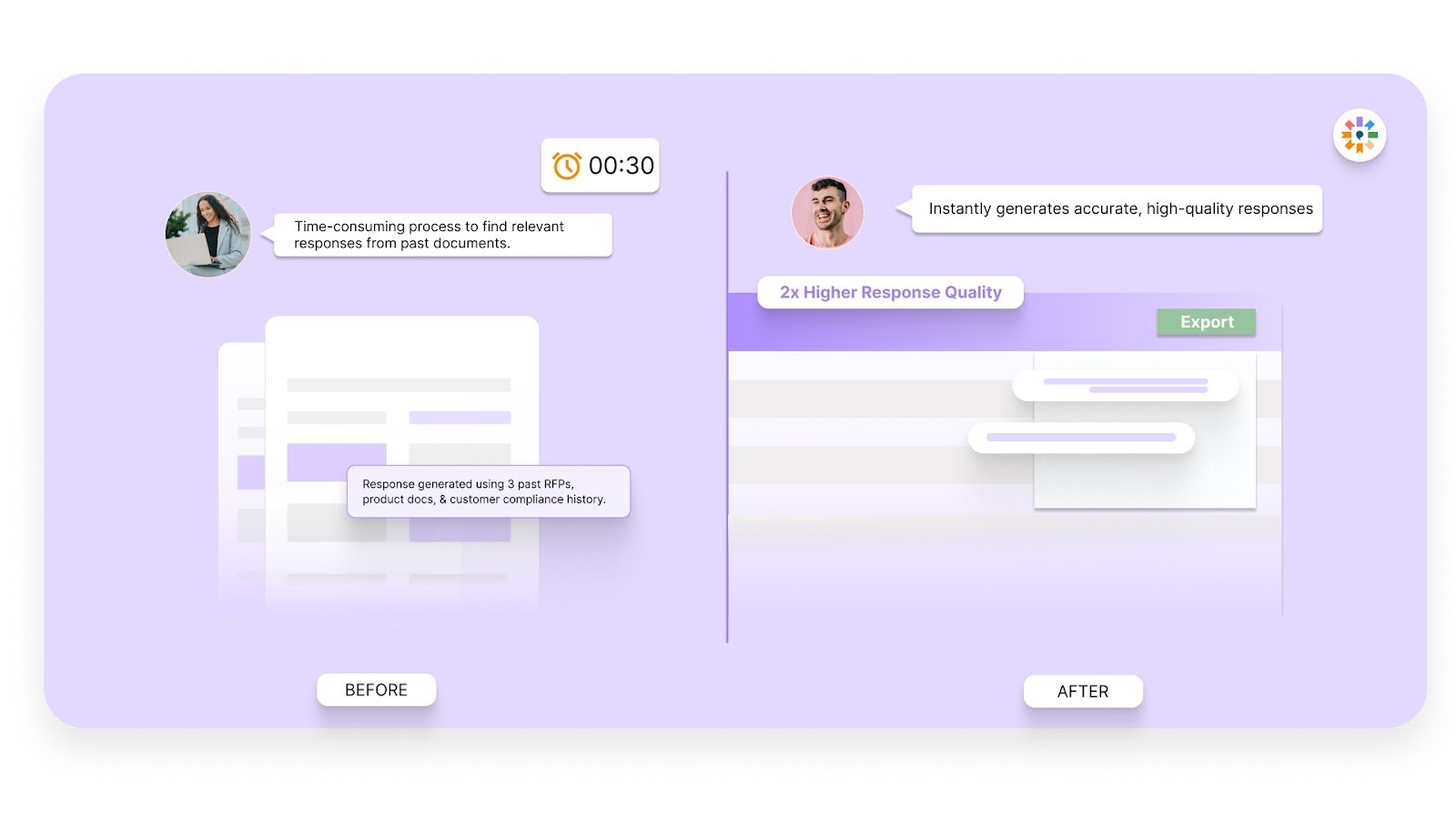
Inventive AI’s multi-agent AI analyzes intent, context, and requirements before drafting. It focuses on clarity, completeness, and alignment with the actual question being asked. The result is more strategic responses that feel intentional rather than templated.
Simple, Easy to Use Interface
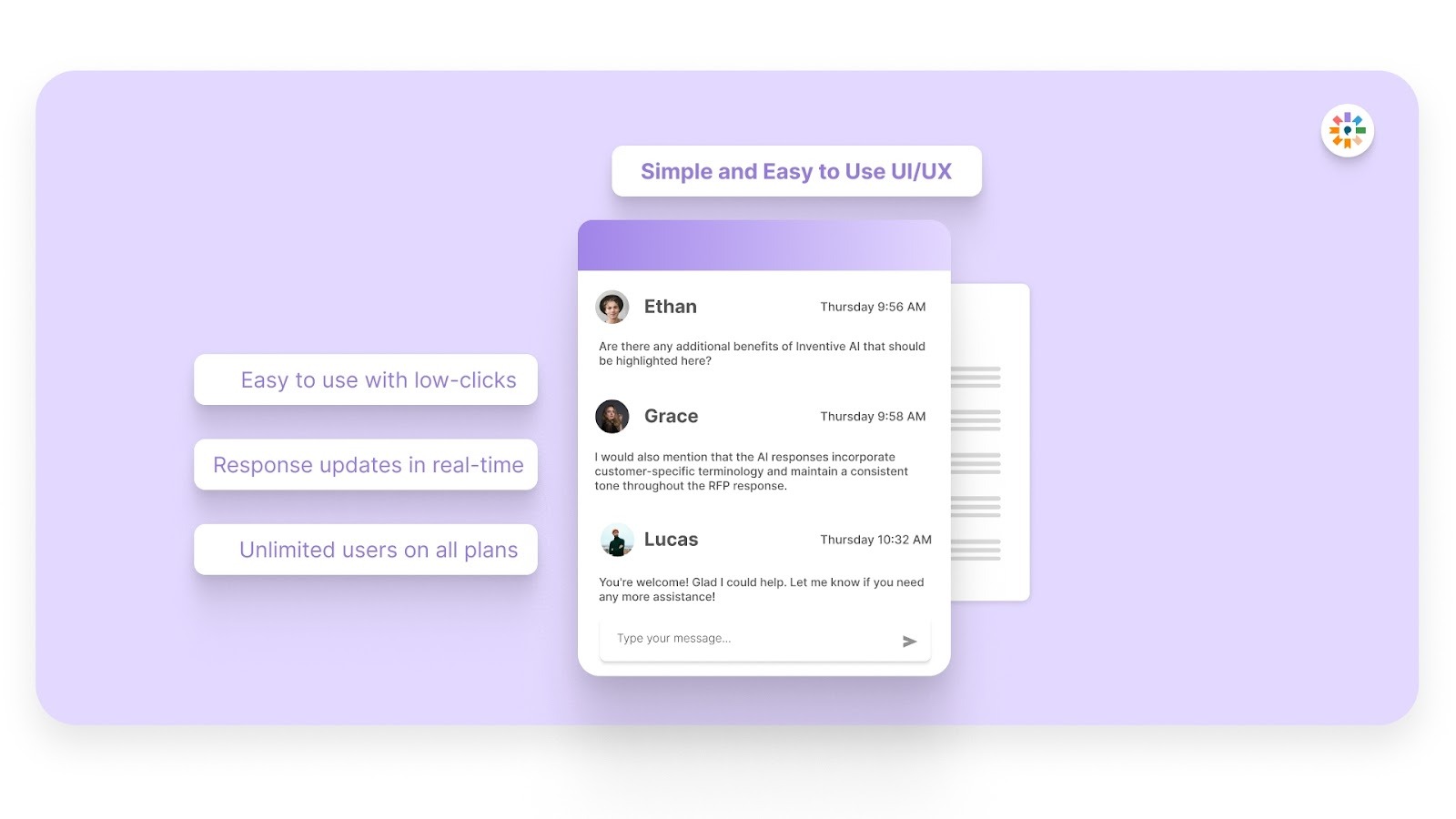
Adoption determines success. Inventive AI is rated the easiest to use RFP software on G2 and has achieved full adoption across its customer base. Your sales, proposal, and solutions teams can start using the platform without complex onboarding or technical training.
If your team is spending weeks assembling drafts, chasing SMEs, and checking compliance manually, it may be time to upgrade your process.
FAQs
1. How long should an RFP response typically be?
There is no universal page count. The length should match the buyer’s instructions and evaluation criteria. Focus on answering every requirement clearly and directly rather than adding extra background that does not support scoring.
2. Who should own the RFP response process inside an organization?
In many companies, a Proposal Manager or Sales Lead holds responsibility for the process. This person brings subject-matter experts together, tracks timelines, and checks that the final submission follows the RFP’s structure and formatting requirements.
3. Should small deals follow the same toolkit structure?
Yes, but at a lighter level. Even smaller bids benefit from a quick qualification review, consistent pricing format, and requirement tracking. You can scale the depth of documentation based on deal size.
4. What is the biggest mistake vendors make in RFP responses?
Many vendors focus too heavily on company history and product features instead of directly answering the evaluation criteria. Buyers score against requirements, not marketing language.
5. How often should an RFP toolkit be updated?
Review your toolkit at least once every quarter. Update pricing assumptions, certifications, product capabilities, and case studies so each response reflects the latest offerings and policies.

90% Faster RFPs. 50% More Wins. Watch a 2-Minute Demo.
.avif)
Mukund Kumar
Understanding that sales leaders struggle to cut through the hype of generic AI, Mukund focuses on connecting enterprises with the specialized RFP automation they actually need at Inventive AI. An IIT Jodhpur graduate with 3+ years in growth marketing, he uses data-driven strategies to help teams discover the solution to their proposal headaches and scale their revenue operations.

Gaurav Nemade
After witnessing the gap between generic AI models and the high precision required for business proposals, Gaurav co-founded Inventive AI to bring true intelligence to the RFP process. An IIT Roorkee graduate with deep expertise in building Large Language Models (LLMs), he focuses on ensuring product teams spend less time on repetitive technical questionnaires and more time on innovation.