
Top 10 Responsive (RFPIO) Competitors & Alternatives 2026
In this guide, we break down the top 10 Responsive (RFPIO) competitors and alternatives for 2026, helping you evaluate platforms that offer deeper automation, real-time intelligence, and enterprise-grade efficiency for high-volume RFP, RFI, and security questionnaire workflows.
.avif)
Introduction
As RFP volumes rise and buyer scrutiny intensifies, organizations are under pressure to deliver faster, more accurate responses without overwhelming sales, proposal, and solutions teams.
Recent research shows that 83% employees lose time in searching for information, rewriting outdated content, or reconciling conflicting versions. Such delays directly slow down deal velocity and revenue outcomes.
Responsive (RFPIO) remains a widely adopted tool for centralizing content and enabling collaboration. Still, many teams now find their manual content upkeep, shallow AI suggestions, and limited governance difficult to scale at enterprise levels. This is why modern platforms, especially AI-driven systems like Inventive AI, are becoming the preferred choice.
In this guide, we break down the top 10 Responsive (RFPIO) competitors and alternatives for 2026, helping you evaluate platforms that offer deeper automation, real-time intelligence, and enterprise-grade efficiency for high-volume RFP, RFI, and security questionnaire workflows.
About RFPIO
RFPIO is one of the most widely used RFP response management platforms, known for helping teams centralize their content library and collaborate more efficiently during proposal creation. It offers tools for organizing reusable answers, assigning questions, and managing approval workflows.
However, Responsive’s automation depends heavily on manual library maintenance, which can lead to outdated or inconsistent content across departments. Its AI suggestions often rely on keyword matching rather than deep contextual understanding.
Now that we know a bit about RFPIO, next, we are going to look at some of the top 10 RFPIO competitors and their alternatives.
Must Read: AI for B2B SaaS Revenue Teams: Top 9 Tools, Use Cases, and Proven ROI
Top 10 RFPIO Competitors and Alternatives
Choosing the right RFP response platform is critical when your team needs speed, accuracy, and better content governance. If you’re exploring RFPIO alternatives, here are the top 10 competitors that offer stronger automation, AI capabilities, or enterprise-grade workflows.
1. Inventive AI
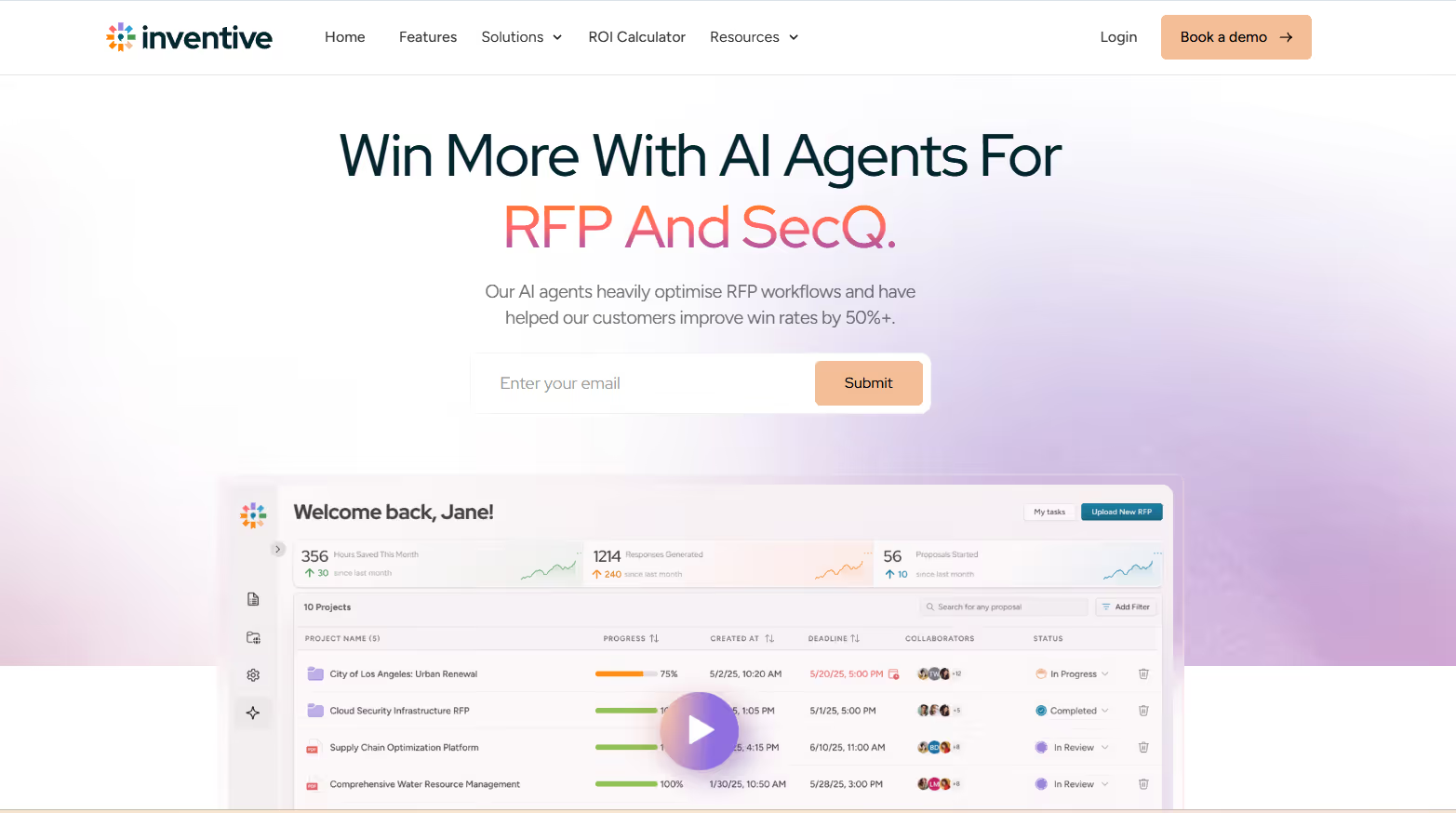
Inventive AI is the leading AI RFP Agent built for enterprise teams that need real-time accuracy, hyper-contextual responses, and complete RFP lifecycle automation. Unlike template-driven or generic AI tools, Inventive AI understands your internal knowledge, ensuring every response is precise, consistent, and tailored to the buyer’s expectations. It eliminates manual cleanup, outdated content, and fragmented workflows by using multi-agent intelligence and automated content governance.
Key Features
- 2X more usable answers with minimal edits. Inventive AI’s hyper-contextual drafting uses your actual knowledge base, past RFPs, and technical documents to generate highly accurate first responses.
- Deep customization for enterprise workflows, supports multi-team inputs, SME reviews, legal approval flows, and complex cross-department collaboration without breaking structure or accuracy.
- Only platform that answers value statements effectively. Win Themes automatically builds buyer-aligned, strategic narratives that help teams differentiate proposals and strengthen deal positioning.
- AI Content Freshness + Conflict Detection continuously scans all connected sources to flag outdated, inconsistent, or duplicate information to ensure every answer is current and reliable.
- Multi-Agent Automation across the full lifecycleautomates intake, requirement analysis, drafting, validation, collaboration, and final review to reduce response times and boost throughput.
- Unified Knowledge Hub via deep integrations connects with Slack, SharePoint, Google Drive, CRMs, and legacy repositories to centralize all organizational knowledge into one accessible, AI-ready system.
Pros
- Hyper-accurate, context-aware drafts rooted in verified internal knowledge.
- Full lifecycle RFP automation delivering up to 90% faster response cycles.
- Improves win rates through value-driven narratives and deep deal alignment.
- Scales effortlessly across global enterprise teams and complex workflows.
Cons
- Limited analytics (the only drawback).
Best For
- Enterprises responding to complex, multi-team RFPs, RFIs, and security questionnaires.
- Teams needing highly accurate technical, product, or security content.
- Organizations with large, distributed knowledge bases across multiple systems.
- Companies seeking to reduce SME workload and maintain consistent proposal quality.
- Teams requiring real-time content governance and scalable automation.
2. Responsive ( Formerly RFPIO)
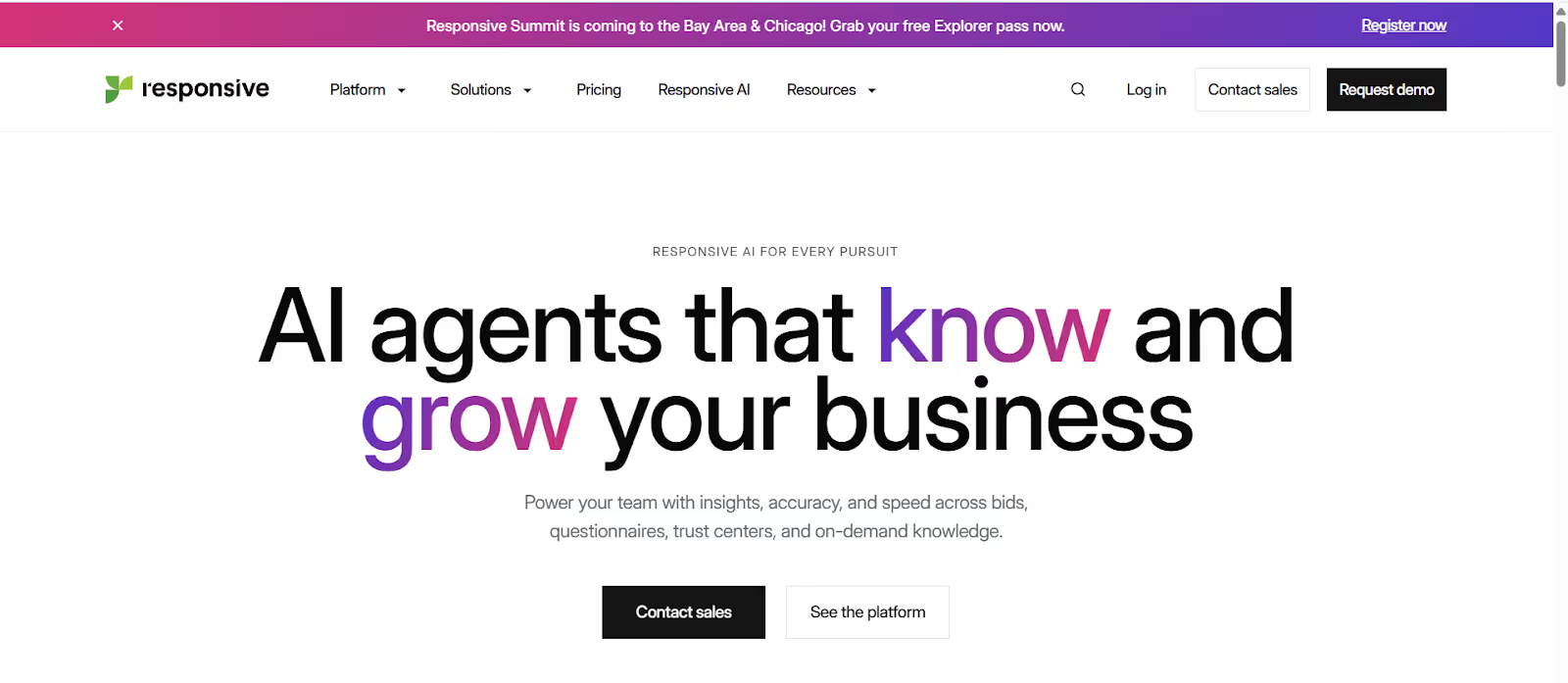
Responsive remains one of the earlier RFP software platforms, built around traditional content libraries and collaboration tools. While dependable for basic proposal operations, it was never engineered for the AI-driven workflows teams now rely on. Its recent AI additions sit on top of a legacy foundation, meaning the platform still requires manual content upkeep, rigid library structures, and heavy human review.
When teams face rising RFP volume, complex questionnaires, or strict accuracy demands, this limits how far Responsive can scale. Modern proposal teams often discover that legacy-first systems with add-on AI struggle to match the speed, context understanding, and automation depth required today.
Key Features
- Centralized Answer Library for storing reusable, searchable content.
- AI-assisted answer suggestions based on stored responses.
- Collaboration tools for assigning, reviewing, and approving questions.
- Integrations with CRM systems, cloud storage platforms, and communication tools.
- Support for multiple document types, including RFPs, DDQs, and vendor questionnaires.
Pros
- Well-known and easy for teams to adopt.
- Strong content organization and search capabilities.
- Useful for repeatable, template-based proposal workflows.
- Supports broad integration with common enterprise tools.
Cons
- Content becomes stale quickly without manual updates.
- AI suggestions lack deep contextual understanding, requiring significant rewriting.
- Workflow automation is limited and not built for multi-department enterprise complexity.
- Struggles with technical, security, or compliance-heavy RFPs needing high accuracy.
- Lacks advanced governance features like real-time conflict detection or content freshness monitoring.
Suggested Alternative: Inventive AI is an AI-native RFP Agent designed for teams that have outgrown legacy, library-driven platforms. Its multi-agent system generates 10× faster, highly accurate drafts rooted directly in your verified knowledge sources, without relying on stale content or manual tagging.
With real-time conflict detection, automated content freshness checks, and enterprise-grade context understanding, Inventive AI gives sales and proposal teams the speed, accuracy, and governance today’s RFP environments require.
3. Loopio
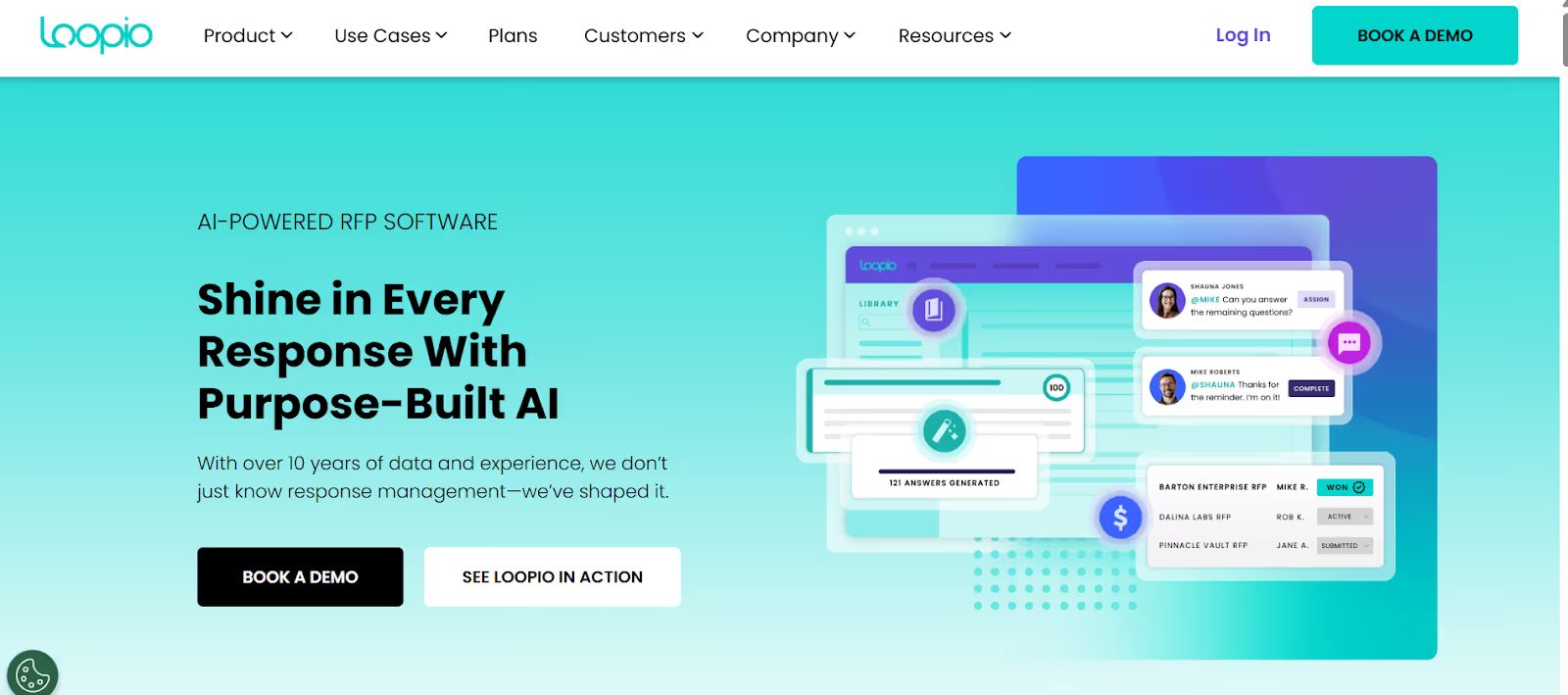
Loopio is a well-known legacy RFP response platform built to help teams organize reusable content and manage proposal workflows more efficiently. It performs well for predictable, repeatable RFP processes where content libraries and manual coordination are the primary needs. However, Loopio still relies heavily on manual content upkeep, library tagging, and human review cycles. Its AI capabilities were added only recently and remain shallow compared to modern, AI-native platforms. As a result, Loopio often struggles to scale when enterprise teams need deeper automation, fresher content, and higher accuracy across complex, high-volume RFP operations.
Key Features
- Centralized content library for storing, tagging, and reusing approved responses.
- Loopio’s “Response Intelligence” for basic AI-assisted suggestions.
- Collaboration tools to assign questions, track progress, and manage review cycles.
- Integrations with platforms like SharePoint, Google Drive, Salesforce, and Slack.
- Project dashboards for visibility into proposal timelines and team workloads.
Pros
- Easy-to-use interface and simple onboarding for new teams.
- Strong content organization structure for standard Q&A libraries.
- Saves time on repetitive tasks like searching for past responses.
- Reliable for teams with consistent, predictable proposal volumes.
Cons
- Requires constant manual content updates to keep answers fresh.
- AI suggestions lack deep contextual understanding, increasing manual editing.
- Limited automation; does not support full lifecycle workflows for complex RFPs.
- Not ideal for technical, security, or enterprise-grade responses requiring precision.
- No real-time conflict detection, allowing outdated or inconsistent content into proposals.
Must Read: Must-Have AI Tools for Sales Productivity in 2025
4. Arphie
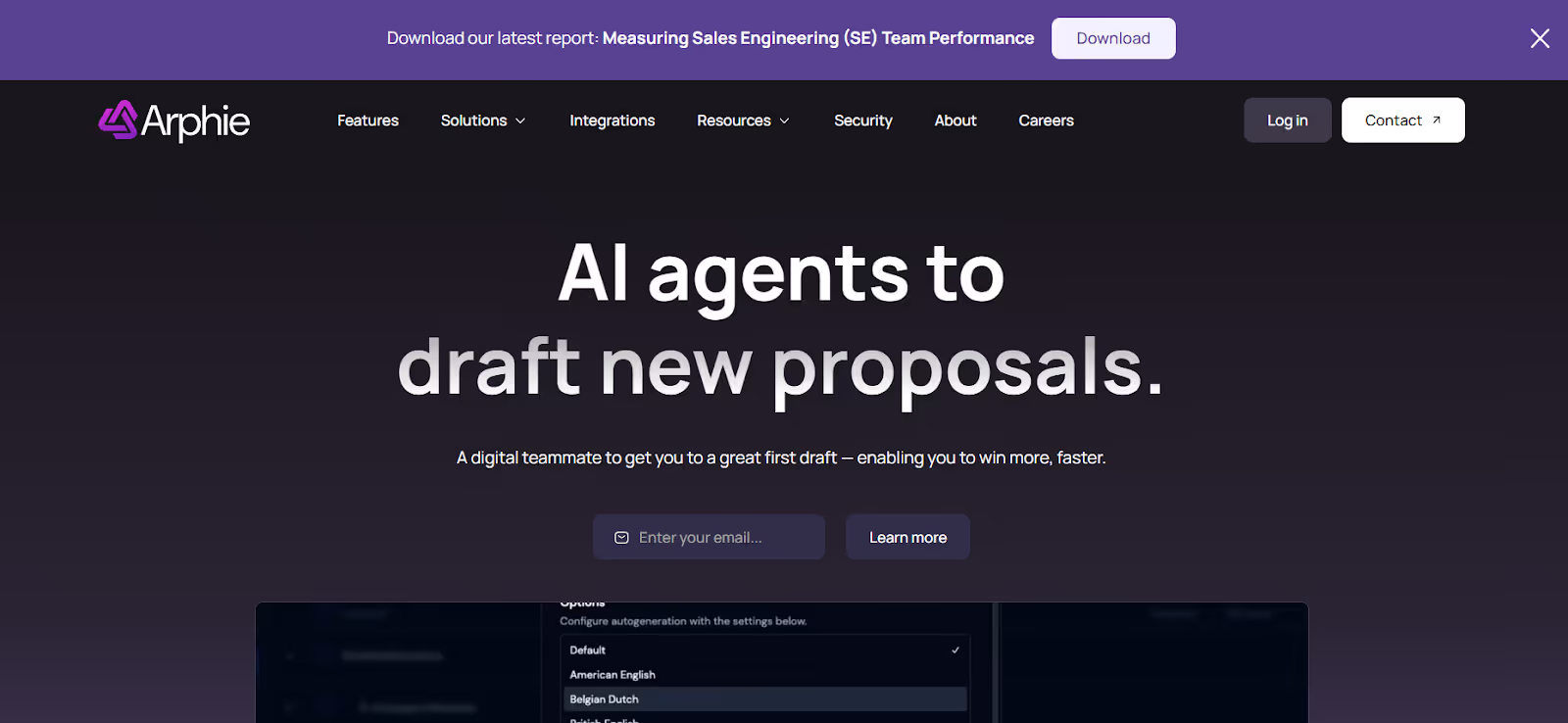
Arphie is a new-age AI response management tool designed to help teams generate quick answers for RFPs, questionnaires, and customer inquiries. Its main strength lies in speed. Arphie focuses on rapid AI generation and an easy-to-use interface, making it suitable for teams with lighter workloads or simple response needs. However, because it relies heavily on generic AI models, Arphie struggles with deep contextual accuracy and governance required for enterprise-scale RFP operations.
Key Features
- AI-generated responses for basic questionnaires and RFP sections.
- Lightweight content workspace for saving and reusing past responses.
- Real-time collaboration tools for quick team input.
- Ability to upload documents or forms for instant AI-drafted answers.
- Simple interface designed for non-technical users.
Pros
- Very fast at generating first-draft responses.
- Easy to set up with minimal onboarding.
- Good for small teams or early-stage companies with simple RFP requirements.
- Affordable compared to larger enterprise RFP platforms.
Cons
- Limited contextual depth; AI often produces generic or incomplete responses.
- No advanced content governance, freshness monitoring, or conflict detection.
- Not suitable for technical, security, or compliance-heavy RFPs.
- Lacks enterprise-grade workflows, version control, and multi-team routing.
- Minimal integrations make centralized knowledge management difficult.
5. Autogen AI
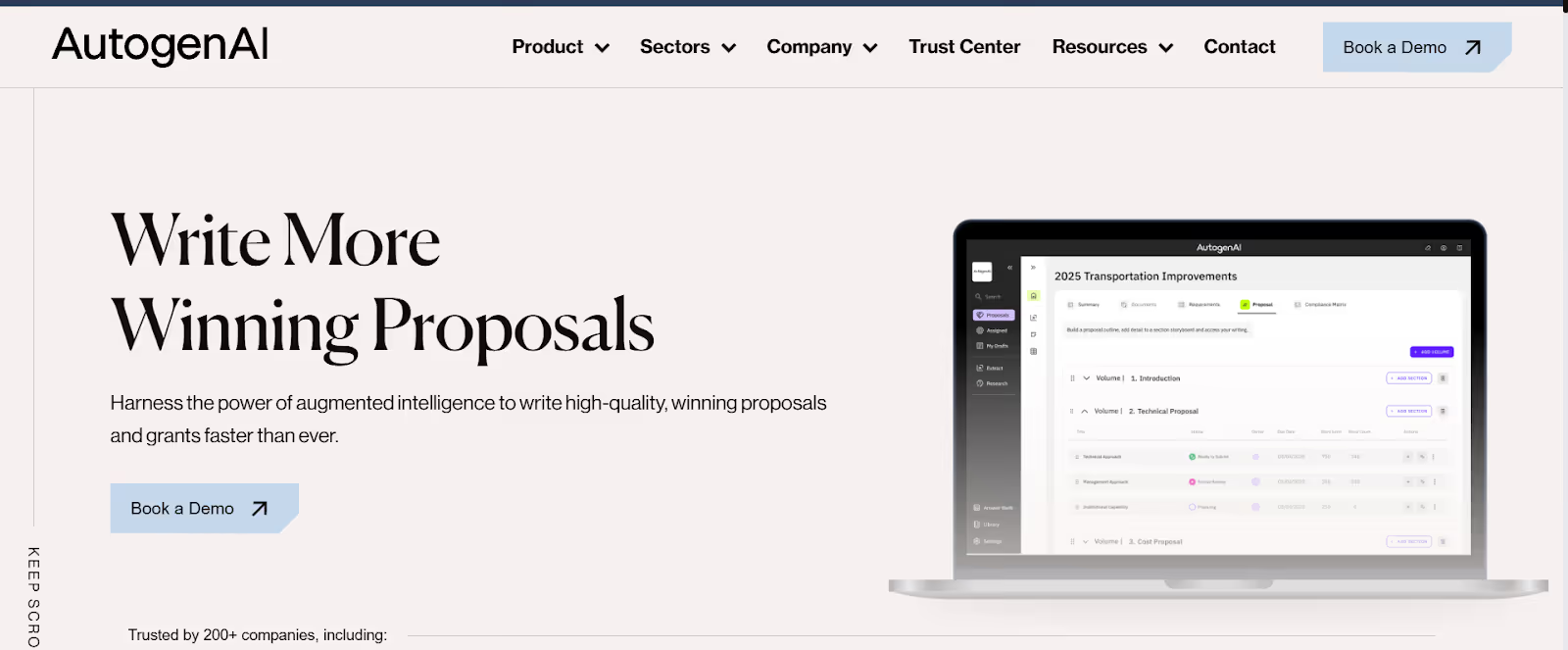
AutogenAI is a generative writing platform designed to accelerate content creation for bids, tenders, proposals, and large written submissions. It performs well for teams that need fast narrative drafts, especially when proposal complexity is low. However, AutogenAI relies heavily on general-purpose text generation, which makes it difficult to maintain accuracy, consistency, and governance across enterprise-scale RFP programs.
Key Features
- AI-generated narrative drafts for proposals, bids, and long-form content.
- Simple, user-friendly interface suitable for non-technical users.
- Basic content library for storing and reusing previously generated material.
- Rapid first-pass content creation to speed up early drafting.
- Collaboration tools for teams to review and refine drafts.
Pros
- Very fast for creating first-draft narratives.
- Useful for teams with low to moderate RFP volume.
- Reduces writing time on simple, repetitive content.
- More affordable than many enterprise-grade RFP platforms.
Cons
- Generic AI outputs often require heavy rewriting for accuracy.
- No content freshness or conflict detection, risking outdated or inconsistent responses.
- Not designed for complex RFPs, RFIs, or security questionnaires.
- Lacks lifecycle automation, only assists with drafting.
- Limited contextual intelligence; cannot handle technical or multi-team workflows.
6. AutoRFP
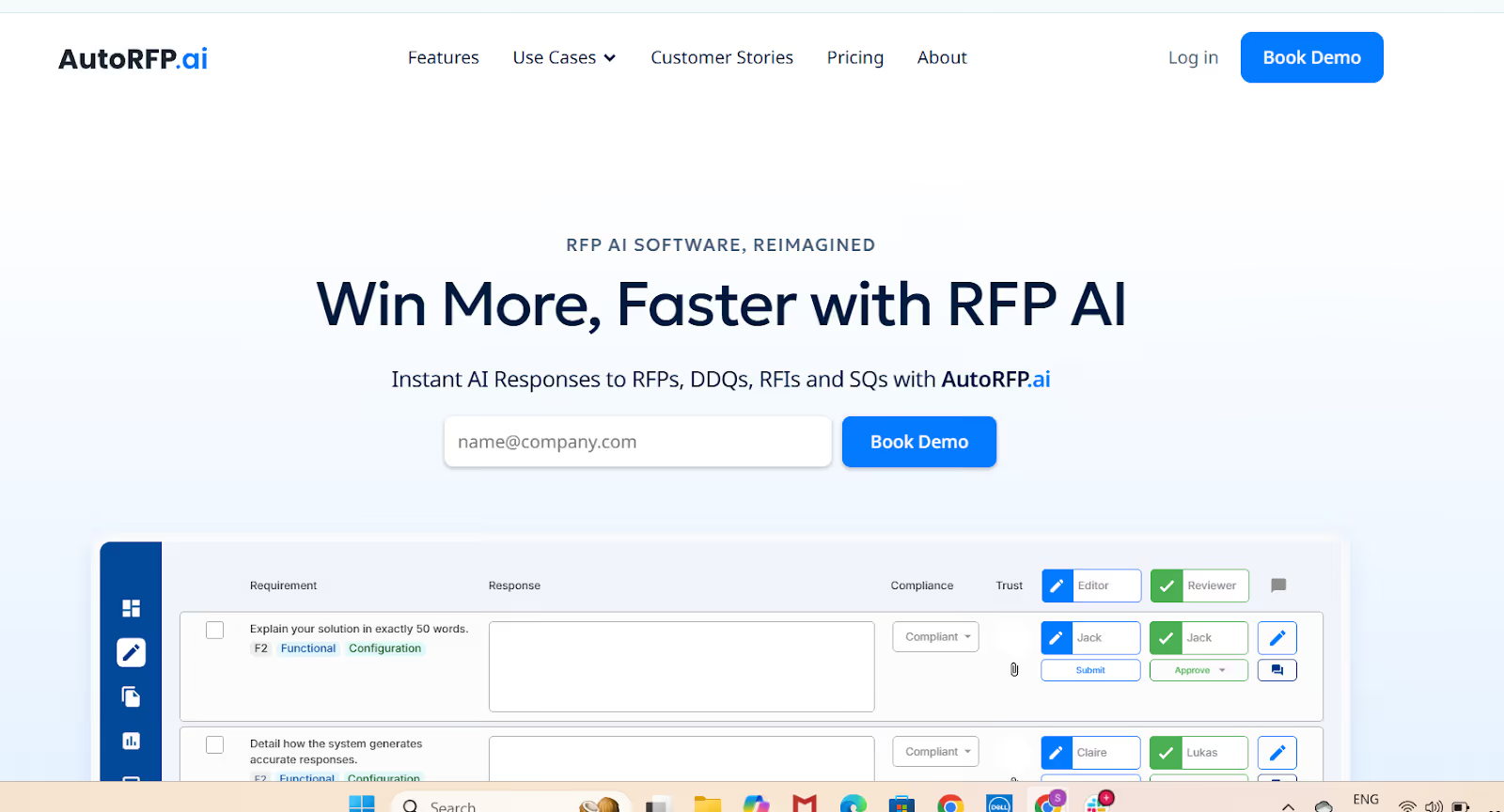
AutoRFP AI is an AI-driven response tool designed to help teams generate faster answers for RFPs, RFIs, and security questionnaires. It focuses on speed and simplicity, making it suitable for organizations with lighter workloads or teams that need quick, AI-assisted drafting. While AutoRFP AI offers convenience, it lacks the deeper contextual accuracy and governance required for enterprise-grade proposal management.
Key Features
- AI-generated responses for RFPs, RFIs, DDQs, and vendor questionnaires.
- Quick upload-and-respond capabilities for spreadsheets and documents.
- Basic answer library for saving and reusing historical responses.
- Simple collaboration tools for reviewing and editing drafts.
- Lightweight interface for easy adoption.
Pros
- Fast AI drafting for simple response needs.
- Minimal setup and onboarding required.
- Good for small teams or early-stage organizations handling low-complexity RFPs.
- More affordable compared to full-scale RFP management platforms.
Cons
- Limited contextual understanding; AI often produces surface-level, generic responses.
- No automated content freshness monitoring or conflict detection.
- Not ideal for technical or enterprise-level RFPs requiring precision and accuracy.
- Lacks robust workflow automation for intake, validation, or multi-team review.
- A few integrations are making centralized knowledge management difficult as teams scale.
Suggested Alternative: Teams that outgrow AutoRFP AI’s basic drafting typically shift to Inventive AI for its accuracy, governance, and full-scale automation. Inventive AI delivers hyper-contextual, source-verified answers with real-time conflict detection and content freshness monitoring.
7. Proposify
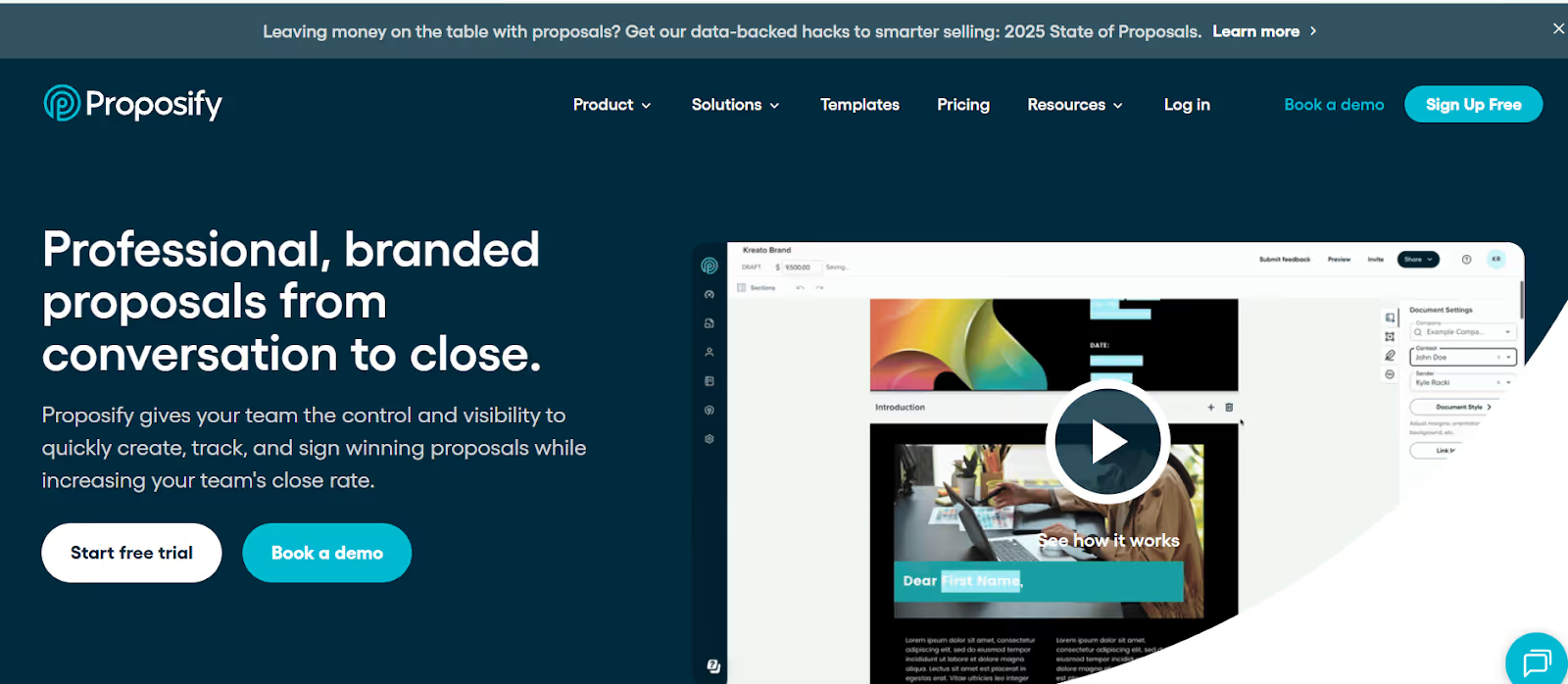
Proposify is a proposal design and document creation platform focused on helping sales teams build visually appealing proposals using drag-and-drop templates. It excels in presentation quality and workflow visibility, making it a strong choice for teams that prioritize branded, client-facing proposal layouts.
However, Proposify is not designed for complex RFPs, RFIs, or security questionnaires, and lacks the AI depth, automation, and content governance needed for enterprise-scale response management.
Key Features
- Drag-and-drop proposal builder with customizable design templates.
- Centralized content library for storing branded materials, pricing tables, and proposal sections.
- Real-time analytics showing when prospects open, view, or interact with proposals.
- Collaboration tools for team editing, commenting, and approvals.
- Integrations with CRM systems like Salesforce, HubSpot, and Pipedrive.
Pros
- Excellent for creating visually polished, client-ready proposals.
- Easy for sales teams to build and send proposals quickly.
- Strong analytics for tracking client engagement.
- Useful for service companies that prioritize branding and presentation.
Cons
- Not built for detailed, technical, or compliance-heavy RFPs.
- No AI-powered content governance, accuracy checks, or conflict detection.
- Cannot manage large question-and-answer libraries or complex questionnaires.
- Limited automation; focuses more on design than response management.
- Not suitable for multi-department enterprise workflows or high-volume RFP operations
8. Qvidian
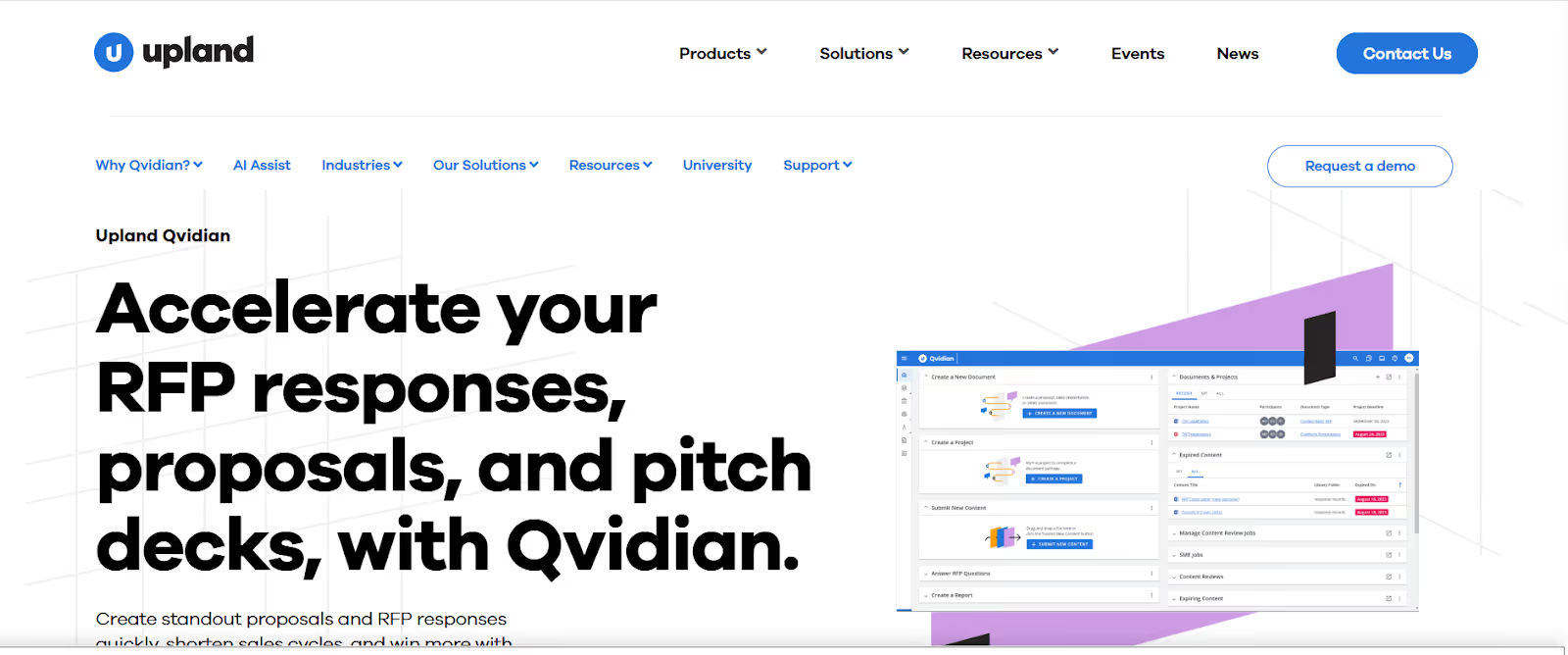
Qvidian is a long-established proposal automation and content management tool designed to help sales and proposal teams build consistent, template-based documents. It works well for organizations with predictable workflows and large volumes of standardized proposals.
However, because Qvidian relies heavily on manual content updates and limited AI capabilities, it becomes challenging for teams that need real-time accuracy, speed, and lifecycle automation.
Key Features
- Centralized content repository for storing approved proposal materials.
- Template-driven document assembly to maintain consistency and branding.
- Basic CRM integrations to pull opportunity and customer details into proposals.
- Workflow tools for routing tasks, managing reviews, and controlling permissions.
- Collaboration features for internal editing and version control.
Pros
- Reliable for generating standardized, brand-consistent proposals.
- Ideal for teams comfortable with template-based workflows.
- Helps maintain document structure and formatting across large organizations.
- Useful for predictable, repeatable content creation.
Cons
- Requires heavy manual content upkeep, leading to outdated or inconsistent answers.
- Limited AI capabilities; drafting remains slow and editing-intensive.
- Not suited for complex RFPs, RFIs, or security questionnaires requiring accuracy.
- Lacks advanced governance like content freshness monitoring or conflict detection.
- Cannot support full lifecycle automation or multi-team enterprise workflows.
9. RocketDocs
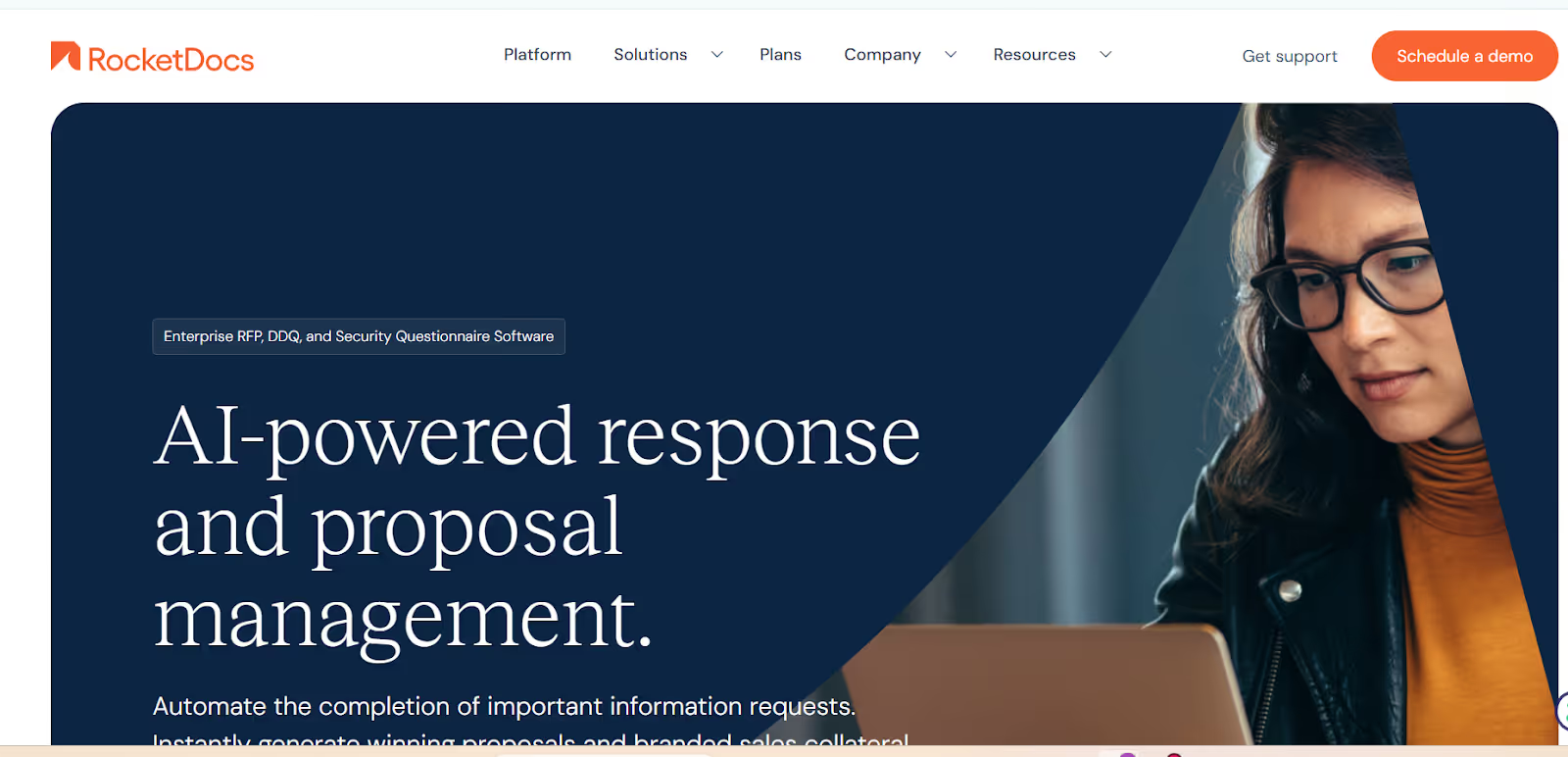
RocketDocs is a response management and proposal automation platform built to help teams streamline content organization and accelerate proposal creation. It combines a centralized content library with search tools, collaboration workflows, and integrations designed to support mid-sized organizations.
While RocketDocs improves basic response efficiency, its limited AI depth, manual content governance, and lack of advanced automation make it less suitable for enterprises handling large volumes of complex RFPs.
Key Features
- Centralized, searchable content library for proposal materials and past responses.
- Smart search capabilities to quickly locate reusable content.
- Collaboration tools for routing tasks, managing assignments, and reviewing responses.
- Integrations with CRM, cloud storage, and productivity tools.
- Template management for consistent proposal formatting.
Pros
- Good for teams needing a structured content repository.
- Simplifies collaboration and task routing across proposal teams.
- Easy-to-use interface with moderate onboarding requirements.
- Supports consistent branding across proposals.
Cons
- Heavy reliance on manual content updates risks outdated or inaccurate responses.
- Lacks hyper-contextual AI, requiring teams to rewrite or refine answers manually.
- No automated content freshness checks or conflict detection.
- Limited automation for multi-step, enterprise RFP workflows.
- Not ideal for technical, security, or compliance-heavy responses
Must Read: AI for Sales Engineering: Top 9 Tools, Use Cases, and Proven ROI
10. Tribble AI
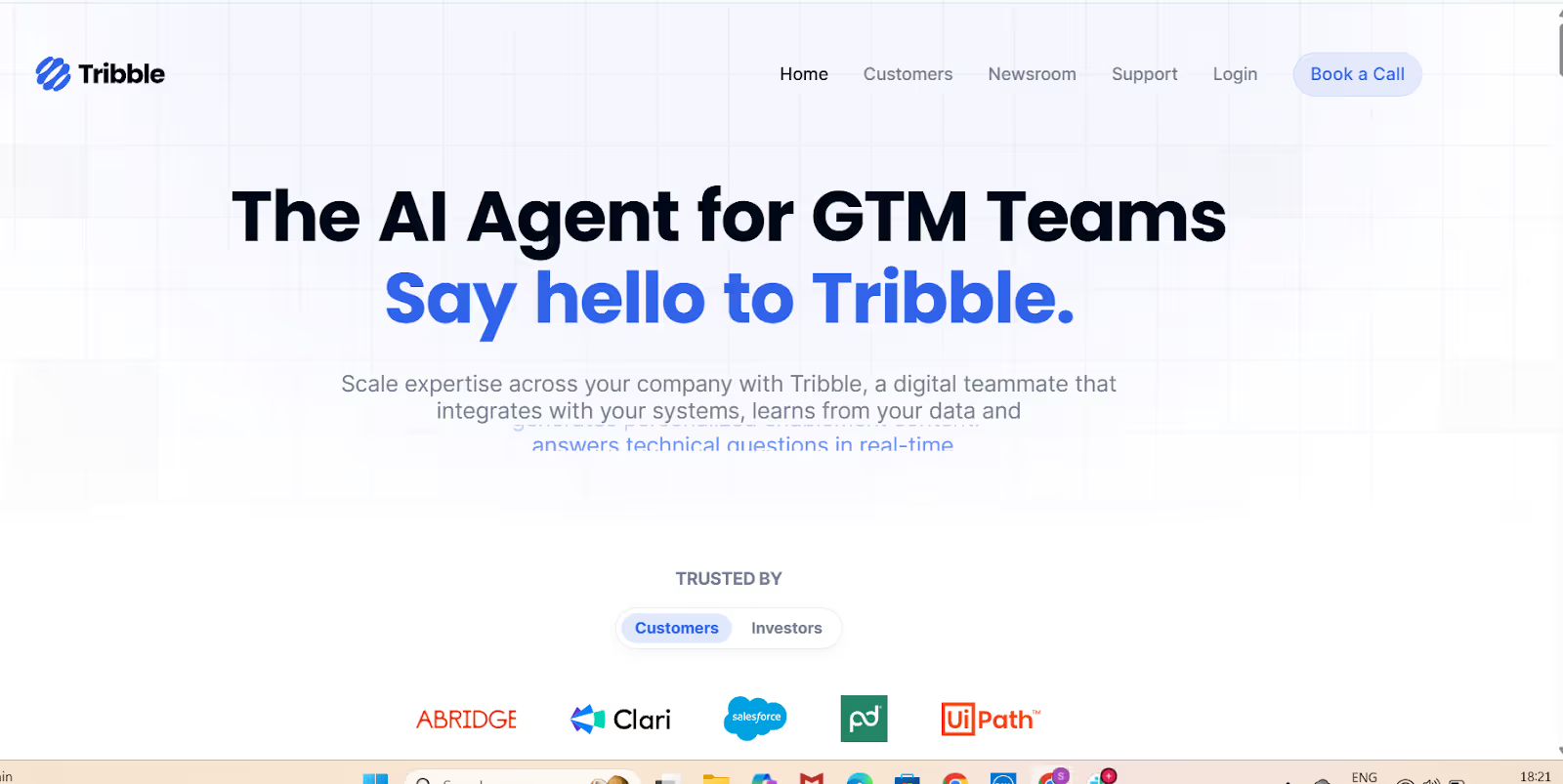
Tribble AI is a lightweight response-generation tool designed to help teams answer questionnaires, RFPs, and security assessments quickly using generative AI. It focuses on speed and simplicity, making it suitable for small teams or organizations with low-complexity requirements. However, because Tribble AI lacks deep contextual intelligence and enterprise-grade content governance, it struggles to deliver the accuracy and scalability needed for complex RFP workflows.
Key Features
- AI-generated responses for questionnaires, simple RFPs, and customer inquiries.
- Easy upload of spreadsheets, forms, and documents for instant AI drafting.
- Lightweight content memory for saving and reusing previous answers.
- Real-time collaboration tools for team review and feedback.
- Simple, intuitive interface designed for quick use.
Pros
- Extremely fast at producing first-draft responses.
- Requires minimal setup or onboarding.
- Affordable and accessible for small teams or early-stage companies.
- Ideal for low-volume, straightforward response needs.
Cons
- Limited contextual depth; responses often require significant rewriting.
- No content freshness monitoring or conflict detection.
- Not suitable for technical, security, or compliance-heavy RFPs.
- Lacks enterprise workflow features such as multi-team routing or version control.
- Minimal integrations make centralized knowledge management difficult.
Why Choose Inventive AI Over Other Tools?
Most RFP platforms focus on isolated parts of the response process, like drafting, content storage, or basic collaboration. Inventive AI takes a fundamentally different approach. Built as a true AI RFP Agent, it automates the entire RFP lifecycle with a multi-agent system engineered for enterprise accuracy, governance, and scale.
While competitors rely on template-driven workflows or keyword-based suggestions, Inventive AI delivers hyper-contextual responses grounded in your verified internal knowledge. This enables teams to generate 2× more usable answers that require minimal rewriting.
A key differentiator is Win Themes, which enriches responses with strategic, buyer-aligned messaging that strengthens deal positioning, an area where traditional tools fall short.
For CROs, VPs of Sales, and enterprise proposal teams seeking measurable outcomes, faster responses, higher accuracy, and 50%+ improvement in win rates, Inventive AI delivers a level of intelligence, automation, and governance unmatched by any competitor.
FAQs
1. Why should teams consider alternatives to Responsive (RFPIO)?
Many organizations outgrow Responsive when RFP volume increases or when deeper automation and governance become essential. Responsive still relies heavily on manual content upkeep and keyword-based AI suggestions, which can lead to outdated or inconsistent answers. Teams looking for hyper-contextual accuracy and full lifecycle automation often explore more advanced platforms like Inventive AI.
2. How is Inventive AI different from other RFPIO competitors?
Inventive AI stands out with its multi-agent architecture, real-time accuracy checks, and automated content freshness monitoring. Unlike tools that focus only on drafting or content storage, Inventive AI automates the entire RFP lifecycle while generating responses rooted in verified internal knowledge. This ensures faster responses, higher accuracy, and stronger deal alignment.
3. Which RFPIO competitor is best for enterprises handling complex RFPs?
Inventive AI is best suited for complex, technical, or multi-department RFP workflows because it offers hyper-contextual drafting, conflict detection, automated governance, and fully customizable review cycles. It helps enterprises manage large knowledge bases, reduce SME workload, and maintain consistent quality across global teams.
4. Is AI-powered RFP software more effective than template-based tools like RFPIO?
Yes. AI-powered platforms deliver accuracy, speed, and content governance that template-driven tools cannot match. With real-time freshness checks, contextual understanding, and source-backed drafting, AI-driven solutions like Inventive AI eliminate manual rework and improve response quality.

90% Faster RFPs. 50% More Wins. Watch a 2-Minute Demo.

Hardi Hindocha
Knowing that complex B2B software often gets lost in jargon, Hardi focuses on translating the technical power of Inventive AI into clear, human stories. As a Sr. Content Writer, she turns intricate RFP workflows into practical guides, believing that the best content educates first and earns trust by helping real buyers solve real problems.
.avif)
Mukund Kumar
Understanding that sales leaders struggle to cut through the hype of generic AI, Mukund focuses on connecting enterprises with the specialized RFP automation they actually need at Inventive AI. An IIT Jodhpur graduate with 3+ years in growth marketing, he uses data-driven strategies to help teams discover the solution to their proposal headaches and scale their revenue operations.