
Sample Government RFP & Response Guide for U.S. Vendors

Have you ever spent weeks preparing a bid, only to realize you misread a single requirement in a government RFP? For many vendors, reviewing a sample government RFP is the first step toward avoiding costly mistakes. The stakes are high, and even small compliance gaps can mean immediate disqualification.
Government solicitations are detailed, structured, and unforgiving. Sales and proposal teams often struggle with strict formatting rules, evaluation criteria, and cross-functional input that must come together under tight deadlines. Without a clear template to reference, responses can quickly become inconsistent or incomplete.
This guide presents a sample government RFP template, a clear response structure for vendors, and practical advice for customizing proposals to procurement requirements.
Complete Sample Government RFP Template
Instead of relying on a generic template, reviewing real government-issued RFPs is one of the best ways to understand how public agencies structure procurement documents. Actual solicitations show the level of detail agencies expect and the formal structure vendors must follow when preparing responses.
Below are two real examples of government RFPs used by public organizations:
1. Prince William County Service Authority (Construction, Project, and Program Management Services)
The Prince William County Service Authority issued this RFP to procure firms capable of providing construction, project, and program management services for water and wastewater infrastructure projects.
Key sections in this RFP include:
- Introduction and agency background
- Scope of work for infrastructure project oversight
- Procurement rules and proposal submission instructions
- Evaluation criteria such as staffing plan, firm experience, and technical approach
- Required forms, certifications, and references

2. Saint Louis Science Center (Owner Representation / Project Management Services)
The Saint Louis Science Center issued this RFP to select a firm that will manage the Main Entrance Addition Project at its St. Louis facility.
The document includes:
- Project description and construction schedule
- Scope of project management and owner representation services
- Proposal format requirements and page limits
- Selection criteria, including experience and project team qualifications
- Submission instructions and required documentation

Once you understand how agencies structure their solicitations, you need a response framework that mirrors their requirements and scoring priorities.
Winning Government RFP Response Template (Vendor Version)

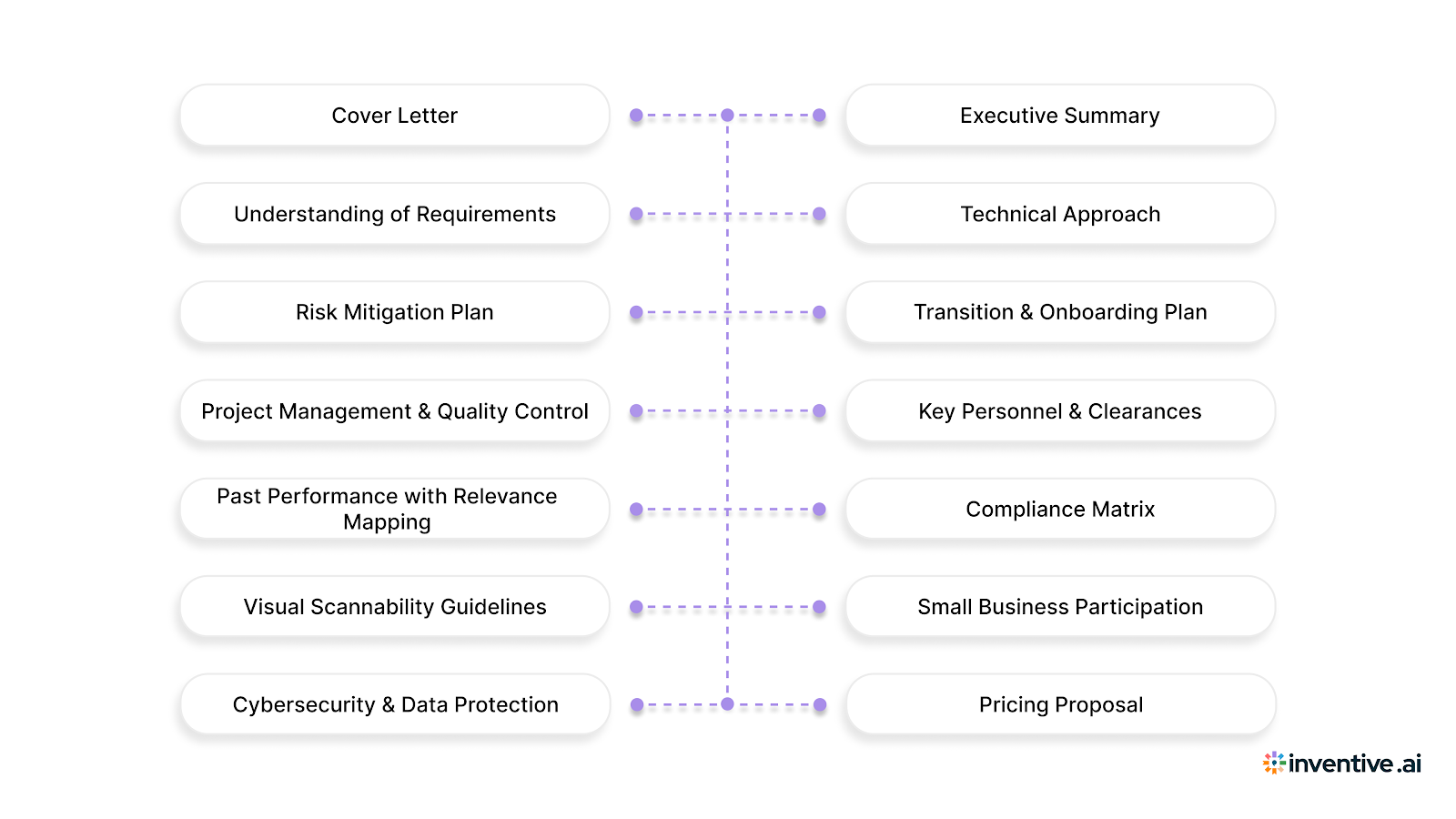
If you’re responding to a government RFP like the one above, your proposal must mirror the structure, address every requirement, and make compliance easy to score. Below is a structured response template designed for public sector bids.
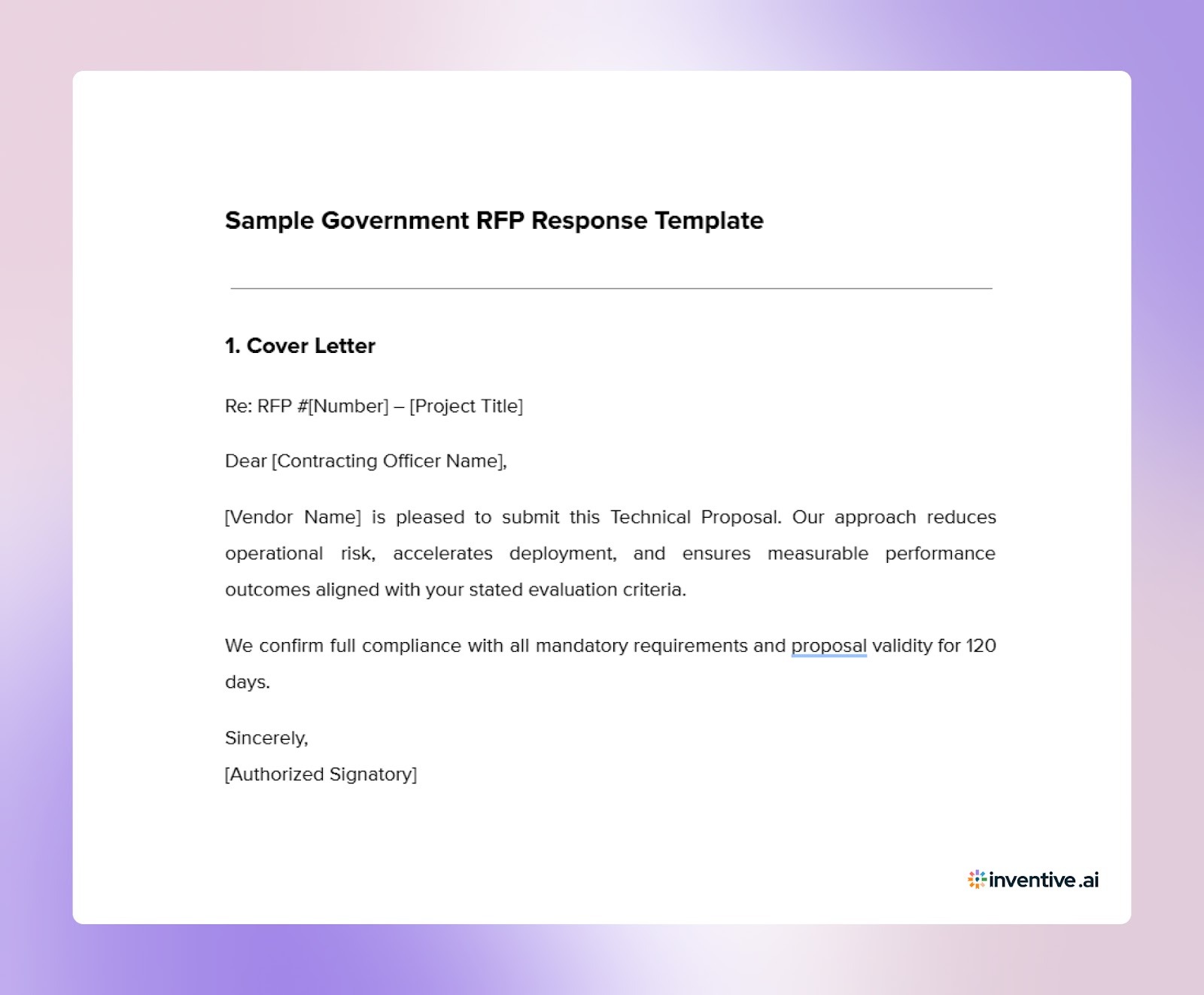
1. Cover Letter
Re: RFP #[Number] – [Project Title]
Dear [Contracting Officer Name],
[Vendor Name] is pleased to submit this Technical Proposal. Our approach lowers operational risk, shortens deployment timelines, and delivers measurable performance results that correspond to the evaluation criteria outlined in the RFP.
We confirm full compliance with all mandatory requirements and proposal validity for 120 days.
Sincerely,
[Authorized Signatory]
2. Executive Summary
This section must:
- Identify 2–3 Win Themes
- Translate features into measurable benefits
- Address the Agency’s primary risk concerns
- Preview transition readiness
Example Win Theme Structure
Win Theme #1: Reduced Implementation Risk
Our structured transition model has reduced onboarding delays by 18% across comparable public-sector engagements.
Win Theme #2: Faster Time-to-Value
Unlike traditional delivery models that rely heavily on manual coordination, our automated workflow completes milestones more quickly with less reliance on manual processes.
Each theme should connect to an Evaluation Factor (Section M).
3. Understanding of Requirements
This section must explicitly mirror the Evaluation Criteria.
Example structure:
Evaluation Factor 1: Technical Approach
- Summary of agency objectives
- Key operational challenges
- Risk areas identified
- How our approach satisfies and exceeds requirements
Use the same terminology used in Section M to increase scoring clarity.
4. Technical Approach
Include:
- Methodology overview
- Phased implementation plan
- Workflow diagram or process graphic
- Call-out boxes highlighting differentiators
Competitive “Ghosting” Strategy
Without naming competitors, subtly contrast:
“Traditional models rely on reactive issue handling. Our approach includes proactive monitoring to prevent disruptions before they occur.”
This differentiates without violating compliance tone.
5. Risk Mitigation Plan
Government evaluators reward proactive planning.
Use a structured table:
This demonstrates foresight and operational maturity.
6. Transition & Onboarding Plan
Detail:
- Knowledge transfer
- Coordination with the incumbent
- Data/system migration steps
- Day 1 readiness checklist
- Early performance validation milestones
Emphasize continuity and stability.
7. Project Management & Quality Control
Differentiate between:
Quality Assurance (QA):
Oversight focused on processes to confirm that required standards are met.
Quality Control Plan (QCP):
Project-level monitoring, including:
- Internal reviews
- Milestone audits
- Corrective action process
- Performance metrics tracking
This distinction often earns higher management scores.
8. Key Personnel & Clearances
For each Key Person:
- Name and role
- Years of relevant experience
- Certifications
- Clearance Level (if applicable)
- Commitment statement
Confirm compliance with substitution approval requirements.
9. Past Performance with Relevance Mapping
For each reference:
- Client
- Contract Value
- Period of Performance
- Scope Summary
- Contact Information
Relevance Mapping Statement
“This project aligns with the current RFP in scope (multi-site implementation), scale ($4M+), and regulatory complexity.”
This makes evaluation scoring easier.
10. Compliance Matrix
The “Benefit Highlight” column subtly reinforces superiority.
11. Visual Scannability Guidelines
To improve readability:
- Use section headers that mirror RFP numbering
- Include diagrams for workflows
- Use call-out boxes for success metrics
- Avoid dense text blocks
- Keep graphics clear and labeled
If an evaluator can understand your solution by scanning headers and visuals, your structure is working.
12. Small Business Participation (If Required)
Include:
- Subcontractor names
- Scope percentage
- Certification status
13. Cybersecurity & Data Protection
Address:
- Data residency
- Security controls
- Incident response
- Accessibility compliance
- Data ownership acknowledgment
Be direct and requirement-specific.
14. Pricing Proposal
Confirm:
- Separate submission
- Use of agency template
- Fully burdened rates included
- Not-to-Exceed total stated
No pricing in Technical volume.
After drafting your response, conduct a structured review to confirm that formatting, certifications, and evaluation factors are complete.
Pre-Submission Checklist for Government RFP Responses
Before submitting your proposal, conduct a structured final review. Many bids are rejected for small administrative misses rather than technical weaknesses. A disciplined checklist helps you confirm compliance, clarity, and scoring readiness.
Use the checklist below to validate both your Technical and Price volumes before submission:
Costly Errors Vendors Make in Government Bids
Many proposals lose before evaluators even reach the scoring phase. Government bids follow strict rules, and small errors can result in disqualification or low technical ratings. Avoiding common pitfalls is often the difference between “Acceptable” and “Selected.”
Below are the most frequent mistakes vendors make:
- Ignoring Section M Criteria: Writing a strong narrative without mapping directly to evaluation factors. If the scoring language isn’t mirrored, evaluators may struggle to award full points.
- Blending Price Into the Technical Volume: Including cost details where they are prohibited. This can result in immediate rejection under the two-envelope rules.
- Missing Pass/Fail Requirements: Skipping mandatory certifications, insurance proof, or required forms. One missing attachment can end the review.
- Generic Executive Summaries: Repeating the RFP instead of presenting clear differentiators and measurable benefits.
- Weak Compliance Matrix: Failing to map requirements clearly, forcing evaluators to search for answers.
- Ignoring Page Limits or Formatting Rules: Exceeding page caps or violating font rules. Government reviewers apply these standards strictly.
- Unclear Past Performance Relevance: Listing impressive projects that do not match the size, scope, or regulatory complexity of the current RFP.
- No Transition Plan: Overlooking how services will begin on Day 1, which raises concerns about continuity.
- Undefined Acronyms and Jargon: Assuming evaluators understand internal terminology without explanation.
- Last-Minute Submissions: Uploading proposals minutes before the deadline without confirming file integrity or receipt confirmation.
To reduce these recurring risks, you need structured automation and AI support that reviews content, flags inconsistencies, and strengthens response quality.
How Inventive AI Helps You Improve Government RFP Responses?
Government proposals demand accuracy, consistency, and tight coordination across teams. Manual drafting often leads to missed requirements, conflicting answers, or outdated content slipping into submissions. Inventive AI is built specifically for vendor response teams handling complex RFPs, RFIs, and security questionnaires.
Here’s how Inventive AI strengthens your government RFP response process:
Context Engine:
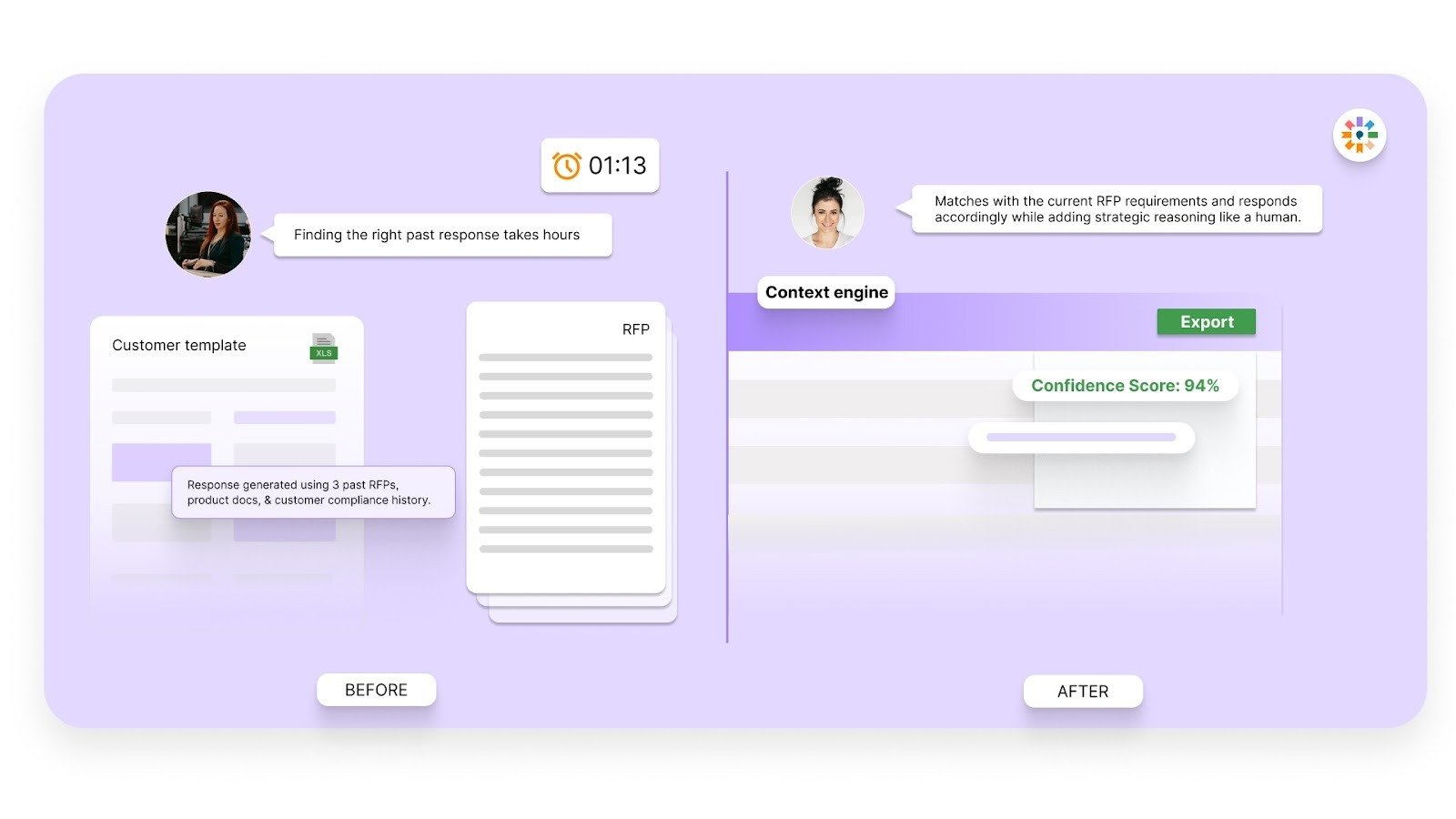
Many AI tools rely on shallow prompt-based generation that produces generic responses. Inventive AI applies multi-layer reasoning to understand the full RFP context, including evaluation criteria and supporting documents.
It pulls from your centralized knowledge sources to generate customized drafts that reflect your company’s actual capabilities and past performance.
Conflict Detection:
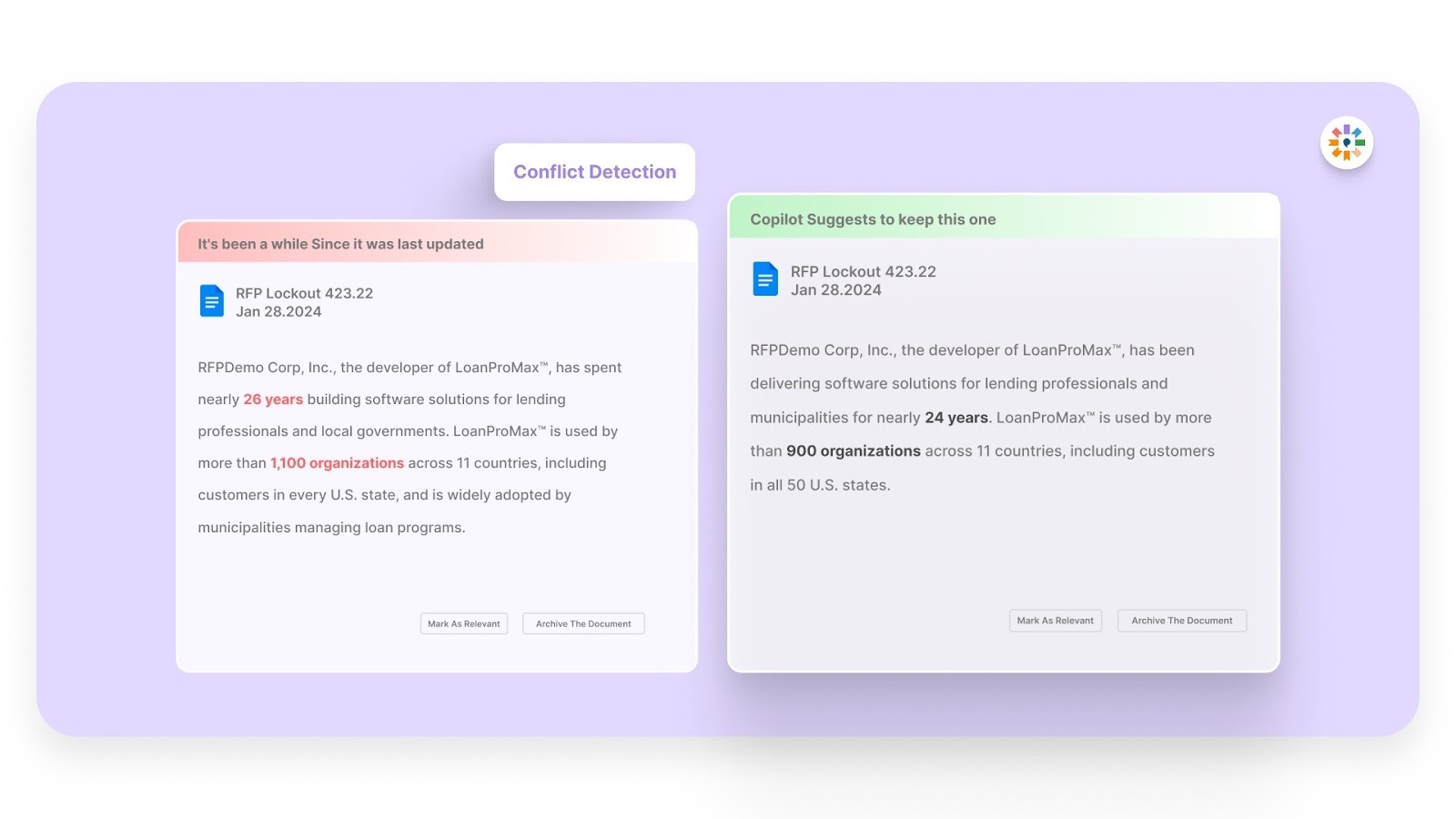
Large proposals often contain reused content from multiple contributors. Inventive AI automatically flags conflicting statements across sections, helping you avoid inconsistencies that evaluators may interpret as risk or lack of coordination.
Outdated Content Detection:
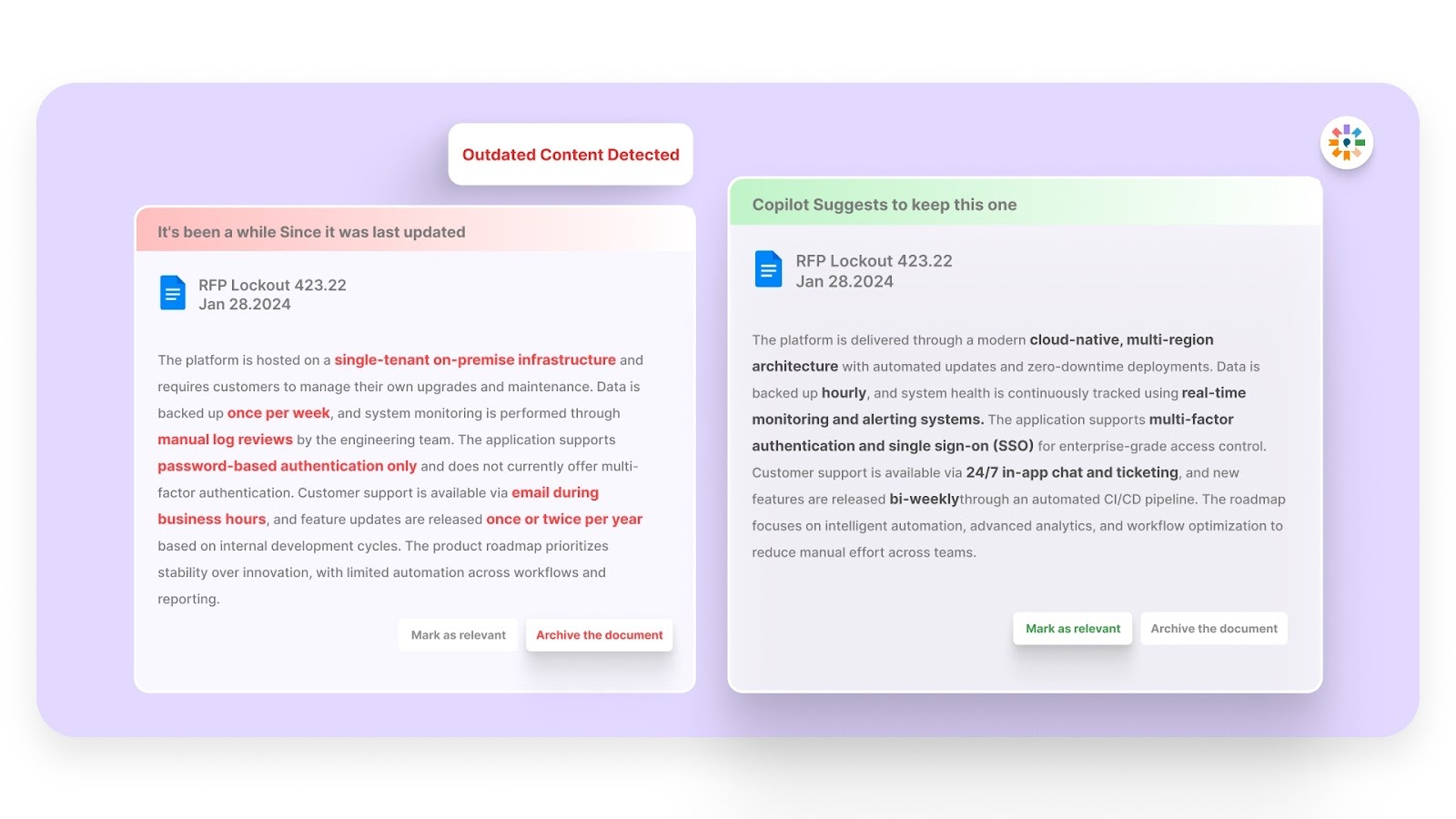
Proposal libraries frequently contain stale, non-compliant, or superseded responses. Inventive AI identifies outdated content within your knowledge base and alerts your team before it makes its way into a submission, reducing rework and review time.
2X Quality Responses with Multi-Agent AI:
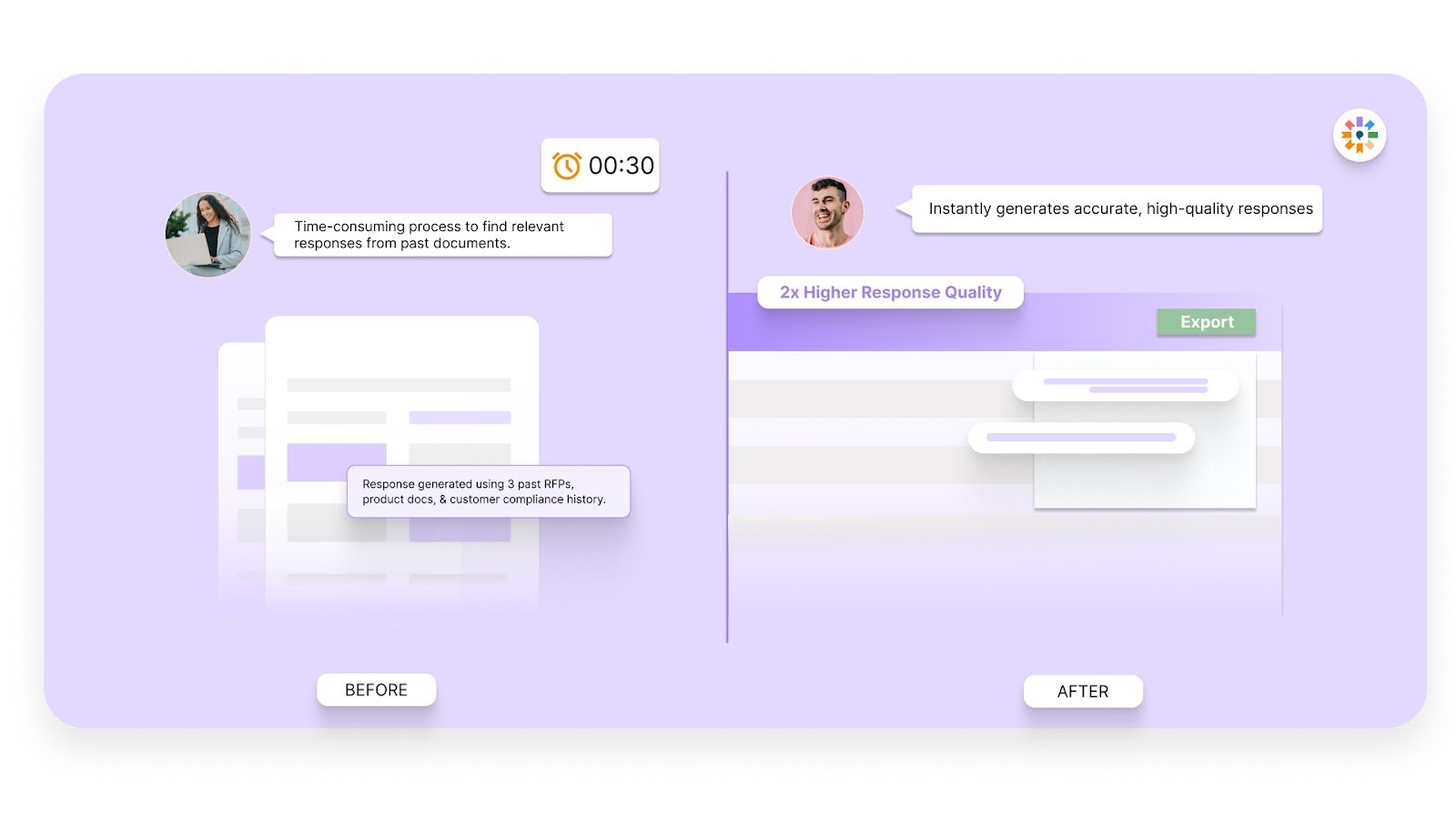
Inventive’s AI agents analyze the intent behind each question and draft structured responses that emphasize clarity, completeness, and alignment with scoring criteria. Instead of surface-level answers, you receive well-organized drafts that support stronger technical evaluations.
Simple and Easy to Use UI:
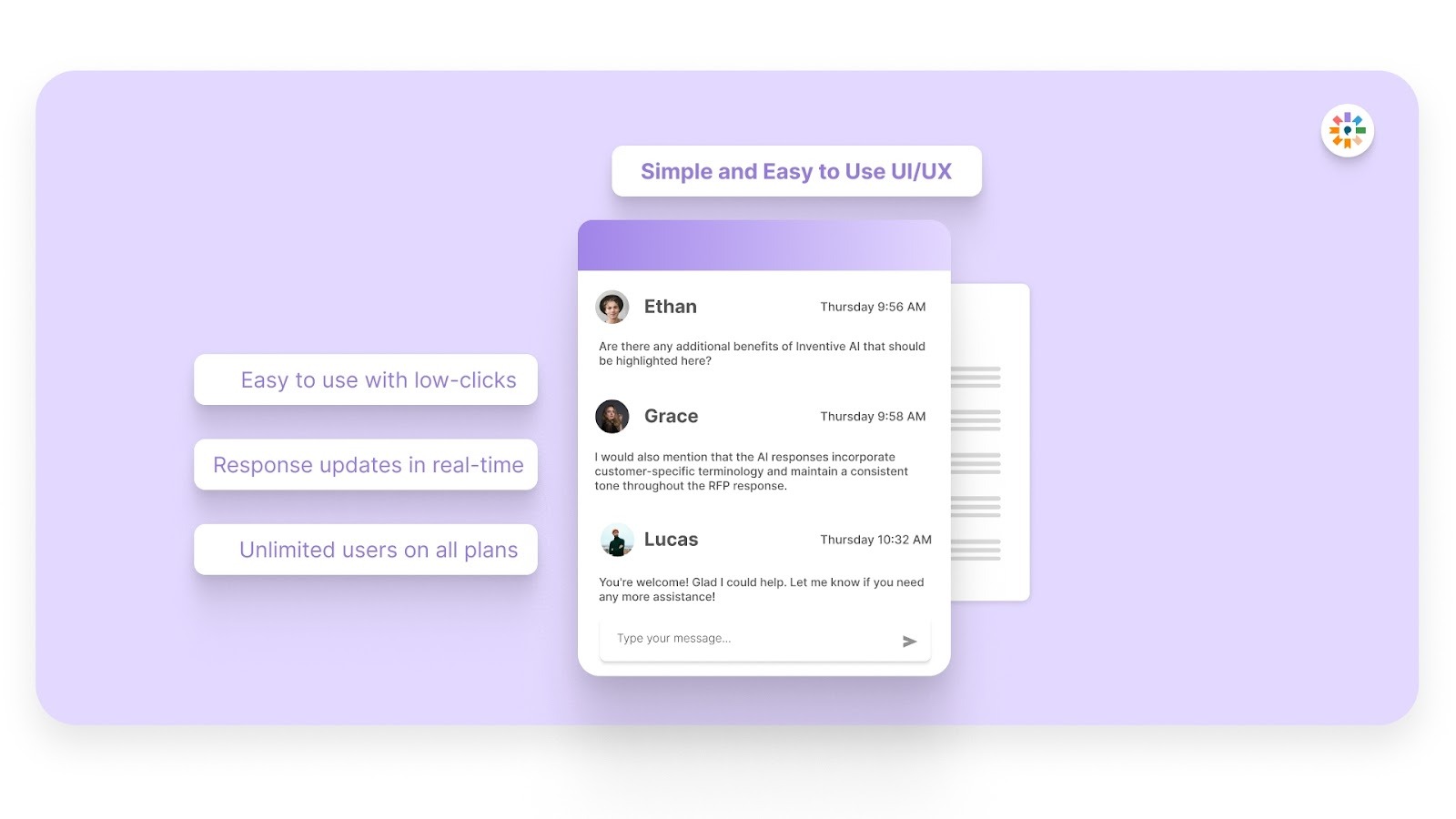
With a 100 percent adoption rate across its current customer base and recognition as the easiest-to-use RFP software on G2, Inventive AI is designed for rapid team adoption. Sales, proposal, revenue, and solutions teams can collaborate within a single hub that centralizes documents, past RFPs, security answers, and knowledge sources.
If you’re responding to complex government RFPs and want more accurate drafts, fewer compliance risks, and better coordination across teams, consider seeing Inventive AI in action.
FAQs
1. How long does it typically take to respond to a government RFP?
Response timelines vary based on complexity, contract value, and required documentation. Smaller local bids may require two to four weeks, while federal opportunities can demand six to eight weeks or more due to security reviews, pricing validation, and executive approvals.
2. What is the difference between an RFP, RFI, and RFQ in government procurement?
An RFI gathers general information about vendor capabilities before a formal solicitation. An RFP requests a detailed technical and pricing proposal. An RFQ focuses primarily on pricing for clearly defined goods or services with minimal technical narrative required.
3. Can a vendor ask for clarification after the Q&A deadline?
In most cases, agencies do not accept new questions after the official deadline. If a critical ambiguity remains, vendors may submit clarification requests, but agencies are not required to respond or issue additional addenda.
4. What happens after a government RFP submission deadline?
After submission, proposals typically undergo an administrative review, technical evaluation, and pricing analysis. Agencies may conduct discussions, request clarifications, or invite shortlisted vendors for presentations before issuing a final award decision.
5. Can a vendor protest a government RFP award decision?
Yes, vendors may file a bid protest if they believe the procurement process violated applicable regulations or evaluation procedures. Protests must follow strict timelines and are usually submitted to the issuing agency, a state review board, or a federal oversight body.

90% Faster RFPs. 50% More Wins. Watch a 2-Minute Demo.
.avif)
Mukund Kumar
Understanding that sales leaders struggle to cut through the hype of generic AI, Mukund focuses on connecting enterprises with the specialized RFP automation they actually need at Inventive AI. An IIT Jodhpur graduate with 3+ years in growth marketing, he uses data-driven strategies to help teams discover the solution to their proposal headaches and scale their revenue operations.

Gaurav Nemade
After witnessing the gap between generic AI models and the high precision required for business proposals, Gaurav co-founded Inventive AI to bring true intelligence to the RFP process. An IIT Roorkee graduate with deep expertise in building Large Language Models (LLMs), he focuses on ensuring product teams spend less time on repetitive technical questionnaires and more time on innovation.