
SD-WAN RFP Template For Network Vendor Evaluation & Selection

Teams need a structured SD-WAN RFP template to define network requirements, collect vendor responses, and evaluate solutions using consistent technical and commercial criteria. Without a standardized RFP format, critical details such as performance, security, scalability, and deployment support may be overlooked, increasing the risk of selecting the wrong vendor.
To simplify this process, we’ve created a practical SD-WAN RFP template that helps teams document network requirements, request detailed vendor information, and compare SD-WAN providers side by side. It ensures all vendor responses are captured clearly and can be evaluated efficiently.
SD-WAN RFP templates are widely used by IT, network, and procurement teams to support vendor selection, ensure requirement alignment, and make confident infrastructure decisions.
SD-WAN RFP Template for Network Requirements and Vendor Evaluation
If you are using an SD-WAN RFP template, your document should clearly define network architecture, performance expectations, security requirements, and vendor response sections.
SD-WAN RFP templates may vary depending on network size, locations, and cloud usage, but most include structured sections to collect consistent vendor responses and support accurate evaluation.
While the exact requirements may differ for enterprise WAN transformation, branch connectivity, or cloud migration projects, the following elements form the foundation of an effective SD-WAN RFP template.
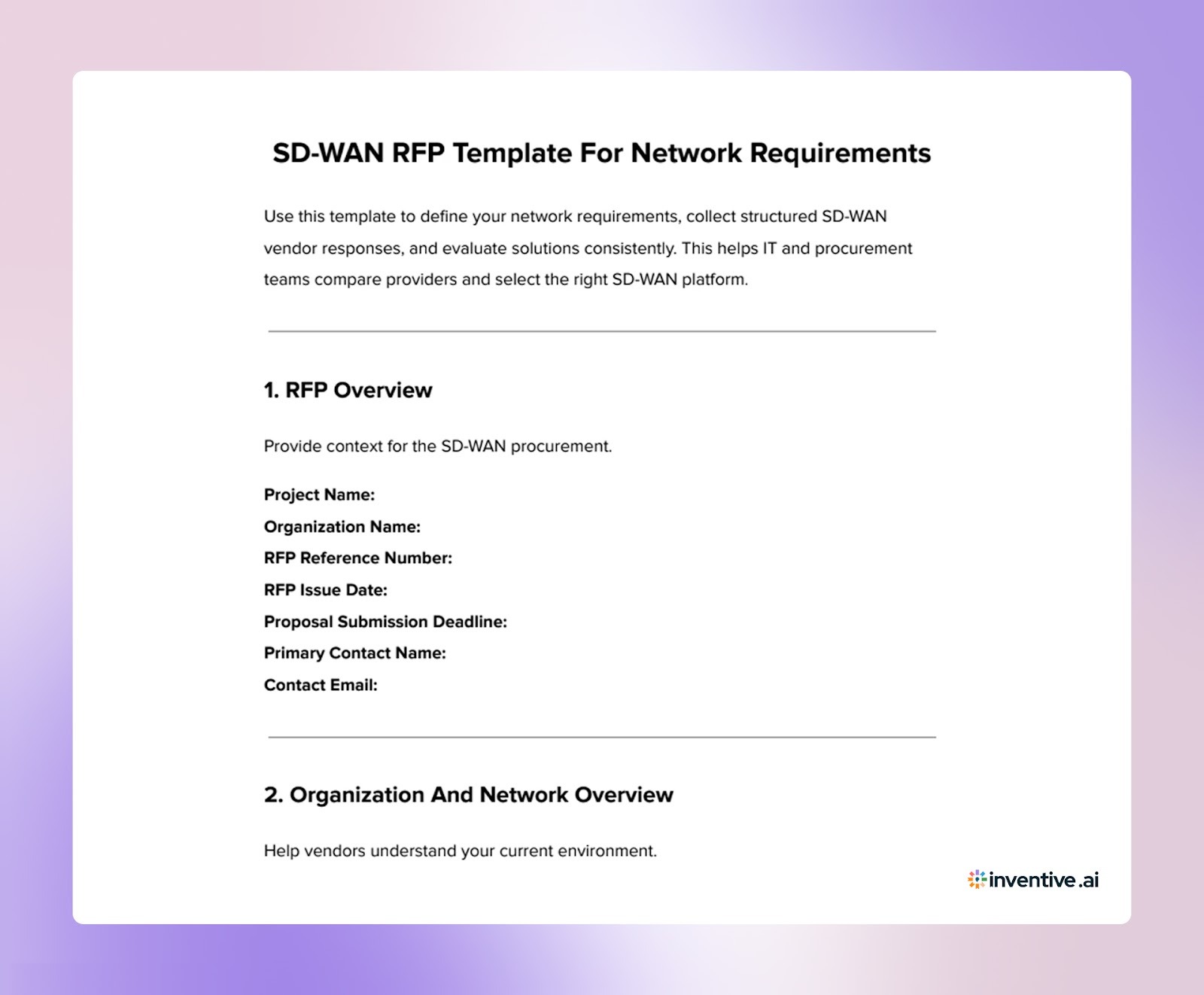
For vendors (providers), SD-WAN RFP templates determine how their solution capabilities are reviewed and compared.
Understanding the RFP structure helps vendors present their network features clearly, address technical requirements, and ensure their responses align with buyer evaluation criteria.
SD-WAN RFP Templates For Structured Network Proposals
The templates below help vendors prepare RFP-ready responses faster, present their SD-WAN capabilities clearly, and improve evaluation outcomes during vendor selection.
Template 1: SD-WAN Technical Requirements Template
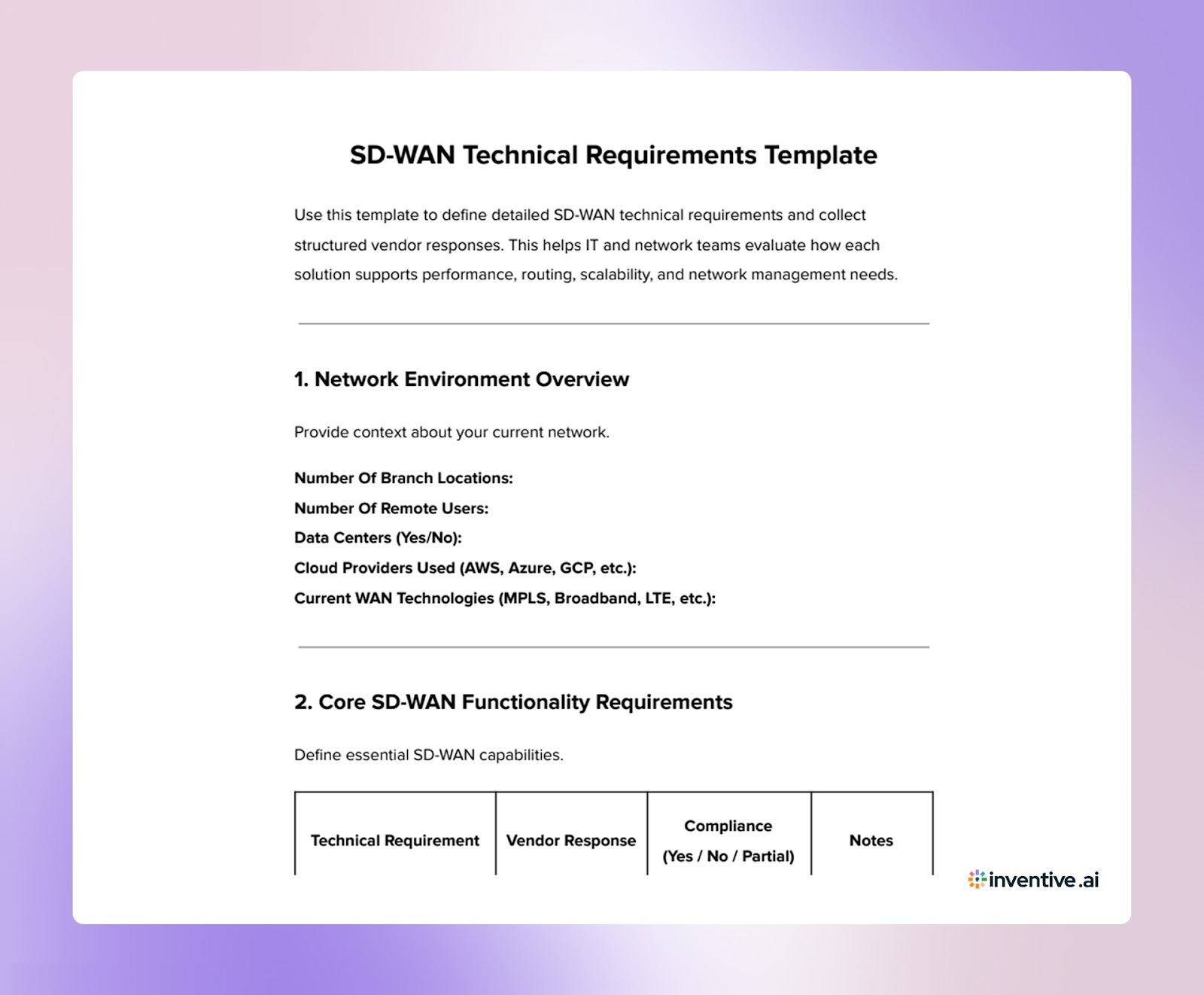
Use this template to respond to network performance, routing, and architecture requirements. It helps buyers evaluate how your solution supports their WAN environment.

Template 2: SD-WAN Security and Compliance Template
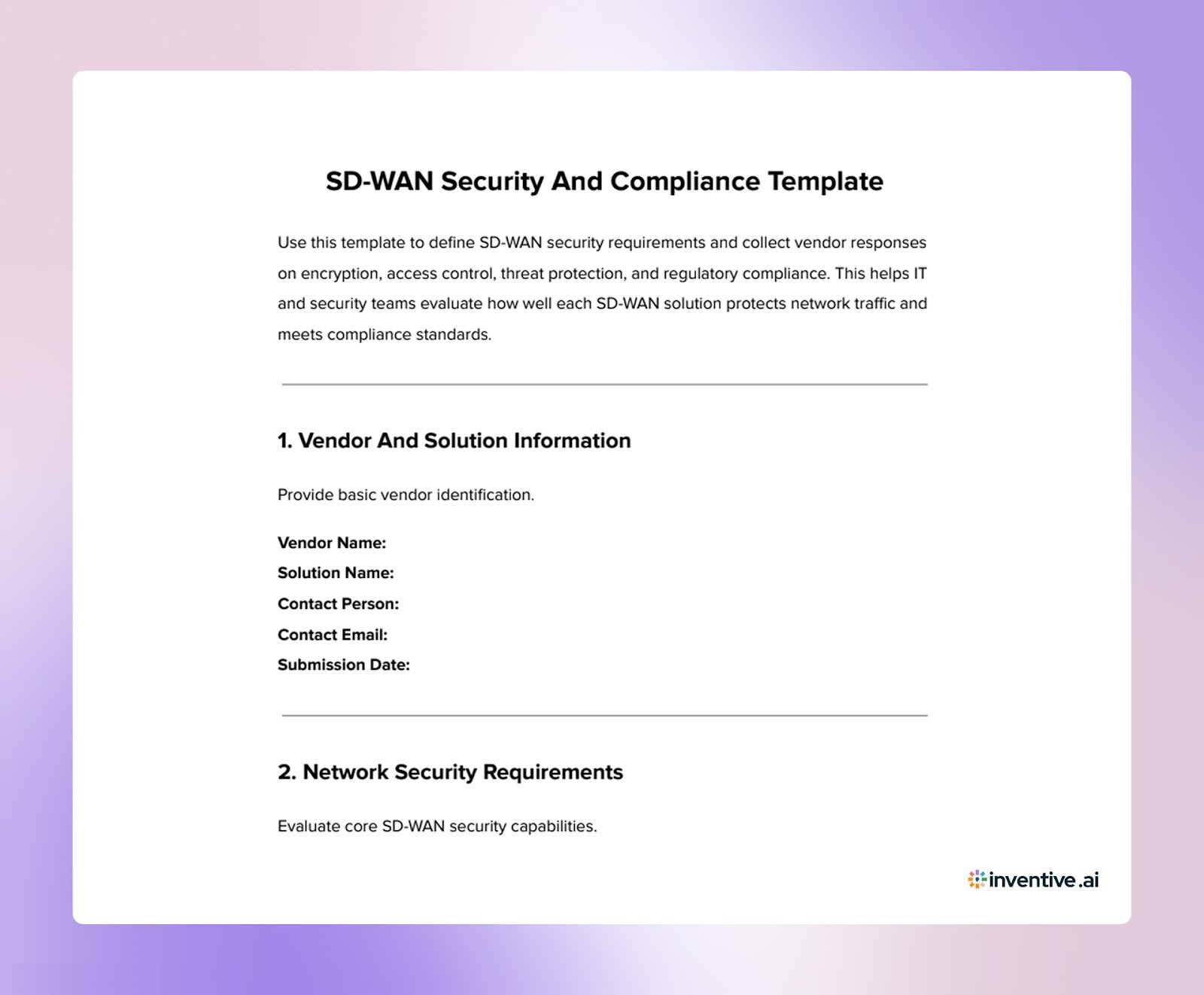
Use this template to provide details on encryption, threat protection, and compliance features. It helps buyers assess the security strength of your SD-WAN solution.
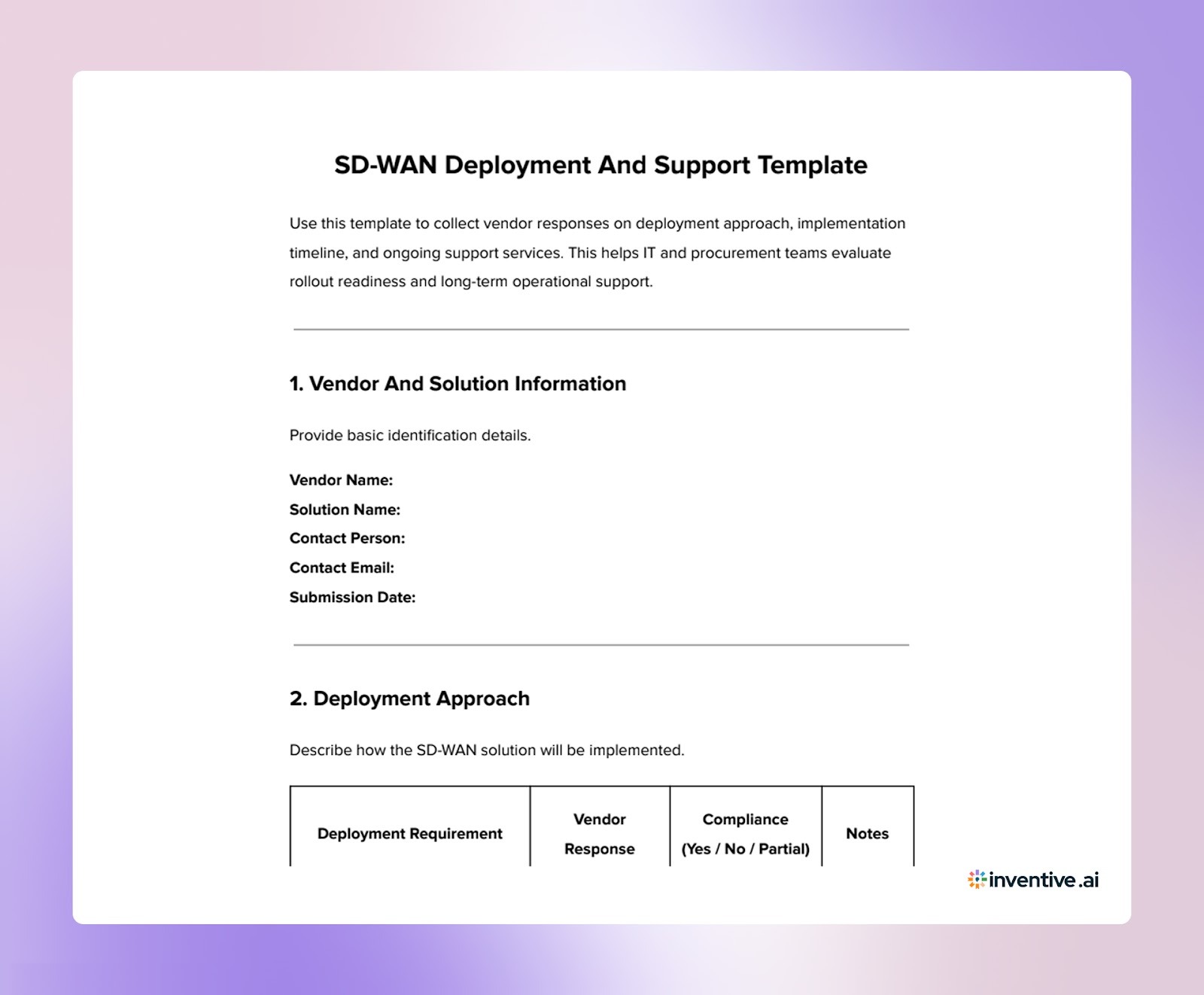
Template 3: SD-WAN Deployment and Support Template
Use this template to describe your deployment process, management tools, and support services. It helps buyers evaluate implementation readiness and operational support.
Why SD-WAN RFP Templates Are Relevant for Buyers and Vendors?
SD-WAN RFP templates provide a structured framework that buyers and vendors use to define requirements and evaluate SD-WAN solutions. They ensure all vendors respond to the same technical, security, and deployment criteria, making comparisons more accurate and reliable.
SD-WAN RFP templates function as both requirement definition and evaluation tools. Buyers use SD-WAN RFP templates to:
- Define WAN performance, availability, and scalability requirements
- Request detailed information on security, encryption, and compliance capabilities
- Compare SD-WAN features such as traffic routing, failover, and cloud connectivity
- Evaluate deployment models, support services, and management capabilities
- Maintain clear documentation to support vendor selection and approval
This improves evaluation accuracy and reduces the risk of selecting an unsuitable SD-WAN solution.
SD-WAN RFP templates define how their solution will be reviewed and compared. They help vendors:
- Understand buyer network architecture and technical expectations
- Present their SD-WAN features in alignment with the evaluation criteria
- Clearly explain performance, security, and deployment capabilities
- Reduce the risk of missing critical technical requirements
- Improve their chances of progressing in the vendor selection process
Since SD-WAN RFP templates directly influence vendor evaluation and selection, submitting clear, structured, and complete responses is essential for remaining competitive.
Effective Tips to Create Strong Responses Using an SD-WAN RFP Template
SD-WAN RFP templates define how buyers evaluate network performance, security, deployment, and support capabilities. Vendors who submit clear, complete, and well-structured responses make it easier for buyers to assess their solution accurately. Well-prepared submissions improve shortlist chances and overall win rates.
- Align Your Response with the Buyer’s Network Requirements: SD-WAN RFPs are structured around specific technical and operational needs. Vendors should respond to each requirement directly without changing the format. This helps evaluators review your solution efficiently.
- Provide Detailed and Specific Technical Information: Buyers compare vendors based on performance, routing, and cloud connectivity capabilities. Clear, detailed answers help evaluators understand how your solution meets their environment.
- Clearly Explain Your Security and Compliance Capabilities: Security is a critical evaluation area in SD-WAN selection. Vendors should provide complete information on encryption, segmentation, and threat protection. This improves buyer confidence.
- Present Your Deployment and Support Approach Clearly: Buyers evaluate implementation timelines and ongoing support. Providing structured deployment and service details helps buyers assess operational readiness.
- Ensure Consistency Across All Response Sections: Conflicting information between technical, pricing, and support sections weakens your proposal. Consistent responses improve evaluation accuracy.
- Maintain Updated and Reusable Response Content: Many SD-WAN RFP requirements repeat across opportunities. Keeping structured and current response content helps your team respond faster and maintain quality.
Preparing your submission using a structured SD-WAN RFP template helps buyers evaluate your solution effectively, strengthens your competitive position, and improves your chances of winning.
Must Read: RFP Software Comparison for Transportation 2025
How Inventive AI Helps Vendors Win More SD-WAN RFPs?
Inventive AI’s AI RFP Agent helps vendors generate structured, accurate, and tailored SD-WAN RFP responses aligned with buyer evaluation criteria. This ensures your technical, security, and deployment responses are clear, complete, and competitive.
1. Context Engine
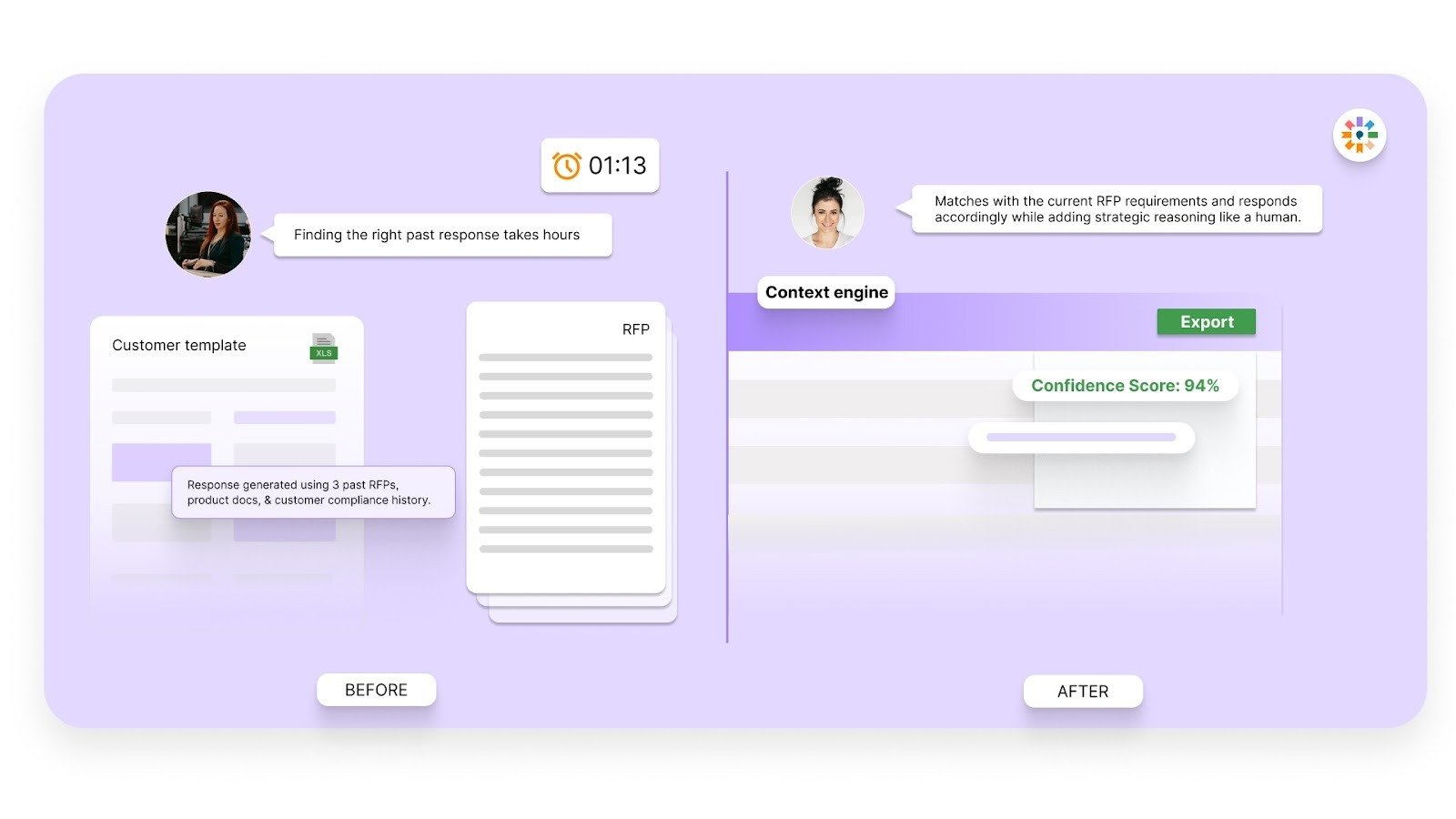
Inventive AI analyzes the entire SD-WAN RFP, including network requirements, security expectations, and deployment models. It generates responses aligned with the buyer’s specific environment and priorities.
This ensures your submission is relevant and aligned with evaluation needs.
2. Conflict Detection
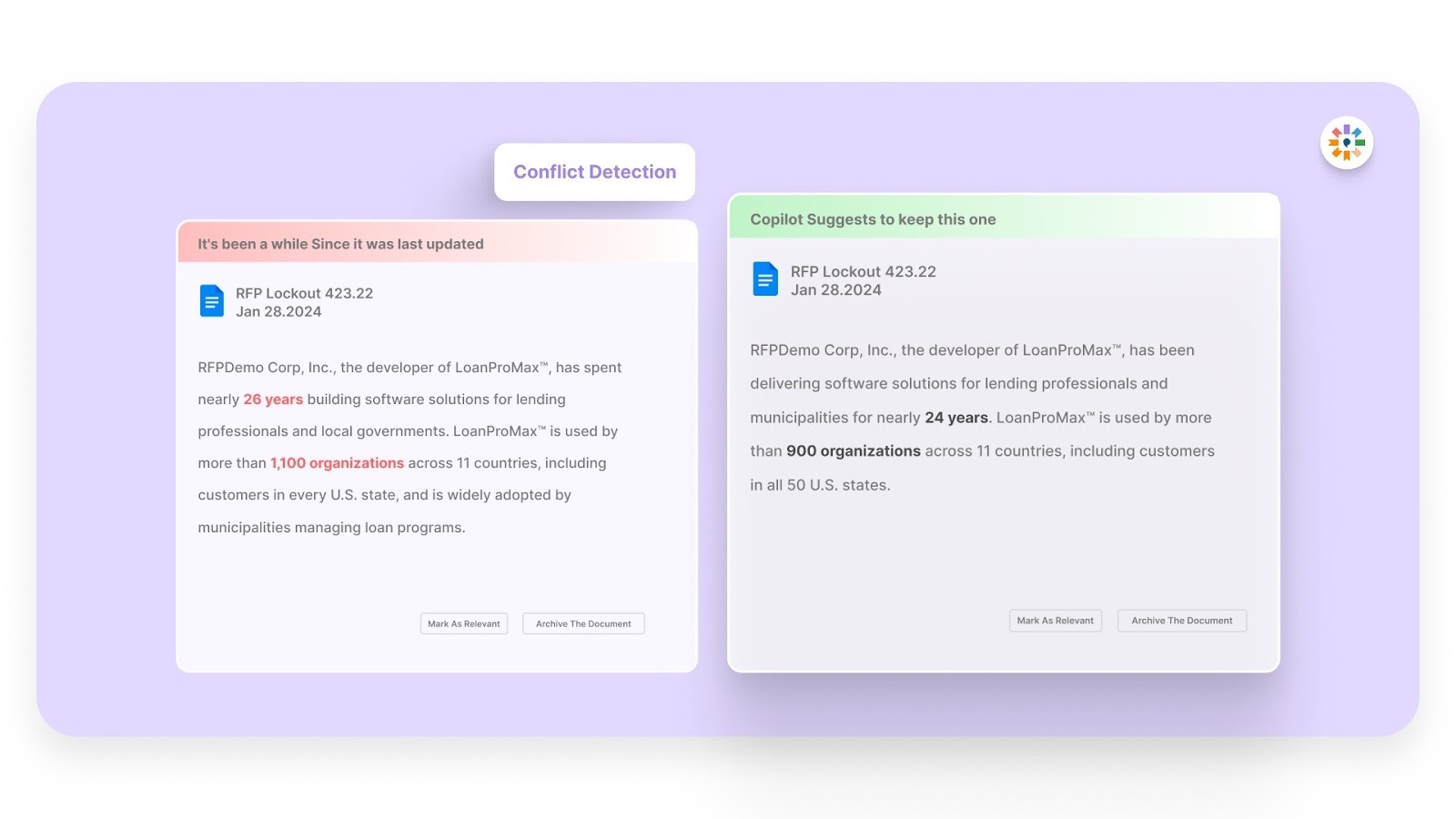
SD-WAN RFPs require consistency across technical, deployment, and support responses. Inventive AI detects conflicting information across your proposal.
This helps prevent errors that could weaken your evaluation outcome.
3. Outdated Content Detection
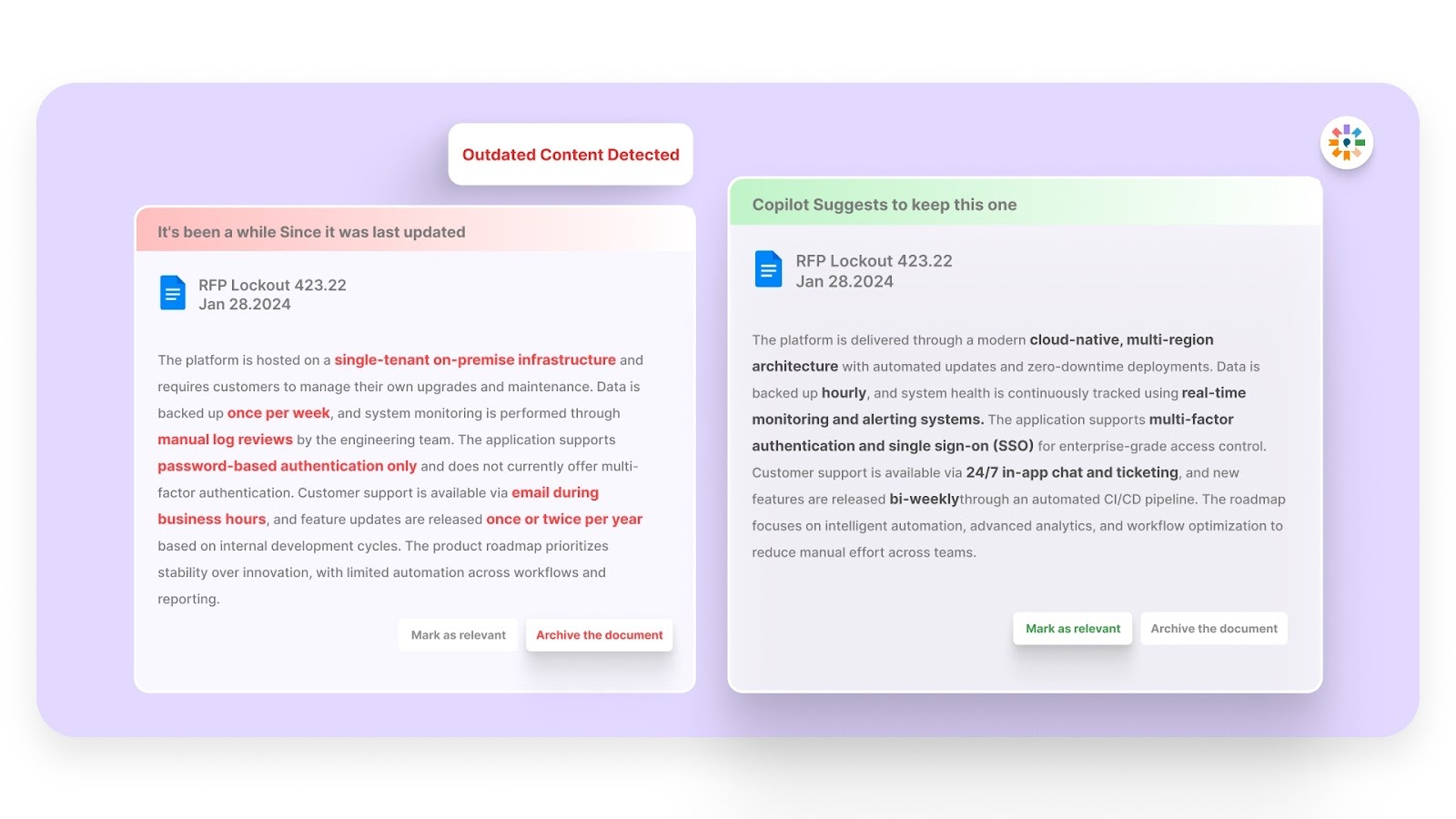
Using outdated architecture details or legacy capability information reduces proposal credibility. Inventive AI flags outdated content before submission.
This ensures your responses reflect your latest SD-WAN capabilities.
4. 2× Better Quality Responses
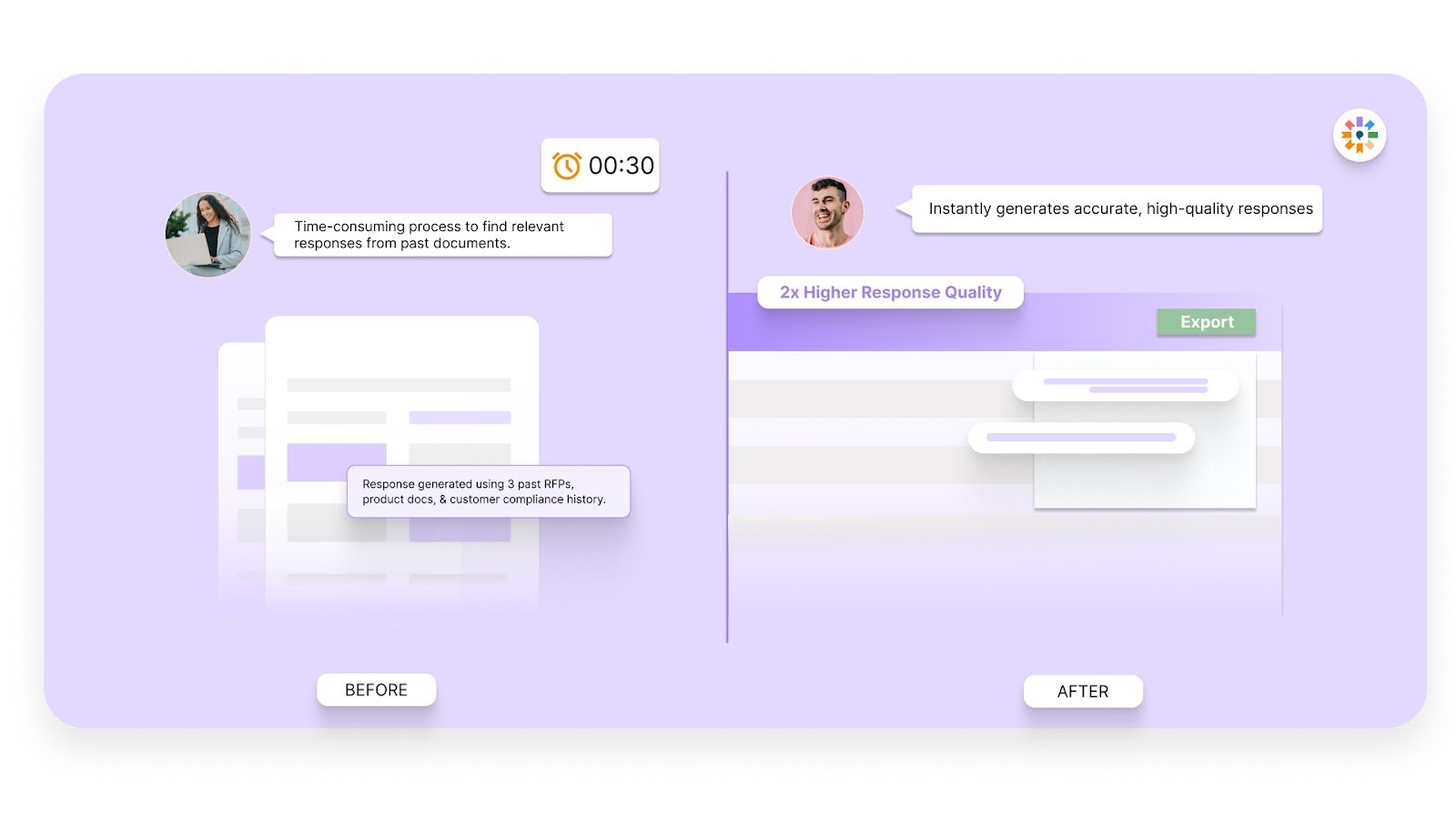
Inventive AI’s multi-agent system generates structured responses aligned with SD-WAN RFP formats. Responses are clear, complete, and require minimal editing.
This improves evaluation scores and shortlist rates.
5. Simple and Easy-To-Use Interface
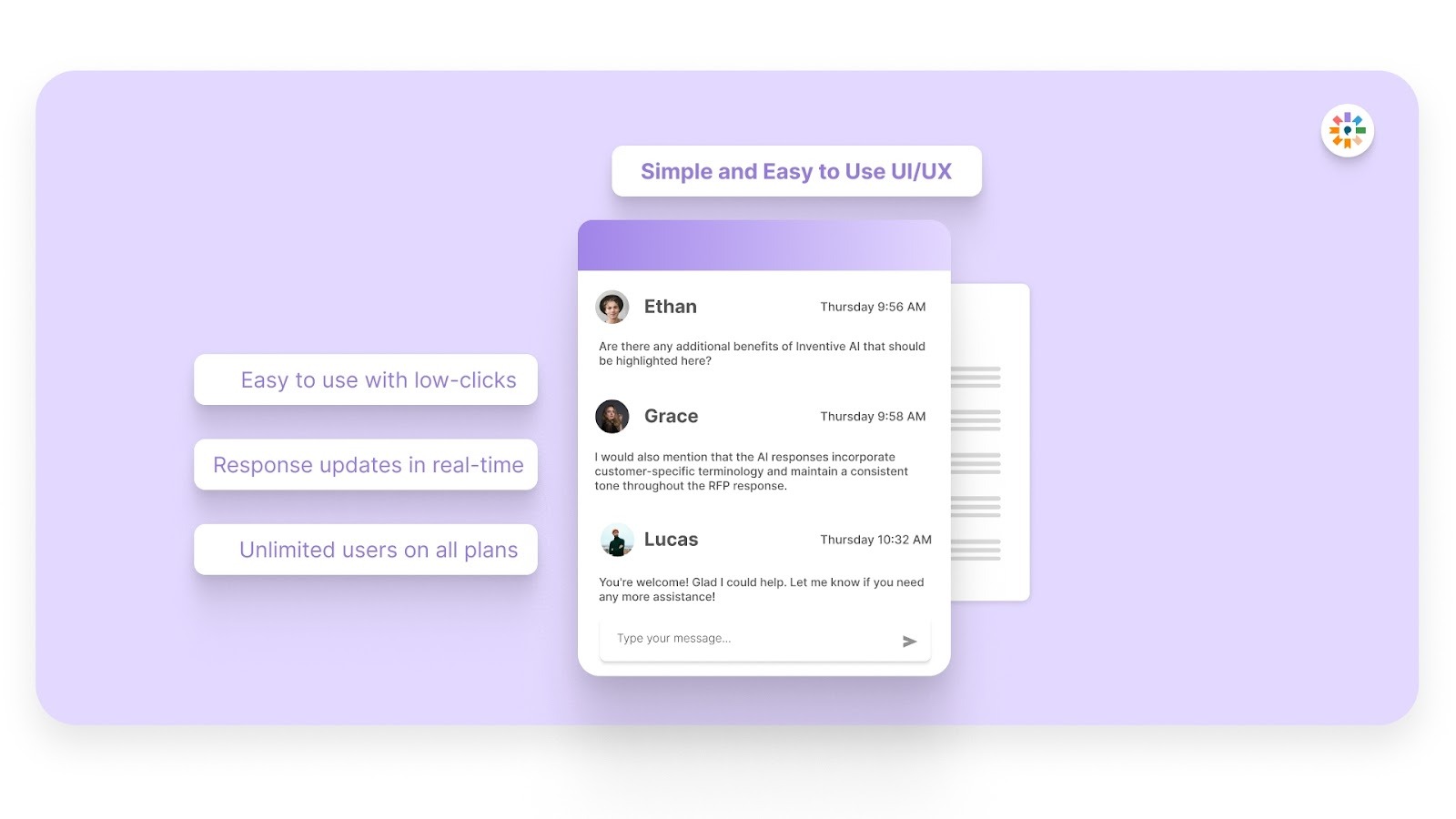
Teams can quickly generate, review, and update SD-WAN RFP responses without managing multiple documents. The platform supports fast adoption across sales and presales teams.
This helps vendors respond to more opportunities efficiently.
6. Narrative Proposal Generation
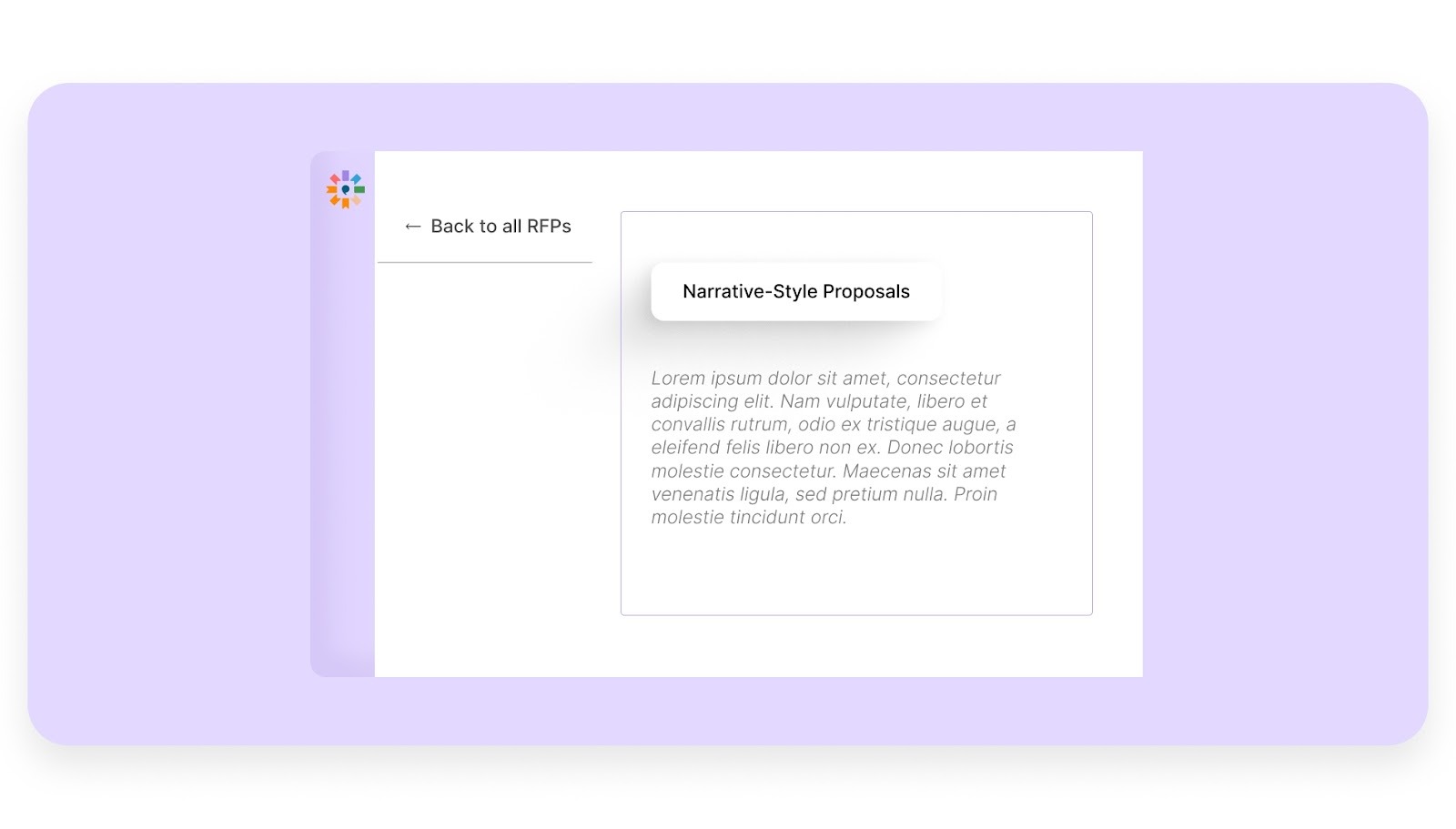
Inventive AI generates executive summaries, solution overviews, and supporting proposal content that strengthen your overall submission.
This improves your competitive positioning and win probability.
Manual SD-WAN RFP responses often result in incomplete or weak submissions. Inventive AI’s AI-Powered RFP Response Software helps you generate stronger responses, improve evaluation outcomes, and win more SD-WAN opportunities.
Want proof of how Inventive AI improves RFP win rates? Explore the Case Study.
FAQs
1. What Sections Should An SD-WAN RFP Template Include?
An SD-WAN RFP template should include network architecture requirements, site locations, bandwidth needs, security expectations, deployment timelines, support requirements, and pricing structure. These sections help buyers evaluate technical fit and service capability completely.
2. When Should Organizations Use An SD-WAN RFP Template?
Organizations should use an SD-WAN RFP template when replacing MPLS, upgrading WAN infrastructure, enabling cloud connectivity, or standardizing branch networking. It helps ensure all vendors respond to the same requirements.
3. How Do SD-WAN RFP Templates Help With Multi-Location Networks?
They allow buyers to define requirements for each site, including bandwidth, failover, and routing needs. This helps vendors propose solutions that support distributed network environments effectively.
4. Can SD-WAN RFP Templates Be Customized For Different Industries?
Yes. Templates can be adjusted based on industry-specific needs such as compliance, remote access, cloud usage, and security requirements. This ensures the RFP reflects actual operational priorities.
5. What Mistakes Should Vendors Avoid In SD-WAN RFP Responses?
Vendors should avoid generic answers, incomplete technical details, and inconsistent deployment information. Clear, specific responses aligned with requirements improve evaluation outcomes.
6. How Does An SD-WAN RFP Template Support Vendor Shortlisting?
It provides a structured way to compare vendor capabilities, helping buyers identify solutions that best meet performance, security, and operational requirements.

90% Faster RFPs. 50% More Wins. Watch a 2-Minute Demo.

Gaurav Nemade
After witnessing the gap between generic AI models and the high precision required for business proposals, Gaurav co-founded Inventive AI to bring true intelligence to the RFP process. An IIT Roorkee graduate with deep expertise in building Large Language Models (LLMs), he focuses on ensuring product teams spend less time on repetitive technical questionnaires and more time on innovation.

Hardi Hindocha
Knowing that complex B2B software often gets lost in jargon, Hardi focuses on translating the technical power of Inventive AI into clear, human stories. As a Sr. Content Writer, she turns intricate RFP workflows into practical guides, believing that the best content educates first and earns trust by helping real buyers solve real problems.