Top 10 SiftHub Competitors and Alternatives for RFP Management

Have you ever wondered why, despite all the technological advances of the last decade, your team still spends 30 hours or more drafting a single RFP response? Research confirms that the average RFP response now takes 32 hours to complete, leading to delays that directly bottleneck your revenue potential.
For many organizations, SiftHub was originally brought in to solve this problem through basic coordination. However, as deal cycles accelerate and evaluators become more demanding, what was once a reliable choice is now struggling to keep pace. Modern proposal teams are finding that SiftHub’s limited automation and manual content hurdles actually slow them down, creating a performance gap that legacy AI simply cannot bridge.
In this blog, you’ll learn why teams are looking beyond Sifthub, what to evaluate when you make a switch, and discover ten strong competitors.
Key Takeaways
- SiftHub’s performance gap is widening: Its outdated AI, manual upkeep, and slower workflows make it less effective for modern, fast-moving RFP teams.
- AI has reshaped proposal management: Intelligent automation now handles drafting, conflict detection, and scoring alignment, reducing manual hours and improving accuracy.
- Competitors like Loopio, Responsive, Arphie, Autogen AI, AutoRFP.ai, Qvidian, ROHIRRIM, Tribble, and DocuWare offer helpful features but lack advanced automation or scalability.
- Inventive AI sets a new benchmark: It delivers 90% faster responses, 95% accuracy, and a 50% higher win rate through evaluator-aligned automation and AI-driven content management.
- Overall insight: The shift from basic automation to outcome-focused intelligence defines the future of RFP management — and platforms leading with AI innovation are setting that standard.
Rethinking RFP Operations: How the Process Works and Why AI Matters
You manage a sales or proposal team. Days before submission, you’re buried in documents, tracking approvals, coordinating with subject matter experts, and manually verifying every section for accuracy. This is the reality of most RFP operations today. To achieve better results, it’s important to understand how RFP management truly works and how AI is reshaping it.
With AI-powered RFP management, teams no longer start from scratch. AI automatically scans lengthy RFPs to identify key requirements, drafts context-aware responses, flags outdated content, and even predicts which proposals have the highest win probability based on historical data. 63% of companies are actively using (not just testing or planning) AI-powered capabilities within their RFP management tools.
AI is transforming RFP management from a reactive process into a proactive strategy, helping teams respond faster, reduce errors, and make data-driven decisions that improve win rates and revenue outcomes.
Also Read: The Ultimate Guide to Construction RFPs: How to Create RFPs That Attract the Best Bids
Why Companies Are Moving Away from SiftHub
SiftHub once earned attention for simplifying basic RFP collaboration, but the expectations of proposal teams have grown. What worked a few years ago, static templates, limited automation, and manual content updates, no longer keep up with the volume and complexity of today’s RFPs.
Many vendors report that SiftHub struggles with scalability, content freshness, and AI accuracy, three areas now important to winning bids. As proposal volumes increase and deadlines shrink, teams are seeking platforms that deliver speed, precision, and measurable results.
Here’s why many companies are switching from SiftHub:
- Limited AI capabilities: Its automation is surface-level, unable to generate evaluator-aligned responses or contextual insights.
- Manual upkeep: Teams spend valuable hours updating outdated content libraries instead of focusing on strategy and quality.
- Slow performance under volume: As RFP submissions scale, SiftHub’s workflows slow down, affecting response timelines.
- Lack of analytics: Minimal reporting makes it difficult for leaders to measure productivity or identify improvement areas.
- Poor scalability: It fits smaller teams but fails to adapt to enterprise-grade requirements or multi-department collaboration.
This reflects a clear shift from platforms built for organization to those built for outcomes, where accuracy, automation, and evaluator alignment determine who wins.
The need for faster, smarter, and more reliable RFP management has pushed many teams to explore alternatives that can keep up with the pace of modern deal cycles.
Top 10 SiftHub Alternatives You Should Evaluate
Inventive AI
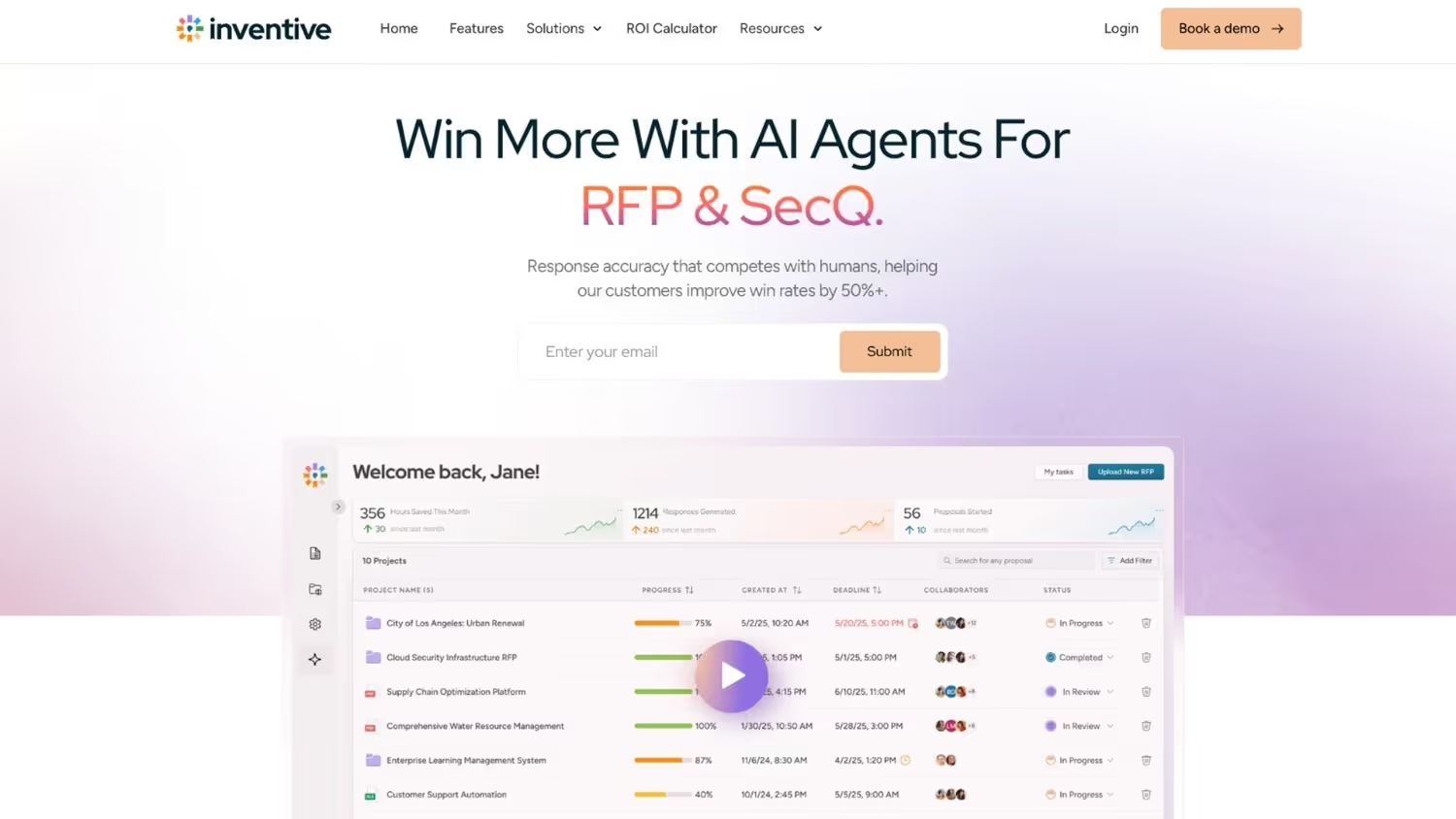
Inventive AI is the top SiftHUB alternative for teams handling high-volume, high-stakes RFPs. While SiftHUB works for basic automation and content reuse, Inventive goes several steps further. It functions like a dedicated proposal expert—understanding what evaluators want, writing with precision, and keeping your answers fresh, accurate, and audit-ready.
Inventive fits teams that manage fast-moving deals, complex reviews, and multiple content types. It’s built for organizations that can’t afford to slow down or send answers that miss the mark.
- Unmatched Quality via the Context Engine: While competitors rely on shallow lookup that leads to generic answers, Inventive AI uses multi-layer reasoning to understand the full RFP context. This produces evaluator-aligned, tailored responses that feel like a human SME wrote them, delivering 2× better quality than standard AI tools.
- Automated Risk Control with Conflict & Outdated Detection: Most vendors fail at detecting internal contradictions or stale data in large libraries. Inventive AI automatically flags conflicting statements and non-compliant content instantly, ensuring 95% accuracy and reducing manual review time by catching errors before they reach the evaluator.
- Rare Narrative-Style Proposal Capability: Unlike standard Q&A tools, Inventive AI generates long-form, cohesive narrative proposals, including executive briefs and security summaries. This rare advantage ensures your value proposition remains consistent across entire proposal books and pitch decks, rather than looking like fragmented answers.
- Outcome-Focused Knowledge Integration: By using an Answer Intelligence Hub with live sync (Slack, Salesforce, SharePoint), Inventive AI eliminates the "stale library" problem. This drives a 90% faster response cycle and a 50% higher win rate by ensuring your team works with 100% trustworthy, hallucination-free content.
Pros
- Delivers high-quality starting points immediately, allowing your team to focus on strategic refining rather than writing from scratch.
- Stays current by syncing directly with Google Drive, SharePoint, and Notion. This eliminates the need to manually update a separate content library.
- Automatically flags conflicting or outdated answers to ensure consistency and prevent errors under tight deadlines.
- Works directly inside Slack and Microsoft Teams, simplifying reviews and getting expert input without the email chase.
Cons
- Out-of-the-box analytics are limited; teams often use external BI dashboards for deeper tracking
Best For
- Small to large enterprise teams replacing SiftHUB to remove manual edits, stale answers, and slow reviews
- Mid-market SaaS, healthcare, financial services, energy, and government teams with complex RFP pipelines
- Sales, proposal, and compliance leaders looking to reduce turnaround time without losing control
- Teams working across multiple tools, formats, and internal reviewers
- Organizations managing DDQs, RFIs, Excel forms, and narrative RFPs at scale
Pricing: Usage-based pricing.
Loopio
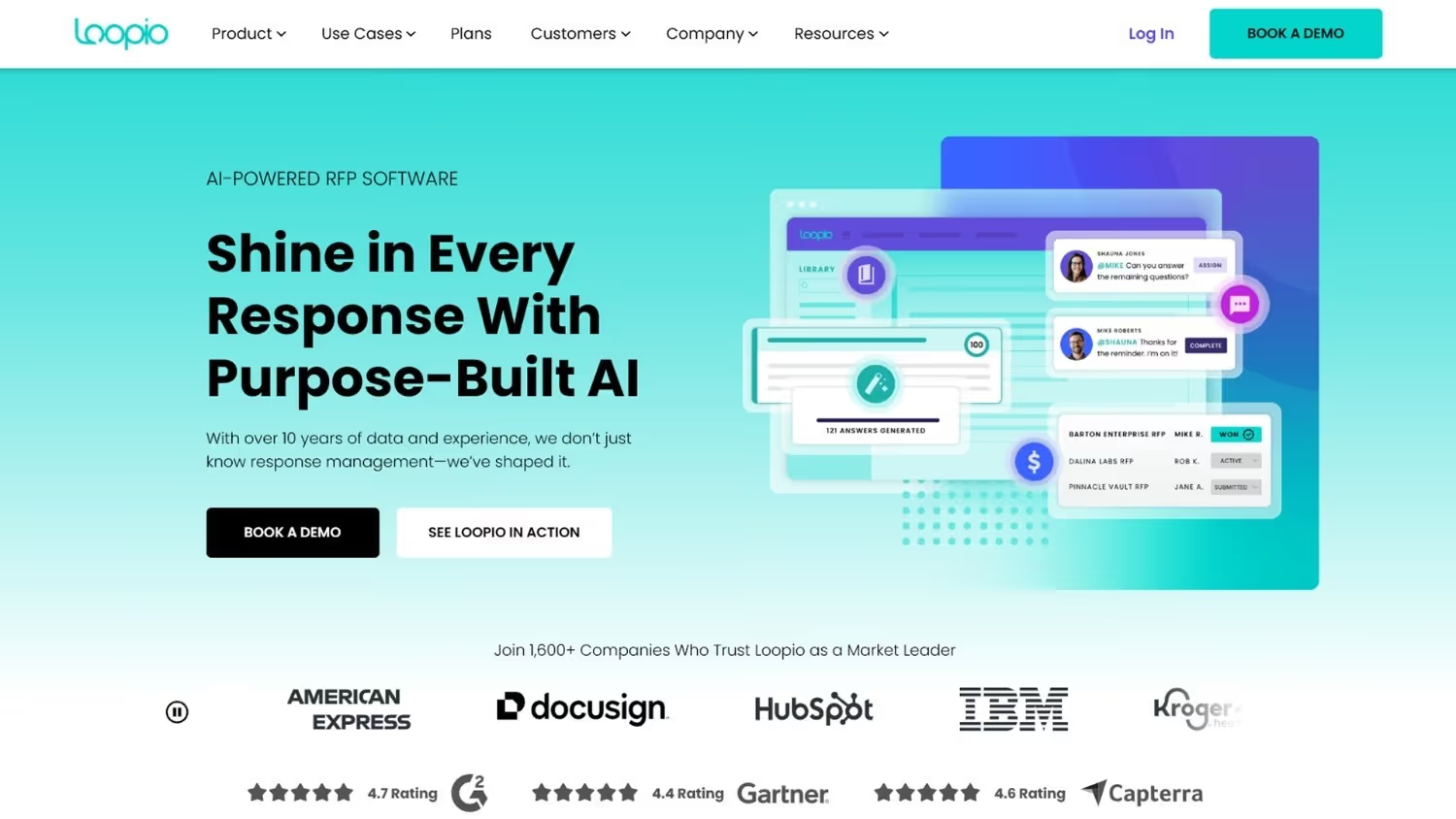
Loopio focuses on organizing large answer libraries and maintaining approved content. While it’s reliable for storing and tagging past responses, it falls short when speed and adaptability are critical, especially in deadline-heavy RFP environments.
Features:
- Centralized content library with workflow checkpoints
- Smart tagging for quicker content retrieval
Pros:
- Familiar, library-driven approach for big catalogs
Cons:
- Manual upkeep to keep answers fresh
- Lighter AI; drafts often need hands-on edits
- Limited evaluator-first intelligence
Pricing: Subscription; contact for pricing.
Loopio is reliable for managing large libraries but lacks modern AI-driven intelligence to deliver faster, more adaptive responses.
Responsive (RFPIO)
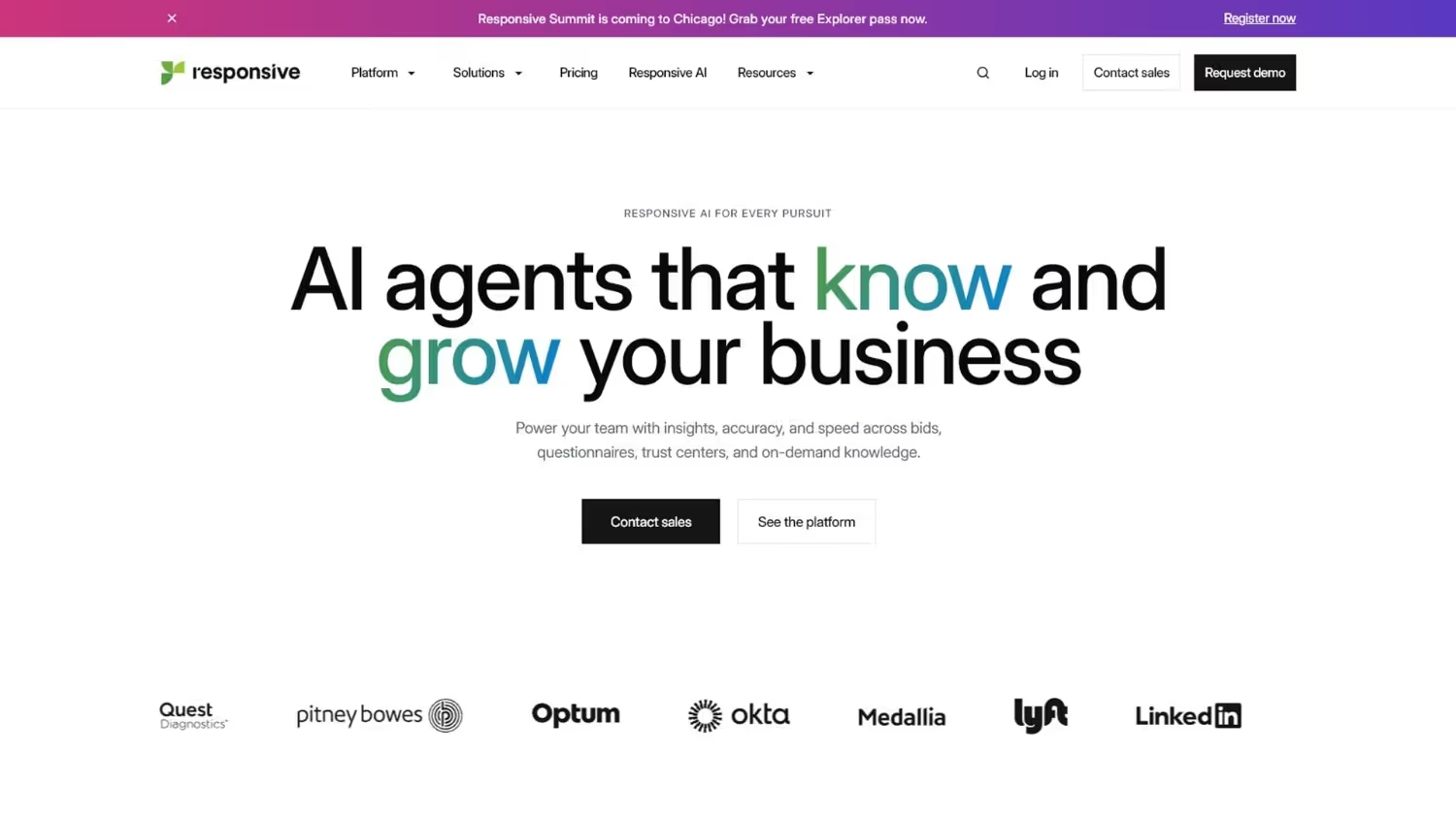
Responsive is geared toward enterprises looking for tight integrations and structured workflows. It handles approval flows well, but can slow teams down with generic AI output and a heavier interface.
Features:
- CRM/ERP integrations and project tracking
- Custom roles and access control for security
Pros:
- Strong integration footprint for IT-heavy environments
Cons:
- Slow AI drafting under deadline pressure
- Requires ongoing library maintenance
- Can feel heavy for non-enterprise teams
Pricing: Enterprise pricing; contact sales.
Responsive is suited for teams that value governance and integration control, but its AI performance under pressure remains limited.
Suggested Alternative: Inventive AI's AI rfp agent produces high-quality first drafts faster, with 95% accuracy and win-theme intelligence that maps directly to evaluator criteria.
Arphie
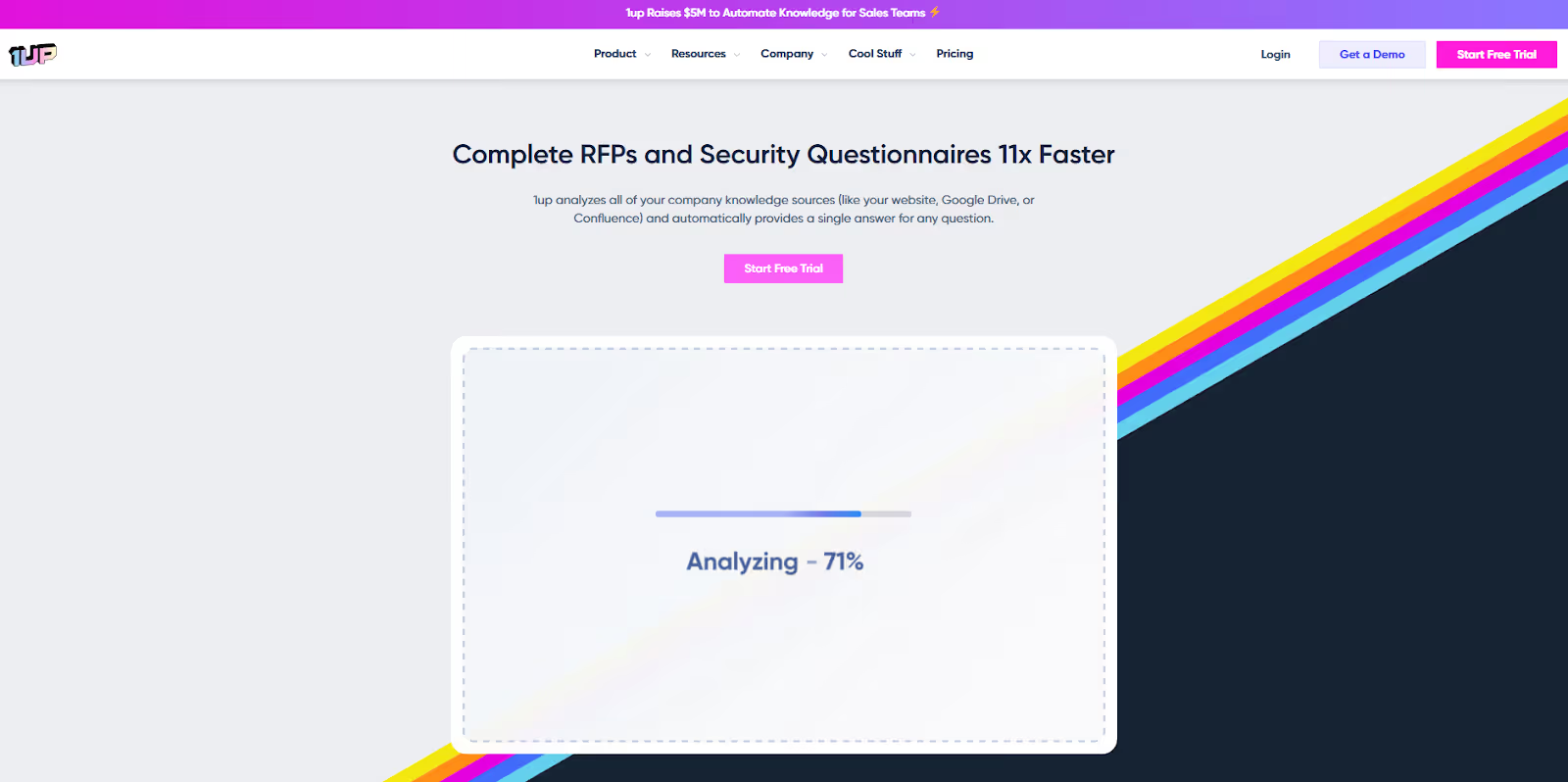
Arphie targets small to mid-sized teams experimenting with AI-first proposal creation. It's quick to deploy but struggles with more complex workflows, integrations, and compliance features.
Features:
- Instant AI suggestions in the editor
- Real-time co-authoring and commenting
Pros:
- Speedy first passes without heavy setup
Cons:
- Limited enterprise controls
- Shallow analytics
- Fewer governance features
Pricing: Subscription; contact for pricing.
Arphie accelerates small-team drafting but falls short for enterprises needing accuracy, compliance, and scalable automation.
Autogen AI
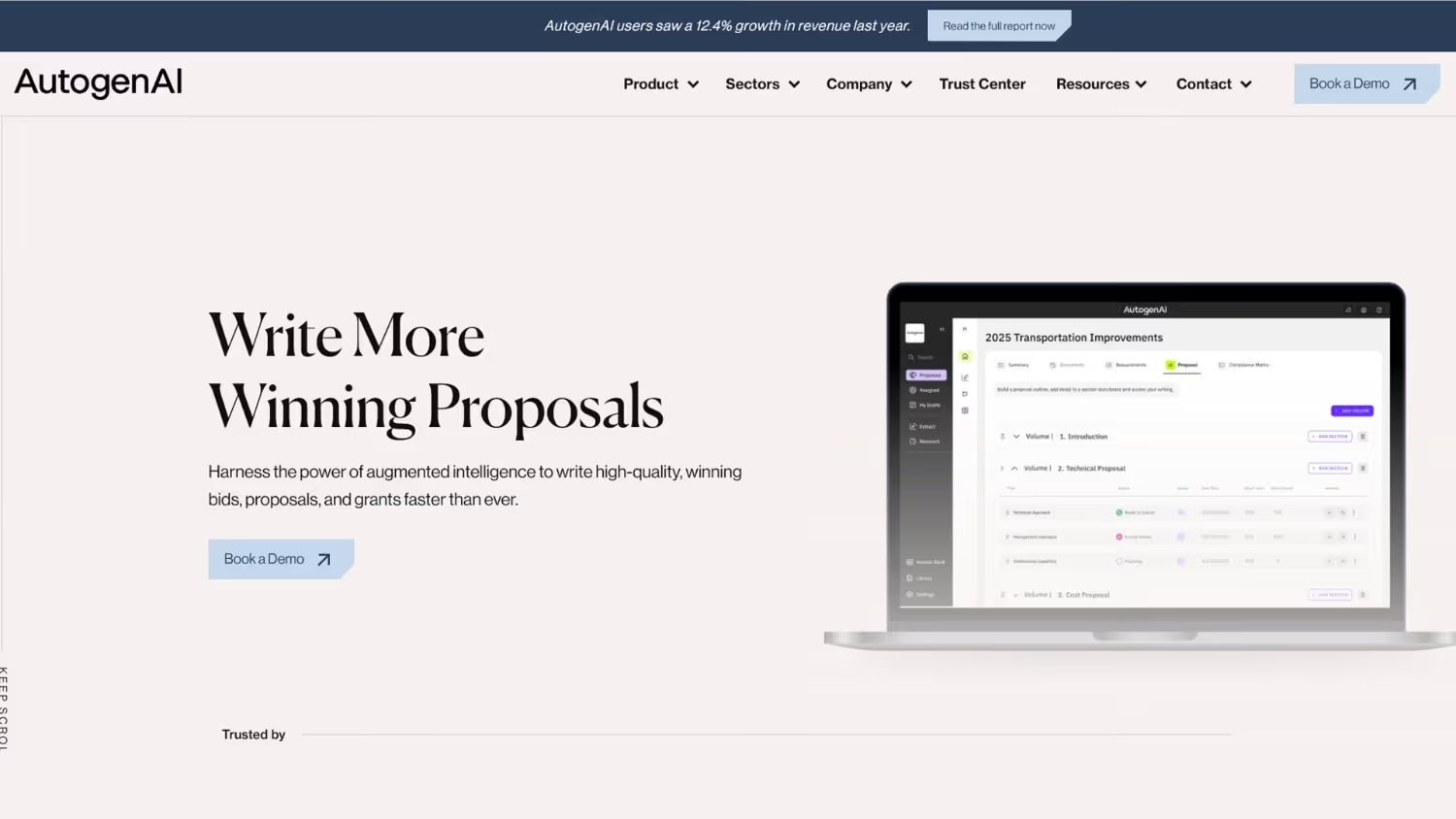
Autogen AI offers rapid text generation, helpful for teams that need volume over nuance. However, its lack of collaboration control and audit rigor makes it a risky fit for regulated industries.
Features:
- Company-trained models that generate starting answers
- Simple customization based on document context
Pros:
- Quick output for straightforward questionnaires
Cons:
- Basic personalization
- Limited reporting
- Thin collaboration features
- Not ideal for complex review chains
Pricing: Subscription; contact for pricing.
Autogen AI helps teams meet tight deadlines but lacks advanced analytics, collaboration control, and evaluator-focused optimization.
AutoRFP AI
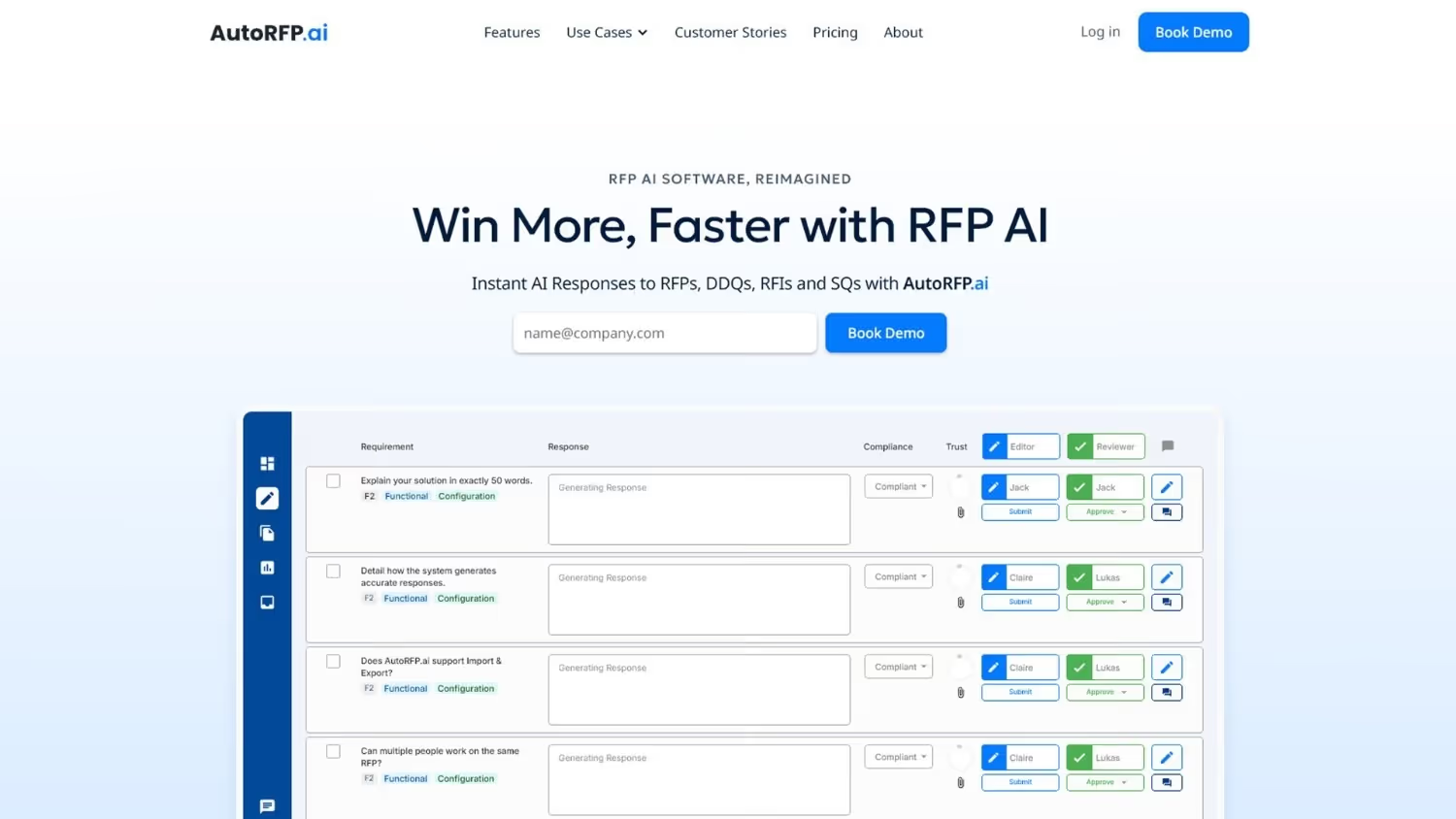
AutoRFP AI is designed for spreadsheet-heavy RFPs and structured questionnaires. It automates inputs efficiently but offers little in the way of narrative support or team-based collaboration.
Features:
- One-click draft generation and Excel auto-detect
- AI-based formatting suggestions
Pros:
- Fast turnaround for short, structured asks
Cons:
- Narrow ecosystem
- Minimal context modeling
- Limited collaboration tooling
Pricing: Scale plan starts at $899/month (annual).
Suggested Alternative: Inventive AI fills this gap with complete AI RFP automation, from drafting to conflict detection and evaluator insight.
Qvidian (Upland)
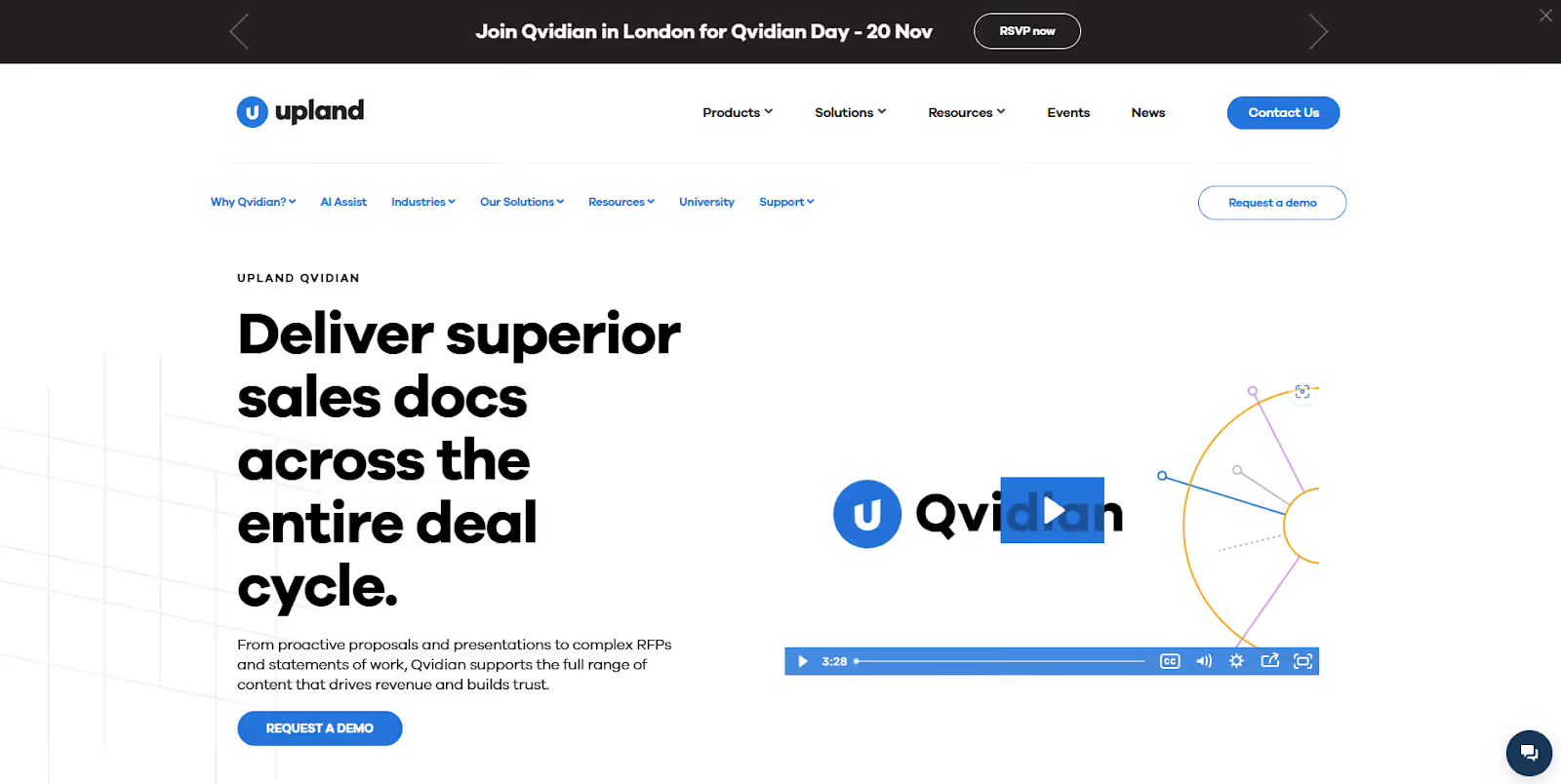
Qvidian has long supported large orgs with document assembly and policy control. Its traditional setup is stable but lacks modern drafting intelligence or cross-functional collaboration.
Features:
- Template and content management with approvals
- Proposal tracking and audit trails
Pros:
- Predictable processes for large organizations
Cons:
- Dated interface
- Light modern AI
- Heavier setup and maintenance
Pricing: Enterprise; contact for pricing.
Qvidian maintains order in proposal workflows but falls behind in automation and usability. Its reliability is no match for AI-native efficiency.
ROHIRRIM
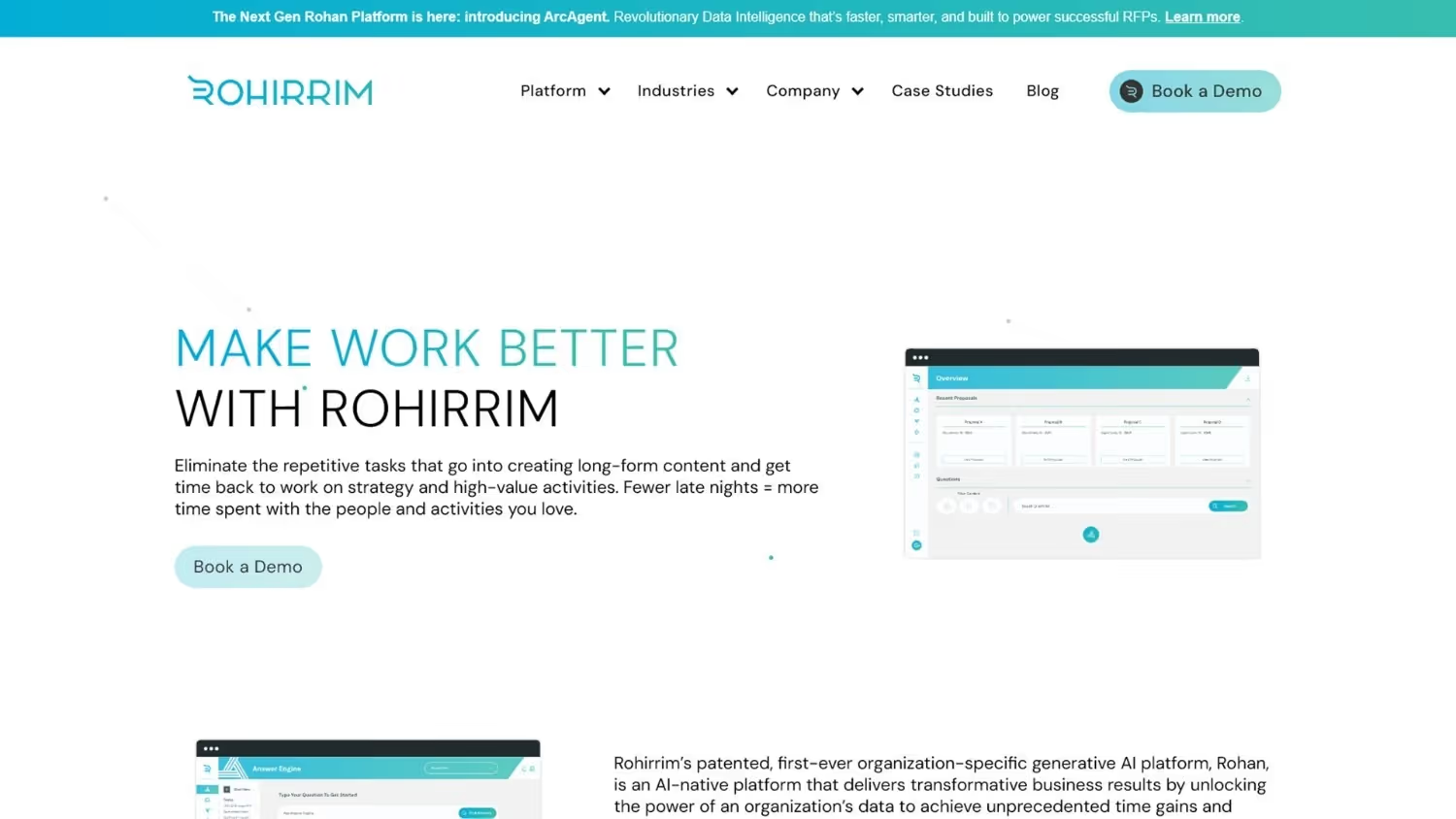
ROHIRRIM focuses on secure deployments for government, aerospace, and defense. It’s strong on document versioning but lacks dynamic writing capabilities and mainstream integrations.
Features:
- Domain-trained responses with a security focus
- Automated version tracking for audit support
Pros:
- Strong data isolation for sensitive work
Cons:
- Costly to onboard
- Complex to run
- Best for niche, regulated programs
Pricing: Subscription; contact for pricing.
ROHIRRIM is reliable for niche industries but lacks flexibility and AI scalability for broader business needs.
Tribble
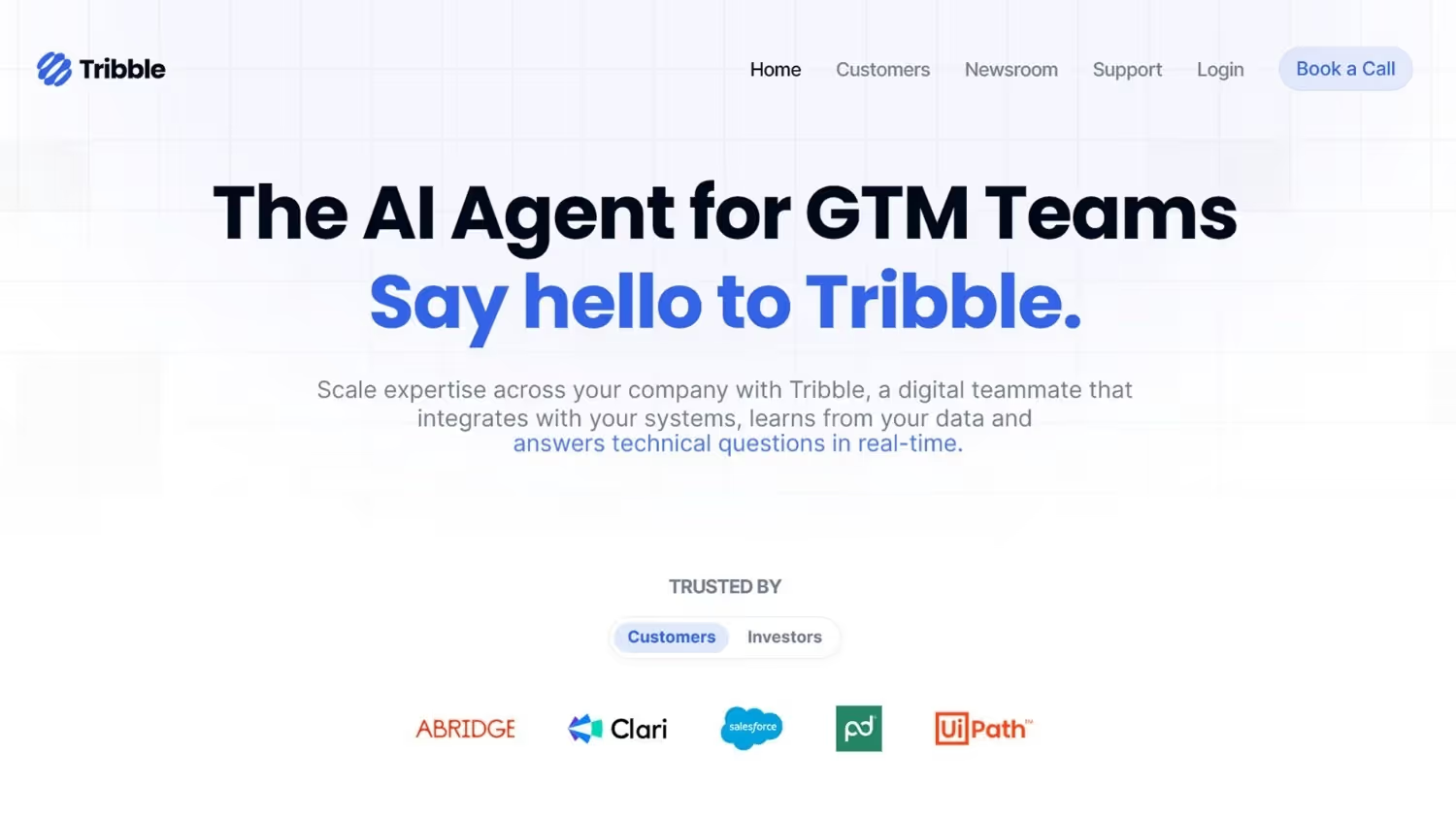
Tribble supports in-chat RFP workflows and is popular among startup teams using Slack or Teams. While convenient, it’s light on structure, governance, and cross-tool intelligence.
Features:
- In-chat drafting with internal data connections
- Instant task notifications for team members
Pros:
- Convenient for chat-centric teams
Cons:
- Weak CRM integrations
- Limited citation rigor
- Light governance
Pricing: Tiered; contact for details.
Tribble improves communication but lacks the depth, structure, and automation required for full-scale proposal management.
DocuWare
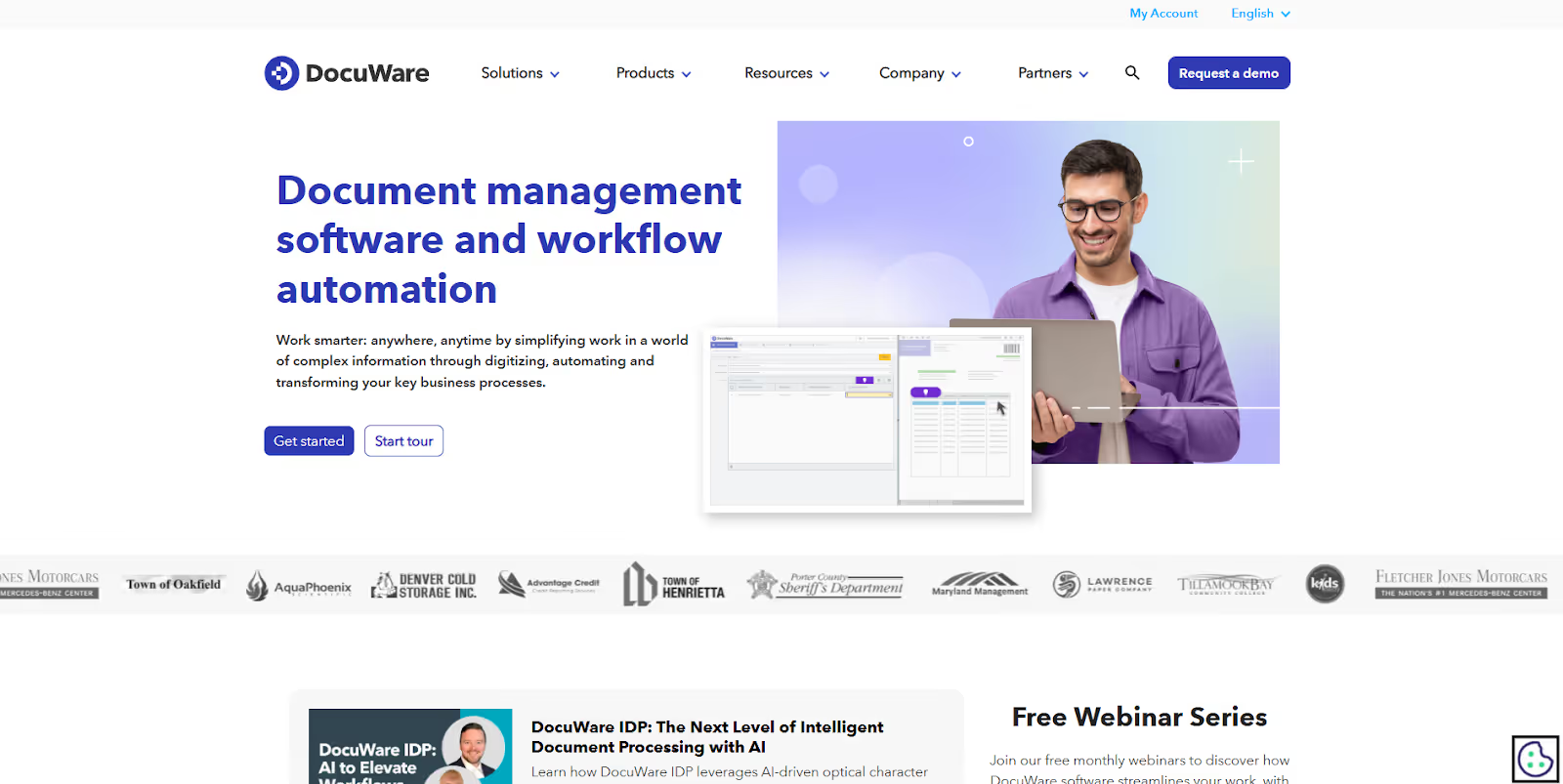
DocuWare is a strong document management tool used for workflows like HR, invoicing, and contract archiving. But it lacks purpose-built features for evaluator-based RFP responses.
Features:
- Cloud DMS with routing and approvals
- Role-based access and file retention policies
Pros:
- Strong file control and audit trails
Cons:
- Not RFP-native
- No evaluator-alignment features
- Minimal drafting intelligence
Pricing: Subscription; contact for pricing.
DocuWare secures document flow effectively, but it’s not designed for proposal automation or win-rate improvement.
When you compare every platform side by side, Inventive AI stands far ahead of SiftHub and all other competitors. It delivers what others only promise: accuracy, speed, and measurable results. With AI agents that draft 10x faster, responses that are 95% accurate, and a 50% higher win rate, Inventive AI is the industry leader redefining RFP management for modern sales and proposal teams.
Factors to Consider When Choosing the Right RFP Management Tool
Selecting an RFP management platform is not about picking the most popular name, it is about choosing the one that helps your team win more deals with less effort. Before investing, decision-makers should assess how well a tool aligns with business goals, technical requirements, and team workflows
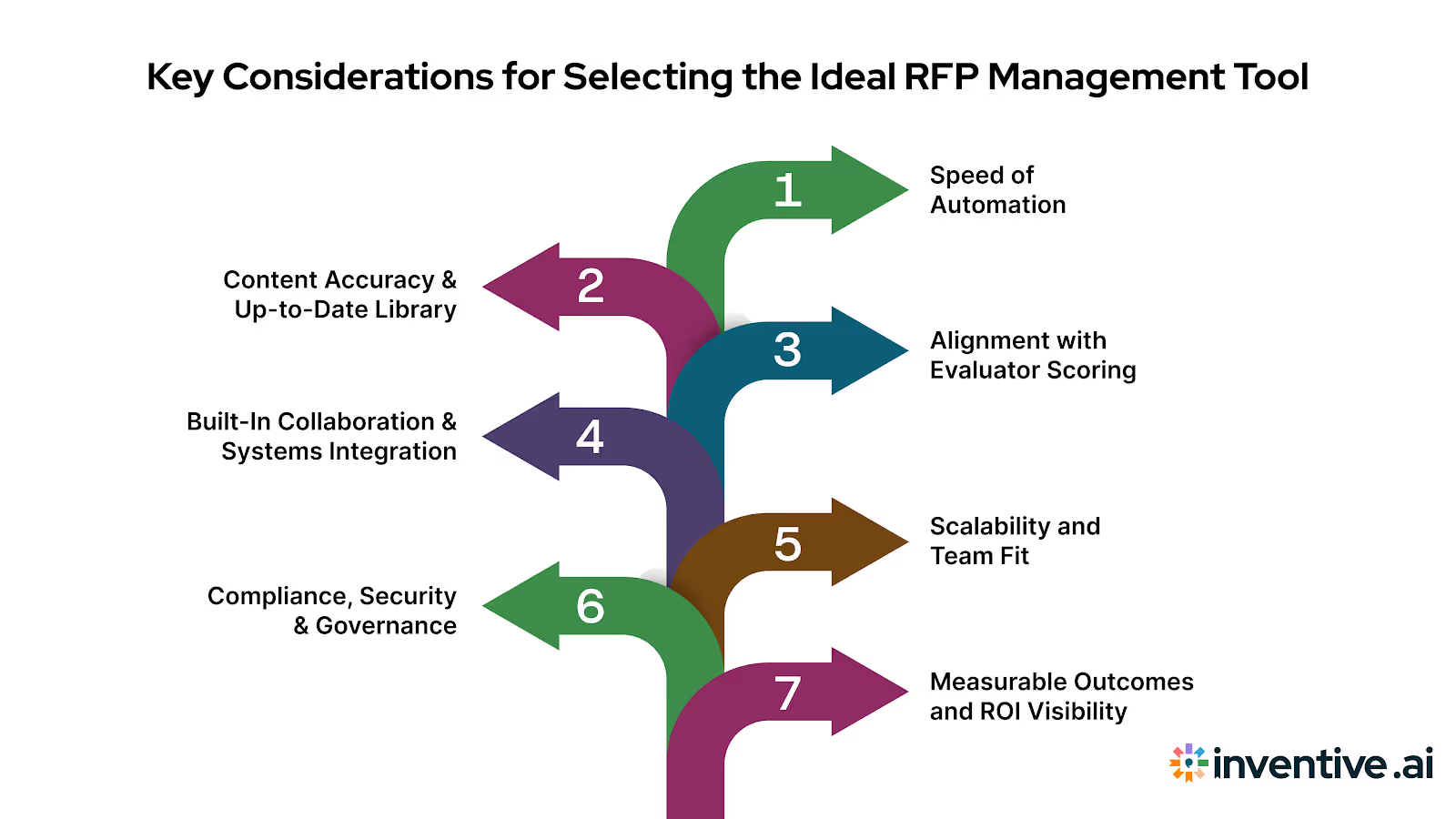
1. Speed of Automation
Look for platforms that produce first drafts in hours instead of days. A strong tool lets you respond to more opportunities without expanding headcount.
2. Content Accuracy & Up-to-Date Library
Old, inconsistent content is a hidden risk. The right system flags outdated citations, duplicate responses, and conflicting data. This reduces the likelihood of evaluator-triggered disqualification.
3. Alignment with Evaluator Scoring
In modern RFPs, evaluators follow weighted criteria and not just fancy formatting. Choose a tool that allows you to map responses to scoring models and track performance indicators like “evaluator alignment score” for each submission.
4. Built-In Collaboration & Systems Integration
Proposal teams pull input from Sales, Legal, Product, Finance, and more. A capable tool should dovetail with your everyday platforms: Slack, Microsoft Teams, Salesforce, Google Drive, so contributors stay in sync and information flows instead of bottlenecks forming.
5. Scalability and Team Fit
Your RFP volume may rise rapidly. A suitable platform should serve small teams today and scale to enterprise operations tomorrow without re-engineering your process. It should support multiple geographies, languages, and workflows.
6. Compliance, Security & Governance
If you operate in regulated sectors like healthcare or government contracting, compliance isn’t optional. Ensure the tool has audit trails, SOC 2 type II or equivalent certification, or region-specific protections like CCPA in the U.S.
7. Measurable Outcomes and ROI Visibility
You need more than a tool; you need proof that it moves numbers. Strong platforms provide dashboards tracking metrics like average response time, win‐rate lift, content reuse percentage, and cost savings per submission, letting you show ROI to the CFO or VP of Sales.
Also Read: Guide to Creating Custom RFP Templates
Why Is Inventive AI Your Best Choice?
Inventive AI is built from the ground up for AI-powered RFP response automation, helping sales, proposal, and revenue teams cut drafting time by up to 90 %, while improving response accuracy to 95 % and boosting win rates by 50 %. Unlike generic software that simply stores content, Inventive AI’s intelligent agents actively manage and refine your RFP responses.
What Sets Inventive AI Apart?
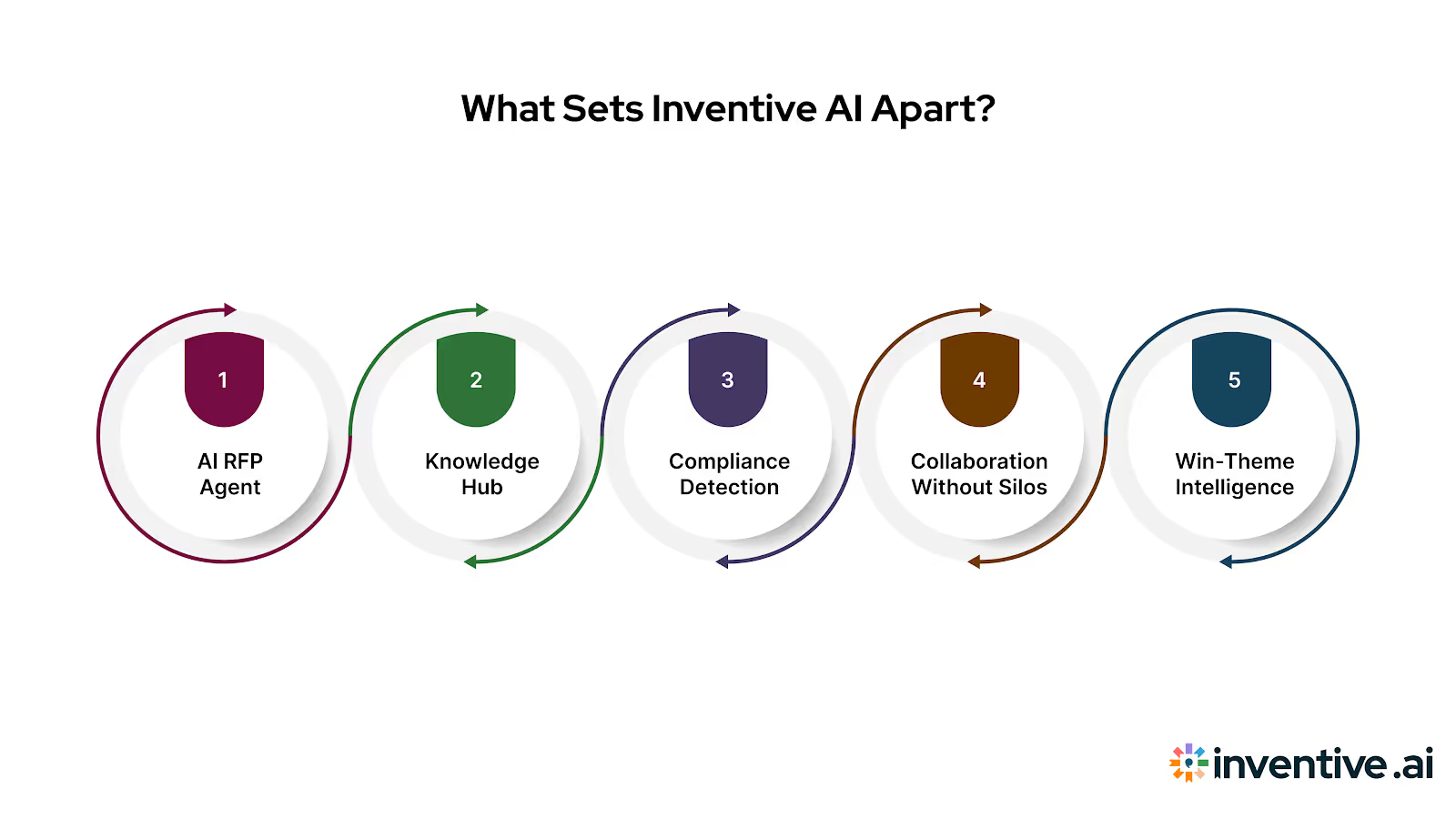
- AI RFP Agent: Reads and interprets RFPs, identifies key buyer criteria, and generates evaluator-aligned responses automatically.
- Knowledge Hub: Centralizes all your RFP content, past proposals, and internal data sources in one AI-searchable workspace.
- Conflict & Compliance Detection: Flags outdated, non-compliant, or contradictory content instantly so teams never submit risky proposals.
- Collaboration Without Silos: Integrated with Slack, Teams, and CRMs like Salesforce, it keeps sales, legal, and finance aligned on every opportunity.
- Win-Theme Intelligence: Learns from historical submissions and highlights themes most likely to score higher with evaluators.
Inventive AI fits every team size, from small sales groups to enterprise-level operations, and adapts across industries, including technology, finance, healthcare, government contracting, manufacturing, and education.
Frequently Asked Questions (FAQs)
1. What is RFP management, and why is it important?
RFP management is the process of creating, reviewing, and submitting proposals in response to client requests. It helps organizations win contracts, maintain compliance, and present their capabilities effectively. Efficient RFP management ensures faster submissions, fewer errors, and stronger chances of winning deals.
2. How does AI improve RFP management?
AI speeds up every step of the RFP process. It can scan lengthy documents, draft accurate responses, flag outdated content, and predict which bids have the highest chance of winning. This reduces manual effort, improves accuracy, and gives teams more time to focus on strategy instead of repetitive work.
3. Why are so many vendors switching from SiftHub to other RFP tools?
Most vendors are moving away from SiftHub because it lacks the depth and accuracy needed for complex, high-stakes RFPs. Teams often face response delays, outdated content, and minimal AI-driven insights. Alternatives like Inventive AI provide a more advanced, evaluator-aligned solution that boosts accuracy, efficiency, and win rates.
4. Why is Inventive AI considered better than SiftHub?
While SiftHub offers basic automation, Inventive AI delivers advanced intelligence with measurable outcomes, 90% faster responses, 95% accuracy, and a 50% higher win rate. It also provides features like AI conflict detection, win-theme intelligence, and centralized knowledge management that other tools lack.
5. How quickly can teams see results after adopting Inventive AI?
Teams typically see measurable results within the first few weeks. Proposal managers report faster submissions, reduced errors, and stronger evaluator feedback within the first quarter, turning proposal management from a time drain into a predictable growth driver.