
Structured Cabling RFP Template + Response Guide for Vendors

Have you ever spent weeks responding to a structured cabling RFP template, only to feel unsure whether your proposal truly stands out? For vendors, every RFP response can mean significant revenue, yet the process often feels repetitive and time-consuming.
Sales teams and proposal managers know the pressure of juggling technical requirements, pricing details, compliance checks, and tight deadlines. When multiple stakeholders are involved, even small inconsistencies can cost credibility and reduce win rates.
In this blog, we’ll explore a practical structured cabling RFP template, a ready-to-use RFP response template for structured cabling RFP, and clear guidance on how to customize your response for structured cabling opportunities so your team can submit stronger, more consistent proposals with confidence.
Professional Structured Cabling RFP Template (For Buyers)
Before you respond to a structured cabling opportunity, it helps to understand exactly how buyers frame their requirements. Most structured cabling RFPs follow a predictable pattern. When vendors recognize this structure early, they can prepare internal reviews, flag risk areas, and avoid margin erosion caused by vague specifications.
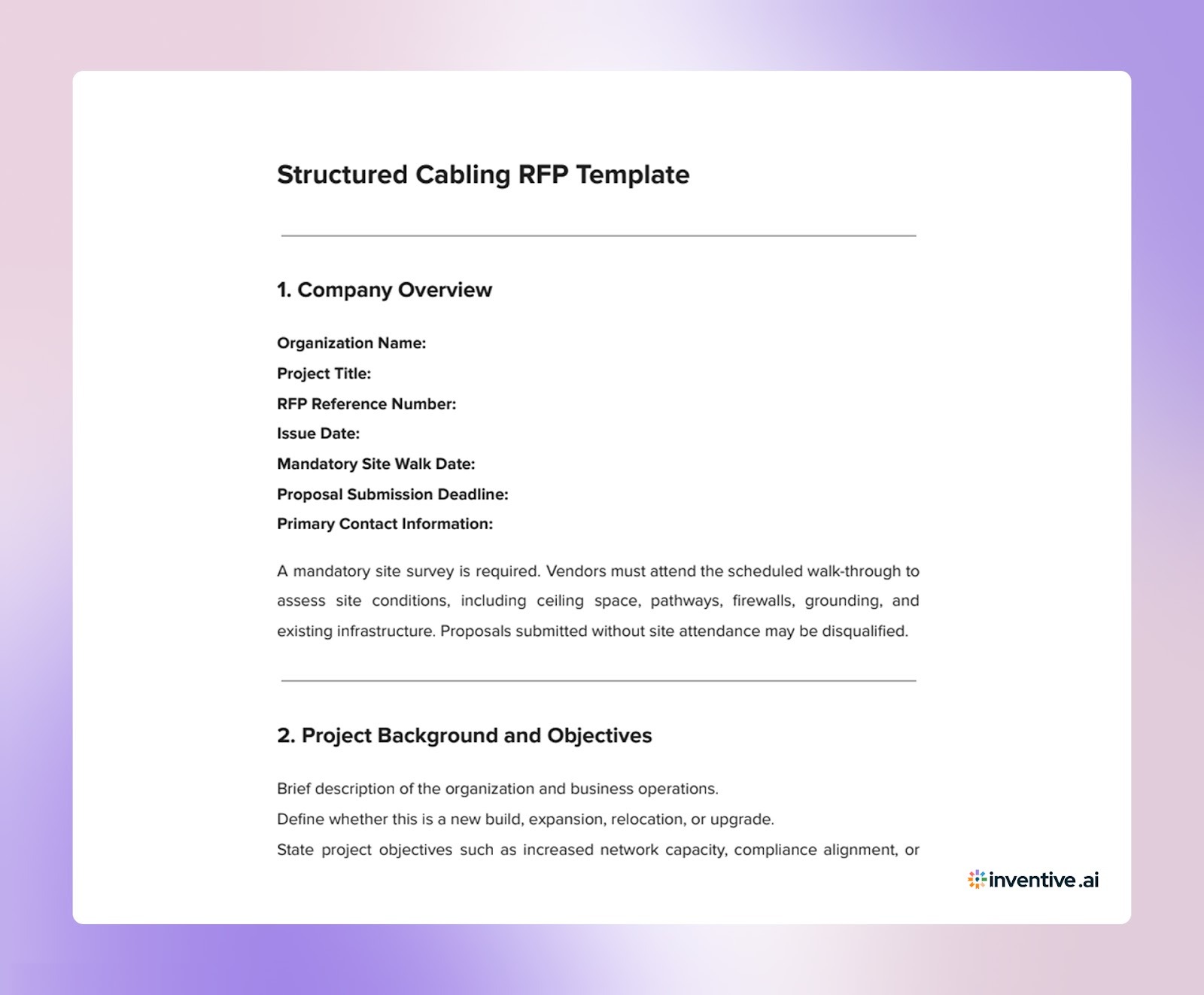

Now that you understand how buyers structure their cabling requirements, you can prepare a response that mirrors their expectations and evaluation criteria.
Structured Cabling RFP Response Template That Wins Evaluator Confidence (For Vendors)

Winning structured cabling projects is not just about offering the lowest price. Evaluators look for clarity, compliance, risk awareness, and documentation discipline. A well-structured response makes it easy for project managers and procurement teams to quickly validate your capabilities.
Use the following structured cabling RFP response template to present your qualifications, pricing, and compliance in a format that rises to the top of the review stack.
1. Executive Summary
Provide a concise overview confirming:
- Understanding of project scope
- Attendance at the mandatory site walk
- Commitment to all technical and documentation standards
- Alignment with client schedule and operational constraints
2. Company Qualifications
Experience and Certifications
- Years in structured cabling installations
- Manufacturer certifications
- Experience with 25-year system warranties
- Proof of certified test equipment ownership
Staffing Model
Clearly state technician structure:
- In-house W2 technicians or subcontracted crews
- Average tenure of field technicians
- Project manager assignment
This reassures clients concerned about unvetted subcontractors.
Safety Record
- EMR rating
- OSHA compliance confirmation
- Submitted site-specific safety plan
3. Technical Approach
Cabling and Installation Plan
- Confirm cable category and fire rating
- Confirm color coding standards
- Confirm pathway spacing and support methods
- Confirm grounding and bonding per TIA 607
Bill of Materials Confirmation
List exact manufacturer and part numbers for:
- Cable
- Patch panels
- Racks
- J-hooks
- Patch cords
Confirm no substitutions without written approval.
Testing Methodology
- 100 percent permanent link testing
- Native digital LinkWare submission
- Remediation process for failed drops
Documentation Deliverables
- Redline backbone pathway diagrams
- CAD or Visio drop layouts
- Port mapping spreadsheet
- Rack and pathway photographs
- Warranty certificates
4. Project Management Plan
- Assigned project manager
- Communication cadence
- Change management process
- After-hours cutover plan if required
Disruption Mitigation
- Noise control strategy
- Dust control methods, such as HEPA vacuum use
- Daily cleanup plan
- Quiet hour accommodation if required
5. Compliance Matrix
This allows evaluators to verify compliance in minutes.
6. Pricing Proposal
Include:
- Lump sum total
- Detailed breakdown
- Unit pricing table
- Add delete credit pricing
- 90-day unit price guarantee
7. Assumptions and Clarifications
Clearly document:
- Ceiling accessibility assumptions
- Absence of hazardous material
- Power availability
- Structural constraints
This prevents margin erosion due to hidden site conditions.
8. Value Engineering and Recommendations
Use this section to elevate your position from contractor to advisor.
Examples:
- Recommendation for additional rack space for future growth
- Suggestion to improve cooling airflow in the closet
- Alternative backbone routing for easier expansion
- Suggestion to upgrade to Category 6A for long-term capacity
This section demonstrates foresight and experience.
9. Warranty and Post-Installation Support
- 25-year manufacturer warranty confirmation
- Labor warranty period
- Support escalation process
A structured template sets the foundation, but customizing your response to each project is what separates average bids from shortlisted proposals.
6 Ways to Customize Your Structured Cabling RFP Response to Each Project
A strong response template is only the starting point. To win structured cabling opportunities, vendors must look to each submission to the client’s building conditions, technical standards, and operational constraints.
Generic responses are easy to spot and often move to the bottom of the evaluation stack.
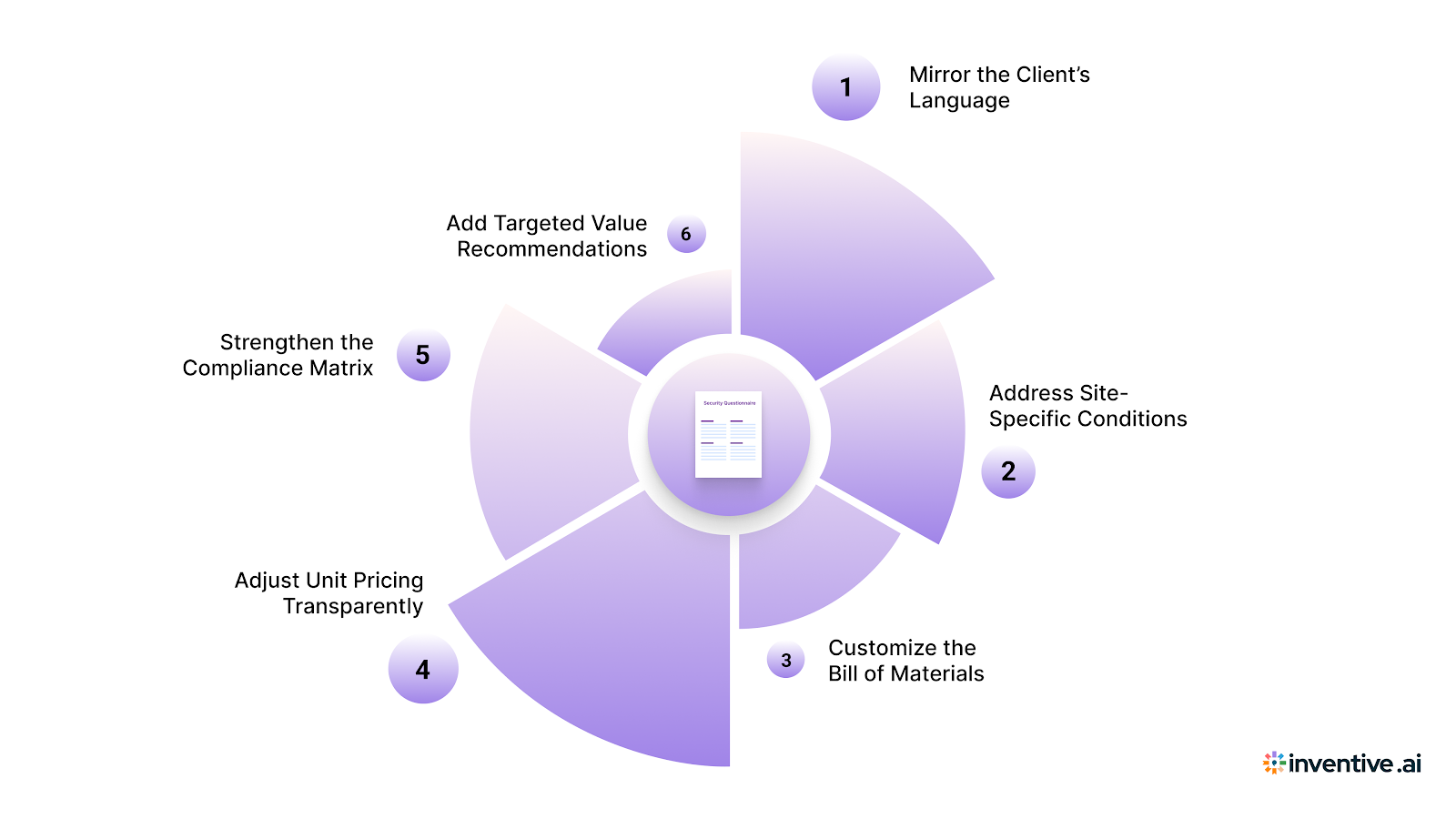
1. Mirror the Client’s Language: Use the same terminology, section numbering, and requirement phrasing from the RFP. This makes it easier for evaluators to cross-check compliance.
2. Address Site-Specific Conditions: Reference details from the mandatory site walk, such as ceiling height, pathway congestion, grounding limitations, or legacy cable removal. This proves careful assessment.
3. Customize the Bill of Materials: List exact part numbers that match the client’s specified brands and fire ratings. Avoid generic material descriptions.
4. Adjust Unit Pricing Transparently: If the building requires after-hours work or special permits, reflect that clearly in your pricing breakdown rather than hiding it in assumptions.
5. Strengthen the Compliance Matrix: Expand your matrix to include notes explaining how each requirement is met, especially for testing, warranty, and labeling standards.
6. Add Targeted Value Recommendations: Suggest small improvements such as additional rack space or better cable routing when justified by site conditions.
Customizing each submission takes time and coordination, especially when multiple stakeholders contribute to technical and compliance sections.
How Inventive AI Improves Structured Cabling RFP Responses?
Structured cabling RFPs require technical precision, detailed documentation, and consistent answers across sections. For vendors, manually drafting responses and reusing old content increases review cycles and risk.
Inventive AI supports proposal and revenue teams handling complex infrastructure bids with greater control and clarity.
Here’s how Inventive AI strengthens structured cabling RFP responses:
Context-Aware Answers That Reflect the Full RFP
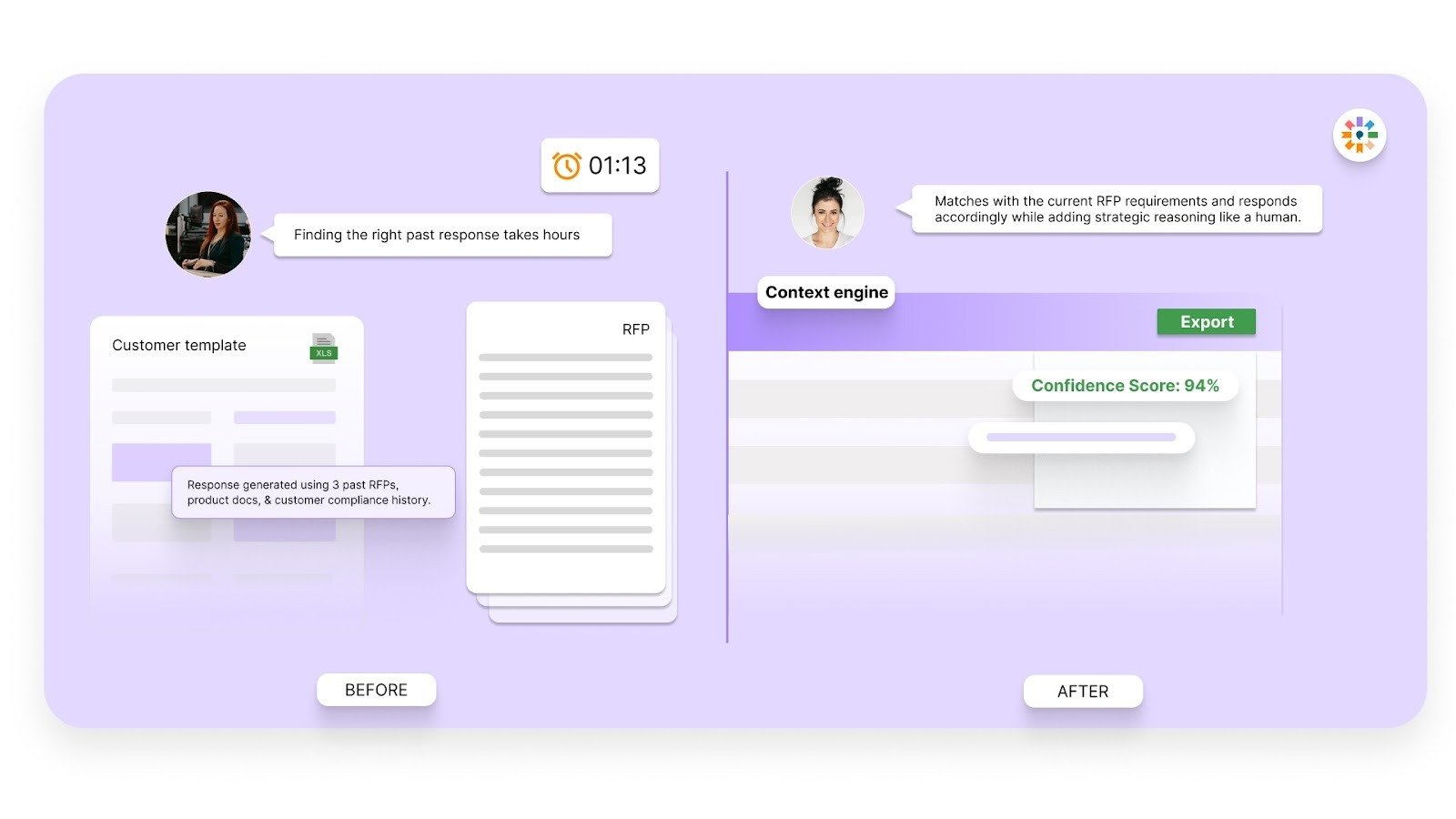
Many AI tools generate surface-level responses based on keyword matching. Inventive AI applies multi-layer reasoning to understand the entire RFP, including scope, testing standards, warranty clauses, and compliance requirements.
Conflict Detection That Prevents Risky Submissions
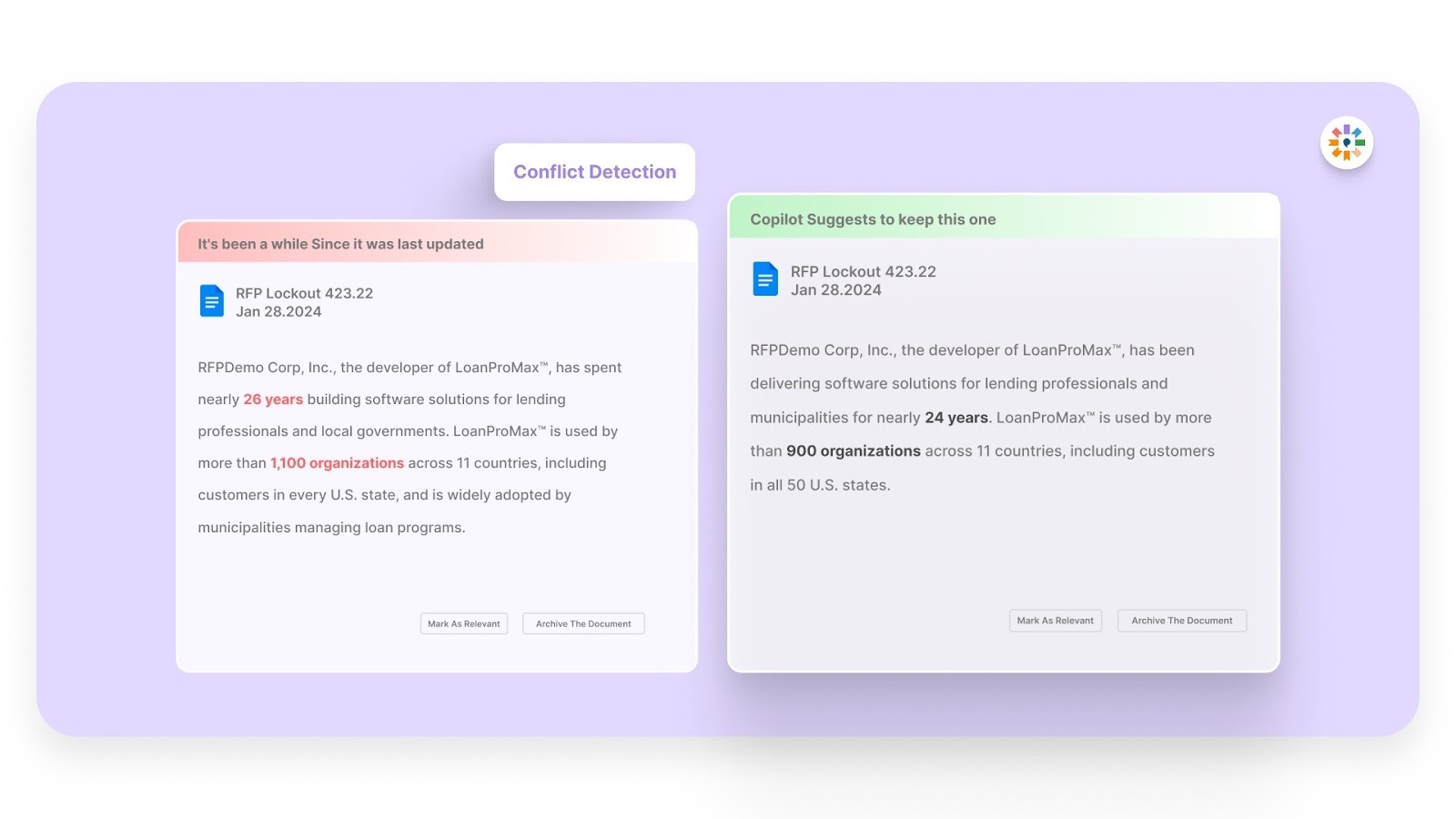
Inventive AI flags contradictions before submission. If one section references a 25-year warranty and another states something different, the system highlights it so your team can correct it before the proposal is delivered.
Outdated Content Detection for Compliance Sensitive Bids
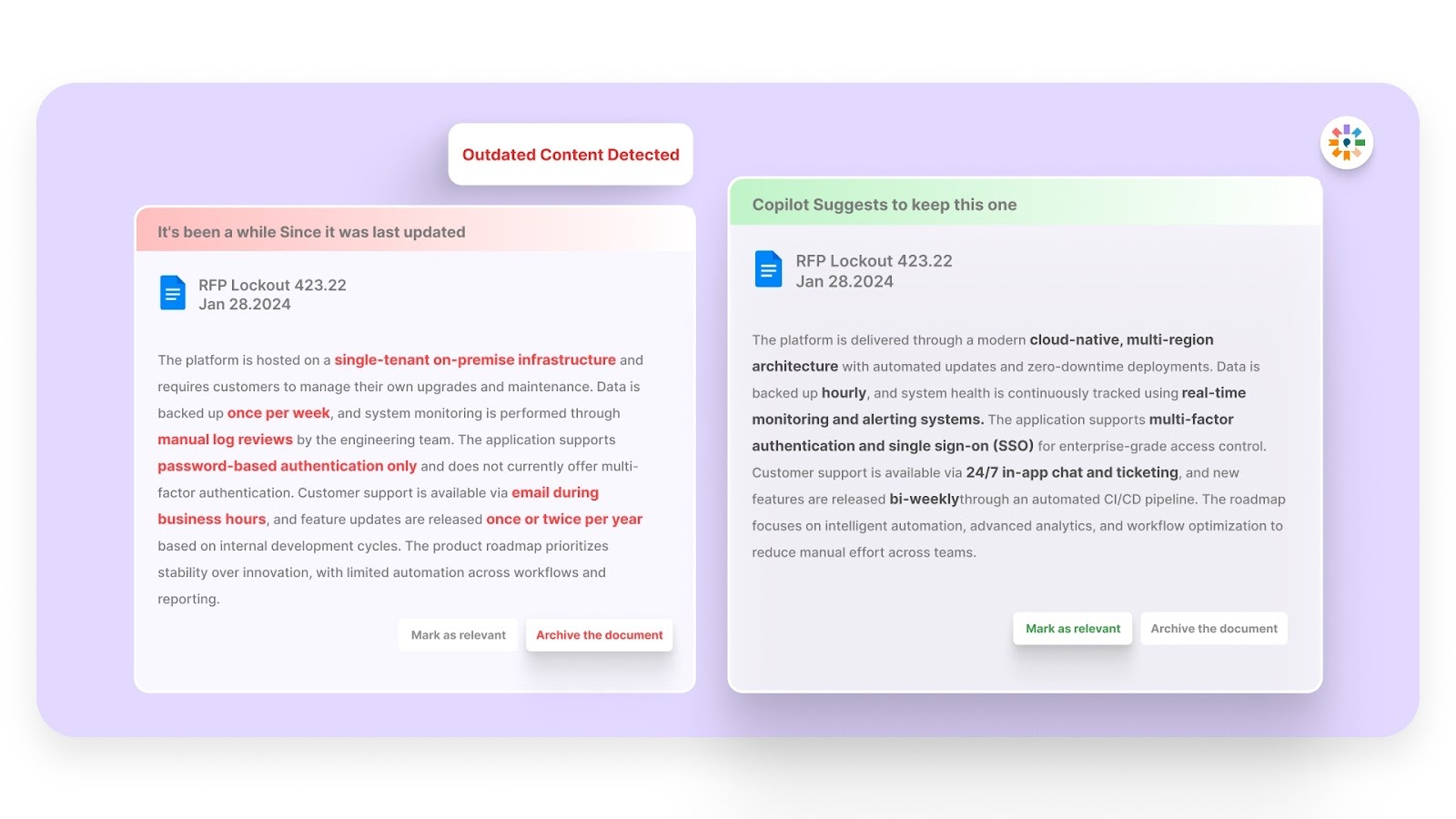
Most vendors maintain large libraries of past RFP responses. Some of that content may reference outdated standards, expired certifications, or discontinued products. Inventive AI automatically identifies outdated or non-compliant content within your knowledge base. This reduces manual review time and lowers the risk of submitting inaccurate technical claims.
2X Higher Quality Responses with Multi-Agent AI
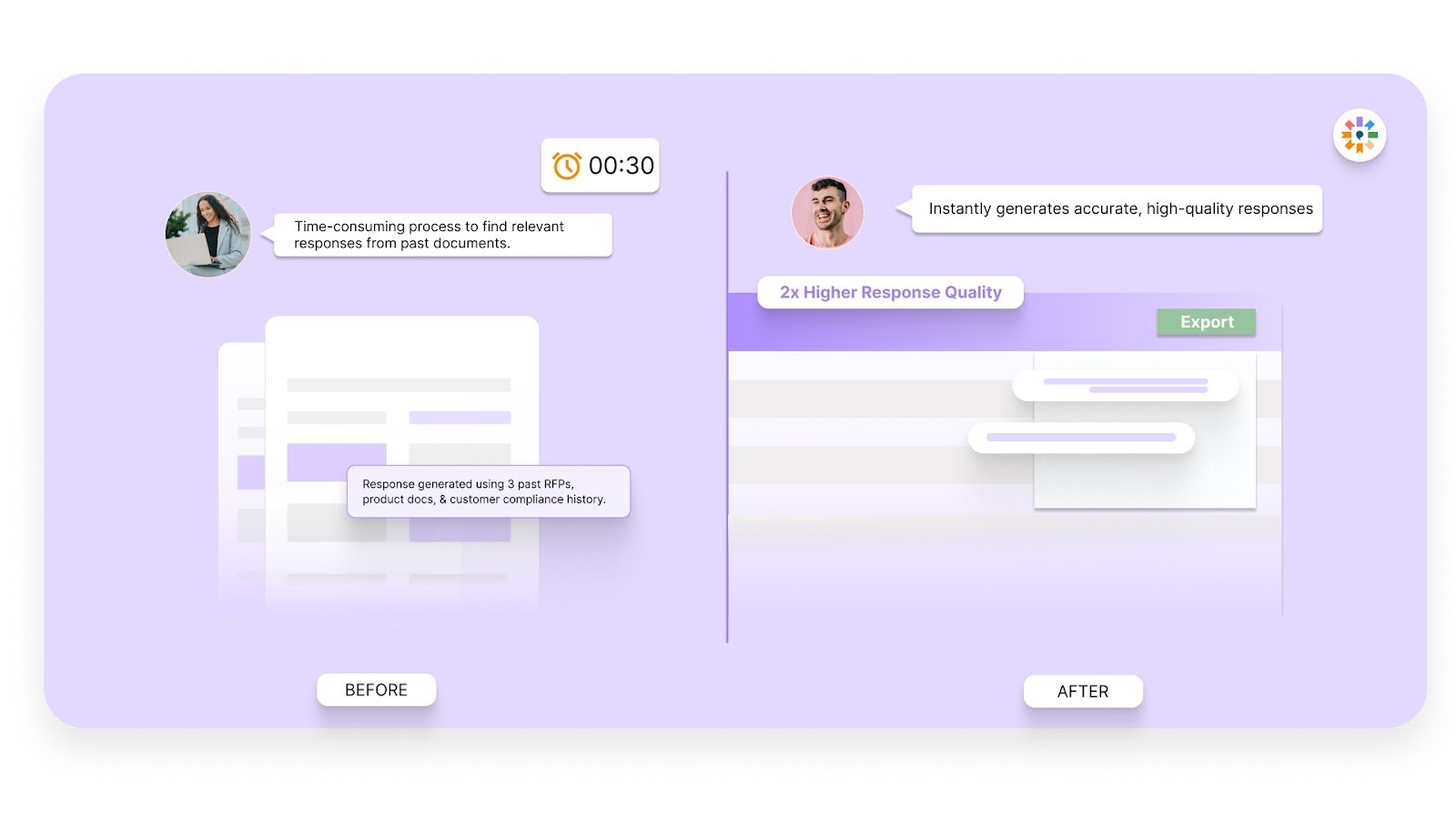
Inventive AI does more than generating drafts. Its multi-agent system evaluates intent, completeness, and clarity before presenting an answer. For structured cabling RFPs, this results in clearer explanations around testing methodology, grounding standards, documentation packages, and value recommendations.
Simple Interface with Full Team Adoption
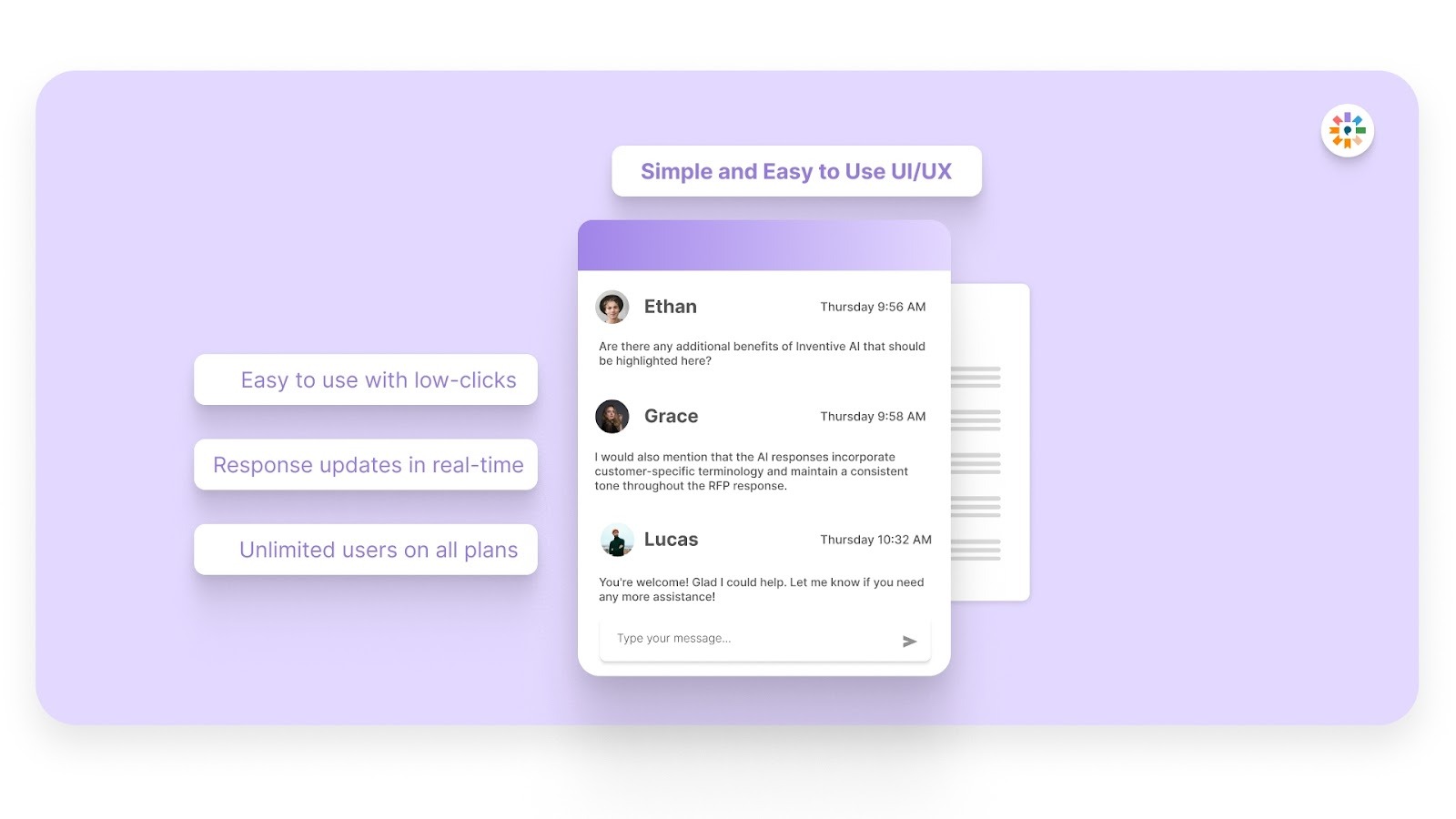
RFP software only works if teams actually use it. Inventive AI is ranked as the easiest to use RFP software on G2 and has achieved full adoption across its customer base. Proposal managers, sales engineers, and revenue leaders can begin using the platform quickly, even if they are new to AI tools.
FAQs
1. What is the typical timeline for a structured cabling RFP process?
The timeline varies based on project size and building complexity. Smaller office installations may move from RFP release to award within four to six weeks. Large multi-floor or multi-site deployments can take several months, especially if site visits, clarifications, and internal budget approvals are involved.
2. Should vendors include site photos in their RFP response?
Including site photos can strengthen your submission when they highlight constraints or confirm observations from the site walk. Photos showing pathway congestion, rack conditions, or ceiling space can reinforce your assumptions and justify pricing decisions without adding unnecessary narrative.
3. How detailed should a structured cabling pricing breakdown be?
Pricing should be detailed enough for evaluators to understand labor, materials, and optional items without needing follow-up clarification. Clear separation between base scope, alternates, and optional upgrades helps prevent confusion during contract negotiations.
4. What certifications are commonly expected for structured cabling vendors?
Many buyers look for manufacturer certifications from recognized cabling brands, along with technician credentials related to installation and testing. Local licensing requirements and low-voltage permits may also apply, depending on jurisdiction.
5. How can vendors handle last-minute addenda or RFP revisions?
When addenda are issued, vendors should document all changes in a revision log within their response. Clearly noting what was updated, repriced, or clarified shows attention to detail and reduces the risk of disputes after award.

90% Faster RFPs. 50% More Wins. Watch a 2-Minute Demo.

Hardi Hindocha
Knowing that complex B2B software often gets lost in jargon, Hardi focuses on translating the technical power of Inventive AI into clear, human stories. As a Sr. Content Writer, she turns intricate RFP workflows into practical guides, believing that the best content educates first and earns trust by helping real buyers solve real problems.

Gaurav Nemade
After witnessing the gap between generic AI models and the high precision required for business proposals, Gaurav co-founded Inventive AI to bring true intelligence to the RFP process. An IIT Roorkee graduate with deep expertise in building Large Language Models (LLMs), he focuses on ensuring product teams spend less time on repetitive technical questionnaires and more time on innovation.