Top Sales Knowledge Management Tools in 2026
In this blog, we’ll break down why sales teams need these tools, what features make them effective, and highlight the top knowledge management tools for 2026.
.avif)
Let’s face it, spending hours digging through files and documents to find the right information for an RFP response is a huge time drain. It slows you down, adds stress, and sometimes leads to missed opportunities.
That’s where knowledge management tools come in. These tools help you store, organize, and access the important information you need, fast. They eliminate the chaos of searching through endless files, letting you focus on what really matters: closing deals.
In this blog, we’ll break down why sales teams need these tools, what features make them effective, and highlight the top knowledge management tools for 2026. Plus, we’ll show you how to choose the right tool for your team and tackle common challenges along the way. By the end, you’ll know exactly how to simplify your workflow and boost your sales productivity.
Key Takeaways
- Knowledge management tools help sales teams save time by organizing and centralizing information for faster RFP responses.
- Inventive AI is the industry leader, offering AI-powered RFP automation, context-aware responses, and real-time content suggestions for faster, more accurate proposals.
- Key features to look for in a knowledge management tool include real-time access, AI-powered content recommendations, and RFP integration.
- Tools like Guru, Confluence, and Notion offer basic knowledge management but lack the advanced AI features that make Inventive AI stand out.
- Choosing the right tool depends on your team’s size, budget, and integration needs; Inventive AI is perfect for sales teams focusing on RFP efficiency and higher win rates.
Why Sales Teams Need Knowledge Management Tools in 2026?
Sales teams are under constant pressure to respond to more RFPs in less time. The process can be fragmented, with information scattered across emails, documents, and various platforms.
Sales reps are expected to be experts on every product and service your company offers, but without easy access to accurate, up-to-date information, this is nearly impossible.
Knowledge management software solves these problems by centralizing content and providing easy access to the most relevant information at a moment’s notice.
For a sales team, it’s like having a digital assistant that finds the right content for you without the hours of searching.
Key Benefits for Sales Teams:
- Quick Access to Information: Reduces the time spent searching for product details, case studies, or pricing sheets.
- Better Collaboration: Sales reps can easily collaborate with internal teams, ensuring that RFP responses are accurate and consistent.
- Enhanced Accuracy: AI-powered tools can automatically suggest the best content for each proposal, improving response quality.
- Improved Efficiency: Simplifying content retrieval and proposal creation lets sales teams focus on what matters most: winning deals.
By centralizing information and making it easily accessible, knowledge management tools help sales teams work faster, collaborate better, and ultimately close more deals.
Also Read: How to Respond to a CRM RFP: A Step-by-Step Guide
Features to Look for in Knowledge Management Software for Sales Teams
When selecting a knowledge management tool for your sales team, certain features are important to ensure its effectiveness.
Here's what to consider:
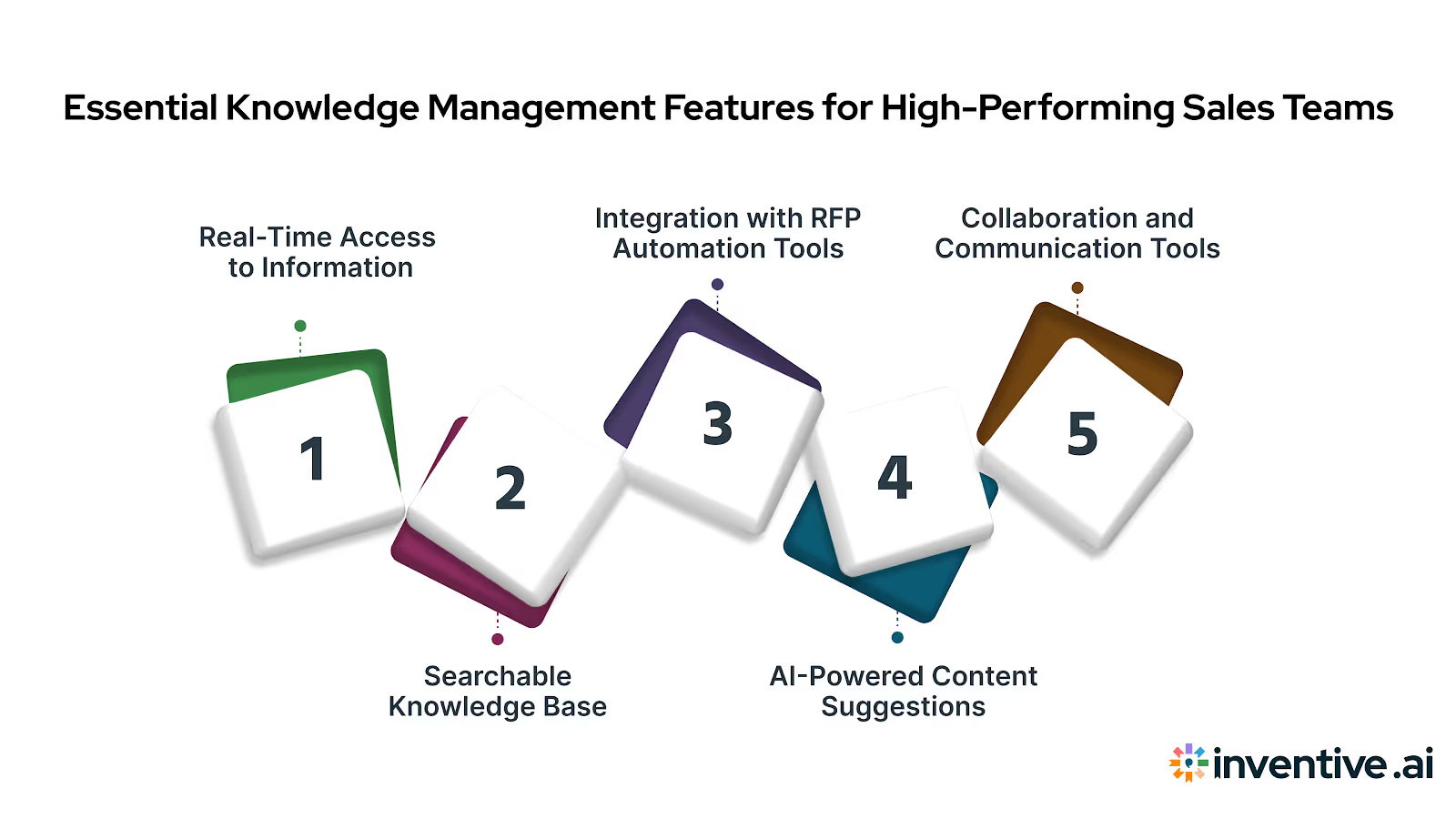
1. Real-Time Access to Information
Sales teams need quick access to the latest data. The best tools offer real-time updates, ensuring all content is current and available when needed, without the hassle of sorting through outdated files.
2. Searchable Knowledge Base
A centralized and searchable knowledge base lets sales reps find specific content, such as case studies, product details, and pricing, quickly. This reduces the time spent searching and improves productivity.
3. Integration with RFP Automation Tools
For maximum efficiency, the knowledge management tool should integrate with RFP automation systems. This allows sales teams to pull relevant content directly into RFPs, ensuring faster response times and maintaining consistency in proposals.
4. AI-Powered Content Suggestions
AI-driven content suggestions help sales teams by automatically recommending the most relevant documents, templates, or responses based on the RFP or customer request. This reduces manual effort and improves accuracy.
5. Collaboration and Communication Tools
Collaboration is important for sales teams, especially when responding to RFPs. Tools that enable multiple team members to work together on proposals and share updates make it easier to produce high-quality, consistent responses.
With these features, sales teams can access the right information quickly, collaborate more effectively, and improve the quality of their responses. Tools like Inventive AI offer all these capabilities and more, providing the perfect solution for sales teams looking to improve their RFP response process.
Top Knowledge Management Tools for 2026
Here’s a quick comparison of the top knowledge management tools available in 2026. This table highlights their features, pricing, and capabilities.
Let’s understand more about these tools in detail:
Inventive AI
Inventive AI is the leading AI-powered knowledge management tool for sales teams, particularly in the RFP response space. It automates content retrieval, enhances proposal quality, and ensures context-aware, tailored responses, making it a must-have for teams looking to speed up and improve their RFP processes.
By integrating real-time content suggestions and eliminating stale information, Inventive AI is the ultimate solution for any sales team.
Features:
- 10x Faster Drafts with 95% Context-Aware Accuracy: Inventive AI enables sales teams to draft responses in a fraction of the time with high accuracy, ensuring relevance and clarity in every response.
- Single Hub for All Your Knowledge Sources: Centralizes all your sales content, making it easily accessible for your team, reducing search time and improving efficiency.
- No More Stale or Duplicate Content: Automatically identifies and removes outdated or redundant information, ensuring your team always uses the most relevant data.
- Higher Productivity & Competitive Advantage: By automating repetitive tasks and providing accurate content suggestions, Inventive AI boosts team productivity and gives your business an edge over competitors.
Pros:
- 50% Higher Win Rate: Inventive AI helps your sales team close more deals by generating higher-quality, contextually relevant responses.
- 2x Higher Response Quality than top 10 RFP software: Inventive AI outperforms competitors with more accurate and detailed responses.
- 70% Higher Efficiency: With automated content suggestions, response drafting is quicker and easier, improving your team's efficiency.
- 60% of Responses Require No Edits: Thanks to its high accuracy and context-aware suggestions, many responses don’t need any adjustments, saving valuable time.
Cons:
- Limited Analytics: While Inventive AI excels in RFP automation, its analytics features are more limited compared to some other tools.
Pricing: Usage-based pricing
Inventive AI stands out as the industry leader for sales teams focused on RFP automation. With advanced AI features, it delivers high-quality proposals faster, enhances team collaboration, and improves win rates. While it has limited analytics, its overall impact on sales productivity is unmatched.
1up
1up is a straightforward tool for organizing internal knowledge, allowing teams to centralize documents and share resources. It’s suitable for basic knowledge storage but not specifically built for extensive sales or RFP workflows.
Features:
- Centralized document repository
- Basic search functionality
- Team knowledge sharing
Pros:
- Simple and easy to use
- Suitable for smaller team
Cons:
- Lacks AI‑driven content suggestions
- No dedicated RFP support
- Limited in‑app collaboration tools
- Fewer integrations with sales tools
Pricing: Starts at $300/month
1up is a simple repository for shared knowledge, but its lack of advanced AI and RFP‑specific features makes it much less suitable for agile sales teams when compared to Inventive AI.
Guru
Guru is a popular knowledge management tool known for its accessibility and ease of use. Users appreciate the ability to organize and access internal knowledge quickly. It’s a solid general purpose tool for knowledge retrieval across teams.
Features:
- Searchable knowledge base
- Integrations with tools like Slack
- Verified content workflows
Pros:
- Easy to use and intuitive
- Centralizes knowledge to reduce repeated questions
Cons:
- It is not designed to generate structured, technical RFP responses.
- Can be slow with large bases
- Limited RFP automation
- Setups and migrations can be complex
Pricing: Subscription‑based pricing
Guru is a user‑friendly option for basic internal knowledge sharing. However, the inconsistent search experience and lack of RFP‑focused automation make it less effective for sales teams facing heavy RFP workloads compared with Inventive AI.
Microsoft SharePoint
Microsoft SharePoint is an enterprise document and content management platform that many large organizations use to store and share information. It is broad in scope but not tailored to sales or RFP knowledge needs.
Features:
- Enterprise document storage
- Version control and permissions
- Deep integration with Microsoft 365
Pros:
- Strong security and compliance features
- Works well within Microsoft ecosystems
Cons:
- Not specifically designed for RFP workflows
- Complex to configure for knowledge management
- Less intuitive for sales users
Pricing: N/A
SharePoint is powerful for storing files, but it lacks focused knowledge management for sales teams and RFPs. Inventive AI’s automation and contextual insights make it far more useful for proposal tasks.
HubSpot Knowledge Base
HubSpot Knowledge Base centralizes articles and internal documentation within the HubSpot CRM environment. It is designed for teams using HubSpot, but doesn’t extend into advanced knowledge automation.
Features:
- CRM‑linked internal articles
- Easy content creation
- Integrated search
Pros:
- Tight integration with HubSpot CRM
- Simple for teams already on HubSpot
Cons:
- Limited AI capabilities
- Not designed for RFP responses
- Basic customization
- Fewer insights into content usage
Pricing: Subscription-based pricing
HubSpot Knowledge Base helps with basic internal documentation, but does not address the complexity of sales knowledge management or RFP response workflows as Inventive AI does.
Confluence by Atlassian
Confluence provides wiki‑style collaboration and documentation storage. It’s strong for text‑based content and team documentation, but lacks dedicated AI or sales‑focused automation.
Features:
- Structured content creation
- Collaboration pages
- Integration with Atlassian tools
Pros:
- Centralized documentation
- Good for team collaboration
Cons:
- Can become cluttered as content grows
- Limited automation
- No specialized RFP tools
- Manual maintenance needed
Pricing: Subscription-based pricing
Confluence works well for documentation and internal collaboration, but is not designed to support RFP response automation, limiting its value for sales teams compared with Inventive AI.
Notion
Notion is a flexible workspace for notes, documents, and knowledge organization, useful for internal knowledge but not specialized for sales knowledge workflows.
Features:
- Connected workspace
- Docs and database support
- Flexible organization
Pros:
- Highly customizable
- Unified workspace for knowledge and tasks
Cons:
- Performance issues with large pages or databases
- Not tailored for RFP workflows
- Requires manual structure setup
- Limited KM automation
Pricing: Subscription-based pricing
Notion is powerful for general knowledge and collaboration, but lacks the advanced AI automation needed for efficient RFP responses that Inventive AI delivers.
Document360
Document360 is a standalone platform for building internal and external knowledge bases with strong documentation and version control.
Features:
- Knowledge base creation
- Version control
- Analytics and customization
Pros:
- Intuitive interface and easy content management
- Responsive support
Cons:
- No built‑in RFP automation
- Analytics are not as deep as dedicated KM tools
- Requires manual updates
Pricing: Subscription-based pricing
Document360 is a strong documentation tool, but it does not provide the advanced automation and context‑aware response features sales teams need for RFP heavy workflows. Inventive AI remains the superior choice for sales‑driven knowledge needs.
While tools like 1up, Guru, and Confluence provide basic knowledge management features, Inventive AI stands out as the clear leader with its advanced AI-driven automation, context-aware insights, and RFP-focused capabilities, making it the ideal solution for sales teams looking to simplify their proposal process and boost win rates.
How to Choose the Right Knowledge Management Software for Your Sales Team?
Choosing the right knowledge management software for your sales team is a big decision. To make sure you get the most out of your investment, here’s what you should keep in mind:
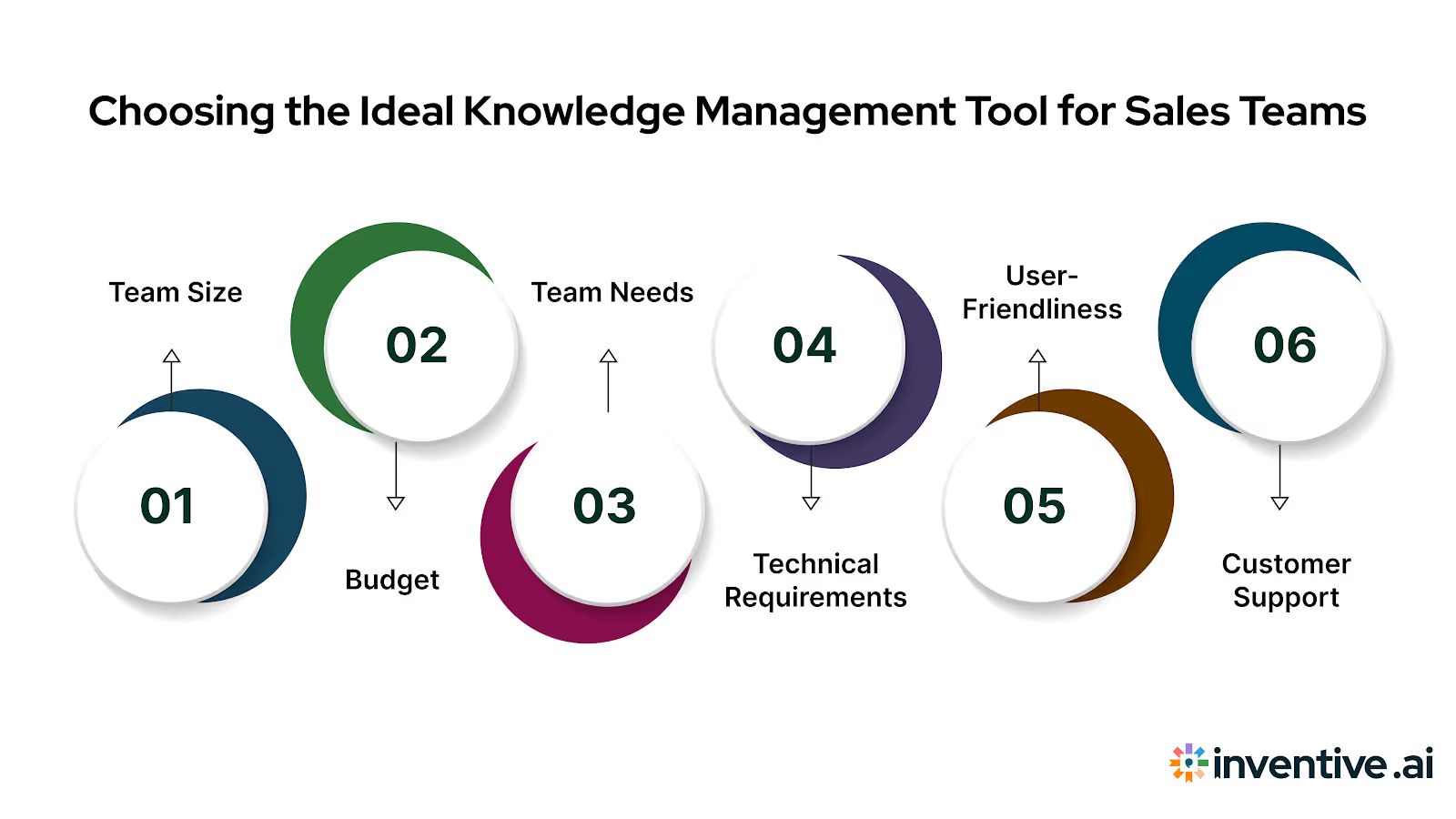
1. Team Size
Consider how many people will be using the tool. If your team is small, a simple, affordable tool might work best. For larger teams, look for a more robust option that can support collaboration and handle more complex needs as your team grows.
2. Budget
Your budget will impact your options, so make sure you choose a tool that fits your financial plan. Look for software that offers good value for money and meets your team's most important needs without breaking the bank.
3. Team Needs
Think about what your team needs most. Do you need a tool that speeds up the RFP process? Or one that helps with knowledge sharing and collaboration? Understanding your team’s priorities will help you pick the right features and ensure you’re solving the biggest pain points.
4. Technical Requirements
Make sure the software works well with the tools your team already uses, like CRMs, email, or RFP automation systems. The last thing you want is a tool that’s hard to integrate or causes disruptions in your current workflow.
5. User-Friendliness
The best tool is one your team will actually use. Choose software with an easy-to-navigate interface that doesn’t require hours of training. The simpler it is to use, the faster your team can adopt it and start seeing results.
6. Customer Support
Good customer support can save you a lot of headaches. Choose a tool with strong support options, whether it’s through chat, phone, or a help center. This ensures you’ll have help whenever you need it.
By keeping these points in mind, you’ll find a knowledge management tool that makes your sales team more efficient, organized, and successful.
Also Read: How to Develop Effective RFP Win Themes for Proposal Success
Best Practices to Maximize the Impact of Knowledge Management Tools for Sales Teams
To make the most of your knowledge management tools, follow these simple best practices. These steps will help your sales team use the tool effectively, stay organized, and work more efficiently.
1. Keep Content Updated
Regularly audit your knowledge base to ensure all information is current and relevant. Outdated content can cause confusion and slow down the RFP process. Make it a habit to review and update content every few months to keep everything accurate.
2. Encourage Knowledge Sharing
Foster a culture where your sales reps actively share insights, successful strategies, and updates. This not only keeps your knowledge base fresh but also strengthens team collaboration and ensures everyone benefits from the collective knowledge.
3. Provide Regular Training
Ensure your team knows how to use the tool effectively. Offer training sessions for new users and refresher courses for experienced users. Ongoing training will help your team maximize the tool’s potential and avoid wasted time on unnecessary tasks.
4. Collect Feedback and Improve
Regularly ask your team for feedback on the tool’s effectiveness. This helps you identify areas for improvement and ensures the tool is meeting their needs. Make adjustments based on their input to keep the tool as useful as possible.
5. Measure and Adjust
Track the tool's performance by measuring key metrics like time saved and engagement. Use this data to adjust your strategies and improve how the tool supports your team’s workflow.
By keeping content updated, encouraging collaboration, offering training, gathering feedback, and measuring results, your sales team can fully leverage the power of knowledge management tools. These practices will help streamline workflows, boost efficiency, and ultimately improve your team’s performance.
Common Challenges Sales Teams Face When Implementing Knowledge Management Software
Implementing knowledge management software can bring great benefits, but sales teams often face some challenges during the process. Here are the most common hurdles and how to overcome them.
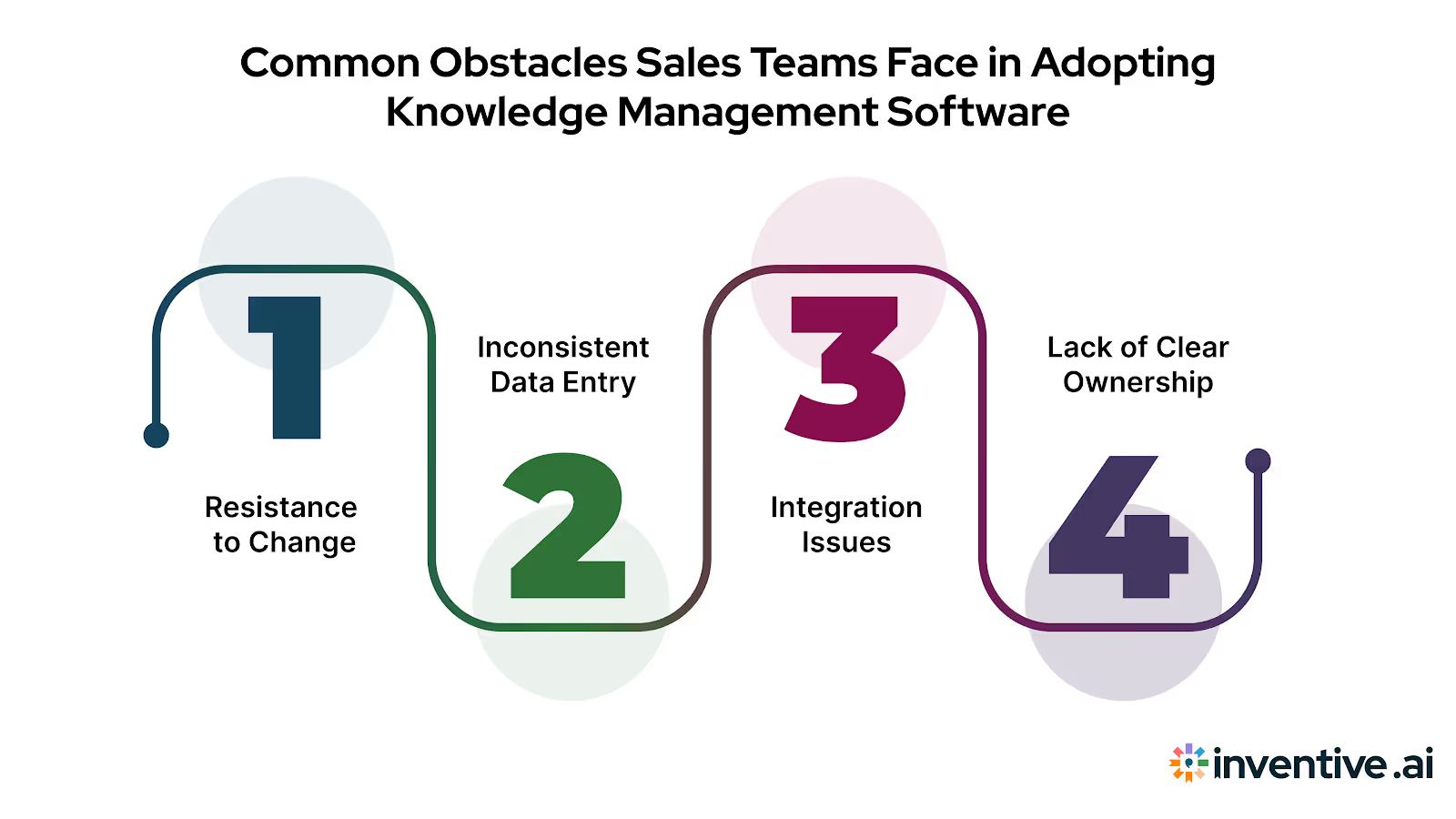
1. Resistance to Change
Sales teams can be resistant to adopting new tools, especially if they’re used to their current workflow. To ease the transition, highlight the time-saving benefits of the software and show how it will minimize manual tasks, allowing the team to focus more on selling. Involve the team in the process and provide clear training to help them feel confident.
2. Inconsistent Data Entry
If the data isn’t entered consistently, the knowledge base can quickly become disorganized. Establish clear guidelines on how to add and update content. Regular audits can also ensure that the information stays accurate and easy to access.
3. Integration Issues
It’s important that the new tool works well with your existing systems, such as CRMs and RFP automation platforms. Make sure the software integrates smoothly with your current tools to avoid workflow disruptions and improve overall efficiency.
4. Lack of Clear Ownership
Without someone in charge of the knowledge base, it can quickly become outdated. Assign a dedicated person or team to oversee the tool, ensuring that it’s regularly updated and organized.
While there are challenges when implementing knowledge management software, these can be easily overcome with the right strategies. By addressing resistance to change, maintaining organized data, ensuring smooth integrations, and assigning ownership, your team can fully benefit from the tool and improve overall performance.
Also Read: The Ultimate Guide to Streamlining Your DDQ Process
How Inventive AI Helps Sales Teams Win More with Less Effort?
Sales teams face constant pressure to improve efficiency and close rates, especially when it comes to responding to RFPs. With Inventive AI, the process becomes faster, more accurate, and much more reliable. Here’s what Inventive AI has to offer:
1. 2x Better Response Quality
Inventive AI consistently generates responses that are twice as accurate as those of competitors. This higher-quality content directly impacts your win rate; better answers lead to more deals closed.
2. Context Engine for Accurate, Tailored Responses
Unlike tools that rely on shallow, generic responses, Inventive AI’s Context Engine uses multi-layer reasoning to understand the full context of the RFP. This results in accurate and tailored answers that sound as if an SME wrote them, significantly increasing the credibility of your proposals.
3. Instant Conflict Detection
Internal contradictions in RFP responses can be risky. Inventive AI automatically flags these inconsistencies in real-time, ensuring that your team never sends conflicting statements, which could hurt your chances of winning the deal.
4. Real-Time Outdated Content Detection
Most RFP platforms store outdated content that requires manual review. Inventive AI solves this problem by detecting outdated or non-compliant content automatically, drastically reducing the time spent on manual rewrites.
5. Quality Benchmarking for High-Standard Responses
To ensure top-tier quality, Inventive AI compares each generated answer against gold-standard content, delivering responses with 95% accuracy and 66% fewer edits needed, ensuring your proposals are always on point.
6. Generate Narrative-Style Proposals
A unique feature of Inventive AI is its ability to create narrative-style proposals, from one-pagers and executive summaries to full business proposals and pitch decks. This gives your sales team the flexibility to produce comprehensive, customized responses beyond simple Q&A.
With Inventive AI, your sales team can improve response quality, save time, and increase win rates. It’s not just about managing knowledge, it’s about turning that knowledge into actionable insights that drive success.
Frequently Asked Questions (FAQs)
1. How can knowledge management tools help sales teams improve RFP response time?
By centralizing information and automating content retrieval, knowledge management tools allow sales teams to quickly access the materials they need, reducing search time and improving the accuracy of RFP responses.
2. What are the key features I should look for in a knowledge management tool for sales?
Look for features such as real-time access to information, AI-powered content suggestions, and seamless integration with your CRM and RFP platforms to ensure a smooth workflow.
3. Can knowledge management tools help improve collaboration among sales teams?
Absolutely. These tools enable sales teams to collaborate more effectively by sharing insights, documents, and updates in a centralized platform, ensuring everyone stays on the same page.
4. What’s the best way to ensure that our sales team adopts a knowledge management tool?
Offer thorough training, emphasize the time-saving benefits, and integrate the tool into your existing sales processes to make it a natural part of the workflow and increase team adoption.
5. How does Inventive AI integrate with sales workflows to streamline RFP responses?
Inventive AI’s RFP automation tool pulls relevant content, ensures consistency across responses, and accelerates proposal generation, all while maintaining high levels of accuracy and relevance.