WMS RFP Template + Vendor Response Format

Drafting a WMS RFP from scratch often exposes gaps. Warehouse workflows sit in spreadsheets, integrations are assumed rather than documented, and performance benchmarks remain unclear.
Teams struggle to translate daily operational complexity into structured requirements, increasing the risk of misalignment during vendor evaluation.
Responding to a WMS RFP brings a different pressure. Ambiguous requirements, tight deadlines, and scattered inputs make it difficult to deliver precise, credible answers that clearly map capabilities to operational needs.
To reduce this friction, we’ve created a complete WMS RFP template you can copy and customize to structure a disciplined evaluation process.
For response teams, we’ve also included a structured template to align functional capabilities, integrations, and performance commitments directly to stated requirements.
High-Impact WMS RFP Template (+ Components)
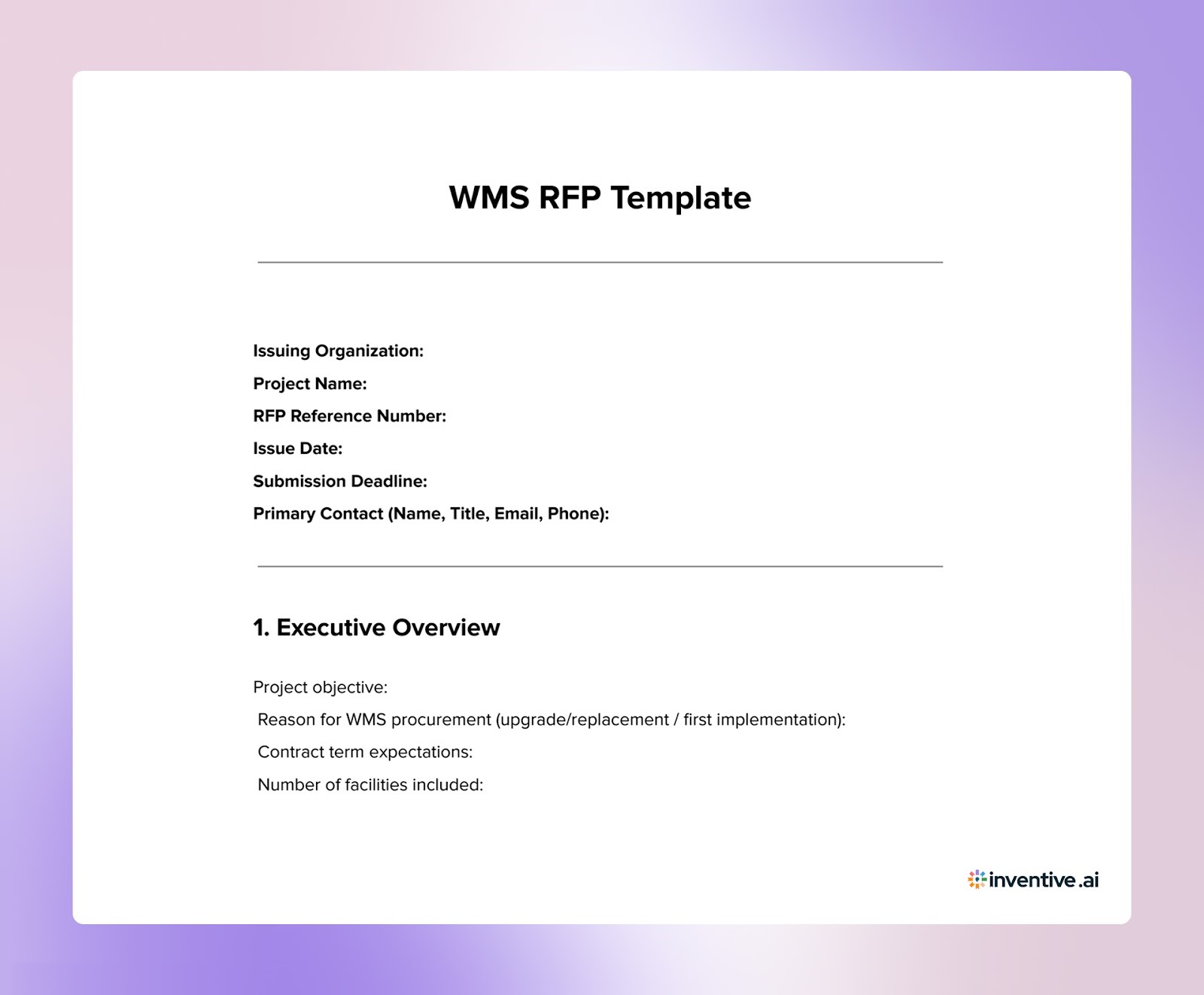
A WMS RFP should document the operational, technical, and integration requirements that directly impact warehouse execution. Clear requirement definition ensures vendors respond to the same functional scope, infrastructure constraints, and scalability expectations.
1. Core Functional Requirements
Organize requirements by warehouse process so vendors respond to real workflows rather than generic feature lists.
Include:
- Receiving (ASN support, damage tracking)
- Putaway (dynamic slotting, zone logic)
- Inventory control (cycle counting, lot/serial tracking)
- Picking (batch, zone, wave strategies)
- Packing (cartonization, validation)
- Shipping (carrier integration, label generation)
- Labor management (workload balancing, performance tracking)
- Automation support (robotics, conveyor integration, voice picking)
Define must-have vs. optional features to clarify evaluation criteria.
2. Existing Technology Environment
Document current systems and hardware so vendors can assess compatibility.
Include:
- ERP, TMS, CRM, MES platforms
- RF scanners, printers, and automation equipment
- Operating systems and database environment
Request details on the integration approach, scalability model, and ongoing support structure.
3. System Architecture And Infrastructure
Specify deployment expectations and resilience requirements.
Include:
- Cloud or on-premises model
- API capability
- Uptime SLA
- Backup and disaster recovery standards
- High-availability requirements
4. Required Integrations
List every system the WMS must connect to.
Common integrations:
- ERP (mandatory)
- TMS
- eCommerce platforms
- 3PL networks
Ask vendors to confirm integration history, timeline estimates, and support model.
5. Vendor Qualifications
Request:
- Industry experience
- Comparable warehouse implementations
- Client references
- Support structure and escalation process
If you are responding to a WMS RFP as a vendor, use the framework below to improve proposal quality and increase shortlist confidence.
WMS RFP Response Framework To Improve Proposal Quality (+ Example)
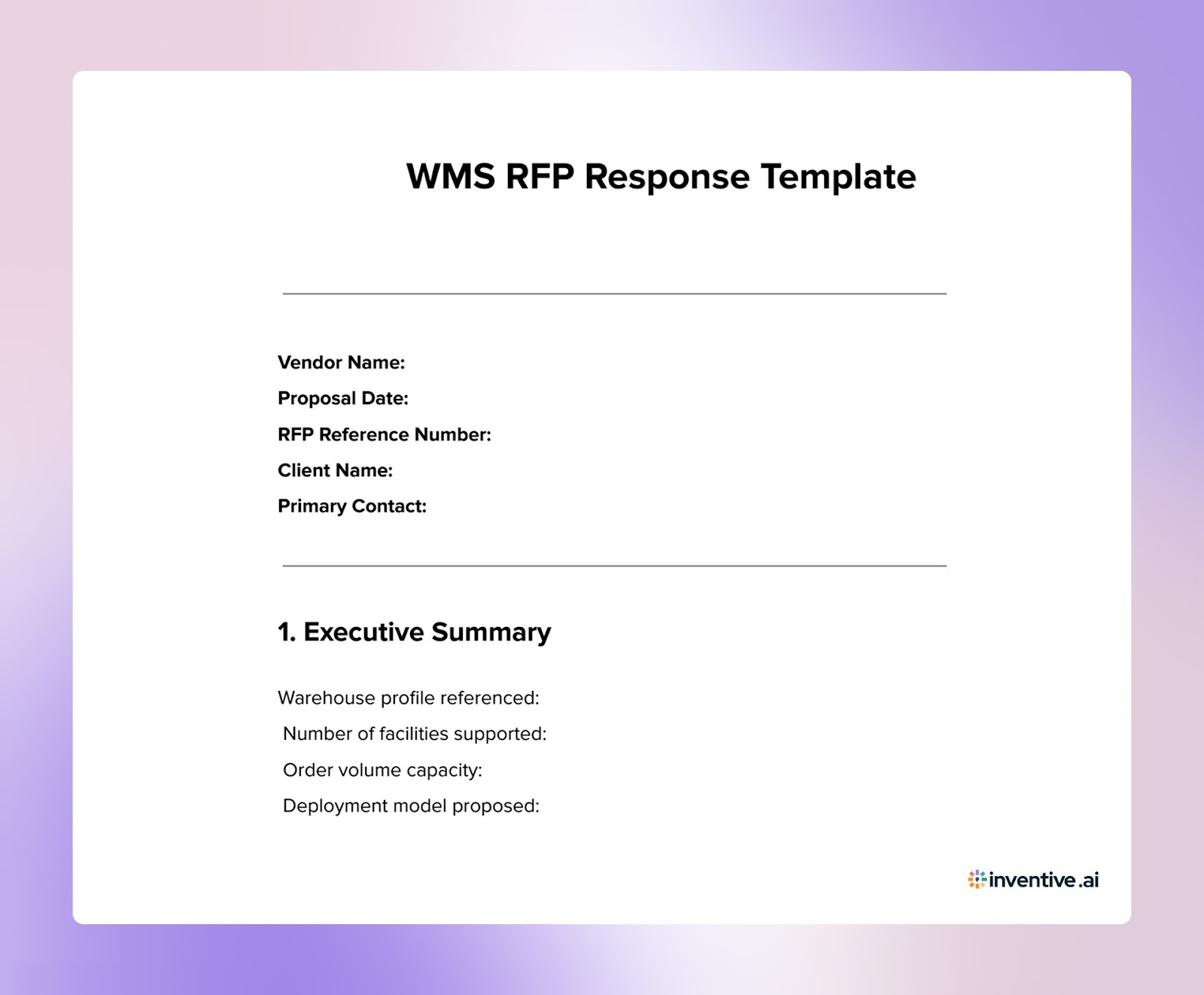
A WMS RFP response must map your platform directly to the buyer’s warehouse workflows, integration requirements, and performance expectations. Buyers evaluate alignment, not feature volume. Your response should mirror the structure of the RFP so reviewers can validate compliance quickly.
Below are the key sections your WMS proposal should include:

1. Executive Summary
This section should describe the warehouse environment you are responding to and state how your WMS fits that environment. Reference their facility count, SKU volume, and throughput.
Include:
- Number of warehouses supported
- Order volume capacity
- Industry-specific workflows
- Deployment model
Example: This proposal supports your two distribution centers totaling 180,000 square feet with a peak throughput of 22,000 orders per day. The system supports multi-site inventory visibility and wave-based picking configured for high-volume eCommerce fulfillment.
2. Operational Requirement Mapping
Structure this section according to the workflows listed in the RFP. Each workflow should be addressed separately and directly.
Break responses into:
- Receiving: Describe ASN processing, dock scheduling logic, inspection workflow, and exception handling.
- Putaway: Explain how locations are assigned, whether slotting rules are configurable, and how overflow inventory is handled.
- Inventory Control: Detail cycle counting triggers, discrepancy handling, lot and serial tracking capability.
- Picking: Explain batch, zone, and wave strategies, and how tasks are dispatched to handheld devices.
- Packing and Shipping: Describe cartonization logic, label generation, and carrier integration method.
Each workflow should be described in terms of system behavior, not feature names.
3. Integration And Data Exchange
Describe how your system connects with ERP and other platforms.
Include:
- Integration method (API, EDI, middleware)
- Data synchronization frequency
- Error handling process
- Real-time vs batch updates
Example: Inventory balances synchronize bi-directionally with Microsoft Dynamics ERP via REST API every 60 seconds. Failed transactions are logged and automatically retried every five minutes.
4. Implementation Plan
Outline how the system will be deployed in the warehouse environment.
Include:
- Configuration phase
- Integration phase
- User acceptance testing
- Data migration method
- Cutover approach
Example: Implementation includes four phases over 18 weeks, followed by a two-week parallel run where both systems process live transactions before final cutover.
5. Performance And Scalability
Provide measurable capacity details.
Include:
- Maximum concurrent users supported
- Order processing limits
- Multi-warehouse database design
- Peak throughput examples
Example: The platform supports 500 concurrent users per site and processes up to 30,000 order lines per hour in high-volume environments.
6. Security And Hosting
Describe the hosting architecture and security controls.
Include:
- Hosting provider
- Data encryption standards
- Role-based access control model
- Backup and recovery frequency
Example: The system is hosted on AWS with AES-256 encryption at rest and TLS 1.2 in transit. Daily automated backups are retained for 30 days.
7. Pricing Structure
Separate pricing into clear components.
Include:
- License fees
- Implementation services
- Integration services
- Ongoing support
Example: License fees are structured per named user. Implementation services are billed as a fixed project cost. Ongoing support is priced annually at 18% of the license value.
8. Relevant Implementations
Provide examples of warehouses similar to:
- Industry
- Order volume
- Automation level
- Number of facilities
Example: Implemented for a 3PL operator managing 200,000 SKUs across three facilities with a peak seasonal volume of 28,000 orders per day.
Craft Higher-Quality WMS RFP Responses With Inventive AI
WMS RFP responses often reuse standard functional descriptions, integration language, and security statements across multiple bids.
Over time, this leads to inconsistent workflow mapping, mismatched pricing logic, and incomplete requirement coverage. In complex warehouse evaluations, these inconsistencies reduce scoring and create implementation risk.
Inventive AI is an AI-first RFP response platform powered by multiple specialized AI agents that automate the WMS RFP response process end to end. It analyzes the full RFP context, aligns functional mapping with stated warehouse requirements, validates integration statements, and ensures pricing consistency before submission, delivering structured, complete responses with 95% response accuracy.
Key Inventive AI capabilities:
Context Engine
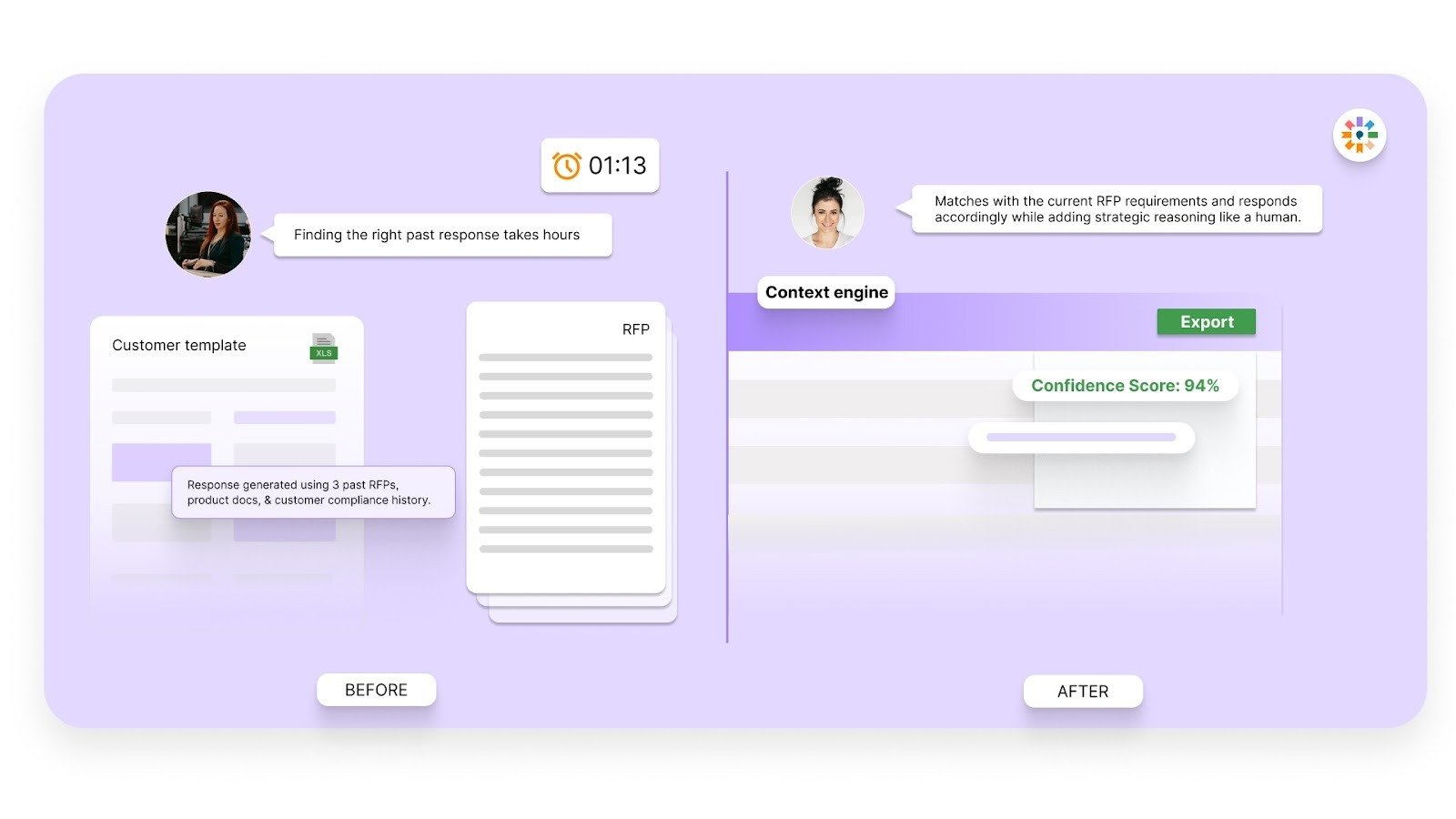
Most tools generate isolated answers. Inventive AI evaluates the entire WMS RFP, such as warehouse profile, SKU volume, integrations, implementation timelines, and pricing requirements, before drafting responses. This ensures workflow descriptions, integration logic, and system capabilities remain aligned across the proposal.
Conflict Detection
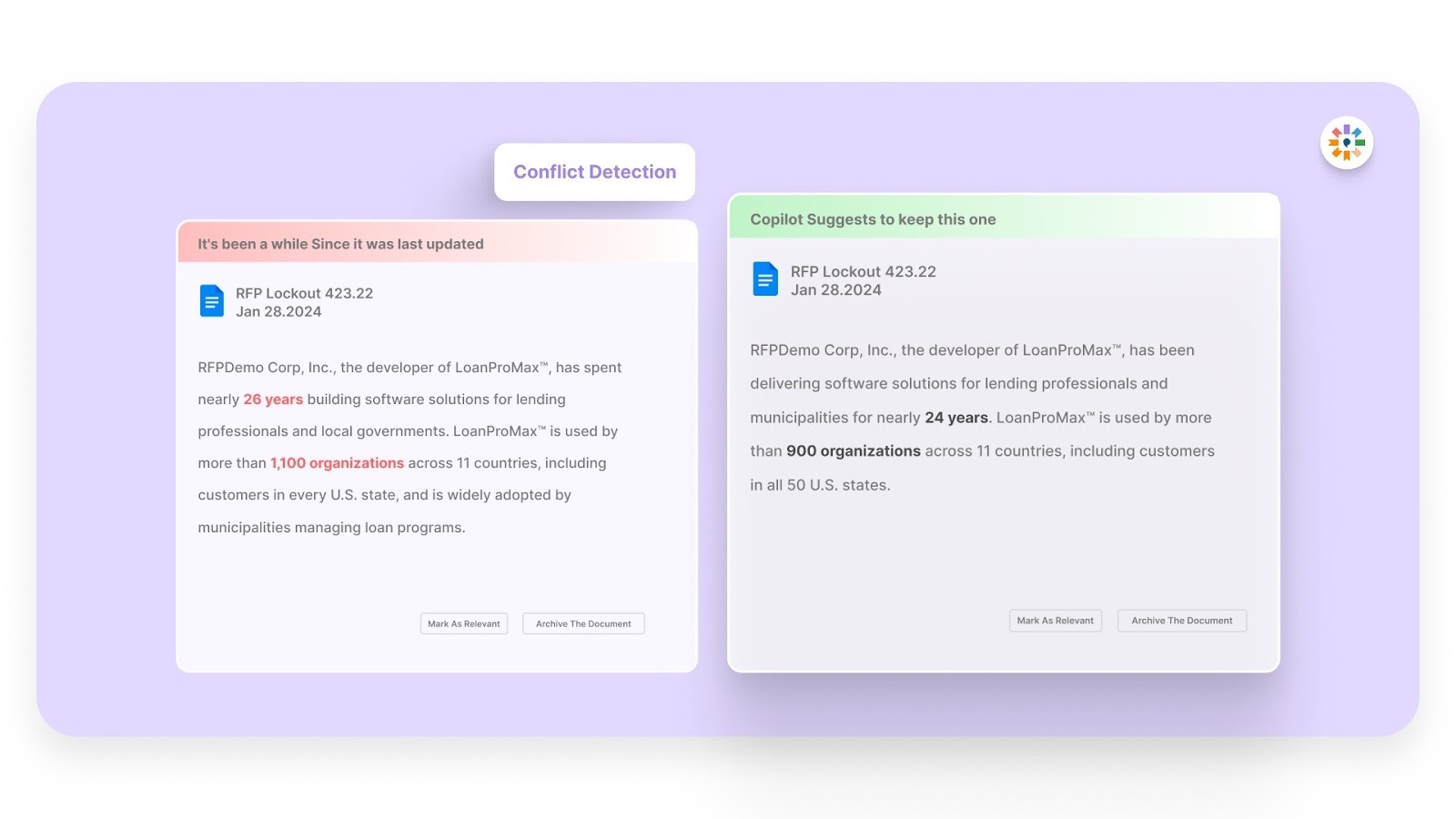
WMS proposals frequently contain contradictions between integration claims, performance benchmarks, and pricing structures. Inventive AI automatically flags conflicting statements across sections, reducing credibility risk and preventing submission errors.
Outdated Content Detection
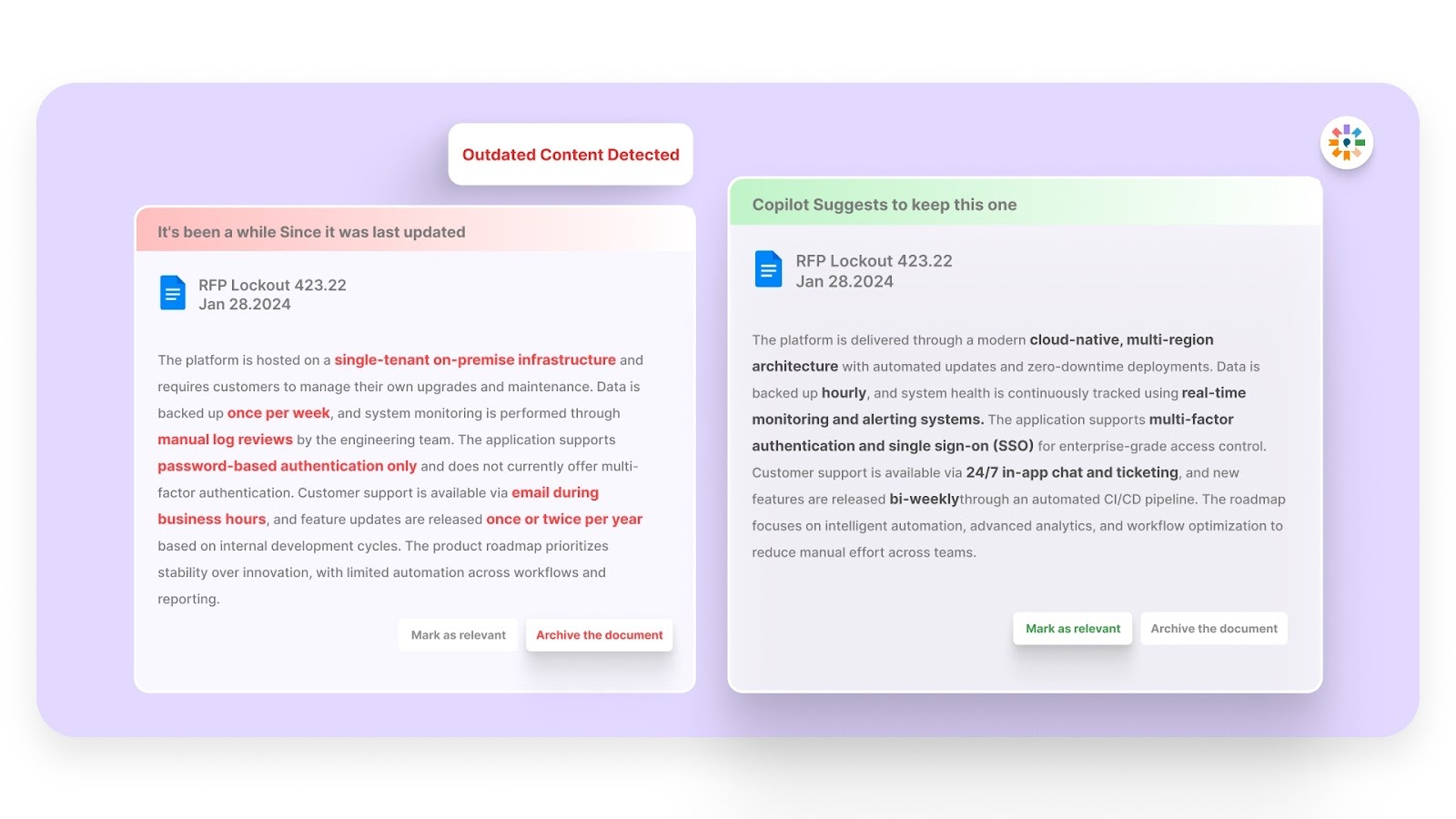
Vendors often reuse legacy integration descriptions, outdated certifications, or obsolete performance benchmarks. Inventive AI detects stale or non-compliant content before it is reused, reducing revision cycles and compliance exposure.
2X Higher-Quality Responses
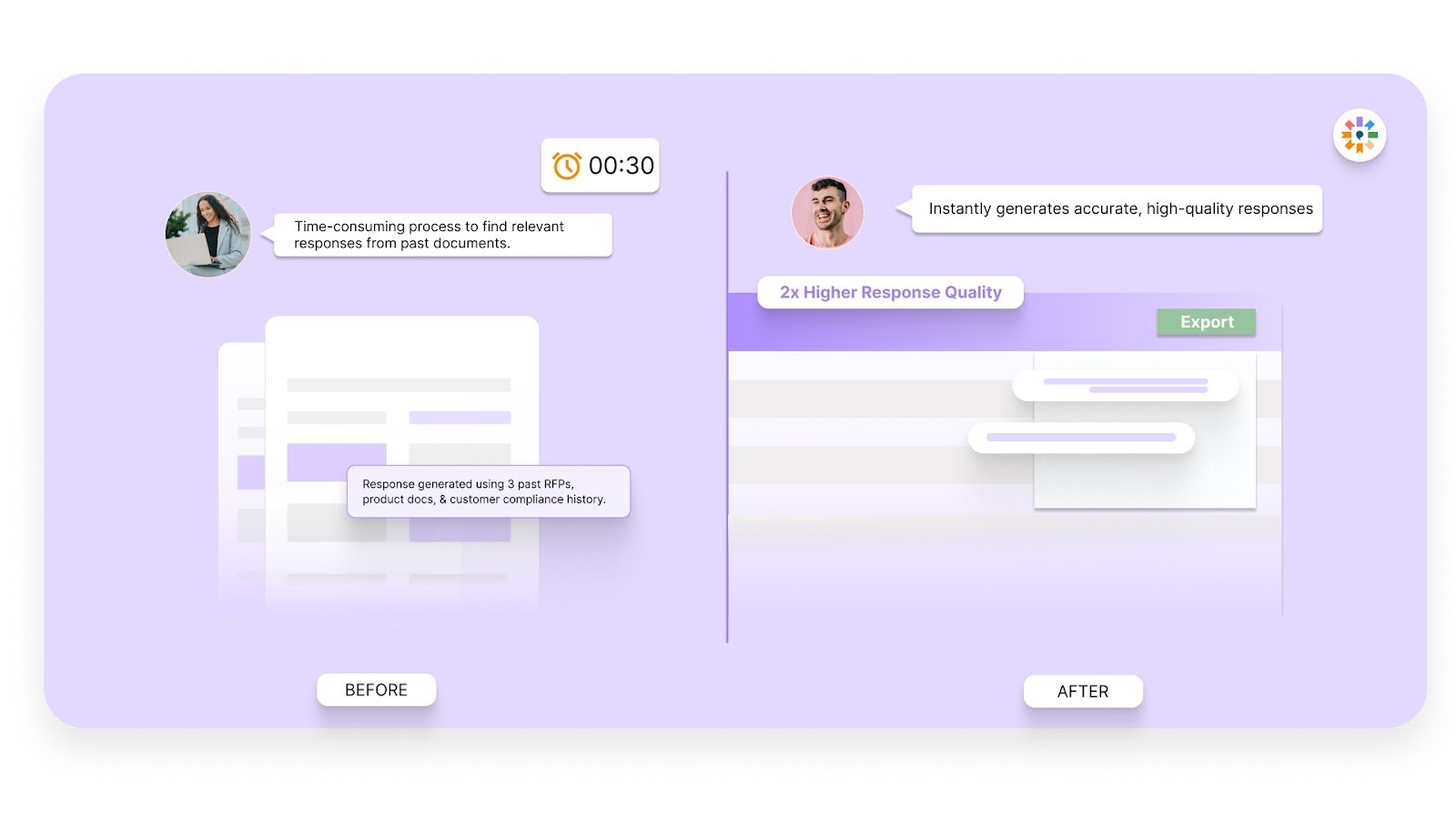
Through coordinated multi-agent reasoning, Inventive AI generates structured, requirement-aligned responses that address warehouse workflows directly rather than repeating generic product descriptions.
Narrative Proposal Generation
Beyond checklist mapping, Inventive AI produces executive summaries, implementation narratives, architecture explanations, and compliance documentation. This enables vendors to generate complete, presentation-ready WMS proposal documents alongside structured RFP responses.
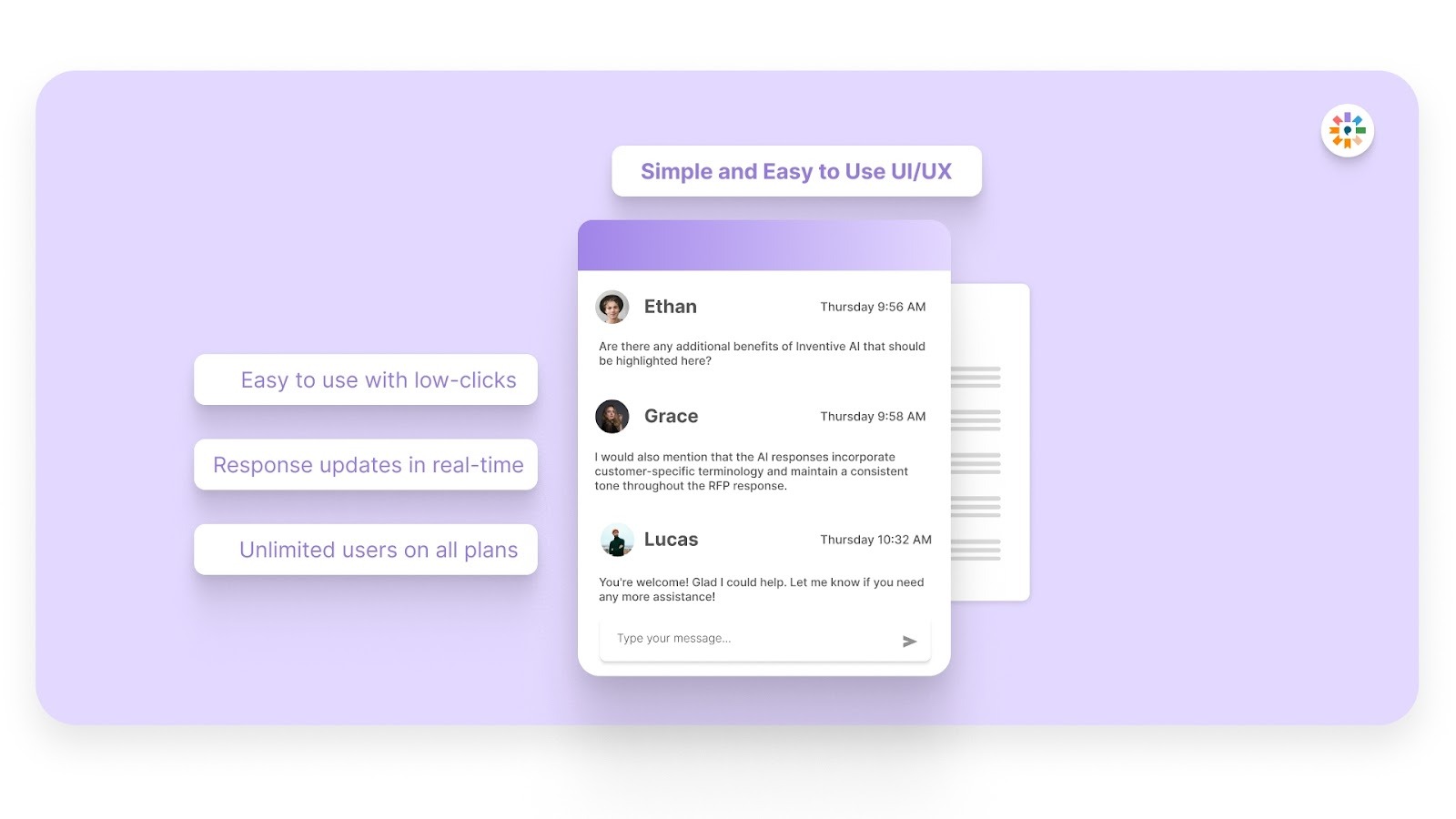
Simple And Easy-To-Use Interface
With a 100% adoption rate among current customers and recognition as the easiest-to-use RFP software on G2, teams can implement AI-assisted proposal drafting without disrupting workflows.
FAQs About WMS RFP Template
1. How Detailed Should Functional Requirements Be In A WMS RFP?
Functional requirements should describe actual warehouse workflows, not generic features. Instead of listing “inventory management,” define cycle counting frequency, lot tracking rules, replenishment triggers, and exception handling scenarios so vendors can respond accurately.
2. Should A WMS RFP Include Performance Benchmarks?
Yes. Including expected order throughput, concurrent user load, and peak-season volume helps vendors confirm system capacity. Without performance benchmarks, scalability comparisons become difficult.
3. How Do You Compare WMS Vendors Objectively?
Use a structured scoring matrix aligned to functional fit, integration compatibility, implementation risk, total cost of ownership, and industry experience. Standardized response formatting makes scoring more consistent.
4. What Is The Typical Timeline For A WMS RFP Process?
Enterprise WMS procurement cycles typically range from 8 to 16 weeks, depending on the complexity of integrations, the number of vendors evaluated, and internal approval requirements.
5. Should Data Migration Requirements Be Included In A WMS RFP?
Yes. SKU master data, inventory balances, historical transactions, and warehouse location mapping should be defined early. A clear migration scope prevents underestimated implementation timelines and hidden costs.
.avif)



.jpg)


.png)