
CDP RFP Template: How Vendors Can Win More Deals?

Enterprises are increasingly prioritizing customer experience and data-driven growth, with Customer Data Platforms (CDPs) playing a central role.
To compare solutions effectively, procurement and marketing teams rely on structured CDP RFP templates that standardize assessments. These templates help consistently evaluate vendors and ensure all technical and business requirements are covered.
For CDP vendors, understanding these buyer priorities and providing clear, evidence-backed responses is essential to stand out, score higher, and win contracts.
In this blog, you’ll learn how enterprises assess CDP proposals and how a CDP RFP response template can help you respond consistently, professionally, and competitively.
CDP RFP Template (Free Download): How Buyers Evaluate Customer Data Platforms? (For Buyers)
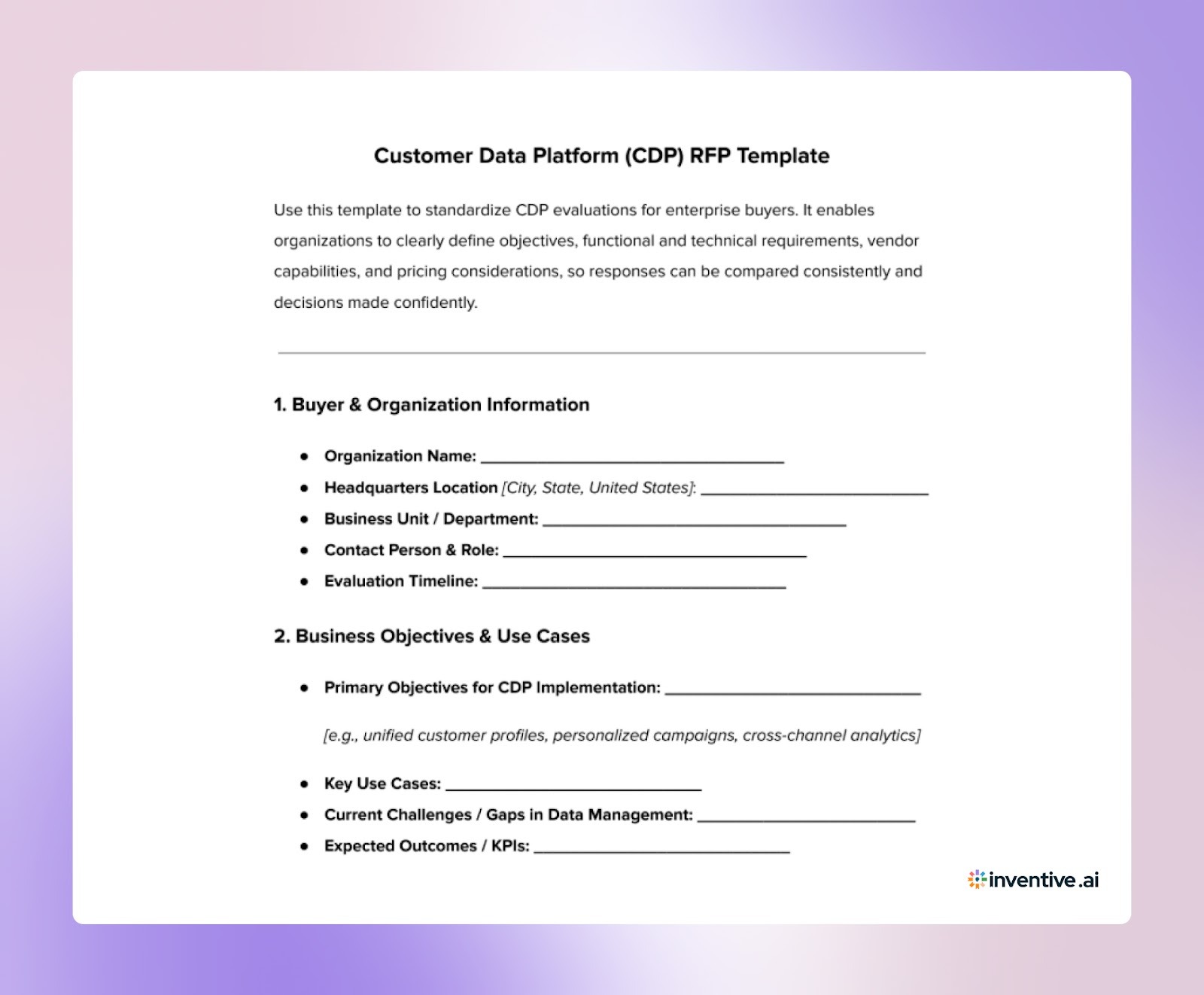

Enterprises use structured RFP templates to evaluate CDP solutions across functional, technical, operational, and strategic dimensions. These evaluations guide vendor short‑listing, scoring, and final sourcing decisions.
- Buyer & Organization Information: Collects essential organizational context, including department, location, and contact details. Helps vendors link responses to the correct evaluation team and engagement.
- Business Objectives & Use Cases: Defines the purpose of CDP implementation, key use cases, and expected outcomes. Guides vendors to tailor their responses to your business priorities and KPIs.
- Functional Requirements: Specifies capabilities the CDP must provide, from data ingestion to activation and orchestration. Prompts vendors to describe how their solution meets operational and analytical needs.
- Technical & Operational Requirements: Covers system architecture, performance, security, compliance, and integration needs. Ensures vendors demonstrate technical feasibility and adherence to US-specific standards.
- Vendor Information: Gathers company background, references, support, and innovation roadmap. Helps buyers evaluate credibility, experience, and ongoing capability for successful deployment.
- Pricing & Total Cost of Ownership (TCO): Outlines licensing, implementation, maintenance, and optional add-ons. Allows buyers to compare vendor costs objectively and understand the overall investment.
- Evaluation & Scoring Matrix: Provides weighted categories for functional fit, integration, security, performance, support, and pricing. Ensures a structured, transparent, and repeatable scoring process for procurement decisions.
- Supporting Documentation: Lists product datasheets, certifications, integration guides, and audit reports. Enables buyers to verify claims and reduce perceived risk in the evaluation.
Once buyers have shared their CDP requirements, your response is your opportunity to stand out. Using a structured CDP RFP response template helps you clearly demonstrate capabilities and submit evidence-backed answers that improve scoring and win potential.
CDP RFP Response Template to Streamline Submissions (For Vendors)
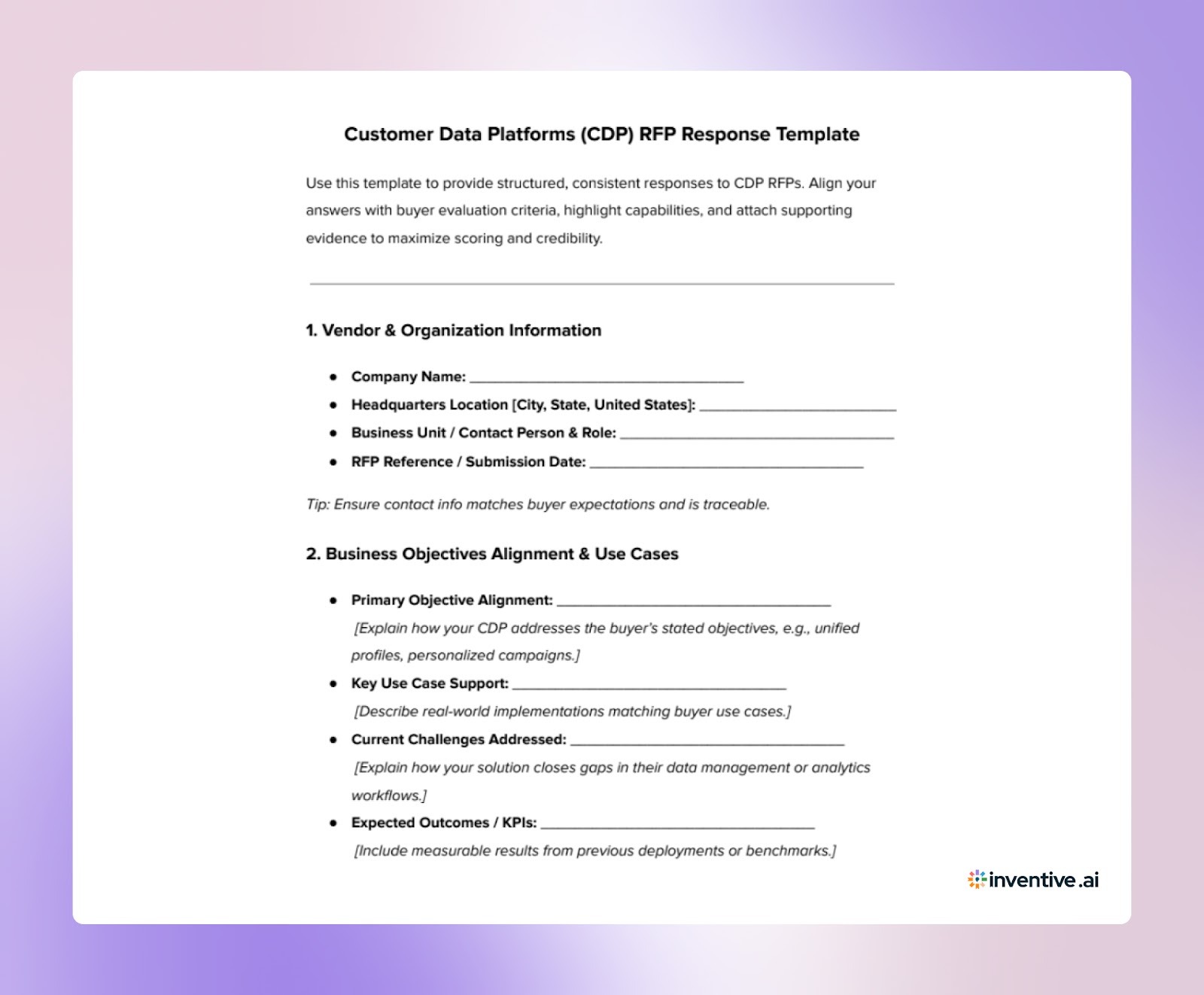

To demonstrate your platform’s true value and fit, provide structured, evidence‑backed inputs. This template helps you document capabilities across functional, technical, and operational categories, ensuring your responses are accurate, relevant, and buyer‑ready.
- Vendor & Organization Information: Include company structure, team expertise, and relevant certifications. Provide traceable points of contact for technical and commercial queries to build credibility.
- Business Objectives Alignment & Use Cases: Map your platform capabilities to the buyer’s goals and KPIs. Highlight outcomes through metrics or case studies and show how your solution improves retention, personalization, or operational efficiency.
- Functional Capabilities: Detail features such as data ingestion, profile unification, segmentation, analytics, and orchestration. Explain flexibility, customization, and handling of complex scenarios like multi-source identity resolution or real-time segmentation.
- Technical & Operational Capabilities: Provide architecture diagrams, scalability benchmarks, uptime, and security measures. Highlight compliance, integration flexibility, and performance metrics in high-volume or complex environments.
- Customer References & Use Cases: Include references with measurable results from similar industries or scenarios. Provide metrics such as campaign lift or data unification success, along with contactable references to support credibility.
- Support, Training & Innovation: Outline onboarding, professional services, documentation, and governance frameworks. Highlight ongoing support, training resources, and your roadmap for innovation aligned with buyer priorities.
- Pricing & Total Cost of Ownership (TCO): Break down license fees, implementation, optional modules, and support. Include ROI projections and scenario-based TCO analysis to clarify long-term value and cost efficiency.
- Supporting Documentation: Attach datasheets, architecture diagrams, certifications, integration guides, and case studies. Include demos or sandbox access to let buyers validate technical and operational claims.
Also Read: FP Response Trends and Benchmarks: Key Insights for 2026
Once you have the template filled out, the next step is to ensure your responses stand out and maximize your score. Clear, concise, and evidence-backed submissions not only demonstrate capability but also build buyer confidence.
Maximizing Your CDP RFP Template for Winning Responses
Your CDP RFP template is more than a form; it’s a roadmap to showcase your platform’s value. Follow these best practices to fill each section effectively, provide evidence-backed details, and ensure your submission aligns perfectly with buyer expectations.
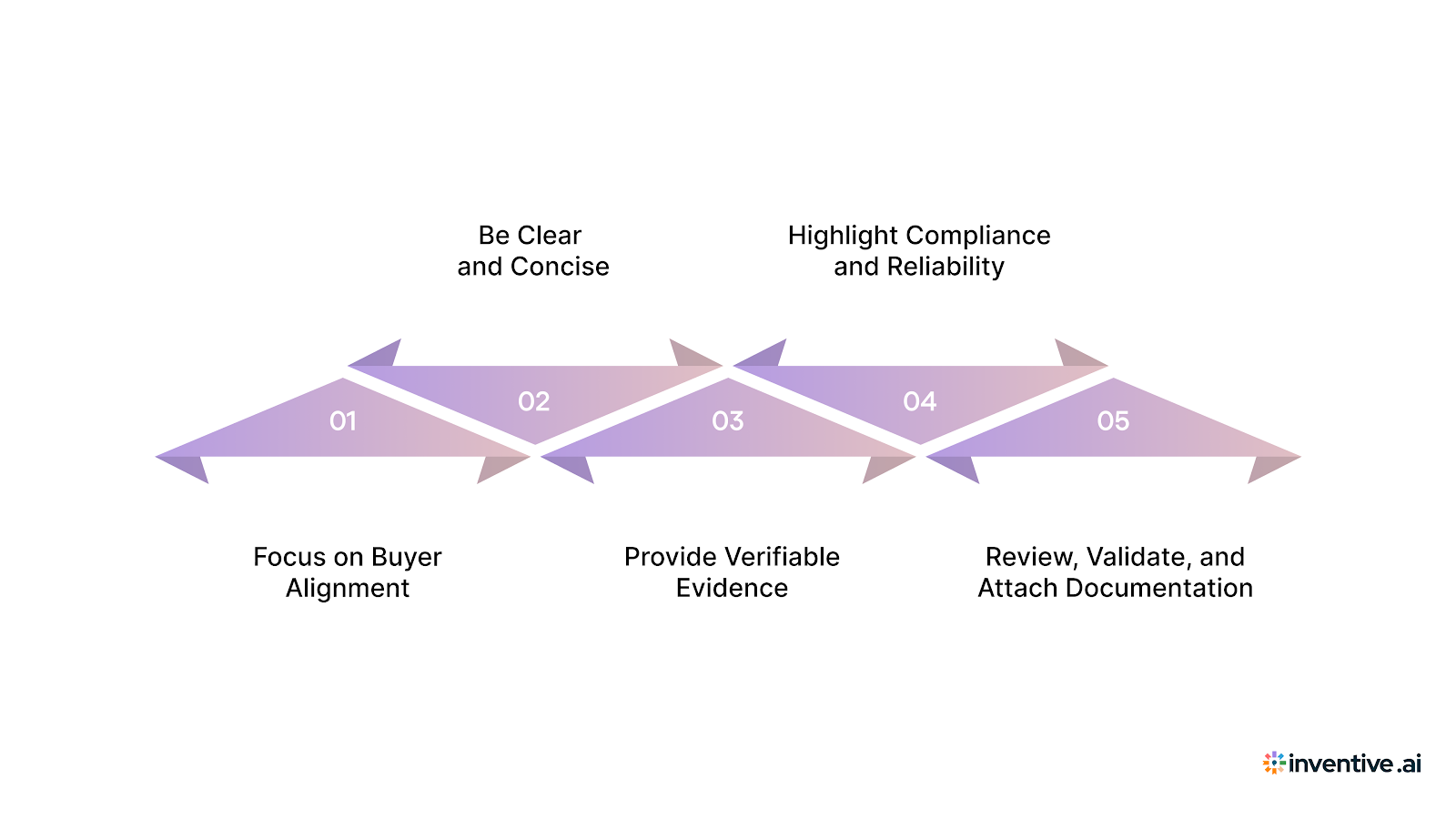
1. Focus on Buyer Alignment
Link every response to the buyer’s objectives, use cases, and KPIs. Demonstrating clear alignment shows relevance and solution fit.
2. Be Clear and Concise
Present information in bullet points, tables, or diagrams where possible. Avoid long narratives that dilute key details or slow down buyer evaluation.
3. Provide Verifiable Evidence
Include metrics, case studies, and US-based references. Supporting claims with data strengthens credibility and reduces perceived risk.
4. Highlight Compliance and Reliability
Show your adherence to US regulations (CCPA, HIPAA) and industry standards (SOC 2, ISO 27001). Demonstrating security, scalability, and uptime builds buyer confidence.
5. Review, Validate, and Attach Documentation
Double-check all sections for consistency and completeness. Attach all referenced datasheets, diagrams, and certifications to reinforce your responses.
Also Read: How to Create an AI Supplier Questionnaire for Vendors
Filling your CDP RFP template effectively is essential, but intelligent tools like Incentive AI make submissions faster, consistent, and more competitive.
Submit Faster and Smarter CDP RFP Responses Using Inventive AI
Manual completion of RFP responses can be slow, inconsistent, and error‑prone. Inventive AI centralizes content, detects conflicts, and aligns responses with buyer RFP criteria, helping vendors submit faster, accurate, and professional proposals.
Key Capabilities of Inventive AI:
2x Higher Response Quality
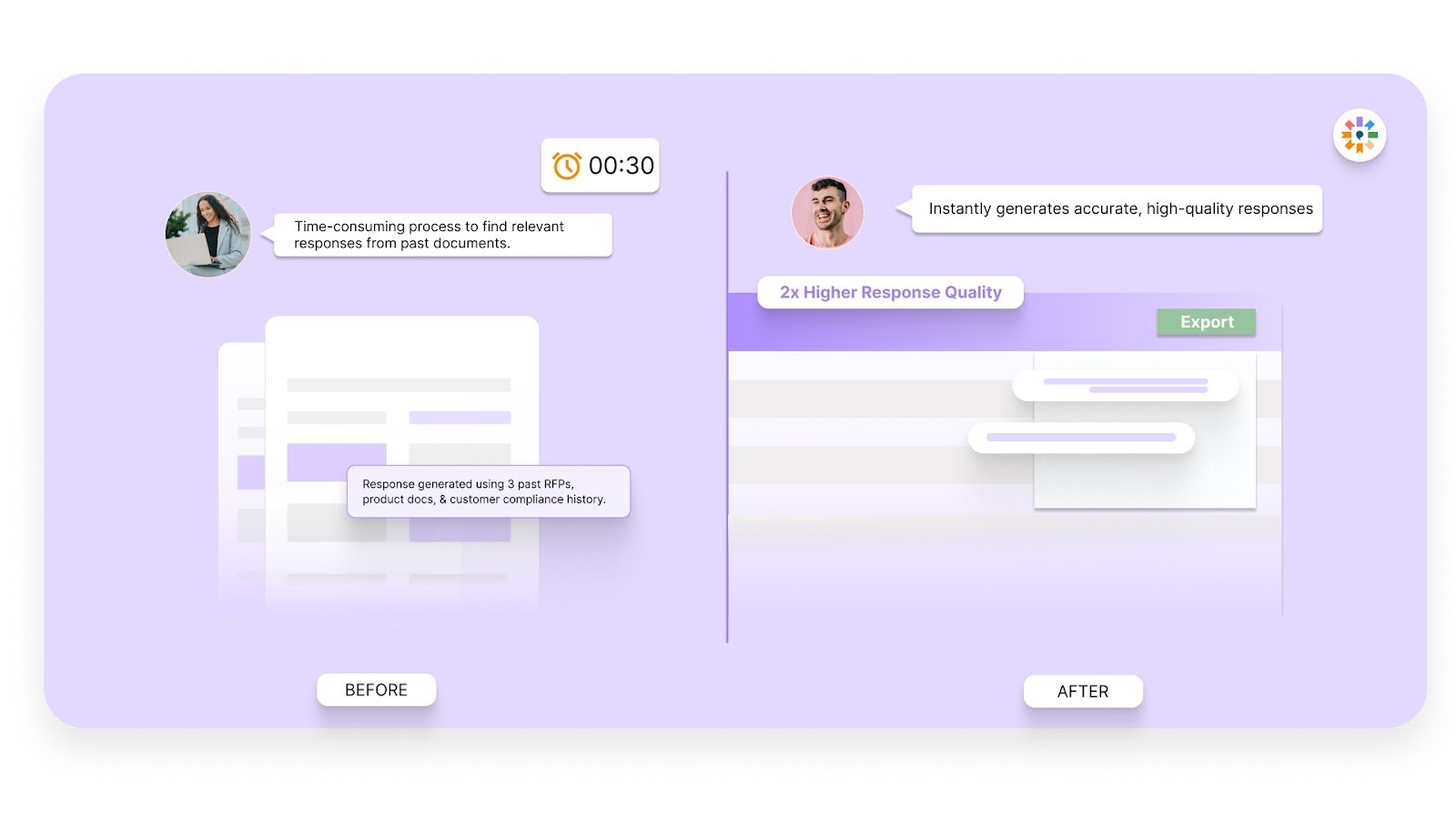
Multi-agent AI generates structured, complete responses that typically require minimal revision, improving submission consistency and enabling RFPs to be completed up to 90% faster.
Context-Awareness
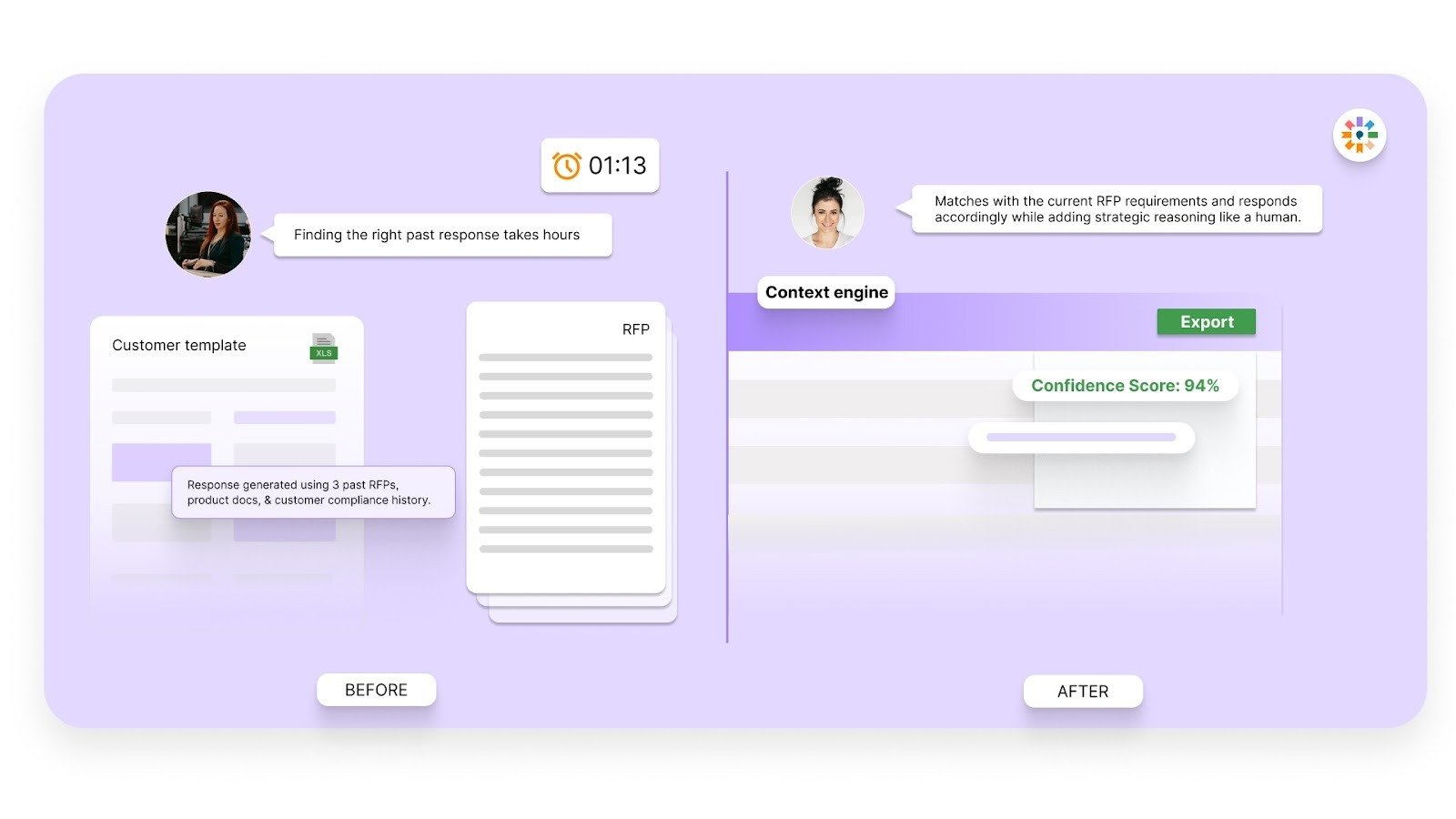
Inventive AI evaluates the entire RFP, including scope, compliance requirements, and evaluation criteria. Responses align with project-specific requirements rather than relying on static boilerplate, helping vendors achieve up to 50% higher win rates.
Instant Conflict Detection Before Submission
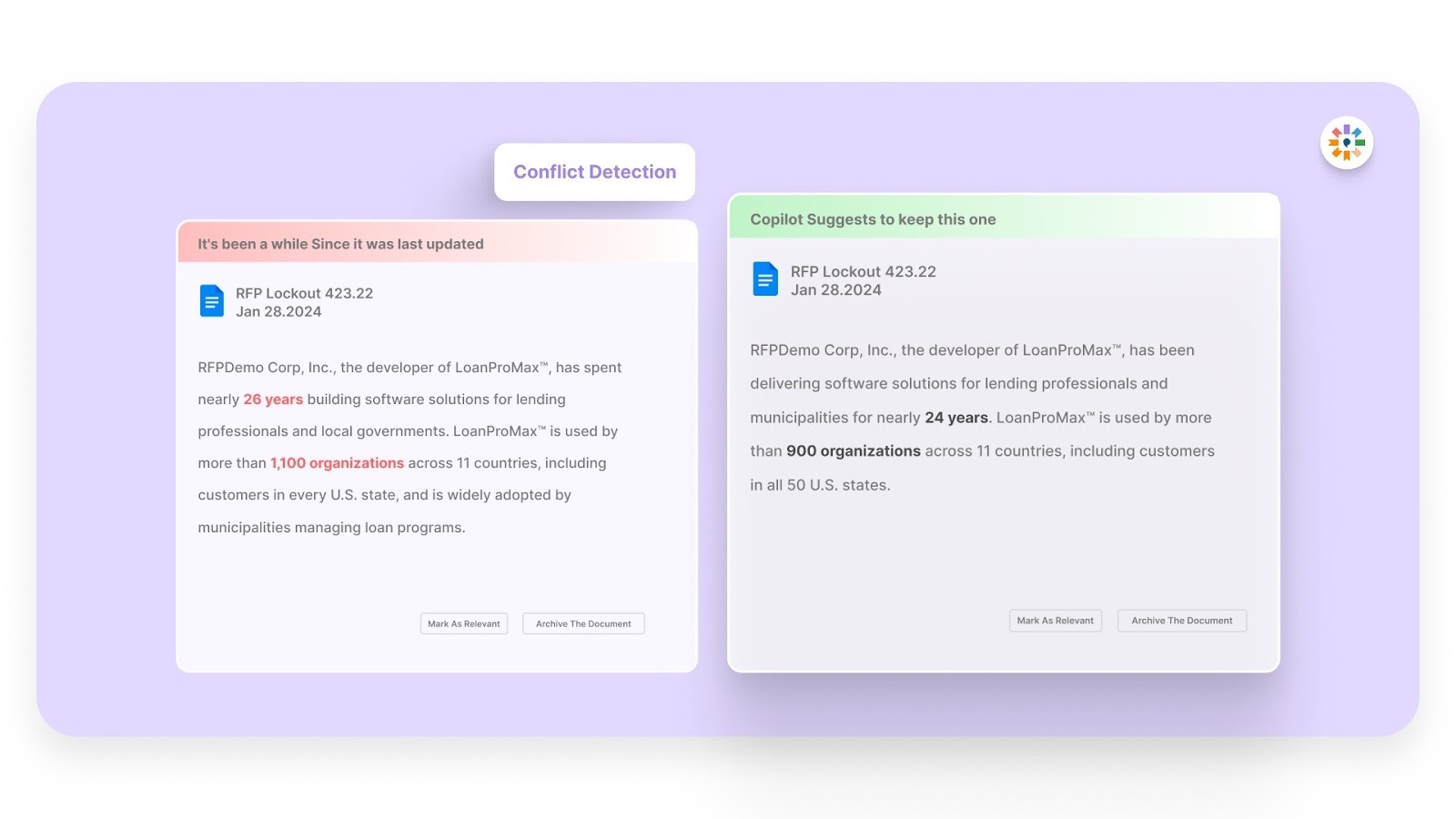
Avoid costly mistakes by having Inventive AI identify and resolve any inconsistencies or conflicts in your responses before submission, ensuring that everything is aligned and accurate.
Outdated Content Detection
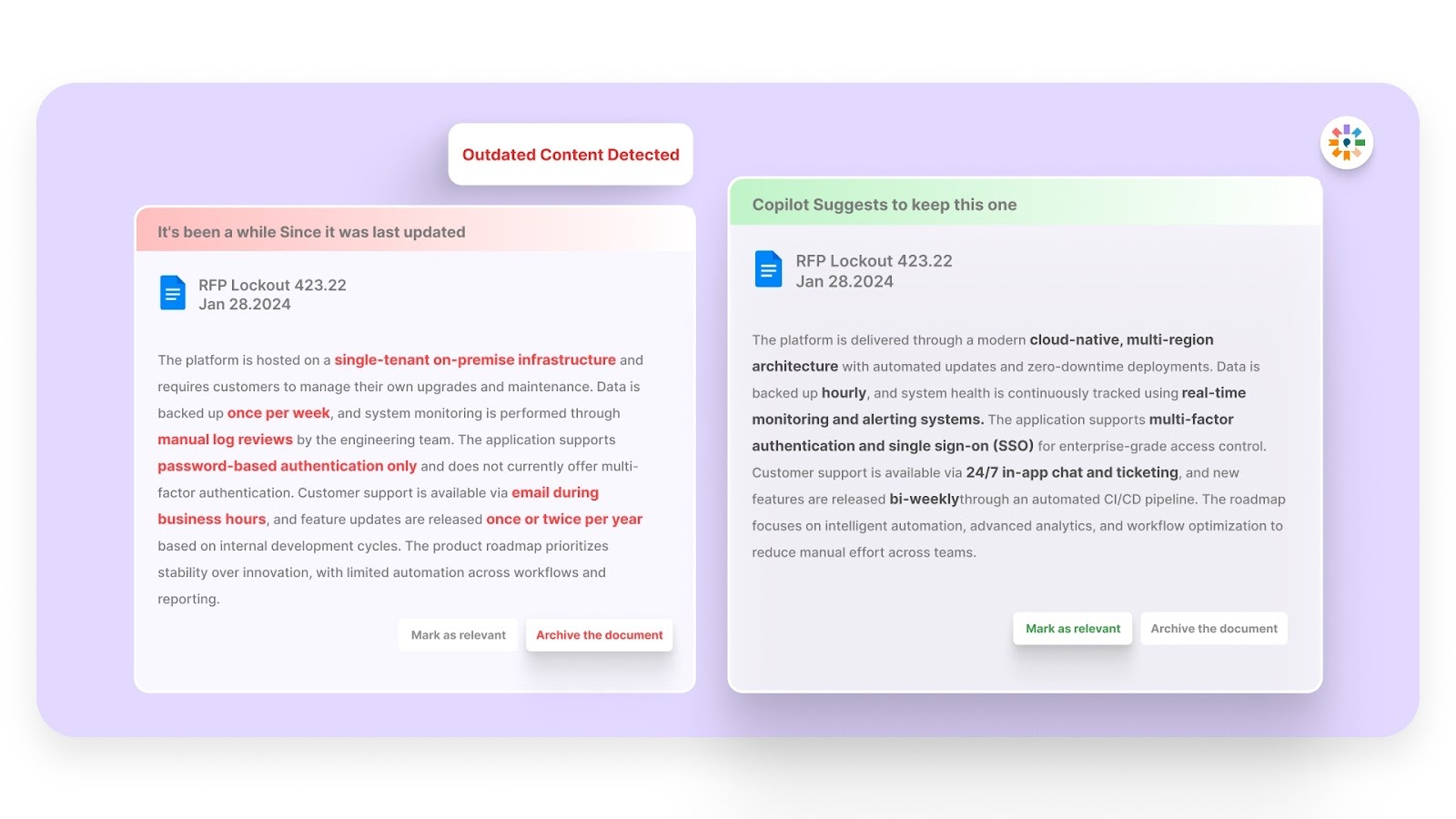
Never submit outdated information again. Inventive AI automatically flags and updates any content that is no longer relevant, so your responses stay fresh and aligned with the latest industry standards.
Narrative-Style Proposals
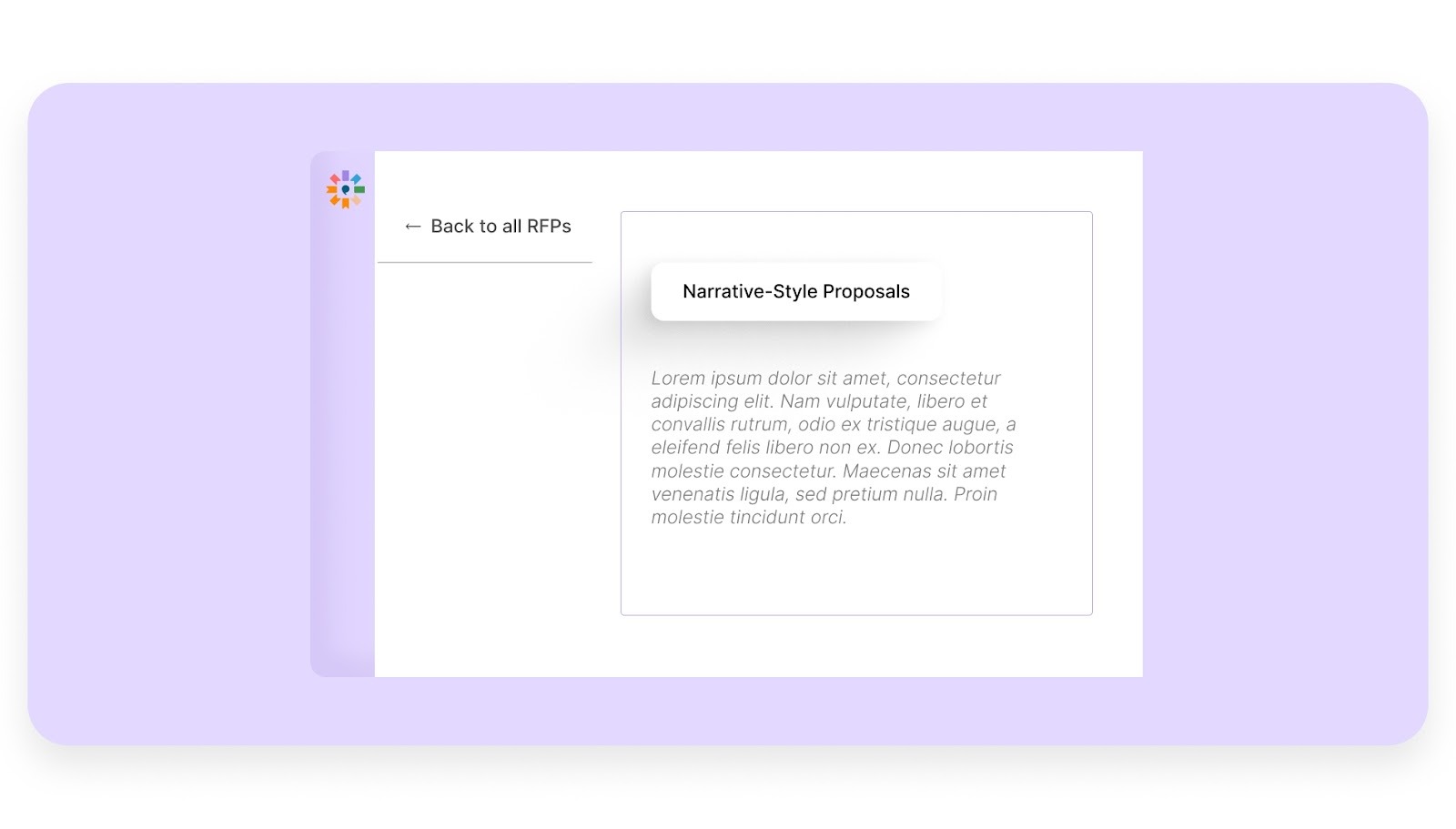
Say goodbye to fragmented, disjointed answers. Inventive AI ensures your proposals are cohesive, professional, and tell a compelling story that resonates with the buyer.
Simple, Easy-to-Use Interface
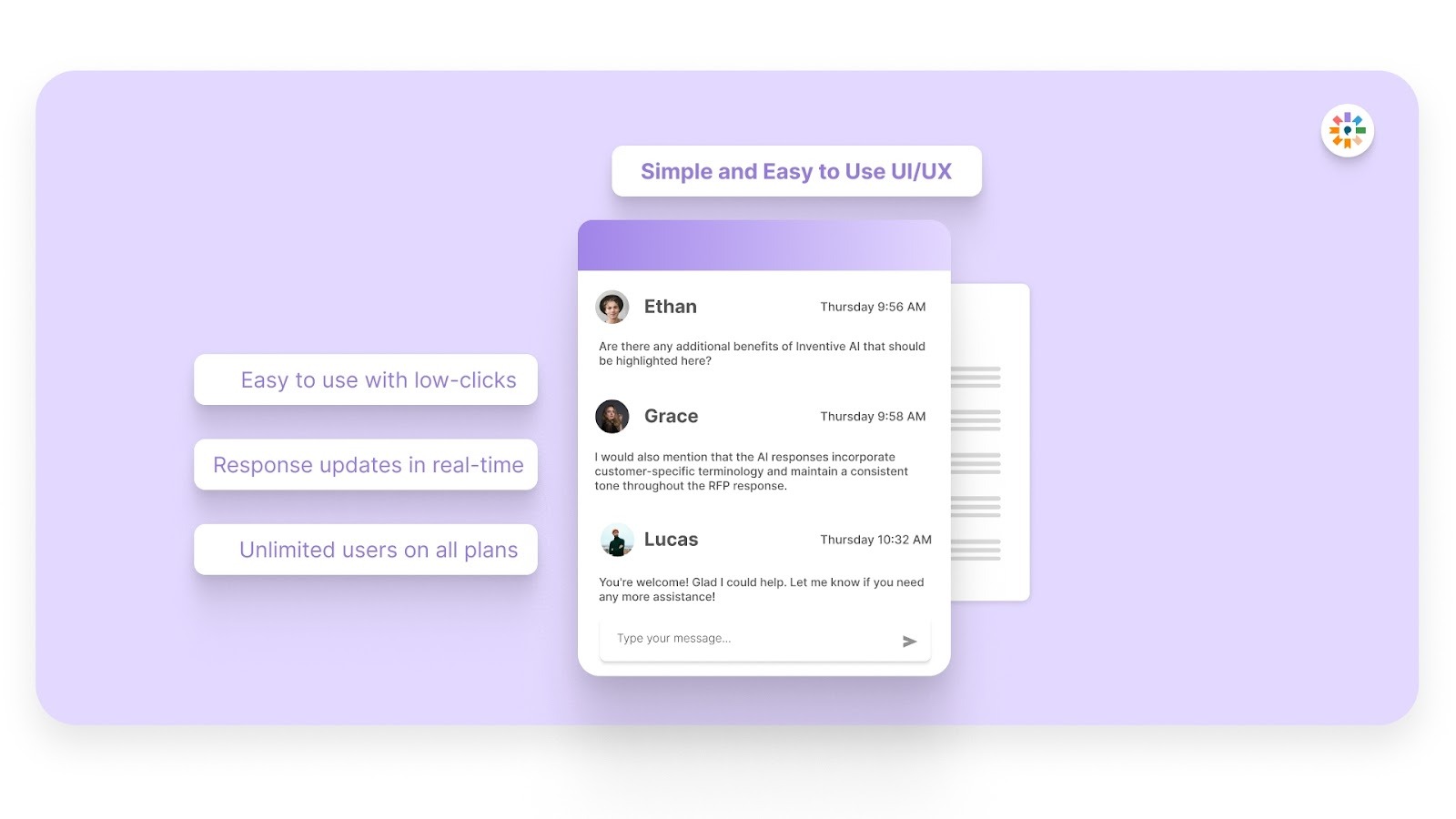
Inventive AI is designed for real proposal teams, not just technical users. Stakeholders across HR, sales, legal, and compliance can contribute without training overhead, reducing coordination friction and keeping responses moving forward.
With Inventive AI, vendors can improve the clarity, consistency, and quality of their CDP RFP responses, reduce the risk of errors, save time, and strengthen readiness for renewals, audits, and future RFPs.
FAQs
1. How can vendors demonstrate differentiation beyond the RFP template?
Vendors can highlight unique capabilities such as AI-driven analytics, custom integrations, or proprietary segmentation models. Showcasing real-world outcomes, specialized features, and industry-specific expertise helps buyers understand how your CDP stands apart from competitors.
2. What level of detail should be included in customer references?
Include metrics like deployment size, data volume handled, KPIs achieved, and project duration. US-based references with verifiable contacts strengthen credibility and demonstrate your platform’s proven effectiveness in environments similar to the buyer’s.
3. How should vendors address gaps or limitations in their solution?
Acknowledge limitations transparently while providing mitigation strategies, alternative workflows, or roadmap plans. Buyers value honesty, coupled with proactive solutions that demonstrate accountability and commitment to meeting objectives, even when the current solution has constraints.
4. Can visuals improve CDP RFP submissions?
Yes. Diagrams, dashboards, and workflow visuals clarify complex processes, illustrate integration flows, and highlight automation capabilities. Visuals help buyers quickly grasp platform functionality and reduce misinterpretation, making your submission more persuasive and engaging.
5. How frequently should vendors update their RFP response content?
Vendors should refresh content quarterly or after major product updates, regulatory changes, or significant deployments. Maintaining up-to-date, evidence-backed responses ensures accuracy, reduces risk, and reinforces credibility in the eyes of prospective buyers.

90% Faster RFPs. 50% More Wins. Watch a 2-Minute Demo.

Gaurav Nemade
After witnessing the gap between generic AI models and the high precision required for business proposals, Gaurav co-founded Inventive AI to bring true intelligence to the RFP process. An IIT Roorkee graduate with deep expertise in building Large Language Models (LLMs), he focuses on ensuring product teams spend less time on repetitive technical questionnaires and more time on innovation.
.avif)
Mukund Kumar
Understanding that sales leaders struggle to cut through the hype of generic AI, Mukund focuses on connecting enterprises with the specialized RFP automation they actually need at Inventive AI. An IIT Jodhpur graduate with 3+ years in growth marketing, he uses data-driven strategies to help teams discover the solution to their proposal headaches and scale their revenue operations.