
E-Discovery RFP Template: How Vendors Can Submit Winning Proposals

Organizations are expanding their use of AI-powered e-Discovery and compliance tools to meet growing regulatory demands and litigation challenges. This trend highlights why buyers increasingly require structured, evidence-backed responses from vendors.
For vendors, these RFPs are crucial in demonstrating operational maturity, secure data handling, and the ability to meet compliance obligations. Providing structured, evidence‑backed submissions strengthens your credibility and improves eligibility for contracts, renewals, and long‑term partnerships.
In this blog, we’ll explore how buyers use eDiscovery RFP templates to evaluate vendors and how a response template can help you prepare accurate, well‑structured proposals.
E-Discovery RFP Template: Key Criteria Buyers Use to Score Your Proposal
Enterprises use eDiscovery RFP templates to assess vendor capabilities across operational, technical, and compliance areas. These structured criteria help buyers compare proposals, mitigate risk, and ensure selected vendors meet regulatory and service requirements.
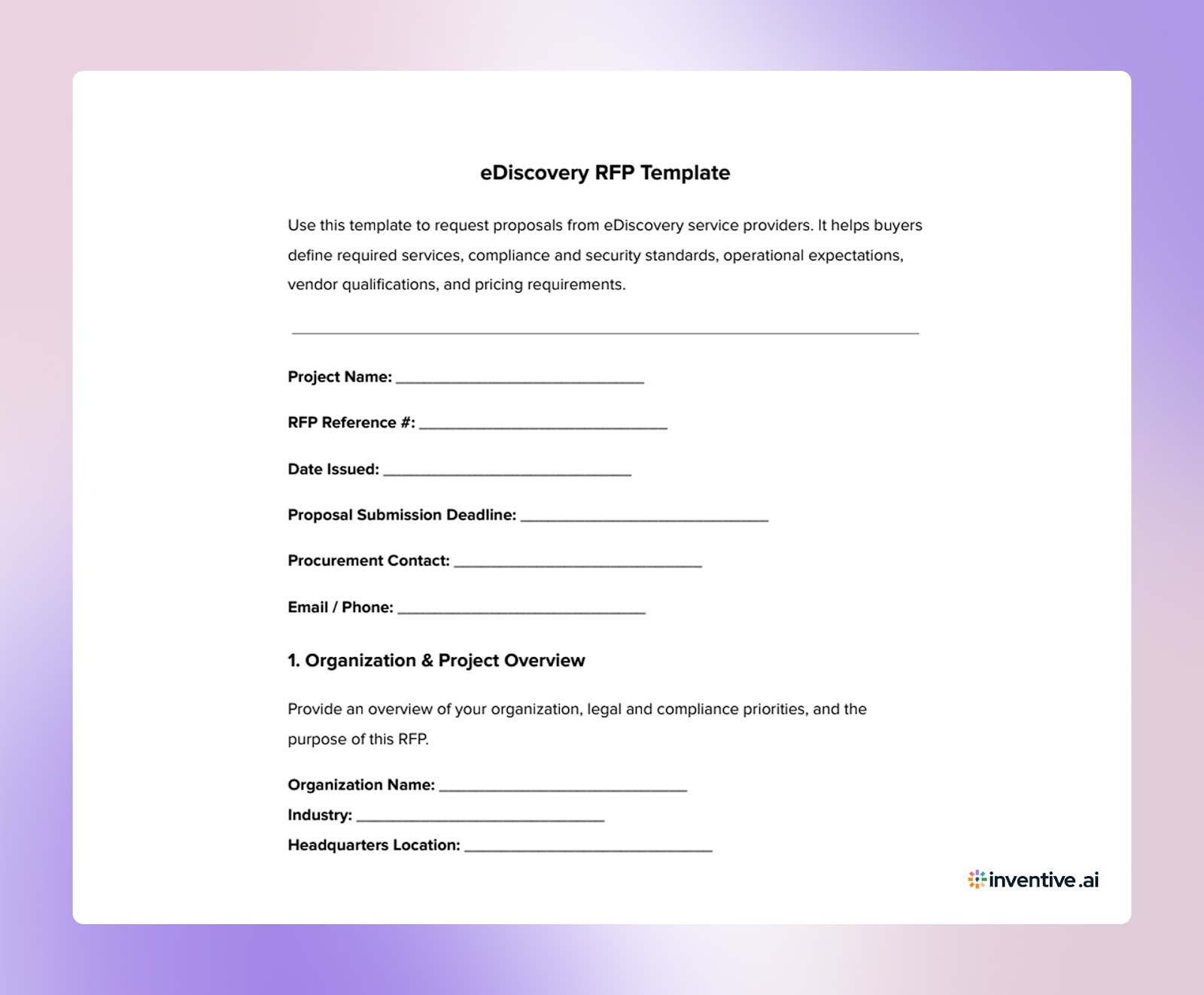

- Organization Overview: Provides your company background, legal and IT priorities, and the context for issuing the RFP. Helps vendors understand your operational scale and compliance expectations.
- Project Overview: Explains the purpose of the eDiscovery project, goals, and expected outcomes. Ensures vendors align their solutions with your specific objectives.
- Scope of eDiscovery Services: Defines the required services, including data collection, processing, review, and production. Clarifies exactly what operational support you expect from vendors.
- Security & Compliance Requirements: Lists regulatory frameworks, privacy laws, and internal policies vendors must follow. Helps vendors assess their ability to meet compliance obligations.
- Operational Requirements: Details service levels, reporting frequency, technology integration, and response timelines. Ensures vendor operations meet your organizational needs.
- Vendor Qualification Requirements: Outlines minimum experience, certifications, and technical capabilities required. Allows you to pre-screen vendors before a detailed evaluation.
- Vendor Information & Experience: Collects vendor details, past projects, tools, and references. Supports evaluation of credibility, expertise, and suitability for your project.
- Pricing Proposal: Requests cost breakdowns for services, software, or additional support. Enables apples-to-apples comparison of vendor pricing and budget alignment.
- Proposal Evaluation Criteria: Explains how vendor responses will be scored and weighted. Ensures transparent, consistent assessment across all submissions.
- Proposal Submission Instructions & Terms: Provides deadlines, submission formats, and procurement terms. Ensures vendors understand how and when to submit their proposals.
- Vendor Evaluation Scorecard (Optional): A structured scoring table for internal use to compare vendors across technical, compliance, and cost metrics. Helps your team objectively rank proposals.
Also Read: Top RFP Software for Small-Sized Companies & Startups to Win More Deals
To turn buyer requirements into a winning proposal, here’s how your eDiscovery RFP response should be structured and documented.
Optimize Your E-Discovery RFP Response: A Practical Template (for Vendors)
To succeed in eDiscovery RFP evaluations, presenting your capabilities in a structured, measurable way is key. A response template ensures all operational, legal, and compliance details are documented accurately.
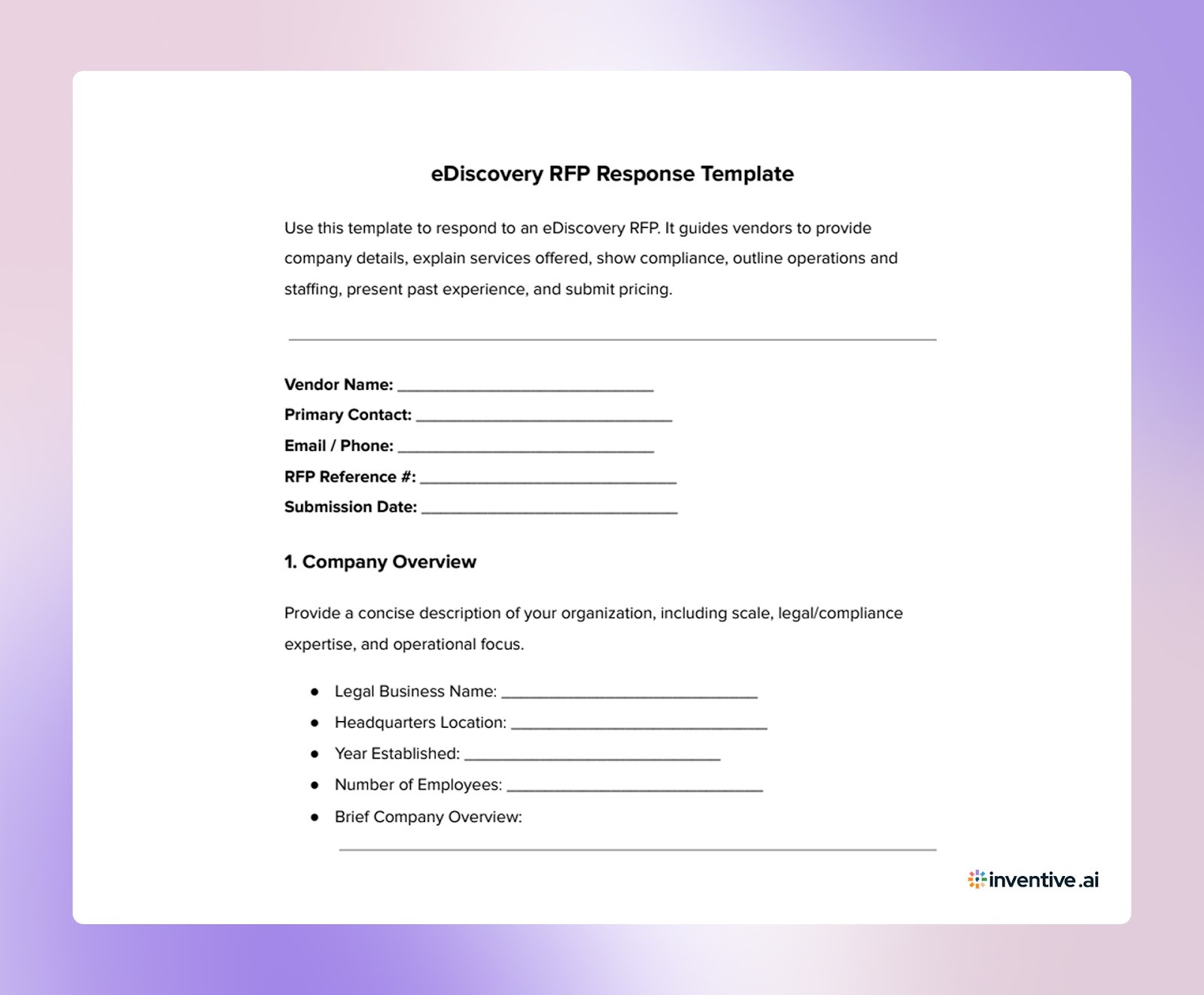

- Company Overview: Provide your legal name, headquarters, size, and a brief overview of your eDiscovery services. Highlight licenses, certifications, and operational focus to demonstrate credibility.
- Understanding of Project & Buyer Requirements: Summarize your understanding of the buyer’s RFP objectives and compliance expectations. Show how your approach efficiently addresses operational, legal, and regulatory requirements.
- eDiscovery Services Offered: List each eDiscovery service you provide, including collection, processing, review, and production. Specify how your approach meets buyer requirements and what value-added capabilities it offers.
- Compliance & Security Capabilities: Detail the regulatory standards and security frameworks your services comply with. Include evidence like SOC reports, ISO certifications, or chain-of-custody controls.
- Operational Capabilities: Explain processing volumes, turnaround times, and reporting frequency. Include technology platforms and workflow methods that ensure timely, accurate service delivery.
- Staffing & Expertise: List the key roles assigned to the project, including certifications and relevant experience. Demonstrate your team’s capability to manage complex eDiscovery tasks.
- Relevant Experience & References: Provide examples of prior projects with similar scope or clients. Include client references or case studies to verify your experience and operational effectiveness.
- Pricing Proposal: Break down pricing for each service component, including collection, review, hosting, and reporting. Ensure costs are transparent and align with buyer expectations.
- Response Summary: Highlight why your solution meets the buyer’s operational and compliance requirements. Emphasize differentiators such as expertise, technology, or faster delivery.
- Supporting Documentation: Attach evidence supporting your capabilities, compliance, and security practices. Include audit reports, certifications, sample deliverables, and client references.
- Terms & Conditions / Clarifications: State contractual conditions, confidentiality measures, and any assumptions. Clarify limitations or dependencies to avoid misalignment with buyer expectations.
While a structured response template helps, vendors still often make errors that can lower their evaluation scores. Understanding these common mistakes ensures your submission is accurate and competitive.
5 E-Discovery RFP Template Response Mistakes That Impact Vendor Scores
Responding to an eDiscovery RFP requires precision, but vendors often slip on details that affect scoring and credibility. Here are common pitfalls and ways to avoid them:
1. Submitting Outdated Compliance Documentation
Providing expired SOC reports, ISO certifications, or prior audit summaries can raise concerns about your current compliance posture. Always attach the latest certificates, audit reports, and chain-of-custody evidence relevant to your eDiscovery services.
2. Inconsistent Operational Metrics
Metrics such as document processing volumes, review turnaround times, and reporting frequency may vary across sections. Ensure all operational data in your eDiscovery RFP response aligns with your internal dashboards and verified performance records.
3. Overly Generic or Boilerplate Responses
Using copy-paste answers without customizing to the buyer’s RFP objectives diminishes credibility. Customize responses to reflect the specific operational, legal, and compliance needs outlined in the eDiscovery RFP.
4. Missing Technical or Process Details
Failing to describe collection methods, review workflows, or technology platforms can leave evaluators uncertain. Include clear, measurable operational steps and tools that demonstrate your ability to meet buyer requirements.
5. Ignoring Response Structure and Clarity
Long, unstructured narratives make it difficult for buyers to assess your proposal. Follow a structured template, use headings, tables, and metrics, and summarize key differentiators at the end of each section.
Also Read: RFP Evaluation Criteria: Guide with Examples and Scoring Best Practices
To address these common pitfalls and ensure your eDiscovery RFP responses are accurate, structured, and compelling, vendors can utilize intelligent platforms like Inventive AI to streamline and enhance every submission.
How Inventive AI Simplifies and Helps You Scale E-Discovery RFP Responses?
Responding to an eDiscovery RFP manually is slow and error-prone when documentation, workflow metrics, and past submissions are scattered across teams. Inventive AI centralizes this information and generates structured, accurate responses from historical data.
Key Capabilities of Inventive AI:
2x Higher Response Quality
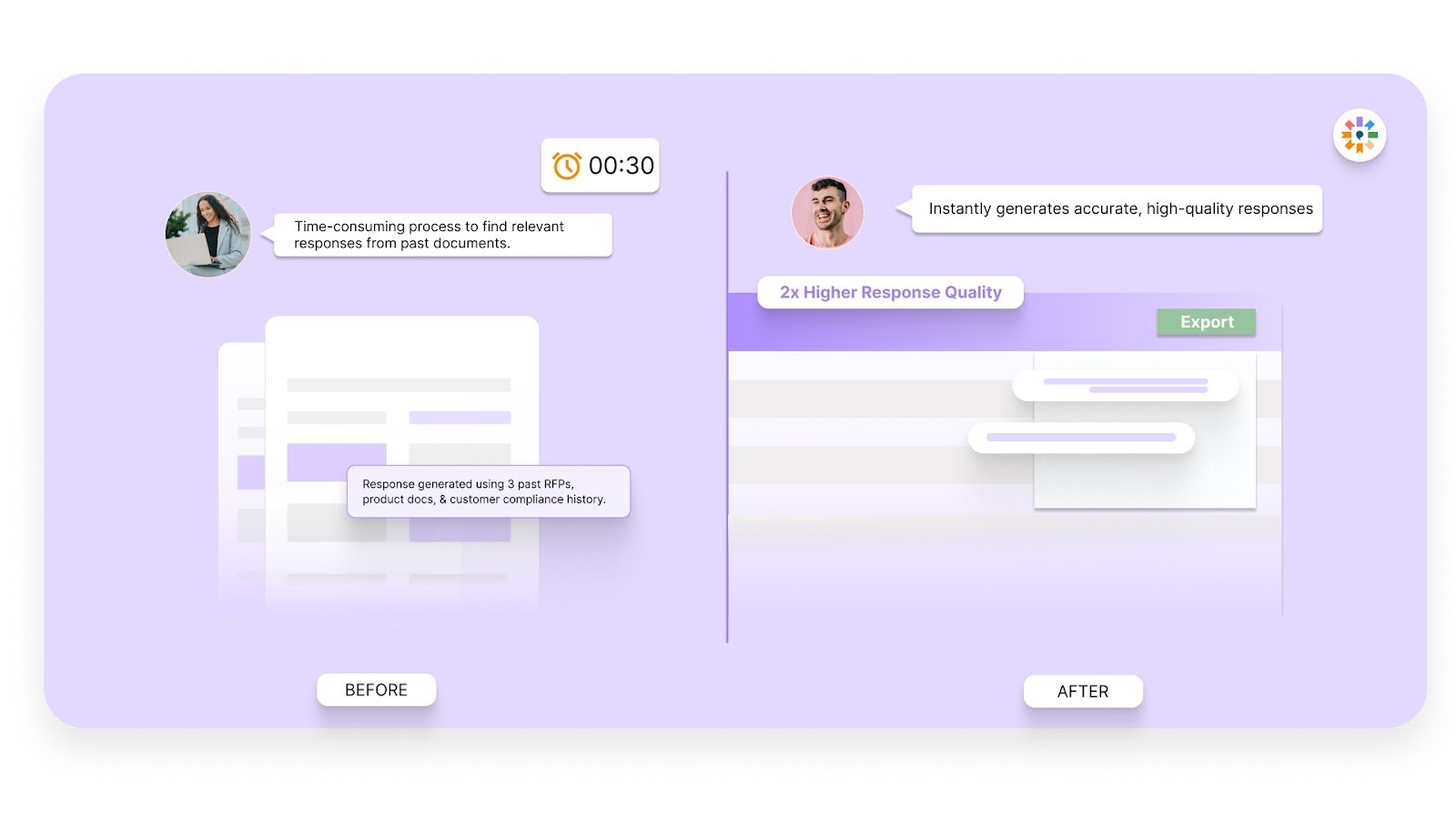
Multi-agent AI generates structured, complete responses that typically require minimal revision, improving submission consistency and enabling RFPs to be completed up to 90% faster.
Context-Awareness
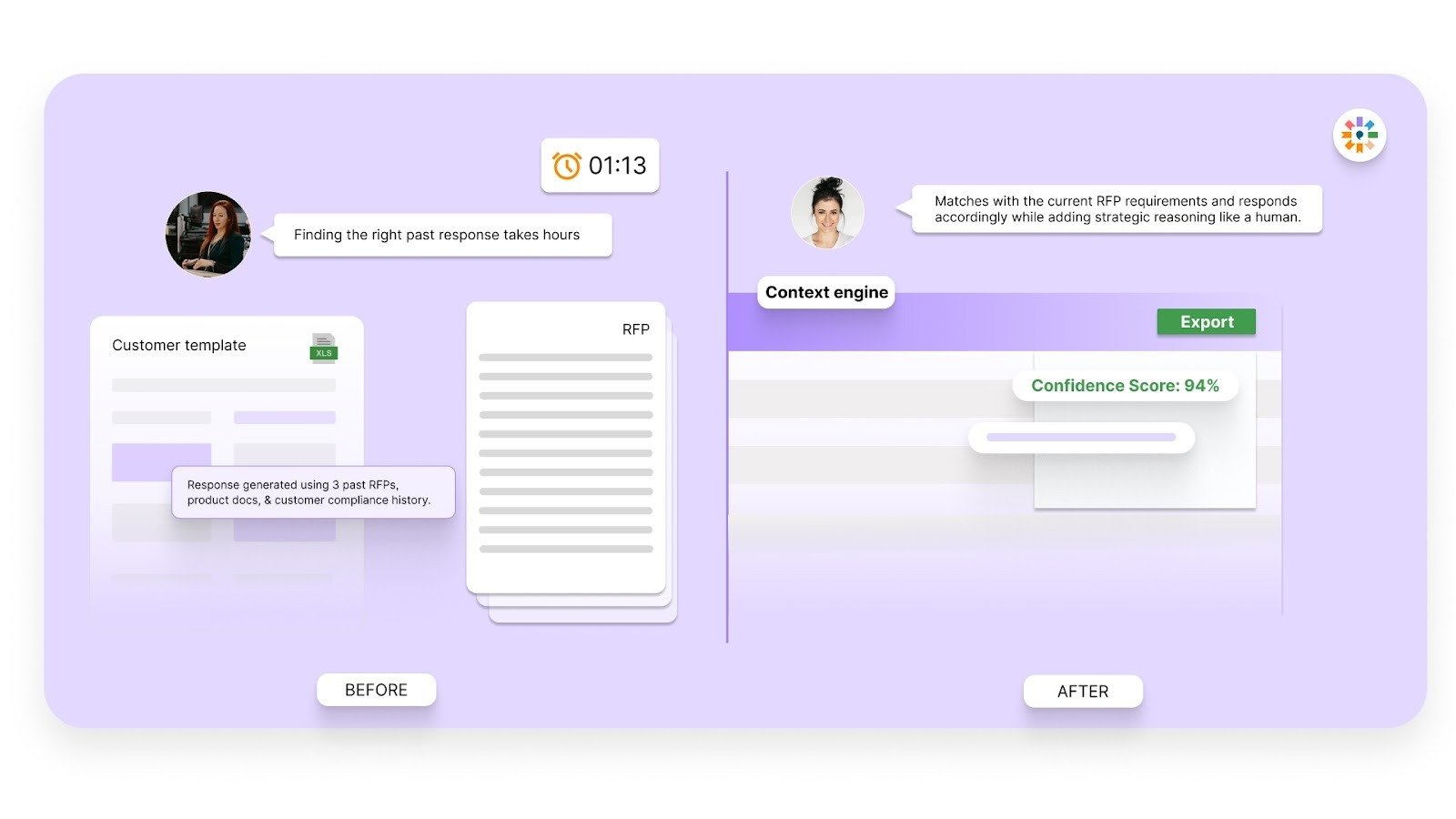
Inventive AI evaluates the entire RFP, including scope, compliance requirements, and evaluation criteria. Responses align with project-specific requirements rather than relying on static boilerplate, helping vendors achieve up to 50% higher win rates.
Instant Conflict Detection Before Submission
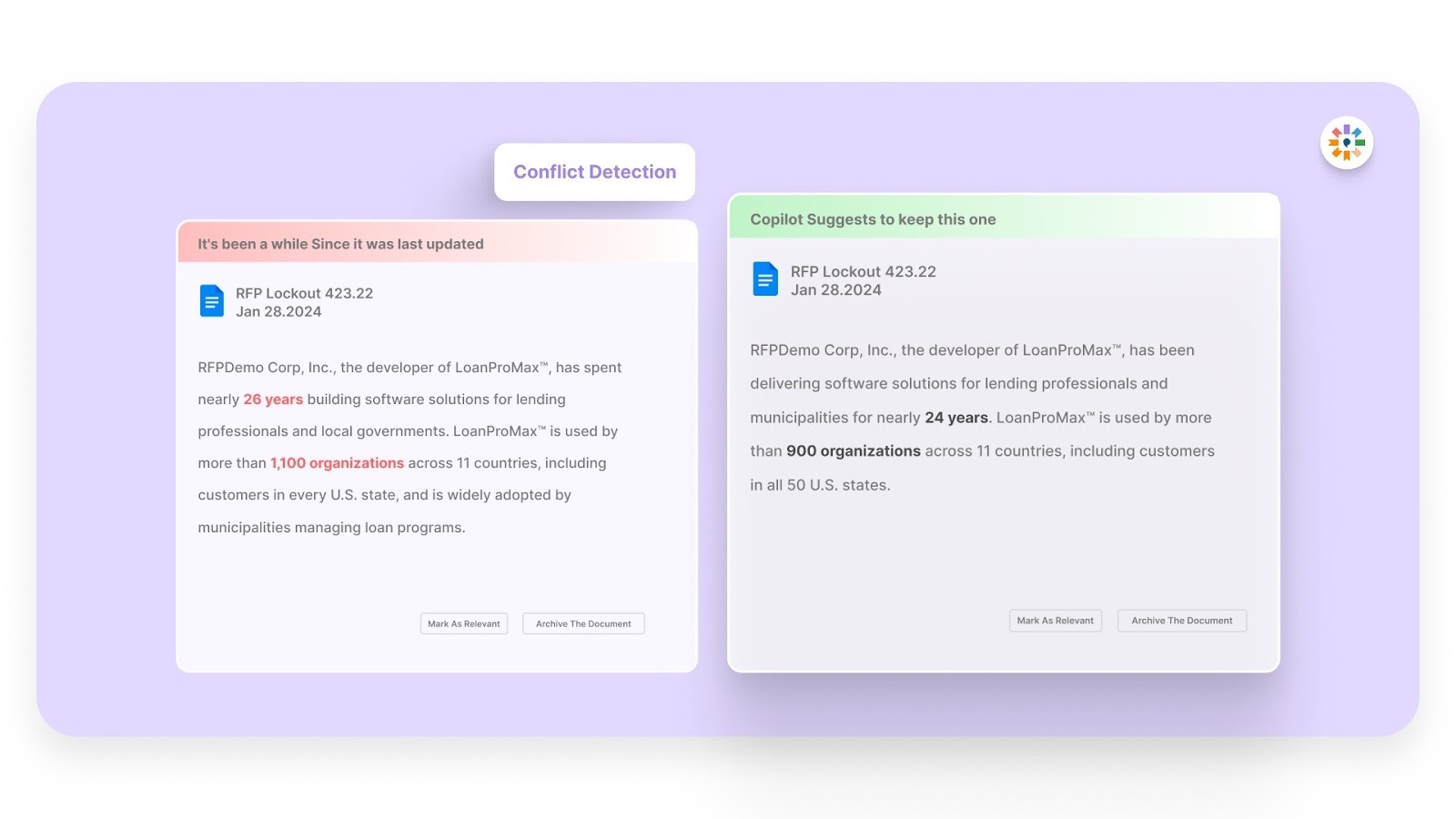
Avoid costly mistakes by having Inventive AI identify and resolve any inconsistencies or conflicts in your responses before submission, ensuring that everything is aligned and accurate.
Outdated Content Detection
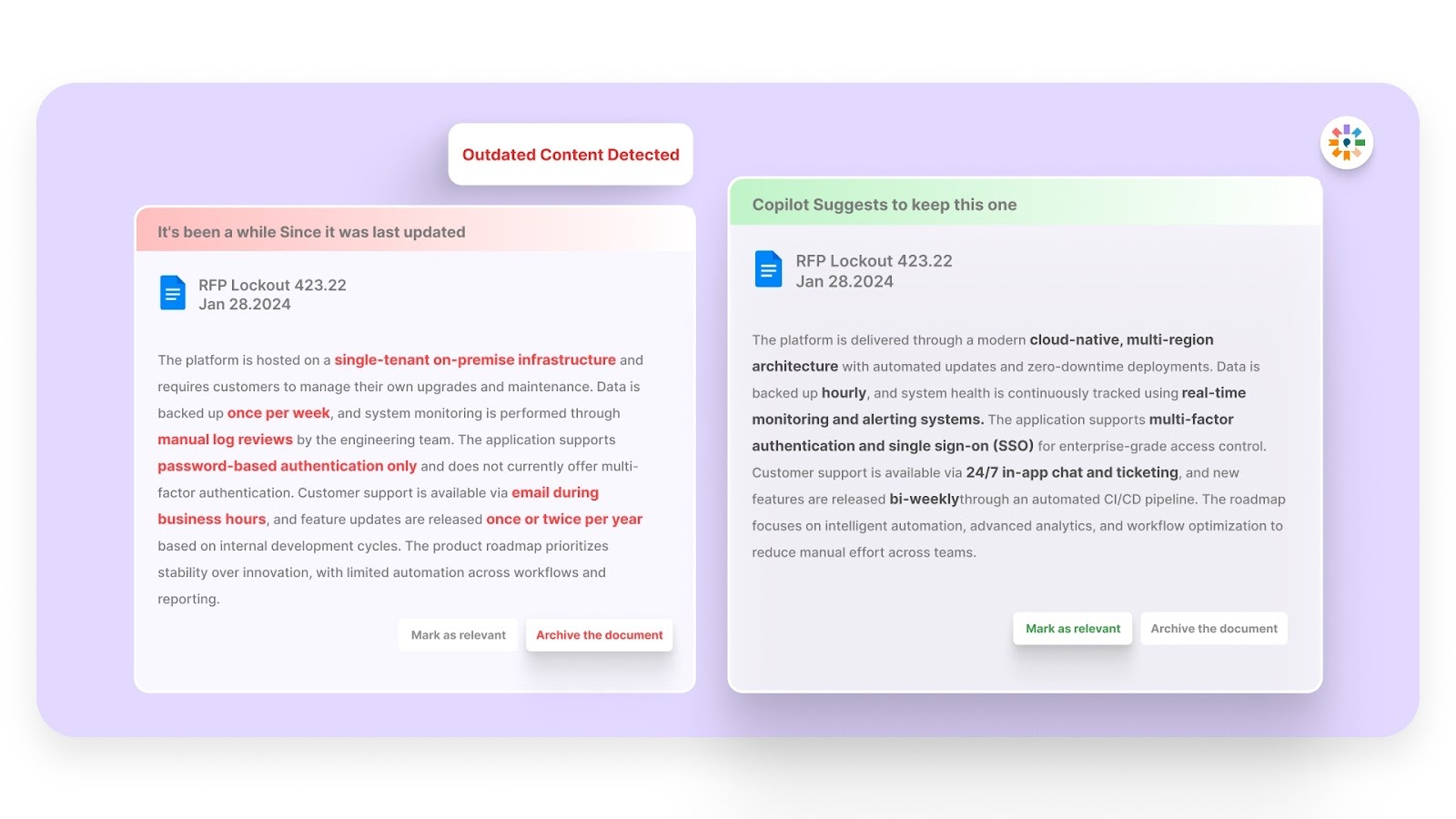
Never submit outdated information again. Inventive AI automatically flags and updates any content that is no longer relevant, so your responses stay fresh and aligned with the latest industry standards.
Narrative-Style Proposals
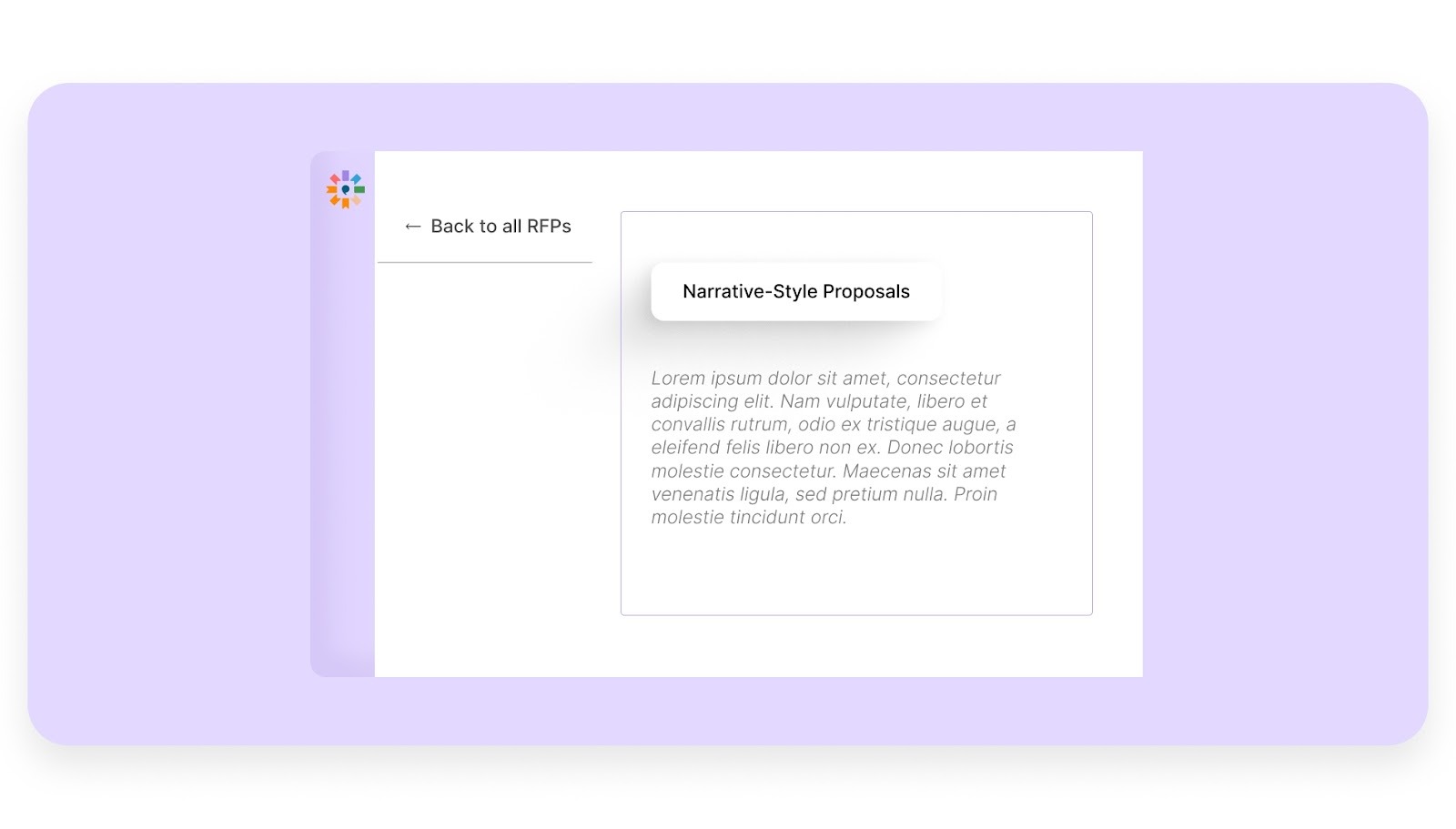
Say goodbye to fragmented, disjointed answers. Inventive AI ensures your proposals are cohesive, professional, and tell a compelling story that resonates with the buyer.
Simple, Easy-to-Use Interface
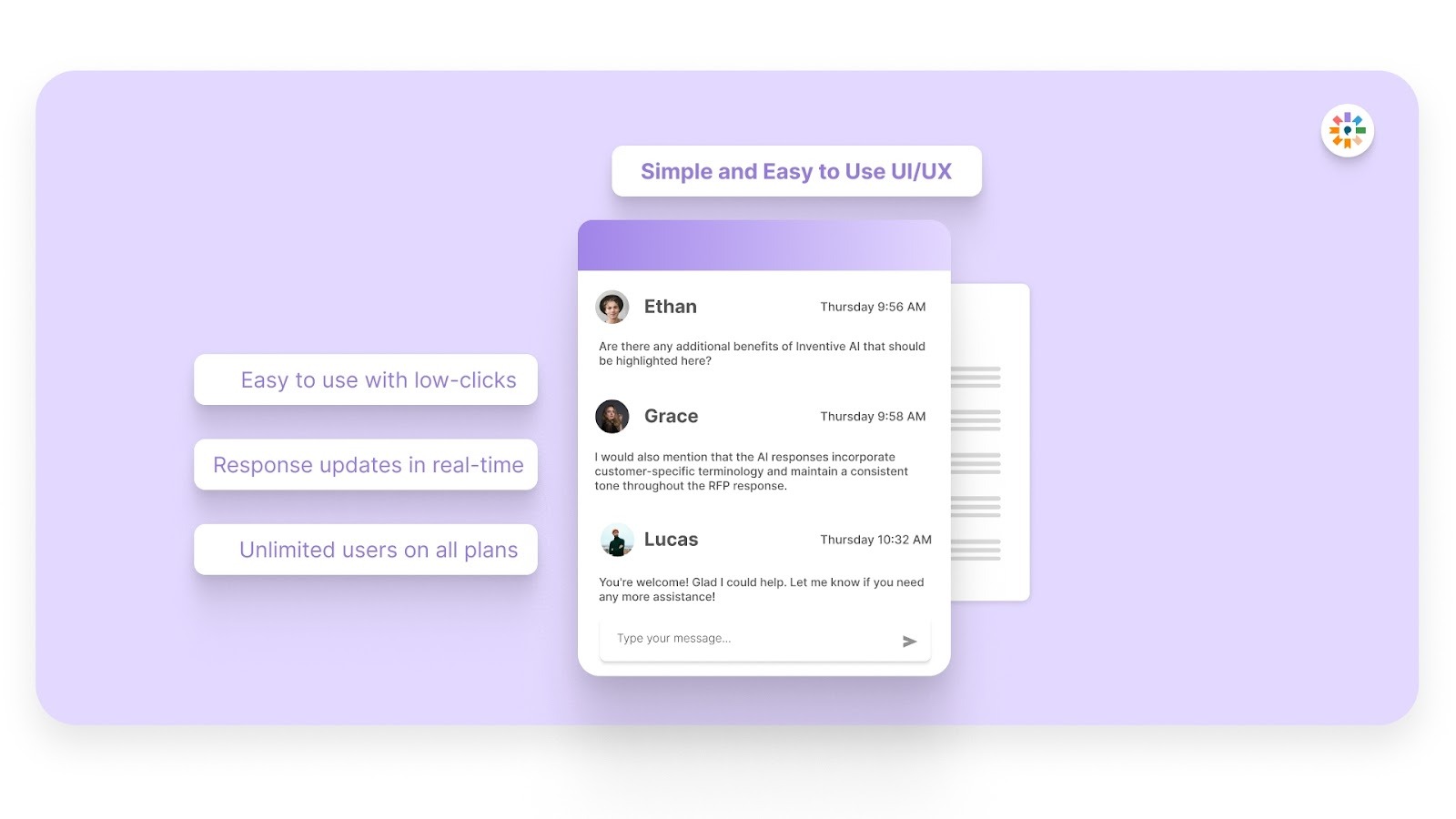
Inventive AI is designed for real proposal teams, not just technical users. Stakeholders across HR, sales, legal, and compliance can contribute without training overhead, reducing coordination friction and keeping responses moving forward.
FAQs
1. How can vendors efficiently track multiple eDiscovery RFP submissions?
Vendors can maintain a centralized repository or dashboard for all active eDiscovery RFPs, tracking submission deadlines, supporting documents, and responses. This ensures consistency across submissions and reduces errors when managing multiple proposals simultaneously.
2. What evidence most convinces buyers of vendor compliance in eDiscovery RFPs?
Attaching current SOC reports, ISO certifications, chain-of-custody logs, and audit summaries demonstrates operational maturity. Buyers look for verifiable proof that vendors can securely handle sensitive legal data and meet regulatory obligations.
3. How should vendors handle proprietary tools in eDiscovery RFP responses?
Vendors should clearly describe proprietary software, workflow advantages, and compliance measures. Include measurable outcomes, integration capabilities, and client success examples to show how your tools enhance efficiency and security without exposing sensitive intellectual property.
4. Can vendors reuse RFP responses across multiple buyers?
Yes, but only for core technical and compliance details. Customize operational approaches, project understanding, and client-specific solutions for each buyer to avoid generic responses that reduce credibility and impact scoring.
5. How can vendors demonstrate scalability in eDiscovery services?
Provide metrics on document processing capacity, review team size, and infrastructure limits. Including examples of large-scale past projects reassures buyers that your services can reliably handle varying volumes and complex legal discovery requirements.

90% Faster RFPs. 50% More Wins. Watch a 2-Minute Demo.

Hardi Hindocha
Knowing that complex B2B software often gets lost in jargon, Hardi focuses on translating the technical power of Inventive AI into clear, human stories. As a Sr. Content Writer, she turns intricate RFP workflows into practical guides, believing that the best content educates first and earns trust by helping real buyers solve real problems.

Gaurav Nemade
After witnessing the gap between generic AI models and the high precision required for business proposals, Gaurav co-founded Inventive AI to bring true intelligence to the RFP process. An IIT Roorkee graduate with deep expertise in building Large Language Models (LLMs), he focuses on ensuring product teams spend less time on repetitive technical questionnaires and more time on innovation.