
Secure More Projects with a Headshot Photography RFP Template

Have you ever opened an RFP for headshot photography and realized the request contains scattered requirements, unclear deliverables, and tight submission deadlines? Many vendors face this situation when responding to photography procurement requests.
Buyers often expect detailed proposals covering experience, equipment, turnaround timelines, and pricing. Without a structured format, preparing a response can quickly consume hours of manual work.
A headshot photography RFP template solves this problem. It gives buyers a structured way to request proposals and helps vendors understand expectations faster.
This guide explains what a headshot photography RFP template includes, when buyers issue these requests, and how you can respond faster using a structured response template. It also shows how AI-powered RFP response software can help you prepare proposals significantly faster.
Headshot Photography RFP Template for Buyers (Free Download)
Organizations use this template when they want to hire photographers for projects such as corporate headshots, executive portraits, employee directories, marketing materials, or conference events.
The template standardizes project requirements so vendors receive clear information before preparing proposals.
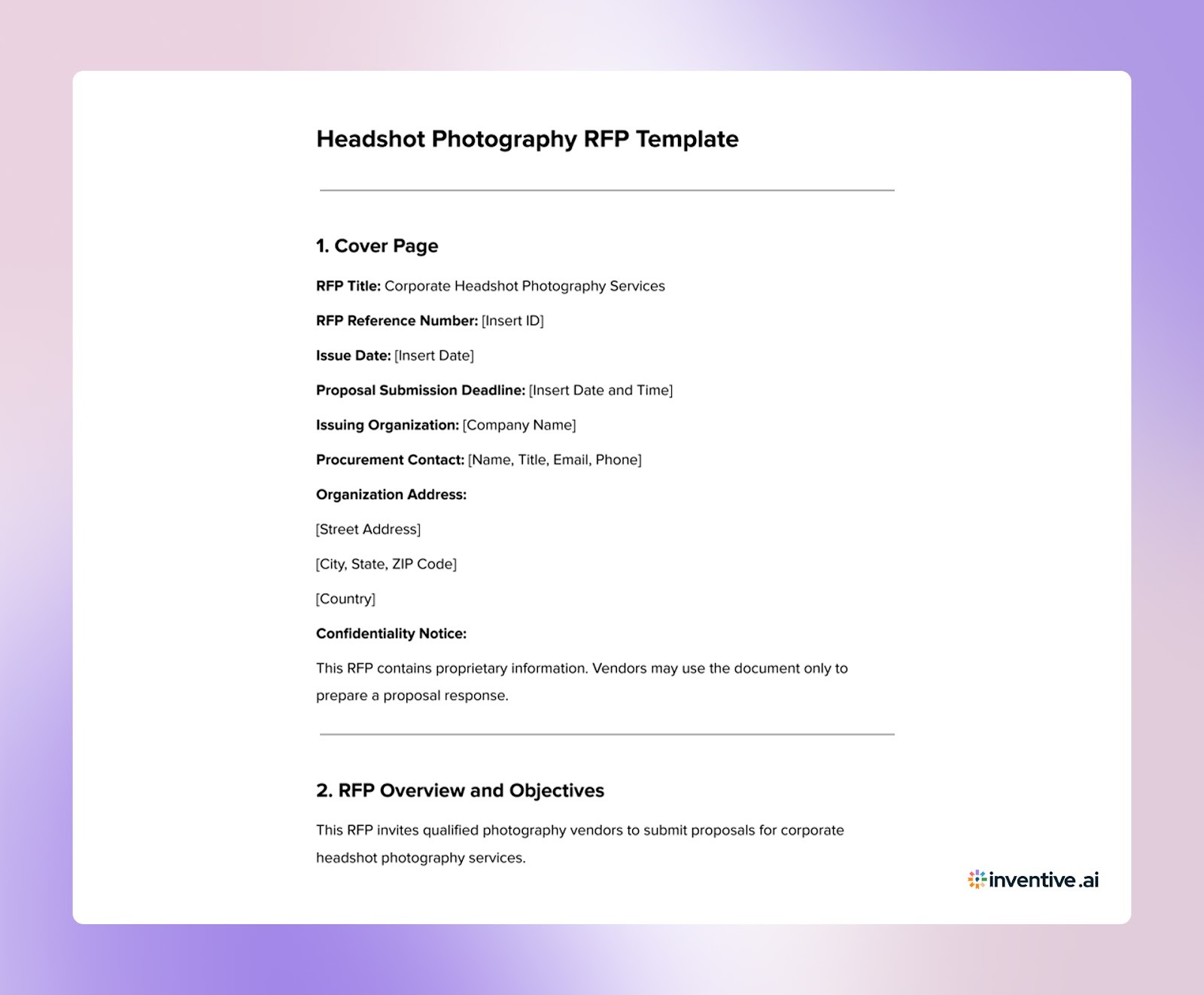

Head Shot Photography RFP Template: Key Sections
A well-structured template ensures buyers communicate project expectations clearly.
Common components typically include:
1. Project overview: This section describes the purpose of the headshot photography project and the outcomes the organization expects from the shoot.
2. Scope of work: This section outlines the number of photos required, the shoot location, scheduling expectations, and style preferences.
3. Technical requirements: This section explains equipment expectations, lighting setups, editing standards, and image specifications.
4. Vendor qualifications: This section describes the experience, certifications, portfolio work, and past projects buyers expect from vendors.
5. Budget and pricing structure: This section provides a budget range or pricing format to help vendors estimate costs accurately.
6. Evaluation criteria: This section explains how the buyer’s team will assess proposals and select the final vendor.
These sections help buyers collect comparable proposals from multiple vendors.
Now you know how buyers structure a headshot photography RFP, the next step is understanding how a response template helps you submit a clear, tailored proposal.
Prepare Clear Photography Proposals With a Response Template (for Vendors)
A headshot photography RFP response template helps you prepare structured proposals whenever a photography RFP arrives.
Instead of creating a new proposal every time, you can reuse a prepared template and customize it according to the buyer’s project requirements.
This approach helps you respond quickly while maintaining consistent proposal quality.
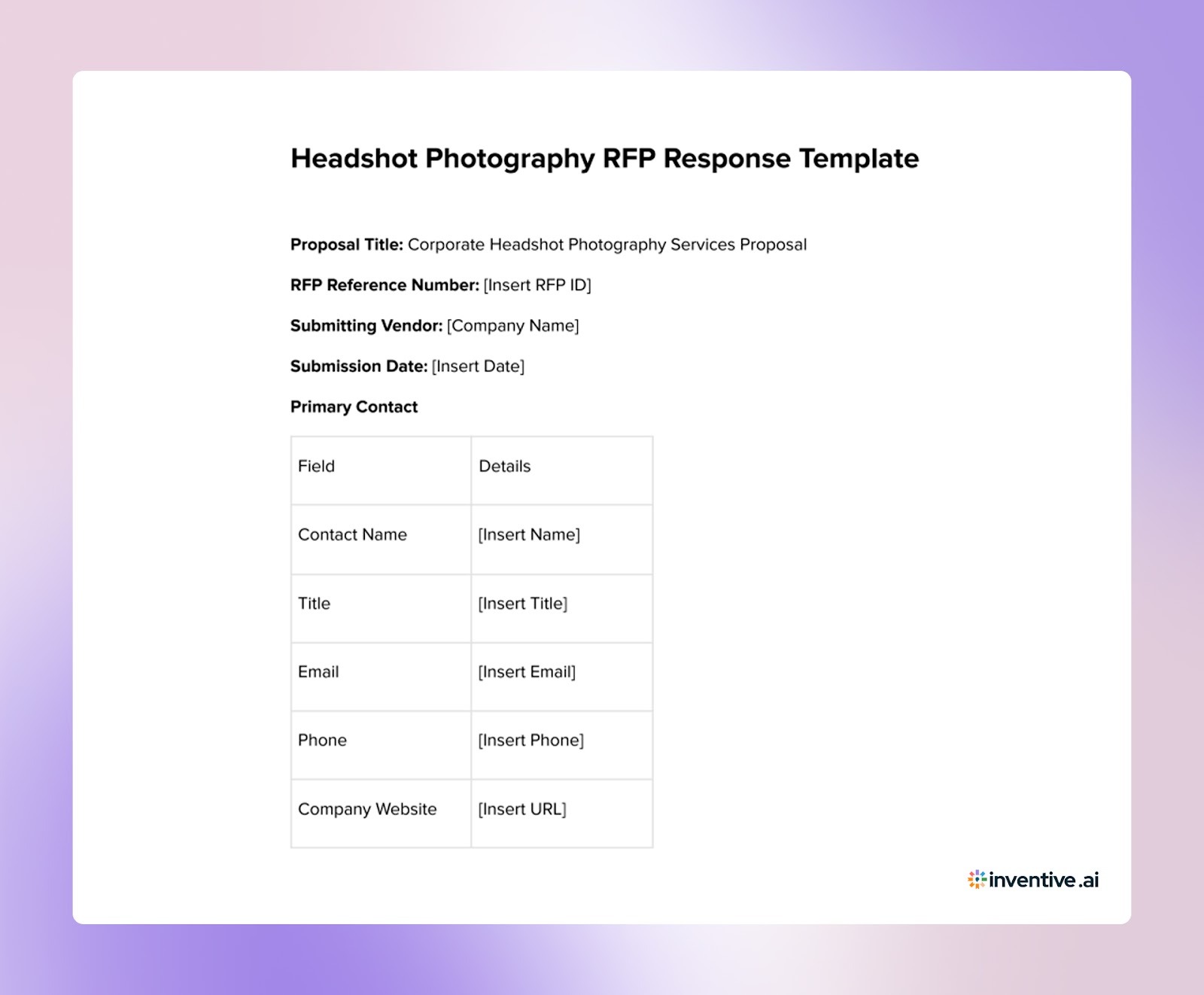

5 Customization Tips to Turn a Headshot Photography RFP Template Into a Strong Proposal
Every photography RFP contains unique project details. A response template becomes effective when you customize it based on the buyer’s requirements.
Here are practical ways to strengthen your response.
1. Tailor your project understanding: Show that you understand the buyer’s photography goals. Mention how the headshots will be used, such as on company websites, employee profiles, or marketing materials.
2. Highlight relevant experience: Share examples of similar projects you have completed. Corporate headshots, leadership portraits, or event photography can help buyers understand your style and experience.
3. Match the proposed workflow to project needs: Adjust your photography approach based on the project scope. Explain how you will manage the shoot, editing process, and delivery timeline.
4. Address evaluation criteria clearly: Respond directly to the criteria listed in the RFP. This helps buyers easily compare your proposal with other vendors.
5. Present transparent pricing: Break down your pricing clearly. Include photography sessions, editing services, and any optional packages so buyers understand the full cost.
These steps help you submit proposals that align closely with buyer expectations and improve your chances of standing out during the review process.
5 Corporate Needs That Drive Headshot Photography RFPs
Organizations typically issue a photography RFP when they need professional images across teams or events.
Common situations include:
1. Company rebranding projects: This happens when organizations update leadership portraits and employee headshots to match new branding.
2. Corporate website updates: This occurs when companies need consistent professional images for staff profiles and executive pages.
3. Corporate events and conferences: This involves on-site headshot stations for attendees, speakers, or employees.
4. Employee onboarding initiatives: This happens when companies hire large groups of employees and require professional headshots for directories.
5. Marketing and promotional campaigns: This occurs when businesses require professional portraits for advertising, press releases, or social media.
These RFPs allow buyers to evaluate multiple photographers before selecting a vendor.
Also Read: Top Sales Knowledge Management Tools in 2026
6 Benefits of Using a Headshot Photography RFP Template
A structured response template offers several advantages for photography vendors responding to RFPs. It helps you prepare proposals faster while maintaining consistency and clarity.
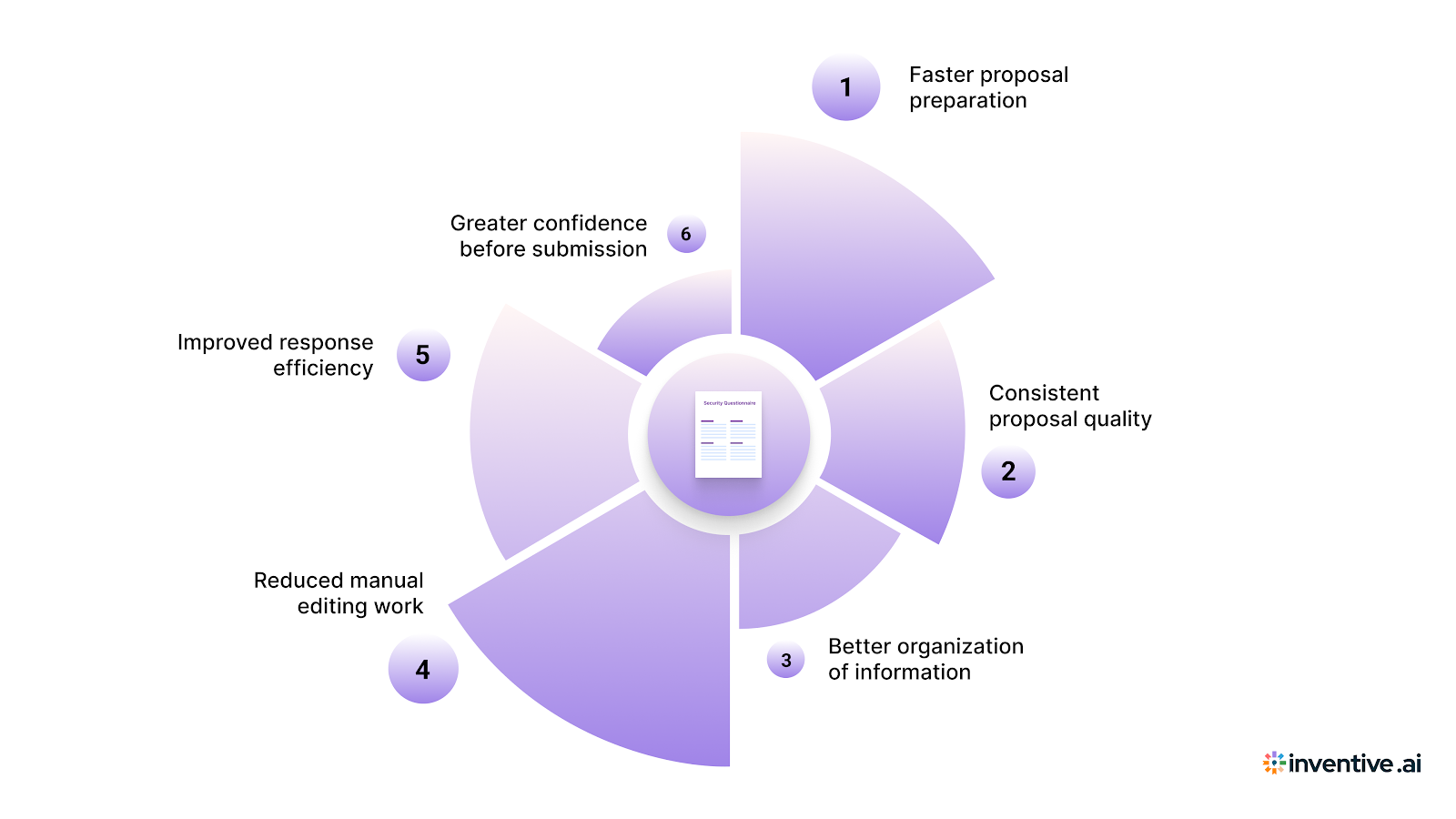
Key benefits include:
1. Faster proposal preparation: A response template gives you a ready structure when a new RFP arrives. You can quickly update project details instead of starting from scratch.
2. Consistent proposal quality: Using the same format across proposals helps maintain clear messaging, organized sections, and a professional presentation every time.
3. Better organization of information: A template keeps important details such as project approach, portfolio examples, and pricing clearly structured for reviewers.
4. Reduced manual editing work: Since most sections already exist in the template, you spend less time formatting documents and more time refining your response.
5. Improved response efficiency: Proposal teams can reuse key content and focus on tailoring the response to the buyer’s specific requirements.
6. Greater confidence before submission: A structured format helps ensure that all required sections are covered before sending the proposal.
Using a template allows you to focus more on proposal quality and alignment with the buyer’s expectations instead of spending time on document formatting.
Strengthen Your RFP Responses With Inventive AI
Responding to multiple RFPs can quickly become time-consuming, especially when each request requires detailed documentation and customization.
With AI-Powered RFP Response Software, Inventive AI helps vendors generate structured proposal drafts faster while keeping responses accurate and consistent.
1. 2× Higher Quality Responses
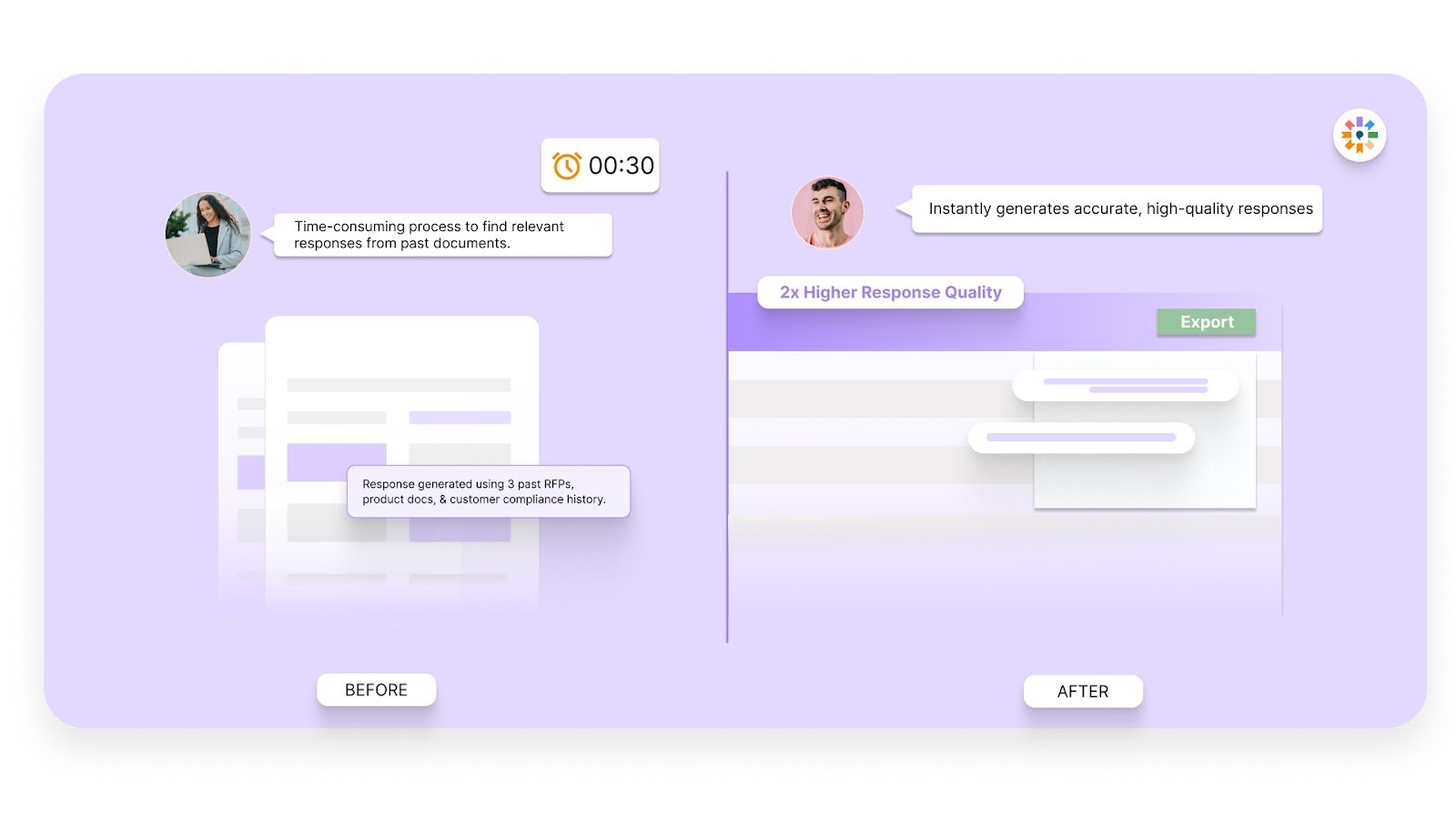
Inventive AI helps you generate structured proposal drafts using your past RFP responses and stored knowledge sources. This allows you to produce clear, consistent responses that match the buyer’s requirements without rewriting sections from scratch.
2. Context Engine
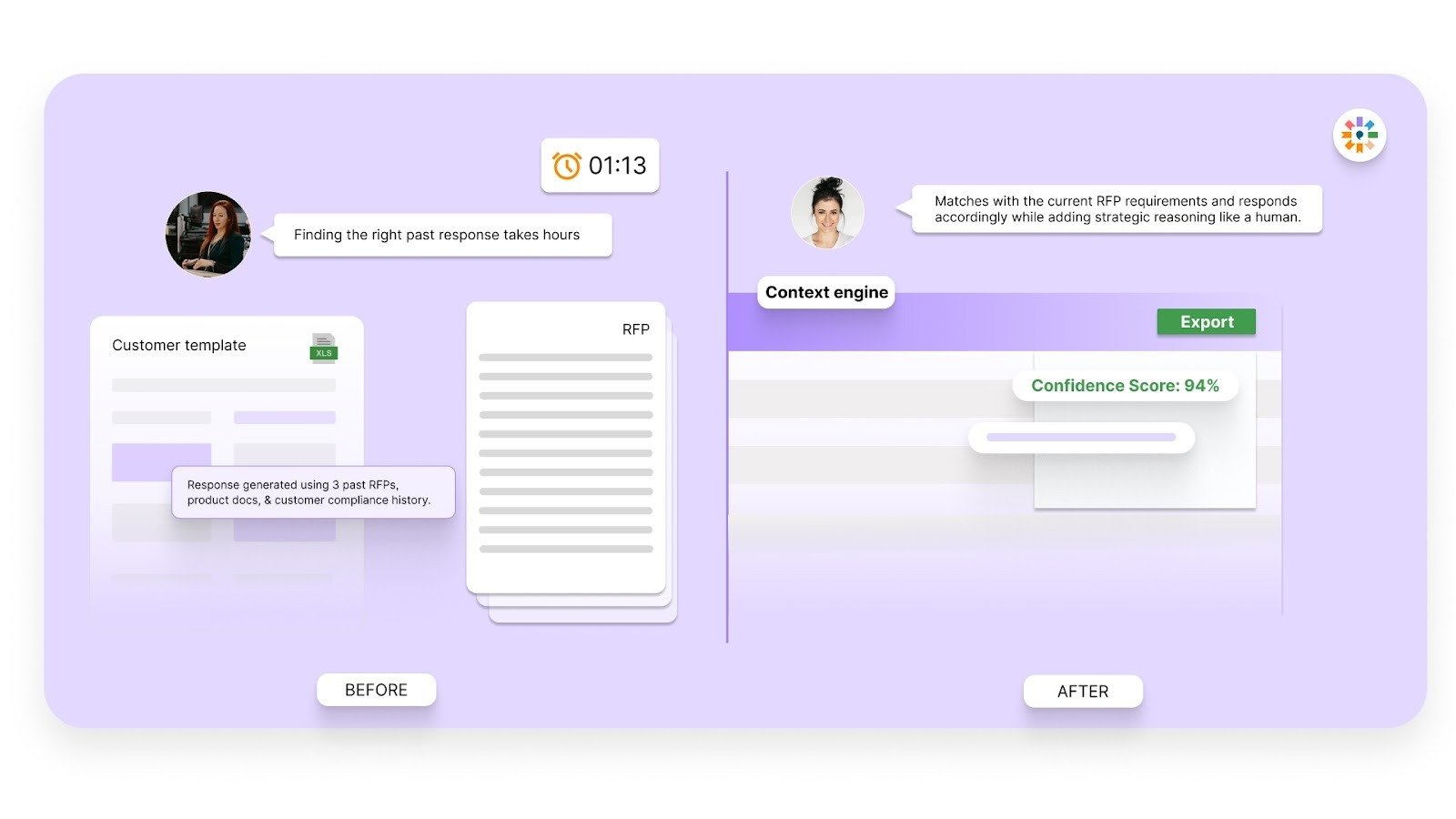
The platform analyzes previous RFP responses and recommends relevant answers when a new RFP arrives. Instead of manually searching through documents, you can quickly reuse the most relevant content and focus on tailoring your proposal.
3. Conflict Detection
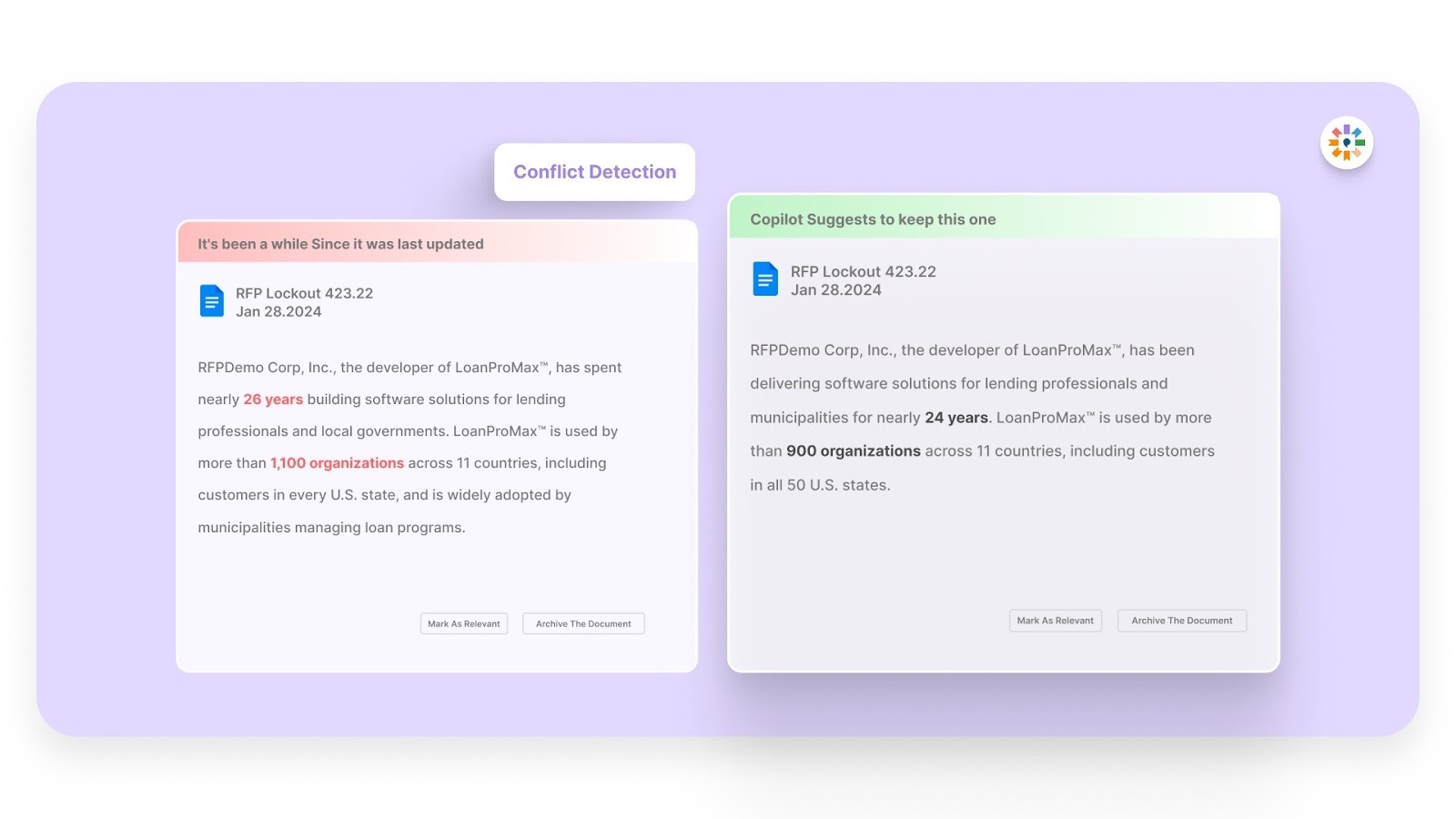
Inventive AI automatically detects conflicting information across proposal documents. This ensures that the details you include in your response remain consistent, accurate, and aligned across multiple sections of your proposal.
4. Outdated Content Detection
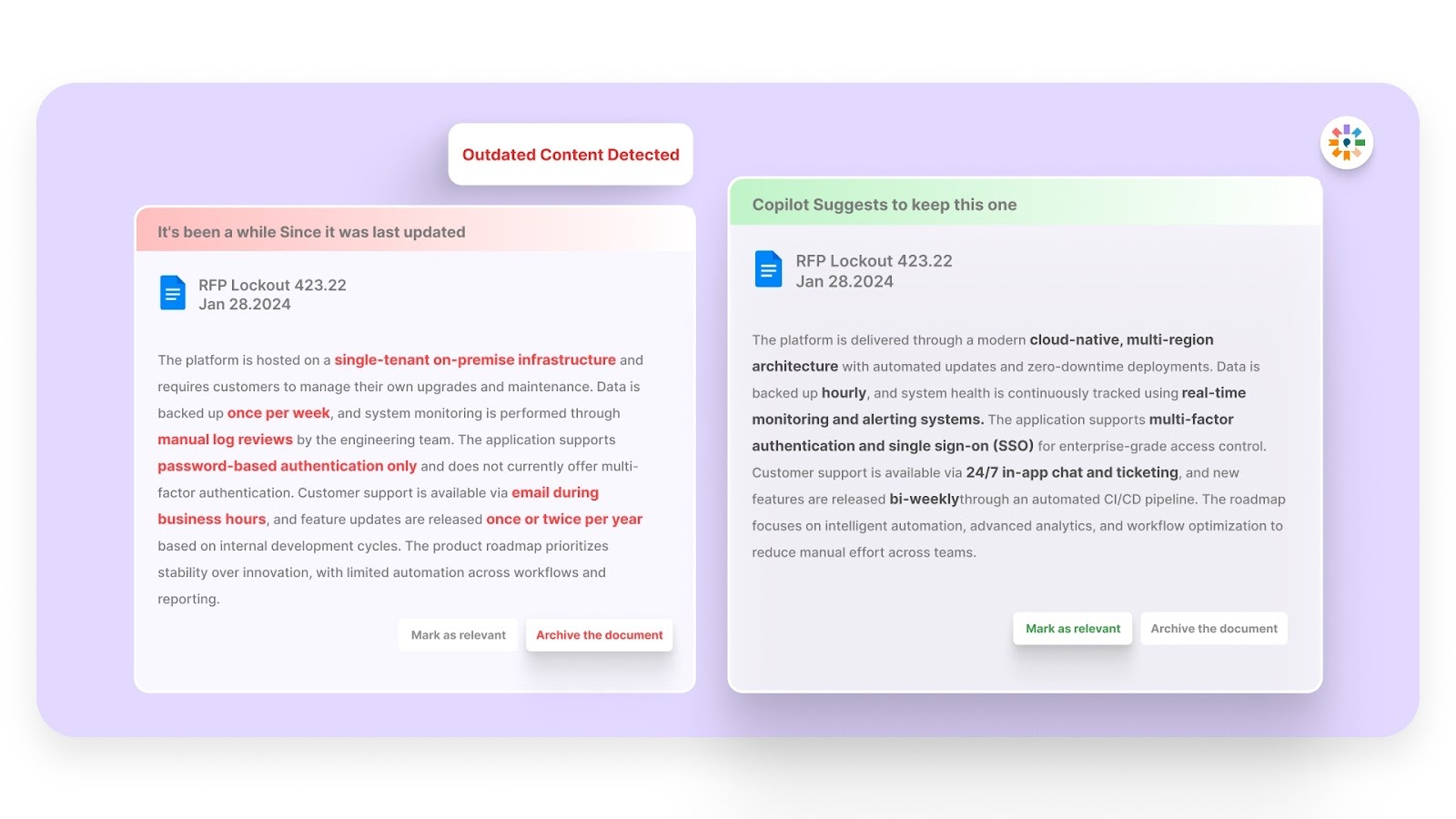
The AI Content Manager flags outdated or conflicting content stored in your knowledge base. This ensures your proposal responses always use the latest portfolio information, service descriptions, and pricing details.
5. Simple, Easy-to-Use Interface
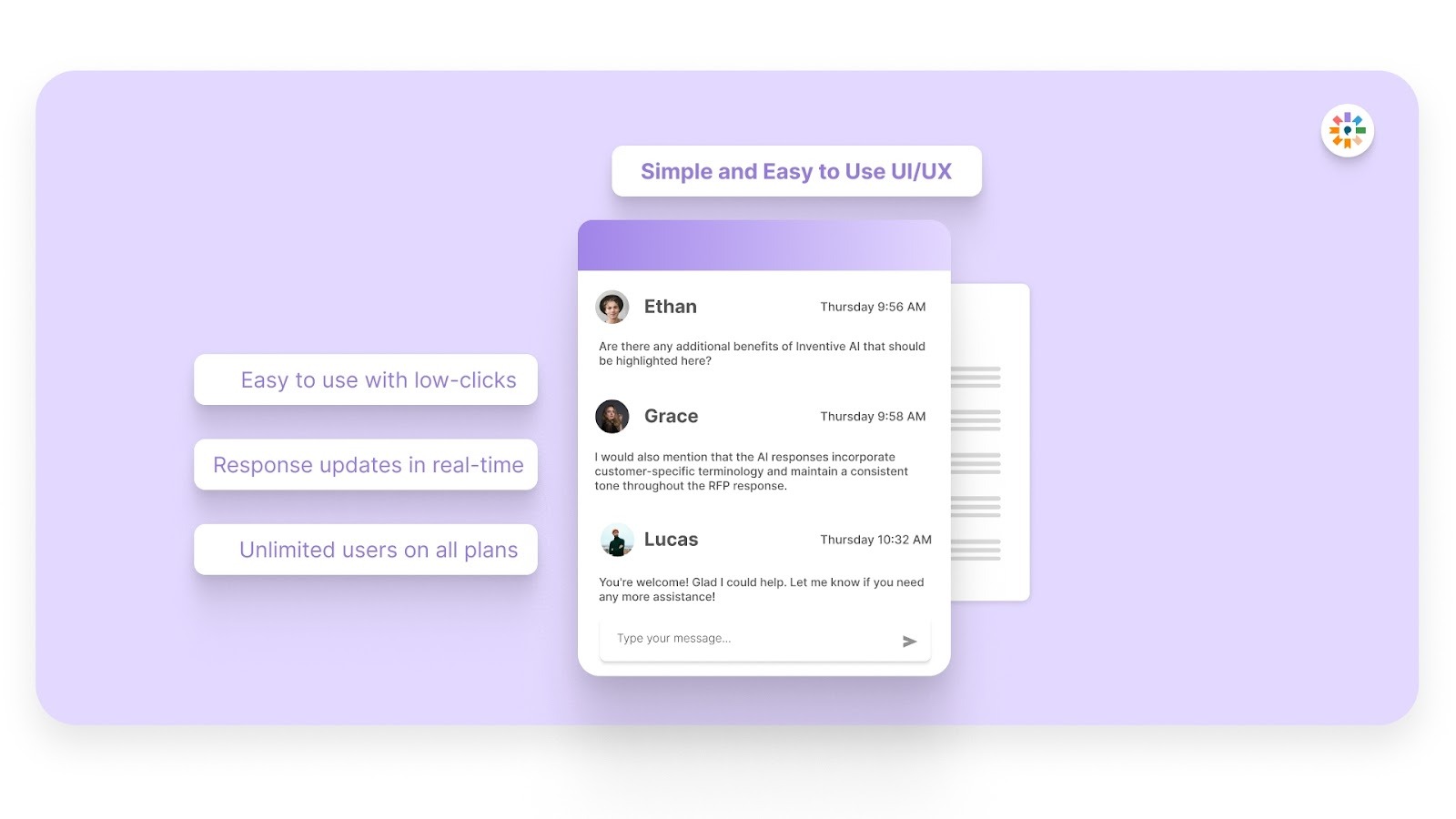
Inventive AI provides a centralized workspace where your team can access past RFP responses, collaborate with internal experts, and prepare proposal drafts efficiently.
6. Narrative-Style Proposals
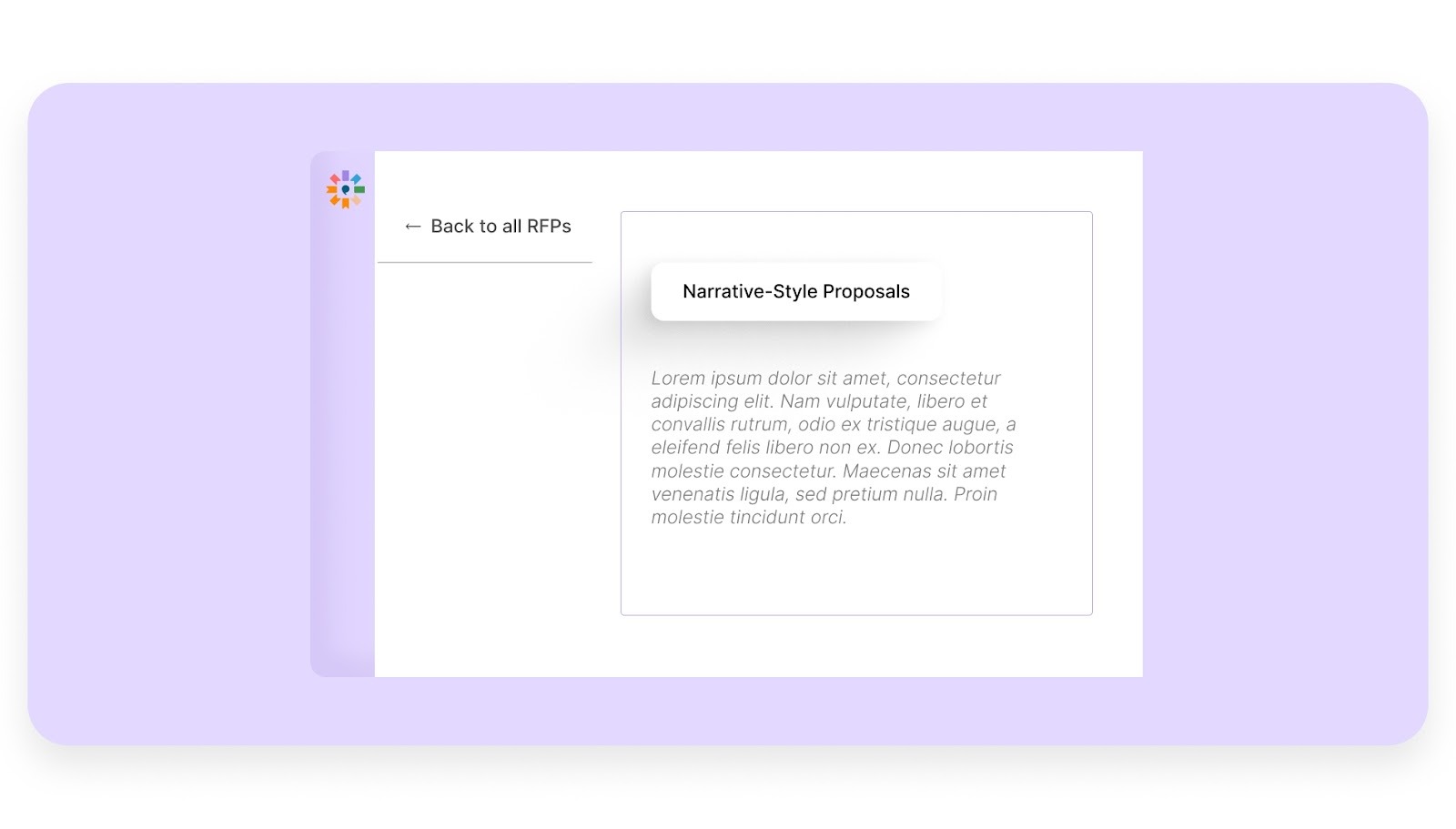
While most tools are limited to short Q&A, Inventive AI generates complete, long-form documents like executive summaries and one-pagers. This allows you to move beyond simple spreadsheets and build a persuasive, well-written story that clearly explains your value to the buyer.
With these capabilities, Inventive AI helps your team respond to RFPs faster while maintaining clear, high-quality proposal responses.
Frequently Asked Questions (FAQs)
1. What should vendors include in a headshot photography RFP proposal?
Vendors typically include company background, photography approach, equipment details, portfolio examples, project timeline, pricing structure, and licensing terms.
2. How detailed should a photography RFP response be?
A strong response clearly explains your approach, experience, equipment, and editing process while addressing each requirement listed in the RFP.
3. How can vendors improve their chances of winning photography RFPs?
Vendors improve win rates by aligning proposals with the buyer’s project requirements, presenting relevant portfolio work, and providing clear timelines and pricing.
4. What common mistakes do vendors make when responding to photography RFPs?
Common issues include incomplete responses, unclear pricing structures, missing portfolio examples, and failing to address evaluation criteria.
5. How do proposal teams manage multiple RFP responses efficiently?
Many vendors organize past responses, portfolio materials, and documentation in centralized systems so proposal teams can reuse content when preparing new responses.

90% Faster RFPs. 50% More Wins. Watch a 2-Minute Demo.
.avif)
Mukund Kumar
Understanding that sales leaders struggle to cut through the hype of generic AI, Mukund focuses on connecting enterprises with the specialized RFP automation they actually need at Inventive AI. An IIT Jodhpur graduate with 3+ years in growth marketing, he uses data-driven strategies to help teams discover the solution to their proposal headaches and scale their revenue operations.

Hardi Hindocha
Knowing that complex B2B software often gets lost in jargon, Hardi focuses on translating the technical power of Inventive AI into clear, human stories. As a Sr. Content Writer, she turns intricate RFP workflows into practical guides, believing that the best content educates first and earns trust by helping real buyers solve real problems.