Healthcare RFPs: What Vendors Need to Know Before Responding
If you respond to healthcare RFPs regularly, this guide is for you. It breaks down how healthcare RFPs work, what buyers expect from vendors, how to respond without burning out your team, and how to improve outcomes without cutting accuracy.

Healthcare RFPs don’t just ask what you offer. They ask how safely, reliably, and consistently you operate in environments where mistakes have real consequences.
For vendors, these RFPs arrive with tight timelines, long questionnaires, layered compliance checks, and zero tolerance for vague answers. One incomplete response around data handling, patient privacy, or operational readiness can stall a deal or remove you from consideration entirely.
This is where many vendors are rethinking how they respond. AI-powered RFP tools are now being used to draft first-pass answers from approved content, keep healthcare compliance and security responses consistent, and reduce repetitive review cycles.
If you respond to healthcare RFPs regularly, this guide is for you. It breaks down how healthcare RFPs work, what buyers expect from vendors, how to respond without burning out your team, and how to improve outcomes without cutting accuracy.
Key Takeaways
- Healthcare RFPs evaluate trust, not just capability. Buyers closely assess compliance, security, privacy, and operational readiness, making accuracy and consistency critical for vendors.
- Most healthcare RFPs follow a predictable structure. Vendors should expect detailed sections on scope, HIPAA and regulatory compliance, security questionnaires, service delivery, pricing, and vendor due diligence.
- Successful responses rely on preparation, not last-minute effort. Qualifying opportunities early, assigning clear ownership, reusing approved content, and reviewing responses like an evaluator help reduce risk and rework.
- Manual processes break down as RFP volume grows. Common challenges include inconsistent answers, tight timelines, repeated rewriting, and limited visibility into final submissions.
- AI-powered RFP response tools like Inventive AI improve outcomes. Vendors can respond 10x faster, maintain 95% accuracy, avoid hallucinated answers, and achieve up to 50% higher win rates by reducing manual effort and keeping responses grounded in verified content.
What Are Healthcare RFPs and Why They’re Important to Vendors?
Healthcare RFPs are formal procurement documents issued by hospitals, health systems, payers, life sciences companies, and healthcare networks to evaluate vendors across services, technology, equipment, and operational support.
From a vendor perspective, the importance of healthcare RFPs lies in what they represent beyond a single deal as healthcare RFPs -
- Operate within regulated environments, where compliance expectations are non-negotiable
- Include deep security, privacy, and data protection scrutiny, often tied to patient information
- Require cross-functional responses, pulling in sales, legal, IT, security, finance, and delivery teams
- Directly influence long-term contracts, renewals, preferred vendor lists, and panel placements
Unlike simpler commercial RFPs, healthcare RFPs are designed to assess whether you can operate responsibly inside clinical, administrative, and patient-data-driven systems, consistently and at scale.
The importance of healthcare RFPs is rooted in trust. Vendors who respond with clear, consistent, and well-supported answers signal readiness early and improve their chances of moving forward.
7 Most Common Types of Healthcare RFPs
Healthcare organizations issue different RFPs depending on operational needs. As a vendor, you’ll often see one or more of the following.
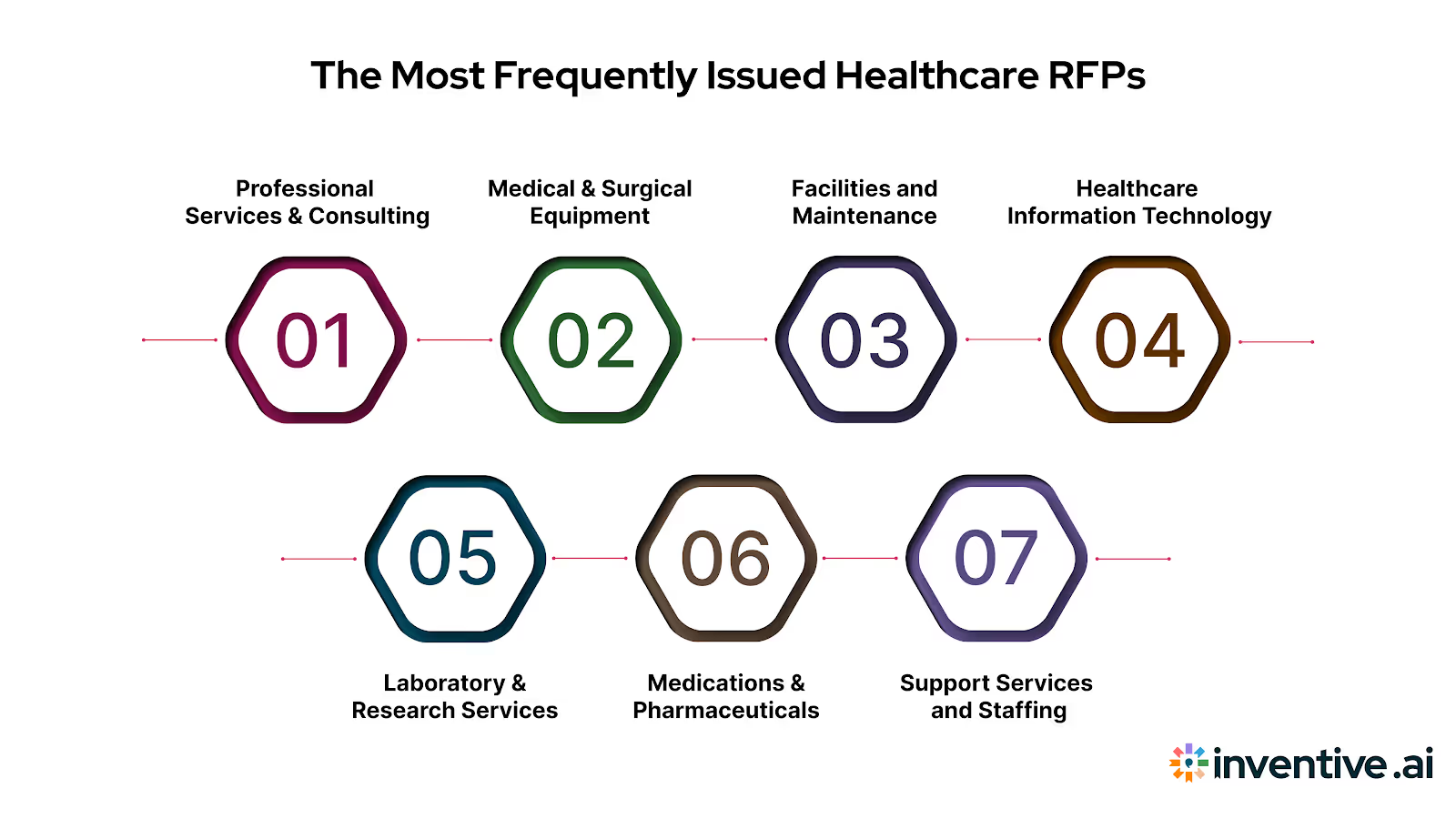
1. Professional Services and Consulting RFPs
- Clinical consulting, compliance advisory, revenue cycle support, legal or operational services
- Buyers assess expertise, staffing depth, past outcomes, and governance
2. Medical and Surgical Equipment RFPs
- Devices, imaging systems, surgical tools, or capital equipment
- Responses focus on certifications, maintenance plans, training, and lifecycle support
3. Facilities and Maintenance RFPs
- Environmental services, infrastructure maintenance, safety systems
- Emphasis on uptime, regulatory adherence, and incident response
4. Healthcare Information Technology (HIT) Systems RFPs
- EHRs, analytics platforms, interoperability tools, and cybersecurity solutions
- Heavy focus on data privacy, access controls, integrations, and audit readiness
5. Laboratory and Research Services RFPs
- Diagnostics, testing services, clinical research support
- Buyers evaluate accuracy, turnaround times, accreditation, and reporting
6. Medications and Pharmaceuticals RFPs
- Drug supply, specialty pharmacy services, distribution
- Compliance, sourcing transparency, and pricing controls matter most
7. Support Services and Staffing RFPs
- Workforce staffing, administrative services, and patient support
- Buyers review credentialing, continuity plans, and staffing scalability
Each RFP type changes what’s emphasized, but accuracy and consistency always matter.
Also Read: How to Develop Effective RFP Win Themes for Proposal Success
6 Key Elements Included in Healthcare RFPs (What Vendors Should Expect)
When healthcare organizations issue an RFP, the structure is usually consistent, even if the document itself feels long and detailed. Knowing what’s included helps you prepare your response before the RFP even lands in your inbox.
Here’s what healthcare buyers typically include and expect vendors to address clearly:
1. Scope of services or products
A detailed description of what the organization is procuring, including functional requirements, expected outcomes, delivery timelines, and service boundaries. Buyers often look for clarity on how you will deliver, not just what you provide.
2. Regulatory and compliance requirements
Explicit questions tied to HIPAA, HITECH, and relevant state-level healthcare regulations. These sections typically require specific explanations of controls, policies, and responsibilities rather than high-level assurances.
3. Security and privacy questionnaires
In-depth questions covering data access, user permissions, encryption practices, audit logging, incident response workflows, and breach notification timelines. These sections are often reviewed separately by security or risk teams.
4. Operational readiness and service delivery
Details on staffing models, onboarding plans, SLAs, escalation paths, uptime expectations, and ongoing support. Buyers want to understand how your organization operates under real conditions, not just during onboarding.
5. Pricing and commercial terms
Structured pricing templates that require transparency around fees, renewals, usage assumptions, and auditability. Inconsistent pricing explanations often trigger follow-up reviews.
6. Vendor due diligence (DDQs)
Questions related to governance, financial stability, subcontractors, certifications, and risk management practices. These answers help buyers assess long-term viability, not just short-term fit.
Across all sections, healthcare buyers increasingly expect responses that are direct, structured, and internally consistent, rather than marketing-heavy language or generalized claims.
Understanding what’s typically included in healthcare RFPs helps vendors prepare accurate, reusable responses and reduces last-minute revisions when timelines are tight.
Also Read: 15 Best AI Tools for Healthcare Proposals
A Step-by-Step Approach to Responding to Healthcare RFPs
A strong healthcare RFP response doesn’t begin with drafting answers. It begins with preparation. Teams that respond consistently well focus on decision-making, structure, and accuracy long before the first response is written.
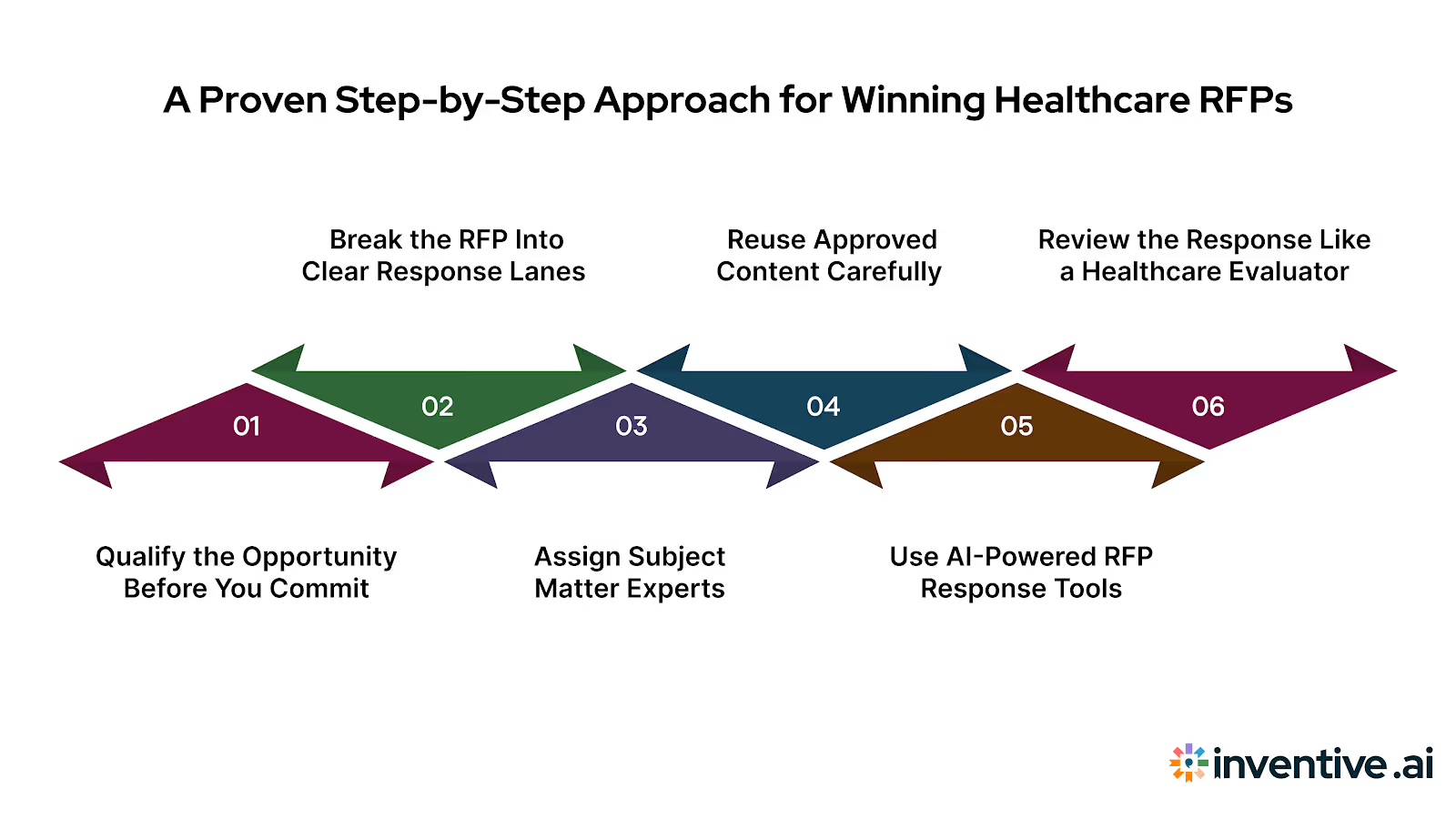
Step 1: Qualify the Opportunity Before You Commit
Not every healthcare RFP is worth the same level of effort. Before assigning work, take time to assess whether the opportunity aligns with your business and risk tolerance.
- Confirm that the scope of services or products matches what you can realistically deliver
- Evaluate deal size, contract length, and strategic value
- Review regulatory requirements to ensure alignment with your existing controls
- Identify non-negotiable terms early, such as privacy obligations, audit rights, liability limits, and breach notification timelines
If these terms don’t align with your standards, it’s better to know upfront than after weeks of work.
Step 2: Break the RFP Into Clear Response Lanes
Healthcare RFPs become unmanageable when everything lives in one document. Organizing the response into lanes keeps work focused and reduces overlap.
Common response lanes include:
- Clinical or service delivery: scope execution, outcomes, support models
- Security and data handling: access controls, encryption, monitoring, and incident response
- Legal and compliance: contracts, privacy terms, regulatory obligations
- Pricing and commercial terms: fees, assumptions, renewals, auditability
Each lane should have a clear owner responsible for accuracy and completeness.
Step 3: Assign Subject Matter Experts With Clear Expectations
Subject matter experts are essential in healthcare RFPs, but they are also time-constrained. Clear ownership prevents delays and conflicting answers.
- Assign each SME a defined section, not scattered questions
- Set expectations for specific, proof-based answers instead of general statements
- Ask SMEs to reference policies, controls, or metrics wherever possible
- Set deadlines early to allow time for review and consolidation
This approach reduces rework and helps proposal managers maintain consistency across sections.
Step 4: Reuse Approved Content Carefully
Reusing content saves time only when it’s accurate and current.
- Reuse responses that reflect current certifications, policies, and controls.
- Watch for outdated references to systems, processes, or regulatory language
- Ensure reused content aligns with the specific context of the RFP, not just past bids.
Blind reuse often creates contradictions, especially across security and compliance sections.
Step 5: Use AI-Powered RFP Response Tools to Reduce Manual Effort
As healthcare RFP volume increases, manual drafting and coordination quickly become bottlenecks. This is where AI-powered RFP response tools add real value for vendors.
With AI-powered RFP response software, teams can:
- Generate first-pass answers using approved healthcare, security, and compliance content
- Keep responses consistent across legal, security, and operational sections
- Reduce repetitive SME involvement by surfacing relevant, pre-approved answers
- Speed up drafting while keeping responses grounded in real documentation
Inventive AI’s AI RFP Agent is designed to simplify your RFP response process, helping healthcare vendors respond faster without guessing or introducing unsupported claims.
Step 6: Review the Response Like a Healthcare Evaluator
Before submission, step back and read the response from the buyer’s point of view.
- Answer each question directly before adding context
- Remove filler and marketing-heavy language
- Check for internal inconsistencies across legal, security, and delivery sections.
- Confirm that claims made in one section are supported elsewhere in the response
Healthcare evaluators often review sections independently, so consistency matters.
Pro Tip: Treat security and privacy answers as deal-critical, not supporting material.
In healthcare RFPs, weak or inconsistent security responses can disqualify vendors before pricing or service capabilities are even considered.
A structured response process, supported by AI-powered tools, helps vendors protect accuracy, reduce review cycles, and respond to healthcare RFPs with confidence, even under tight timelines.
Here’s a downloadable healthcare RFP response template you can use to structure accurate, compliant, and consistent vendor submissions.
5 Best Practices for Healthcare RFP Responses
Efficient healthcare RFP responses aren’t about working longer hours. They come from putting the right systems and habits in place so accuracy doesn’t suffer when timelines tighten.
Here are proven practices that help vendors respond with confidence and consistency.
- Maintain a single source of truth for compliance and security language
Keep all approved healthcare, privacy, and security responses in one place. This prevents teams from answering the same question in different ways across bids and reduces internal contradictions.
- Standardize responses for high-risk sections
Areas such as HIPAA alignment, breach notification timelines, access controls, and audit rights appear in almost every healthcare RFP. Standardizing these responses ensures clarity while still allowing room for RFP-specific context.
- Keep past RFP answers searchable and current
Reusing content works only when answers reflect your current controls, certifications, and operating model. Regular reviews help prevent outdated language from creeping into new submissions.
- Track versions and approvals carefully
Healthcare RFPs often involve multiple reviewers. Clear version control and approval tracking reduce confusion, prevent accidental changes, and make final reviews faster.
- Reduce SME fatigue by routing only high-impact questions
Not every question requires fresh SME input. Route experts only the sections that truly need validation or updates, and rely on approved content for the rest.
Consistent processes and well-maintained content help vendors respond faster over time while protecting accuracy in every healthcare RFP.
5 Most Common Challenges Vendors Face in Healthcare RFPs
Healthcare RFPs rarely break down because teams lack subject matter expertise. They break down when coordination, consistency, and visibility start to slip as complexity increases.
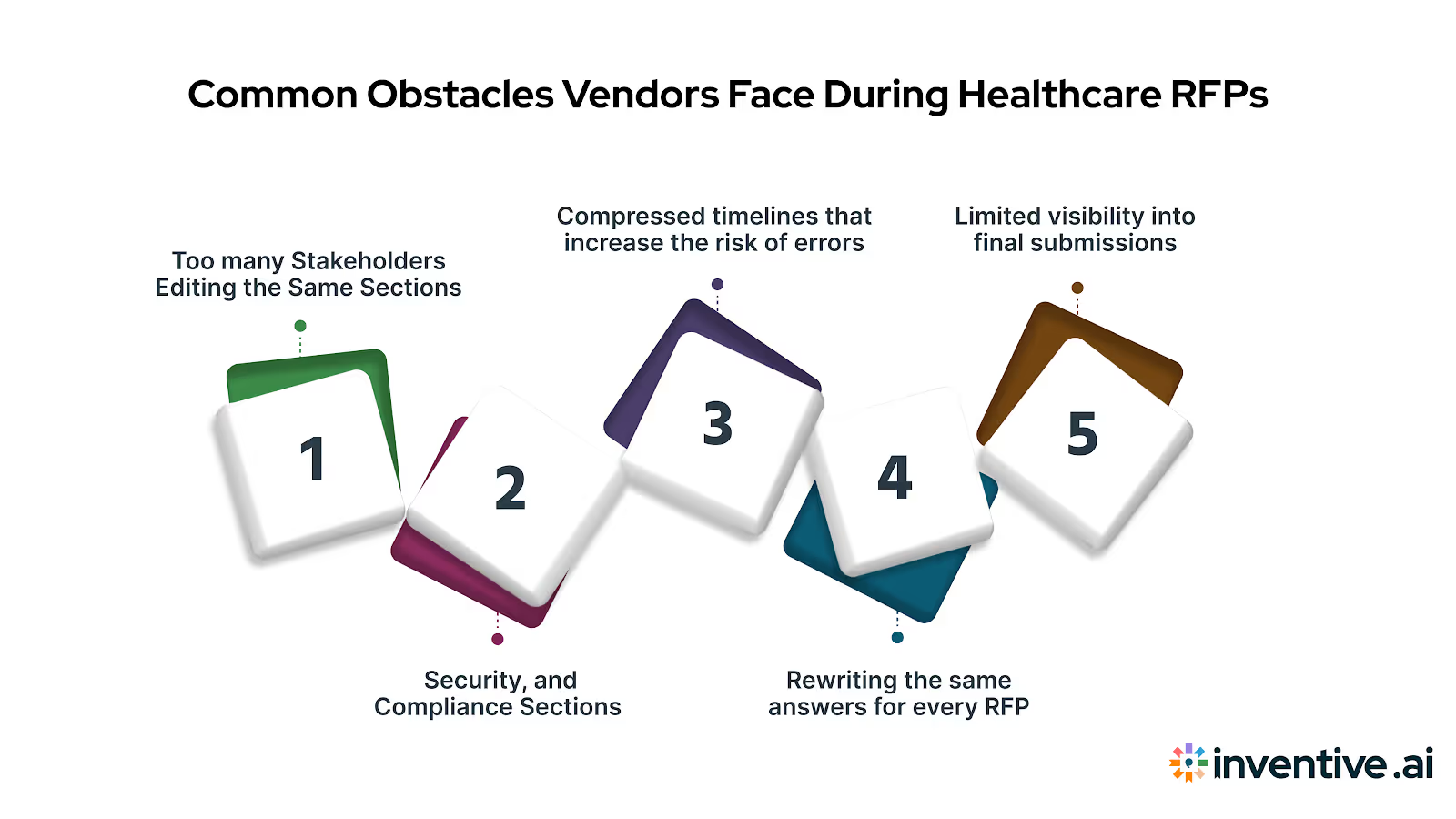
Vendors responding to healthcare RFPs commonly face these challenges:
1. Too many stakeholders editing the same sections
Healthcare RFPs require input from sales, legal, security, finance, and delivery teams. Without clear ownership and structured workflows, multiple edits on the same answers lead to confusion, rework, and conflicting language.
2. Inconsistent responses across legal, security, and compliance sections
Slight differences in how data handling, access controls, or breach notification timelines are described can raise concerns during evaluation and trigger additional review cycles.
3. Compressed timelines that increase the risk of errors
Healthcare buyers often set aggressive deadlines. When drafting, reviews, and approvals happen simultaneously, accuracy becomes harder to maintain.
4. Rewriting the same answers for every RFP
Many healthcare RFP questions repeat across opportunities. Rewriting them manually consumes SME time and increases the chance of inconsistency.
5. Limited visibility into final submissions and approvals
Without clear version control, teams struggle to track what content was approved, what changed late in the process, and what was ultimately submitted.
Addressing these challenges requires more than individual effort. Vendors need structured response processes, centralized content, and better coordination to keep quality high as volume grows.
How to Respond to Healthcare RFPs Better with Inventive AI?
Healthcare RFPs demand speed and accuracy. For most vendors, improving one usually hurts the other. That’s where many response processes start to break down.
Inventive AI is designed to simplify your RFP response process, helping healthcare vendors respond faster while keeping every answer grounded in verified, approved content.
Here’s how Inventive AI supports better healthcare RFP responses in practice:
1. Faster Drafting Without Guesswork
Healthcare RFPs include long questionnaires, repeated compliance questions, and detailed security sections. Inventive AI helps generate first-pass responses using your existing, approved content, allowing teams to respond 10x faster without starting from a blank page.
2. High Accuracy for Regulated Environments
Accuracy matters more in healthcare than in most industries. Inventive AI delivers 95% accuracy by grounding responses in your real documentation and prior approvals. When information is missing, the system avoids fabrication, maintaining 0% hallucination across responses.
3. Context-Aware Responses for Healthcare Use Cases
Healthcare RFP questions often look similar but require different framing depending on the buyer, service type, or data sensitivity. Inventive AI understands context and tailors responses accordingly, helping teams avoid copy-paste answers that feel generic or misaligned.
4. Instant Conflict Detection Across Sections
Inconsistencies between legal, security, and operational answers are a common reason healthcare vendors get flagged. Inventive AI detects conflicting statements across responses early, allowing teams to resolve issues before submission.
5. Real-Time Outdated Content Detection
Healthcare compliance language changes often. Inventive AI flags outdated responses, certifications, or policy references so teams don’t unknowingly submit stale or inaccurate information.
6. Quality Benchmarking Against Past Winning Responses
By comparing new responses with previously approved and successful submissions, Inventive AI helps proposal teams maintain a consistent standard across healthcare RFPs, without increasing review cycles.
7. Narrative-Style Proposals That Are Easy to Evaluate
Beyond question-by-question answers, Inventive AI helps generate clear, narrative-style proposals that evaluators can follow easily, improving readability without adding unnecessary length.
For CROs, VPs of Sales, and proposal leaders, these capabilities translate into measurable outcomes: faster turnaround times, fewer review cycles, and up to 50% higher win rates across competitive healthcare bids.
Frequently Asked Questions (FAQs)
1. How can vendors find healthcare RFP opportunities?
Healthcare vendors can find RFPs through hospital and health system procurement portals, state and federal government websites, group purchasing organizations (GPOs), and healthcare-focused RFP listing platforms. Many organizations also share opportunities directly with vendors already on approved supplier lists.
2. What does an RFP mean in the healthcare industry?
In healthcare, an RFP is a formal request used by hospitals, payers, and healthcare organizations to evaluate vendors for services, technology, equipment, or support. These RFPs assess not only capabilities but also compliance, security, and operational readiness.
3. Which tools help vendors track and manage healthcare RFPs?
Healthcare vendors often rely on a mix of RFP tracking platforms, procurement portals, and internal systems to identify and manage opportunities. For responding efficiently, many teams use AI-powered RFP response tools like Inventive AI that help draft answers, manage content, and maintain consistency across bids.
4. Why are healthcare RFPs more complex for vendors?
Healthcare RFPs involve regulated environments, detailed security and privacy requirements, and multiple internal reviewers. Vendors must demonstrate compliance, data protection, and operational discipline, which adds layers of review and documentation to the response process.
5. Who is typically involved in responding to healthcare RFPs?
Healthcare RFP responses usually involve sales, proposal managers, legal, security, IT, finance, and delivery teams. Clear ownership and coordination across these roles are essential to avoid delays and inconsistencies.
6. How can vendors improve accuracy in healthcare RFP responses?
Vendors improve accuracy by maintaining approved compliance content, standardizing responses for high-risk sections, and using structured workflows. AI-powered RFP response software can further help by reducing manual errors and keeping answers aligned with verified information.