
How High-Performing Teams Respond to DDQs in 2026

How many times have you rechecked a DDQ answer right before submission because something felt off? Not because the answer was wrong, but because it might not match what was written elsewhere. That is where most DDQ processes break.
This is exactly why teams are turning to AI. DDQs are structured, repetitive, and heavily dependent on past answers, which makes them ideal for automation.
In fact, Gartner estimates that teams using generative AI for proposals and bid responses reduce effort by around 40%, without affecting win rates.
This guide breaks down how to respond to a DDQ in 2026 with better accuracy, less rework, and a process your team can rely on.
Key Takeaways
- DDQs are not about your product, they evaluate your company’s reliability, compliance, and risk posture, which makes accuracy and consistency critical.
- Most DDQ challenges come from scattered content, inconsistent answers, unclear ownership, and growing volume, not lack of information.
- A strong DDQ process relies on centralized content, standardized answers, clear ownership, and structured review workflows.
- Inventive AI’s AI-powered automation improves outcomes by generating first drafts, ensuring consistency, flagging outdated content, and reducing SME dependency.
- The final takeaway: teams that introduce structure and automation turn DDQs from a manual bottleneck into a scalable, deal-moving process.
So, What Exactly Is a DDQ?
Before we get into the how, let's make sure we're clear on the what, because DDQs are often confused with RFPs, and they're not the same thing.
An RFP asks what you can do. A DDQ asks who you are.
When a buyer sends you an RFP, they want to know if your solution fits their needs. When they send you a DDQ (Due Diligence Questionnaire), that stage has already passed. Now the focus shifts to your organization itself. Your security practices. Your financial stability. Your compliance posture. Your operational setup. Basically, are you as solid as you appear?
Receiving a DDQ is actually a good sign. It means you've been shortlisted. The buyer is serious. They just want to confirm you're the right call before they commit.
The challenge is that DDQs are not small. A standard questionnaire runs around 100 questions. More complex ones, especially in finance, healthcare, or enterprise technology, can carry anywhere from 150 to 500 questions across multiple categories.
Responding to a standard 100-question DDQ takes an average of 4 to 5 hours for the first draft alone, and that's before SME reviews, revisions, and final sign-off.
Now multiply that by the number of DDQs your team gets in a month. You start to see why this becomes a real operational challenge.
Who's Sending You These DDQs?
DDQs show up in a few different contexts. Knowing who's sending one and why helps you respond with the right level of detail and the right tone.
Common sources of DDQs:
1. Enterprise procurement teams
Large companies use DDQs to assess vendors before onboarding them. They focus on security, compliance, and operational reliability, especially in industries like finance, healthcare, and government.
2. Institutional investors and fund managers
Investment firms use DDQs to evaluate where they place capital. Standard frameworks from organizations like AIMA and ILPA are commonly used, which means you will see similar questions repeatedly.
3. M&A and private equity teams
During acquisitions or investments, DDQs go deeper into financials, legal exposure, and risk areas. These are usually more detailed and require careful validation.
4. Existing clients
DDQs are not limited to new deals. Many clients send them during renewals or periodic reviews to reassess risk and compliance.
Across all of these cases, the expectation is the same. The organization reviewing your DDQ is making a high-stakes decision, so your responses need to be accurate, consistent, and easy to trust.
Inside a DDQ: What Section You'll Need to Answer?

DDQs vary by industry and buyer, but most follow a predictable structure. Once you know the categories, you can start organizing your content library around them, which saves a significant amount of time when an actual questionnaire comes in.
Here’s what you’ll typically see:
1. Company Overview
Who you are, how long you’ve been operating, your corporate structure, and your key business credentials. This is where you establish basic legitimacy and organizational maturity.
2. Financial Information
Revenue history, profitability, funding structure, and any material financial risks. Buyers want to know you’ll still be around to deliver on your commitments.
3. Security and Cybersecurity
Consistently the largest section, representing 30 to 40% of questions in modern DDQs. Expect detailed questions on data handling, access controls, incident response, encryption standards, and certifications like SOC 2 or ISO 27001.
4. Regulatory Compliance and Legal
Industry-specific regulations (HIPAA, GDPR, SEC requirements), pending litigation, and compliance certifications. Gaps here are among the most common deal-stalling issues.
5. Operational Resilience
Business continuity plans, disaster recovery, third-party dependencies. Buyers want to know your operations can handle disruptions without affecting them.
6. ESG and Governance
Environmental policies, diversity practices, board composition, and ethics frameworks. These sections are growing, especially with institutional and regulated buyers.
7. References and Past Performance
Some DDQs ask for client references, case studies, or incident history. This is where you can reinforce credibility with real evidence.
Now that you know what’s inside, let’s talk about how to actually respond well.
Also Read: Understanding the Importance of Information Security Due Diligence Questionnaire
7 DDQ Response Best Practices That Move Deals Forward
This is the part that matters most. A lot of teams know what a DDQ is. Far fewer have a process that consistently produces strong, deal-moving responses. Here’s what that process looks like:
1. Start with a centralized content source
If your answers are spread across documents, emails, and internal chats, the process will slow down immediately. Keep all approved responses in one place. This ensures everyone pulls from the same source and avoids version confusion. It also makes updates easier when something changes.
2. Standardize repeatable responses
You will notice the same questions appearing across different DDQs. Security, compliance, and company details rarely change. Instead of rewriting these answers every time, create structured responses that can be reused. This saves time and keeps your messaging consistent across submissions.
3. Assign clear ownership
DDQs involve multiple teams. Without clear ownership, sections get delayed or overlooked. Assign one owner per section. This makes accountability clear and keeps the process moving without constant follow-ups.
4. Validate for consistency, not just correctness
A response can be correct on its own but still create problems if it does not align with other answers. Review the full document before submission. Check for differences in tone, data points, or claims across sections. Consistency builds trust with the reviewer.
5. Flag what you cannot answer and explain why
Leaving questions blank creates more concern than a clear explanation. If something does not apply to your business, say it directly and add a short explanation. This shows clarity and transparency, which buyers value more than vague responses.
6. Track progress actively
DDQs often stall because there is no clear visibility into what is done and what is pending. Use a system that shows progress in real time. Knowing who is responsible for each section and what is left reduces delays and keeps everyone aligned.
7. Review before submission, not at the last minute
Last-minute reviews are where most errors get missed. Set review checkpoints during the process. This gives your team time to fix issues early instead of rushing through them at the end.
Pro Tip: Start by automating high-frequency sections like security and compliance. These areas deliver the fastest time savings and reduce the most repetitive work.
When these practices are in place, DDQs stop feeling chaotic. The process becomes more predictable, and your team spends less time fixing issues and more time improving the response.
The Real Reasons DDQ Responses Fall Apart And How to Fix Them
Most DDQs do not fail because teams lack answers. They fail because the process breaks under pressure. The good part is that these problems are common and fixable.
1. Everything is scattered
Information is spread across teams and tools. Security is with InfoSec, financials with Finance, and past answers sit in old documents. This wastes time and leaves less room for proper review.
Keep all approved answers in one place. A centralized content source helps your team find the right information quickly and focus on quality.
2. Answers change across submissions
Different people answer similar questions in different ways. Over time, your responses stop matching each other. This creates confusion, especially when buyers compare submissions.
Create standard answers for common questions and reuse them. This keeps your responses consistent every time.
3. No clear ownership
When no one owns the process, things slow down. Questions get delayed, and reviews get missed. The final response shows a lack of coordination.
Assign one owner per section and define who approves the final response. Clear ownership keeps everything moving.
4. Outdated content gets reused
Policies, certifications, and company details change often. Old answers can slip in without anyone noticing. This can create serious issues in a DDQ.
Use a system that flags outdated content. This ensures every response is current and accurate.
5. Volume keeps increasing
Teams are handling more DDQs than before, often at the same time. Manual processes struggle to keep up. This leads to rushed work and more errors.
Automate repeatable sections and first drafts. This helps your team manage higher volume without losing accuracy.
These challenges all come from the same place. Too much manual work and not enough structure. Once you fix that, DDQs become easier to manage and far more consistent.
Also Read: M&A Due Diligence Questions That Shape Your Deal Outcome in 2026
What Changes When AI Handles Heavy Lifting?

When you bring AI into your DDQ process, the biggest change is not speed alone. It is how predictable and controlled the entire workflow becomes. Here’s where it makes a real difference:
1. Start With a Strong Draft
As soon as a DDQ comes in, the system reads it, maps questions, and generates a structured first draft using your existing content. Your team no longer starts from scratch. They start with something solid and refine it. What used to take days can now be done in hours.
2. Consistent Answers Across Submissions
The same question often shows up again and again. When different people answer it, responses start to vary. AI solves this by pulling answers from a single verified source. This keeps your responses aligned across all submissions and avoids contradictions.
3. Early Detection of Outdated Content
Policies change. Certifications get updated. Financial details evolve. Instead of relying on memory, the system flags outdated content while you are building the response. This helps you fix issues before submission.
4. Smart Routing to SMEs
Manually assigning questions takes time and often causes delays. AI automatically identifies which questions need SME input and routes them to the right person. Your experts spend time on important inputs, not coordination.
5. Scale Without Added Workload
As volume increases, manual processes struggle to keep up. With automation, your team can handle more DDQs without extra workload. The process scales without burning out your team.
When these changes come together, DDQs stop feeling chaotic. The process becomes faster, more consistent, and much easier to manage.
How to Know If Your DDQ Process Is Actually Working?
You don’t need dozens of metrics. A few focused ones can tell you if your process is improving or still causing delays.
Here’s how to look at it:
1. Turnaround time: Track how long it takes to complete a DDQ from start to submission. If this number keeps dropping, your process is becoming more efficient.
2. First-draft accuracy rate: Check how often your first draft needs major edits. If most drafts go through with minimal changes, your content and system are working well.
3. SME hours per DDQ: Look at how much time your experts spend on each questionnaire. If they are heavily involved every time, it usually means too much manual work is still in place.
4. Rework and revision rate: Notice how often responses come back for corrections. Frequent rework is a sign of inconsistency or missing information.
5. Deal movement after submission: Observe how quickly deals progress once a DDQ is submitted. Faster movement means your responses are clear and trusted.
6. Content readiness: Check how much of your content is current and approved. If your library is up to date, your responses will be more accurate and easier to generate.
When these indicators improve together, your DDQ process becomes more stable, predictable, and easier for your team to manage.
Inventive AI: Built for High-Stakes DDQ Responses
DDQs are not just another document to complete. They test how consistent, accurate, and reliable your organization is.
Most tools help you generate answers faster. The real challenge is making sure those answers hold up across the entire questionnaire.
With AI-powered RFP response software, Inventive AI is built to handle exactly that. It does not just speed up responses. It brings structure and control to how DDQs are created, reviewed, and submitted.
What makes it effective for DDQs:
1. 2× higher quality responses
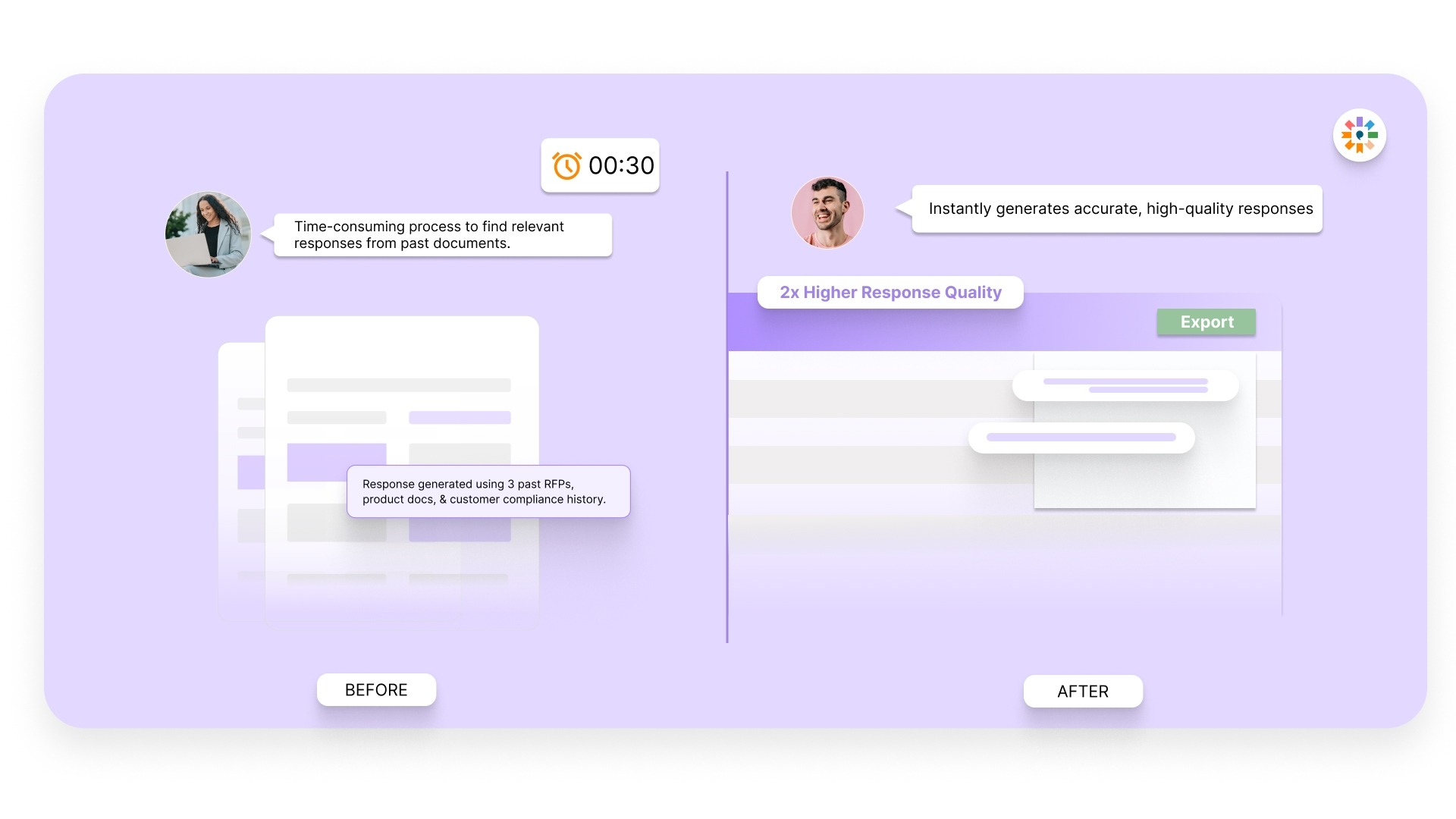
DDQs require precision. Inventive AI generates structured drafts that already align with your past responses and approved content. Your team spends less time fixing answers and more time ensuring they are clear and complete.
2. Context Engine
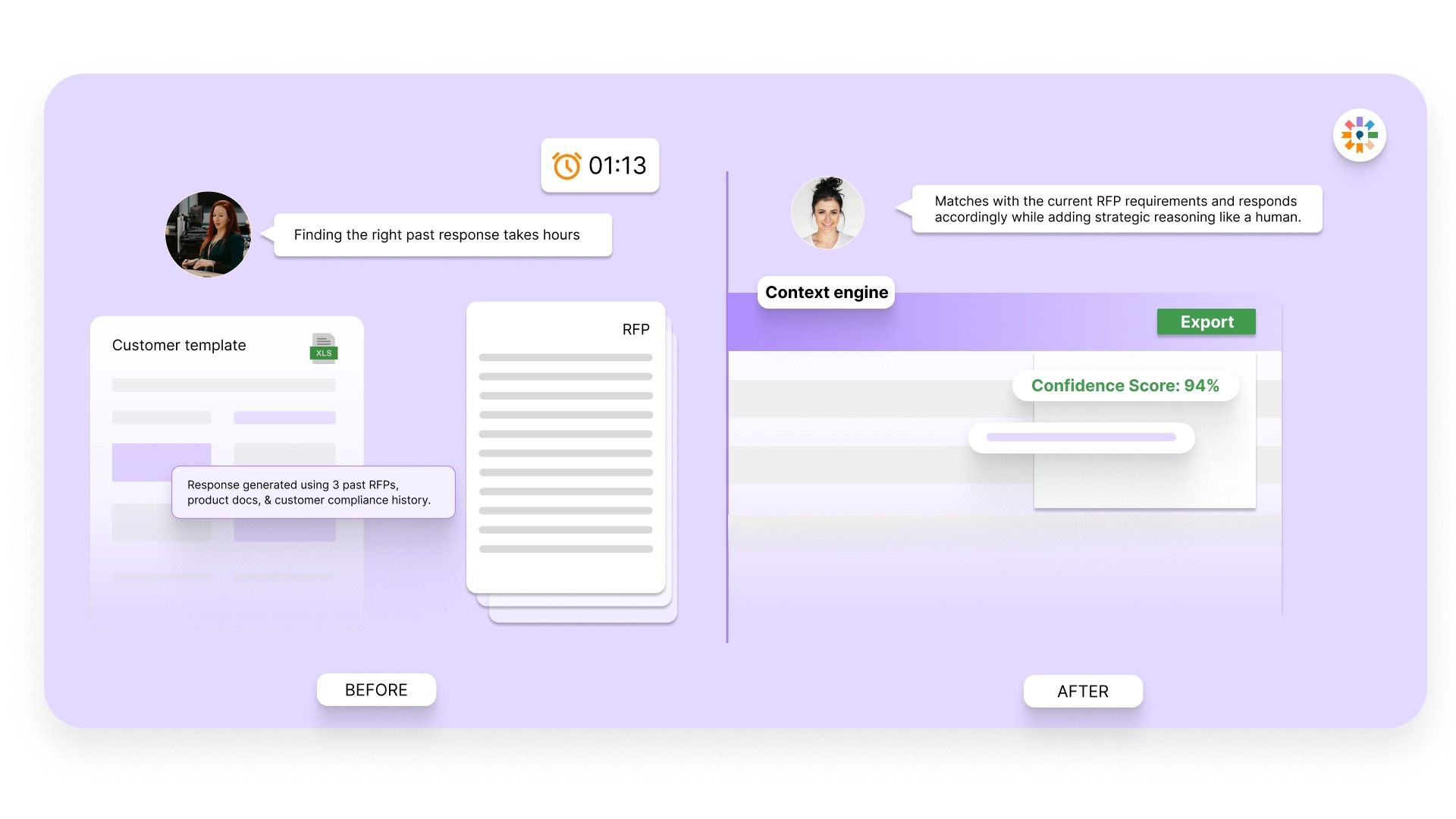
DDQs often have related questions across sections. The platform reads the full questionnaire and understands how answers connect. This keeps responses aligned and avoids contradictions that can raise concerns during review.
3. Conflict detection
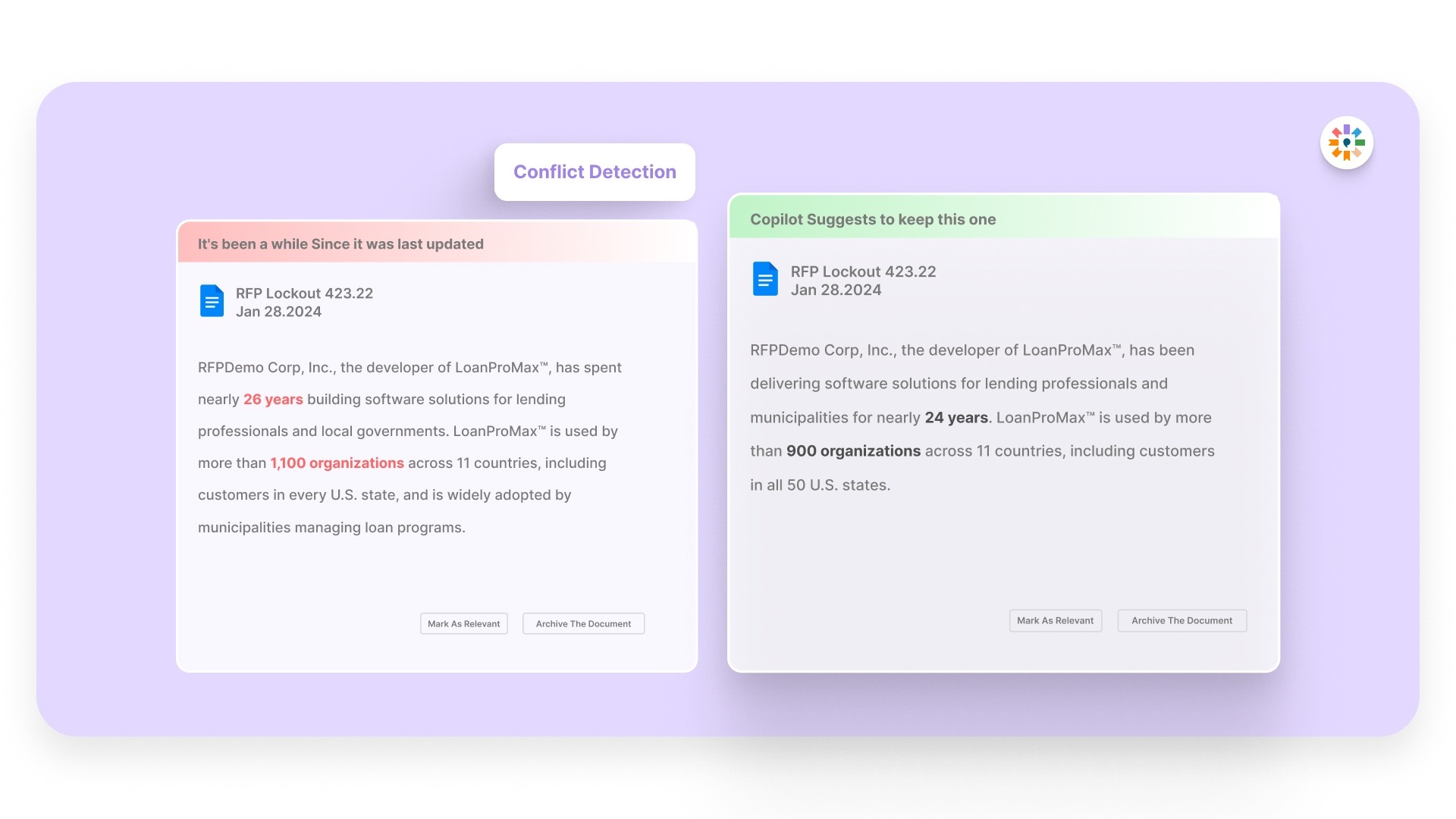
Instead of manually cross-checking responses, the system flags inconsistencies before submission. This reduces last-minute fixes and improves confidence in what you are sending.
4. Outdated content detection
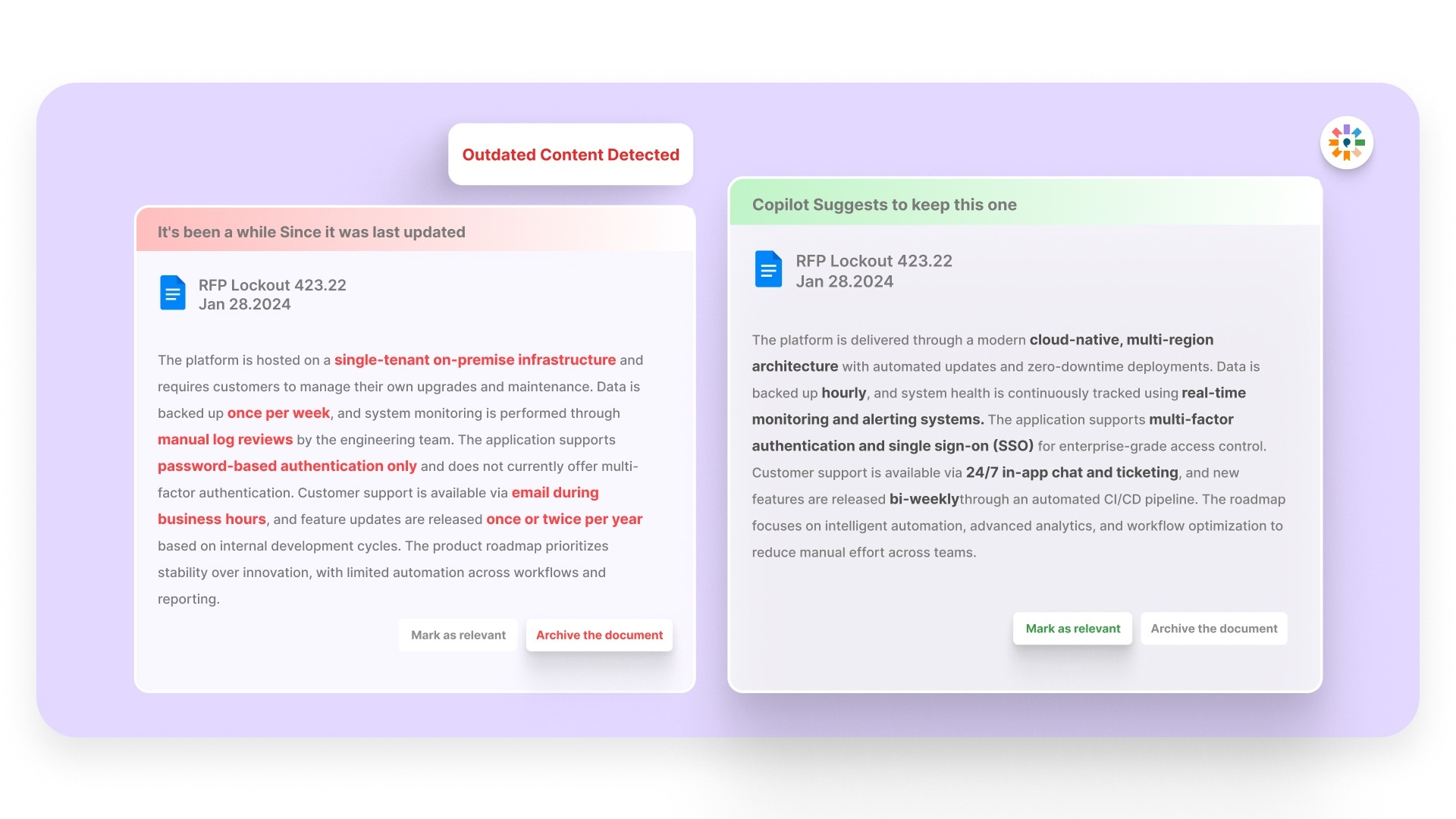
DDQs rely heavily on compliance, policies, and certifications. Inventive AI identifies outdated responses in real time, so your team always uses current and verified information.
5. Narrative-style responses
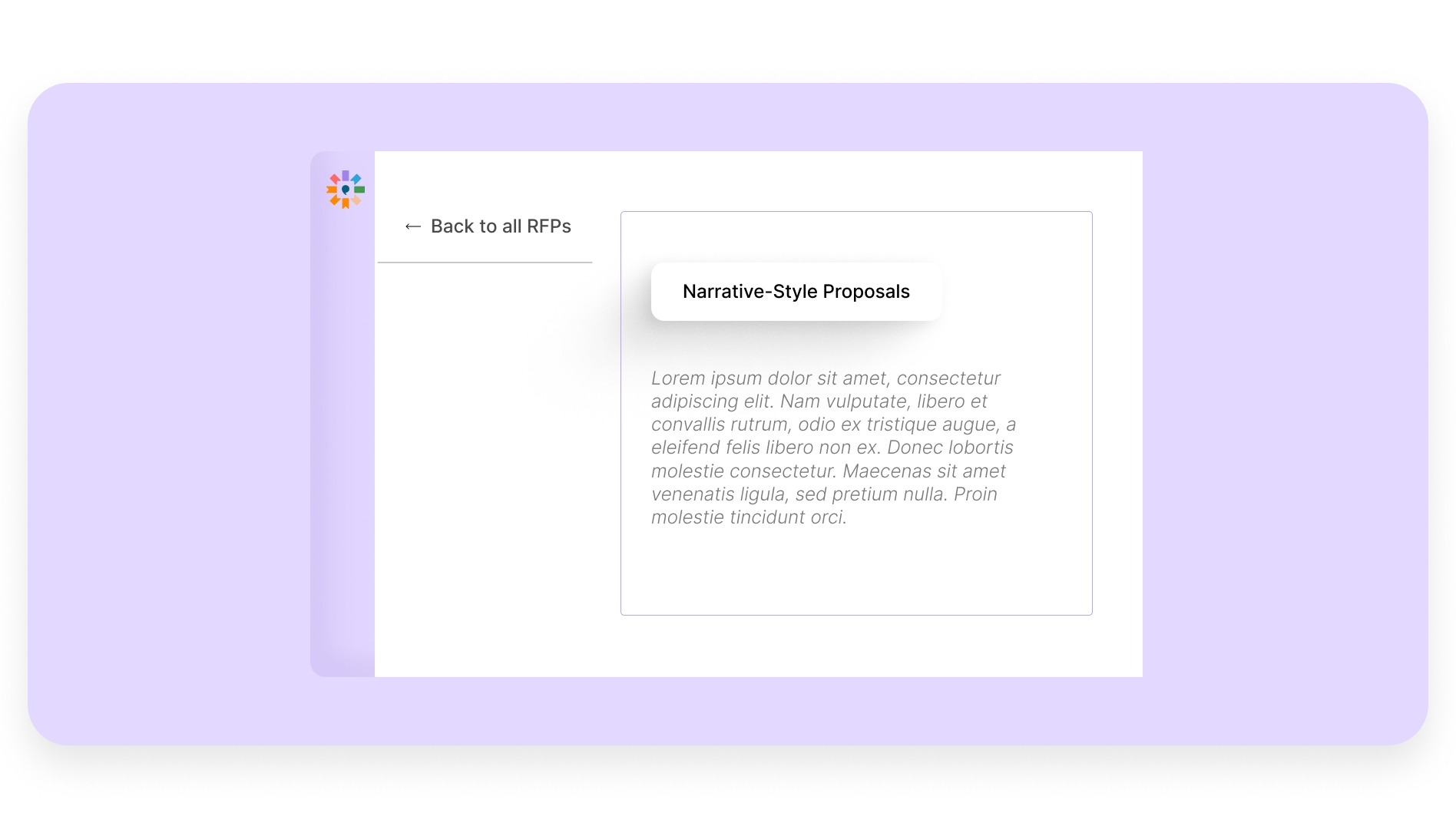
Even in structured questionnaires, clarity matters. Responses are organized in a way that is easy to review and understand, especially for long and complex DDQs.
6. Simple, easy-to-use interface
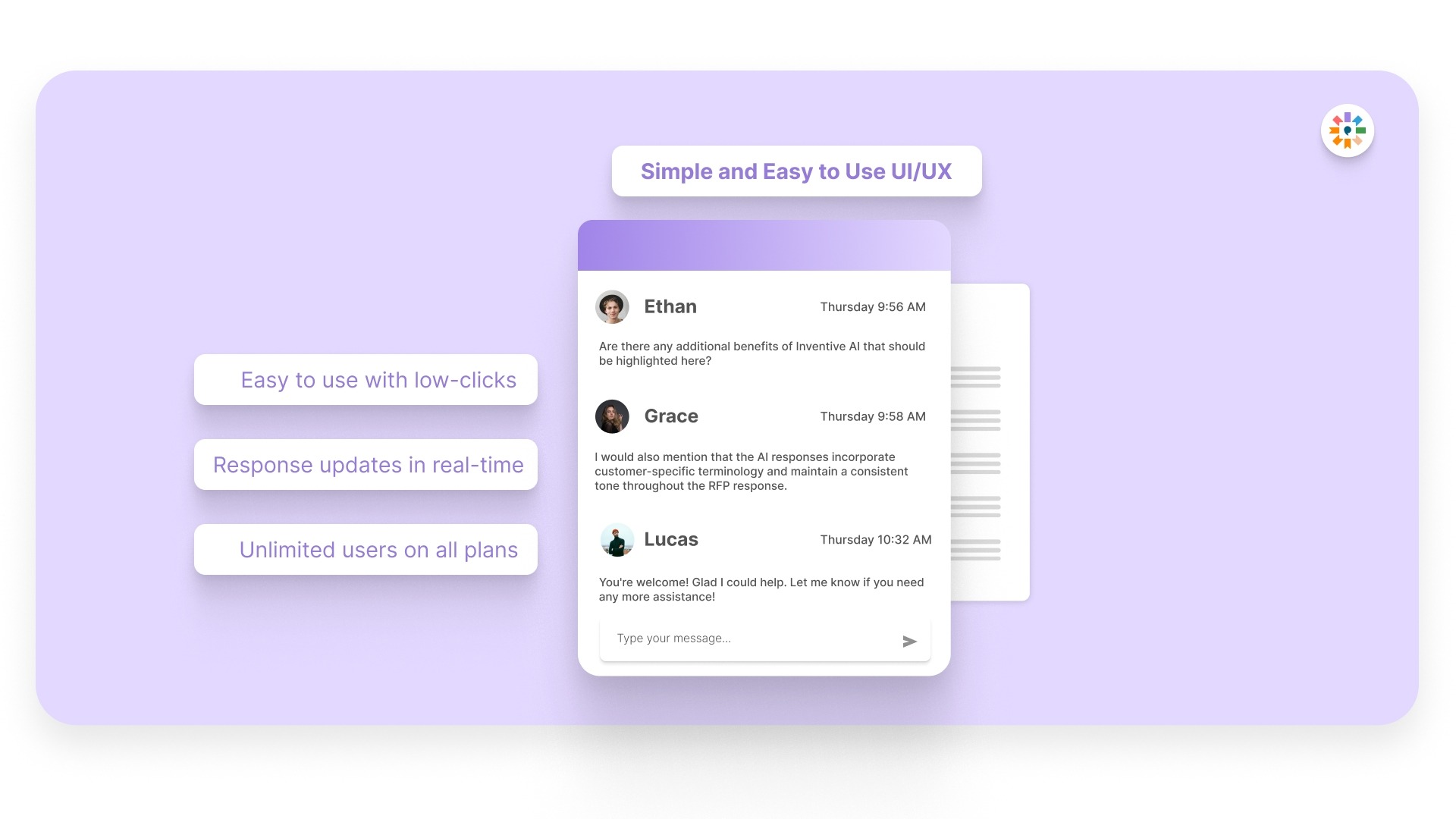
Adoption is critical. The platform is designed so proposal teams, sales teams, and SMEs can start using it quickly without disrupting their workflow.
When these capabilities come together, the process changes. DDQs become more predictable, more consistent, and much easier to manage at scale. With 95% accuracy, 0% hallucination, and significantly faster turnaround, Inventive AI helps you respond with confidence, even under tight deadlines.
Frequently Asked Questions (FAQs)
1. How detailed should your DDQ responses be?
Match the level of detail to the question and the industry. Over-explaining can create confusion, while vague answers raise concerns. Keep responses clear, specific, and directly aligned with what is being asked.
2. When should you update your DDQ content library?
Update it regularly, especially after major changes like new certifications, product updates, or policy revisions. Keeping it current ensures every response reflects accurate information.
3. How do you handle DDQs with tight deadlines?
Prioritize repeatable sections first, assign ownership early, and avoid starting from scratch. Using structured content helps you respond faster without compromising accuracy.
4. How do you ensure your DDQ responses match your brand and messaging?
Use approved, standardized responses and maintain a single source of truth. This keeps tone, language, and positioning consistent across all submissions.

90% Faster RFPs. 50% More Wins. Watch a 2-Minute Demo.

Gaurav Nemade
After witnessing the gap between generic AI models and the high precision required for business proposals, Gaurav co-founded Inventive AI to bring true intelligence to the RFP process. An IIT Roorkee graduate with deep expertise in building Large Language Models (LLMs), he focuses on ensuring product teams spend less time on repetitive technical questionnaires and more time on innovation.
.avif)
Mukund Kumar
Understanding that sales leaders struggle to cut through the hype of generic AI, Mukund focuses on connecting enterprises with the specialized RFP automation they actually need at Inventive AI. An IIT Jodhpur graduate with 3+ years in growth marketing, he uses data-driven strategies to help teams discover the solution to their proposal headaches and scale their revenue operations.