M&A Due Diligence Questions That Shape Your Deal Outcome in 2026

Why do some M&A (merger or acquisition) deals slow down even after everything looks solid on paper? It often comes down to the due diligence questions.
One answer doesn’t match your financials. A contract detail raises follow-up questions. A projection feels too optimistic without enough backing. Small gaps start creating bigger doubts.
For the buyer, these questions are not routine. They are how they validate your entire business before committing capital. Every answer helps them decide how much to trust, how much risk to take, and what the deal is really worth.
If you’ve worked on an M&A DDQ, you know this is where things get real. You are not just sharing information. You are proving that your business holds up under close inspection. That is where most teams lose control.
In this blog, you’ll see the key M&A due diligence questions you will face, what they actually reveal, and how you can respond in a way that builds c onfidence instead of raising concerns.
Key Takeaways
- M&A due diligence questions test how consistent and reliable your business really is, not just your data
- Buyers cross-check financials, contracts, operations, and projections to identify risks and gaps
- Key questions focus on revenue stability, customer risk, contracts, legal exposure, scalability, and projections
- Strong preparation means aligned data across financials, legal, operations, and compliance, not just available documents
- Inventive AI helps you respond faster, reduce inconsistencies, and improve deal outcomes with clearer, more accurate answers
The Ultimate Breakdown of M&A Due Diligence
M&A due diligence is the process by which the buyer verifies everything about your business before moving forward with a deal. On paper, it sounds simple. Share documents, answer questions, move ahead. In reality, it is much deeper.
The buyer is trying to answer one question: Does this business perform the way it claims, and what risks are we taking on?
But they are not relying on one source of truth. They cross-check everything. A number in your financials is compared with contracts. A claim about growth is checked against customer data. An operational statement is tested against how your systems actually work.
That is why they look at:
- Your financial history vs your projections
- Your contracts vs your revenue claims
- Your operations vs your scalability story
- Your compliance vs your stated standards
For you, this means one thing - every answer you give is not just information. It is proof.
Also Read: Due Diligence Questionnaire (DDQ): A Complete Guide with Examples
Top 10 Questions Buyers Ask During M&A Due Diligence
These questions are not just about data. They are about risk, reliability, and future performance.
Q1. “Walk us through your financial performance over the last 3–5 years.”
This is not just about numbers. The buyer is looking for patterns.
They want to know:
- Are your revenues consistent or volatile?
- Are margins improving or shrinking?
- Do your projections actually match past trends?
If something spikes or drops, you need to explain why. Silence creates doubt.
Q2. “How dependent is your business on a few key customers?”
A business that relies heavily on a small number of clients is riskier.
The buyer is asking:
- What happens if one client leaves?
- How predictable is your revenue base?
You should not just share numbers. You should explain how you manage that risk.
Q3. “What contracts could impact future performance?”
This is where many responses fall short.
The buyer is scanning for:
- Termination clauses
- Pricing commitments
- Exclusivity terms
- Renewal risks
You need to highlight what matters, not just upload documents.
Q4. “What legal risks should we be aware of?”
Even small legal issues can slow down or change deal terms.
The buyer wants clarity on:
- Ongoing litigation
- Past disputes
- Compliance gaps
Being vague here creates more follow-ups and slows everything down.
Q5. “How is your company structured and who owns what?”
This question looks simple but carries weight.
The buyer checks:
- Ownership clarity
- Investor rights
- Any hidden complications
Your cap table needs to be clean and easy to understand.
Q6. “Can your operations support growth?”
The buyer is testing your scalability story.
They want to know:
- Can your systems handle increased demand?
- Will costs rise with growth?
- Where are the bottlenecks?
You need to show how your operations hold up under scale.
Q7. “What does customer retention actually look like?”
Retention tells the buyer if your product delivers value.
They look at:
- Churn trends
- Customer lifecycle
- Reasons for attrition
You should explain the story behind the numbers.
Q8. “How do you handle data security and compliance?”
This is non-negotiable in many deals.
The buyer evaluates:
- Data protection practices
- Regulatory compliance
- Risk exposure
You need clear, documented answers, not general statements.
Q9. “What happens if key people leave?”
If your business depends heavily on a few individuals, that is a risk.
The buyer is asking:
- Is knowledge centralized?
- Can others take over roles?
You should show depth in your team and processes.
Q10. “Are your projections realistic?”
The buyer compares your future story with your past reality.
They want to know:
- Are your assumptions backed by data?
- Are growth expectations realistic?
Overpromising here can hurt credibility.
These questions shape how the buyer evaluates risk, trust, and ultimately, your valuation.
Your Complete M&A DDQ Checklist: What Strong Due Diligence Preparation Actually Looks Like
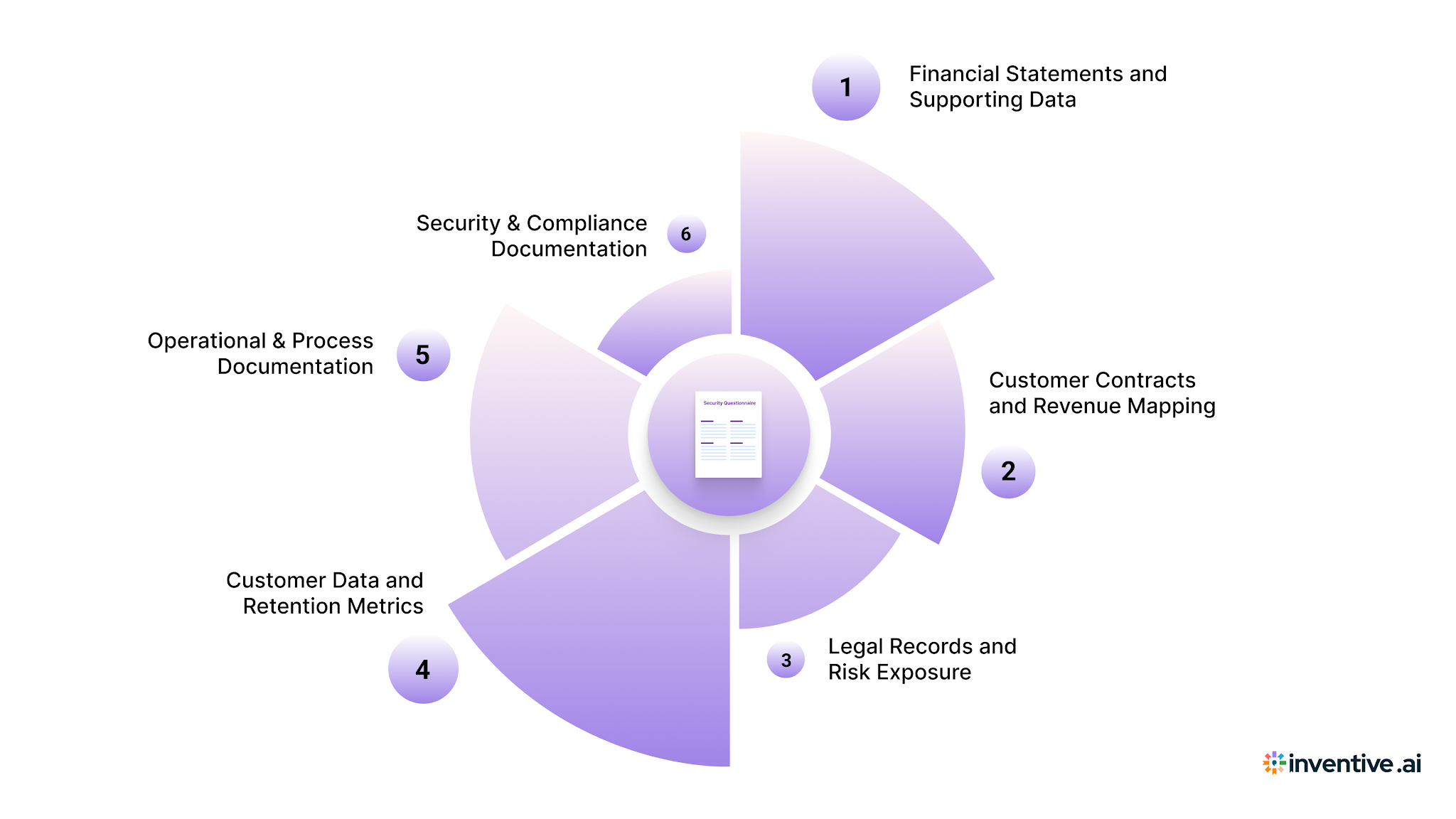
Before you start responding, your information should not just be available. It should be consistent, validated, and easy to explain. Most delays during due diligence happen when data exists but does not align across sources.
Here’s what the buyer expects to see in each area:
1. Financial Statements and Supporting Data
You need audited or clean financial statements that tie back to your reported metrics. Revenue, margins, and cash flow should match across reports, dashboards, and projections. If there are fluctuations, you should be able to explain them clearly with supporting data.
2. Customer Contracts and Revenue Mapping
Your contracts should directly support your revenue claims. Key terms like pricing, renewal cycles, and termination clauses should be easy to reference. You should also be able to map major customers to revenue contribution without gaps.
3. Legal Records and Risk Exposure
All legal documents should be current and complete. This includes active agreements, past disputes, and any ongoing litigation. The buyer is not just checking existence. They are assessing impact and exposure.
4. Customer Data and Retention Metrics
Your churn, retention, and customer lifecycle data should be clearly defined and consistent across reports. You should be able to explain trends, not just present numbers.
5. Operational and Process Documentation
You need to show how your business actually runs. This includes workflows, systems, and dependencies across teams. The buyer is looking for clarity on how scalable and repeatable your operations are.
6. Security and Compliance Documentation
Policies, certifications, and controls should be documented and up to date. You should be able to demonstrate how data is handled, protected, and monitored across your systems.
If these areas do not align, the buyer will spot it quickly. And once inconsistencies show up, every answer that follows is questioned more closely.
Also Read: Due Diligence Questionnaire Template for Finance and Banking
What Weak Responses Do to Deal Terms?
Due diligence is not just a validation step. It shapes how the buyer views your business and what they are willing to pay for it.
Every response you give feeds into one thing: risk.
If something feels unclear, inconsistent, or unsupported, the buyer does not ignore it. They adjust their assumptions.
If your responses are unclear or inconsistent:
- The buyer may reduce the valuation to account for perceived risk.
- The deal may take longer due to repeated follow-ups and deeper reviews.
- Additional conditions, protections, or holdbacks may be introduced.
- Confidence in your projections and claims starts to weaken.
If your responses are clear and aligned:
- You build trust faster and reduce friction during evaluation.
- You limit back-and-forth and keep the process moving forward.
- You support your valuation with consistent, defensible data.
- The buyer sees your business as lower risk and easier to integrate.
Due diligence is where the buyer decides how much they believe your story. And once doubt enters the process, it is difficult to reverse. This is where your responses stop being information and start shaping the outcome of the deal.
Also Read: Operational Due Diligence Checklist: What RFP Vendors Must Get Right
The 5 Core Areas Buyers Evaluate During M&A Due Diligence
Buyers do not review your business in isolation. They assess multiple areas at the same time and connect findings across them. A gap in one area often raises questions in another.
Here’s how each type of due diligence is evaluated and what you need to be prepared for:
1. Financial Due Diligence
This focuses on how your business performs and how predictable that performance is. The buyer reviews revenue trends, margins, cash flow, and working capital. They also compare your financial statements with projections and forecasts.
They are not just checking accuracy. They are testing whether your numbers tell a consistent and believable story.
2. Legal Due Diligence
This examines your contractual obligations and potential liabilities. The buyer reviews customer contracts, vendor agreements, intellectual property, and any ongoing or past disputes. They look for clauses or risks that could affect future operations, costs, or ownership rights.
3. Operational Due Diligence
This evaluates how your business actually runs day to day. The buyer looks at workflows, systems, dependencies, and team structure. They want to understand how repeatable and scalable your operations are, and where bottlenecks may appear as you grow.
4. Commercial Due Diligence
This focuses on your position in the market and your growth potential. The buyer evaluates your customer base, pricing strategy, competition, and overall market dynamics. They are assessing whether your growth story is realistic and supported by market conditions.
5. Technical Due Diligence
This assesses your product, infrastructure, and data environment. The buyer reviews system architecture, integrations, security practices, and data handling processes. They want to understand how reliable your technology is and what risks or limitations exist.
Each of these areas connects to a different type of risk. And the buyer is not reviewing them separately. They are checking if everything aligns across your business. When your responses are consistent across all five areas, your business becomes easier to evaluate and easier to trust.
The Due Diligence Timeline No One Warns You About
Due diligence may look like a clean sequence on paper. In reality, it feels more like a loop of requests, responses, and follow-ups.
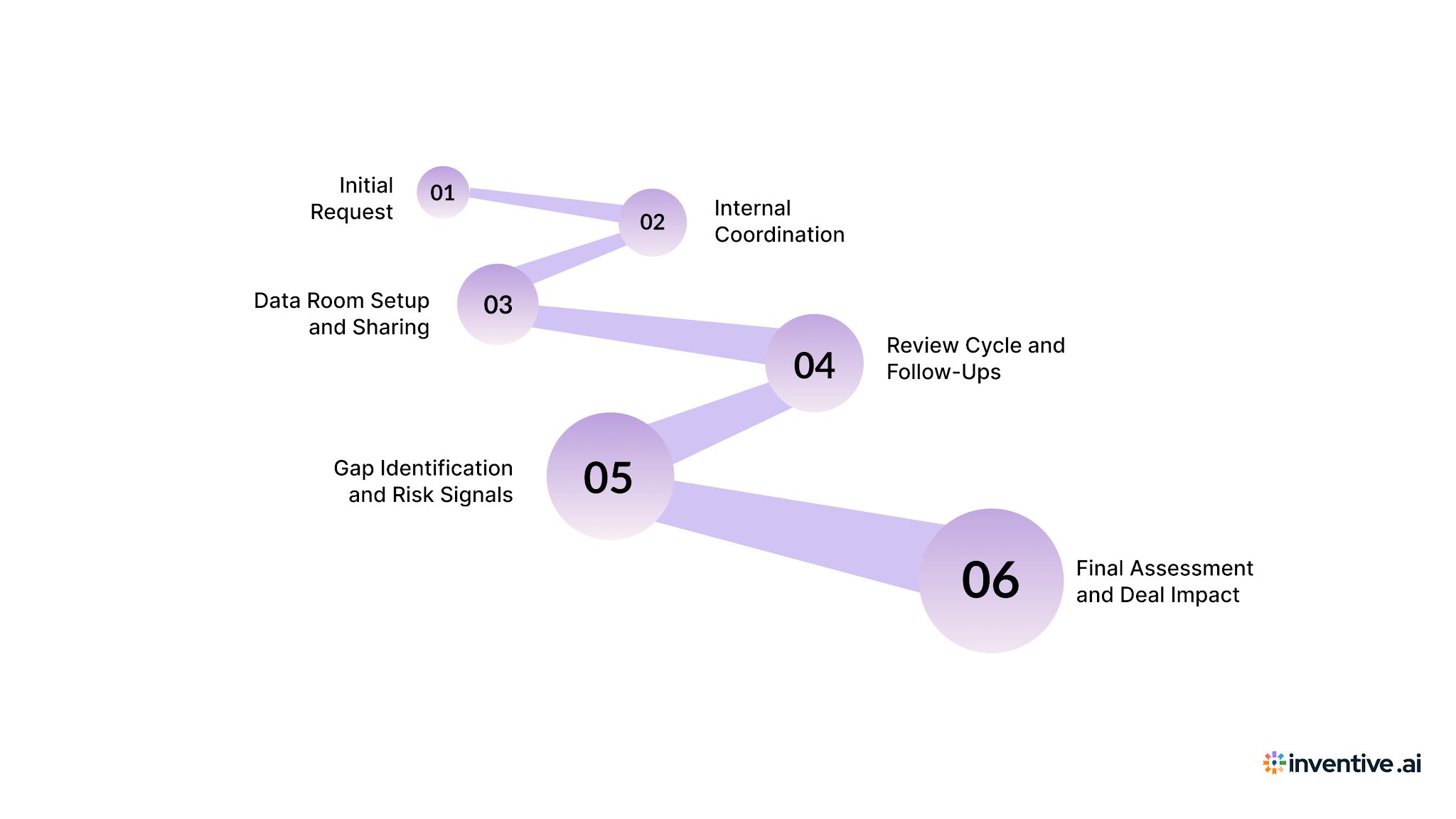
Still, most deals follow a pattern. Knowing what happens at each step helps you stay in control instead of reacting late.
1. Initial Request: This is where everything begins.
The buyer shares a due diligence questionnaire or a detailed request list. It can range from a few documents to hundreds of questions across teams.
At this stage, the goal is not to answer immediately. It is to understand the scope and identify what is being evaluated.
2. Internal Coordination: Now the real work starts.
You pull in inputs from finance, legal, product, and operations. Each team owns a piece of the response, but they are not always aligned by default.
Your role here is to bring clarity, assign ownership, and set expectations early.
3. Data Room Setup and Sharing: Your information now becomes visible to the buyer.
Documents are uploaded to a virtual data room, organized by category.
If your data is scattered or inconsistent here, it creates friction early and leads to more questions later.
4. Review Cycle and Follow-Ups: This is where due diligence becomes iterative.
The buyer reviews your responses, compares them across sections, and starts asking deeper questions.
Some questions come back reworded. Some require more detail. Others test assumptions you made earlier. This is where consistency starts to matter more than speed.
5. Gap Identification and Risk Signals: The buyer connects the dots
They look for mismatches between financials, contracts, operations, and projections.
Even small inconsistencies can raise concerns and trigger deeper reviews. What you thought was a minor gap can become a major discussion point here.
6. Final Assessment and Deal Impact: This is where everything translates into decisions
The buyer uses their findings to adjust valuation, introduce conditions, or renegotiate terms.
Strong, consistent responses support your position. Gaps or confusion weaken it.
Due diligence does not move in a straight line. It moves based on how clearly and consistently you respond at each step.
Your role is to keep control across the entire process, not just respond to what comes next.
Also Read: Understanding the Importance of Information Security Due Diligence Questionnaire
When Due Diligence Gets Risky, Inventive AI Keeps Your Responses Deal-Ready
M&A due diligence requests can get messy fast. Different teams respond, information gets scattered, and inconsistencies start showing up.
Inventive AI helps you bring clarity and consistency into your responses, even under tight timelines.
1. 2× Higher Quality Responses
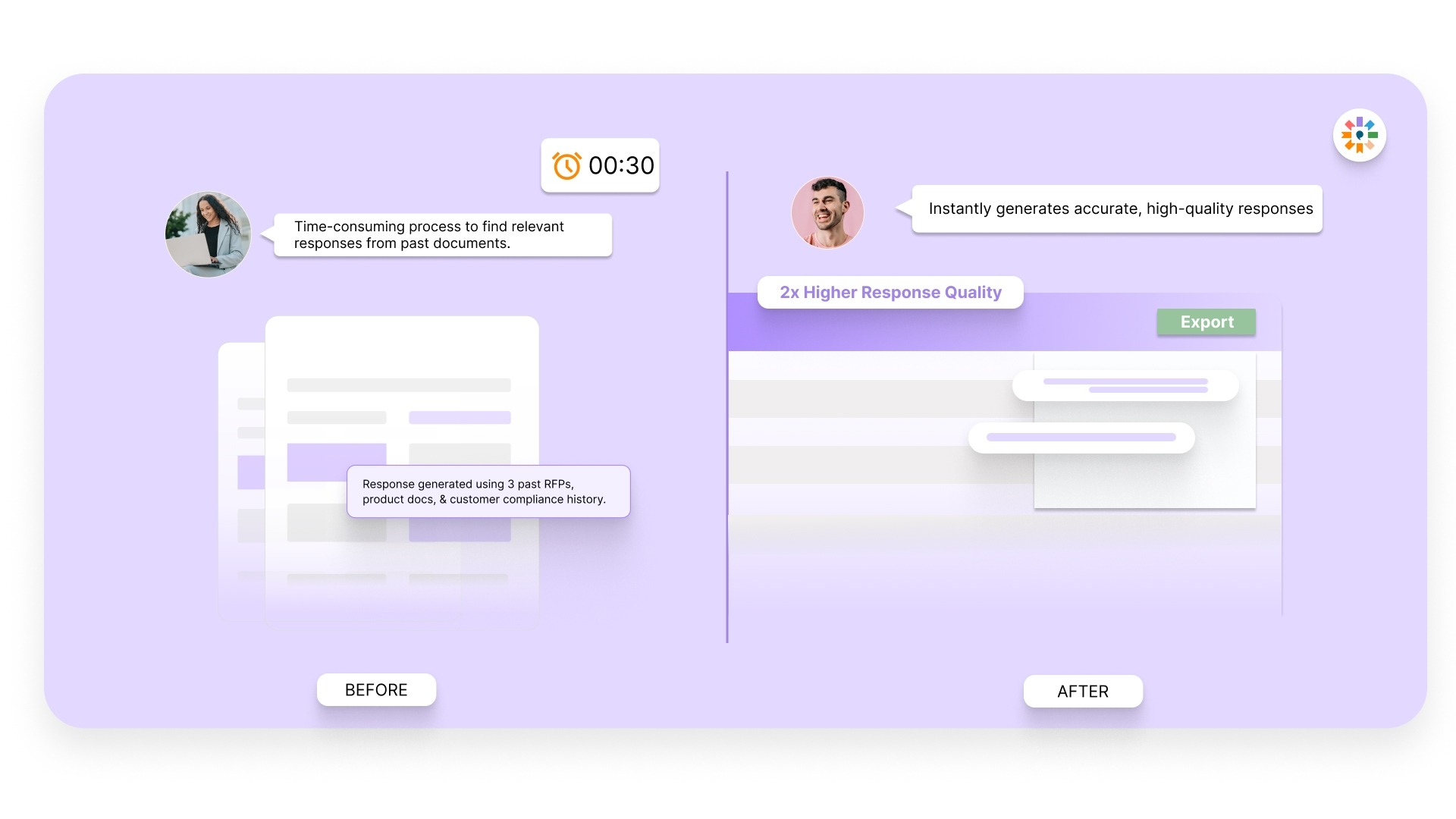
Inventive AI helps you generate structured responses using your past data, documents, and knowledge sources. This keeps your answers consistent across financial, legal, and operational sections. You reduce variation across contributors and avoid contradictions that can weaken buyer confidence.
2. Context Engine
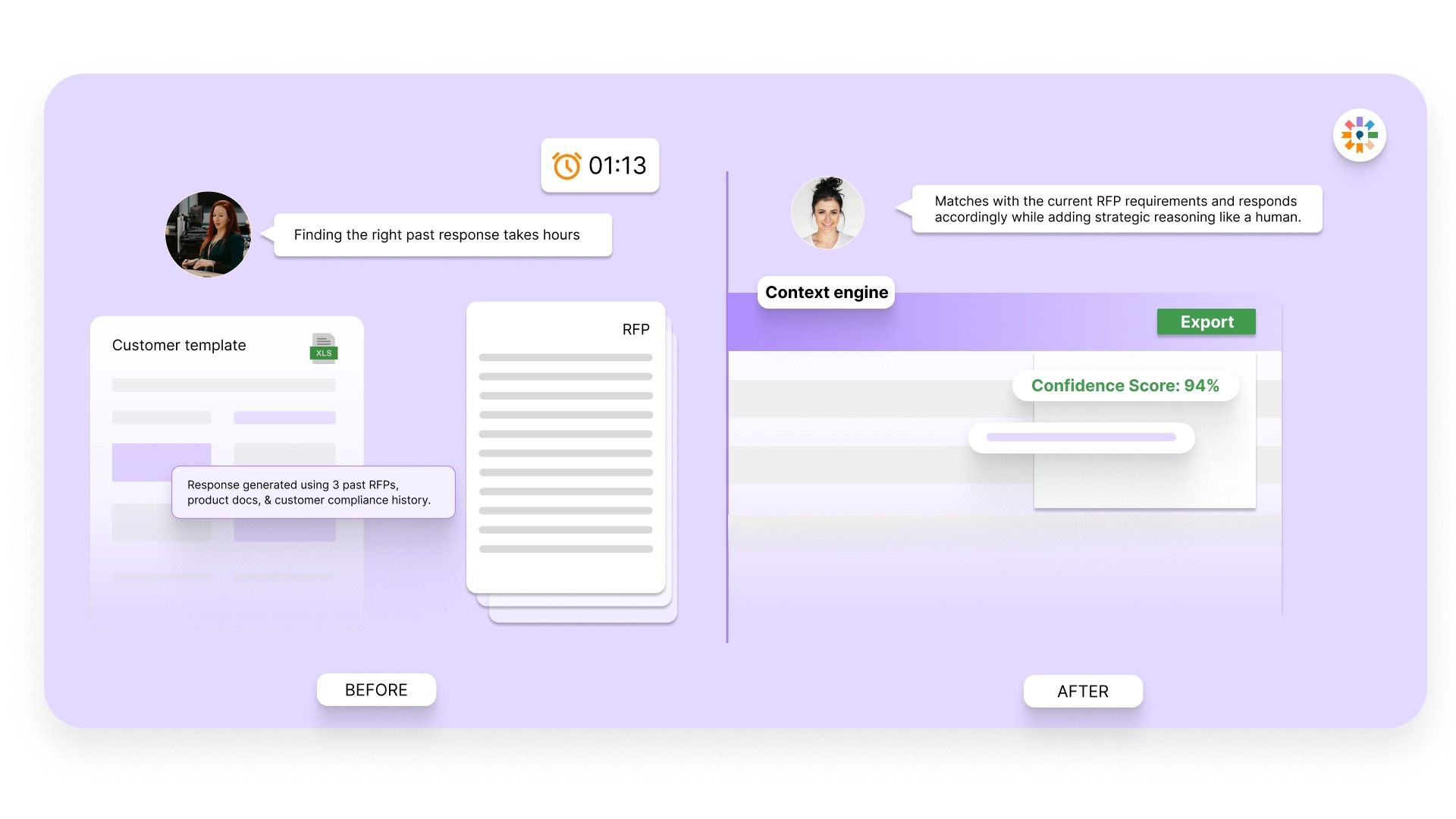
Inventive AI’s Context Engine connects your past responses, internal documents, and systems with current DDQ questions. Instead of searching across tools, you get relevant, context-aware answers instantly. This helps you respond faster while keeping your narrative aligned across sections.
3. Conflict Detection
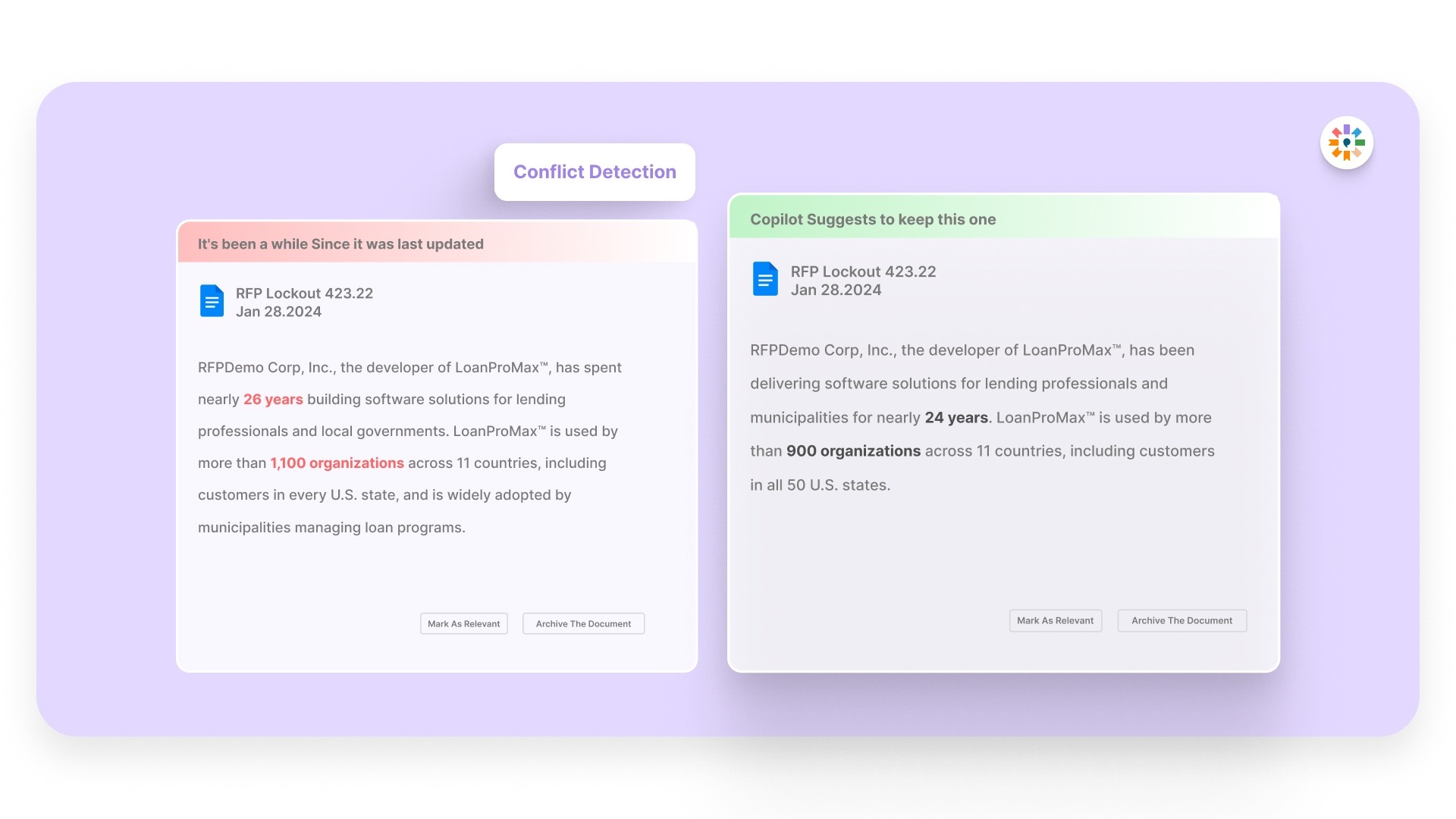
Inventive AI identifies conflicting responses across different parts of your DDQ before submission. If financial data, contract terms, or operational claims do not match, it flags them early. This helps you resolve inconsistencies before they become concerns during buyer review.
4. Outdated Content Detection
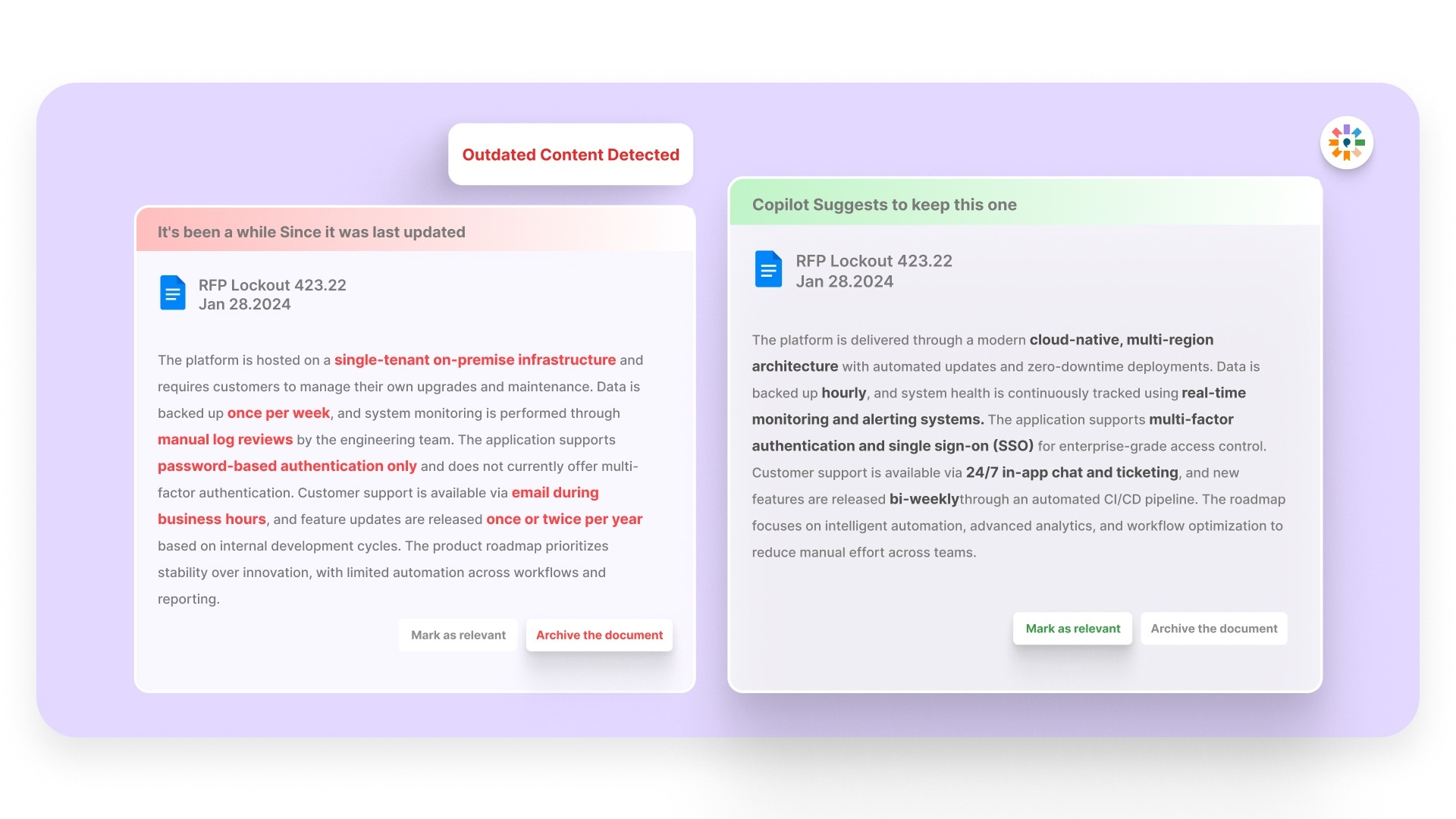
Inventive AI flags content that no longer reflects your current business, including outdated financials, contracts, or operational details. This helps you avoid sharing information that could create confusion or reduce trust during due diligence.
5. Narrative Style Proposals
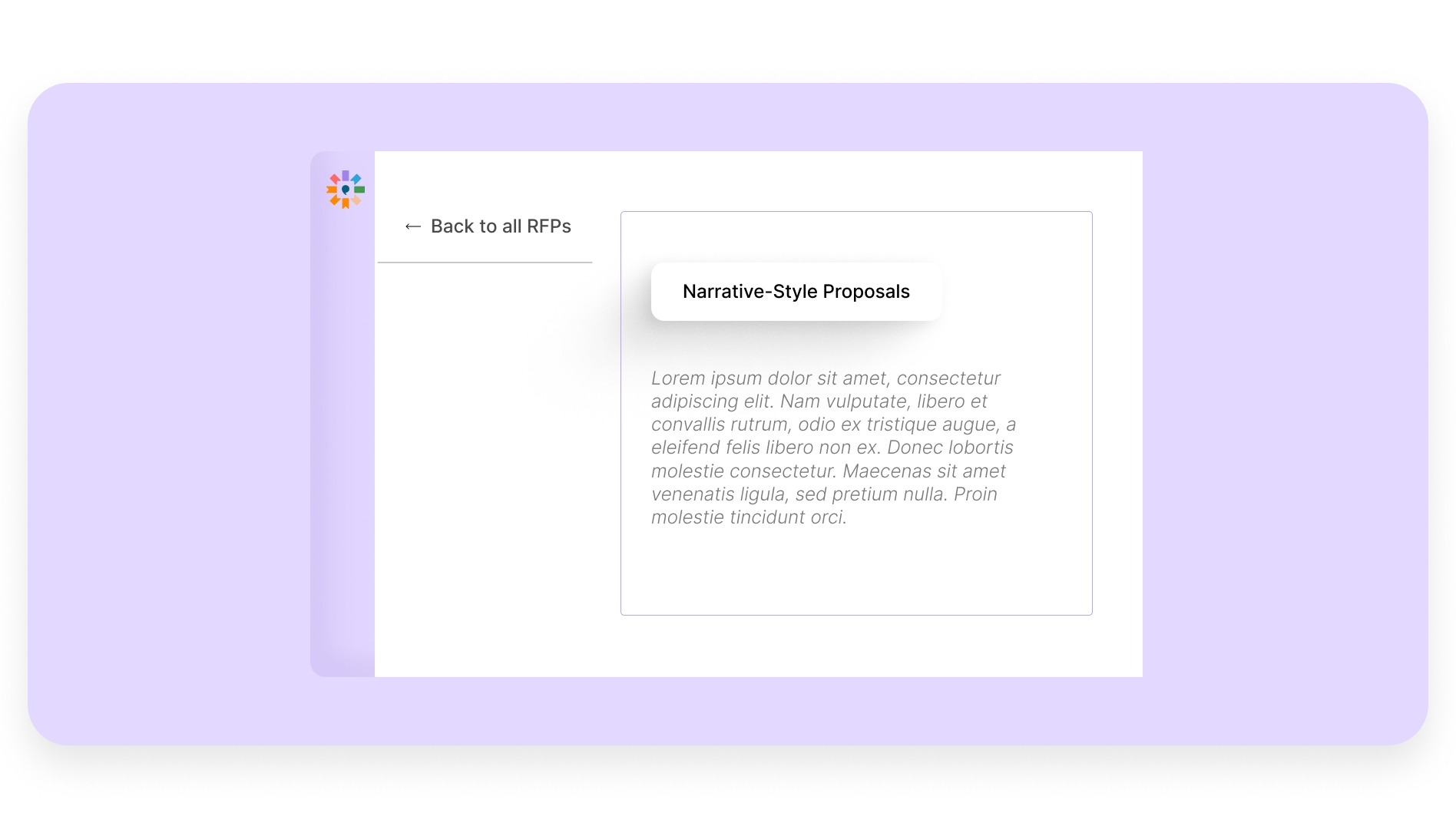
Inventive AI converts fragmented inputs from multiple teams into clear, cohesive responses. Instead of disconnected answers, your DDQ reads as a consistent story. This makes it easier for the buyer to understand your business and reduces follow-up questions.
6. Simple, Easy-to-Use Interface
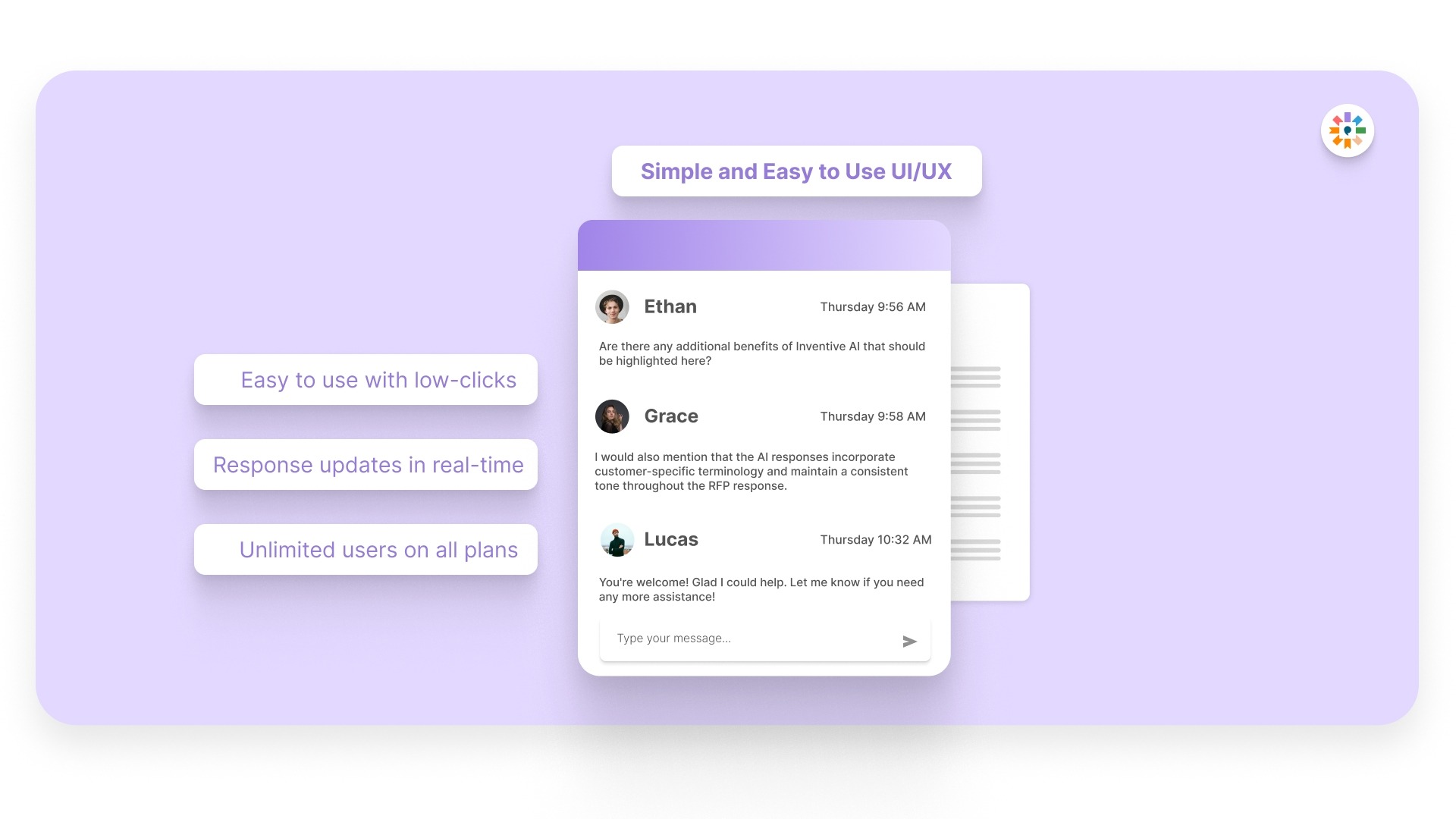
Inventive AI keeps all contributors aligned in one place, with clear visibility into responses and updates. This reduces back-and-forth, avoids duplicate work, and helps you stay in control throughout the due diligence process.
With AI-powered RFP response software, Inventive AI helps you respond up to 10x faster with 95% accuracy, while improving deal outcomes.
Frequently Asked Questions (FAQs)
1. How can you prepare for due diligence before it starts?
You can organize key documents, review past data, and align responses across teams. It also helps to validate that financials, contracts, and operational data tell the same story.
Preparation reduces delays, limits follow-ups, and helps you respond with more confidence.
2. How detailed should your responses be in due diligence?
Your answers should be specific, backed by data, and consistent across sections. You should also be ready to explain the context behind the numbers, not just present them.
Vague or high-level responses often lead to more questions and slow down the process.
3. What slows down the due diligence process the most?
Delays usually come from missing data, inconsistent answers, or unclear documentation. It also happens when different teams provide conflicting inputs or incomplete responses. When information does not align, the buyer asks more questions and reviews your data more closely.
4. How do buyers identify red flags during due diligence?
Buyers look for inconsistencies, unclear explanations, and gaps in documentation. They often compare information across financials, contracts, and operations to spot mismatches. Even small inconsistencies can raise concerns and lead to deeper scrutiny or additional conditions.