
The Ultimate IAM RFP Template & Response Guide for Vendors (2026)
.png)
Have you noticed how IAM RFPs often include dozens of security and compliance questions before the buyer even asks about your solution? One RFP might ask for your identity governance model, another may request detailed explanations of role-based access controls.
If you respond to Identity and Access Management (IAM) RFPs regularly, you already know the challenge. The technical answers exist across security documents, product documentation, and past proposals. Yet each new RFP forces you to reorganize that same information again just to match the buyer’s format.
This is where an IAM RFP template and a ready-to-use response template can make a real difference. They help you organize IAM capabilities, security answers, and compliance details in a consistent format so you can respond faster when a new RFP arrives.
In this guide, you’ll learn what an IAM RFP template typically includes and how vendors can respond using a response template. We’ll also explore how AI-powered RFP software can help prepare accurate IAM responses much faster.
IAM RFP Template: What Buyers Typically Send
An IAM RFP template helps the buyer create a clear and complete request for proposal for Identity and Access Management solutions. It outlines the key sections that vendors should respond to, making it easier to gather consistent and comparable proposals.
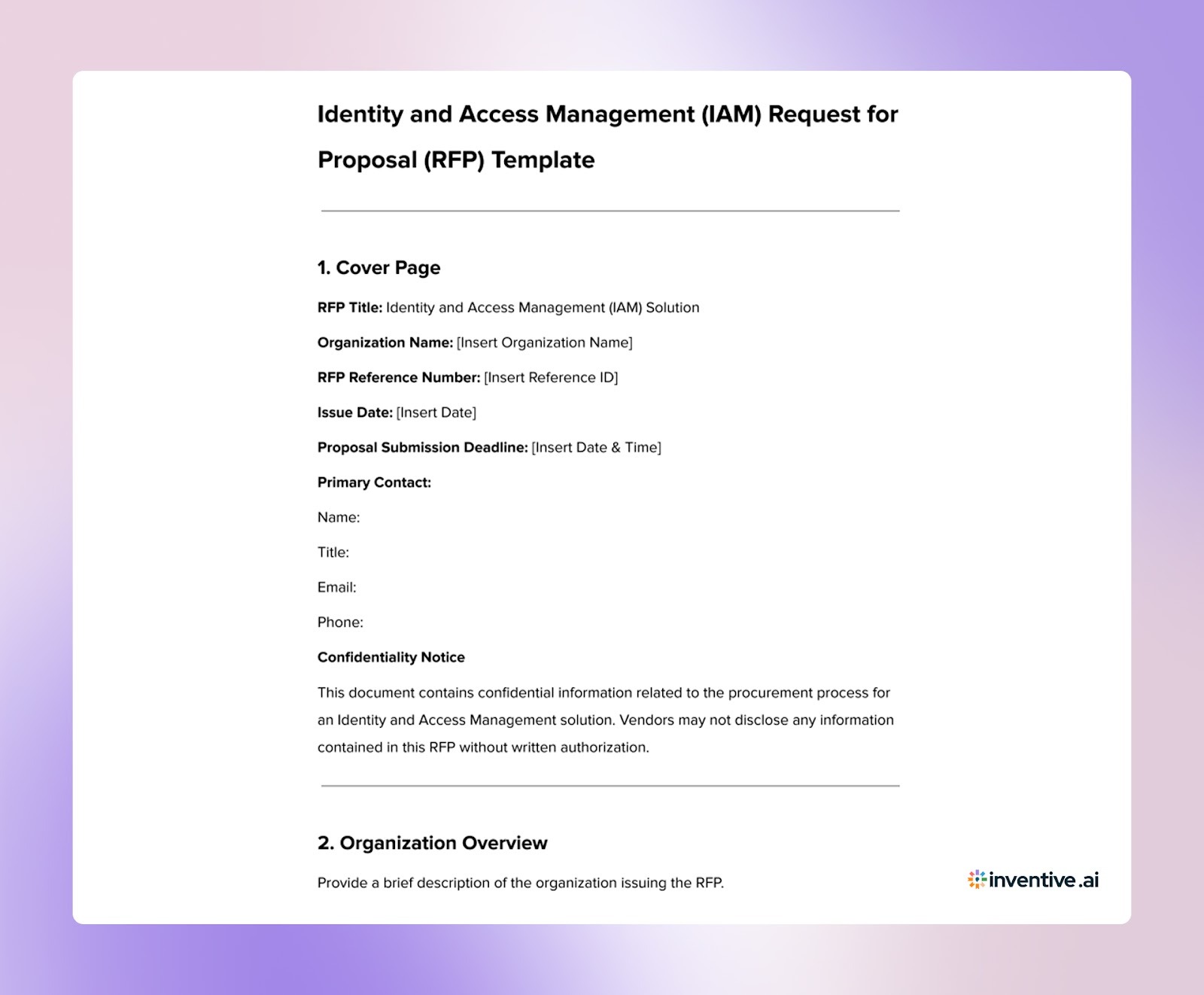

Inside an IAM RFP Template: Common Sections Buyers Usually Send
The IAM RFP includes several important sections that help the buyer communicate their needs clearly. While each RFP may have slight variations, here are the most common components:
1. Company Overview: A section where the vendor introduces their organization, IAM expertise, certifications, and experience with similar deployments.
2. Scope of Work: Defines the IAM capabilities the buyer is looking for, such as identity lifecycle management, authentication methods, authorization policies, and identity governance.
3. Methodology & Implementation Approach: Vendors explain how they plan to deploy the IAM solution, including onboarding strategy, migration plans, and rollout phases.
4. Security & Compliance Requirements: Details the regulatory standards vendors must support, such as SOC 2, GDPR, HIPAA, FedRAMP, or ISO 27001, along with security controls expected from the IAM platform.
5. Technical Architecture & Integrations: Describes the systems the IAM solution must integrate with, such as Active Directory, cloud platforms, HR systems, SaaS applications, and identity providers.
6. User Access & Identity Governance Features: Outlines requirements related to role-based access control (RBAC), privileged access management, access reviews, and identity lifecycle automation.
7. Pricing Structure: Vendors provide detailed pricing for licensing, implementation, integrations, and ongoing maintenance.
8. Implementation Timeline: A timeline outlining deployment phases, testing, training, and production rollout.
9. Support & Service Levels: Includes expectations for vendor support, service availability, response times, and escalation procedures.
Using an IAM RFP template helps buyers collect consistent information from vendors and compare proposals more easily.
Also Read: How to Write a Website Design RFP in 2026? Template + Best Practices
A Practical IAM RFP Response Template for Vendors
An IAM RFP response template is a ready-made framework that vendors use to efficiently reply to an RFP. By using a response template, vendors avoid starting from scratch each time an RFP arrives. They can quickly fill standard sections and focus on customizing responses based on the buyer’s specific needs.
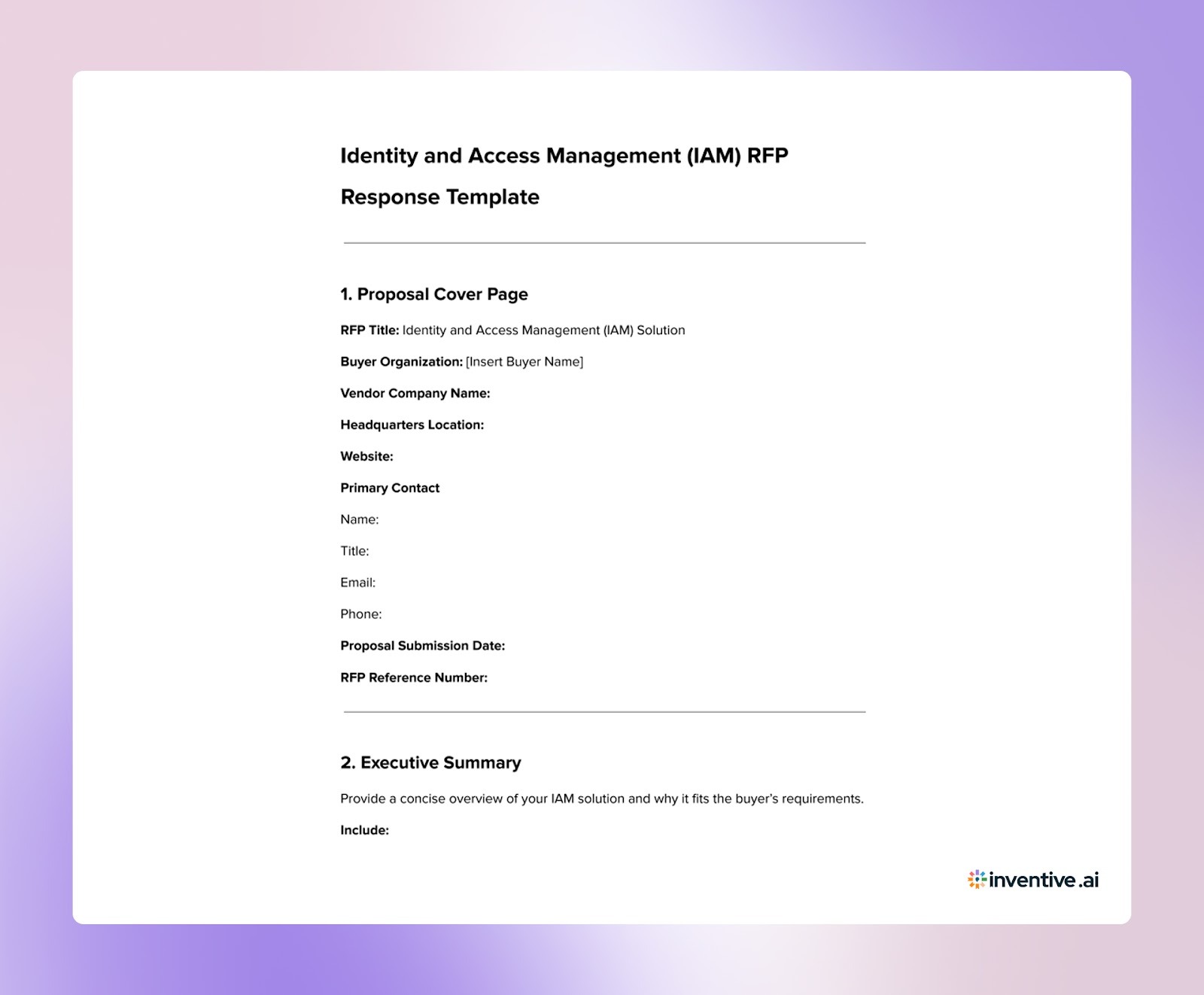

Organizations That Commonly Send IAM RFPs
An IAM RFP is typically issued by organizations that require powerful identity and access management solutions. These organizations are typically looking for vendors who can handle sensitive data, meet compliance requirements, and improve security processes.
Common senders of IAM RFPs include:
1. Large Enterprises: Businesses with complex systems and multiple users who need scalable IAM solutions.
2. Government Agencies: Agencies that require strict compliance with security and privacy regulations.
3. Healthcare Organizations: Hospitals or healthcare providers looking to safeguard patient data while ensuring proper access control.
4. Financial Institutions: Banks and financial organizations that need to meet industry standards for data security and access control.
By issuing an RFP, these organizations aim to find a trusted vendor who can deliver secure, compliant IAM solutions.
5 Practical Tips to Improve IAM RFP Responses
Customizing your IAM RFP response template helps you align your proposal with the buyer’s requirements. Here are a few practical ways to customize your response template:
1. Map Your Answers to the Buyer’s Questions: Adjust the headings and sections in your template to match the order of the buyer’s RFP. This makes it easier for the evaluation team to review your responses.
2. Add IAM Capabilities Relevant to the Buyer’s Environment: Highlight features that align with the buyer’s infrastructure, such as SSO integrations, identity governance, role-based access control, or privileged access management.
3. Include Security and Compliance Details Requested in the RFP: If the buyer requires certifications like SOC 2, ISO 27001, HIPAA, or FedRAMP, include those details clearly in the appropriate sections of your response template.
4. Adjust Implementation and Deployment Sections: Customize the rollout plan based on the buyer’s organization size, number of users, and integration requirements.
5. Provide Pricing in the Format Requested by the Buyer: Many RFPs specify how pricing should be presented. Update your template so the pricing section matches the buyer’s preferred format.
By customizing your response template for each IAM RFP, you make it easier for buyers to evaluate your proposal and understand how your solution fits their requirements.
Key Benefits of Using IAM Response Templates
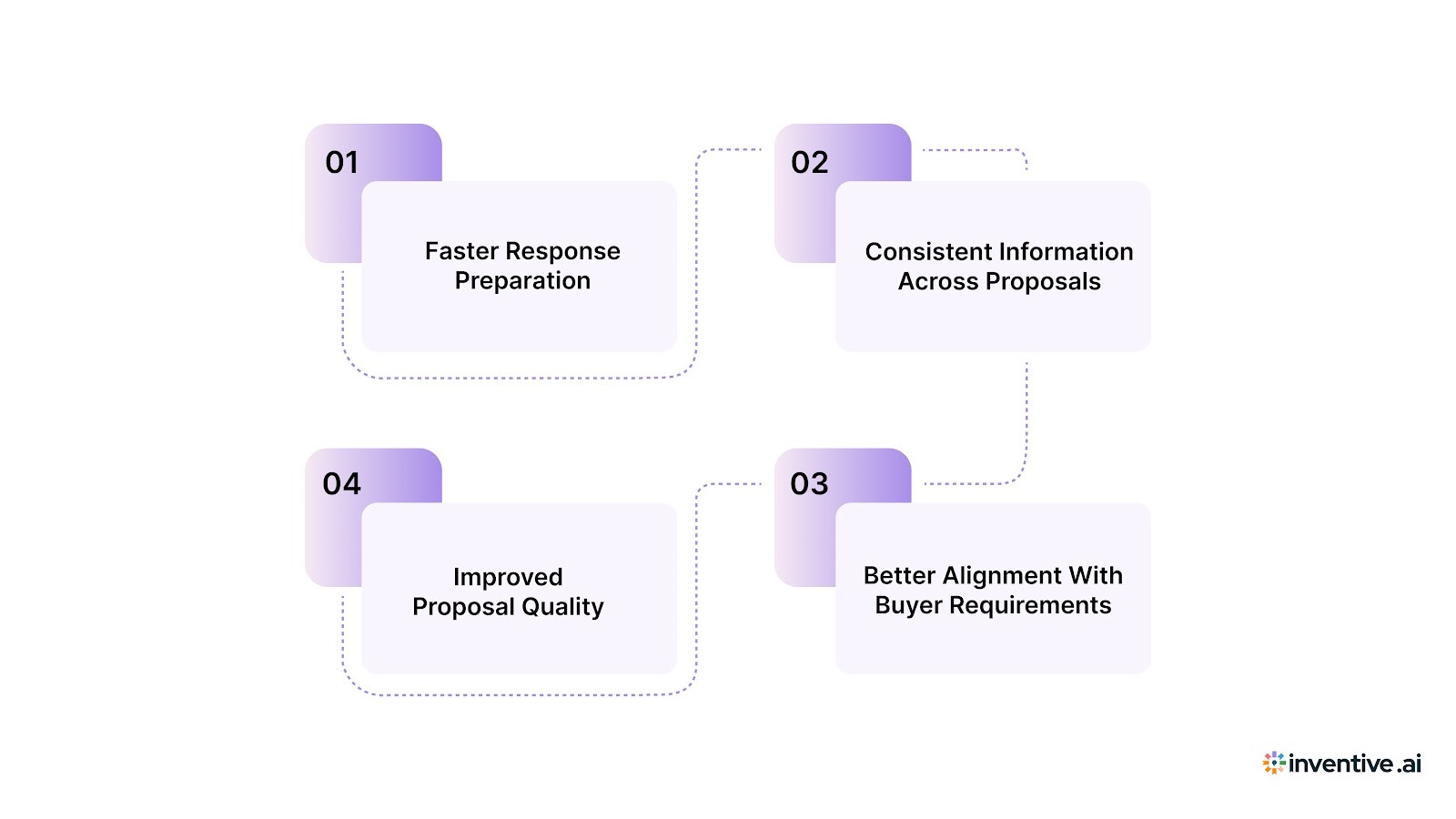
A well-prepared IAM RFP response template helps vendors present their IAM capabilities clearly while reducing the effort required for each new proposal. Here are some key benefits:
1. Faster Response Preparation: A response template allows you to reuse standard IAM content such as company background, security controls, integration capabilities, and compliance certifications.
2. Consistent Information Across Proposals: Using the same template helps maintain consistent messaging across different RFP responses, especially for technical IAM capabilities like authentication methods, access governance, and identity lifecycle management.
3. Better Alignment With Buyer Requirements: Templates make it easier to map your responses directly to the sections and questions outlined in the buyer’s RFP.
4. Improved Proposal Quality: A well-prepared template helps you include all the key information buyers expect when evaluating IAM vendors, reducing the risk of missing important details.
An IAM RFP response template helps you prepare proposals faster while presenting your IAM capabilities in a clear and consistent format.
Using Inventive AI to Respond to IAM RFPs Faster
Inventive AI can transform the way you respond to IAM RFP templates, making the process faster and more accurate:
1. 2× Higher Quality Responses
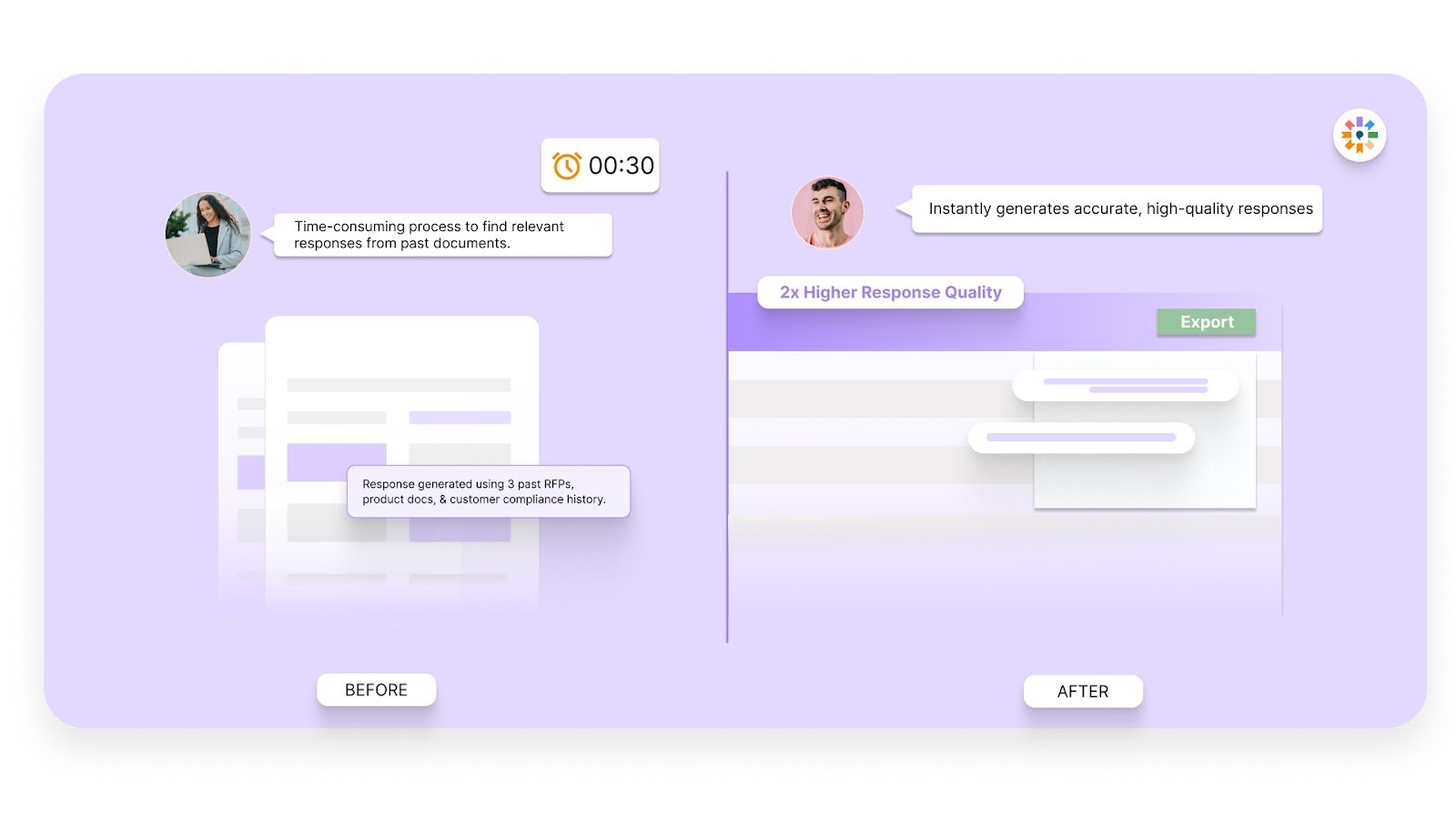
Inventive AI helps improve the quality of IAM RFP responses by pulling verified information from your knowledge sources. This allows your team to produce clearer and more complete responses that directly address the buyer’s requirements.
2. Context Engine
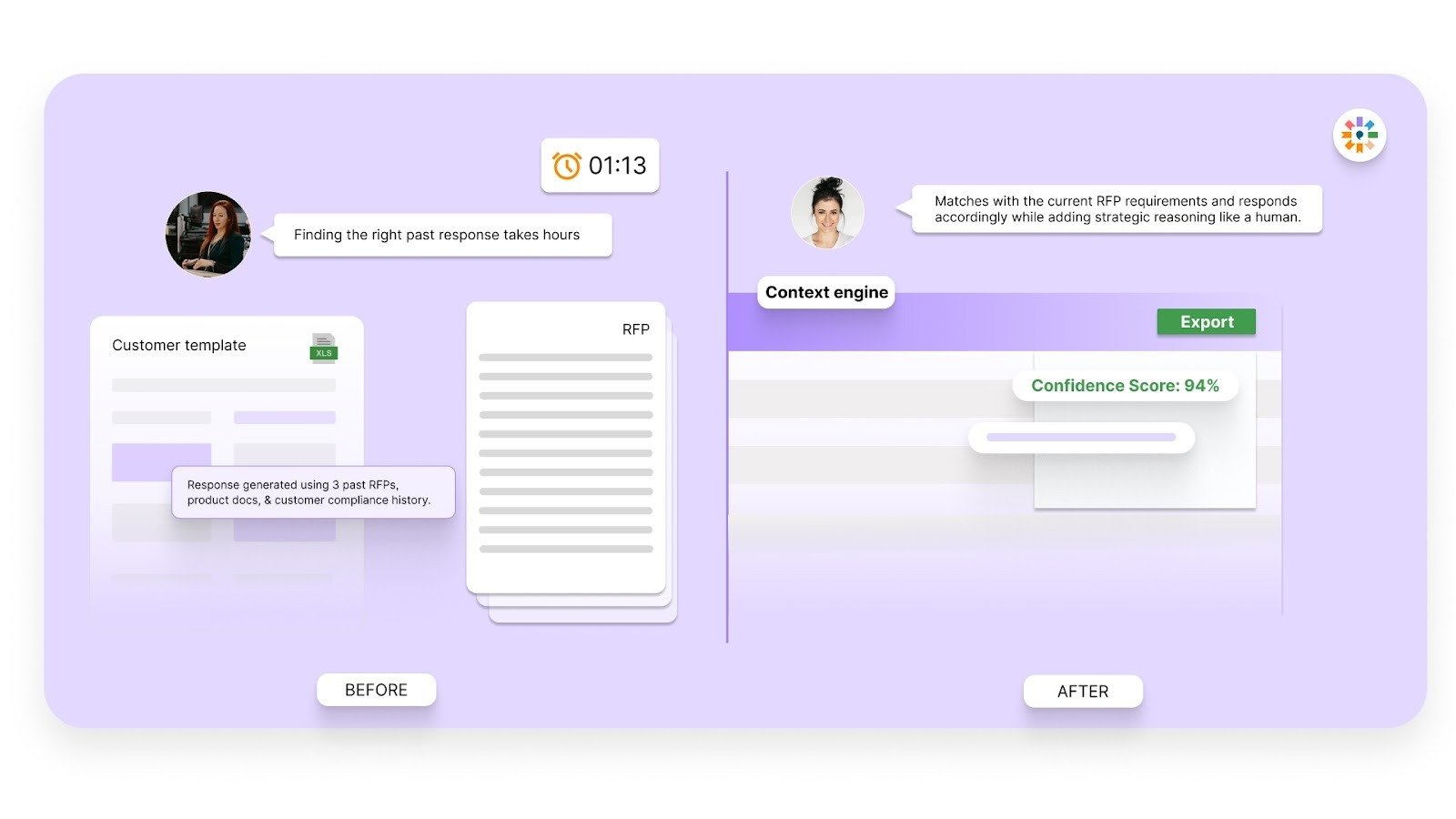
Inventive AI’s context engine analyzes the buyer’s questions and retrieves relevant information from past RFP responses, technical documentation, and internal sources. This helps generate answers that match the context of IAM-related questions, such as identity governance, MFA policies, or access management workflows.
3. Conflict Detection
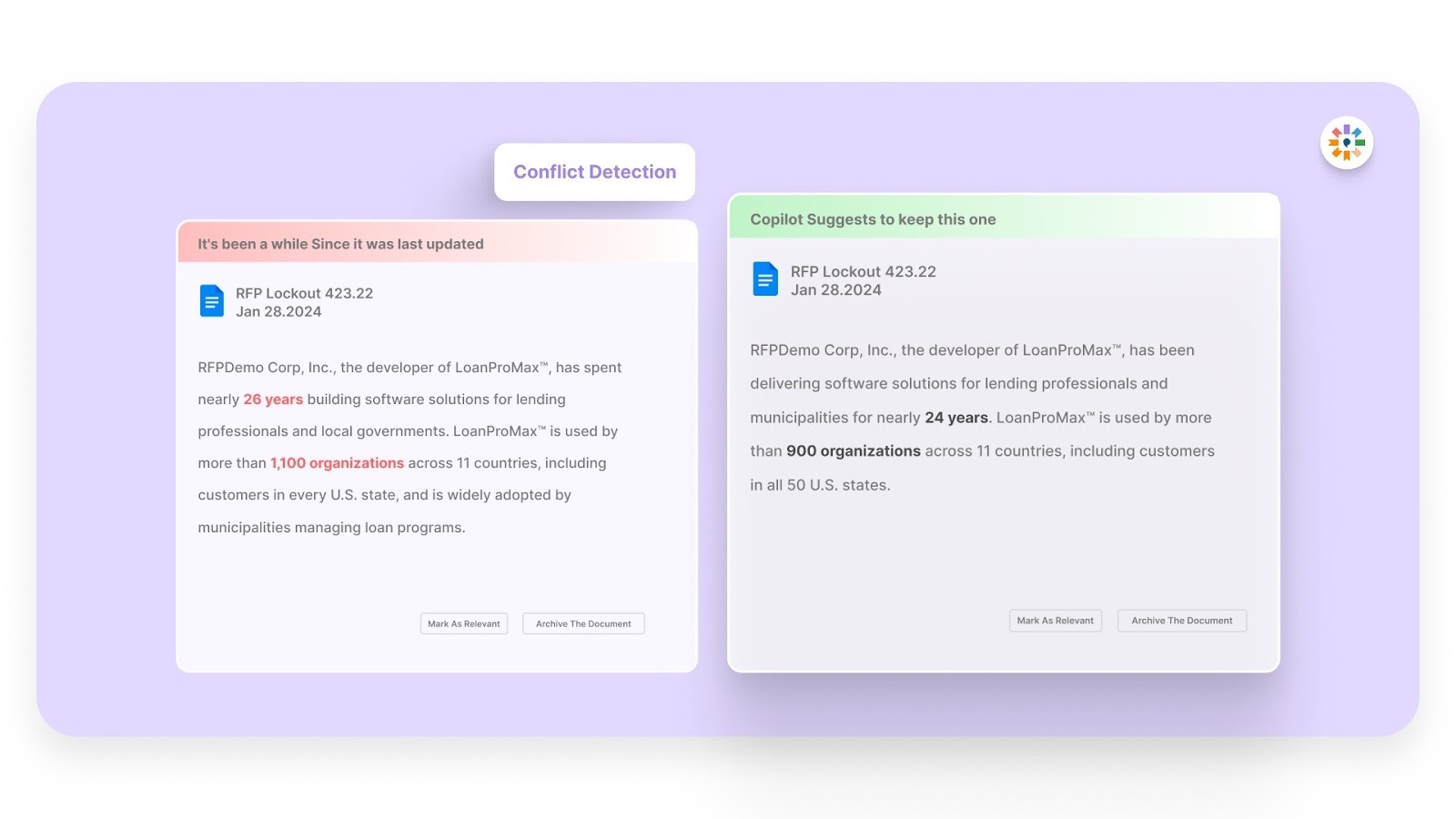
When content is pulled from multiple sources, conflicting answers can appear across different sections of a proposal. Inventive AI automatically flags these conflicts, so your team can correct them before submission.
4. Outdated Content Detection
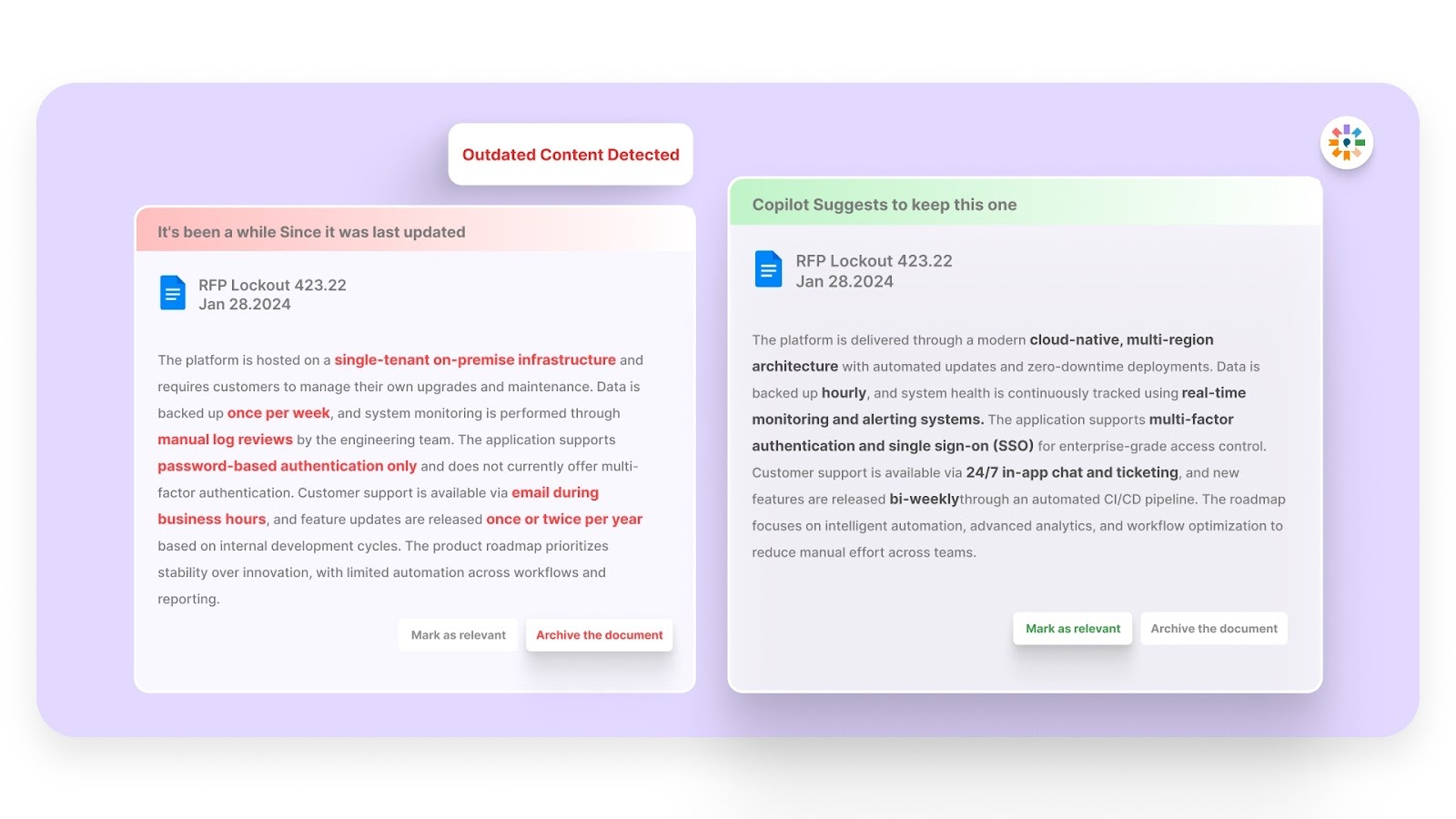
IAM RFPs often require updated details about certifications, integrations, and security capabilities. Inventive AI detects outdated content in your knowledge base and alerts your team, so responses reflect the latest information.
5. Simple, Easy-to-Use Interface
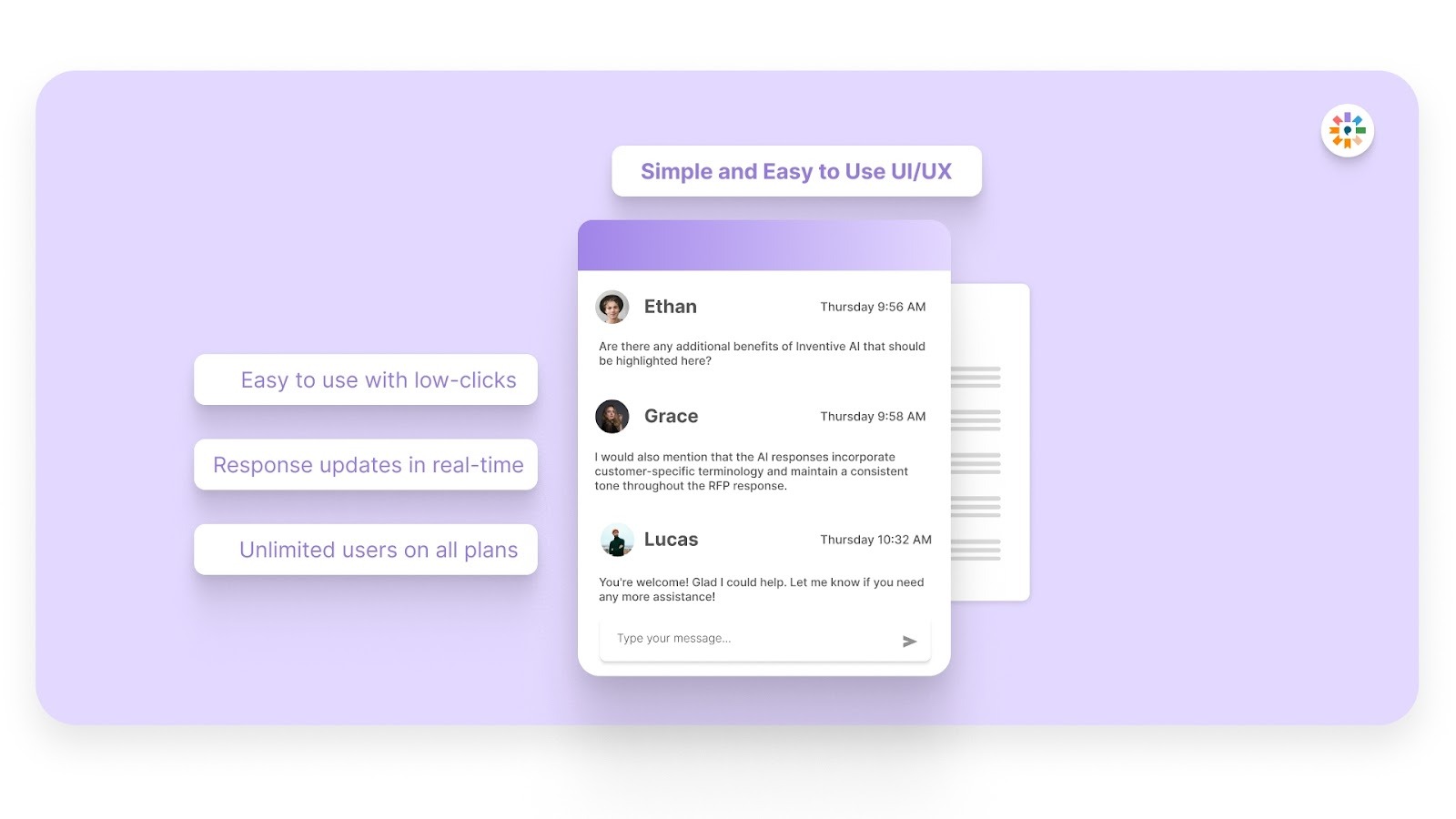
Inventive AI provides an intuitive interface where teams can manage RFP responses, collaborate on answers, and access their knowledge hub without complex workflows.
6. Narrative-Style Proposals
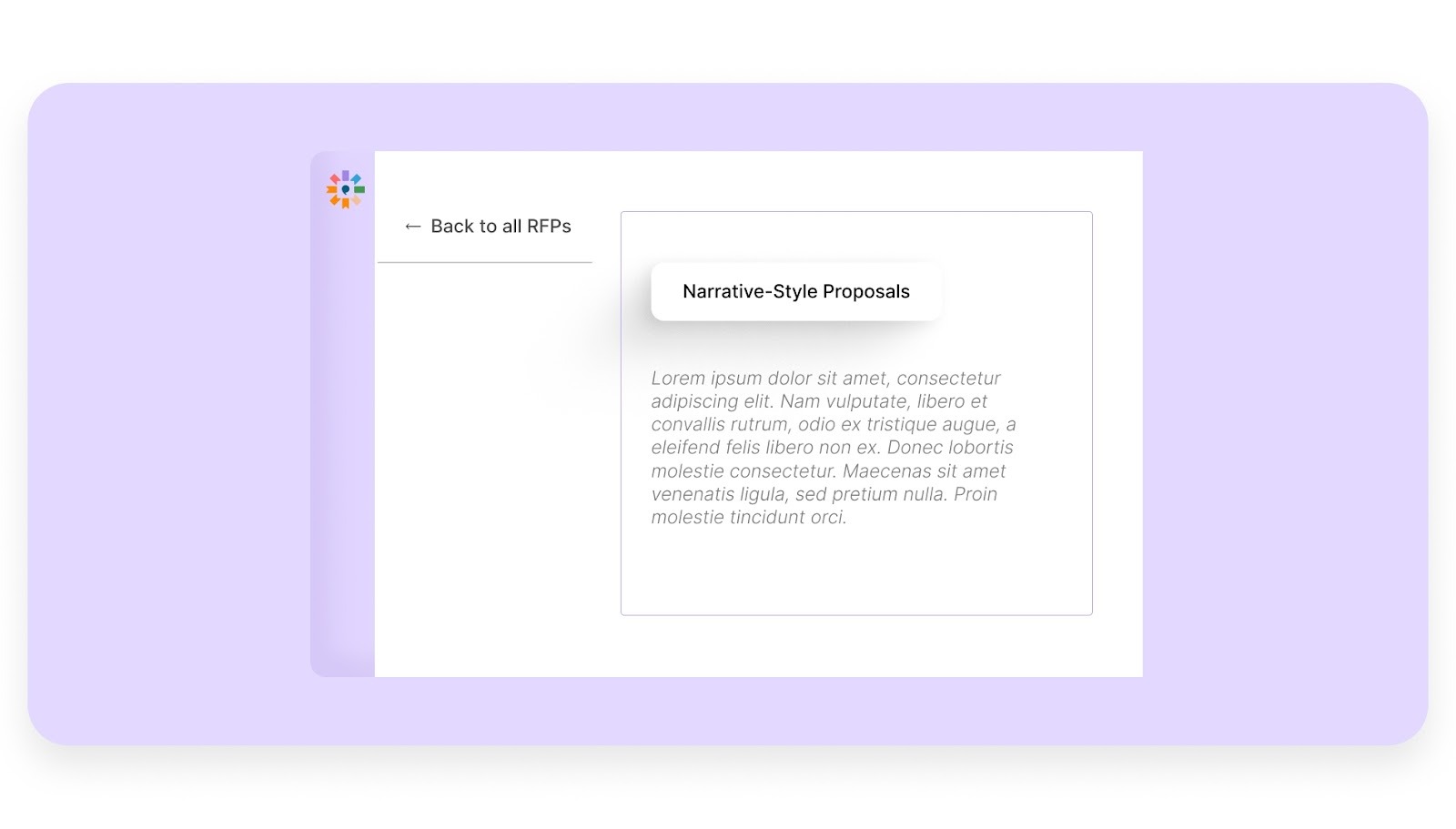
Maintain a consistent tone across every document you send. This feature takes your scattered internal knowledge and weaves it into a persuasive, well-structured proposal that sounds like your best experts wrote it.
With Inventive AI, your team can prepare IAM RFP responses faster while maintaining accuracy and consistency across proposals.
Frequently Asked Questions (FAQs)
1. What are the common mistakes vendors make when responding to an IAM RFP?
Many vendors focus heavily on product features but fail to clearly explain how their IAM solution fits the buyer’s existing environment. Missing details around integrations, access governance workflows, or identity lifecycle management can also weaken a proposal.
2. How long does it usually take to respond to an IAM RFP?
The time required depends on the complexity of the RFP and the number of technical questions involved. IAM RFPs often include detailed sections on security, compliance, and integrations, which can require several days of coordination between security, product, and sales teams.
3. What technical details should vendors prepare before responding to an IAM RFP?
Vendors should have documentation ready on authentication methods, identity lifecycle management, role-based access controls, system integrations, audit logging, and supported compliance standards. Having this information organized in advance helps speed up the response process.
4. Why do IAM RFPs include so many security and compliance questions?
Identity and Access Management systems control user access to critical applications and sensitive data. Because of this, buyers often evaluate vendors on security architecture, access controls, and regulatory compliance before selecting a solution.
5. Can IAM RFP responses involve multiple teams within a vendor organization?
Yes. IAM RFP responses often require input from several teams, including security engineers, product specialists, compliance experts, and proposal managers. Collaboration across these teams helps vendors provide complete and accurate responses.

90% Faster RFPs. 50% More Wins. Watch a 2-Minute Demo.

Gaurav Nemade
After witnessing the gap between generic AI models and the high precision required for business proposals, Gaurav co-founded Inventive AI to bring true intelligence to the RFP process. An IIT Roorkee graduate with deep expertise in building Large Language Models (LLMs), he focuses on ensuring product teams spend less time on repetitive technical questionnaires and more time on innovation.
.avif)
Mukund Kumar
Understanding that sales leaders struggle to cut through the hype of generic AI, Mukund focuses on connecting enterprises with the specialized RFP automation they actually need at Inventive AI. An IIT Jodhpur graduate with 3+ years in growth marketing, he uses data-driven strategies to help teams discover the solution to their proposal headaches and scale their revenue operations.