RFI vs RFP vs RFQ Templates + Vendor Response Formats

RFI, RFP, and RFQ are some of the most important documents in procurement. Every sourcing team knows this, yet in practice, these formats frequently overlap. An RFI sometimes asks pricing questions, an RFP repeats basic vendor information, and RFQs occasionally request solution explanations.
Proposal response teams often mirror the same problem. They reuse the same proposal structure across RFI, RFP, and RFQ submissions without adjusting responses to match the intent of the document.
The result is predictable. Buyers receive responses that are difficult to compare, and vendors submit answers that do not align with the request. The problem is not the documents themselves. Each serves a specific role in the sourcing process.
This guide provides structured templates for buyers and vendors so each document captures the right information without losing its objective.
RFI RFP RFQ Templates for Buyers to Structure Procurement Requests
RFI, RFP, and RFQ are not documents that buyers publish and wait for responses. They structure the information vendors must provide at each stage of the procurement process.
For example, if an RFI does not ask about deployment models or integrations, vendors will not include that information. Procurement teams later discover compatibility issues during the proposal stage, forcing them to restart evaluations.
Templates prevent this problem. They ensure buyers request the right information early so vendors respond with details that support the next step of the sourcing process.
Below are three templates buyers can use across the sourcing process. Each template is designed to collect specific information needed for vendor evaluation.
1. RFI Template to Collect Vendor Capability Information
An RFI is the first document buyers issue when exploring potential vendors. At this stage, procurement teams have not yet selected suppliers. They are trying to understand what the market can actually provide.
When RFIs are poorly structured, vendors respond with product brochures and marketing material. Procurement teams then struggle to extract comparable capability information across suppliers.
A structured RFI solves this by forcing vendors to answer the same capability questions. This allows procurement teams to identify which suppliers should move to the proposal stage.
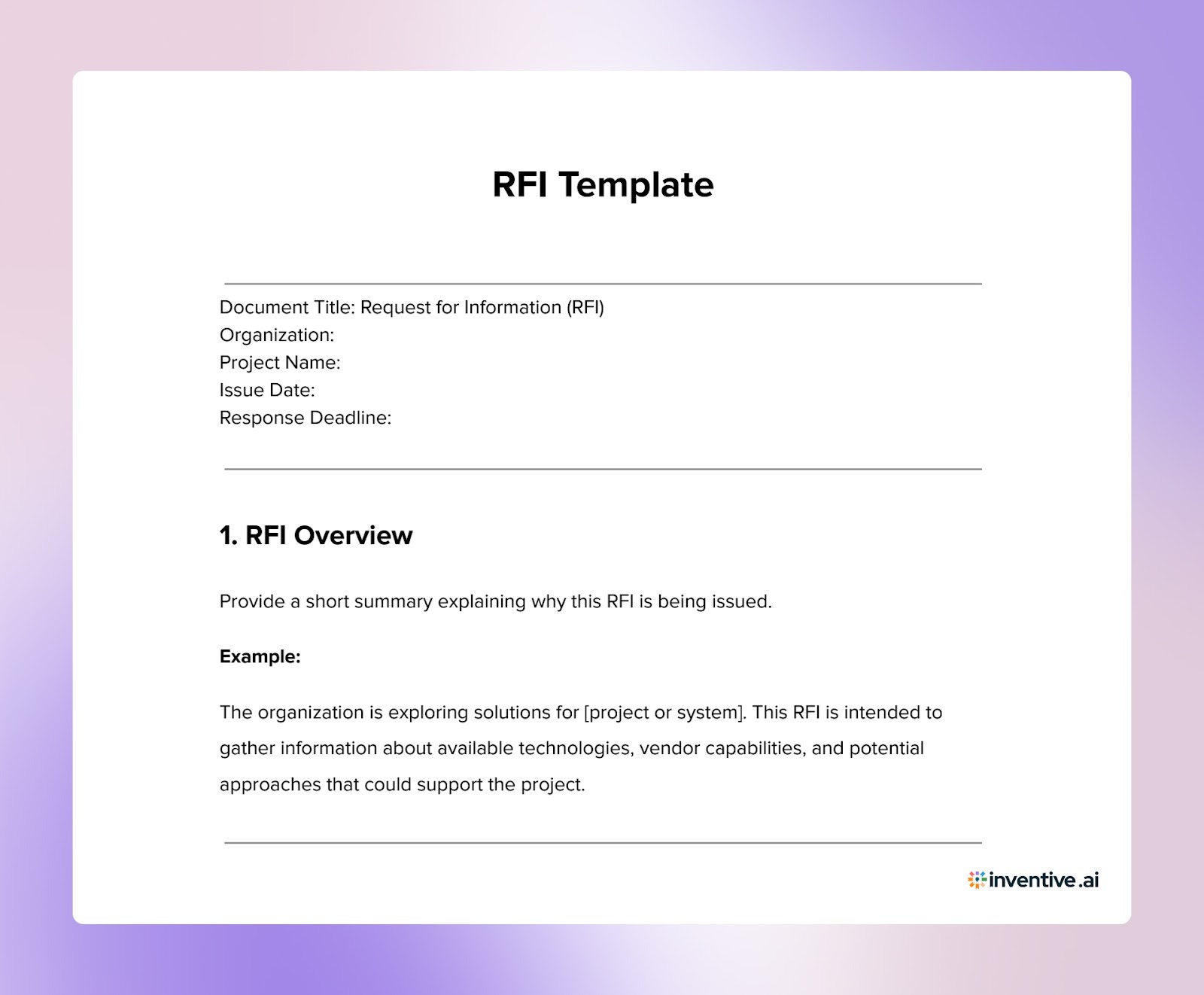

What to Ask for in an RFI?
- Company Overview: Vendor background, years in operation, and primary service offerings.
- Product or Service Capabilities: Core features, solution architecture, and delivery models relevant to the requirement.
- Technology Compatibility: Integrations, APIs, system dependencies, and infrastructure requirements.
- Industry Experience: Similar projects, customer references, and relevant case studies.
- Compliance and Certifications: Regulatory compliance, security standards, and required certifications.
- Contact Information: Vendor point of contact for follow-up discussions.
2. RFP Template to Issue Vendor Solution Proposals
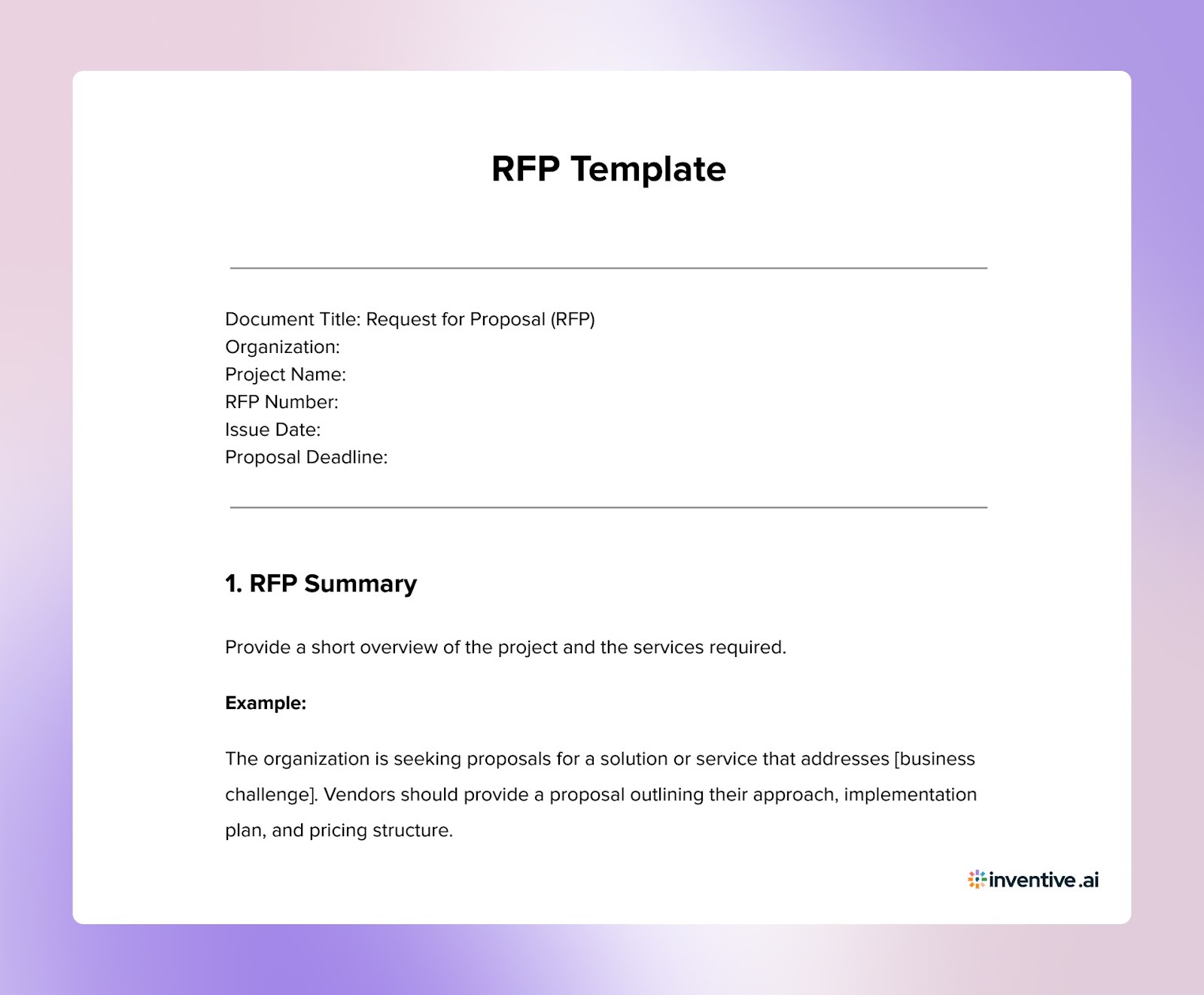
An RFP is issued once procurement teams understand the vendor landscape. The goal shifts from discovering suppliers to evaluating how vendors will solve a defined business problem.
If the RFP lacks structure, vendors interpret the problem differently. One proposal may focus on technology architecture, while another emphasizes implementation services. Procurement teams then struggle to compare proposals objectively.
A structured RFP ensures vendors respond to the same requirements, delivery expectations, and evaluation criteria.

What to Ask for in an RFP?
- Project Overview: Business context, procurement objectives, and project background.
- Scope of Work: Detailed description of services, deliverables, and project boundaries.
- Technical Requirements: Functional specifications, system integrations, and performance expectations.
- Implementation Plan: Project phases, timeline, and milestone deliverables.
- Vendor Qualifications: Required experience, certifications, and delivery team expertise.
- Pricing Structure: Cost breakdown, pricing model, and contract pricing expectations.
- Evaluation Criteria: Scoring methodology used to assess vendor proposals.
3. RFQ Template to Compare Supplier Pricing
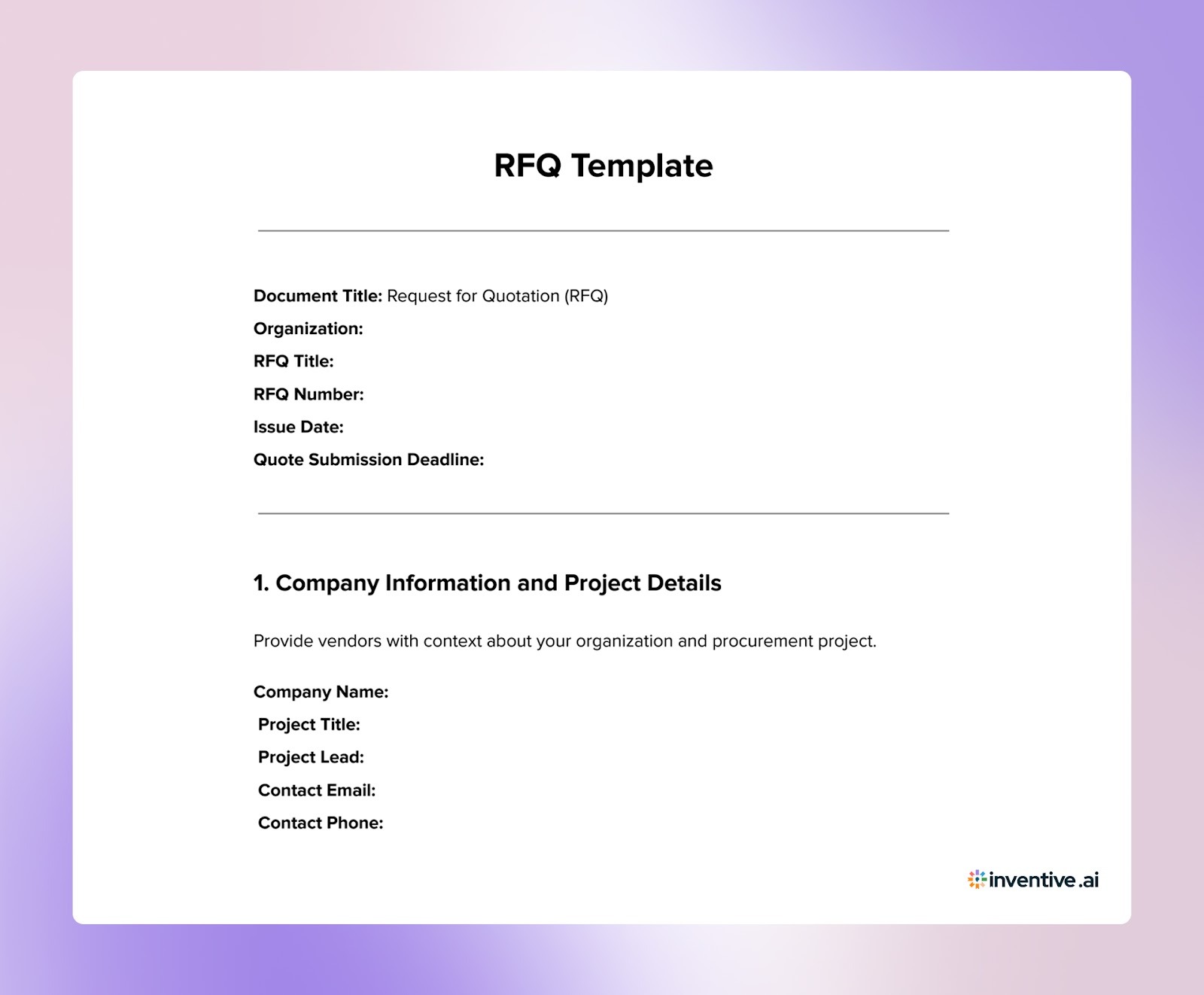
An RFQ is used when requirements are already defined, and procurement teams are ready to compare supplier pricing.
Without a structured RFQ, vendors submit quotes in different pricing formats. Some provide unit pricing, others provide bundled pricing, and some include delivery costs separately. This makes cost comparison unreliable.
A standardized RFQ ensures every supplier provides pricing using the same structure, allowing procurement teams to compare quotes accurately.

What to Ask in an RFQ?
- Product or Service Specifications: Detailed description of required items or services.
- Quantity Requirements: Expected order volumes or contract quantities.
- Pricing Format: Unit pricing, bulk discounts, and additional cost elements.
- Delivery Schedule: Required delivery timelines and logistics expectations.
- Payment Terms: Payment schedule and contractual payment conditions.
- Quote Submission Instructions: Submission deadline, required format, and evaluation process.
If you are responding to an RFI, RFP, or RFQ issued by a buyer, you can use the templates below to structure your response.
RFI RFP RFQ Response Templates for Vendors to Structure Proposal Submissions
Once buyers publish RFI, RFP, or RFQ documents, vendors must respond using formats that match the intent of each request.
The templates below help vendors structure responses so procurement teams can easily evaluate capabilities, solution proposals, and pricing submissions.
These templates follow the same sourcing sequence buyers use during vendor selection.
1. RFI Response Template to Present Vendor Capability Information
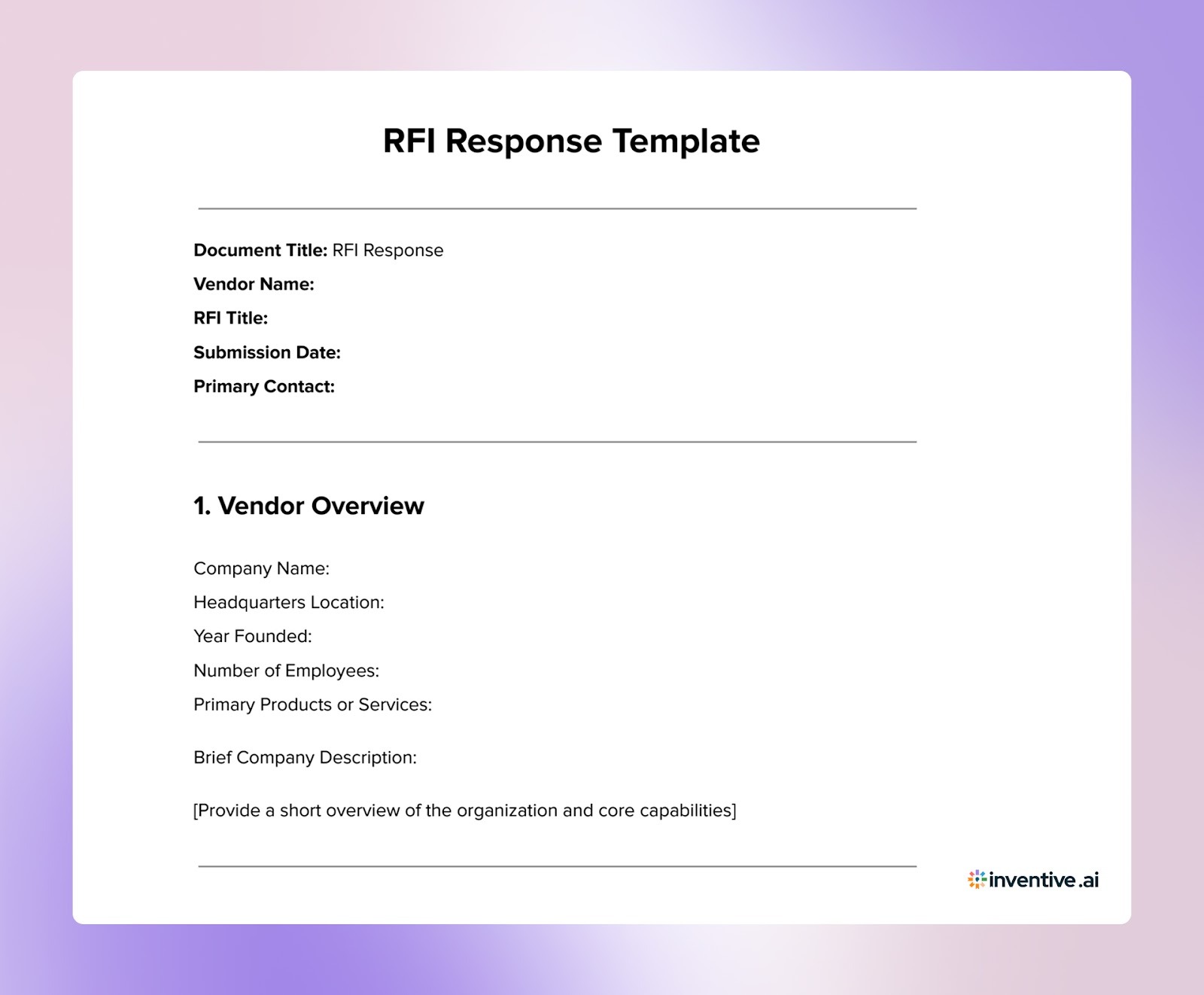
An RFI response should provide structured capability information so buyers can determine whether the vendor should move to the proposal stage.

What to Include in an RFI Response?
- Company Overview: Company background, headquarters location, years in operation, and core product or service areas.
- Product or Service Capabilities: Overview of relevant offerings that address the buyer’s stated problem or project objective.
- Technology Architecture: Deployment model, system integrations, APIs, infrastructure requirements, and security standards.
- Industry Experience: Relevant projects delivered, industries served, and experience with similar customer challenges.
- Customer References: Client organizations, project summaries, and contact details where appropriate.
2. RFP Response Template to Structure Competitive Vendor Proposals
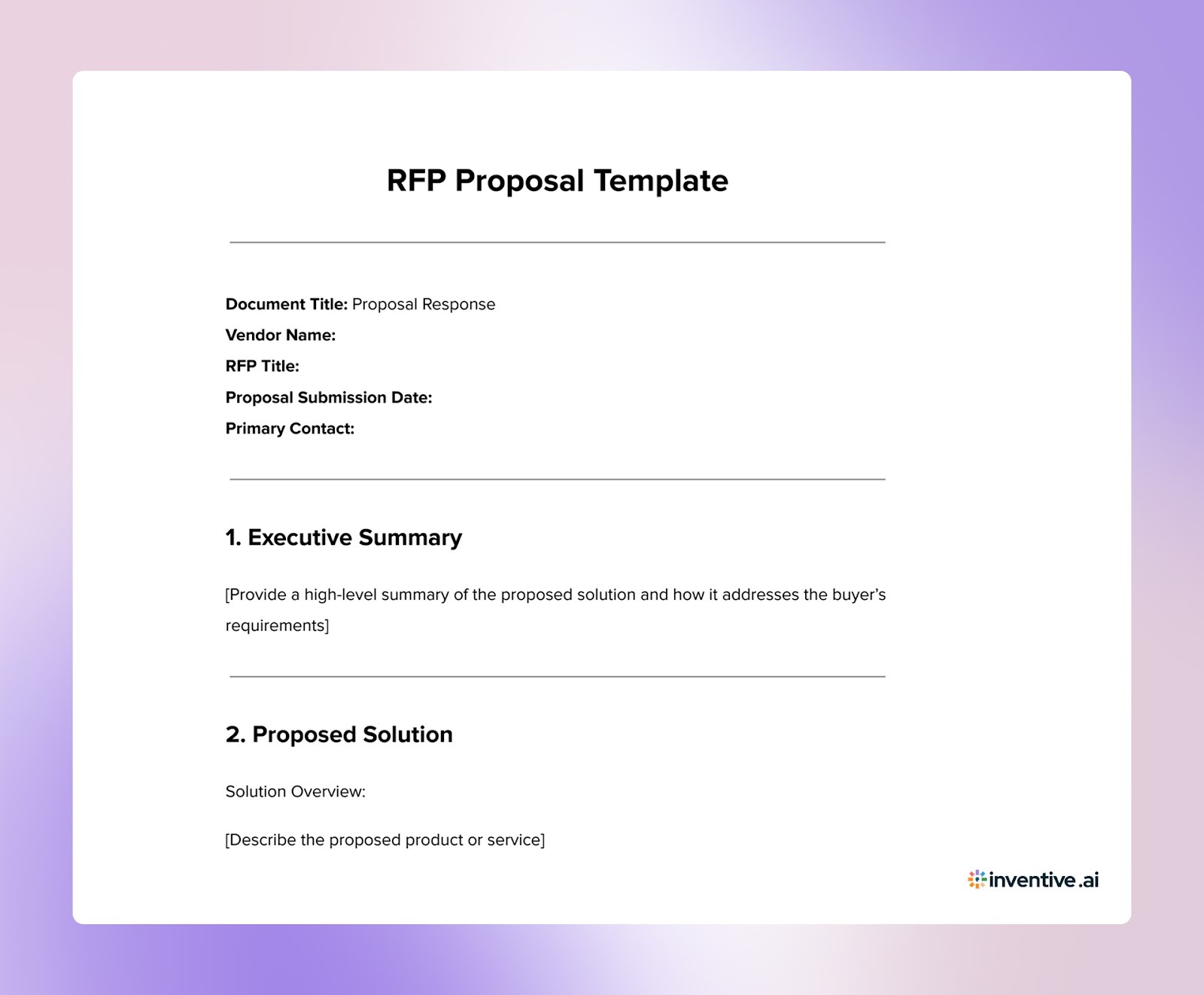
An RFP response must present a structured proposal that allows buyers to evaluate solution design, delivery approach, and vendor qualifications.

What to Include in an RFP Response?
- Executive Summary: High-level overview of the proposed solution and how it addresses the buyer’s stated requirements.
- Proposed Solution: Detailed description of the product, service, or methodology that solves the procurement requirement.
- Implementation Plan: Project phases, deployment steps, milestones, and expected delivery timeline.
- Project Team: Key personnel responsible for delivery, including roles, experience, and certifications.
- Pricing Proposal: Cost structure including licensing, implementation services, support services, and optional components.
- Relevant Case Studies: Examples of similar projects delivered, including project scope, challenges addressed, and results achieved.
3. RFQ Response Template to Submit Supplier Pricing Quotes
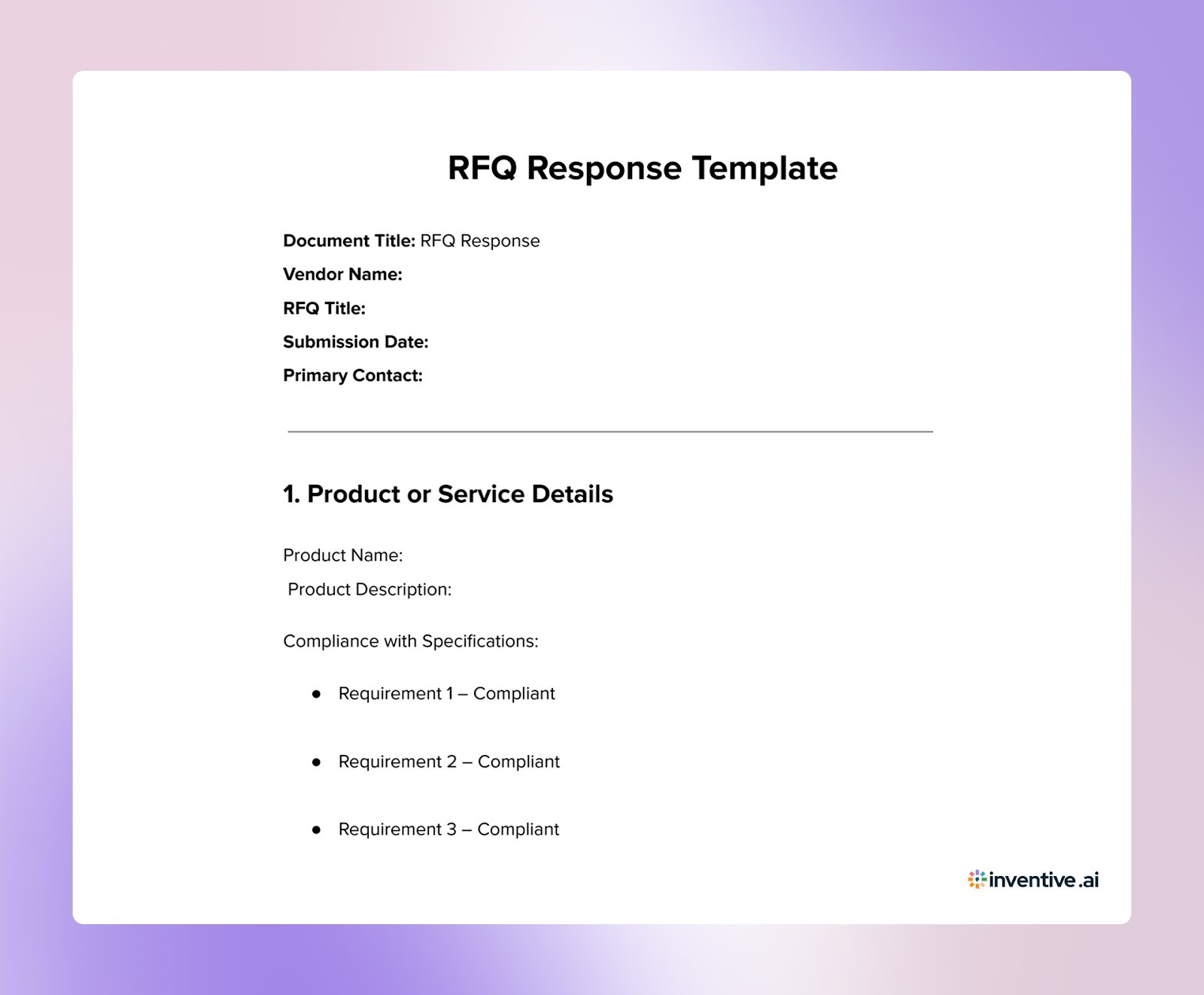
An RFQ response focuses primarily on pricing, delivery conditions, and confirmation that the vendor can meet the buyer’s specifications.

What to Include in an RFQ Response
- Product or Service Details: Confirmation that the offering matches the specifications defined in the RFQ.
- Pricing Table: Itemized pricing structure including quantity, unit price, and total cost.
- Delivery Schedule: Estimated delivery timelines, production lead times, and shipping terms.
- Warranty or Support Terms: Warranty coverage, maintenance services, and support availability.
- Payment Terms: Payment schedule, invoicing process, and financial terms.
Submit Accurate RFP Responses Faster With Inventive AI
Vendors responding to RFI, RFP, and RFQ documents must interpret buyer requirements across multiple sections, including scope definitions, technical requirements, compliance questions, and pricing structures.
Inventive AI solves this challenge with AI-powered RFP response software designed for proposal teams. Instead of assembling answers manually, teams generate structured, context-aware responses aligned with buyer requirements.
Here are the key capabilities that improve vendor RFP responses.
1. Context Engine
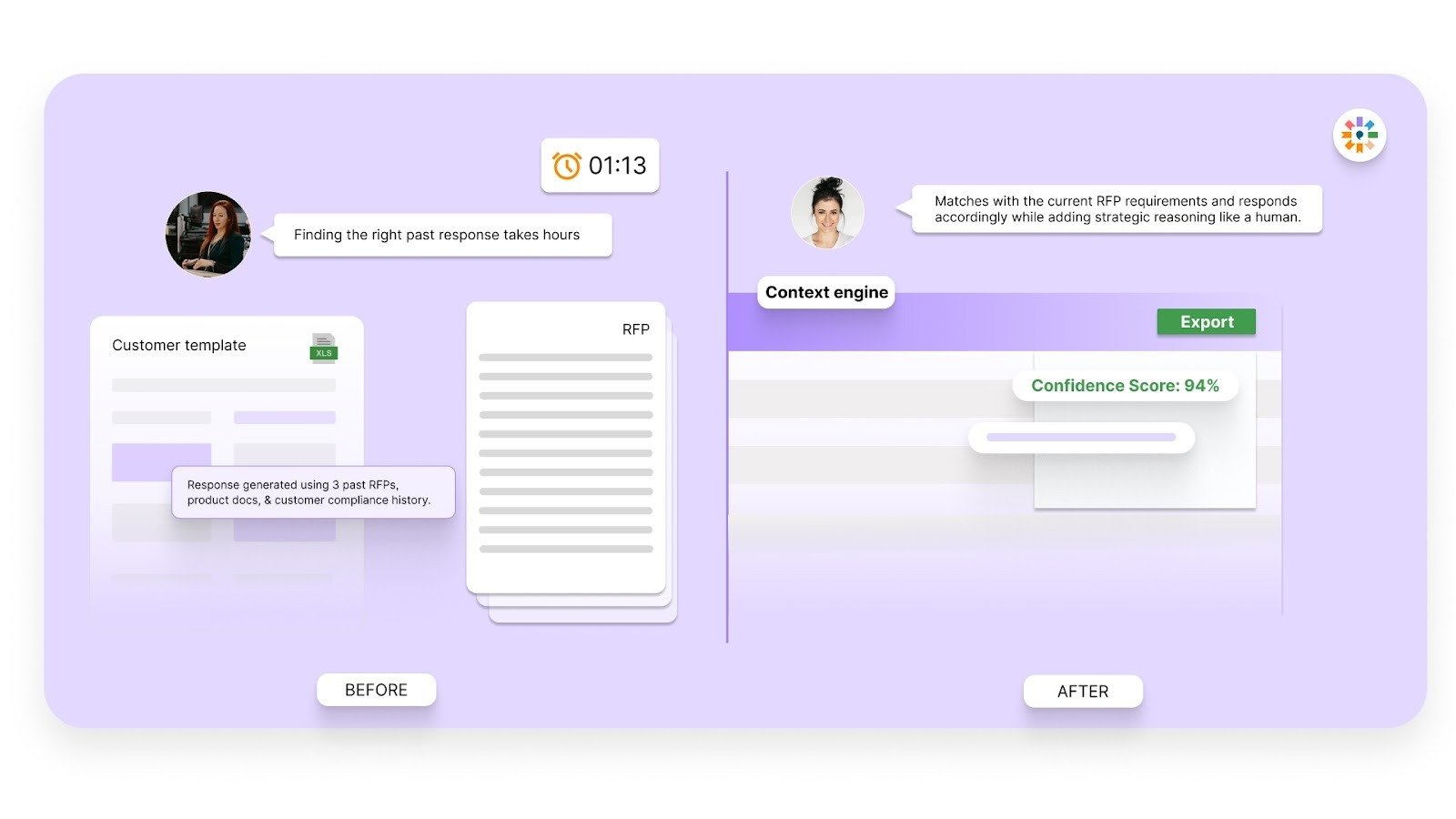
Most proposal tools rely on keyword retrieval that produces generic answers. Inventive AI uses multi-layer reasoning to understand the entire RFP document, including scope of work, technical requirements, and evaluation criteria.
This allows the platform to generate responses aligned with the buyer’s documented requirements instead of producing boilerplate proposal content.
2. Conflict Detection
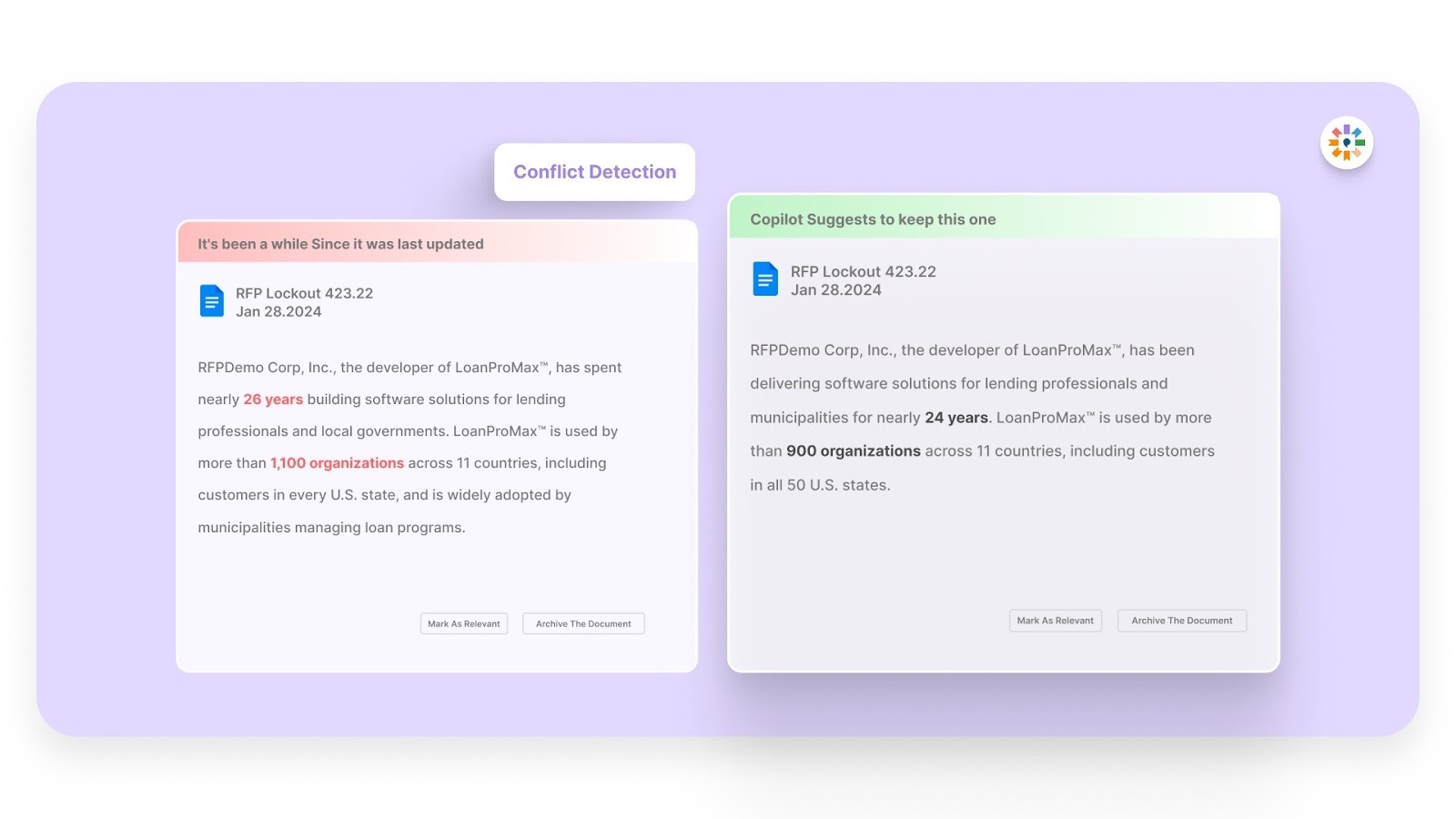
Large proposals often contain overlapping sections such as implementation timelines, staffing plans, and delivery commitments. Manual proposals frequently introduce contradictions between these sections.
Inventive AI automatically identifies conflicting answers across the proposal so teams can correct inconsistencies before submission.
3. Outdated Content Detection
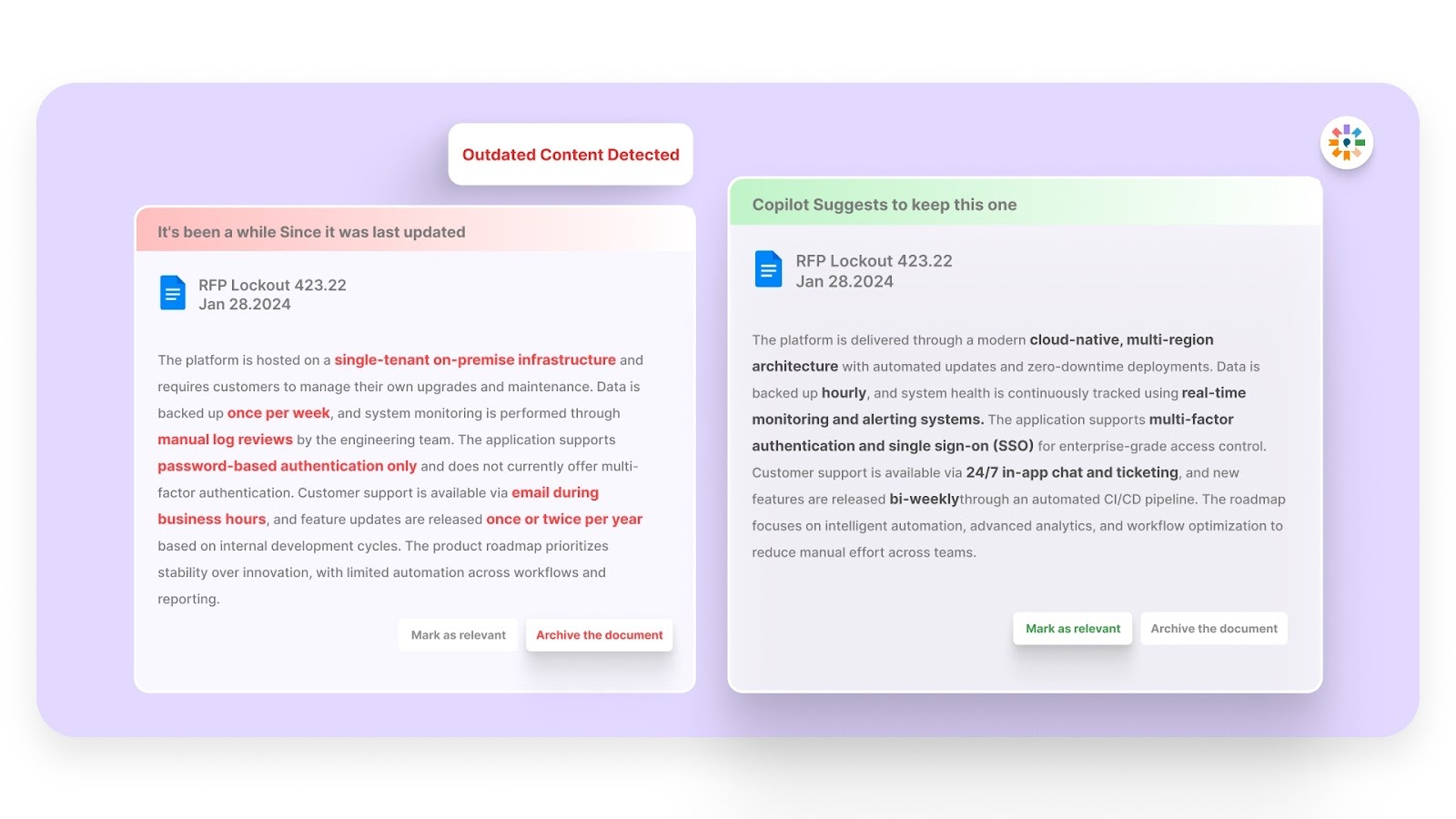
Proposal libraries often contain responses that reference outdated certifications, product capabilities, or case studies.
Inventive AI scans proposal content and flags outdated information before it appears in the submission. This ensures vendors respond with current capabilities and accurate documentation.
4. 2X Higher Quality Responses
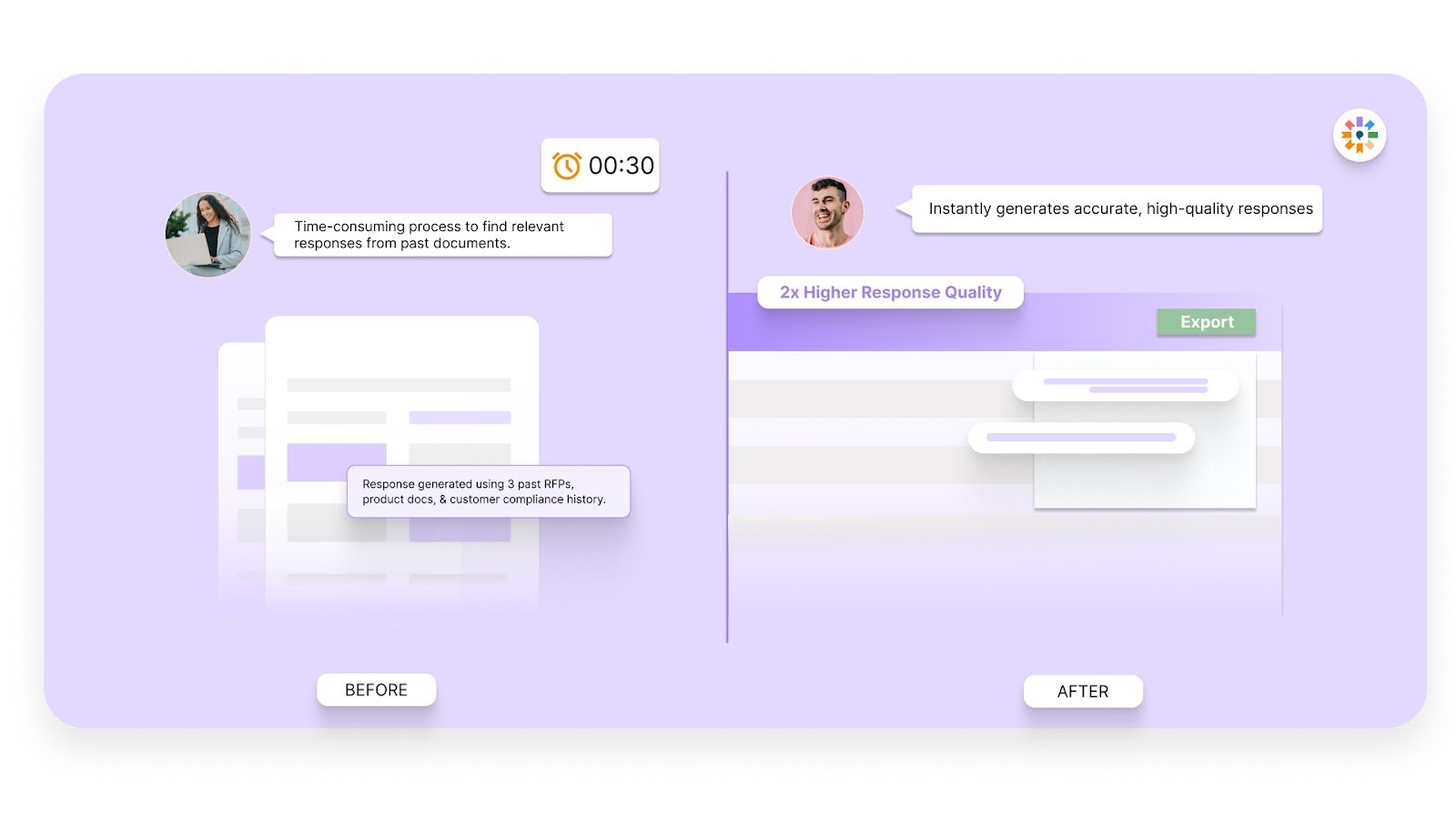
Inventive AI’s multi-agent system generates responses with greater clarity and completeness. The platform analyzes buyer requirements and produces answers that directly address project scope, preparation methods, and execution plans.
This improves proposal quality and strengthens vendor positioning during evaluation.
5. Narrative Proposal Generation
Many RFPs require narrative responses such as executive summaries, solution approaches, or implementation methodologies.
Inventive AI generates structured narrative content aligned with buyer requirements, helping vendors produce complete proposals without drafting each section manually.
6. Simple and Easy-to-Use Interface
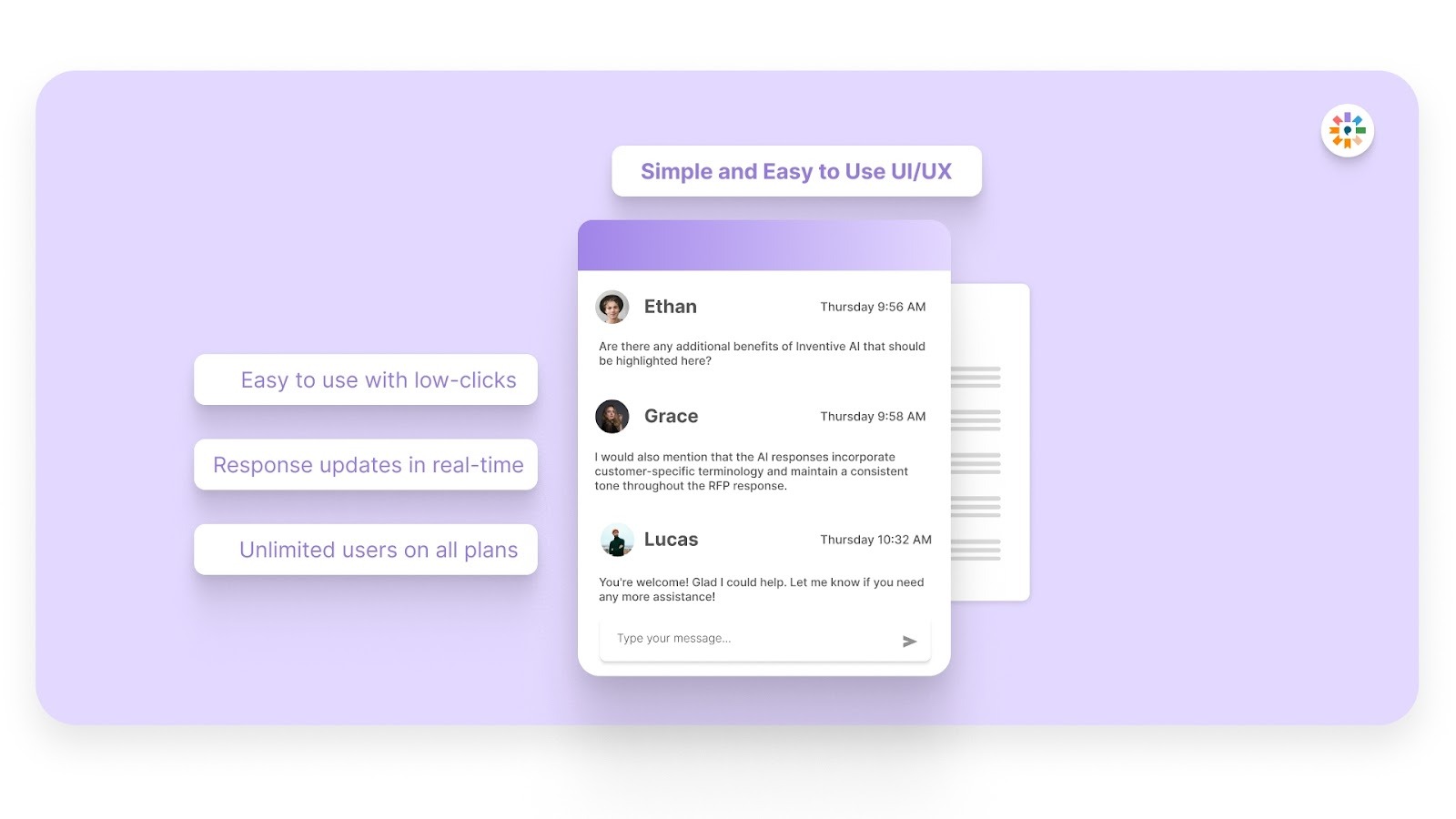
Proposal teams often coordinate responses across sales, product, engineering, and legal teams.
Inventive AI provides a simple interface that allows teams to generate, review, and refine responses quickly without complex workflows or setup.
FAQs About RFI, RFP, And RFQ Template
1. How long should vendors take to respond to an RFI or RFP?
RFI responses typically take a few days to two weeks, depending on the number of capability questions. RFP responses often require two to six weeks, since vendors must prepare solution approaches, implementation plans, and pricing proposals. Complex enterprise procurements may require longer timelines.
2. Should vendors reuse previous RFP responses when answering new proposals?
Yes, many proposal teams reuse content from past responses. However, each RFP usually includes unique requirements. Vendors should review previous answers carefully and update them to match the buyer’s scope, evaluation criteria, and technical requirements.
Using outdated or irrelevant answers can weaken proposal quality.
3. What challenges do vendors face when responding to RFI, RFP, and RFQ requests?
Proposal teams often face several operational challenges:
- Searching past proposals for reusable answers
- Coordinating input from product, engineering, and legal teams
- Maintaining consistent responses across sections
- Updating outdated proposal content
These challenges can slow proposal cycles and increase the risk of inconsistent submissions.
4. How do proposal teams manage large volumes of RFP responses?
Many organizations use proposal management tools and knowledge libraries to store reusable responses, case studies, and technical documentation. These systems allow teams to quickly retrieve answers when responding to new RFx requests.
AI-powered tools like Inventive AI further accelerate this process by generating structured proposal drafts from existing knowledge sources.





%20in%20the%20IT%20Industry.avif)