
How RFP Analysts Drive Proposal Success with AI-Powered Tools in 2026

You open an RFP thinking you’ll start mapping answers, but instead, you’re trying to make sense of it first.
Requirements repeat across sections, but each one is worded slightly differently. Security questions don’t align with earlier inputs. Pricing expectations are hinted at, not clearly stated. Before you even begin writing, you’re already second-guessing what the buyer actually wants.
If you’ve been in this position, you know the real challenge is not responding. It is interpreting.
As an RFP Analyst, your job is to remove that ambiguity early, so every response that follows is clear, aligned, and intentional.
In this blog, you’ll learn what an RFP Analyst actually does, the challenges you’ll face, and how to improve your RFP analysis process.
Key Takeaways
- RFP analysis is not about answering questions, it is about interpreting what the buyer actually wants before writing begins.
- As an RFP Analyst, you connect requirements with internal knowledge and guide how the entire response is built.
- Common challenges include unclear requirements, repeated questions, outdated content, and misaligned contributors.
- Strong analysis focuses on five areas: breaking down requirements, understanding evaluation signals, mapping content, tracking risks, and identifying differentiation.
- Inventive AI helps you analyze faster, reduce manual effort, and improve win rates by making responses more consistent and accurate.
What Does an RFP Analyst Do?
An RFP analyst (Request for Proposal analyst) is the person responsible for managing and responding to RFPs, documents that buyers use to evaluate vendors for a product or service.
Think of yourself as the bridge between what the buyer is asking and what your company can actually deliver. You are not just organizing responses. You are shaping how your proposal is understood and evaluated.
Before any writing begins, you define how the entire response will come together. You interpret unclear requirements, identify priorities, and create a clear path for everyone contributing to the proposal.
What you actually do as an RFP Analyst:
- Identify hidden intent behind questions instead of relying on surface wording.
- Group similar or repeated questions to avoid duplicated effort.
- Separate compliance requirements from value-based questions.
- Map each section to the right internal owner before drafting begins.
- Highlight areas where your current messaging does not fully answer the requirement.
- Validate whether past responses are still relevant before reusing them.
- Track dependencies that can delay responses, such as legal or security approvals.
- Build a response outline that keeps the proposal consistent across sections.
When this role is done well, your response feels accurate, consistent, and aligned with what the buyer is evaluating. A strong analysis phase reduces rework later and keeps your entire response aligned from the start.
Also Read: Write RFQ Cover Letters That Strengthen Your Quotation (2026 Guide)
5 Hidden Bottlenecks For RFP Analyst That Slow Down Your Work
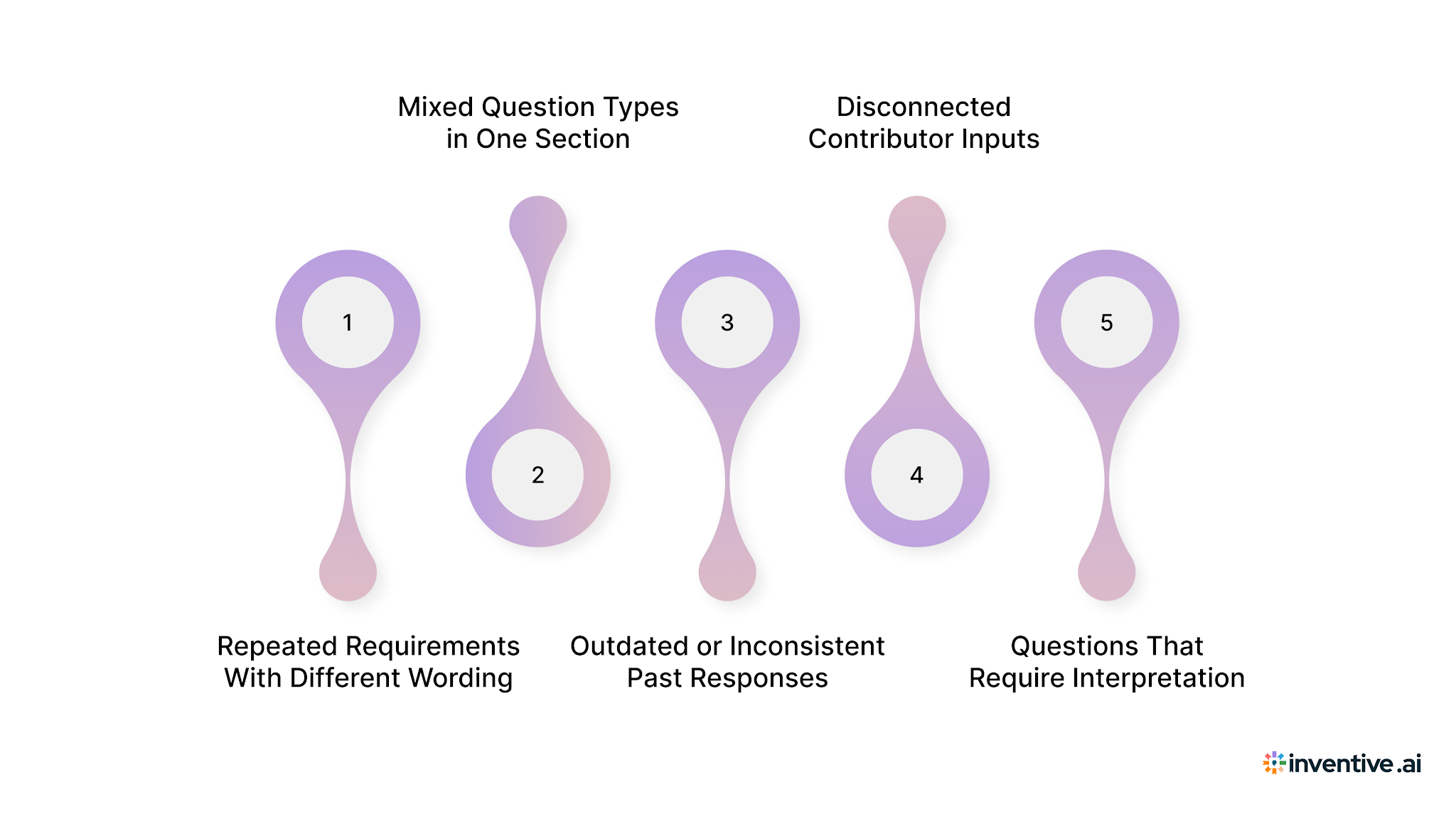
RFP analysis would be easy if every question were clear and neatly structured. It rarely is. Instead, you’re piecing things together, trying to interpret unclear inputs while coordinating with multiple contributors who are all waiting on direction from you.
Here’s what actually slows you down and how you can handle it better:
1. Repeated Requirements With Different Wording
The same requirement often appears in multiple sections with slight variations. If you treat them as separate questions, you end up duplicating effort and creating inconsistent answers.
You need to standardize similar questions early and group them under a single response approach. This keeps your answers aligned and reduces unnecessary repetition.
2. Mixed Question Types in One Section
Buyers often combine compliance, technical, and business questions in the same section. This creates confusion when assigning ownership and can delay responses.
You should separate questions by type before assigning them. This helps you involve the right contributors and keeps responses more focused.
3. Outdated or Inconsistent Past Responses
You may have a library of past answers, but not all of them reflect your current offering. Reusing outdated content can weaken your credibility.
You need to review and validate past responses before using them. Only reuse content that matches your current positioning and capabilities.
4. Disconnected Contributor Inputs
Different contributors often respond without visibility into the full proposal. This leads to mismatched tone, repeated points, or conflicting information.
You should anchor all responses to a shared outline. This keeps everyone aligned and improves overall consistency.
5. Questions That Require Interpretation
Some questions are not direct and require you to understand what the buyer is really evaluating.
Answering them at face value can miss the actual intent.
You need to look beyond the wording and identify what the buyer is trying to assess. This helps you provide more relevant and targeted responses.
Pro Tip: If you cannot explain why a question exists, your answer will likely miss what the buyer is evaluating.
When you approach analysis this way, you move from reactive answering to controlled response building.
5 Elements That Make or Break Your RFP Analysis
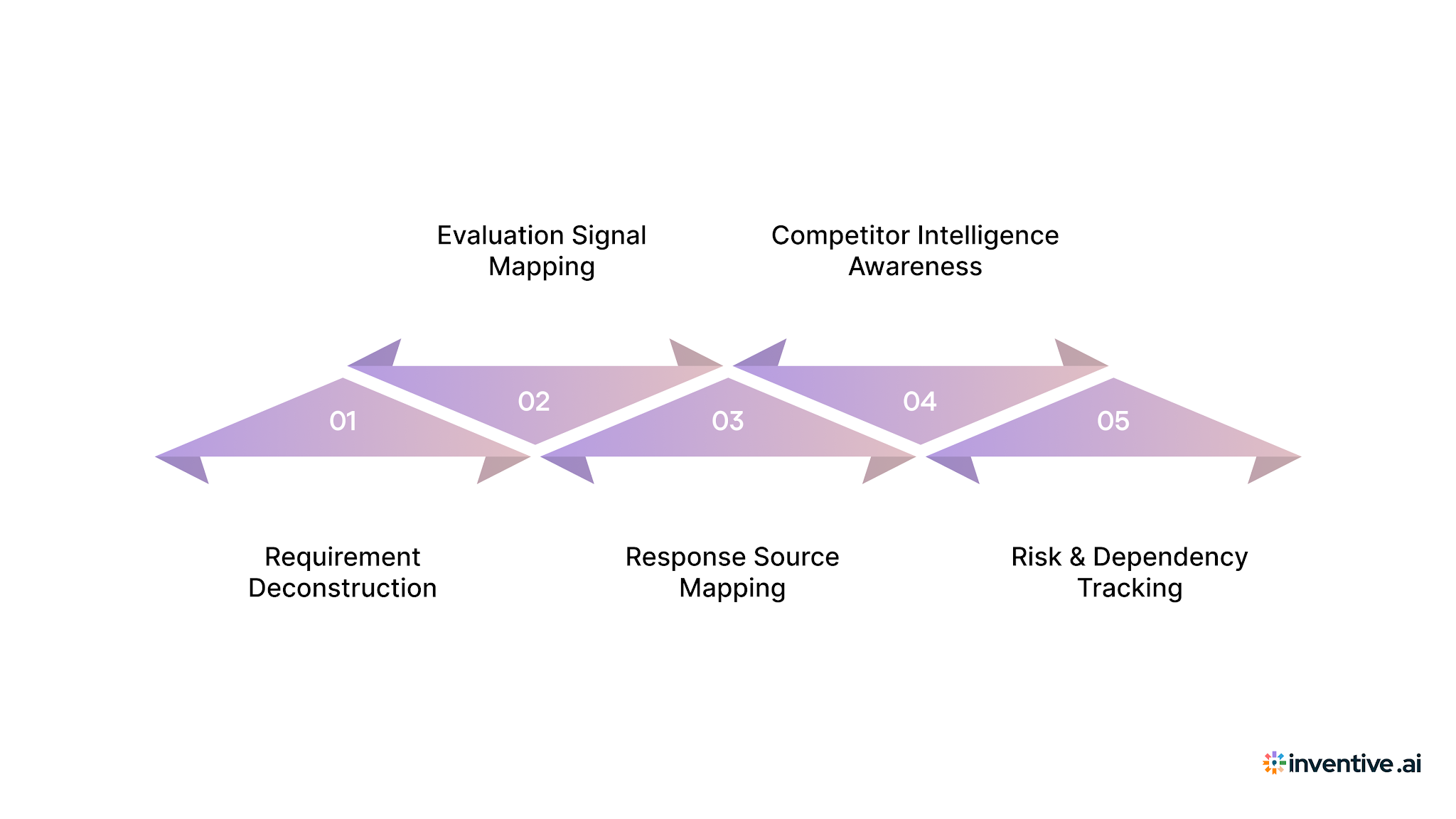
Your analysis decides how smooth or chaotic your response process will be. If you miss key elements here, issues will show up later when drafting begins.
Here are 5 elements you should never overlook during RFP analysis:
1. Requirement Deconstruction
You need to break down long and layered questions into smaller, actionable parts. Identify which requirements are mandatory and which are informational. Also, highlight unclear or open-ended sections that may need clarification before you proceed.
2. Evaluation Signal Mapping
You need to identify what the buyer is actually scoring, not just what they are asking. Look for keywords, repeated themes, and priority areas across the document. Then align your response depth and focus based on what carries more weight.
3. Response Source Mapping
You need to map each question to existing answers, subject matter experts, or internal documents. Identify where reliable content already exists and where gaps need fresh input. This helps you avoid rewriting and keeps responses consistent.
4. Competitor Intelligence Awareness
You need to anticipate how other vendors may respond to the same RFP. Identify areas where your response can stand out through clarity, proof, or differentiation. Also, look for sections where generic answers are common and push for stronger positioning.
5. Risk and Dependency Tracking
You need to flag sections dependent on legal, finance, or security teams. Identify areas with a high risk of inconsistency across contributors. Also, track sections that require deeper customization beyond standard answers.
When these elements are clear, your response stays focused, consistent, and much easier to build from start to finish.
Also Read: The Ultimate Professional Services RFP Template And Response Guide
How AI Enhances the Role of RFP Analyst?
Manual analysis slows you down because you read everything step by step and try to organize it yourself.
You scroll, re-read, and keep jumping between sections just to make sense of what belongs where. That is where most of your time actually goes.
AI changes how quickly you can break down and understand the document.
What changes with AI:
- Large RFPs get broken into clear sections within minutes, so you are not starting from scratch.
- Repeated or overlapping questions are grouped automatically, so you do not answer the same thing twice.
- Key requirements are pulled out instantly, without you scanning the full document again and again.
- Relevant past responses show up when you need them, instead of you digging through folders.
- Gaps are highlighted early, so you are not discovering missing pieces at the last minute.
Using AI has helped many teams move faster, improve response quality, and win more deals without adding extra effort. See how Insider improved their RFP workflow using Inventive AI’s agents.
Lead Your Role as RFP Analyst with Inventive AI - A Leading AI RFP Software
RFP analysis and response building often happen under tight timelines. Even small gaps during analysis can carry forward and affect your entire proposal.
Inventive AI helps you move from scattered inputs to clear, consistent, and high-quality responses that align with what the buyer is evaluating.
1. 2× Higher Quality Responses
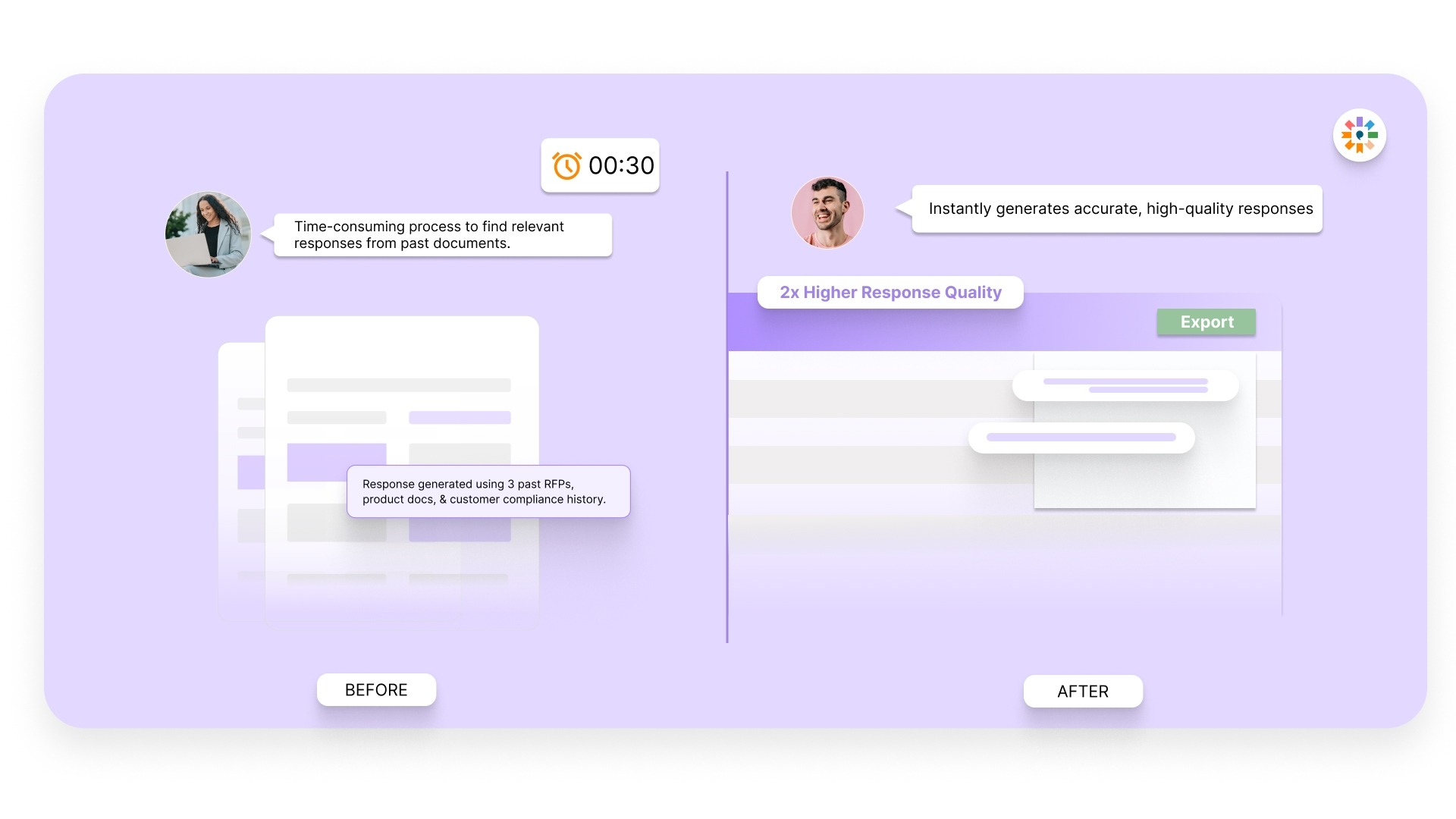
Inventive AI helps you generate structured drafts using your past responses and knowledge sources. It reduces variation across contributors and keeps your messaging consistent. This allows you to spend more time refining answers that actually strengthen your proposal.
2. Context Engine
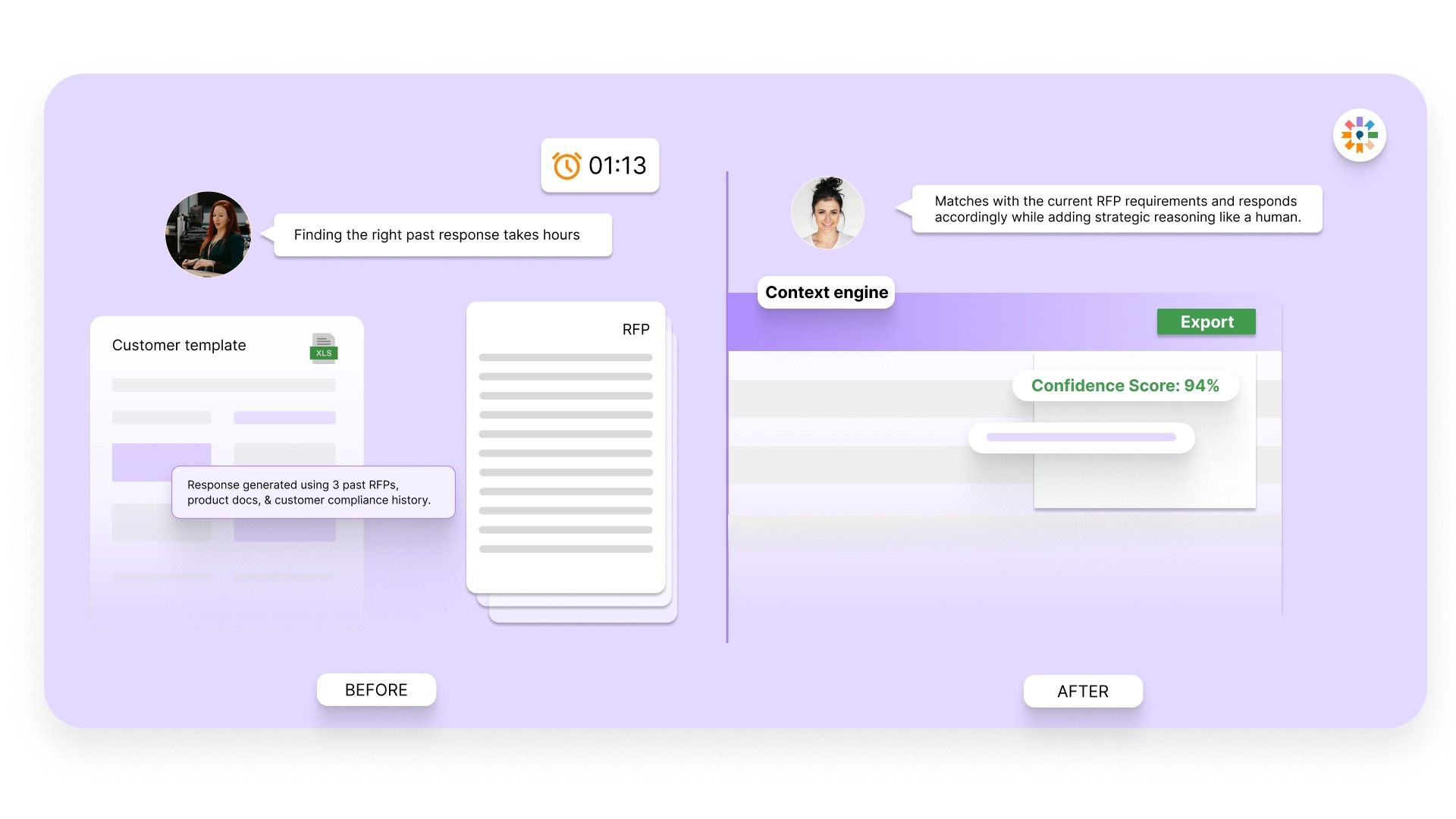
Inventive AI’s Context Engine pulls relevant answers from your existing documents, tools, and past RFPs. It connects what you have already answered with what the current RFP is asking. This reduces time spent searching and helps you respond with more confidence and clarity.
3. Conflict Detection
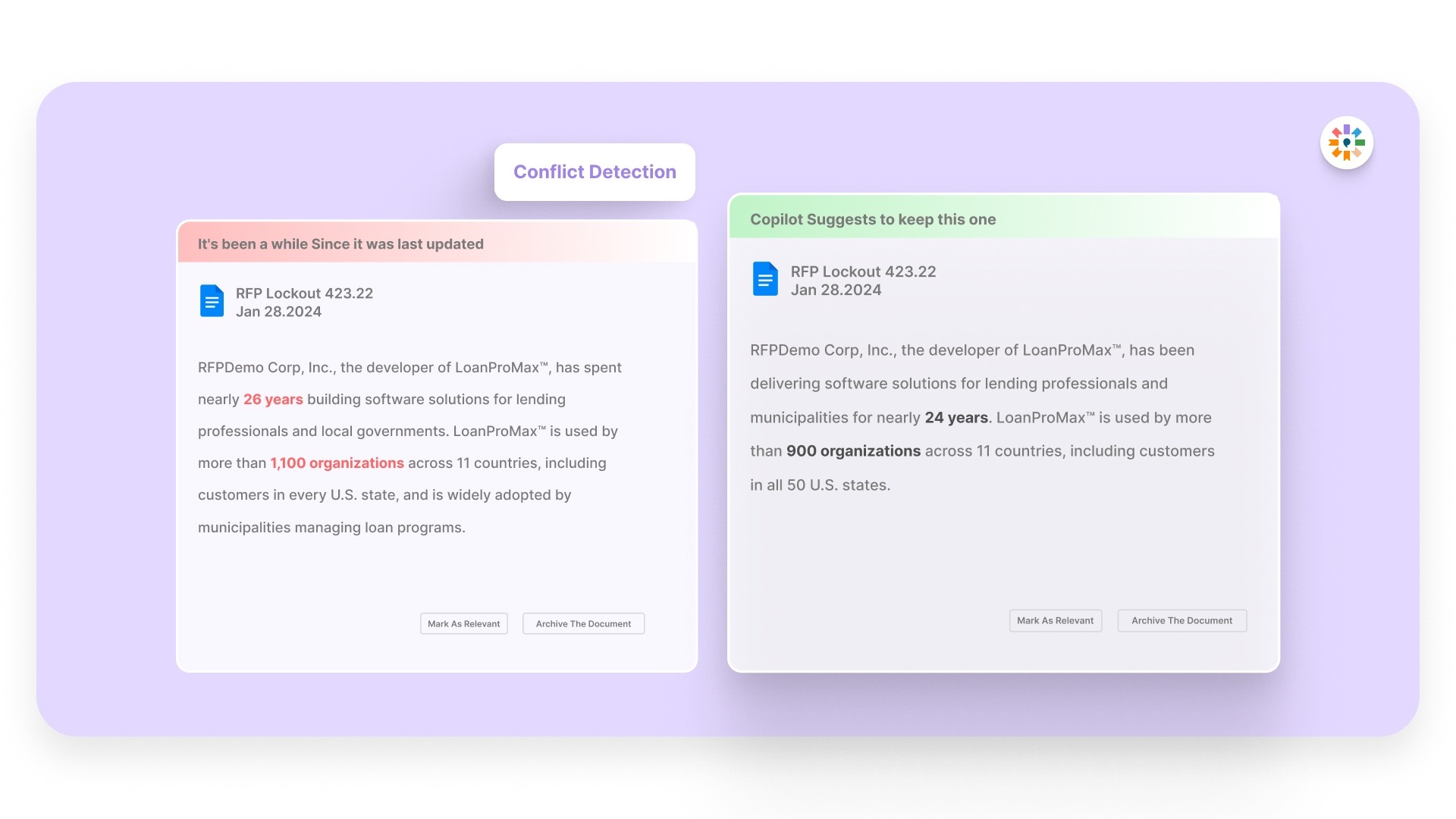
Inventive AI identifies conflicting answers across different sections before submission. It helps you catch inconsistencies early, so your response does not lose credibility during evaluation.
4. Outdated Content Detection
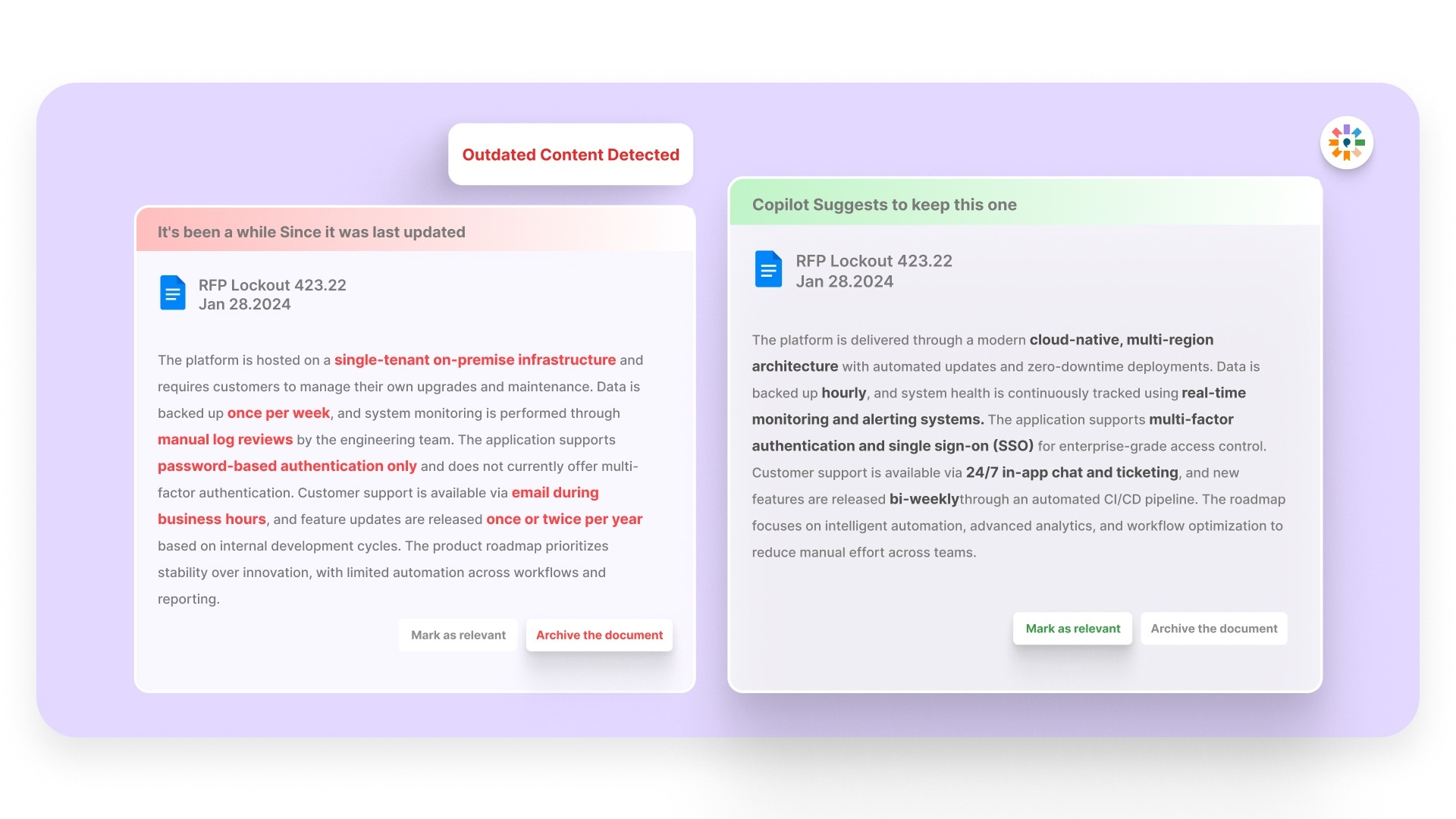
Inventive AI flags content that no longer reflects your current offering. It helps you avoid using outdated responses and keeps your answers aligned with your latest capabilities.
5. Narrative Style Proposals
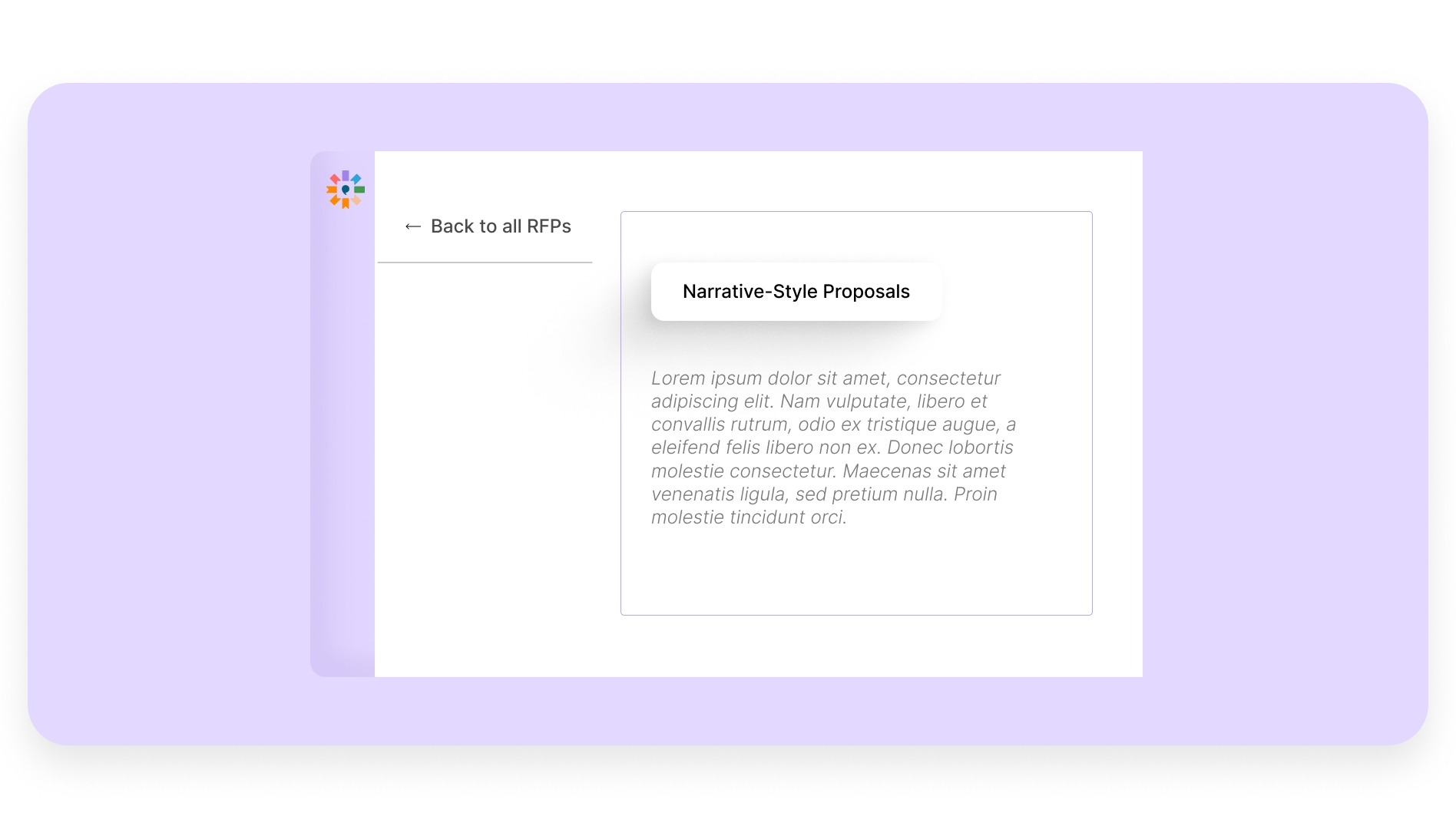
Inventive AI turns fragmented inputs into cohesive, readable responses. It helps you present a clear and consistent story instead of disconnected answers across sections.
6. Simple, Easy-to-Use Interface
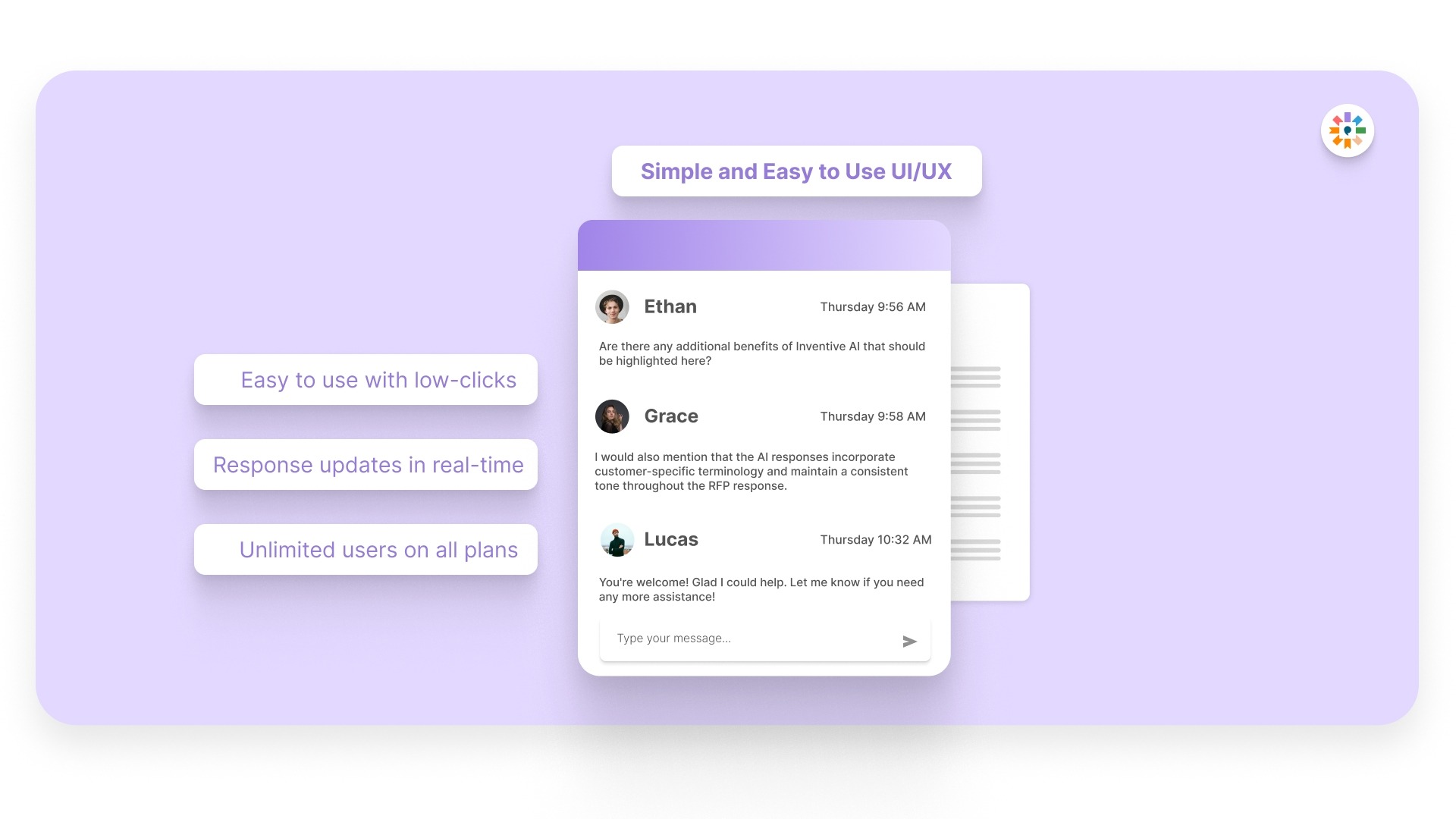
Inventive AI keeps all contributors aligned in one place. It reduces back-and-forth across tools and helps you move faster without losing control over the response.
With AI-powered RFP response software, Inventive AI helps you respond up to 10x faster with 95% accuracy, while improving your chances of winning.
Frequently Asked Questions (FAQs)
1. Does an RFP Analyst also write responses?
Yes, in most cases, an analyst is involved in both analysis and response creation. You start by breaking down the RFP and identifying priorities, but you also contribute to drafting or refining answers. Your role connects analysis with execution, so the final response stays consistent and aligned.
2. How do you handle unclear or ambiguous RFP questions?
You do not answer them at face value. You interpret intent by looking at surrounding sections, evaluation criteria, and similar questions. If ambiguity remains, you document assumptions or raise clarification questions early.
3. What metrics should you track to measure RFP effectiveness?
You should track win rate, response turnaround time, and revision cycles per proposal. These metrics help you understand if your analysis is improving speed, accuracy, and overall proposal quality.
4. How do you prioritize sections when working under tight deadlines?
You start with sections that carry higher evaluation weight or influence decision-making. This ensures that even if time is limited, your strongest responses are built where they matter most.
5. How can you improve collaboration across teams during RFP responses?
You create a clear response plan with defined ownership before drafting begins. Setting expectations early reduces back-and-forth and helps contributors stay aligned on tone and messaging.

90% Faster RFPs. 50% More Wins. Watch a 2-Minute Demo.

Hardi Hindocha
Knowing that complex B2B software often gets lost in jargon, Hardi focuses on translating the technical power of Inventive AI into clear, human stories. As a Sr. Content Writer, she turns intricate RFP workflows into practical guides, believing that the best content educates first and earns trust by helping real buyers solve real problems.
.avif)
Mukund Kumar
Understanding that sales leaders struggle to cut through the hype of generic AI, Mukund focuses on connecting enterprises with the specialized RFP automation they actually need at Inventive AI. An IIT Jodhpur graduate with 3+ years in growth marketing, he uses data-driven strategies to help teams discover the solution to their proposal headaches and scale their revenue operations.