
Building a Corporate Knowledge Management System: A Comprehensive Guide for Sales Professionals

Every day, your sales team spends hours hunting for the right proposal templates, content, or past responses to RFPs. Yet, more often than not, they can’t find what they need fast enough, causing delays and missed opportunities.
In fact, research shows that employees spend up to 20% of their workweek searching for information that’s already available within the company. For sales teams, that’s precious time that could have been spent closing deals or refining strategies.
How about your team has instant access to the information they need, exactly when they need it? A Corporate Knowledge Management System (KMS) does exactly that. It creates a central hub that empowers your team to respond faster, collaborate more effectively, and stay on top of every proposal that comes their way.
By implementing a KMS, you can eliminate the frustration of searching for lost information, significantly cut down response times, and deliver high-quality proposals that meet client expectations.
In this guide, we’ll show you how a KMS can simplify your processes, boost your win rates, and give your team the edge they need to succeed.
Key Takeaways
- A Corporate Knowledge Management System (KMS) centralizes all your company’s knowledge in one place, making it easier to find, share, and use.
- Why Implement a KMS? It helps teams make faster decisions, collaborate better, and improve productivity by reducing time spent searching for information.
- Inventive AI enhances your KMS by improving response quality, detecting conflicts, and keeping content up to date automatically.
- Steps to Set Up a KMS: Align goals, audit existing knowledge, choose the right platform, and gradually roll out the system while tracking its performance.
- Common challenges include fragmented information, outdated content, and reluctance to share knowledge. The solution: centralize, update regularly, and encourage sharing.
What is a Corporate Knowledge Management System?
A Corporate Knowledge Management System (KMS) is a centralized platform that enables organizations to capture, organize, store, and share knowledge across the entire business. A KMS manages both explicit and tacit knowledge. This includes documents, manuals, and expert insights. It ensures your team finds information fast. No more wasted time searching.
With a KMS, you can:
- Consolidate your organization’s knowledge in one easy-to-use location.
- Enable employees to find relevant information quickly by using powerful search and categorization features.
- Enhance collaboration across teams, reducing redundant work and promoting knowledge sharing.
A KMS empowers your organization to make better, faster decisions by ensuring the right information is always accessible and up to date.
Also Read: Top Sales Knowledge Management Tools in 2026
6 Key Benefits Your Business Gains from Implementing a Knowledge Management System
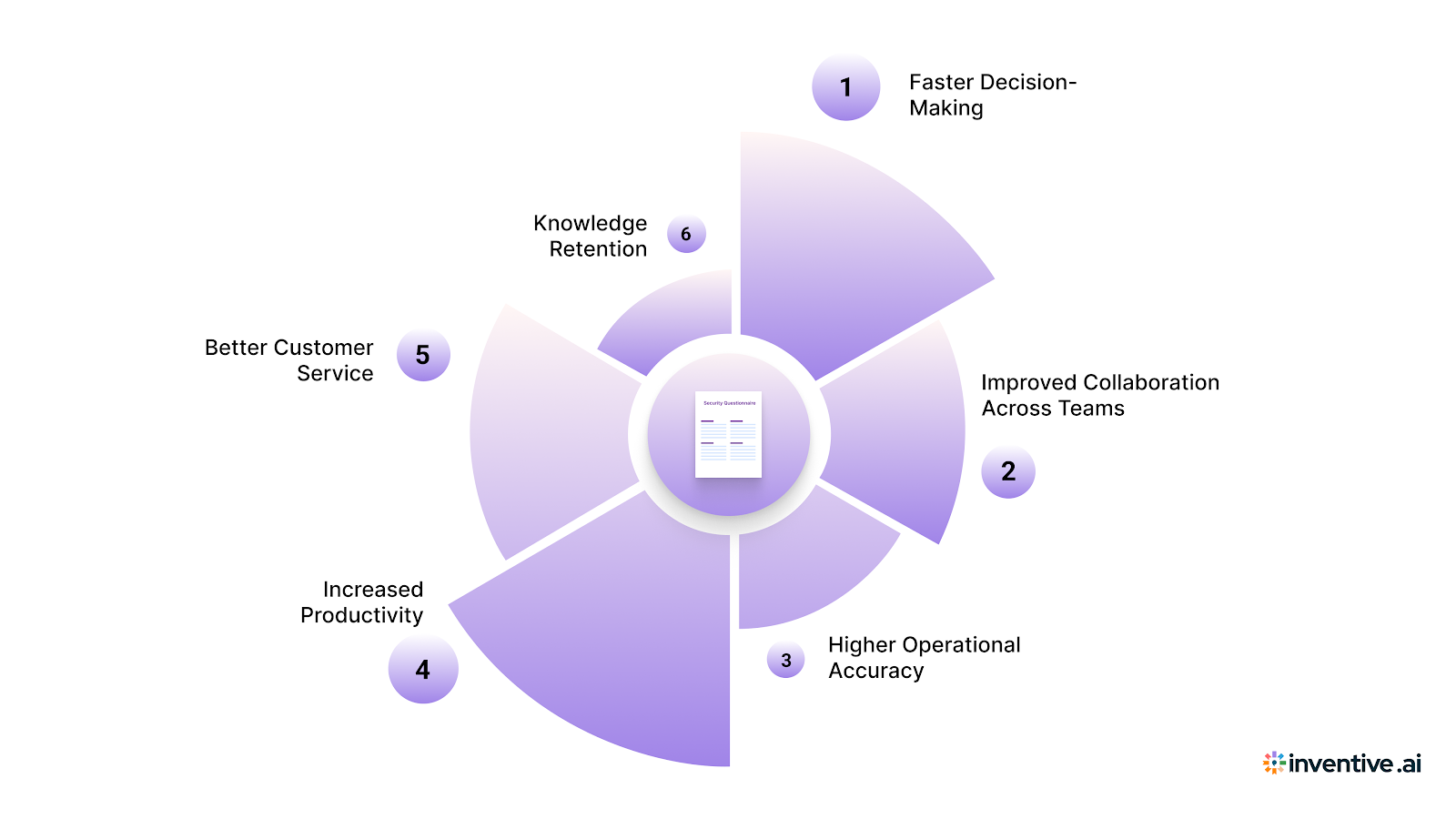
Implementing a knowledge management system is more than just a technological upgrade; it’s an investment in your team’s productivity and efficiency.
Here’s how it can make a real impact:
1. Faster Decision-Making: When employees can quickly access the information they need, they can make more informed, quicker decisions that drive business momentum.
2. Improved Collaboration Across Teams: By centralizing knowledge, teams from different departments can seamlessly collaborate, using collective expertise to solve problems more efficiently.
3. Higher Operational Accuracy: With up-to-date and relevant content available at their fingertips, employees can reduce errors and ensure tasks are performed with greater precision.
4. Increased Productivity: By eliminating the time spent searching for information, employees can focus on more value-driven activities, leading to better productivity boost.
5. Better Customer Service: A well-structured KMS allows customer service teams to quickly access FAQs, case studies, and product details, reducing response times and enhancing customer satisfaction.
6. Knowledge Retention: A KMS ensures critical organizational knowledge isn’t lost when employees leave or retire, helping preserve institutional knowledge for the future.
A knowledge management system is a strategic investment that improves decision-making, collaboration, and overall business performance.
6 High-Impact Types of Knowledge Management Systems to Achieve Real Results
Not all knowledge management systems are created equal. Depending on your specific needs, here are some types of KMS that can help your business streamline information sharing and improve efficiency:
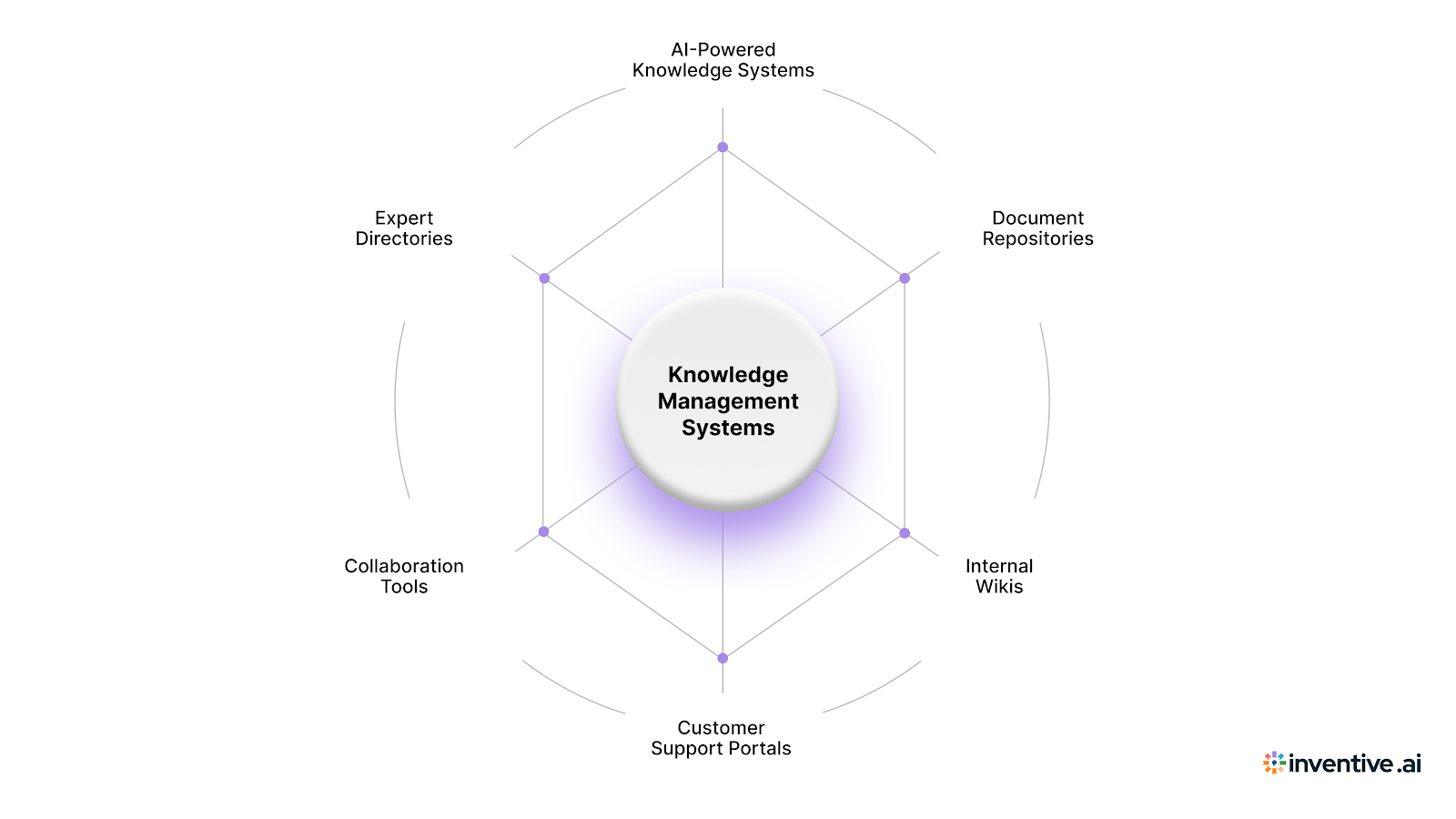
1. AI-Powered Knowledge Systems
These use artificial intelligence to enhance content management by tagging, categorizing, and automatically updating information. AI can also recommend relevant content based on user activity, improving both access and accuracy.
2. Document Repositories
Centralized locations for storing essential documents, manuals, policies, and procedures. They ensure that your team can quickly access and reference critical information, eliminating the need to reinvent the wheel with each project.
3. Internal Wikis
A dynamic, collaborative platform where employees can add, update, and edit content. Wikis allow for continuous knowledge growth, making it easy to capture and share new insights, processes, and solutions within the organization.
4. Customer Support Portals
These portals enable both customers and employees to access helpful articles, troubleshooting guides, and FAQs. By providing quick answers to common issues, support portals improve customer experience and reduce the workload on support teams.
5. Collaboration Tools (e.g., Microsoft Teams, Slack)
These tools integrate knowledge sharing within daily workflows, allowing teams to collaborate, share documents, and communicate in real-time. By connecting people and content, they ensure that knowledge is instantly available when needed.
6. Expert Directories
A searchable database of subject-matter experts within your organization. These systems allow employees to quickly identify and reach out to experts for specific knowledge or advice, ensuring that critical insights are shared without delay.
Each type of system serves a unique purpose but contributes to a more efficient and effective knowledge-sharing culture within your organization. When used together, these systems ensure that your team has access to the right information at the right time, ultimately driving better business outcomes.
Also Read: What Is a Request for Qualifications (RFQ)? Meaning, Examples & Uses
9 Must-Have Features in an AI-Powered Corporate Knowledge Management System
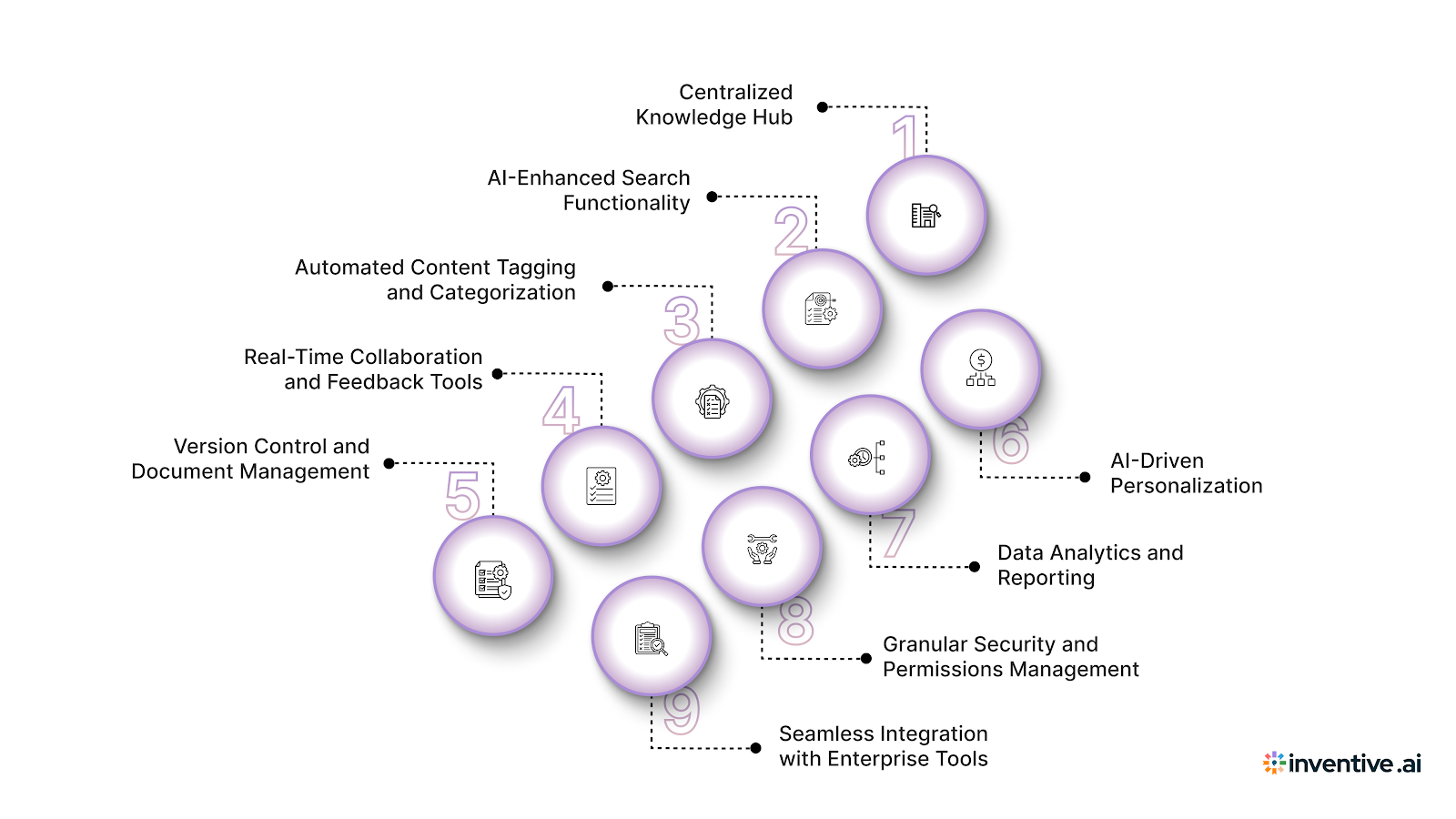
An AI-powered Corporate Knowledge Management System (KMS) goes beyond simple document storage. It equips your organization with the tools necessary to organize, access, and use knowledge effectively.
Below are the essential features that make a KMS truly impactful:
1. Centralized Knowledge Hub
A single, unified repository where all your organization’s knowledge is stored, making it accessible to everyone. This reduces silos, eliminates information gaps, and streamlines the process of retrieving vital documents, manuals, and templates.
2. AI-Enhanced Search Functionality
A powerful AI-driven search engine that allows users to find relevant content quickly and accurately. With contextual search, the system ranks results based on relevance, ensuring that employees can easily access the most pertinent information without having to sift through irrelevant documents.
3. Automated Content Tagging and Categorization
AI-powered systems can automatically tag, organize, and categorize content as it’s added to the repository. This intelligent tagging ensures that knowledge is consistently stored in the right categories and makes it easier to locate when needed.
4. Real-Time Collaboration and Feedback Tools
Empower teams to collaborate seamlessly within the system. With built-in tools for document sharing, editing, and real-time feedback, teams can easily contribute to projects, update knowledge, and refine proposals, ensuring alignment across departments.
5. Version Control and Document Management
AI-powered version control keeps track of all changes made to documents, ensuring that everyone is working with the most up-to-date content. This reduces the risk of errors, improves consistency, and allows teams to revert to earlier versions when necessary.
6. AI-Driven Personalization
Use AI to personalize the knowledge experience for each user. Based on their role, past interactions, or department, the system can recommend relevant content and prioritize information that’s most likely to be useful, making knowledge retrieval quicker and more efficient.
7. Data Analytics and Reporting
AI-powered analytics tools track how knowledge is used and shared across the organization. These insights help identify gaps in your knowledge base, measure content effectiveness, and highlight areas for improvement, ensuring your KMS continuously adapts to your team’s needs.
8. Granular Security and Permissions Management
Protect sensitive information with advanced security settings and AI-driven access control. This ensures that only authorized users can access confidential content, meeting compliance requirements while safeguarding critical data.
9. Seamless Integration with Enterprise Tools
A modern, AI-powered KMS integrates seamlessly with existing enterprise tools, such as CRM systems, email platforms, project management tools, and communication channels. This ensures that knowledge flows naturally between systems, improving collaboration and overall efficiency.
With AI-powered capabilities driving the system, your Corporate Knowledge Management System becomes an intelligent, adaptive tool that simplifies knowledge sharing. The right KMS tool boosts productivity and enhances decision-making.
Inventive AI offers exactly that. It is an AI-powered system that centralizes your proposal content, automates manual tasks, and improves team collaboration.
5 Practical Solutions to Overcome the Top Corporate Knowledge Management System Challenges
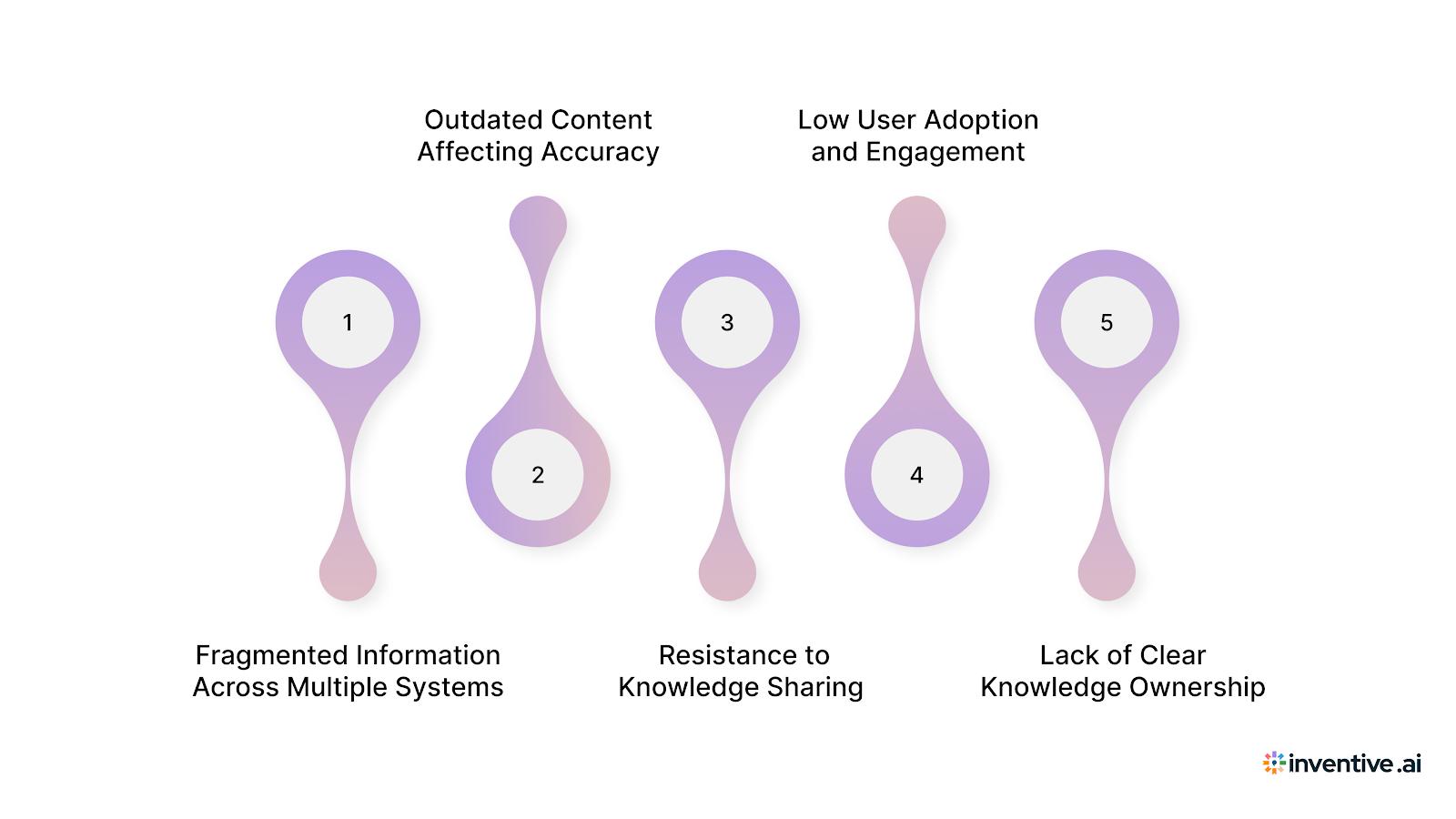
While a KMS provides numerous benefits, there are common challenges organizations face during implementation or daily use.
Here’s how to tackle them effectively:
1. Consolidate Knowledge into a Centralized System
When knowledge is stored in various places, from emails to shared drives, finding the right information becomes time-consuming and inefficient.
Centralize your knowledge in one accessible platform. By organizing everything in one place, employees can easily find the documents and insights they need without unnecessary delays. This cuts down on time spent searching and improves the overall efficiency of your team.
2. Establish Continuous Content Review and AI-Based Monitoring
Content becomes outdated quickly, and using stale or irrelevant information can lead to mistakes or missed opportunities.
Set up regular content review cycles and integrate AI-powered tools to flag outdated material. This ensures that the content your team relies on is always accurate, relevant, and aligned with current business goals, boosting the quality of your outputs.
3. Build a Culture That Encourages Knowledge Contribution
Employees might hold back from contributing knowledge, either due to fear of criticism or a lack of incentive to share what they know.
Create a culture that rewards knowledge sharing. Use recognition programs, gamification, or even peer-to-peer acknowledgment to encourage participation. When employees feel their contributions are valued, they’re more likely to actively share their expertise, enriching the entire team’s knowledge pool.
4. Integrate Knowledge Systems Into Daily Workflows
Even the best KMS can fall short if employees don’t actively use it. Low adoption rates lead to missed opportunities and underutilized resources.
Make the KMS part of the workflow by offering training and incentives. Encourage frequent use by ensuring it’s integrated into daily tasks and is easy to access. The more employees use it, the more valuable it becomes in improving productivity.
5. Assign Clear Knowledge Ownership and Accountability
Without clear accountability for who manages and updates knowledge, content can become disorganized, outdated, or duplicated.
Designate knowledge owners who are responsible for specific content areas. This not only keeps content organized but also helps prevent the issue of outdated or conflicting information from slipping through the cracks, ensuring a more efficient and accurate KMS.
Also Read: The Ultimate Guide to Crafting a Winning CRM RFI in 2026
By addressing these common challenges, your organization can fully realize the benefits of a knowledge management system, improving collaboration, reducing errors, and driving overall business performance.
5 Key Considerations for Choosing Best Corporate Knowledge Management System
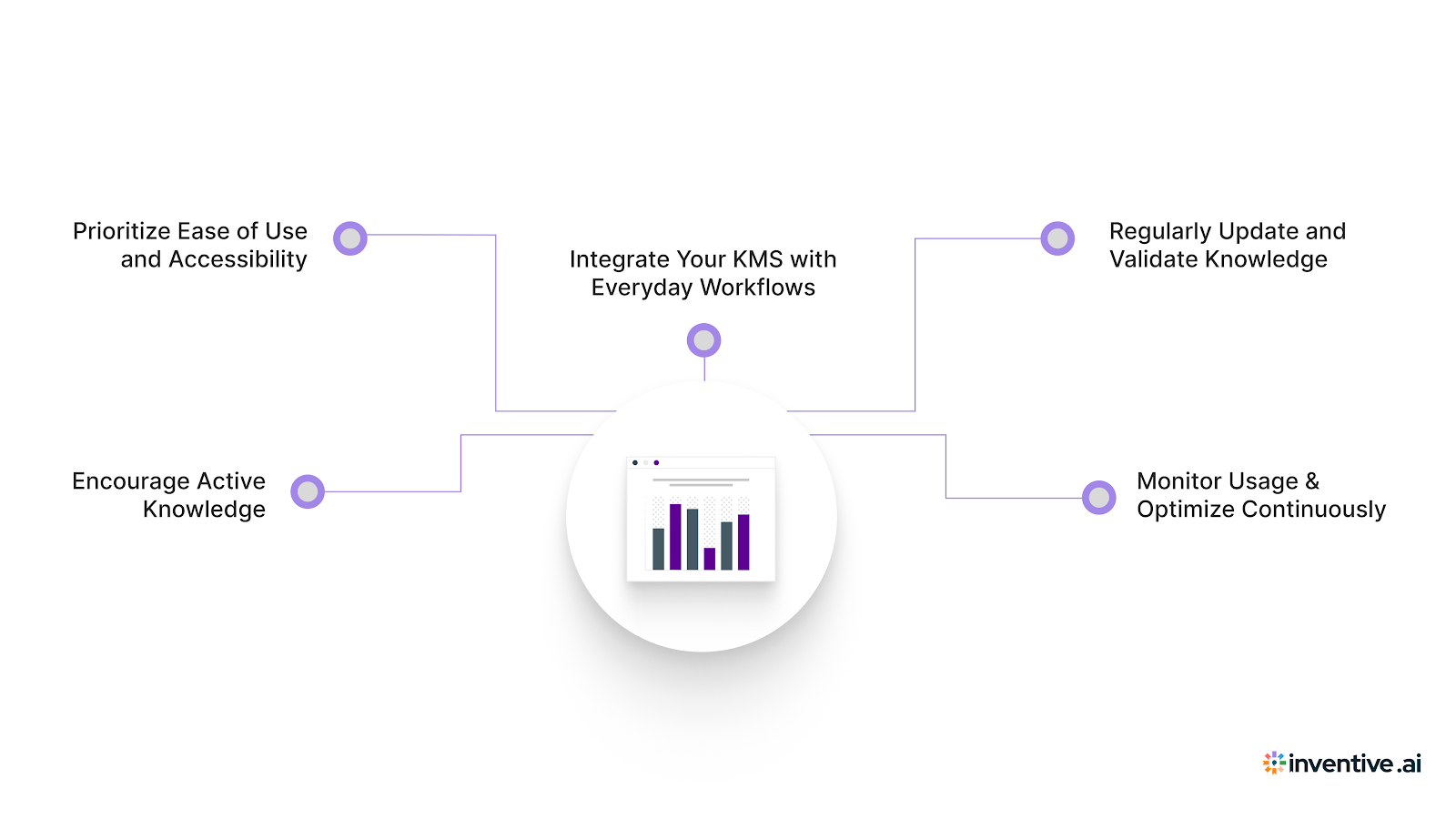
For your Knowledge Management System (KMS) to truly drive results, consider these aspects to ensure that it not only works but delivers real value to your organization:
1. Prioritize Ease of Use and Accessibility
A KMS must be intuitive to ensure widespread adoption. If employees struggle to navigate the system, they won’t use it consistently.
Make sure that the system is simple, user-friendly, and accessible across devices, ensuring that even less tech-savvy team members can easily find and contribute knowledge. Minimize friction by making knowledge retrieval quick and effortless.
2. Encourage Active Knowledge Contribution
A successful KMS isn’t just about access to information, it’s about active participation. Encourage employees to contribute knowledge regularly by creating a culture that values knowledge sharing. Implement incentive programs or recognition schemes to reward team members who share valuable insights and best practices.
3. Integrate Your KMS with Everyday Workflows
For the KMS to become an integral part of your organization, it needs to be embedded in your team’s daily processes. Ensure the system integrates seamlessly with existing tools like CRM, project management platforms, and communication tools (Slack, Teams, etc.). This reduces the need for additional steps and makes knowledge sharing part of the natural workflow.
4. Regularly Update and Validate Knowledge
Outdated knowledge can mislead your team and create inefficiencies. Implement processes to review and refresh content regularly, ensuring that all resources are current and relevant. Use AI-powered tools to flag outdated or conflicting information and automatically update documents to reflect the latest changes or industry standards.
5. Monitor Usage and Optimize Continuously
To maximize the effectiveness of your KMS, regularly track its performance using analytics tools. Monitor usage patterns, identify knowledge gaps, and gather feedback from employees. Use this data to continuously optimize the system and make adjustments based on user needs. An evolving system is key to keeping it valuable over time.
By following these best practices, you’ll build a knowledge management system that not only supports your team’s productivity but also grows with your business, ensuring long-term success.
Also Read: Marketing RFPs: A Practical Guide to Successful Responses
How Inventive AI Can Supercharge Your Corporate Knowledge Management System?
With Inventive AI, your team can take knowledge management to the next level. Here’s how our AI-powered RFP Response Software enhances your knowledge system:
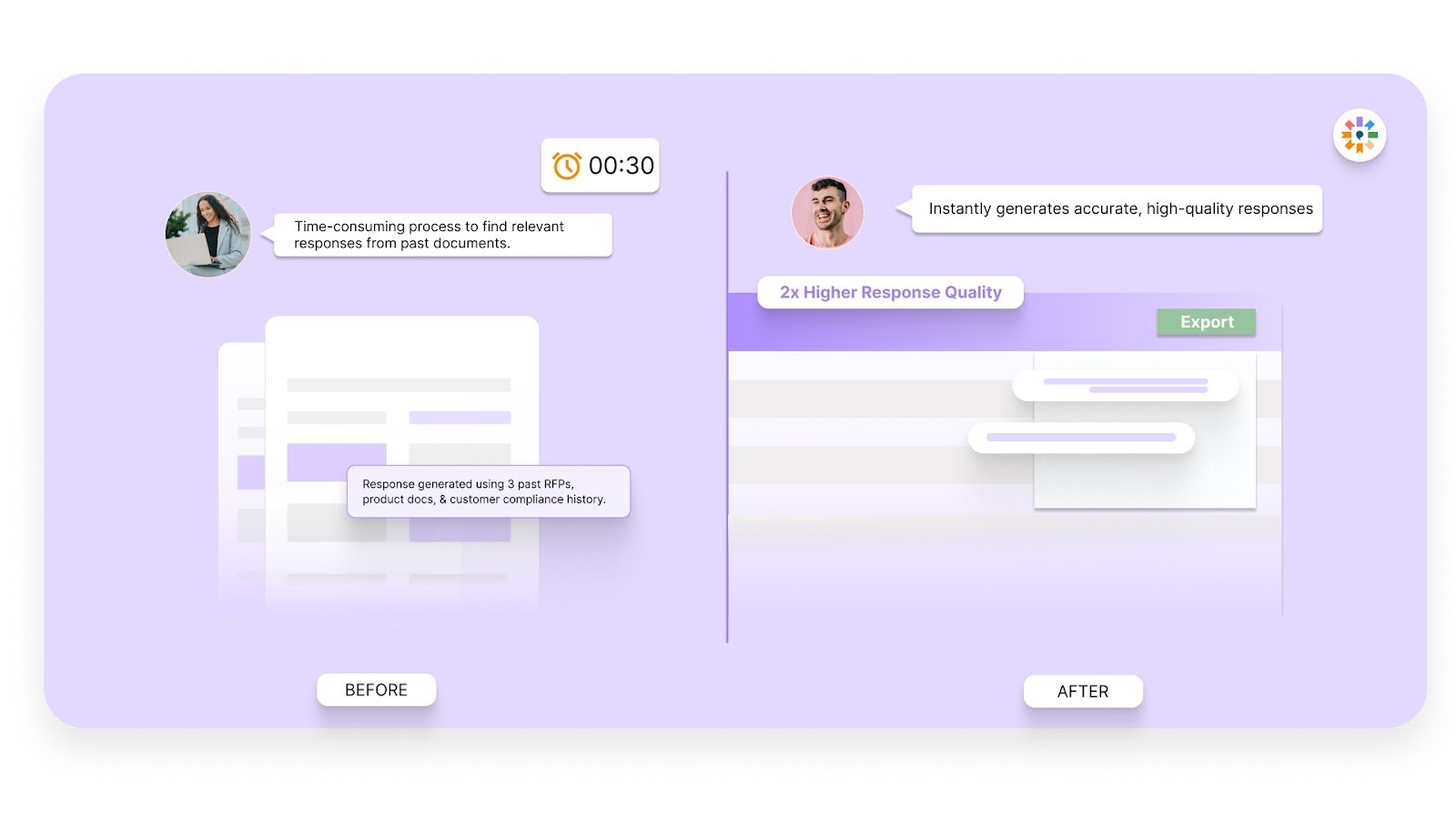
2× Higher Quality Responses
Our AI-driven system ensures that each RFP response is more accurate, relevant, and tailored, improving the quality of proposals.
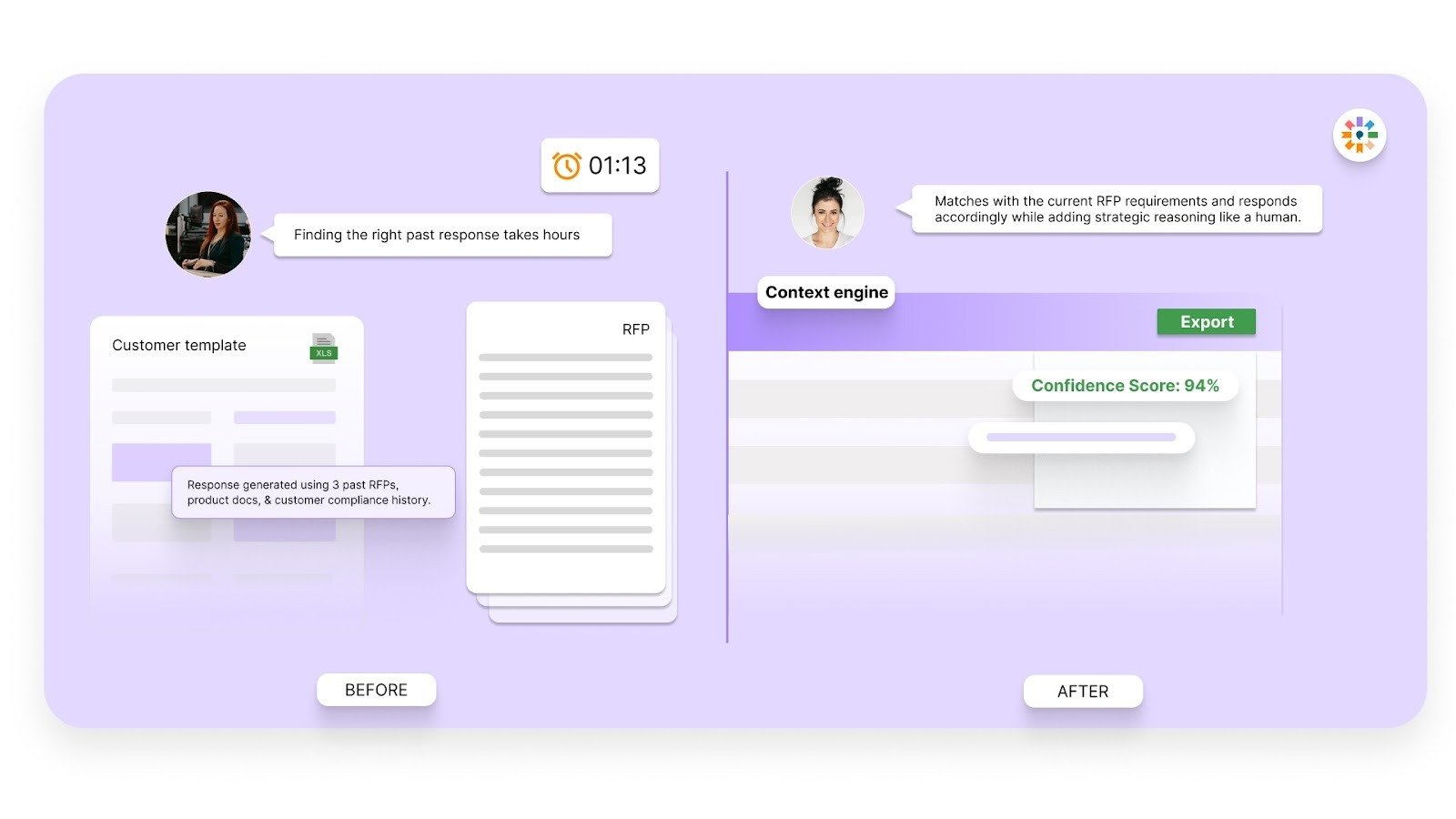
Context Engine
Inventive AI understands the context of each RFP, generating responses that are not only accurate but also aligned with the client’s unique needs.
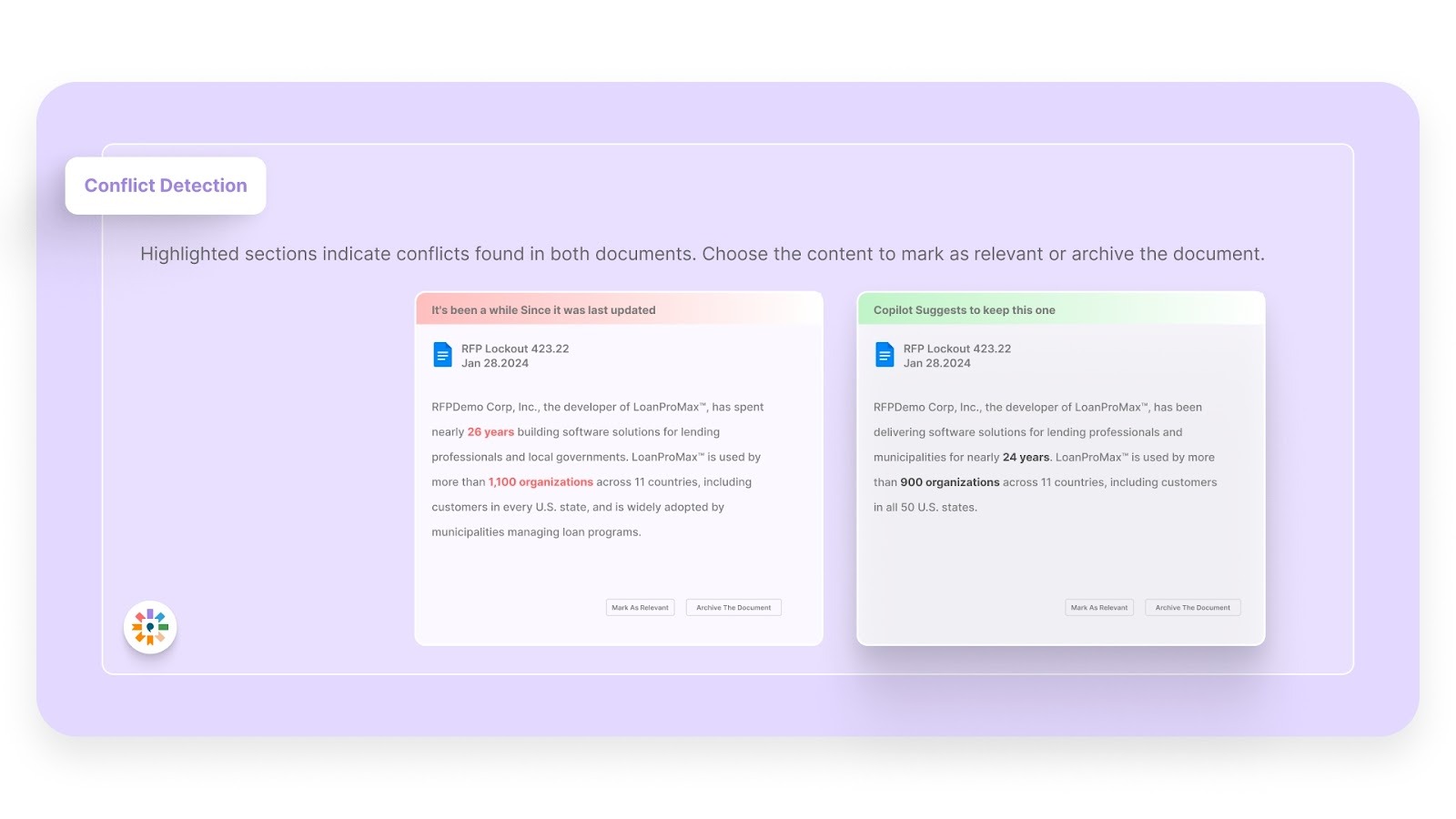
Conflict Detection
Our system automatically detects and flags conflicting information within proposals, reducing errors and ensuring consistency across documents.
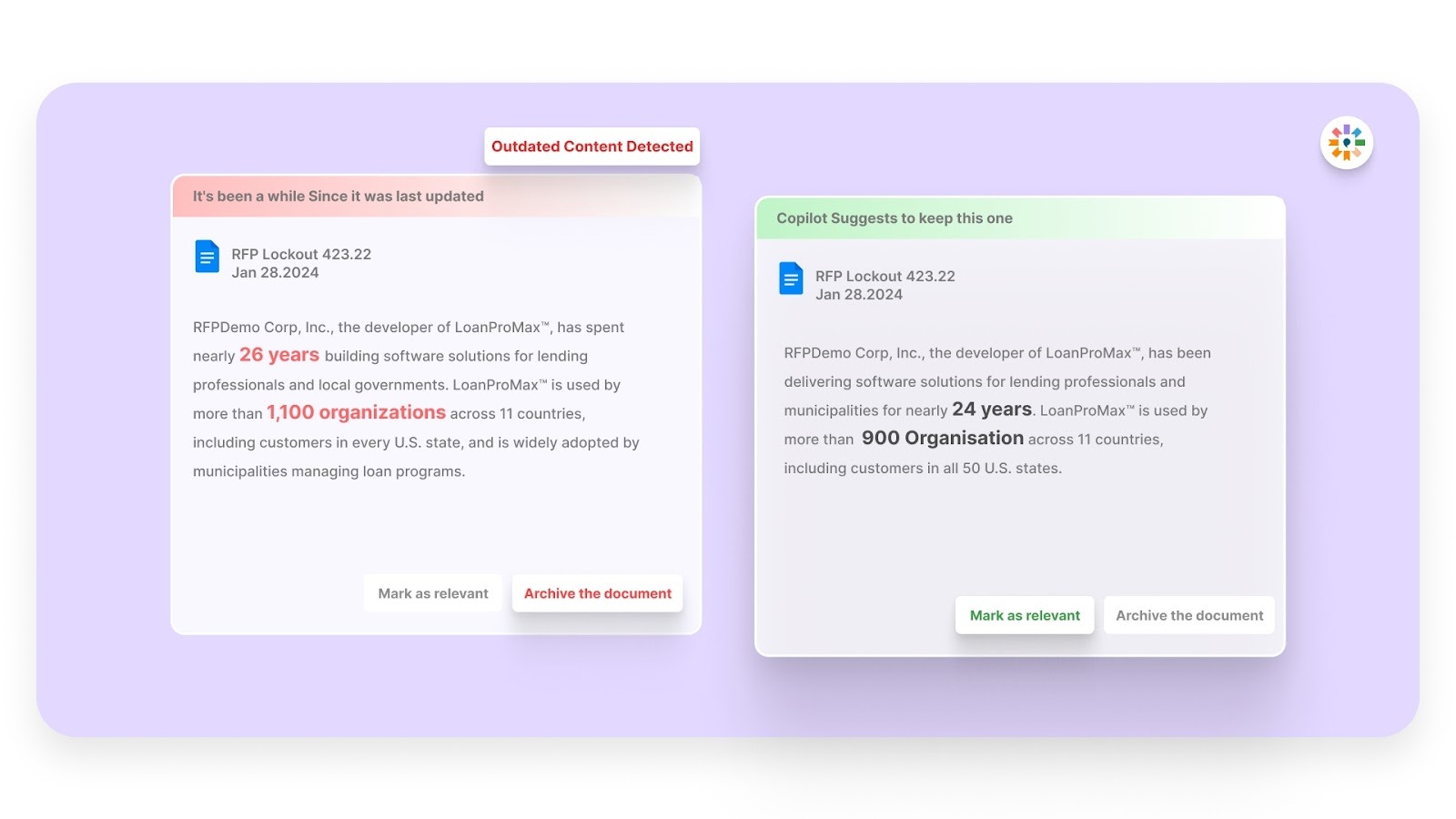
Outdated Content Detection
AI identifies outdated content, ensuring that only the most current and relevant information is used in your responses.
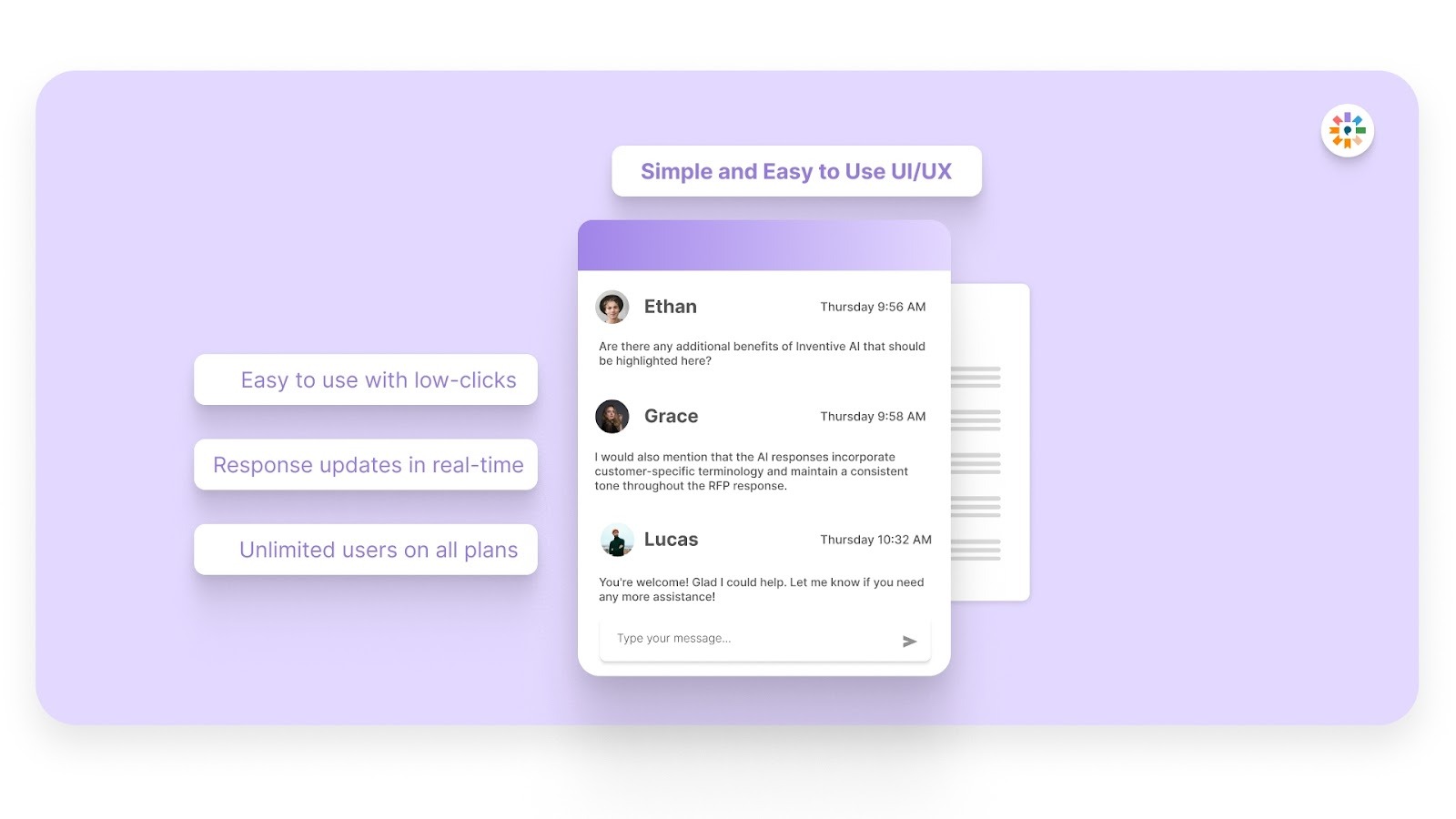
Simple, Easy-to-Use Interface
Inventive AI is designed to be intuitive and user-friendly, making it easy for teams to adopt and use without extensive training.
By using Inventive AI’s capabilities, your knowledge management system stores and organizes knowledge and actively improves your team's productivity and proposal accuracy.
Frequently Asked Questions (FAQs)
1. What are the best Knowledge Management Tools available in 2026?
There are several knowledge management tools on the market, each catering to different organizational needs. However, Inventive AI stands out as a clear winner. Its AI-powered capabilities centralize knowledge and improve the RFP response process with better content quality, conflict detection, and the most up-to-date information.
2. How can AI help in managing large volumes of knowledge?
AI plays a pivotal role in managing large volumes of knowledge by automating the categorization, tagging, and updating of content. It also helps in identifying relevant knowledge based on user behavior, making it easier for employees to find the information they need quickly.
Additionally, AI can flag outdated content and ensure the most accurate, up-to-date knowledge is always accessible, even as your knowledge base grows.
3. How can Knowledge Management Systems improve employee productivity?
A well-implemented KMS reduces time spent searching for information, enabling employees to focus on value-driven tasks. By providing quick access to accurate knowledge, teams can make faster, more informed decisions, which directly improves productivity and efficiency.
4. How can AI improve the efficiency of a Knowledge Management System?
AI enhances KMS by automating tasks like content categorization, updating outdated knowledge, and flagging conflicts. AI-powered tools can also recommend relevant content based on the user’s needs, ensuring employees spend less time searching for information and more time on meaningful work.
5. How do you maintain a Knowledge Management System over time?
To keep a KMS effective, implement regular content reviews and use AI-powered tools that automatically flag outdated or irrelevant information. Continuously gather user feedback, monitor system usage, and refine your processes to ensure the system evolves with the company’s needs.

90% Faster RFPs. 50% More Wins. Watch a 2-Minute Demo.
.avif)
Mukund Kumar
Understanding that sales leaders struggle to cut through the hype of generic AI, Mukund focuses on connecting enterprises with the specialized RFP automation they actually need at Inventive AI. An IIT Jodhpur graduate with 3+ years in growth marketing, he uses data-driven strategies to help teams discover the solution to their proposal headaches and scale their revenue operations.

Hardi Hindocha
Knowing that complex B2B software often gets lost in jargon, Hardi focuses on translating the technical power of Inventive AI into clear, human stories. As a Sr. Content Writer, she turns intricate RFP workflows into practical guides, believing that the best content educates first and earns trust by helping real buyers solve real problems.