
Intranet RFP Template: Win More Deals with Your Responses in 2026

Missing a key detail in an intranet RFP can cost you a six-figure contract, and it happens even to the most experienced vendors. Tight deadlines, complex scoring frameworks, and unclear evaluation criteria make responding stressful and high-risk. Many vendors struggle to clearly demonstrate their solution’s value while ticking all the buyer’s boxes.
Enterprises issue Intranet RFPs to evaluate vendors systematically, assessing functionality, technical fit, implementation approach, and commercial terms. Understanding this structure gives you the insight to respond confidently, align your solution with their expectations, and stand out from competitors.
In this blog, you’ll discover how to understand the buyer’s RFP template and craft your response to highlight your solution’s value and win more contracts.
Intranet RFP Template: What Every Buyer Looks for Before Shortlisting
Every intranet RFP section reflects a buyer’s priorities, evaluation criteria, and decision-making goals. Each section is designed to capture the information needed to assess functionality, technical fit, implementation approach, and overall value.
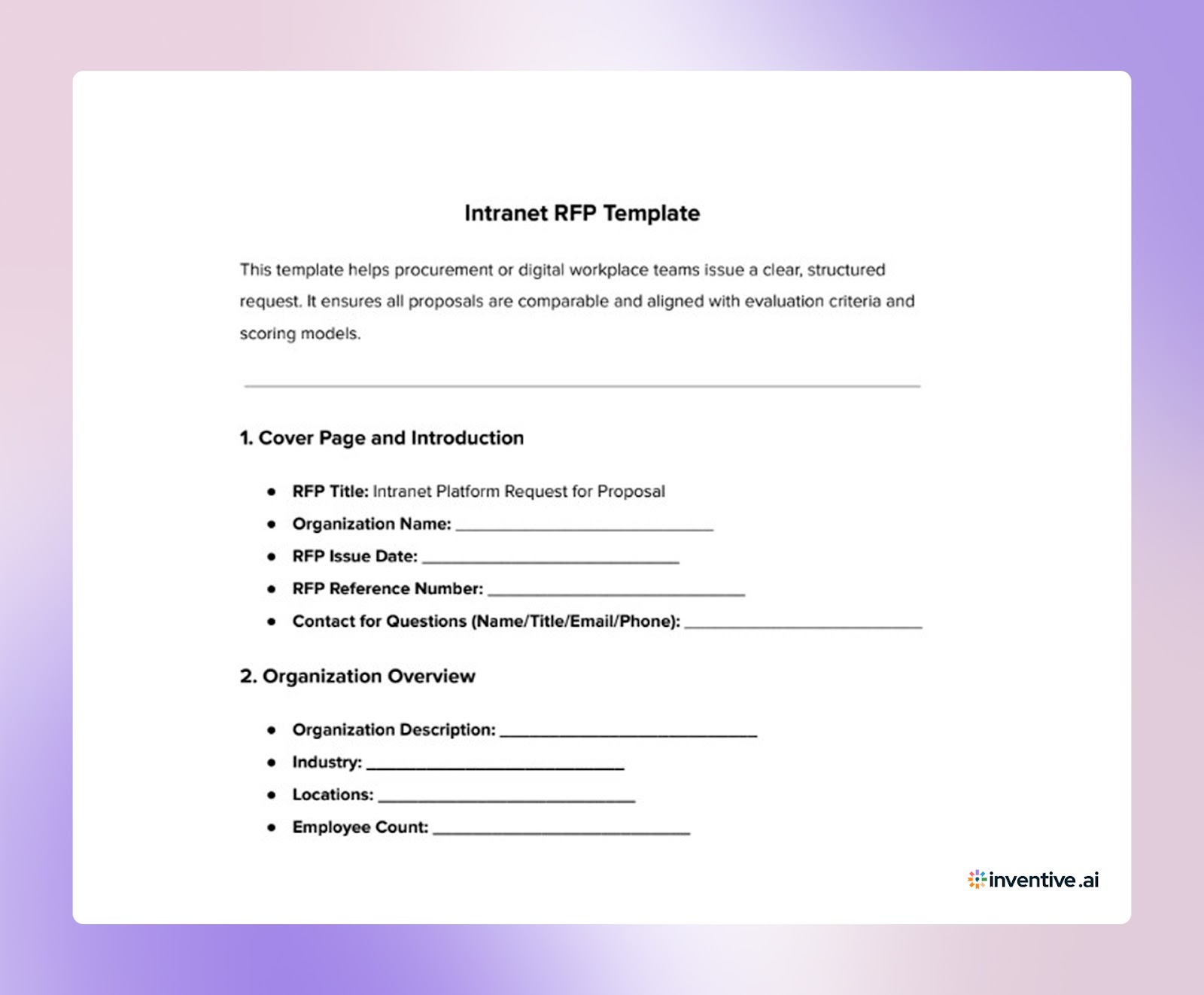

- Cover Page and Introduction: The cover page and introduction help buyers identify the RFP, track submissions, and communicate the purpose and organizational context. It ensures clarity on the organization’s objectives, scope, and evaluation process.
- Project Objectives: This section outlines the outcomes expected of the intranet, including improved collaboration, knowledge sharing, and employee engagement. Clearly defined objectives allow buyers to measure alignment between proposed solutions and organizational goals.
- Scope of Work: The scope defines required functionalities, technical capabilities, and integrations. It provides a consistent framework to evaluate whether submissions meet or exceed organizational requirements.
- Technical, Security, and Supplier Information: This section captures system architecture, integration capabilities, security compliance, and standardized information about potential suppliers. Buyers use it to assess technical fit, operational stability, and adherence to compliance standards.
- Implementation, Training, and Support: Buyers evaluate deployment timelines, training plans, and post-launch support. This ensures the intranet can be successfully adopted with minimal operational risk and optimal user engagement.
- Proposal Pricing: This section requires a detailed breakdown of licenses, services, and support. Buyers assess the total cost of ownership, budget alignment, and value for money across all proposals.
- Evaluation and Scoring Model: The evaluation model assigns weights to functional fit, technical compliance, cost, and references. Buyers use it to objectively score submissions and guide decision-making.
- Submission Instructions and Timeline: Submission rules include format, deadlines, delivery methods, and key decision milestones. This ensures fairness, timely receipt, and alignment with internal evaluation schedules.
- Contract Terms and Clarifications: This section outlines legal, confidentiality, and liability expectations and provides a formal process for questions. Buyers use it to ensure compliance, fairness, and transparency throughout the evaluation process.
Knowing what matters most to buyers lets you position your solution strategically in your RFP response. Let’s explore the Intranet RFP Response Template and how to fill it effectively.
Intranet RFP Response Template: Craft Winning Vendor Proposals
A well-structured template helps vendors structure clear, compliant, and persuasive proposals, ensuring every section highlights your solution’s value and aligns with buyer expectations.
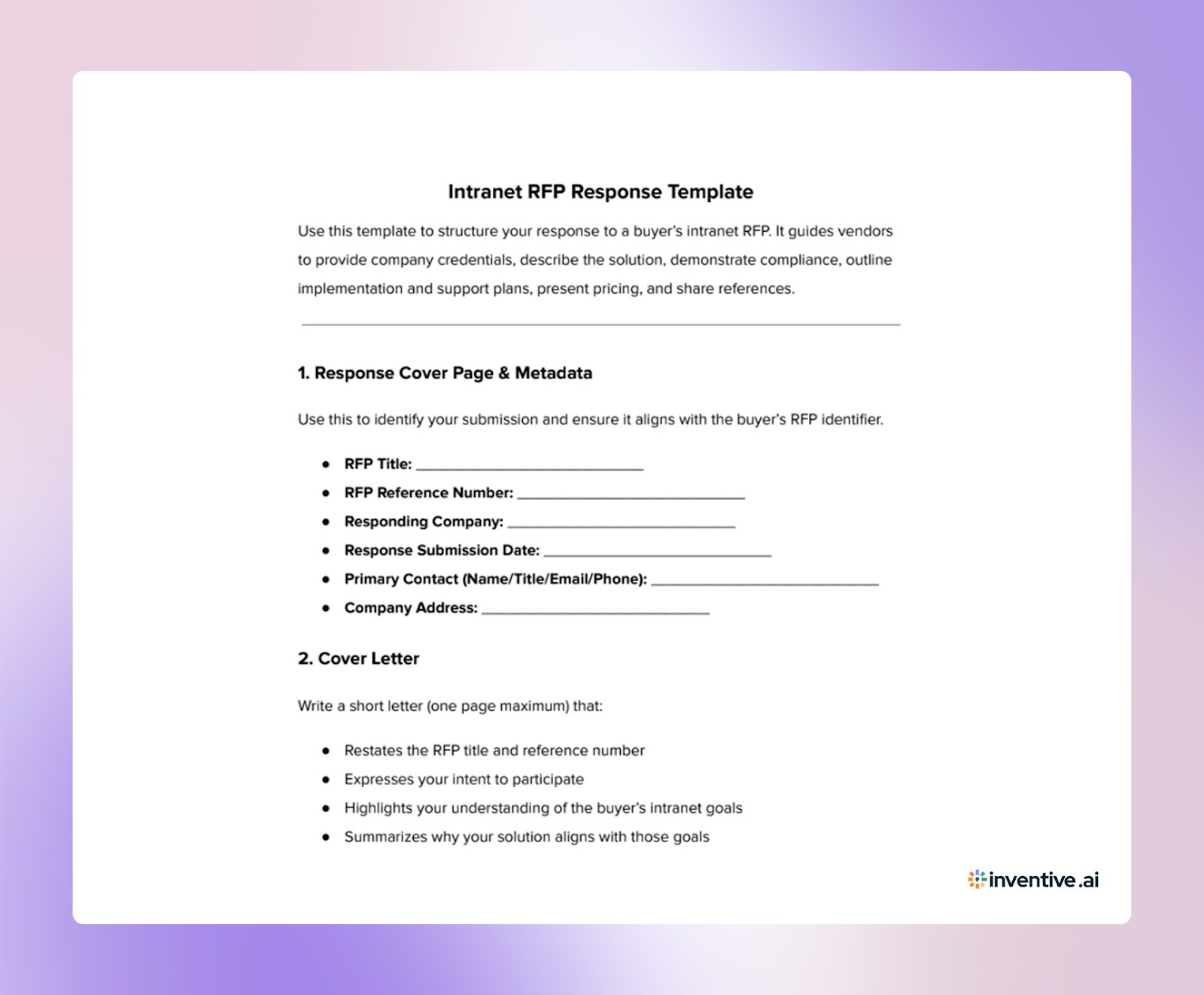
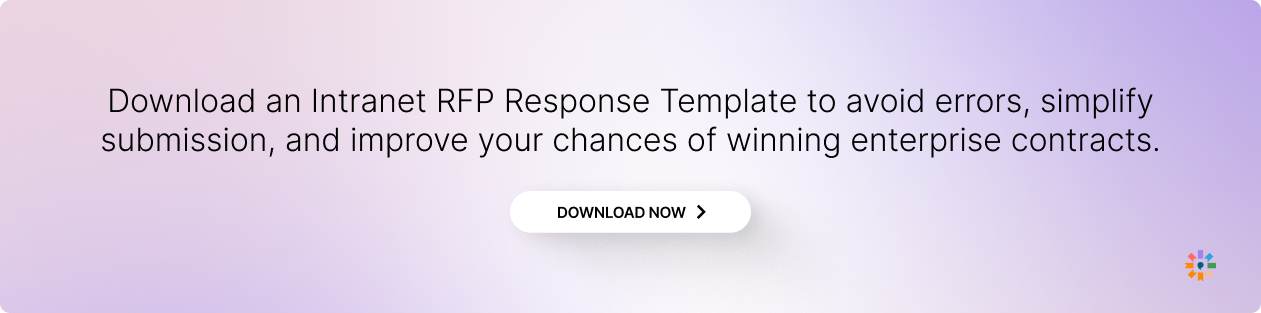
- Response Cover Page & Metadata: Capture RFP title, reference number, submission date, primary contact, and company information. This ensures your submission is correctly identified and traceable by the buyer.
- Cover Letter & Executive Summary: Provide a brief letter and summary highlighting your understanding of the buyer’s objectives, your solution’s key benefits, and top differentiators. This sets the context and positions your proposal for attention.
- Compliance & Requirements Matrix: Map each buyer requirement to your solution, including its status and supporting evidence. A clear matrix shows compliance at a glance and simplifies scoring for buyers.
- Company Overview & Credentials: Share the company's legal details, history, certifications, and relevant experience with intranet deployments. This demonstrates organizational capability and credibility to buyers.
- Solution Description: Describe functional capabilities, technical architecture, integrations, and security measures. Include compliance standards, backup policies, and any evidence attachments. Buyers evaluate how your solution meets technical and operational expectations.
- Implementation, Training, & Support: Provide a phased implementation timeline, rollout approach, training plan, and post-launch support model with SLAs. This section reassures buyers on adoption readiness and minimal operational risk.
- Risk Mitigation & Quality Assurance: Detail technical, schedule, and security risks with mitigation strategies, QA plans, and continuous improvement measures. This conveys reliability and proactive project management.
- Pricing & Commercial Proposal: Include detailed cost breakdowns for licenses, implementation, training, support, and optional modules. Buyers use this to assess total cost and compare across vendors.
- Project Team & Resumes: List key team members with brief credentials, and attach full resumes upon request. Buyers evaluate the team’s experience and capability to deliver successfully.
- References & Case Studies: Provide at least 3 client references and 1 or 2 case studies demonstrating similar intranet deployments and outcomes. Evidence of proven success strengthens credibility.
- Contract & Legal Terms: Address buyer-requested contractual terms, including data protection, warranties, payment terms, and liability limits. This confirms compliance and readiness to engage.
- Attachments & Supporting Evidence: Attach all required documentation, including security certifications, integration diagrams, compliance reports, and datasheets. Complete attachments prevent non-compliance and scoring penalties.
Also Read: RFP Response Trends and Benchmarks: Key Insights for 2026
Templates provide structure, but smart response strategies turn your RFP into a clear, persuasive, and buyer-ready proposal. Let’s explore best practices to maximize impact and win.
Best Practices to Avoid Errors and Impress Buyers
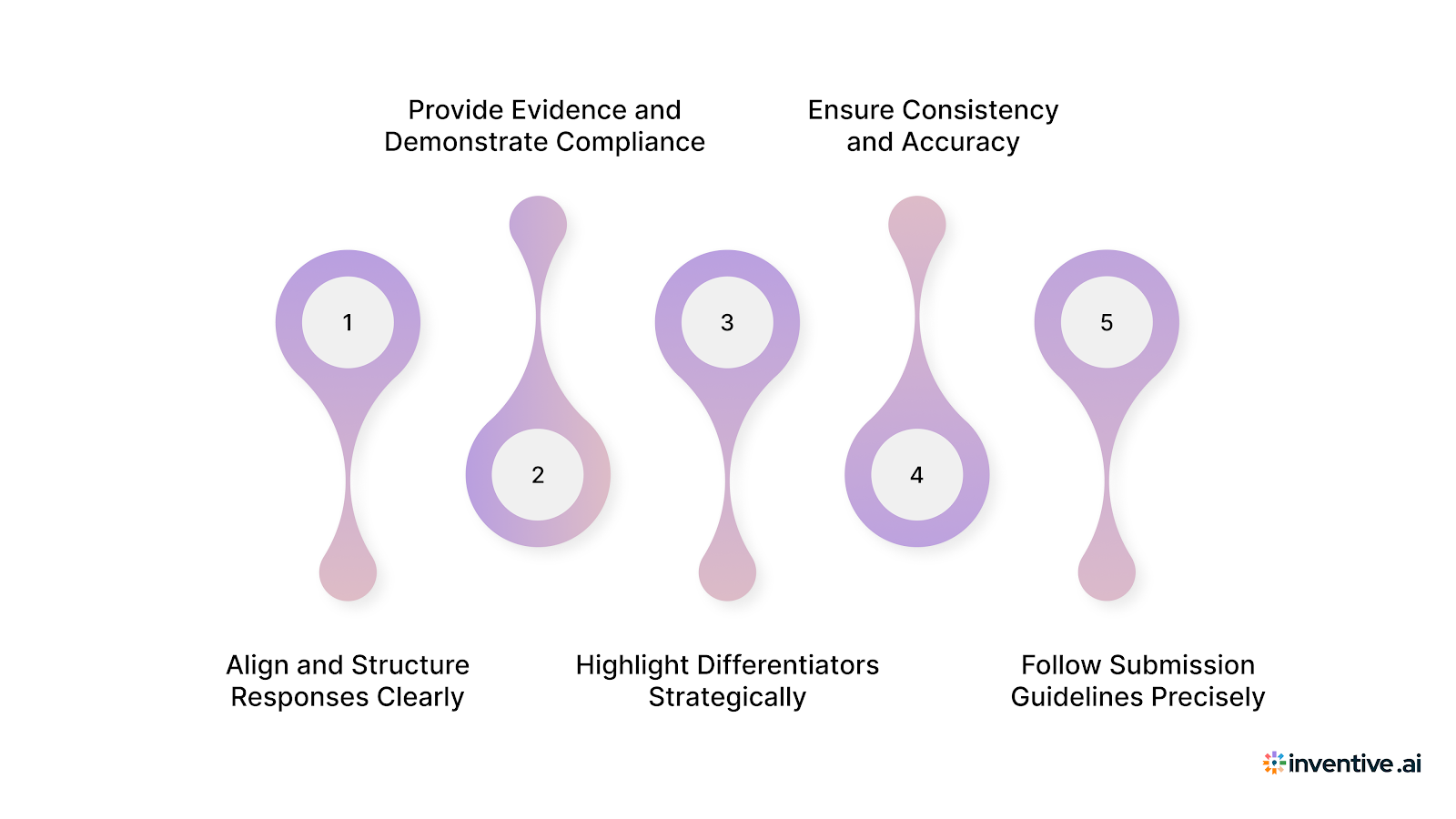
Responding to intranet RFPs requires more than filling out sections; it demands clarity, alignment, and evidence-backed answers. Following best practices ensures that your proposal is professional and persuasive and positions your solution as the optimal choice.
- Align and Structure Responses Clearly
Map each section to buyer objectives and requirements, using bullet points, tables, and diagrams for readability. Structured, concise answers make evaluation easier and highlight relevance.
- Provide Evidence and Demonstrate Compliance
Include metrics, screenshots, certifications, or documentation wherever applicable. Clearly address technical, security, and regulatory requirements to reinforce reliability and reduce buyer uncertainty.
- Highlight Key Differentiators Strategically
Showcase unique features or services that solve buyer challenges. Use targeted examples to illustrate value without overwhelming evaluators.
- Ensure Consistency and Accuracy
Verify that figures, terminology, and references are uniform across solution descriptions, pricing, and requirement matrices. Accurate, consistent responses improve credibility and scoring.
- Follow Submission Guidelines Precisely
Adhere to format, deadlines, and attachment requirements exactly. Careful compliance demonstrates professionalism and prevents disqualification.
Careful application of these practices ensures your intranet proposal is not only complete but also compelling, credible, and fully aligned with buyer expectations, increasing your chances of winning the contract.
Also Read: 8 Best RFP Software for Small Teams in 2026
However, even with careful preparation, maintaining accuracy and consistency across multiple intranet RFP responses can be challenging. This is where technology can help streamline the process and reduce errors.
Submit Winning Intranet RFPs Faster with Inventive AI
Responding to multiple intranet RFPs is time-consuming, error-prone, and often involves scattered content across teams and systems. Inventive AI centralizes all RFP knowledge, automatically generates draft responses, flags outdated or conflicting information, and ensures every submission is aligned with buyer evaluation criteria.
Key Capabilities of Inventive AI:
2x Higher Response Quality
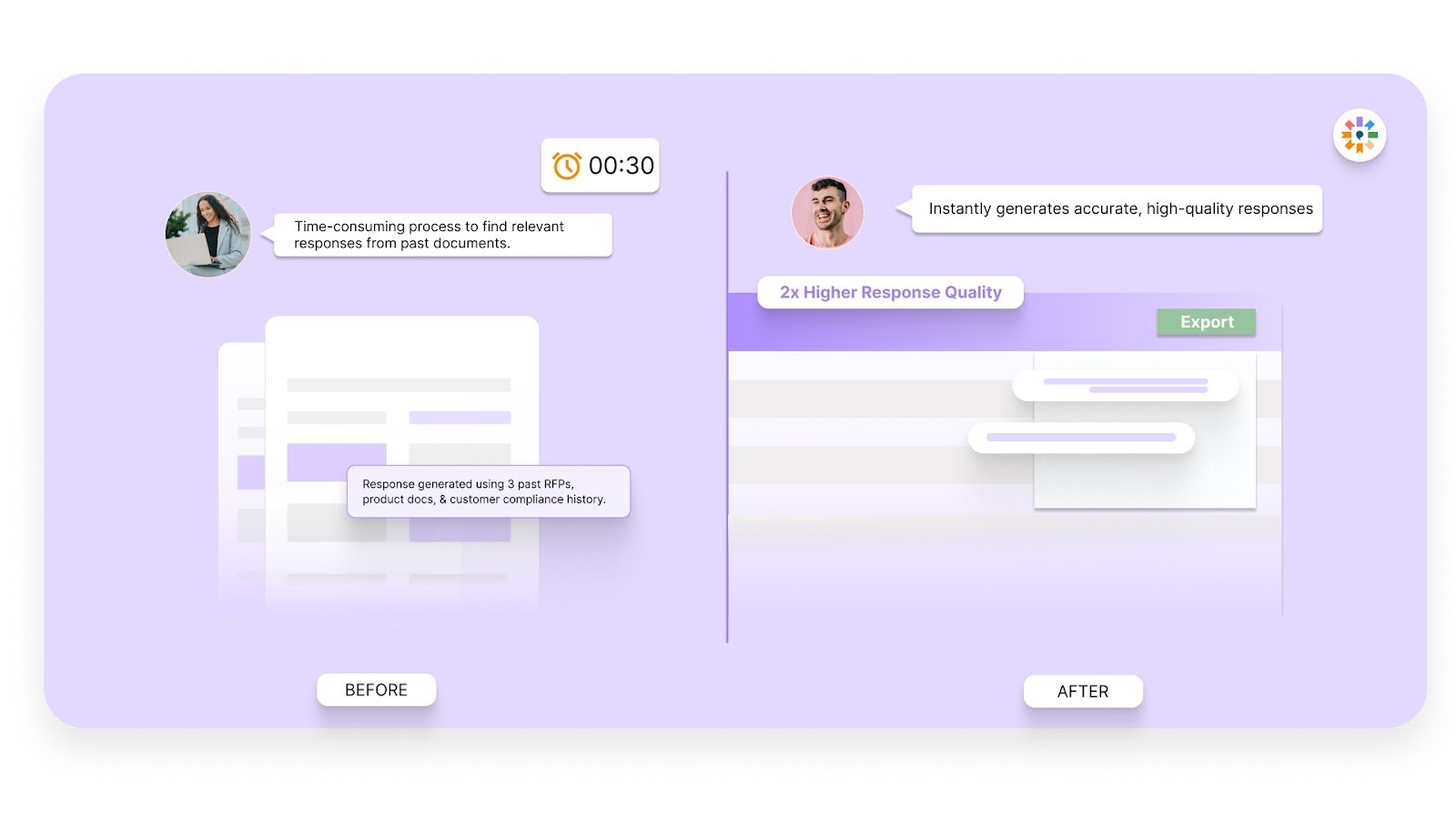
Multi-agent AI generates structured, complete responses that typically require minimal revision, improving submission consistency and enabling RFPs to be completed up to 90% faster.
Context-Awareness
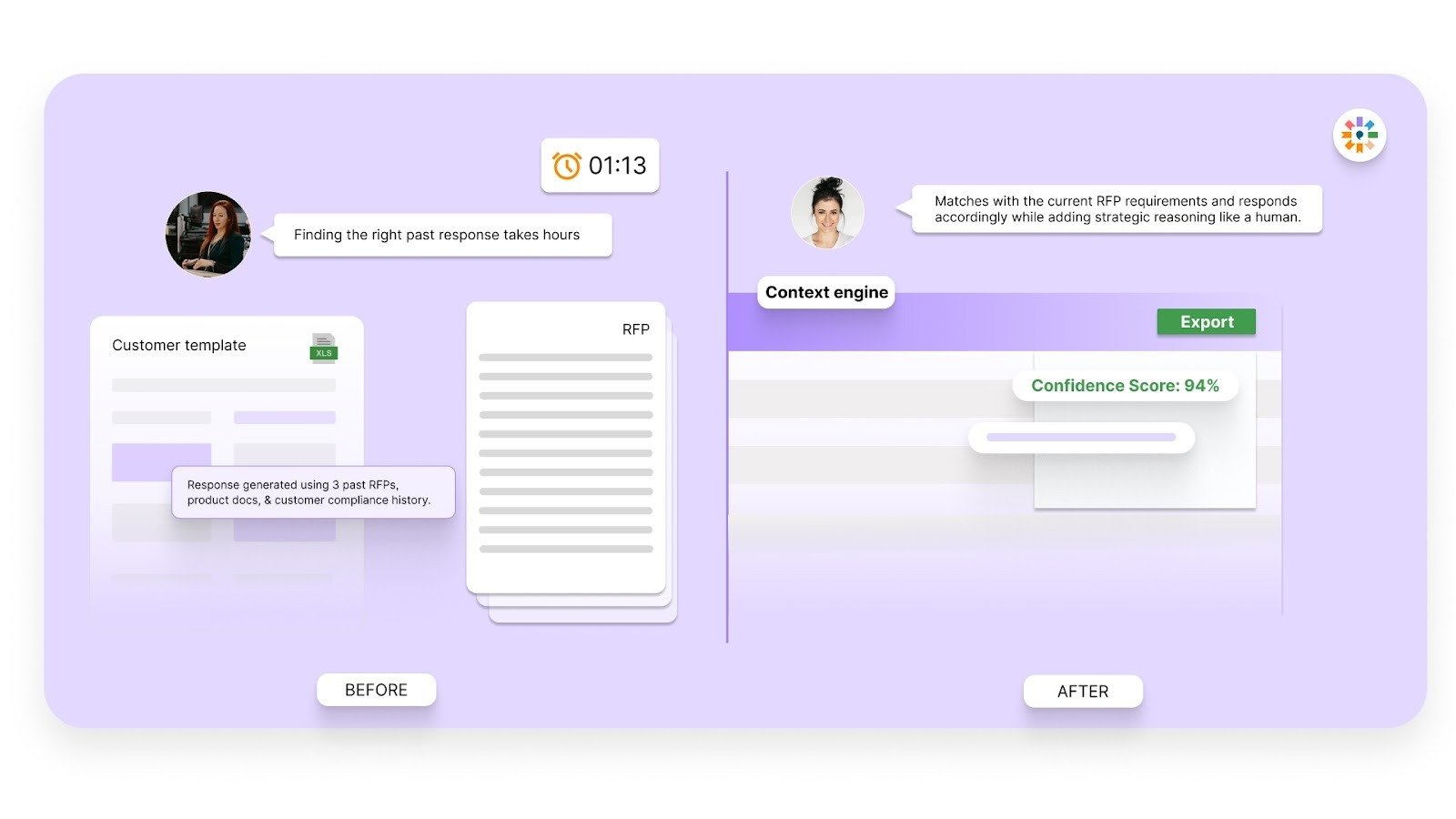
Inventive AI evaluates the entire construction RFP, including scope, compliance requirements, and evaluation criteria. Responses align with project-specific requirements rather than relying on static boilerplate, helping vendors achieve up to 50% higher win rates.
Instant Conflict Detection Before Submission
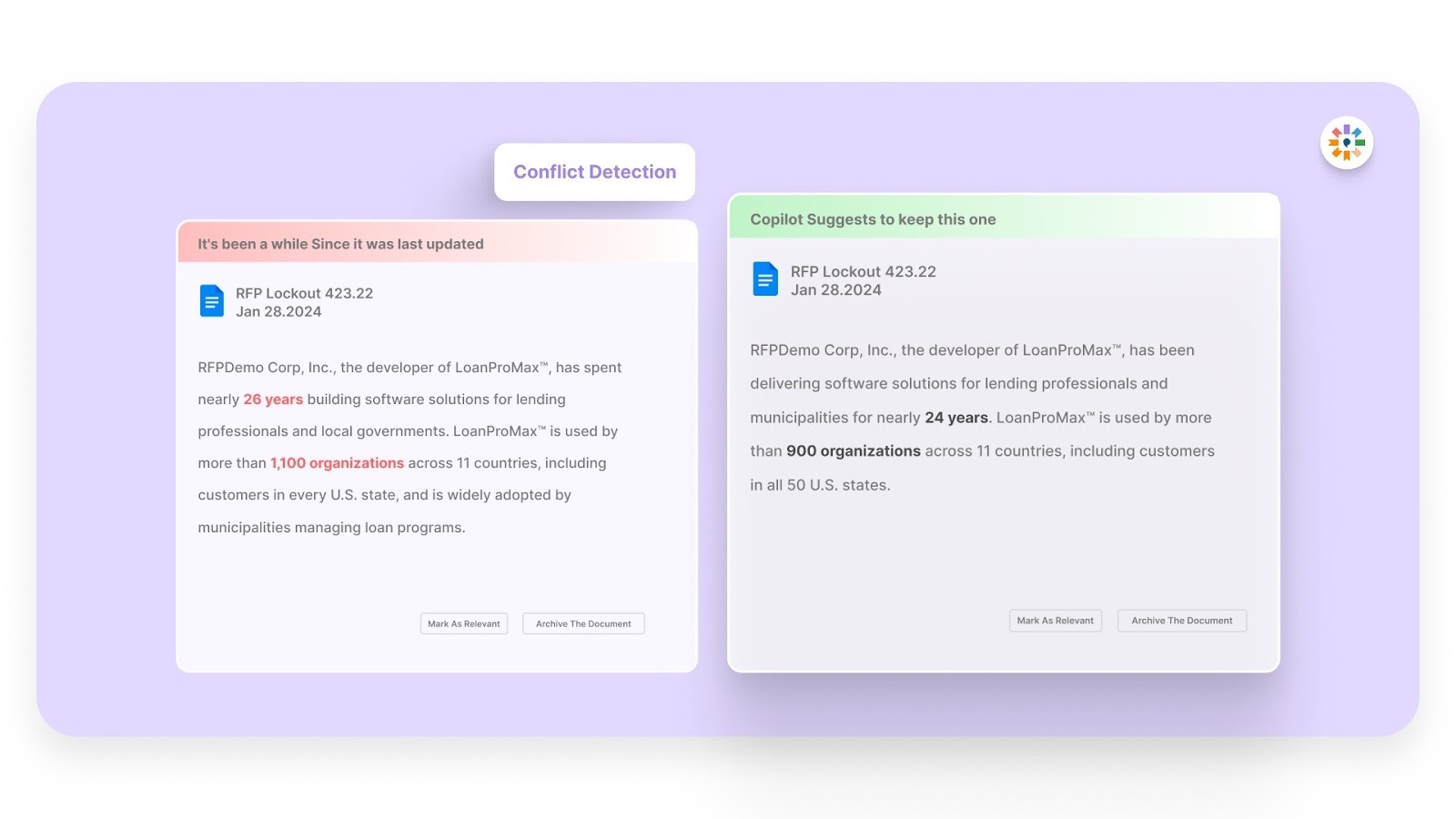
Avoid costly mistakes by having Inventive AI identify and resolve any inconsistencies or conflicts in your responses before submission, ensuring that everything is aligned and accurate.
Outdated Content Detection
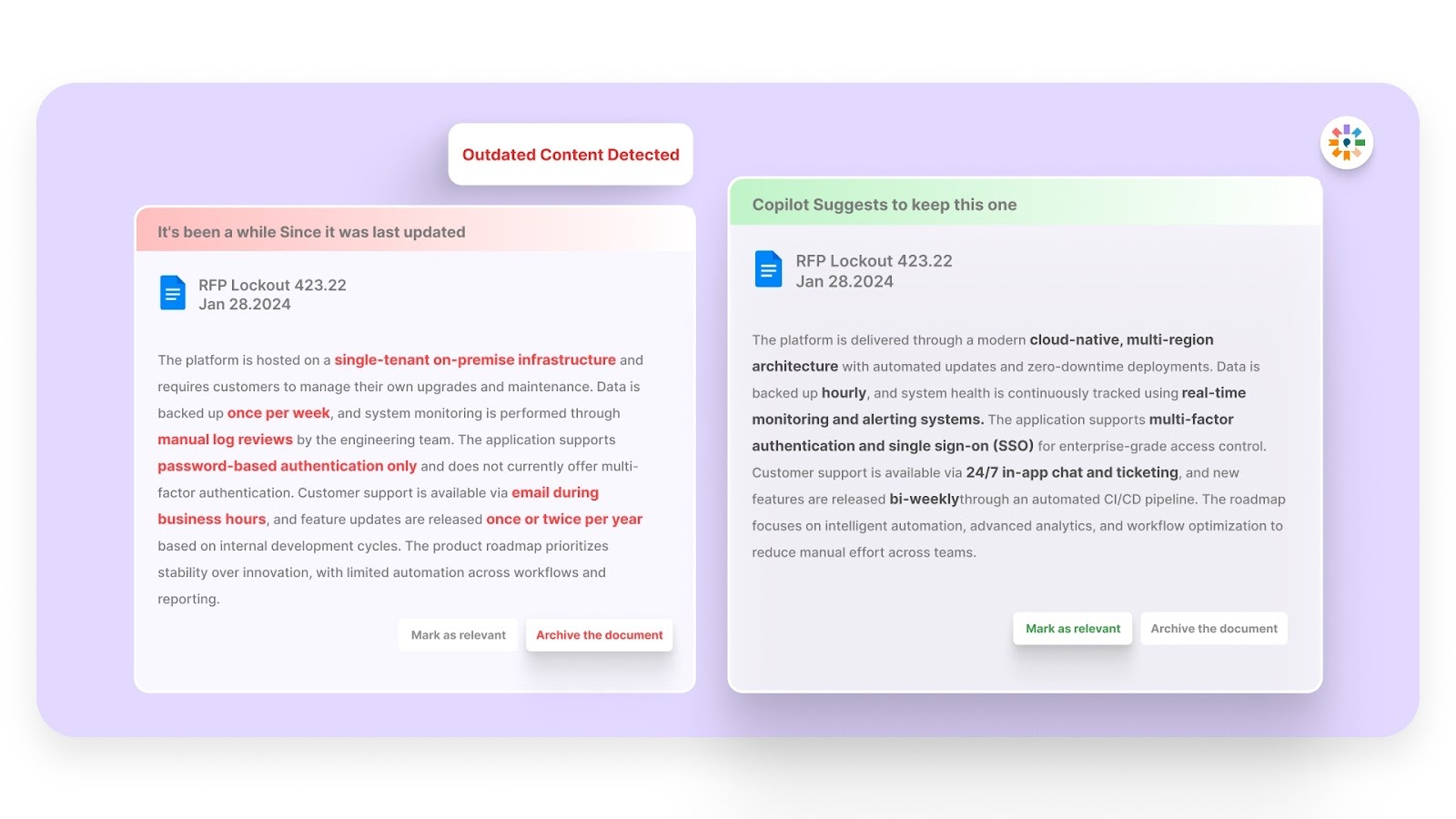
Never submit outdated information again. Inventive AI automatically flags and updates any content that is no longer relevant, so your responses stay fresh and aligned with the latest industry standards.
Narrative-Style Proposals
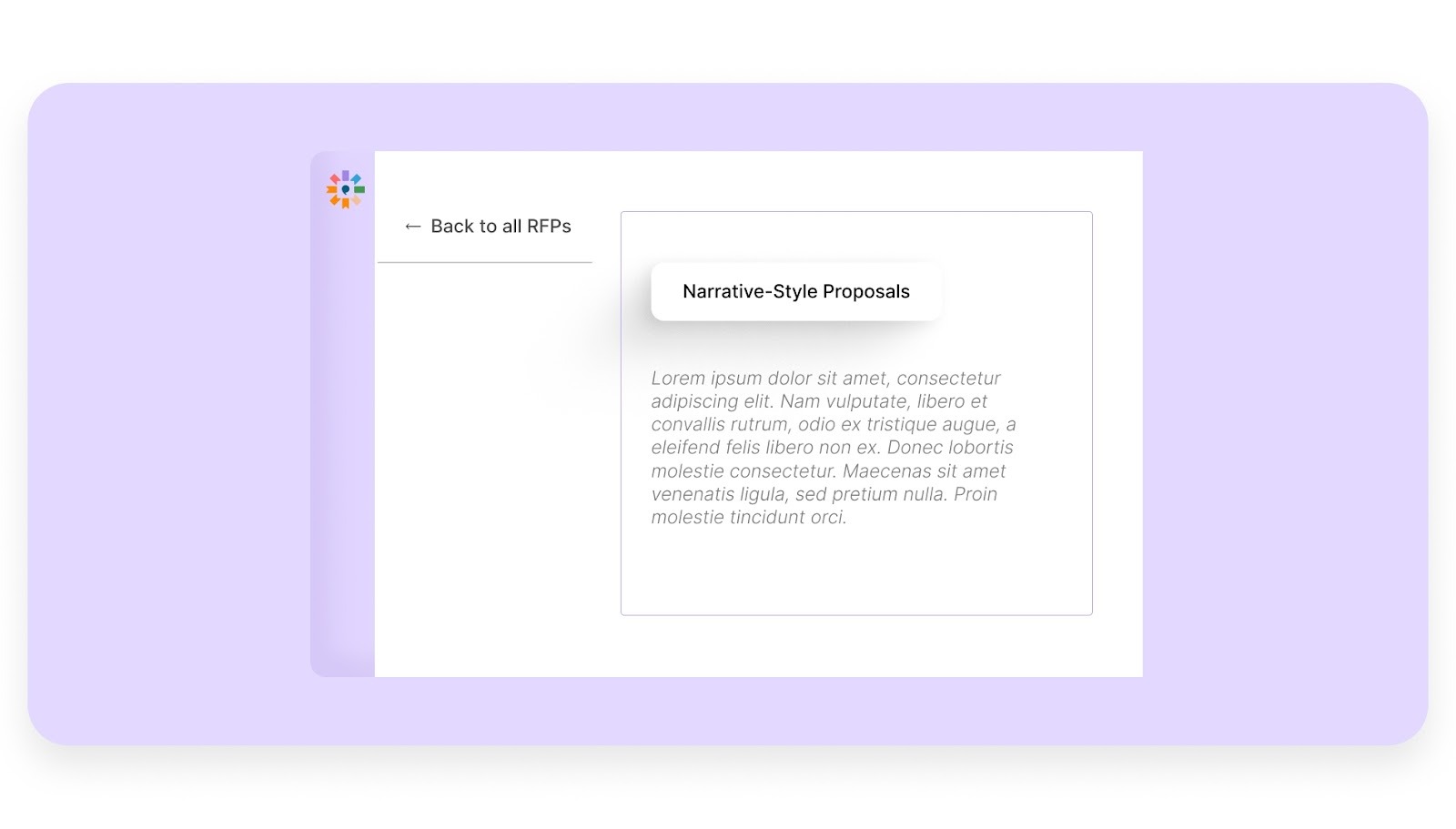
Say goodbye to fragmented, disjointed answers. Inventive AI ensures your proposals are cohesive, professional, and tell a compelling story that resonates with the buyer.
Simple, Easy-to-Use Interface
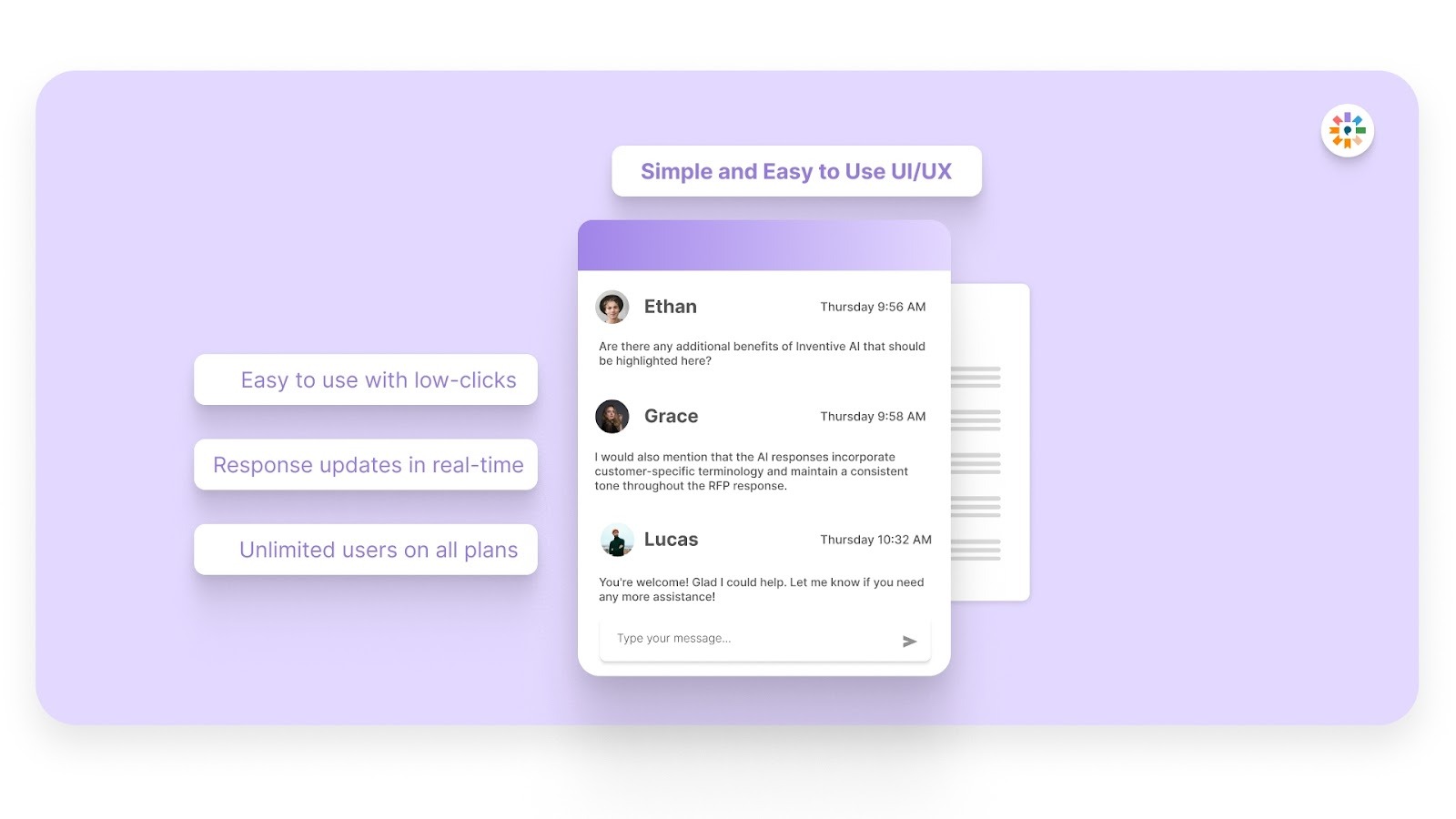
Inventive AI is designed for real proposal teams, not just technical users. Stakeholders across HR, sales, legal, and compliance can contribute without training overhead, reducing coordination friction and keeping responses moving forward.
With Inventive AI, vendors can improve the quality, clarity, and consistency of their supplier performance review responses, reduce the risk of errors, save time, and enhance readiness for renewals or future RFPs.
FAQs
1. How can vendors prioritize which intranet RFP requirements to address first?
Start by analyzing the weighted evaluation criteria provided in the RFP. Address high-impact requirements, such as technical fit and critical functionality, first to ensure buyers see your strengths where scoring matters most.
2. What are common mistakes vendors make when submitting intranet RFP responses?
Vendors often submit incomplete compliance evidence, provide inconsistent data across sections, or ignore buyer instructions. Avoiding these errors by careful review and structured templates improves scoring and reduces the risk of disqualification.
3. How can vendors demonstrate value beyond basic compliance?
Highlight unique features, integration capabilities, or user adoption strategies that solve buyer challenges. Including case studies, metrics, and tangible outcomes makes your proposal stand out from purely compliant responses.
4. How should vendors handle ambiguous or unclear RFP requirements?
Document assumptions and seek clarifications through the RFP’s official Q&A process. Providing transparent notes in your response demonstrates diligence and aligns with buyer expectations without overcommitting.
5. How can vendors optimize intranet RFP responses for faster evaluation?
Use structured tables, requirement matrices, and concise summaries. Linking evidence directly to each requirement allows buyers to quickly verify compliance, enhancing readability and improving your chance of scoring higher.

90% Faster RFPs. 50% More Wins. Watch a 2-Minute Demo.
.avif)
Mukund Kumar
Understanding that sales leaders struggle to cut through the hype of generic AI, Mukund focuses on connecting enterprises with the specialized RFP automation they actually need at Inventive AI. An IIT Jodhpur graduate with 3+ years in growth marketing, he uses data-driven strategies to help teams discover the solution to their proposal headaches and scale their revenue operations.

Hardi Hindocha
Knowing that complex B2B software often gets lost in jargon, Hardi focuses on translating the technical power of Inventive AI into clear, human stories. As a Sr. Content Writer, she turns intricate RFP workflows into practical guides, believing that the best content educates first and earns trust by helping real buyers solve real problems.