
A Practical Meeting and Incentive RFP Template in 2026

Why does a company send a meeting or incentive RFP in the first place? Usually, the buyer plans a large event. It could be a sales conference, leadership summit, or incentive travel program.
They want the right vendor to handle venues, logistics, travel coordination, and program planning. Instead of contacting vendors one by one, they issue an RFP.
Soon after, that RFP lands in your inbox. Now your team must prepare a proposal covering event strategy, vendor experience, pricing, and logistics plans. The challenge is familiar. Many questions repeat across different RFPs, yet your team still rebuilds responses each time.
That is where a meeting and incentive RFP template becomes useful. It gives you a starting format instead of a blank document.
In this guide, you will see what a meeting and incentive RFP template includes, how vendors respond to it, and how AI RFP software helps even more.
Meeting and Incentive RFP Template: What Buyers Actually Send Vendors
The buyer sends the RFP to multiple vendors to compare proposals using the same information format. The template shows exactly what the buyer wants to evaluate.
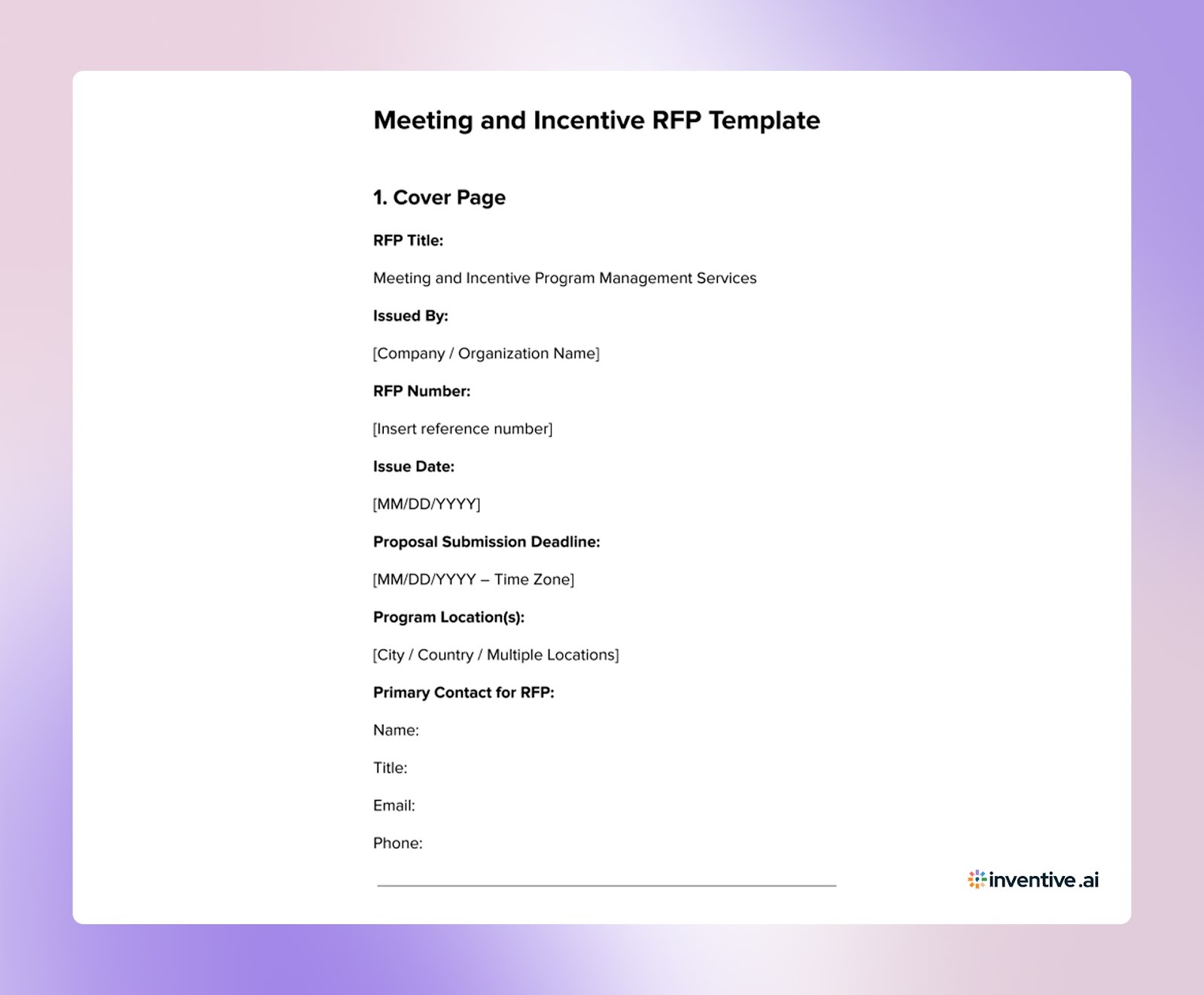

Common Components Found in Meeting and Incentive RFP Templates
Every meeting and incentive RFP is different. Each buyer defines the program goals, event scope, and vendor expectations. However, most RFP templates include several common sections. These sections help the buyer collect comparable information from vendors.
Typical components include:
1. Event overview: The buyer describes the purpose of the meeting or incentive program. This may include program goals, preferred destinations, and expected outcomes.
2. Program requirements: The buyer outlines the services expected from vendors. This often includes venue sourcing, travel coordination, accommodation planning, and event management.
3. Attendee profile: The buyer provides details about participants. This usually includes estimated attendee numbers, participant profiles, and travel origins.
4. Event schedule and logistics: The buyer specifies tentative event dates, program timelines, venue setup requirements, and activity planning needs.
5. Budget guidelines: The buyer may share a budget range or request detailed pricing breakdowns for different services.
6. Vendor qualifications: The buyer asks vendors to share company experience, past event examples, and client references.
These sections help the buyer review proposals from multiple vendors using a consistent evaluation approach.
Also Read: The Ultimate Guide to Crafting Data Management RFP Responses
Now that you understand what a buyer-side template looks like, it helps to look at how vendors respond to it using a proposal template.
The Ultimate Meeting and Incentive RFP Response Template (for Vendors)
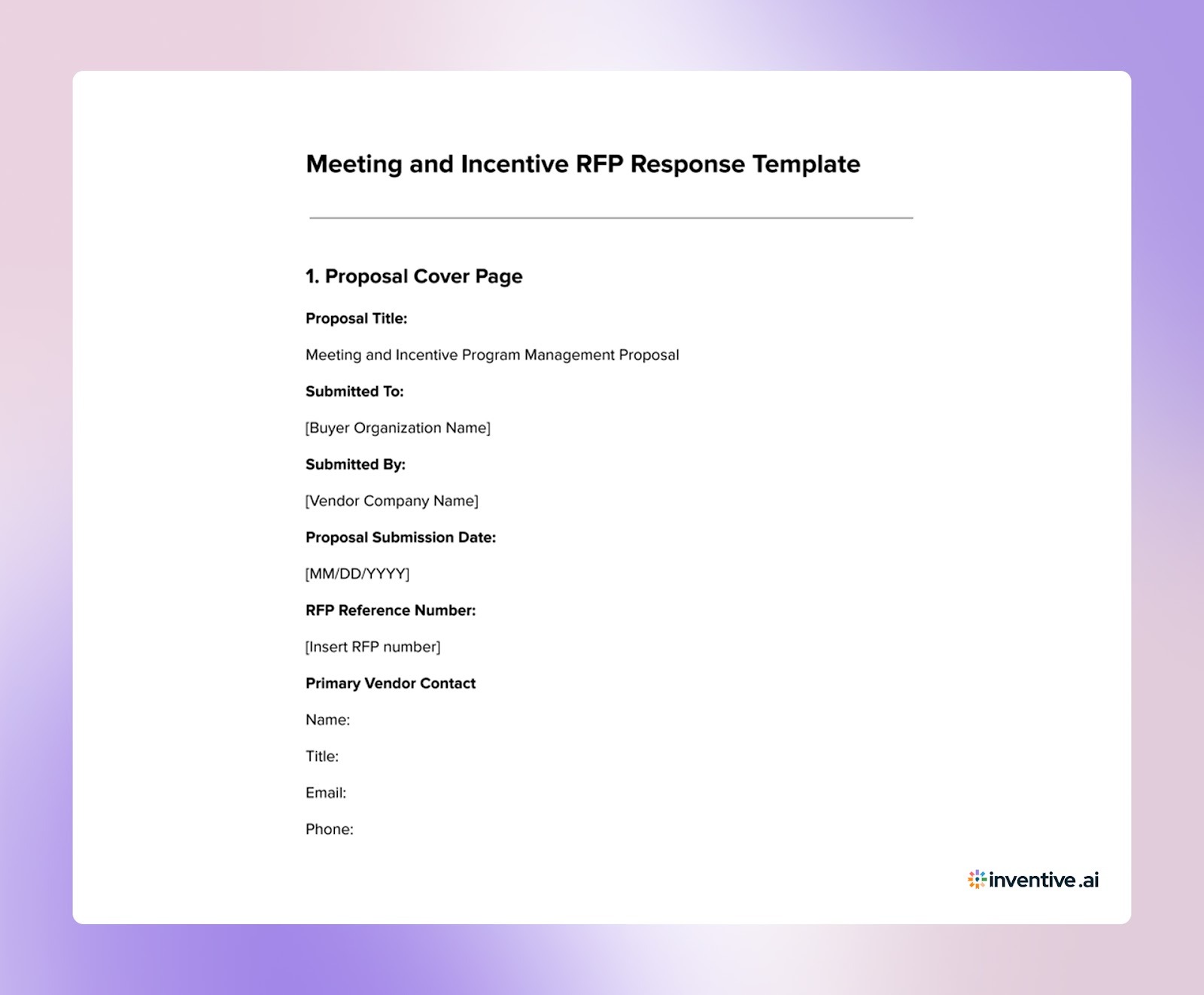
A meeting and incentive RFP response template is a ready-to-use framework vendors use when responding to buyer RFPs. This approach saves time when a new RFP arrives. Your team fills in relevant sections instead of rebuilding the document.
Below is a downloadable and customizable template you can use while preparing your meeting and incentive RFP responses.
The Process Buyers Follow Before Sending an Event RFP
Organizations preparing a meeting or incentive program usually follow a clear process when drafting their RFP.
Typical steps include:
- Define event goals and program objectives.
- Specify attendee numbers and participant profiles.
- Describe venue requirements and travel logistics.
- Outline event schedules and service expectations.
- Provide budget ranges and pricing format.
- Explain the evaluation criteria for vendor selection.
These details help vendors prepare proposals that match the buyer’s expectations.
5 Customization Tips: Turn a Generic RFP Template Into a Winning Proposal
A response template gives you a starting point. However, buyers still expect proposals that reflect their specific event goals.
This means you should adapt the ready-made template before submitting your proposal.
Here are a few ways you can customize your response template to match the buyer’s expectations.
1. Review the buyer’s event objectives first: Start by reading the RFP carefully. Update the proposal sections so they reflect the buyer’s meeting or incentive program goals.
2. Add relevant experience and case examples: Replace generic examples with events similar in size, industry, or location. This helps the buyer see your relevant experience.
3. Update venue and travel recommendations: Adjust these sections based on the attendee profile and preferred destinations mentioned in the RFP.
4. Follow the pricing format requested in the RFP: Many buyers request a specific pricing structure. Modify your template so the pricing section matches their format.
5. Adjust logistics and planning details: Update timelines, planning steps, and service descriptions to match the program scope defined in the RFP.
Customizing your response template this way helps your proposal match the buyer’s expectations more closely.
Also Read: Top 10 Best RFI Software and Tools for 2026: Features, Pricing & more
How Meeting and Incentive RFP Response Templates Shorten Your Sales Cycle
Responding to RFPs becomes easier when your team works from a prepared framework.
A response template helps your team organize information faster and prepare proposals with greater consistency.
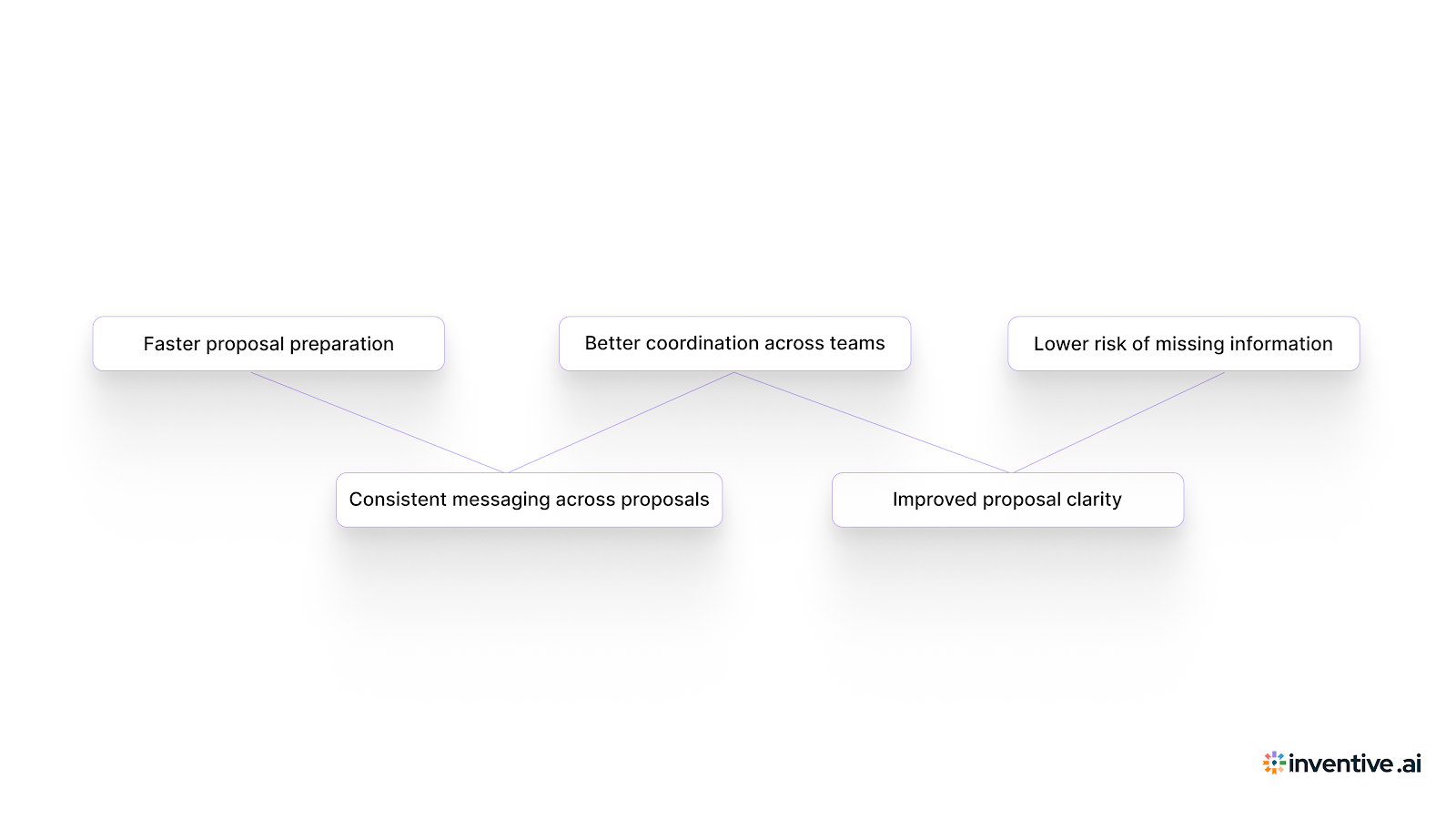
Key benefits include:
1. Faster proposal preparation: Your team can reuse approved content from previous proposals. This reduces the time spent writing common sections again.
2. Consistent messaging across proposals: Each proposal follows the same format and language. This helps maintain consistent positioning of your services across deals.
3. Better coordination across teams: Sales, event planners, and operations teams work within the same template. This makes it easier to gather inputs from different teams.
4. Improved proposal clarity: Structured responses help buyers review your proposal more easily. Clear sections also help highlight the value of your services.
5. Reduced risk of missing required information: Templates include all major response sections. This helps your team avoid missing questions or important details in the RFP.
Using a response template reduces the time spent preparing new proposals while improving proposal quality.
Also Read: Guide to Writing an Effective RFP Response Cover Letter
5 Common Mistakes That Can Cost Vendors an RFP Win
Even experienced vendors make mistakes when responding to meeting and incentive RFPs.
These mistakes often reduce the chances of shortlisting, even when the vendor has strong capabilities.
Avoid these common issues.
1. Submitting generic proposals: Buyers expect responses that reflect their event goals and requirements. Generic proposals make it difficult for buyers to see how your services fit their program.
2. Missing requested information: Many RFPs ask vendors to answer specific questions or provide detailed data. Skipping sections or providing incomplete responses may weaken your proposal.
3. Using outdated proposal content: Old pricing details, venue options, or case studies can affect credibility. Buyers expect accurate and current information in every proposal.
4. Ignoring evaluation criteria: Many RFPs include scoring criteria for vendor selection. Proposals that address these criteria clearly often perform better during evaluation.
5. Late submissions: Meeting and incentive RFPs usually follow strict timelines. Late proposals may not be considered during the evaluation process.
Avoiding these mistakes helps present a stronger proposal during the buyer’s evaluation process.
Also Read: How RFP Template Automation Software Can Create Faster Responses
Inventive AI: The Role of Automation in Meeting and Incentive RFP Responses
Meeting and incentive RFPs often include detailed questions, and preparing these responses manually can take hours. Inventive AI is designed to simplify the RFP response process.
It helps proposal teams find relevant information quickly and prepare responses much faster.
1. 2× Higher Quality Responses
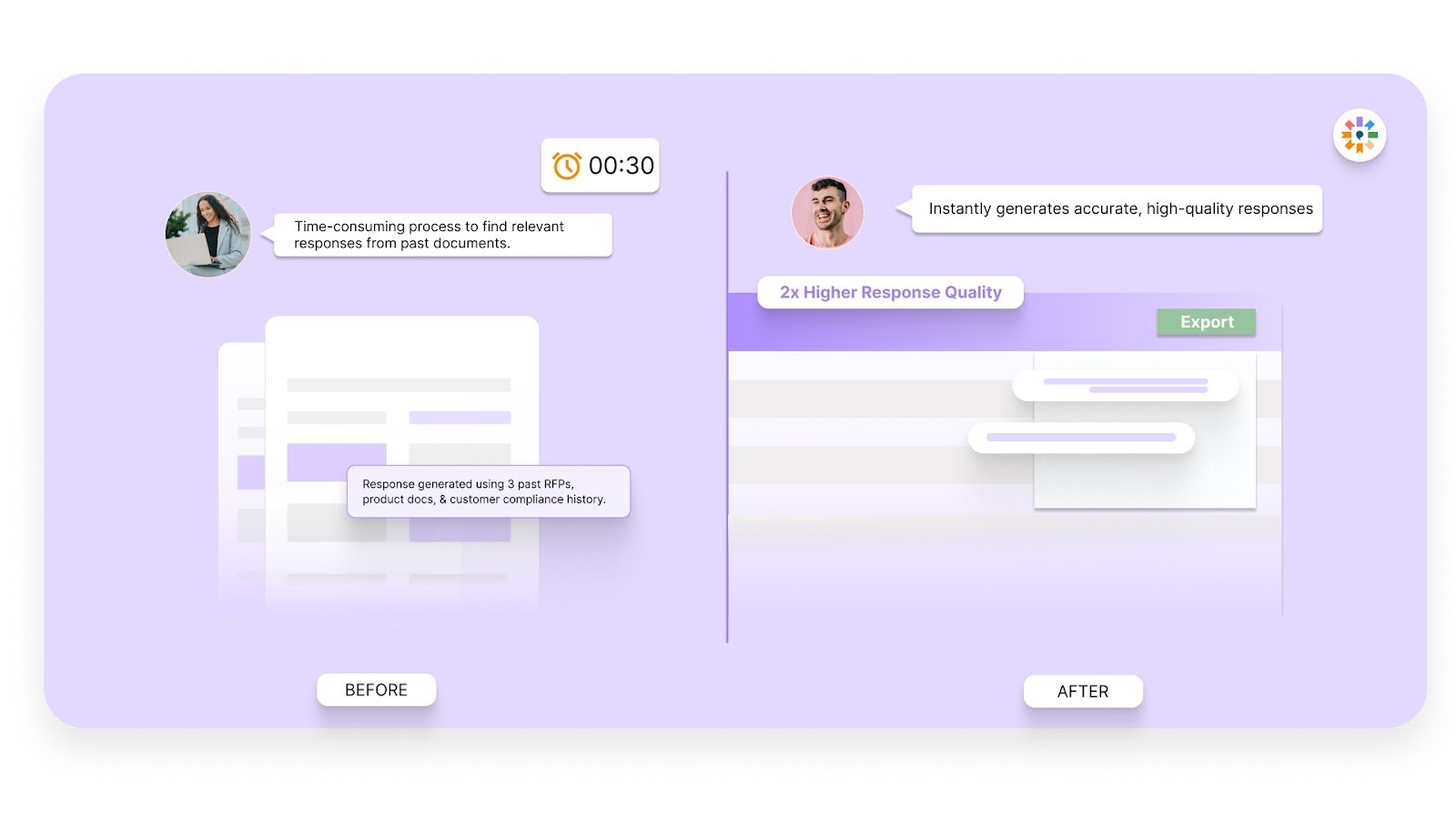
Meeting and incentive RFPs often ask similar questions across different proposals. Inventive AI reviews your previous proposals, event documents, and company content to generate strong response drafts. This helps your team reuse accurate information instead of rewriting answers for every new RFP.
2. Context Engine
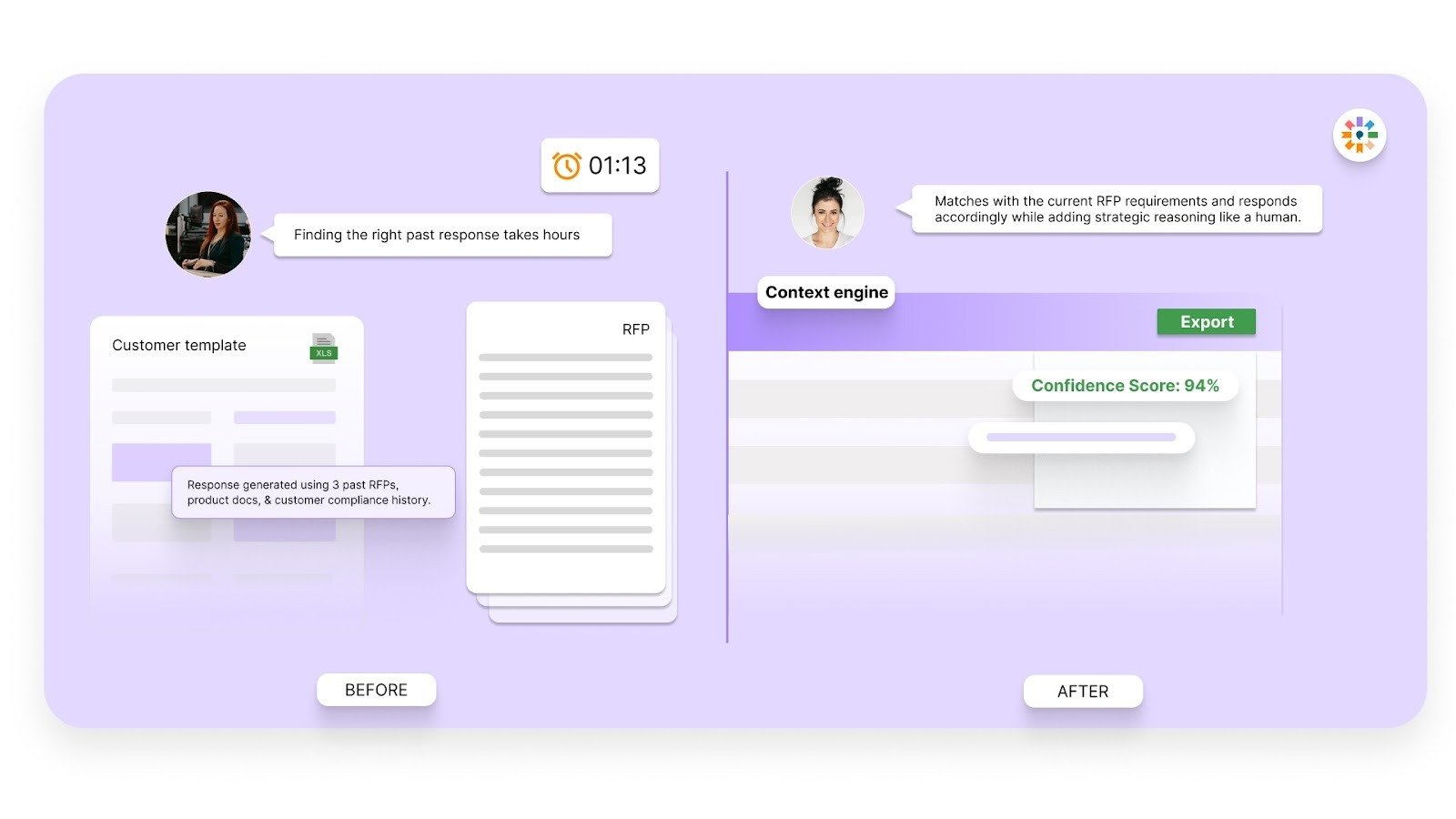
Meeting and incentive RFPs contain multiple detailed questions about services, logistics, and vendor experience. Inventive AI’s Context Engine reads the buyer’s questions and retrieves the most relevant answers from your internal knowledge sources. This helps proposal teams respond faster while keeping answers aligned with the buyer’s request.
3. Conflict Detection
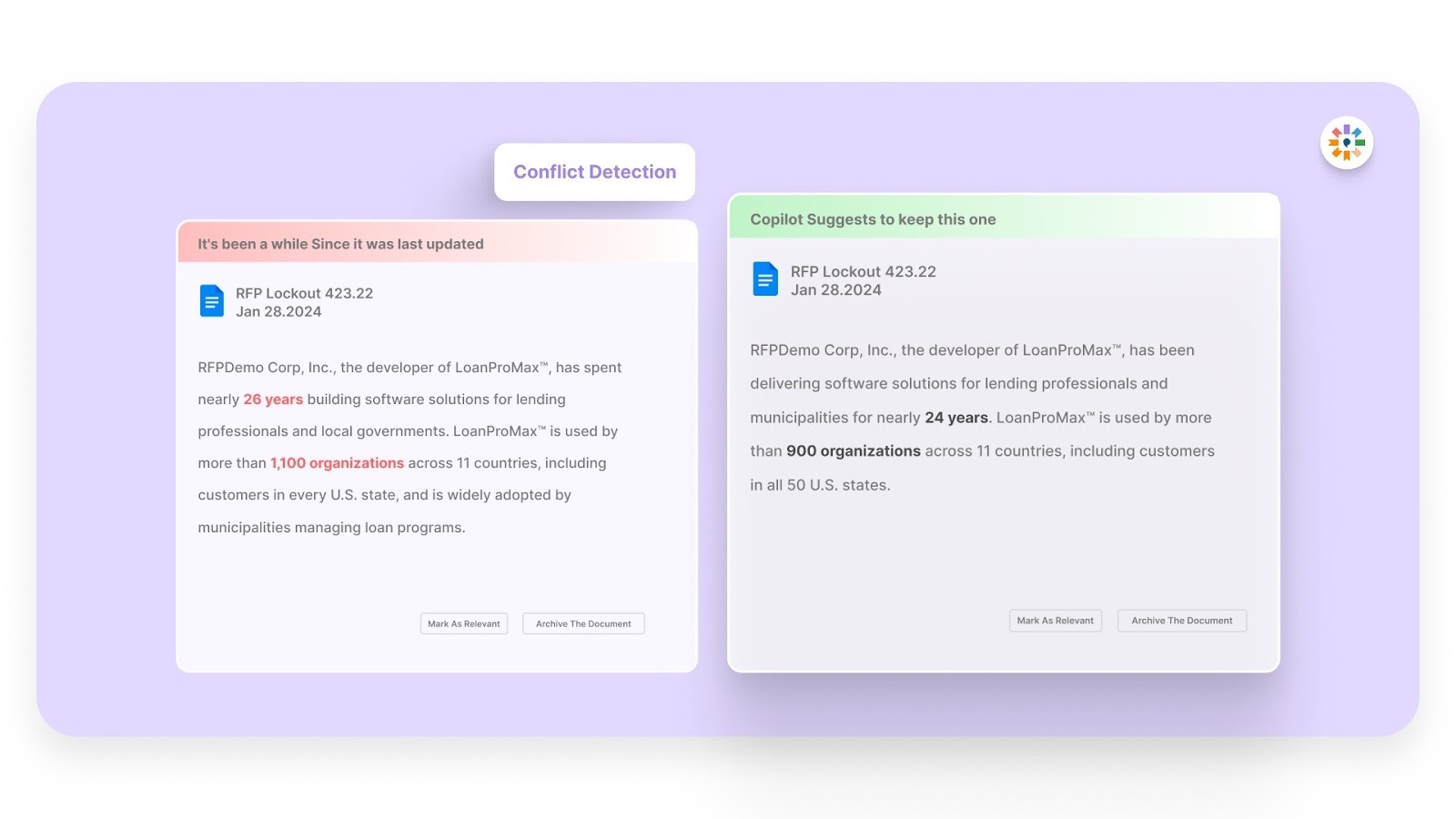
Proposal content often exists in different documents across departments. Inventive AI detects conflicting information before it appears in your proposal. This helps your team avoid sending inconsistent details about pricing, services, or past event experience.
4. Outdated Content Detection
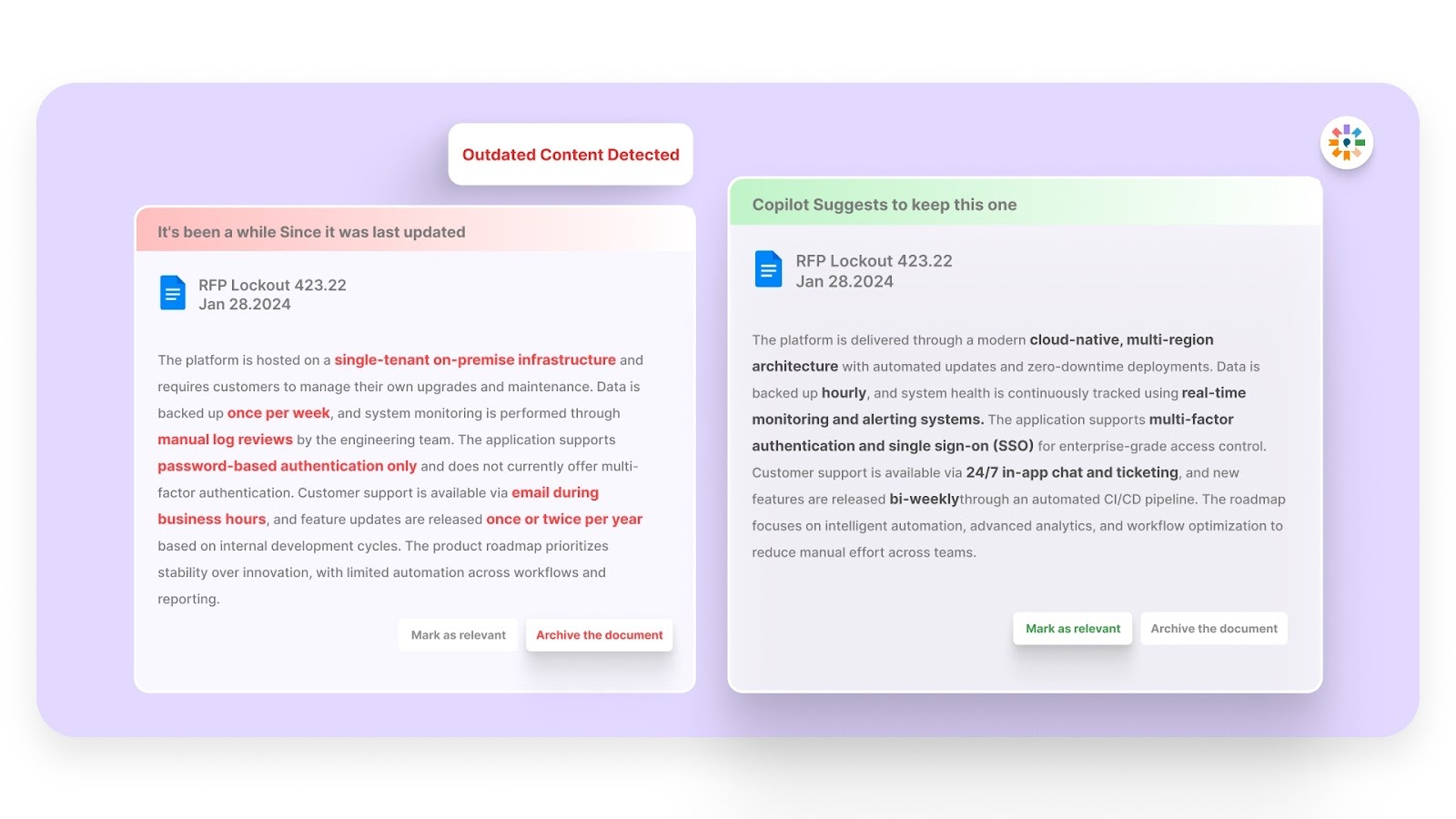
Meeting and incentive proposals often include venue options, pricing information, and case studies. Inventive AI’s content manager flags outdated information in your knowledge base. Your team can update these sections before submitting the proposal.
5. Simple, Easy-to-Use Interface
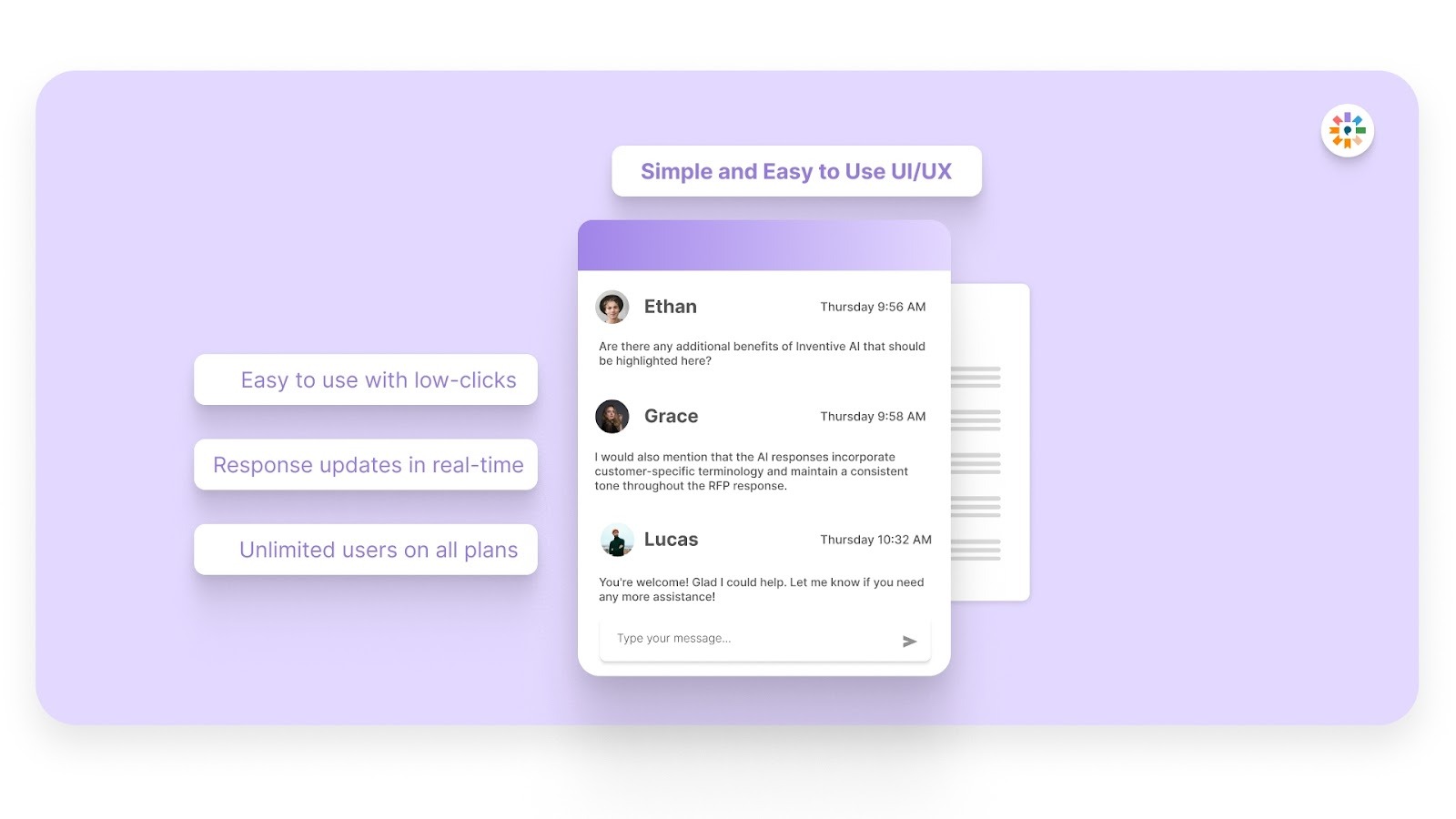
Meeting and incentive RFP responses often require inputs from sales, event planners, and operations teams. Inventive AI allows teams to collaborate inside one platform while preparing proposal responses. This makes it easier to gather inputs and finalize proposals before deadlines.
6. Narrative-Style Proposals
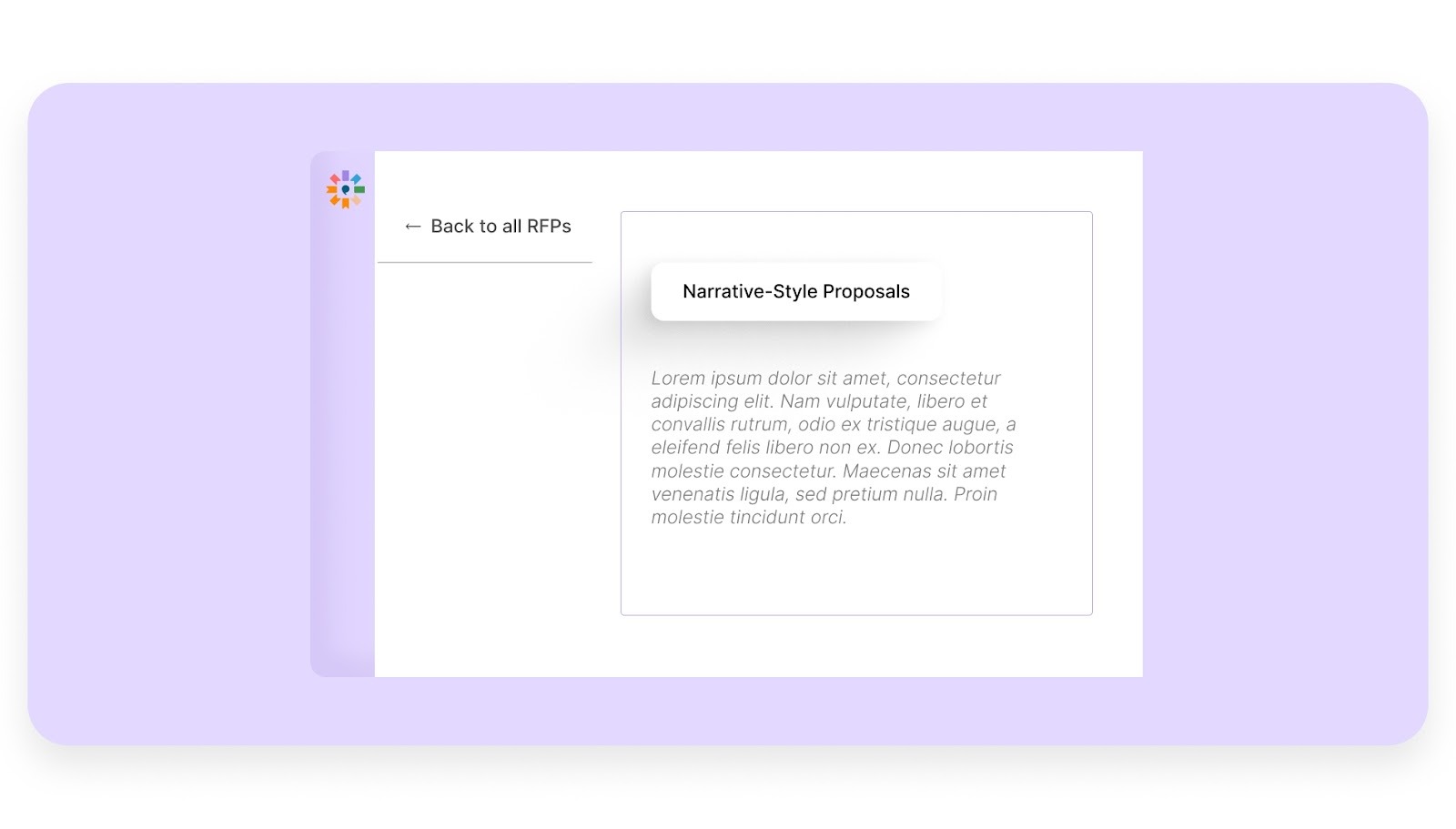
Win over stakeholders with clear, high-level summaries. Inventive AI transforms complex technical details into easy-to-read narrative briefs, making sure your biggest value points are front and center for decision-makers.
Using AI-powered RFP response software, vendors can generate first drafts 10× faster with 95% accuracy while preparing stronger proposals.
Frequently Asked Questions (FAQs)
1. What is the difference between a meeting RFP and an incentive travel RFP?
A meeting RFP focuses on corporate meetings, conferences, or training events. Incentive travel RFPs focus on reward programs designed to motivate employees or partners through travel experiences.
2. Who usually sends meeting and incentive RFPs?
Corporate procurement teams, event planners, and travel program managers typically issue these RFPs when selecting vendors for meetings or incentive programs.
3. What services do vendors usually provide in meeting and incentive proposals?
Vendors may offer venue sourcing, travel planning, accommodation management, event production, attendee coordination, and on-site logistics support.
4. How long does it usually take to respond to a meeting and incentive RFP?
Response timelines vary by project size. Complex programs can take several days because proposals often require inputs from multiple departments.

90% Faster RFPs. 50% More Wins. Watch a 2-Minute Demo.
.avif)
Mukund Kumar
Understanding that sales leaders struggle to cut through the hype of generic AI, Mukund focuses on connecting enterprises with the specialized RFP automation they actually need at Inventive AI. An IIT Jodhpur graduate with 3+ years in growth marketing, he uses data-driven strategies to help teams discover the solution to their proposal headaches and scale their revenue operations.

Hardi Hindocha
Knowing that complex B2B software often gets lost in jargon, Hardi focuses on translating the technical power of Inventive AI into clear, human stories. As a Sr. Content Writer, she turns intricate RFP workflows into practical guides, believing that the best content educates first and earns trust by helping real buyers solve real problems.