RFS vs RFP: What’s the Difference and When to Use Each (2026 Guide)
.jpg)
You open a document from a buyer. It has a title, a deadline, and a long list of questions. You start reading, and somewhere halfway through, you realize you're not sure what kind of response they actually want.
Is this an RFP? Or is it an RFS? Should you propose a methodology, or propose a solution from scratch? Should your response be structured and detailed, or open-ended and creative?
If this has happened to you, you're not alone. Vendors respond without fully understanding what the buyer is actually asking for, and the RFS vs RFP confusion is one of the most common culprits.
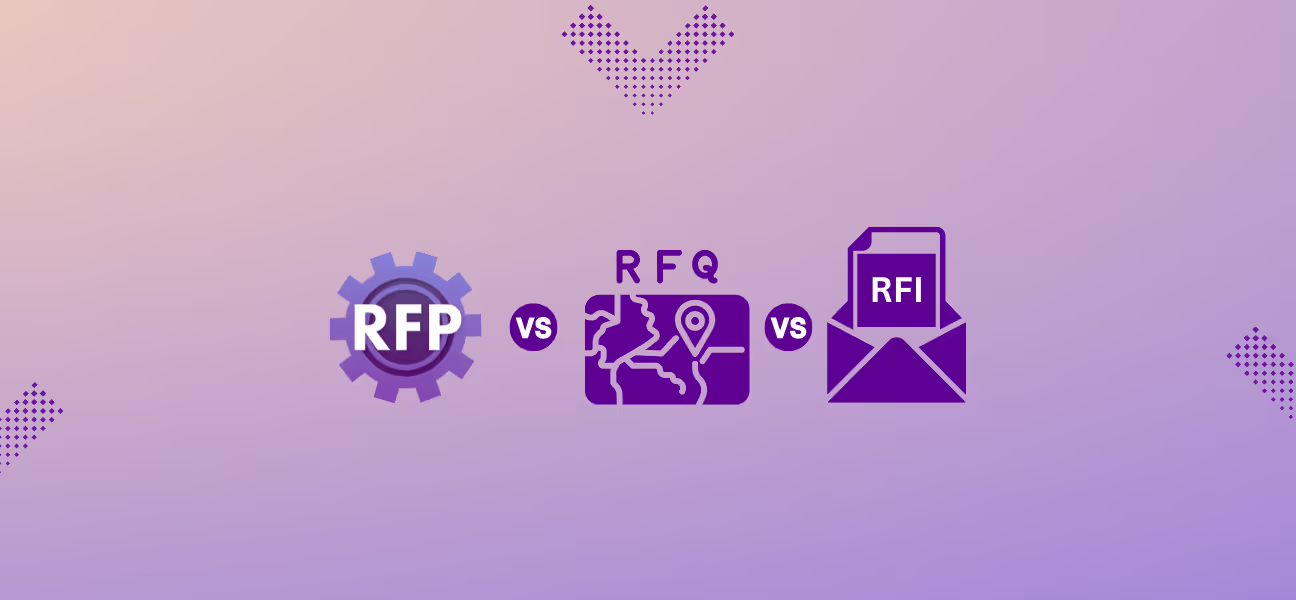
This blog breaks down both documents, what they are, how they differ, when buyers use each one, and, most importantly, what each one means for you as the vendor responding to it. You'll also get a clear picture of the broader RFx family (RFI, RFQ, RFT) and how to distinguish among them.
Key Takeaways
- RFS vs RFP comes down to one key difference: who defines the solution - the buyer (RFP) or you (RFS).
- RFP requires structured, precise responses aligned with defined requirements and evaluation criteria.
- RFS requires strong problem understanding and solution thinking to shape the buyer’s direction.
- Identifying the document type early helps you avoid wasted effort and improves your chances of winning.
- With Inventive AI, you can respond 10x faster with 95% accuracy and increase win rates by over 50%.
What Is an RFP (Request for Proposal)?
An RFP, or Request for Proposal, is a formal document that a buyer sends to vendors when they have a specific problem to solve and a general idea of how they want it solved. They want you to propose how you would execute that solution and at what cost.
Think of the buyer as someone who has done their homework. They know what outcome they want, they've thought about requirements, and they've structured the document to evaluate vendors against those requirements.
When a buyer sends you an RFP, they're typically asking:
- Can you do what we need? Do you have the capabilities, the experience, and the resources?
- How will you do it? What's your methodology, your timeline, your approach?
- What will it cost? Lay out your pricing clearly.
- Why should we pick you over everyone else responding to this same document?
What a typical RFP includes:
- Background information about the buyer and the project.
- A detailed scope of work or requirements.
- Evaluation criteria and scoring methodology.
- Submission format and deadline.
- Budget parameters (sometimes).
- A list of specific questions you must answer.
The key characteristic of an RFP is specificity. The buyer has already defined what they're buying. Your job is to convince them that you're the best one to deliver it. The risk? If your response doesn't directly match the requirements as stated, it looks like a miss, even if your actual solution would have been better.
Also Read: RFP Response Trends and Benchmarks: Key Insights for 2026

What Is an RFS (Request for Solution)?
An RFS, or Request for Solution, is a procurement document that a buyer sends when they know they have a problem, but not the solution. Instead of prescribing a solution, they describe a situation and ask vendors to propose the best way to address it.
This is a fundamentally different type of document. The requirements exist, but they're broader and more general, leaving room for vendors to interpret and innovate.
What an RFS typically includes:
- A description of the current situation or challenge
- The buyer's goals and desired outcomes
- Broad constraints (budget range, timeline, general preferences)
- An invitation for vendors to propose their own solution
- Fewer prescriptive requirements and more open-ended questions
An RFS gives you creative freedom, but that comes with a responsibility. You're not just answering questions. You're diagnosing a problem and prescribing a solution. The buyer is evaluating your thinking as much as your capabilities.
Your response to an RFS should show that you understand their situation deeply, that your proposed solution is innovative and tailored, and that you're a partner worth having a conversation with.
Also Read: What Is a Request for Qualifications (RFQ)? Meaning, Examples & Uses
What the RFS Actually Gives You That No RFP Ever Will?
The RFS is growing in use, particularly in complex technology, outsourcing, and transformation projects. RFS is best suited for an organization's most valuable supplier relationships, where open dialogue about key challenges is welcome.
Why buyers use RFS:
- It surfaces solutions they hadn't thought of. Buyers get more out of the market.
- More vendors participate because it takes less effort to respond.
- It encourages bundled, innovative solutions that can be more cost-efficient.
- It enables a collaborative relationship from day one.
What's in it for you as a vendor:

- Creative freedom. You're not boxed into a prescribed solution. If your approach is stronger than what the buyer imagined, you can show it.
- Differentiation. In an RFP, every vendor is answering the same questions. In an RFS, your unique thinking is your competitive edge.
- Faster to respond. Less prescriptive requirements mean less time decoding rigid specifications.
- A stronger position. When a buyer accepts your proposed solution, you've already shaped the conversation. The evaluation is partly based on what you defined.
As Tom Young from Information Services Group put it: "If you are unsure about what you want from the marketplace, often when innovation is involved, do an RFS and let the marketplace offer solutions." That's the environment you're walking into as a vendor when an RFS lands in your inbox.
Pro Tip: When responding to an RFS, don't just describe what you'll do, explain why you're recommending it. Buyers choose an RFS because they want your reasoning, not just your capabilities. Walk them through your thinking.
Why Has RFP Dominated B2B Procurement for Decades?
The RFP has been the backbone of B2B procurement for decades and for good reason. Understanding why buyers love it helps you understand how to respond to it better.
Why buyers use RFPs:
- They get structured, comparable responses from multiple vendors.
- The evaluation process is straightforward because the criteria are pre-defined.
- Risk is reduced - the vendor is held to a clear set of deliverables.
- It creates a paper trail and accountability throughout the process.
RFS vs RFP: The Hidden Difference That Impacts Your Win Rate
Now that you understand both documents individually, let's look at how they compare directly. This is where the real confusion usually lives.
The core difference comes down to one question: Who defines the solution?
- In an RFP, the buyer defines the solution. You show how you'd execute it.
- In an RFS, you define the solution. The buyer tells you the problem.
Here's the full comparison:
| Factor | RFP | RFS |
|---|---|---|
| Problem definition | Clearly defined by buyer | Broadly defined by buyer |
| Solution definition | Buyer defines it | Vendor proposes it |
| Level of detail | High: specific requirements | Low to medium: open framework |
| Vendor flexibility | Limited | High |
| Evaluation criteria | Pre-defined, weighted scoring | Solution fit, creativity, strategic thinking |
| Time to respond | Longer: more detail required | Often shorter: less prescribed |
| Innovation potential | Low: must stay within scope | High: encouraged |
| Collaboration level | Minimal: structured process | High: dialogue expected |
| Best used when... | Buyer knows what they need | Buyer knows the problem, not the solution |
| Problem definition | Clearly defined by buyer | Broadly defined by buyer |
One more thing worth knowing is that an RFS can lead to an RFP. In some procurement processes, a buyer issues an RFS first to explore what's possible, then issues a more detailed RFP to the shortlisted vendors. If you respond well to the RFS, you've already shaped what the RFP will look like; that's a significant advantage.
Also Read: RFI vs RFP vs RFQ Templates + Vendor Response Formats
The Full RFx Family Explained: What Each Document Signals and How to Respond Right?
Understanding RFS vs RFP becomes easier when you see how they fit within the broader RFx process.
1. Request for Information (RFI)
An RFI is used early when the buyer is exploring options and assessing vendor capabilities. The buyer does not have a defined project yet and is gathering information to understand the market. They are identifying potential vendors and building a shortlist.
For you, this is a chance to present your capabilities clearly and establish credibility. The goal is not to propose a full solution but to position yourself for future RFP or RFS opportunities.
2. Request for Quotation (RFQ)
An RFQ is used when the buyer has already defined the requirements and is focused on pricing. The specifications are fixed, and the evaluation is primarily cost-based.
For you, accuracy matters more than creativity. You need to match the requirements exactly and provide clear, competitive pricing. Any ambiguity or deviation can weaken your position.
3. Request for Tender (RFT)
An RFT is a formal procurement process, most commonly used in government or regulated sectors. The process follows strict rules, and submissions are evaluated based on compliance and completeness.
For you, following instructions precisely is critical. Missing a requirement or submitting incorrect documentation can lead to immediate disqualification.
Quick RFx Snapshot
| Document | Purpose | Your Focus |
|---|---|---|
| RFI | Explore vendors | Capability clarity |
| RFQ | Compare pricing | Accuracy and cost |
| RFP | Evaluate solutions | Alignment and execution |
| RFS | Explore solutions | Thinking and differentiation |
| RFT | Formal bidding | Compliance |
How to Tell an RFS From an RFP in Under 5 Minutes?
Getting the document type wrong before you start responding is one of the most expensive mistakes a proposal team can make. You can waste days building a response to a question that wasn't actually being asked.
Here's how to tell them apart quickly, and what to do once you know.
Signals you're looking at an RFP:
- There's a detailed scope of work with specific deliverables listed.
- Questions are structured and specific, like, "Describe your implementation methodology for X."
- There's a scoring matrix or evaluation criteria section with weighting.
- The buyer specifies tools, formats, or approaches they want used.
- There are compliance checkboxes or mandatory requirements.
Signals you're looking at an RFS:
- The document describes a situation or challenge, not a solution.
- Questions are open-ended, like, "How would you approach solving X?"
- There are fewer requirements and more context about the business problem.
- The buyer explicitly invites creative or alternative approaches.
- There's language about collaboration, dialogue, or joint solution development.
Once you know which one it is, here's how your strategy shifts:
- For an RFP: Match requirements precisely. Use the evaluation criteria to prioritize your strongest sections. Keep your response structured, consistent, and complete. Every unanswered question is a gap the buyer will notice.
- For an RFS: Lead with your understanding of the problem. Don't just describe what you'll do, explain why your approach is the right one for their situation. Show that you've thought about it, not just templated it. Creative differentiation wins here, not compliance.
Respond to RFX 10x Faster With Inventive AI
Whether a buyer sends you a tightly defined RFP or an open-ended RFS, the pressure on your team is the same: respond fast, respond accurately, and make sure it's good enough to win.
Manually, that's hard. You're pulling information from different tools, coordinating across teams, and trying to keep every answer consistent, while the deadline ticks down.
With Inventive AI's AI-powered RFP response software, your team moves faster, stays aligned, and produces higher-quality responses.
Here's how each feature directly helps you:
1. 2× Higher Quality Responses
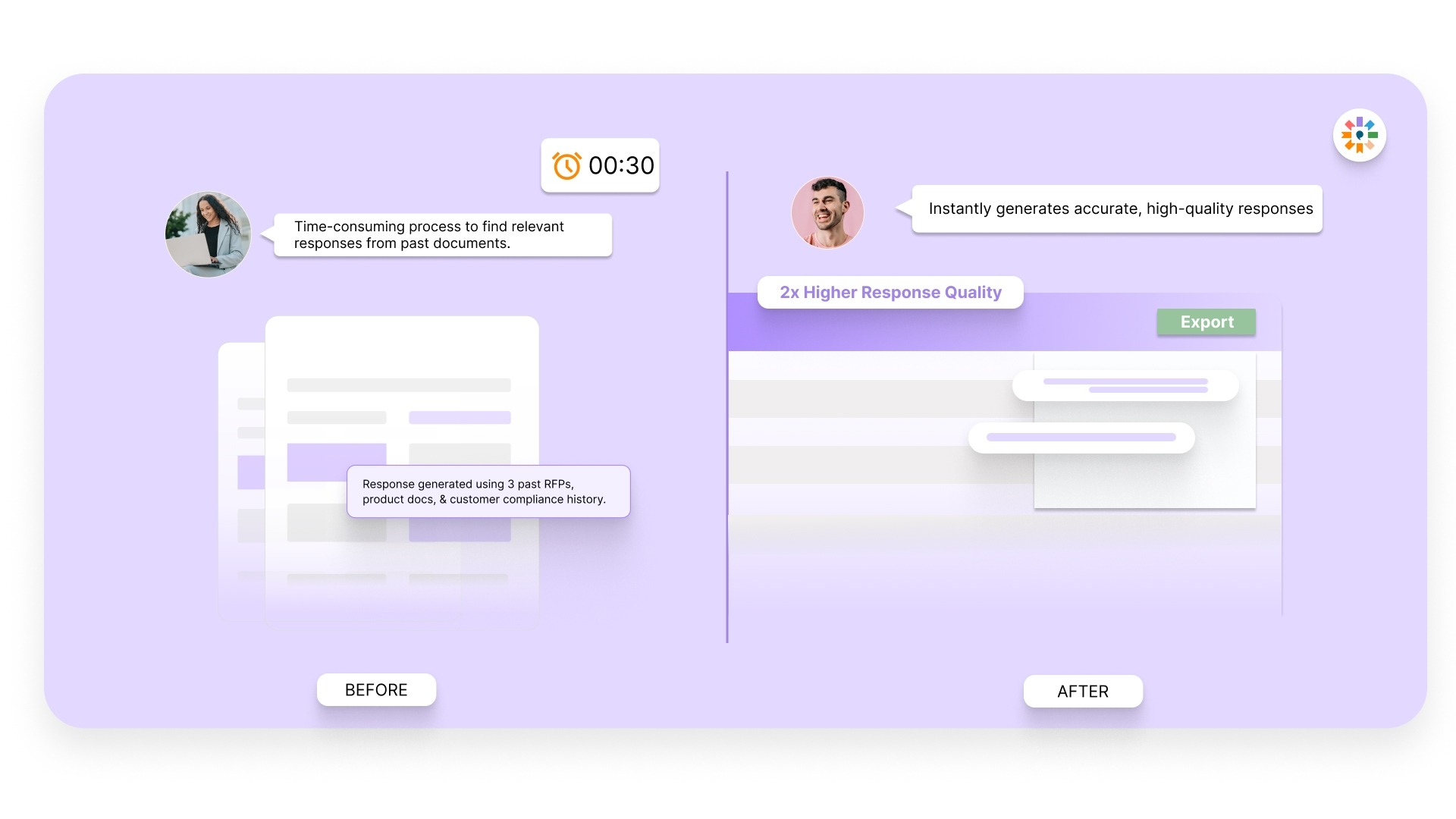
Whether you're filling out a structured RFP or crafting a creative RFS narrative, Inventive AI pulls from your past responses and knowledge sources to generate accurate, aligned drafts. Your responses read like one clear, coherent voice, not a patchwork of inputs from five different people.
2. Context Engine
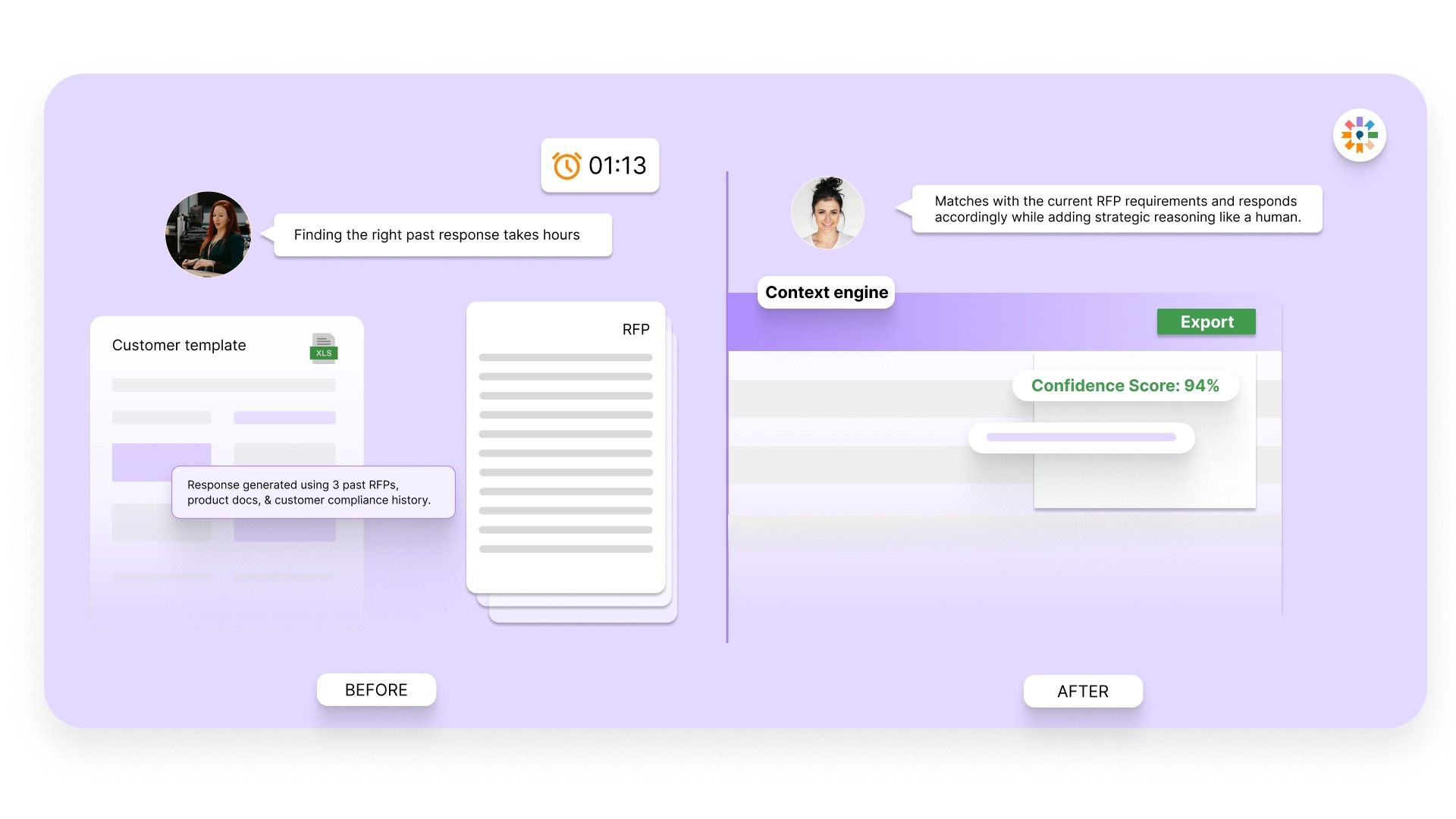
The Context Engine connects your current document with your historical RFP and RFS responses, internal documents, and knowledge bases. Instead of searching for the right answer, you get relevant content surfaced instantly. For an RFS, this means faster access to case studies and proof points that support your proposed solution.
3. Conflict Detection
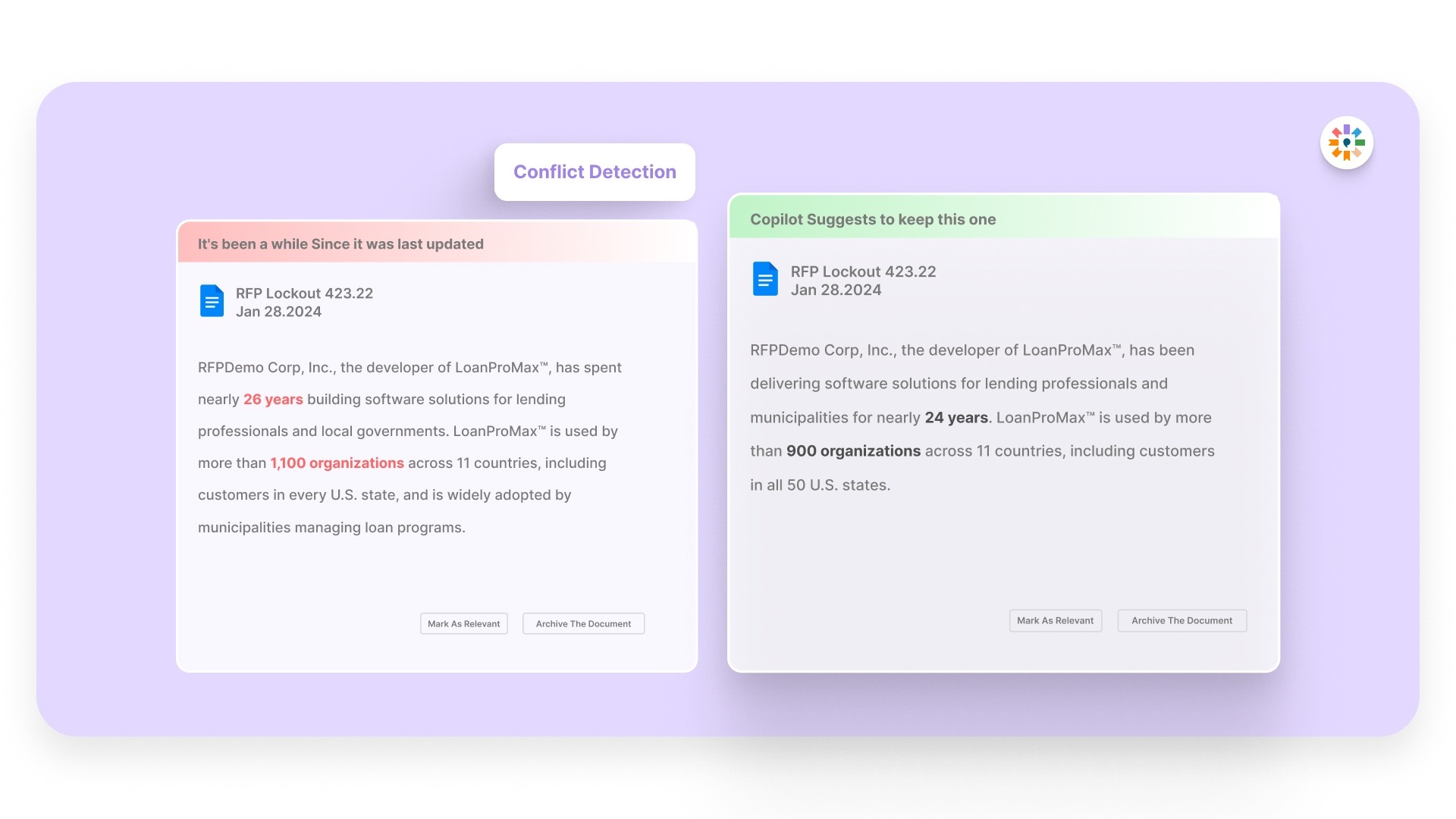
In a detailed RFP, inconsistencies across sections can kill your credibility. Inventive AI flags conflicts before you submit, so a pricing figure in Section 3 doesn't contradict your timeline in Section 7.
4. Outdated Content Detection
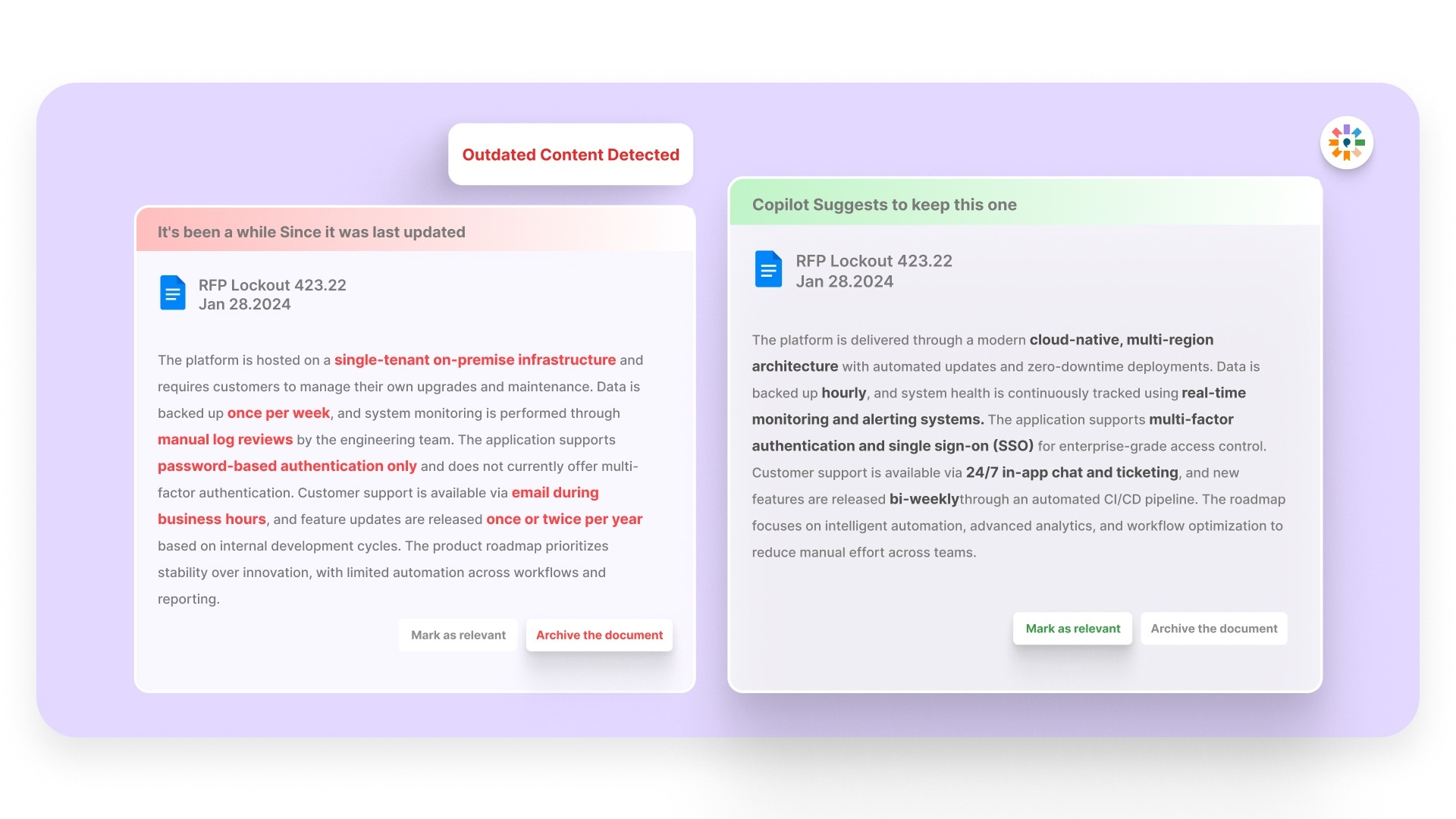
Using last year's product specs in an RFP is a fast way to raise red flags. Inventive AI flags outdated information so every answer reflects your current capabilities, not an old version of your pitch.
5. Narrative Style Proposals
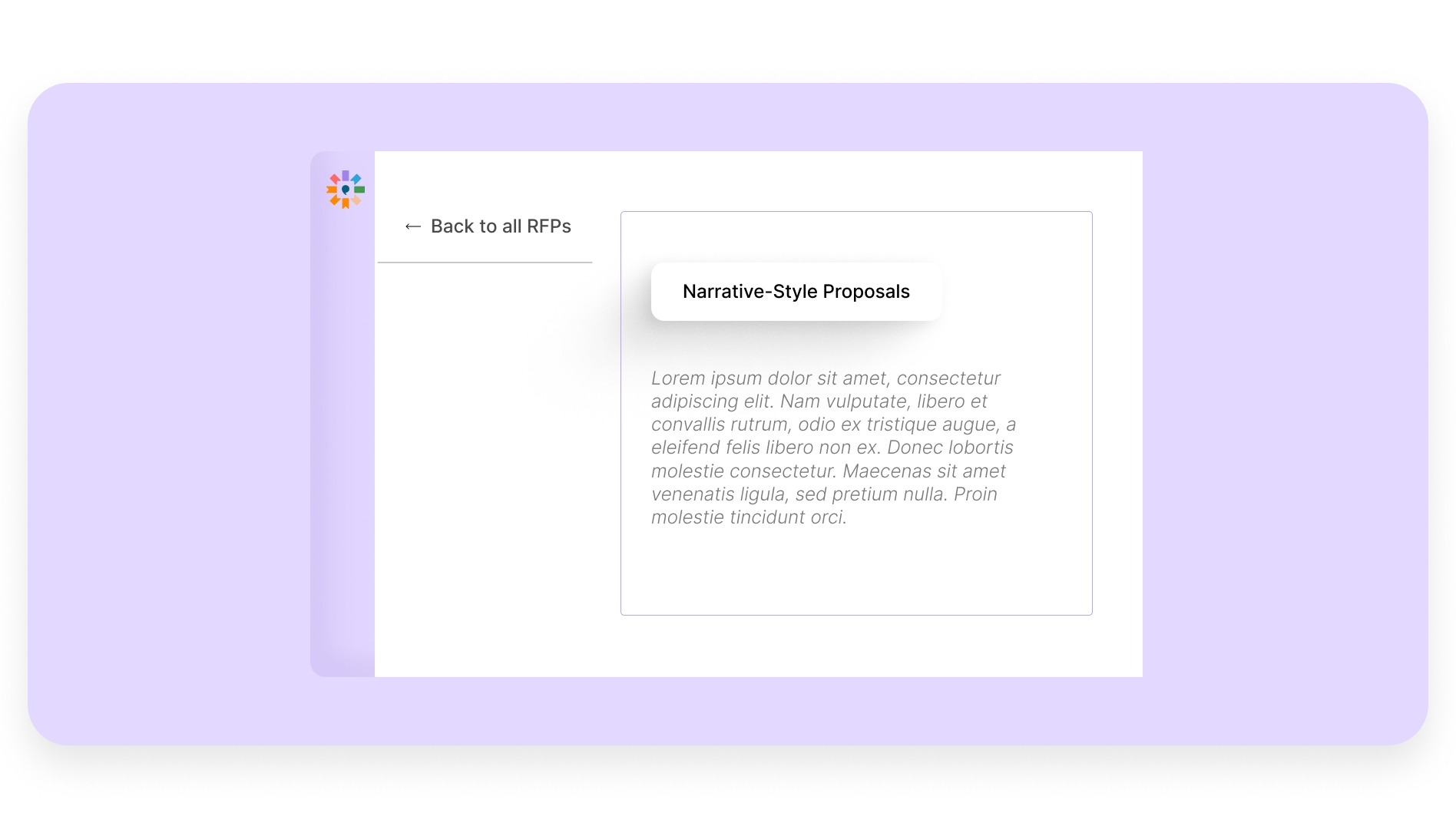
RFS responses live or die on how well you tell a story. Inventive AI turns fragmented inputs from multiple contributors into a coherent, readable narrative, the kind that makes buyers confident in your thinking, not just your capabilities.
6. Simple, Easy-to-Use Interface
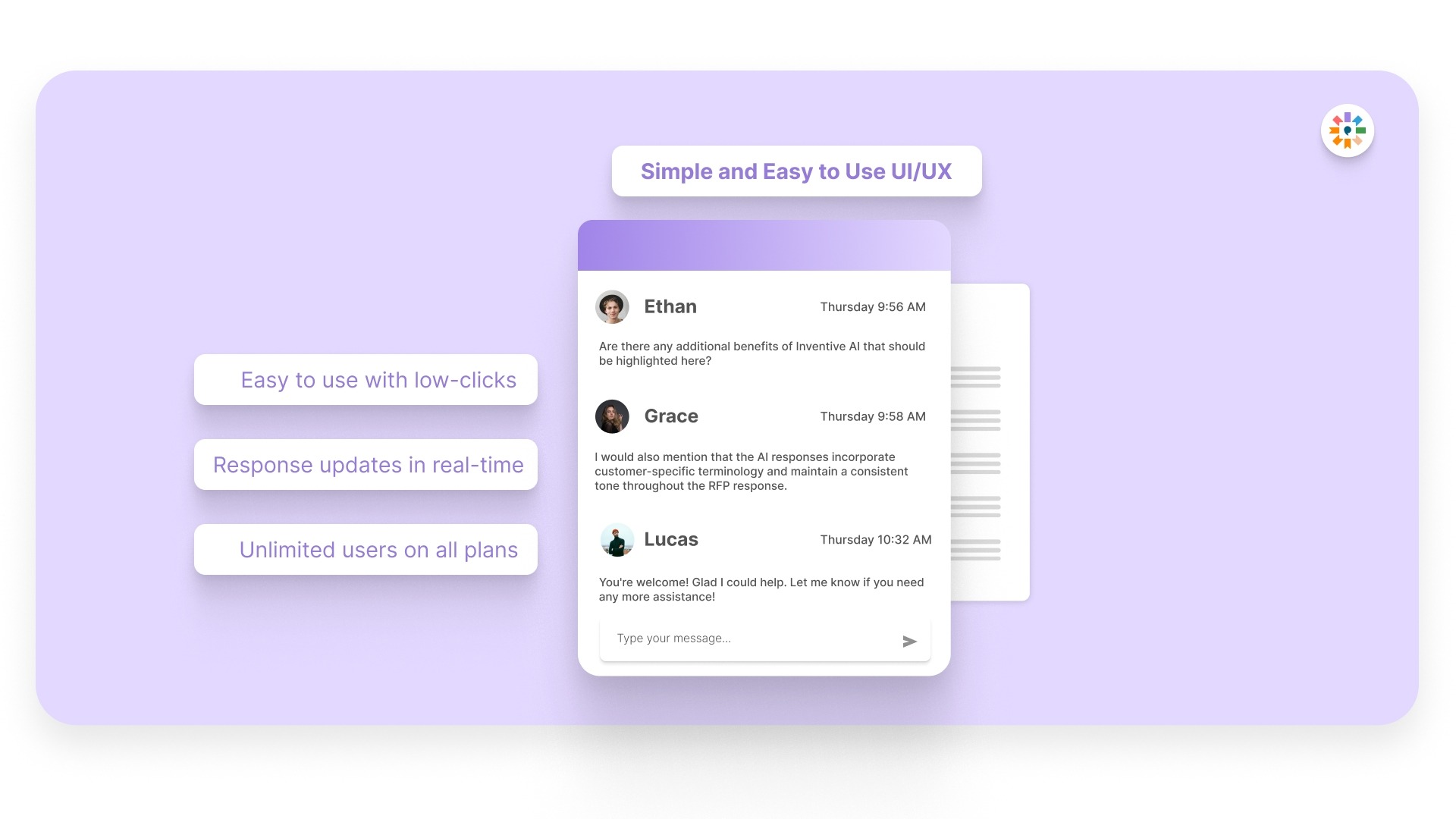
Every contributor, from Sales to Solutions to Legal, works in one place. No more version confusion, no more back-and-forth over email. Everyone sees the same response, and you stay in control of the final output.
With Inventive AI, teams respond 10x faster, maintain 95% accuracy, and increase win rates by over 50%, whether the document in front of them is an RFP, an RFS, or anything in between.
Frequently Asked Questions (FAQs)
1. Which is better for vendors - an RFS or an RFP?
Neither is inherently better. An RFP gives you a clear structure and defined expectations, while an RFS gives you more room to shape the solution. The better option depends on your team’s strength in execution versus solution design.
2. What is the biggest mistake vendors make when responding to RFx documents?
One of the most common mistakes is misinterpreting the document type. Treating an RFS like an RFP leads to rigid, generic answers, while treating an RFP too creatively can miss key requirements. This mismatch reduces your chances of moving forward.
3. Are RFS documents common in the US?
RFS documents are less common than RFPs but are becoming more popular in industries like technology and consulting, where buyers need flexible and innovative solutions.
4. What role does collaboration play in winning RFPs and RFSs?
Strong collaboration ensures inputs from sales, solutions, legal, and product teams are aligned. Poor coordination often results in conflicting answers or gaps. A centralized system with real-time updates improves both speed and accuracy.
.avif)


%20(13).avif)